
Published by BuzzSkito Mosquito & Tick Control
Published October 16, 2026 · Drafted with AI assistance and fact-checked against the sources listed below
Which ticks live in Missouri?
Three species make up almost all the ticks Missourians send in for study: the lone star tick, the American dog tick and the blacklegged, or deer, tick. When the Missouri Department of Conservation (MDC) and A.T. Still University asked residents to mail in ticks for a two-year study that began in April 2021, they received 17,466. Of those, 71% were lone star ticks, 26% American dog ticks and 2% blacklegged ticks, and the remaining 1% belonged to five other species, MDC reported in February 2023.
University of Missouri (MU) Extension's guide to ticks and tick-borne diseases, published in 2013, describes the lone star and American dog ticks as abundant across the whole state, while the blacklegged tick reaches into southern Missouri and is not common in the north. The guide also lists the brown dog tick, which lives mainly on dogs, and two soft ticks. To compare other states, see tick maps and disease data for every state.
| Tick | Size and markings | Where in Missouri | What it can spread |
|---|---|---|---|
| Lone star tick, Amblyomma americanum | Adults about 0.16 inch (4 mm) long; females have a distinct white spot on the shield | Abundant statewide; established in 63 counties | Ehrlichiosis, tularemia, Heartland and Bourbon viruses; linked to alpha-gal syndrome |
| American dog tick, Dermacentor variabilis | Adults about 0.26 inch (6.5 mm) long, with distinct light patterns on the shield | Abundant statewide | Rocky Mountain spotted fever, tularemia |
| Blacklegged (deer) tick, Ixodes scapularis | Very small: adult females 0.12 to 0.16 inch (3 to 4 mm) long | Mainly southern Missouri; established in 23 counties | Lyme disease, anaplasmosis, babesiosis, Powassan virus |
Size, markings and range: MU Extension's tick guide (2013). Counties: CDC, through 2025 (see the maps below). Diseases: the Missouri health department's tickborne disease story map, which lists the diseases each tick can spread.


The Gulf Coast tick also appears on the health department's list of common Missouri ticks, as a carrier of Rickettsia parkeri, a type of spotted fever, and the MDC study found that germ in 8% of the Gulf Coast ticks it tested. For sizes and markings side by side, see how to tell the common US ticks apart.
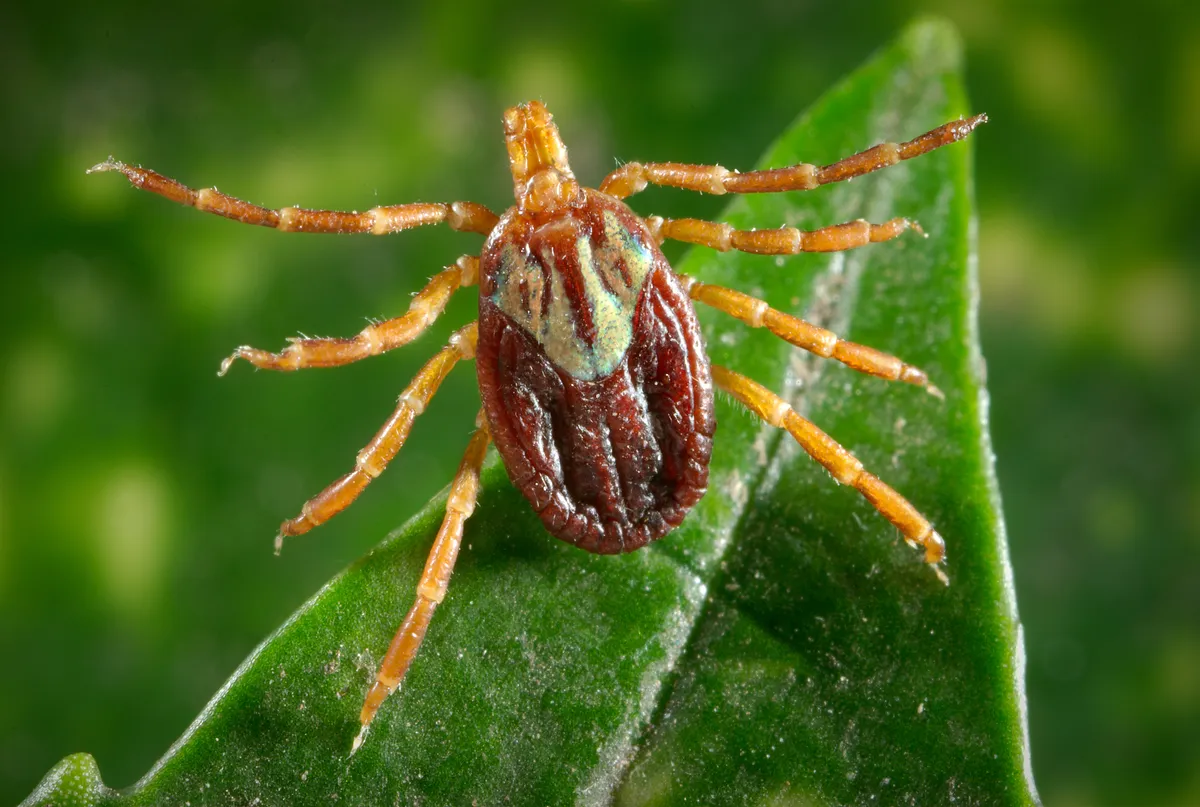
Where are lone star ticks found in Missouri?
Across most of the state. CDC's lone star tick surveillance lists the species as established in 63 of Missouri's 115 counties (114 counties plus the independent city of St. Louis) and reported in 21 more, through 2025; the other 31 have no record. The established counties include Jackson (Kansas City), Greene (Springfield) and St. Louis counties; the map caption explains what established and reported mean.
Lone star tick status by county, Missouri, through 2025
- Established
- Reported
- No record
Show the list
Established (63): Adair, Andrew, Barry, Benton, Bollinger, Boone, Butler, Caldwell, Camden, Carroll, Carter, Cedar, Christian, Clay, Cooper, Dade, Dallas, Dent, Douglas, Franklin, Gasconade, Gentry, Greene, Henry, Hickory, Holt, Iron, Jackson, Jefferson, Johnson, Laclede, Lafayette, Lawrence, Lincoln, Linn, Madison, Marion, McDonald, Miller, Monroe, Newton, Nodaway, Ozark, Phelps, Polk, Pulaski, Reynolds, Ripley, Saline, Shannon, St. Charles, St. Clair, St. Louis, Stoddard, Stone, Taney, Vernon, Warren, Washington, Wayne, Webster, Worth, Wright
Reported (21): Barton, Bates, Callaway, Cape Girardeau, Cass, Chariton, Cole, Crawford, Howard, Howell, Jasper, Macon, Morgan, Perry, Platte, Ralls, Scott, St. Francois, St. Louis, Ste. Genevieve, Texas
No record (31): Atchison, Audrain, Buchanan, Clark, Clinton, Daviess, DeKalb, Dunklin, Grundy, Harrison, Knox, Lewis, Livingston, Maries, Mercer, Mississippi, Moniteau, Montgomery, New Madrid, Oregon, Osage, Pemiscot, Pettis, Pike, Putnam, Randolph, Ray, Schuyler, Scotland, Shelby, Sullivan
Most of the 31 counties with no record lie north of the Missouri River or in the Bootheel, in the far southeast. That shows where lone star ticks have not been collected and reported, not where they are missing: CDC says a county not labeled established does not mean ticks are absent, and that status changes often reflect a county being sampled for the first time. Two of those counties, Daviess and Harrison in the northwest, had some of the highest ehrlichiosis rates among residents from 2019 to 2022, by BuzzSkito's calculation (see the county map below).
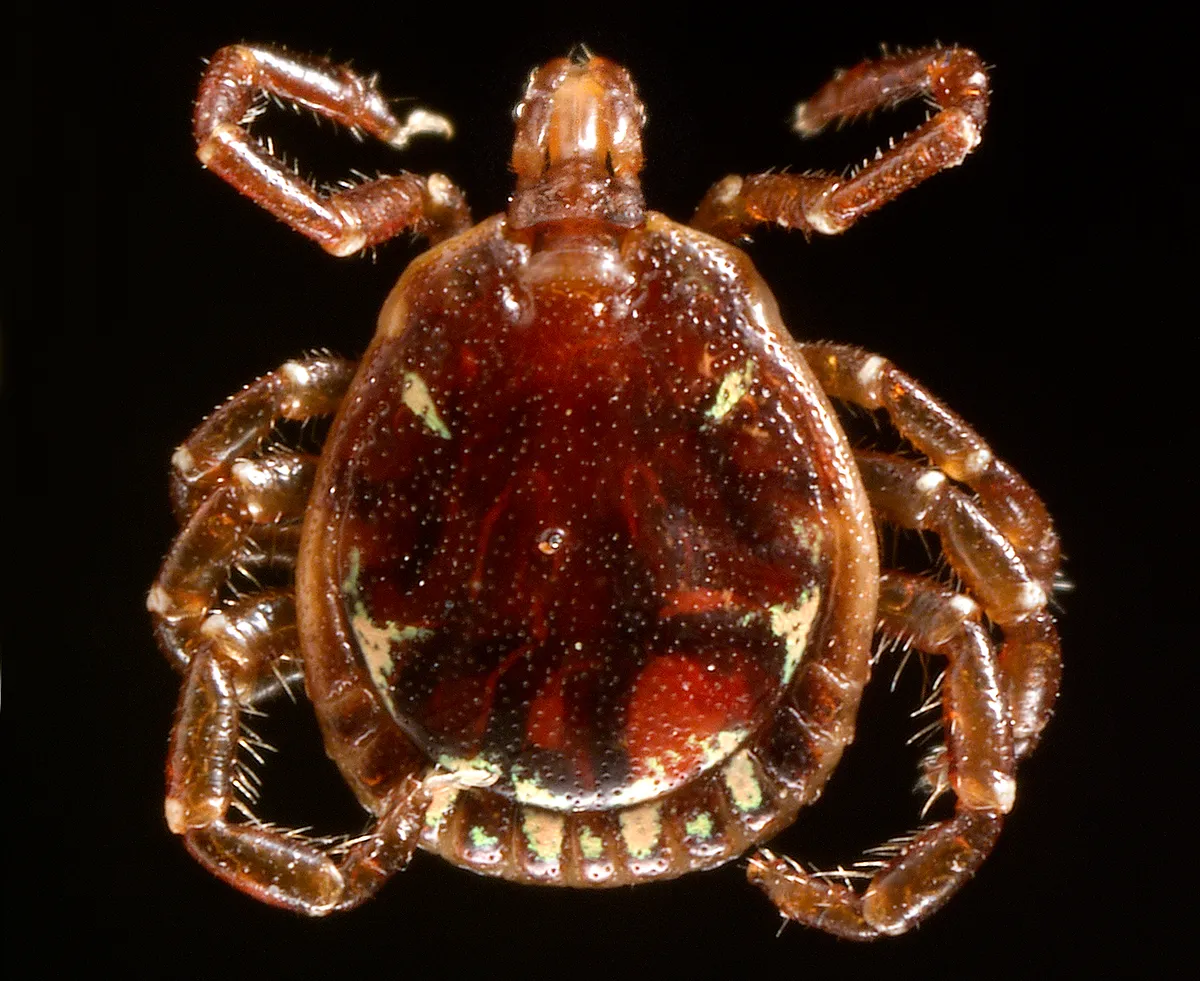
Lone star ticks are aggressive biters. MU Extension calls them very aggressive, nonspecific feeders that bite people in all of their life stages, and names white-tailed deer as their major host. The tick spreads ehrlichiosis, Missouri's most reported tick-borne disease, and its bite is linked to alpha-gal syndrome; both are covered below.
Where are blacklegged (deer) ticks found in Missouri?
Mostly in southern Missouri. CDC's ArboNET Tick Module table, which runs through December 31, 2025, lists blacklegged ticks as established in 23 Missouri counties and reported in 10 more, with no record in the other 82. Most established counties are in the southern half of the state, among them Greene, Taney, Stone, Howell, Pulaski and Stoddard, but the list also includes counties farther north, such as Adair, Callaway and St. Charles. That fits MU Extension's description of the tick as reaching into southern Missouri and uncommon in the north. As with the lone star tick, the status is cumulative, and CDC says no record can reflect a lack of sampling or reporting.

Have Lyme disease germs been found in Missouri ticks?
Not in CDC's county records. CDC's ArboNET Tick Module table of germs found in host-seeking blacklegged ticks, meaning ticks hunting for a host rather than feeding on one, has no Missouri record for the Lyme bacterium or for any of the six other germs it tracks. CDC cautions that a missing record should not be read as the germ being absent; it can reflect a lack of testing. The MDC study, which tested up to 10 ticks of each of four human-biting species from each county, found the germs behind anaplasmosis and Lyme disease, combined, in 3% of the blacklegged ticks tested. Across all species, 134 of 2,462 ticks tested, about 5%, carried a germ that causes human disease.
Which tick-borne diseases are most common in Missouri?
Ehrlichiosis, by a wide margin, then spotted fever rickettsiosis and tularemia. By BuzzSkito's ranking of CDC's 2023 state tables, Missouri's rate of Ehrlichia chaffeensis ehrlichiosis, 76.5 cases per million residents, was the highest of any state and almost twice the rate in Arkansas (41.4), the next highest, according to CDC's ehrlichiosis statistics. Missouri's spotted fever rickettsiosis rate, 18.1 per million, ranked fourth behind North Carolina, Arkansas and Kentucky, CDC's spotted fever data show, and its 24 tularemia cases were the most of any state, according to CDC's tularemia data.
The state's own counts show ehrlichiosis climbing. The Missouri Department of Health and Senior Services (DHSS) tickborne disease story map counts 706 ehrlichiosis cases in 2024, up from 492 in 2023 and the most in any year since its dashboard begins in 2009. DHSS says most Missouri cases are caused by E. chaffeensis, which reaches people mainly through lone star tick bites, and its tickborne disease page says tick-borne disease cases are generally rising, partly because of better recognition and reporting and partly because of environmental changes that increase people's exposure.
Ehrlichiosis cases reported in Missouri, 2009 to 2024
Cases per year
Show the numbers
| Cases reported to the state | |
|---|---|
| 2009 | 162 |
| 2010 | 130 |
| 2011 | 169 |
| 2012 | 203 |
| 2013 | 385 |
| 2014 | 368 |
| 2015 | 243 |
| 2016 | 248 |
| 2017 | 330 |
| 2018 | 356 |
| 2019 | 459 |
| 2020 | 260 |
| 2021 | 235 |
| 2022 | 338 |
| 2023 | 492 |
| 2024 | 706 |
Spotted fever rickettsiosis, a group of infections that includes Rocky Mountain spotted fever, comes second: the state counted 105 cases in both 2023 and 2024. DHSS links Rocky Mountain spotted fever to the American dog tick and Rickettsia parkeri to the Gulf Coast tick. Tularemia, with 26 cases in 2024 by the state's count, can come from tick or deer fly bites or from handling infected animals; in Missouri, DHSS says, the American dog tick and the lone star tick can pass it to people. Anaplasmosis, spread by blacklegged ticks, is not commonly identified in Missouri residents, DHSS says; the state counted 10 cases in 2024.
How does Missouri compare with its neighbors?
All eight of Missouri's neighbors had lower ehrlichiosis rates in 2023. Arkansas and Kentucky came next, and both had slightly higher spotted fever rates than Missouri. Lyme disease is uncommon across the region; Iowa's rate, 6.6 per 100,000, was the highest among the neighbors.
| State | Ehrlichiosis per million, 2023 | Spotted fever per million, 2023 | Lyme disease per 100,000, 2023 |
|---|---|---|---|
| Missouri | 76.5 | 18.1 | 0.3 |
| Arkansas | 41.4 | 20.9 | 0.2 |
| Kentucky | 28.5 | 20.8 | 2.7 |
| Kansas | 18.7 | 7.5 | 0.4 |
| Tennessee | 15.0 | 12.1 | 0.7 |
| Nebraska | 7.1 | 2.5 | 0.3 |
| Oklahoma | 5.4 | 7.2 | 0.1 |
| Iowa | 4.7 | 0.6 | 6.6 |
| Illinois | 4.4 | 1.6 | 2.9 |
Rates by state of residence, 2023, the latest year CDC had published for these diseases as of October 2026. Ehrlichiosis means E. chaffeensis ehrlichiosis. Note the units: ehrlichiosis and spotted fever are per million residents, Lyme disease per 100,000. Sources: CDC ehrlichiosis statistics, spotted fever statistics and Lyme disease surveillance data.
Which Missouri counties report the most ehrlichiosis?
Greene County, home to Springfield, by count, and several small rural counties by rate. CDC's county file lists 1,063 E. chaffeensis ehrlichiosis cases among Missouri residents from 2019 to 2022, and 297 of them lived in Greene County, which holds about 5% of the state's residents by BuzzSkito's calculation from Census Bureau estimates. Relative to population, and by the same kind of calculation, the highest average yearly rates were in Caldwell and Daviess counties in the northwest and Morgan County in central Missouri.
Ehrlichiosis cases per 100,000 residents a year, by county of residence, Missouri, 2019 to 2022
- 15 or more
- 5 to 14.9
- Under 5
- No cases reported
Show the list
15 or more (7): Caldwell, Camden, Cooper, Daviess, Greene, Harrison, Morgan
5 to 14.9 (43): Adair, Atchison, Benton, Bollinger, Carter, Chariton, Cole, Dade, Dallas, Dent, Douglas, Franklin, Gasconade, Grundy, Jefferson, Laclede, Lincoln, Macon, Maries, Mercer, Miller, Moniteau, Monroe, Montgomery, Oregon, Osage, Ozark, Perry, Phelps, Pike, Polk, Pulaski, Randolph, Reynolds, Ripley, Shannon, Ste. Genevieve, Stone, Texas, Warren, Washington, Wayne, Webster
Under 5 (41): Bates, Boone, Butler, Callaway, Cape Girardeau, Carroll, Cass, Cedar, Christian, Clay, Crawford, Gentry, Hickory, Howard, Howell, Iron, Jackson, Jasper, Johnson, Lafayette, Lawrence, Linn, Livingston, Madison, Marion, McDonald, Newton, Pettis, Platte, Ralls, Saline, Scott, St. Charles, St. Clair, St. Francois, St. Louis, St. Louis, Stoddard, Taney, Vernon, Wright
No cases reported (24): Andrew, Audrain, Barry, Barton, Buchanan, Clark, Clinton, DeKalb, Dunklin, Henry, Holt, Knox, Lewis, Mississippi, New Madrid, Nodaway, Pemiscot, Putnam, Ray, Schuyler, Scotland, Shelby, Sullivan, Worth
| County | Ehrlichiosis cases, 2019 to 2022 | Per 100,000 a year | Spotted fever cases, 2019 to 2022 | Per 100,000 a year |
|---|---|---|---|---|
| Caldwell | 30 | 84.2 | 34 | 95.4 |
| Daviess | 15 | 44.6 | 15 | 44.6 |
| Morgan | 22 | 25.7 | 6 | 7.0 |
| Greene | 297 | 24.7 | 220 | 18.3 |
| Harrison | 7 | 21.4 | 20 | 61.1 |
| Camden | 37 | 21.3 | 5 | 2.9 |
| Cooper | 14 | 21.0 | 7 | 10.5 |
| All of Missouri | 1,063 | 4.3 | 668 | 2.7 |
The seven counties with E. chaffeensis ehrlichiosis rates of 15 or more per 100,000 a year, by county of residence. Rates are BuzzSkito's calculation, as for the map. Sources as for the map.
Spotted fever follows a similar pattern: Greene County residents accounted for 220 of the state's 668 cases in those four years, and the highest rates were in Caldwell, Harrison and Daviess counties. Read every county figure with two cautions: CDC counts cases where the patient lives, not necessarily where the tick bite happened, as its county data page notes, and small counties swing sharply. Caldwell County's rates rest on a few dozen cases among about 8,900 residents.
What are Heartland and Bourbon viruses?
Two uncommon viruses that are likely spread by lone star ticks. Heartland virus was first reported from Missouri in 2012: two residents of northwest Missouri were diagnosed after being hospitalized for 10 days with high fever, diarrhea, loss of appetite and lethargy, and both later recovered, MU Extension's tick guide recounts. The DHSS story map says cases have since been identified in Missouri and other states, and that the lone star tick is believed to carry the virus in the United States.
Bourbon virus was first discovered in a resident of Bourbon County, Kansas, in 2014. DHSS lists it among the tick-borne diseases reported in Missouri, calls it uncommonly reported, and says its carrier has not been confirmed but is likely the lone star tick. For both viruses, DHSS says, many patients have required hospital care and have recovered fully with supportive care.
Is alpha-gal syndrome common in Missouri?
It is becoming more common, especially in Missouri and nearby states, according to the DHSS alpha-gal syndrome page, which estimates that between 7,300 and 34,400 people in Missouri may have been affected since 2021. Alpha-gal syndrome is a potentially life-threatening allergic condition that can follow a tick bite and causes reactions to red meat and other products made from mammals; in the United States it is linked mainly to the lone star tick, the DHSS story map says. It is not a reportable condition in Missouri. See alpha-gal syndrome and the tick bites linked to it for symptoms and diagnosis.
How much Lyme disease does Missouri have?
Very little. Missouri reported 16 confirmed and probable Lyme disease cases in 2023, a rate of 0.3 per 100,000 residents, according to CDC's Lyme disease surveillance data, and its yearly count has stayed between 2 and 17 since 2008. DHSS considers Missouri a low-incidence state for Lyme disease; its dashboard counts 17 cases for 2024.
Reported Lyme disease cases in Missouri, 2008 to 2023
Cases per year, by state of residence
Show the numbers
| Confirmed and probable cases | |
|---|---|
| 2008 | 6 |
| 2009 | 3 |
| 2010 | 4 |
| 2011 | 8 |
| 2012 | 2 |
| 2013 | 3 |
| 2014 | 10 |
| 2015 | 5 |
| 2016 | 10 |
| 2017 | 12 |
| 2018 | 11 |
| 2019 | 17 |
| 2020 | 7 |
| 2021 | 7 |
| 2022 | 7 |
| 2023 | 16 |
Compare years with care. Under the definition revised in 2022, low-incidence states such as Missouri still need supporting clinical information to count a case, and probable cases now require objective signs of infection, CDC's report on the first year of the change explains. In that report, Missouri's 7 cases in 2022 were 46% fewer than its 2017 to 2019 average of 13.
DHSS's list of tick-borne diseases reported in Missouri includes Lyme or Lyme-like disease and southern tick-associated rash illness (STARI), which MU Extension's 2013 guide described as very similar to Lyme disease but more common in Missouri. Either way, CDC advises seeing a doctor about a rash after a tick bite (see below).
When is tick season in Missouri?
Mainly April through September, but ticks can bite in any month. The DHSS story map says tick exposure can occur year-round, but that ticks are most active during the warmer months, April to September. Within that window each species' life stages arrive in waves, MU Extension's tick guide shows:
| Time of year | Lone star tick | American dog tick | Also worth knowing |
|---|---|---|---|
| Early spring | Adults and nymphs become active | Adults and larvae become active | DHSS's most active period starts in April |
| Late spring to midsummer | Adults and nymphs | Adults and larvae; nymphs from summer | Chiggers bite from May |
| Late summer to early fall | Larvae (seed ticks) | Adults and nymphs into early fall; larvae through summer | Chiggers bite until the first killing frost |
Life stages: MU Extension's tick guide (2013), which describes when each stage is generally active rather than exact dates. Most active months: the DHSS story map. Chiggers: MU Extension's chigger guide.
The lone star larvae active from late summer are the six-legged stage often called seed ticks. Tularemia has a season too: CDC's tularemia data page says it is more common from May through September, though infections from hunting or handling animals can happen at any time of year.
Is the Asian longhorned tick in Missouri?
Yes, in a handful of counties so far. The first Missouri record was collected in Greene County on May 28, 2021, and USDA's national situation report dated April 22, 2025, listed confirmed local populations in seven Missouri counties: Greene, Clay, Linn, Boone, Knox, St. Louis and Lawrence. Its first-detection dates run from 2021 to 2024, and the count changes as new finds are confirmed, so it may be higher now.

USDA's report is written for livestock health. It describes the Asian longhorned tick as a known serious pest of livestock in the Australasian and Western Pacific regions where it occurs, and as an aggressive biter that frequently builds intense infestations on domestic animals, causing great stress, reduced growth and production, and severe blood loss. It is also a known or suspected carrier of several germs that cause livestock and human diseases. Females can reproduce without mating, so a single fed female can start a population.
What about chiggers in Missouri?
Chiggers in Missouri are a separate nuisance: a chigger is not a tick but the parasitic larval stage of a common mite. MU Extension's chigger guide says Trombicula alfreddugesi is the species met most often in the United States, that Missouri produces two to three generations a year, and that the threat of bites lasts from May until the first killing frost. The biting larvae are only about 1/150 inch across.
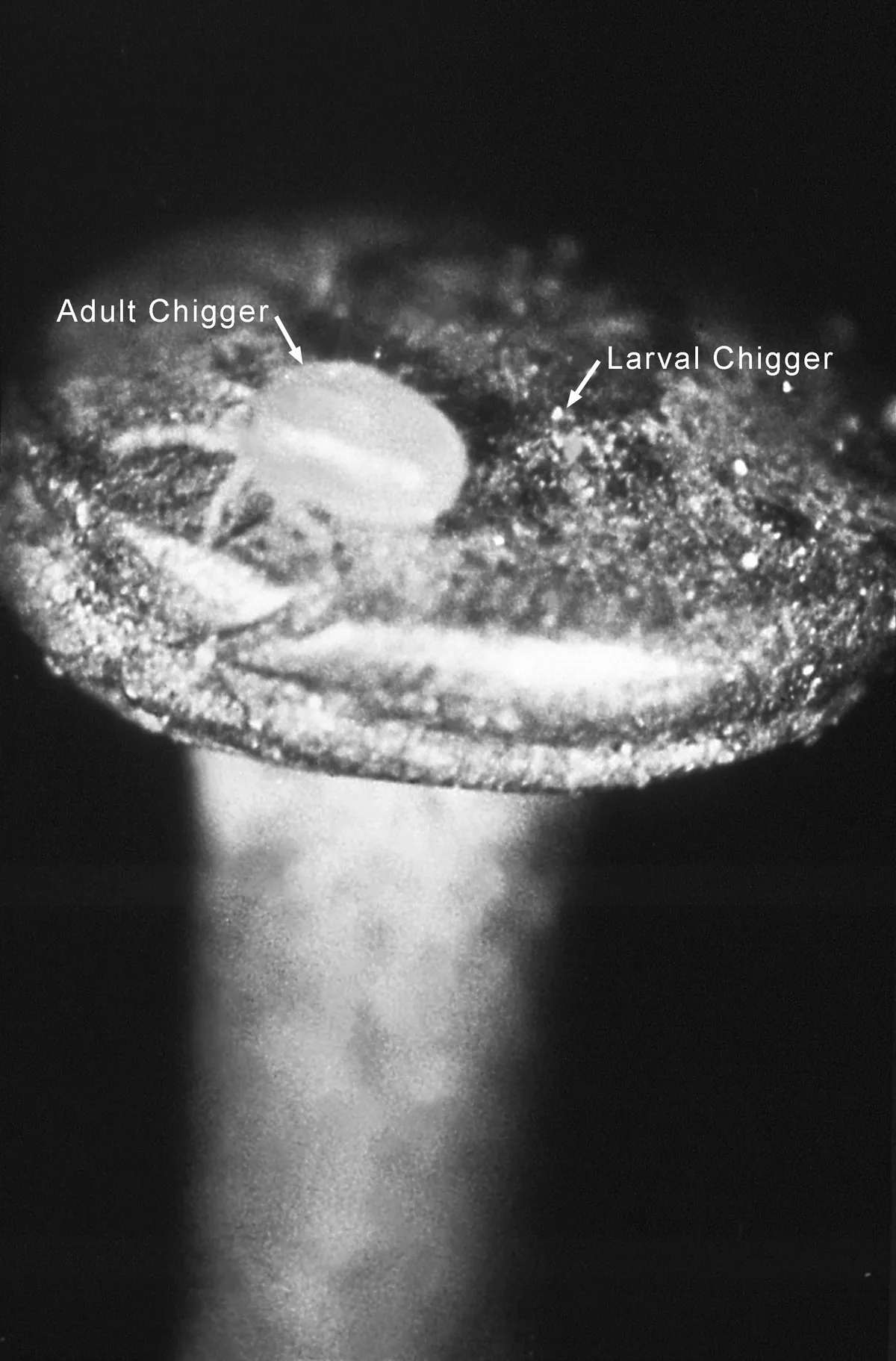
Chiggers do not burrow into the skin or suck blood. A chigger pierces the skin, injects a digestive enzyme and feeds for three or four days if left undisturbed; itching usually starts within hours, so chiggers are often scratched away before they finish, the guide says. They are more common in damp areas with low-growing shrubs, tall grass and weeds.
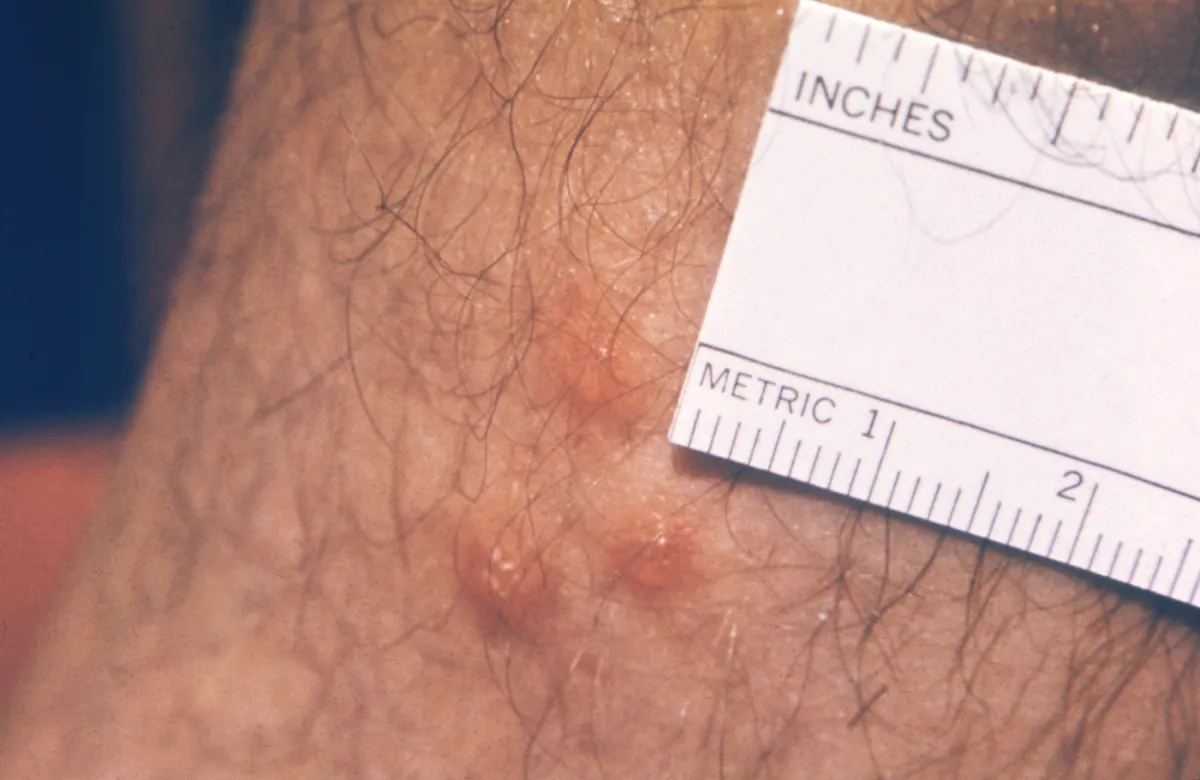
MU says any insect repellent containing DEET or picaridin will be effective against chiggers. It also suggests tightly woven clothing with pant legs tucked inside boots, and a warm shower with a vigorous skin massage within an hour or two of being outdoors, which it says greatly reduces the number of irritating bites. Mowing lawns and removing unnecessary shrubs and weeds is the most effective way to shrink chigger habitat in a yard. For photos of bites and how long the itch lasts, see what chigger bites look like.
What should you do after a tick bite in Missouri?
Remove the tick as soon as possible, then watch for fever or a rash over the next several weeks. CDC's advice on what to do after a tick bite says not to wait for a health care provider to remove it:
- Grasp the tick as close to the skin's surface as possible with clean, fine-tipped tweezers.
- Pull it away from the skin with steady, even pressure, without twisting or jerking. If the mouthparts stay behind and cannot be removed easily, leave them alone.
- Dispose of the live tick by sealing it in a container, wrapping it tightly in tape, flushing it down the toilet or putting it in alcohol, and never crush it with your fingers.
- Clean the bite and your hands with soap and water, rubbing alcohol or hand sanitizer, then check the rest of your body for other ticks.
CDC also advises against petroleum jelly, heat, nail polish or other substances meant to make a tick let go. The step-by-step tick removal guide has more detail. Testing the tick is not a shortcut: CDC says commercial tick testing is generally not recommended and that its results should not be used for treatment decisions.
Know the early signs of Missouri's two most common tick-borne illnesses. Ehrlichiosis symptoms typically begin within 1 to 2 weeks of a bite and can include fever, chills, severe headache, muscle aches, nausea, vomiting, diarrhea, loss of appetite and confusion; up to 1 in 3 people report a rash, more often children, according to CDC's ehrlichiosis symptoms page. For Rocky Mountain spotted fever, CDC says early signs such as fever and headache are not specific to the disease, and the rash usually develops 2 to 4 days after the fever begins.
Both can turn serious. CDC says early treatment lowers the risk of severe ehrlichiosis, and that Rocky Mountain spotted fever can be deadly if not treated early with the antibiotic doxycycline, which is approved for adults and children of all ages.
If a rash or fever develops within several weeks of removing a tick, CDC says to see a doctor and mention the bite, when it happened and where you most likely picked up the tick. DHSS similarly suggests that people consider consulting a health care provider for a sudden high fever, severe headache, muscle or joint aches, nausea, vomiting or diarrhea, and that they mention a tick bite or time in tick habitat. It also lists a rash or pus-filled wound at the site of a bite, or a spreading rash, as possible signs of tick-borne disease.
How do you prevent tick bites in Missouri?
Keep to the middle of trails, use repellent, consider permethrin-treated clothing and check for ticks when you come indoors. The DHSS tickborne disease page and its story map advise:
- Walk in the center of trails. Ticks do not jump, fall or fly and are generally found within three feet of the ground, DHSS says, and walking in the center of a trail avoids overhanging brush and tall grass.
- Use repellent on exposed skin. DHSS says a repellent containing DEET protects you by interfering with ticks' ability to locate you. Its story map lists EPA-registered repellents containing DEET, picaridin, IR3535, oil of lemon eucalyptus, PMD or 2-undecanone, and says to always read and follow the label.
- Consider permethrin for clothing and gear. For people likely to be in tick habitat, the story map suggests treating clothing and gear with permethrin, which DHSS says kills ticks, as well as mosquitoes and chiggers, and lasts through launderings when used as the label directs.
- Wear light colors and tuck in. Light-colored clothing makes ticks easier to spot, and tucking or taping pant legs into socks keeps them from reaching your skin.
- Check yourself, your pets and your clothes. Check your body carefully, especially around the head, neck, underarms and groin, check pets too, and put outdoor clothes in the dryer on high heat for several minutes to kill any ticks.
Ticks are not only a woods problem: the DHSS story map notes that many people get ticks in their own yard or neighborhood. Around the home, MDC notes that ticks avoid bare ground and prefer areas with leaf litter, and suggests prescribed burning, mowing and landscaping. MU Extension's tick guide recommends opening as much of a lawn as possible to sunlight, clearing piles of leaf litter from yard edges, and separating lawn from tick habitat with a mulch or gravel barrier about 3 feet wide.
Pets carry ticks indoors, so MDC advises treating dogs and cats for ticks, and the DHSS story map suggests asking your pet's veterinarian about tick prevention products; our guide to ticks on dogs covers checks and removal.
This guide is general educational information, not medical advice. If you have symptoms or concerns after a bite or exposure, contact a healthcare provider.
Use any pesticide exactly as its label directs. The label is the law, and what is registered and sold varies by state.
Frequently Asked Questions
What is the most common tick in Missouri?+
The lone star tick. In a statewide citizen-science study that the Missouri Department of Conservation and A.T. Still University began in 2021, lone star ticks made up 71% of the 17,466 ticks residents mailed in, followed by American dog ticks at 26% and blacklegged ticks at 2%. CDC lists the lone star tick as established in 63 of Missouri's 115 counties through 2025. Adult females are easy to recognize by the single white spot on their backs.
Is Lyme disease common in Missouri?+
No. Missouri reported 16 confirmed and probable Lyme disease cases in 2023, a rate of 0.3 per 100,000 residents, according to CDC, and the state health department considers Missouri a low-incidence state. Ehrlichiosis is far more common: the state counted 706 cases in 2024. Blacklegged ticks, which spread Lyme disease, are established mainly in southern Missouri. CDC advises seeing a doctor if a rash or fever develops within several weeks of removing any tick.
When is tick season in Missouri?+
Ticks are most active from April through September, the state health department says, but exposure can occur year-round. University of Missouri Extension's 2013 tick guide says lone star adults and nymphs are generally active from early spring through midsummer, and their larvae, often called seed ticks, from late summer through early fall. American dog tick adults are active from spring through early fall. Chiggers, which are mites rather than ticks, bite from May until the first killing frost.
What is the most common tick-borne disease in Missouri?+
Ehrlichiosis. The state health department counted 706 cases in 2024, the most on its dashboard, which begins in 2009, and CDC's 2023 figures gave Missouri the highest rate of Ehrlichia chaffeensis ehrlichiosis of any state, 76.5 cases per million residents. Lone star ticks spread it. CDC says symptoms typically begin within 1 to 2 weeks of a bite and can include fever, chills, severe headache and muscle aches.
Are there Asian longhorned ticks in Missouri?+
Yes. The first Missouri record was collected in Greene County in May 2021, and USDA's situation report dated April 22, 2025, listed confirmed local populations in seven Missouri counties: Greene, Clay, Linn, Boone, Knox, St. Louis and Lawrence. The count may have grown since. USDA describes the tick as an aggressive biter that frequently builds intense infestations on domestic animals, and its females can reproduce without mating, so a single fed female can start a population.
Should I get a tick tested after a bite in Missouri?+
CDC says commercial tick testing is generally not recommended and that its results should not be used to make treatment decisions. A positive result does not necessarily mean you were infected, a negative result can give false assurance because another tick may have bitten you unnoticed, and symptoms usually appear before results arrive. Instead, remove the tick promptly, remember when and where you were bitten, and see a doctor if a rash or fever develops within several weeks.
Sources
- Lyme Disease Surveillance Data — Centers for Disease Control and Prevention
- Surveillance for Lyme Disease After Implementation of a Revised Case Definition - United States, 2022 — CDC Morbidity and Mortality Weekly Report
- Tick Surveillance Data Sets — Centers for Disease Control and Prevention (ArboNET Tick Module)
- Lone Star Tick Surveillance — Centers for Disease Control and Prevention (ArboNET Tick Module)
- Ehrlichiosis Epidemiology and Statistics (state incidence file, 2023) — Centers for Disease Control and Prevention
- Data and Statistics on Spotted Fever Rickettsiosis (state incidence file, 2023) — Centers for Disease Control and Prevention
- Tularemia Data and Statistics (cases by state, 2023) — Centers for Disease Control and Prevention
- Geographic Distribution of Tickborne Disease Cases (county file, 2019 to 2022) — Centers for Disease Control and Prevention
- County Population Totals and Components of Change: 2020-2025 — U.S. Census Bureau
- What to Do After a Tick Bite — Centers for Disease Control and Prevention
- Signs and Symptoms of Ehrlichiosis — Centers for Disease Control and Prevention
- About Rocky Mountain Spotted Fever — Centers for Disease Control and Prevention
- Tickborne Disease — Missouri Department of Health and Senior Services
- Missouri Tickborne Disease Story Map (with annual case dashboards, 2009 to 2024) — Missouri Department of Health and Senior Services, Zoonotic Disease Program (hosted on ArcGIS StoryMaps)
- Alpha-Gal Syndrome — Missouri Department of Health and Senior Services
- Show-Me Ticks (Missouri Conservationist, February 2023) — Missouri Department of Conservation
- Guide to Ticks and Tick-Borne Diseases (IPM1032, 2013) — University of Missouri Extension
- Chiggers (G7398, reviewed September 2017) — University of Missouri Extension
- National Haemaphysalis longicornis (Asian Longhorned Tick) Situation Report, as of April 22, 2025 — USDA Animal and Plant Health Inspection Service (copy hosted by Texas A&M AgriLife's Tick App)
How this guide was made: it was researched and drafted with AI assistance from the sources listed above. A second, independent AI pass then checked each factual claim against those sources. Found an error? Email support@buzzskito.ca.
