
Reviewed by Alex Francisco
Published November 23, 2026 · Fact-checked against the sources listed below
What is the bug with lots of legs in my house?
In most homes it is a house centipede, a millipede, or a pill bug or sowbug, and the legs settle which. UC IPM's centipede and millipede guide gives the rule: a centipede has one pair of legs on each body segment, a millipede two (sometimes four) pairs of tiny legs per segment. Pill bugs and sowbugs are not insects at all, and UC IPM's pill bug and sowbug guide counts seven pairs of legs on them, where an insect has three.
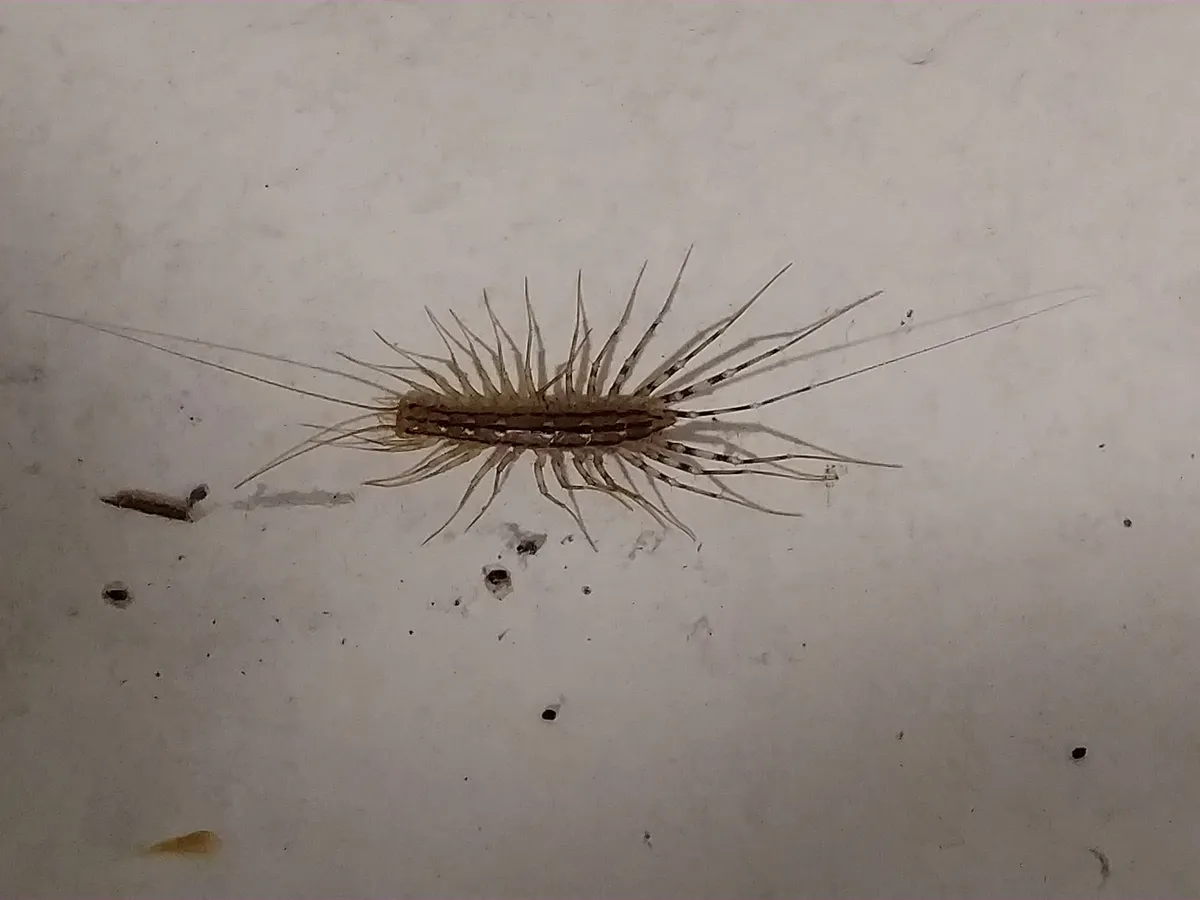
If you could not count the legs, go by what the bug did and what it looked like:
| What you saw | Most likely | Read more |
|---|---|---|
| Ran across the floor or wall very fast, legs all around it like a fringe | House centipede | House centipede ID and bites |
| Slow, round and wormlike; coiled when touched, or found dead in a spiral | Millipede | Why millipedes come indoors |
| Gray, oval and armored, 1/3 to 3/4 inch long | Pill bug (rolls up) or sowbug (does not) | Roly polies and sowbugs |
| Tiny, white and quick, in garden or plant soil | Garden symphylan; springtails if they jump | The plant soil section below |
| Caterpillar-like and green or spotted, on a plant | Sawfly larva or caterpillar | The worm section below |
| Silvery or mottled gray, carrot-shaped, three tails | Silverfish or firebrat | Silverfish and their look-alikes |
| Long legs, small humped body, jumps | Camel cricket | Camel cricket ID |
| Long thin legs, tiny body, hangs in a ceiling corner | Cellar spider | Daddy long legs explained |
Compiled from the extension and state sources linked in the sections below.
Color alone settles little: Penn State describes the millipedes people usually come across as dark brown, and a dark brown animal can look black in a dim basement. Legs, speed and shape are the better clues. For the centipede-or-millipede question on its own, the side-by-side centipede vs millipede guide goes trait by trait.
How many legs does it have? Count the pairs
Count legs in pairs, and count the pairs on one segment before you try the whole body. The number narrows the list to one group:
| Legs you count | Group | Examples |
|---|---|---|
| 6 (3 pairs) | Insects | Silverfish, firebrats, earwigs, camel crickets |
| 8 (4 pairs) | Spiders and harvestmen | Cellar spiders, harvestmen |
| 14 (7 pairs) | Pill bugs and sowbugs | Pill bugs and sowbugs |
| Up to 24 (12 pairs) | Symphylans | Garden symphylans in soil |
| 30 (15 pairs) as an adult | House centipede | House centipede; the young have fewer |
| One pair per segment, 15 to 191 pairs | Centipedes | Stone and soil centipedes |
| Two pairs on most segments, usually 30 to 300 legs | Millipedes | Greenhouse and garden millipedes |
| 6 true legs plus fleshy prolegs | Insect larvae | Caterpillars, sawfly larvae |
From UC IPM, the University of Kentucky, Penn State, Oregon State, Ohio State, the University of Maryland and the Missouri Department of Conservation.
Two catches. Young house centipedes hatch with only four pairs of legs and add more as they molt, Penn State Extension says, so a small one can show far fewer than 15 pairs. And the Missouri Department of Conservation notes that centipedes always have an odd number of pairs, from 15 to 191, while the University of Kentucky says most millipedes have between 30 and 300 legs, not a thousand.
What is the fast bug with lots of long legs?
A fast bug with long legs all around its body, indoors, is a house centipede. The University of Maryland Extension's household pest key describes it as over an inch long and grayish yellow with three dark stripes, with 15 pairs of long legs along the sides, moving rapidly, mostly in basements, damp closets and bathrooms. Penn State adds that the last pair of legs on adult females is nearly twice the body's length.
It is the one centipede that lives indoors for good: Kentucky calls it the only centipede species that can survive inside structures, and the Missouri Department of Conservation says it runs startlingly quickly and turns up in basements, crawl spaces, cellars and bathrooms, especially in winter. It hunts other small animals, so Penn State reads frequent sightings as a sign that its prey, such as silverfish, cockroaches or spiders, is plentiful. Its bite, baby stages and control are in the house centipede guide.
A shorter, brown centipede
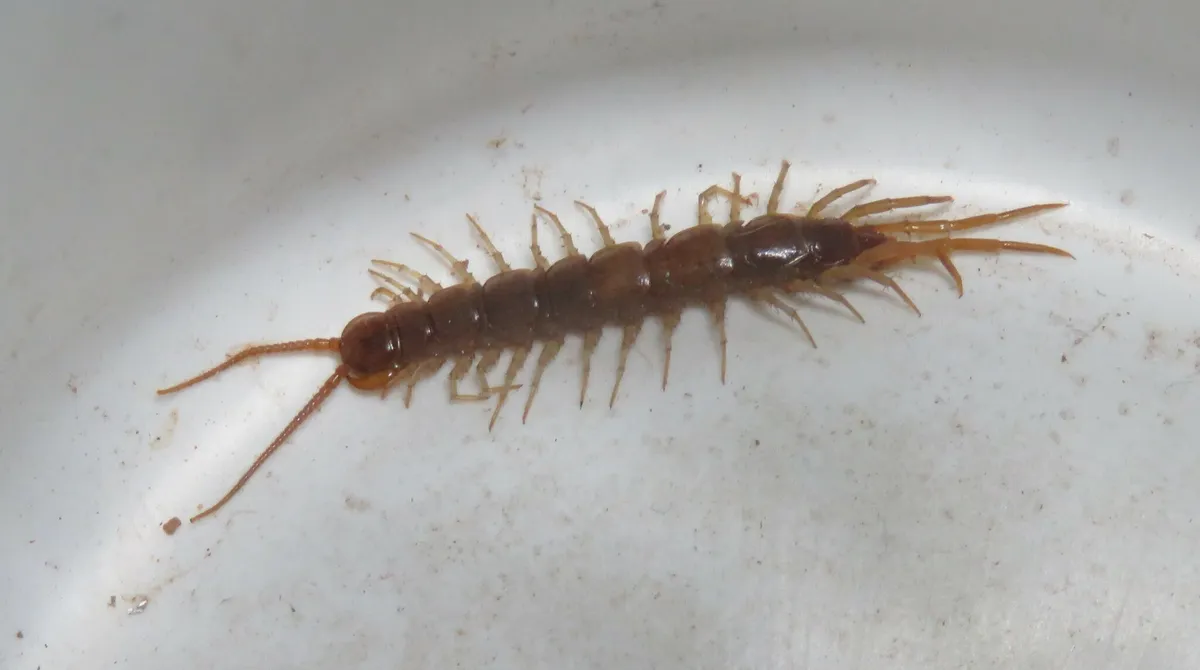
A flat, brown centipede with shorter legs is an outdoor kind that has wandered in. Missouri says most centipedes are only about 1/2 to 1 inch long and are almost always confined to damp, humid places, and Kentucky says most centipedes die shortly after entering a building because it is too dry for them.
What is the worm with lots of legs?
A wormlike animal with many short legs is usually a millipede; a slender, pale one dug up in soil may be a soil centipede; and a leggy green or spotted worm eating a leaf is a sawfly larva or a caterpillar. Penn State's millipede page describes the millipedes people usually come across as dark brown, about an inch long and 1/16 inch thick, with two pairs of legs on each segment except the first three, which have one. Most curl into a spiral when they die, and the University of Maryland says those that get in usually turn up dead in the basement or near an outside door.
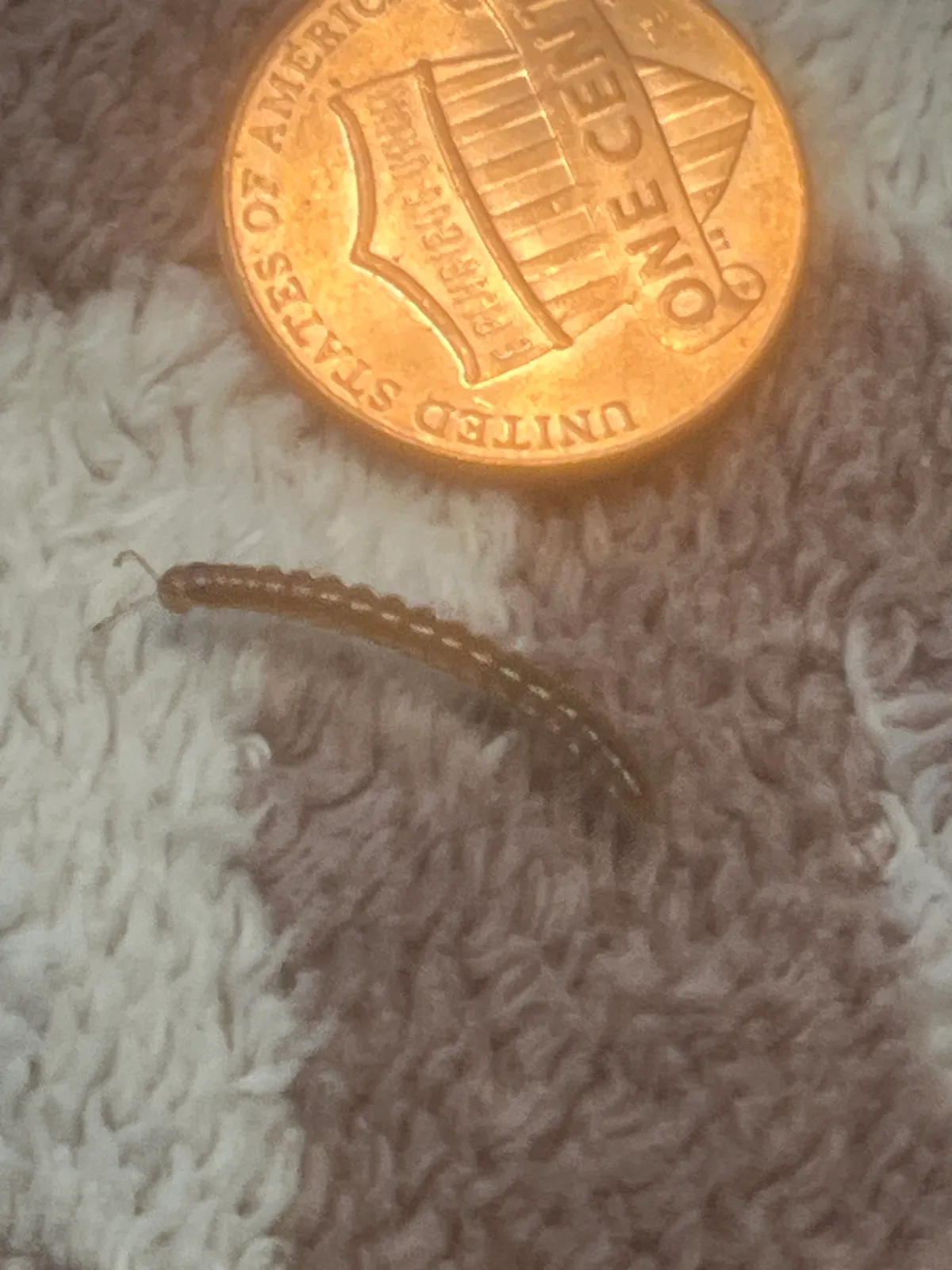
Millipedes do not move rapidly and most curl up when prodded, UC IPM says, while centipedes never coil when disturbed. UC IPM also notes that some millipedes release a defensive liquid that can irritate skin or burn the eyes, so pick them up with a paper towel or a dustpan rather than bare fingers. Why they arrive in droves after rain is covered in the millipede guide.
Soil centipedes
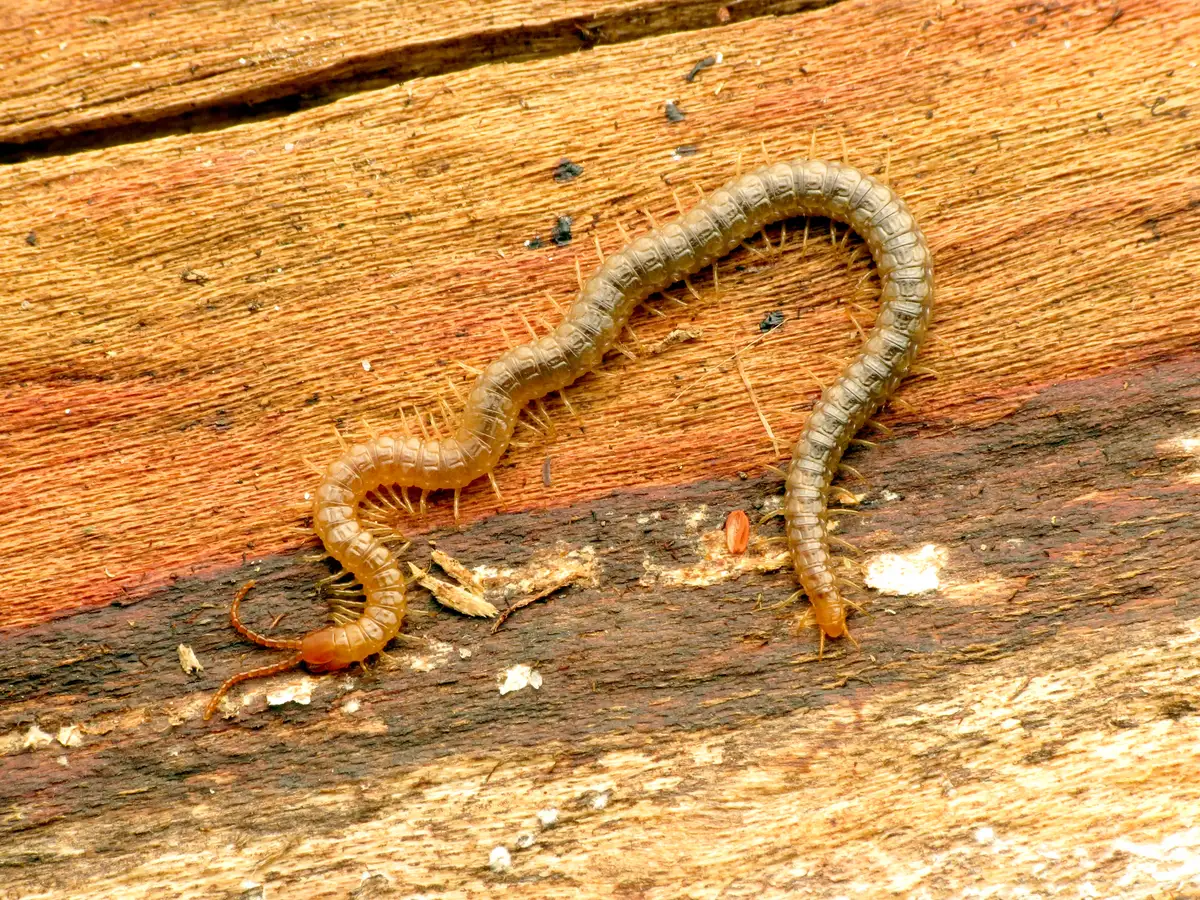
A thin, tan or pale worm with a fringe of tiny legs, found when digging in soil, may be a soil centipede. Missouri describes soil centipedes as burrowing, wormlike and eyeless, living in the soil. Look at one segment: a single pair of legs there makes it a centipede, two pairs a millipede.
Sawfly larvae and caterpillars
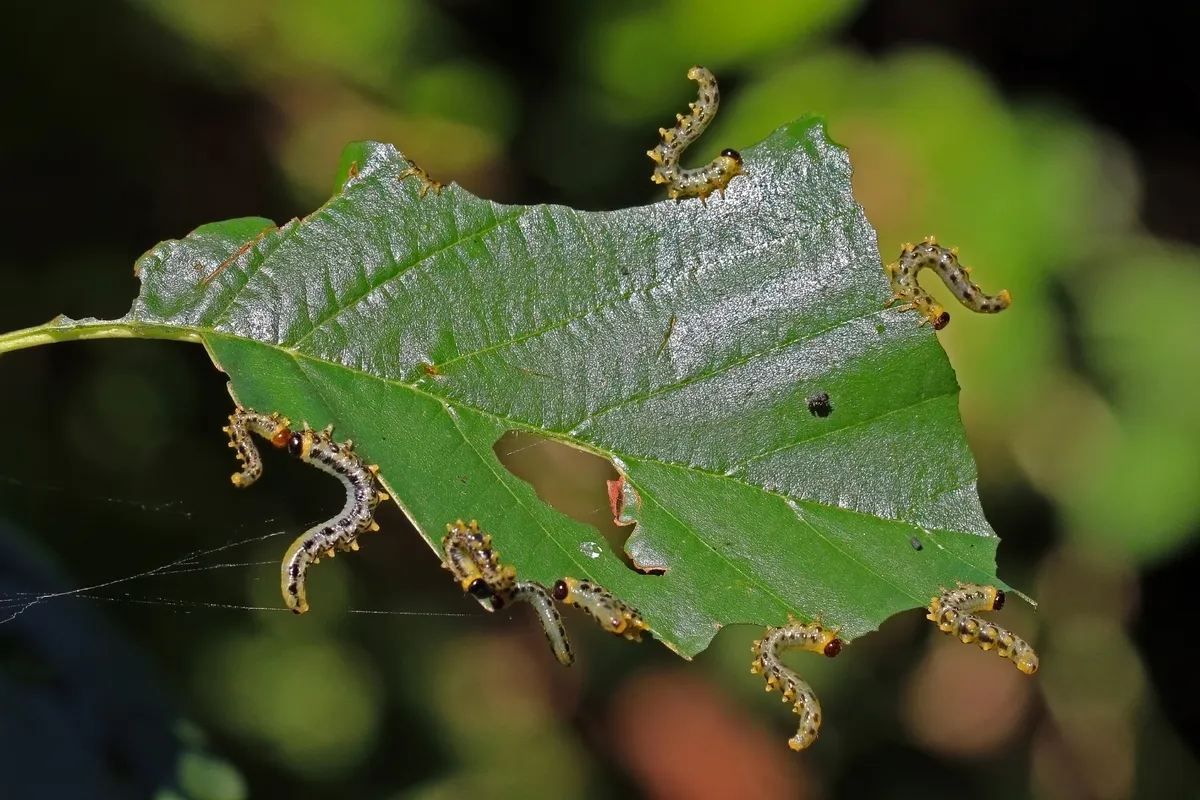
Both have three pairs of true legs behind the head and a row of fleshy prolegs on the abdomen. Ohio State's Buckeye Yard and Garden onLine gives the count: leaving out the pair at the very tip, caterpillars have five or fewer pairs of abdominal prolegs and sawfly larvae six or more. The difference matters for control, because Ohio State notes that Btk products kill only caterpillars, not sawfly larvae.
Some caterpillars sting. The University of Kentucky's stinging caterpillar fact sheet says their hollow hairs connect to poison sacs and that reactions range from mild itching to pain, swelling and blistering. It advises not brushing one off with a bare hand and seeing a physician if a severe reaction occurs. It names the saddleback, puss and io moth caterpillars among the stinging caterpillars.
What is the small gray bug with 14 legs?
A small, gray, armored bug with 14 legs is a pill bug or a sowbug. UC IPM puts adults at about 1/3 to 3/4 inch, with seven pairs of legs. Pill bugs curl into a ball like a pill when disturbed and have a smooth, rounded rear end; sowbugs cannot roll up, usually run instead, and have two tail-like appendages sticking out from the rear.
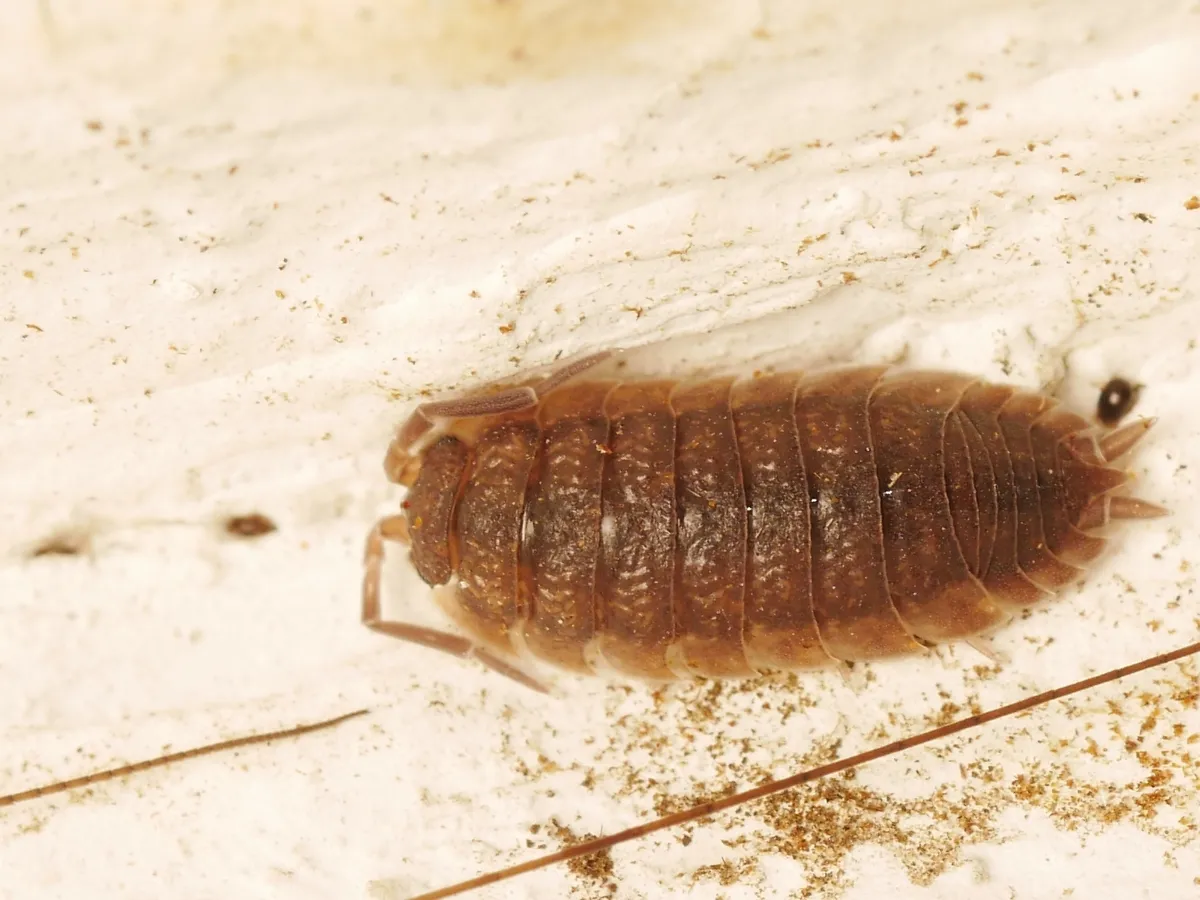
The University of Kentucky's fact sheet on pill bugs and sowbugs says they depend heavily on humid air, which can drive them into crawl spaces, basements and ground-level floors in search of water, and that they usually die indoors for lack of moisture. The University of Maryland finds them near ground-level doors. What they eat and how to keep them out are covered in the pill bug guide.
What is the tiny white bug with lots of legs in plant soil?
A tiny white bug with many legs that darts out of sight in soil may be a garden symphylan. UC IPM's garden symphylan page describes them as slender and white, with twelve pairs of legs, fourteen body segments and a pair of antennae, running rapidly when exposed to light, in moist soil rich in organic matter, where they feed on roots. Oregon State University puts them under 1/2 inch (adults about 1/4 inch), with 6 to 12 pairs of legs depending on age. Both pages describe garden and crop soil; neither mentions houseplant pots.
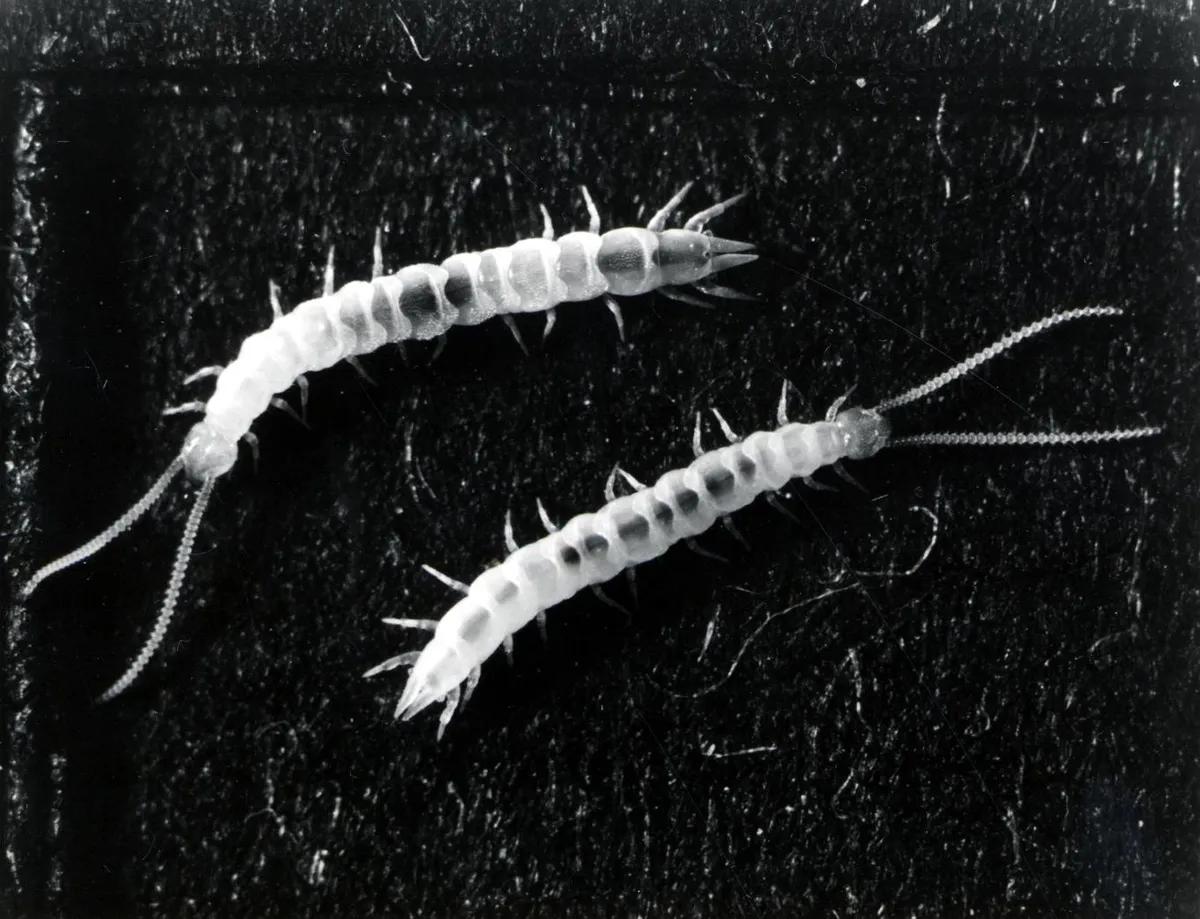
Oregon State separates them from two look-alikes: springtails have only three pairs of legs, shorter antennae and move more slowly, and centipedes are larger, brown or other colors, with 15 or more pairs of legs. Tiny gray or white bugs that jump around flowerpots are springtails, which the University of Maryland ties to bathrooms, flowerpots and high humidity; the springtail guide covers them. Pill bugs also shelter under flowerpots, and the other plant pests are sorted in the houseplant bug guide.
What bug looks like it has lots of legs but does not?
Silverfish, earwigs, camel crickets, cellar spiders and harvestmen have 6 or 8 legs, yet long antennae, tails or very long legs make them read as many-legged at a glance.
- Silverfish and firebrats: three tails. UC IPM's silverfish guide describes both as slender and wingless, about 1/2 inch long (a silverfish can reach 3/4 inch), with two long antennae and three long, thin tail-like appendages: six legs plus five long threads. The silverfish look-alike guide sorts them.
- Earwigs: pincers. UC IPM's earwig guide puts the adult at about 3/4 inch and reddish brown, with forceps at the tail end, curved in males and straighter in females. How to get rid of earwigs covers keeping them out.
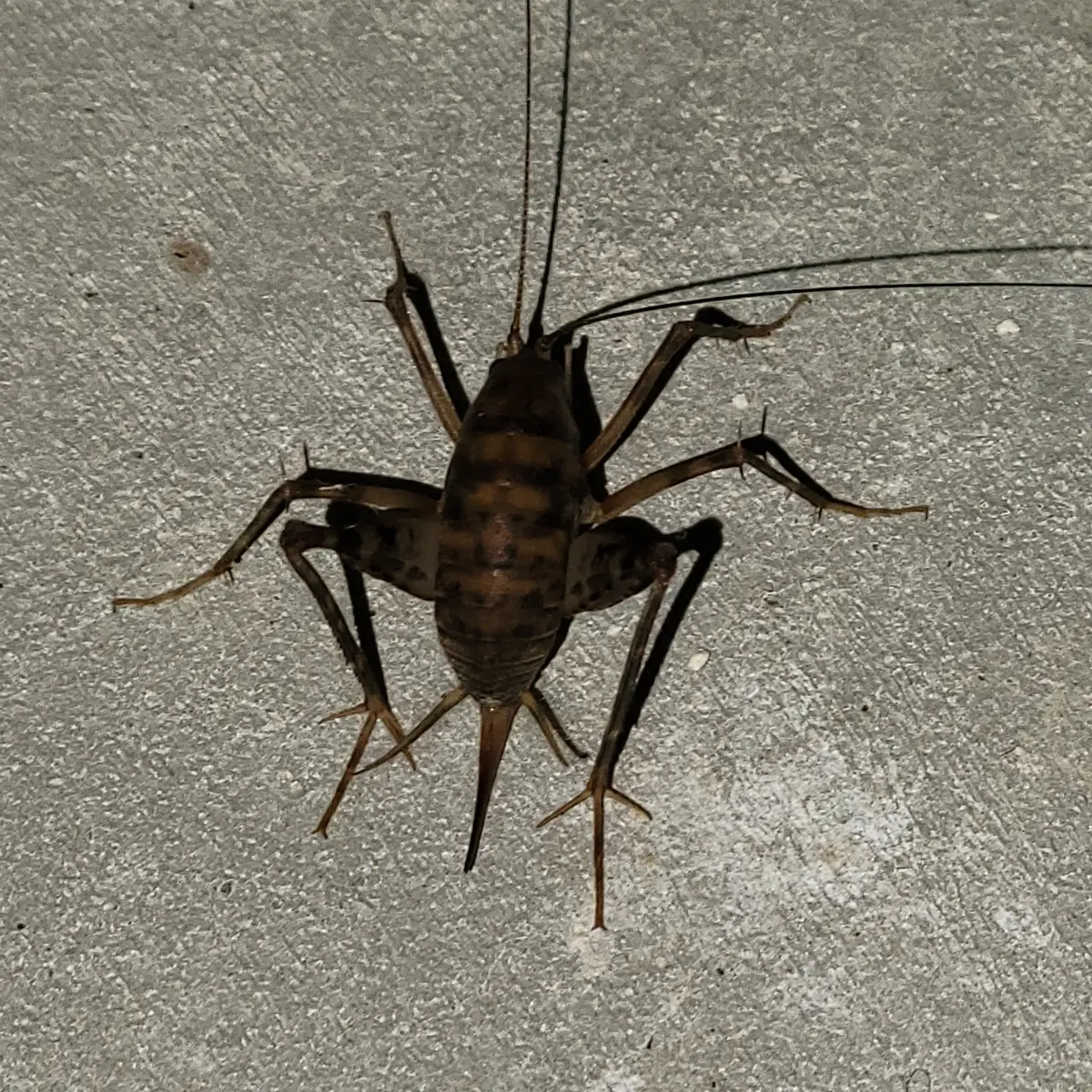
- Camel crickets: they jump. The Missouri Department of Conservation describes a hump-backed, wingless cricket to about 1 inch, tan to dark brown, with long antennae and large hind legs, that can jump a surprising distance and lives in basements and cellars. See the camel cricket guide.
- Cellar spiders: they hang in ceiling corners. Missouri describes cellar spiders as fragile spiders with extremely long, thin legs and a body usually no more than about 1/4 inch, hanging belly-up in messy webs in basements, garages and ceiling corners.
- Harvestmen: one oval body, no web. Missouri's harvestman page describes a simple oval body with the head and abdomen hard to tell apart, very long legs (the second pair usually longest) and no silk glands, so they never build webs. Both they and cellar spiders get called daddy longlegs; the daddy long legs guide tells them apart.
Which bug with lots of legs is it, by room?
Where you found it narrows the list, because most of these need damp places:
| Room | Most likely | Also check |
|---|---|---|
| Bathroom, tub or sink | House centipede | Silverfish trapped in the tub; millipedes; springtails |
| Basement or crawl space | House centipede, millipedes | Camel crickets, cellar spiders, sowbugs, pill bugs |
| By an outside door or on the ground floor | Millipedes, pill bugs, sowbugs | Earwigs, brown stone centipedes |
| Potted plants or garden soil | Pill bugs under the pot | Garden symphylans, springtails, soil centipedes |
| Near the furnace or hot water pipes | Firebrats | House centipedes, which eat them |
| On plants outdoors | Caterpillars, sawfly larvae | Millipedes in mulch |
From the University of Maryland, Penn State, UC IPM, the University of Kentucky and the Missouri Department of Conservation.
UC IPM notes that silverfish and firebrats sometimes turn up in bathtubs and sinks because they cannot climb the slippery sides back out, and Penn State lists floor drains without water traps among house centipede hiding places. Bugs in the bathroom and bugs in the basement cover every suspect in those two rooms.
Checks to run with the bug in a jar
- How many legs on one segment? One pair points to a centipede, two pairs to a millipede.
- How many legs in all? Six is an insect, eight a spider or harvestman, fourteen a pill bug or sowbug.
- Did it run, crawl or jump? Very fast is a house centipede, slow is a millipede, a long jump is a camel cricket.
- Did it roll into a ball or curl into a coil? A ball is a pill bug, a flat coil a millipede.
- What is on the tail end? Three threads mean a silverfish or firebrat, pincers an earwig, two tail-like points a sowbug.
- Tiny and white in soil? Think garden symphylan, then springtail if it jumps.
- How big is it? Lay it beside a ruler marked in inches and compare it with the quick-ID table.
Do bugs with lots of legs bite?
Centipedes can bite; UC IPM says millipedes do not, Kentucky says pill bugs and sowbugs will not bite or sting, and Oregon State rates garden symphylans as causing no harm to people or pets. Kentucky says centipedes can inflict painful bites when handled, though house centipedes pose a minimal bite hazard because their venom claws are so small. Missouri says a house centipede cannot easily bite a person and that a bite is generally no worse than a bee sting. Missouri adds that its biggest centipede, the giant redheaded centipede, can give an intensely painful bite with swelling, though usually no worse than a wasp or scorpion sting, and that anyone who has trouble breathing after a bite should get medical care right away.
Millipedes' defensive liquid can irritate skin or burn the eyes, UC IPM says, so keep hands away from your eyes after touching one. Earwigs can bite if trapped in clothing or sat on, UC IPM says, though they generally do not attack people. Missouri says harvestmen lack venom glands and their mouthparts are too small to bite people, and calls cellar spider venom comparatively mild. Contact a healthcare provider about any bite or rash that worries you.
What does a bug with lots of legs tell you about moisture?
Most of them point to damp: Kentucky says centipedes and millipedes are very sensitive to moisture loss and that pill bugs and sowbugs depend on humid air, and UC IPM says silverfish need relative humidity above 75 percent at higher temperatures. Missouri says camel crickets that are numerous in a basement could mean a moisture problem. Firebrats are the exception, preferring very warm spots above 90°F. A steady run of these animals usually means a damp basement, bathroom or crawl space, or wet mulch and leaf litter against the foundation. EPA's guide to mold and moisture advises keeping indoor humidity below 60 percent, ideally 30 to 50 percent, fixing leaks, running the bathroom fan and making sure the ground slopes away from the foundation.
Commonly confused with
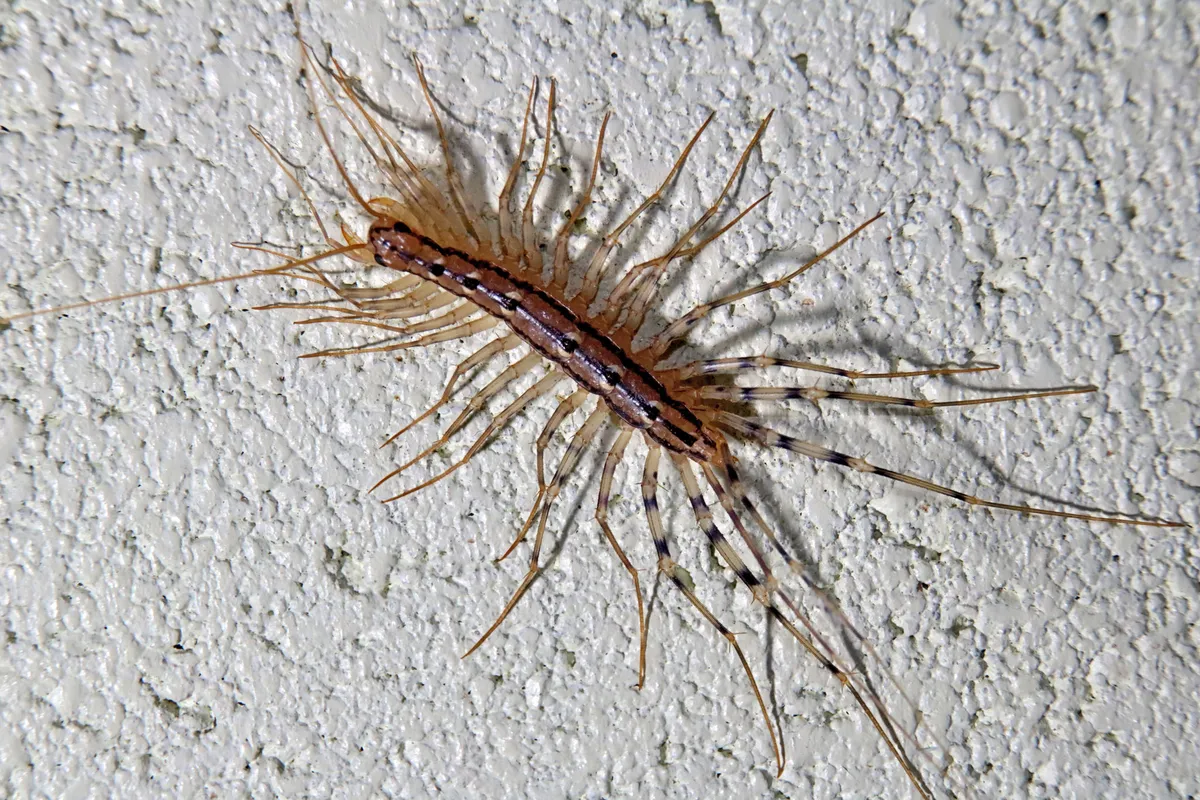 House centipede15 pairs of long banded legs; runs very fast in basements and bathrooms
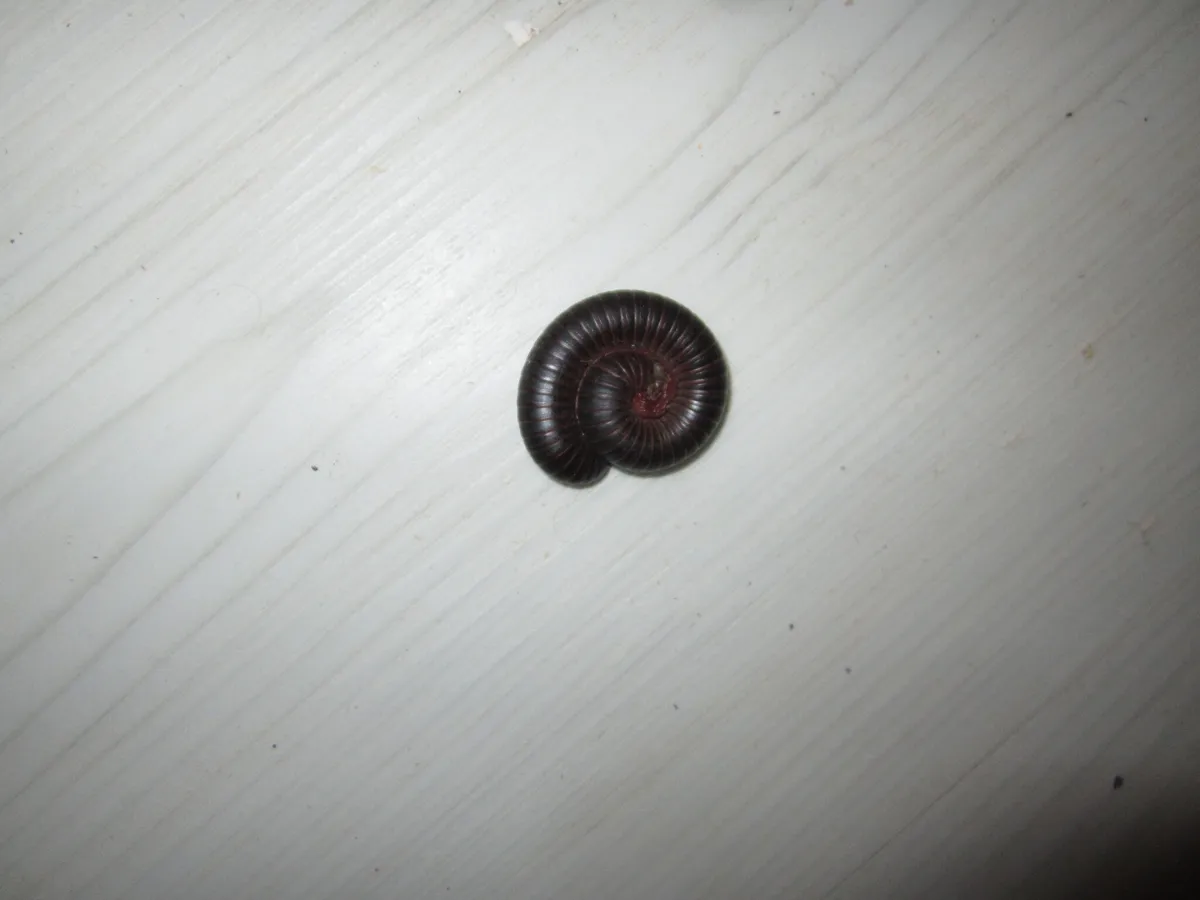 MillipedeTwo short pairs of legs on most segments; slow, and curls into a coil
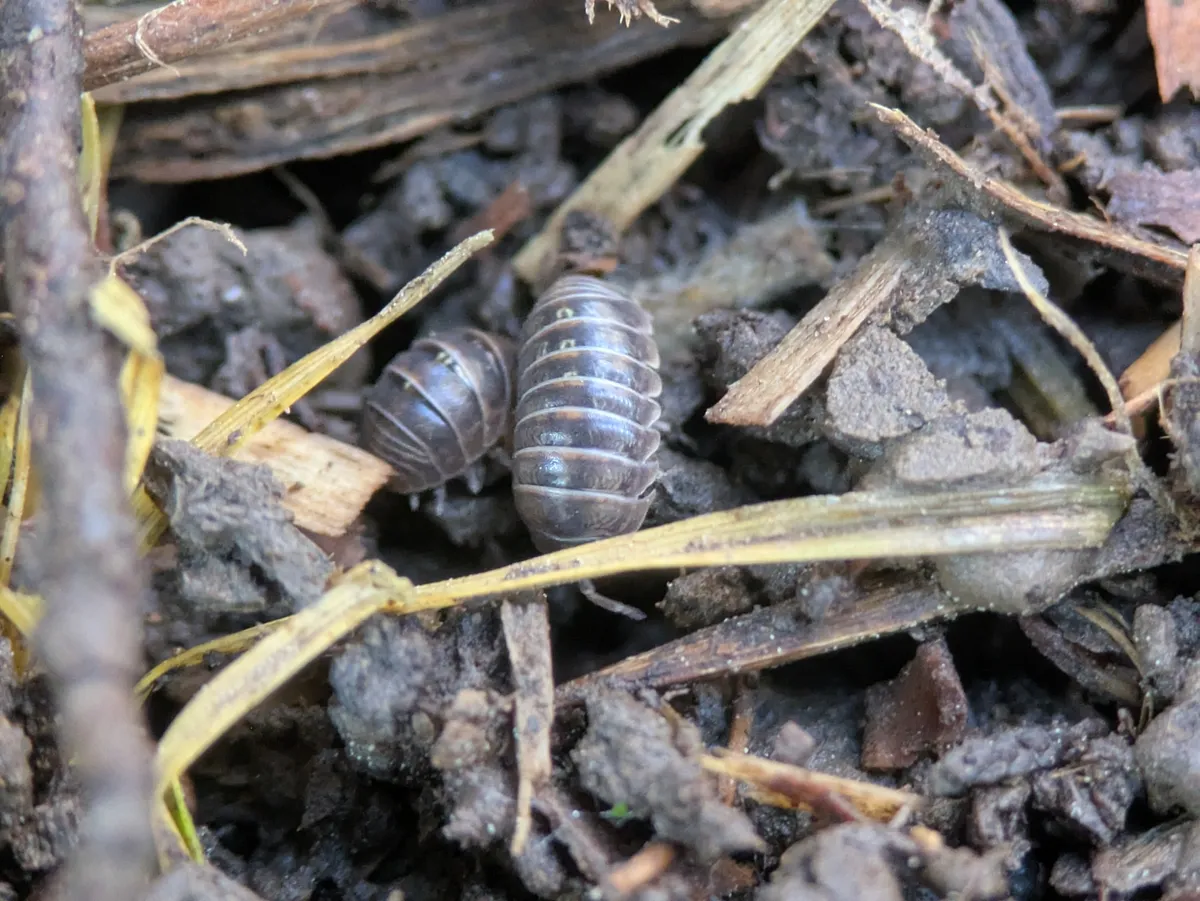 Pill bugGray and armored with 7 pairs of legs; rolls into a ball
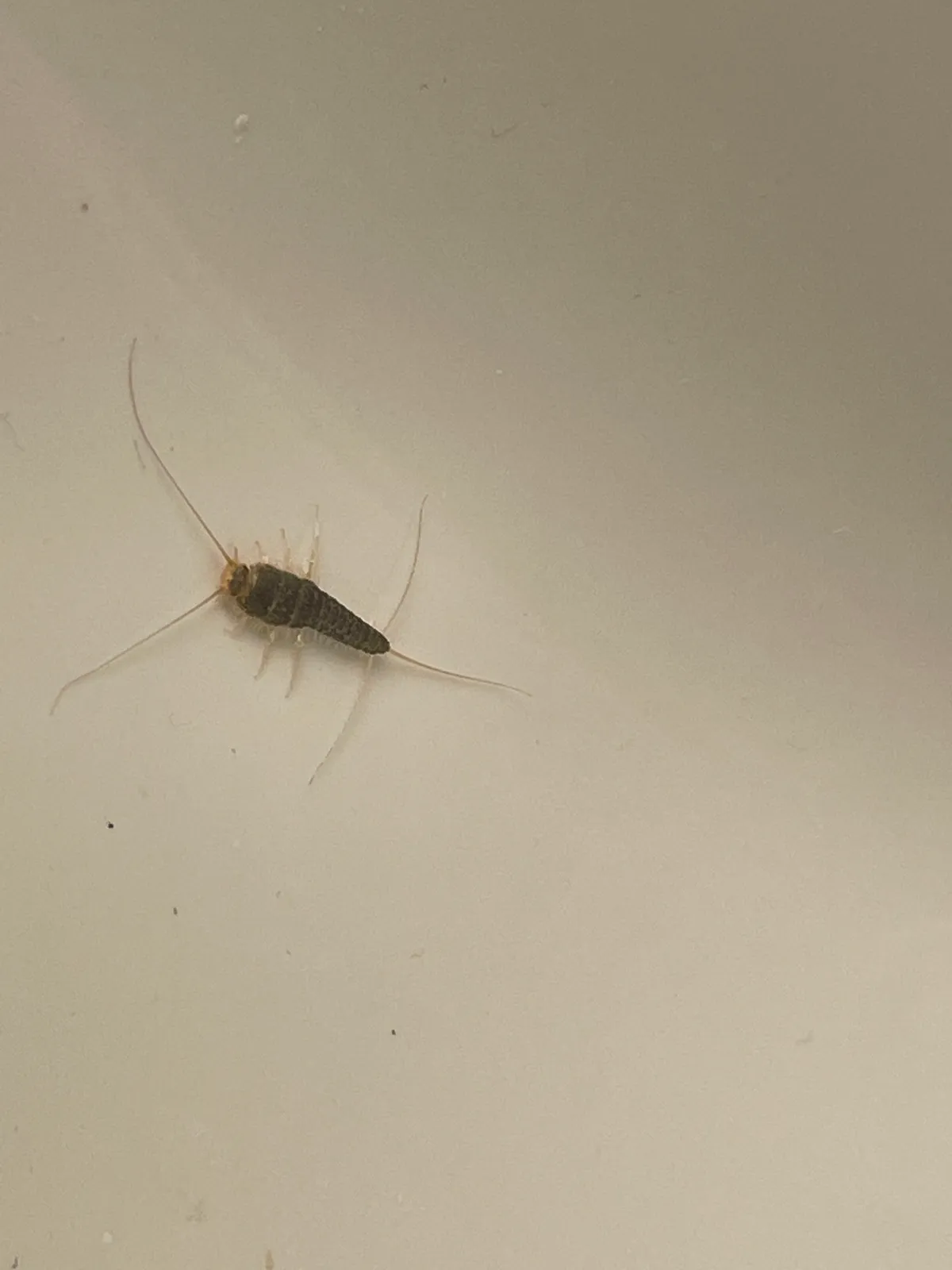 SilverfishSix legs, three long tails and long antennae; sometimes trapped in sinks
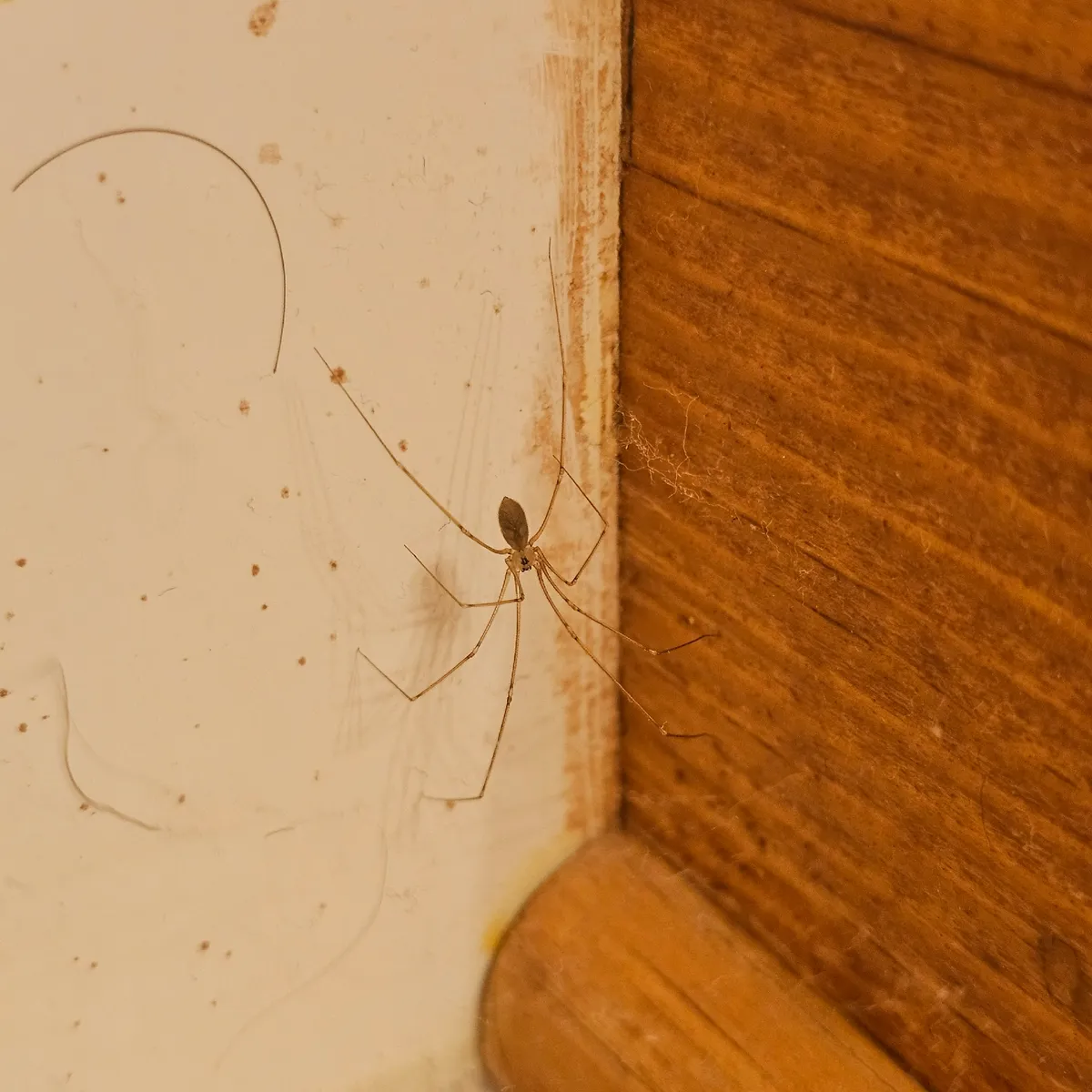 Cellar spiderEight very long, thin legs on a tiny body; hangs in ceiling corners
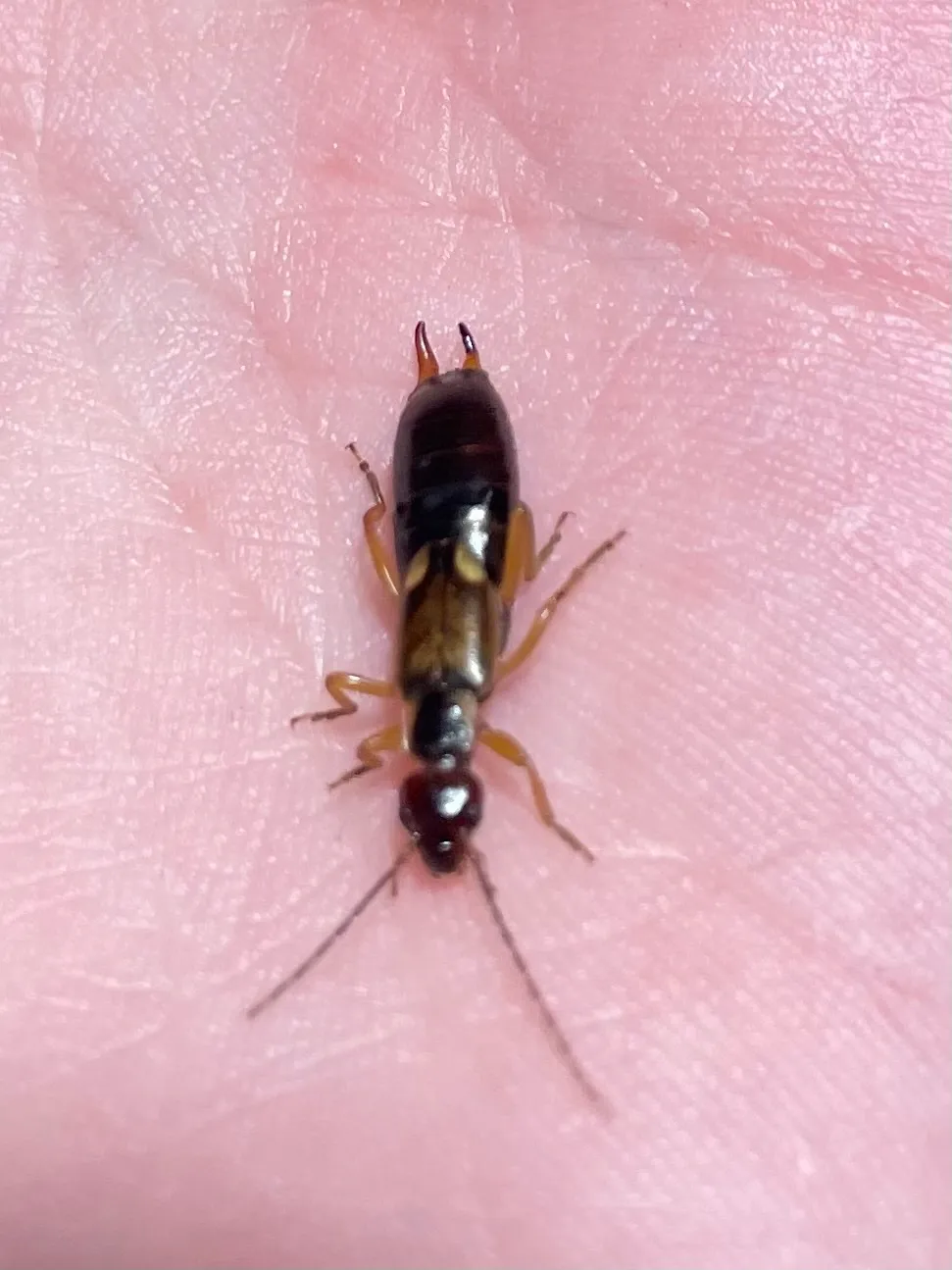 EarwigSix legs and pincers at the tail end; hides in damp, dark spots
Photos: House centipede: no rights reserved, via iNaturalist, CC0 1.0. Millipede: (c) Pierre Abbat, some rights reserved (CC BY), via iNaturalist, CC BY 4.0. Pill bug: (c) Nicholas Stockmaster, some rights reserved (CC BY), via iNaturalist, CC BY 4.0. Silverfish: no rights reserved, via iNaturalist, CC0 1.0. Cellar spider: no rights reserved, via iNaturalist, CC0 1.0. Earwig: no rights reserved, via iNaturalist, CC0 1.0.
What should you do once you know what it is?
Dry out and seal up before reaching for a spray: the extension sources agree that millipedes, pill bugs, sowbugs and most centipedes die indoors without moisture, and few of the animals on this page need any indoor treatment.
- House centipedes. Penn State advises dehumidifiers, sealing cracks in slabs and block walls, and screening floor drains and sump covers; UC IPM says pesticides are rarely justified for centipedes. Options are in the house centipede guide and this centipede control guide.
- Millipedes. Sweep or vacuum them up, as Penn State advises, and clear compost, grass clippings and foundation mulch; Kentucky says sealing entry points helps keep them out.
- Pill bugs and sowbugs. UC IPM advises keeping mulch and compost away from foundations, watering early so the surface dries by evening, and sealing gaps in the building.
- Garden symphylans. Oregon State says tilling, crop rotation and flooding can reduce them in gardens, though none controls them fully.
- Silverfish, earwigs and camel crickets. Fix leaks and lower the humidity. UC IPM does not recommend indoor pesticides for earwigs, and NC State suggests sticky boards and less moisture for camel crickets. This silverfish control guide covers traps and drying out.
- Any pesticide. If you use one, choose a product labeled for that pest and that site, and follow the label directions.
NC State Extension's camel cricket page also advises sealing entry points and keeping mulch at least 12 inches from the foundation, which helps against most of the animals on this page.
This guide is general educational information, not medical advice. If you have symptoms or concerns after a bite or exposure, contact a healthcare provider.
Use any pesticide exactly as its label directs. The label is the law, and what is registered and sold varies by state.
Frequently Asked Questions
What is the fast bug with lots of legs in my house?+
Usually a house centipede. The University of Maryland Extension describes it as over an inch long, grayish yellow with three dark stripes and 15 pairs of long legs, moving rapidly in basements, damp closets and bathrooms. The University of Kentucky calls it the only centipede species that can survive inside buildings. It hunts other small animals such as silverfish, cockroaches and spiders, so Penn State Extension reads frequent sightings as a sign that its prey is plentiful.
What bug looks like a worm with lots of legs?+
Usually a millipede: Penn State Extension describes the millipedes people usually come across as dark brown, about an inch long and thin, with two pairs of short legs on most segments, and most curl into a spiral when they die. A slender, pale one with one pair of legs per segment, found in soil, may be a soil centipede. A leggy green or spotted larva on a leaf is a caterpillar or a sawfly larva, which Ohio State separates by counting the pairs of prolegs on the abdomen.
Are bugs with lots of legs dangerous?+
Most are a nuisance rather than a danger. UC IPM says millipedes do not bite, though some release a liquid that can irritate skin or burn the eyes. House centipedes can bite, but the Missouri Department of Conservation says they cannot easily bite people and that a bite is generally no worse than a bee sting. Very large centipedes can give a painful bite with swelling, and some caterpillars sting. Contact a healthcare provider about any bite that worries you.
How many legs does a house centipede have?+
An adult house centipede has 15 pairs, or 30 legs, according to Penn State Extension and the University of Maryland, and like other centipedes it carries one pair on each body segment. The legs are long and banded light and dark, and on adult females the last pair is nearly twice the length of the body. Young house centipedes hatch with only four pairs of legs and gain more as they molt, so a small one can have far fewer than 15 pairs.
What bug has 14 legs?+
Pill bugs and sowbugs. UC IPM says these small, gray, armored animals have seven pairs of legs, where an insect has three, and grow to about 1/3 to 3/4 inch. Pill bugs roll into a ball when disturbed; sowbugs cannot roll up and have two tail-like appendages at the rear. The University of Kentucky says they depend on humid air and usually die indoors for lack of moisture.
Why do I have bugs with lots of legs in my bathroom?+
Moisture and prey. The University of Maryland lists bathrooms, damp closets and basements as the main places house centipedes are found, and the Missouri Department of Conservation says they turn up in bathrooms especially in winter. UC IPM says silverfish and firebrats sometimes get trapped in bathtubs and sinks because they cannot climb the slippery sides. Running the bathroom fan and fixing leaks, which EPA advises for controlling indoor moisture, makes the room less inviting.
What are the tiny white bugs with lots of legs in my plant soil?+
Possibly garden symphylans, though UC IPM and Oregon State write about them only in garden and crop soil. UC IPM describes them as slender and white with twelve pairs of legs, running rapidly when exposed to light, in moist soil rich in organic matter, where they feed on roots. Oregon State puts them under 1/2 inch. If the tiny white bugs jump and have only six legs, they are more likely springtails, which the University of Maryland finds around flowerpots and in humid rooms.
Do millipedes bite?+
No. UC IPM says millipedes do not bite. Their defense is a coil and, in some species, a liquid that UC IPM says can irritate skin or burn the eyes, and the University of Kentucky notes that many give off unpleasant-smelling fluids when threatened. Pick millipedes up with a paper towel or sweep them into a dustpan rather than handling them, and keep your hands away from your eyes until you have washed them.
Is a daddy longlegs a spider or a bug with lots of legs?+
Two different animals share the name, and both have eight legs. Cellar spiders are true spiders with extremely long, thin legs and a body about 1/4 inch or less, hanging in messy webs in basements and ceiling corners, says the Missouri Department of Conservation. Harvestmen have one simple oval body, no silk glands and no venom glands, and Missouri says their mouthparts are too small to bite people.
Do bugs with lots of legs mean I have a moisture problem?+
Often, yes. The University of Kentucky says centipedes and millipedes are very sensitive to moisture loss and that pill bugs and sowbugs depend on humid air, so a steady run of them points to a damp basement, bathroom or crawl space, or wet mulch against the foundation. To control indoor moisture, EPA advises keeping indoor humidity below 60 percent, ideally 30 to 50 percent, fixing leaks promptly and making sure the ground slopes away from the foundation.
Sources
- House Centipedes — Penn State Extension
- Centipedes & Millipedes in & Around the Home (ENTFACT-645) — University of Kentucky Entomology
- Centipedes and Millipedes (Pest Notes) — University of California Statewide IPM Program
- Millipedes — Penn State Extension
- Pillbugs and Sowbugs (Pest Notes) — University of California Statewide IPM Program
- Sowbugs and Pillbugs (ENTFACT-439) — University of Kentucky Entomology
- Identifying Common Household Insect Pests — University of Maryland Extension
- Centipedes — Missouri Department of Conservation
- House Centipede — Missouri Department of Conservation
- Garden Symphylans — University of California Statewide IPM Program
- Garden Symphylans — Oregon State University Extension (Solve Pest Problems)
- Is it a Sawfly Larva or a Caterpillar? — Ohio State University, Buckeye Yard & Garden onLine
- Stinging Caterpillars (ENTFACT-003) — University of Kentucky Entomology
- Silverfish and Firebrats (Pest Notes) — University of California Statewide IPM Program
- Earwigs (Pest Notes) — University of California Statewide IPM Program
- Camel Crickets (Cave Crickets) — Missouri Department of Conservation
- Camel Crickets — NC State Extension
- Cellar Spiders — Missouri Department of Conservation
- Daddy Longlegs (Harvestmen) — Missouri Department of Conservation
- A Brief Guide to Mold, Moisture and Your Home — U.S. Environmental Protection Agency
Read and approved by Alex Francisco. Found an error? Email support@buzzskito.ca.