
Reviewed by Alex Francisco
Published November 23, 2026 · Fact-checked against the sources listed below
What is a pincher bug?
A pincher bug is an earwig, an insect of the order Dermaptera with a pair of forceps, called cerci, at the tip of its abdomen. Ohio State University's earwig fact sheet stresses that those forceps are modified tail appendages rather than jaws, and that earwigs use them to defend themselves and to wrestle other males.
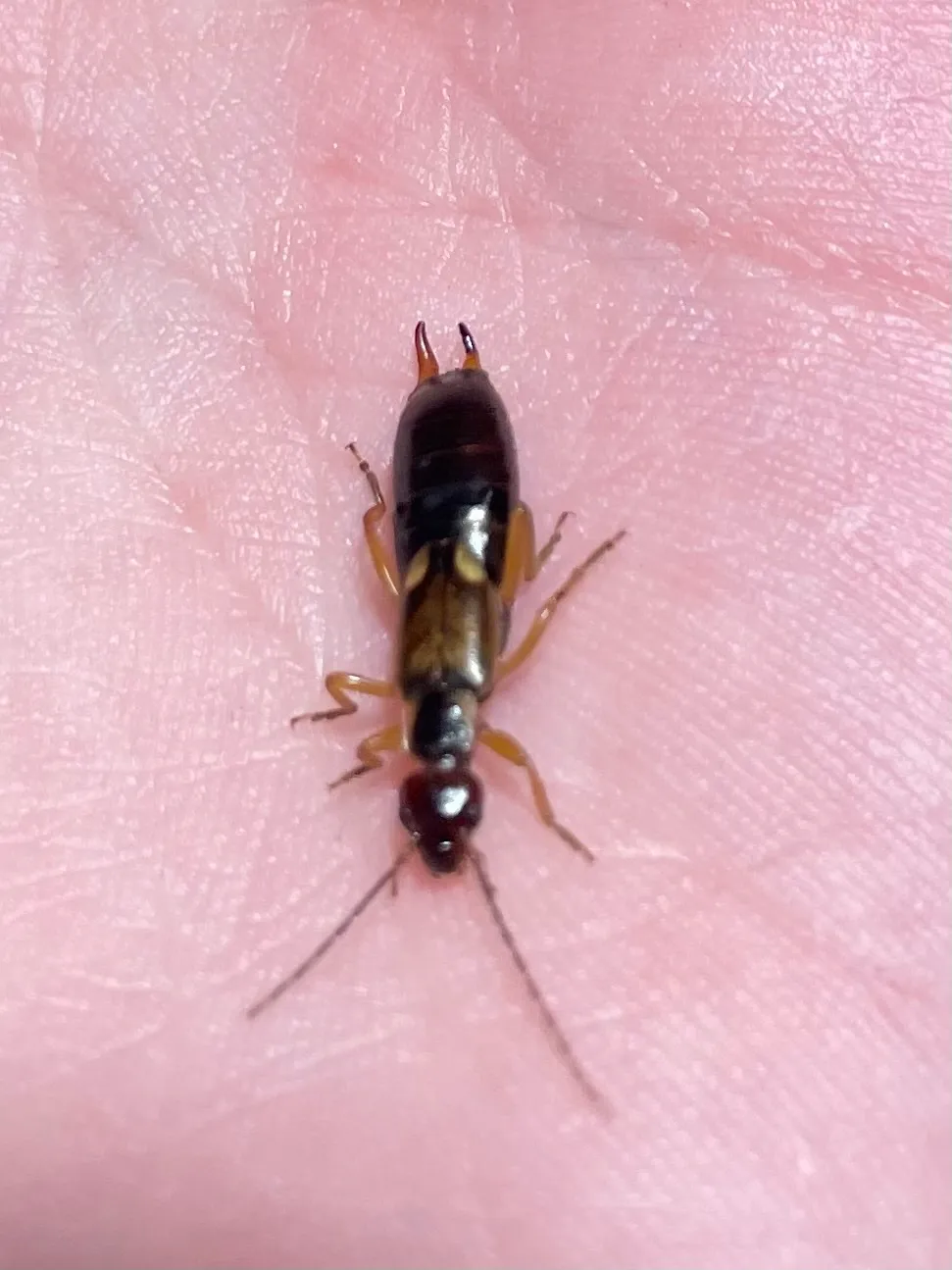
The nickname has a second, smaller use. The University of Kentucky's stag beetle page says the common stag beetle is also called a pinching bug; its pincers are the big jaws on its head. So the first question is where the pincers are: at the tail end, it is an earwig; at the head end, read the section on other bugs with pincers below. If you already know it is an earwig and want it gone, the earwig control guide covers traps and prevention.
What do earwigs look like?
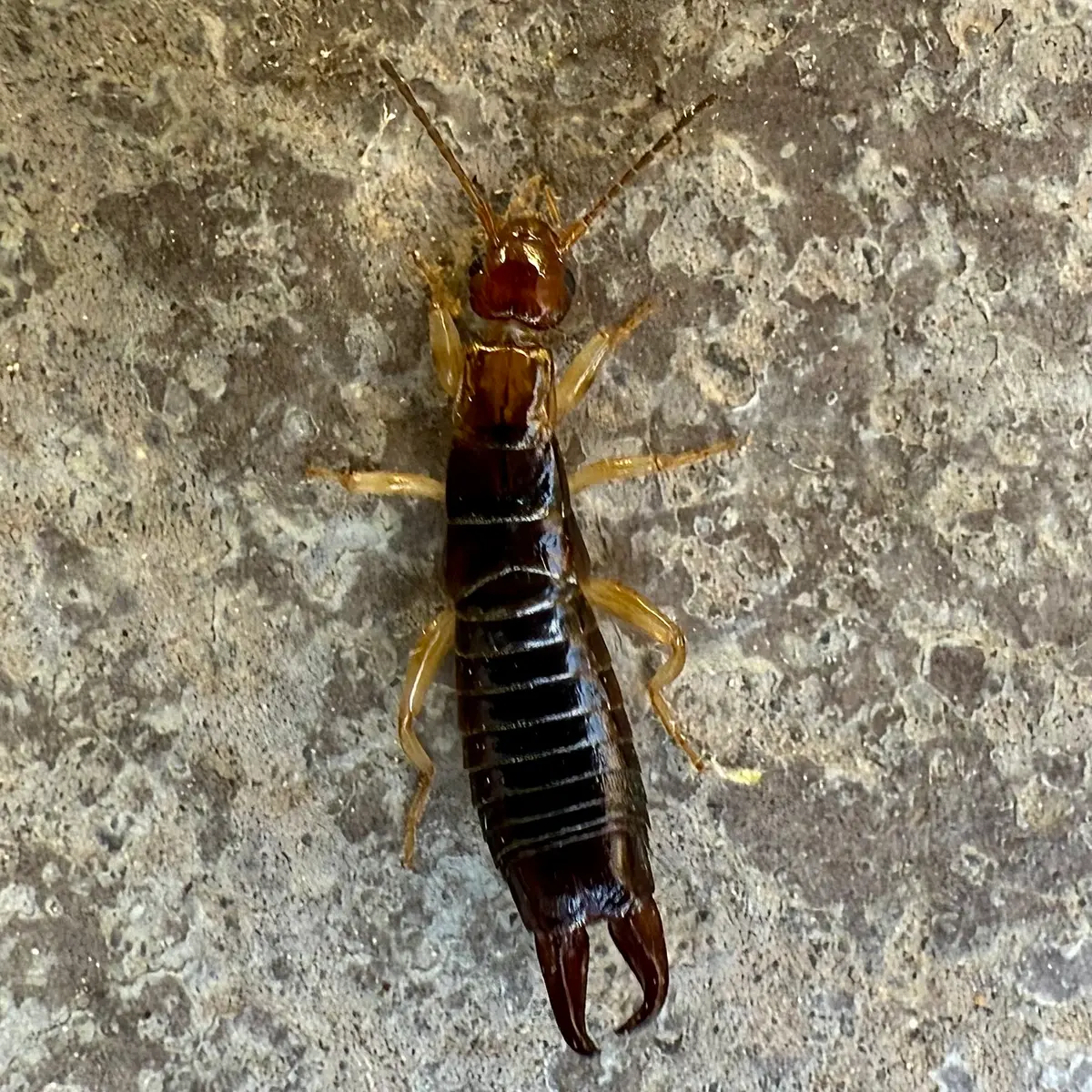
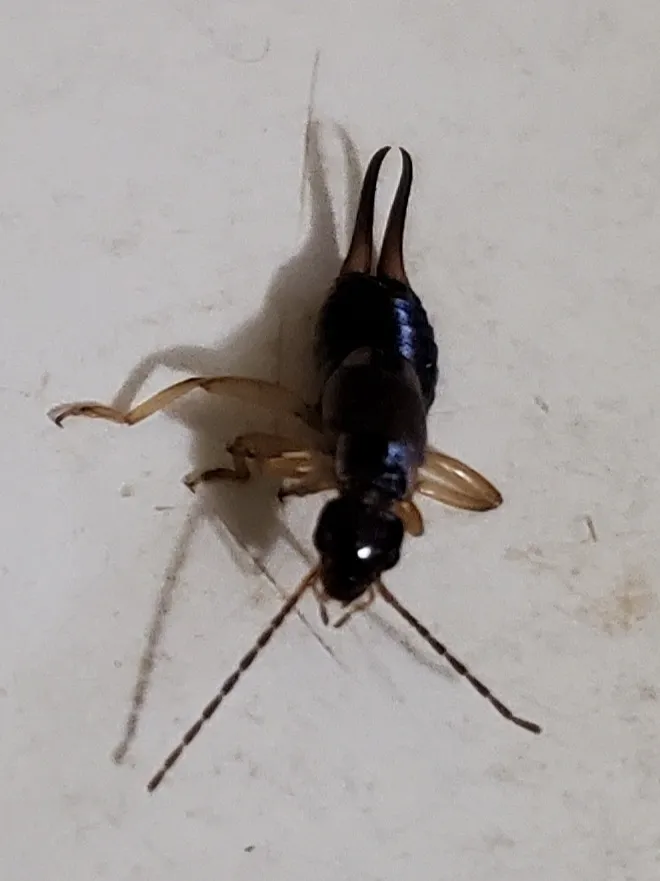
Earwigs are long, narrow and flattened, light reddish brown to black, with long, slender antennae, chewing mouthparts and forceps at the tail, according to NC State Extension's earwig page. Some species have wings and some do not; where wings are present, NC State says the front pair is hard and very short, so most of the segmented abdomen shows behind them.
Four of the earwigs found in the United States:
- European earwig (Forficula auricularia). Ohio State gives it as about 1/2 to 3/4 inch long, reddish brown, dark brown or blackish, with a reddish head. Penn State Extension describes it as dark reddish brown with yellow-brown legs. It is the earwig of yards and porches across much of the country.
- Ringlegged earwig (Euborellia annulipes). UF/IFAS's ringlegged earwig profile calls it the most common earwig in Florida: dark brown, wingless and 12 to 16 mm (about 1/2 to 2/3 inch) long, with pale legs that usually carry a dark band around the middle. UF says it is widespread in the southern states and Hawaii and also known from many northern states.
- Striped earwig (Labidura riparia). The University of Florida's striped earwig page puts it at 2 to 3 cm, about 3/4 inch to a little over 1 inch, reddish brown or brown with dark stripes running onto the wing covers. UC IPM's earwig Pest Note says it has a very disagreeable odor when crushed and, in southern California, is attracted to lights but does not damage plants.
- Maritime earwig (Anisolabis maritima). The Smithsonian-run NEMESIS species profile gives adults as 16 to 26 mm (about 5/8 to 1 inch), dark brown with yellowish legs, living along the tideline under logs, rocks and piles of washed-up seaweed on the Atlantic, Gulf and Pacific coasts.
In Florida you may also meet winged Doru earwigs, which UF says have tan bands on the shield behind the head and on the front wings and are important predators of caterpillars.
How can you tell a male pincher bug from a female?
Look at the pincers: Ohio State says males have curved pincers, while females have straighter, smaller ones. Penn State describes the forceps as straight-sided on most females and more pincer-like on males, and notes that male European earwigs come in two forms, with forceps about 3/16 inch or about 3/8 inch long.
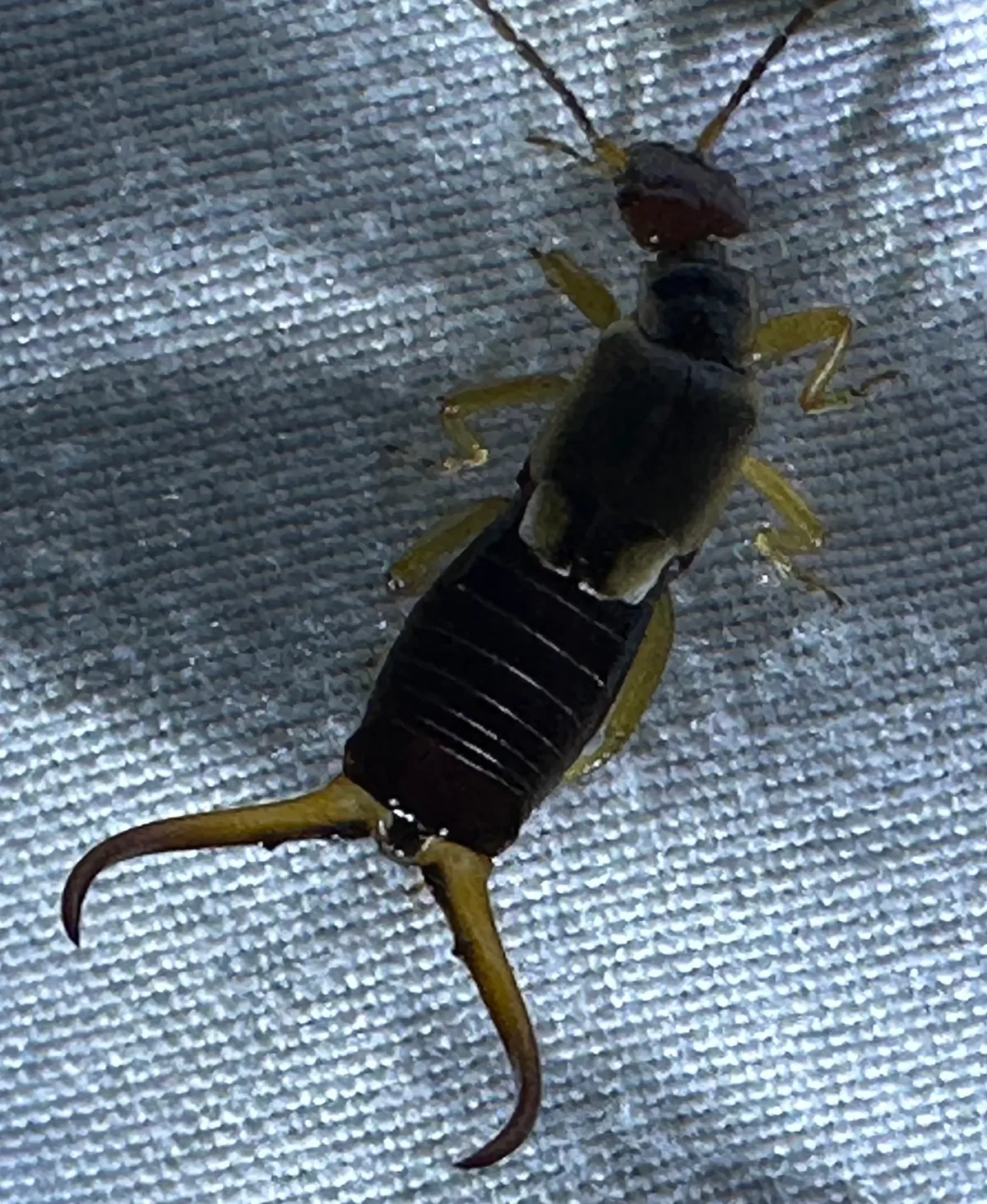
The difference matters to the earwigs. Ohio State says larger cerci improve a male's chance of winning a fight, and Colorado State University Extension's European earwig fact sheet reports that in laboratory trials, males with uneven cerci had the advantage. Other species follow the same rule with their own twist: UF says the ringlegged male's right branch turns sharply inward at the tip, and the female striped earwig's straighter forceps often cross at the tip.
Do pincher bugs pinch or bite?
They can if they are handled, trapped or sat on. UC IPM says earwigs generally don't attack people, although they are capable of biting if trapped in clothing or sat upon, and that large numbers indoors are annoying but no health hazard. Colorado State says stories of a painful pinch from the forceps are largely unfounded, yet earwigs have been known to give a mildly painful bite when sat upon or handled.
University of Illinois Extension says earwigs are not poisonous and generally will not bite or sting people, though they may pinch the skin with their forceps, and none of the extension sources here describes them as venomous or as spreading disease. Their other defense is chemical: Ohio State says a disturbed or crushed earwig may release a foul-smelling, yellowish-brown liquid from scent glands. Contact a healthcare provider about any reaction that worries you.
Do earwigs crawl into your ears?
No. The name comes from an old European superstition that earwigs enter the ears of sleeping people and bore into the brain; NC State says that is not the reality, and Penn State states plainly that these insects do not crawl into the human ear. Ohio State adds that, despite the name, they do not seek to hide in ears. An earwig looks for tight, dark, damp gaps, which is why it turns up in laundry and bedding rather than in people.
Can pincher bugs fly?
Most can, but they seldom do. UC IPM says most species have wings under short, hard wing covers yet seldom fly, and NC State says earwigs rarely fly but move readily on foot. Ohio State says earwigs fold their hind wings like origami, with up to 20 folds, under those short covers. The ringlegged earwig has no wings at all, according to Ohio State and UF.
Earwigs travel instead by hitchhiking. NC State lists laundry baskets, cut flowers, luggage, boxes, lumber, produce baskets and cars as ways they ride from place to place.
What do baby earwigs look like?
Baby earwigs, called nymphs, look like small, pale adults without wings. NC State describes them as white to olive green and wingless, Ohio State notes their short cerci, and UC IPM says newly hatched nymphs are light brown, with later stages darker. Penn State counts four nymphal stages before adulthood in the European earwig.
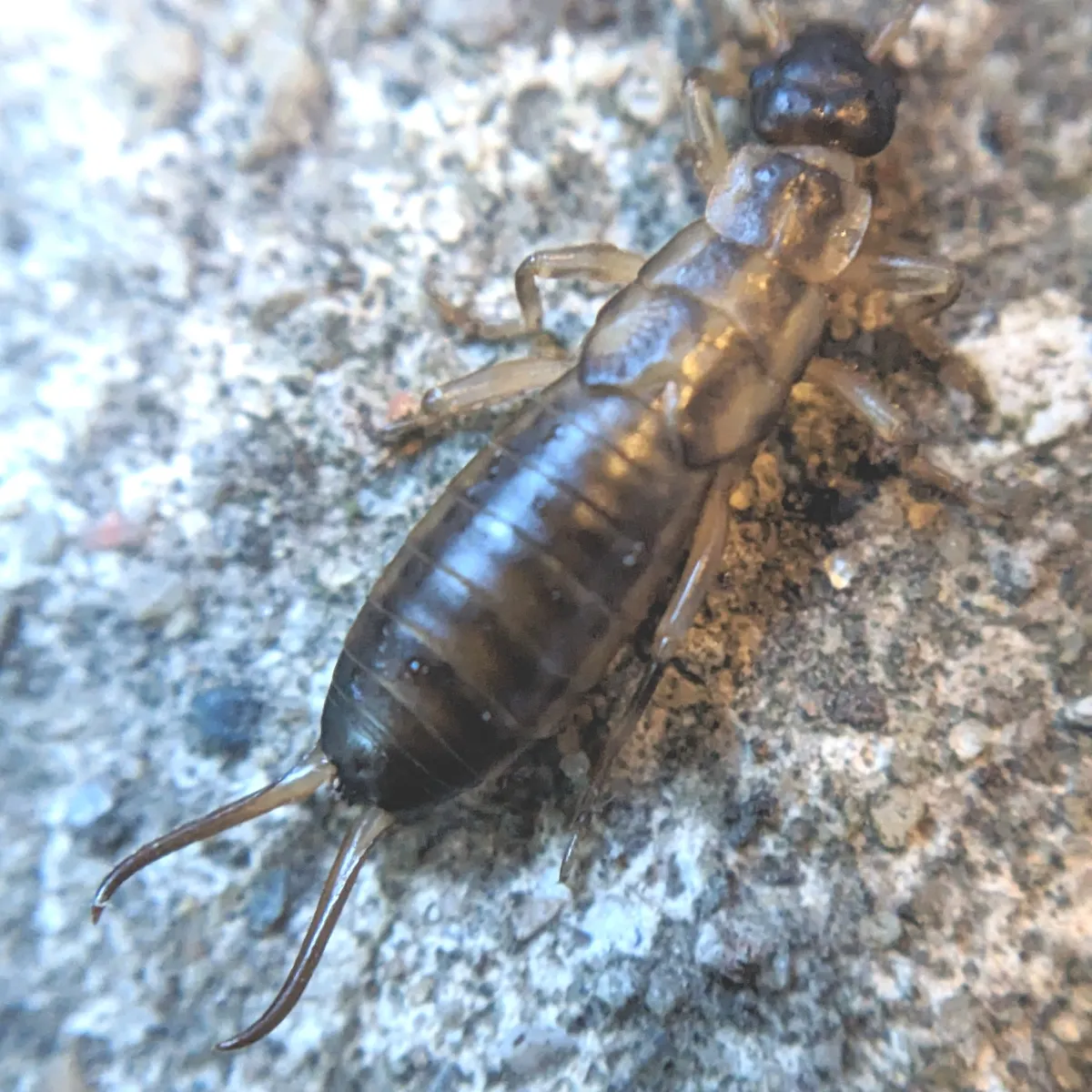
They start life in a nest. NC State says the female lays 20 to 50 smooth, oval, white or cream eggs in a chamber in the top 2 to 3 inches of soil, and Penn State puts the first batch at 30 to 55 eggs, hatching in about 70 days, with eggs laid in late spring or summer hatching in about 20. The mother is unusual among insects: Ohio State says she cleans and guards the eggs and young until their first molt, then opens the nest so the nymphs can leave.
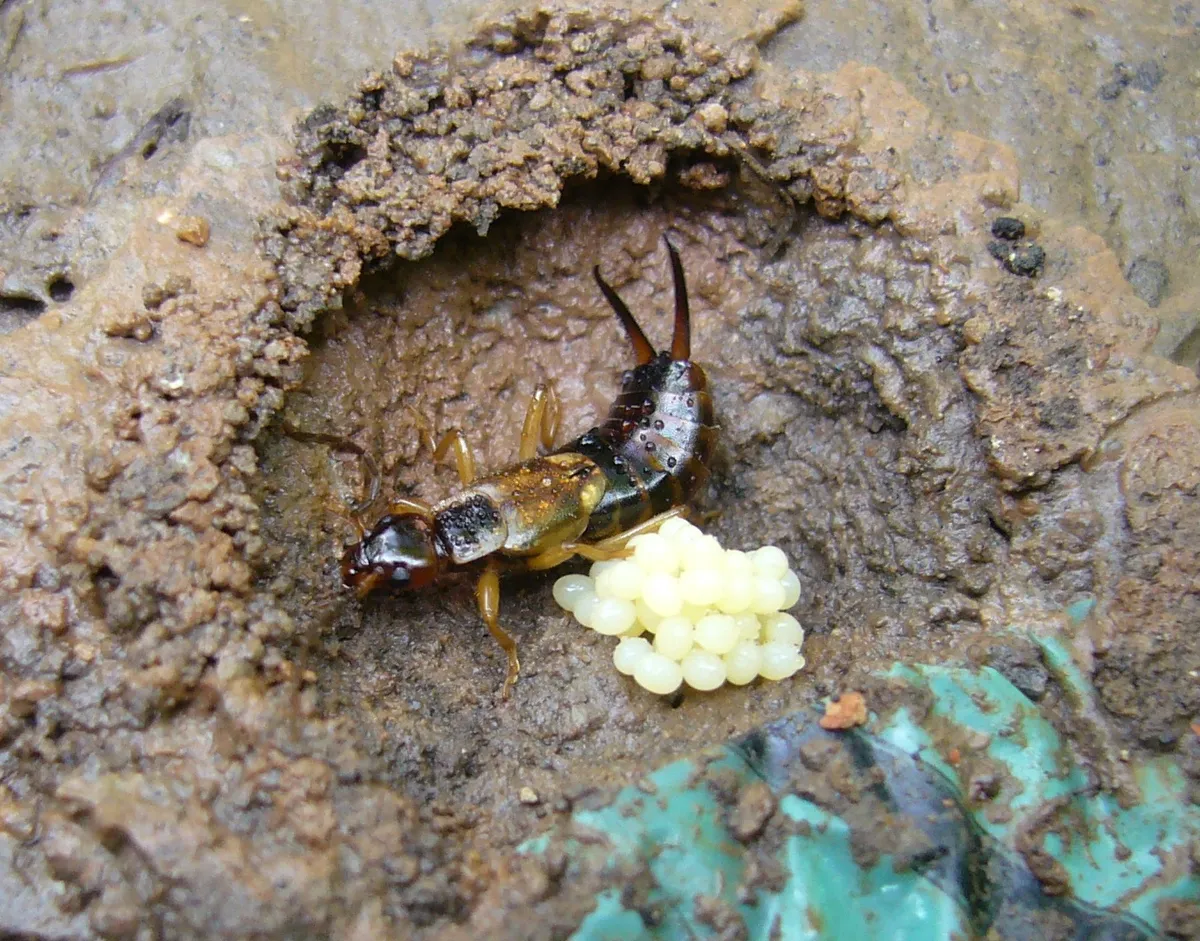
A ringlegged earwig nymph at its first stage measures 3.0 to 4.7 mm, about 1/8 inch, according to UF, which also notes a dark ring on each pale leg. A small, pale, wingless insect with pincers at its tail is a young earwig, not a different bug. Bugs that look like silverfish shows how young earwigs differ from silverfish, which have three thin tails instead of pincers.
Why are pincher bugs in my house, and where do they hide?
Pincher bugs come indoors looking for shelter when the weather outside turns too hot and dry, or too cold. UC IPM gives dry, hot or cold conditions as the trigger, and Ohio State says groups hide around door and window frames during heat and drought. Colorado State says problems in Colorado tend to run from mid-July through mid-September.
Inside, they pick tight, dark, damp places. Colorado State lists the undersides of rugs, potted plants and stacks of newspaper; Ohio State adds damp mops and flower pots; and Penn State says earwigs can end up in laundry, furniture, clothing, bedding and bread, and that the European earwig will eat most pantry items, flour, bread and cookies among them. NC State names crawl spaces and basements among the damp, cool places they favor, and bugs in the bathroom sorts the other moisture-lovers you may find with them.
Earwigs are night insects, and NC State says they are often found around lights, where Ohio State says they hunt the small insects drawn to the glow. The reassuring part: UC IPM says earwigs that get indoors eventually die there because they have little to eat, and Ohio State says they do not become established indoors.
Are pincher bugs good or bad for the garden?
Both. Colorado State says earwigs eat many plant pests, including aphids, mites and insect eggs, and have been used for biological control; UF calls the ringlegged earwig a voracious predator of insects and sowbugs. On the other side, UC IPM says European earwigs chew seedlings, leaves, soft fruit such as strawberries and apricots, flowers such as dahlias and zinnias, and corn silks, which can stop pollination.
Earwigs often get blamed for damage they did not start. Colorado State says they often hide in plant damage caused by other insects, and UC IPM says they shelter in fruit already damaged by snails, birds or cutworms. Penn State calls their damage to garden and agricultural plants usually minimal.
What other bugs have pincers?
Pseudoscorpions, scorpions, stag beetles and dobsonflies all have pincers or pincer-like jaws, but at the front of the body, and rove beetles and silverfish can be mistaken for earwigs though they have no pincers at all. Use the table to sort them by where the pincers are and whether they can hurt you.
| Bug | Where the pincers are | Can it hurt people? |
|---|---|---|
| Earwig | Tail end | Can pinch or bite if trapped or sat on; mildly painful (Colorado State) |
| Pseudoscorpion | Front claws | Wisconsin Extension says it cannot bite people |
| Scorpion | Front claws, plus a stinger on the tail | Stings; most US stings are like a bee sting, but a bark scorpion's can be serious (UC IPM) |
| Stag beetle | Jaws on the head | Little more than a mild pinch (University of Kentucky) |
| Dobsonfly, male | Long jaws on the head | Cannot break the skin (University of Maine) |
| Dobsonfly, female | Short, stout jaws | Painful bite that is not venomous but can draw blood (University of Maine) |
| Rove beetle | No pincers | No bite described in the Wisconsin source |
| Silverfish or firebrat | No pincers; three thin tails | No bite described in the UC IPM source |
Sources: UC IPM, Colorado State, Wisconsin Horticulture, the University of Kentucky and the University of Maine, each linked on this page.
Pseudoscorpions: tiny claws, no tail
A pseudoscorpion looks like a tick with a scorpion's claws. Wisconsin Horticulture's pseudoscorpion article gives it as 1/16 to 1/8 inch long with a large pair of pincers but none of a true scorpion's long tail or stinger, says it cannot bite people, and lists the carpet beetles, ants, mites and small flies it eats. Indoors it turns up in closets and near bathrooms. The pseudoscorpion guide has photos and the full story.
Scorpions: claws in front, stinger behind
A scorpion has eight legs, a pair of claws held out in front and a long, segmented tail ending in a stinger, as UC IPM's scorpion Pest Note describes. It says most US scorpion stings are comparable to a bee sting, but the Arizona bark scorpion's can be serious. Anyone stung by a bark scorpion, or having an allergic reaction to any scorpion sting, should get medical attention, and symptoms such as numbness, difficulty breathing, muscle twitching or convulsions mean it is needed immediately. The University of Kentucky's scorpion fact sheet says mature scorpions there reach up to 2 5/8 inches and are most often seen around houses from April through June.
Stag beetles: the other pinching bug
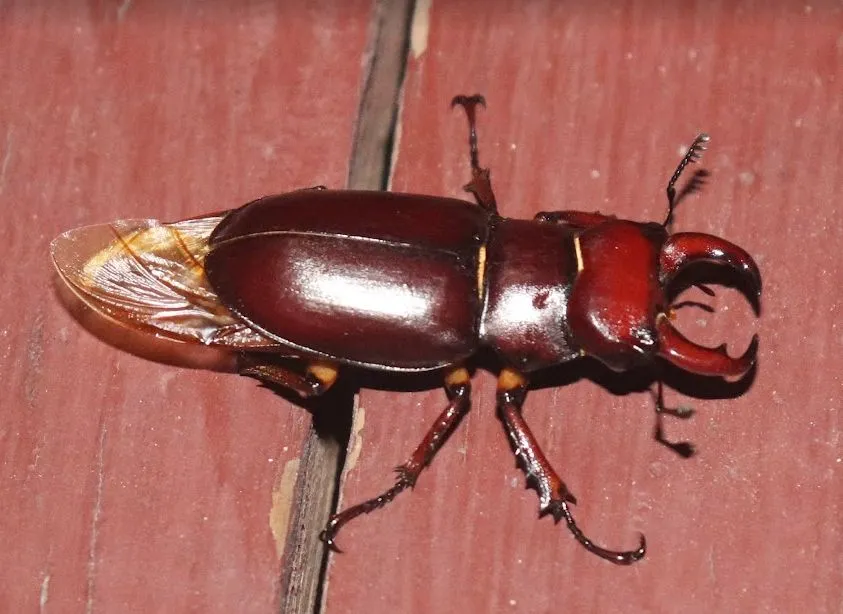
Stag beetles carry their pincers on the head as oversized jaws. Kentucky says most species are 15 to 35 mm (about 5/8 to 1 3/8 inches), reddish brown to black, and that the elephant stag beetle reaches 60 mm (about 2 3/8 inches), with branching male jaws more than half as long as the beetle. Despite their looks, Kentucky says, stag beetles can do little more than give a mild pinch. Adults often fly to lights on summer nights, and the larvae grow in decaying wood of fallen trees.
Dobsonflies: the biggest pincers near water
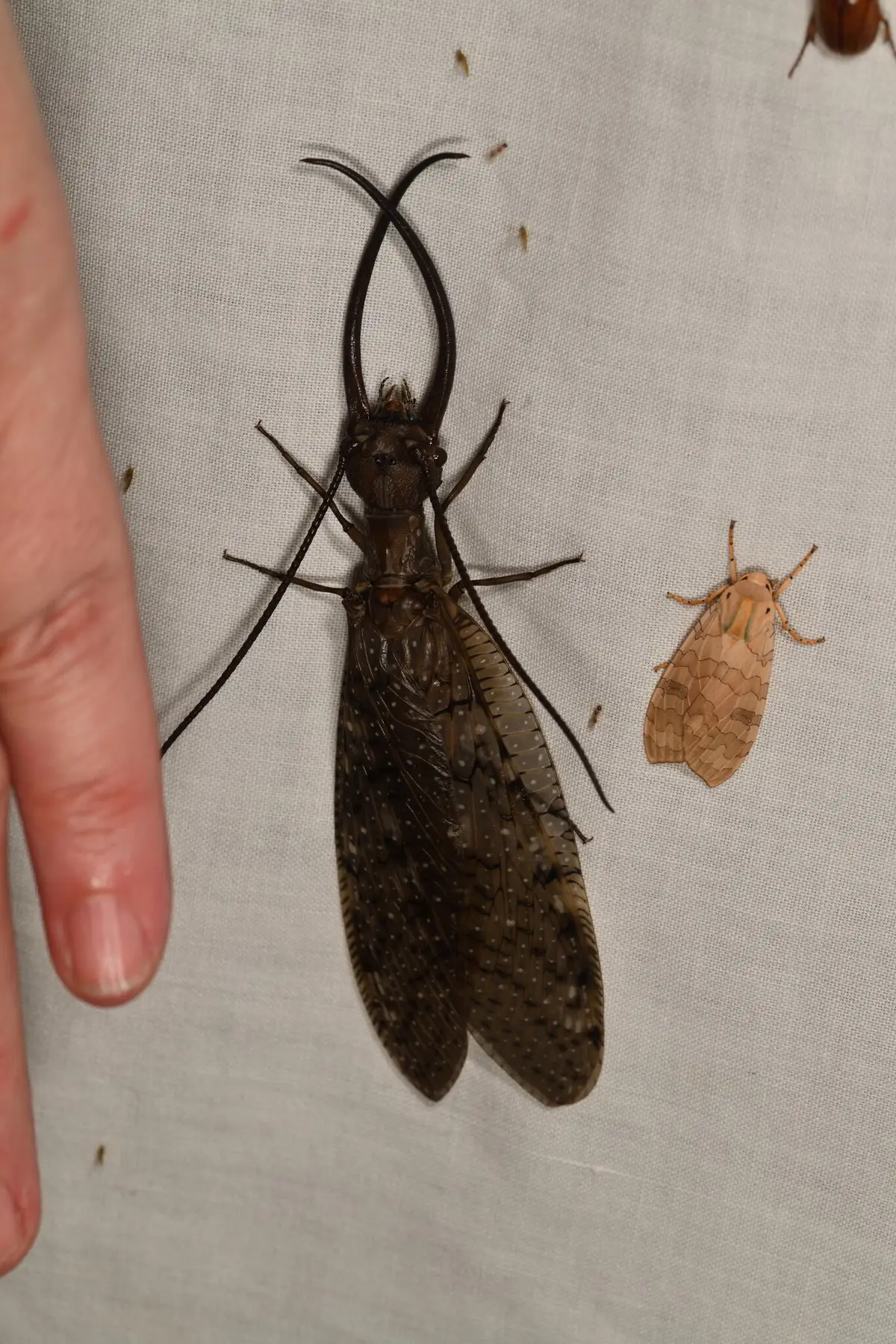
A dobsonfly is a large, drab gray, brown or black winged insect, and the Missouri Department of Conservation's dobsonfly page says adults can exceed 3 1/2 inches with a wingspan of up to about 5 inches. Males carry very long, tusk-like jaws that the agency says cannot hurt people for lack of leverage. Females have short, stout jaws, and University of Maine Cooperative Extension says they can give a painful bite that is not venomous but can draw blood. Adults stay near water and come to lights at night, mostly in late spring and early summer.
Rove beetles: earwig shape, no pincers
Rove beetles are slender, black or brown beetles with short wing covers that leave most of the abdomen bare, which is why Wisconsin Horticulture's rove beetle article warns they can be confused with earwigs. The difference: earwigs have movable forceps at the tail, and rove beetles have none, though they curl the tip of the abdomen upward when disturbed or running. Wisconsin says most are under 3/4 inch, many 1/4 inch or less, and live in moist soil, compost and debris, where some prey on pests.
Silverfish and firebrats: tails, not pincers
Silverfish and firebrats are about 1/2 inch long and end in three long, thin, tail-like appendages rather than pincers, according to UC IPM's silverfish and firebrat Pest Note. Silverfish are shiny silver or pearl gray, firebrats mottled gray or brown, and both get trapped in bathtubs and sinks they cannot climb out of.
How to tell which bug with pincers you have
- Where are the pincers? At the tail end, it is an earwig. Claws at the front point to a pseudoscorpion or scorpion; big jaws on the head, to a stag beetle or dobsonfly.
- Is there a stinger? A long, segmented tail ending in a stinger means a scorpion. Pseudoscorpions have no tail.
- How big is it? Against a ruler, a pseudoscorpion is 1/16 to 1/8 inch, a European earwig about 1/2 to 3/4 inch, and an adult dobsonfly can top 3 1/2 inches.
- How many legs? Earwigs, beetles and dobsonflies are insects with six legs; scorpions have eight.
- Curved or straight pincers? On an earwig, curved pincers mean a male and straighter ones a female; a small, pale, wingless earwig is a nymph.
- Where did you find it? Damp spots, mulch and door frames point to earwigs, bathrooms and closets to pseudoscorpions, lights near woods to stag beetles, and lights near streams to dobsonflies.
Commonly confused with
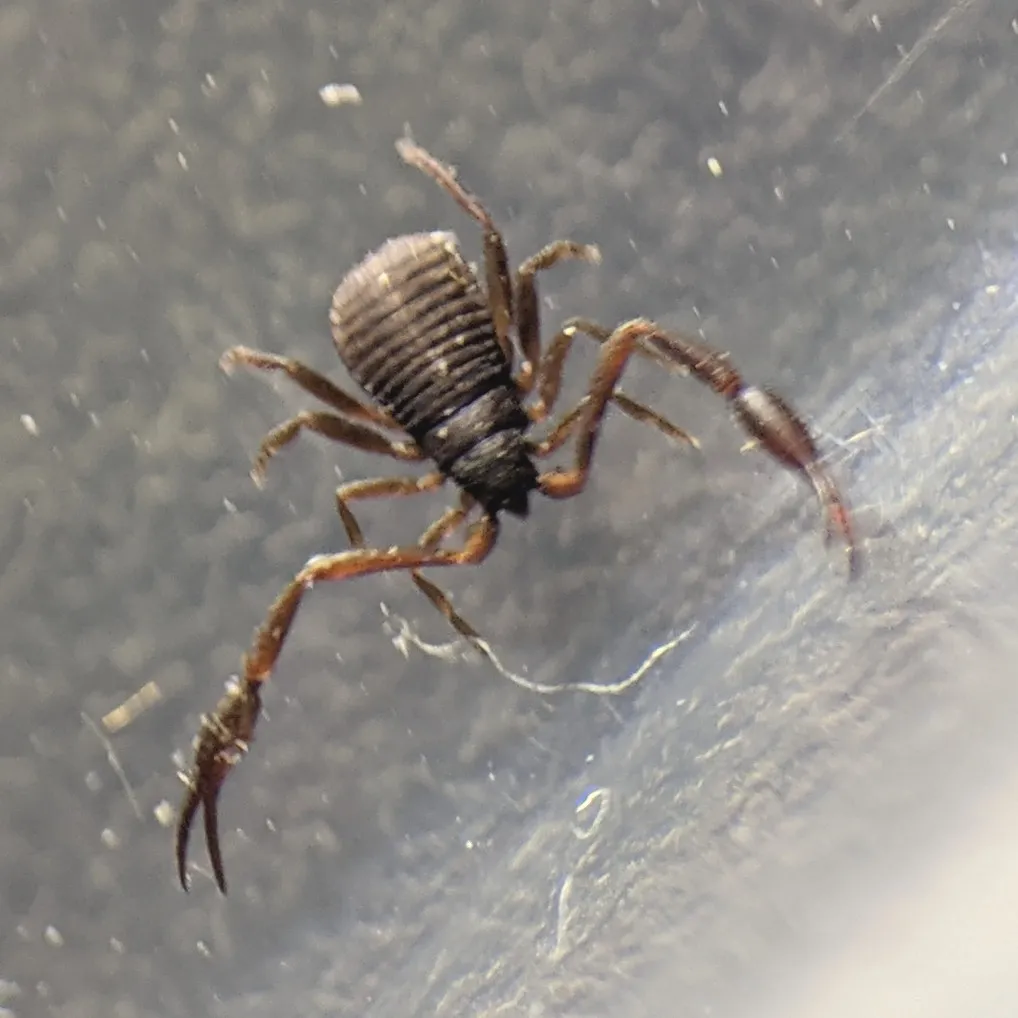 PseudoscorpionClaws at the front, no tail, only 1/16 to 1/8 inch; in closets and bathrooms
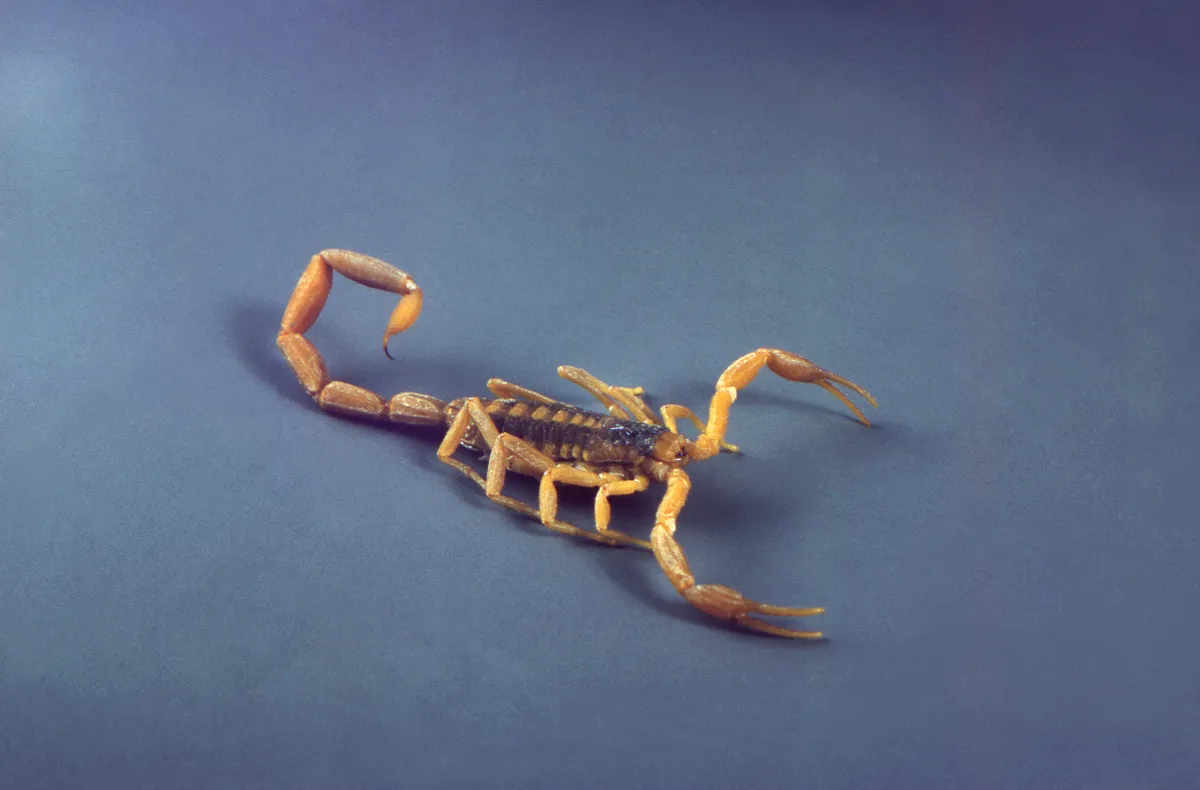 ScorpionClaws at the front and a long tail that ends in a stinger; eight legs
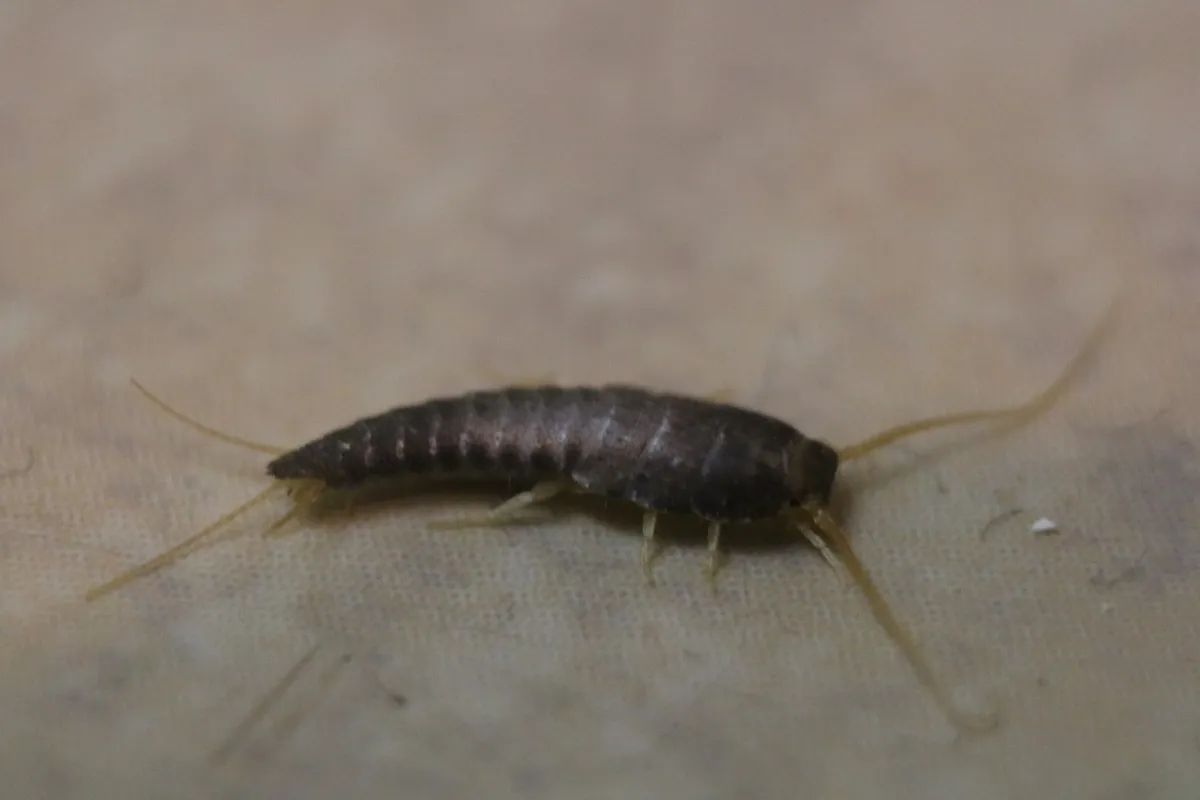 SilverfishSilvery gray, with three long, thin tails instead of pincers
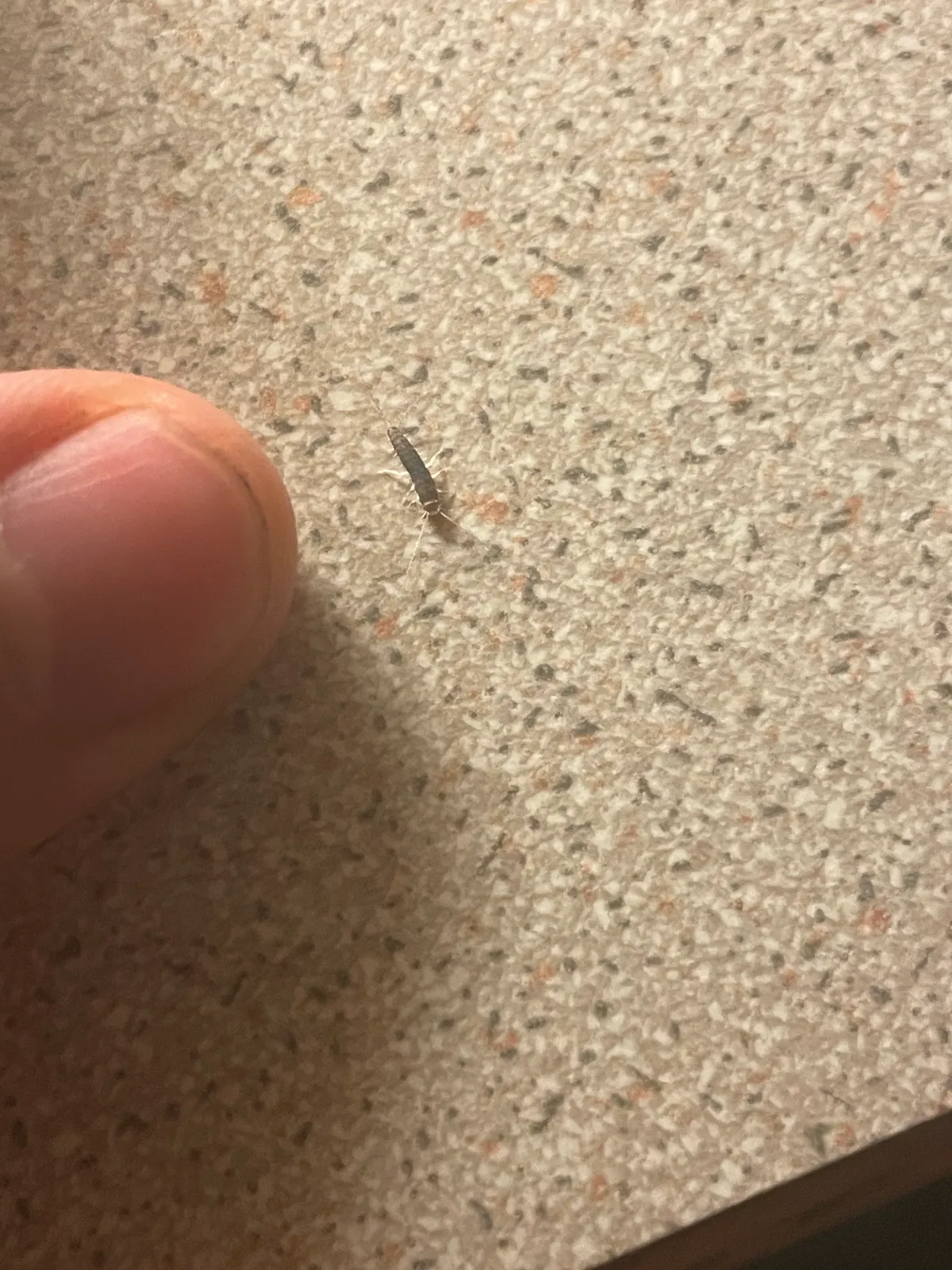 Young silverfishSmall like an earwig nymph, but with three thin tails and no pincers
Photos: Pseudoscorpion: no rights reserved, via iNaturalist, CC0 1.0. Scorpion: CDC/ Margaret A. Parsons (CDC Public Health Image Library, phil.cdc.gov), public domain. Silverfish: no rights reserved, via iNaturalist, CC0 1.0. Young silverfish: no rights reserved, via iNaturalist, CC0 1.0.
What should you do once you know it is an earwig?
Make the house and its edges drier and less sheltered, and trap the earwigs outdoors. The extension sources favor those steps over spraying, and how to get rid of earwigs sets out the whole plan, including when a pesticide fits.
- Pick up or vacuum the ones indoors. UC IPM says earwigs that get inside eventually die there for lack of food.
- Dry things out. UC IPM advises repairing drain spouts, grading soil so water drains away from the house and ventilating crawl spaces; Colorado State adds keeping the area around entry points dry.
- Take away their daytime cover. Colorado State suggests clearing debris and mulch near entry points and sealing gaps around doors, windows and vents, and calls physical exclusion the best prevention.
- Trap them overnight. UC IPM describes a low-sided can holding about 1/2 inch of oil, sunk to soil level, and rolled newspaper or cardboard set out before dark and shaken into soapy water in the morning. Trap daily until the catches stop.
- Spare them where they help. In a garden with aphid trouble, Colorado State notes that earwigs eat aphids, mites and insect eggs.
Readers in Canada can use the Canadian earwig control guide, and indoor earwig traps compares the trap types for use inside. For a bug that is not on this page, the bug identifier quiz works through it question by question.
This guide is general educational information, not medical advice. If you have symptoms or concerns after a bite or exposure, contact a healthcare provider.
Frequently Asked Questions
Are pincher bugs and earwigs the same thing?+
Yes. Pincher bug is a common nickname for the earwig, an insect with a pair of forceps at the tip of its abdomen. The University of Kentucky notes that the common stag beetle is sometimes called a pinching bug too, but its pincers are jaws on the head. If the pincers are at the tail end of a slender, flattened body, it is an earwig.
Do pincher bugs bite or pinch, and does it hurt?+
They can if they are handled, trapped or sat on. UC IPM says earwigs generally do not attack people, although they can bite if trapped in clothing or sat upon. Colorado State describes the result as mildly painful and says stories of a painful pinch from the forceps are largely unfounded. Contact a healthcare provider if a reaction worries you.
Are pincher bugs dangerous or poisonous?+
University of Illinois Extension says earwigs are not poisonous and generally will not bite or sting people, though they may pinch the skin with their forceps. The extension sources on this page do not describe them as venomous or as spreading disease, and UC IPM says large numbers indoors are annoying but are not a health hazard. Their defenses are a pinch when handled or trapped and a foul-smelling, yellowish-brown liquid that Ohio State says they can release from scent glands when disturbed or crushed.
Do earwigs really crawl into people's ears?+
No. The name comes from an old European superstition that earwigs crawl into the ears of sleeping people and bore into the brain. Penn State Extension says plainly that they do not crawl into the human ear, and NC State says the superstition is not the reality. Earwigs do look for tight, dark, damp hiding places, which is why they can turn up in laundry or bedding.
Can pincher bugs fly?+
Most earwigs have wings but seldom fly. UC IPM says most species carry wings under short, hard wing covers, and Ohio State says earwigs fold their hind wings with up to 20 folds to fit them under those covers. Some species, including the ringlegged earwig of the southern states, have no wings at all. Earwigs mostly travel on foot or by riding along in boxes, plants and laundry.
What does a baby earwig look like?+
A baby earwig, or nymph, looks like a small, pale adult without wings. NC State describes nymphs as white to olive green and wingless, and Ohio State notes their short pincers. UC IPM says later stages are darker. The ringlegged earwig's first-stage nymph is about 1/8 inch long, according to the University of Florida, so a tiny pale bug with pincers at the tail is a young earwig.
Why do I suddenly have so many pincher bugs in my house?+
Earwigs move indoors looking for shelter when the weather outside turns hot and dry, or cold. Ohio State says groups hide around door and window frames during heat and drought, and Colorado State says problems in Colorado tend to run from mid-July through mid-September. Damp mulch, debris and gaps around doors give them a path in. UC IPM says those indoors eventually die for lack of food.
What attracts pincher bugs?+
Moisture, shelter and darkness during the day, and lights at night. Extension sources describe earwigs hiding under mulch, boards, stones, rugs, potted plants and damp mops, and NC State says they are often found around lights, where Ohio State says they hunt small insects. Irrigated gardens also suit them, which is why UC IPM advises reducing surface moisture near the house.
What bug has pincers on its back end?+
An insect with a pair of pincers at the tail end of a long, flattened body is an earwig. The pincers, called cerci, are curved on males and straighter on females. Pseudoscorpions and scorpions have claws at the front instead, stag beetles and dobsonflies have pincer-like jaws on the head, and silverfish end in three thin tails rather than pincers.
Are pincher bugs good for the garden?+
They can be. Colorado State says earwigs eat aphids, mites and insect eggs and have been used for biological control, and the University of Florida calls the ringlegged earwig a voracious predator of insects. They also chew seedlings, soft fruit, flowers and corn silks, according to UC IPM, so whether they help or harm depends on the garden and on how many there are.
Sources
- Earwigs — The Ohio State University College of Food, Agricultural, and Environmental Sciences
- Earwigs (Pest Notes) — University of California Statewide IPM Program
- European Earwigs — Penn State Extension
- European Earwigs — Colorado State University Extension
- Earwigs — NC State Extension
- Earwig — University of Illinois Extension
- Ringlegged Earwig, Euborellia annulipes (Lucas) (EENY088) — UF/IFAS Extension
- Striped earwig, Labidura riparia — University of Florida Department of Entomology and Nematology
- Anisolabis maritima (Maritime Earwig) species summary — NEMESIS, Smithsonian Environmental Research Center
- Pseudoscorpions — University of Wisconsin-Madison Division of Extension, Wisconsin Horticulture
- Scorpions (Pest Notes) — University of California Statewide IPM Program
- Scorpions in Kentucky (ENTFACT-633) — University of Kentucky Entomology
- Stag Beetles of Kentucky — University of Kentucky Entomology
- Eastern Dobsonfly — Missouri Department of Conservation
- Dobsonflies — University of Maine Cooperative Extension
- Rove Beetles (Staphylinidae) — University of Wisconsin-Madison Division of Extension, Wisconsin Horticulture
- Silverfish and Firebrats (Pest Notes) — University of California Statewide IPM Program
Read and approved by Alex Francisco. Found an error? Email support@buzzskito.ca.