
Reviewed by Alex Francisco
Published November 19, 2026 · Fact-checked against the sources listed below
What does skunk poop look like?
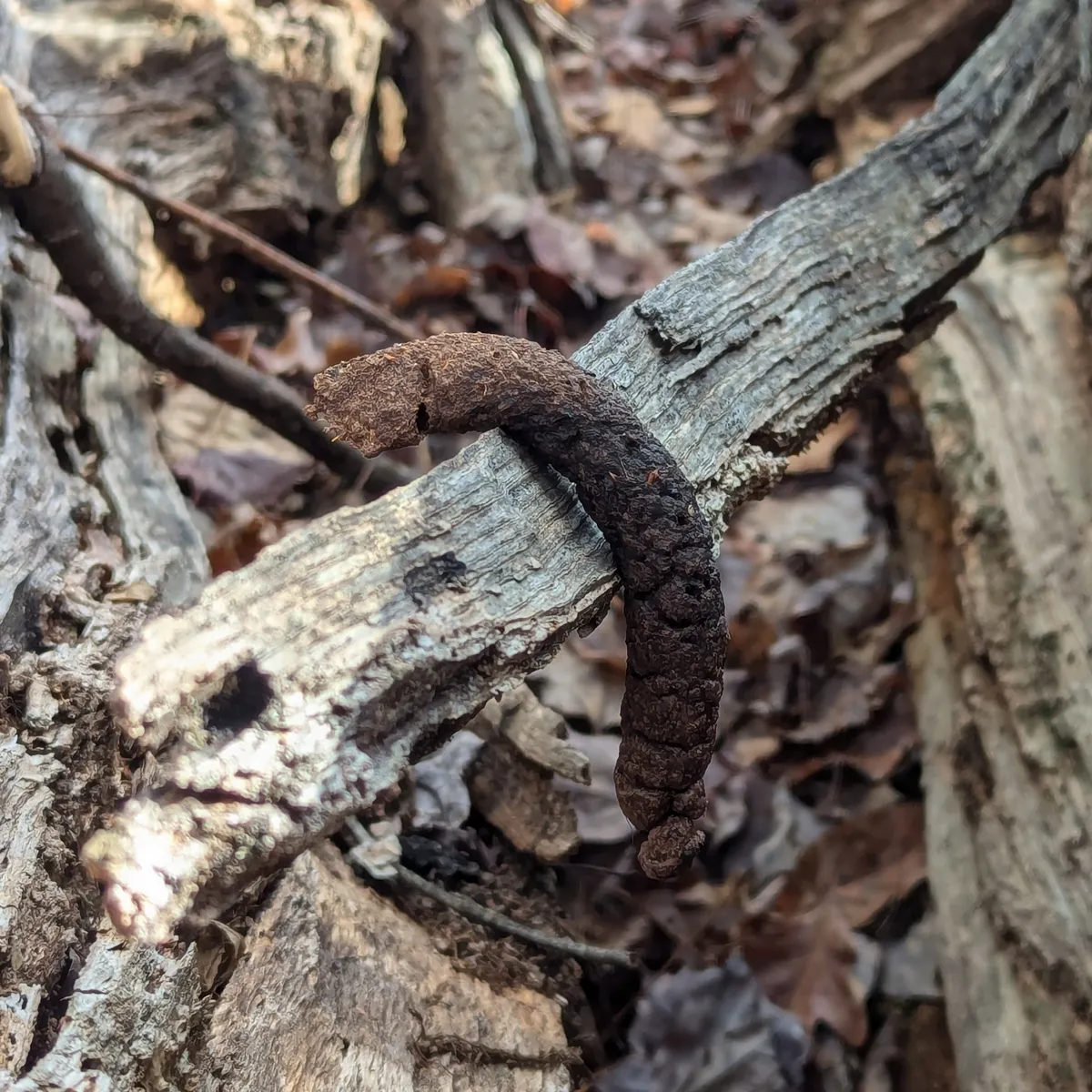
Skunk poop looks a lot like a house cat's: a short log with blunt ends. Wildlife Illinois, the wildlife site authorized by the Illinois Department of Natural Resources, makes the cat comparison, says the ends are often blunt, and says skunk droppings may contain undigested insect parts, berry seeds, fur or feathers. Washington's Department of Fish and Wildlife (WDFW) draws the same picture: droppings much like a domestic cat's, with contents ranging from insect skeletons to seeds or hair.
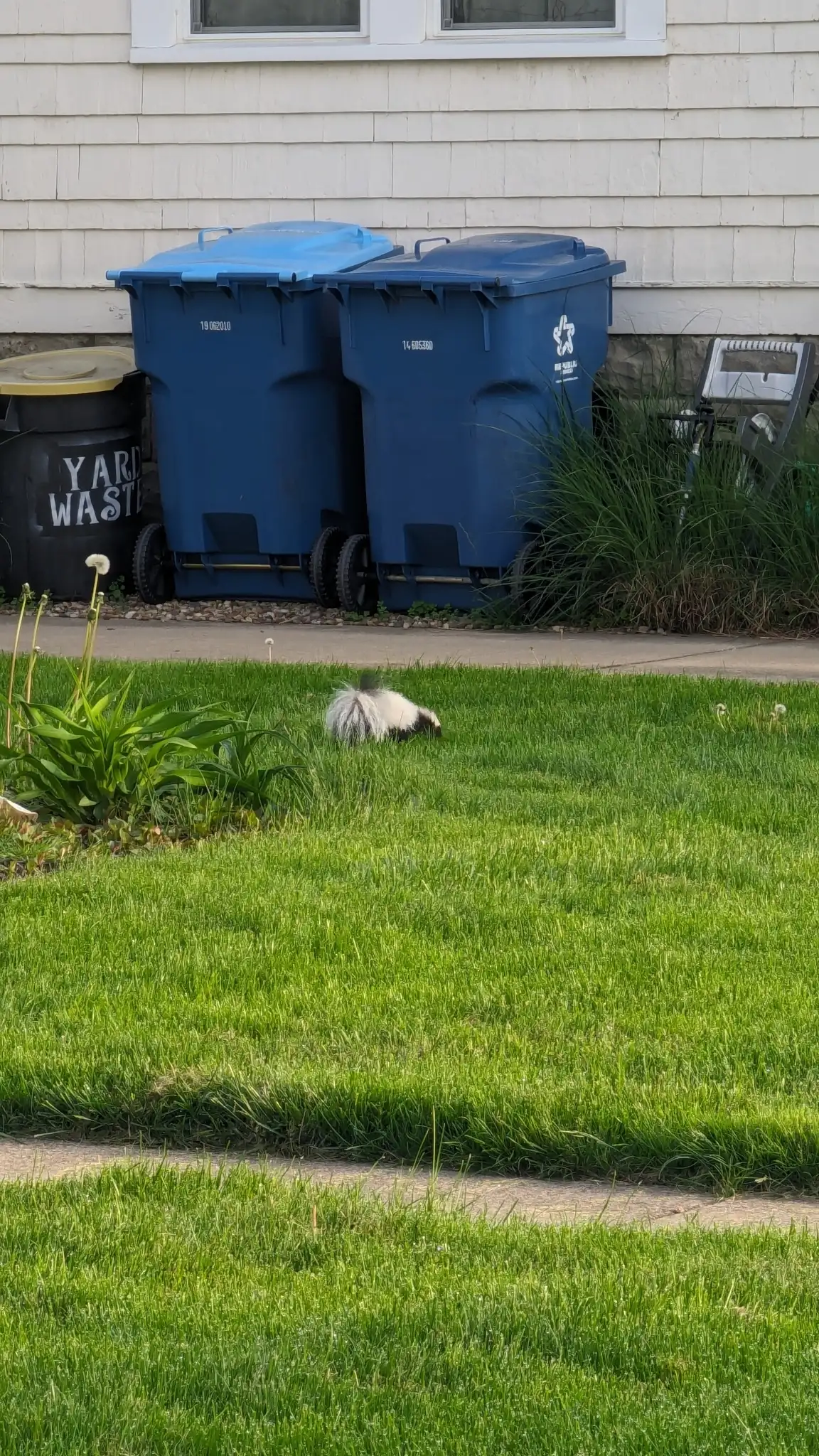
The insects are the giveaway. ICWDM, a wildlife damage site maintained at the University of Wisconsin-Stevens Point, says the undigested insect parts in skunk droppings are often what identifies them. Montana State University Extension's skunk chapter explains why: insects are the skunk's preferred food, and grasshoppers, beetles and crickets are the adult insects it takes most often. Look for hard, glossy fragments rather than a particular color, since age alone changes a dropping's look: UF/IFAS Extension notes that fresh feces typically look wet and glossy, while older ones turn dry, dull and grayish.
How big is skunk poop?
Small. ICWDM gives skunk droppings as 1/4 to 1/2 inch in diameter and 1 to 2 inches long. WDFW's figures run larger for the striped skunk, 1/2 inch in diameter and 2 to 4 inches long, usually with blunt ends, and it says the smaller spotted skunk leaves droppings that look much the same but are about half the size. ICWDM describes the striped skunk itself as about the size of an ordinary house cat.
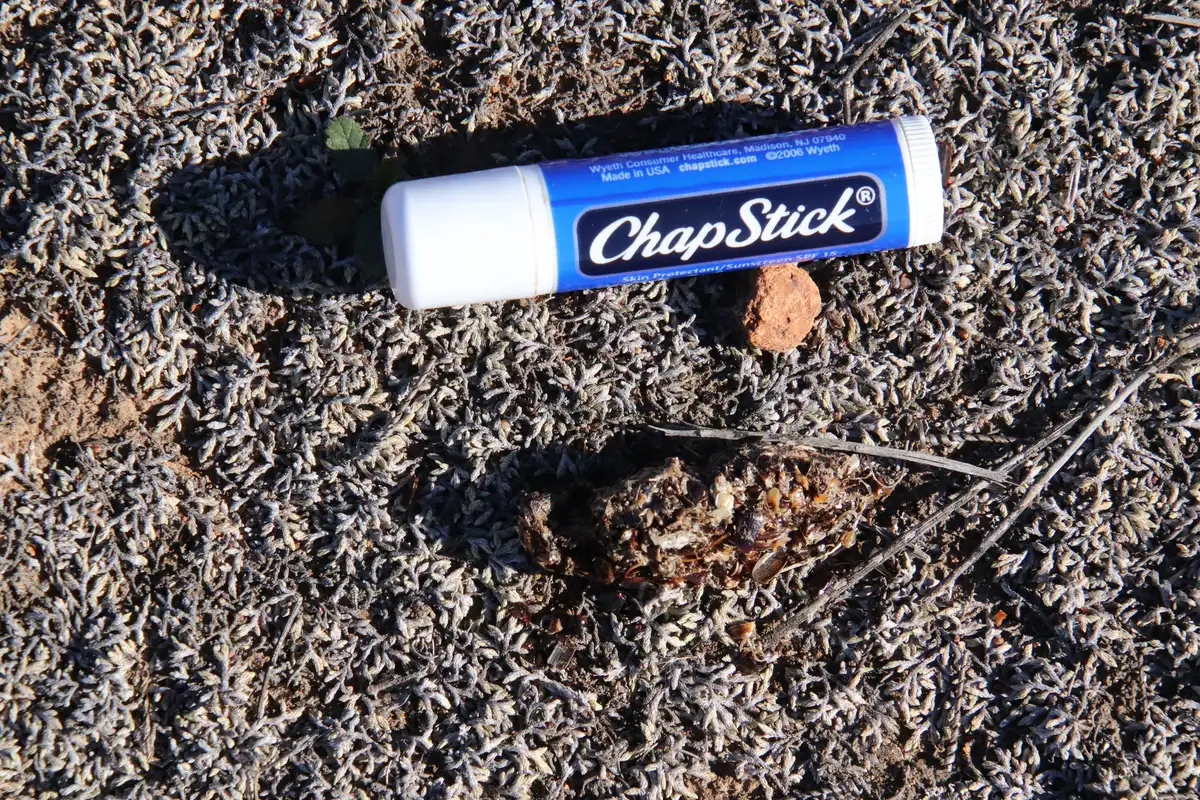
Size alone will not settle it, because the ranges overlap. ICWDM's droppings key gives raccoon droppings a length of 2 to 3 inches and a width of about 1/2 inch, and Norway rat droppings reach 3/4 to 1 inch, according to Cornell IPM. Measure the thickness, then check what is inside and where it lies.
What is inside skunk poop?
Mostly insects, with fruit, seeds and fur mixed in as the seasons change. Montana State says skunks eat considerably more animal matter in spring and summer, when insects are plentiful, and plant and animal foods in about equal amounts in fall and winter, with field and house mice especially important in winter. Wildlife Illinois adds corn, berries and other plants, and says skunks in towns may eat garbage or pet food left outside. WDFW's list runs from mice, moles, voles, rats, birds and their eggs, and carcasses to fruits, nuts, garden crops, garbage, birdseed and pet food.
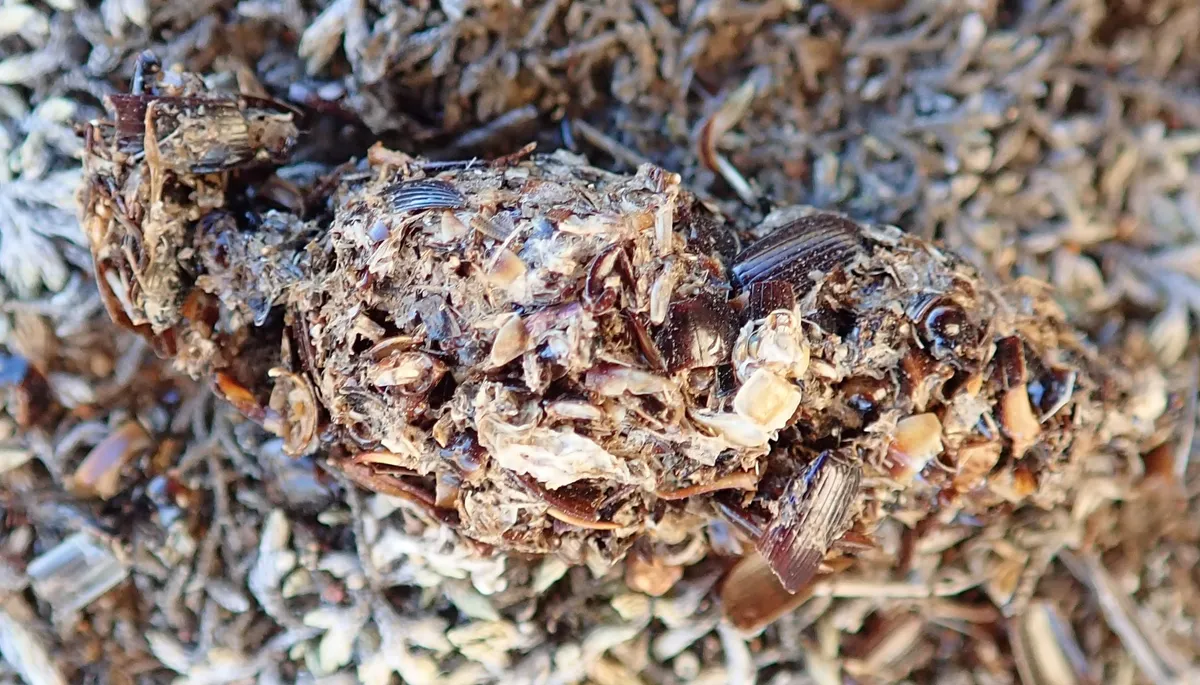
Read the contents like this: a dropping studded with bits of beetle shell points to a skunk; one dark with berry seeds could be a skunk's or a raccoon's, since ICWDM's key says raccoon droppings may show corn kernels or fruit; and one wrapped in hair, with bits of bone, points to a fox or coyote, as the comparison below explains.
Where do skunks poop?
Where they feed and near where they sleep. WDFW says to look for droppings where skunks have been feeding or digging, or near a den, and ICWDM's inspection guide says an inhabited skunk den can be recognized by fresh droppings containing undigested insect parts near the mound or hole, sometimes with hair and rub marks. Around a house, look in these places:
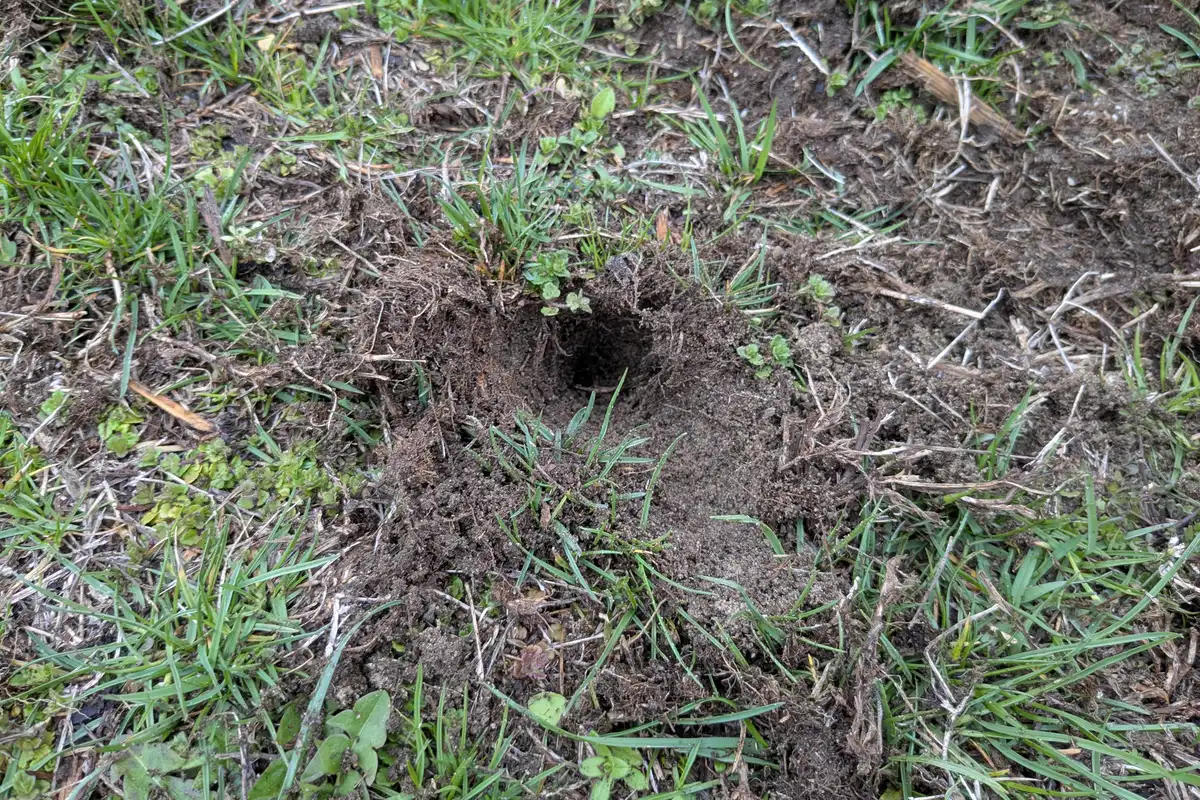
- Lawns, gardens and beds. Skunks dig in lawns, golf courses and gardens for insect grubs, Montana State says, leaving small cone-shaped holes 3 to 4 inches across, so droppings beside fresh holes fit a skunk. The guide to holes in the yard sorts yard diggers by the holes they leave.
- Under a deck, porch or shed. In towns, skunks den under decks, porches or buildings, says UC IPM's Pest Notes on skunks, and Nebraska Extension's guide to dealing with skunks tells readers to check beneath sheds, porches, decks and crawl spaces for depressions shaped like a half-moon.
- By pet bowls, trash and bird feeders. WDFW says skunks scavenge garbage, birdseed and pet food.
- Rarely on a roof. Montana State says skunks normally do not climb, while raccoons are exceptional climbers that scale trees, chimneys and downspouts, according to Nebraska Extension's raccoon and opossum guide. Droppings on a roof or in an attic point to a raccoon rather than a striped skunk, though WDFW notes that the small spotted skunk is an excellent climber that may den in an attic.
Do skunks go in the same spot again and again? The agency and extension sources used for this page say nothing about skunk latrines. They describe that habit in raccoons: Nebraska Extension explains that the raccoon's habit of using one toilet spot, which it calls a toilette, is what makes raccoon droppings easy to recognize, and CDC's raccoon roundworm prevention page lists the base of trees, woodpiles, decks, rooftops, attics and garages among the places raccoon feces turn up. Fresh droppings near one hole, by contrast, fit ICWDM's sign of an occupied skunk den.
How do you tell skunk poop from raccoon poop?
Check the contents, the pile and the place, then the size. A raccoon's droppings often show corn or fruit and build up in one spot used again and again; a skunk's often show insect parts and turn up where it dug or near its den. Size helps only at the extremes, because WDFW's skunk range reaches into the raccoon's. The raccoon poop guide covers raccoon latrines in detail.
| Feature | Skunk | Raccoon |
|---|---|---|
| Size | ICWDM: 1/4 to 1/2 inch thick, 1 to 2 inches long; WDFW: 1/2 inch thick, 2 to 4 inches long | ICWDM: 2 to 3 inches long, about 1/2 inch across; UF/IFAS: about 1 inch thick |
| Contents | Undigested insect parts; also berry seeds, fur or feathers | Corn kernels or fruit |
| How it is left | Where the skunk fed or dug, or near its den | A latrine: one spot used again and again |
| Where | Lawns and gardens; under decks, porches and sheds | Tree bases, woodpiles, decks, rooftops, attics, garages, sandboxes |
| Climbs? | Striped skunks normally do not | Exceptional climbers: trees, chimneys, downspouts |
| Smell | No droppings odor described in these sources | Pungent, usually worse than dog or cat feces (CDC) |
| Roundworm | Baylisascaris columnaris | Baylisascaris procyonis, which CDC says is thought to pose the greatest risk to people |
From ICWDM, WDFW, Wildlife Illinois, UF/IFAS, Montana State and Nebraska Extension, and CDC, each linked on this page.
Telling them apart matters because of roundworm. CDC's overview of raccoon roundworm says skunks carry their own species, Baylisascaris columnaris, but that the raccoon's Baylisascaris procyonis is thought to pose the greatest risk to people, because raccoons so often live close to homes. When a pile could belong to either animal, treat it the way CDC advises for raccoon feces, in the steps below.
Is it skunk, cat, opossum, fox or rat poop?
Contents, ends and tracks sort the rest, because sizes overlap:
- House cat. The closest match: WDFW and Wildlife Illinois both compare skunk droppings with a cat's. Tracks settle it, since Wildlife Illinois says skunk prints show five toes with claw marks, while a cat's show four toes and no claws, which retract. Droppings in garden soil or a sandbox may be a cat's, and CDC's toxoplasmosis prevention page advises gloves for gardening in soil that may hold cat feces, and covered sandboxes.
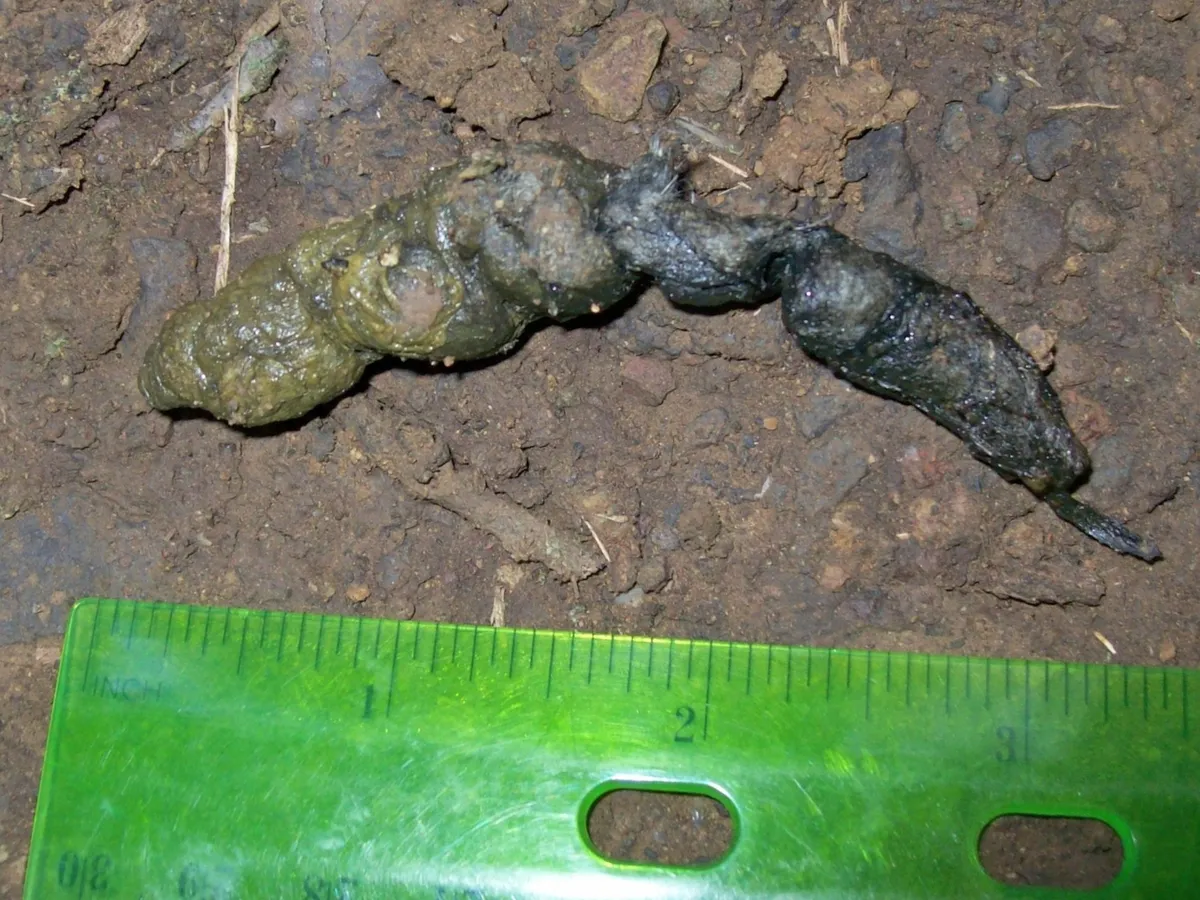
- Opossum. Nebraska Extension says opossum and raccoon droppings are generally about the size of a cat's and packed with leftovers of a mixed diet, and UC IPM's Pest Notes on the opossum say opossums typically go in protected, leafy spots. The possum poop guide covers them.
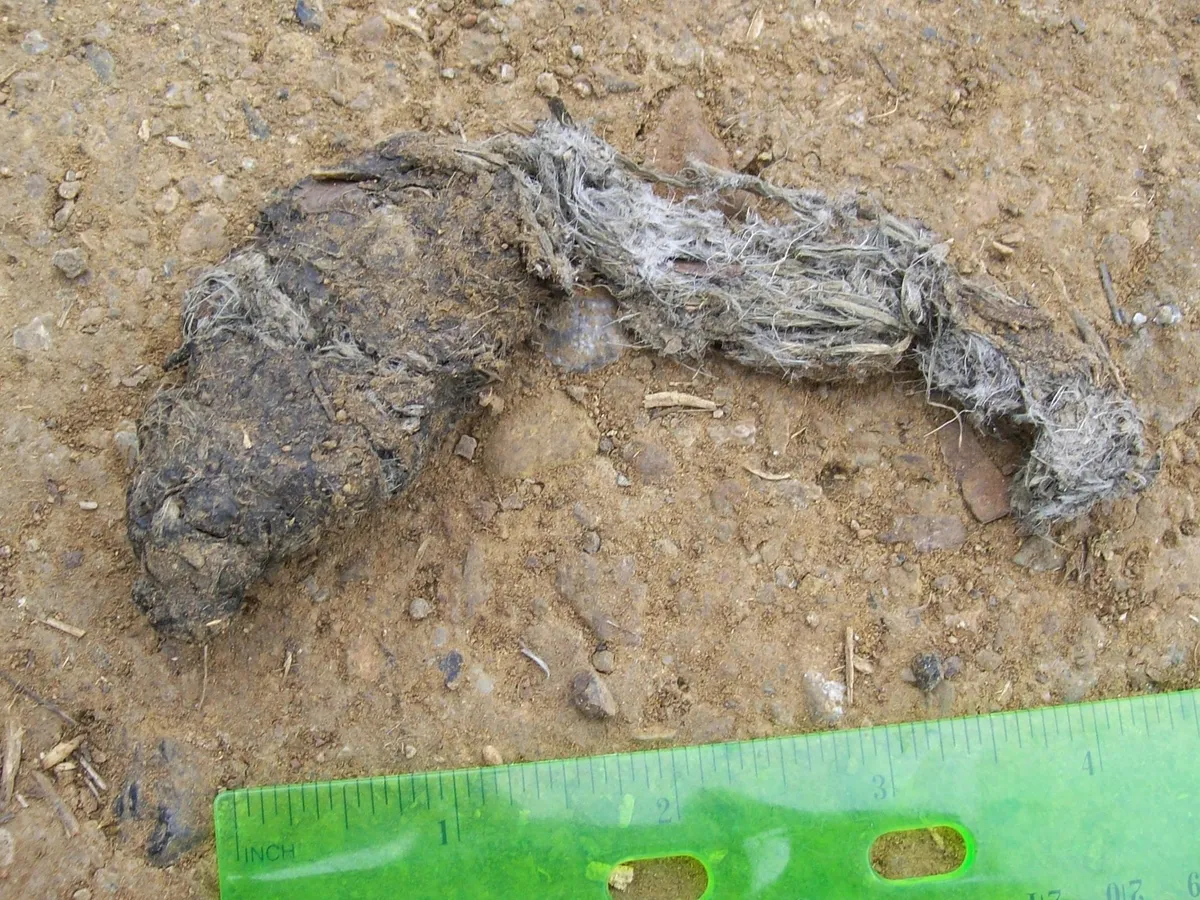
- Fox. UF/IFAS describes fox and coyote scat as segmented with tapered, pointed ends, usually holding hair and often bits of bone, and Alabama Cooperative Extension gives fox scat as about 2 inches long and 3/8 to 5/8 inch in diameter. The fox poop guide covers it.
- Coyote or dog. Alabama Extension puts coyote scat at about 1 inch in diameter and up to 4 inches long, and ICWDM's key says it is often full of animal hair and left along trails; the coyote poop guide has photos. A dog's is unlikely to hold bone fragments or much fur, Alabama Extension adds.
- Rat. Cornell IPM says rodent droppings are cylindrical with pointed to rounded ends, about 3/4 to 1 inch long for a Norway rat and 1/2 inch for a roof rat; the rat droppings guide covers them.
- Rabbit or deer. Pellets, not logs: UF/IFAS describes rounded, pea-sized pellets with a rough texture as a rabbit's and slightly larger, smoother ovals as a white-tailed deer's. See the rabbit poop guide and the deer poop guide.
The animal poop identification chart sets the common kinds of droppings side by side.
Six checks for a dropping you have not touched
- Photograph it beside a coin or ruler. Keep your hands off: ICWDM's droppings key cautions that droppings can carry disease-causing pathogens and advises gloves and a thorough wash after any work near them.
- Check the thickness. About 1/4 to 1/2 inch fits a skunk (ICWDM); close to 1 inch points to a raccoon or coyote (UF/IFAS, Alabama Extension).
- Look at the ends. Blunt ends fit a skunk, WDFW and Wildlife Illinois say; tapered, pointed ends fit a fox or coyote (UF/IFAS).
- Look at what is inside. Shiny insect fragments point to a skunk, hair and bone to a fox or coyote, and corn or fruit to a raccoon, though skunks eat berries too.
- Note the pile and the place. A pile that grows in one spot on a deck, woodpile or roof points to a raccoon latrine; droppings beside fresh cone-shaped holes or a hole under a deck fit a skunk.
- Find a track. In mud, snow or a dusting of flour nearby, five toes with claw marks fit a skunk; four toes without claws fit a cat (Wildlife Illinois).
What other signs point to a skunk?
Holes, tracks, a den and, less reliably, a smell. Two or three of these together make a much stronger case than a dropping alone.
- Small cone-shaped holes in the lawn. Montana State describes skunk digging as small, 3- to 4-inch cone-shaped holes or patches of upturned earth, and UC IPM gives the pits as 3 to 5 inches across. Nebraska Extension's raccoon guide draws the contrast: raccoons roll up or shred the sod instead.
- Five-toed tracks with claws. ICWDM says both front and hind feet have five toes and that hind prints are about 2 1/2 inches long. Montana State says claw marks usually show while the heels of the front feet usually do not, and WDFW adds that skunk prints are usually staggered, unlike a cat's.
- A den entrance. Nebraska Extension says active skunk burrows are grass-free and 3 to 5 inches in diameter, and ICWDM adds fresh insect-filled droppings, hair and rub marks near the hole. Don't count on a smell: ICWDM says a den's skunk odor may not be strong, and Nebraska Extension says den sites likely will not smell skunky.
- A smell, with care. Montana State warns that odor is not always a reliable sign, because sprayed pets or other animals moving under a house can carry it, and Nebraska Extension says opossums can leak an oily substance that smells remarkably like skunk spray. The guide to skunk smell in the house sorts the causes.
- A skunk at dusk. Wildlife Illinois says skunks are nocturnal and are seen most often at dusk and in the early morning.
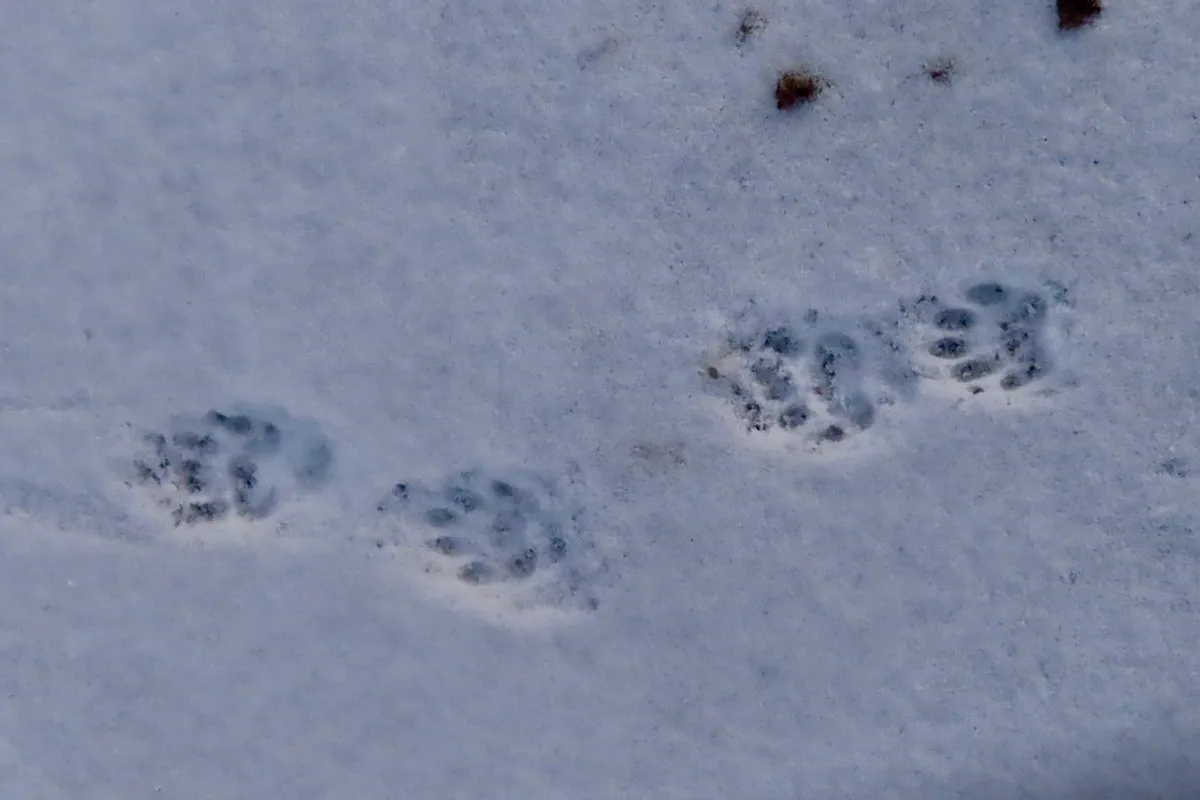
Tracks in snow, mud or flour are the clearest evidence. The guide to animal tracks in snow compares skunk prints with a raccoon's, an opossum's and a cat's, and the raccoon tracks guide covers raccoon prints in detail.
Is skunk poop dangerous?
It can carry germs, as any wild animal's droppings can, so keep bare hands, children and pets away from it. CDC's guidance on wildlife warns that a wild animal can look and act healthy yet still carry germs that sicken people, and it names touching wild animals or their poop as a time to wash up with soap and running water. What CDC and the wildlife agencies say about the risks people ask about:
- Droppings are not a rabies exposure. CDC lists bats, skunks, raccoons and foxes as the animals in which rabies turns up most often in the US, and says it spreads primarily through bites or scratches. Its rabies prevention recommendations class touching an animal's feces, like its blood or urine, as indirect contact, for which rabies shots should not be given.
- Skunks have their own roundworm. CDC names it as Baylisascaris columnaris. The raccoon's species is the one CDC says is thought to pose the greatest risk to people, so a pile that might be a raccoon's deserves the most care.
- Other germs. UC IPM says skunks can also carry leptospirosis and listeriosis, without saying whether either passes through droppings.
- A skunk out in daylight may be sick. Montana State says a skunk acting abnormally, for example active by day, could be rabid and calls for caution. Wildlife Illinois lists loss of fear of people, uncoordinated movements and seizures as possible signs and says to call the county animal control office.
For pets, CDC's advice is to keep them from approaching or interacting with wildlife and to talk with a veterinarian about protecting them from rabies, leptospirosis and Giardia infection; Nebraska Extension advises vaccinating dogs, cats and livestock against rabies. No source behind this page calls skunk droppings toxic to dogs, but don't let a dog eat them or roll in them.
How do you clean up skunk poop safely?
Wear gloves, never touch it bare-handed, and wash up afterward. No CDC page gives steps for skunk droppings alone, and skunk and raccoon droppings can be hard to tell apart, so CDC's advice for raccoon feces is the careful default:
- Put on disposable gloves, and wear an N95-rated respirator if you are working in a confined space such as a crawl space or attic, as CDC advises.
- Remove the droppings and anything they soiled, then burn them, bury them or send them to a landfill with your trash, as CDC directs for raccoon feces.
- Pour boiling water over soiled decks, patios and other hard surfaces. Heat is what works: CDC says roundworm eggs survive most chemicals but die instantly when heated.
- Finish by washing your hands with soap and running water, as CDC advises whenever you have touched a wild animal or its droppings.
Do it promptly: CDC says roundworm eggs in fresh raccoon droppings need at least 2 to 4 weeks before they can infect anyone. For a large pile or a latrine, the raccoon poop guide gives CDC's full latrine steps, and CDC also points people to their local animal control office for help. Mouse and rat droppings call for a different method, which the animal poop identification chart explains.
Commonly confused with
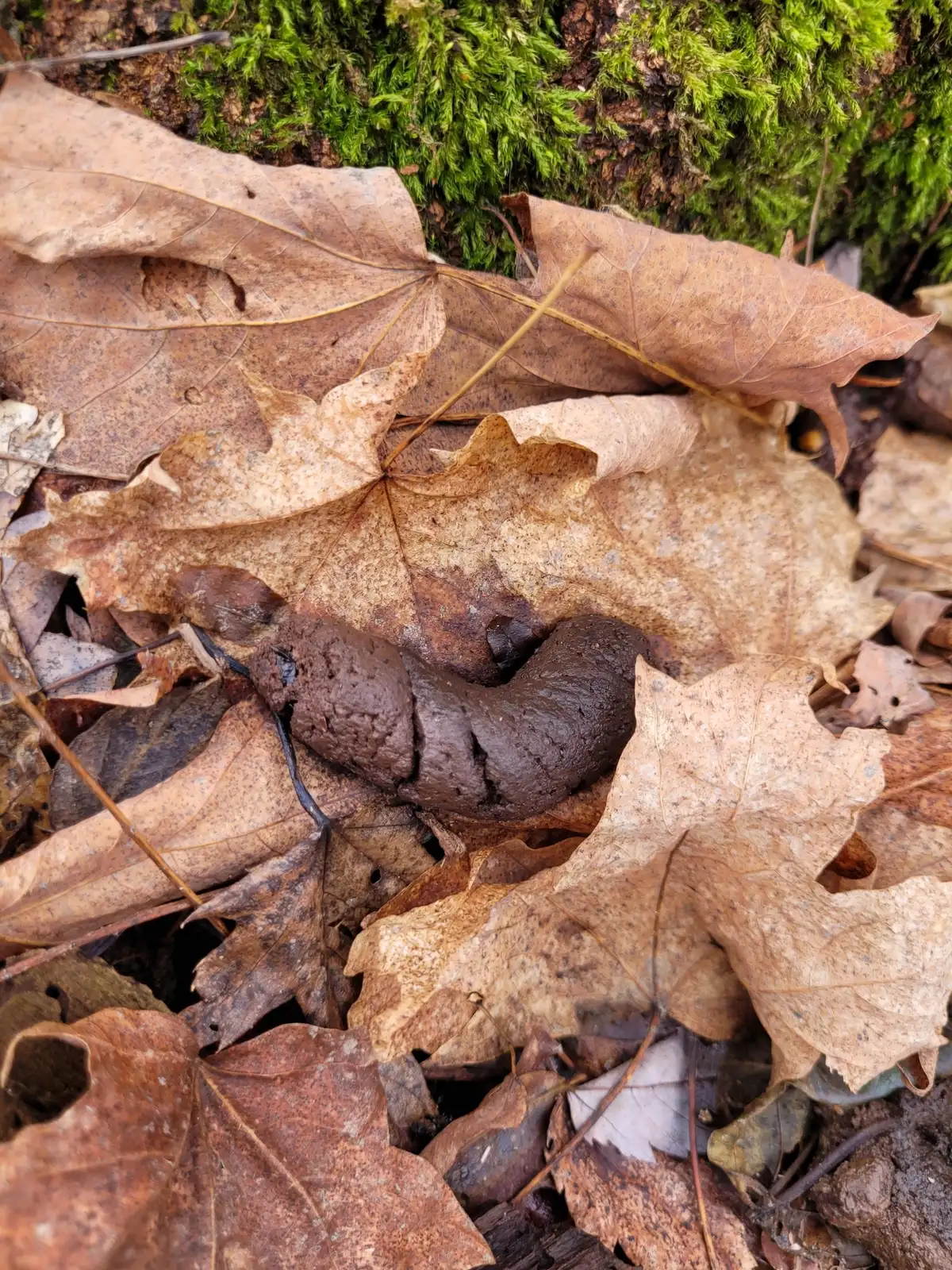
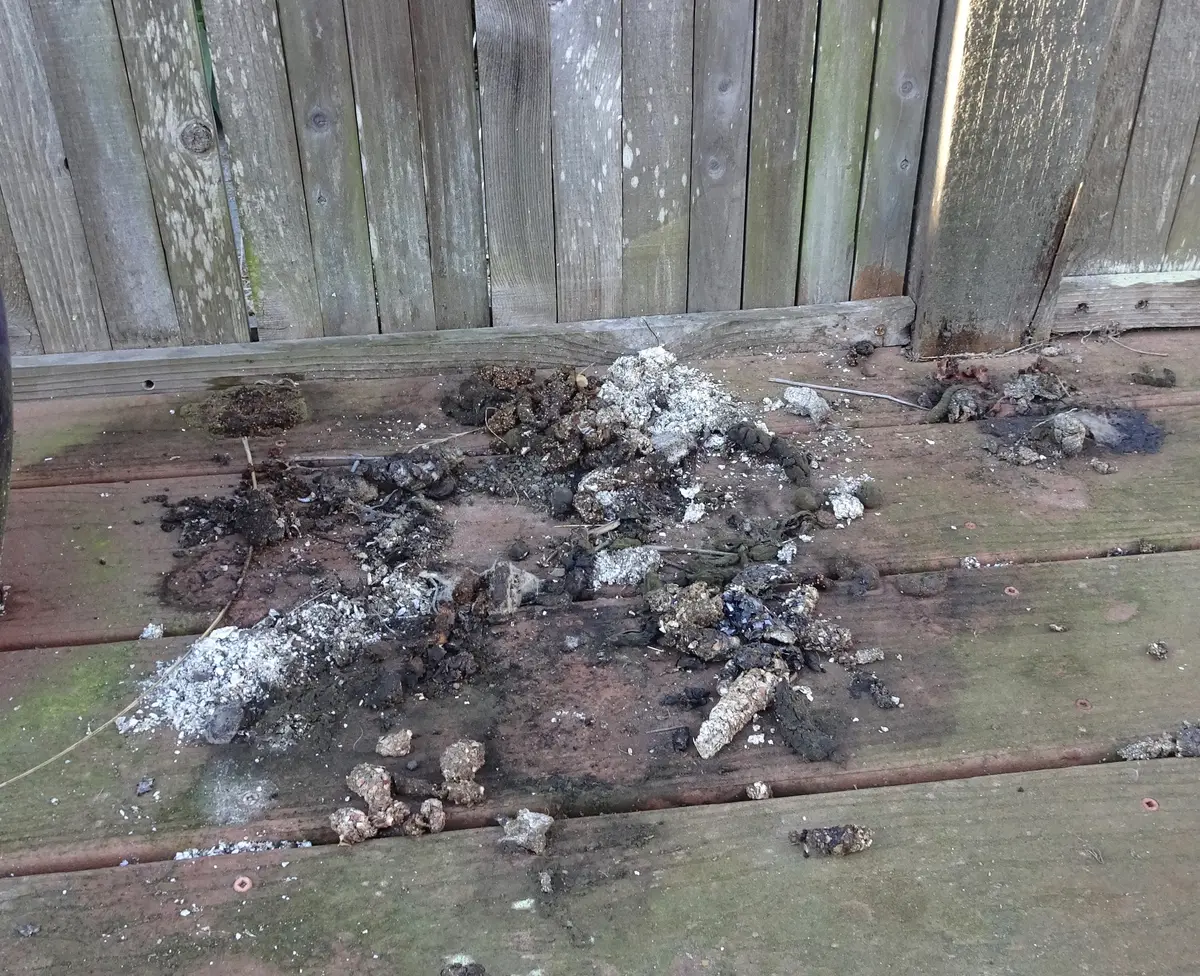 Raccoon latrineDroppings 2 to 3 inches long, piled up in one spot that raccoons use again and again
 Opossum droppingsCat-sized and full of mixed food, usually left in protected, leafy spots
 Fox scatSlim and segmented with pointed ends, usually holding hair and often bone
 Coyote scatUp to 4 inches long and about 1 inch thick, often full of animal hair
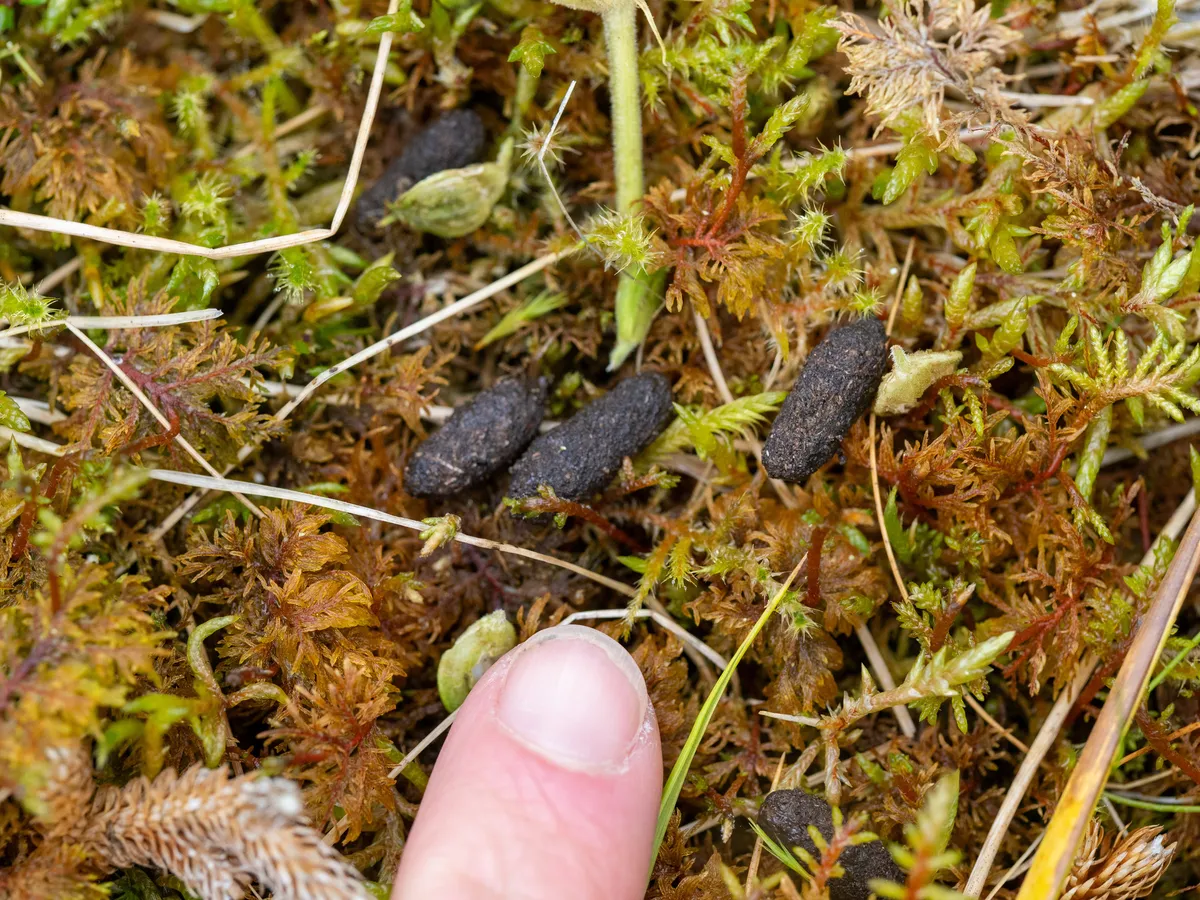 Rat droppingsNo more than about 1 inch long, with pointed to rounded ends
Photos: Raccoon latrine: (c) Barbara Banfield, some rights reserved (CC BY), via iNaturalist, CC BY 4.0. Opossum droppings: no rights reserved, via iNaturalist, CC0 1.0. Fox scat: no rights reserved, via iNaturalist, CC0 1.0. Coyote scat: no rights reserved, via iNaturalist, CC0 1.0. Rat droppings: no rights reserved, via iNaturalist, CC0 1.0.
What should you do once you know it's a skunk?
Clean up, take away what drew it, and close any den only once it is empty. A skunk digging grubs may need nothing more: ICWDM's guide to skunk damage says lawn damage generally stops after 3 weeks because the food runs out.
- Remove the food. Bring pet food indoors, keep tight lids on trash and clean up spilled birdseed: WDFW lists garbage, birdseed and pet food among the things skunks scavenge. If grubs are the draw, the guide to lawn pests explains how to confirm them.
- Check for a den. Look under decks, porches, sheds and crawl spaces for the bare, half-moon entrance Nebraska Extension describes.
- Close it only when it is empty. Nebraska Extension notes that young skunks can be in a den anytime from April through August, and it advises closing an opening only after it has stayed undisturbed for five days of good weather. To check, Wildlife Illinois suggests loosely stuffing newspaper into the opening, and UC IPM suggests a smooth layer of flour about 1/8 inch thick at the entrance, where footprints show the animal has gone out. WDFW lists 1/4-inch hardware cloth, boards or metal flashing for the closing, and the deck-proofing guide shows a hardware cloth footing.
- Skip mothballs and ammonia. Nebraska Extension says using mothballs or ammonia in the landscape is dangerous and violates federal regulations, and Wildlife Illinois says no repellents are registered for skunks in Illinois.
- Check the law before trapping or moving one. ICWDM says striped skunks are not protected by law in most states but spotted skunks are fully protected in some. In Illinois towns, removing one takes a nuisance animal removal permit, Wildlife Illinois says, and UC IPM says California regulations prohibit relocating skunks without written permission from the state's Department of Fish and Wildlife. Ask your state wildlife agency first.
- Raccoon after all? If the droppings turn out to be a raccoon's, the raccoon deterrent guide covers keeping raccoons away.
This guide is general educational information, not medical advice. If you have symptoms or concerns after a bite or exposure, contact a healthcare provider.
Frequently Asked Questions
How big is skunk poop?+
About the size of a house cat's. ICWDM gives skunk droppings as 1/4 to 1/2 inch in diameter and 1 to 2 inches long, and Washington's Department of Fish and Wildlife gives a striped skunk's as 1/2 inch thick and 2 to 4 inches long, with blunt ends. A spotted skunk's are about half that size, WDFW says. Raccoon droppings run 2 to 3 inches long, so size alone can mislead; insect parts inside are the better tell.
Does skunk poop smell like skunk?+
Not necessarily. The famous smell is the musk from a skunk's scent glands, Wildlife Illinois explains, and none of the agency sources behind this page describes a skunky odor from the droppings themselves. Even a den may not give it away: ICWDM says a den's skunk odor may not be strong, and Nebraska Extension says den sites likely will not smell skunky. Smell alone can mislead: Montana State Extension notes that sprayed pets can carry the odor under a house, and Nebraska Extension says opossums can leak an oily substance that smells remarkably like skunk spray.
Do skunks poop in the same spot?+
None of the agency and extension sources used for this page mentions a skunk latrine, while Nebraska Extension says raccoons defecate in the same place, building up piles that ICWDM calls latrines. WDFW says to look for skunk droppings where the animal fed or dug, or near its den, and ICWDM says fresh droppings with insect parts near a hole show the den is occupied. A heap that gets bigger week by week on a deck or roof is a raccoon's sign.
Is skunk poop dangerous to humans?+
It can carry germs, so never touch it bare-handed. CDC says a wild animal can look healthy and still carry germs that sicken people, and it tells people to wash with soap and running water after touching wild animals or their droppings. Skunks carry their own roundworm, Baylisascaris columnaris, CDC says, although the raccoon's species is the one thought to pose the greatest risk to people. Under CDC's rabies recommendations, contact with droppings is not a rabies exposure.
Can skunk poop make dogs sick?+
It can carry germs and parasites, like any wildlife droppings, so don't let your dog eat it or roll in it, although no source behind this page calls it toxic. CDC's advice is to keep pets away from wildlife and to talk with your veterinarian about protecting them from rabies, leptospirosis and Giardia infection. Nebraska Extension advises vaccinating dogs and cats against rabies. Call your veterinarian if your dog acts sick afterward.
Can you get rabies from skunk poop?+
No. Under CDC's rabies prevention recommendations, touching an animal's feces, blood or urine is indirect contact, and CDC says rabies shots should not be given for it. Skunks do rank among the animals in which CDC most often finds rabies in the US, though, and the virus spreads primarily through bites and scratches. Wash any bite or scratch at once with soap and water and get medical care urgently. Treat a skunk that is out by day or acting strangely with caution, and call animal control.
How can you tell skunk poop from cat poop?+
Look inside it and look for tracks. WDFW and Wildlife Illinois both say skunk droppings look like a cat's, but a skunk's often hold undigested insect parts, berry seeds, fur or feathers. Tracks settle it: Wildlife Illinois says skunk prints show five toes with claw marks, while a cat's show four toes and no claw marks. Cat feces in garden soil or a sandbox can carry the Toxoplasma parasite, so CDC advises gloves for gardening and covering outdoor sandboxes.
Why is there skunk poop on my porch?+
Most likely a skunk is feeding nearby or denning underneath. UC IPM says skunks in towns den under decks, porches and buildings, and WDFW says skunk droppings turn up where the animals fed or dug, or near a den, and that skunks scavenge garbage, birdseed and pet food. Check under the porch for a grass-free entrance 3 to 5 inches across, as Nebraska Extension describes. Young skunks may use a den from April through August, it adds, so close an opening only after it has stayed undisturbed for five days of good weather.
Is skunk poop black?+
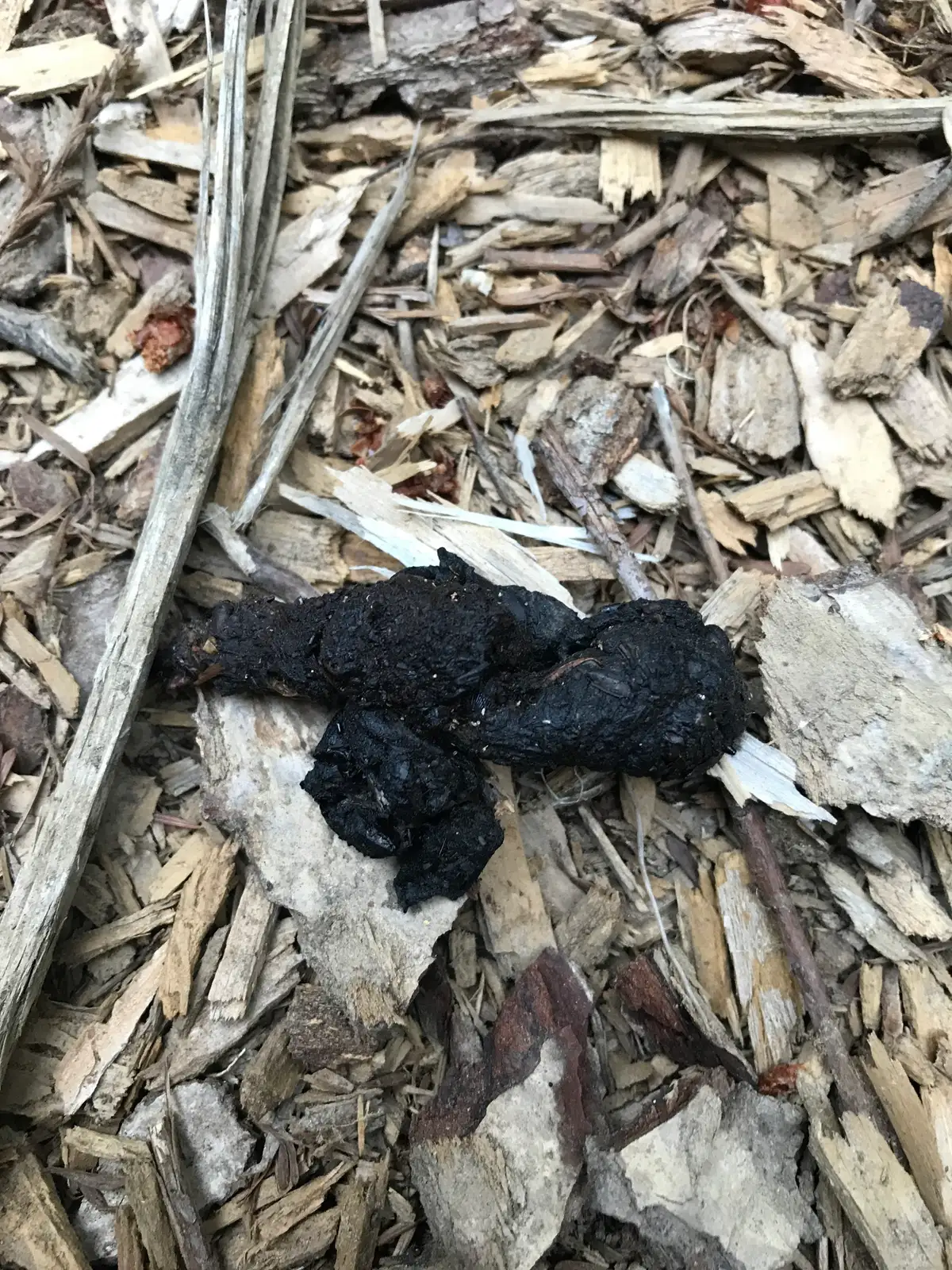
It can be, but color is a weak clue. Of the two skunk droppings photographed on this page, one is black and the other brown. The agency sources behind this page give no single color and point to contents instead: insect parts, berry seeds, fur or feathers. Age changes the look too: according to UF/IFAS Extension, a fresh dropping is usually wet-looking and glossy, and an old one dry, dull and grayish.
Do skunks poop pellets?+
No. ICWDM and WDFW describe skunk droppings as 1/4 to 1/2 inch thick and 1 to 4 inches long, and WDFW says they usually have blunt ends. Pellets come from other animals: UF/IFAS Extension describes rounded, pea-sized pellets with a rough texture as a rabbit's and slightly larger, smoother ovals as a white-tailed deer's, and Cornell IPM says rodent droppings are cylindrical with pointed to rounded ends, a Norway rat's no more than about 1 inch long.
Sources
- Skunks (identification, tracks and signs) — Internet Center for Wildlife Damage Management
- Skunk Damage Identification — Internet Center for Wildlife Damage Management
- Livestock (damage inspection: skunks and inhabited dens) — Internet Center for Wildlife Damage Management
- Brown or Black Droppings (droppings identification key) — Internet Center for Wildlife Damage Management
- Skunks (Prevention and Control of Wildlife Damage), by James E. Knight — Montana State University Extension, Animal and Range Sciences
- Living with wildlife: Skunks — Washington Department of Fish and Wildlife
- Striped Skunk — Wildlife Illinois (authorized by the Illinois Department of Natural Resources)
- Dealing With Skunks (NebGuide G1769), by Stephen M. Vantassel, Scott E. Hygnstrom, Dennis M. Ferraro and Lisa Pennisi, revised 2014 — University of Nebraska-Lincoln Extension
- Controlling Raccoon and Opossum Damage (NebGuide G1688) — University of Nebraska-Lincoln Extension
- Pest Notes: Skunks (UC ANR Publication 74118), by R. A. Baldwin, updated April 2015 — University of California Statewide IPM Program
- Pest Notes: Opossum (UC ANR Publication 74123), by R. A. Baldwin — University of California Statewide IPM Program
- How to Identify the Wildlife Species Responsible for Damage in Your Yard (WEC324/UW369), by Holly Ober and Arlo Kane — University of Florida IFAS Extension
- Identification and Management of Foxes in Alabama (FOR-2119), by Anna Lizana and Wesley Anderson, August 2022 — Alabama Cooperative Extension System
- Mouse and Rat Biology and Behavior — Cornell Integrated Pest Management (Cornell IPM), Cornell University
- Preventing Raccoon Roundworm — Centers for Disease Control and Prevention
- About Raccoon Roundworm — Centers for Disease Control and Prevention
- About Rabies — Centers for Disease Control and Prevention
- Human Rabies Prevention, United States, 2008: Recommendations of the Advisory Committee on Immunization Practices — Centers for Disease Control and Prevention, Morbidity and Mortality Weekly Report
- Wildlife (Healthy Pets, Healthy People) — Centers for Disease Control and Prevention
- Preventing Toxoplasmosis — Centers for Disease Control and Prevention
Read and approved by Alex Francisco. Found an error? Email support@buzzskito.ca.