
Reviewed by Alex Francisco
Published November 10, 2026 · Fact-checked against the sources listed below
What does possum poop look like?
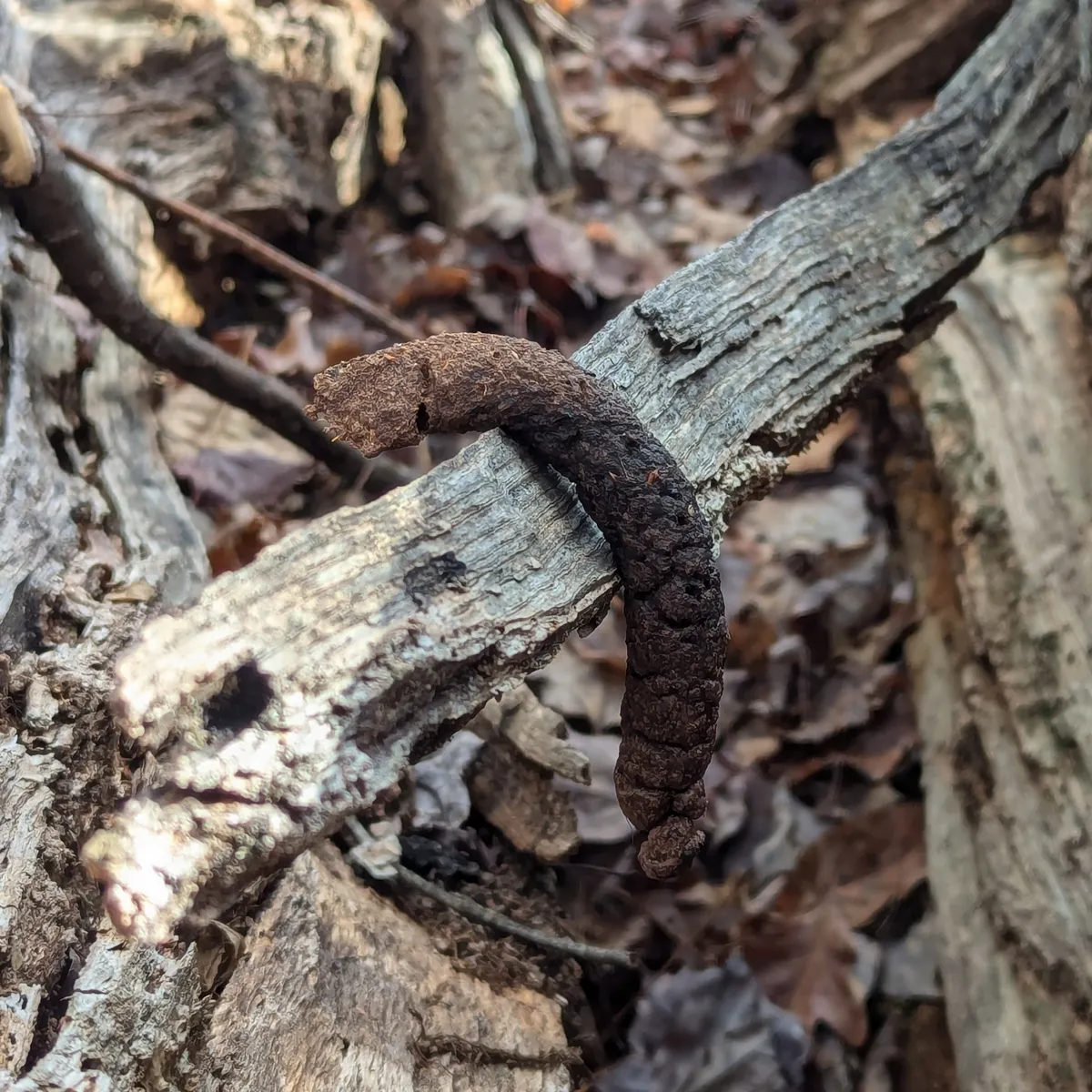
Possum poop is about the size of a cat's and much like a raccoon's. UNL Extension's guide to raccoon and opossum damage says the feces of both animals are generally cat-sized and filled with the remains of their varied diet. Past that there is no single look: UC IPM's Pest Notes on the opossum say the droppings are hard to describe, because an animal that eats almost anything leaves no average size, shape or texture.
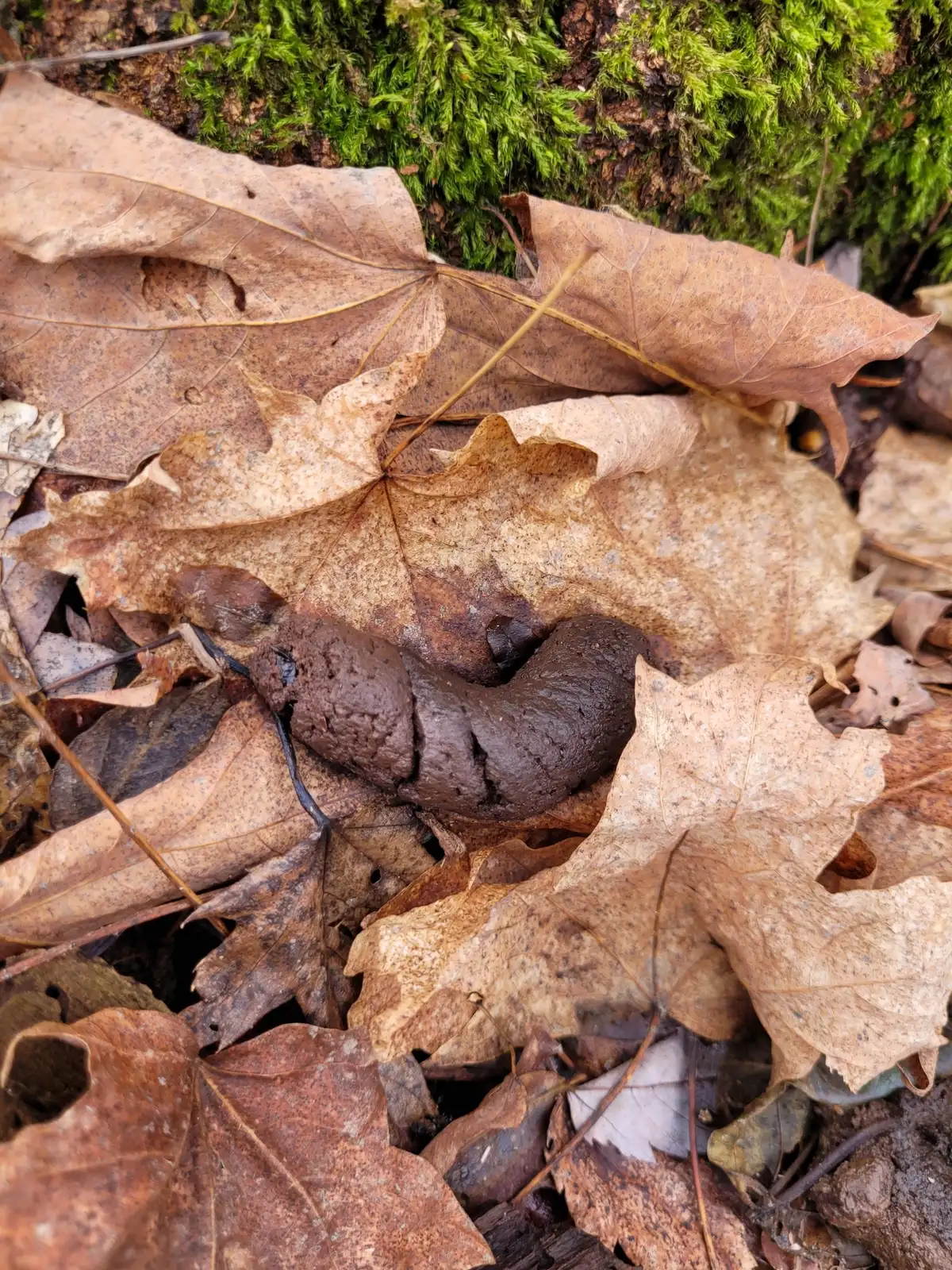
What ends up inside depends on the menu. The Missouri Department of Conservation's field guide says opossums prefer animal matter, including many kinds of insects and carrion, eat fruit such as grapes and persimmons in fall and early winter, and scavenge from unsecured garbage cans and pet bowls left outdoors. University of Arizona Cooperative Extension warns that a change of diet can dramatically change the color, shape and contents of any animal's feces, and that several species often eat the same ripe food, which makes droppings hard to place by look alone.
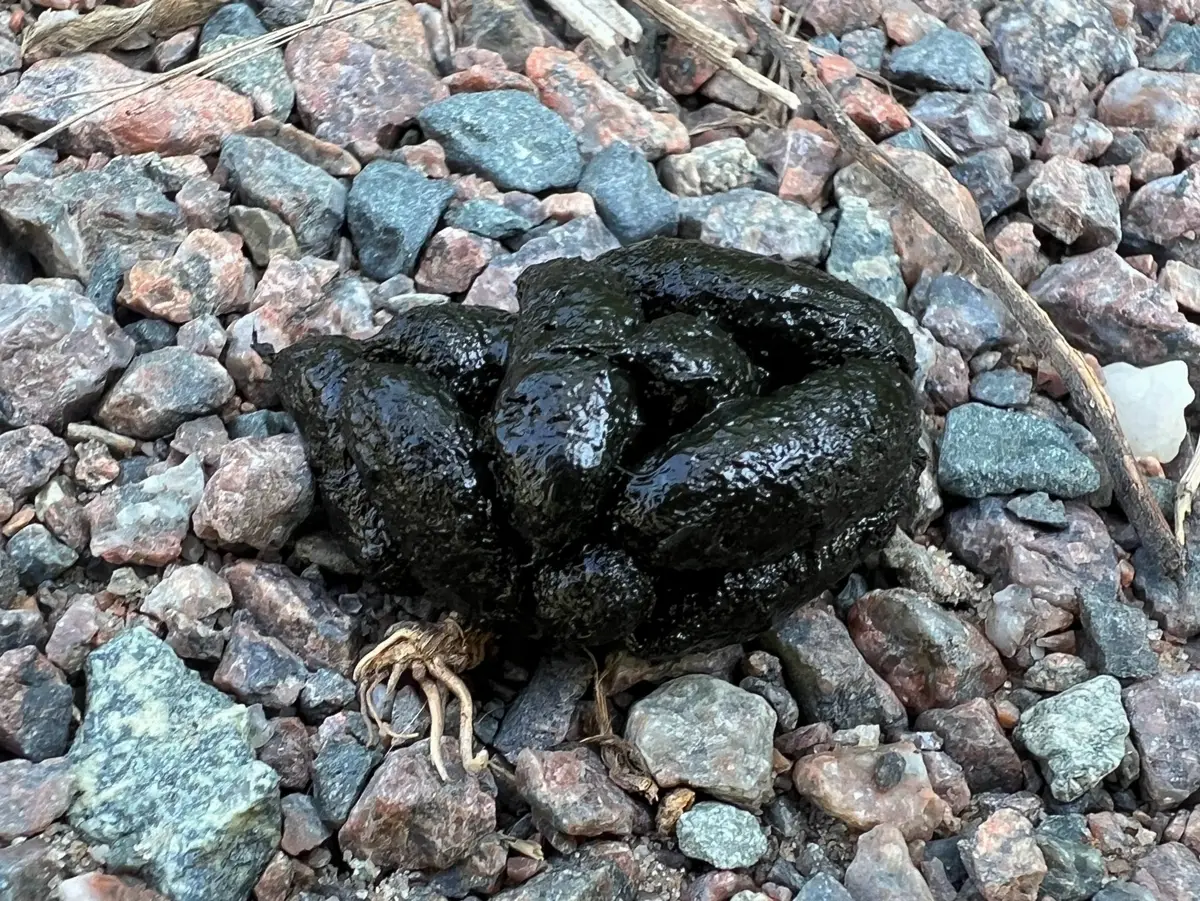
Fresh or old? UF/IFAS Extension's guide to identifying yard wildlife says fresh feces are usually moist and shiny and older ones dry, dull and grayish, so a glossy dropping suggests an animal passed recently. This page covers the Virginia opossum of North America, often simply called a possum; Australia's possums are different animals, and possum vs opossum explains the two names.
How big is possum poop?
About as big as a cat's: that is the only size the extension and agency sources behind this page give, and UC IPM says the opossum's mixed diet rules out an average size. Comparing a dropping with ones whose sizes are known works better than any single number:
- Raccoon: 2 to 3 inches long and 1/2 inch wide, according to ICWDM's droppings key (UF/IFAS Extension says 1 inch thick), and about the same size as an opossum's, UNL Extension says.
- Coyote or fox: typically 2 inches long and 1/2 inch thick, segmented, with pointed ends, says UF/IFAS Extension; Iowa's Department of Natural Resources adds that a coyote's is usually under 1 inch thick.
- Striped skunk: 1 to 2 inches long and 1/4 to 1/2 inch thick, in Montana State University Extension's skunk chapter.
- Norway rat: only 3/4 to 1 inch long, and a roof rat's about 1/2 inch, Cornell IPM says.
- Gray squirrel: brown to reddish pellets 5/16 to 3/8 inch (8 to 10 mm) long, according to the Missouri Department of Conservation's scat guide.
Much smaller droppings, or round pellets, point to other animals: UF/IFAS describes rabbit droppings as rounded, pea-sized pellets with a rough texture and deer droppings as slightly larger, smoother ovals. The rat droppings guide, squirrel poop guide, rabbit poop guide and deer poop guide cover each one, and the animal poop identification chart sets a dozen kinds side by side.
Where do possums poop?
Usually somewhere sheltered: UC IPM says opossums typically defecate in protected, leafy areas, though odd-looking droppings sometimes turn up on garden paths, walkways and patios. Around a house, look near the places where a possum sleeps and feeds.
In the yard and garden
UC IPM says opossums living near people may visit vegetable gardens, compost piles, garbage cans and food dishes and readily eat fallen fruit. ICWDM's opossum damage guide adds garden produce, fruit trees and compost piles, and UNL Extension says compost holding anything but plant and vegetable matter draws raccoons, opossums and skunks.
On the deck, porch or patio
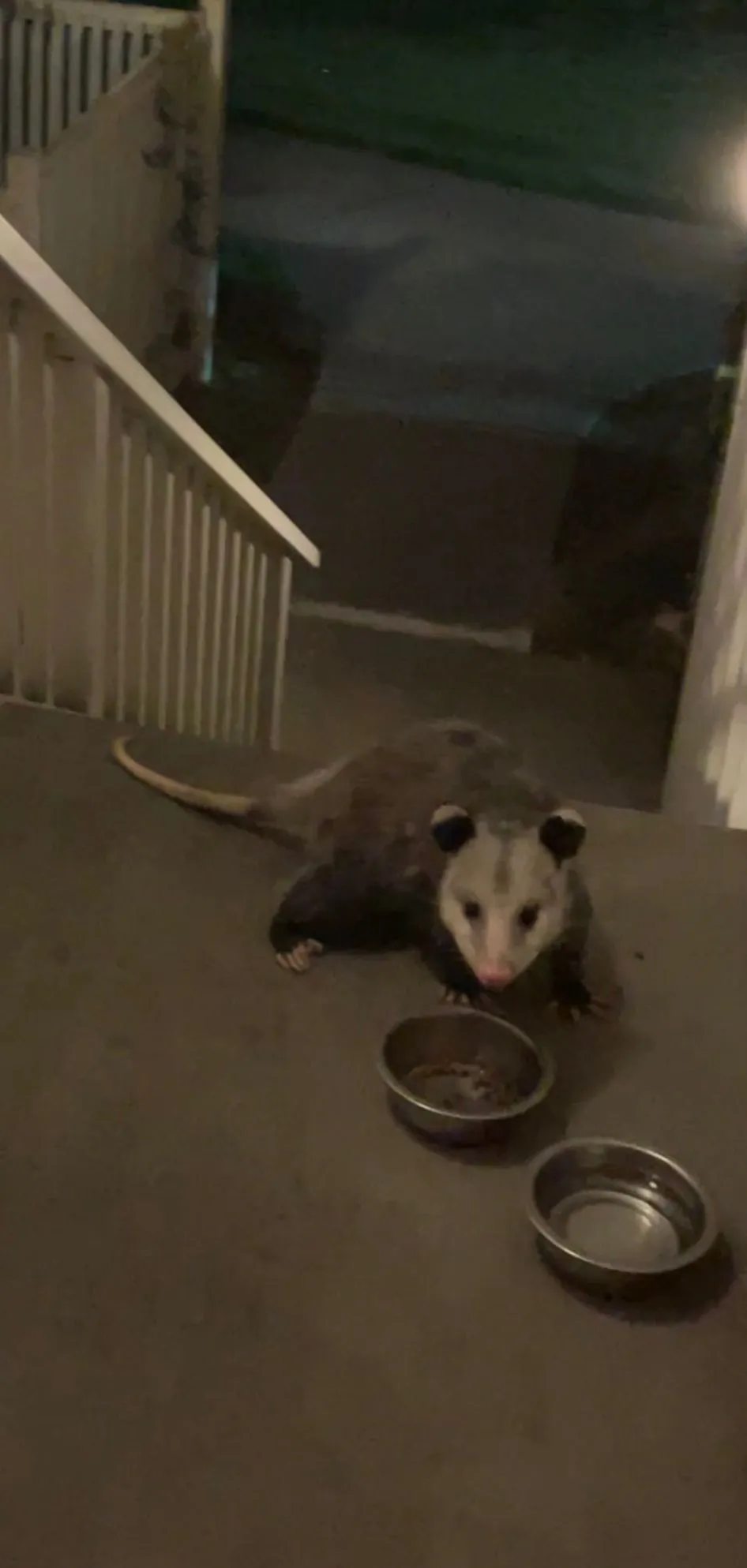
UC IPM lists steps, porches and decks among the places suburban opossums den, and patios among the places their droppings turn up. A deck is also a classic raccoon latrine site: CDC's raccoon latrine fact sheet lists decks and patios, so watch whether the pile keeps growing.
In the garage, attic or crawl space
Given a way in, UC IPM says, opossums den in attics, garages and beneath houses, where they make an untidy nest of sticks and whatever else is at hand. ICWDM says they climb into the insulation under trailer houses and come in through gaps around pipes and drains under sinks, typically through openings that already exist. Droppings indoors could be a raccoon's too, since CDC lists attics and garages among latrine sites; the guide to noises in the attic at night sorts the animals by sound and sign.
Under the bird feeder or by the pet bowl
ICWDM says opossums can be a nuisance near homes where they get into garbage, bird feeders and pet food. Wildlife Illinois, a site authorized by the Illinois Department of Natural Resources, advises removing spilled bird seed and not leaving pet food outside overnight.
Do possums go in one spot, the way raccoons do? None of the agency or extension sources behind this page describes an opossum latrine. UNL Extension says raccoon droppings are easy to identify because raccoons defecate in the same place, called a toilette, and the Missouri Department of Conservation names otters and raccoons as animals that use the same spot and form a latrine.
| Where you found it | Most likely | Also consider |
|---|---|---|
| Deck, porch or patio | Opossum, which dens under decks and porches | Raccoon, if the pile keeps growing in one spot |
| Garden path, walkway or flower bed | Opossum: its droppings turn up on paths and walkways | Cat: CDC links garden soil to cat feces |
| Uncovered sandbox | Cat: CDC advises covering sandboxes | Raccoon: CDC says raccoons sometimes use one as a latrine |
| Lawn with small, cone-shaped holes | Skunk: look for insect parts in the droppings | Other diggers, sorted in the guide to holes in the yard |
| Trail, path or crossroads | Coyote or fox: hair and bits of bone | Opossum, on paths and walkways |
| Under a bird feeder or by a pet bowl | Opossum or raccoon | Rat or squirrel, if the droppings are small pellets |
| Attic, garage or crawl space | Raccoon latrine or a denning opossum | Rats: droppings 1 inch long or less |
From UC IPM, CDC, Montana State University Extension, UF/IFAS Extension, ICWDM and Cornell IPM, each linked on this page.
How do you tell possum poop from raccoon poop?
By where it lies and how it piles up, not by size. UNL Extension describes the droppings of both as generally cat-sized and full of the remains of a varied diet, so a lone dropping can fool you; what marks a raccoon is a latrine, one spot used again and again. The raccoon poop guide covers raccoon droppings and latrines in detail. The short version:
- Raccoon: droppings 2 to 3 inches long that may show corn kernels or fruit (ICWDM), dark and tubular and left in a latrine at the base of trees, on fallen logs, stumps, woodpiles or large rocks, on decks or patios, or in attics and garages (CDC). CDC's prevention page adds rooftops and describes the odor as pungent, usually worse than dog or cat feces.
- Opossum: about the same size, usually left in a protected, leafy spot (UC IPM), with no latrine habit or particular smell described in the sources behind this page.
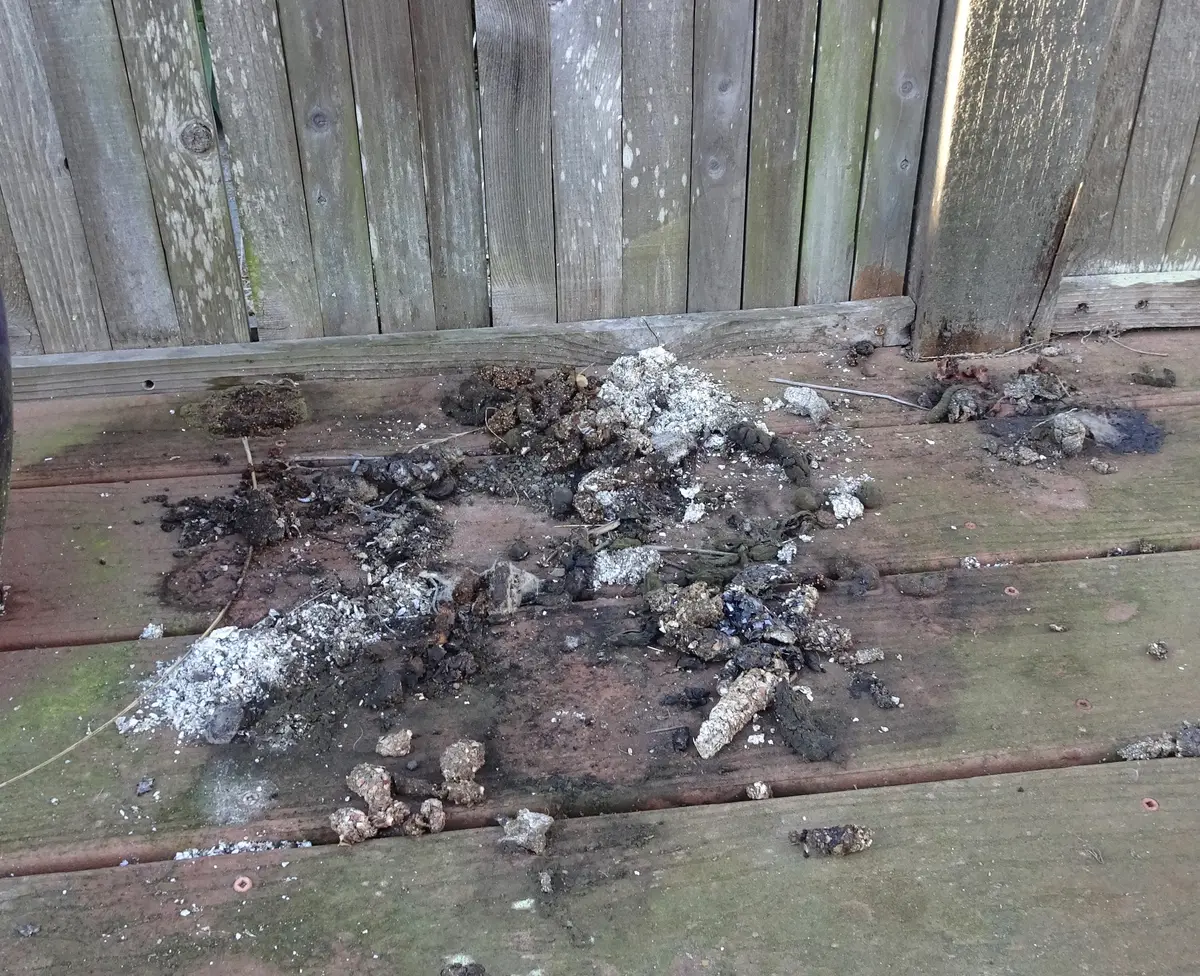
The difference matters because raccoon droppings can carry raccoon roundworm. CDC's latrine fact sheet says raccoons are the primary host of Baylisascaris procyonis, a roundworm that can harm people, and that eggs in newly deposited feces take at least 2 to 4 weeks to become infective, so prompt cleanup lowers the risk. If you cannot tell which animal left a pile, clean it the way CDC advises for a latrine (below).
Is it possum, dog, cat, skunk or coyote poop?
Check what is in it and where it lies; sizes overlap too much to settle it.
- Dog: Iowa's Department of Natural Resources says domestic dog scat lacks hair and a tapered fringe and is full of cereal matter, while a coyote's is often full of small mammal hair.
- Cat: droppings in garden soil or a sandbox. CDC's toxoplasmosis prevention page advises gloves for gardening or for any soil or sand that may hold cat feces, says to cover outdoor sandboxes, and says the Toxoplasma parasite becomes infectious 1 to 5 days after a cat sheds it.
- Skunk: Montana State University Extension says skunk droppings can often be identified by the undigested insect parts in them, and that skunk digging shows as small, 3- to 4-inch cone-shaped holes in lawns.
- Coyote or fox: hair and bits of bone. UF/IFAS says fox and coyote scat usually holds hair and often bone; ICWDM says coyotes leave theirs at crossroads and along trails to mark territory, and the Missouri Department of Conservation's scat guide lists fur and bones as the coyote's content clues.
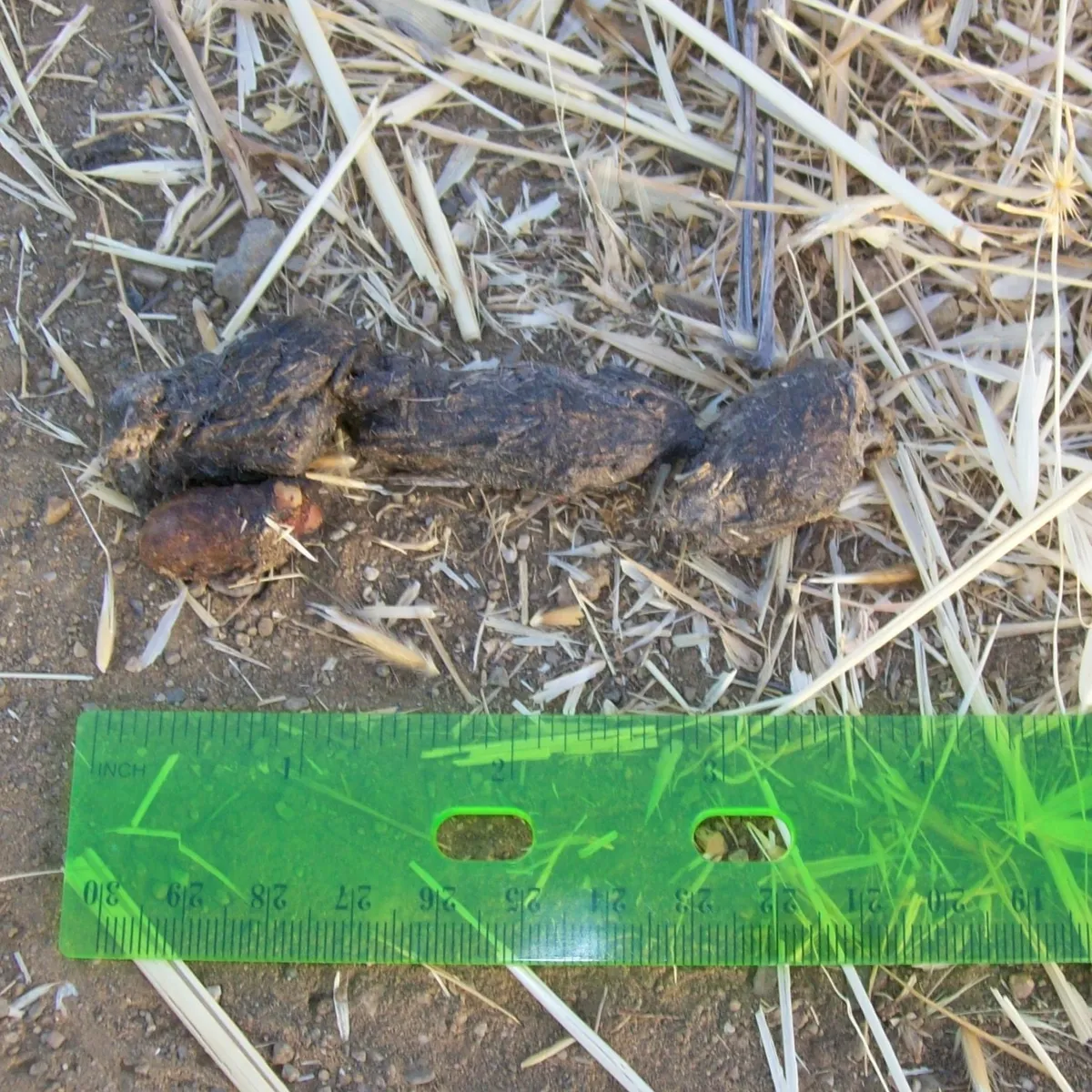
Checks to run on a dropping, without touching it
- Photograph it with a scale. Put a coin, pen or pocketknife beside it, as University of Arizona Extension suggests, and never sniff it: some diseases can be caught from airborne particles.
- Check the ends and the surface. Flat or pointed ends, smooth or segmented like rope: Arizona Extension lists both as clues, and UF/IFAS gives pointed ends for fox and coyote scat.
- Look for what is inside. Hair and bone point to a coyote or fox, insect parts to a skunk, and corn or fruit to a raccoon, though an opossum eats many of the same foods.
- Count it and map it. One dropping or many? Arizona Extension asks whether droppings appear in the same spot for several days; a pile that keeps growing points to a raccoon latrine.
- Find a track. In mud, snow or dust nearby, an opossum's hind print shows a thumb sticking out at a right angle with no claw mark, the Missouri Department of Conservation says.
- Note when it appeared. Droppings that show up overnight fit a nocturnal animal; UNL Extension says opossums and raccoons both are.
How can you confirm a possum is around?
Look for the animal's other signs. UC IPM says barking dogs and pet food that disappears overnight may be the first clues, and describes an opossum as about the size of a house cat, with coarse grayish fur, a pointed face, hairless, rounded ears and a long, hairless tail that can grasp.
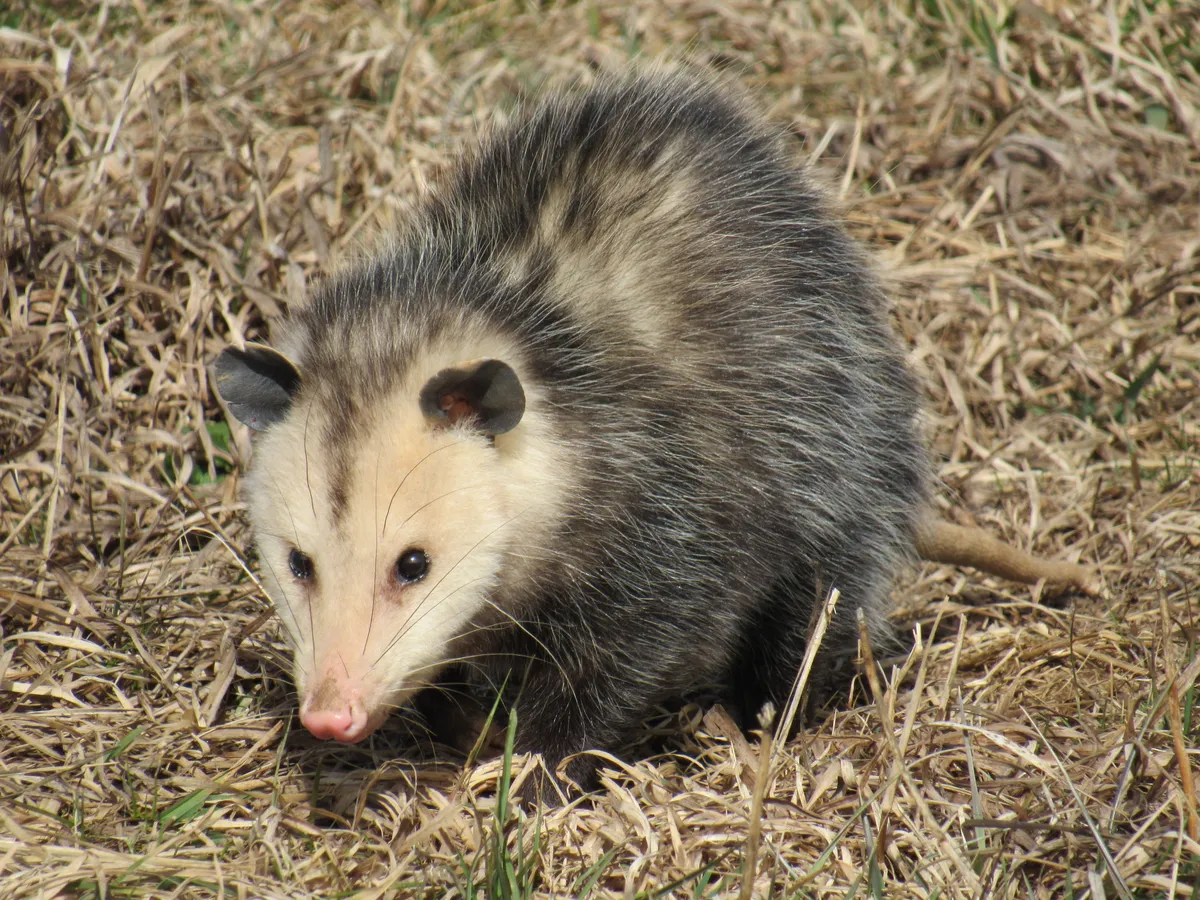
Tracks are the strongest proof. The Missouri Department of Conservation describes the hind foot as handlike, with a thumb sticking out at a right angle that leaves no claw print, and notes that opossum tracks are often confused with a raccoon's; ICWDM calls a correctly identified hind-foot track definitive. To check a den opening, UC IPM suggests sprinkling a smooth layer of flour about 1/8 inch thick in front of it and looking for footprints soon after dark. How to tell an opossum from a raccoon or a big rat covers the animal itself.
Is possum poop dangerous?
It can carry germs, so handle it as you would any wild animal's droppings: never bare-handed. CDC's guidance on wildlife says even animals that look healthy can carry germs that make people sick, and to wash your hands with soap and running water after contact with wild animals or their poop. UC IPM lists leptospirosis, tuberculosis, relapsing fever, tularemia, spotted fever, toxoplasmosis, coccidiosis, trichomoniasis and Chagas disease among the diseases opossums carry, without saying which, if any, pass through droppings.
What the health agencies do say about the risks people ask about:
- Leptospirosis travels in urine. CDC says the bacteria spread through the urine of infected animals and can survive in water or soil for weeks to months.
- Flea-borne typhus comes from fleas. CDC says fleas become infected by biting infected animals such as rats, cats or opossums, that infected flea droppings rubbed into a bite or other wound spread it, and that most US cases are reported in southern California, Hawaii and southern Texas. UC IPM says opossums host cat and dog fleas, especially in cities.
- Rabies does not spread through droppings. CDC's 2008 rabies prevention recommendations say contact with an animal's blood, urine or feces is not a rabies exposure.
- A raccoon's droppings are the bigger worry. CDC lists decks, patios, attics and garages among raccoon latrine sites, the same places possums turn up, so treat a pile you cannot place as a raccoon's.
Can possum poop make dogs or horses sick?
No source behind this page calls possum poop toxic to dogs, but like any wild animal's droppings it can carry germs, so keep your dog from eating it or rolling in it. CDC's wildlife guidance says not to let pets approach or interact with wildlife and to ask your veterinarian how to protect them from diseases such as rabies, leptospirosis and Giardia infection. The possum itself can be the bigger hazard: UC IPM says opossums get into fights with dogs and cats and can inflict serious injury with their sharp teeth.
Horses face a specific risk. Connecticut's Department of Energy and Environmental Protection says opossums can transmit a serious horse disease, equine protozoal myeloencephalitis (EPM), through feces that contaminate feed and water: a protozoal parasite shed in an opossum's feces causes it, and infected horses can show signs of central nervous system disease. Wildlife Illinois names the parasite, Sarcocystis neurona, and says not every infected horse shows symptoms.
ICWDM calls opossums the parasite's definitive hosts and warns that one denning or feeding in a stable may contaminate horse feed and water. Connecticut also says most opossums probably are not shedding the parasite and very few exposed horses develop EPM. Keep opossums away from horse feed and water, as Connecticut and Wildlife Illinois advise; UNL Extension's disease table lists exclusion and opossum control as the prevention.
How do you clean up possum poop safely?
Keep the dust down, never touch it bare-handed, and remove it promptly. Because possum and raccoon droppings look alike and turn up in the same places, CDC's raccoon latrine steps are the cautious default; its fact sheet gives these for people who choose to clean up themselves:
- Put on disposable gloves, and rubber boots you can scrub or disposable shoe covers, so you do not carry anything into the house. In a confined space such as an attic or crawl space, wear an N95-rated respirator.
- Indoors, lightly mist the droppings with water from a spray bottle so you do not stir up dust and debris.
- Lift the droppings and anything soiled by them with a shovel or an inverted plastic bag, then bag them for the trash, bury them or burn them.
- Outdoors, treat soiled decks, patios and other hard surfaces with boiling water: CDC says most chemicals do not kill roundworm eggs, but heat kills them instantly. Call your local fire department before using a propane torch, and never flame anything that can melt or catch fire.
- Indoors, never use a torch. Wipe the area with a damp, not wet, sponge and a bucket of hot, soapy water, flush the dirty water down the toilet, disinfect the bucket with boiling water and bag the sponge for the trash.
- Wash your hands well with soap and warm running water, and launder your clothes in hot water and detergent.
ICWDM's droppings key warns that droppings can carry pathogens that cause disease in people, and says to wear gloves and wash thoroughly after working with or near them. If you would rather not do the job yourself, CDC's raccoon roundworm page suggests contacting your local animal control office for help. The animal poop identification chart gives CDC's separate steps for mouse and rat droppings, which use disinfectant rather than heat.
Commonly confused with
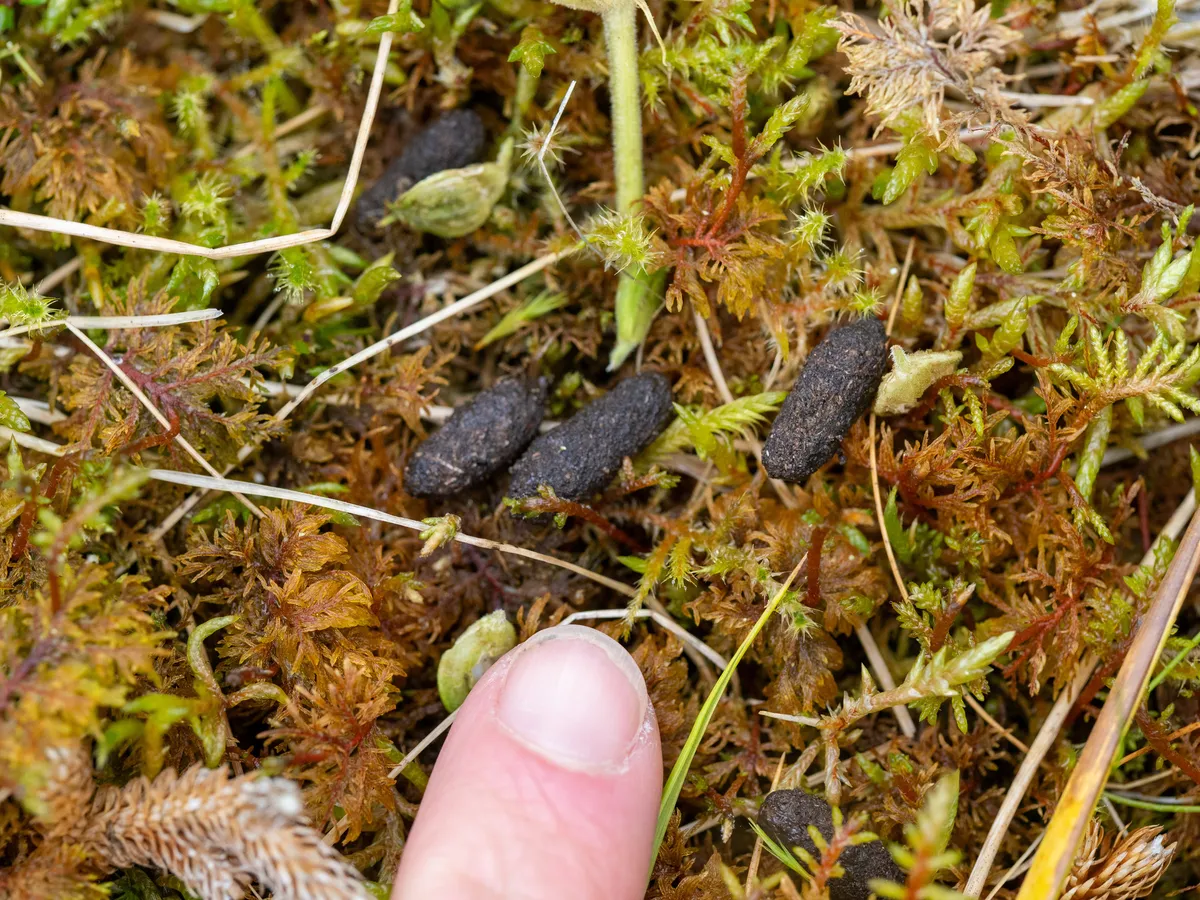
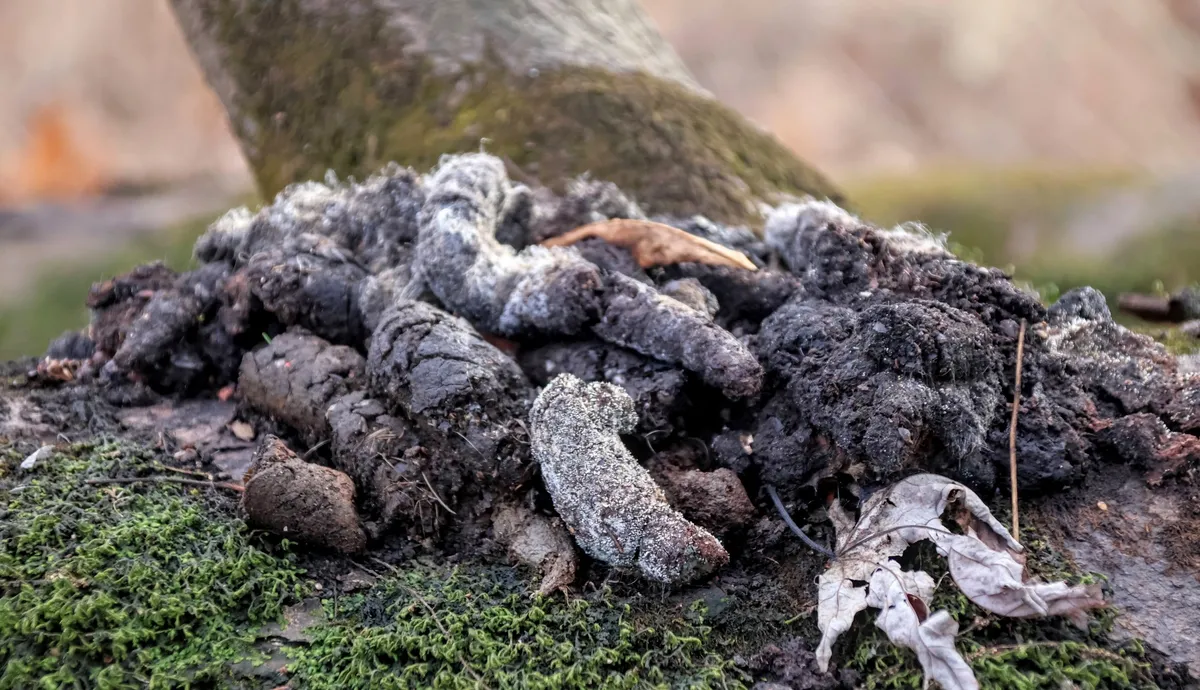 Raccoon latrineAbout the size of possum poop, but piled in one spot used again and again
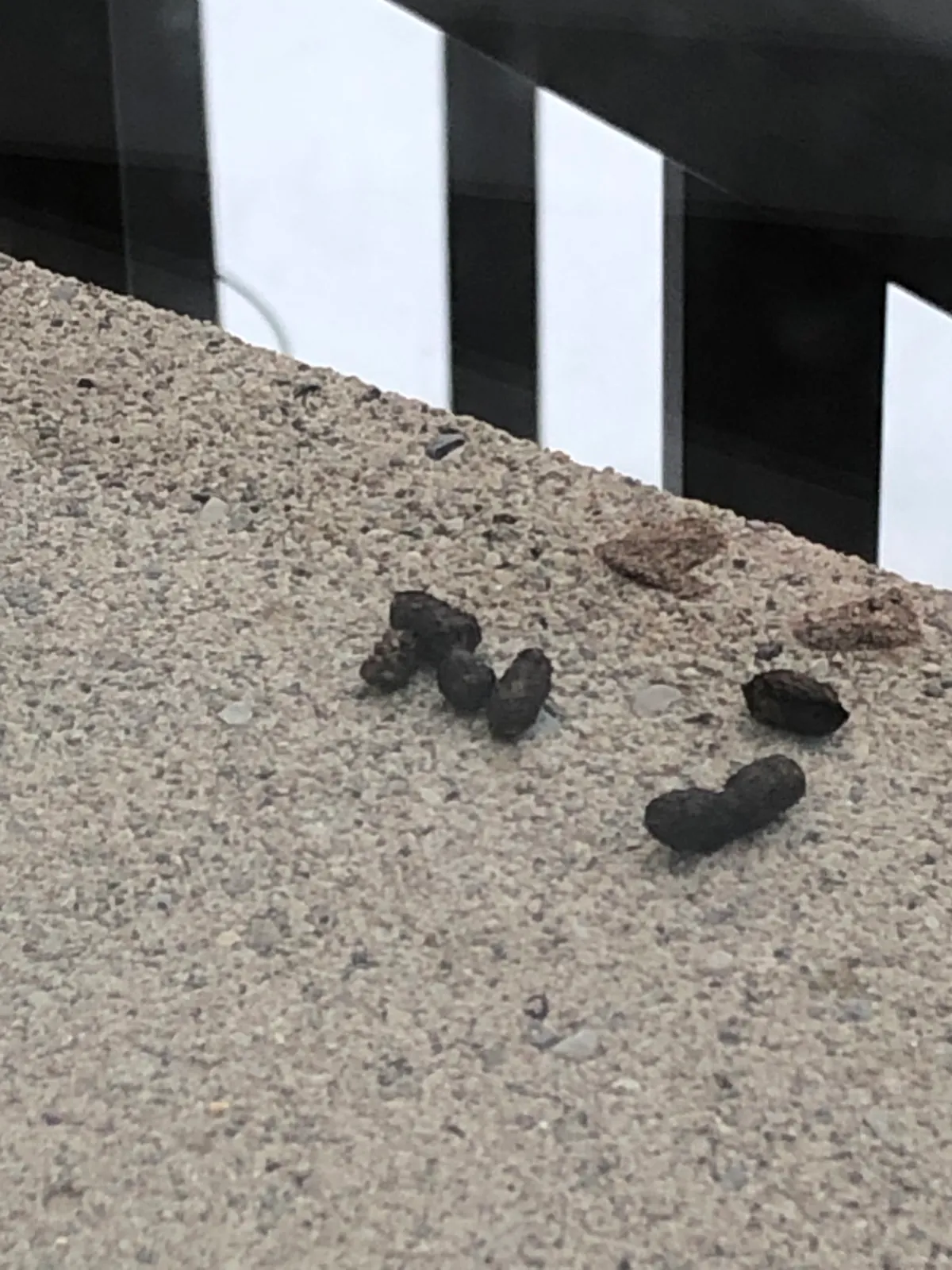
 Rat droppingsOnly 3/4 to 1 inch long for a Norway rat; a raccoon's runs 2 to 3 inches
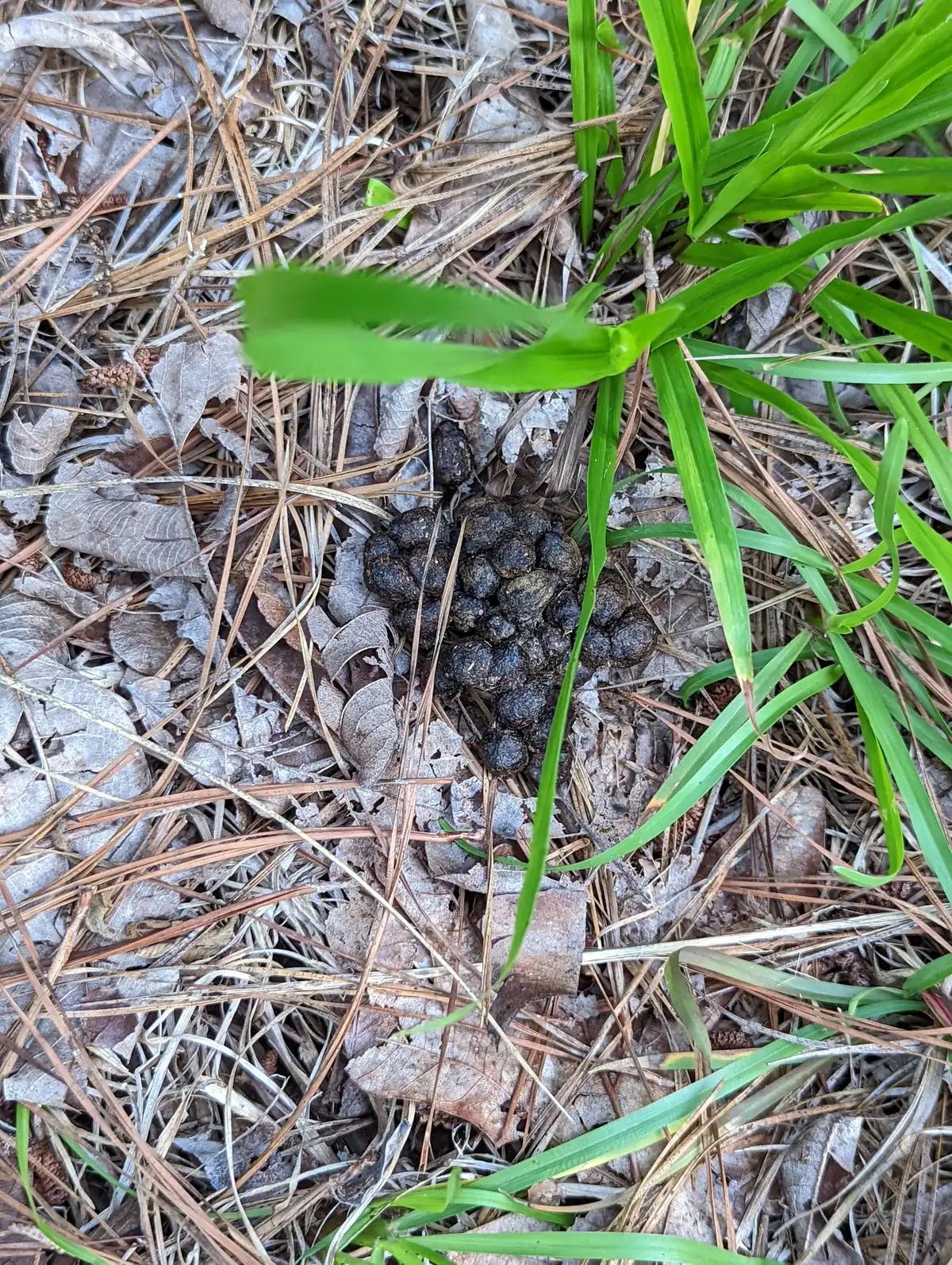
 Squirrel droppingsBrown to reddish pellets 5/16 to 3/8 inch long, placed at random
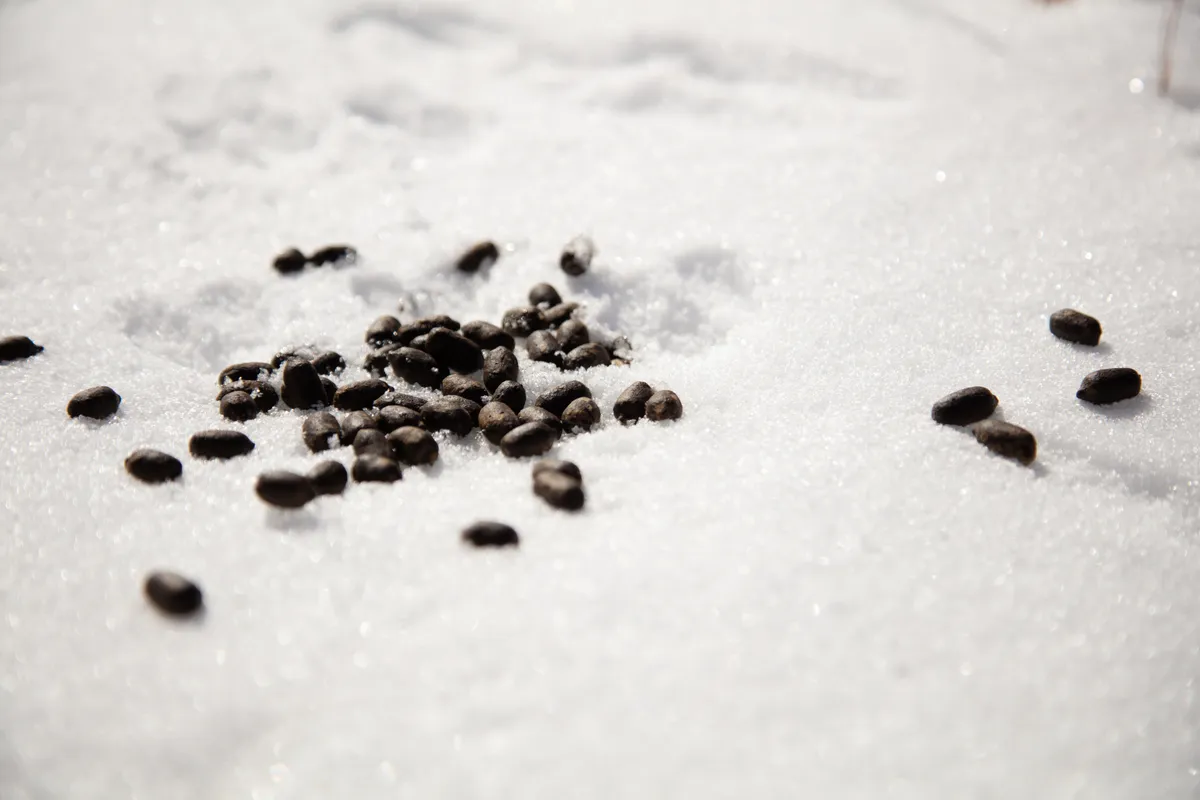
 Rabbit pelletsRounded, pea-sized pellets with a rough texture, left where rabbits feed
 Deer pelletsSmooth oval pellets, a little larger than a rabbit's, often in piles
Photos: Raccoon latrine: (c) cappycollins, some rights reserved (CC BY), via iNaturalist, CC BY 4.0. Rat droppings: no rights reserved, via iNaturalist, CC0 1.0. Squirrel droppings: (c) Andrew Sebastian, some rights reserved (CC BY), via iNaturalist, CC BY 4.0. Rabbit pellets: (c) Dilrukshan Priyantha Wijesinghe, some rights reserved (CC BY), via iNaturalist, CC BY 4.0. Deer pellets: ShenandoahNPS, Public domain, via Wikimedia Commons, public domain.
What should you do once you know it's a possum?
Clean up, then take away what drew the possum and close the place it sleeps; the droppings stop when the visits do. Opossums are not destructive or strong, ICWDM says, so they typically use openings that already exist.
- Remove the food. UC IPM advises taking outdoor pet food in by nightfall, keeping tight-fitting lids on garbage cans, leaving food scraps out of the compost bin and picking up fallen fruit. CDC's flea-borne typhus page adds: keep wild animals such as opossums away from your home, and do not feed them.
- Find the den. Check under steps, porches, decks and sheds, and in the garage, attic and crawl space, the places UC IPM names.
- Make sure it has gone, then close the gap. Use UC IPM's flour test after dark; UNL Extension says never to make repairs unless you are sure the opening is no longer in use, so a mother is not cut off from her young. Then cover openings under the house, shed or deck with 1/4-inch mesh hardware cloth, buried up to 6 inches where possible, as UC IPM advises.
- Think raccoon-proof. UNL Extension says an opossum needs an opening at least 3 inches wide and that excluding raccoons keeps opossums out too. The guide to proofing the space under a deck shows an L-shaped footing of hardware cloth, and the raccoon deterrent guide covers keeping raccoons out of a yard.
- Check the rules before trapping. UC IPM notes that California Department of Fish and Wildlife regulations prohibit relocating wildlife without written permission from the department, and says to check for city or county restrictions on removing opossums first; elsewhere, ask your state wildlife agency. Possum vs opossum covers an opossum under the deck or in the garage.
If you are weighing whether to live with a possum, the guide to what eats ticks and mosquitoes looks at the popular claim that opossums eat thousands of ticks.
This guide is general educational information, not medical advice. If you have symptoms or concerns after a bite or exposure, contact a healthcare provider.
Frequently Asked Questions
Is possum poop toxic to dogs?+
No source behind this page calls it toxic, but like any wild animal's droppings it can carry germs, so keep your dog from eating it or rolling in it. CDC advises keeping pets from approaching wildlife and asking your veterinarian how to protect them from diseases such as leptospirosis, rabies and Giardia infection. UC IPM warns that opossums get into fights with dogs and cats and can inflict serious injuries with their sharp teeth. If your dog seems unwell after contact, call your veterinarian.
Is possum poop dangerous to horses?+
It can be. Connecticut's wildlife agency says opossums can transmit equine protozoal myeloencephalitis (EPM), a serious horse disease caused by a protozoal parasite shed in opossum feces, when that feces contaminates feed or water, and that infected horses can show signs of central nervous system disease. It adds that most opossums probably are not shedding the parasite and very few exposed horses develop EPM. Keep opossums out of horse feed and water, and call a veterinarian if a horse shows nervous-system signs.
Can you get sick from touching possum poop?+
It is possible, because CDC says wild animals can carry germs that make people sick even when they look healthy, so wash your hands with soap and running water after any contact with wild animals or their poop. UC IPM lists diseases opossums can carry, such as leptospirosis, which CDC says spreads through the urine of infected animals. Wear disposable gloves to clean droppings, and see a healthcare provider if you get sick afterward.
Can you get rabies from possum poop?+
No. CDC's 2008 rabies prevention recommendations say that contact with an animal's blood, urine or feces is indirect contact that does not count as a rabies exposure, so rabies shots should not be given for it. Bites and scratches are different: CDC advises washing any wound from a wild animal with warm, soapy water right away, seeking medical attention, and talking with a healthcare provider about whether you need a rabies shot.
Do possums poop in the same place every night?+
None of the agency or extension sources behind this page says so. UC IPM says opossums typically defecate in protected, leafy areas and that their droppings sometimes turn up on garden paths, walkways and patios. Going in the same spot night after night, building a latrine, is the habit UNL Extension and the Missouri Department of Conservation describe for raccoons. A pile that keeps growing in one place is therefore more likely a raccoon's, and CDC's latrine cleanup steps apply.
Why is there possum poop on my deck?+
Most likely something under or near the deck draws the animal. UC IPM says suburban opossums den under steps, porches and decks, visit pet food dishes, garbage cans and compost, and leave droppings on patios and walkways. A deck is also on CDC's list of raccoon latrine sites, so if the pile keeps growing in one spot, treat it as a raccoon's. Clean it up with gloves, take away the food, and close the space under the deck once the animal has left.
Is possum poop black?+
The droppings in the two photos on this page are dark brown and black, but color is a weak test. UC IPM says an opossum's varied diet leaves no average size, shape or texture, and University of Arizona Extension says a change of diet can dramatically change the color, shape and contents of any animal's feces. Age changes the look too: UF/IFAS Extension says fresh droppings are usually moist and shiny and older ones dry, dull and grayish.
Is possum poop good fertilizer for a garden?+
None of the extension or health sources behind this page recommends using it. They treat wild animal droppings as something to remove: CDC's latrine steps bag droppings for the trash or bury or burn them, CDC advises washing your hands after contact with any wild animal's poop, and it advises gloves for garden soil that may hold cat feces. UNL Extension also advises keeping compost to plant and vegetable matter so it does not draw raccoons, opossums and skunks.
What is the difference between possum poop and rat poop?+
Mostly size. Cornell IPM gives Norway rat droppings as 3/4 to 1 inch long and roof rat droppings as about 1/2 inch, while UNL Extension describes opossum droppings as generally cat-sized, like a raccoon's, which ICWDM puts at 2 to 3 inches long. Many small pellets an inch long or less point to rats or another small animal, not a possum. Look for burrows too: Cornell IPM says Norway rats prefer to burrow in soil, and that rat burrows mean openings into buildings need sealing.
Does vinegar keep possums away?+
None of the agency sources behind this page recommends it, and UNL Extension's 2007 guide says no repellents were registered for opossums. What they recommend instead is removing what draws the animal, such as pet food left out overnight, open garbage, fallen fruit and food scraps in compost, and then, once the opossum has left, closing openings under decks, sheds and houses with 1/4-inch hardware cloth, as UC IPM advises.
Sources
- Controlling Raccoon and Opossum Damage (NebGuide G1688, 2007), by Stephen Vantassel, Scott Hygnstrom, Dennis Ferraro and Sam Wilson — University of Nebraska-Lincoln Extension
- Pest Notes: Opossum (UC ANR Publication 74123), by R. A. Baldwin — University of California Statewide IPM Program
- Virginia Opossum — Wildlife Illinois (authorized by the Illinois Department of Natural Resources)
- Virginia Opossum (field guide) — Missouri Department of Conservation
- Opossum Damage Identification — Internet Center for Wildlife Damage Management
- Brown or Black Droppings — Internet Center for Wildlife Damage Management
- The Scat Detective (Tom Meister, Missouri Conservationist, September 2021) — Missouri Department of Conservation
- How to Identify the Wildlife Species Responsible for Damage in Your Yard (WEC324/UW369) — University of Florida IFAS Extension
- Canid Identification: Wolves, Coyotes and Dogs (adapted from Wisconsin DNR) — Iowa Department of Natural Resources
- Skunks (Prevention and Control of Wildlife Damage), by James E. Knight — Montana State University Extension, Animal and Range Sciences
- Wildlife Track and Scat Identification (Backyard Gardener #131, November 2023), adapted from Jeff Schalau — University of Arizona Cooperative Extension, Yavapai County
- Mouse and Rat Biology and Behavior — Cornell Integrated Pest Management (Cornell IPM), Cornell University
- Raccoon Latrines: Identification and Clean-up — Centers for Disease Control and Prevention
- Preventing Raccoon Roundworm — Centers for Disease Control and Prevention
- Wildlife (Healthy Pets, Healthy People) — Centers for Disease Control and Prevention
- About Leptospirosis — Centers for Disease Control and Prevention
- About Flea-borne Typhus — Centers for Disease Control and Prevention
- Human Rabies Prevention, United States, 2008: Recommendations of the Advisory Committee on Immunization Practices — Centers for Disease Control and Prevention, Morbidity and Mortality Weekly Report
- Virginia Opossum (Wildlife in Connecticut fact sheet) — Connecticut Department of Energy and Environmental Protection, Wildlife Division
- Preventing Toxoplasmosis — Centers for Disease Control and Prevention
Read and approved by Alex Francisco. Found an error? Email support@buzzskito.ca.