
Published by BuzzSkito Mosquito & Tick Control
Published October 21, 2026 · Drafted with AI assistance and fact-checked against the sources listed below
What does squirrel poop look like?
Squirrel poop looks like dark brown, oblong pellets about 3/8 inch long and 1/8 inch thick, rounded at both ends and slightly bulging in the middle. That is how Pests in the Home, a national Cooperative Extension site, describes squirrel droppings. It adds that fresh ones are dark brown and lighten with age, and that the size varies by species.
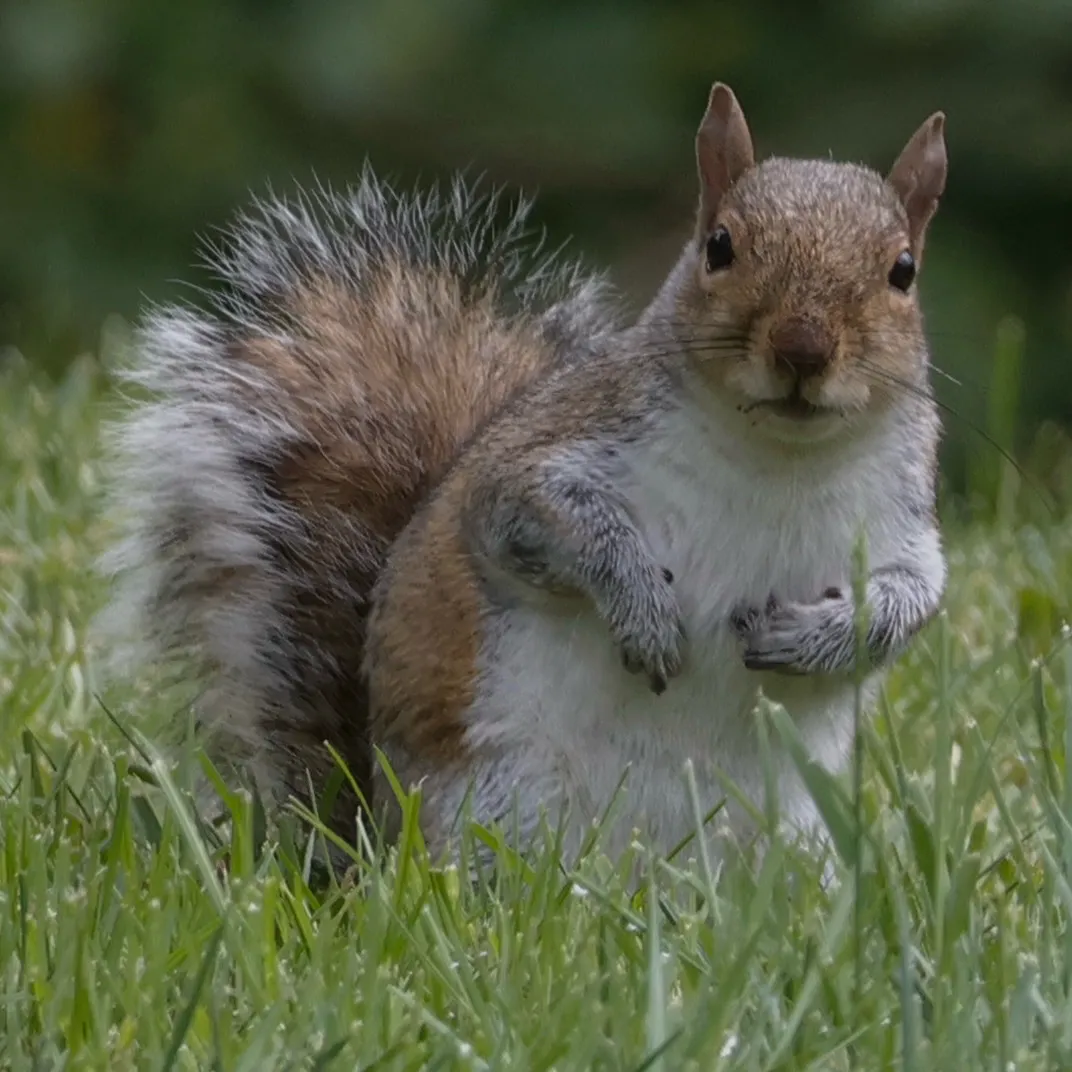
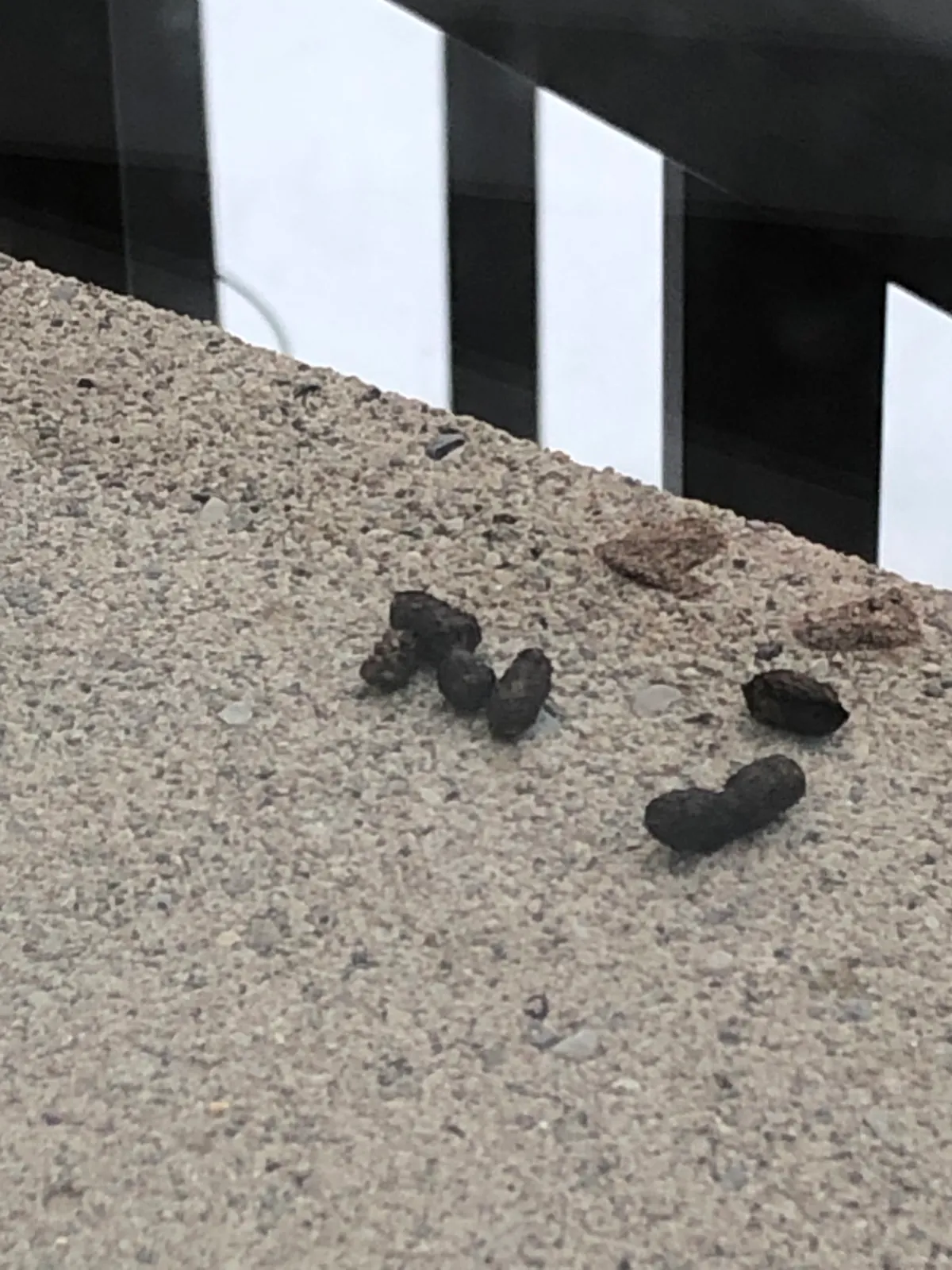
Treat that size as a rough guide: none of the other extension or agency sources behind this page gives one. The University of Florida's guide to identifying wildlife damage says smaller oval pellets could be from squirrels, while slightly larger, smoother ovals are likely from white-tailed deer.
Is it squirrel poop or rat poop?
Start with length. Cornell IPM gives Norway rat droppings as 3/4 to 1 inch long, two to nearly three times a squirrel's 3/8 inch, and roof rat droppings as about 1/2 inch. The roof rat is the hard case, so check the ends and thickness too: Maricopa County's vector control program describes roof rat droppings as pointed, 1/4 to 1/2 inch long and 3/16 inch thick, and Norway rat droppings as blunt and 1/4 to 3/8 inch thick. By those figures a squirrel's, about 1/8 inch thick with rounded ends, is slimmer than either, if only by about 1/16 inch next to a roof rat's.
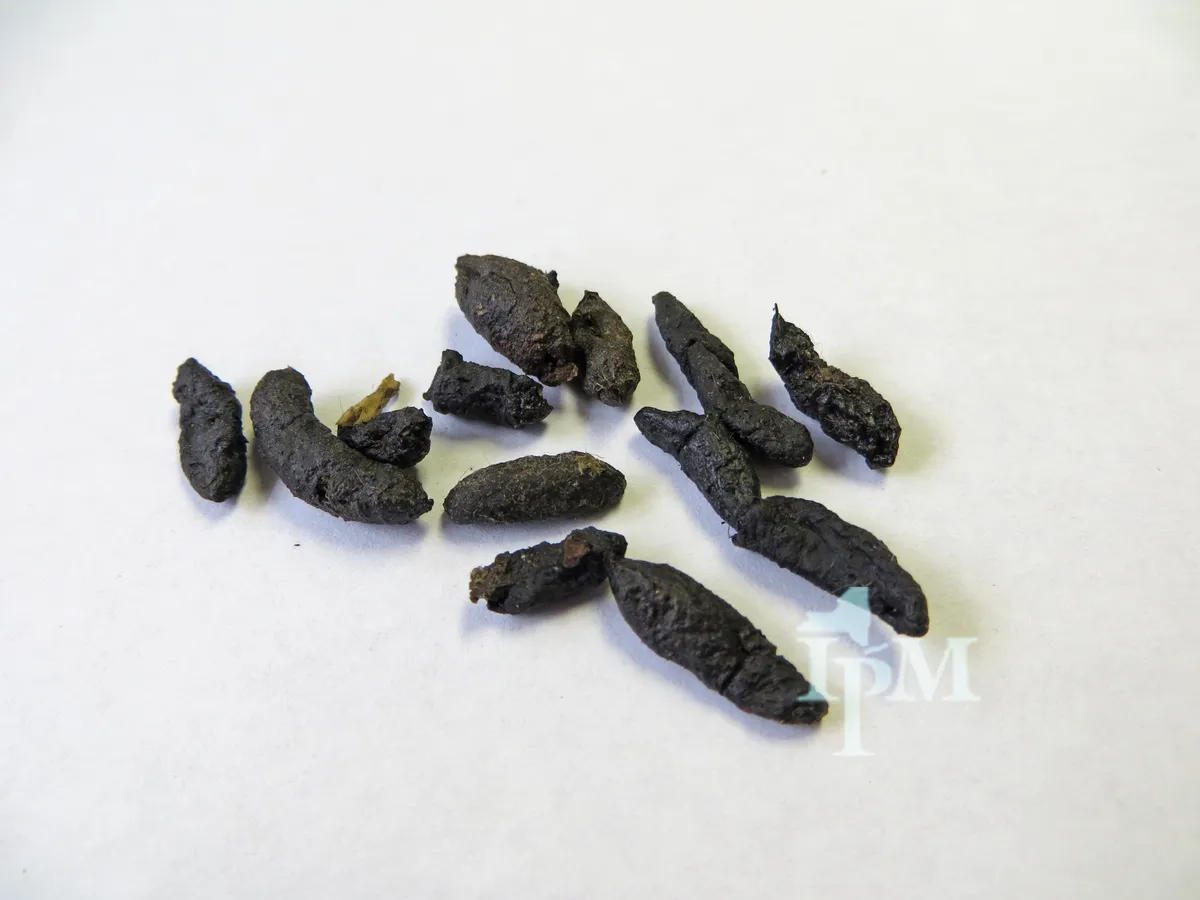
Place and timing help too. UC IPM's Pest Notes on rats say roof rats indoors favor attics, walls, false ceilings and cabinets, Norway rats usually stay in basements and on ground floors, and rats are mostly active at night; UC IPM's notes on tree squirrels say squirrels are active by day.
The guide to rat droppings compares Norway and roof rats in detail, and if the droppings do turn out to be a rat's, a step-by-step plan for clearing rats covers trapping and sealing.
Is it squirrel poop or mouse poop?
Mouse droppings are shorter and pointed. Cornell IPM gives them as 1/8 to 1/4 inch long, and ICWDM's droppings key describes house mouse droppings as black, hard when dry and pointed at one end, scattered in high-traffic areas. A squirrel's, at about 3/8 inch with rounded ends, is longer and blunter.
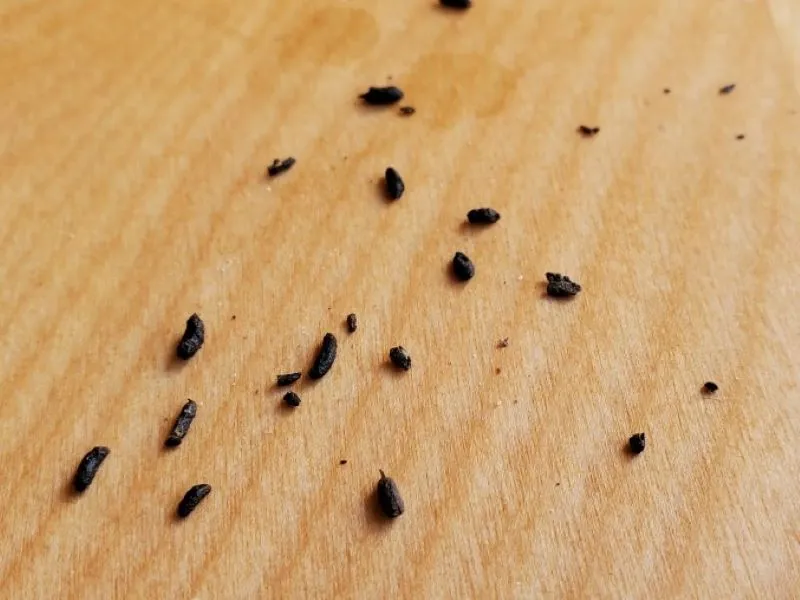
Flying squirrels are a known mix-up: UNL Extension says they are nocturnal and that in southeastern Nebraska their activity is often mistaken for mice, and the US Fish and Wildlife Service's house bat manual says attic scratching can come from rats, mice or flying squirrels. The mouse poop guide and a second guide to mouse droppings show them fresh and old.
What do flying squirrel droppings look like in an attic?
Flying squirrel droppings look moist, ICWDM's droppings key says, and its photo shows them with urine stains directly below an attic vent the squirrels were using. ICWDM's guide to tree squirrel damage adds that their feces mixed with urine can cause stains. Neither source gives a size.
A pile in one spot is worth noting: Pests in the Home says some squirrel species, which it does not name, keep a latrine, a dedicated toilet spot, so their droppings may not be spread across an attic like other rodents'. Flying squirrels also live in groups, in colonies of as many as 40, UNL Extension says.
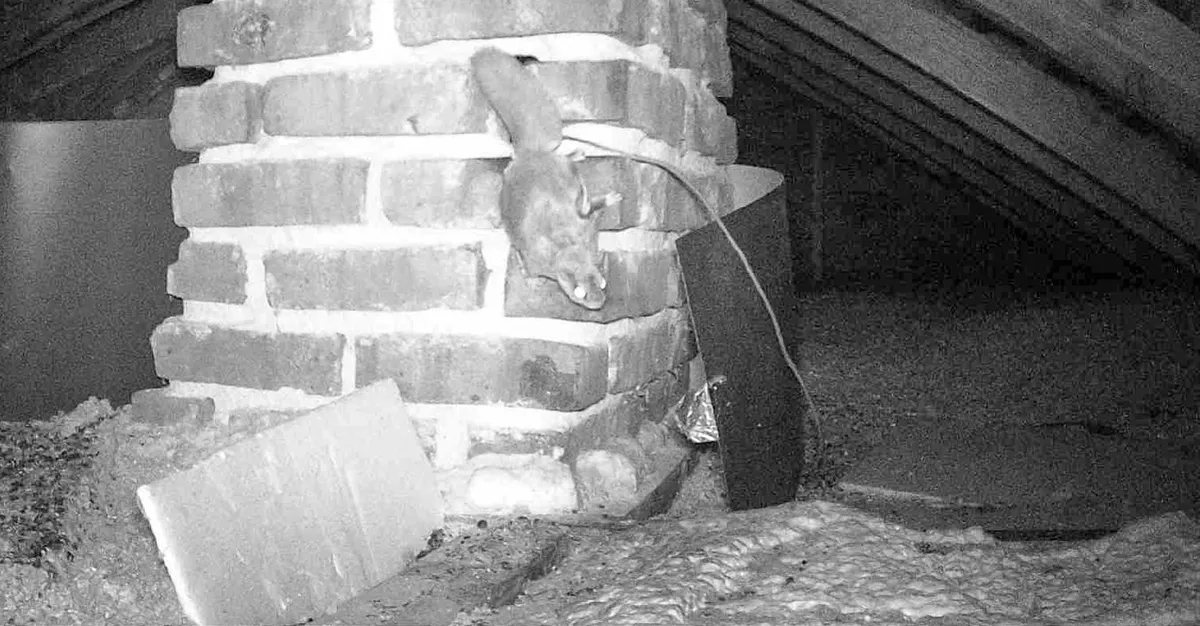
A small hole is enough: ICWDM says flying squirrels use holes the size of a quarter, red squirrels a golf ball and fox and gray squirrels a baseball. Mice leave urine stains too; the mouse urine guide shows theirs.
What else looks like squirrel poop?
Bat droppings, rabbit pellets and chipmunk droppings are other look-alikes.
Bat droppings
Bat droppings are smaller, and they crumble. Nebraska Extension gives them as 1/8 to 1/4 inch long, black and speckled with bits of insect, and ICWDM says they pile up below the roost. The USFWS manual says they crush easily into shiny insect fragments, while small rodents' droppings are harder and more fibrous. Never test either bare-handed; see the bat poop guide.
Rabbit and deer pellets
Rabbit droppings are round: UF/IFAS describes rounded, pea-sized pellets with a rough texture, and deer droppings as slightly larger, smoother ovals. Since Pests in the Home says some squirrel species leave round, rabbit-like droppings, place is the better test: ICWDM says rabbit droppings turn up where rabbits feed, and a rabbit cannot climb onto a roof or into an attic.
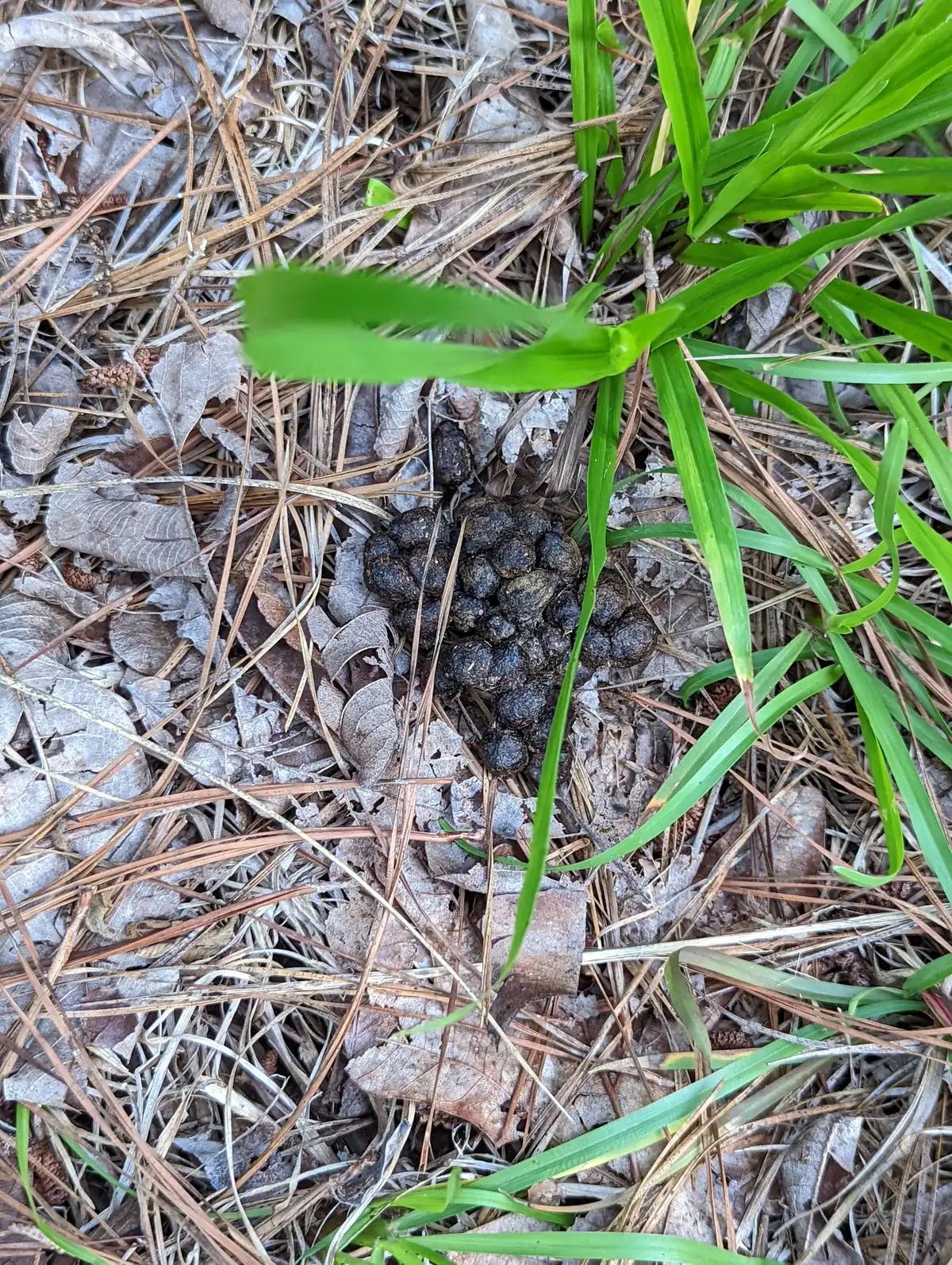
Chipmunk, insect and larger droppings
UF/IFAS groups chipmunks with rats, mice and bats as makers of small pellets the size of rice grains. Tiny black specks can point to insects: ICWDM says cockroach droppings can look like pepper sprinkled on the floor; the cockroach droppings guide shows them. Droppings 2 to 3 inches long fit a raccoon, by ICWDM's figures; see raccoon poop, possum poop and the animal poop identification chart.
Commonly confused with
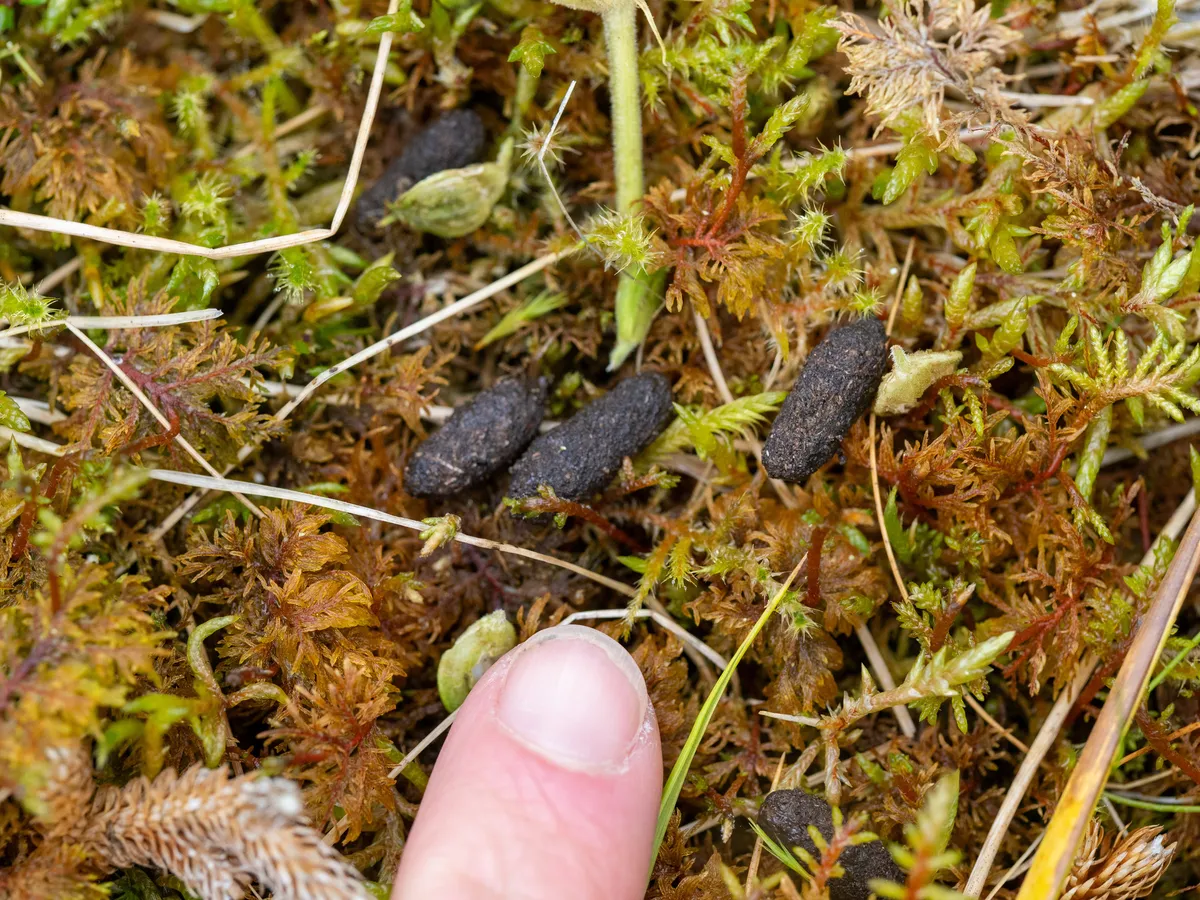 Norway rat droppings3/4 to 1 inch long, thick and blunt-ended: about twice a squirrel dropping's length or more
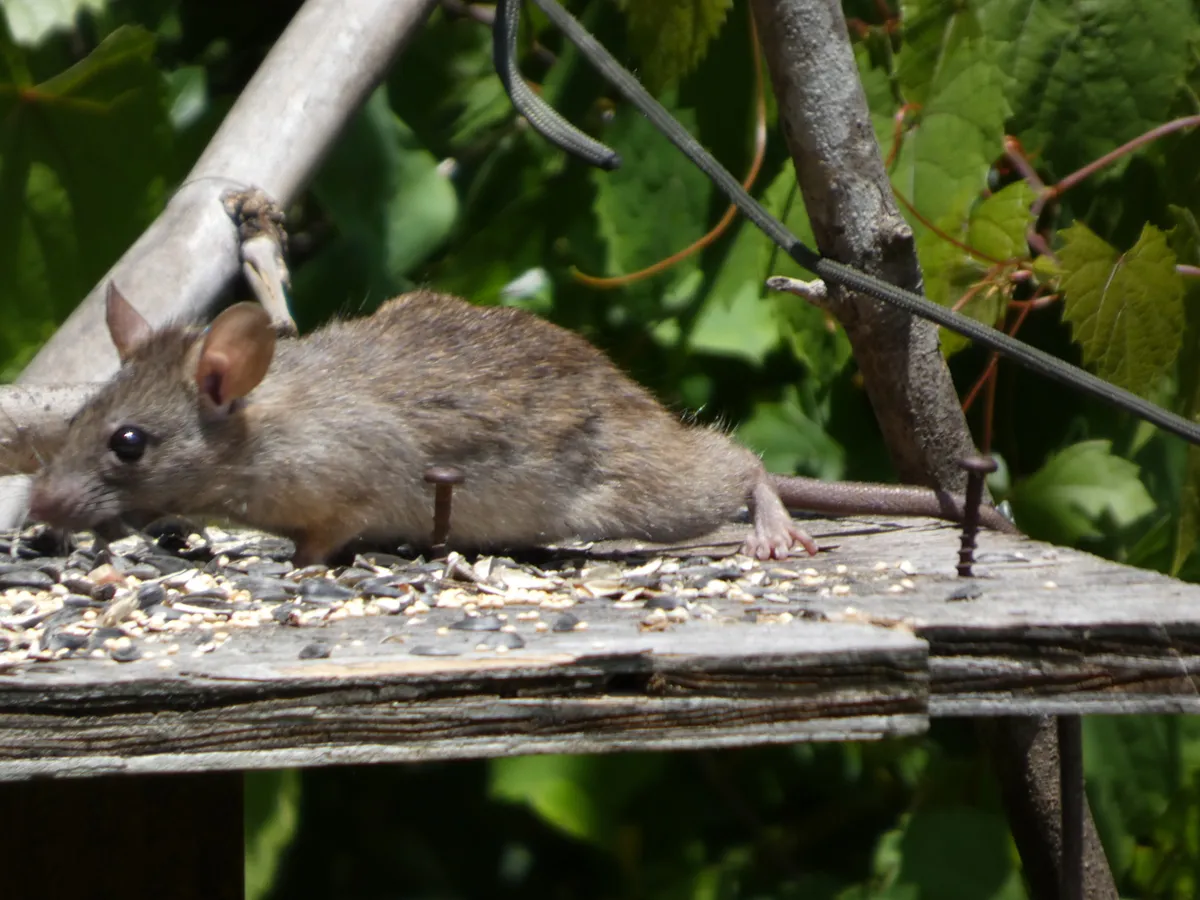 Roof ratDroppings about 1/2 inch with pointed ends; favors attics, walls and false ceilings
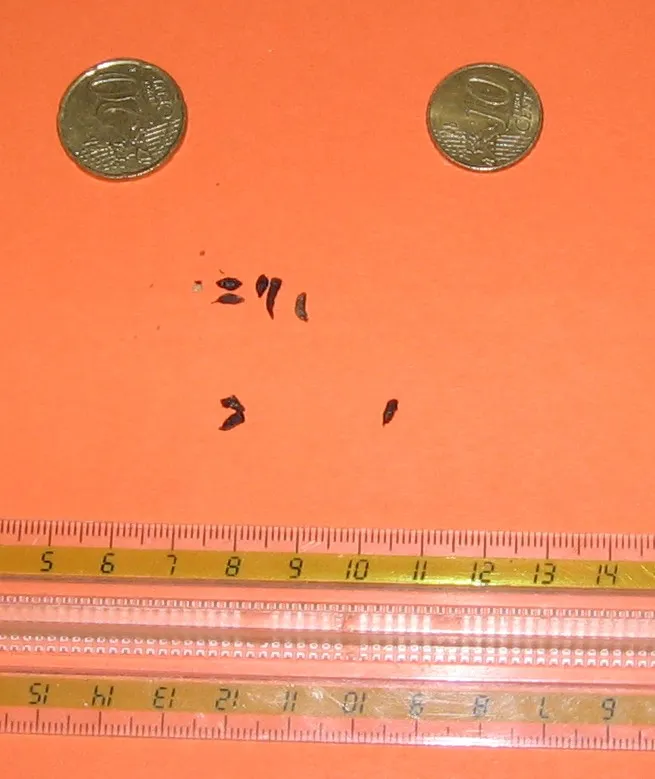 Mouse droppings1/8 to 1/4 inch and pointed at one end, scattered along busy routes
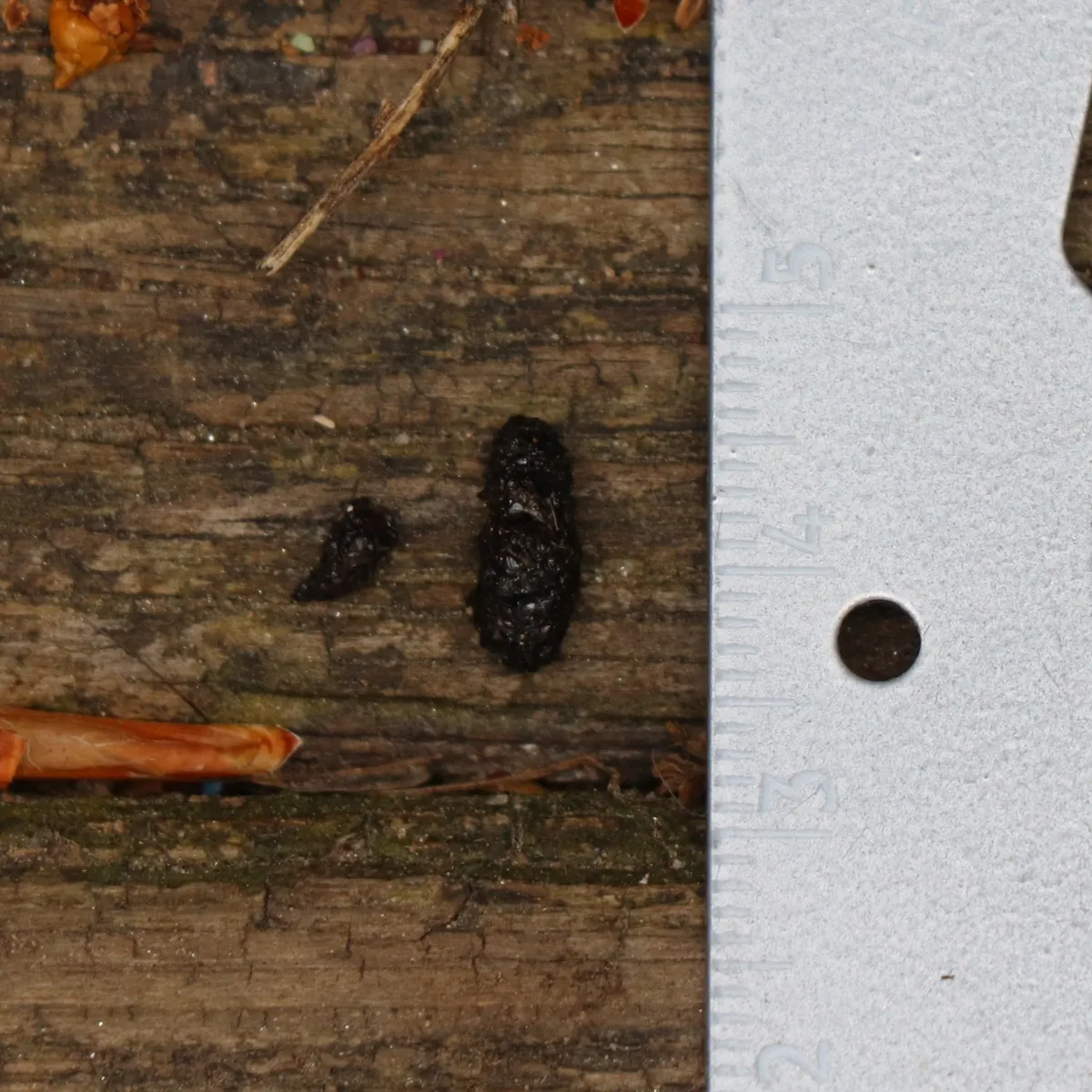 Bat droppings1/8 to 1/4 inch; crumble into shiny insect bits and pile up below a roost
Photos: Norway rat droppings: no rights reserved, via iNaturalist, CC0 1.0. Roof rat: no rights reserved, via iNaturalist, CC0 1.0. Mouse droppings: Hansmuller, CC BY-SA 4.0, via Wikimedia Commons, CC BY-SA 4.0. Bat droppings: (c) Mark Apgar, some rights reserved (CC BY), via iNaturalist, CC BY 4.0.
Where do squirrels poop?
Look where squirrels nest, feed and travel: the attic first, then porches, decks and railings, the ground under bird feeders, and parked cars.
In the attic
Squirrels in an attic tear up insulation for nests and urinate and defecate throughout the space, Pests in the Home says. UNL Extension lists droppings, gnawed holes, shells and shredded insulation among the signs, and says tree squirrels most often get in along the gutter line or through vents. The guide to noises in the attic at night sorts the suspects by sound.
On the porch, deck or railing
A squirrel that poops on your porch or deck is spending time there, to feed or to pass through. UC IPM says tree squirrels travel along utility lines and fence tops and raid bird feeders, and UNL Extension says they sometimes gnaw on decks, porches and fences. The droppings in the photo above were left on a ledge beside a railing.
Under bird feeders
ICWDM says squirrels often take food from feeders meant for birds. CDC's 2002 hantavirus risk-reduction recommendations advise against bird feeders near the home, or else a squirrel-proof feeder with spilled seed cleaned up each evening; how squirrel-proof feeders and baffles work has its own guide.
In or on a car
Squirrels occasionally chew the electrical wires of vehicles, notes ICWDM's guide to preventing squirrel damage, so droppings under the hood are a reason to check the wiring. To clean a car, CDC says to open the hood, doors and trunk and let it air out for 20 minutes first.
Are the droppings fresh, and what does finding them mean?
Fresh droppings are usually moist and shiny; older ones tend to be dry, dull and grayish. UF/IFAS gives that rule for wildlife droppings in general, and Pests in the Home says squirrel droppings are dark brown when fresh and lighten with age. Fresh droppings in an attic mean an animal has used it recently.
Confirm it with other signs. For fox and gray squirrels, UNL Extension says property owners often hear scurrying in the ceiling shortly after dark and before dawn; flying squirrels are nocturnal, and rats mostly active at night. After cleaning up, check the same spots for a few days; new droppings mean the animals are still there.
Is squirrel poop dangerous?
Treat it with care, as you would other rodent droppings: squirrels are rodents, and CDC says rodent diseases reach people mainly when they breathe in contaminated air, which is why its cleanup guidance says never to sweep or vacuum droppings. What CDC says about each disease:
- Hantavirus: squirrels are not on CDC's list. CDC says the most common hantavirus behind hantavirus pulmonary syndrome in the US is spread by the deer mouse, and its 2002 recommendations name the deer mouse, white-footed mouse, cotton rat and rice rat as hosts of the hantaviruses known to cause it. In a California survey in CDC's journal, fewer than 0.1% of the ground squirrels and chipmunks tested carried antibodies to the main US hantavirus. Mice can share an attic with squirrels; the deer mouse guide shows how to recognize one.
- Typhus from flying squirrels is rare. CDC says rare US cases of sylvatic typhus occur when people are exposed to flying squirrels and their nests, and advises avoiding contact with both. A report in CDC's journal Emerging Infectious Diseases says the route to people is not well understood, though the squirrels' fleas and lice become infected, and that no deaths linked to flying squirrels had been reported.
- Rabies is not a droppings risk. CDC's 2008 rabies recommendations say small rodents, squirrels and chipmunks among them, are rarely infected and have not been known to pass rabies to people, and that contact with an animal's feces is not a rabies exposure.
How do you clean up squirrel droppings safely?
Soak them with disinfectant and wipe them up; never sweep or vacuum. Do it after the squirrels are out, as Pests in the Home advises. CDC's guidance covers rodents in general rather than squirrels in particular; its steps for homes and outbuildings are:
- Open all doors and windows for 30 minutes, and leave the area while it airs out.
- Put on rubber or plastic gloves.
- Spray the droppings and any urine with an EPA-registered disinfectant, or a fresh mix of 1.5 cups of household bleach in 1 gallon of water, until very wet, and let it soak for 5 minutes or as the label directs.
- Wipe it all up with paper towels and throw them in a covered garbage can that is emptied regularly.
- Mop or sponge the area with disinfectant, including countertops, cabinets and drawers.
- Wash your gloved hands with soap and water or disinfectant, remove the gloves, then wash your hands with soap and warm water.
CDC says to bag exposed insulation soiled with urine and droppings for removal. A heavy infestation, which CDC's 2002 recommendations define by piles of feces, numerous nests or dead rodents, calls for coveralls, boots or shoe covers, gloves, goggles and a respirator with HEPA filters. CDC advises avoiding flying squirrel nests, so consider having a licensed wildlife professional remove them.
What should you do once you know it is squirrels?
Get the squirrels out, close the way in, then clean up:
- Find the way in. Match the hole to the animal with ICWDM's sizes, and check the gutter line and vents. UNL Extension suggests plugging a hole with newspaper: if it stays put for five days in a row in good weather, the opening is reasonably safe to close.
- Mind the young. ICWDM says young may be present from February through August and must not be abandoned, and that one-way doors can be effective when young are not a concern. Never seal a squirrel inside: it can do a great deal of damage chewing out.
- Cut off the routes. ICWDM says to trim limbs and trees 6 to 8 feet back from buildings, and UNL Extension calls feeding squirrels ill-advised.
- Check the rules. ICWDM says fox and gray squirrels are game species in most states, so trapping may need a permit from your state wildlife agency; UNL notes that southern flying squirrels are fully protected in Nebraska.
The guide to animals in the attic covers confirming which animal is up there and sealing an attic, and a guide to roof vent covers explains which steel guards hold against raccoons and squirrels.
This guide is general educational information, not medical advice. If you have symptoms or concerns after a bite or exposure, contact a healthcare provider.
Frequently Asked Questions
How do I identify squirrel poop?+
Check size, shape, place and timing together, without touching the droppings. Pests in the Home, a Cooperative Extension site, describes squirrel droppings as dark brown pellets about 3/8 inch long and 1/8 inch thick, rounded at the ends and slightly bulging in the middle. Mouse droppings are shorter and pointed, and rat droppings are usually longer. Tree squirrels are active by day, UC IPM says, while rats are mostly active at night and flying squirrels are nocturnal.
How big is squirrel poop?+
About 3/8 inch long and 1/8 inch thick, according to Pests in the Home, a Cooperative Extension site, which notes that the size varies by species. It is the only figure among the extension and agency sources behind this page, so treat it as a rough guide. For comparison, Cornell IPM gives mouse droppings as 1/8 to 1/4 inch long, roof rat droppings as about 1/2 inch and Norway rat droppings as 3/4 to 1 inch.
Are squirrel droppings like mouse droppings?+
They are bigger and blunter. Cornell IPM gives mouse droppings as 1/8 to 1/4 inch long, and ICWDM describes house mouse droppings as black, hard when dry and pointed at one end, scattered in high-traffic areas. Squirrel droppings run about 3/8 inch with rounded ends, by Pests in the Home's estimate. Flying squirrels add to the confusion: they are active at night, and UNL Extension warns residents of southeastern Nebraska that their activity is often mistaken for mice.
Why is a squirrel pooping on my porch?+
Because it spends time there, for instance to feed or to pass through. UC IPM says tree squirrels travel along fence tops and utility lines and raid bird feeders, and UNL Extension says they sometimes gnaw on decks, porches and fences. To make a porch less inviting, CDC's 2002 advice for keeping rodents away is to avoid bird feeders near the home, or to use a squirrel-proof feeder and clean up spilled seed each evening, and UNL advises against feeding squirrels.
Do squirrels poop in the same spot?+
Some do. Pests in the Home says some squirrel species, which it does not name, keep a latrine, a dedicated spot they use again and again, so their droppings may not be spread across an attic the way other rodents' are. ICWDM's droppings key shows flying squirrel droppings and urine stains directly below an attic vent the squirrels were using, without calling it a latrine. Droppings scattered along routes fit mice better: ICWDM says house mouse droppings lie in scattered patterns in high-traffic areas.
Is it squirrel poop or rabbit poop?+
Shape usually tells you. UF/IFAS describes rabbit droppings as rounded, pea-sized pellets with a rough texture and says smaller oval pellets could be from squirrels, and Pests in the Home describes squirrel droppings as about 3/8 inch long with rounded ends. The same extension site notes that some squirrel species leave round, rabbit-like droppings, so let the place decide: ICWDM says rabbit droppings turn up where rabbits feed, and a rabbit cannot climb onto a roof or into an attic.
Are squirrel droppings a health hazard?+
Treat them with care. CDC says diseases spread from rodents to people mainly through breathing contaminated air, so clean squirrel droppings the way it advises for rodent droppings: never sweep or vacuum them, wear rubber or plastic gloves, and soak them with disinfectant or a bleach solution before wiping them up. CDC links flying squirrels and their nests to rare cases of sylvatic typhus and advises avoiding contact with them; its hantavirus overview does not mention squirrels.
Can you get hantavirus from squirrel poop?+
Squirrels are not on CDC's list of hantavirus hosts. Its hantavirus overview says the most common hantavirus behind hantavirus pulmonary syndrome in the United States is spread by the deer mouse, and its 2002 recommendations name the deer mouse, white-footed mouse, cotton rat and rice rat as the hosts. Antibodies do turn up, rarely, in the squirrel family: in a California survey published in CDC's journal, fewer than 0.1% of ground squirrels and chipmunks tested carried antibodies to the main US hantavirus. Mice can share an attic with squirrels, though, so clean all droppings with CDC's wet method.
Can you get rabies from squirrel poop?+
Droppings are not a rabies exposure. CDC's 2008 rabies recommendations say that contact with an animal's blood, urine or feces does not count as an exposure, and that small rodents, including squirrels and chipmunks, are rarely infected with rabies and have not been known to pass it to people. Clean the droppings up with gloves and disinfectant anyway, as CDC advises for all rodent droppings.
Is it safe to clean up squirrel droppings yourself?+
For a small amount, CDC gives steps a homeowner can follow: air the space out for 30 minutes, wear rubber or plastic gloves, spray the droppings with disinfectant or 1.5 cups of bleach per gallon of water until very wet, wait 5 minutes, and wipe them up with paper towels. A heavy infestation, with piles of droppings or many nests, calls for coveralls, goggles and a respirator with HEPA filters, CDC says, so consider a professional for that job.
Sources
- How To Get Rid of Squirrels in the Attic — Pests in the Home, a national Cooperative Extension resource (Extension Foundation, funded by USDA NIFA)
- How to Identify the Wildlife Species Responsible for Damage in Your Yard (WEC324/UW369), by Holly K. Ober and Arlo Kane — University of Florida IFAS Extension
- Brown or Black Droppings — Internet Center for Wildlife Damage Management
- Tree Squirrel Damage Identification — Internet Center for Wildlife Damage Management
- Tree Squirrel Damage Prevention and Control Methods — Internet Center for Wildlife Damage Management
- Control of Tree Squirrel Damage (NebGuide G1924, 2009), by Stephen M. Vantassel, Scott E. Hygnstrom and Dennis M. Ferraro — University of Nebraska-Lincoln Extension
- Pest Notes: Tree Squirrels (UC ANR Publication 74122) — University of California Statewide IPM Program
- Pest Notes: Rats (UC ANR Publication 74106) — University of California Statewide IPM Program
- Mouse and Rat Biology and Behavior — Cornell Integrated Pest Management (Cornell IPM), Cornell University
- Roof Rat Identification — Maricopa County Environmental Services Department, Vector Control
- Bats in and Around Structures (NebGuide G1667, revised 2012) — University of Nebraska-Lincoln Extension
- House Bat Management (Resource Publication 143, 1982), by Arthur M. Greenhall — U.S. Fish and Wildlife Service, via the USGS Publications Warehouse
- How to Clean Up After Rodents — Centers for Disease Control and Prevention
- About Hantavirus — Centers for Disease Control and Prevention
- Hantavirus Pulmonary Syndrome — United States: Updated Recommendations for Risk Reduction (MMWR, 2002) — Centers for Disease Control and Prevention
- Seroepidemiologic Studies of Hantavirus Infection Among Wild Rodents in California (Emerging Infectious Diseases, 1997), by Michele Jay and others — Centers for Disease Control and Prevention
- About Epidemic Typhus — Centers for Disease Control and Prevention
- Cluster of Sylvatic Epidemic Typhus Cases Associated with Flying Squirrels, 2004–2006 (Emerging Infectious Diseases, July 2009) — Centers for Disease Control and Prevention
- Human Rabies Prevention, United States, 2008: Recommendations of the Advisory Committee on Immunization Practices — Centers for Disease Control and Prevention, Morbidity and Mortality Weekly Report
How this guide was made: it was researched and drafted with AI assistance from the sources listed above. A second, independent AI pass then checked each factual claim against those sources. Found an error? Email support@buzzskito.ca.