
Published by BuzzSkito Mosquito & Tick Control
Published October 20, 2026 · Drafted with AI assistance and fact-checked against the sources listed below
What does raccoon poop look like?
Raccoon poop is a dark tube with blunt ends, about 2 to 3 inches long and 1/2 inch wide by the droppings key of the Internet Center for Wildlife Damage Management (ICWDM), which notes that recently eaten food such as corn kernels or fruit may show in it. The California Department of Public Health (CDPH) says in its raccoon roundworm brochure that raccoon droppings look like small dog droppings: dark, bad-smelling and often full of undigested seeds or other food.
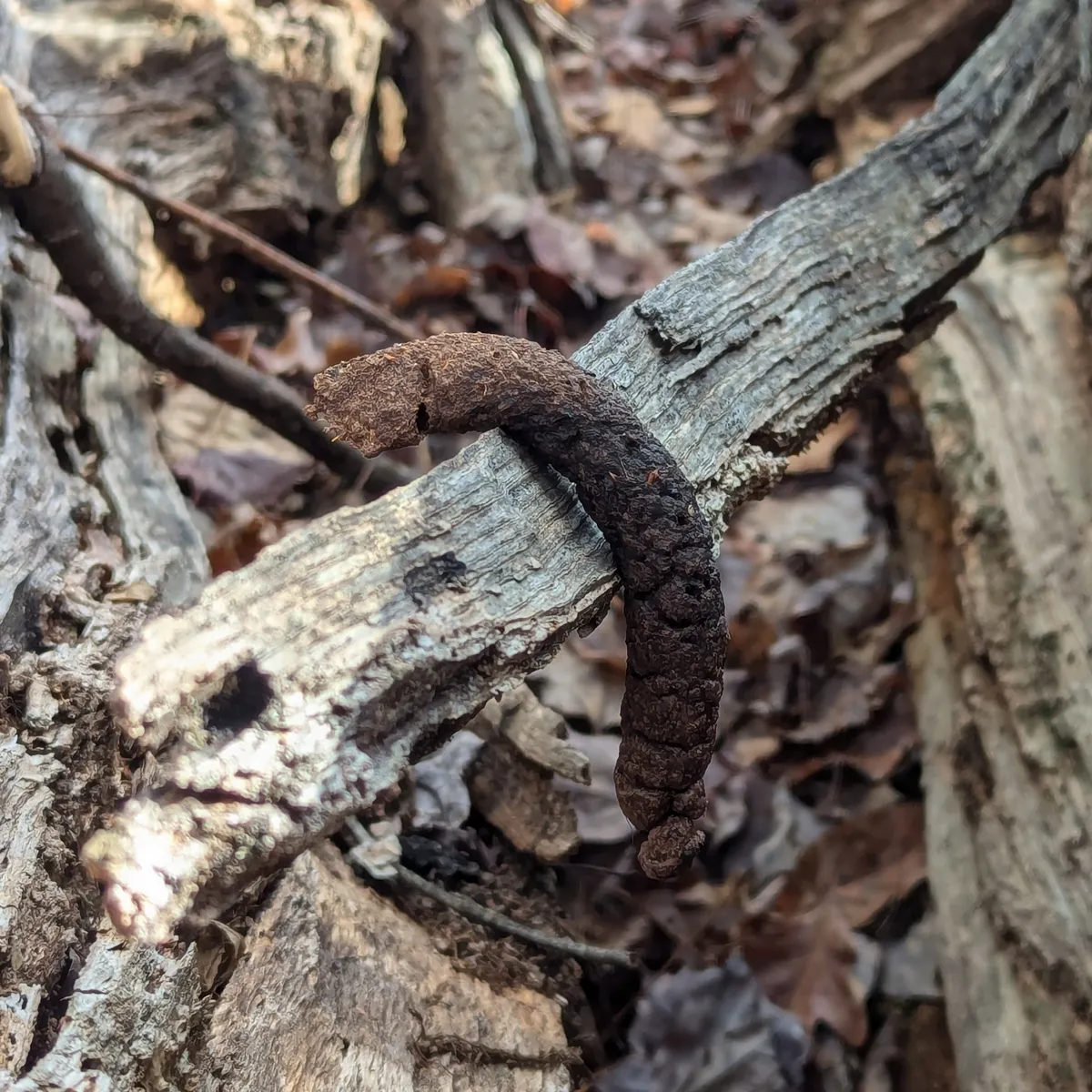
Color and contents change with the menu. Fresh raccoon droppings are generally dark, but that depends on what the animal ate, and seeds or shells may be visible, says the Santa Barbara County Animal Services latrine flyer, which puts fresh droppings at about the diameter of a dime or nickel. As droppings age they weather and break down, and old ones may look like dried leaves or debris. CDC's raccoon roundworm prevention page describes the odor as pungent, usually worse than that of dog or cat feces.
What is a raccoon latrine?
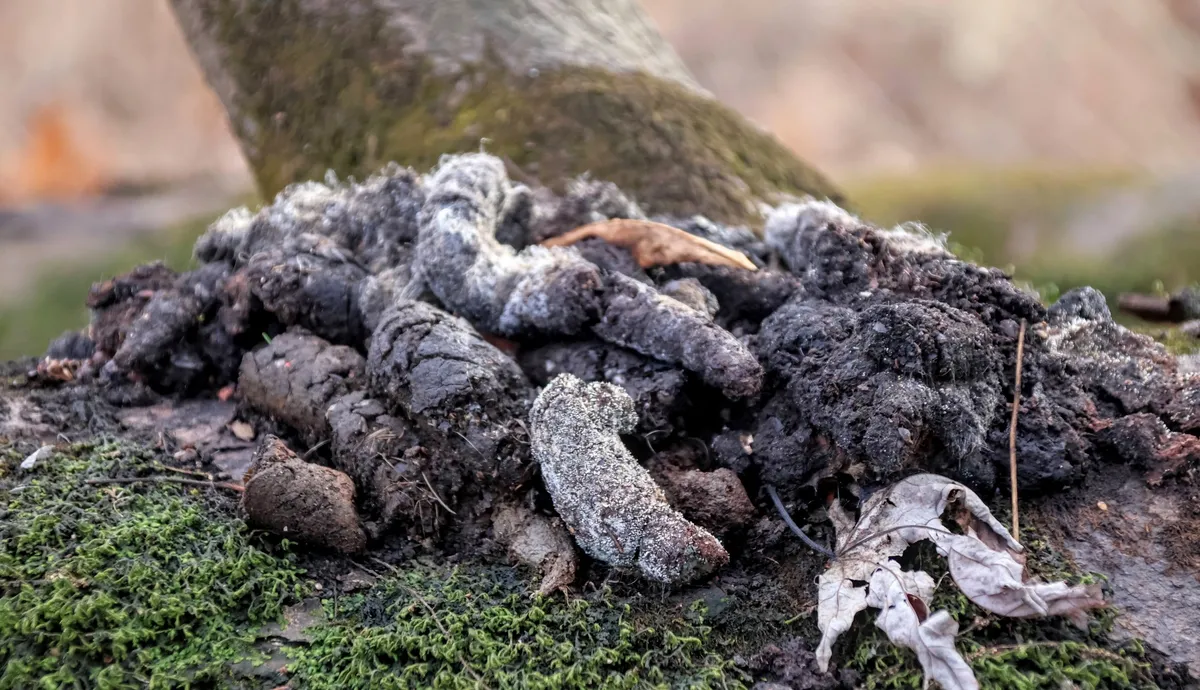
A raccoon latrine is a spot raccoons use as a toilet again and again, so droppings of different ages pile up there. CDC's fact sheet on raccoon latrines calls them communal sites. The Santa Barbara County flyer describes raccoons leaving fresh droppings on top of old ones in one area, and CDPH says that because latrines are used repeatedly, older, dry droppings are often mixed with fresh, wet ones.
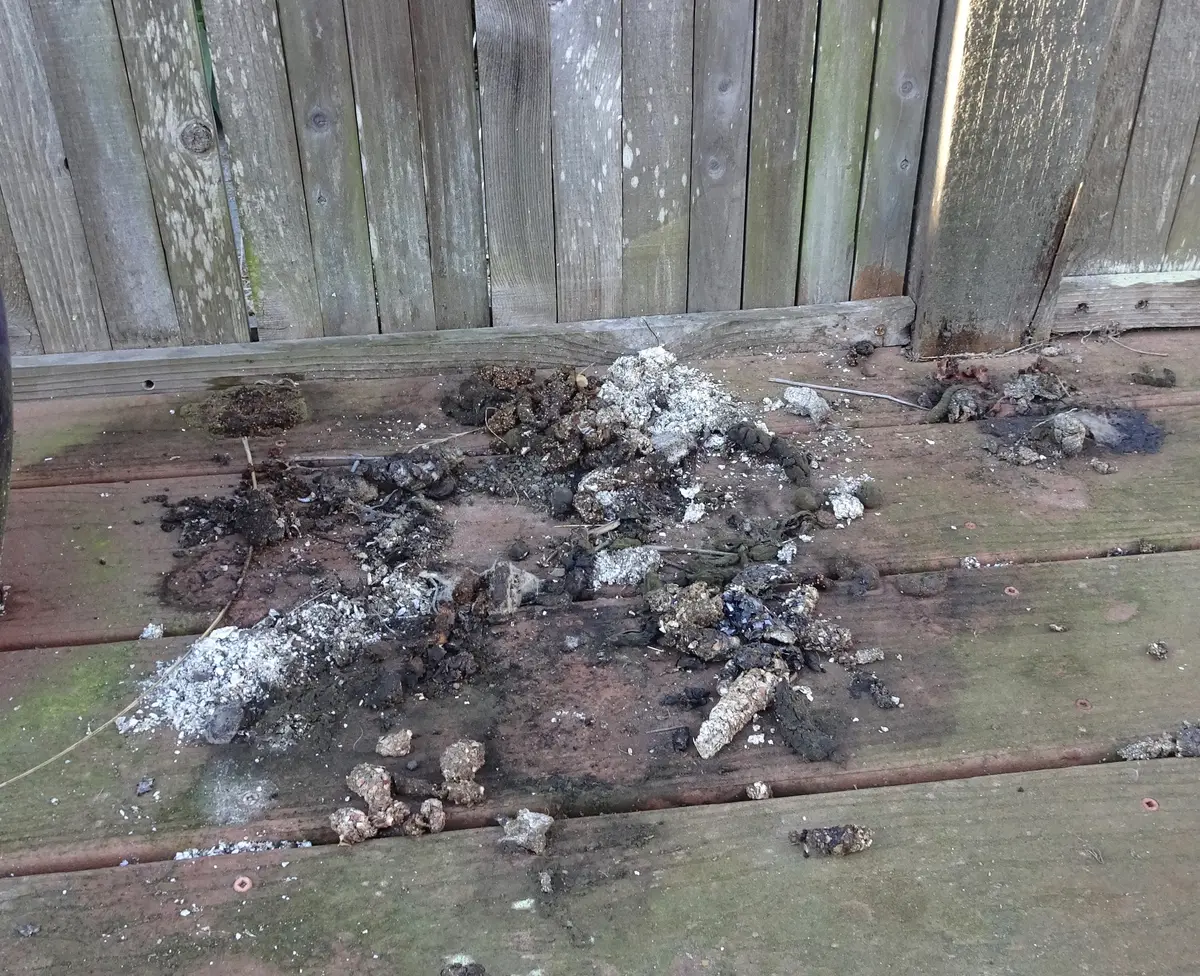
That mix of ages is the strongest clue you have. A single dropping on the lawn is hard to place, but a growing pile in one raised spot, fresh droppings on top of old, weathered ones, points to a raccoon. Nebraska Extension's guide to raccoon and opossum damage says raccoon droppings are easy to identify for exactly that reason: raccoons go in the same place.
Where do raccoons poop?
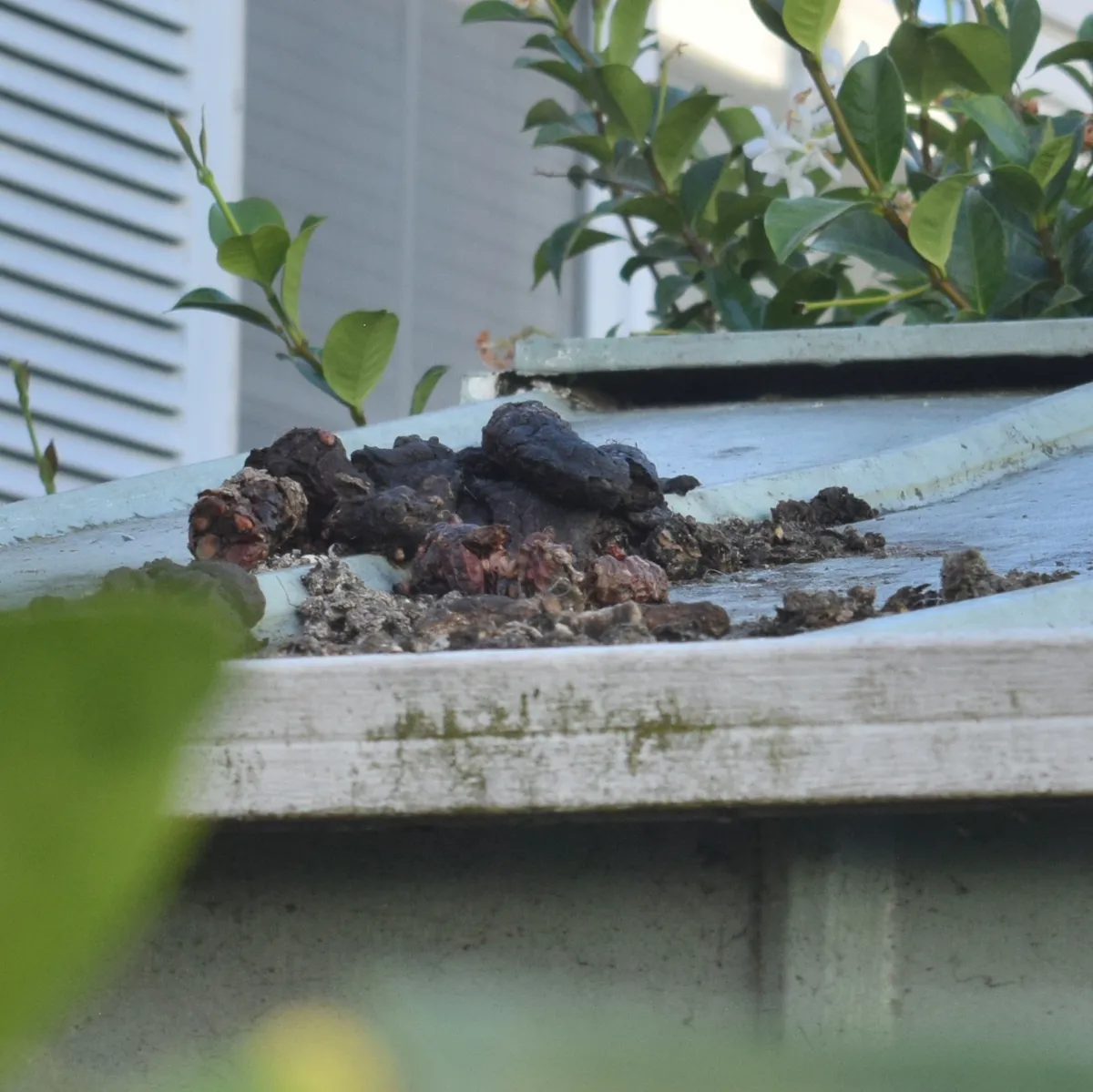
Raccoons favor flat spots raised off the ground, the Santa Barbara County flyer says, and once they choose one they keep using it. CDC lists the base of trees, raised forks in trees, fallen logs, stumps and large rocks, and adds woodpiles, decks, rooftops, attics, garages and haylofts. CDPH adds porches and fireplaces, and the county flyer adds fence lines and, now and then, open areas. Around a house, that usually means:
- Decks and porches. Both are on CDPH's list, and CDPH suggests skirting around decks and porches to keep raccoons from settling underneath; the guide to raccoon-proofing under a deck covers that job.
- Roofs and sheds. Rooftops are on CDC's list. CDPH suggests cutting back branches that overhang the roof, since they give raccoons a way up.
- Attics, chimneys and garages. CDC lists attics and garages, and CDPH lists fireplaces. A latrine indoors means raccoons are getting in, and the guide to noises in the attic at night helps confirm which animal is up there.
- Sandboxes. CDC says raccoons sometimes use a sandbox as a latrine and advises keeping sandboxes covered when they are not in use.
- Pools. CDC says raccoons usually go in a pool's shallow areas, such as the steps; what to do then is covered below.
How do you tell raccoon poop from opossum, dog or coyote poop?
Where it lies and how it is piled tell you more than size. Nebraska Extension describes raccoon and opossum droppings alike, as generally cat-sized and filled with the remains of a varied diet, so a lone dropping from either can fool you; what marks the raccoon is its habit of going in the same place. The possum poop guide covers opossum droppings in detail.
A small dog's droppings are the other common mix-up, since CDPH says raccoon droppings look like them. Two things separate them: raccoon latrines sit on raised spots such as decks, roofs, logs and woodpiles, and CDC says raccoon feces usually smell worse than dog or cat feces.
Coyote scat is often longer and hairier. ICWDM's key describes it as several inches long, often full of animal hair, especially in winter, and left at crossroads and along trails where coyotes mark their territory.
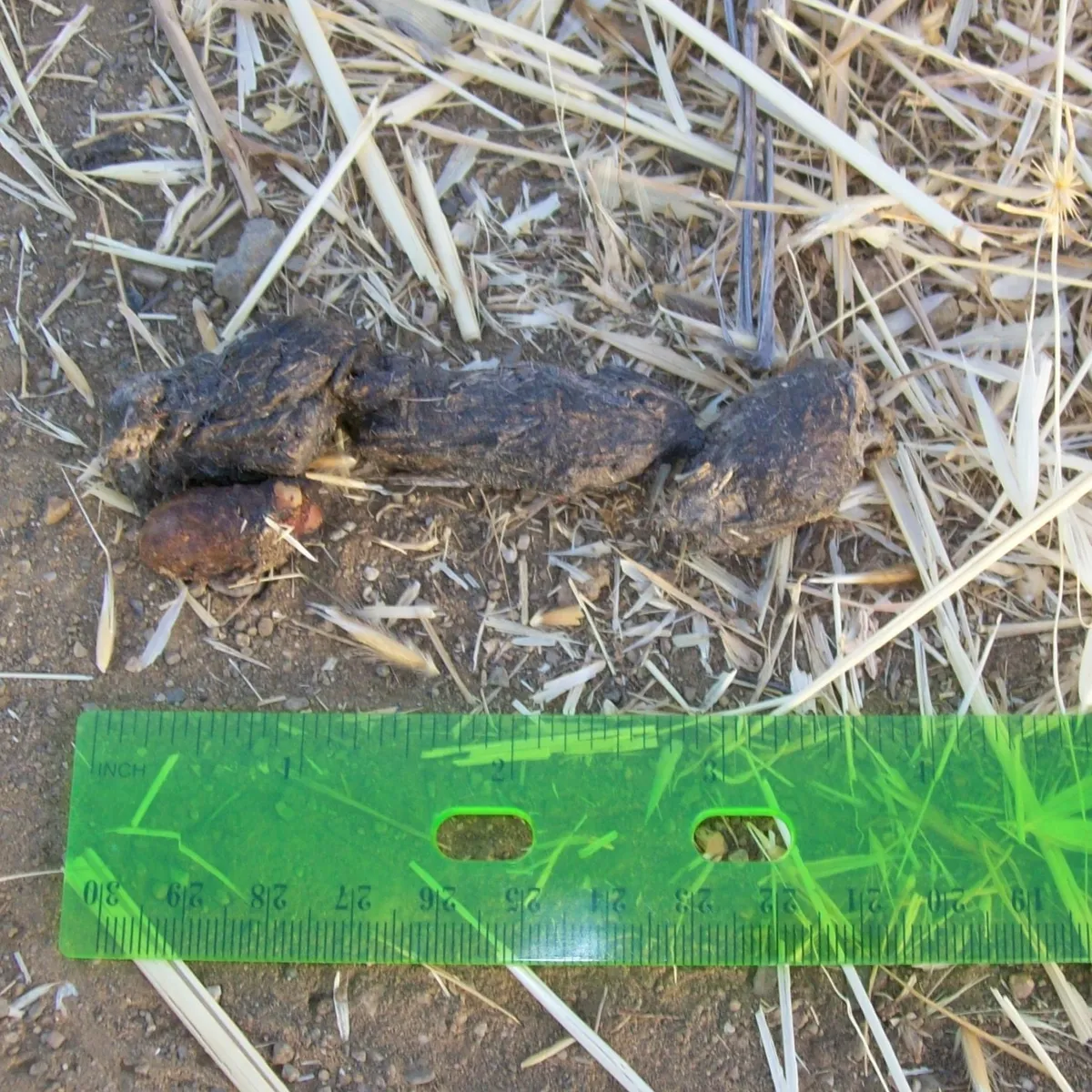
Much smaller droppings come from smaller animals. Cornell IPM gives rat droppings as about 1/2 inch long for a roof rat and 3/4 to 1 inch for a Norway rat, and mouse droppings as 1/8 to 1/4 inch. Nebraska Extension's bat guide puts bat droppings at 1/8 to 1/4 inch, black and speckled with fragments of insect shell. The rat droppings guide, mouse poop guide, squirrel poop guide and bat poop guide cover each one, and the animal poop identification chart sets them side by side.
Commonly confused with
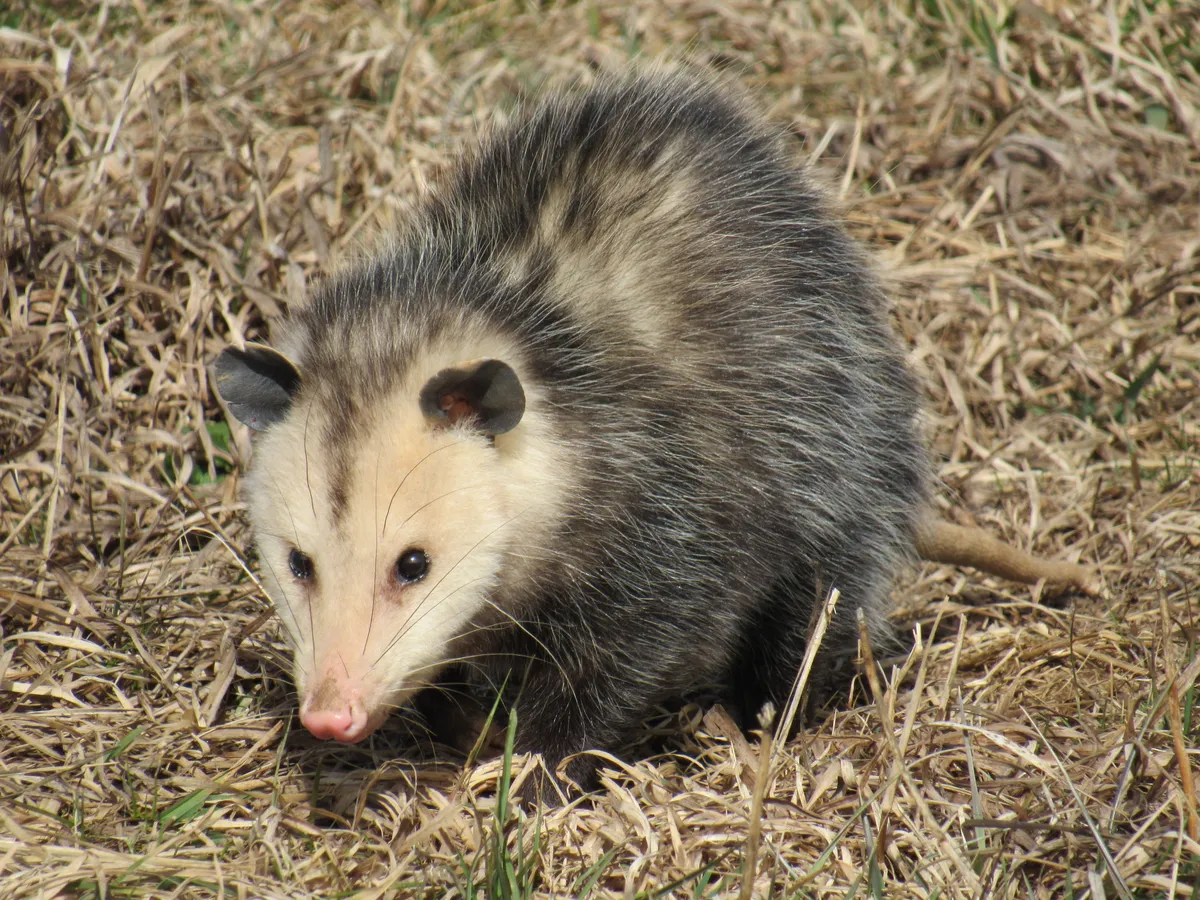 OpossumCat-sized droppings much like a raccoon's; a reused latrine points to the raccoon
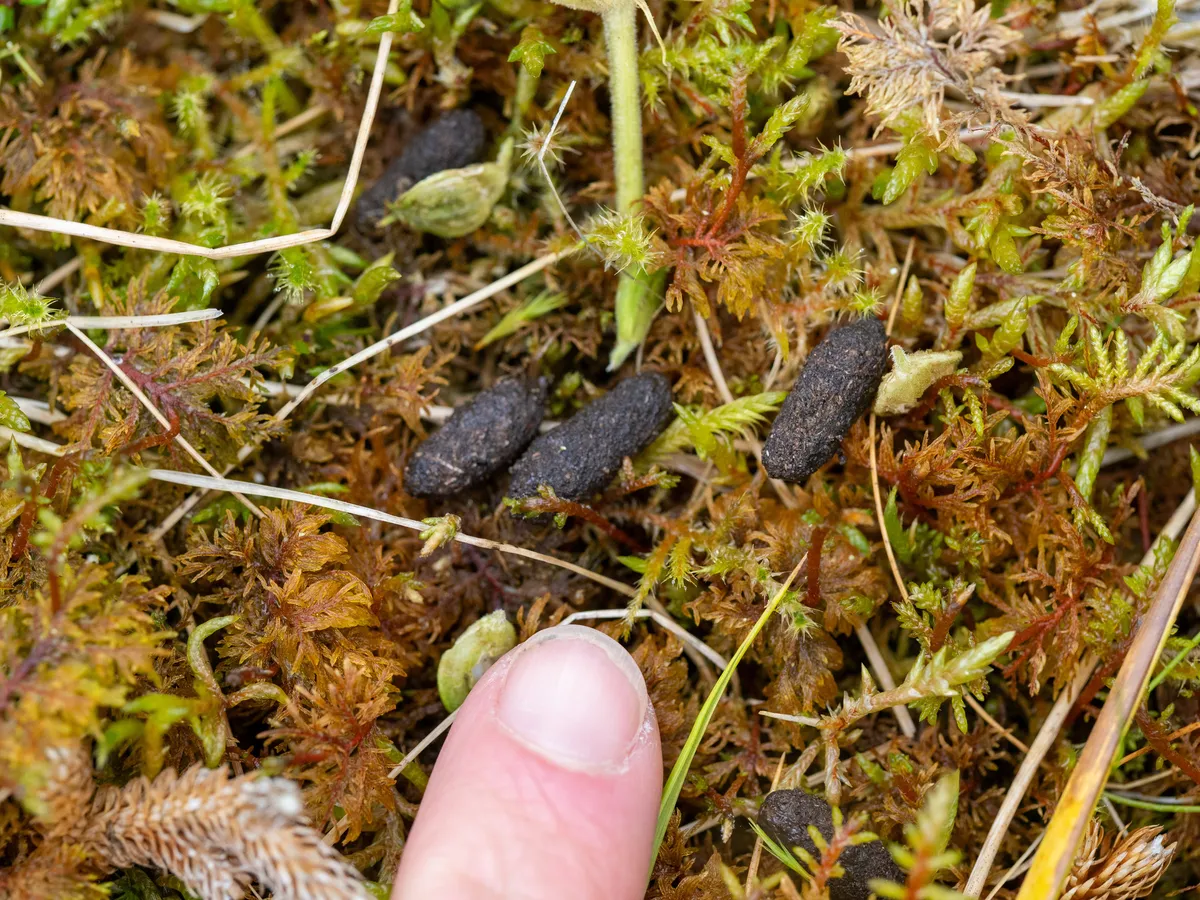 Rat droppingsOnly 1/2 to 1 inch long, a fraction of a raccoon dropping's length
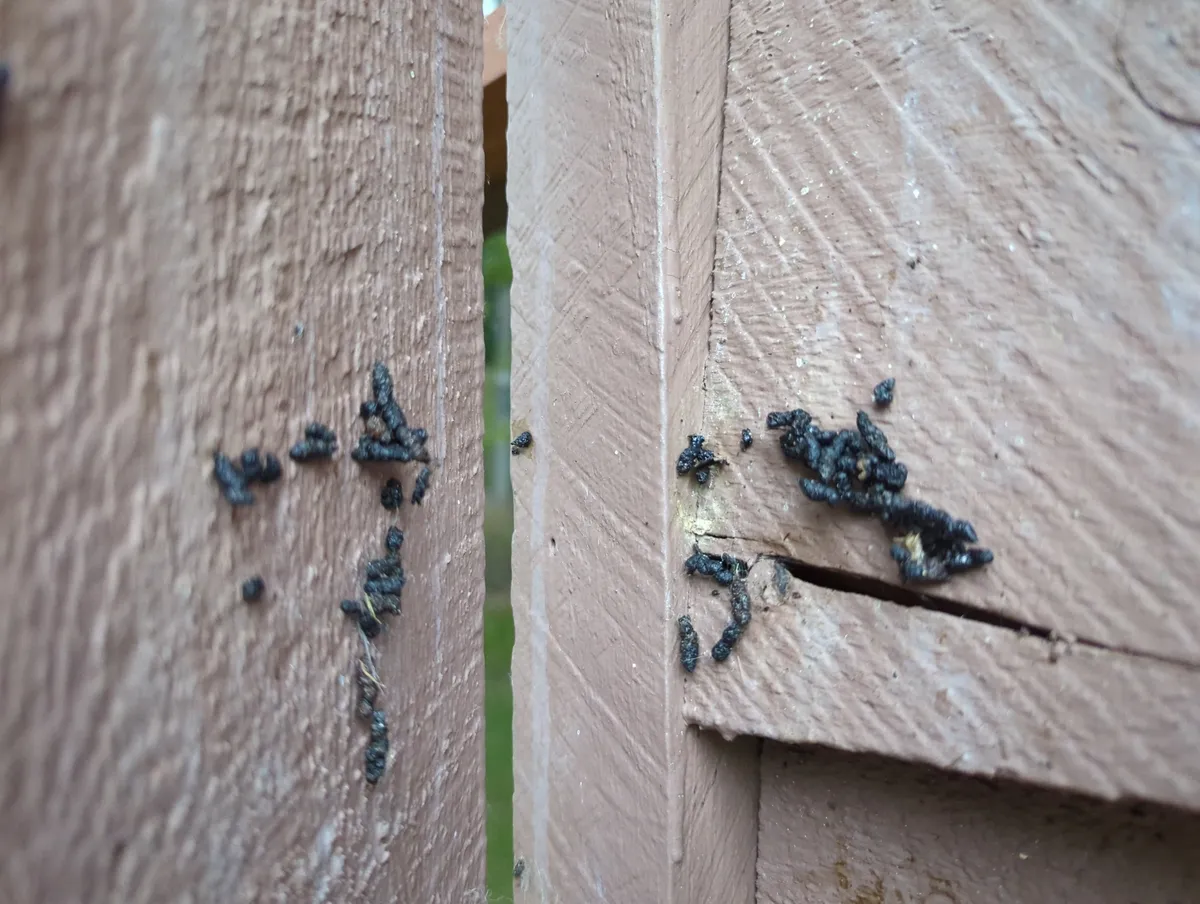 Bat droppings1/8 to 1/4 inch and speckled with insect bits, under a roost or a gap in siding
Photos: Opossum: PookieFugglestein, CC0, via Wikimedia Commons, CC0 1.0. Rat droppings: no rights reserved, via iNaturalist, CC0 1.0. Bat droppings: (c) Matt Muir, some rights reserved (CC BY), via iNaturalist, CC BY 4.0.
Is raccoon poop dangerous?
It can be, because raccoon droppings can carry the eggs of raccoon roundworm, Baylisascaris procyonis. CDC's latrine fact sheet says raccoons are the parasite's primary host, its eggs pass in the feces of infected raccoons, and people become infected by swallowing them. CDC's overview of raccoon roundworm calls human infections rare but says they can be severe when the parasite invades the eyes, organs or brain.
- Children are most at risk. CDC says most infections are in children and others more likely to put dirt or animal waste in their mouths by mistake, and CDPH says most have been in small children between 9 months and 6 years old.
- Fresh droppings are not infectious yet. Eggs in newly deposited droppings take at least 2 to 4 weeks to become infective, CDC says, so prompt removal lowers the risk.
- The eggs are invisible and tough. CDPH says they cannot be seen with the naked eye, and the Santa Barbara County flyer says they can survive in soil for several years. A study in CDC's journal, Emerging Infectious Diseases, found the eggs survived complete drying for at least 6 months at room temperature and concluded that areas with dried raccoon feces cannot be considered safe.
- Pets can carry the worms. CDC says dogs may be infected with adult raccoon roundworms without showing symptoms and advises having all pets dewormed under a veterinarian's supervision; CDPH says pets, livestock and wildlife can be infected too.
Raccoon droppings are not considered a rabies exposure. CDC lists raccoons among the animals most often found with rabies in the United States, but says rabies spreads primarily through bites or scratches, and its 2008 rabies prevention recommendations count contact with an animal's blood, urine or feces as indirect contact that is not an exposure.
How do you clean up raccoon poop safely?
Remove it soon, keep the dust down, and use heat, not bleach. CDPH says bleach and other household disinfectants will not kill roundworm eggs, and warns against using a leaf blower on a latrine; CDC says heat kills the eggs instantly. For a latrine you choose to clean yourself, CDC's latrine fact sheet gives these steps:
- Put on disposable gloves, and rubber boots you can scrub or disposable shoe covers, so you do not carry eggs into the house. In a confined space such as an attic, wear an N95-rated respirator.
- Mist the latrine lightly with water from a spray bottle so you do not stir up dust and debris.
- Lift the droppings and anything soiled by them with a shovel or an inverted plastic bag, then burn them, bury them, or bag them for the trash so they go to a landfill.
- Outdoors, treat soiled decks, patios and other surfaces with boiling water or a propane torch. Call your local fire department about rules and safety first, and never flame a surface that can melt or catch fire; CDC says concrete pads, bricks and metal tools can be flamed without damage.
- Indoors, never use a torch. Wipe the area with a damp, not wet, sponge and hot, soapy water, rinsing the sponge often in a bucket; flush the dirty water down the toilet, disinfect the bucket with boiling water and bag the sponge for the trash.
- Wash your hands well with soap and warm running water, and launder your clothes thoroughly in hot water and detergent.
If the latrine is on bare soil, CDPH adds, remove 2 to 4 inches of soil from under the droppings along with them, then flame the surface soil with the torch, turn it over with a shovel and flame it again several times. Keep children and pets away from the area until the cleanup is finished, the Santa Barbara County flyer says. If you would rather not clean a latrine yourself, or need help with one, CDC suggests contacting your local animal control office.
What should you do about raccoon poop in a pool?
Close the pool to swimmers right away: chlorine kills most germs a raccoon could carry, but not raccoon roundworm eggs, says CDC's guidance on raccoons in and around pools. CDC adds that it is not aware of any human infection linked to a swimming pool, and that raccoons usually go in a pool's shallow areas, such as the steps. Extra chlorine is no shortcut: the egg study in CDC's journal concluded that hyperchlorinating pool water is unlikely to work. Then:
- Contact local animal control, and follow its removal advice if it gives any.
- Otherwise, put on disposable gloves and lift the poop out with a net or other tool.
- Put the poop and the tool into double-bagged plastic garbage bags, add the gloves, close the bags and put them in a sealed trash can.
- Wash your hands right away with soap and water.
- Filter the pool for at least 24 hours, backwash the filter and replace the filter material if you can, bagging it the same way; or backwash, drain and hose down the pool, replace the filter material and refill it.
Afterward, CDC suggests covering the part of the pool area raccoons visited, keeping the pool fence closed, and not leaving out food such as pet food or uncovered trash.
What should you do once you know it's a raccoon?
Clean the latrine the CDC way, then make the place less inviting so the raccoons do not start a new one nearby. Cleaning up helps deter raccoons, the Santa Barbara County flyer says, but removing what draws them, such as pet food, open garbage cans and shelter under decks, and blocking their way in are what keep them from coming back. CDC's list adds tightly closed trash containers, closed-off attics and basements, covered sandboxes, no bird feeders, fish ponds or other water sources, and cleared brush where raccoons might den.
- Keep them out of the yard. The raccoon deterrent guide compares what works for keeping raccoons away.
- Close the roof and chimney. CDPH suggests covering building vents with heavy metal screening and installing animal-proof chimney caps; the guide to raccoon-proof chimney caps explains how one is fitted.
- Check the lawn too. If something is also digging up the grass, the guide to holes in the yard sorts the diggers by the holes they leave.
- Never feed them. CDC and CDPH both say raccoons should not be fed or kept as pets, and CDPH says to report raccoon problems in your neighborhood to your local animal control agency.
This guide is general educational information, not medical advice. If you have symptoms or concerns after a bite or exposure, contact a healthcare provider.
Frequently Asked Questions
How do you identify raccoon droppings?+
Check three things. Size and shape: ICWDM gives raccoon droppings as 2 to 3 inches long and 1/2 inch wide, and they are tubular with blunt ends. Contents: they are dark and often hold undigested seeds, corn or bits of fruit. Place: raccoons go in the same spot again and again, so a latrine holds old, dry droppings mixed with fresh ones, usually on a raised spot such as a deck, roof, log, woodpile or the base of a tree. Check by eye, not by hand.
What should I do if I find raccoon poop in my yard?+
Keep children and pets away and do not touch it. Clean it up soon, because CDC says roundworm eggs in fresh droppings take at least 2 to 4 weeks to become infective. Wear disposable gloves and boots you can scrub, mist the pile lightly with water, lift it into a bag for the trash, and treat hard surfaces with boiling water. Then remove what drew the raccoon, such as pet food or open trash, and cover any sandbox.
Is it safe to clean up raccoon poop?+
It can be done with care, and CDC gives steps for people who choose to clean a latrine themselves: disposable gloves, scrubbable boots or shoe covers, an N95-rated respirator in a confined space, a light mist of water to keep dust down, and heat rather than bleach, which does not kill the eggs. Wash your hands and launder your clothes afterward. If you would rather not handle it yourself, or need help, CDC suggests contacting your local animal control office.
What does possum and raccoon scat look like?+
Much alike. Nebraska Extension describes both as generally cat-sized and full of the remains of a varied diet. Raccoon droppings are dark, tubular and blunt-ended, often with seeds, and ICWDM puts them at 2 to 3 inches long. The difference is the habit: raccoons go in the same place again and again, building a latrine, and Nebraska Extension says that habit is what makes raccoon droppings easy to identify.
How long do raccoon roundworm eggs survive?+
A long time. The Santa Barbara County Animal Services flyer says the eggs can survive in soil for several years once they become infectious, which takes 2 to 4 weeks. A study in CDC's journal Emerging Infectious Diseases found the eggs survived complete drying for at least 6 months at room temperature and concluded that areas with dried raccoon feces cannot be considered safe. Heat kills the eggs instantly, CDC says; most chemicals do not.
Can raccoon poop make my dog sick?+
It can. CDC says dogs may be infected with adult raccoon roundworms without showing symptoms, and CDPH says pets can be infected, develop symptoms similar to those in people and may die. CDC advises having all pets dewormed under a veterinarian's supervision and avoiding contact with their feces. If your dog has eaten raccoon droppings or spends time near a latrine, ask your veterinarian about deworming.
Does pool chlorine kill raccoon roundworm eggs?+
No. CDC says chlorine kills most germs a raccoon could carry but not raccoon roundworm eggs. After lifting the poop out with a net, CDC recommends filtering the pool for at least 24 hours, backwashing and replacing the filter material, or draining and hosing down the pool. A study in CDC's journal concluded that extra chlorine is unlikely to work. CDC says it is not aware of any human infection linked to a pool.
Why do raccoons poop on my deck or roof?+
Raccoons prefer flat spots raised off the ground, and once they pick one they keep using it, the Santa Barbara County Animal Services flyer says. CDC lists decks and rooftops among the places raccoon feces turn up. Overhanging branches give raccoons a way onto a roof, which is why CDPH suggests cutting them back, and the county flyer names pet food, open garbage cans and shelter under decks as attractants to remove.
What does raccoon poop smell like?+
Bad. CDC describes the odor of raccoon feces as pungent, usually worse than that of dog or cat feces, and the California Department of Public Health says raccoon droppings smell bad. Do not get close enough to sniff a latrine: CDC's cleanup steps start with disposable gloves, a light mist of water to keep dust down and, in a confined space such as an attic, an N95-rated respirator.
Can you get rabies from raccoon poop?+
Droppings are not considered a rabies exposure. CDC says rabies spreads primarily through bites or scratches from an infected animal, and its 2008 rabies prevention recommendations treat contact with an animal's blood, urine or feces as indirect contact that is not an exposure. Raccoons are among the animals most often found with rabies in the United States, though, so wash any raccoon bite or scratch with soap and water and seek medical care urgently.
Sources
- Brown or Black Droppings — Internet Center for Wildlife Damage Management
- Raccoon Latrines: Identification and Clean-up — Centers for Disease Control and Prevention
- Preventing Raccoon Roundworm — Centers for Disease Control and Prevention
- About Raccoon Roundworm — Centers for Disease Control and Prevention
- Responding to Raccoons in and around the Pool — Centers for Disease Control and Prevention
- What You Need to Know About Raccoon Roundworms: Cleaning Up a Raccoon Latrine (July 2016) — California Department of Public Health
- How to Clean a Raccoon Latrine — Santa Barbara County Animal Services (copy hosted by the Texas Department of State Health Services)
- Controlling Raccoon and Opossum Damage (NebGuide G1688) — University of Nebraska-Lincoln Extension
- Viability of Baylisascaris procyonis Eggs (Emerging Infectious Diseases, July 2011) — Centers for Disease Control and Prevention
- Mouse and Rat Biology and Behavior — Cornell Integrated Pest Management (Cornell IPM), Cornell University
- Bats in and Around Structures (NebGuide G1667, revised 2012) — University of Nebraska-Lincoln Extension
- About Rabies — Centers for Disease Control and Prevention
- Human Rabies Prevention, United States, 2008: Recommendations of the Advisory Committee on Immunization Practices — Centers for Disease Control and Prevention, Morbidity and Mortality Weekly Report
How this guide was made: it was researched and drafted with AI assistance from the sources listed above. A second, independent AI pass then checked each factual claim against those sources. Found an error? Email support@buzzskito.ca.