
Published by BuzzSkito Mosquito & Tick Control
Published October 29, 2026 · Fact-checked against the sources listed below
Could a skunk smell in the house be a gas leak?
Propane gets the same odorant: Connecticut's utility regulator says propane has no odor of its own and that propane companies add mercaptan to it, and says not to adjust thermostats or appliance controls when you smell gas inside. PHMSA's own list, written for pipeline leaks, starts with turning off gas appliances; for a smell at home, both state regulators say to leave them alone. Once out, stay out until a gas company employee says it is OK to go back in, the Kansas Corporation Commission says.
Carbon monoxide is a separate danger: CDC calls it an odorless, colorless gas, so no smell will warn you of it, and advises battery-operated or battery-backup CO detectors near every sleeping area.
Once gas is ruled out, a skunk is the likeliest answer: an MSU Extension educator answering this exact question called a skunk spraying under or near the home the most likely cause and a gas leak or sewer gas less likely, noting that the gas odorant smells like skunk to some people, though more often like rotten eggs.
How do you find where a skunk smell is coming from?
Rule out gas, then run through these clues; each points to a cause covered below.
Clues to check once gas is ruled out
- When did it start? A sudden, strong smell at night fits a skunk spraying close to the house.
- Did a pet just come in? Then start with the pet.
- Where is it strongest? At one drain, suspect sewer gas; above a crawl space, by a deck or porch, or at a basement window well, a skunk under or beside the house.
- Is it fading or growing? A spray fades over weeks; an odor that grows stronger points to a dead skunk or repeated spraying.
- Does it come back on damp days? Humidity can revive an old spray.
- Can anyone else smell it? If not, read the note on phantom smells below.
If you are the only one who smells it, the smell may not be in the house at all. Cleveland Clinic describes phantosmia as detecting smells that are not actually present, says it is usually temporary and often linked to colds, sinus infections or allergies, and advises calling a healthcare provider about phantom smells that last more than three weeks.
Why does my house smell like skunk at night?
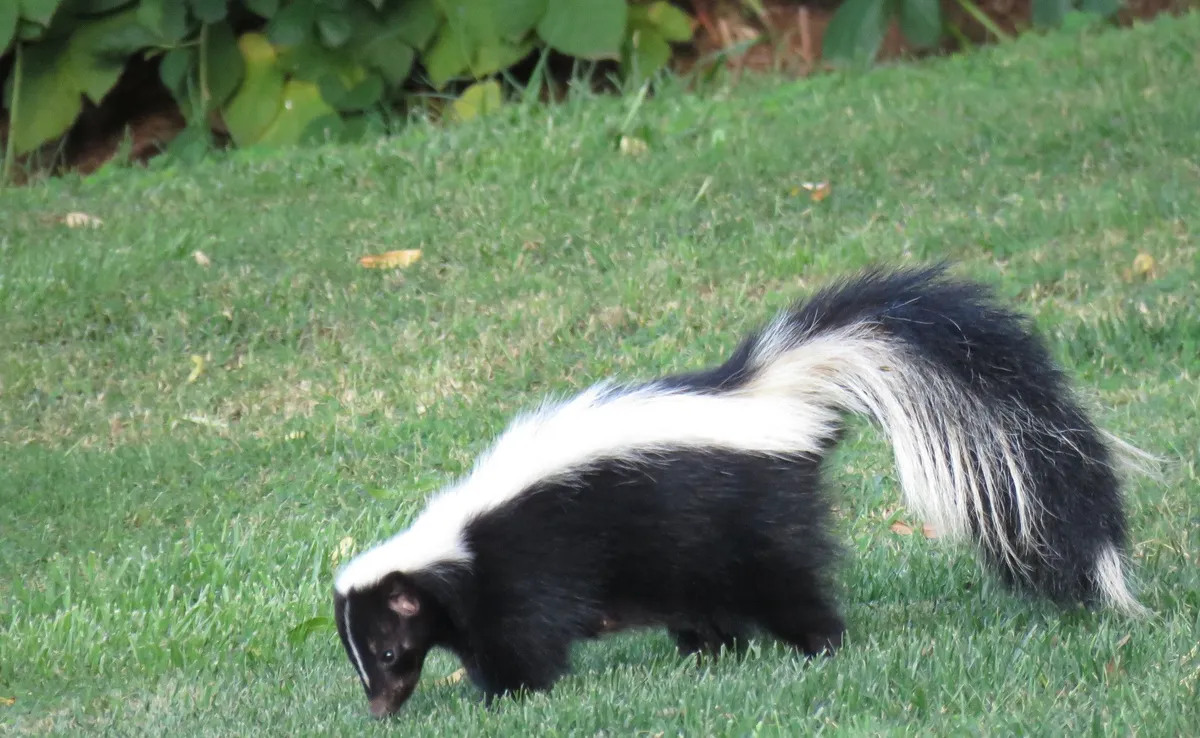
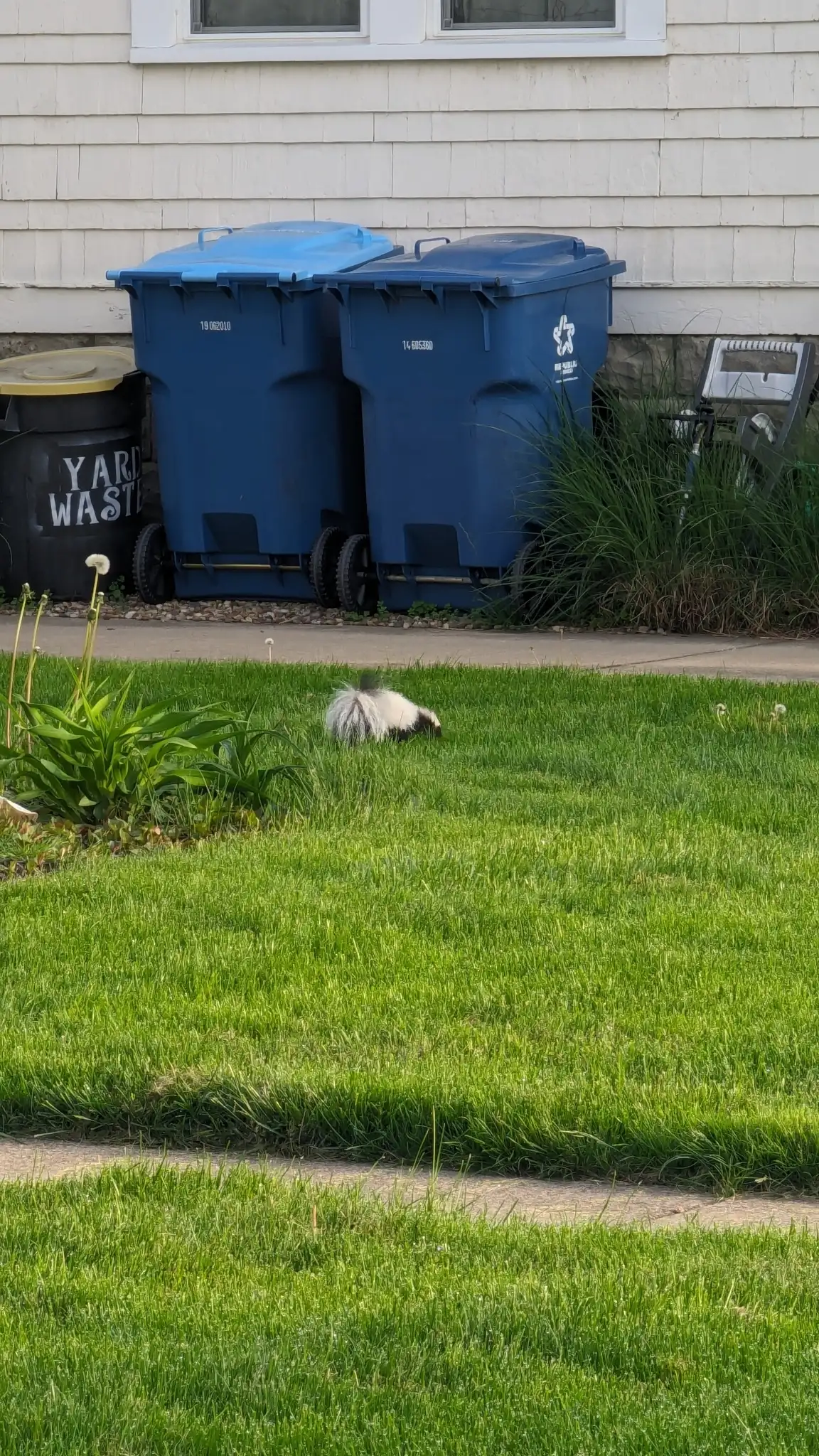
Most likely a skunk sprayed close to the house and the odor drifted in. UC IPM says striped skunks are active mainly at dawn, at dusk and at night and often spray dogs that bark and rush at them, and that during the breeding season, in February and March, males often spray when fighting over females.
A little spray goes a long way: UNL Extension says people can smell skunk musk at 10 parts per billion, and that skunks spray in basements, garages and window wells and under porches as well as at people, pets and cars.
Is a skunk living under my house, deck or porch?
It may be, if the smell keeps coming back or sprays happen again and again. UNL's guide to dealing with skunks says skunks prefer to den under decks and porches, among other sheltered spots, and that an odor lasting several days, growing stronger or turning especially acrid suggests skunks may be present nearby. Its odor guide adds that frequent sprays suggest a family has moved in, especially in spring or the February-to-March breeding season.
UC IPM says skunks that keep passing through a yard leave a faint odor sooner or later, and that skunk odors in late winter are a sign skunks might be nearby and that it may be time to keep pregnant females from nesting sites under buildings.
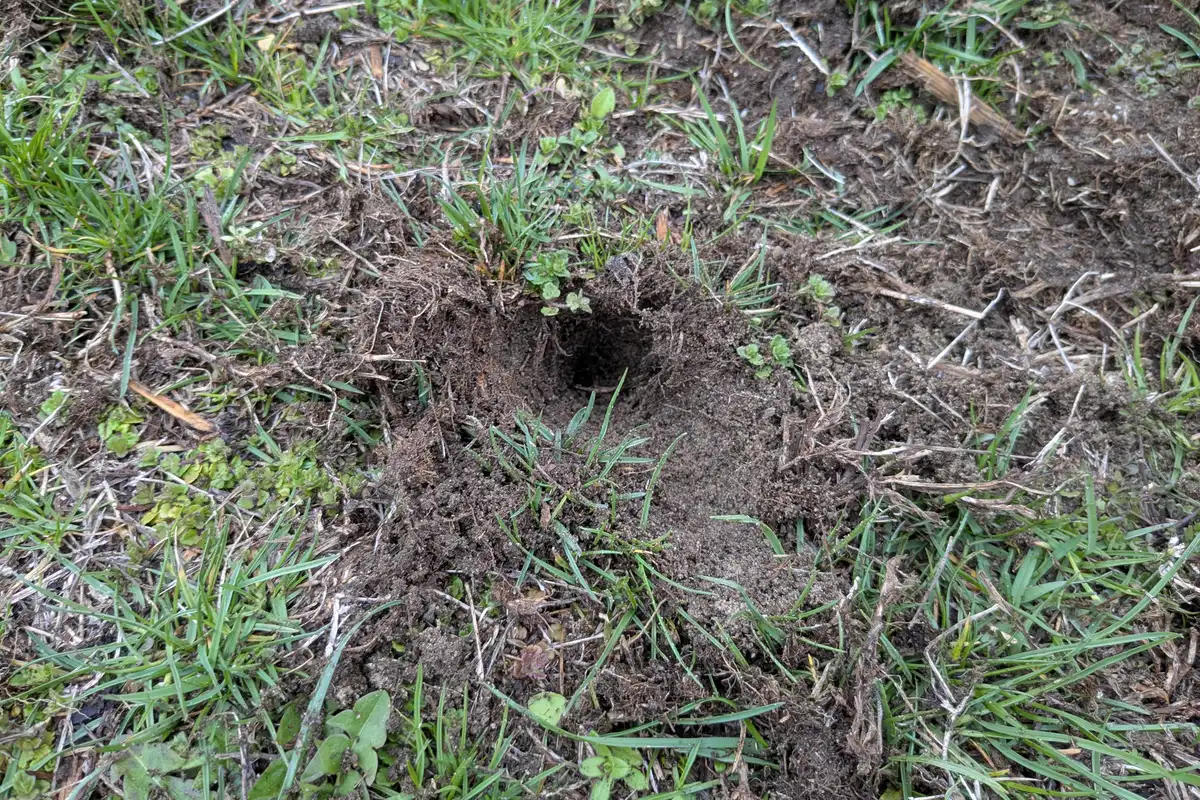
- The opening. UNL says den entrances are usually 3 to 5 inches across with little or no grass around them; look for half-moon depressions under sheds, porches, decks and crawl spaces.
- The flour test. UC IPM suggests a smooth layer of flour 1/8 inch thick in front of the opening, checked soon after dark; footprints show the animal has gone out.
- Noises. UGA Extension says sounds in an attic or crawl space could be mice, bats, squirrels, raccoons, skunks, opossums or birds; the guide to animal noises at night helps sort them.
- Lawn holes. UNL's raccoon and opossum guide says skunks dig precise cone-shaped holes, while raccoons roll up or shred the sod; the guide to holes in the yard sorts lawn holes by size and shape.
Skunks are not the only tenants. UNL's raccoon and opossum guide says raccoons use crawl spaces, attics and chimneys, and that a frightened opossum can leak an oily fluid that smells remarkably like skunk spray. Droppings near an opening can help rule other animals in or out: see the animal droppings chart, and more wildlife and pest guides.
Why does my basement smell like skunk?
A basement brings several causes together, so start with gas: if a gas furnace, water heater or dryer is down there, follow the gas steps above first. Then check the window wells, the floor drain and any crawl space opening.
Skunks can get trapped in window wells, and UNL lists window wells among the places they spray. To let one out, UNL's skunk guide says to lower one end of a cleated board at least 6 inches wide to the bottom, no steeper than 45 degrees, and afterward to cover the windows and stairwells to prevent future entrapments.
Can a drain make the house smell like skunk?
Yes. The MSU Extension educator notes that drains that are seldom run, or that have a crack, can smell skunky as sewer gas escapes from them. Wisconsin's Department of Health Services says sewer gas can enter a home through a floor drain or a leaking or blocked plumbing roof vent, and that its hydrogen sulfide smells like rotten eggs even at low levels.
When a trap has dried out, adding water can stop the smell: Wisconsin advises running water into floor and sink drains so their traps do not dry out, clearing a blocked roof vent, and calling a plumber for a leak inside a wall. It says low levels of hydrogen sulfide can irritate the eyes and airways and cause headaches and nausea; see a doctor if you have symptoms and suspect a leak.
What if a pet brought the skunk smell inside?
Then the pet, its bedding and wherever it lay are the source. Cornell's Riney Canine Health Center advises washing a sprayed dog outside, rinsing its eyes with cool water if it was sprayed in the face, and getting veterinary care right away if the spray hit its eyes or mouth. The wash Penn State Extension gives, with UNL's and Cornell's warnings:
- Wearing gloves, mix 1 quart of 3% hydrogen peroxide from a fresh bottle, 1/4 cup of baking soda and 1 to 2 teaspoons of liquid dish soap in an open container, and use it right away.
- Never mix it ahead or store it: UNL says the oxygen it releases can make a closed container explode.
- Work it into the coat, keeping it out of the eyes and mouth, and leave it on for 5 minutes.
- Rinse with water and repeat if needed; Cornell says peroxide can turn black fur bronze until it grows out.
Cornell says the mix can cause shallow corneal ulcers if it gets in the eyes, and to watch a heavily sprayed dog for 1 to 3 days: weakness, lethargy, poor appetite or gums turning a chocolate color call for a veterinarian immediately, and Poison Control says a rare anemia can follow heavy exposure. The spray does not carry rabies, but Cornell says a dog bitten by a skunk needs veterinary care immediately. Wash its bedding with the fabric steps below.
What if the skunk smell is getting stronger, not weaker?
Then look for a dead skunk, or one that is still spraying. UNL says skunk odor normally declines over several weeks, and that a big, lasting increase points to a skunk that has died on the property; check decks, sheds, window wells and other covered spots. Humid weather can make an old odor seem stronger for a while, UNL notes, so watch the trend over several days.
Removing the carcass is what brings the odor down fast, UNL says, and because rabies stays infectious until the skunk has fully decomposed, its steps are:
- Wear latex or vinyl gloves inside leather work gloves, long sleeves, long pants and eye protection; UNL strongly recommends a simple dust mask too.
- Shovel up the remains with some of the soil around and a few inches below them.
- Double-bag it all in heavy-duty trash bags and dispose of it as local rules require.
- Deodorize the spot. Where people or pets are likely to touch it, such as indoors, UNL says sanitizing may be advisable: wetting it with 10 percent bleach in 90 percent water kills a variety of organisms, including the rabies virus.
Other animals under the house or deck
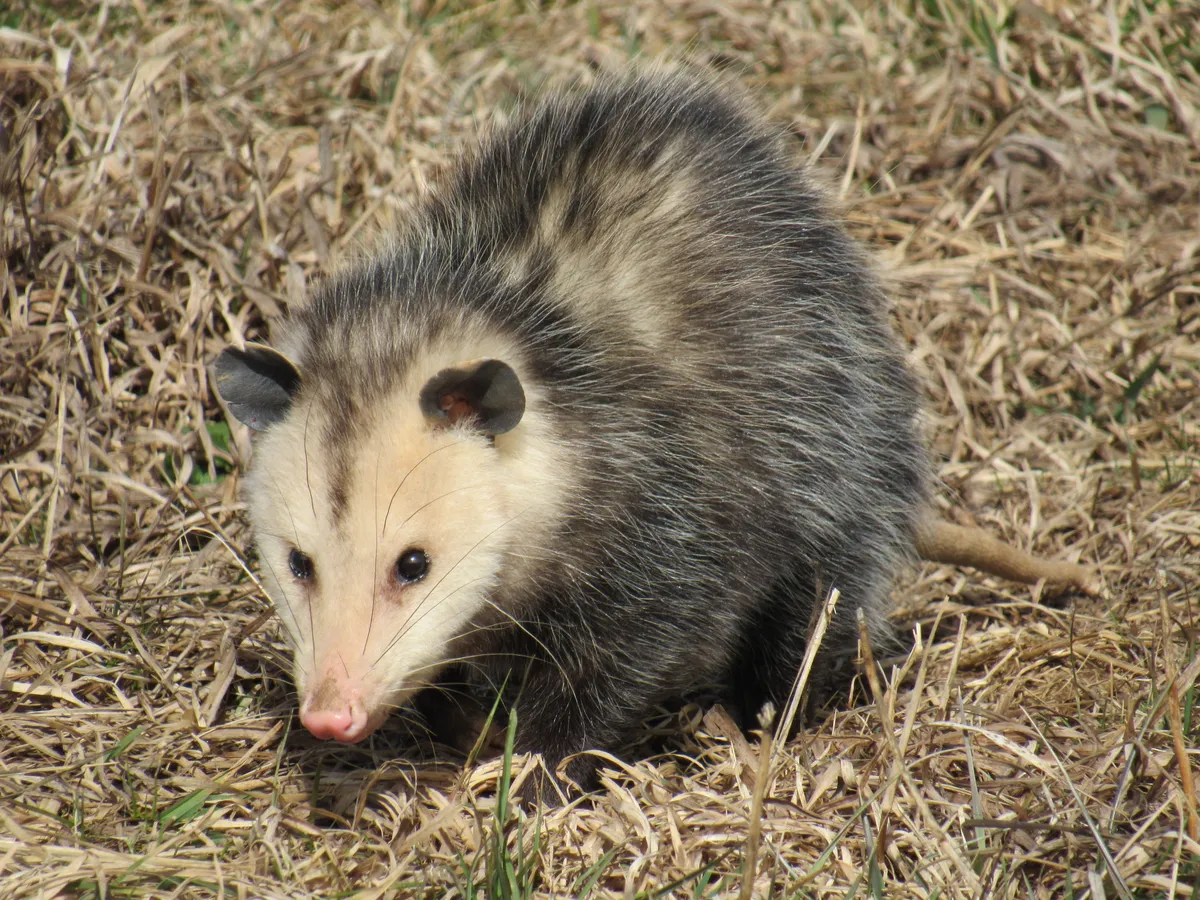 OpossumWhen frightened it can leak an oily fluid that smells much like skunk spray
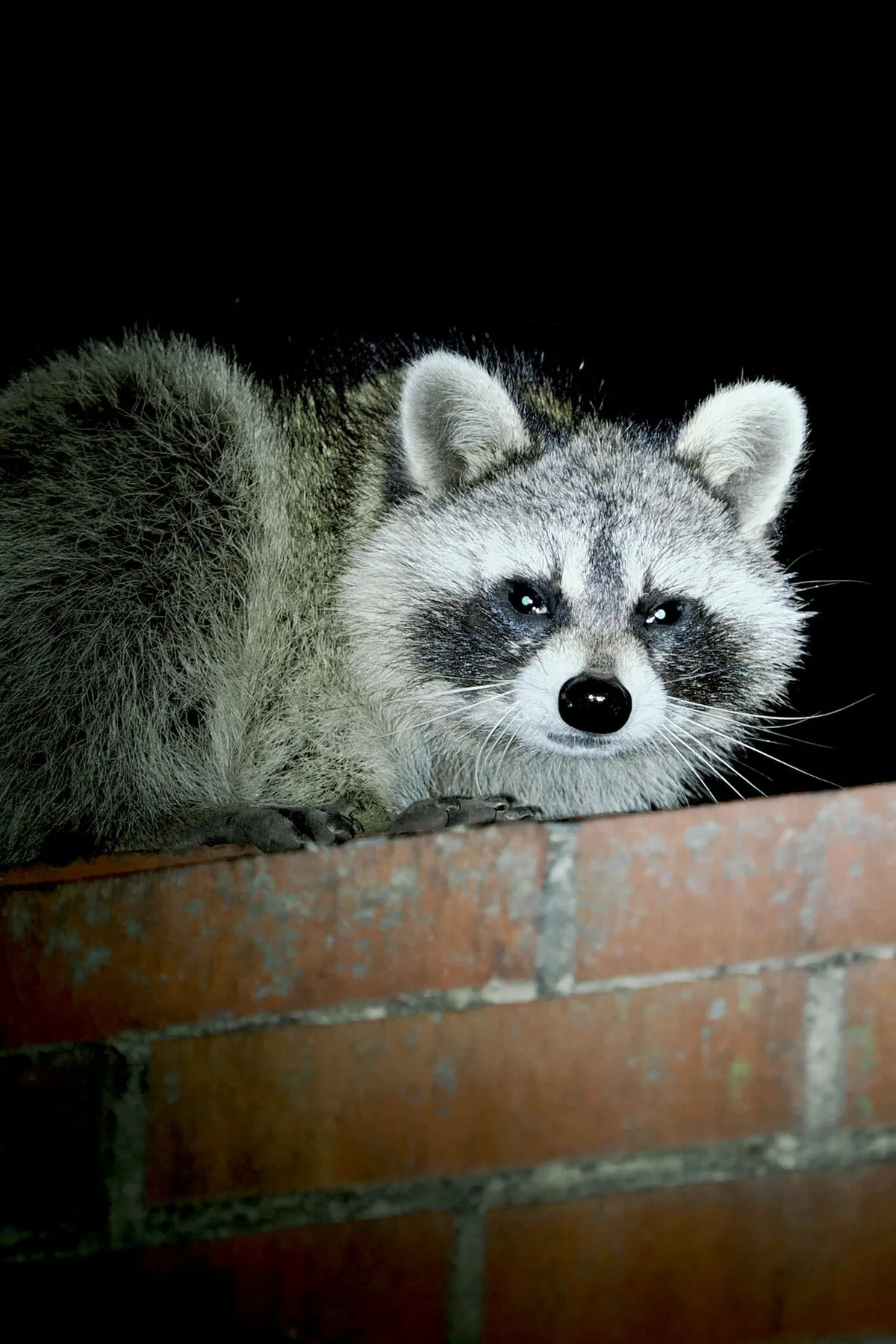 RaccoonUses crawl spaces, attics and chimneys; rolls up or shreds sod instead of digging cones
Photos: Opossum: PookieFugglestein, CC0, via Wikimedia Commons, CC0 1.0. Raccoon: no rights reserved, via iNaturalist, CC0 1.0.
How do you get skunk smell out of the house?
Remove the source, then air out, wash and deodorize: that is UNL's order of work, with air fresheners to mask what lingers in the air and laundry detergent for fabrics. Time and fresh air eventually clear the rest.
- Clothes and fabrics. Wash twice with laundry detergent and hang to dry, outdoors if possible, not in a dryer. Bleach or a cleaning fluid can help, used in separate steps, never together, after testing a hidden spot. UNL says not to put the peroxide mix straight on clothing, which it may discolor, but to add it to the wash water.
- Shoes and things you cannot wash. Hang them outdoors; UNL says the odor fades with time if they are not sprayed again.
- Wood or concrete where the skunk sprayed. One cup of bleach in a gallon of water, on that spot only; UNL warns that bleach may stain.
- Drywall, concrete and unpainted wood. Porous surfaces may need several treatments, and UNL says removing the material is sometimes the only fix.
- Heating and cooling. If a faint odor lingers after a few rounds of deodorizing, UNL says the furnace or air conditioner filter may have picked it up and needs replacing.
Skip tomato juice. UNL says it does not neutralize skunk odor; it only seems to, because the nose stops noticing the skunk smell (olfactory fatigue) and then picks up the tomato. UNL adds that studies have raised significant questions about the safety and effectiveness of ozone generators, and says never to mix deodorants with other chemicals unless the label allows it.
What should you do if a skunk sprays you?
Rinse your eyes if they were hit, then wash. UNL says the spray can temporarily blind and stun someone sprayed in the face (its skunk guide says the blindness can last 15 minutes or longer) and causes watering eyes, nasal irritation and nausea; people with asthma may have trouble breathing around the odor.
For the eyes, Poison Control says to rinse gently with room-temperature water for 15 minutes, to get medical care if pain, redness or irritation continues after rinsing, and never to put the peroxide mix in the eyes or mouth. It calls the spray an irritant and says asthma flares from it are rare; Poison Control's number is 1-800-222-1222. On skin and hair, UNL says the mix can be used on people, left on for 5 minutes and rinsed off with water.
The spray cannot give you rabies: UNL says the virus is not transmitted through skunk musk.
How do you keep skunks from coming back under the house?
Make sure the space is empty, then close it for good, outside the months when young may be inside. UNL says young skunks may use a den from April through August and that mothers typically return for their young, and UC IPM calls blocking an entrance more problematic when young are left behind.
- Check that it is empty. Loosely plug the opening with newspaper or loose dirt, and close it only after it stays undisturbed for five days in a row of good weather, as UNL advises, or use UC IPM's flour patch.
- Let a skunk out, not back in. UC IPM describes a one-way gate of 1/2-inch mesh, hinged at the top and larger than the opening, that a skunk can push open to leave but not to come back in; it notes this fails if the young cannot yet walk.
- Close the gap. UNL uses 1/2-inch galvanized hardware cloth, one side buried at least 2 to 3 inches deep and bent 12 inches outward in an L shape to discourage digging.
- Skip the repellents. UNL says mothballs, ammonia, lights, ultrasound, radios and coyote urine have not proven consistently effective against skunks, and UC IPM warns against strong-smelling repellents such as ammonia under an occupied building, whose fumes can be drawn inside, especially by a furnace that pulls air from below.
For the full job, from the vacancy check to burying the wire, see this step-by-step guide to closing off the space under a deck.
Do not trap the skunk yourself: UGA Extension does not recommend live trapping for homeowners dealing with skunks or raccoons, which can transmit rabies, and says relocating nuisance wildlife is generally discouraged and may be illegal. Virginia's Department of Wildlife Resources says trapping and relocating an animal is illegal there.
Keep children and pets away from a skunk that seems sick. CDC names skunks among the animals most often found with rabies in the US and advises staying away from wildlife. Sources differ on daylight: UNL says public health officials consider a skunk seen in daylight to be acting abnormally and suspect it of carrying rabies, while Virginia's agency says simply seeing one by day is not a sign of rabies. Warning signs they list include stumbling, foaming at the mouth, aggression, wandering, listlessness and tremors, though UNL says such signs cannot confirm rabies; Virginia says to contact your local health department.
After a bite or scratch, CDC says to wash it right away with soap and water and to seek medical care urgently. UC IPM says a physician should promptly see every skunk bite, however minor, and that the local health department should be notified.
This guide is general educational information, not medical advice. If you have symptoms or concerns after a bite or exposure, contact a healthcare provider.
Frequently Asked Questions
How do you tell if it's a skunk or a gas leak?+
Do not try to settle it by sniffing. PHMSA, the federal pipeline safety agency, says mercaptan is added to gas so leaks can be detected by its skunk-like odor, so the two can smell alike. If your home has natural gas or propane and the smell could be gas, leave on foot, do not use switches, phones or flames or try to shut off appliance gas valves, and call 911 from a safe place, then the gas company. Clues such as a pet that just came in, or a smell that drifted in at night, only help once gas is ruled out.
What can be mistaken for skunk smell?+
Natural gas and propane are the important ones, because the mercaptan added to them is chosen for its skunk-like odor, according to PHMSA. An MSU Extension educator adds that sewer gas from a drain that is seldom run, or cracked, can smell skunky. UNL Extension says a frightened opossum can leak an oily fluid that smells remarkably like skunk spray, and that an old skunk spray can seem to come back on humid days even when no skunk has sprayed again.
How long does it take for skunk smell to go away in a house?+
Usually several weeks. UNL Extension says skunk odor typically fades over several weeks and that periods of high humidity can make it reappear or seem stronger even without a new spray. Removing the source, airing the house out, washing fabrics and replacing a furnace or air conditioner filter that picked up the odor all help. If the smell has not eased in a week or two, or grows stronger, UNL says the skunk may have sprayed again or died on the property.
Can carbon monoxide smell like a skunk?+
No. CDC describes carbon monoxide as an odorless, colorless gas, so a skunk-like smell is not carbon monoxide, and you cannot rely on your nose to detect it. CDC advises installing battery-operated or battery-backup carbon monoxide detectors near every sleeping area. A skunk-like smell indoors can still be a natural gas leak, which is a separate danger: PHMSA says to leave on foot and call 911 from a safe place if you suspect one.
Why does my house smell like skunk in winter?+
Late winter is skunk breeding season. UC IPM says striped skunks usually breed in February and March, that males often spray when fighting over females, and that skunk odors in late winter are a sign skunks might be nearby and that it may be time to keep pregnant females from nesting under buildings. UNL Extension says frequent sprays at that time suggest a family has moved in. Winter is also when furnaces run, and a gas furnace or water heater is one more reason to rule out a gas leak before blaming a skunk.
Does tomato juice get rid of skunk smell?+
No. UNL Extension says tomato juice does not neutralize skunk odor. It only seems to work because the nose, overwhelmed by the skunk smell, stops noticing it, a condition called olfactory fatigue, and then picks up the tomato. UNL points instead to chemist Paul Krebaum's mix of 1 quart of 3 percent hydrogen peroxide, 1/4 cup of baking soda and 1 to 2 teaspoons of liquid dish soap, which changes the odor compounds into odorless acids. Mix it in an open container, use it at once and never store it.
Can breathing in skunk smell make you sick?+
It can make you feel unwell for a while. Poison Control describes skunk spray as an irritant, says breathing it in can irritate the lungs and the smell can be nauseating, and says asthma flares from it are rare. UNL Extension says people sprayed by a skunk get watering eyes, nasal irritation and nausea, and that people with asthma may have trouble breathing when exposed to the odor. For severe or lasting irritation, call Poison Control at 1-800-222-1222 or seek medical care. If the smell might be natural gas, leave the house first and call 911 from a safe place.
Why do I keep randomly smelling skunk?+
First rule out gas, since PHMSA says the odorant in natural gas is skunk-like. After that, possible reasons include skunks passing through the yard, which UC IPM says leaves a faint odor sooner or later; an old spray that UNL Extension says can reappear on humid days; and a furnace filter holding the odor. If no one else in the home can smell it, Cleveland Clinic notes that phantom smells, called phantosmia, are usually temporary, and advises calling a healthcare provider if they last more than three weeks.
How do you get skunk smell out of clothes?+
Wash them with laundry detergent, then wash them a second time and hang them to dry, outdoors if you can, rather than putting them in a dryer, UNL Extension advises. Household bleach or a cleaning fluid can also help, used in separate steps and never together, after testing on a hidden spot. Do not pour the peroxide and baking soda mix straight onto clothing, which UNL says may discolor it; add it to the wash water instead. Things you cannot wash can hang outdoors until the odor fades.
Can skunk spray give you or your pet rabies?+
No. UNL Extension says the rabies virus is not transmitted through skunk musk, and Cornell's canine health center says rabies spreads through bites, not spray. A bite is different: CDC says to wash any bite or scratch right away with soap and water and to seek medical care urgently, and UC IPM says a physician should see every skunk bite and the local health department should be told. Cornell says a dog bitten by a skunk needs veterinary care immediately.
Sources
- Pipeline Leak Recognition and What to Do — Pipeline and Hazardous Materials Safety Administration (PHMSA), U.S. Department of Transportation
- What To Do If You Smell Propane Gas? — Connecticut Public Utilities Regulatory Authority
- Natural Gas Safety — Kansas Corporation Commission
- Carbon Monoxide (CO) Poisoning Basics — Centers for Disease Control and Prevention
- Skunk smell inside house (Ask Extension question 870972, answered by Paige Filice, Natural Resources Educator, June 6, 2024) — Michigan State University Extension, via Ask Extension
- Phantosmia (Olfactory Hallucinations) — Cleveland Clinic
- Pest Notes: Skunks (UC ANR Publication 74118; R. A. Baldwin, updated April 2015) — University of California Statewide IPM Program
- Removing Skunk Odor (NebGuide G2100; S. M. Vantassel, S. E. Hygnstrom and D. M. Ferraro, 2011) — University of Nebraska-Lincoln Extension
- Dealing with Skunks (NebGuide G1769; S. M. Vantassel, S. E. Hygnstrom, D. M. Ferraro and L. A. Pennisi, revised 2014) — University of Nebraska-Lincoln Extension
- Controlling Raccoon and Opossum Damage (NebGuide G1688; S. Vantassel, S. Hygnstrom, D. Ferraro and S. Wilson) — University of Nebraska-Lincoln Extension
- Air: Sewer Gas — Wisconsin Department of Health Services
- Sprayed by a Skunk (M. C. Brittingham, updated October 27, 2025) — Penn State Extension
- What to do when your dog gets skunked (updated June 2025) — Cornell University College of Veterinary Medicine, Riney Canine Health Center
- What happens if a skunk sprays me? — Poison Control (National Capital Poison Center)
- Resolving Human-Nuisance Wildlife Conflicts (Bulletin 1248; M. T. Mengak) — University of Georgia Cooperative Extension
- Problems with Skunks and Opossums — Virginia Department of Wildlife Resources
- About Rabies — Centers for Disease Control and Prevention
How this guide was made: it was researched and drafted with AI assistance from the sources listed above. A second, independent AI pass then checked each factual claim against those sources. Found an error? Email support@buzzskito.ca.