
Reviewed by Alex Francisco
Published November 10, 2026 · Fact-checked against the sources listed below
What does coyote poop look like?
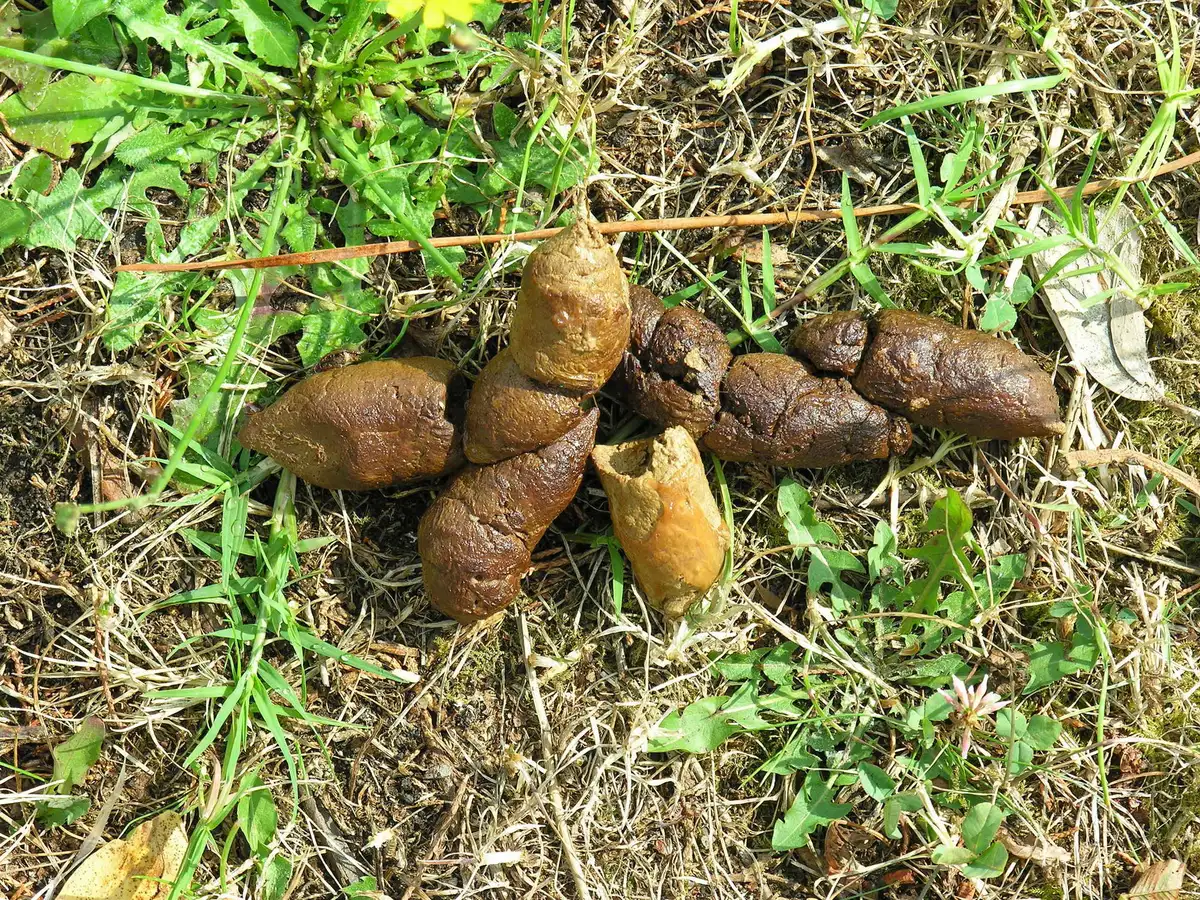
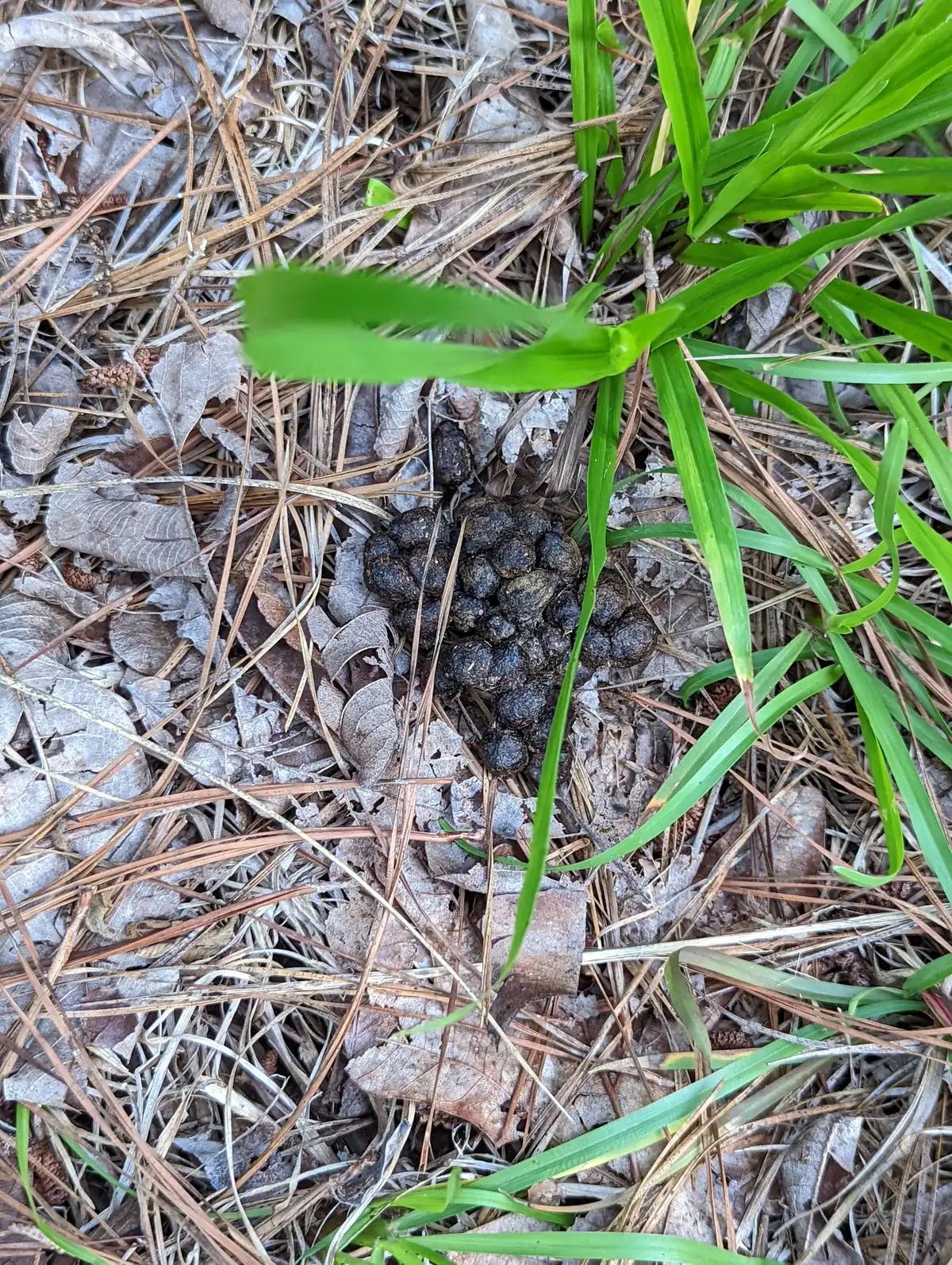
Coyote poop looks like a twisted rope: a tube a few inches long, often in segments, with one end tapering to a point and hair, bits of bone, seeds or fruit pressed into it. The Internet Center for Wildlife Damage Management (ICWDM) describes coyote scat as tubular and segmented with one end tapering to a point, Minnesota DNR calls it rope-like and typically 3 to 6 inches long, and the DNA study described below notes that field guides typically describe coyote scat as a twisted, tapered rope.
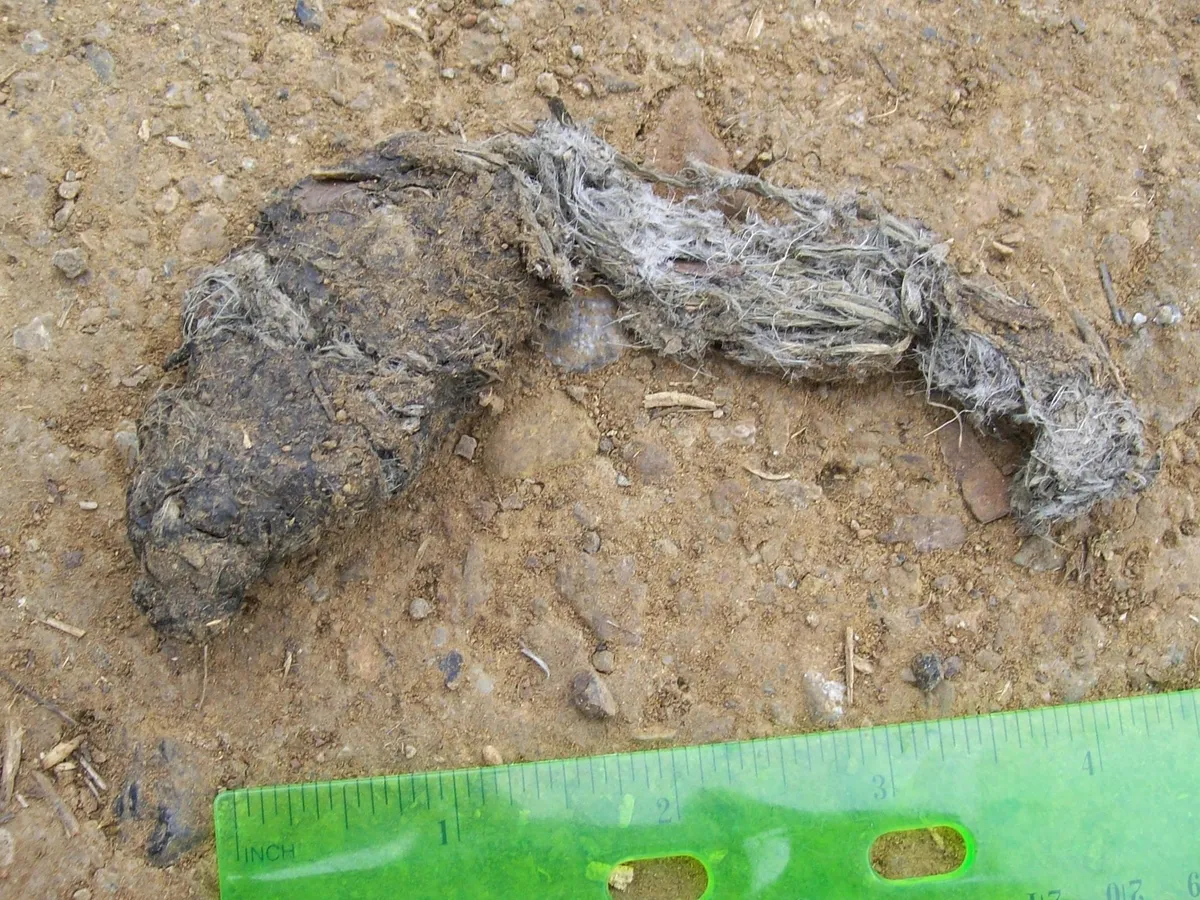
Thickness is the number to check. NY DEC says coyote scat measures under an inch across, and Alabama Cooperative Extension puts it at about 1 inch across and up to 4 inches long. In a study of DNA-identified scats from California's central coast, coyote scats averaged about 5/8 inch (16 mm) across. Color helps less: the University of Arizona's track and scat guide describes coyote scat as black to dark brown with tapered tips, but warns that a change in diet can dramatically change the color, shape and contents of any animal's droppings.
What's in coyote poop?
Mostly the leftovers of whatever the coyote ate, so it changes with the seasons. ICWDM lists fur, bone fragments, feathers, berries, grass and even plum pits, and its droppings key says coyote droppings are full of animal hair, especially in winter, when fruit is not available. The Missouri Department of Conservation (MDC) says rabbits and mice make up most of a coyote's diet, along with carrion and plants such as persimmons.
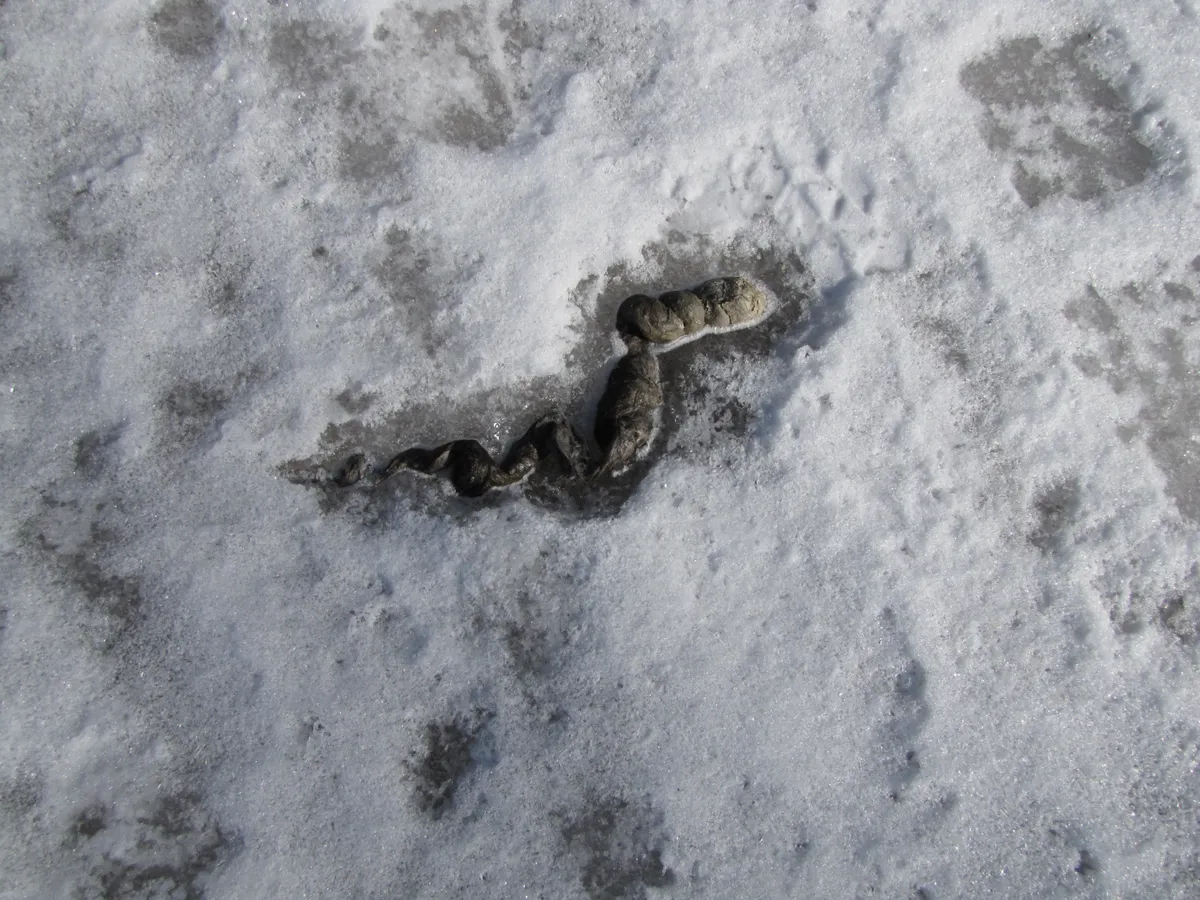
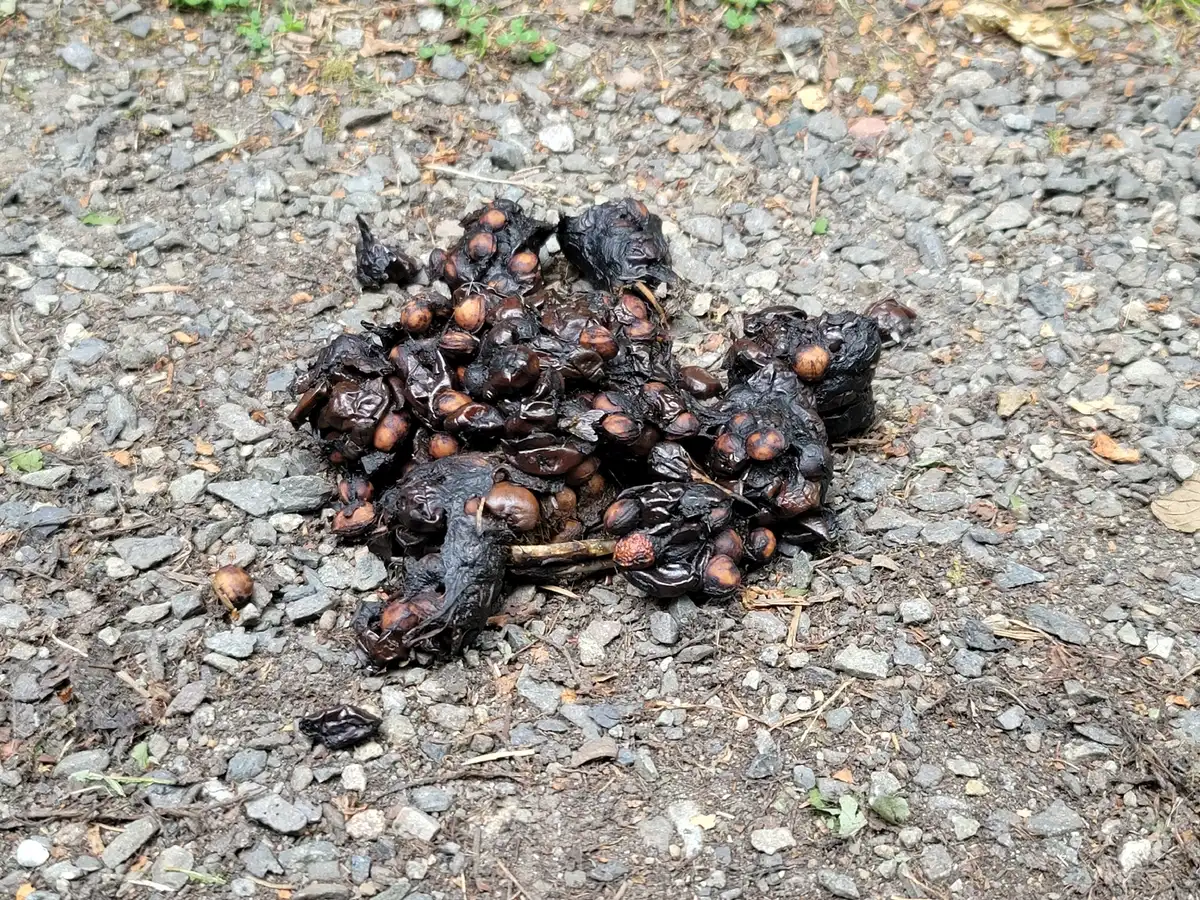
City coyotes eat more of what people leave around. In a National Park Service study of urban coyotes in Los Angeles, volunteers collected more than 3,100 scats; garbage, ornamental fruit such as ficus, loquat, grapes and palm fruit, and domestic cats together made up 60 to 75 percent of urban coyotes' diets. Cat remains turned up in 20 percent of urban scats and 4 percent of suburban ones.
Where do coyotes poop?
In the open, where other animals will find it. Coyotes use scat to mark territory: MDC says they often leave it in the middle of a trail or another prominent place, ICWDM adds trail intersections and spots around objects, and Minnesota DNR lists trails, rocks and other visible places. NY DEC calls scat left in prominent spots along trails a form of communication. The photo below shows the same habit in a city.
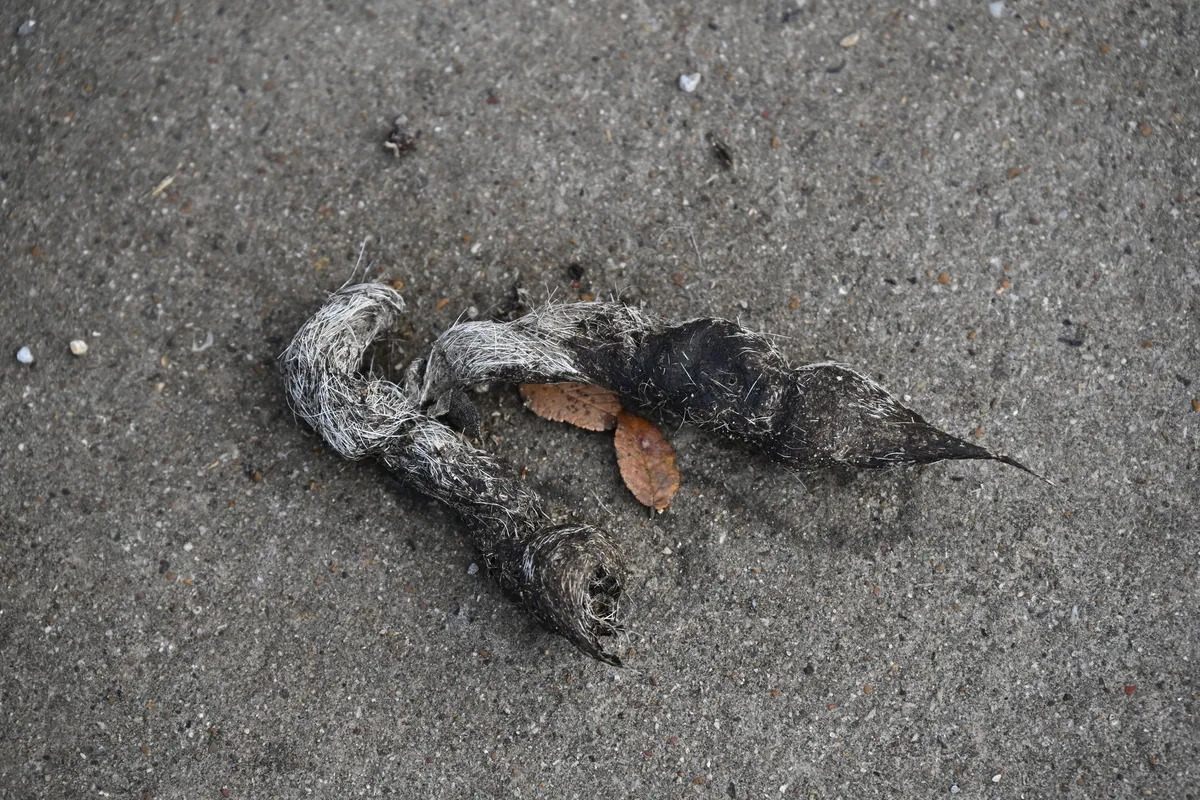
You may find more than one: the California DNA study notes that coyotes, like bobcats and gray foxes, often leave scats in groups. A pile of old and new droppings that keeps growing in one spot, such as a deck, a roof or a sandbox, fits a raccoon latrine instead; the raccoon section below explains the difference.
Why is there coyote poop in my yard?
Because a coyote passed through, and coyotes are at home in towns and cities. Minnesota DNR says coyotes live anywhere they can find enough to eat, including large cities, and NY DEC says eastern coyotes are found throughout New York State, including New York City and Long Island. Food is usually what brings one into a yard: National Park Service staff in the Santa Monica Mountains point to fallen fruit, pet food, trash, compost and vegetable gardens, and say even bird seed can attract coyotes.
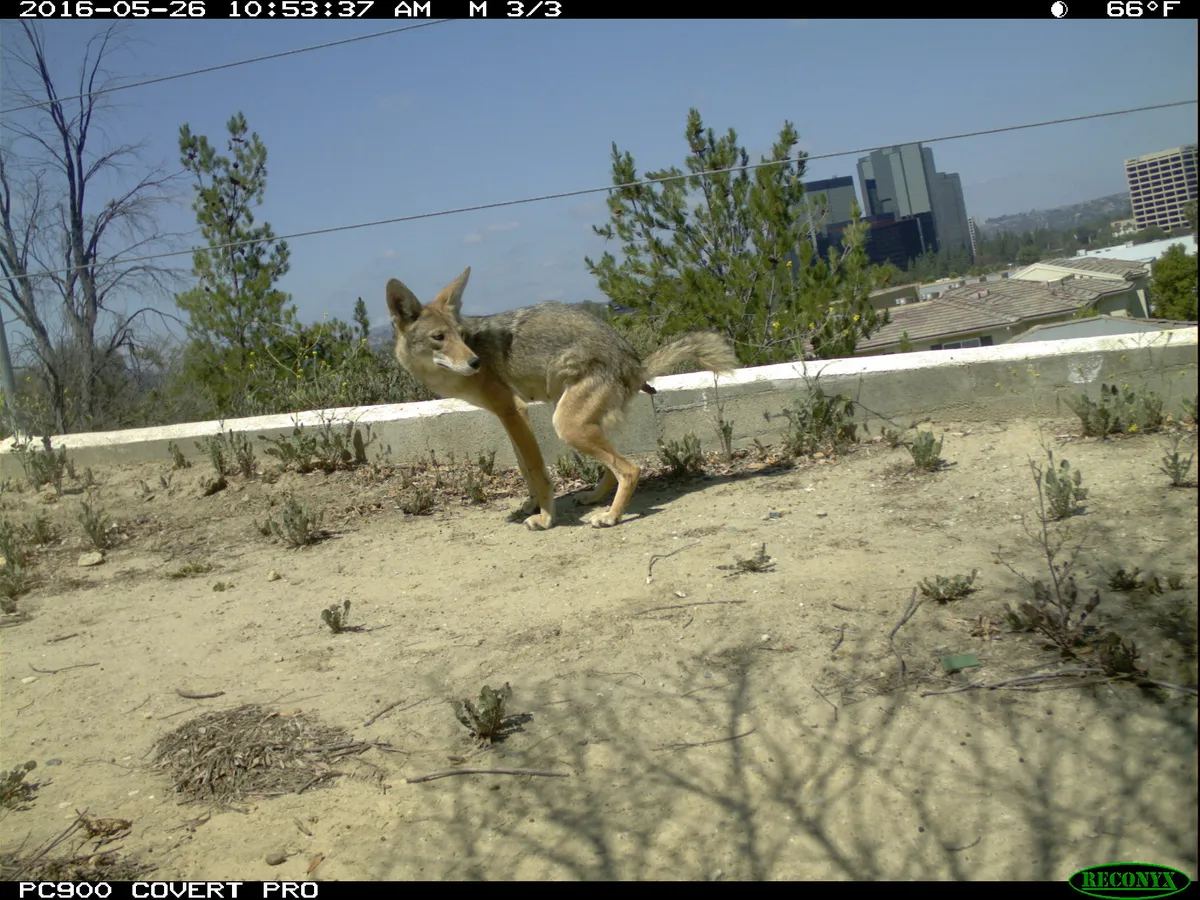
Spilled seed works indirectly: the California Department of Fish and Wildlife (CDFW) says fallen or scattered seed under feeders can draw rodents and other small animals, which coyotes eat. Timing matters for pet owners too. MDC says coyotes typically breed in February and March, when it is important to be vigilant with pets where coyotes live, and that pups are born in late April or May.
How do you tell coyote poop from dog poop?
Look for hair and bone. Iowa DNR's guide to telling wolves, coyotes and dogs apart says coyote scat is often full of small-mammal hair, while a domestic dog's lacks hair and tapered fringes and is full of cereal matter, and Alabama Cooperative Extension says bone fragments and lots of fur are unlikely in dog scat. NY DEC explains why: dog scat is more uniform because of the dogs' diet of commercial dog food.
| Clue | Coyote | Dog |
|---|---|---|
| What is in it | Hair, bits of bone, feathers, seeds or fruit pits | Even texture from commercial food; little or no hair or bone |
| The ends | Usually one end tapers to a point | Often blunt, though softer droppings can taper |
| Thickness | Usually under 1 inch | Varies with the size of the dog |
| Where you find it | Mid-trail, at crossings, on rocks and other visible spots | Lawns, sidewalks and trails where people walk dogs |
| Tracks beside it | Oval, under 3 inches long, toes tight and pointing forward, in a straight line | Rounder and splayed, with large, blunt nail marks, on a wandering path |
From NY DEC, Iowa DNR, Alabama Cooperative Extension and ICWDM, each linked on this page.
Two common tests are weaker than they look. Tapered ends: NY DEC says dog scat often lacks the taper, but softer dog scats can show it, and the Arizona guide describes dog scat as tubular with tapered ends. Place: NY DEC says dog scat usually turns up where people bring dogs, such as hiking trails, but warns that off-leash dogs roam widely and show up in unexpected places.
How do you tell coyote poop from fox, bobcat or raccoon poop?
By thickness, by the ends and by where it lies. Foxes leave a slimmer version of a coyote's scat, bobcats leave blunt segments they often cover, and raccoons pile theirs in one spot. The animal poop identification chart compares a dozen more animals side by side.
Fox poop vs coyote poop
Fox scat is thinner and usually shorter. Alabama Cooperative Extension gives fox scat as about 3/8 to 5/8 inch across and about 2 inches long, against roughly 1 inch across for a coyote, and says the two leave the same kinds of berries, hair and bone in their droppings. The Arizona guide describes gray fox scat as segmented, tapered and rope-like, often twisted at one end. In the California DNA study, gray fox scats averaged just under 1/2 inch (11.5 mm) across.
Bobcat poop vs coyote poop
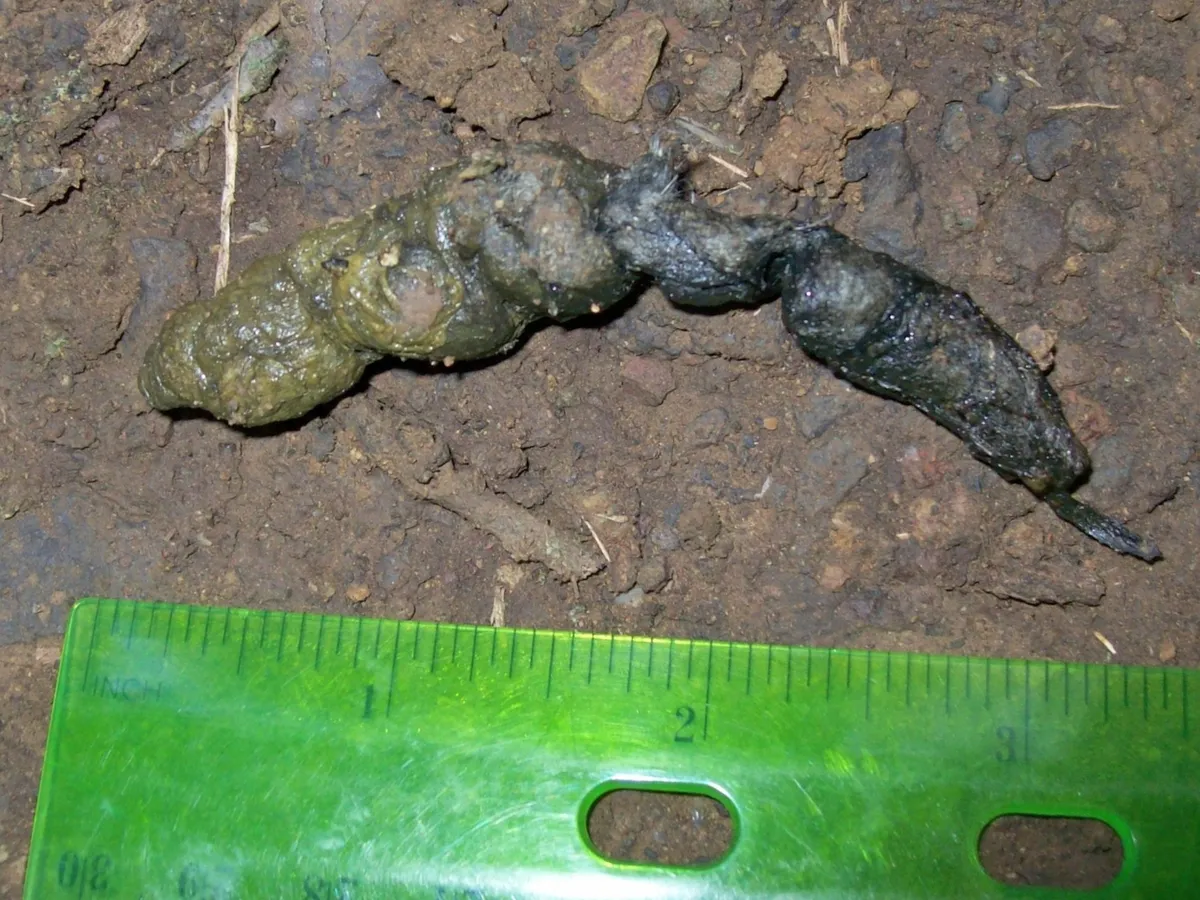
Bobcat scat is often broken into distinct segments with blunt ends. Minnesota DNR says it is typically 3 to 5 inches long and rarely contains fruit, berries or seeds, and that bobcats often cover their scat; when one leaves it uncovered on a trail to mark territory, it often scrapes the ground beside it. In the California DNA study, 84 percent of bobcat scats were segmented, and all five scats found next to a scrape were a bobcat's.
Raccoon poop vs coyote poop
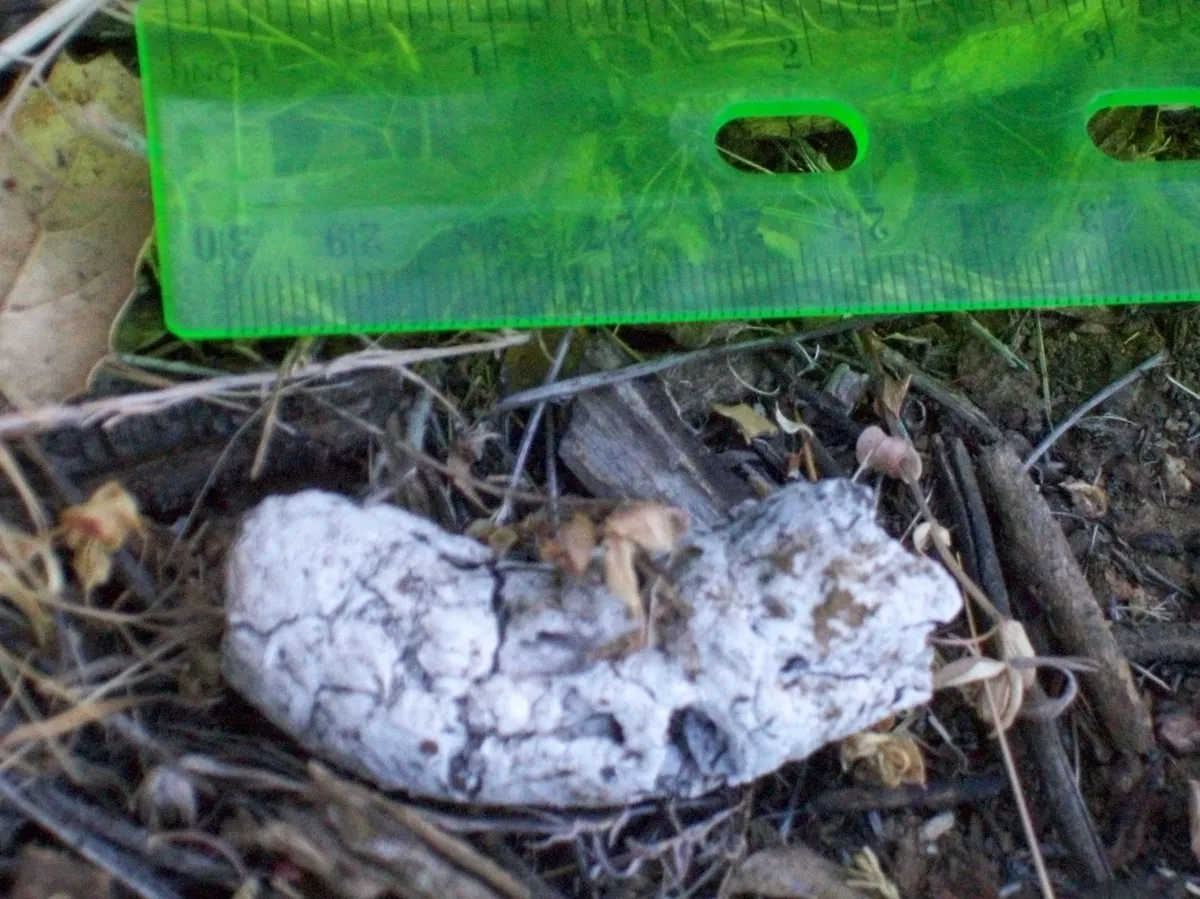
Raccoon droppings are shorter and blunter, and they pile up. ICWDM's key gives them as 2 to 3 inches long and 1/2 inch wide, sometimes with corn kernels or fruit showing, and says raccoons go in the same places, called latrines, on roofs, in attics and in sandboxes; the Arizona guide notes their blunt ends. Nebraska Extension says raccoon and opossum droppings are both about cat-sized and full of their varied diet, but the raccoon's habit of using one spot gives it away. For the roundworm raccoon droppings can carry and how to clean a latrine, see the raccoon poop guide; the possum poop guide covers opossums.
Wolf, bear, mountain lion, deer and rabbit droppings
Wolf scat is the coyote's bigger twin. Iowa DNR says it is usually over 1 inch across, up to 1.5 inches, and 4 to 7 inches long, and Minnesota DNR says the two can look so alike that biologists sometimes struggle to tell them apart. Black bear scat is larger again: Minnesota DNR says a bear eating fruit leaves big, messy piles of whole berries and seeds, and one scat can weigh a pound or more; see bear poop.
Where mountain lions live, the Arizona guide describes their scat as segmented, often with bones or hair, about 4 inches long and 1 inch thick, and left on a scratch pile. Pellets point away from a coyote. Minnesota DNR describes rabbit droppings as pea-sized pellets and deer droppings as round and hard in winter, clumpier in summer; deer poop and rabbit poop have photos.
Can you tell for sure that it's a coyote's?
Not from the dropping alone. In the study that identified 110 bobcat, coyote and gray fox scats from California's central coast by DNA, sizes overlapped widely and only diameter, weight and chemistry differed on average; the author concluded that scat size and shape are not generally diagnostic to species. The Arizona guide likewise says color and consistency are rarely used as identifiers. So combine clues, and look for tracks: snow and mud hold them best, as the guide to animal tracks in snow shows.
Checks to run on a dropping, without touching it
- Measure it. Photograph it beside a ruler or a coin: under an inch thick and 3 to 6 inches long fits a coyote, 5/8 inch thick or less fits a fox, and over an inch thick, where wolves live, may be a wolf's.
- Look at what is in it. Hair, bone bits, feathers or fruit pits point to a wild animal; an even texture with no hair points to a dog.
- Check the ends. A twisted, tapering tail fits a coyote or a fox; blunt ends fit a bobcat or a raccoon.
- Note the spot. Mid-trail, on a rock or at a crossing fits a coyote; a pile in one reused spot on a deck or roof fits a raccoon; a covered dropping, or one beside fresh scrape marks, fits a bobcat.
- Look for tracks. Oval prints under 3 inches long in a straight line fit a coyote; rounder, splayed prints with big nail marks fit a dog.
Is coyote poop dangerous?
It can be. Animal scat can carry diseases, Minnesota DNR warns, so do not touch it bare-handed. The parasite that CDC, Kentucky's wildlife agency and Washington State University warn about in coyote and fox droppings is a tapeworm, Echinococcus multilocularis. CDC says it is found in foxes, coyotes and dogs, that people are infected by accidentally swallowing its eggs, for example on wild-gathered berries or greens contaminated with fox or coyote stool or from handling infected pets, and that human cases are rare but can be fatal if untreated. Because the cysts grow slowly, an infection may cause no symptoms for many years.
Two more facts are worth knowing. CDC's parasite reference page, last reviewed in 2019, says the eggs are infectious as soon as they are passed, and that in North America the parasite is found mainly in the north-central region, Alaska and Canada. It is also turning up in new places: Kentucky's wildlife agency has confirmed it in a coyote from Rowan County, and Washington State University reports a study that found it widespread in coyotes around Puget Sound.
Is coyote poop dangerous to dogs?
The risk to a dog comes from eating droppings or rodents. Kentucky's wildlife agency says to keep dogs from eating fox, coyote or dog feces and from preying on rodents, which can pass the tapeworm to dogs, and to follow your veterinarian's deworming advice. WSU says some intestinal infections in dogs may go unnoticed, that they are typically treatable with standard anti-parasitic medicine, and that monthly parasite prevention helps. Alberta's provincial health website adds that dogs that roll in wild animal feces can carry tapeworm eggs home on their fur.
Heartworm, which some pages blame on coyote droppings, spreads through mosquito bites. The American Heartworm Society counts coyotes among the wild animals that carry it, and how mosquitoes spread heartworm to dogs explains that risk.
How do you clean up coyote poop safely?
Use gloves and a tool, avoid touching your face, and wash your hands afterward. These steps draw on advice from WSU, Minnesota DNR and the University of Arizona guide (written for farm fields), plus Kentucky's guidance for hunters, trappers and wildlife workers where noted:
- Keep children and dogs from touching the droppings. Minnesota DNR tells young naturalists not to touch scat bare-handed or get too close, and Kentucky's wildlife agency says to keep dogs from eating fox or coyote feces.
- Put on disposable gloves. WSU recommends gloves when cleaning areas where feces may be present, and the Arizona guide says never to touch animal feces with bare hands.
- Lift the droppings with a shovel or other tool, as Minnesota DNR and the Arizona guide advise, and bag them for the trash.
- Do not pressure-wash the spot. Kentucky's wildlife agency tells wildlife workers cleaning areas contaminated with animal waste to avoid pressure washing, which can aerosolize fecal material.
- Wash your hands thoroughly afterward, as WSU advises, and clean the tool. Kentucky's agency tells hunters and trappers to use soap and warm water after any contact with wild canid feces.
If you pick wild berries or greens where coyotes roam, CDC advises against eating wild fruits or vegetables picked directly from the ground and says anything wild-picked should be washed carefully or cooked before eating.
Not a coyote? Compare these droppings
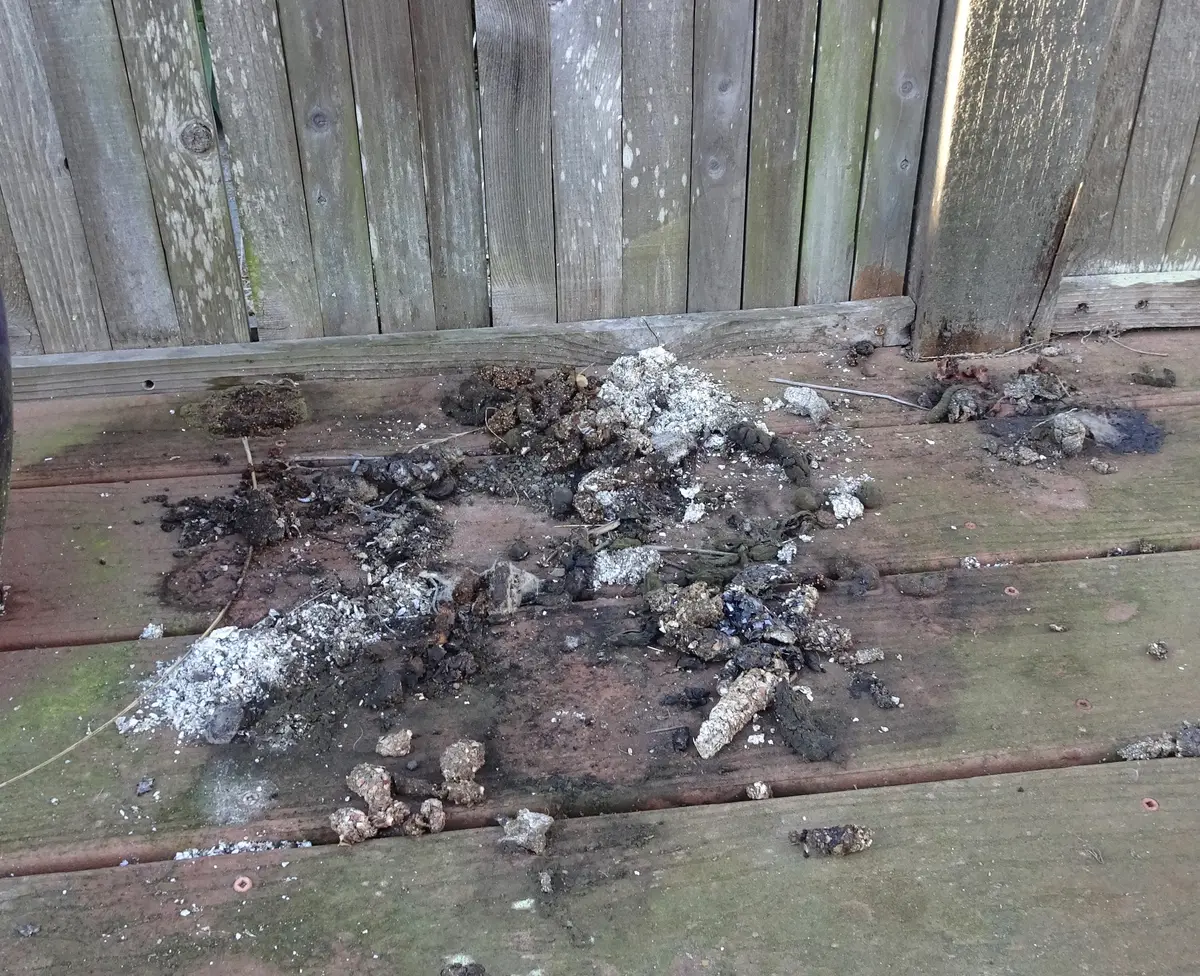 Raccoon latrineBlunt tubes 2 to 3 inches long, piled in one reused spot called a latrine
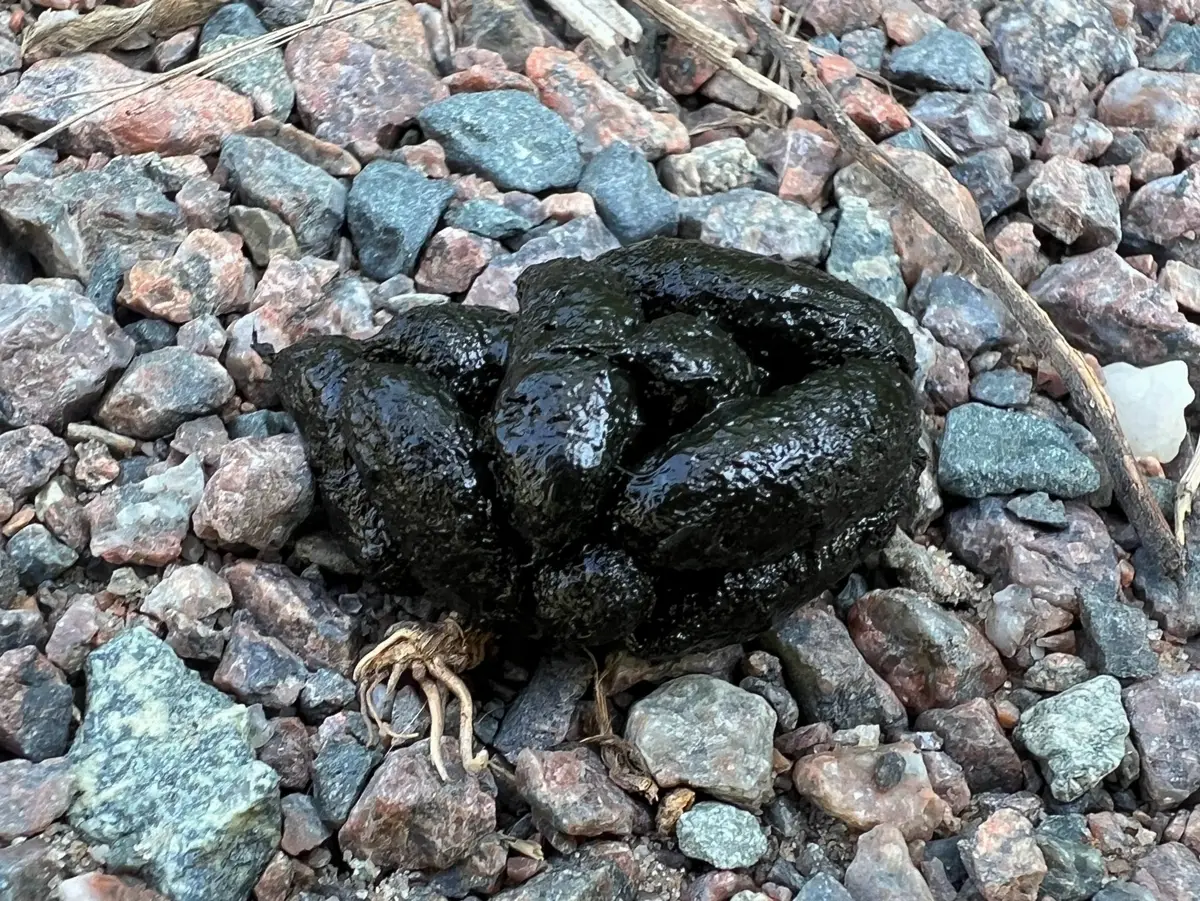 OpossumCat-sized droppings full of bits of a varied diet, much like a raccoon's
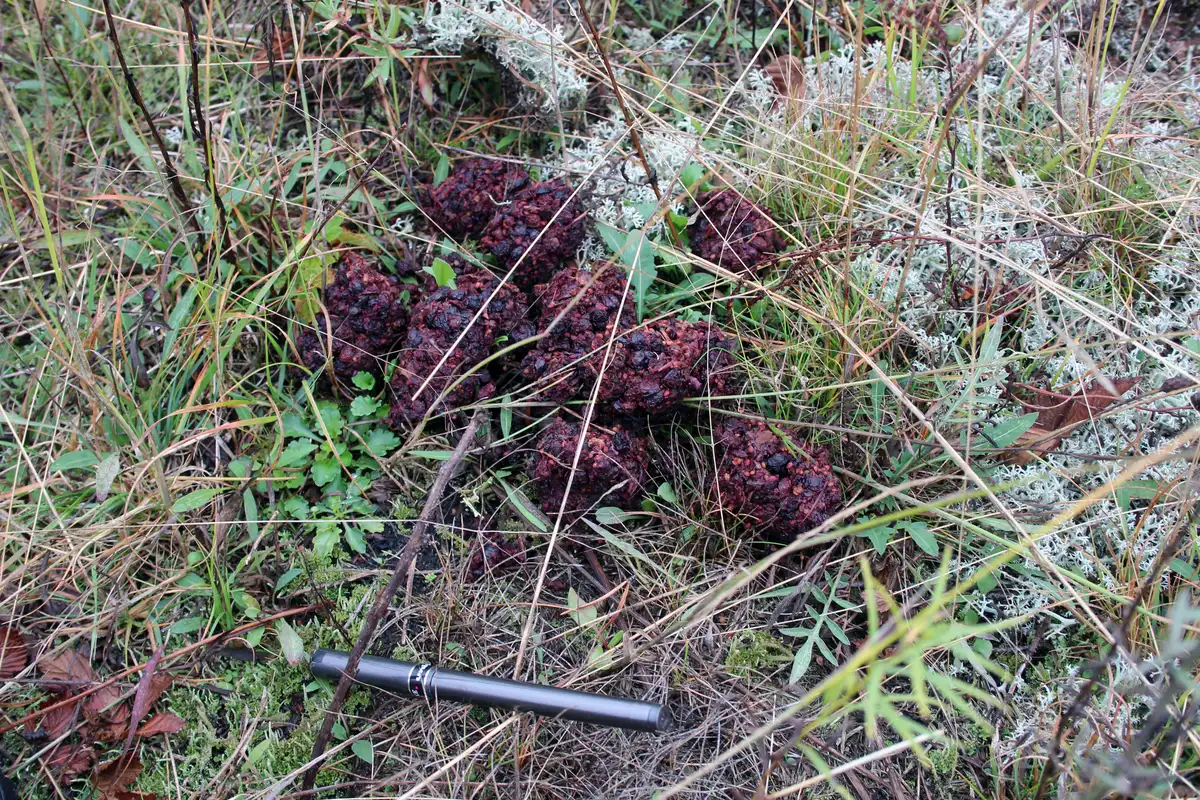 Black bearMuch bigger, loose piles of whole berries and seeds; one can weigh a pound or more
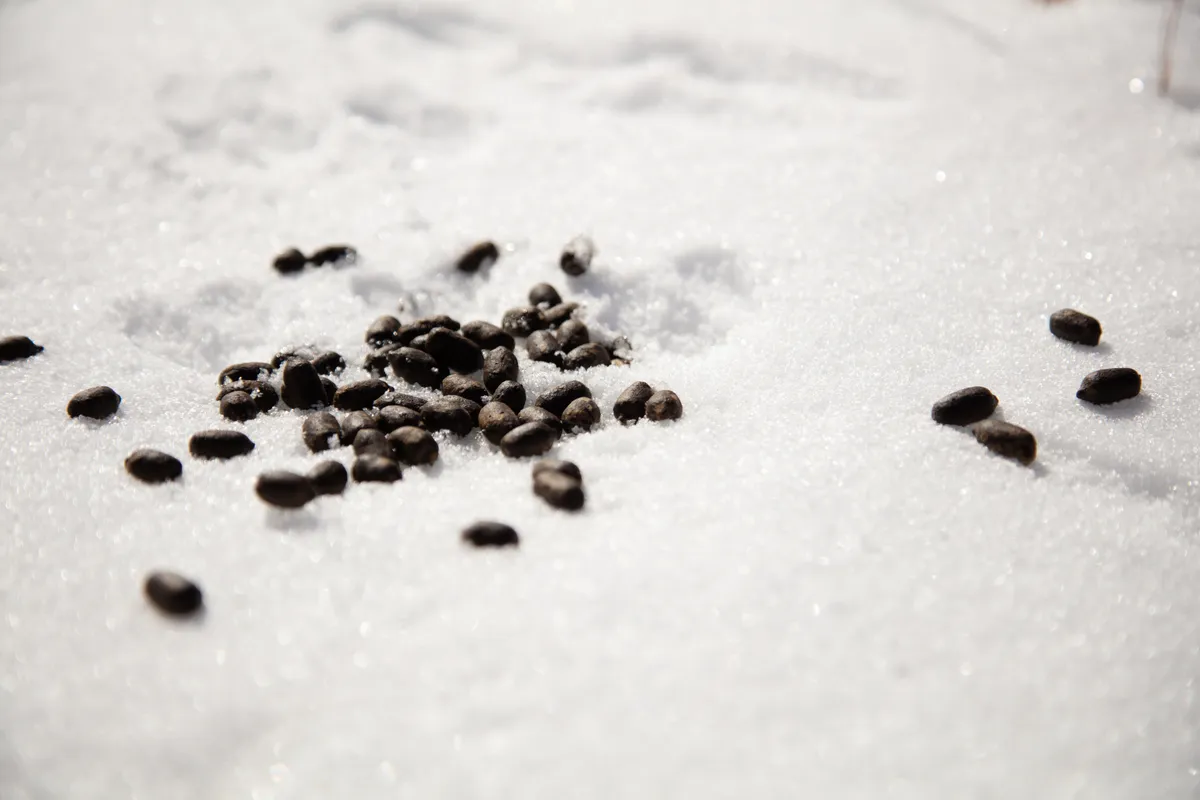 Deer pelletsPellets, not a rope: round and hard in winter, clumpier in summer
 Rabbit pelletsSmall round pellets about the size of a garden pea
Photos: Raccoon latrine: (c) Barbara Banfield, some rights reserved (CC BY), via iNaturalist, CC BY 4.0. Opossum: (c) Nova Patch, some rights reserved (CC BY-SA), via iNaturalist, CC BY-SA 4.0. Black bear: USFWSmidwest, Public domain, via Wikimedia Commons, public domain. Deer pellets: ShenandoahNPS, Public domain, via Wikimedia Commons, public domain. Rabbit pellets: (c) Dilrukshan Priyantha Wijesinghe, some rights reserved (CC BY), via iNaturalist, CC BY 4.0.
What should you do once you know it's a coyote?
Make the yard less rewarding, keep pets close, and stand your ground if a coyote comes near. Agencies recommend:
- Remove food. Pick up fallen fruit, keep trash cans sealed, enclose compost and feed pets indoors, NPS staff advise, and clean up spilled seed under bird feeders (CDFW). The same cleanup helps with raccoons; see what deters raccoons.
- Protect pets. Bring pets in at night and walk them on a short leash (NPS); CDFW says not to leave small pets unsupervised outside. Be especially watchful in February and March, when MDC says coyotes breed.
- Scare off a coyote that comes close. CDFW says to make yourself look bigger, yell, clap or blow a whistle, and let the coyote leave on its own; NPS staff add noisemakers or a spray from a garden hose, and say never to corner one.
- Add surprises. NPS staff suggest motion-activated lights and sprinklers; see how motion-activated sprinklers work.
- Never feed coyotes. NPS staff say coyotes that lose their fear of people can quickly become nuisance animals, which often leads to the animals being killed.
- If a coyote makes contact, CDFW says to fight back, then call animal control or 911.
This guide is general educational information, not medical advice. If you have symptoms or concerns after a bite or exposure, contact a healthcare provider.
Frequently Asked Questions
How big is coyote poop?+
Usually 3 to 6 inches long and under an inch thick. Minnesota's Department of Natural Resources gives the 3-to-6-inch length, New York's Department of Environmental Conservation says coyote scat measures under an inch across, and Alabama Cooperative Extension puts it at about 1 inch. In a DNA-checked sample from California's central coast, coyote scats averaged about 5/8 inch across. Fox scat is thinner, about 3/8 to 5/8 inch, and wolf scat is usually more than an inch across.
Do coyotes poop in the same spot?+
They favor the same kinds of places. Coyotes leave scat at prominent spots to mark territory: the Missouri Department of Conservation says in the middle of a trail or another prominent place, and the Internet Center for Wildlife Damage Management adds trail intersections and spots around objects. A California DNA study notes that coyotes often leave scats in groups. A pile of old and new droppings that keeps growing in one spot, such as a deck or a roof, fits a raccoon latrine instead.
Do coyotes bury their poop?+
Coyotes generally leave their scat in the open. Minnesota's Department of Natural Resources says they place it on trails, rocks and other visible spots where other animals will see it, to mark territory. Bobcats are the ones that often cover their scat, the same agency says, and when a bobcat does leave one uncovered to mark territory it often scrapes the ground nearby. A covered dropping, or one beside fresh scrape marks, points to a bobcat.
What color is coyote poop?+
Usually black to dark brown, according to the University of Arizona's track and scat guide, but the color follows the diet. The Internet Center for Wildlife Damage Management says the color and makeup of coyote scat vary with what the coyote ate, from fur and bone to berries, grass and fruit pits. Because diet changes droppings so much, the Arizona guide says color and consistency are rarely used to identify them; hair, shape and place tell you more.
What does coyote poop look like in snow?+
The same rope-like dropping, easy to spot against the white. In winter it tends to be full of animal hair, because that is when fruit is not available, the Internet Center for Wildlife Damage Management says. Snow also holds tracks: New York's DEC says coyote prints are usually under 3 inches long and about 2 inches wide, with the toes held tight and pointing forward, and that coyotes tend to travel in straight lines while dogs meander.
What animal poop looks like dog poop but is full of hair?+
Often a coyote. Iowa's Department of Natural Resources says coyote scat is often full of small-mammal hair, while domestic dog scat lacks hair and is full of cereal matter. A fox leaves similar scat that is thinner, about 3/8 to 5/8 inch across according to Alabama Cooperative Extension, and where wolves live, a wolf leaves similar scat that is usually more than an inch across. A bobcat's comes in blunt segments and is often covered.
How do you tell coyote poop from wolf poop?+
Mostly by size, and only where wolves live. Iowa's Department of Natural Resources says wolf scat is usually more than an inch across, up to 1.5 inches, and 4 to 7 inches long, often full of deer, beaver or hare hair, while coyote scat is usually under an inch across. Minnesota's DNR says the two can look so alike that biologists sometimes have trouble telling them apart, and that Minnesota has more wolves than any state but Alaska.
Can you get sick from touching coyote poop?+
The tapeworm that coyote droppings can carry infects people who swallow its eggs, CDC says, so the risk comes when hands, food or a pet's fur carry eggs from droppings to the mouth. Wear gloves, as Washington State University advises when cleaning areas where feces may be present (Kentucky's wildlife agency tells hunters and trappers to wear disposable gloves around wild canid feces), and wash your hands thoroughly afterward. Human cases are rare, CDC says, but can be fatal if untreated, and an infection may cause no symptoms for years.
What should I do if my dog ate coyote poop?+
Call your veterinarian and ask about deworming. Kentucky's wildlife agency says to keep dogs from eating fox or coyote feces and to follow your veterinarian's deworming advice. Washington State University says intestinal tapeworm infections in dogs may go unnoticed but are typically treatable with standard anti-parasitic medicine, and that monthly parasite prevention helps. If your dog also hunts rodents, CDC says to ask your veterinarian about preventive treatment, since rodents carry the tapeworm's larval stage.
What should I do if my dog rolled in coyote poop?+
Clean the dog and wash your hands. Alberta's provincial health website warns that some dogs roll in wild animal feces and can then spread tapeworm eggs from their fur into the home, and advises keeping pets clean, washing your hands with soap and water after touching pets, and asking your veterinarian how to prevent the tapeworm in your pets. CDC also notes that some dogs scent-roll in wild animal feces and may become contaminated that way.
Sources
- Distinguishing Large Wild Canids in New York State (September 2025) — New York State Department of Environmental Conservation
- Canid Identification: Wolves, Coyotes and Dogs — Iowa Department of Natural Resources
- What Pooped Here? (Young Naturalists, Minnesota Conservation Volunteer, January-February 2019) — Minnesota Department of Natural Resources
- Coyote (Field Guide) — Missouri Department of Conservation
- Coyotes — Internet Center for Wildlife Damage Management
- Brown or Black Droppings (droppings identification key) — Internet Center for Wildlife Damage Management
- The Southwest Arizona Track and Scat Glovebox Guide — University of Arizona Cooperative Extension
- Identification and Management of Foxes in Alabama (FOR-2119) — Alabama Cooperative Extension System
- A morphometric modeling approach to distinguishing among bobcat, coyote and gray fox scats (Reid, Wildlife Biology 21(5), 2015) — Wildlife Biology, via BioOne
- New Study Says Urban Coyotes Eat Garbage, Ornamental Fruit and Domestic Cats (March 12, 2020) — National Park Service, Santa Monica Mountains National Recreation Area
- Take Action to Support Coyotes — National Park Service, Santa Monica Mountains National Recreation Area
- Human-Wildlife Conflicts: Coyotes — California Department of Fish and Wildlife
- About Alveolar Echinococcosis (AE) — Centers for Disease Control and Prevention
- Echinococcosis (DPDx, Laboratory Identification of Parasites of Public Health Concern) — Centers for Disease Control and Prevention
- Echinococcus multilocularis — Kentucky Department of Fish and Wildlife Resources
- Fox tapeworm, a zoonotic parasite, found in Pacific Northwest (June 30, 2026) — Washington State University
- Echinococcus (Tapeworm) — Government of Alberta, MyHealth.Alberta.ca
- Heartworm Basics — American Heartworm Society
- Controlling Raccoon and Opossum Damage (NebGuide G1688) — University of Nebraska-Lincoln Extension
Read and approved by Alex Francisco. Found an error? Email support@buzzskito.ca.