BuzzSkito Mosquito & Tick Control Specialists · Published April 26, 2026 · Updated October 20, 2026
Quick Answer
A tick on a dog looks like a small, flat, oval bug with 8 legs — about sesame-seed sized (1–3 mm) when unfed — that swells to pea- or grape-sized and grey-blue when engorged; blacklegged (deer) ticks are small, plain, and reddish-brown and carry Lyme, while larger American dog ticks have a mottled grey-brown shield.
- An unfed tick is flat, oval, and sesame-seed-sized (1–3 mm) with 8 legs near the head — fleas have 6 legs and jump.
- After 24+ hours feeding, ticks swell 50–100 times their weight to pea- or grape-sized (5–15 mm) and turn grey-blue, olive, or tan.
- Blacklegged ticks are reddish-brown with dark legs and a plain dark shield, no white markings (the Lyme carrier); American dog ticks (~5 mm) have a mottled grey-brown scutum.
- Common attachment spots are the ears, eyelids, under the collar, armpits, between toes, and the tail base and groin.
- Only 10–30% of Ontario blacklegged ticks carry Borrelia, so most single bites do not transmit Lyme.
- Remove with fine-tipped tweezers gripping at skin level and pulling straight up — do not squeeze the body.
— BuzzSkito, GTA mosquito & tick control · 150+ five-star Google reviews
You found a small bump on your dog and you’re trying to figure out if it’s a tick. The fastest test: ticks have 8 legs, are oval and flat when unfed, and swell up like a balloon when full of blood. Here’s how to identify them with confidence.
As an Amazon Associate I earn from qualifying purchases. BuzzSkito only points to products we would genuinely use or recommend, at no extra cost to you.
If it turns out to be a tick, the next thing you will want is a fine-tipped remover that grips at the skin rather than flat tweezers that crush the body. Check price on Amazon.ca →
Tick, skin tag or flea? Quick ID
| What you found | Size and colour | Legs | How to tell |
|---|---|---|---|
| Blacklegged (deer) tick | Sesame-seed size (1–3 mm) unfed; reddish-brown body, no patterned shield | 8, dark | Small, plain and reddish-black: treat it as a possible Lyme carrier |
| American dog tick | About 5 mm unfed; brown, with a mottled grey-and-brown shield | 8 | The patterned shield; the tick most often found on pets |
| Lone star tick | Brown; the female has a single white spot on her back | 8 | Rare in Ontario |
| Engorged tick (any kind) | Pea-sized or bigger, round like a balloon; grey-blue, olive or pale tan | 8, hidden under the swollen body | Part the fur: the legs show at the base, where it meets the skin |
| Tick larva (seed tick) or nymph | Smaller than an adult tick | Larva 6, nymph 8 | Stays attached in one spot, unlike a flea: see baby ticks |
| Skin tag | Soft and fleshy, part of the skin itself | None | No legs, no hard shell, never moves |
| Flea | Tiny (1–4 mm), dark brown, narrow side to side | 6 | Jumps and moves fast; leaves black flea dirt on the skin |
Restated from the descriptions further down this page. Larva and nymph leg counts from the CDC, which also notes that ticks can be hard to spot on pets with long or dark fur (CDC, ticks on pets). Not sure what you found? Your vet can tell you.
The Quick Identification Checklist
Before reading further, run through these 4 quick checks:
- Eight legs? → Likely a tick (or spider, but spiders aren’t attached to your dog)
- Six legs and jumping? → Flea, not tick
- No legs visible at all and soft? → Probably a skin tag
- Hard, oval, attached firmly? → Treat as a tick
What an Unfed Tick Looks Like
A tick that has just attached or been feeding less than 12 hours is flat, oval, and small — about the size of a sesame seed (1–3 mm). It has 8 legs visible near the front (head) end and a hard outer shield. Colour depends on species:
- Blacklegged tick (deer tick) — reddish-brown body, dark/black legs, NO patterned shield. The Lyme carrier in Ontario.
- American dog tick — larger (5 mm), brown body, distinctive mottled grey-and-brown patterned shield (called a scutum) on the back.
- Lone star tick (rare in Ontario) — brown with a single white spot on the back of females.
What an Engorged Tick Looks Like
After 24+ hours of feeding, ticks swell to 50–100 times their original weight. They become:
- Pea or grape-sized (5–15 mm)
- Grey-blue, olive, or pale tan in colour (the original colour fades as the body distends)
- Round and balloon-like rather than flat
- Legs harder to see because they’re under the engorged body
This is the form most owners discover — and most often mistake for a skin tag, wart, or cyst.
Tick vs Skin Tag — How to Tell
This is the most common mix-up. Three reliable distinctions:
- Legs — A tick will have visible legs at the base where it meets the skin. Even on engorged ticks, you can usually spot the legs by gently parting the fur. Skin tags don’t have legs.
- Texture — Ticks have a hard, somewhat brittle outer shell. Skin tags are soft and fleshy.
- Attachment — Skin tags are part of the skin; they’re a continuous tissue with the dog. Ticks are foreign objects firmly attached but distinct from the skin.
If you’re unsure: gently part the fur and look from multiple angles with a flashlight or magnifying glass. When in doubt, look again for legs under a magnifier, and if you still cannot tell, ask your vet before pulling at it: a skin tag is part of your dog’s skin.
Tick vs Flea — How to Tell
Both are bloodsucking pests but very different:
| Trait | Tick | Flea |
|---|---|---|
| Type | Arachnid | Insect |
| Legs | 8 | 6 |
| Movement | Slow / stationary | Jumps aggressively |
| Shape | Flat oval | Narrow, side-flattened |
| Attachment | Embeds in skin | Hops on/off |
| Evidence | Stays in one spot | Black flea dirt on skin |
Often confused on a dog
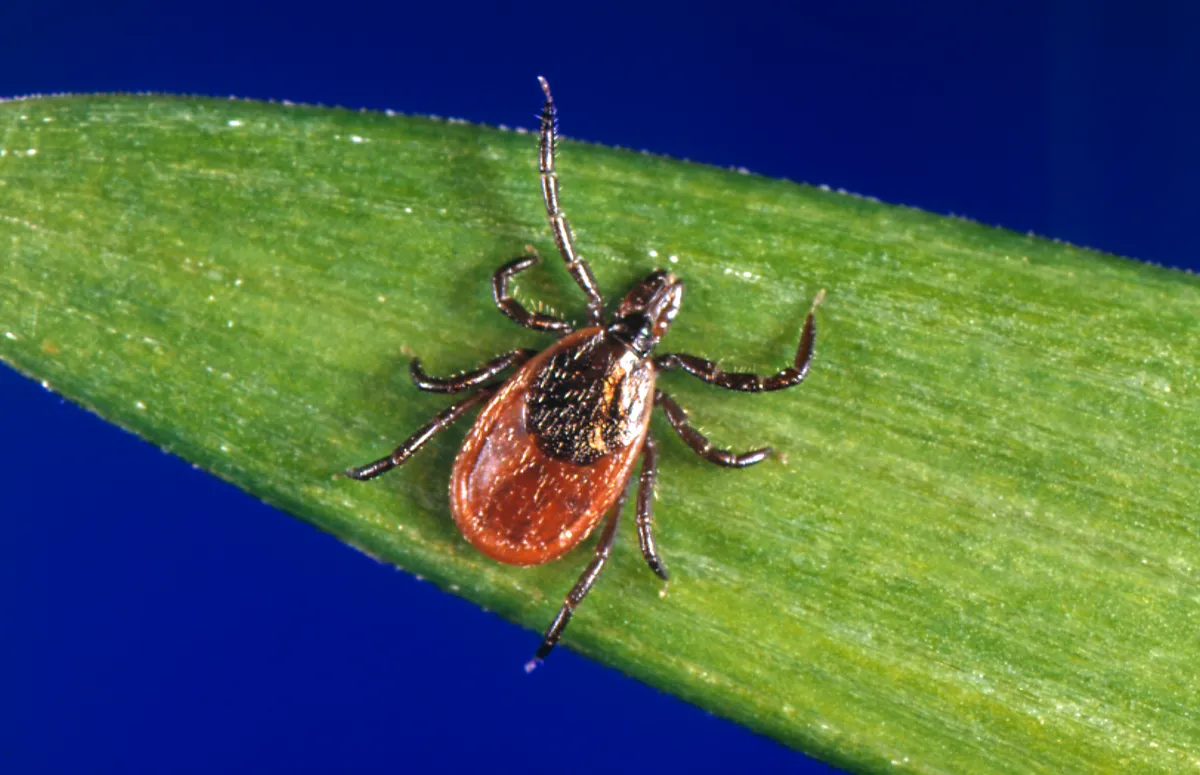 Blacklegged (deer) tickSmall and plain: reddish-brown body, dark legs, no patterned shield; the Lyme carrier in Ontario
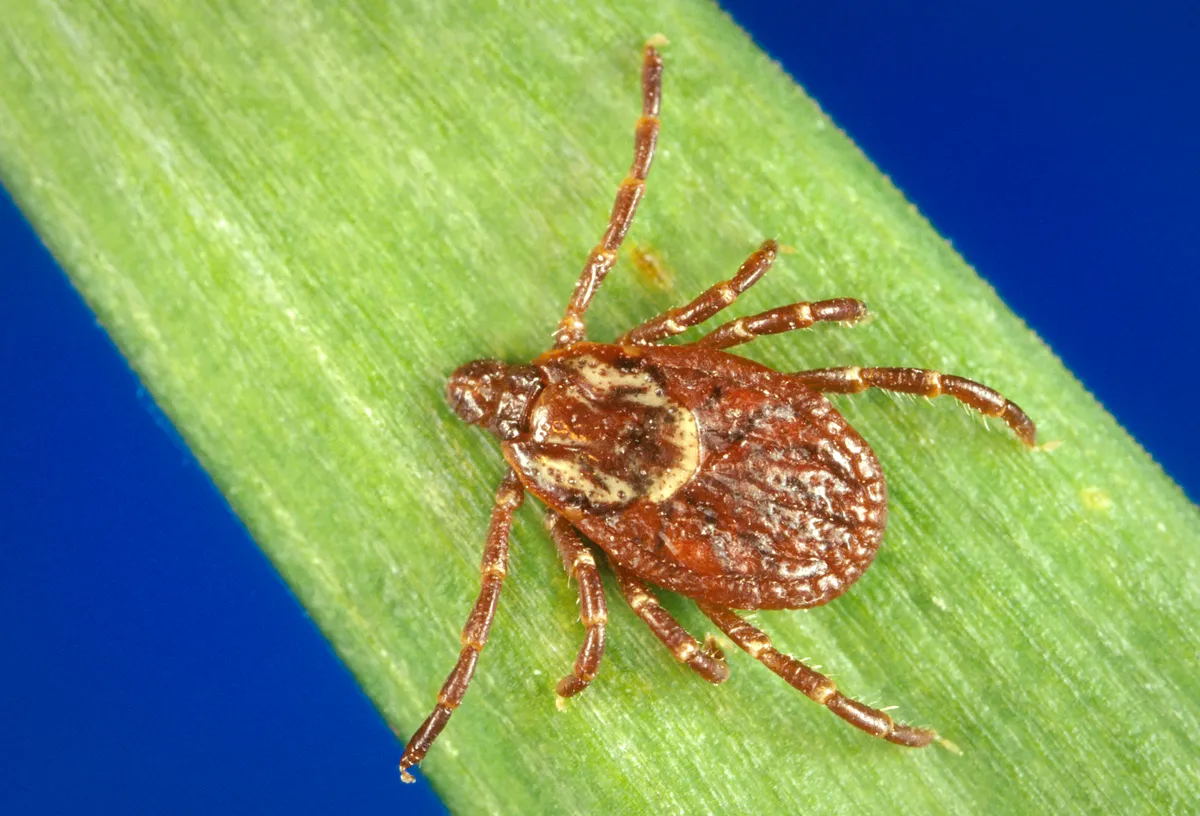 American dog tickLarger, with a mottled grey-and-brown shield; the tick most often found on pets
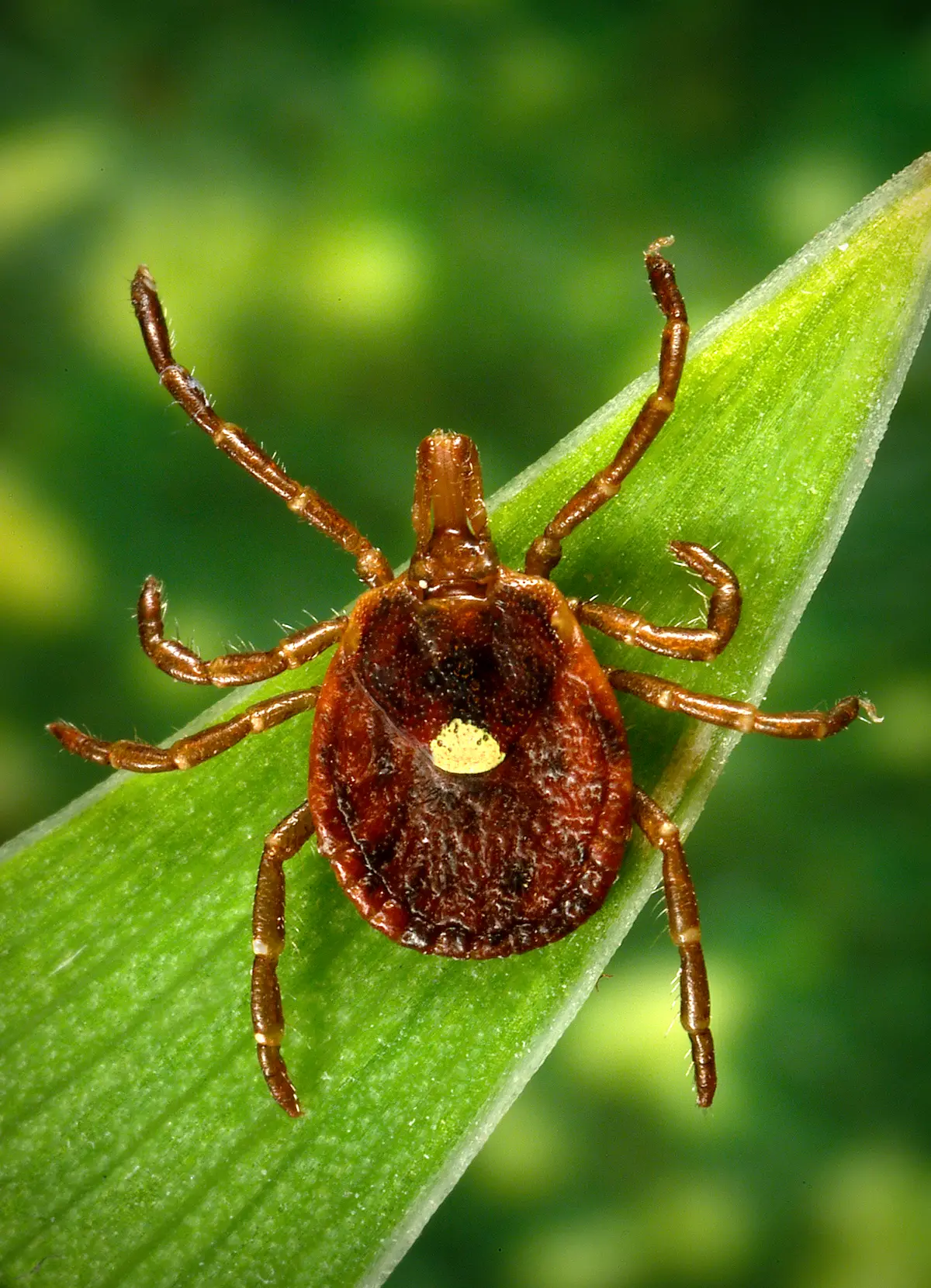 Lone star tickBrown, and the female has a single white spot on her back; rare in Ontario
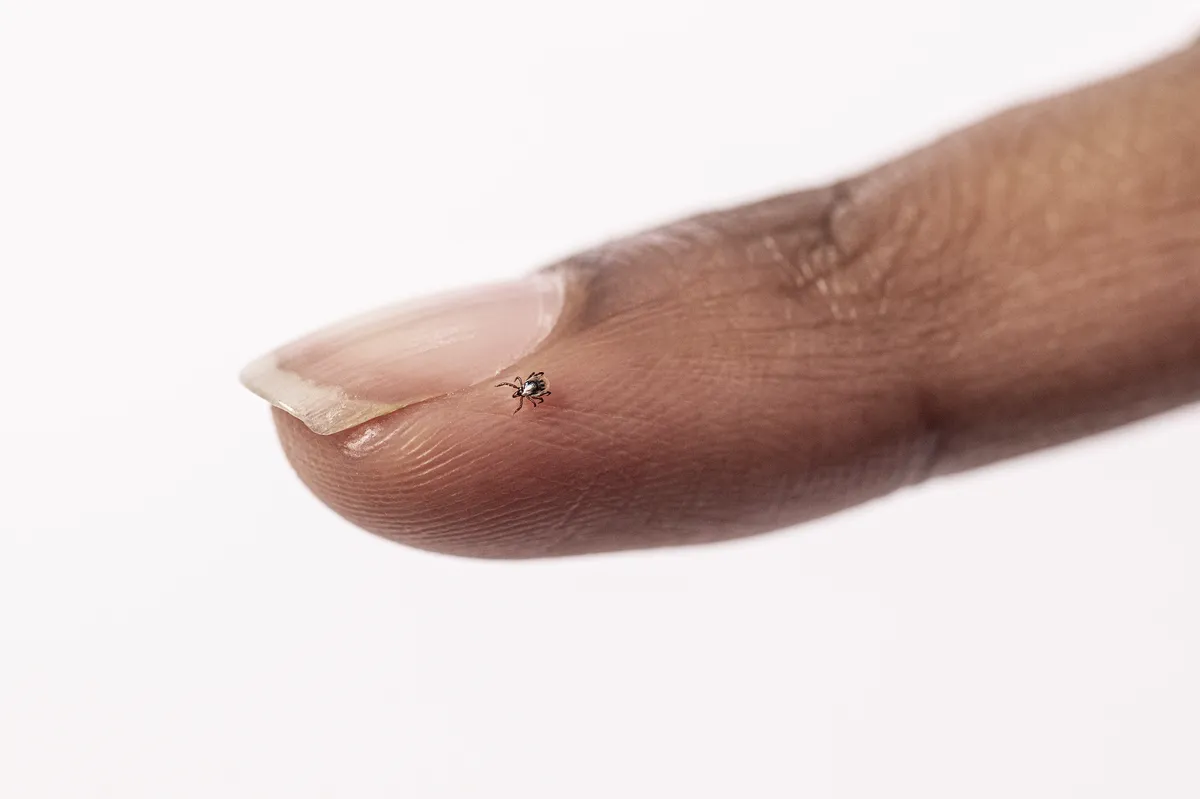 Tick nymphA smaller, earlier stage of the same tick, with 8 legs; easy to miss in fur
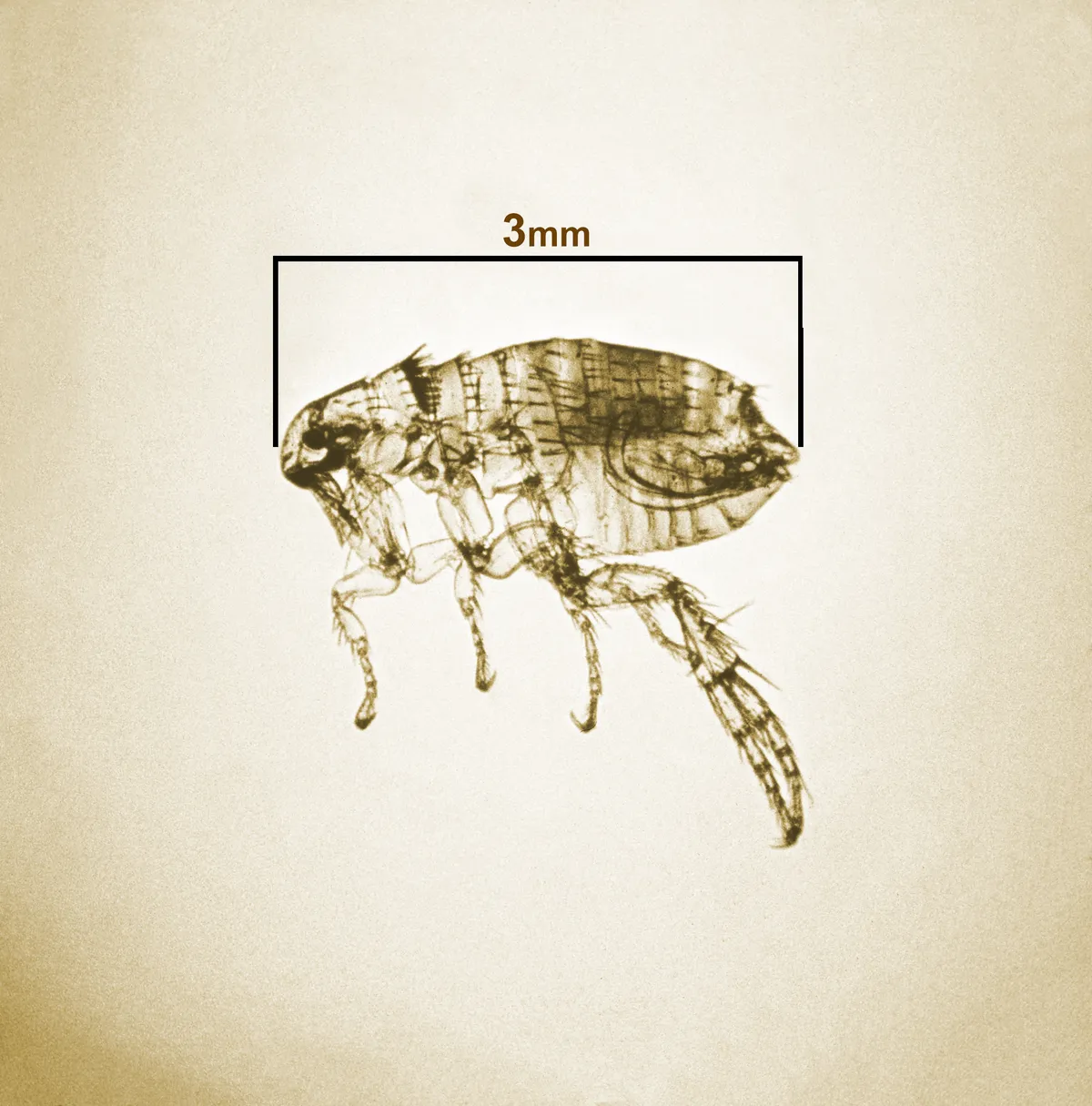 FleaSix legs, narrow side to side, and it jumps; leaves black flea dirt on the skin
Photos: Blacklegged (deer) tick: CDC/ Michael L. Levin, PhD; photo: Jim Gathany (CDC Public Health Image Library, phil.cdc.gov), public domain. American dog tick: CDC/DVBID/ Gary O. Maupin; photo: James Gathany (CDC Public Health Image Library, phil.cdc.gov), public domain. Lone star tick: CDC/ Dr. Amanda Loftis, Dr. William Nicholson, Dr. Will Reeves, Dr. Chris Paddock; photo: James Gathany (CDC Public Health Image Library, phil.cdc.gov), public domain. Tick nymph: CDC/ Division of Vector-Borne Diseases Rickettsial Zoonoses Branch; photo: Lauren Bishop (CDC Public Health Image Library, phil.cdc.gov), public domain. Flea: CDC (CDC Public Health Image Library, phil.cdc.gov), public domain.
Found a tick on your dog but still not sure which kind it is? Our tick identifier asks six quick questions, including where you found it, its size and the colour and markings on its back, then shows the most likely ticks with a real photo of each, how to confirm it and what it can spread.
Where on Your Dog to Look
Ticks prefer warm, hidden, hard-to-groom spots. Check these zones after every walk in tick habitat:
- Inside and behind the ears
- Around the eyelids
- Under the collar
- In the armpits
- Between toes and paw pads
- At the tail base and groin
- At the base of the head and neck
Use both hands to slowly run through your dog’s fur, feeling for bumps. Once you find one, separate the fur to look at it directly.
A fine-toothed flea and tick comb makes this faster on long-coated dogs — it snags an unfed tick that fingers slide straight over. Check price on Amazon.ca →
What to Do When You Find One
Don’t panic. The single most useful thing to have on hand is a proper fine-tipped tick removal tool or pointed tweezers — a dedicated tick hook or pointed tick tweezers grips the tick right at the skin so you can pull straight up without squeezing the body or leaving the mouthparts behind. A regular flat-tipped tweezer tends to crush the tick, which can push infected fluid back into your dog. Keep one in the house and one in your dog-walk bag.
As an Amazon Associate I earn from qualifying purchases. BuzzSkito only points to products we would genuinely use or recommend, at no extra cost to you.
As an Amazon Associate I earn from qualifying purchases. Price shown on Amazon.ca, at no extra cost to you.
🏆 Our Top Pick for Removal
9.0/10· BuzzSkito ratingFine-Tipped Tick Removal Tool / Pointed Tweezers
A dedicated tick hook or pointed tick tweezers grips the tick right at the skin so you can pull straight up — the cleanest way to lift out an embedded tick without crushing the body or leaving the mouthparts behind. Cheap enough to keep one in the house and one in the dog-walk bag.
Pros
- Grips at skin level for a clean, straight-up pull
- Avoids squeezing infected fluid back in
- Pocket-sized — keep one in your walk bag
Cons
- Fiddly on very small nymphs without good light
- Flat household tweezers tend to crush the tick
Not sure which style to buy? Our tick removal tool guide compares hooks, pointed tweezers, and card-style removers. Then follow our two complete step-by-step guides:
To lower the odds of the next tick even latching on, pair yard treatment with an on-dog repellent — see our guide to the best tick repellent for dogs in Ontario.
For prevention on the dog itself, the CDC advises asking your veterinarian which tick prevention product is best for your dog, and checking your dog for ticks daily, especially after time outdoors.
Stop Finding Ticks in the First Place
Once you’ve found one tick, you’ll likely find more — they don’t travel alone. The most efficient solution is reducing the tick population in your yard, which is where dogs spend most of their outdoor time. BuzzSkito’s 5-spray season program targets leaf litter, lawn edges, and fence-line zones — the micro-habitats where most yard ticks live, and repeats the treatment through the season as the residual wears down. Keep checking your dog after outdoor time; no yard treatment removes every tick.
For the ticks that still make it onto the dog, keep the removal kit stocked. See dog tick removal tools on Amazon.ca →
Related Reading
- What Ticks Look Like — Ontario Species Guide
- 5 Bugs That Look Like Ticks
- Tick Bite Symptoms on Dogs
- Lyme Disease Prevention
- Tick Control Services
Frequently Asked Questions
What does a tick on a dog look like?+
An unfed tick on a dog looks like a small, flat, oval-shaped bug — about the size of a sesame seed (1–3 mm). It has eight legs visible near the head end (this is how you tell it apart from insects like fleas, which have six). Colour varies: blacklegged ticks (the Lyme carrier) are reddish-brown with darker legs; American dog ticks are larger and have a mottled grey-brown patterned shield on the back. Once attached and feeding, ticks engorge with blood, becoming pea or grape-sized, grey-blue, or olive-coloured. Many owners initially mistake an engorged tick for a skin tag, mole, or wart.
How can I tell a tick from a skin tag on my dog?+
Three quick checks: (1) Look for legs — a tick will have visible legs at the base where it meets the skin; a skin tag won't. (2) Look for movement — gently part the fur and watch; a tick may move slightly, a skin tag won't. (3) Touch carefully — a tick has a hard, somewhat brittle body; a skin tag is soft and fleshy. If you're still unsure, gently nudge the bump with a Q-tip or fingernail. A tick is firmly attached but distinct from the skin; a skin tag is part of the skin itself. When in doubt, treat it as a tick and remove it carefully — there's no harm in removing a skin tag (you can't, actually — it stays put).
How can I tell a tick from a flea on my dog?+
Easy distinction: ticks are arachnids with 8 legs and don't move much; fleas are insects with 6 legs and jump aggressively. Fleas are smaller (1–4 mm), darker brown, narrow side-to-side, and very fast. Ticks are flatter, oval, larger when engorged, and stay attached to one spot. Fleas leave black "flea dirt" (digested blood) on the dog's skin. Ticks don't. If you part the fur and the bug is moving fast or jumping — flea. If it's stuck in one spot — tick.
What's the difference between a deer tick and a dog tick on my dog?+
Two key Ontario species: (1) Blacklegged tick (deer tick / Ixodes scapularis) — small (sesame-seed sized when unfed), reddish-brown body, dark legs, NO patterned shield. Carries Lyme disease, anaplasmosis. (2) American dog tick (Dermacentor variabilis) — larger (apple-seed sized), brown body, distinctive mottled grey-and-brown patterned shield (scutum) on the back. Generally does NOT carry Lyme but can transmit Rocky Mountain spotted fever (rare in Canada) and tularemia. The medically critical distinction: if it's small, plain, and reddish-black, treat as a potential Lyme carrier.
Where do ticks attach on a dog?+
Ticks prefer warm, hidden, hard-to-groom spots where the skin is thin. The most common attachment sites: inside and behind the ears, around the eyelids, under the collar, in the armpits, between toes and around paw pads, around the tail base and groin, at the base of the head and neck. After every walk in tick habitat (tall grass, woods, leaf litter), run your hands slowly through your dog's fur, feeling for small bumps in these zones.
What does an embedded tick look like?+
An embedded tick has its mouthparts (head and capitulum) buried in the skin while its body sticks out. From above, you typically see only the body — flat and oval if just attached, or rounded and engorged if it's been feeding for hours or days. The legs may or may not be visible from above depending on angle. Underneath, the head is hidden in the skin. Don't try to pull the body off without proper technique — twisting or squeezing can leave the mouthparts behind. Use fine-tipped tweezers at the base, against the skin, and pull straight up.
Do all ticks carry diseases?+
No. Most ticks in any given location are not carrying disease. In Ontario, only 10–30% of blacklegged ticks actually carry Borrelia burgdorferi (Lyme bacteria), and the percentage carrying anaplasmosis or other co-infections is even lower. American dog ticks rarely transmit disease in Canada. The risk per individual tick bite is low — but because tick populations have grown so dramatically, the cumulative risk over a dog's lifetime in southern Ontario is real and growing.
How big does a tick get when fed?+
A fully engorged adult female tick can swell to 50–100 times her unfed weight. Visually: a sesame-seed-sized blacklegged tick becomes pea-sized after 5+ days of feeding. An apple-seed-sized American dog tick becomes grape-sized. Engorged ticks typically turn from their original colour to grey-blue, olive, or pale tan. They look bloated and balloon-like. Many owners initially mistake an engorged tick for a skin growth, wart, or cyst — until they look more closely and see the legs.
How can I tell a tick from a scab on my dog?+
Part the fur and look at the spot from the side with a flashlight or magnifying glass. A tick, even a swollen one, has legs at the front where its body meets the skin and a hard shell, and it is attached at one point while staying separate from the skin. A scab is a dry crust with no legs. A tick also grows over a day or more as it feeds. If you still cannot tell, or the spot stays red, swollen or sore, ask your vet to look at it.
What do baby ticks (seed ticks) look like on a dog?+
Baby ticks are the larva and nymph stages of the same ticks described on this page; larvae are often called seed ticks. The CDC describes the larva as six-legged and the nymph as eight-legged, and both are smaller than an adult, so they are easy to miss: the CDC also notes that ticks can be hard to spot on pets with long or dark fur. A six-legged larva can look like a flea, but a tick of any stage stays attached in one spot instead of jumping. If you find many tiny ticks on your dog, ask your vet.