
Reviewed by Alex Francisco
Published November 23, 2026 · Fact-checked against the sources listed below
What does spider poop look like?
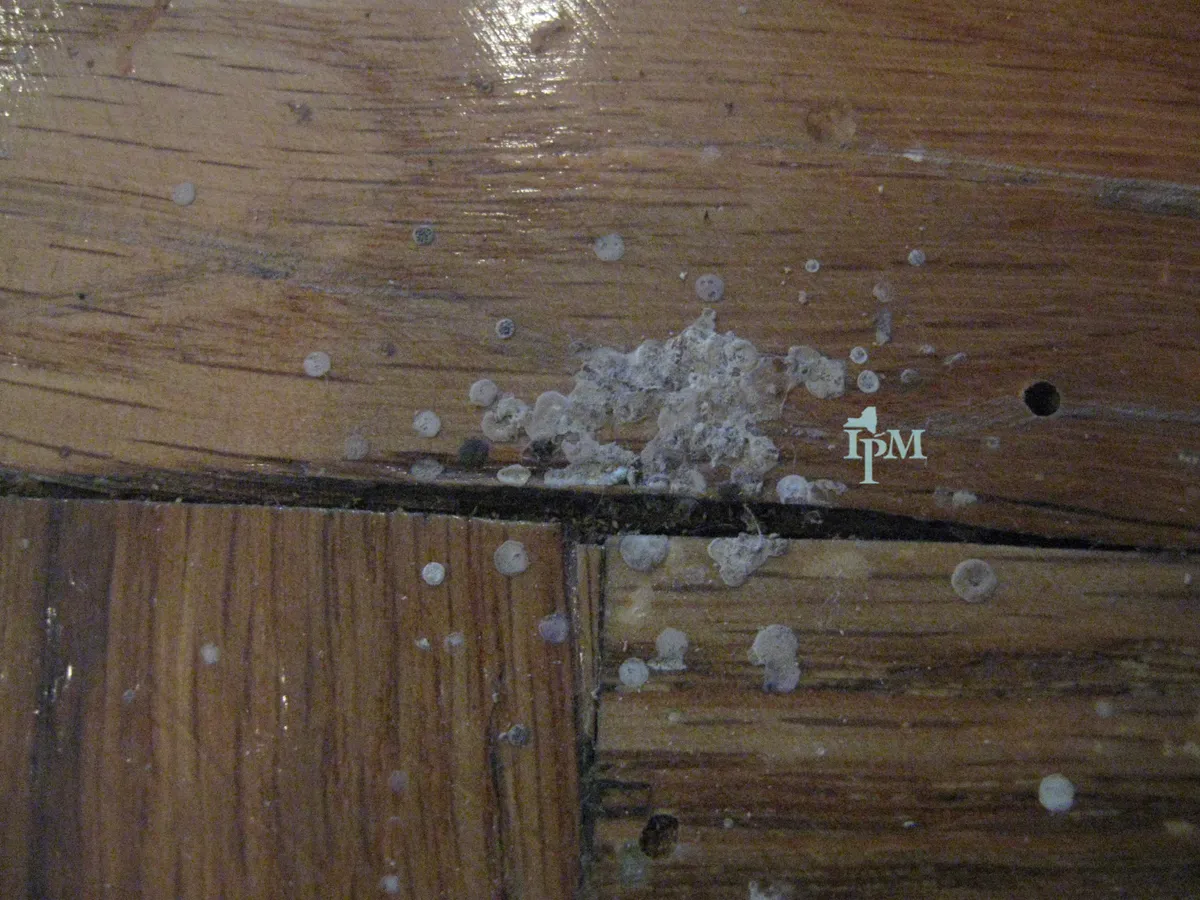
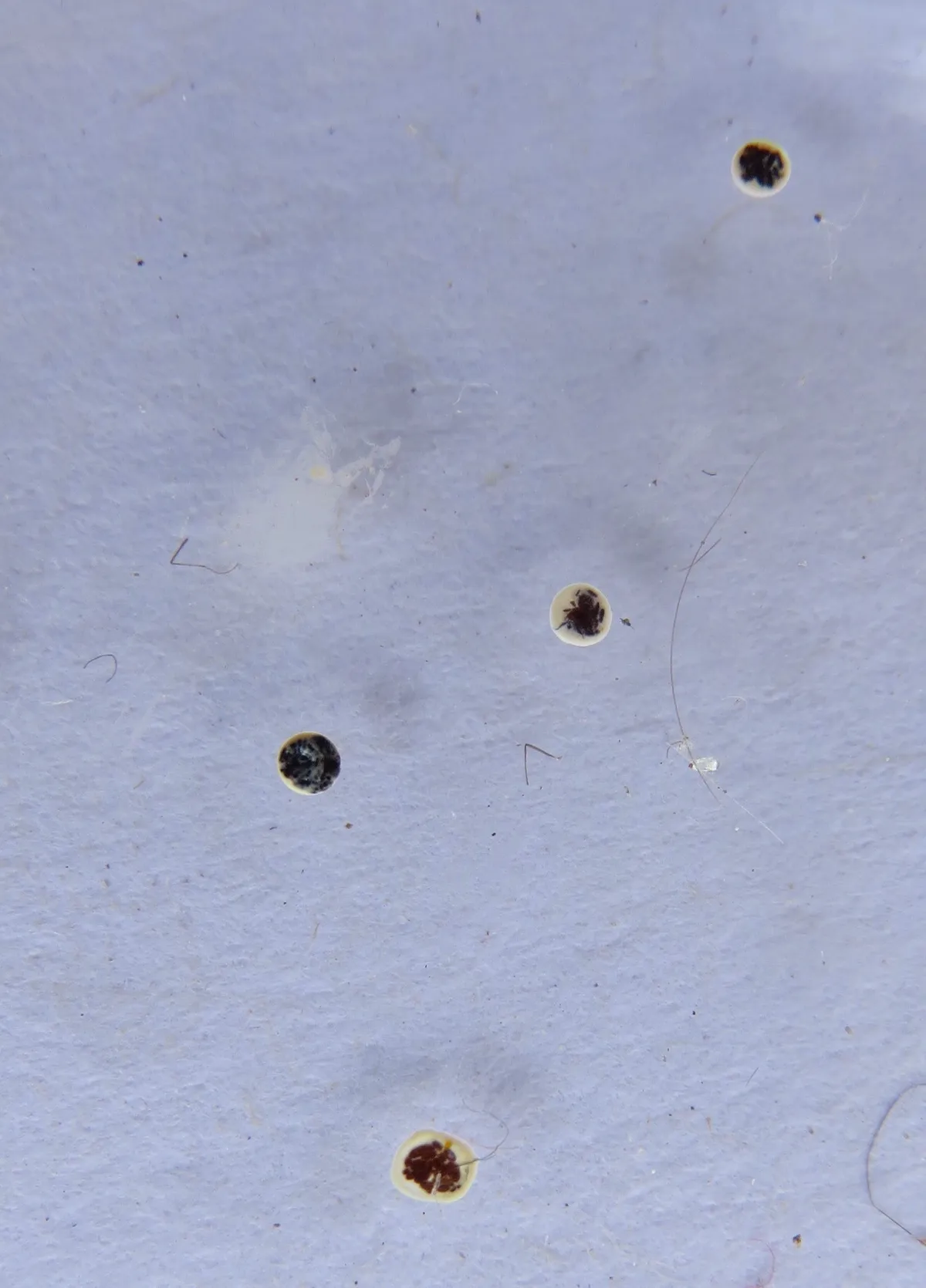
Spider poop looks like a small, flat, round dot, not a pellet, and it can be white, pale gray, tan, dark brown or black, often darker in the center than at the rim. The closest thing to a written description comes from a lab: in colonies of a social spider, Mallos gregalis, William Tietjen reported in Psyche that most droppings on the container surface were circular, a few irregular, dark ebony to light tan, often darker in the center than at the margin, and about 1/25 inch (1.1 mm) across on average; on silk they were whitish to tan and tended to flow along the thread. The photos on this page add bright white and pale gray.
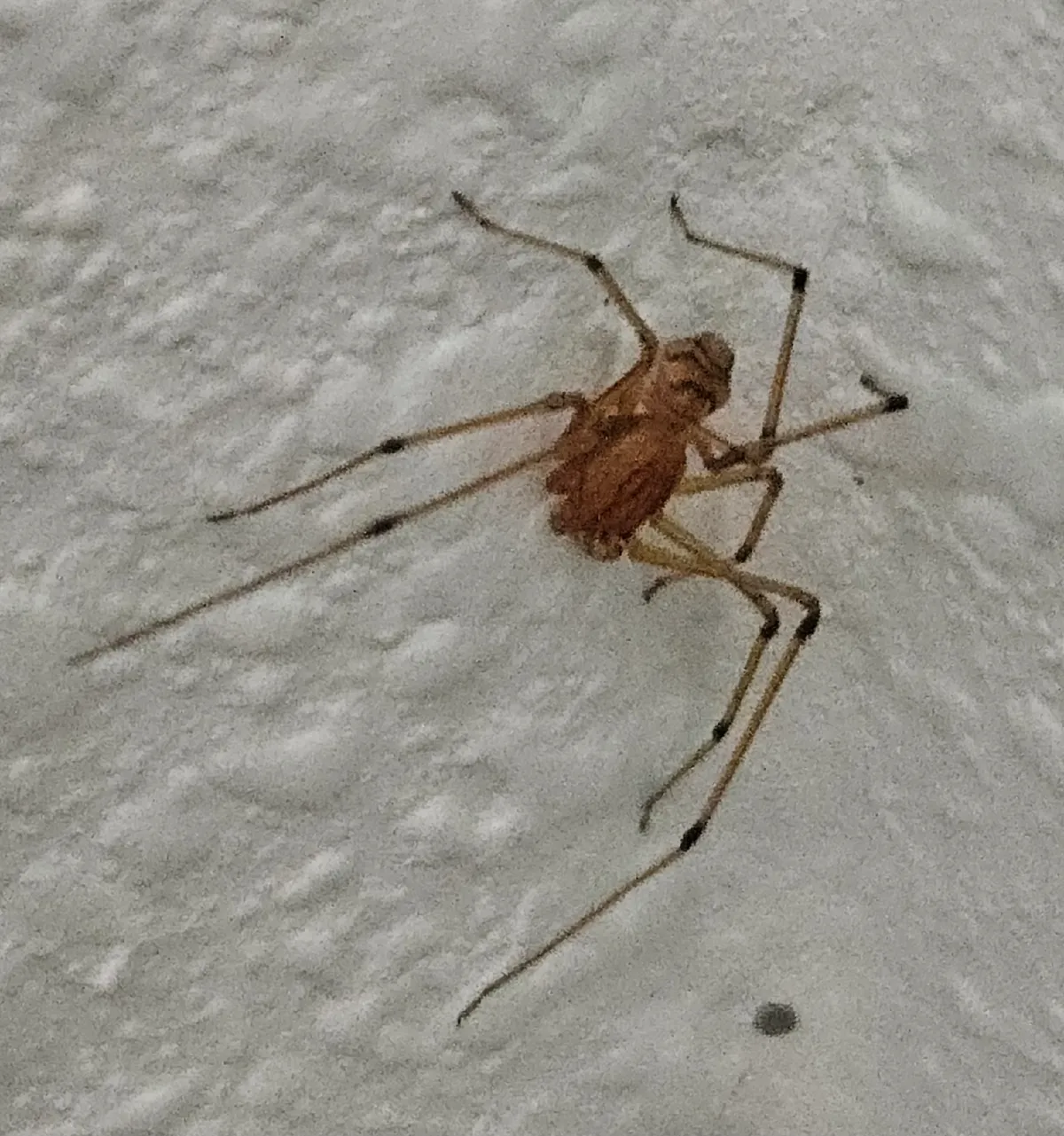
Spiders take their food as a liquid: the Australian Museum explains that they cannot chew solid food, so they inject digestive fluids into their prey, suck up the liquefied tissue and leave the hard parts behind. What comes out is rich in guanine: in a 1966 study of the excreta of spiders, John F. Anderson reported that it was the only purine detected in the excreta of 34 species from 17 families and 34 to 76 percent of the excreta by weight in the 10 species he measured. PubChem, the National Library of Medicine's chemistry database, describes guanine as white crystals, which fits the white in these photos.
Do spiders poop and pee?
Yes, spiders poop, and they also make a liquid urine, which leaves through the same opening. The Australian Museum's guide to spider anatomy describes the gut ending at the anus on a small bump at the tip of the abdomen, and the Malpighian tubules, which it calls the spider's kidneys, opening into a sac of the hindgut.
Measuring Porrhothele antipodiana, a mygalomorph spider (the group that includes trapdoor and funnel-web spiders), Butt and Taylor in the Journal of Experimental Biology recorded what they call anal urine: about 5 microliters a day in starved spiders that had water, and more than 30 microliters a day after feeding in spiders that had water. The same spiders have four coxal organs that also release fluid; in dehydrated spiders this happened only during feeding, and the fluid went into the prey.
Butt and Taylor also note that their spiders, unlike many insects, could not conserve water and eliminate ions at the same time by producing a highly concentrated excretory fluid.
Where do you find spider poop in a house?
You find spider poop on whatever sits below the spot where a spider spends its time: under a web in a ceiling corner, on a window sill or frame, on the floor under a basement cobweb, or on furniture below a web on the wall. Texas A&M AgriLife's school pest plan for spiders describes a screen or fabric hung over sensitive sites, below ceilings and rafters, to catch spider droppings, and in Tietjen's glass containers spiders in the upper section evidently dropped fecal material onto a web lower down.
- Ceiling corners and basements. Wisconsin and Iowa State extension describe cobweb spiders as sedentary and say the common house spider builds its loose tangle in secluded, undisturbed parts of the house such as basements and crawl spaces; cellar spiders build in corners near the ceiling or floor.
- Windows and window sills. Utah State University Extension says cellar spiders make irregular cobwebs near windows, over pipes and all over ceilings and walls, especially in corners. The same extension sheet from Wisconsin and Iowa State tells readers to look for webbing especially around windows, in corners and in quiet places.
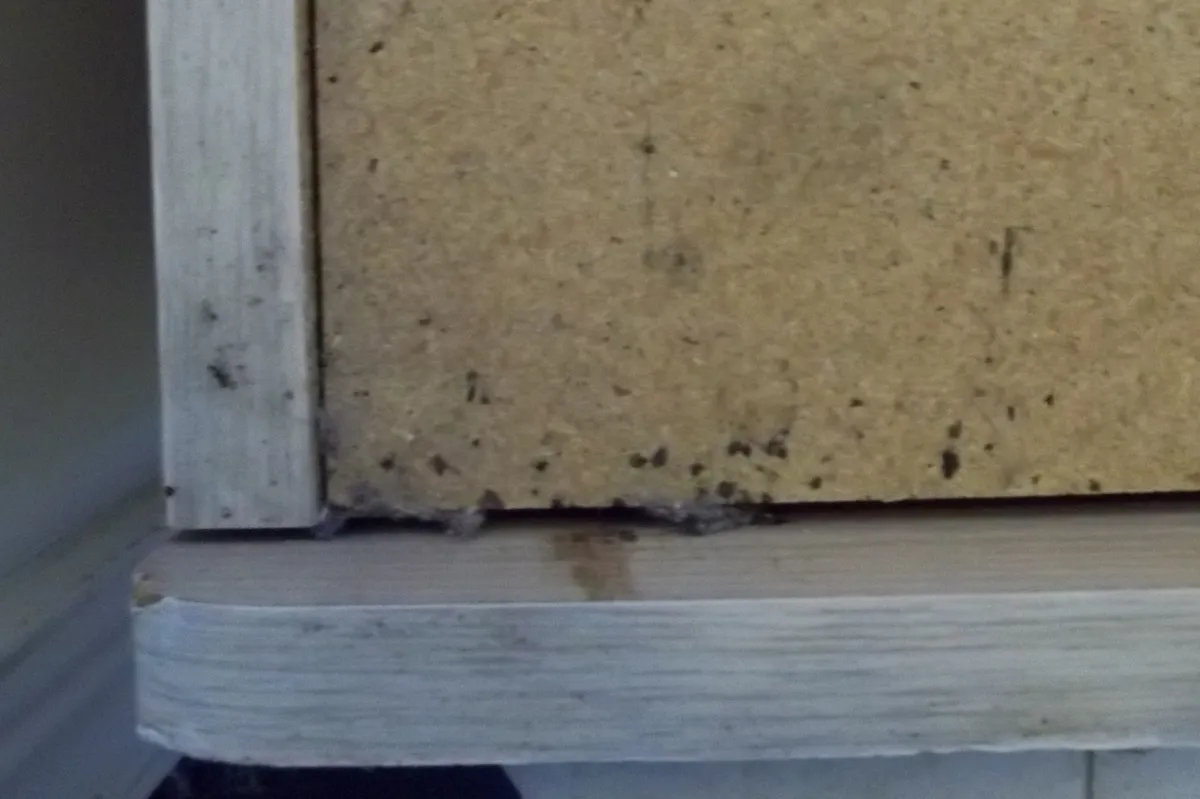
- Floors and furniture. Whatever sits under a web catches what falls: the New York State IPM photo above shows droppings on a wood floor.
- Outside: porches, entryways and lights. Utah State University Extension's orb weaver page says orb weavers are often found around buildings in late summer and early fall, especially around porches and entryways, and are common near exterior lighting; conventional outdoor bulbs attract night-flying insects, which in turn attract spiders, says University of Kentucky entomology.
Which spiders leave the most droppings?
No source behind this page ranks spiders by their droppings, but the spots you notice come from spiders that stay put. Web-building spiders live in or near their webs and wait for food to come to them, Wisconsin and Iowa State extension say, while hunting spiders build no web and chase or ambush their prey, so a web builder's droppings keep landing in the same place. Common web builders in and around homes:
- Common house spider (American house spider). Grayish to brownish with chevron-like markings and a body over 1/4 inch long, Wisconsin and Iowa State extension say; it builds its cobweb in secluded, undisturbed parts of a house. More on telling it apart in the guide to common house spiders.
- Cellar spiders. Pale gray to light tan, 1/4 to 1/3 inch long with long, delicate legs, per the same extension sheet; they build loose webs in corners and, Utah State adds, near windows.
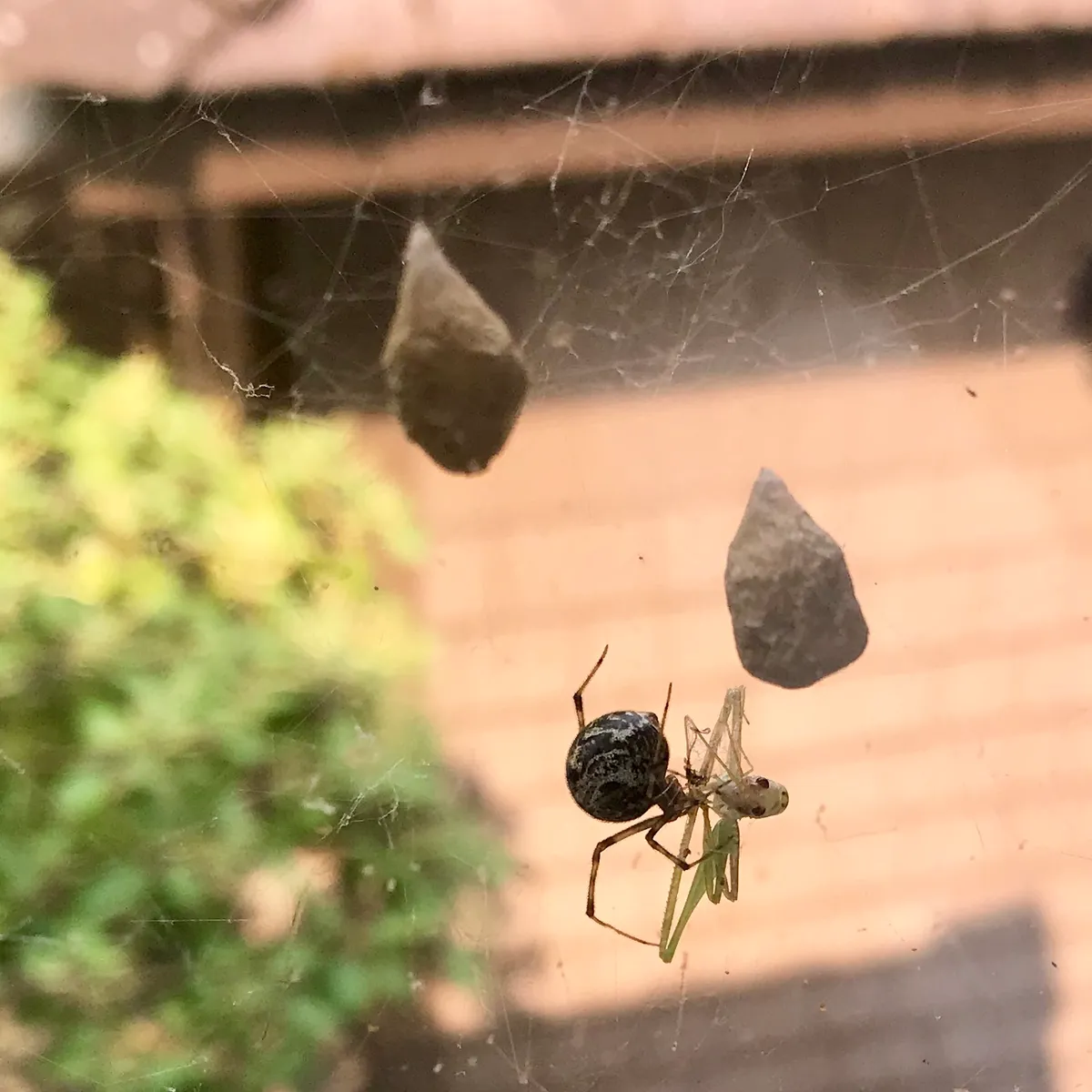
- False widows and other cobweb weavers (genus Steatoda), the genus in the close-up photo above; see false widow spiders.
- Orb weavers outdoors. They build round webs and are rarely found indoors, says Wisconsin and Iowa State extension; Utah State University Extension finds them around porches, entryways and exterior lights, where their droppings land on whatever is below. The guide to types of spider webs helps you tell from the web which spider made it.
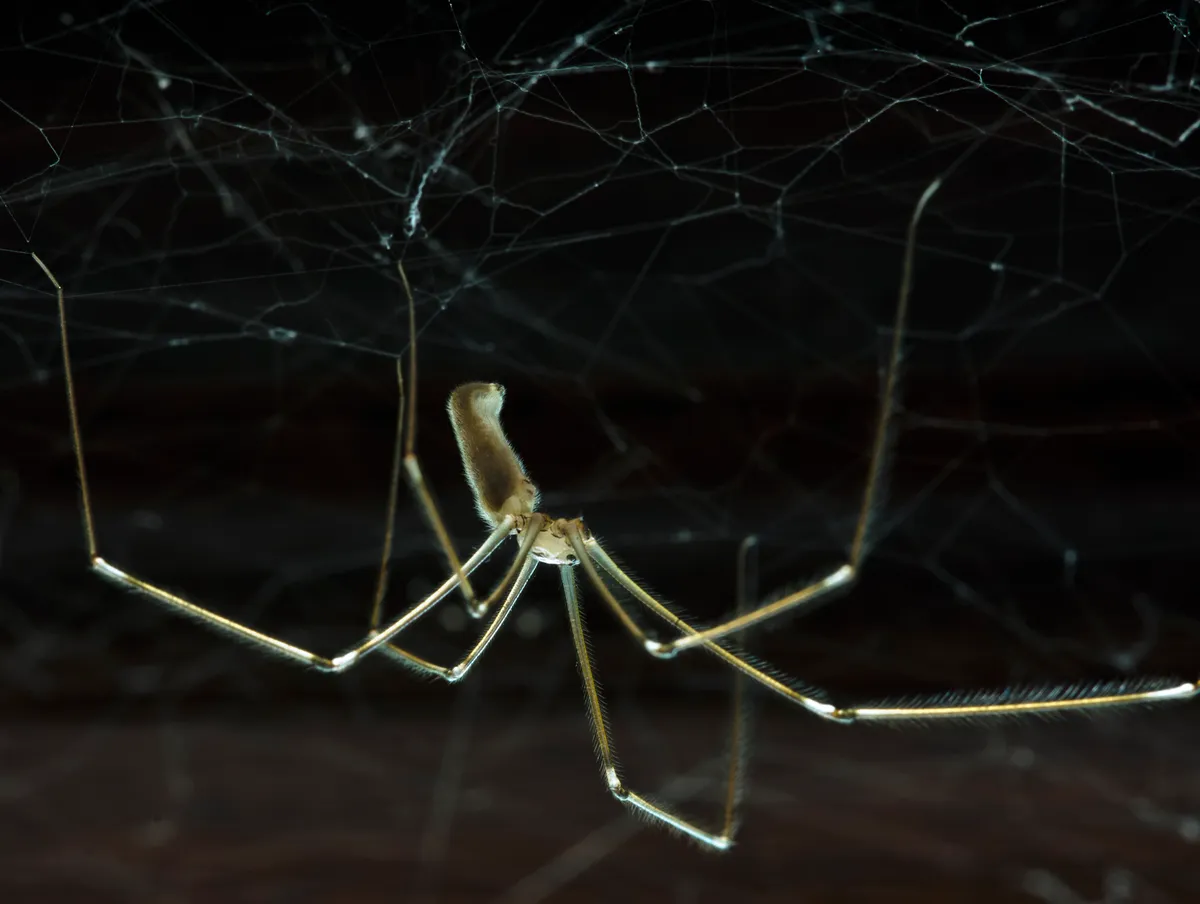
Not every spider lets its waste fall just anywhere. In the Psyche study, Tietjen found that Mallos gregalis deposited its excreta away from the areas it occupied most, in the part of the container the spiders treated as outside the web; earlier observations, he wrote, had suggested a ring of excreta around the web site. Nothing comparable is reported for house spiders in the sources behind this page.
Why is there spider poop on my siding, window sill or porch light?
Spider poop on siding, a window sill or around a porch light means a spider has been sitting above that spot, and a light may be part of the reason. University of Kentucky entomology says conventional outdoor bulbs attract night-flying insects, which in turn attract spiders, and Wisconsin and Iowa State extension add that large, persistent spider numbers indoors point to a significant insect population for them to eat.
Outside, spots under the eaves can also come from bats, which ICWDM says cause spotting and staining on the sides of buildings; bat droppings are pellets, covered in the comparison below. White splats may be bird droppings: ICWDM calls white chalky material characteristic of bird feces.
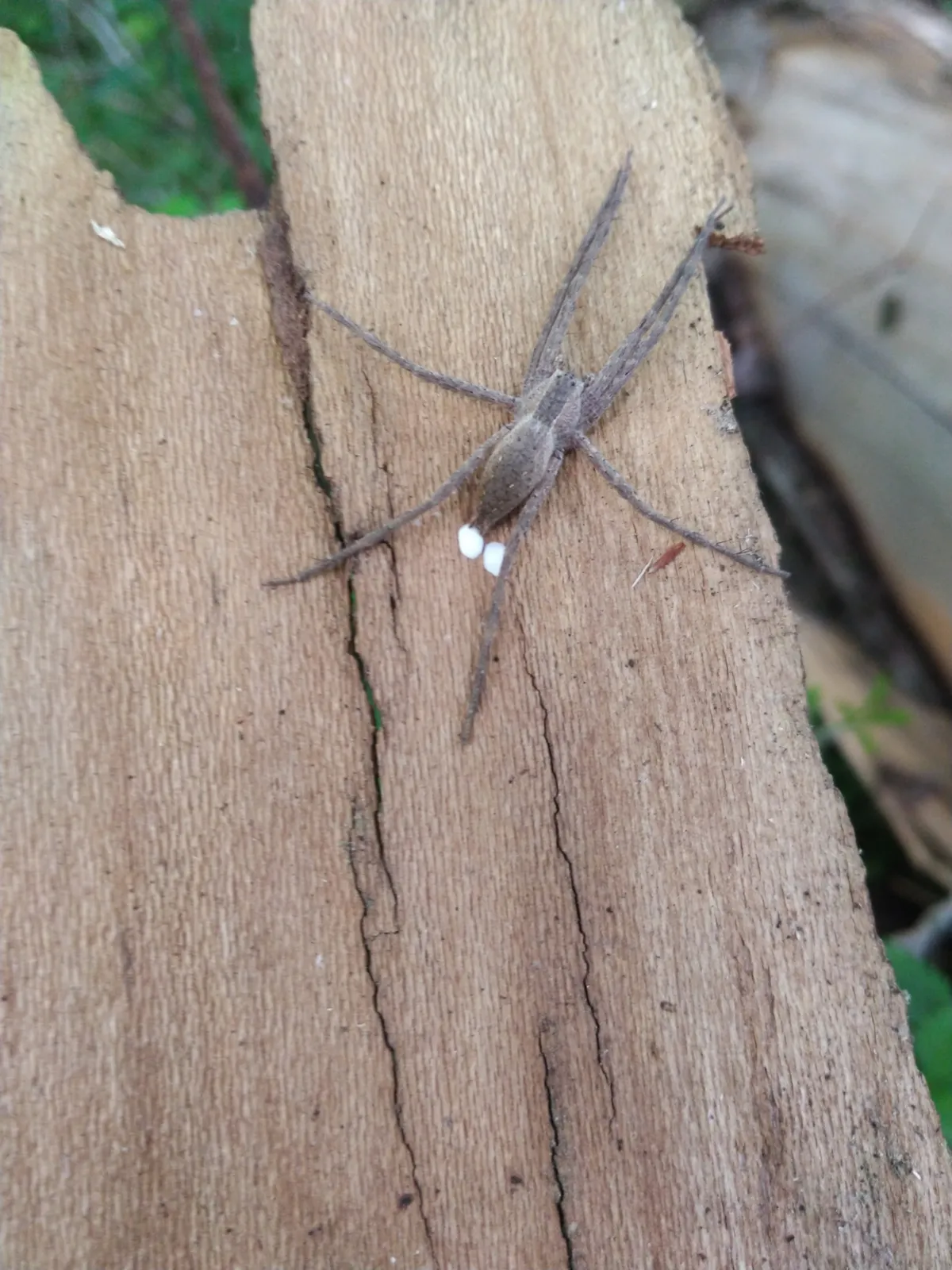
How do you tell spider poop from bed bug, roach and fly spots?
Look up first: spider poop lies below a web or a resting spot, while the look-alikes turn up where their makers hide, rest or travel. Then look at the shape and the place.
| Spots | Shape and feel | Where they cluster | Next step |
|---|---|---|---|
| Spider | Flat, round dots; white, pale gray, tan or dark | Below a web or resting place | Find the web above; vacuum it |
| Bed bug | Dark spots that may bleed into fabric like a marker, per EPA | Mattress seams, bed frame, headboard; in heavy infestations where the wall meets the ceiling | What bed bug poop looks like |
| Cockroach | Dark spots and smears that stain furnishings, per Virginia Tech | Along the runways and shelters roaches use | Cockroach droppings |
| Cluster fly | Small dark-colored spots of excrement, per Penn State Extension | Windows and walls, where the flies gather on warm winter days | Look for the flies at the glass |
| Mouse | Cylindrical pellets 1/8 to 1/4 inch long, per Cornell | Floors along walls (Cornell IPM photo in the cards below) | Mouse poop |
| Bat | Segmented pellets that crush to powder with shiny insect bits, per ICWDM | Below roosts and entry holes; staining on siding and soffits | Bat poop |
Spider from Tietjen (Psyche, 1980) and the photos on this page; bed bug from EPA; cockroach from Virginia Tech; cluster fly from Penn State; mouse from Cornell IPM; bat from ICWDM.
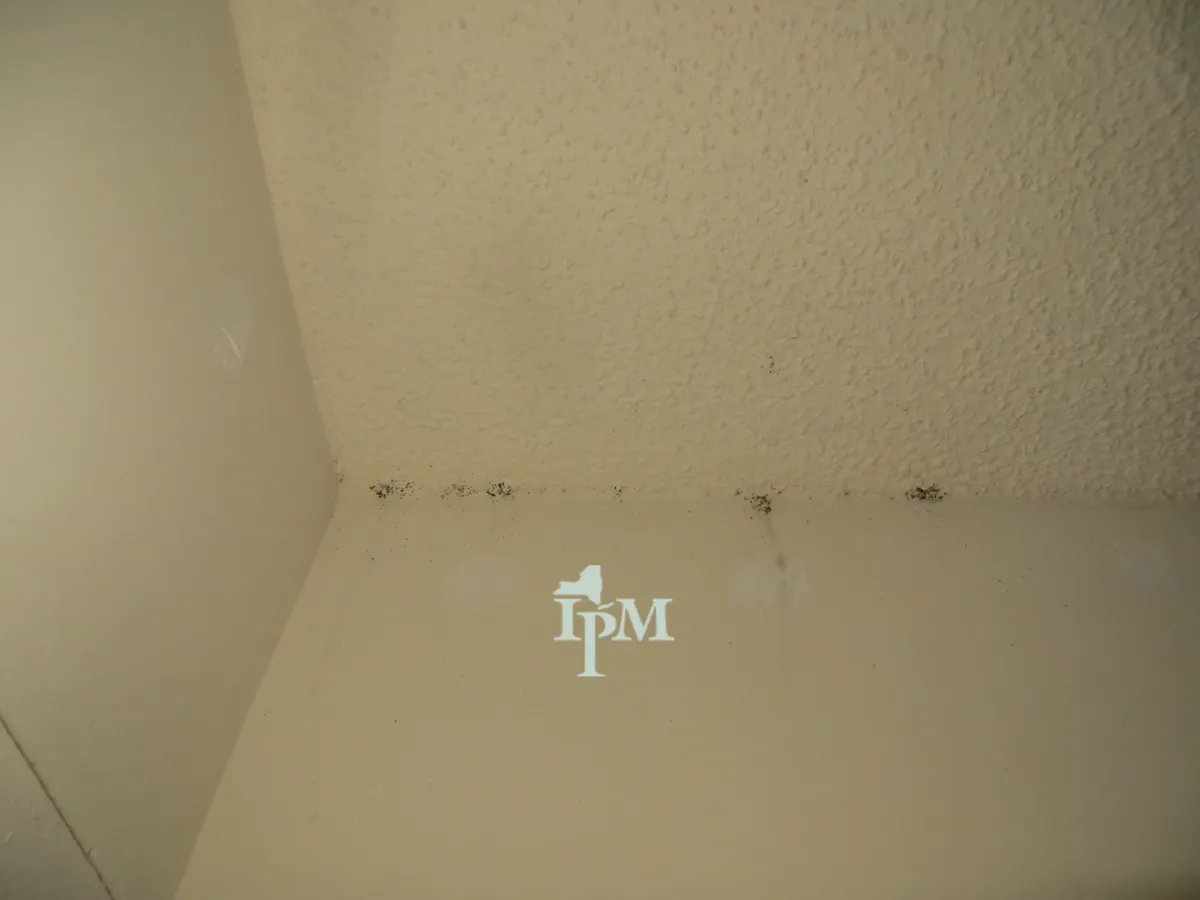
Fly specks are an easy mix-up on windows. Penn State Extension says cluster flies, slightly larger than house flies, gather in large numbers at windows on warm winter days and may occasionally leave small dark-colored spots of excrement on windows and walls. So look for the flies themselves, which Penn State calls sluggish in flight and easy to swat; with spider spots, look for a web or a spider above them. Mold is different again: EPA says no mold will grow without water or moisture, so spots on a wet or damp surface, or a moldy odor, point to a moisture problem, not a spider.
Is it spider poop? Five checks
- Look straight up. A web, a spider or an old strand of silk above the spots is the first clue.
- Check what is nearby. A web or spider overhead suggests a spider; many flies at the window suggest flies; mattress seams, a bed frame or, in a heavily infested room, the wall-ceiling junction suggest bed bugs.
- Check the shape. Flat spots point to spiders, flies, bed bugs or cockroaches; cylindrical pellets you could pick up point to mice or rats, and bat droppings crumble to powder. For droppings with vertical lines, which Cornell says American cockroach droppings have and rodent droppings lack, see roach droppings vs mouse droppings.
- Note the place. Near where someone sleeps, go through the bed bug signs EPA lists: dark spots that may bleed into fabric like a marker, rusty stains, tiny eggs and shed skins.
- Smell and moisture. A moldy odor or a damp surface points toward mold, which EPA says will not grow without water or moisture.
Is spider poop harmful?
None of the sources behind this page reports anyone getting sick from spider droppings, but none says the droppings are free of germs, and none cites a study that looked for illness. That is a gap in the evidence, not proof that they carry nothing. As a precaution, treat the spots like other animal waste and wash your hands with soap and water after cleaning them, which CDC advises after touching an animal or animal waste. If spots are near a bed and you have unexplained bites, check for bed bugs, and see a healthcare provider about any rash or bite that worries you.
Spiders themselves are a separate question. Wisconsin and Iowa State extension say spiders are not harmful, orb weavers included despite their size, apart from dangerous spiders such as the black widow and brown recluse, which they say require immediate attention and control; the spider identifier can help you name the one above the spots.
How do you clean spider poop off walls and siding?
On painted walls, use mild soap and warm water on a well-wrung soft cloth or sponge, after a test on an inconspicuous spot; on vinyl siding, start with clear water and a soft-bristled brush. Remove the web first, or new spots will keep appearing.
- Remove the web and the spider. A vacuum or broom removes spiders, webs and egg sacs, says University of Kentucky entomology. If you find a round silk ball, the guide to spider egg sacs tells you whose it is.
- Gloves are optional. If you want them, ordinary household rubber gloves may be used with water and a mild detergent, EPA says in its mold cleanup guide.
- Test an inconspicuous spot first. Sherwin-Williams advises testing your cleaning solution and technique on an inconspicuous spot and checking that the paint still looks bright and shows no water marks once dry.
- Painted walls. Use mild soap and warm water with a well-wrung soft cloth or sponge in circular motions; Sherwin-Williams warns that flat and matte finishes are less durable, so use gentle pressure and do not get the wall too wet, then rinse lightly with a wet rag. Wait at least two weeks before washing fresh paint.
- Vinyl siding. Ply Gem recommends washing with clear water from a garden hose and a soft-bristled, long-handled brush. If you use a power washer, it says to read the washer's instructions and hold it straight at eye level, never aimed upward, because water can collect behind the siding.
- Wash your hands with soap and water when you finish.
Does spider poop stain?
No source behind this page says whether spider droppings leave a lasting stain: University of Kentucky entomology goes only as far as calling spiders' fecal spotting an unsightly nuisance. So treat an old spot as an unknown and test before you scrub; Sherwin-Williams' warning that flat and matte finishes are less durable applies whatever made the mark. Cockroach waste is a different matter: Virginia Tech says cockroach feces and secretions stain and ruin furnishings, so a stubborn dark smear in a kitchen deserves a closer look.
How do you get fewer spiders and less spider poop?
Fewer insects and fewer webs mean fewer droppings. The steps extension entomologists give:
- Change outdoor lighting. Wisconsin and Iowa State extension say to reduce outside lighting, note that yellow lights draw fewer insects than mercury or sodium vapor lights, and suggest mounting security lights on a pole shining toward the door instead of on the wall above it. University of Kentucky entomology suggests yellow or sodium vapor bulbs at outside entrances as less attractive to insects than conventional bulbs.
- Vacuum webs regularly, inside and outside, and remove egg sacs, as Utah State and Kentucky advise.
- Cut clutter and seal gaps. Remove papers, boxes and other clutter where spiders settle, make sure window screens fit tightly, and caulk cracks around the foundation, doors and ground-level windows, per Wisconsin and Iowa State extension; University of Kentucky entomology adds tight-fitting door sweeps. How to keep spiders out of your house covers this in detail.
- Skip the gimmicks. Wisconsin and Iowa State extension say hedge apples (Osage orange fruits) sold to repel spiders are not effective.
Commonly confused with
 Bed bug poopDark spots that can bleed into fabric like a marker, on mattress seams and bed frames
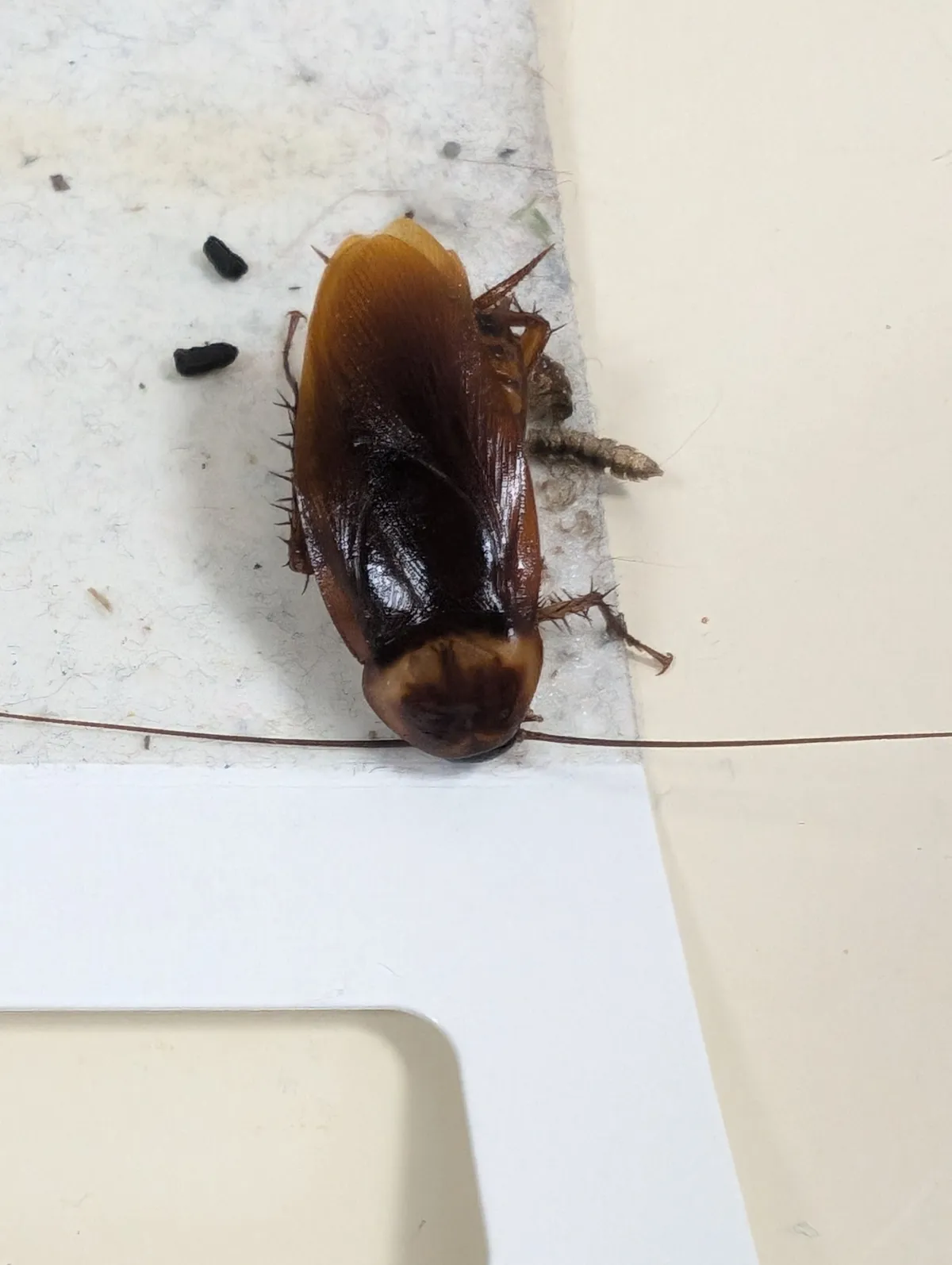 Cockroach droppingsDark spots and smears that stain; American cockroach droppings also have vertical lines
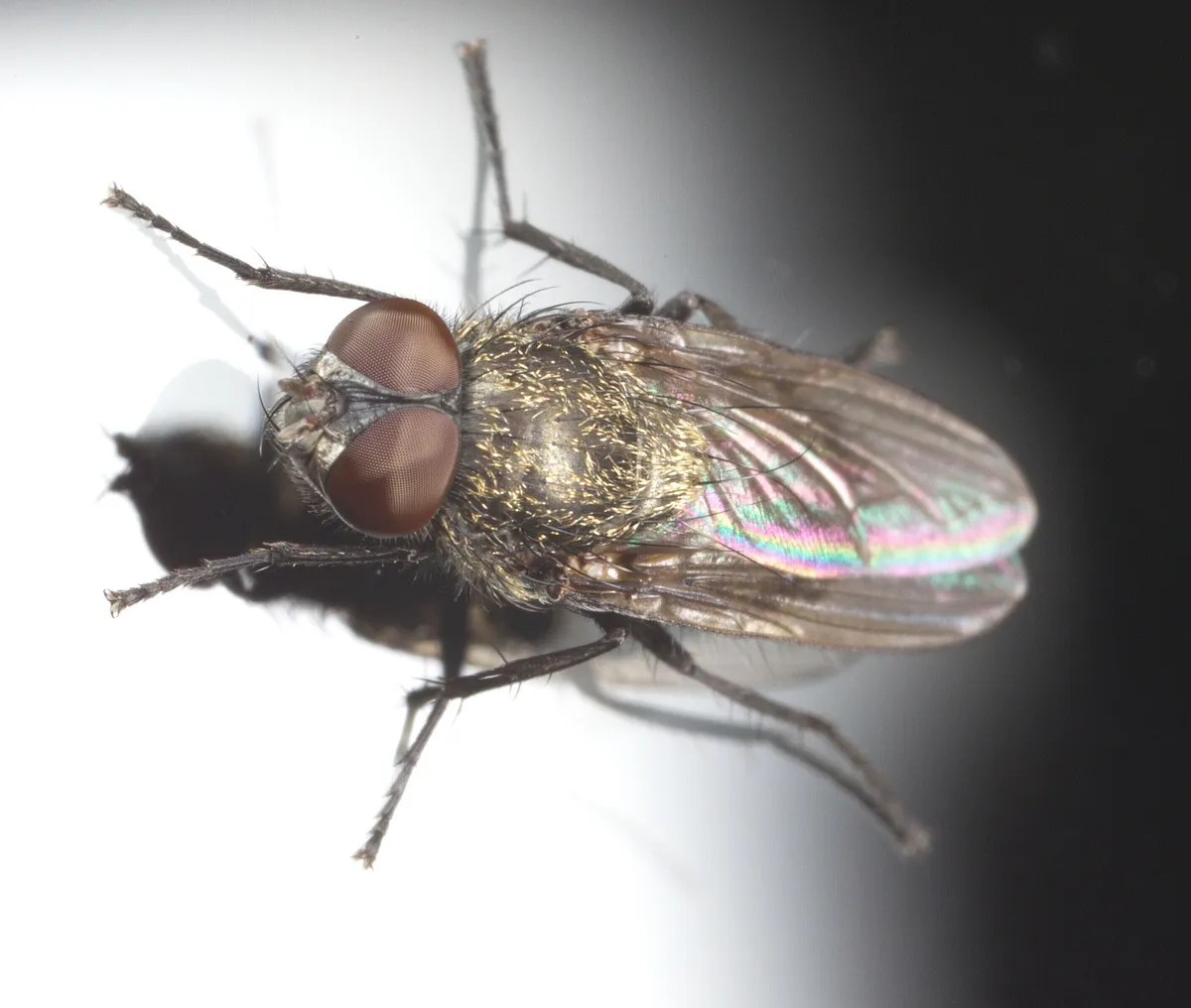 Cluster fliesMay leave small dark spots on windows and walls; many gather at windows on warm winter days
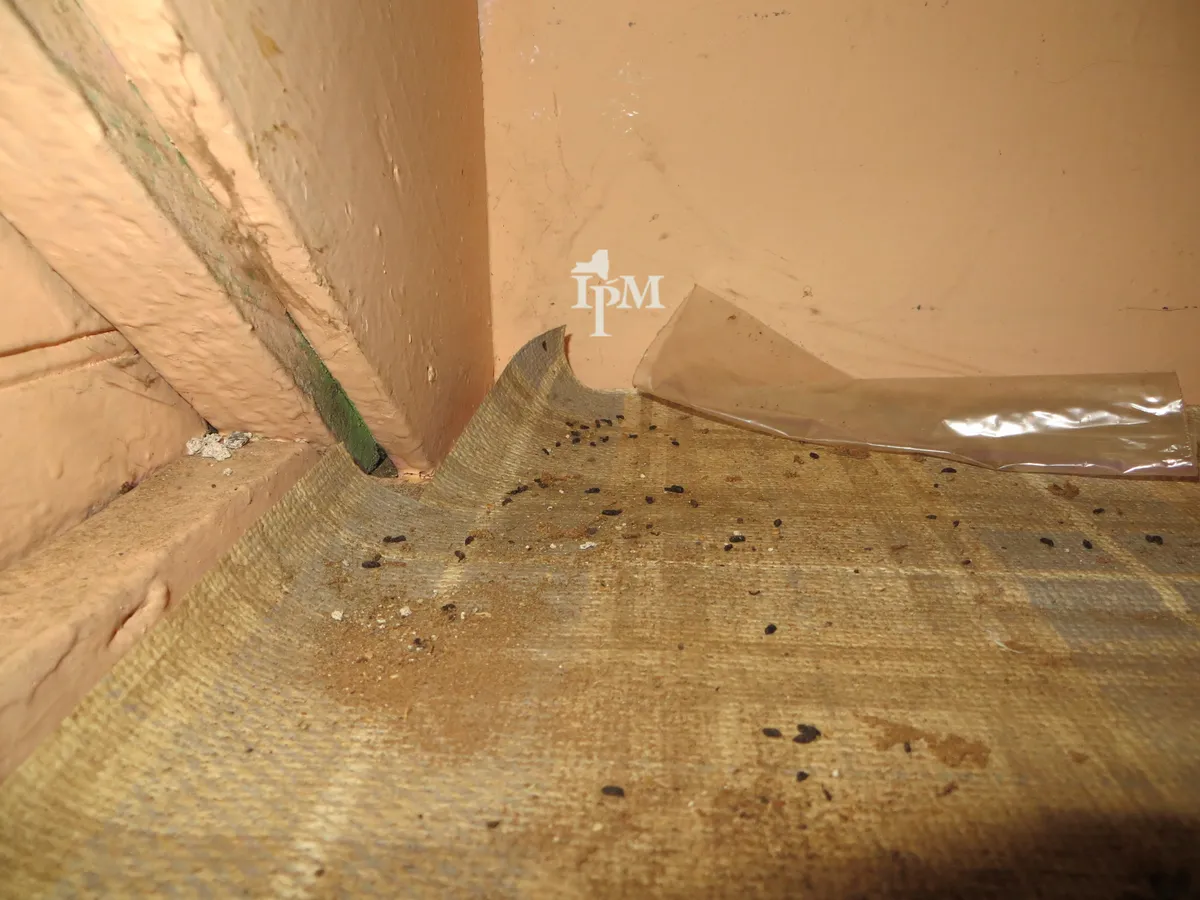 Mouse droppingsCylindrical pellets 1/8 to 1/4 inch long, not flat spots
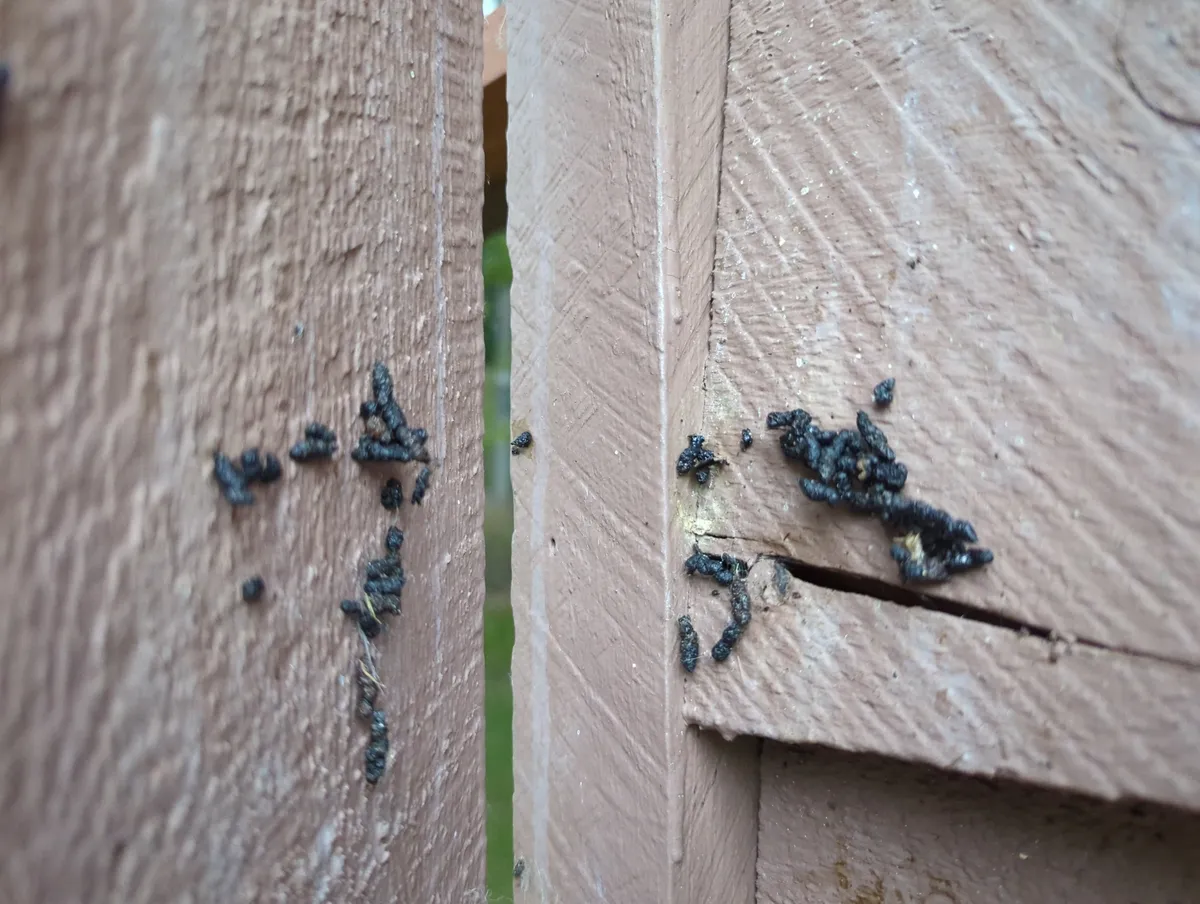 Bat droppingsPellets that crush to powder with shiny insect bits, under roosts and entry holes
Photos: Bed bug poop: Hadifn, CC BY-SA 3.0, via Wikimedia Commons, CC BY-SA 3.0. Cockroach droppings: (c) Annamarie, some rights reserved (CC BY-SA), via iNaturalist, CC BY-SA 4.0. Cluster flies: no rights reserved, via iNaturalist, CC0 1.0. Mouse droppings: NY State IPM Program at Cornell University from New York, USA, CC BY 2.0, via Wikimedia Commons, CC BY 2.0. Bat droppings: (c) Matt Muir, some rights reserved (CC BY), via iNaturalist, CC BY 4.0.
What should you do once you know it is spider poop?
Clean it, take down the web above it, and change what is feeding the spider. Spider droppings tell you where a spider has been sitting, and a nearby light may be drawing the insects it eats.
- Find and name the spider. Use the spider identifier or the common house spider guide; University of Kentucky entomology calls the common house spider harmless.
- Vacuum the web and any egg sacs, then clean the spots as described above.
- Fix the lighting and the gaps so fewer insects, and fewer spiders, gather at windows and doors.
- If the spots are near a bed, go through the bed bug signs in what bed bug poop looks like before assuming a spider.
This guide is general educational information, not medical advice. If you have symptoms or concerns after a bite or exposure, contact a healthcare provider.
Frequently Asked Questions
Do spiders poop?+
Yes. Spiders cannot chew solid food, so they feed on liquefied prey, and the gut ends at the anus at the tip of the abdomen, the Australian Museum explains. The waste leaves as a fluid: in one lab study, droppings that landed on silk tended to flow along the thread, and those on the container surface were mostly circular spots averaging about 1/25 inch (1.1 mm) across. So spider poop shows up as a flat, round dot, not a pellet. It is easiest to notice below a web where a spider has stayed put.
Do spiders pee?+
Spiders make a liquid urine, and it leaves by the same opening as the feces. The Australian Museum describes the Malpighian tubules, the spider's kidneys, opening into a sac of the hindgut. Lab work published in the Journal of Experimental Biology measured what its authors call anal urine in a mygalomorph spider: about 5 microliters a day in starved spiders with water, and more than 30 microliters a day after feeding. That spider also released fluid from four coxal organs, which in dehydrated spiders happened only during feeding.
What color is spider poop?+
Spider droppings range from bright white through pale gray and tan to dark brown or black, and many are darker in the center than at the rim. A 1980 lab study of one social spider recorded colors from dark ebony to light tan, often with a darker center, and whitish to tan on silk. Guanine may explain the white: a 1966 study found it was the only purine detected in the excreta of 34 spider species and a large share of the excreta by weight, and the National Library of Medicine's chemistry database describes it as white crystals.
Is spider poop harmful to humans?+
None of the sources behind this page reports illness from spider droppings, but none says they are free of germs, and none cites a study that looked for illness. That is a gap in the evidence, not proof that they carry nothing. As a precaution, treat them like other animal waste: wear household gloves to clean them if you like, and wash your hands with soap and water afterward, as CDC advises after touching animal waste. See a healthcare provider about any rash or bite that worries you.
Why is there spider poop on my window sill?+
A spider has probably been sitting in a web above the sill. Cellar spiders make their cobwebs near windows, Utah State University Extension says, and extension entomologists in Wisconsin and Iowa tell people to look for webbing around windows and in corners. Lights can play a part: University of Kentucky entomology notes that conventional outdoor bulbs attract night-flying insects, which in turn attract spiders. Look for a web in the upper corners of the frame, vacuum it, clean the spots, and consider yellow or sodium vapor bulbs at outside entrances.
How do I get spider poop off walls?+
Vacuum the web above the spots first. Then test your cleaning method on an inconspicuous spot, as Sherwin-Williams advises, and wash the spots with mild soap and warm water on a well-wrung soft cloth or sponge, using circular motions. Use gentle pressure on flat or matte paint, which is less durable, and finish by rinsing lightly with a wet rag. Wash your hands afterward.
Does spider poop stain?+
No source behind this page says whether spider droppings leave a lasting stain. University of Kentucky entomology calls spiders' fecal spotting an unsightly nuisance and leaves it there, and none of the extension or government sources here has measured the stains. Treat an old spot as an unknown: test your cleaning method on a hidden area first, and go gently on flat or matte paint, which Sherwin-Williams says is less durable. Cockroach feces and secretions, by contrast, do stain and ruin furnishings, Virginia Tech says.
How can you tell spider poop from fly specks?+
Look up, then look for flies. Spider droppings land below the web or perch a spider uses, so check for a web, a spider or old silk above the spots. Penn State Extension says cluster flies gather in large numbers at windows on warm winter days and may occasionally leave small dark-colored spots of excrement on windows and walls, so a window full of sluggish flies points to fly specks. Color can help as well: many of the spider droppings in the photos on this page are white or pale gray.
Is it spider poop or bed bug poop?+
Start with the place. Bed bug spots are dark, about the size of a printed dot, and EPA says they may bleed into fabric like a marker. EPA lists mattress seams, bed frames and headboards among the places bed bugs hide, plus the junction of wall and ceiling in a heavily infested room, and its other signs are rusty stains, tiny eggs and shed skins. Spider spots lie below a web and can be white, gray or tan as well as dark.
Do spiders poop in their webs?+
Sometimes. In a lab study of the social spider Mallos gregalis, some droppings landed on the silk, where they tended to flow along the thread or stick to neighboring threads, but the study found the spiders deposited their excreta away from the areas they occupied most. Spiders in the upper part of a container also, evidently, dropped fecal material onto a web lower down. Around a house, the spots people notice are on the surface below a web or resting place.
Sources
- What is a spider? — Australian Museum (a New South Wales Government funded cultural institution)
- Spiders — Australian Museum (a New South Wales Government funded cultural institution)
- The excreta of spiders, by John F. Anderson (Comparative Biochemistry and Physiology 17: 973-982, 1966): abstract — Comparative Biochemistry and Physiology (Elsevier, on ScienceDirect)
- Regulatory responses of the coxal organs and the anal excretory system to dehydration and feeding in the spider Porrhothele antipodiana, by A. Butt and H. Taylor (Journal of Experimental Biology, 1995) — PubMed, U.S. National Library of Medicine
- Guanine (compound summary) — PubChem, U.S. National Library of Medicine
- Sanitary Behavior by the Social Spider Mallos gregalis (Dictynidae): Distribution of Excreta as Related to Web Density and Animal Movements, by William J. Tietjen (Psyche 87: 59-74, 1980) — Psyche: A Journal of Entomology (Cambridge Entomological Club; open access at Wiley Online Library)
- Common Spiders In and Around Homes (A2135), by Jeffrey Hahn, Phil Pellitteri, Laura Jesse and Donald Lewis — University of Wisconsin-Madison Extension and Iowa State University Extension and Outreach
- Eliminating Spiders around Homes and Buildings (ENTFACT-623), by Michael F. Potter — University of Kentucky College of Agriculture, Entomology
- Cellar Spiders — Utah State University Extension
- Orb Weaving Spiders — Utah State University Extension
- IPM Action Plan for Spiders — Texas A&M AgriLife Extension Service, School Integrated Pest Management
- How to Find Bed Bugs — U.S. Environmental Protection Agency
- Cockroaches Found in Living Spaces (ENTO-528NP), by Theresa A. Dellinger and Eric Day — Virginia Cooperative Extension, Virginia Tech
- Cluster Flies, by Steve Jacobs — Penn State Extension
- Mouse and Rat Biology and Behavior — Cornell Integrated Pest Management (Cornell IPM), Cornell University
- Bat Damage Identification — Internet Center for Wildlife Damage Management
- A Brief Guide to Mold, Moisture and Your Home — U.S. Environmental Protection Agency
- About Handwashing — Centers for Disease Control and Prevention
- How to Clean Painted Walls — Sherwin-Williams
- How to Clean Your Vinyl Siding — Ply Gem
Read and approved by Alex Francisco. Found an error? Email support@buzzskito.ca.