
Published by BuzzSkito Mosquito & Tick Control
Published October 29, 2026 · Fact-checked against the sources listed below
What is a false widow spider?
A false widow is one of several cobweb spiders in the genus Steatoda that look enough like black widows to be mistaken for them. The University of California's Pest Note on widow spiders and their relatives (UC IPM) says the false black widow, Steatoda grossa, is not a true widow but belongs to the same family, Theridiidae, and shares the widows' rounded body and web-building habits. False black widow is the common name the American Arachnological Society recognizes for it, according to North Carolina State Parks' guide to the state's spiders.
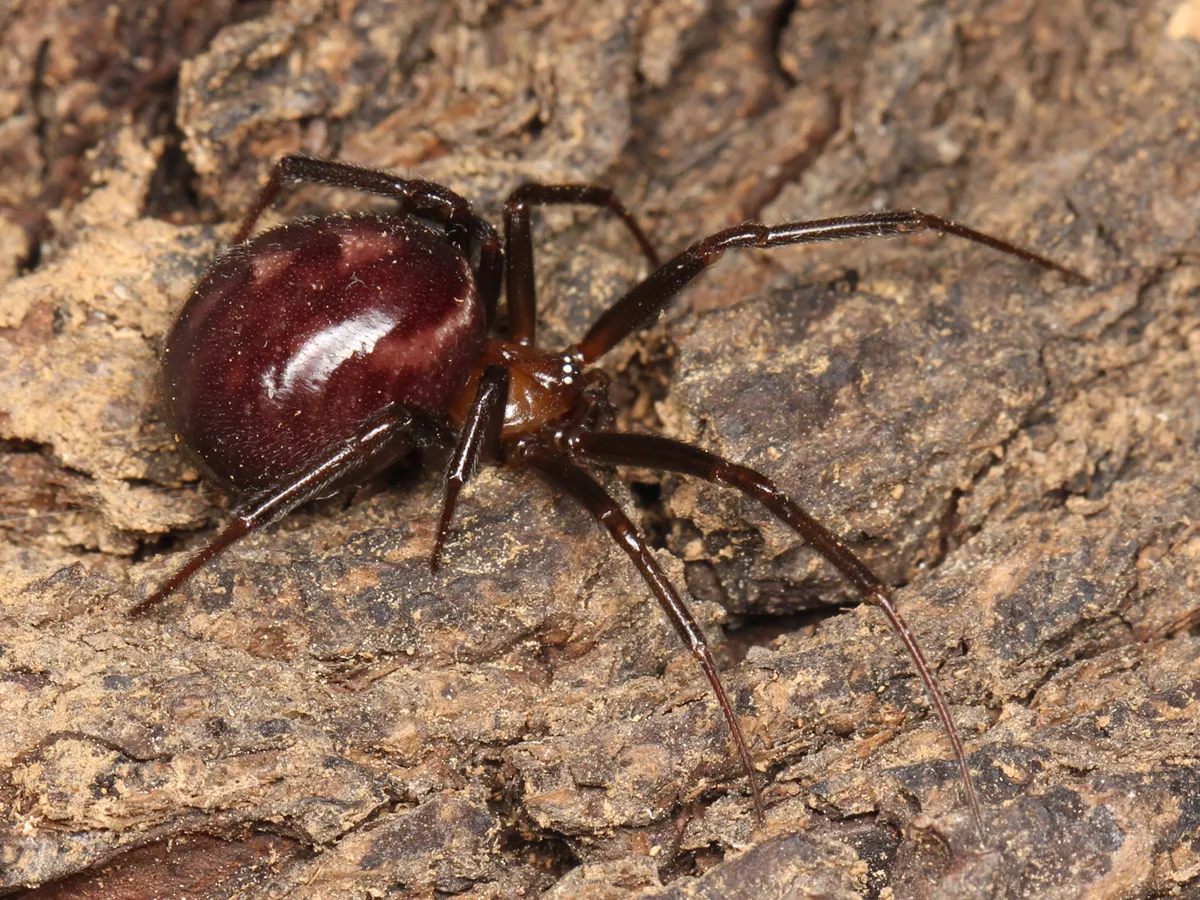
What does a false black widow look like?
A purplish-brown to black spider with a rounded abdomen and no red underneath. Penn State Extension describes pale yellow to grayish markings on the abdomen that in many specimens are faded and hard to see, a red-brown front body section (the cephalothorax) and slightly darker legs. UC IPM calls the species chocolate brown, and NC State Parks notes that many specimens are not black at all but purplish-brown with white markings.
Females measure 6 to 10.5 mm (about 1/4 to 7/16 inch) long, not counting the legs, Penn State says, and UC IPM gives about 3/8 inch (10 mm). NC State Parks lists males at 5.6 to 7 mm, about 1/4 inch. The abdomen is more oval than a true black widow's, Penn State adds, and NC State Parks describes it as oval rather than teardrop-shaped.
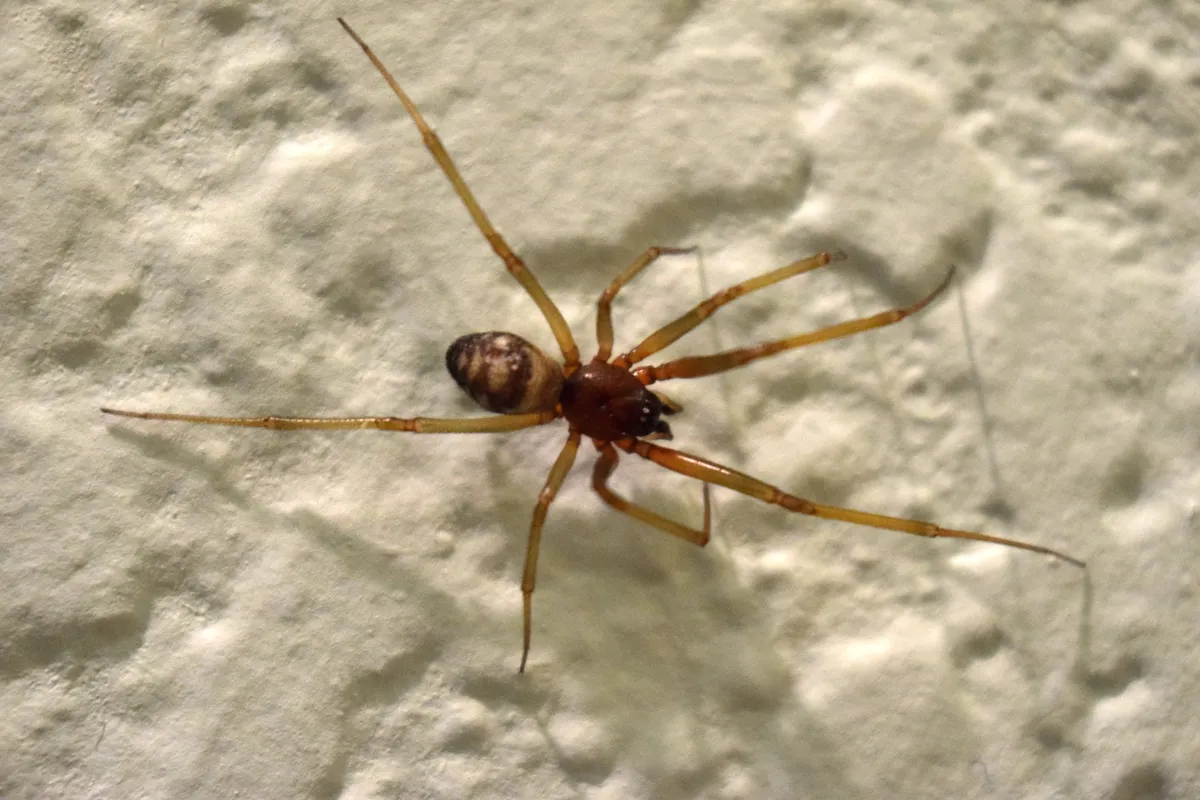
The young are dark like their mothers: UC IPM says false black widow spiderlings are dark when they leave the egg sac, while black widow spiderlings start out with tan legs and a mostly white abdomen with a few black spots.
How do you tell a false black widow from a black widow?
Check the underside without touching the spider: an adult female black widow carries a red hourglass there, and UC IPM says the false black widow never has red on its belly. Where you found it is the second clue: UC IPM says black widows are almost never found in homes, though they are common in garages, while the false black widow thrives indoors.
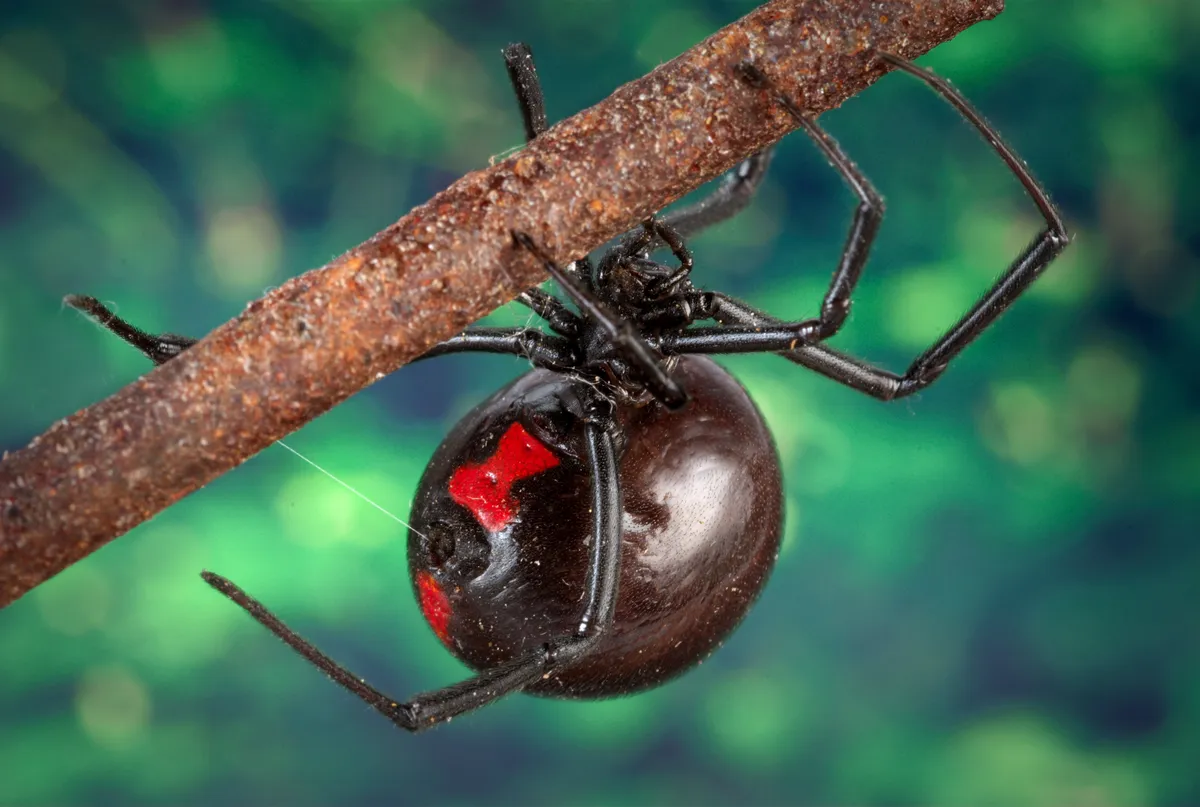
Color alone can mislead. UC IPM describes the western black widow as shiny jet black, but says some females are so well fed that the stretched abdomen looks brownish or plum-colored. Their hourglass varies too, from a perfect hourglass to a few red marks, and on rare occasions it is completely absent. Clemson Cooperative Extension says true widows can be told from the false widows by their bright markings and rounded abdomens.
Black widow or false black widow?
- Red underneath: any red under a round, black abdomen points to a black widow.
- Where it was: a bathroom, cupboard or the space under an appliance points to a false black widow; garages and outdoor clutter are black widow places (UC IPM).
- Shape: a more oval abdomen points to a false black widow (Penn State, NC State Parks).
- Still unsure: treat it as a black widow and leave it alone.
The black widow guide shows the three US black widows and their males and young, and the guide to black spiders sorts the other dark spiders that turn up in houses.
Where do false widows live?
The false black widow lives in and around buildings in the coastal states. Penn State says it is found in the coastal states of the Atlantic, Gulf and Pacific regions and is common in homes and other structures in the southern and western states. UC IPM calls this European immigrant extremely common in Pacific Coast homes from San Diego to British Columbia, with isolated finds in Alaska.
Indoors, UC IPM names bathrooms, cupboards and the spaces under appliances, furniture and cabinets. Outdoors, Penn State finds it on low-growing plants, under bark, in rock crevices and under bridges. In the northern states, Penn State says, the smaller S. borealis is the more common one.
Several other spiders share those cupboards and corners: the guide to house spiders sorts the common ones by shape, color and web.
What do false widow webs and egg sacs look like?
The web is an untidy tangle in a sheltered spot and the egg sac a fluffy ball. NC State Parks describes the false black widow's silk as a typical tangled cobweb in protected places, and UC IPM says the species shares the widows' web-making traits. Its egg sac, UC IPM says, looks like a cotton ball with indistinct edges. Penn State says a female can make three or more sacs from May through July, each of which can hold 200 or more cream-colored eggs.
Three other cobweb spiders leave sacs in the same kinds of places, and each looks different:
- Black widow. UC IPM says the western black widow's sac is yellowish and teardrop-shaped, with well-defined edges and a very tough cover, and holds about 300 eggs.
- Brown widow. Clemson describes rounded, light tan sacs covered in small points.
- Common house spider. Penn State's common house spider page describes brown, oval sacs with tough, papery covers, 6 to 9 mm (about 1/4 to 3/8 inch) across.
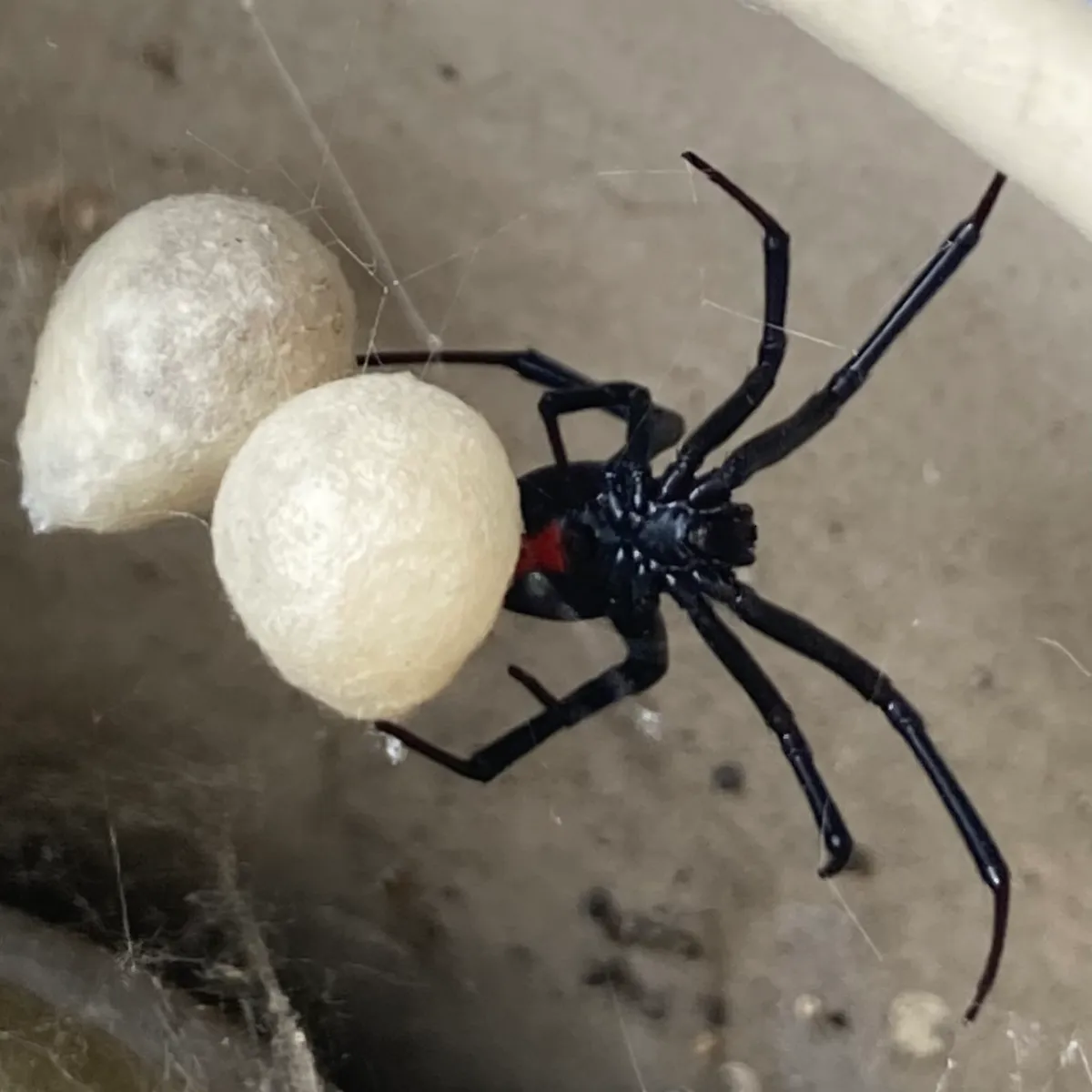
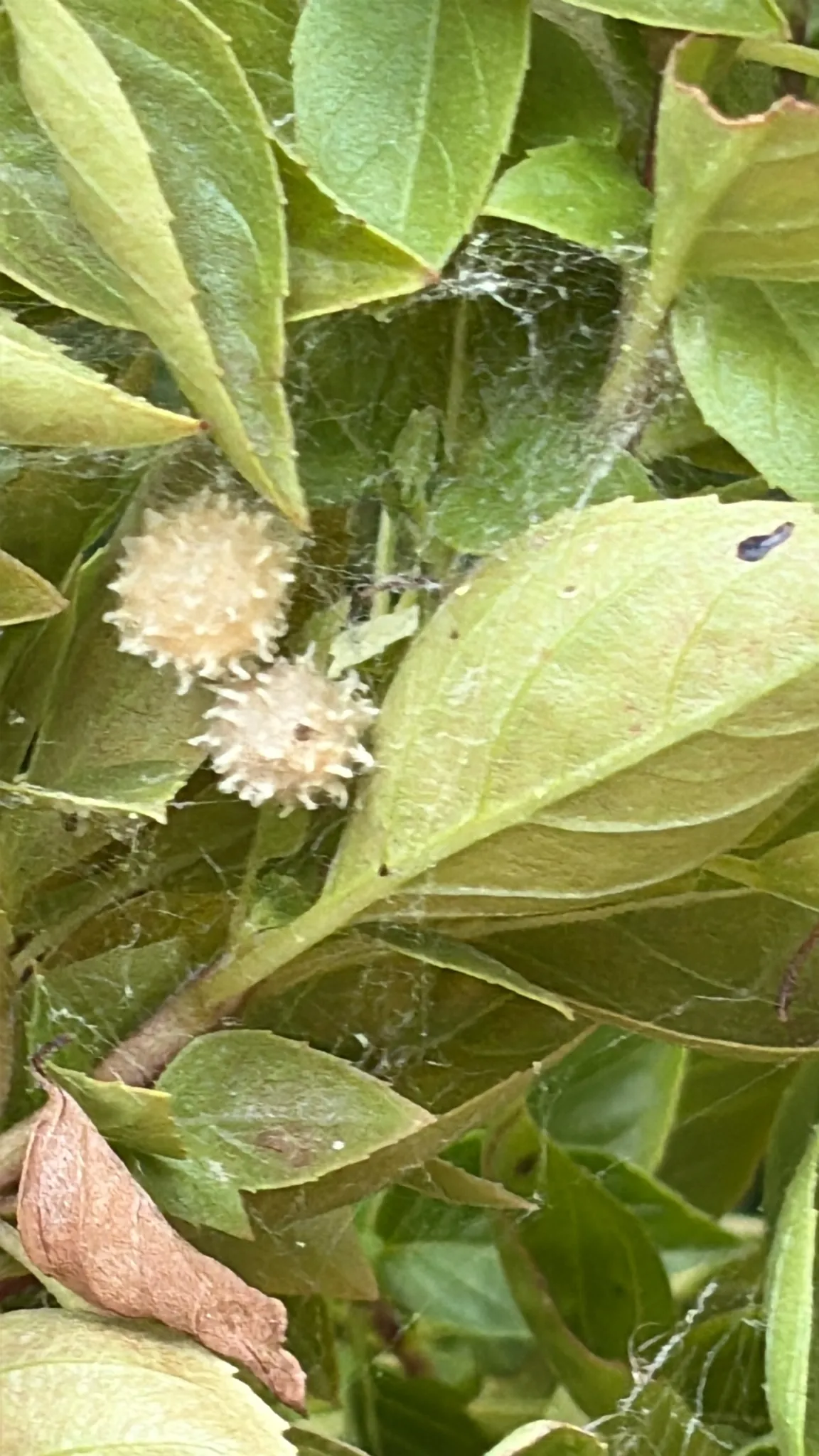
The guide to spider egg sacs compares these with the sacs of other common spiders.
What is the noble false widow?
The noble false widow, Steatoda nobilis, is a larger European relative that UC IPM says was discovered in Southern California in 2011, first in Ventura County. By 2017 it was widespread in coastal San Diego County, Monterey and the San Francisco Bay area, with isolated finds in Los Angeles and Santa Barbara, and UC IPM expected it to keep spreading along the coast.
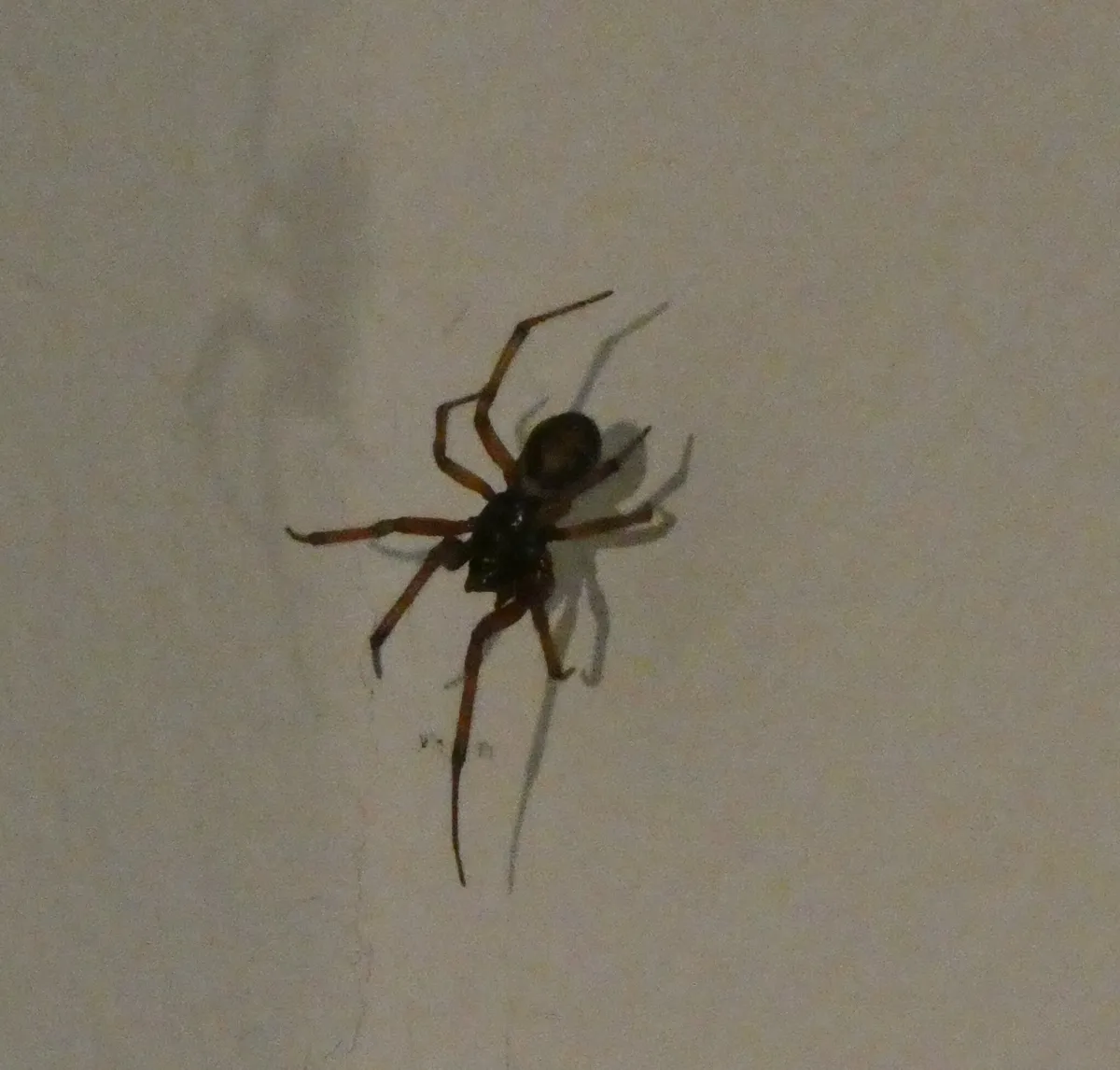
Mature females can reach 5/8 inch (14 mm). Instead of the false black widow's evenly colored back, UC IPM says, the noble false widow usually has a light tan pattern like a house with two windows and a domed roof, plus a broad tan band on the front of the abdomen. The guide to spiders in California covers the state's other common species.
It is also the false widow of British headlines. Arachnologist Rod Crawford of the Burke Museum at the University of Washington describes British news coverage that by 2006 was quoting an entomologist's claim that it was arguably Britain's most venomous spider. Alleged bites are reported there every few weeks, he writes, but few have been confirmed with the spider in hand.
Which other false widows live in the US?
Two more Steatoda species turn up in US homes, and UC IPM applies the name false black widow to Steatoda spiders of several species.
Steatoda borealis in the northern states
Penn State describes S. borealis as similar in shape and coloration to the false black widow but slightly smaller, more common in the northern states, Pennsylvania included, and found in houses all year. A 2021 report in the Journal of Medical Entomology gives the first published bite: a Connecticut woman moving books in her basement felt a painful sting on her finger, the red mark was gone the next day, and she had heart palpitations that night.
The triangulate cobweb spider
The triangulate cobweb spider, Steatoda triangulosa, is a small house spider. The University of Arkansas Arthropod Museum gives its body as about 1/8 to 1/4 inch long, with a brownish orange front body, yellow legs that darken at the tip of each segment and a brown abdomen marked with white and yellow, roughly triangular spots. Colorado State University calls it often the most common cobweb-making spider in Colorado homes, found there all year, its webs usually in dark corners of houses, basements and outbuildings.
Colorado State says no adverse reaction to its bite has ever been recorded, and the Arkansas museum knows of no case of human envenomation; it says the spider preys on ants, spiders, ticks and pill bugs, among other arthropods.
Which other spiders get mistaken for false widows?
Two common cobweb spiders: the brown widow, which is a true widow, and the common house spider. UC IPM describes mature female brown widows as about 3/8 inch (10 mm) and mottled tan, brown and gray, and Clemson says the hourglass underneath is usually orange or red-orange. UC IPM finds them outdoors in clutter, on chain-link fences and under plastic patio furniture, almost never in homes, and Clemson calls the bite much less severe than a black widow's. The brown widow guide covers it.
The common house spider, Parasteatoda tepidariorum, is smaller: Penn State gives females as 5 to 6 mm (about 3/16 to 1/4 inch), with a dirty-white to brown abdomen marked with gray chevrons and yellow legs ringed in dark. It builds tangled webs in the corners of walls, floor joists and windows, and Penn State does not consider it medically important.
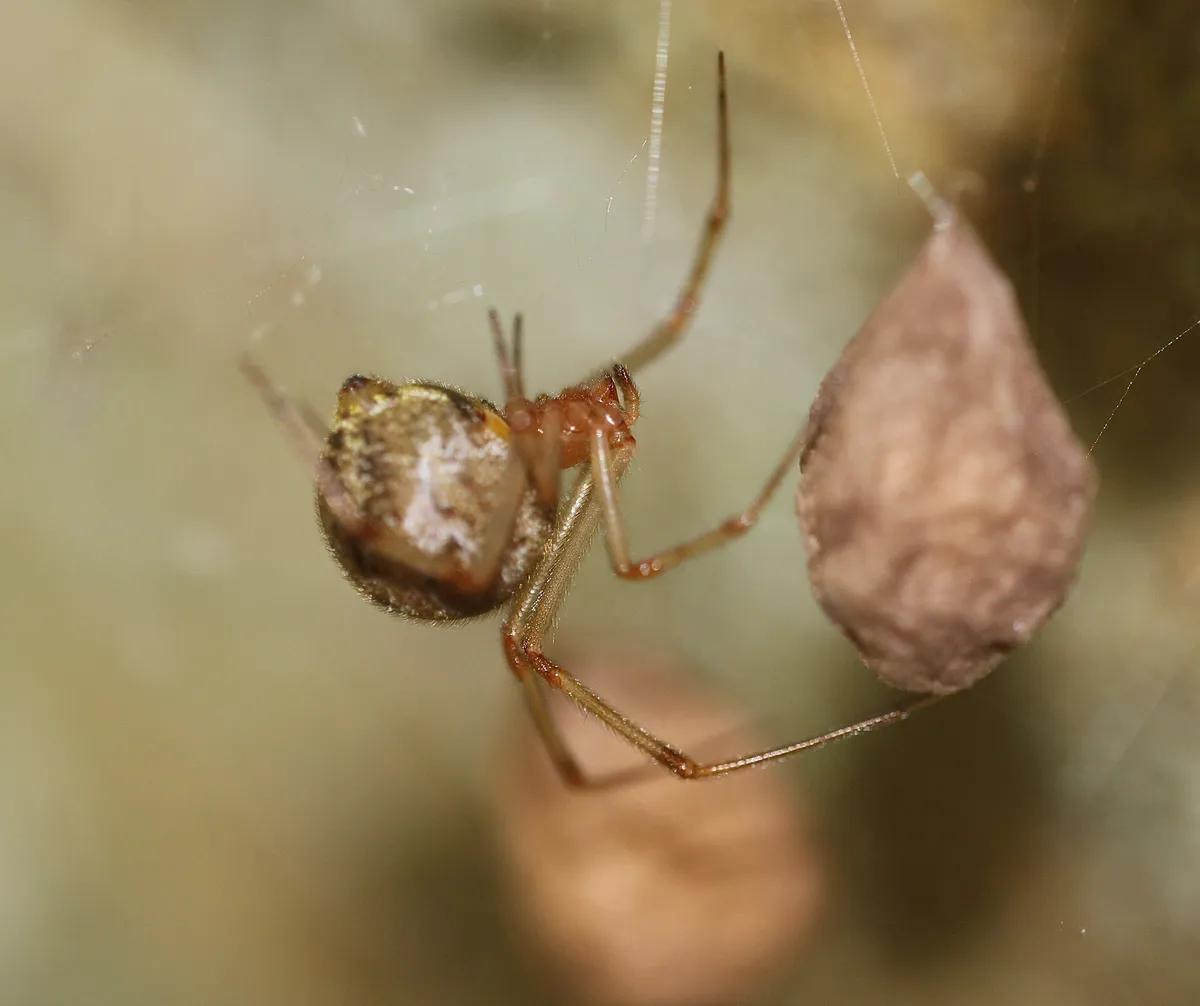
Commonly confused with
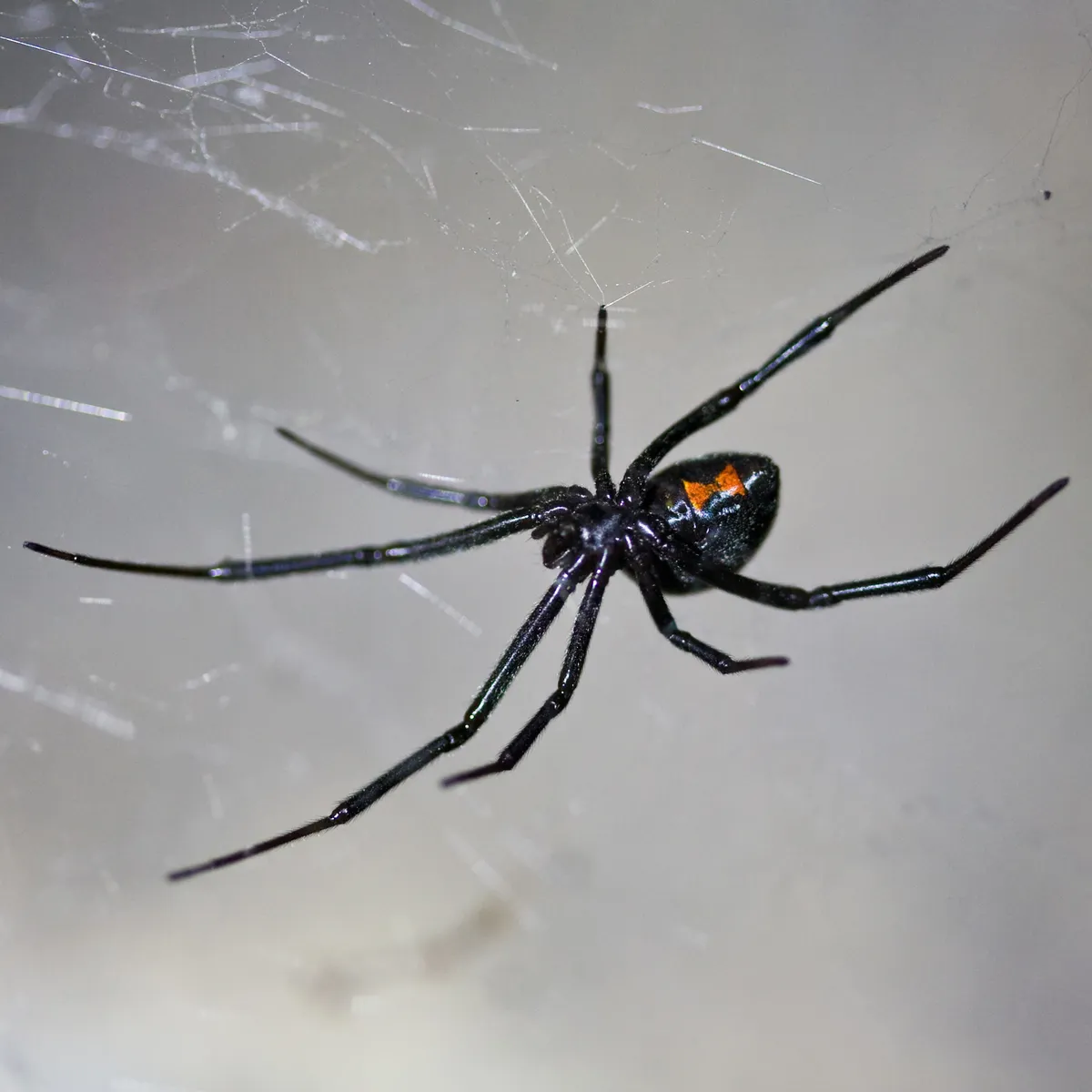 Black widowShiny jet black with a red hourglass underneath; nests outdoors and in garages, almost never in homes
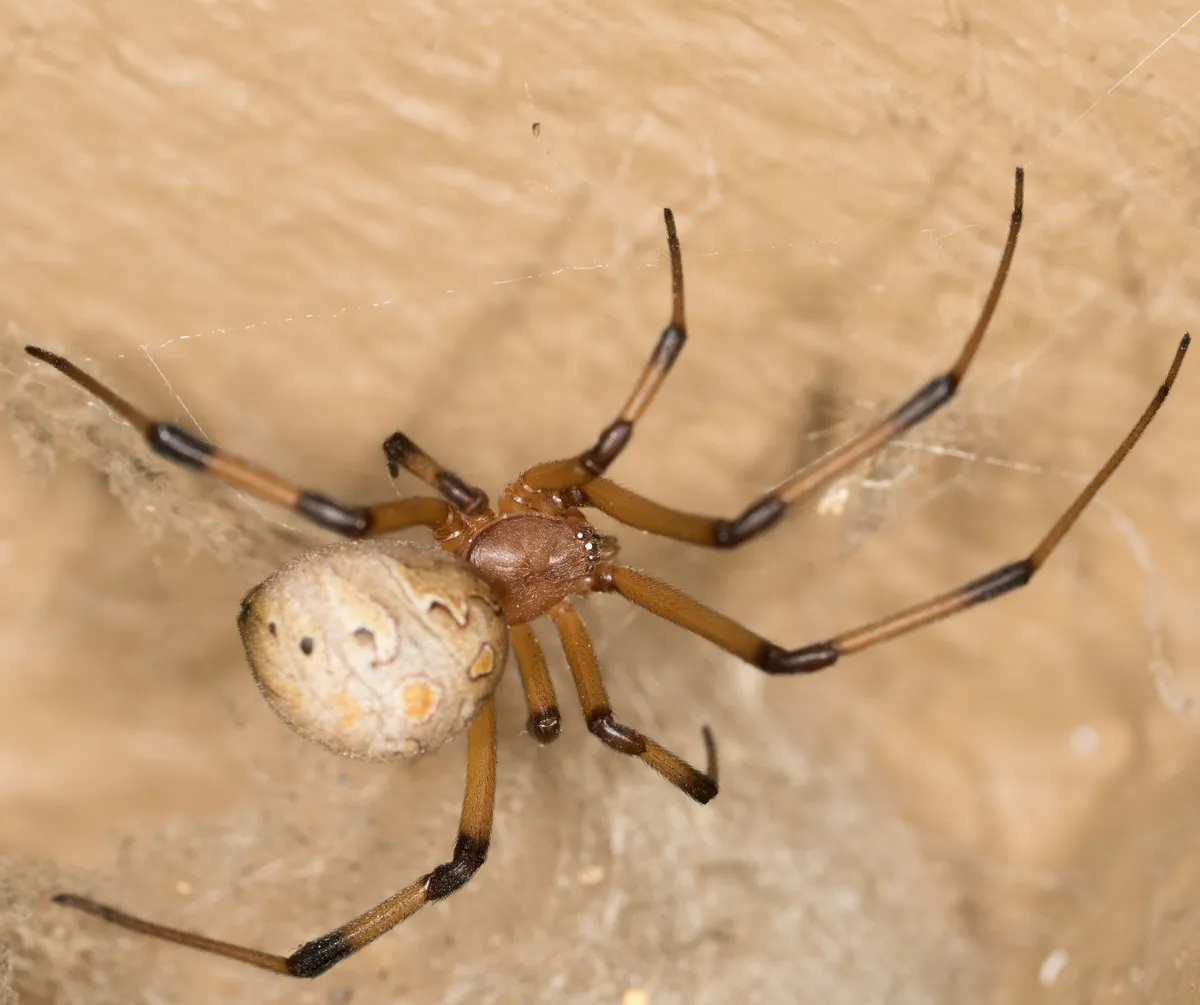 Brown widowMottled tan, brown or gray with an orange or red-orange hourglass; egg sacs covered in small points
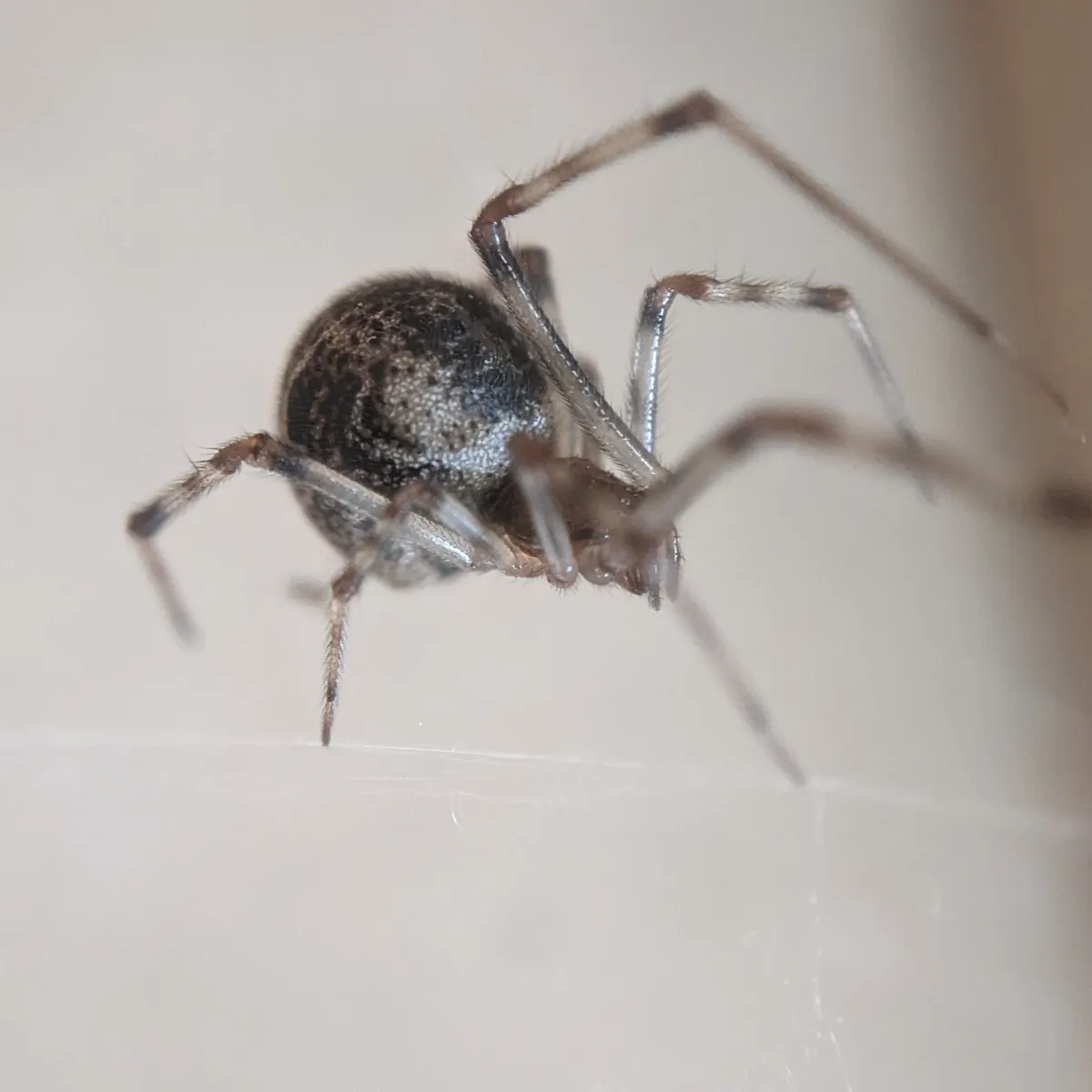 Common house spiderSmaller, with a dirty-white to brown abdomen, gray chevrons and yellow legs ringed in dark
Photos: Black widow: (c) Ken-ichi Ueda, some rights reserved (CC BY), via iNaturalist, CC BY 4.0. Brown widow: no rights reserved, via iNaturalist, CC0 1.0. Common house spider: no rights reserved, via iNaturalist, CC0 1.0.
Are false widows dangerous?
Their bite is real but much milder than a black widow's. UC IPM calls the false black widow's venom mild, and Penn State says its bite causes symptoms similar to those of a true black widow bite but much less severe. A black widow bite is a different matter: MedlinePlus says bites from black widows and brown recluses can be very dangerous to people. The black widow bite guide covers those symptoms, and the guide to venomous spiders in the US covers where they live.
False widows bite people because they live so close to them. UC IPM says false black widows are involved in more bites than black or brown widows because they are common in homes, and CDC's National Institute for Occupational Safety and Health says spiders are usually not aggressive and most bites happen when a spider is trapped or touched. In an Australian study of 23 bites by Steatoda spiders caught and identified by experts, 78 percent happened indoors and 48 percent while the person was dressing.
What does a false widow bite feel like?
UC IPM likens it to a yellowjacket sting: burning pain at first, then minor swelling around the bite. Penn State says the pain can be moderate to severe and increase for the first hour, occasionally with mild to moderate nausea, headache and lethargy, and that documented Steatoda bites have caused blistering at the bite and a general malaise lasting several days.
The best-measured series is Isbister and Gray's 2003 study of confirmed Steatoda bites in Australia. Pain was universal and was severe in about a quarter of the 23 people bitten; it lasted a median of 6 hours, with the middle half of cases between 1 and 12 hours. About 30 percent had effects beyond the bite, such as nausea, headache, lethargy and malaise, and most needed no treatment. The authors concluded that these bites can resemble widow spider bites but are less severe.
Reports on the noble false widow differ. UC IPM, writing in 2017, did not consider its bites medically significant, noting two recorded bites with minor symptoms. Researchers in Ireland have since published more: a 2022 case series added 16 confirmed bites, bringing the published total to 24, with symptoms from mild to severe, including debilitating pain, tremors, nausea and bacterial infections such as cellulitis; some people needed hospital care.
A 2020 dermatology review says a spider bite can only be confirmed when the spider, seen at the time, is caught and identified by an expert, and that skin sores of unclear cause are too often blamed on spiders; most turn out to be skin infections, allergic reactions or other skin conditions. If you never saw the spider, the bug bite identification chart and the bug bite identifier can help narrow down what bit you.
What should you do after a false widow bite?
Clean it, cool it and watch how you feel. MedlinePlus's first aid for a spider bite is to wash the area well with soap and water, put an ice pack or a wet compress on it, take an over-the-counter pain reliever if needed and consider an antihistamine for severe swelling. CDC's first aid for a worker bitten by a spider adds: stay calm, identify the spider only if that is safe, raise the bitten area if possible, do not try to remove the venom, and seek professional medical attention right away.
Should you get rid of false widows in your house?
You can leave one alone: Penn State says the false black widow is reported to catch and eat other spiders, including true black widows, and NC State Parks notes it has been seen feeding on widow spiders. If you would rather it went, UC IPM's advice for widows and their relatives relies on cleaning and storage rather than sprays:
- Vacuum or sweep windows, room corners and storage areas regularly; UC IPM says spiders' soft bodies usually do not survive a vacuum.
- Move one outside if you are comfortable doing it: UC IPM describes placing a jar over the spider, sliding paper underneath and releasing it about 100 feet from the house.
- Cut clutter, store seasonal things in taped boxes off the floor, and wear gloves when clearing stored items.
- Do not count on sprays: UC IPM says insecticides do not provide long-term control.
Keeping spiders out of the house covers sealing entry points, and the guide to getting rid of spiders covers a larger problem. Not sure what you have? The spider identifier suggests matches with real photos from where you found it and its web, size and markings, and more pest identification guides cover other household bugs.
This guide is general educational information, not medical advice. If you have symptoms or concerns after a bite or exposure, contact a healthcare provider.
Frequently Asked Questions
Are false black widows poisonous?+
They have venom, but it is mild. UC IPM says a false black widow bite may cause symptoms similar to a yellowjacket sting: burning pain, then minor swelling around the bite. Penn State says the symptoms are similar to but much less severe than those of a true black widow bite, occasionally with nausea, headache or lethargy. In an Australian study of 23 confirmed bites by Steatoda spiders, pain was universal and severe in about a quarter of cases, and most people needed no treatment.
What's worse, a false widow or a black widow?+
A black widow bite is the more serious one. MedlinePlus says bites from black widows can be very dangerous to people, while Penn State says false black widow bites cause symptoms similar to but much less severe than a true black widow bite, and UC IPM calls the false black widow's venom mild. False widow bites may still be more common: UC IPM says false black widows live in homes and are involved in more bites than black or brown widows.
What should I do if I find a false black widow?+
First make sure it is not a black widow, without touching it: look for red under the abdomen. UC IPM says the false black widow never has red there, but a black widow's hourglass is on rare occasions missing, so if in doubt, treat the spider as a widow. A false black widow can be left alone or removed: UC IPM suggests vacuuming spiders and webs or, if you are comfortable doing it, trapping one under a jar and releasing it about 100 feet from your home.
Should I kill a false widow spider?+
You do not have to. Penn State says the false black widow is reported to prey on other spiders, including true black widows, and NC State Parks notes it has been seen feeding on widow spiders. If you want it gone, UC IPM says regular vacuuming removes spiders and their webs and that spiders' soft bodies usually do not survive it. UC IPM also says insecticides do not provide long-term control, so cutting clutter and vacuuming corners matter more than sprays.
Why is it called a false widow?+
Because it looks like a widow without being one. UC IPM says the false black widow belongs to the same family as the widow spiders, the cobweb spiders, and shares their rounded abdomen and web-building habits, but it is not a true widow. False black widow is the common name the American Arachnological Society recognizes, according to NC State Parks, which adds that the genus name Steatoda comes from a Greek word for tallow or suet and that grossa is Latin for thick.
What are the symptoms of a false widow bite?+
Pain is the main one. UC IPM describes burning pain followed by minor swelling, like a yellowjacket sting. Penn State says pain can be moderate to severe and increase for the first hour, sometimes with mild to moderate nausea, headache and lethargy, and that documented bites have caused blistering and a malaise lasting several days. In an Australian study of 23 confirmed bites, pain lasted a median of 6 hours. MedlinePlus advises medical treatment for small children and for adults with severe symptoms.
How long do false widows live?+
Females can live for years. Penn State says female Steatoda spiders have been reported to live up to six years, while males live a year to a year and a half and die shortly after mating. Penn State also says a female false black widow can produce three or more egg sacs from May through July, each of which can hold 200 or more cream-colored eggs, and that spiders of every age can be found indoors throughout the year.
How big is a false black widow?+
About the size of a black widow. Penn State gives females as 6 to 10.5 mm long, about 1/4 to 7/16 inch, not counting the legs, and UC IPM puts the false black widow at about 3/8 inch (10 mm), slightly smaller than a mature western black widow. NC State Parks lists males at 5.6 to 7 mm, about 1/4 inch. The noble false widow is bigger: UC IPM says its mature females can reach 5/8 inch (14 mm).
Are false widows rare in the US?+
Not where they live. Penn State says the false black widow is found in the coastal states of the Atlantic, Gulf and Pacific and is common in homes in the southern and western states, and UC IPM calls it extremely common in Pacific Coast homes. In the northern states, Penn State says a smaller relative, Steatoda borealis, is more common. The triangulate cobweb spider, a small member of the same genus, is often the most common cobweb spider in Colorado homes, according to Colorado State University.
What does a false widow egg sac look like?+
A fluffy, cottony ball. UC IPM says the false black widow's egg sac looks like a cotton ball with indistinct edges, and Penn State says each can hold 200 or more cream-colored eggs. UC IPM describes a western black widow's sac as yellowish, teardrop-shaped and very tough, with well-defined edges. Clemson says a brown widow's sac is rounded, light tan and covered in small points, and Penn State describes the common house spider's as brown and oval, with a tough, papery cover.
Sources
- Pest Notes: Widow Spiders and Their Relatives (UC ANR Publication 74149; R. S. Vetter, updated March 2017) — University of California Statewide IPM Program
- False Black Widow Spider (S. Jacobs, updated September 8, 2025) — Penn State Extension
- Steatoda grossa - false black widow (Spiders of North Carolina) — North Carolina State Parks, NC Biodiversity Project
- Common House Spider (S. Jacobs, updated January 19, 2026) — Penn State Extension
- Widow Spiders in South Carolina (HGIC 2518; L. Stone and D. Coyle, published September 17, 2026) — Clemson Cooperative Extension, Home and Garden Information Center
- Triangulate cobweb spider — Arthropod Museum, University of Arkansas
- Colorado Arthropod of Interest: Triangulate Cobweb Spider — Colorado State University
- Effects of envenoming by comb-footed spiders of the genera Steatoda and Achaearanea (family Theridiidae: Araneae) in Australia (G. K. Isbister and M. R. Gray, 2003) — Journal of Toxicology: Clinical Toxicology, PubMed record (U.S. National Library of Medicine)
- Envenomation by Steatoda borealis (Araneae: Theridiidae) in Connecticut, USA (C. R. Vossbrinck and W. L. Krinsky, 2021) — Journal of Medical Entomology, PubMed record (U.S. National Library of Medicine)
- Bites by the noble false widow spider Steatoda nobilis can induce Latrodectus-like symptoms and vector-borne bacterial infections with implications for public health: a case series (J. P. Dunbar and others, 2022) — Clinical Toxicology, PubMed record (U.S. National Library of Medicine)
- Spider bites of medical significance in the Mediterranean area: misdiagnosis, clinical features and management (G. Fusto and others, 2020) — Journal of Venomous Animals and Toxins including Tropical Diseases, PubMed record (U.S. National Library of Medicine)
- Myth: False Widows a danger in Britain (Spider Myths, Rod Crawford) — Burke Museum of Natural History and Culture (Washington State Museum, University of Washington)
- Spider Bites (last updated March 9, 2023) — MedlinePlus, U.S. National Library of Medicine
- Venomous Spiders at Work (reviewed September 28, 2026) — Centers for Disease Control and Prevention, National Institute for Occupational Safety and Health
- Bug bites and stings: When to see a dermatologist — American Academy of Dermatology
How this guide was made: it was researched and drafted with AI assistance from the sources listed above. A second, independent AI pass then checked each factual claim against those sources. Found an error? Email support@buzzskito.ca.