
Published by BuzzSkito Mosquito & Tick Control
Published October 16, 2026 · Drafted with AI assistance and fact-checked against the sources listed below
Reading from Canada? Product rules and what is sold there differ. See the Canadian edition.
How do you get rid of stink bugs in the house?
Remove the ones inside without crushing them, then seal the gaps they used before next fall. Penn State Extension's brown marmorated stink bug page calls mechanical exclusion the best way to keep stink bugs out and suggests a vacuum for the bugs already inside, and UC IPM's Pest Notes on the brown marmorated stink bug says indoor sprays are not recommended because they generally do not work.
Confirm what you have first: other bugs move indoors in the same season, and a blood-feeding kissing bug can be mistaken for a stink bug.
What does a brown marmorated stink bug look like?
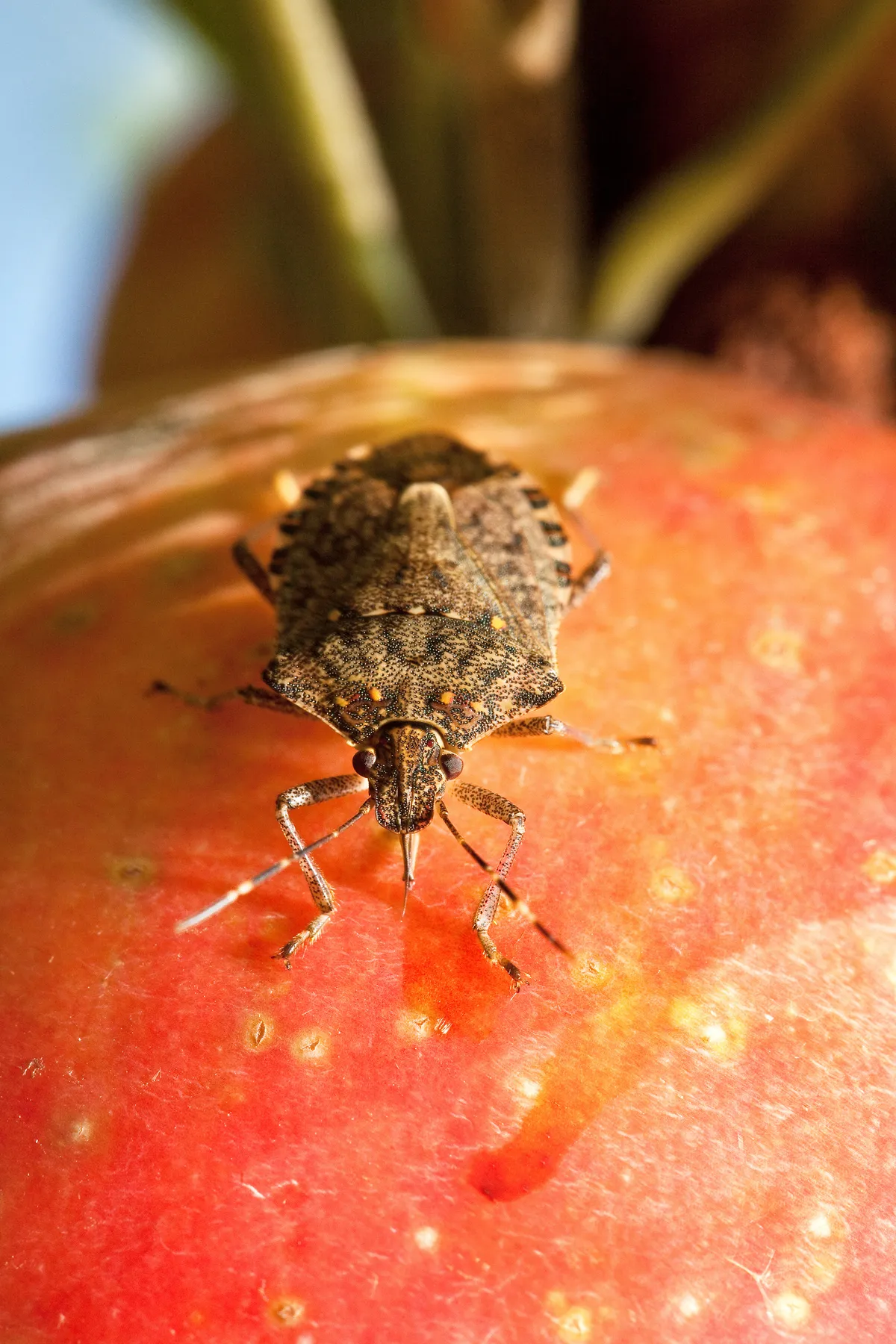
It is a mottled brown shield about 5/8 inch long with two white bands on each antenna, and Penn State says it is almost as wide as it is long. The EPA's brown marmorated stink bug page gives adults as about 9/16 to 2/3 inch (14 to 17 mm) long, roughly the size of a US dime, with light and dark bands on the last two antenna segments and along the edges of the abdomen.
UC IPM's distinguishing marks are the white antenna bands, a blunt front edge to the head, smooth shoulders, faint white bands on the legs, dark bands on the thin tips of the front wings and the banded abdominal edge showing beside the wings. The Field Guide to Stink Bugs of Agricultural Importance in the United States, led by Virginia Tech entomologists, adds small coppery patches on or near the head and an underside that is light gray, brown or tan, not green or yellow.
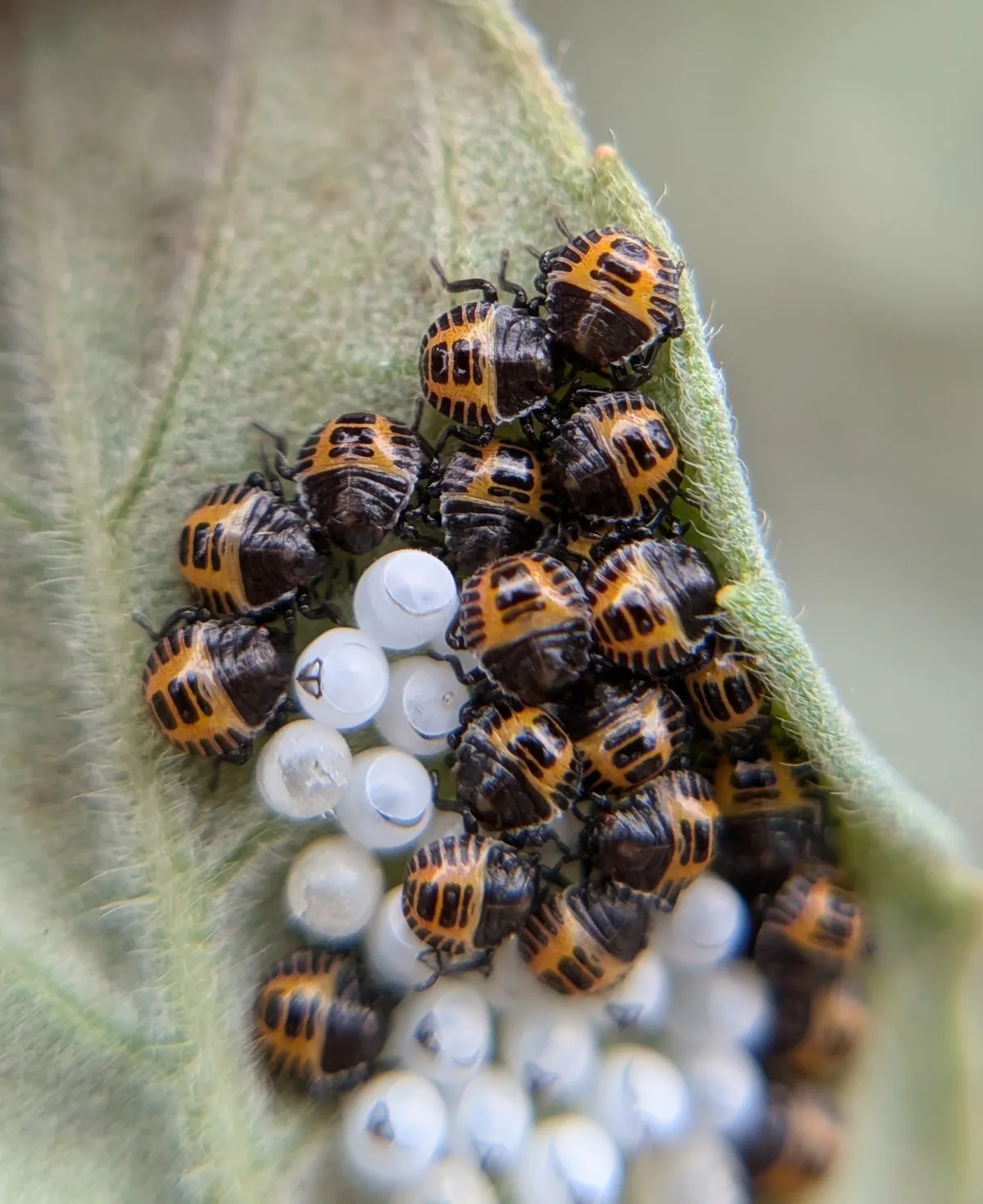
The young, called nymphs, are wingless. The EPA describes newly hatched nymphs with dark red eyes and a yellowish abdomen mottled black and red, and older ones as darker, with black and white bands on the legs and antennae; Penn State gives lengths from 3/32 inch (2.4 mm) to about 1/2 inch (12 mm). The eggs, pale and barrel-shaped in UC IPM's description, are laid outdoors in clusters of 20 to 30 under leaves. If a small nymph looks like a tick, a guide to bugs that look like ticks covers the checks that settle it.
Which bugs are mistaken for stink bugs?
Other stink bugs, western conifer seed bugs, boxelder bugs and kissing bugs cause most of the confusion. The University of Kentucky's fact sheet on stink bugs in homes says boxelder bugs and leaf-footed bugs such as the western conifer seed bug also enter buildings in fall and are sometimes mistaken for stink bugs.
| Bug | Typical adult size | How to tell it from a brown marmorated stink bug | What to do |
|---|---|---|---|
| Brown marmorated stink bug | About 5/8 inch | Mottled brown shield; white antenna bands; banded abdomen edge; smooth shoulders | Vacuum or drown it; seal gaps before fall |
| Other stink bugs | Often smaller | Usually no white antenna bands; rough stink bugs have toothed shoulders | Remove the same way if indoors |
| Western conifer seed bug | About 3/4 inch | Longer and reddish brown; flared, leaf-like hind legs | Seal and vacuum, as for stink bugs |
| Boxelder bug | About 1/2 inch | Brownish black with reddish-orange stripes; red eyes | Seal and vacuum, as for stink bugs |
| Kissing bug | 0.6 to 0.8 inch (eastern conenose) | Long, cone-shaped head; stout, straight beak; red, orange or yellow edge stripes on a dark body | Do not touch it bare-handed; have it identified |
Sources: Penn State Extension, UC IPM, the University of Kentucky, the Virginia Tech-led field guide and Texas A&M, linked in the text.
Checks to run with the bug in a jar
- Shape. A broad shield, almost as wide as it is long, fits a stink bug; a pear-shaped body with a long, narrow head fits a kissing bug.
- Size. Against a ruler or a dime, a brown marmorated stink bug is about 5/8 inch, roughly a dime, a boxelder bug about 1/2 inch and a western conifer seed bug about 3/4 inch.
- Antennae. Two white bands on each antenna mark the brown marmorated stink bug.
- Head and beak. A cone-shaped head with a stout, straight beak calls for the kissing bug checks below.
- Hind legs. A leaf-like flare on each hind leg fits a western conifer seed bug.
- Smell. A cilantro-like smell when it is disturbed fits a stink bug.
How do you tell it from other stink bugs?
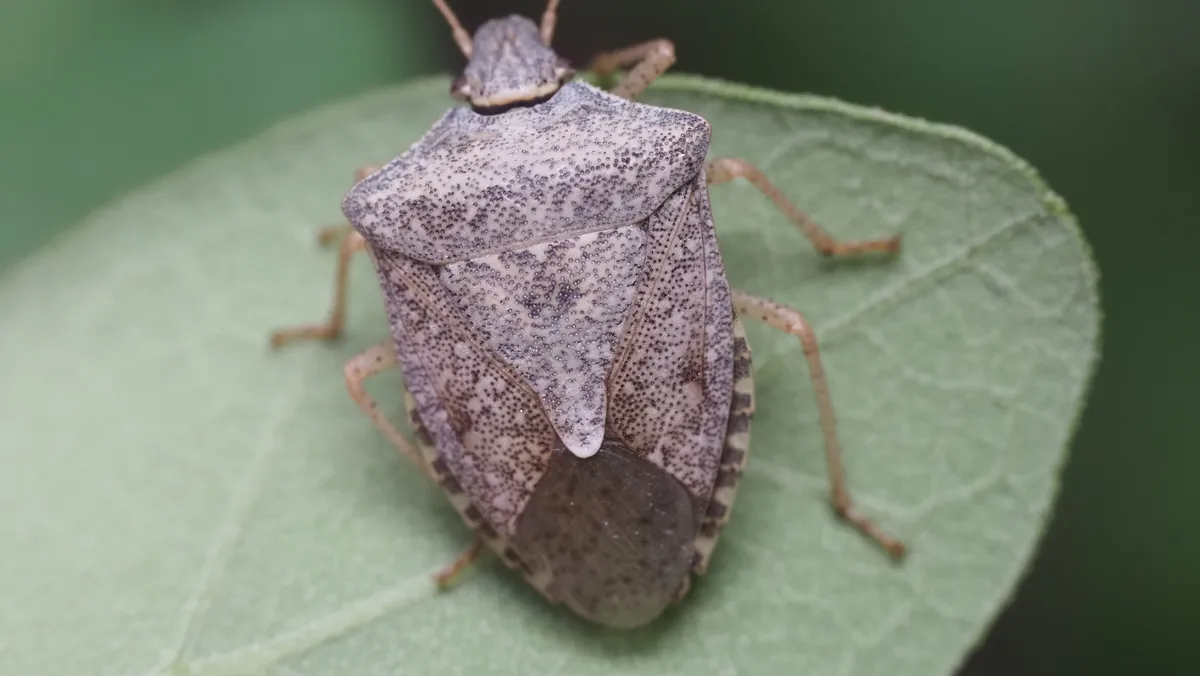
By the antennae and shoulders. Kentucky says the white and black banding on the legs, antennae and abdomen edge sets the brown marmorated stink bug apart from other stink bugs, only a few of which invade buildings. The Virginia Tech field guide describes the native brown stink bug as solid mottled brown, usually with rounded shoulders, the rough stink bug with a toothed shoulder edge and the green stink bug as green with black antenna bands. In California, UC IPM names the rough stink bug as the usual mix-up; it has no white antenna bands.
How do you recognize a western conifer seed bug?
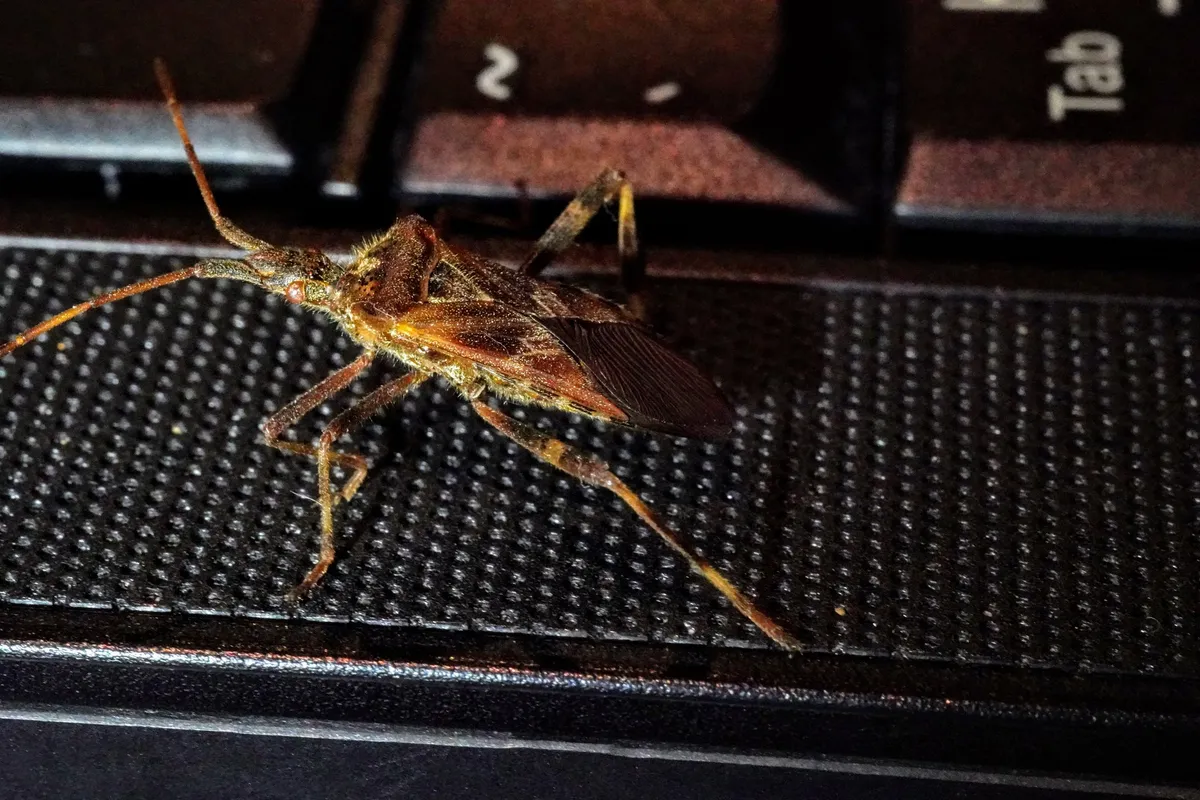
By its length and its hind legs. Penn State Extension's western conifer seed bug page gives adults as 3/4 inch (19 mm) long and reddish brown to dark brown, with a loud buzz in flight, and Penn State's kissing bug page points to the flared lower hind legs. Native to the Pacific Coast, it now occurs throughout the US. It feeds on conifer seeds, does not generally bite people and is not considered a medical risk; the same sealing keeps it out. See the western conifer seed bug guide.
How do you recognize a boxelder bug?
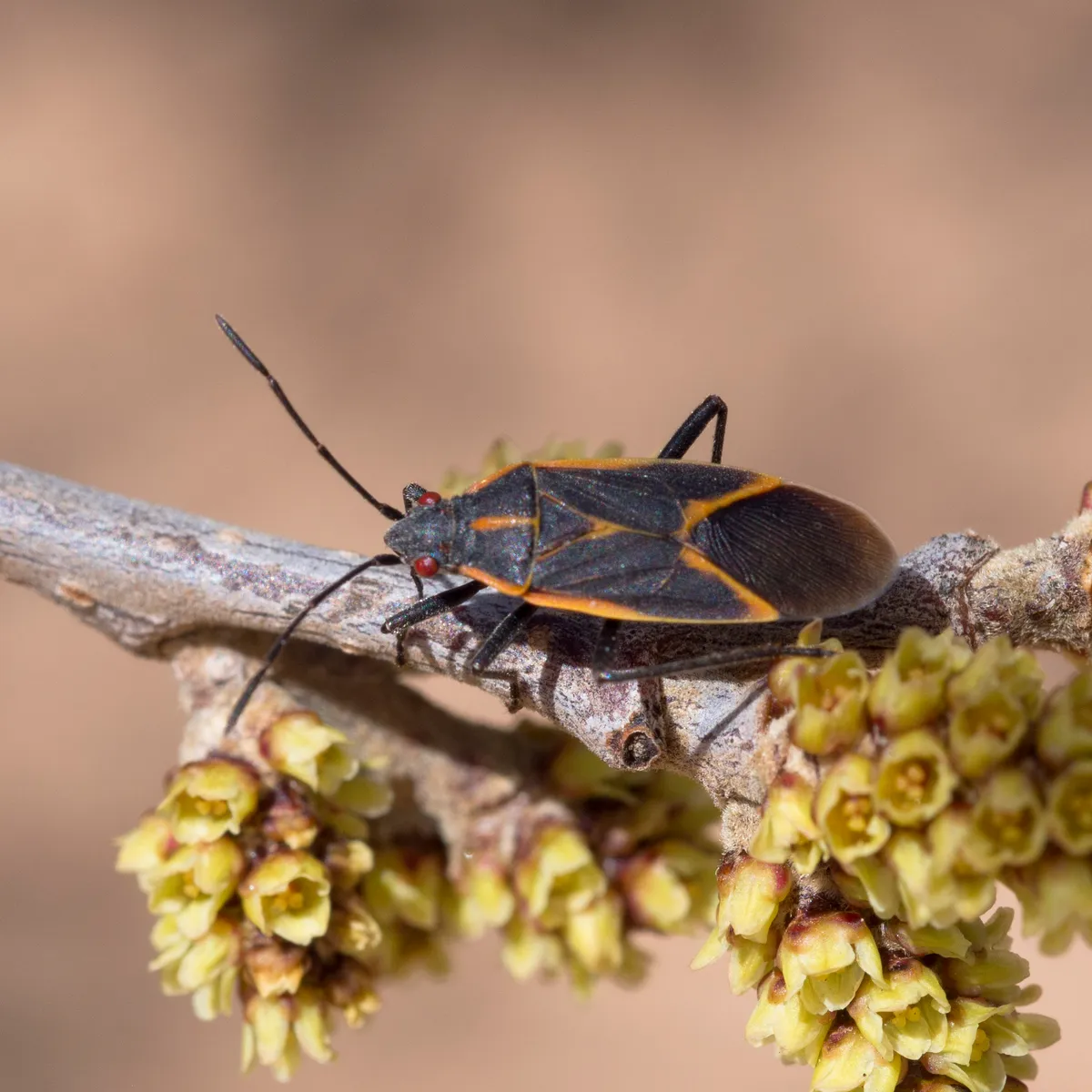
By its dark body and red trim. Penn State Extension's boxelder bug page describes adults as brownish black and about 1/2 inch (12 mm) long, with three reddish-orange stripes behind the head and reddish-orange wing edges, and Penn State's kissing bug page adds the red eyes. Boxelder bugs feed mainly on boxelder seeds, gather on sunny south walls in fall, and do not reproduce in buildings or bite people. See how to get rid of boxelder bugs and a step-by-step boxelder bug guide.
Is it a stink bug or a kissing bug?
Look at the head: a kissing bug has a long, narrow, cone-shaped head and a stout, straight beak, while a brown marmorated stink bug has a blunt head on a broad shield. Texas A&M AgriLife Extension's guide to kissing bug identification contrasts the kissing bug's stout, straight beak with the very thin mouthparts that plant-feeding bugs hold against the body; a hand lens shows them best from underneath.
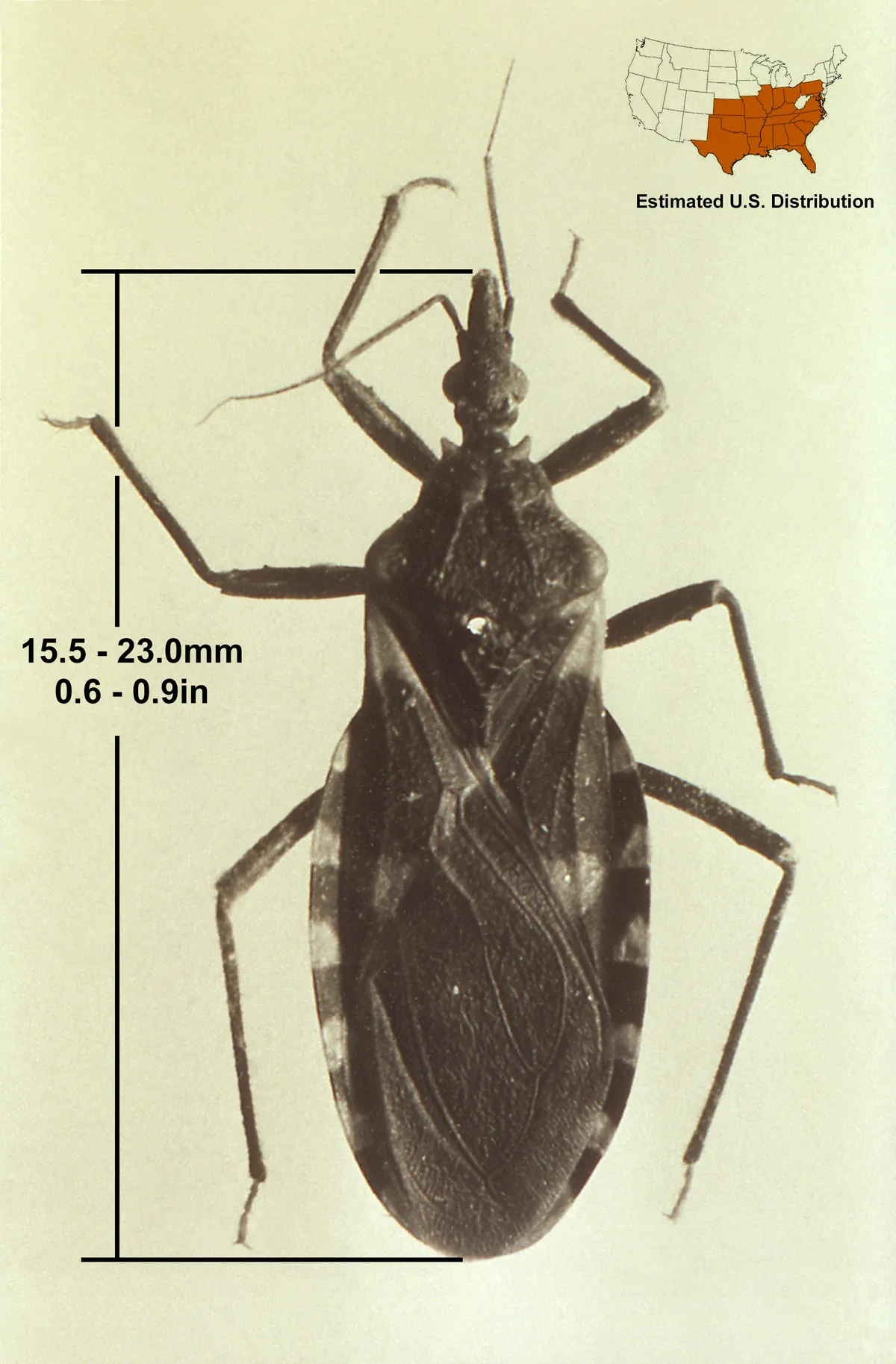
Penn State describes the eastern conenose, the kissing bug met most often in the East, as 0.6 to 0.8 inch long and dark brown to black, with red to orange markings along the sides; most of the 11 US species live in the Southwest. That banded edge invites the mix-up, because a brown marmorated stink bug has one too, in light and dark. Texas A&M adds thin, spineless legs and mostly unmarked wings, and says only insects with all of these features are likely to be kissing bugs.
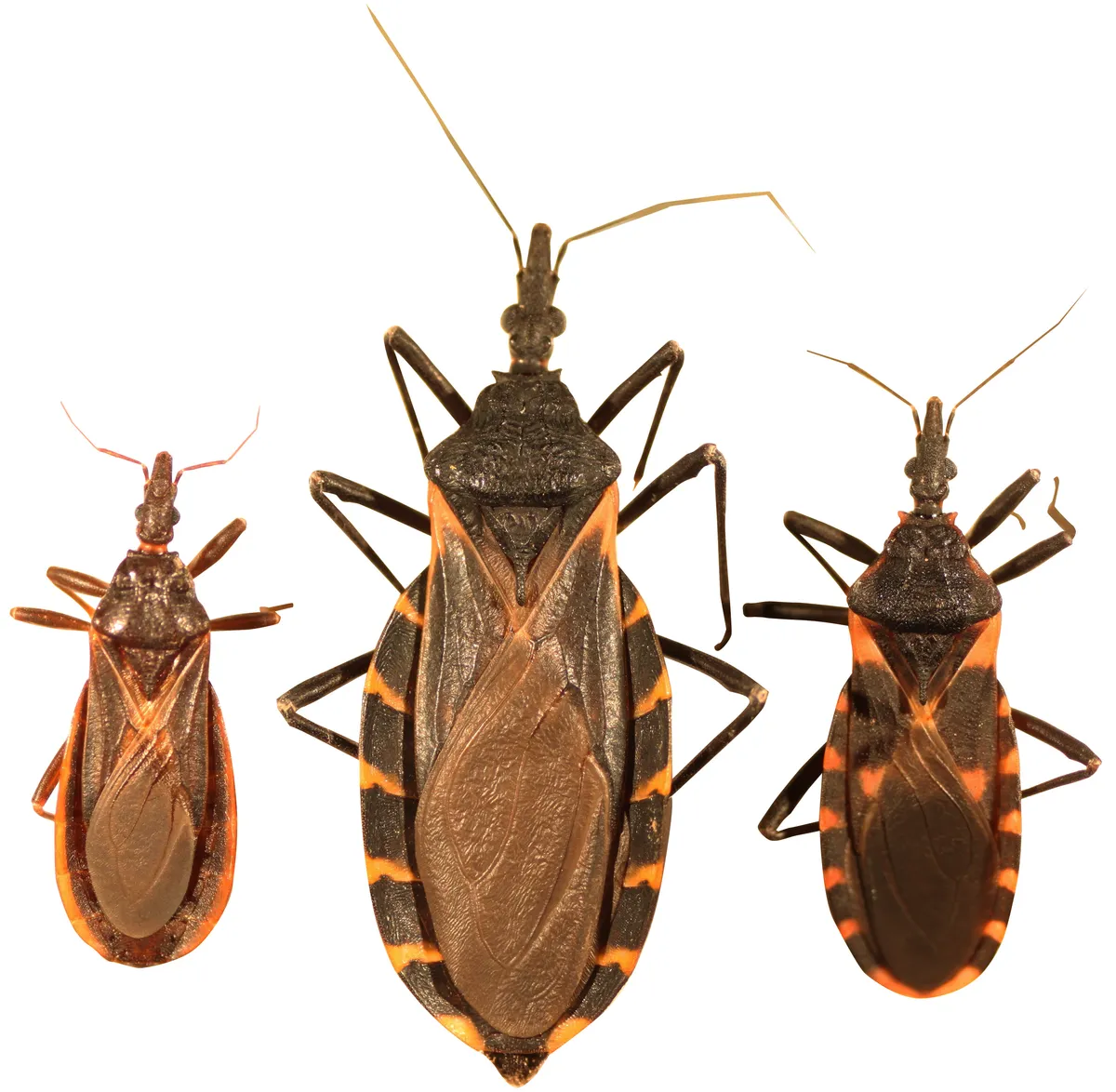
Kissing bugs feed on blood and can carry the parasite that causes Chagas disease; Texas A&M's kissing bug program says no other insects are known to carry it, and Penn State calls the risk for most Americans small. If you suspect one, do not touch it bare-handed: Texas A&M advises picking it up with a glove or small plastic bag, closing it in a container, freezing it for a few hours and sending photos for identification. See the kissing bug guide and a comparison of kissing bug look-alikes.
Do stink bugs bite, and is the smell harmful?
No, they do not bite. UC IPM says brown marmorated stink bugs are not harmful to people, houses or pets: they do not bite, sting, suck blood or spread mammalian diseases. Kentucky says their piercing mouthparts are used only to suck nutrients from plants, and the EPA says they are not known to transmit disease.
The odor and fluid are the problem. Kentucky describes the smell as pungent and cilantro-like and says crushed or handled bugs often release chemicals that irritate skin, so use paper towels or tissue and keep your hands away from your face and eyes. Penn State says the odor can cause rhinitis or conjunctivitis in sensitive people, especially those sensitive to cockroach or lady beetle odors, and that bugs crushed on bare skin can cause dermatitis in what appears to be a small percentage of people.
Kentucky advises people with eye or nose symptoms in a home with many stink bugs to consult their physician, and notes that the bugs' fecal spots can stain walls and curtains.
Why do stink bugs come into the house?
To spend the winter. Kentucky says shorter days and cooler temperatures trigger the move: after gathering on host plants in late summer, adults fly to buildings on warm, sunny days in September and October, favor the upper parts of a house and often get in through attics and chimneys. Buildings in poor repair can take them in by the thousands, and homes in wooded and farm areas are especially prone.
Once inside they do not breed: Kentucky says the adults overwinter unmated, so the bugs seen in winter came in the fall before. They come out on warmer days through the winter and leave from March to May. Many die when winter temperatures routinely fall below 10°F, Kentucky adds, while mild winters lead to large population increases.
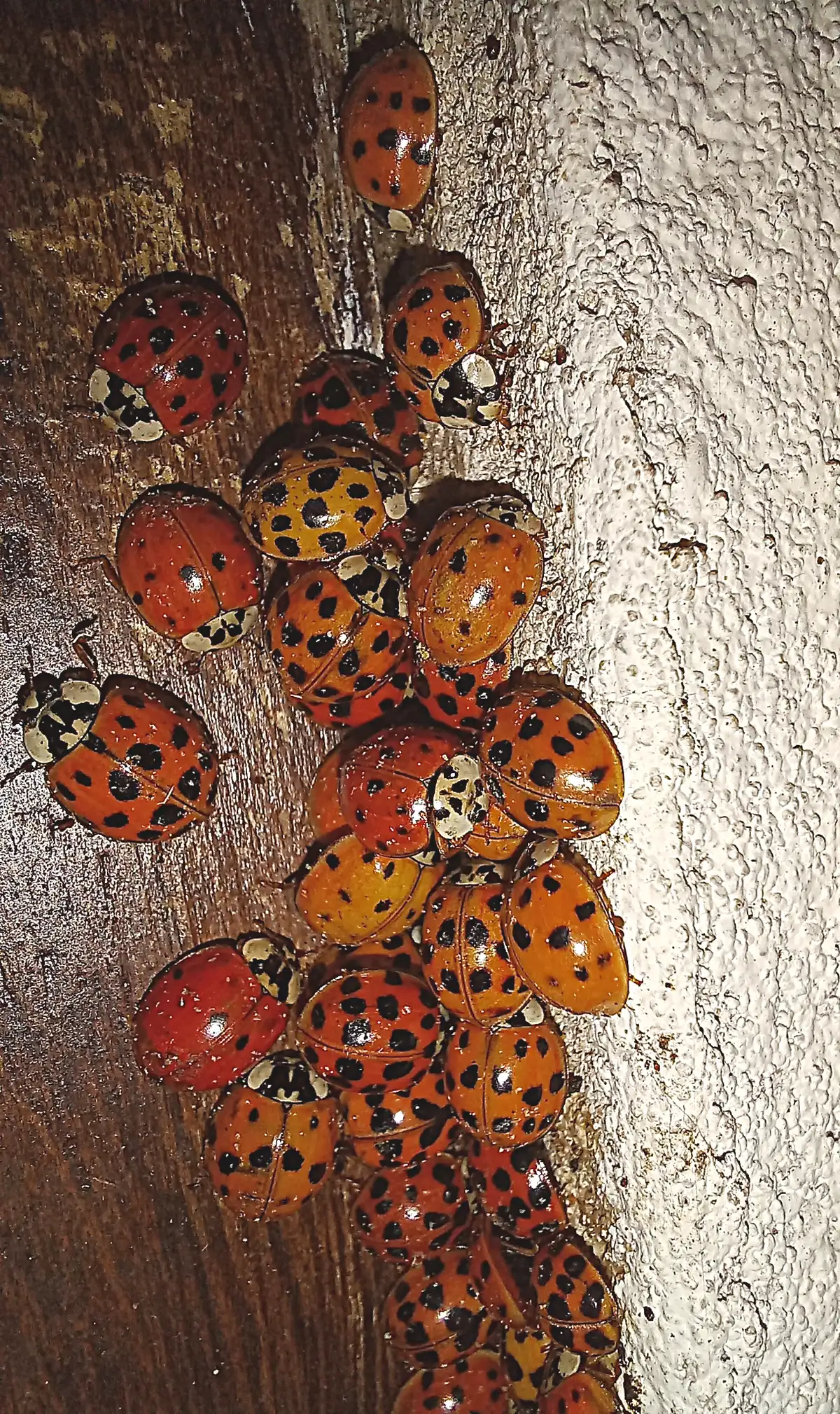
Other invaders arrive in the same season. Kentucky says Asian lady beetles overwinter much like stink bugs but in Kentucky enter later, in October and November, and Penn State lists cluster flies among the same fall home invaders. A guide to bugs in the house in winter sorts them all, the Asian lady beetle guide covers the beetles and how to get rid of cluster flies covers the flies.
How do you get stink bugs out without crushing them?
Vacuum them, knock them into soapy water or catch them in a container; crushing releases the odor and the irritating fluid.
- Vacuum. It works, but the bag and hose will smell for a while, so some people keep a vacuum just for stink bugs. A nylon stocking pushed into the tube and held over its end with a rubber band catches the bugs before the bag (UC IPM); Kentucky says a large collection may call for throwing out the bag.
- Soapy water. Brush bugs into a cut-off plastic bottle holding about an inch of soapy water, where they drown in a short time; fastened to a pole, it reaches high spots (UC IPM).
- Drop and catch. Kentucky notes that stink bugs drop from walls and ceilings when disturbed, so hold a container underneath and prod them gently.
- Freeze. Seal live bugs in a plastic bag and freeze them for 2 days (UC IPM).
- Disposal. UC IPM advises against flushing them, to save water, or putting live bugs in the trash, where they could become established around landfills.
Outdoors, UC IPM suggests sweeping clusters into containers when it is cool enough that they do not fly; a stream of water knocks them off walls, but they will likely return.
Do stink bug traps work?
A homemade light trap works indoors; pheromone traps do not. Virginia Tech researchers found in 16 homes over two years that a foil roasting pan of water and dish soap under a light, in a dark room, caught 14 times more stink bugs than store-bought traps. UC IPM calls it the most effective and inexpensive indoor trap: the bugs fly to the light, fall into the water and drown.
The EPA says such pan traps attract stink bugs but are not complete control on their own, and Kentucky says glue-board light traps can help in attics, since stink bugs are strongly attracted to ultraviolet light.
Kentucky says the aggregation-pheromone traps used to monitor stink bugs in agriculture do not attract the bugs overwintering inside buildings. In gardens, UC IPM says they show when stink bugs are present but probably do little to prevent crop damage; in a 2013 Maryland study, single traps about 3 feet from garden rows led to more stink bugs and damage on nearby plants.
How do you keep stink bugs out of the house?
Seal the outside in summer, before they move in. Kentucky calls sealing the most permanent way to keep stink bugs out and summer the best time to do it; in Kentucky the bugs start entering buildings in early to mid-September, and the thin-bodied adults fit through surprisingly tight spaces.
Where to seal, and with what
- Outside walls. Caulk cracks around windows, doors, siding, pipes and wires, behind chimneys and under fascia and soffits, using good-quality silicone or silicone-latex caulk (Penn State) or foam sealant (UC IPM).
- Doors. Add weather stripping and tight sweeps; the EPA says a door needs them if daylight shows around it.
- Screens and vents. Repair damaged screens and put screening behind attic and gable vents. In Kentucky's trials, 1/2-inch and 1/4-inch hardware cloth let 100 and 50 percent of adults through; mesh of 1/6 inch or smaller kept them out.
- Pipes. Caulk small gaps around plumbing and fill larger ones with steel wool (EPA).
- Chimneys and window units. Cap or screen the chimney top (EPA); seal around window air conditioners or remove them in fall (Kentucky).
- Foundation. Seal foundation cracks and secure crawlspace entries (EPA).
- Lights. Turn off outdoor lights you do not need; UC IPM says stink bugs are naturally attracted to lights.
If they are already in the walls, seal from the inside. Penn State says stink bugs come into rooms through cracks under or behind baseboards, around window and door trim and around exhaust fans and ceiling lights, and it recommends caulking those openings so they cannot crawl out.
Should you spray insecticide for stink bugs?
Not indoors. Penn State says insecticide is not advisable once the bugs are in wall voids or the attic: dust there may kill many, but carpet beetles can feed on the dead bugs and then attack woolens and stored dry goods, a problem covered in the carpet beetle guide. Kentucky makes a possible exception only for heavily infested areas such as attics.
Pyrethrum foggers kill the bugs on walls and ceilings, but more emerge soon after the room is aired out, Penn State says, and sprays into cracks and crevices do not stop them emerging. The EPA says the same of foggers labeled for stink bugs.
Outside, a perimeter treatment applied before the bugs gather can help a little. Kentucky describes fast-acting residual insecticides sprayed into crevices and as a band around windows, doors, eaves, soffits, attic vents and chimneys, naming lambda-cyhalothrin, deltamethrin, bifenthrin and cyfluthrin, all four of them pyrethroids in the EPA's review. Its timing is early to mid-September in the Midwest, varying by locale, probably repeated at least monthly through the flight period; spraying in late winter or spring is ineffective, because the bugs got in the fall before.
Expect modest results. Penn State calls exterior insecticide minor relief for houses that cannot be fully sealed, recommends a licensed pest control operator and says sunlight breaks it down within several days to a week; UC IPM says sealing is much more effective.
The EPA's introduction to pesticide labels explains that labels are legally enforceable and that using a product in a way inconsistent with its labeling violates federal law, so use only a product labeled for the site you are treating, at the rate and reapplication interval its label gives. Kentucky adds that some products may not be legal in every state, and the EPA's review of pyrethroids found potential risks to fish and invertebrates and called for steps to reduce spray drift and runoff.
Do stink bugs damage gardens?
Yes, mostly fruit and fruiting vegetables. UC IPM lists apple, pear, peach, lima bean, pepper, sweet corn and tomato among the crops most affected in the mid-Atlantic, where it says many backyard gardeners have lost all their susceptible crops. Feeding leaves pockmarks and hard, pithy flesh under the skin; Penn State describes cat-facing on apples and spongy areas in tomatoes and peppers.
The EPA says the bug causes major damage in the mid-Atlantic but is not a significant agricultural pest in most other areas, and UC IPM says a small damaged spot can be cut out without affecting eating quality.
UC IPM's garden options are row covers, which also keep out pollinators; handpicking or brushing bugs into soapy water; a hand vacuum; and destroying egg masses under leaves. Most garden insecticides do little, especially against adults, though pyrethroids, oils and botanicals such as pyrethrin or azadirachtin may suppress young nymphs.
Spare the spined soldier bug: the Virginia Tech field guide lists this brown stink bug, with pointed shoulders and a long spine under the abdomen, among the beneficial predators.
This guide is general educational information, not medical advice. If you have symptoms or concerns after a bite or exposure, contact a healthcare provider.
Use any pesticide exactly as its label directs. The label is the law, and what is registered and sold varies by state.
Frequently Asked Questions
Why are there stink bugs in my house in winter?+
They moved into the walls or attic last fall and come out when it warms up. The University of Kentucky says brown marmorated stink bugs stay more active indoors through the winter than lady beetles do, especially on warmer days, and leave from March to May to live outdoors again. They overwinter unmated and do not breed indoors, so the bugs seen in January are the same ones that came in during September and October. Vacuum them or drop them into soapy water now, and seal the gaps they used before next fall.
Do stink bugs lay eggs in the house?+
No. The University of Kentucky says brown marmorated stink bugs overwinter unmated and do not breed or reproduce indoors, and UC IPM says the adults do not reproduce during the winter months. Eggs are laid outdoors: the EPA describes clusters of 20 to 30 light green or yellow eggs on the undersides of leaves, laid from May through August. A stink bug found inside in winter came in the previous fall rather than hatching there.
Does soapy water kill stink bugs?+
Yes. UC IPM says stink bugs brushed into a container holding about an inch of soapy water drown in a short time, and it calls a foil pan of water with a few drops of dish soap, set under a light in a dark room, the most effective and inexpensive way to trap them indoors. In gardens it suggests handpicking stink bugs or brushing them off plants into soapy water. Sealing live bugs in a plastic bag and freezing them for 2 days also kills them, UC IPM says.
Where did brown marmorated stink bugs come from?+
East Asia. The University of Kentucky gives the native range as China, Taiwan, Japan and Korea, and the EPA says the species reached the US in the mid-1990s, possibly as a stowaway in a shipping container. Penn State Extension says it was first collected in Allentown, Pennsylvania, in September 1998, though it probably arrived several years earlier. Kentucky says it is now present in at least 46 states, can fly more than a mile and hitchhikes on vehicles. The EPA says the highest concentrations are in the mid-Atlantic.
What does it mean to have stink bugs in the house?+
Usually that the house has gaps they can get through. Brown marmorated stink bugs come indoors for shelter, not for food or to breed: the University of Kentucky says they feed solely on plants and do not reproduce indoors. It says buildings in poor repair with many cracks and openings are the most vulnerable, that homes in wooded and agricultural areas are especially prone, and that late-summer gatherings on host plants near a house make an invasion likely. Sealing those openings in summer is the most permanent fix, Kentucky says.
Sources
- Brown Marmorated Stink Bug — Penn State Extension
- Pest Notes: Brown Marmorated Stink Bug (UC ANR Publication 74169) — University of California Statewide IPM Program
- Stink Bug Infestation of Dwellings (ENTFACT-654) — University of Kentucky Entomology
- Brown Marmorated Stink Bug — U.S. Environmental Protection Agency
- Field Guide to Stink Bugs of Agricultural Importance in the United States (VCE Publication 444-356) — Virginia Cooperative Extension, Virginia Tech
- Stink bugs beware! Homemade stink bug traps squash store-bought models, Virginia Tech researchers find — Virginia Tech News
- Western Conifer Seed Bug — Penn State Extension
- Boxelder Bug — Penn State Extension
- Kissing Bugs — Penn State Extension
- Kissing bug identification requires closer look — Texas A&M AgriLife Extension (Insects in the City)
- Found a Bug? (Kissing Bugs and Chagas Disease) — Texas A&M University College of Veterinary Medicine and Biomedical Sciences
- Introduction to Pesticide Labels — U.S. Environmental Protection Agency
- Registration Review of Pyrethrins and Pyrethroids — U.S. Environmental Protection Agency
How this guide was made: it was researched and drafted with AI assistance from the sources listed above. A second, independent AI pass then checked each factual claim against those sources. Found an error? Email support@buzzskito.ca.