
Published by BuzzSkito Mosquito & Tick Control
Published October 28, 2026 · Fact-checked against the sources listed below
What does a black widow bite look like?
Usually like a minor mark. MedlinePlus, the National Library of Medicine's consumer health site, says the first sign is usually a pinprick-like pain as the bite happens, though some people feel nothing, and that minor swelling, redness and a target-shaped sore may appear. CDC's National Institute for Occupational Safety and Health (NIOSH) says black widow bites have two puncture marks.
StatPearls, a clinical reference on NIH's NCBI Bookshelf, says that within minutes the skin around the bite may turn painful, red and swollen, with a small puncture point in the center and sometimes visible fang marks, and that a patch of sweating in the pale center of the mark is a classic sign. It adds that bites often go unnoticed at first and are diagnosed almost entirely from the bite, the symptoms and the person's account, so the symptoms below are what to watch.
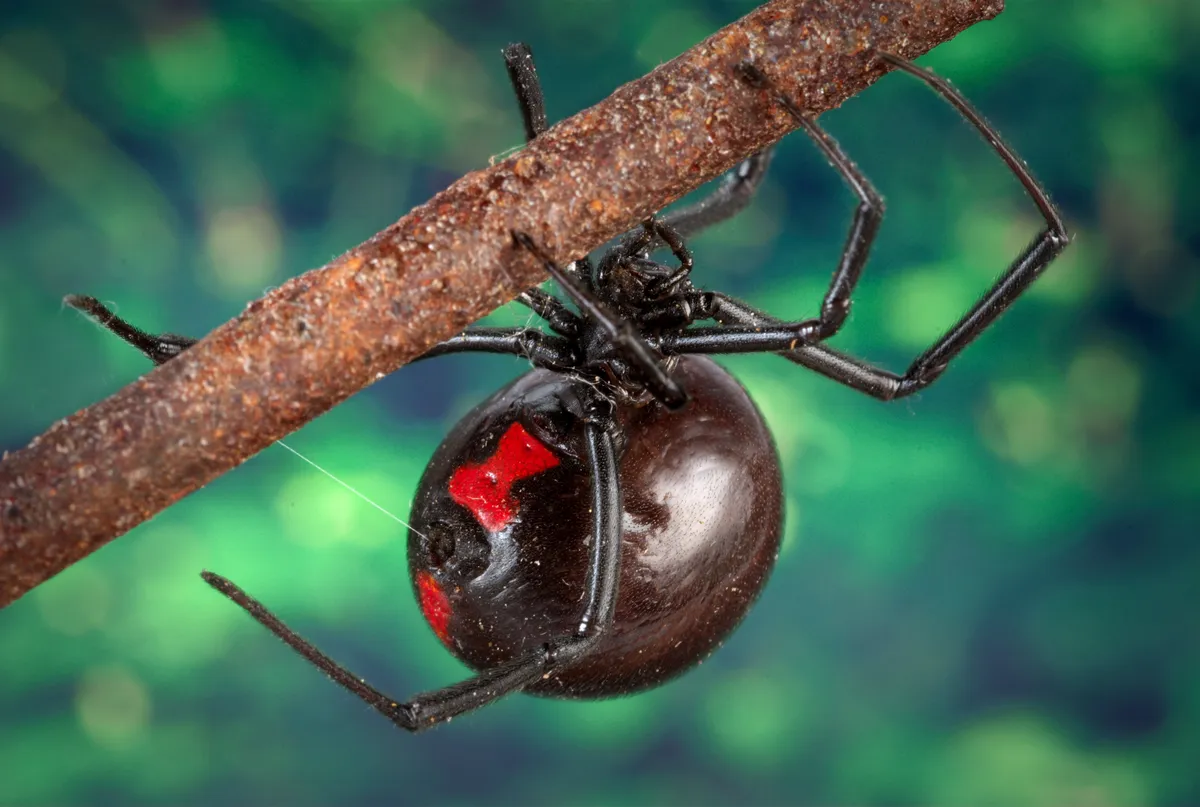
No photo of a black widow bite is shown here: no clinically confirmed photo that can be credited and shared was available, and a small red mark could not show what caused it anyway. The photos show the spider instead, since CDC says identifying it, when that is safe, aids medical treatment.
What are the symptoms of a black widow bite?
Spreading muscle pain and cramps are the hallmark. MedlinePlus says a dull muscle pain spreads from the bite to the body after 15 minutes to 1 hour, felt mostly in the chest after a bite on the upper body and in the belly after one on the lower body, and that the severe pain and cramping can be mistaken for appendicitis, gallbladder pain or even a heart attack. Poison Control says the pain and cramps can come in waves.
Doctors call the whole-body illness latrodectism, after the widow genus Latrodectus. StatPearls says only some people progress to it, and that its pain travels outward from the bite, from a bitten ankle up the leg and on to the belly, chest and back. MedlinePlus lists these symptoms:
- At the bite. Pinprick-like pain or none, minor swelling and redness, a target-shaped sore, and numbness and tingling that may spread out from the bite.
- Muscles. Very painful cramps or spasms, rigid muscles and weakness; the University of California's Pest Note on widow spiders (UC IPM) names rigid stomach muscles.
- Whole body. Sweating, extra saliva, nausea and vomiting, headache, light sensitivity, anxiety and restlessness.
- Heart and breathing. High blood pressure and difficulty breathing; StatPearls adds a fast heart rate and fast breathing, which often rise with the pain.
- Other signs. Seizures, and facial swelling in the hours after the bite that can be mistaken for an allergy to the treatment. Pregnant women may have contractions and go into labor.
Most bites stop well short of that. In a review of US poison center records from 2000 through 2008, 9,872 of 23,409 reported black widow exposures caused at least minor effects; of those, 65 percent were minor, 33.5 percent moderate and 1.4 percent major, and none were fatal. UC IPM says bites are quite rare even where the spiders are very common.
What is the timeline of a black widow bite?
Pain at the bite comes first, spreading pain and cramps within the hour, whole-body symptoms over the next hours, and for most people recovery within a few days. Where the sources differ, the table gives each.
| Time after the bite | What can happen | Source |
|---|---|---|
| At the bite | A pinprick-like pain, or nothing; bites often go unnoticed at first | MedlinePlus; StatPearls |
| Within minutes | Pain, redness and swelling, a small central puncture, sometimes fang marks; sweating at the bite | StatPearls; Poison Control |
| 15 minutes to 1 hour | A dull muscle pain spreads from the bite; cramps begin, often at the bite | MedlinePlus; Poison Control |
| The first hours | Pain and cramps reach the belly, back or chest and can come in waves; nausea, vomiting, sweating, high blood pressure; the face may swell | Poison Control; MedlinePlus |
| 24 to 48 hours | Recovery is usually complete, though symptoms can persist for several days | StatPearls; Poison Control |
| 2 to 3 days | Severe symptoms usually start to improve | MedlinePlus |
| Weeks | Milder symptoms may last several weeks; lasting pain or spasms are rare | MedlinePlus; StatPearls |
Timing varies, and only some people go on to whole-body symptoms (StatPearls). Sources: MedlinePlus, StatPearls and Poison Control, each linked on this page.
How can you tell if a black widow bit you?
With certainty, only by seeing the spider bite and having it identified, and doctors do not need that to treat you. StatPearls says confirmation takes a witnessed bite and an expert's identification of the spider, but that this is not necessary and patients should not be advised to capture, harm or handle the spider. Doctors go by the bite, the symptoms and the story.
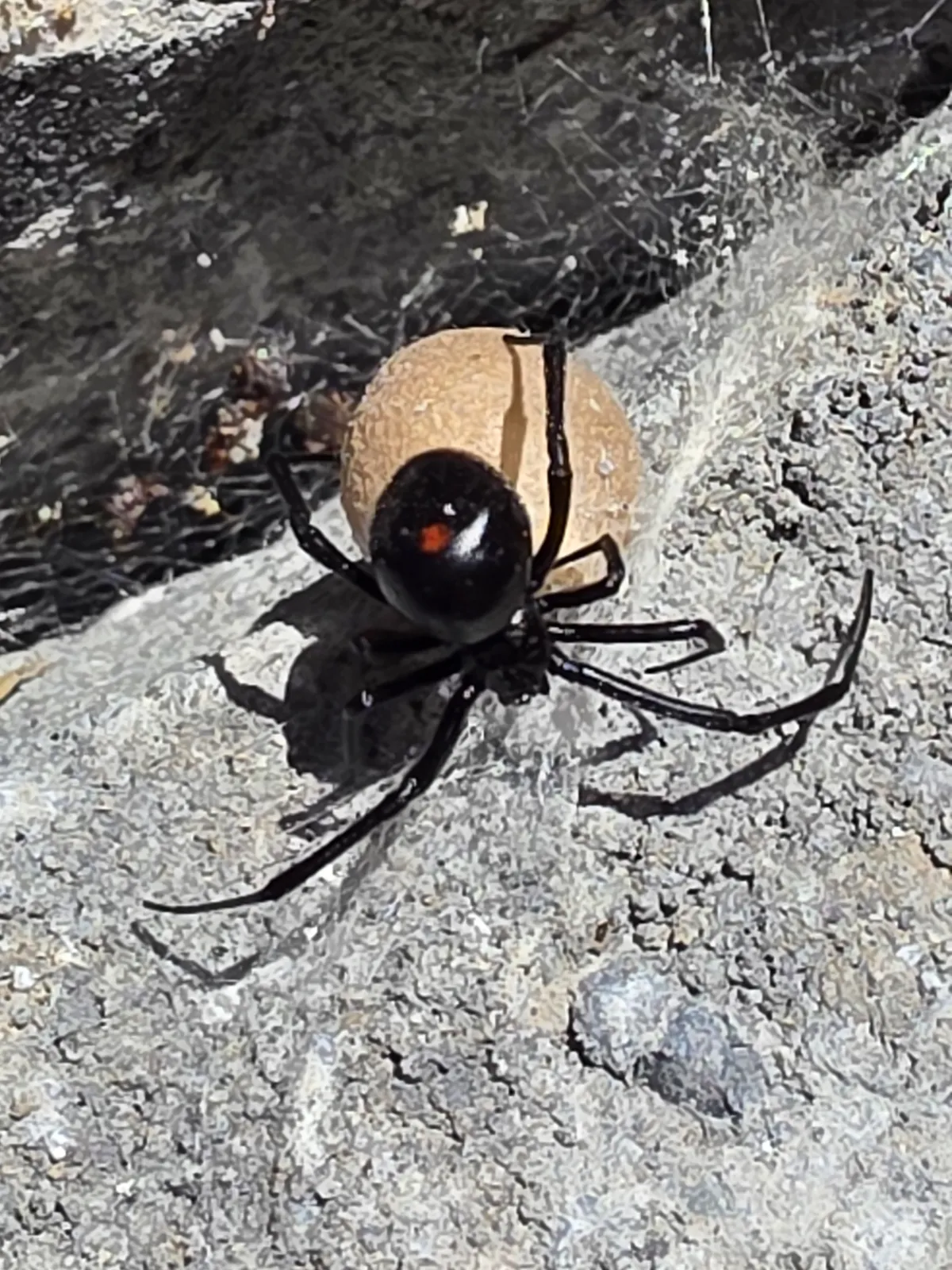
The spider to know is the adult female. UC IPM describes the female western black widow as about 1/2 inch long and shiny jet black, with a round abdomen and a red hourglass underneath that varies and, on rare occasions, is missing. It says almost all medically important bites come from adult females, and Poison Control says the very small males have fangs too short to harm people.
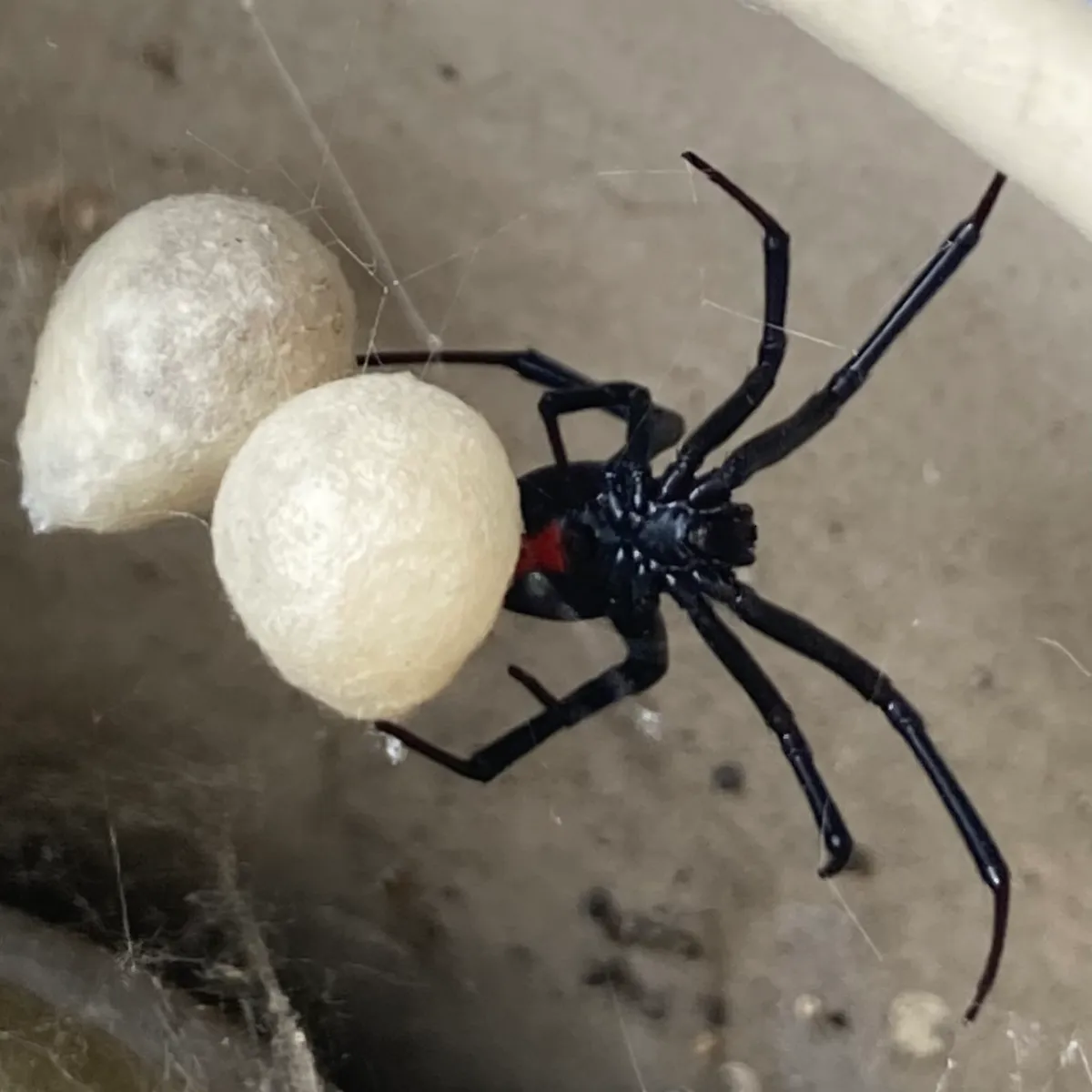
UC IPM says the web is a tangled, irregular mesh usually within about three feet of the ground, tied to a retreat in a hole or crevice, and that widows come out at dusk. The black widow spider guide covers the three US black widows and their look-alikes, the spider identifier asks about a spider you found and shows likely matches with photos, and the guide to spider egg sacs compares widow egg sacs with others.
Where and when do black widow bites happen?
Mostly outdoors and in outbuildings, in the warmer months, and usually on the arms or legs, StatPearls says, naming firewood, garages, gardening and outdoor equipment, trash, outhouses and outdoor furniture as typical widow sites. CDC adds woodpiles, eaves, fences and spots where debris collects, and says most spider bites happen because a spider is trapped or touched. Poison Control adds brush piles, the corners of garages and sheds, the undersides of flowerpots and stored gardening gloves and boots.
Black widows are found throughout the United States, mostly in the South and West, MedlinePlus says. StatPearls names the southern and western black widows as the species most often behind US bites, with the northern black widow in eastern states, and the guide to venomous spiders by state sorts out which live where. In the 2000 to 2008 review, exposures peaked in September and were lowest in January and February, and a 2025 review of 2012 to 2022 records found them most frequent in warm-weather states and in summer.
What else gets mistaken for a black widow bite?
Bites from look-alike spiders, a brown recluse bite, and illnesses with the same kind of pain. UC IPM says the brown widow, mottled tan, brown and gray and about 3/8 inch long, has a much milder bite than the western black widow, and that the chocolate-brown false black widow, which never has red on its belly, is not a true widow; its mild venom can cause burning pain and minor swelling, much like a yellowjacket sting. The guide to black spiders sorts other shiny black spiders.
CDC says a brown recluse bite may sting and usually raises a small white blister, and that its venom can destroy skin tissue, while the widow's venom is a neurotoxin whose pain spreads to the chest, abdomen or whole body; what a brown recluse bite looks like covers that bite stage by stage. StatPearls says doctors also consider scorpion stings and, for belly, back or chest pain, causes such as appendicitis and heart conditions. If you never saw a spider, the bug bite identification chart compares bites by pattern and timing, and the bug bite identifier asks six questions about yours.
The spider behind the bite, and what gets mistaken for it
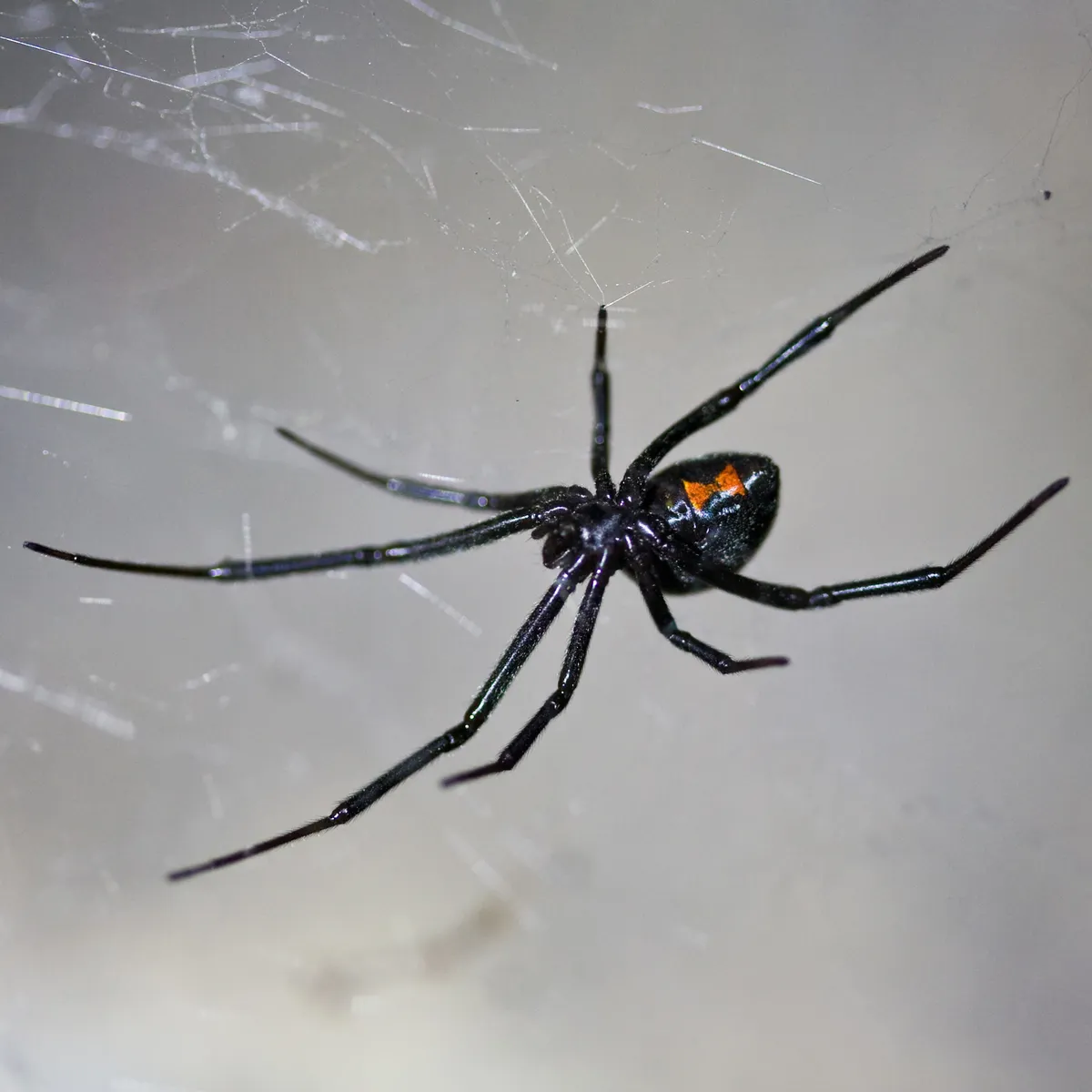 Black widowShiny black, about 1/2 inch, red hourglass underneath; adult females give almost all serious bites
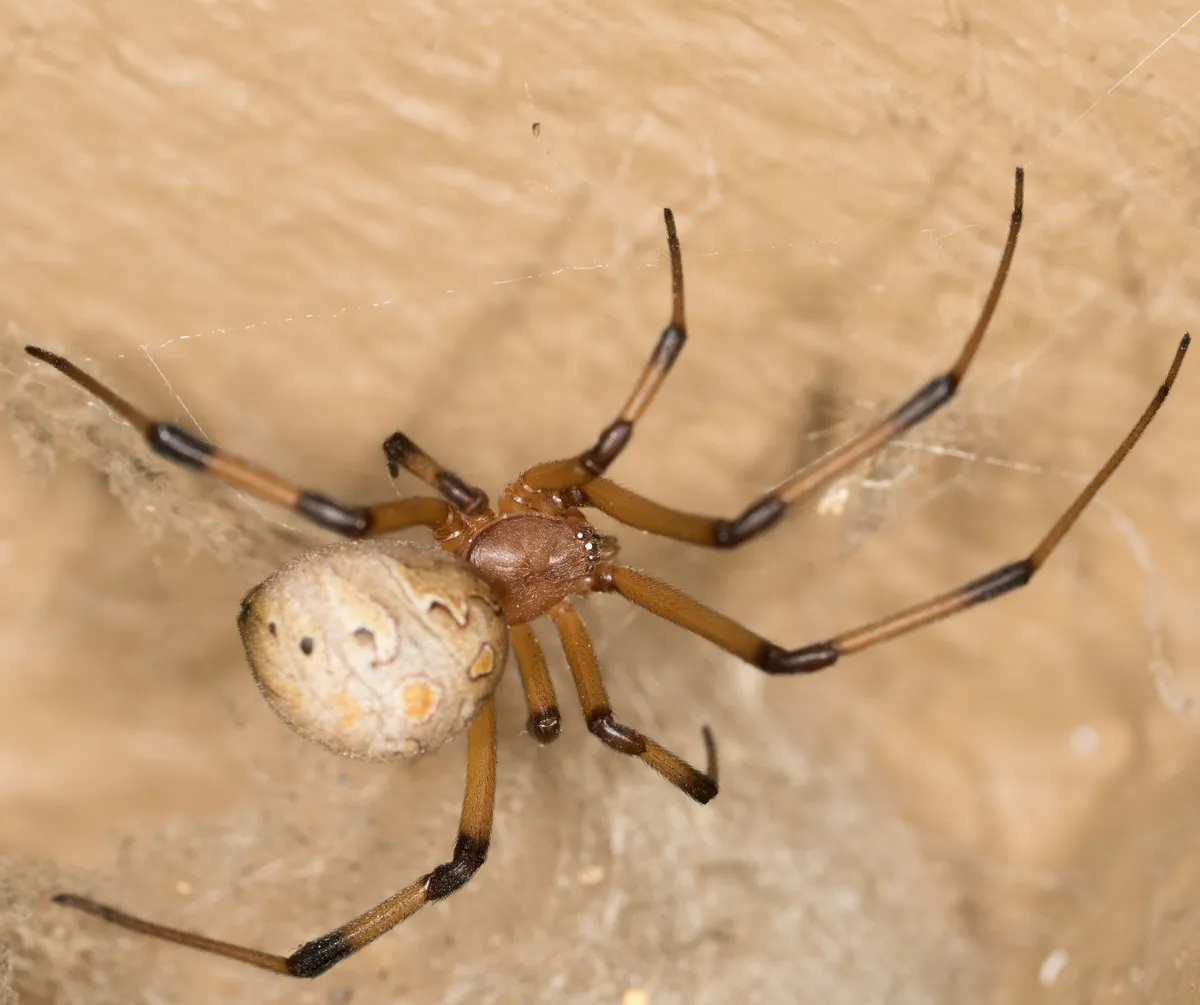 Brown widowMottled tan, brown and gray, about 3/8 inch; UC IPM says its bite is much milder
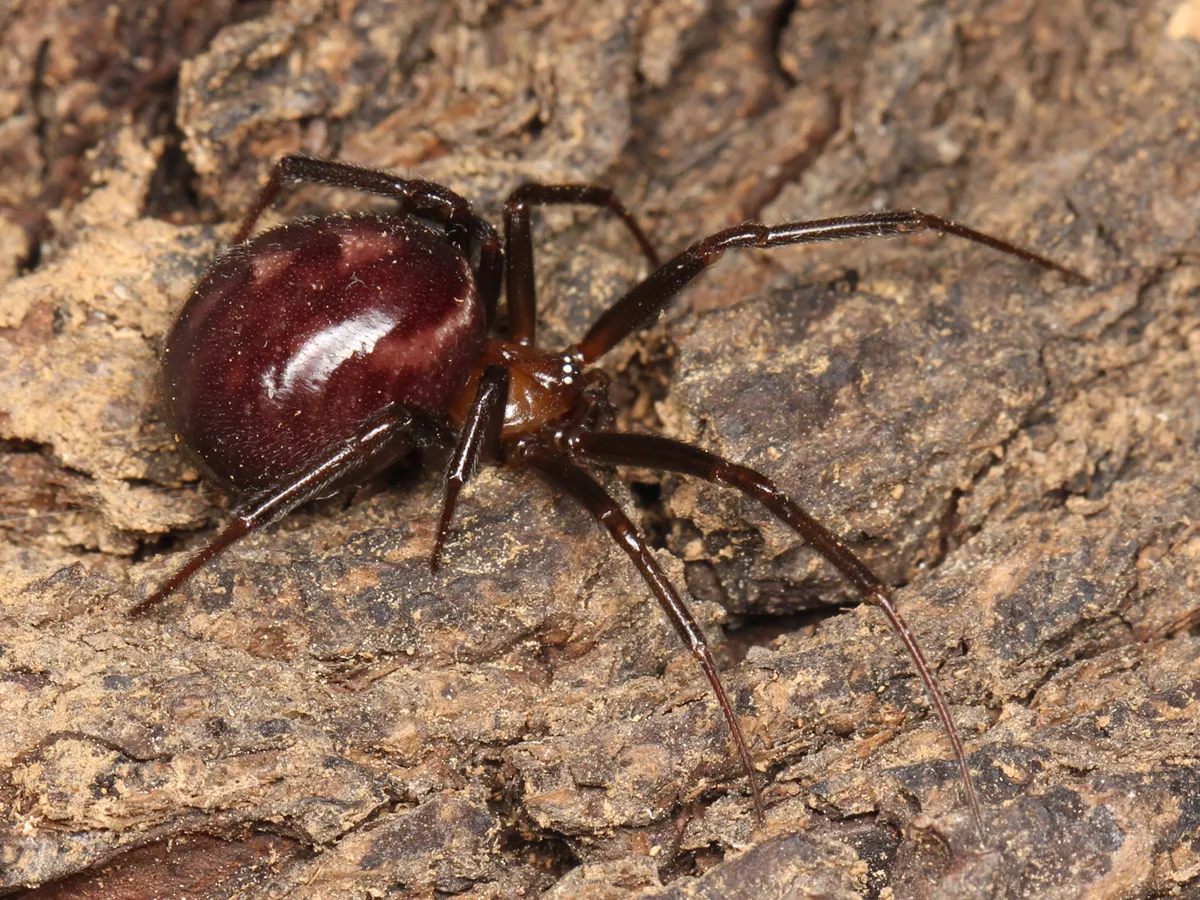 False black widowChocolate brown with no red on its belly; not a true widow, and its venom is mild
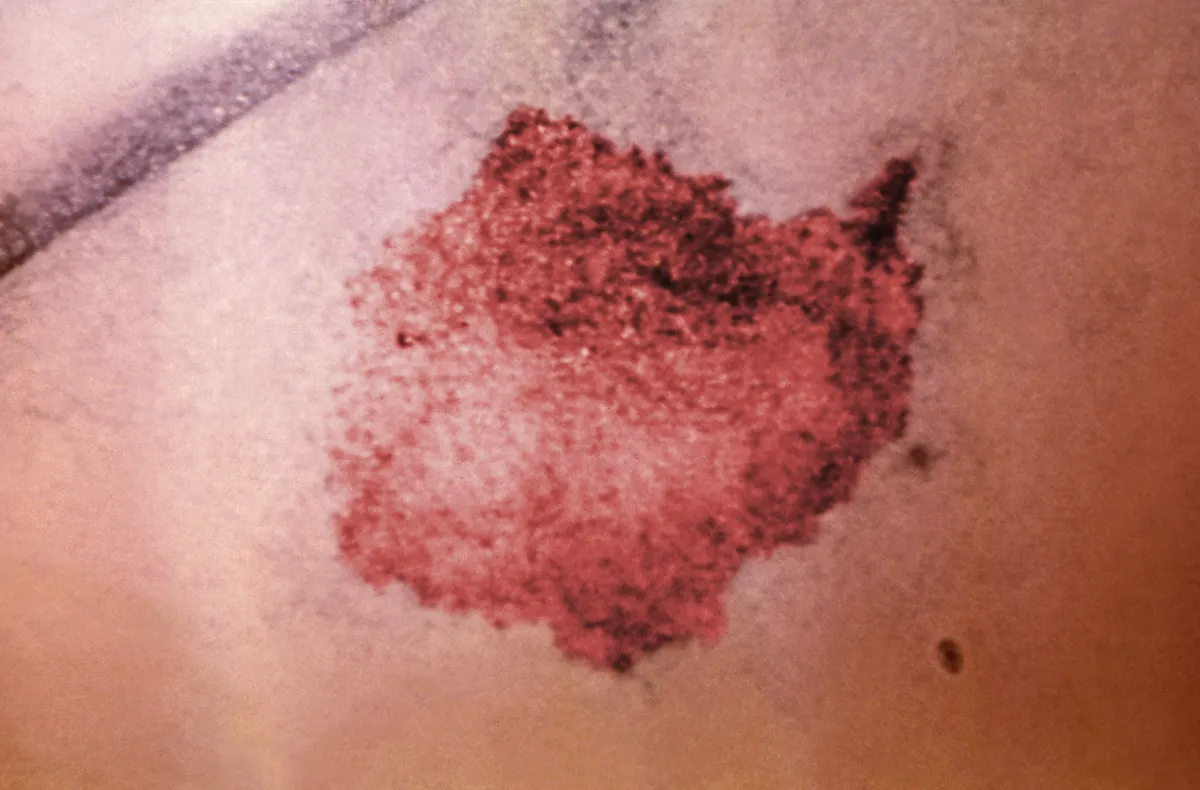 Brown recluse biteMay sting, then usually a small white blister; CDC says the venom can destroy skin tissue
Photos: Black widow: (c) Ken-ichi Ueda, some rights reserved (CC BY), via iNaturalist, CC BY 4.0. Brown widow: no rights reserved, via iNaturalist, CC0 1.0. False black widow: Ryan Kaldari, CC0, via Wikimedia Commons, CC0 1.0. Brown recluse bite: CDC/ Margaret A. Parsons (CDC Public Health Image Library, phil.cdc.gov), public domain.
What should you do right after a black widow bite?
Get help first, then care for the bite while you wait. MedlinePlus calls the bites very toxic: it says to seek medical help right away, by calling 911 or Poison Help at 1-800-222-1222, and to take these steps until help is given:
- Clean the bite with soap and water.
- Hold ice wrapped in a clean cloth on the bite for 10 minutes, take it off for 10 minutes, and repeat; use shorter icing times for someone with blood flow problems, to avoid skin damage.
- Keep the bitten part still, if possible, to keep the venom from spreading; a homemade splint can help on an arm, leg, hand or foot.
- Loosen clothing and take off rings and other tight jewelry.
CDC's first aid for workers bitten by any spider adds: stay calm, identify the spider only if that is safe, raise the bitten area if possible, do not try to remove the venom, and get medical attention immediately. Poison Control says anyone bitten needs tetanus protection; if your last booster was more than 5 years ago, call your doctor or go to an urgent care center.
Have this ready when you call
- The person's age, weight and condition.
- The time of the bite.
- Where on the body the bite is.
- The type of spider, if known.
Poison Help reaches your local poison center, free, confidential and around the clock, and MedlinePlus says the call does not need to be an emergency; Poison Control also offers its webPOISONCONTROL online tool. MedlinePlus suggests bringing the spider to the emergency room in a secure container if possible, but StatPearls says patients should not be advised to capture or handle one.
When is a black widow bite an emergency?
Any suspected black widow bite calls for medical advice right away: MedlinePlus and CDC both say to get help immediately, and the University of Rochester Medical Center says a child bitten by a black widow needs medical help right away.
MedlinePlus says young children, very ill people and older people may not survive a bite, that pregnant women may have contractions and go into labor, and that children, pregnant women and older people may need antivenom. In a case Poison Control describes, a 3-year-old with sudden ear pain on a bike ride was first treated for a bee sting; within half an hour he was sweating with belly pain, he later needed a breathing tube, and a female black widow was found in his helmet.
Chest pain needs a doctor's look whatever its cause: StatPearls says an electrocardiogram (ECG) is appropriate when it is present, particularly in people with a history of coronary artery disease, and it notes that widow bites can rarely affect the heart.
Not every bite ends in the emergency room. Poison Control says emergency evaluation is appropriate when pain medicine taken by mouth does not control the pain, and in the 2012 to 2022 review, 48.6 percent of cases were managed outside a healthcare facility and 10 percent needed a hospital admission. Let the poison center make that call with you.
How do doctors treat a black widow bite?
By easing the pain and cramps, watching the heart and breathing, and in some cases giving antivenom. MedlinePlus says the emergency team will monitor temperature, pulse, breathing rate and blood pressure, and that a patient may receive:
- Medicines to treat the symptoms, and fluids through a vein (IV).
- Blood and urine tests, chest or belly x-rays, and an electrocardiogram.
- Breathing support, from oxygen to a breathing tube and a ventilator.
- Antivenom, a medicine that reverses the venom's effects, if it is available.
StatPearls sets out the usual steps: wound care and tetanus protection for everyone; pain relievers by mouth when the pain stays at and next to the wound; and, when pain spreads with whole-body symptoms, opioid pain medicines and benzodiazepines for the muscle spasms, combined with caution, sometimes with a hospital stay for observation. It says calcium gluconate and methocarbamol have been shown not to work and are no longer recommended.
Antivenom works well but is used sparingly. StatPearls calls it safe and highly effective in most patients but notes several severe allergic reactions; most experts, it says, would give it to people without a history of asthma or allergic disease whose symptoms pain medicine does not control. Poison Control says it is made from horse serum, that a negative allergy test does not guarantee there will be no reaction, that not every hospital has it, and that it is reserved for symptoms other treatments cannot control.
In the 2012 to 2022 review, antivenom was given in 3.4 percent of cases (521 of 15,299); wound care (43.7 percent) and benzodiazepines (18.6 percent) were the most common treatments. In the 2000 to 2008 review, antivenom was linked with symptoms lasting under 24 hours in moderate and major cases. After discharge, StatPearls says, return to the emergency department if a rash, joint and muscle pain, blood in the urine, swollen lymph nodes or trouble breathing develops.
Can a black widow bite kill you?
It can, but deaths are very rare, and two large reviews of US poison center cases recorded none. MedlinePlus says death in a healthy person is very rare, and CDC says death from a spider bite, though extremely rare, can occur in the most severe cases. Poison Control says most bites cause mild to moderate symptoms and that a review of more than 15,000 exposures found no deaths. The 2000 to 2008 review found none among 9,872 people with symptoms; 1.4 percent had major effects, which StatPearls describes as life-threatening.
StatPearls calls the outlook good: most pain and whole-body symptoms pass on their own, and most patients can expect a full recovery.
How do you avoid black widow bites?
Wear gloves, look before you reach, and shake out anything stored in a garage or shed. Poison Control's prevention tips:
- Keep your hands out of places you cannot see into.
- Put on gloves to move wood or reach into a woodpile, to handle mulch and to pick up empty flowerpots.
- Shake out gardening gloves, and any boots or shoes kept in a garage, basement or shed, before you put them on.
- Wear a hat to work in a garage or shed or under a porch or deck.
CDC adds, for outdoor workers: wear long sleeves, long pants, a hat, gloves and boots to handle stacked or undisturbed materials, store clothing and gear in tightly closed plastic bags, and keep tetanus boosters current, every 10 years.
Around the house, UC IPM suggests cutting back clutter and heavy ground cover, vacuuming webs from windows, corners and storage areas, storing seasonal items in taped boxes off the floor, stacking firewood away from the house and picking up wood only with gloves on. Keeping spiders out of the house covers sealing gaps, a step-by-step plan for clearing spiders from a house covers a bigger indoor problem, and the guide to getting rid of spiders covers control.
For pets, Texas A&M's College of Veterinary Medicine says spider bites on pets are rare, and that if you see your dog get bitten, you should go to the nearest veterinary practice immediately.
This guide is general educational information, not medical advice. If you have symptoms or concerns after a bite or exposure, contact a healthcare provider.
Frequently Asked Questions
What happens if you get bit by a black widow?+
Usually a pinprick-like pain, or nothing at all, then a dull muscle pain that spreads from the bite within 15 minutes to an hour, MedlinePlus says. Poison Control says cramps can move toward the back, chest and belly, often with sweating, nausea, vomiting and high blood pressure. Many bites stay mild: in a review of US poison center cases, 65 percent of the people with symptoms had only minor effects. StatPearls says recovery is usually complete within 24 to 48 hours.
How long does it take for a black widow bite to take effect?+
Minutes to an hour. StatPearls says the skin around the bite can turn painful, red and swollen within minutes, and that severe muscle pain and cramping usually follow within an hour. MedlinePlus says a dull muscle pain spreads from the bite after 15 minutes to 1 hour, and Poison Control says cramps can start in 15 to 60 minutes. Some bites are not felt at all when they happen, and MedlinePlus advises seeking medical help right away after a bite.
What does a black widow bite look like after 24 hours?+
The medical sources describe the mark mainly in its first minutes and hours: some redness and swelling, a target-shaped sore and sometimes two puncture marks. They do not describe a widow bite growing into a dark or open wound; CDC says that kind of skin damage is what brown recluse venom can cause. By 24 to 48 hours, StatPearls says, recovery is usually complete, though MedlinePlus says milder symptoms may last for several weeks.
How long does a black widow bite last?+
Usually a day or two. StatPearls says recovery is usually complete within 24 to 48 hours, and Poison Control gives the same range but says symptoms can persist for several days. MedlinePlus says severe symptoms usually start to improve within 2 to 3 days, while milder symptoms may last for several weeks. Long-term pain or muscle spasms after a bite are possible but rare, StatPearls says, and in one US review antivenom was linked with shorter symptoms in moderate and major cases.
Can you survive a black widow bite without treatment?+
Most people recover, but that is no reason to skip care. MedlinePlus says death in a healthy person is very rare, yet young children, very ill people and older people may not survive a bite, and it advises seeking medical help right away. In a review of 15,299 cases reported to US poison centers from 2012 through 2022, 48.6 percent were managed outside a healthcare facility and 10 percent needed a hospital admission. Call Poison Help at 1-800-222-1222 to learn which applies to you.
Can a black widow bite kill a child?+
Rarely, but it can. The University of Rochester Medical Center says a child bitten by a black widow needs medical help right away, and MedlinePlus says young children may not survive a bite and that children may need antivenom. Poison Control describes a 3-year-old whose symptoms were first taken for a bee sting and who needed a breathing tube before going home 3 days later. Call 911 or Poison Help at 1-800-222-1222 at once if you think a widow has bitten a child.
Is there an antidote for a black widow bite?+
Yes, an antivenom, but few patients receive it. It was given in 3.4 percent of the 15,299 cases reported to US poison centers from 2012 through 2022. Poison Control says it is made from horse serum, can cause a dangerous allergic reaction, is not stocked by every hospital and is reserved for symptoms other treatments cannot control. StatPearls calls it highly effective in most patients and says most experts would give it to people without a history of asthma or allergic disease when pain medicine does not control the symptoms.
Which bite is worse, black widow or brown recluse?+
They harm in different ways. CDC says black widow venom is a neurotoxin that causes pain at the bite, which then spreads to the chest, abdomen or whole body, while brown recluse venom can destroy skin tissue, leaving a lesion that needs professional medical attention. A widow bite's effects start within about an hour and usually pass within days, according to MedlinePlus and StatPearls. Both call for medical care, and CDC says death from a spider bite is extremely rare.
Can a male black widow bite you?+
Not in a way that harms people, according to Poison Control, which says male black widows have fangs too short to harm humans. UC IPM says almost all medically important bites come from adult females, which are much larger than males and have stronger biting muscles and more venom, and StatPearls says latrodectism, the whole-body illness, is caused by the bite of a female. Males keep a striped, juvenile look rather than the female's shiny black, UC IPM adds.
Are black widows aggressive?+
No. Poison Control says black widows are not aggressive but will bite if they feel threatened, and CDC says most spider bites happen because a spider is trapped or touched, including when someone contacts a widow's web. UC IPM says widows are active at night and retreat quickly when the web is strongly disturbed, and that bites are quite rare even where the spiders are very common. That is why prevention centers on gloves, looking before reaching and shaking out stored shoes and gloves.
Sources
- Black widow spider (Medical Encyclopedia, reviewed July 1, 2025) — MedlinePlus, U.S. National Library of Medicine
- Black Widow Spider Toxicity (M. Williams, N. Sehgal and T. M. Nappe; StatPearls, last updated August 7, 2023) — NCBI Bookshelf, U.S. National Library of Medicine, National Institutes of Health
- Venomous Spiders at Work — CDC, National Institute for Occupational Safety and Health
- How dangerous is a black widow spider bite? — Poison Control (National Capital Poison Center)
- Black Widow Spider Exposures: A Retrospective Review of the National Poison Data System 2012-2022 (Kerns, Scheffel, Farah and Holstege, 2025) — Wilderness & Environmental Medicine, PubMed record (U.S. National Library of Medicine)
- A US perspective of symptomatic Latrodectus spp. envenomation and treatment: a National Poison Data System review (Monte, Bucher-Bartelson and Heard, 2011) — Annals of Pharmacotherapy, PubMed record (U.S. National Library of Medicine)
- Pest Notes: Widow Spiders and Their Relatives (UC ANR Publication 74149; R. S. Vetter, updated March 2017) — University of California Statewide IPM Program
- Brown Recluse and Black Widow Spider Bites in Children — University of Rochester Medical Center Health Encyclopedia
- Untangling The Web: How To Handle Spider Bites In Pets (August 23, 2024) — Texas A&M College of Veterinary Medicine & Biomedical Sciences
How this guide was made: it was researched and drafted with AI assistance from the sources listed above. A second, independent AI pass then checked each factual claim against those sources. Found an error? Email support@buzzskito.ca.