BuzzSkito Mosquito & Tick Control Specialists · Published July 9, 2026 · Updated July 12, 2026
“What Kills Ticks on Dogs Instantly?” — The Honest Answer
Nothing does. It is the most-searched phrase on this topic and it sets a false expectation. The fastest veterinary preventatives — the oral isoxazolines — are labelled to kill an attached tick in roughly 8 to 24 hours. Nothing you can buy kills a tick the moment it lands.
That sounds like bad news but it is not, because of how transmission works: a blacklegged tick usually needs to be attached for 24 to 48 hours before it passes the Lyme bacterium. A preventative that kills within 24 hours therefore beats the clock in most cases. And if you find a tick on your dog right now, the correct move is not medication at all — it is immediate mechanical removal with fine-tipped tweezers or a tick tool, gripping at skin level and pulling straight up with steady pressure.
Do Dog Ticks Carry Lyme Disease?
This is where the naming confuses people. The American dog tick does not transmit Lyme disease. Lyme is carried by the blacklegged tick (deer tick) — which, despite the name, bites dogs constantly. Roughly 10–30% of blacklegged ticks in southern Ontario carry Borrelia burgdorferi, the Lyme bacterium, according to the Government of Canada’s Lyme disease surveillance.
So the risk depends entirely on the species you pulled off. A small, plain, sesame-seed-sized, reddish-black tick is a blacklegged tick and warrants watching for symptoms. A larger, apple-seed-sized tick with mottled grey-brown markings on its back is an American dog tick and carries low disease risk in Canada. Our deer tick vs dog tick guide shows the difference side by side.
Signs of Lyme in dogs appear 2 to 5 months after the bite and include shifting-leg lameness, lethargy, fever, reduced appetite, and swollen lymph nodes. If you saw a tick and later see these signs, call your veterinarian.
For the rest of the picture — the three stages vets describe, how the 4Dx/C6 test is interpreted, whether the infection is curable, and the rare kidney complication that makes it dangerous — see our full guide to Lyme disease in dogs.
Natural Tick Repellents: What the Evidence Says
Cedarwood oil and lemon-eucalyptus derivatives do deter some ticks, but the protection is partial and measured in hours, not weeks. In a region where up to a third of blacklegged ticks carry Lyme, that is not a defence you want to rely on alone.
More importantly, several popular “natural” ingredients are genuinely dangerous to pets:
- Tea tree, pennyroyal, undiluted peppermint and wintergreen oils are toxic to dogs.
- Permethrin, labelled for dogs at the correct dose, is frequently fatal to cats — never use a dog product on a cat, or on a dog that grooms with a cat.
- Garlic and brewer’s yeast have no demonstrated efficacy, and garlic is toxic to dogs in quantity.
- DEET, the human repellent, is toxic to dogs and can cause vomiting, tremors, and seizures.
Never apply an essential oil to a dog without veterinary direction.
The Three-Layer Defence Ontario Vets Recommend
- A vet-prescribed preventative, dosed to your dog’s weight and given year-round in most of southern Ontario, since ticks are active any time it is above about 4°C.
- A daily tick check after outdoor time. Run your fingers over the ears, around the eyes, under the collar, armpits, groin, between the toes, and the base of the tail. Removal within 24 hours dramatically reduces Lyme risk.
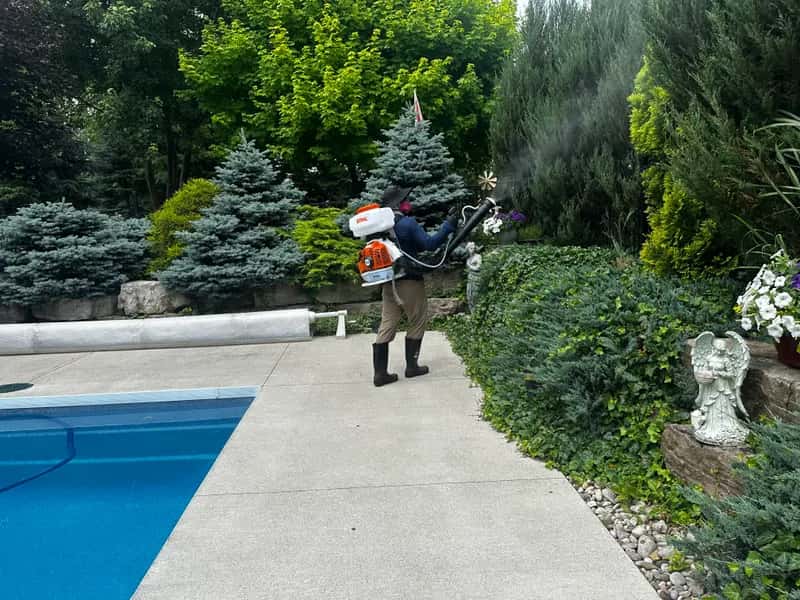
- Yard treatment, the layer most owners skip. Most dogs meet their ticks in the backyard, not on a hike. A professional tick barrier spray targets the lawn-to-woods edge, leaf litter, fence lines, and shaded borders where ticks quest — the damp, shaded microhabitat they need to survive, which is why treating there does more than spraying open lawn. It does not end the problem permanently: ticks keep arriving on deer, mice and birds, so the treatment is repeated through the season. Keep pets off treated areas until the spray has dried, as the product label directs.
Mow to 3–4 inches, clear leaf litter at the edges each spring and fall, and lay a 3-foot wood-chip strip between lawn and any woods or tall grass. Ticks avoid crossing dry, sunny barriers.
Ticks are not the only warm-weather pest your dog faces — mosquitoes carry heartworm, which is why many of the same yard and product measures overlap. See our companion guide on mosquito repellent for dogs in Canada for the options there.
Related Reading
- I Found a Tick on My Dog — What to Do
- How to Remove a Tick from a Dog
- Tick Bite on a Dog: Symptoms to Watch
- What a Tick Looks Like on a Dog
- Deer Tick vs Dog Tick
- Mosquito Repellent for Dogs in Canada
- BuzzSkito Tick Control Service
Sources & Further Reading
This article is general information, not veterinary advice. Product choice and dosing must be confirmed with your own veterinarian.
Frequently Asked Questions
What is the best tick repellent for dogs?+
Veterinarians in Ontario recommend a prescription oral or topical preventative as the primary defence: the oral isoxazolines (NexGard, Simparica, Bravecto, Credelio) are labelled to kill ticks within roughly 8 to 24 hours of attachment, and topical treatments (K9 Advantix II, Frontline Plus) repel or kill on contact. Only K9 Advantix II actively repels ticks before they bite; the oral products kill after the tick attaches. Speak to your veterinarian before starting any product — dosage depends on your dog's weight, age, and health history.
What kills ticks on dogs instantly?+
No product kills a tick truly instantly. The fastest-acting options are the oral isoxazoline preventatives (NexGard, Simparica, Bravecto), which kill an attached tick within roughly 8 to 24 hours. If a tick is already attached to your dog right now, do not wait for medication to work: remove it immediately with fine-tipped tweezers or a tick removal tool, gripping as close to the skin as possible and pulling straight up with steady pressure. Prompt removal is what reduces disease risk, not speed of the medication.
Do dog ticks carry Lyme disease?+
The American dog tick (Dermacentor variabilis) does not transmit Lyme disease. Lyme is carried by the blacklegged tick, also called the deer tick (Ixodes scapularis), which readily bites dogs despite its name. Roughly 10–30% of blacklegged ticks in southern Ontario carry the Lyme bacterium. So the answer depends on the species: if the tick on your dog is small, plain, and reddish-black, it is likely a blacklegged tick and Lyme is a real concern. See our deer tick vs dog tick guide to tell them apart.
Does natural tick repellent work on dogs?+
Natural repellents give partial, short-lived protection and are not a substitute for a veterinary preventative anywhere blacklegged ticks are established, which now includes much of southern Ontario. Diluted cedarwood and lemon-eucalyptus oil products can deter some ticks for a few hours. Never apply essential oils to a dog without veterinary guidance — many, including tea tree, pennyroyal, and undiluted peppermint, are toxic to dogs, and cats are far more sensitive still. Garlic and brewer's yeast have no evidence of efficacy, and garlic is toxic to dogs in quantity.
How long does a tick need to be attached to give a dog Lyme disease?+
A blacklegged tick generally needs to be attached for 24 to 48 hours before it transmits the Lyme bacterium. This is why a daily tick check after outdoor time is one of the most effective protections available: if you find and remove the tick within a day, transmission risk drops sharply. Check ears, around the eyes, under the collar, armpits, groin, between the toes, and at the base of the tail — ticks favour warm, sheltered spots with thin skin.
Can I use human tick repellent on my dog?+
No. Never apply human insect repellents to dogs without veterinary direction. DEET is toxic to dogs and can cause vomiting, tremors, and seizures. Dry permethrin-treated clothing is a different matter from concentrated permethrin products, and concentrated permethrin products intended for dogs must never be used on cats, where they are frequently fatal. Use only products formulated and dosed for your dog's species and weight.
Does treating my yard help protect my dog from ticks?+
Yes, and it addresses the source rather than the symptom. Most dogs pick up ticks in their own backyard, not on hikes. Ticks quest from lawn edges, leaf litter, fence lines, and shaded borders — the exact zones a professional tick barrier spray targets. Combining a yard barrier treatment with a vet-prescribed preventative and daily tick checks is the layered approach Ontario veterinarians recommend. BuzzSkito treats yards across the Greater Toronto Area, with tick programs and single treatments from $99.
When is tick season for dogs in Ontario?+
Ticks in Ontario are active any time the temperature is above roughly 4°C, which in practice means March through November, with two peaks: nymphs in May through July, and adults in September through October. Because mild winters now allow activity on warm winter days, most Ontario veterinarians recommend year-round tick prevention for dogs rather than seasonal dosing. Confirm the schedule with your own vet.