Quick Answer
To remove a tick from your dog, grip it with fine-tipped tweezers or a tick-removal tool as close to the skin as possible — at the head, never the body — and pull straight up with steady, even pressure without twisting. Clean the bite with rubbing alcohol, and save the tick in a sealed bag in case your vet needs to identify it.
- Blacklegged (deer) ticks generally must stay attached 24+ hours to transmit Lyme disease, so prompt removal matters most.
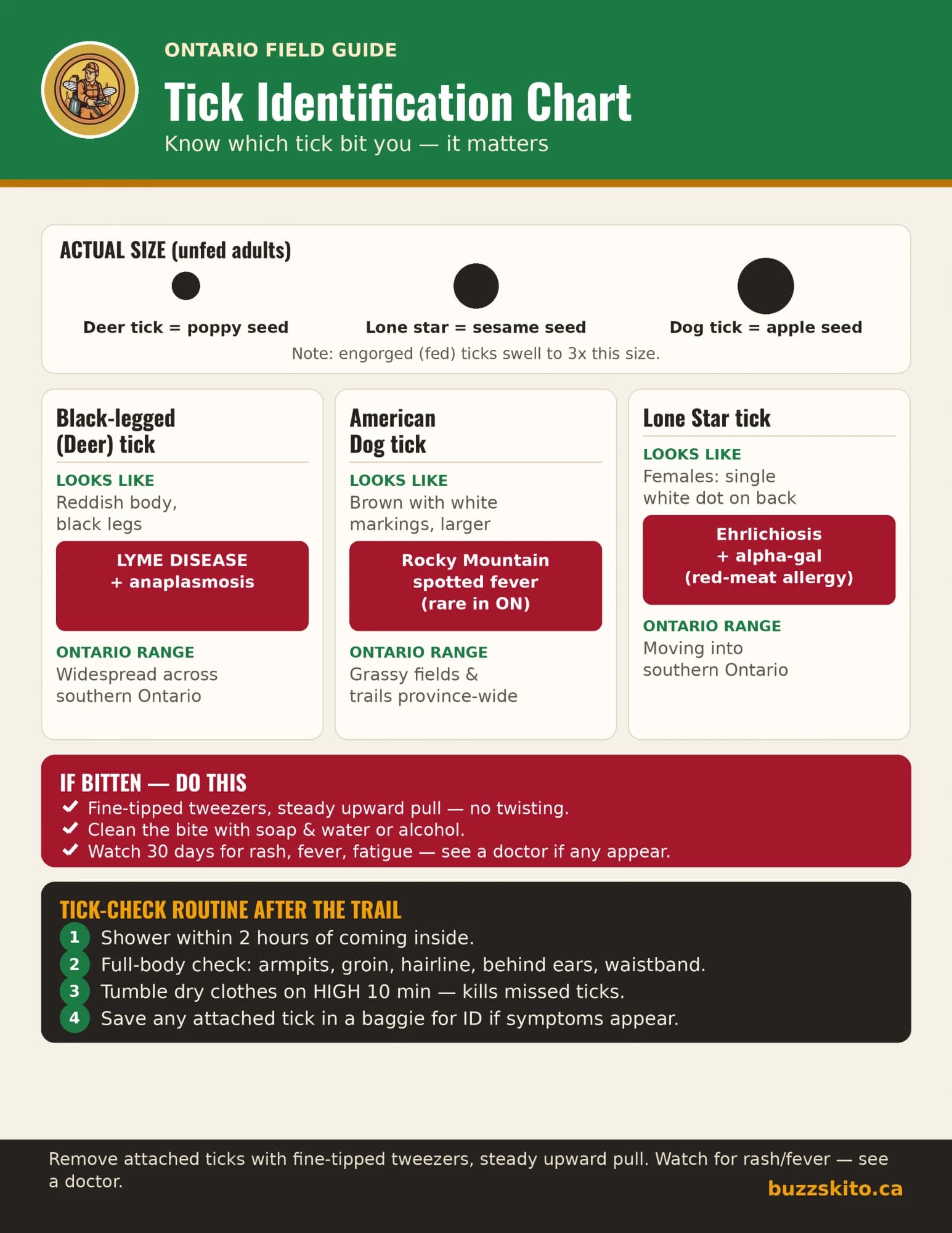
- Grip the tick at the head with fine-tipped tweezers and pull straight up — do not twist, squeeze the body, or use Vaseline, nail polish, or a lit match.
- If the mouthparts break off, leave them — the skin works them out like a splinter within a few days.
- Ticks favour warm, hidden spots: inside the ears, under the collar, armpits, between the toes, and the tail base.
- In Ontario, blacklegged ticks are most active April–June and September–November, and can be active any month above 4°C.
- Dog Lyme symptoms typically appear 2–5 months after a bite — shifting-leg lameness, fever, lethargy — so call your vet if they develop.
— BuzzSkito, GTA mosquito & tick control · 150+ five-star Google reviews
You found a tick on your dog. Take a breath — you have time. Most blacklegged ticks need to be attached for 24+ hours to transmit Lyme disease, and removing the tick correctly is the single most important thing you can do right now. Here’s how to do it safely, in 5 minutes, with what you probably already have at home.
As an Amazon Associate I earn from qualifying purchases. BuzzSkito only points to products we would genuinely use or recommend, at no extra cost to you.
BuzzSkito Mosquito & Tick Control Specialists · Published April 26, 2026
The 5-Step Removal (Do This Now)
- Get fine-tipped tweezers (sharp eyebrow tweezers work, or a dedicated tick-removal tool like a Tick Twister or TickKey).
- Part the fur around the tick so you can see the skin. Have someone hold your dog still or distract them with treats.
- Grasp the tick as close to the skin as possible — at the head, not the body. The body is full of fluid you don’t want to squeeze.
- Pull straight up with slow, steady pressure. No twisting. No jerking. The tick will release after 5–15 seconds.
- Clean the bite with rubbing alcohol or soap and water. Wash your hands. Save the tick in a sealed plastic bag with a damp paper towel — your vet may want to identify the species.
A dedicated fine-tipped tick-removal tool grips the head cleanly and lowers the chance of leaving mouthparts behind — far better than pinching with fingers. It’s worth keeping one in the dog-walk kit and one at home: Check price on Amazon.ca →
As an Amazon Associate I earn from qualifying purchases. Price shown on Amazon.ca, at no extra cost to you.
🏆 Our Top Pick
9.0/10· BuzzSkito ratingFine-Tipped Tick-Removal Tool (Tick Twister / TickKey style)
For getting a tick off a dog cleanly, a dedicated removal tool beats fingers or blunt tweezers every time. It slides flush to the skin, catches the tick at the head, and lifts it out with steady pressure — the exact technique that avoids squeezing the body or snapping off mouthparts. Cheap enough to keep one in the walk kit and one by the door.
Pros
- Grips at the head, not the fluid-filled body
- Lowers the chance of leaving mouthparts behind
- Compact — keep one in the dog-walk kit
- Works on people and pets alike
Cons
- Fiddly on very small nymph ticks
- Still requires a slow, steady pull — no twisting
Do NOT Do These Things (Old Wives’ Tales That Cause Harm)
- Do not apply Vaseline, nail polish, soap, or oil to suffocate the tick — this makes it regurgitate stomach contents into your dog, increasing disease risk.
- Do not use a hot match. Same problem, plus burn risk.
- Do not twist or jerk. The mouthparts can break off and stay in the skin.
- Do not grab the tick’s body — squeezing forces fluids into your dog.
- Do not use your fingers — both the tick and any bacteria it carries can get on your skin.
What If the Head Stays Behind?
It happens. If a small black dot remains in the skin after you pull the tick body off, leave it alone. The skin will work it out on its own in a few days, like a splinter. Don’t dig at it — that causes more inflammation and infection risk than the splinter itself. Watch for signs of infection (redness spreading, pus, heat) and call your vet if anything worsens after 48 hours.
For the longer version — what that fragment actually is, why it is no longer feeding, and the specific signs that turn it from a splinter into a vet call — see our guide to a tick head stuck in the skin, which covers dogs alongside people.
When to Call Your Vet
Call your veterinarian if any of the following apply:
- The tick was attached for more than 24 hours (Lyme transmission window)
- You see a bullseye-shaped rash around the bite
- Your dog develops fever, lethargy, lameness, joint stiffness, or loss of appetite within days or weeks
- The bite area becomes red, swollen, warm, or oozing
- You found multiple ticks (high exposure)
- You’re in an Ontario tick hotspot (Oak Ridges Moraine, Rouge Park, Bronte Creek, etc.) and want a Lyme test
Many vets offer a 4DX SNAP test that screens for Lyme, ehrlichiosis, anaplasmosis, and heartworm in 8 minutes. If you’re in an Ontario tick hotspot, this is a sensible annual test even without a known bite.
Knowing what to watch for over the following weeks matters as much as the removal itself. Our guide to tick bite symptoms on dogs lays the timeline out day by day — the normal bump, the shifting-leg lameness that shows up much later, and which changes mean picking up the phone.
Where Ticks Hide on Dogs (Where to Check Every Walk)
Ticks prefer warm, hidden spots where the skin is thin and they won’t be groomed off easily. After every walk in tall grass, woods, or anywhere off the paved path, check these zones:
- Inside and behind the ears
- Around the eyelids
- Under the collar
- In the armpits
- Between the toes and around the paw pads
- Around the tail base and groin
- At the base of the head and neck
Run your hands slowly through the fur, feeling for small bumps. An unfed tick is the size of a sesame seed; an engorged one is closer to a small pea or grape.
Lyme Disease in Ontario Dogs — What You Need to Know
Lyme disease in Ontario dogs is a real and growing risk. The blacklegged tick (Ixodes scapularis) is now established across most of southern Ontario — including every GTA city. Ticks must typically be attached for 24+ hours to transmit Lyme bacteria, which is why fast removal matters.
Symptoms in dogs typically appear 2–5 months after the bite and can include: shifting-leg lameness, lethargy, fever, swollen lymph nodes, and loss of appetite. Up to 95% of infected dogs may be asymptomatic. Treatment with doxycycline is highly effective when caught early.
The Ontario regions with the highest tick density: Oak Ridges Moraine, Rouge National Urban Park, Bronte Creek, Dundas Valley, the Niagara Peninsula, and most of cottage country. See our Lyme disease risk areas Ontario 2026 guide for the full map.
How to Stop Finding Ticks on Your Dog (Yard Prevention)
The single highest-leverage thing you can do is reduce the tick population in the place your dog spends the most time — your yard. Combine these strategies:
- Keep grass short (under 4 inches). Ticks need humidity and shade to survive.
- Remove leaf litter at lawn edges. This is where ticks overwinter.
- Create a 3-foot wood chip or gravel barrier between your lawn and any wooded area or tall grass.
- Trim shrubs and clear deer trails or brush piles.
- Use a vet-prescribed monthly tick preventative on your dog (oral or topical). Between doses, a tick repellent labelled for use on dogs adds a layer of protection before walks in tall grass — see our dog tick repellent guide for Ontario, or check price on Amazon.ca →
- Apply professional tick barrier spray to your yard. BuzzSkito’s 5-spray season program targets ticks where they actually live — leaf litter, lawn edges, fence lines — with a registered residual acaricide applied according to label directions, repeated through the season. It lowers how often your dog runs into one at home; it does not replace a vet-prescribed preventative or daily tick checks.
Related Guides
- Lyme Disease Prevention in Ontario
- Tick Bite Symptoms — What To Do
- What Ticks Look Like in Ontario
- Spring Tick Season in Ontario
- Professional Tick Control Services
Frequently Asked Questions
What is the safest way to remove a tick from a dog?+
The safest method is fine-tipped tweezers or a tick-removal tool. Grasp the tick as close to your dog's skin as possible — at the head, never the body. Pull straight up with steady, even pressure. Do not twist, jerk, or squeeze the body, as this can leave the mouthparts behind or cause the tick to regurgitate fluids into the wound. After removal, clean the bite area and your hands with rubbing alcohol or soap and water. Save the tick in a sealed bag or container in case your veterinarian needs to identify the species for Lyme disease risk assessment.
Should I take my dog to the vet after removing a tick?+
Most tick bites do not require a vet visit if removed promptly. However, contact your vet if: the tick was attached for more than 24 hours, you find a bullseye-shaped rash around the bite, your dog develops fever, lethargy, joint stiffness, or loss of appetite within days or weeks, the tick's mouthparts broke off and remain in the skin, or the bite area becomes red, swollen, warm, or oozing. In Ontario, blacklegged ticks (deer ticks) can transmit Lyme disease — your vet can recommend testing if Lyme exposure is suspected.
Can I use Vaseline, alcohol, or a match to remove a tick from my dog?+
No — these old methods are not recommended and can be dangerous. Smothering a tick with petroleum jelly, applying nail polish, or using heat from a match can cause the tick to regurgitate stomach contents into your dog, increasing the risk of disease transmission. The current veterinary recommendation is mechanical removal with fine-tipped tweezers or a dedicated tick-removal tool, applied as close to the skin as possible.
What happens if the tick's head is still stuck in my dog?+
If the tick's mouthparts remain in your dog's skin after the body is removed, do not dig at it aggressively. The mouthparts will typically work their way out on their own as the skin heals — much like a splinter. Keep the area clean and watch for signs of infection (redness, swelling, pus). If irritation develops or persists for more than a few days, contact your vet. Do not try to pry the mouthparts out with a needle, as this can cause infection.
How can I prevent ticks on my dog in Ontario?+
Combine multiple strategies: use a vet-prescribed monthly tick preventative (oral or topical), check your dog after every walk in tall grass or wooded areas, keep your lawn mowed short, clear leaf litter from yard edges, and consider professional tick barrier spray for your property. In Ontario, blacklegged ticks are most active April–June and again September–November, but can be active any month above 4°C.
Where on a dog's body do ticks usually attach?+
Ticks prefer warm, hidden, hard-to-reach spots. The most common attachment sites on dogs are: inside and around the ears, under the collar, between toes and paw pads, in the armpits, around the eyelids, under the tail, and at the base of the head/neck. After every outdoor walk in tick-prone areas, run your hands slowly through your dog's fur, feeling for small bumps. Engorged ticks feel like a small pea or grape attached to the skin.
Can my dog get Lyme disease from a tick in Ontario?+
Yes. Blacklegged ticks (Ixodes scapularis) in Ontario transmit Borrelia burgdorferi, the bacterium that causes Lyme disease. Risk is highest in southern Ontario including the GTA — particularly near conservation areas, ravines, and the Oak Ridges Moraine. The tick must typically be attached for 24+ hours to transmit Lyme. Watch for symptoms 2–5 months after a tick bite: lethargy, lameness that shifts between legs, swollen lymph nodes, loss of appetite, fever. Many infected dogs are asymptomatic — annual veterinary tick-borne disease screening is recommended.
What does a tick on a dog look like?+
Unfed ticks are small (1–5 mm), flat, and oval with eight legs. Colour ranges from reddish-brown (blacklegged tick) to grey-brown (American dog tick). After feeding, ticks engorge to grape or peanut size and turn grey-blue or olive. Many people initially mistake an engorged tick for a skin tag, mole, or wart. The key difference: a tick will have visible legs near where it attaches to skin, while a skin tag does not.