Reviewed by Alex Francisco
Published November 6, 2026 · Fact-checked against the sources listed below
Reading from Canada? Product rules and what is sold there differ. See the Canadian edition.
Our picks at a glance
BuzzSkito did not test these products. The picks follow the EPA-accepted product labels, EPA and CDC guidance and the controlled studies below. A 0.5% permethrin spray for clothing and gear is the main recommendation; factory-treated socks, pants and shirts suit clothes you wash often, and a skin repellent covers what the fabric does not.
Permethrin clothing picks
As an Amazon Associate I earn from qualifying purchases.
- Check price on Amazon →
For treating your own clothes
Permethrin clothing and gear spray, 0.5%
The type of product behind the directions on this page. Its label says about 4.5 ounces treats an outfit of shirt, pants and socks and the treatment lasts 6 weeks or 6 washings. Spray fabric only, outdoors, and keep cats away until it dries.
- Check price on Amazon →
For ankles and feet
In a 2011 study, volunteers in treated sneakers and socks were 73.6 times less likely to be bitten by blacklegged tick nymphs than volunteers in untreated ones. Factory-treated socks need no spraying.
- Check price on Amazon →
For clothes you wash often
Factory-treated permethrin pants
Factory-treated work clothing cut tick bites by an estimated 82% in the first year of a North Carolina trial and by 65% in the first year of a Rhode Island and Massachusetts trial. Its labels claim 25 to 70 washings; do not re-treat it with another permethrin product.
- Check price on Amazon →
For mosquito season
Factory-treated long-sleeve shirt
In a laboratory study, treated long sleeves and trousers worn together cut yellow fever mosquito bites by 91%, against 49% when treated clothing covered only part of the body. Wear it with a skin repellent for face and hands.
- Check price on Amazon →
For exposed skin
EPA says treated clothing protects only the skin it covers. Picaridin is one of the EPA-registered skin repellent ingredients CDC lists for preventing tick bites; apply it to exposed skin as its label directs.
What is permethrin, and why does it go on clothes?
Permethrin is a pyrethroid insecticide, a synthetic relative of the natural insecticides in chrysanthemum flowers, and on fabric it kills or repels the ticks and mosquitoes that touch it. NPIC's permethrin fact sheet says it attacks the insect nervous system, causing spasms, paralysis and death, and that insects break it down more slowly than people and dogs do. EPA's page on repellent-treated clothing says permethrin is the only insect repellent used for factory treatment of clothing; EPA first registered it in 1979, as a clothing repellent for the military in 1990 and in factory-treated clothing for consumers in 2003.
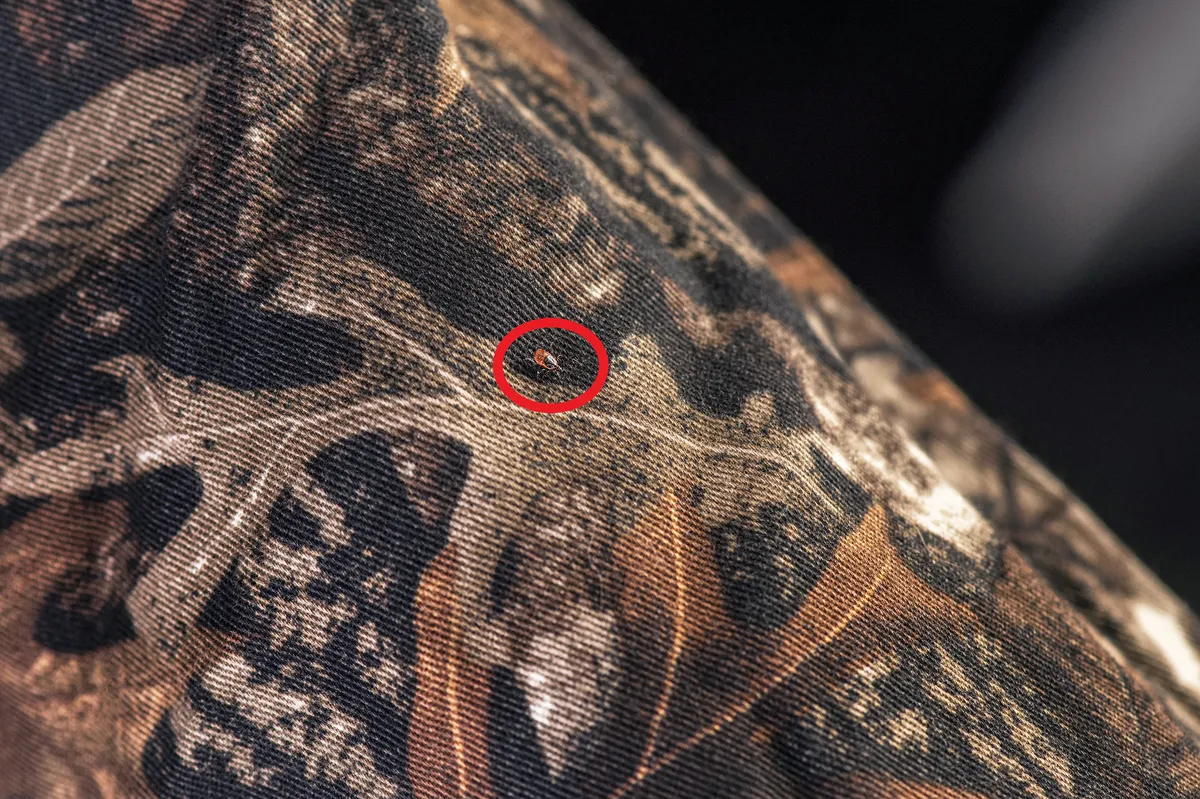
It works by contact. In a CDC laboratory study of permethrin-treated clothing, 1 minute on treated fabric left every blacklegged tick nymph incapacitated an hour later. That is why the treatment belongs where ticks climb on and mosquitoes land: socks, pant legs, cuffs and sleeves.
Which permethrin spray is the one for clothes?
The one whose label says it is for clothing. NPIC's guide to permethrin-treated clothing says to use only products labeled for treating clothing, not just any permethrin product, and Penn State Extension warns against diluting permethrin sold for horses or livestock, which it says will not bind to your clothes and may put you at risk of skin or other reactions. Using a pesticide in a way its label does not allow violates federal law.
- Clothing and gear sprays. Ready-to-use 0.5% permethrin in pump, trigger or aerosol bottles; the CDC Yellow Book names Sawyer, Repel and Ultrathon among the EPA-registered brands.
- Factory-treated clothing. Permethrin bound to the fabric before sale, sold under names that include Insect Shield, BugsAway and Insect Blocker, the Yellow Book says.
- Concentrates for farms, kennels and yards. Stronger products with their own labels and uses; none of them is a clothing treatment unless its label says so.
- Dog sprays and spot-ons. Labeled for dogs only and dangerous to cats, as explained below.
- Permethrin cream and lotion. Medicines, not pesticides: MedlinePlus says prescription permethrin cream treats scabies and the over-the-counter lotion treats head lice.
How do you apply permethrin to clothing?
Follow the label on your bottle. The steps below come from the EPA-accepted label for the 0.5% clothing treatment sold under the Sawyer name (EPA Reg. No. 50404-3), plus tips from NPIC and Penn State.
- Pick the spot. Work outdoors, out of the wind, on a calm day, away from storm drains, ponds and flowering plants, with cats and children kept away.
- Put on gloves. Penn State Extension recommends disposable gloves, and the label warns that the liquid is harmful if absorbed through skin.
- Hang or lay out the clothes. Never treat clothing while anyone is wearing it.
- Spray from 6 to 8 inches. Use a slow sweeping motion on the outer surfaces, front and back, for about 30 seconds a side, until the fabric darkens slightly. Plan on about 4.5 ounces per outfit of shirt, pants and socks, and give socks, pant cuffs and shirt cuffs extra attention.
- Skip what the label excludes. Do not treat underwear, hats, caps or inner clothing.
- Let it dry. Allow at least 2 hours, or 4 in humid weather, before wearing. For trips, the CDC Yellow Book says to treat items 24 to 48 hours before packing so they can dry.
- Clean up. Wash your hands with soap and water. If spray gets on your skin, the label says to take off contaminated clothing, rinse the skin with plenty of water for 15 to 20 minutes and call a poison control center or doctor.
The label also allows a soak method: one 6-ounce bottle plus two bottlefuls of water (three for denim or heavy cotton) in a resealable bag treats one adult shirt, one pair of pants and one bed net, which soak for 2 hours or more and then dry outdoors in about 2 to 3 hours.
How do you treat shoes, socks, tents and gear?
The same way, starting with your feet. In a 2011 controlled study that placed blacklegged tick nymphs on 15 volunteers, people in treated outfits received 3.36 times fewer bites, and people in treated sneakers and socks were 73.6 times less likely to be bitten than those in untreated footwear; treated shorts and T-shirts did less, at 4.74 and 2.17 times. Shoes, which are not machine washed, also keep their treatment: in a 2019 laboratory study by CDC and university researchers, treated shoes that had been worn but not washed stayed as toxic to nymphs as new ones.
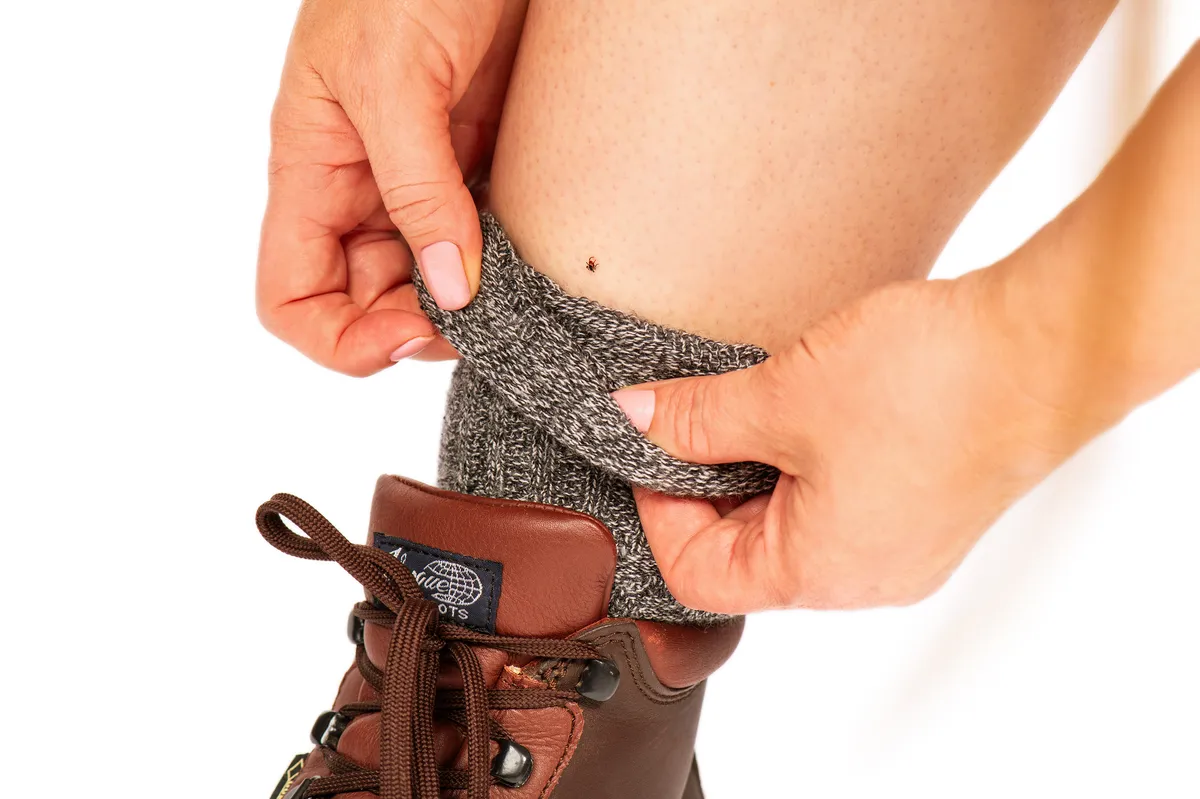
For gear, the label lists mosquito netting, tents, canopies, screen enclosures, sleeping bags, backpacks, groundcloths, hammocks and camping chairs. Spray only the outside of a tent, never the inside of a sleeping bag, and let gear dry for at least 2 hours (4 if humid). The label says not to re-treat gear more than once every 6 weeks, and the package insert says a treatment on packs, tents and chairs lasts through 42 days of sun and air. If you keep finding clusters of tiny larvae on your socks, see seed ticks and how to remove dozens at once.
How long does permethrin last on clothes?
A spray-on treatment lasts about 6 weeks or 6 washings, whichever comes first, and then needs re-treating. Factory-treated garments last longer: the EPA-accepted label for Insect Shield apparel says repellency remains effective for 70, 50 or 25 washings, as stated on the hang tag, and that the garment should not be re-treated with other permethrin products.
| What wears it off | What the sources report |
|---|---|
| Machine washing | The main cause of loss, the spray's maker says. In a 2016 laboratory test, treated clothing cut mosquito biting by 28.5% when new and by 11.1% after 10 washes. |
| Dry cleaning | Removes the permethrin; both labels say do not dry clean. |
| Ironing | Cut the permethrin in treated clothing by 96.7% over 3 months of simulated use in a 2015 laboratory study. |
| Sweat and rain | Do not significantly deteriorate the treatment, the spray's maker says. |
| Sunlight | UV exposure did not significantly reduce permethrin over 3 months of simulated use in the 2015 study; the maker still suggests storing treated clothes in dark plastic bags. |
| Wear plus washing | 16 days of wear and 16 wash-and-dry cycles cut permethrin by about 50 to 90% in the 2019 study. |
Laboratory findings from Orsborne and colleagues, 2016, DeRaedt Banks and colleagues, 2015 and Connally and colleagues, 2019, plus the two labels and the spray's package insert.
To make it last, the maker recommends hand washing and air drying or gentle cycles, and EPA and NPIC both say to wash treated clothing separately. Protection fades with wear and washing: in the 2019 study, 31 to 67% of nymphs still moved normally an hour after touching worn, washed clothing, against 0 to 30% on new treated clothing and 90 to 100% on untreated fabric.
Factory-treated clothing or spray it yourself?
Factory-treated clothing survives more washes and needs no spraying; a bottle of spray covers clothes and gear you already own. EPA says factory-treated garments carry their label on a hang tag that you must follow, and that the amount of permethrin allowed in the fabric is very low.
- Choose factory-treated for clothes you wear and wash often in tick season, such as work pants and socks. Both outdoor-worker trials below used factory-treated clothing.
- Choose a spray for boots, packs, tents and clothes you already own, and re-treat every 6 weeks or 6 washings.
- Expect similar results at first. The 2011 study found no statistically significant difference in tick bites between commercially treated and home-treated outfits.
Does permethrin-treated clothing prevent tick bites?
Yes, in controlled trials of outdoor workers, though the effect fades as the clothing ages. In a double-blind trial among North Carolina outdoor workers, 159 people were randomly assigned factory-treated or control uniforms and reported 1,045 work-related tick bites in all. Treatment was 82% effective in the first year (95% confidence interval 66 to 91%); the second-year estimate of 34% was not statistically significant.
A placebo-controlled trial in Rhode Island and southern Massachusetts, where outdoor workers mainly meet blacklegged ticks, followed 82 people for two years. Factory-treated clothing cut tick bites by 65% in the first year and 50% in the second, 58% overall, and no treatment-related adverse outcomes were reported.
The kind of tick matters. In the CDC contact study, the share still moving normally an hour after a 1-minute exposure was 0% for blacklegged nymphs, 14% for lone star nymphs, 38% for adult female blacklegged ticks, 82% for adult female American dog ticks and 98% for adult female lone star ticks; the adult females needed 5 minutes of contact to be incapacitated. In lone star tick country, keep up skin repellent and tick checks alongside treated clothing.
There is also a gap in the evidence. A 2022 review by a CDC entomologist notes that treated clothing is the least used tick bite prevention method and that the studies showing fewer bites involved coveralls or uniform-style clothing; similar studies are lacking for people in summer-weight clothing going about their daily lives.
Does permethrin clothing stop mosquito bites?
It helps, mainly on the skin it covers. CDC says permethrin kills or repels mosquitoes and that treated clothing keeps protecting after multiple washings. In a 2015 laboratory study, factory-dipped clothing knocked down 96.5% of yellow fever mosquitoes within an hour, killed 97.1%, cut landings on a covered arm by 59% and stopped all bites through the fabric.
Coverage and washing make the difference. In the 2016 study, treated long sleeves and trousers cut bites by 91% in a free-flight room test, against 49.3% when treated clothing covered only part of the body, and the authors concluded that washing dramatically reduced protection. More ways to keep mosquitoes off are in what really keeps mosquitoes away, and whether mosquitoes can bite through clothes explains why fabric alone is not a shield.
What goes on the skin the clothing leaves bare?
An EPA-registered skin repellent. EPA says only the skin covered by treated clothing is protected and that exposed skin needs a repellent labeled for skin, and the spray's label adds tucking pant cuffs into socks or footwear in heavily infested areas. CDC's tick bite prevention page lists the active ingredients to look for: DEET, picaridin, IR3535, oil of lemon eucalyptus (OLE), para-menthane-diol (PMD) and 2-undecanone, with no OLE or PMD on children under 3 and sunscreen applied before repellent.
Which of those to buy, and at what strength, is covered in the mosquito repellent buying guide. One note from NPIC: permethrin is poorly absorbed through the skin, although sunscreens and other products may increase the rate of skin absorption.
Is permethrin safe for people, children and pregnancy?
On treated clothing used as the label directs, EPA found the risks below its level of concern. EPA's 2009 revised assessment covered toddlers wearing or mouthing treated clothing and military personnel wearing treated uniforms every day, judged these uses unlikely to pose any significant immediate or long-term hazard, and put short- and long-term cancer risks for adults, youth and toddlers below its level of concern. EPA also says studies show no evidence of reproductive or developmental effects to mother or child from permethrin exposure.
The wet liquid needs more care than dry fabric: the spray's label carries the signal word CAUTION and warns that it is harmful if absorbed through skin. NPIC says less than 1% of permethrin put on people's skin was taken into the body and that contact can cause tingling, burning or itching, or redness and pain in the eyes. It also reports that EPA classifies permethrin as likely to be carcinogenic to humans if eaten, and that no data suggest children are more sensitive to permethrin specifically. NPIC answers product questions at 800-858-7378.
Why is permethrin dangerous to cats?
Cats break it down slowly, so a dose a dog tolerates can poison a cat. NPIC says cats exposed to 45% to 65% permethrin products may seem anxious, walk unsteadily and develop tremors and seizures, and that exposure can be fatal. Those are dog spot-on strengths, not clothing spray: an ASPCA Animal Poison Control Center review describes cats poisoned when owners applied dog-only spot-ons to them, and cats exposed by playing with a treated dog.
The review lists oversensitivity to touch, tremors, muscle twitching, high body temperature and seizures, starting within hours or up to 72 hours after exposure and usually lasting 2 to 3 days; most cats treated early and aggressively recover. For clothing, the spray maker's package insert says not to expose cats to wet permethrin and that cats can be around treated fabric once it has dried, as Penn State Extension also says.
- Treat clothes outdoors with cats shut inside, and bring items in only when they are completely dry.
- Never use a dog product on a cat. The dog section of the 0.5% product's label says not to use it on cats because it may be toxic or potentially fatal.
- If a cat is exposed, call your veterinarian or the ASPCA Animal Poison Control Center at (888) 426-4435; the ASPCA notes that a consultation fee may apply.
- For dogs, use only products labeled for dogs; ticks on dogs covers preventives and tick checks.
Is permethrin harmful to fish and bees?
Yes, so keep spray and leftovers away from water and flowers. NPIC says permethrin is highly toxic to fish and other animals that live in fresh or salt water, highly toxic to bees and other beneficial insects and low in toxicity to birds, and that in surface water it sticks to sediment and can stay there for more than a year.
- Mind the drains. The spray's label says not to let it enter or run off into storm drains, drainage ditches, gutters or surface waters.
- Keep overspray off blooming plants where bees are foraging.
- Dispose of it by the label. Never pour unused product down any indoor or outdoor drain; put an empty bottle in the trash or recycling, and call your local solid waste agency about a partly full one.
What else should you do after a day in tick country?
Treated clothing lowers the odds but does not replace the end-of-day routine. CDC advises tumble drying clothes on high heat for 10 minutes to kill ticks on dry clothing, showering within two hours of coming indoors and a full-body tick check, including after time in your own backyard. What kills ticks on clothing and gear explains why the dryer works and a cold wash does not.
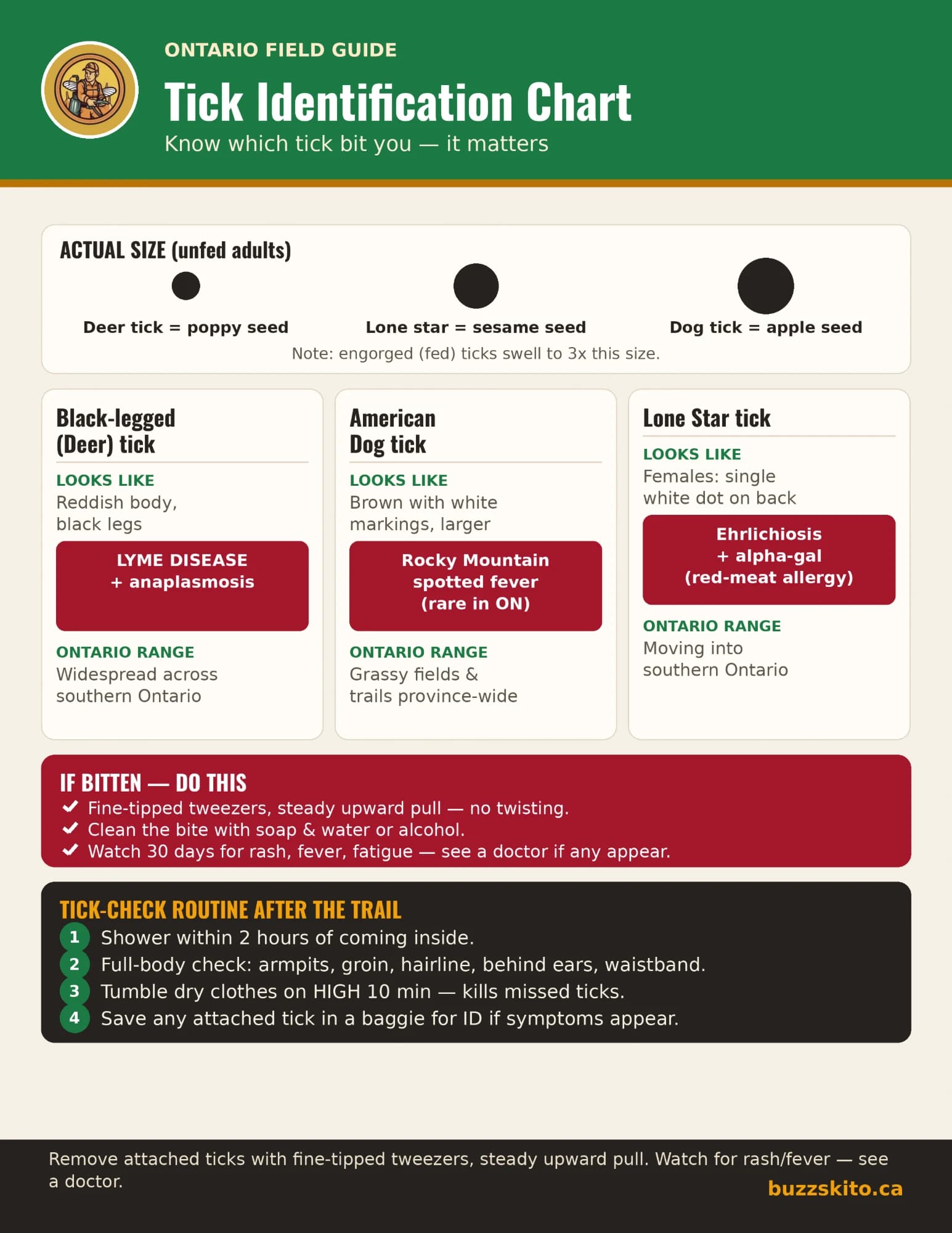
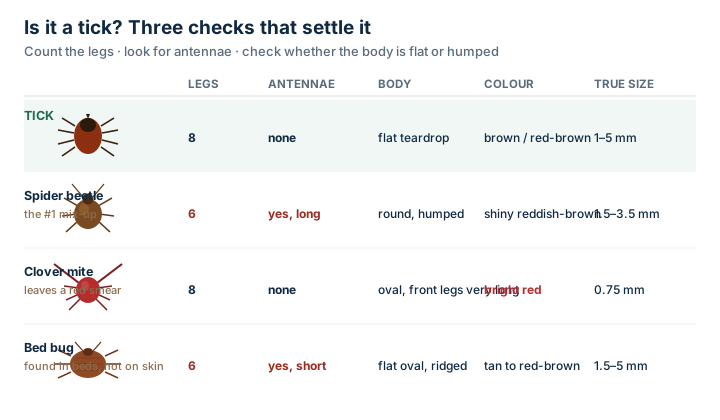
If a tick has attached, take it off promptly: how to remove a tick safely walks through the steps, and the tick removal tool comparison covers tweezers and other tools. The tick identifier helps name the tick, and ticks by state shows which species live where you are.
This guide is general educational information, not medical advice. If you have symptoms or concerns after a bite or exposure, contact a healthcare provider.
Use any pesticide exactly as its label directs. The label is the law, and what is registered and sold varies by state.
Frequently Asked Questions
How long does permethrin last on clothes?+
A spray-on treatment lasts about 6 weeks or 6 washings, whichever comes first, according to the EPA-accepted label for the 0.5% clothing spray, which says to re-treat after the sixth week or sixth laundering. Factory-treated garments carry a hang tag stating 70, 50 or 25 washings. Machine washing is the main cause of loss, dry cleaning removes the permethrin, and ironing cut it by 96.7% over 3 months of simulated use in a laboratory study. Wash treated clothes separately, gently if you can.
Can you spray permethrin on your skin?+
No. The clothing spray's label says that under no circumstances should bare skin or clothing on the body be treated, and CDC says not to use permethrin products directly on skin. If spray gets on your skin, the label says to take off contaminated clothing, rinse the skin with plenty of water for 15 to 20 minutes and call a poison control center or doctor. For skin, choose an EPA-registered repellent such as DEET or picaridin and apply it as its label directs.
Is permethrin safe for cats once it is dry?+
The spray's maker says cats can be around permethrin-treated fabric once the application has dried, and Penn State Extension says treated clothing can be worn around cats once dry. The danger is wet spray and concentrated dog products: NPIC says cats are more sensitive because they break permethrin down slowly, and the ASPCA's poison control center has described severe poisonings from 45% to 65% dog spot-ons. Treat clothes outdoors with cats inside, and call a veterinarian if a cat is exposed.
Does permethrin repel ticks or kill them?+
Both, by contact. The EPA-accepted label says the clothing treatment repels and kills ticks, mosquitoes, chiggers and mites. In a CDC laboratory study, 1 minute on treated clothing incapacitated every blacklegged tick nymph tested, while adult lone star and American dog ticks were less affected and needed 5 minutes of contact. Because it works when ticks touch the fabric, treat socks, pant legs and shoes, and keep doing tick checks after time outdoors.
Is permethrin-treated clothing safe to wear every day?+
EPA's 2009 revised assessment looked at military personnel wearing treated uniforms every day and at toddlers wearing or mouthing treated clothing, and found these uses unlikely to pose any significant immediate or long-term hazard, with cancer risks below EPA's level of concern. EPA says permethrin is poorly absorbed through the skin. In a two-year trial of outdoor workers wearing factory-treated clothing, no treatment-related adverse outcomes were reported. Follow the hang tag and wash treated clothes separately.
Can children wear permethrin-treated clothing?+
EPA's assessment of treated clothing included toddlers wearing or mouthing it and found the risk below its level of concern, and NPIC says there are no data suggesting children are more sensitive to permethrin specifically. Spray the clothing yourself, outdoors, and let it dry completely before a child wears it. Treated clothing protects only covered skin, so children still need a skin repellent; CDC says not to use oil of lemon eucalyptus or PMD products on children under 3.
Is permethrin safe during pregnancy?+
EPA says that, based on scientific studies, there is no evidence of reproductive or developmental effects to mother or child following exposure to permethrin, and its assessment of treated clothing found risks below its level of concern. Let the spray dry before you wear the clothing, and avoid handling the wet liquid without gloves. If you have questions about a specific product, ask your healthcare provider or call the National Pesticide Information Center at 800-858-7378.
Can you use permethrin on a tent or backpack?+
Yes, if the product's label lists gear. The label for the 0.5% clothing and gear treatment names tents, mosquito netting, canopies, screen enclosures, sleeping bags, backpacks, groundcloths, hammocks and camping chairs. Spray only the outside of a tent, never the inside of a sleeping bag, and let gear dry for at least 2 hours, or 4 in humid weather. The label says not to re-treat gear more than once every 6 weeks, and the maker says treatment on packs and tents lasts through 42 days of sun and air.
Can you re-treat factory-treated clothing with permethrin spray?+
No. The EPA-accepted label for Insect Shield apparel says not to re-treat the garment with other permethrin insect repellent products, and its hang tag states how many washings the treatment lasts: 70, 50 or 25, depending on the item. The same label says to discard the garment in the trash when it is worn out. Spray-on products are a separate case: their label tells you to repeat the treatment after 6 weeks or 6 washings.
What is the difference between permethrin and DEET?+
Permethrin is an insecticide for fabric that kills or repels ticks and mosquitoes that touch treated clothing, and it lasts through washings. DEET is a repellent for skin. CDC lists DEET among the EPA-registered skin repellent ingredients and says permethrin products should never be used directly on skin. The two do different jobs, and the clothing label itself recommends using a skin repellent on exposed areas, so many people wear permethrin-treated clothes and put DEET or picaridin on uncovered skin.
Sources
- CIC Residual Insecticide No. 1 (0.5% permethrin clothing and gear treatment sold under the Sawyer name), EPA Reg. No. 50404-3, label accepted December 3, 2021 — U.S. Environmental Protection Agency, Pesticide Product and Label System
- Insect Shield Repellent Apparel, EPA Reg. No. 74843-2, label accepted May 15, 2017 — U.S. Environmental Protection Agency, Pesticide Product and Label System
- Repellent-Treated Clothing (updated February 26, 2026) — U.S. Environmental Protection Agency
- Permethrin Treated Clothing (updated July 22, 2026) — National Pesticide Information Center (Oregon State University and EPA)
- Permethrin General Fact Sheet (reviewed July 2009) — National Pesticide Information Center (Oregon State University and EPA)
- Preventing Tick Bites (August 28, 2024) — Centers for Disease Control and Prevention
- Preventing Mosquito Bites (August 28, 2024) — Centers for Disease Control and Prevention
- Mosquitoes, Ticks, and Other Arthropods (CDC Yellow Book 2026; C. R. Connelly and J. E. Gimnig, April 23, 2025) — Centers for Disease Control and Prevention
- Fight the Bite: Treating Clothes with Permethrin to Prevent Tick and Mosquito Bites (E. Machtinger) — Penn State Extension
- Long-lasting permethrin impregnated uniforms: a randomized-controlled trial for tick bite prevention (M. F. Vaughn et al., American Journal of Preventive Medicine 46(5):473-480, 2014; PMID 24745637) — PubMed, U.S. National Library of Medicine
- Protective Effectiveness of Long-Lasting Permethrin Impregnated Clothing Against Tick Bites in an Endemic Lyme Disease Setting: A Randomized Control Trial Among Outdoor Workers (C. Mitchell et al., Journal of Medical Entomology 57(5):1532-1538, 2020; PMID 32277701) — PubMed, U.S. National Library of Medicine
- Tick bite protection with permethrin-treated summer-weight clothing (N. J. Miller et al., Journal of Medical Entomology 48(2):327-333, 2011; PMID 21485369) — PubMed, U.S. National Library of Medicine
- Contact Irritancy and Toxicity of Permethrin-Treated Clothing for Ixodes scapularis, Amblyomma americanum, and Dermacentor variabilis Ticks (R. Prose et al., Journal of Medical Entomology, 2018; PMID 29800259) — PubMed, U.S. National Library of Medicine
- Impact of Wearing and Washing/Drying of Permethrin-Treated Clothing on Their Contact Irritancy and Toxicity for Nymphal Ixodes scapularis Ticks (N. P. Connally et al., Journal of Medical Entomology, 2019; PMID 30165532) — PubMed, U.S. National Library of Medicine
- Personal protection measures to prevent tick bites in the United States: Knowledge gaps, challenges, and opportunities (L. Eisen, Ticks and Tick-borne Diseases, 2022; PMID 35364518) — PubMed, U.S. National Library of Medicine
- Personal Protection of Permethrin-Treated Clothing against Aedes aegypti, the Vector of Dengue and Zika Virus, in the Laboratory (J. Orsborne et al., PLoS One, 2016; PMID 27187593) — PubMed, U.S. National Library of Medicine
- Permethrin-Treated Clothing as Protection against the Dengue Vector, Aedes aegypti: Extent and Duration of Protection (S. DeRaedt Banks et al., PLoS Neglected Tropical Diseases, 2015; PMID 26440967) — PubMed, U.S. National Library of Medicine
- Permethrin Spot-On Toxicoses in Cats (J. A. Richardson, Journal of Veterinary Emergency and Critical Care 10:103-106, 2000) — ASPCA Animal Poison Control Center (via ASPCApro)
- Animal Poison Control — ASPCA
- Permethrin Topical (revised January 15, 2018) — MedlinePlus, U.S. National Library of Medicine
Read and approved by Alex Francisco. Found an error? Email support@buzzskito.ca.