
Reviewed by Alex Francisco
Published November 23, 2026 · Fact-checked against the sources listed below
What does lizard poop look like?
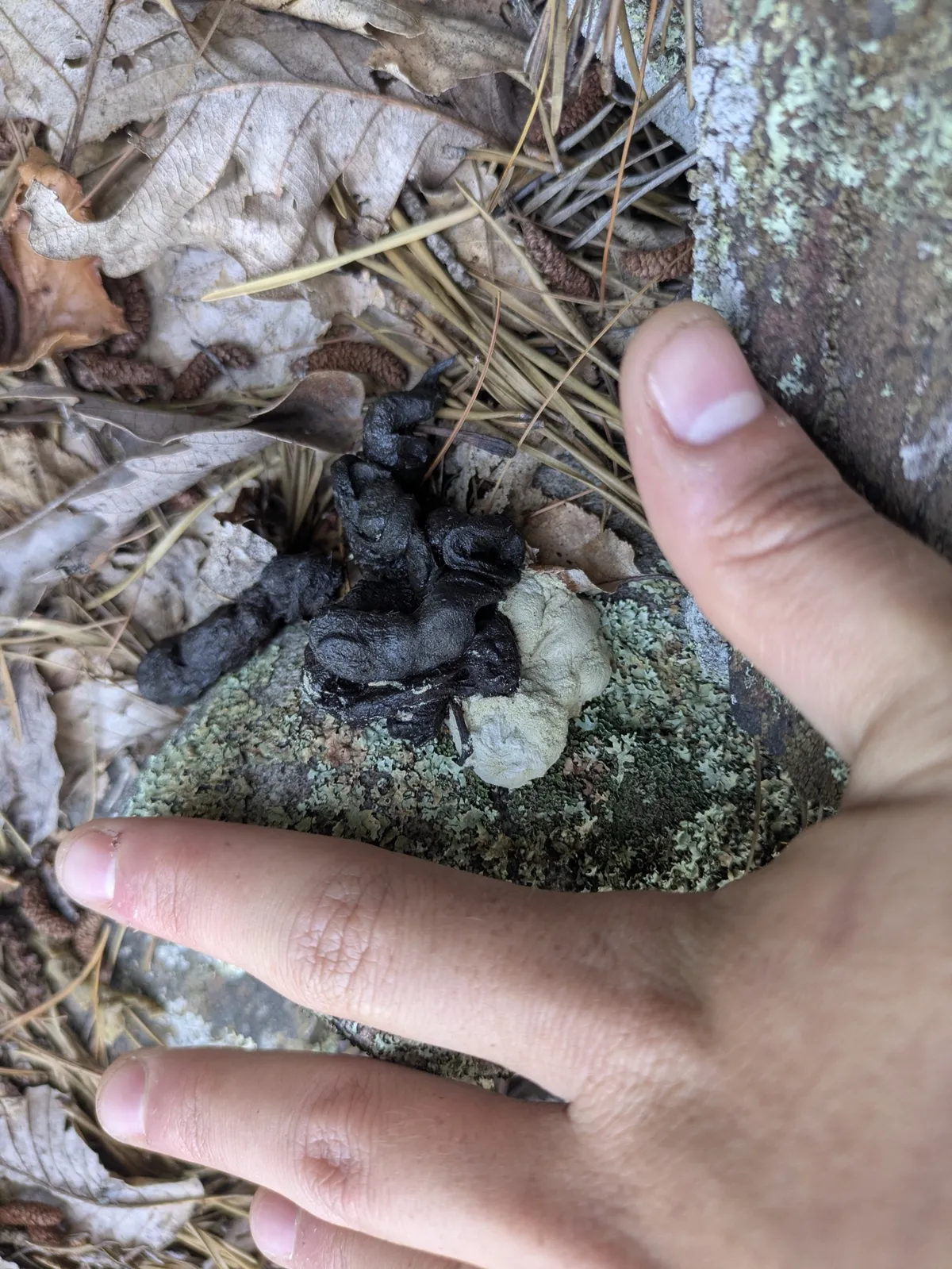
Lizard poop looks like a dark pellet with a chalky white or cream cap at one end, at least for the insect-eating lizards that live around houses. Texas A&M AgriLife Extension describes house gecko droppings as elongated and brownish and frequently tipped with white, and the three small lizard droppings pictured on this page are lumpy or wrinkled, not smooth. The white cap is the giveaway: the U.S. Fish and Wildlife Service's house bat manual describes white, chalky uric acid as characteristic of the droppings of birds and lizards that feed on insects.
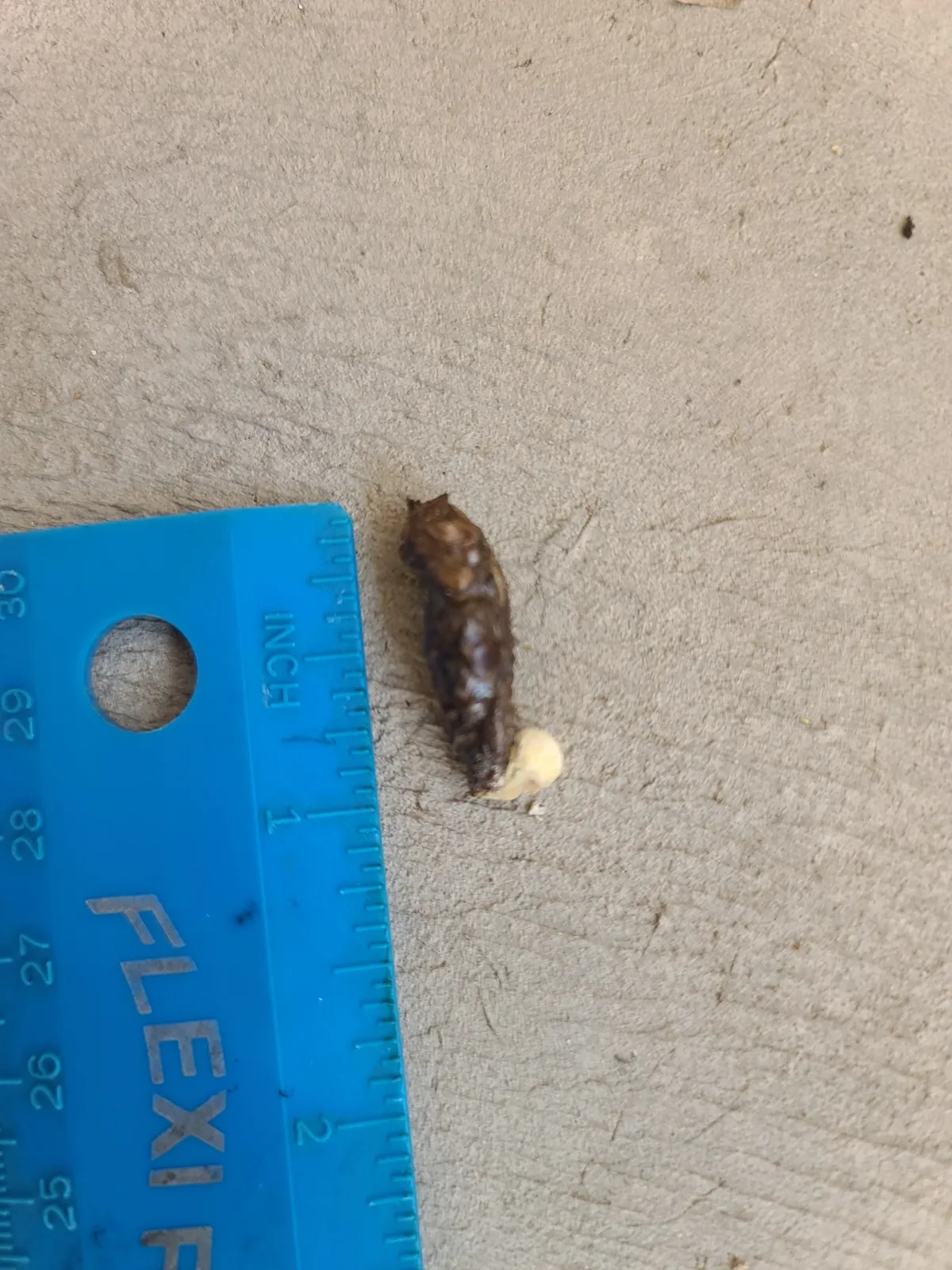
Age changes how any animal's droppings look. A University of Georgia Cooperative Extension article on identifying wildlife from the signs it leaves says fresh droppings are black and shiny while old ones are dry and brown or gray, and quotes UGA wildlife expert Michael Mengak saying that black-and-white droppings can be from a bird, a snake or a lizard. The next sections cover the lizards that extension and wildlife agency sources place on porches, sills and walls.
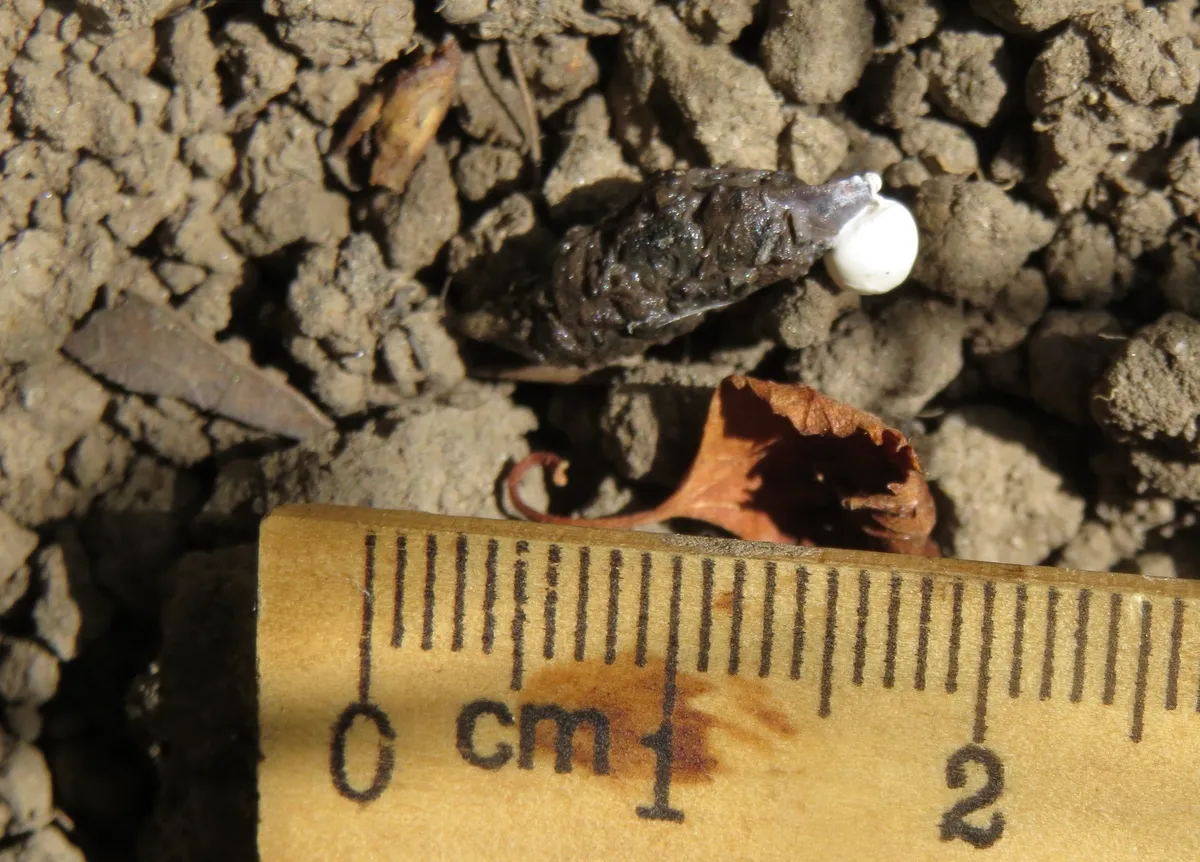
What is the white tip on lizard poop?
The white tip is uric acid, the form in which lizards get rid of most of their nitrogen waste. Reptiles predominantly excrete ammonia, urea or uric acid, and for snakes and lizards it is especially uric acid, the Merck Veterinary Manual's overview of reptiles explains. It adds that a reptile has a common cloaca, which receives the lower digestive tract, the urinary tract and the reproductive tract, so the dark feces and the white uric acid leave by the same opening.
Lizards are not the only animals that leave it. The U.S. Fish and Wildlife Service manual names insect-eating birds alongside lizards as animals whose droppings carry the white, chalky material, which is why a bird dropping is the other black-and-white suspect on a porch.
How big is lizard poop?
The one dropping on this page photographed against an inch scale is about an inch long; none of the extension, wildlife agency or veterinary sources behind this page gives a size for lizard droppings. That porch dropping, at the top of the page, runs from the end of its ruler to just short of the 1-inch mark, and the observer calls it one inch. That is longer than Cornell IPM's range for mouse droppings (1/8 to 1/4 inch) and within its range for a Norway rat's (3/4 to 1 inch). Size alone cannot rule out a rat. Color helps: Cornell describes rodent droppings as typically black, and this dropping carries a white cap.
What the sources do give is the size of the lizards themselves, from house geckos 3 inches long to green iguanas over 5 feet.
| Lizard | Length | Where around homes | Source |
|---|---|---|---|
| Mediterranean house gecko | Up to about 4 to 5 inches | Lighted windows and porch lights; cracks and crevices; sometimes indoors | Texas A&M |
| Common house gecko | 3 to 6 inches | Same as the Mediterranean gecko | Texas A&M |
| Brown anole | 5 to 9 inches with the tail; hatchlings about 1 1/2 inches | Gaps behind storm shutters, rain gutters; homes, sheds, garages, screened rooms | UF/IFAS |
| Green anole | 5 to 8 inches with the tail | Walls, fences, shrubs and trees in urban and suburban areas | NC Wildlife |
| Common five-lined skink | 5 to 8 3/4 inches with the tail | Farm buildings, rock gardens, rock and firewood piles, patios | Missouri Dept. of Conservation |
| Eastern fence lizard | 4 to 7 inches | Rural and suburban yards, the sides of buildings, logs and fences | NC Wildlife profile |
| Western fence lizard | 6 to 9 inches | Rocks, trees, fences and buildings | UC IPM |
| Green iguana (South Florida) | Males over 5 feet; females to 5 feet | Docks, seawalls, porches, decks, pool platforms | FWC |
Lengths and places as each linked source gives them, with the tail where the source says so. None of these sources measures droppings.
What does gecko poop look like?
Gecko poop is elongated and brownish and frequently tipped with white, according to Texas A&M AgriLife Extension's fact sheet on house geckos, which covers the two introduced house geckos found in Texas: the Mediterranean house gecko, Hemidactylus turcicus, and the common house gecko, Hemidactylus frenatus. Both are nocturnal, have bulging, lidless eyes and sticky toe pads, and are active mostly from spring through fall.
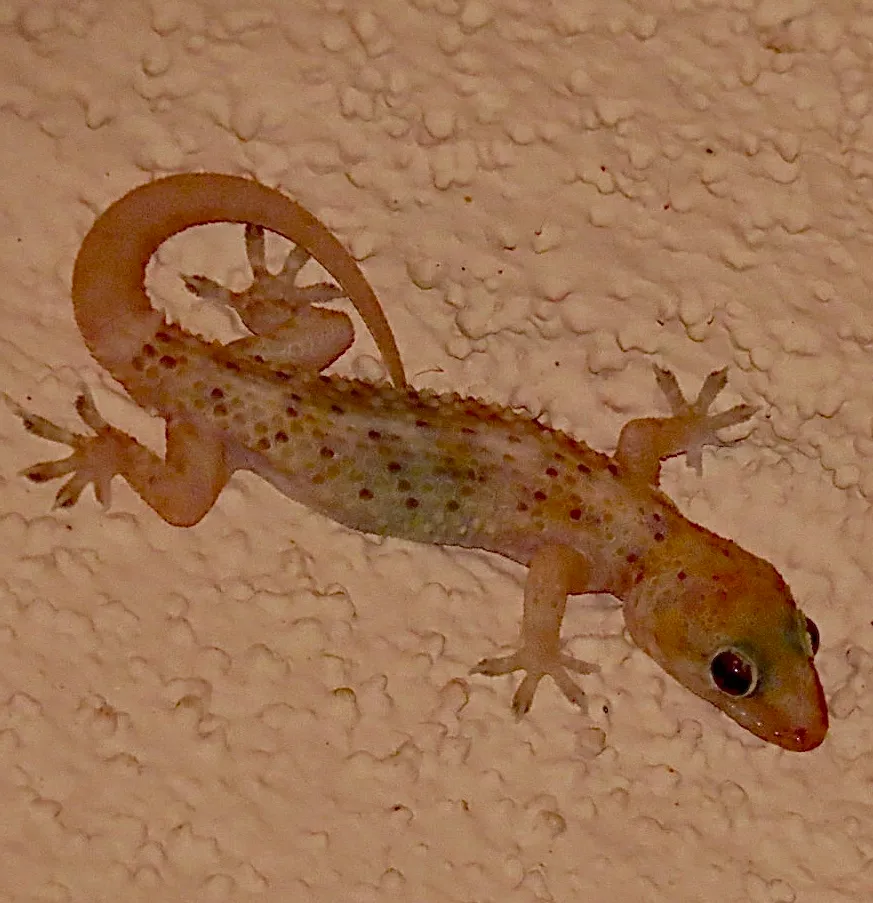
Texas A&M does not say where the droppings land, but it does say where the geckos spend the night: they frequent lighted areas such as windows and porch lights, wait there for moths, cockroaches and other insects, and hide by day in poorly sealed gaps around the outside of the house. A UF/IFAS Extension article on managing house geckos puts their size at 3 to 6 inches snout to tail and describes them waiting near porch lights for moths and cockroaches. Indoors, Texas A&M says, the droppings can stain fabrics, carpets, rugs, walls and curtains.
Where do lizards poop around a house?
Look where the lizards themselves spend time: under lights, on sills and walls, around patios and woodpiles and, in South Florida, on docks and seawalls. Most of the sources below say where each lizard lives, not where it leaves droppings; UF/IFAS, writing about iguanas, says their droppings litter the areas where they bask.
On the porch and under outdoor lights
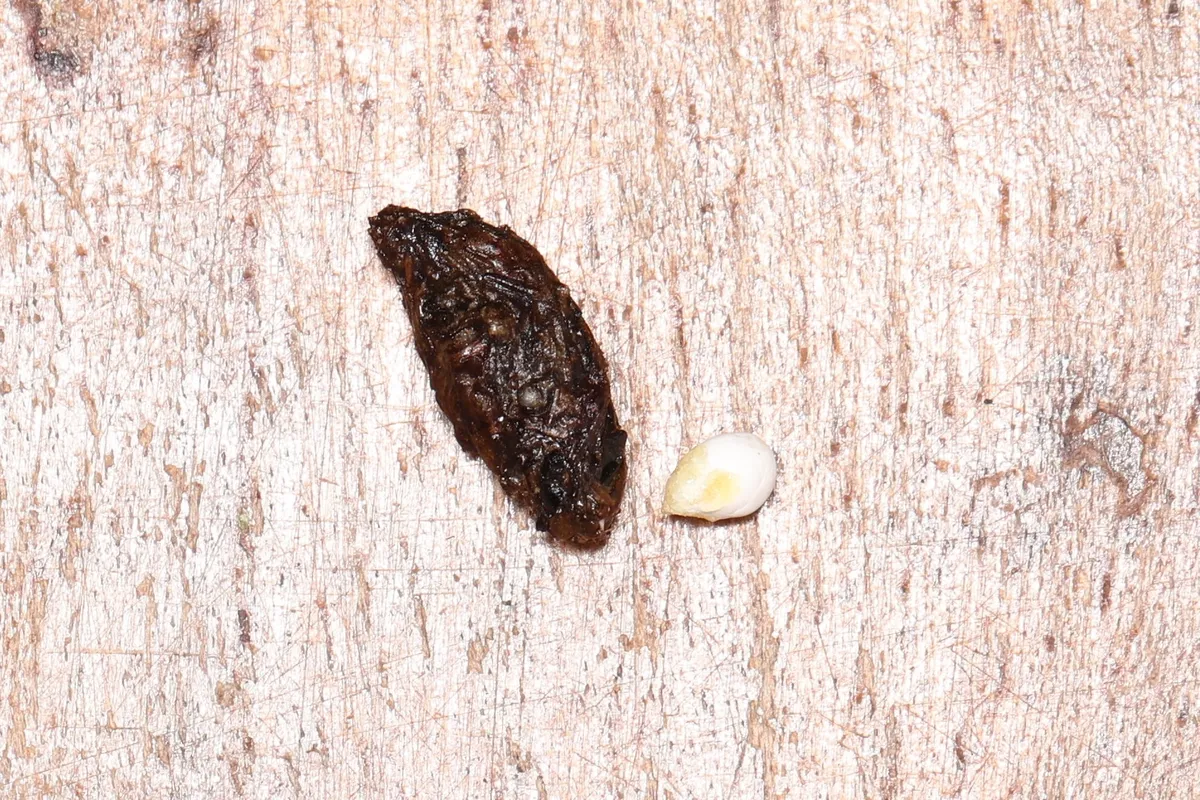
Lights draw insects, and insects draw lizards: Texas A&M and UF/IFAS place house geckos at porch lights, and UF/IFAS's brown anole publication notes that although brown anoles are normally active by day, some are active at night, feeding on insects attracted to lights. A dropping under a porch light fits that pattern, and the house gecko dropping pictured above was found under one. The guide to whether mosquitoes are attracted to light covers yellow and LED bulbs.
On window sills and walls
Window sills and walls near windows are the indoor and outdoor edge of the same hunting ground. Texas A&M lists windows alongside porch lights as places geckos frequent, and the North Carolina Wildlife Resources Commission says green anoles use sticky toe pads to climb walls and fences and that eastern fence lizards turn up on the sides of buildings.
Inside the house, garage or shed
Small lizards slip indoors through gaps. UC IPM's lizard guide says they can enter at any structural opening 1/4 inch or larger, especially gaps beneath doors, and UF/IFAS says brown anoles can get into homes, storage sheds, garages and screened rooms. A white-capped dropping on a floor near a door, on a sill or along a wall indoors suggests a lizard found a way in.
On patios, woodpiles and rock gardens
Skinks and fence lizards turn up here. The Missouri Department of Conservation says common five-lined skinks often live around farm buildings, rock gardens, rock piles, firewood piles and patios, and eat insects, spiders, snails and smaller lizards. Fence lizards are frequently found on or near trees, logs, stumps, rock outcrops, buildings and rock or brush piles, according to NC Wildlife's fence lizard profile.
On docks, seawalls and in pools (South Florida)
In South Florida, droppings on a dock, a seawall or a pool deck may be a green iguana's. The Florida Fish and Wildlife Conservation Commission says green iguanas may leave droppings on docks, moored boats, seawalls, porches, decks, pool platforms and inside swimming pools, and UF/IFAS's iguana guide says the droppings litter the areas where iguanas bask, are unsightly, cause odor complaints and are a possible source of Salmonella.
Is it lizard poop or mouse poop?
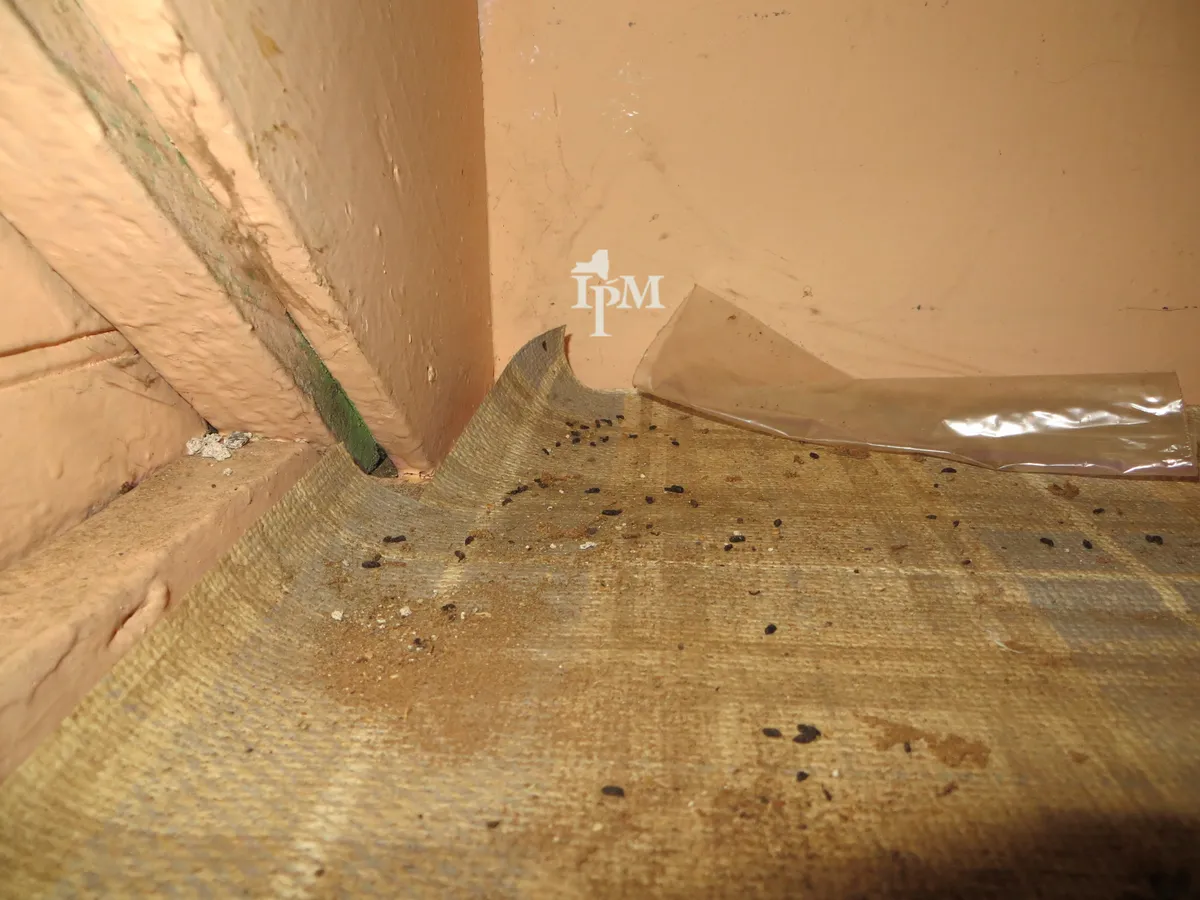
Look for the white cap first. Cornell IPM describes rodent droppings as cylindrical with pointed to rounded edges and typically black, though the color can vary with what the rodent ate; it gives mouse droppings as 1/8 to 1/4 inch long and Norway rat droppings as 3/4 to 1 inch. A house gecko's dropping is brownish and frequently tipped with white, Texas A&M says, and the three small lizard droppings pictured on this page are lumpy or wrinkled, not smooth. The guide to mouse poop covers mouse droppings in detail, and rat droppings has its own page.
The white part is not always attached: in the gecko photo above it lies beside the dark pellet. When in doubt, treat the dropping as a mouse's for cleanup (CDC's steps are below) and look for other mouse signs.
How do you tell lizard poop from bat, bird, roach, toad and snake droppings?
By the white cap and by how the dropping behaves. Bats leave piles of dark pellets under a roost that crumble into shiny insect bits; birds and snakes leave white too. The table sets each one against a lizard's.
| Droppings | What they look like | How they differ from a lizard's |
|---|---|---|
| Lizard | Dark pellet, often with a white, chalky cap of uric acid | The reference: Texas A&M and USFWS |
| Mouse | 1/8 to 1/4 inch, cylindrical, pointed to rounded ends | Typically black (Cornell IPM); hard when dry and pointed on one end (ICWDM) |
| Rat | About 1/2 inch (roof rat); 3/4 to 1 inch (Norway rat) | Typically black (Cornell IPM); a Norway rat's is about as long as the porch dropping in the first photo, so go by color, not length |
| Bat | 1/8 to 1/4 inch, shiny black, speckled with insect bits | Never any white, chalky material; crushes easily when rubbed; often found on attic and porch floors and under eaves and shutters (USFWS, Nebraska Extension) |
| Cockroach | Small black flecks that can look like pepper sprinkled on the floor | Black flecks, not a white-capped pellet (ICWDM) |
| Bird | Insect-eating birds' droppings carry white, chalky uric acid | Also black and white; swallows nesting on eaves may produce large amounts of feces, and USFWS suggests newspaper below their nests, so look up (USFWS, USFWS on nuisance swallows, UGA Extension) |
| Toad | Brown or black, sometimes with insect exoskeletons visible; can turn up in the same area morning after morning | Listed by ICWDM among brown or black droppings; often near flood lights, where toads go for the insects the lights attract |
| Snake | Snakes, like lizards, excrete mainly uric acid | Also black and white: UGA's Mengak says a black-and-white dropping can be a bird's, a snake's or a lizard's; the snake poop guide covers them (Merck, UGA Extension) |
Each row rests on the sources linked in it. The site's other droppings pages are linked in the text and the cards below.
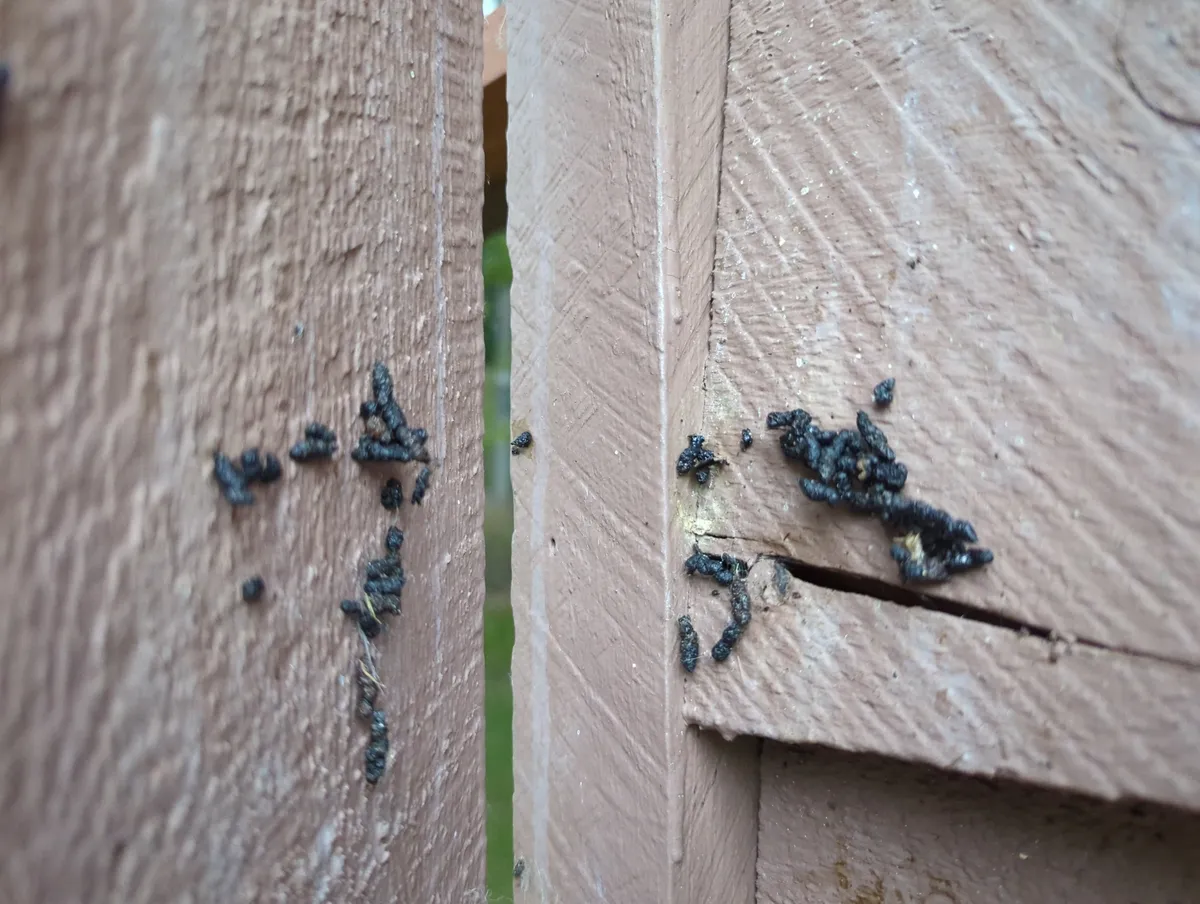
Bat droppings turn up on porches too. Nebraska Extension's guide to bats around buildings says they are 1/8 to 1/4 inch long, black and dotted with speckles of insect exoskeleton, and are often found on attic and porch floors and under eaves and shutters. USFWS says they crush easily between the fingers into shiny bits of insect, while rodent droppings are harder. The bat poop guide covers them, including the histoplasmosis risk tied to bat guano.
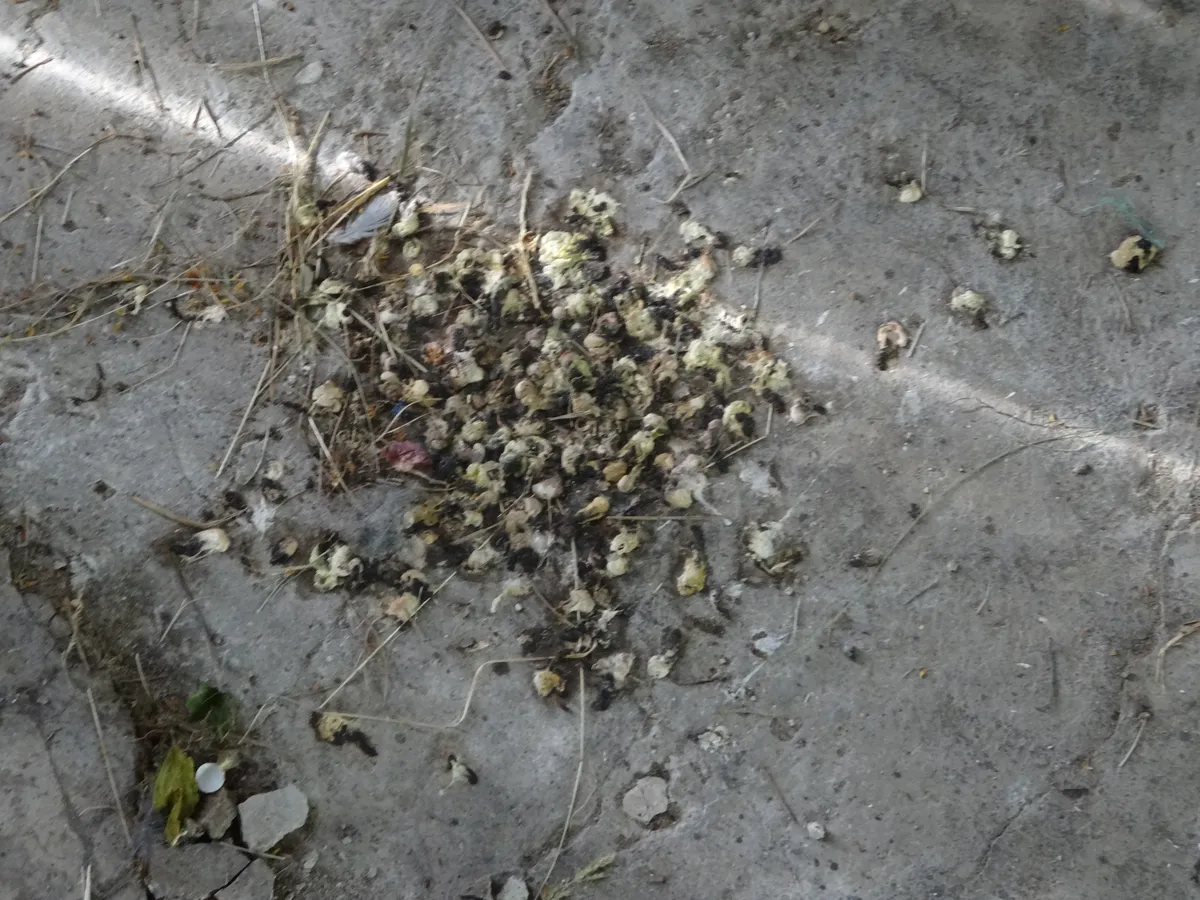
Bird droppings are the other white-capped suspect. Cliff and barn swallows often nest on the eaves of buildings and may produce large amounts of feces, the U.S. Fish and Wildlife Service says, and it suggests placing newspaper below their nests for easier cleanup. So look up: white-capped droppings piled below a swallow nest are the birds'.
How to tell lizard poop from the rest, without touching it
- Look for white. A chalky white or cream cap points to a lizard, a bird or a snake. Mouse and rat droppings are typically black (Cornell IPM), cockroach droppings are small black flecks (ICWDM), and bat droppings never contain the white material (USFWS).
- Measure it against a coin or ruler. 1/8 to 1/4 inch and black fits a mouse or a bat; about 1/2 inch to 1 inch and black fits a rat. None of the sources here gives a size for lizard droppings, so do not rule a lizard in or out by length.
- Look up. White-capped droppings below a swallow nest on an eave are the birds'. Dark droppings on a porch floor or under eaves or shutters fit bats: those are places where Nebraska Extension says bat droppings are often found.
- Note where it is. A lighted window or a porch light fits a house gecko, and a wall or fence an anole; a dock, seawall or pool deck in South Florida fits an iguana.
- Know the crumble test. USFWS says bat droppings crush easily into shiny bits of insect, while rodent droppings are harder. If you try it, wear gloves or use a stick, not bare fingers.
Is lizard poop dangerous?
It can carry Salmonella, so do not touch it bare-handed, and wash your hands afterward. CDC's page on reptiles and amphibians says reptiles often carry Salmonella in their digestive tracts and that even healthy ones can carry it. CDC's notice on Salmonella outbreaks linked to pet geckos puts it in terms of droppings: geckos and other reptiles can carry the germs in their droppings even if they look healthy and clean, and people get sick by touching the animal or anything in its environment and then touching their mouth or food. FWC says the same of green iguanas: they can pass Salmonella to people through contact with water or surfaces contaminated by their feces.
Some people are more likely to get sick. CDC's reptiles and amphibians page names children under 5, adults 65 and older and people with weakened immune systems, and tells reptile owners to wash their hands with soap and running water after handling the animal's poop, or to use hand sanitizer with at least 60% alcohol if soap and water are not readily available.
How do you clean up lizard poop?
Wear gloves, wet it before you wipe it, and wash your hands afterward. The CDC pages cited here give no cleanup method for a wild lizard's droppings. The steps below are CDC's steps for cleaning up rodent urine and droppings: CDC does not give them for lizard droppings, and they are listed here because a dark dropping with no white on it may be a mouse's or a rat's.
- In a home or an outbuilding such as a shed, open all the doors and windows for 30 minutes before cleaning, and leave the area while it airs out.
- Put on rubber or plastic gloves.
- Mix a fresh bleach solution, 1.5 cups of household bleach in 1 gallon of water (1 part bleach to 9 parts water), or use an EPA-registered disinfectant as its label directs.
- Spray the droppings until very wet and let them soak for 5 minutes, or as long as the disinfectant label says.
- Wipe them up with paper towels and throw the towels in a covered garbage can, then mop or sponge the area with disinfectant. Do not sweep or vacuum droppings.
- Wash your gloved hands with soap and water or a disinfectant, take the gloves off, then wash your hands with soap and warm water.
Clean up promptly indoors: Texas A&M notes that gecko droppings can stain fabrics, carpets, rugs, walls and curtains. For iguana droppings in a pool, the FWC and UF/IFAS pages behind this guide give no cleaning method.
What does lizard poop on your porch tell you?
Mostly that insects gather there. House geckos wait near porch lights at night for moths, cockroaches and other insects, Texas A&M says, and UF/IFAS says some brown anoles feed at night on insects attracted to lights, so droppings under a light suggest a lizard is feeding there after dark. Do not count on insect sprays to change that: Texas A&M says pesticides used for general insect control will probably have minimal impact on gecko numbers.
Droppings inside point to a gap. UC IPM says lizards can enter at any structural opening 1/4 inch or larger, and through gaps beneath doors in particular, and Texas A&M says geckos may come in through cracks and crevices or around doorways. The same gaps let in insects and spiders; the guide to keeping spiders out of the house covers sealing them.
Commonly confused with
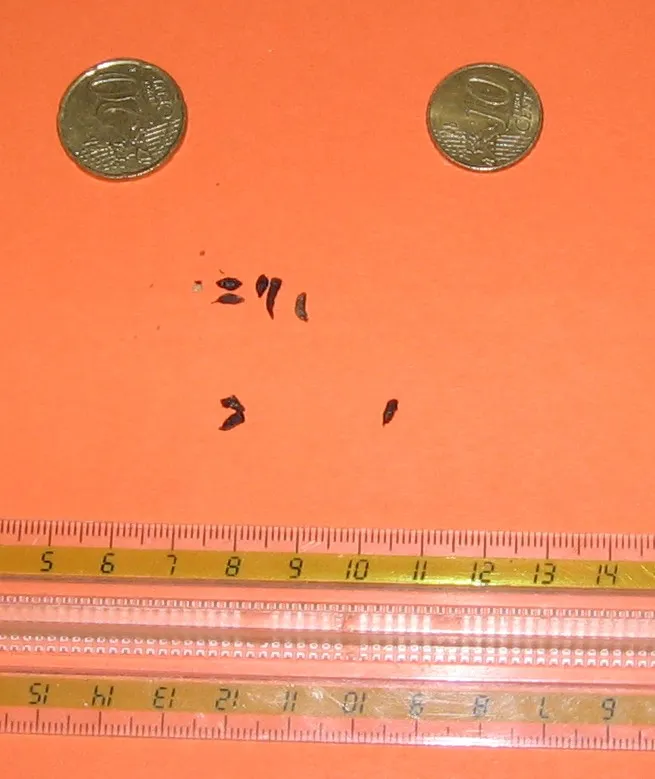 Mouse droppings1/8 to 1/4 inch, cylindrical and typically black, with pointed to rounded ends
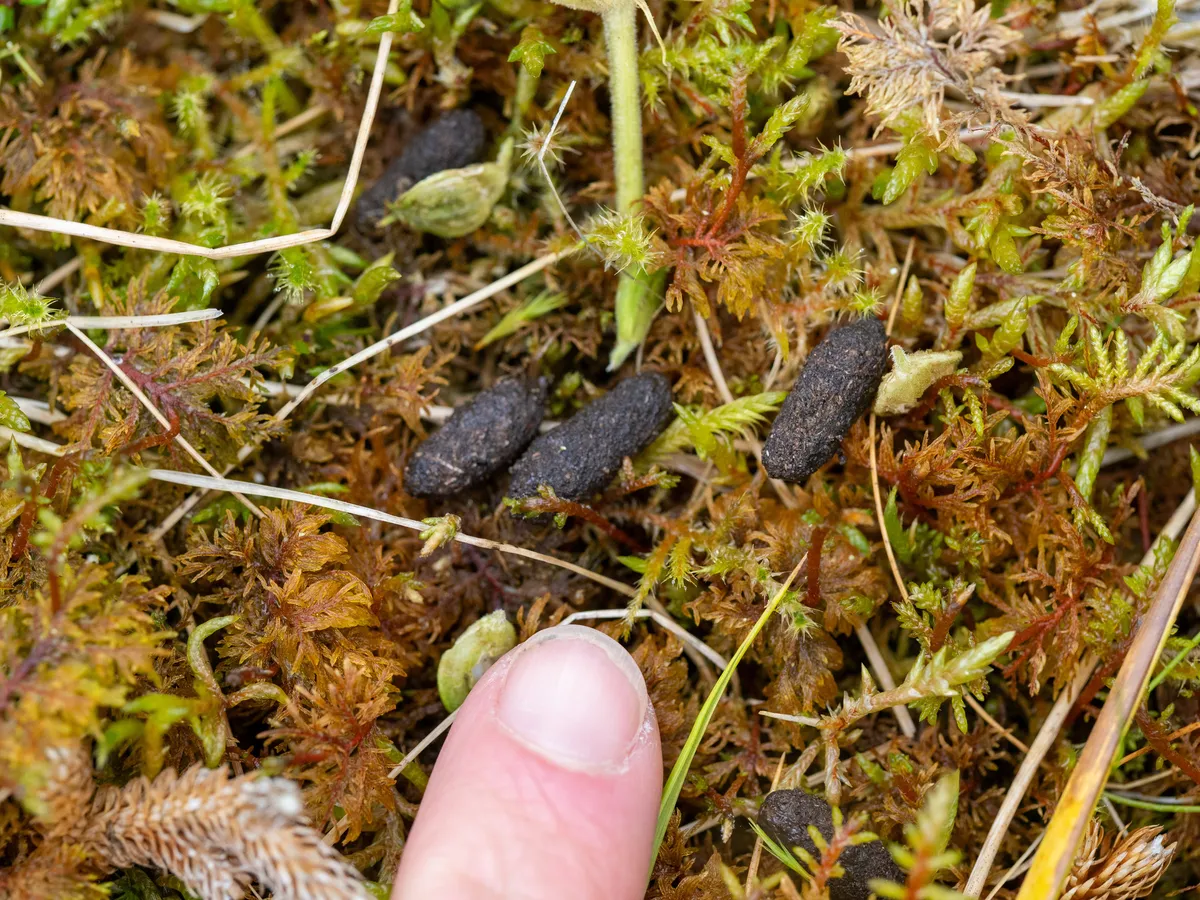 Rat droppings3/4 to 1 inch for a Norway rat, cylindrical and typically black
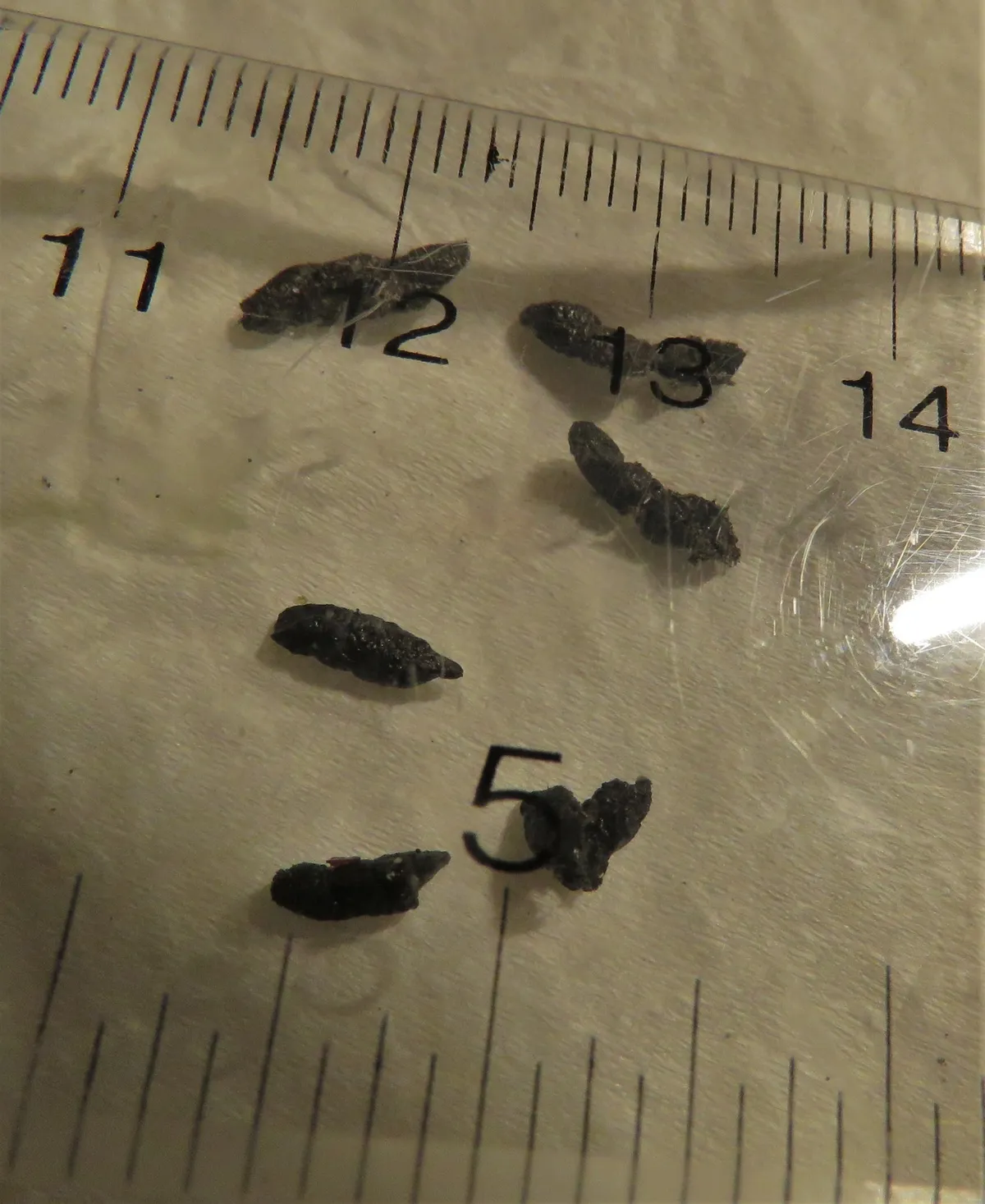 Bat droppingsBlack, 1/8 to 1/4 inch, crush into shiny insect bits; never any white, chalky material
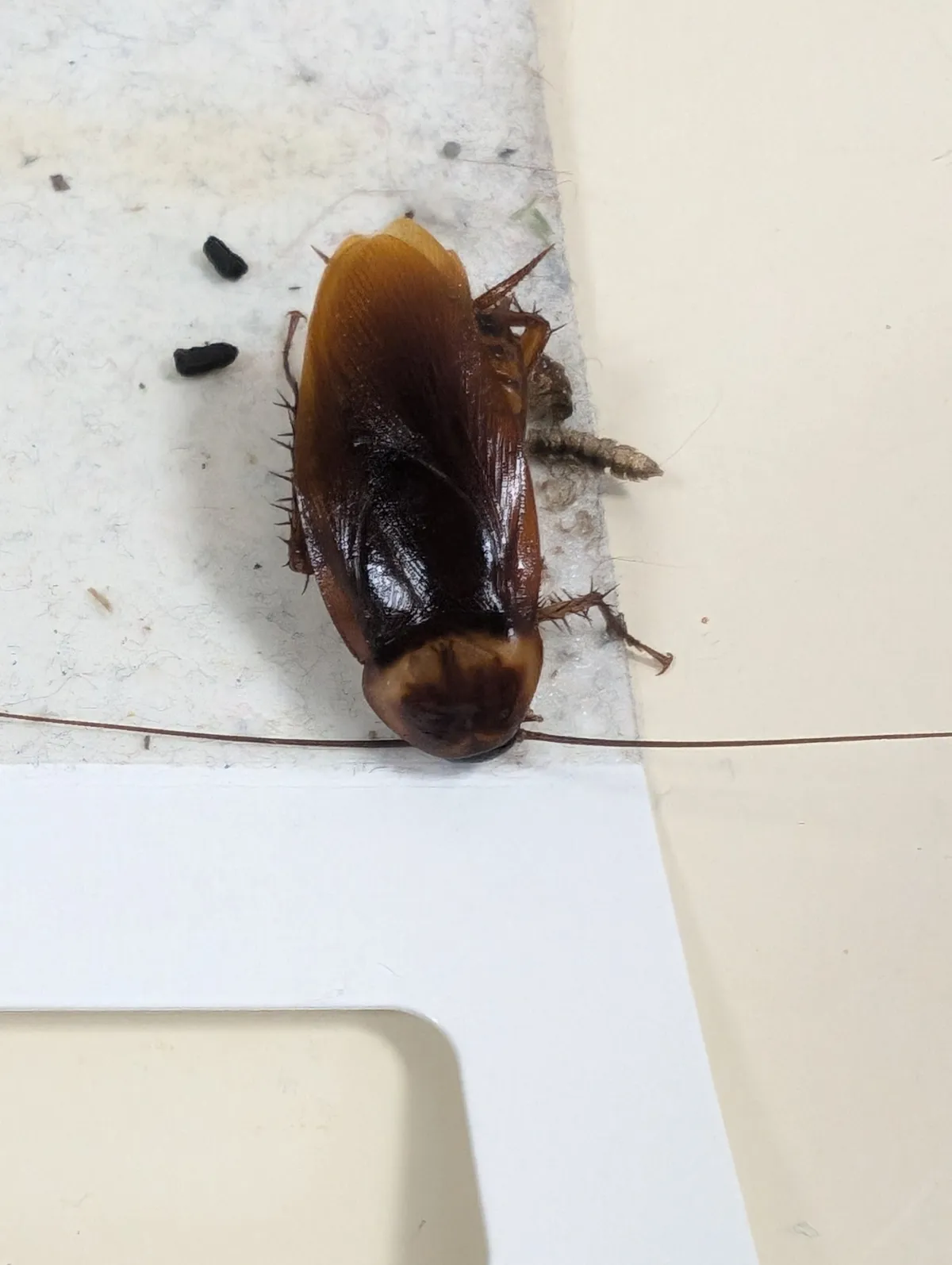 Cockroach droppingsSmall black flecks that can look like pepper sprinkled on the floor
 Snake droppingsAlso black and white: snakes, like lizards, excrete mainly uric acid
Photos: Mouse droppings: Hansmuller, CC BY-SA 4.0, via Wikimedia Commons, CC BY-SA 4.0. Rat droppings: no rights reserved, via iNaturalist, CC0 1.0. Bat droppings: (c) Barry Cottam, some rights reserved (CC BY), via iNaturalist, CC BY 4.0. Cockroach droppings: (c) Annamarie, some rights reserved (CC BY-SA), via iNaturalist, CC BY-SA 4.0. Snake droppings: (c) Court Harding, some rights reserved (CC BY), via iNaturalist, CC BY 4.0.
What should you do once you know it's a lizard?
Clean up the droppings and leave small lizards alone, as the extension sources here advise. UC IPM says lizards cause no measurable damage to plants in gardens, may be beneficial by eating pest insects and should be left alone; Texas A&M calls house geckos beneficial predators of insects that may become a nuisance when they move into structures. Lizards are also among the animals that eat ticks, as the guide to what eats ticks and mosquitoes notes. UC IPM also notes that California's Department of Fish and Wildlife regulates taking lizards and that a few species are protected by law, so check with your state's wildlife agency before removing any.
- Seal the way in. Texas A&M advises replacing worn weather stripping around doors and windows and sealing cracks and crevices around soffits and plumbing or electrical openings with silicone caulk or expanding foam; UC IPM adds threshold sweeps and tight-fitting door seals, since lizards can enter at any opening 1/4 inch or larger.
- Put an indoor gecko back outside. Texas A&M says a gecko can be caught with a jar or plastic container and released outdoors, once you have taken steps to keep it from getting back in. UC IPM notes that many lizards will try to bite if handled roughly.
- Skip the spray. Texas A&M says no pesticides are registered for gecko control, and UF/IFAS says none is registered for managing geckos inside a structure. UC IPM says no toxicants or repellents are registered in California to kill or repel lizards.
- Cut their food indoors. UF/IFAS says removing gecko food sources inside a structure helps keep geckos from establishing there.
- Green iguanas in Florida are different. As of November 2026, FWC says green iguanas are not native to Florida and are considered an invasive species, are not protected in Florida except by anti-cruelty law, and can be humanely killed on private property with landowner permission. It encourages landowners to remove them from private property, asks anyone not capable of safely removing iguanas to seek help from a professional nuisance wildlife trapper, and says captured iguanas cannot be relocated and released at other locations in Florida. Green iguanas are on Florida's Prohibited species list, and FWC says a permit is required to possess live captured green iguanas for eradication and control purposes. To deter them, FWC suggests modifying the habitat around the home or humanely harassing the animals, for example by spraying them with water; UF/IFAS adds loud, startling noises and never feeding them.
For other droppings around the house and yard, the animal poop identification chart compares raccoon, opossum, rat, bat and many more side by side.
This guide is general educational information, not medical advice. If you have symptoms or concerns after a bite or exposure, contact a healthcare provider.
Frequently Asked Questions
What does house gecko poop look like?+
House gecko droppings are elongated and brownish and frequently tipped with white, according to Texas A&M AgriLife Extension's fact sheet on house geckos. The white part is uric acid, which the US Fish and Wildlife Service calls characteristic of the droppings of insect-eating lizards. Texas A&M says house geckos frequent lighted areas such as windows and porch lights, where they wait for moths, cockroaches and other insects, and the gecko dropping photographed for this page was found under a porch light. Indoors, the droppings can stain carpets, rugs, walls and curtains.
Why does lizard poop have a white tip?+
The white tip is uric acid. The Merck Veterinary Manual says snakes and lizards predominantly excrete uric acid, and that a reptile's lower digestive tract, urinary tract and reproductive tract all empty into one chamber, the cloaca, so feces and uric acid leave by the same opening. The US Fish and Wildlife Service describes white, chalky uric acid as characteristic of the droppings of insect-eating birds and lizards, which is why bird droppings are black and white too, and a University of Georgia Extension wildlife expert adds snakes to that list.
Can lizard poop make you sick?+
It can: lizard droppings can carry Salmonella. CDC says geckos and other reptiles can carry the germs in their droppings even if they look healthy and clean, and that people get sick after touching a reptile or anything in its environment and then touching their mouth or food. Children under 5, adults 65 and older and people with weakened immune systems are more likely to get sick. Wear gloves to handle droppings, and wash your hands with soap and running water afterward.
How can you tell lizard poop from mouse poop?+
Look for the white cap. The droppings of insect-eating lizards carry white, chalky uric acid, the US Fish and Wildlife Service says, and Texas A&M describes house gecko droppings as brownish and frequently tipped with white. Cornell IPM describes mouse droppings as 1/8 to 1/4 inch long, cylindrical with pointed to rounded ends, and typically black. Place helps too: house geckos frequent lighted windows and porch lights. If you cannot tell, clean it up the way CDC advises for rodent droppings.
Is it lizard poop or rat poop?+
Go by color, not length. Cornell IPM says Norway rat droppings are 3/4 to 1 inch long and roof rat droppings about 1/2 inch, and describes rodent droppings as cylindrical and typically black. The lizard dropping photographed on a porch for this page is about an inch long too, but it carries the chalky white cap of uric acid that the US Fish and Wildlife Service calls characteristic of insect-eating lizards' droppings. If a dropping has no white on it and its size fits a rat, look for other rat signs.
Is it lizard poop or bird poop?+
Both carry white uric acid, so color cannot settle it. The US Fish and Wildlife Service says the droppings of insect-eating birds and lizards both have white, chalky material. Look up: the same agency says cliff and barn swallows often nest on the eaves of buildings and may produce large amounts of feces, and it suggests newspaper below their nests for easier cleanup, so white-capped droppings piled below a nest are the birds'. Texas A&M says house geckos frequent lighted windows and porch lights, so a white-capped pellet there with no nest overhead fits a gecko.
Why do I keep finding lizard poop on my porch?+
Most likely because insects gather there. Texas A&M says house geckos wait near porch lights at night for moths, cockroaches and other insects, and UF/IFAS says some brown anoles feed at night on insects attracted to lights. Geckos hide by day in poorly sealed gaps around the outside of the house, Texas A&M adds, and it advises sealing them. It also says no pesticides are registered for gecko control, and that pesticides used for general insect control will probably have minimal impact on gecko numbers.
How do I clean lizard poop off my porch or sill?+
Wear rubber or plastic gloves, spray the droppings until very wet with an EPA-registered disinfectant or a fresh bleach solution of 1.5 cups of household bleach per gallon of water, let them soak for 5 minutes, then wipe them up with paper towels and throw the towels in a covered garbage can. Those are CDC's steps for rodent droppings, not advice CDC gives for lizard droppings; they are the steps to use if the dropping might be a mouse's. Do not sweep or vacuum it, and wash your hands afterward.
How do I keep geckos out of the house?+
Seal the gaps they use. Texas A&M advises replacing worn weather stripping around doors and windows and sealing cracks around soffits and plumbing or electrical openings with silicone caulk or expanding foam, and UC IPM says lizards can enter at any opening 1/4 inch or larger, especially beneath doors, so it recommends threshold sweeps and tight-fitting door seals. Texas A&M says no pesticides are registered for gecko control. A gecko already inside can be caught with a jar or plastic container and released outdoors.
What does iguana poop look like, and is it a problem in a pool?+
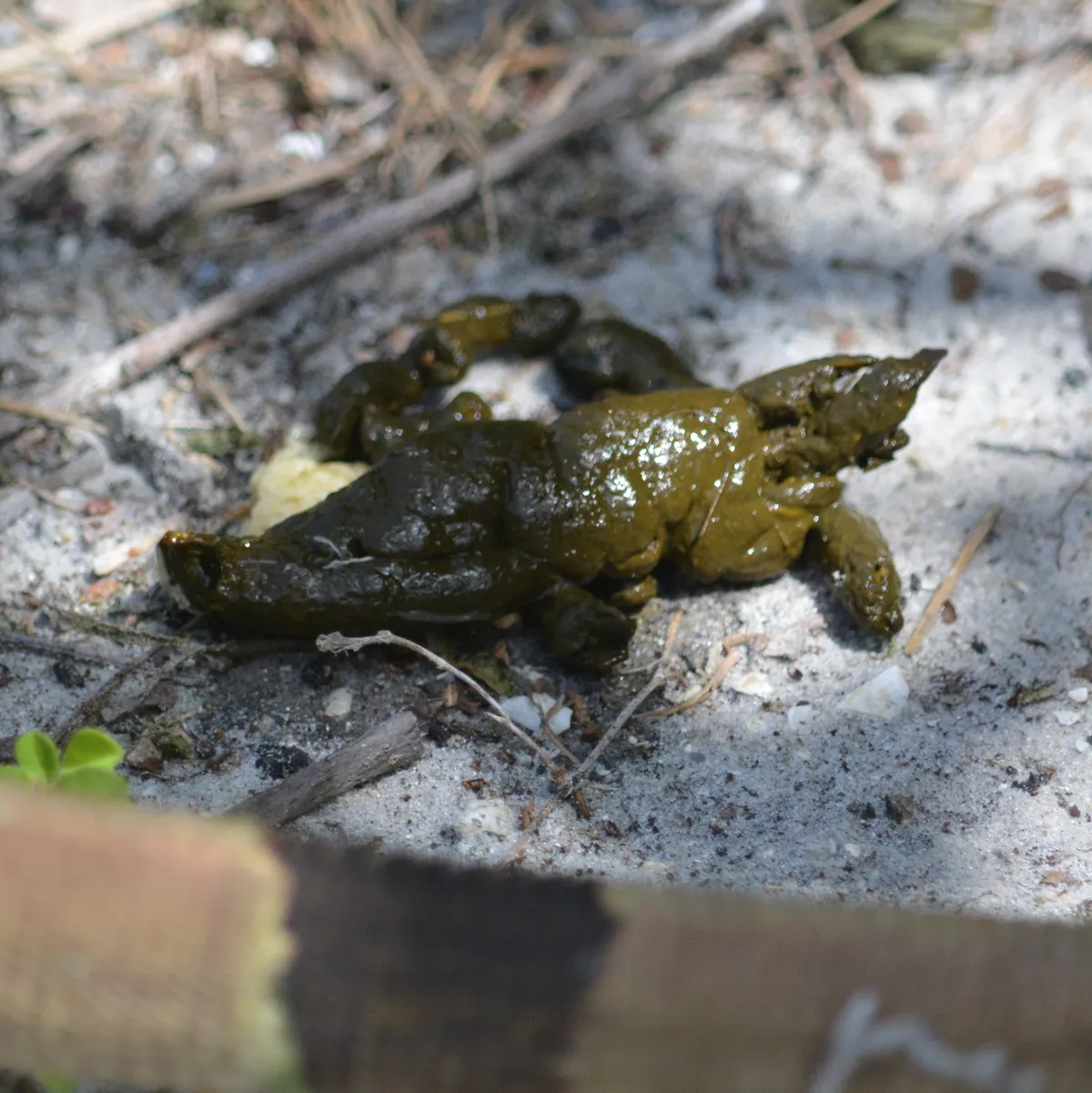
The agency sources here do not describe it. The one photo on this page, from an iNaturalist observation of a green iguana in Florida, shows a soft, glossy, olive-brown mass with a pale yellowish urate, not a small dark pellet. The Florida Fish and Wildlife Conservation Commission says iguanas may leave droppings on docks, seawalls, porches, decks, pool platforms and inside swimming pools, and that iguanas can pass Salmonella to people through contact with water or surfaces contaminated by their feces. UF/IFAS calls the droppings unsightly, a cause of odor complaints and a possible Salmonella source.
Sources
- House geckos (Insects in the City), by Michael Merchant and Elizabeth Brown — Texas A&M AgriLife Extension Service
- House Bat Management (Resource Publication 143), by Arthur M. Greenhall — U.S. Fish and Wildlife Service
- Overview of Reptiles, by Stephen J. Divers and Jessica R. Comolli — Merck Veterinary Manual
- Nuisance swallows — U.S. Fish and Wildlife Service
- Salmonella Outbreaks Linked to Geckos (Jan 9, 2026) — Centers for Disease Control and Prevention
- Reptiles and Amphibians (Healthy Pets, Healthy People) — Centers for Disease Control and Prevention
- Symptoms of Salmonella Infection — Centers for Disease Control and Prevention
- How to Clean Up After Rodents — Centers for Disease Control and Prevention
- Mouse and Rat Biology and Behavior — Cornell University, New York State Integrated Pest Management
- Bats in and Around Structures (NebGuide G1667), by Dennis M. Ferraro, Lisa A. Pennisi, Scott E. Hygnstrom and Stephen M. Vantassel — University of Nebraska-Lincoln Extension
- Brown or Black Droppings — Internet Center for Wildlife Damage Management
- A little wildlife knowledge will help determine who's eating landscape plants, by Sharon Dowdy (2016) — University of Georgia Cooperative Extension
- Pest Notes: Lizards (UC ANR Publication 74120), by B. D. Todd — University of California Statewide IPM Program
- Managing House Geckos, by Jamie Daugherty (2024) — UF/IFAS Extension Lake County
- Florida's Introduced Reptiles: Brown Anole (Anolis sagrei) (WEC441/UW486), by Steve Johnson, Courtney Reyes, Brandon Dodge and Natalie M. Claunch — UF/IFAS Extension
- Dealing with Iguanas in the South Florida Landscape (ENY-714/IN528) — UF/IFAS Extension
- Green Iguana — Florida Fish and Wildlife Conservation Commission
- Common Five-Lined Skink (Field Guide) — Missouri Department of Conservation
- Green Anole — North Carolina Wildlife Resources Commission
- Eastern Fence Lizard (North Carolina Wildlife Profiles), by Jeff Beane, updated 2018 — North Carolina Wildlife Resources Commission
Read and approved by Alex Francisco. Found an error? Email support@buzzskito.ca.