
Reviewed by Alex Francisco
Published November 19, 2026 · Fact-checked against the sources listed below
Which bugs look like mosquitoes?
Non-biting midges are the insects most often taken for mosquitoes: the American Mosquito Control Association's list of mistaken IDs calls them the most widespread and numerous look-alikes. The other common look-alikes are crane flies, winter crane flies, fungus gnats, phantom midges, dixid midges, dance flies, drain flies, biting midges (no-see-ums) and black flies, plus mayflies, which Santa Barbara County's mosquito district notes are not true flies at all.
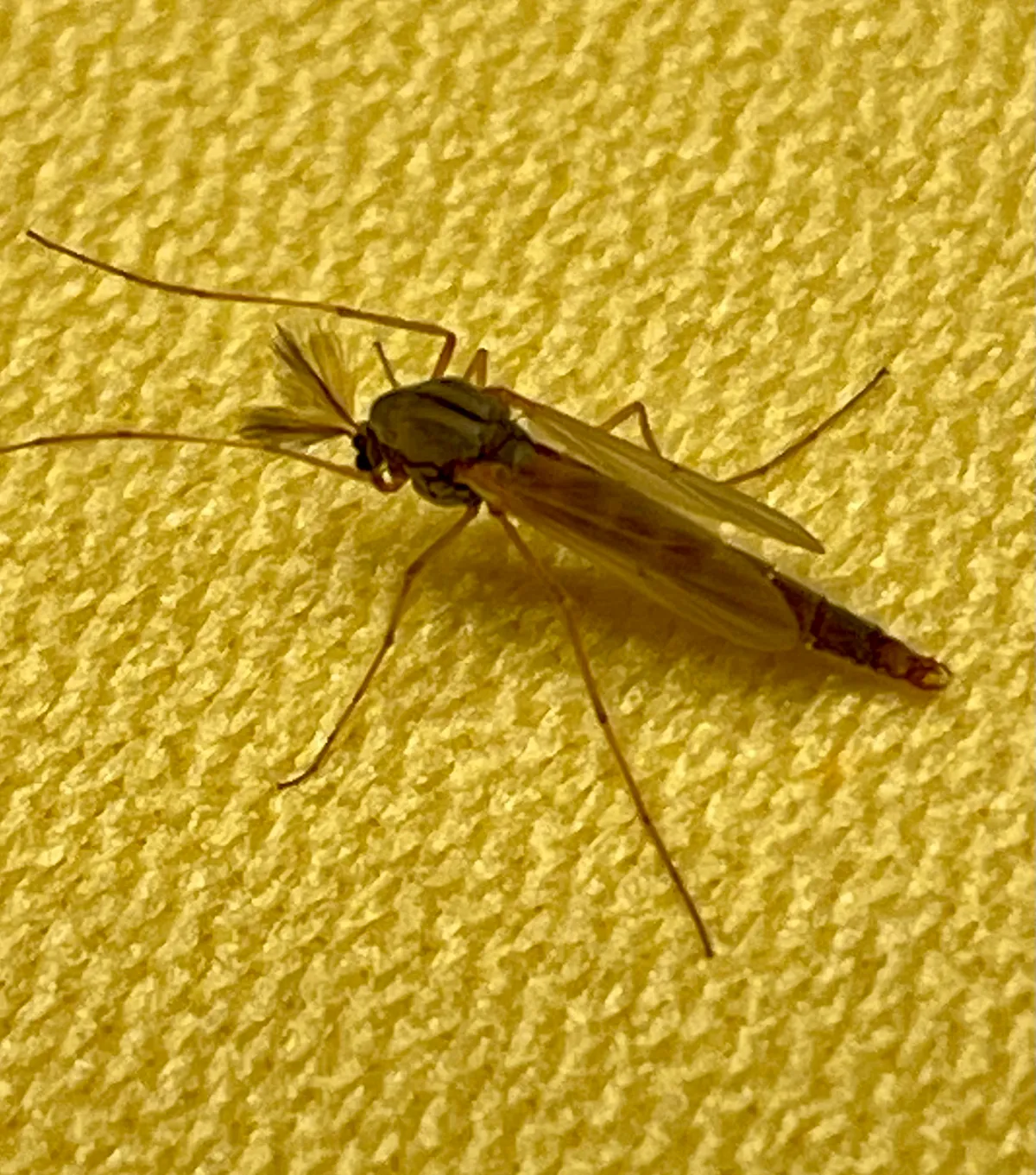
Where and when you saw the insect narrows the list quickly:
| Where and when you saw it | Most likely | Also check |
|---|---|---|
| A cloud over a lake, pond or marsh around dusk | Non-biting midges | Phantom or dixid midges; male mosquitoes swarm too, in one small spot |
| Dozens resting on siding, eaves or a lit porch | Midges | Crane flies; mayflies near a lake or river |
| One big, long-legged insect on a wall or window | Crane fly | Mayfly (wings held upright); a big real mosquito |
| Tiny dark flies at a window or on houseplant soil | Fungus gnats | A midge that followed the porch light inside |
| Fuzzy little flies on a bathroom wall | Drain flies | Fungus gnats |
| A swarm bobbing over a shrub or fence on a sunny day | Dance flies | Midges |
| Flying or walking on snow on a mild winter day | Winter crane flies | Aquatic insects near open streams or rivers |
| One mosquito on an indoor wall in winter | A real mosquito spending the winter inside | Winter crane flies, outdoors on mild days |
| Bites you at the shore or a marsh but is barely visible | No-see-ums | Female mosquitoes |
| Lands on you and bites | A female mosquito | No-see-ums; black flies by day near streams |
Compiled from the extension, vector control and agency sources linked in the sections below.
How do you tell a real mosquito from a look-alike?
Look at the wings and the beak. Adult mosquitoes are set apart from other flies by scales on the wing veins and the wing edge and by a long proboscis, the New Mexico Department of Health's mosquito identification guide says, and the Missouri Department of Conservation's mosquito guide says a fringe of scales on the wing shows up on close inspection. A magnifying glass, or a phone camera zoomed in on a bug trapped in a clear jar, is enough to see them.
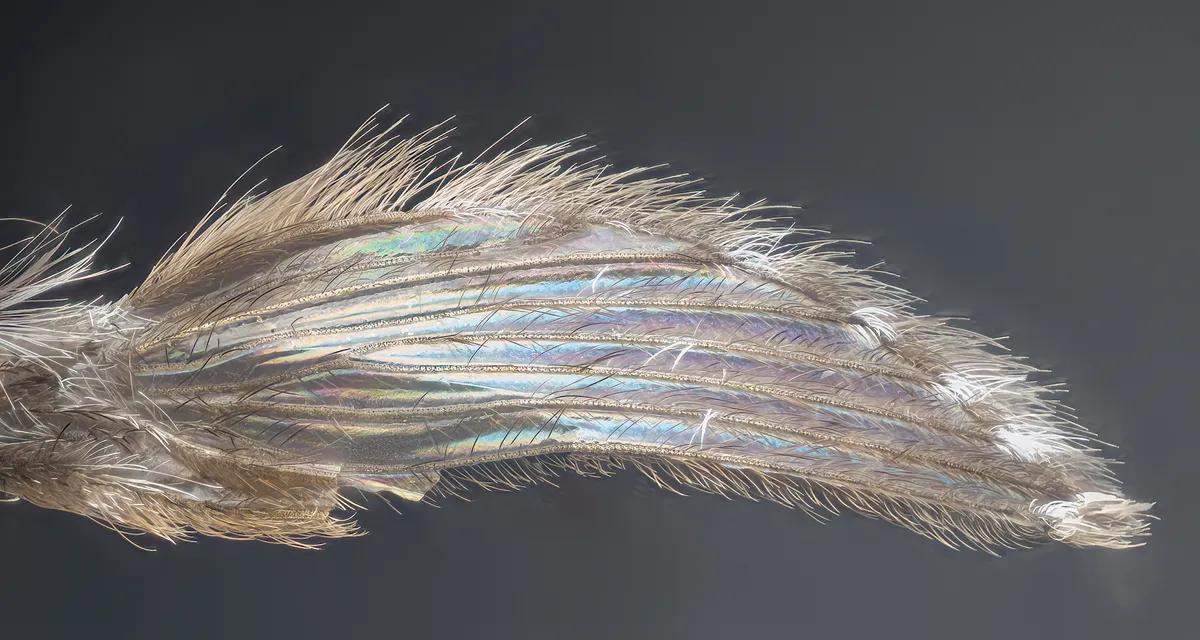
The scales are tiny. For the northern house mosquito, UF/IFAS gives a wing 3.5 to 4.0 mm (about 1/7 to 1/6 inch) long, with narrow dark scales. The look-alikes have none; the Missouri Department of Conservation's midge guide, for one, says midge wings lack scales.
The beak is the part that bites. In female mosquitoes the mouthparts form a long piercing-sucking proboscis, the New Mexico guide says, while CDC says a male's proboscis is not strong enough to pierce skin. The Missouri midge guide says adult midges typically have a short proboscis and do not bite people. The one look-alike with a long beak, the dance fly, uses it on other insects, which makes the wing scales the surer check.
How the insect sits is the next clue. Ventura County's vector control program describes resting midges holding their wings in an inverted V with the front legs stretched outward, and resting mosquitoes folding the wings over the back with the front legs gripping the surface; the Missouri midge guide notes that many mosquitoes at rest raise their hind legs outward and upward. The Lake County Vector Control District in California says a midge's wings are shorter than its body, while a mosquito's are slightly longer.
Size and antennae will not settle it. The Missouri Department of Conservation puts adult mosquitoes at about 1/4 to 1/2 inch and most midges under 3/8 inch, and Lake County says its largest local midge averages about 1/2 inch, so the two overlap. Feathery antennae only mark a male: the New Mexico guide describes bushy antennae on male mosquitoes, and the Missouri midge guide says male midges often have feathery antennae too. How to tell male and female mosquitoes apart shows both sexes side by side.
Checks to run with the bug under a glass
- Wing edge and veins. Zoom in on one wing. A fringe of scales along the edge and lines of scales along the veins mean a mosquito; wings without scales mean a look-alike.
- Beak. A long, slender beak pointing forward from the head belongs to a mosquito, unless the wings lack scales: then it may be a dance fly. No long beak points to a midge, crane fly or gnat.
- Legs at rest. Front pair held forward and up off the surface: a midge. Front legs gripping the surface, often with the hind legs raised: a mosquito.
- Wings at rest. Folded over the back and a little longer than the body: a mosquito. In an inverted V: a midge. Upright and pressed together like a butterfly's: a mayfly.
- Size. Against a ruler marked in inches, a mosquito is about 1/4 to 1/2 inch long. A crane fly can reach 1 1/2 inches; a fungus gnat is commonly 1/16 to 1/8 inch, and a no-see-um usually only 0.04 to 0.08 inch.
- Where and when. A dusk swarm by water, a porch light, a houseplant, a drain or snow each points to a different suspect in the table above.
What are the mosquito-like swarms over lakes and ponds at dusk?
They are usually non-biting midges, and they are mating. The Missouri midge guide says the cloudlike swarms often gather in the early evening when the sun is getting low, frequently just above some tall object or other marker. The AMCA says the swarms are made up almost entirely of males and form over a prominent, usually light-colored object, such as a car, a piece of lawn furniture or a person, and that they often change pattern erratically at a sound as small as a handclap, because the swarming males are so sensitive to sound.
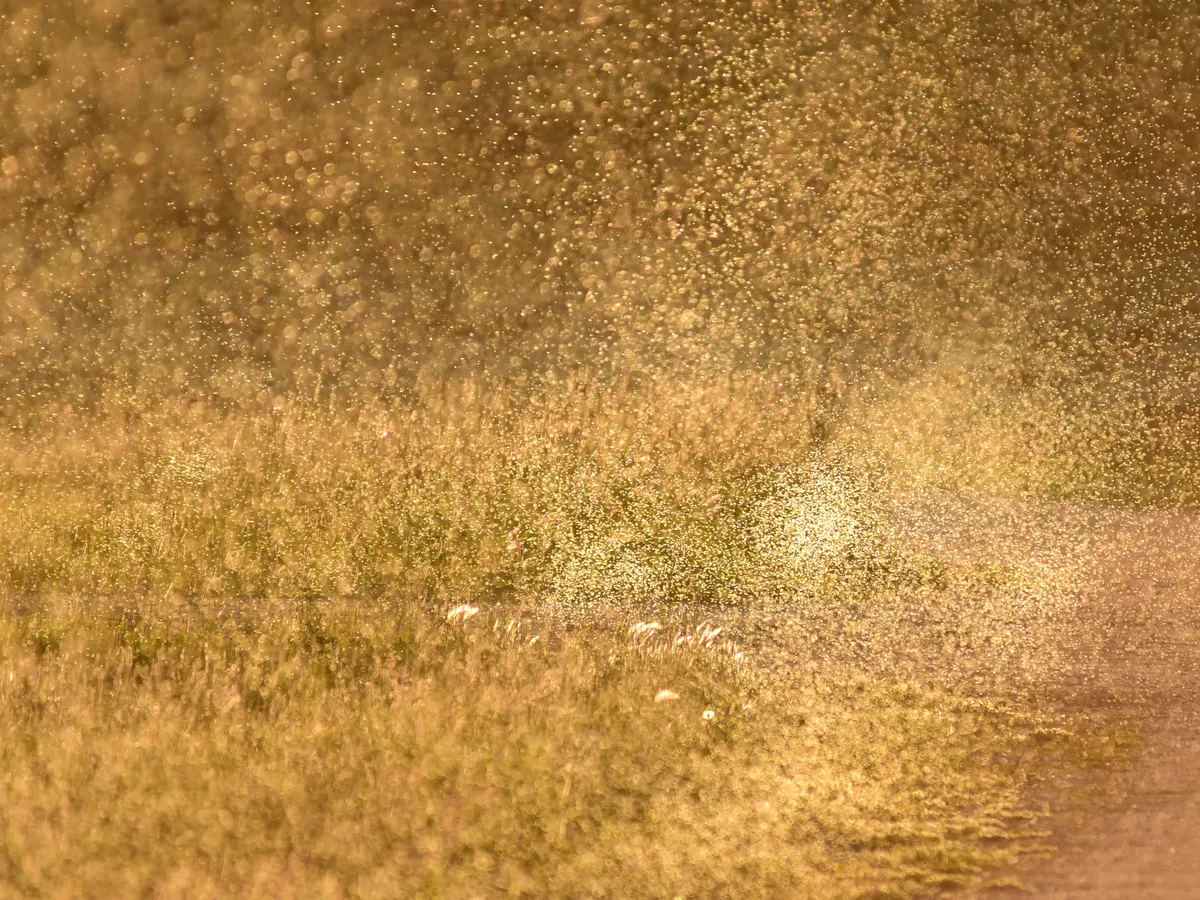
Male mosquitoes can swarm when mating too, but Lake County says their swarms keep to a defined spot and are hard to see, while midges form large evening swarms that may continue over several days.
Non-biting midges
These midges do not bite, so they cannot spread disease either, says the University of Kentucky's fact sheet on non-biting midges and gnats, and Lake County says the adults live less than 48 hours. The trouble is their numbers. Kentucky says swarms near the water they came from can completely cover homes, vehicles, furniture and plants, mostly in spring and summer, and the AMCA says the resting adults line fences, walls, eaves, porches and entryways.
Local names vary. UF/IFAS Extension in Polk County, Florida, calls aquatic midges blind mosquitoes and says they do not bite, suck blood or carry disease, that their numbers peak between April and November, that they are drawn to the lights of houses and businesses at night and that they can stain paint and stucco. Around Clear Lake in California, Lake County calls its largest midge the rice fly. The red larvae of many midges, the bloodworms, are covered in the larvae section below.
Phantom midges
Phantom midges are the pale, glassy look-alikes that rise from lakes. The San Mateo County Mosquito and Vector Control District describes them as very small flies that appear translucent, seen in large swarms over lakes in summer, and says they do not bite. An adult has a very short proboscis, says the University of Wisconsin-Milwaukee Field Station, and the name comes from the transparent larvae, sometimes called glassworms.
One of them is the Clear Lake gnat of Clear Lake, California. Lake County says the adults are less than 1/4 inch long, have reduced mouthparts and cannot bite, and are small enough to pass through large window screens; their sheer numbers made them a major pest there from the 1940s to the 1970s.
Dixid midges
Dixid midges are mosquito-like flies that may be seen swarming at dusk along the edges of streams and lakes, the AMCA says, but they lack a proboscis and scales on the wings. Santa Barbara County's district says the adults are slightly smaller than mosquitoes and live less than a week, and the AMCA says dixids can produce staggeringly large emergences, though only in certain local conditions.
Dance flies
Dance flies are the look-alike with a real beak. The San Mateo district says that, like mosquitoes, they have long, pointed mouthparts, but they use them to eat other insects rather than to bite people; they swarm above things such as shrubs or fence posts and do not usually come indoors. Ventura County says the swarms move up and down in sunlit spots in backyards, and Santa Barbara County adds that they also gather around houses, shrubs and fences at dusk.
What is the giant mosquito on the wall or porch light?
Usually a crane fly. The AMCA describes crane flies as delicate insects from 1/4 inch to as large as 1 1/2 inches long that do not bite people or eat mosquitoes, and says the adults are strongly attracted to porch lights; Ventura County adds that they are usually many times larger than a typical mosquito. The nicknames, the lawn-feeding larvae and the dragonfly that also goes by mosquito hawk are explained in what a mosquito hawk really is.
Mayflies
An insect with its wings held upright over the back and long tails trailing behind is a mayfly. The Missouri Department of Conservation's mayfly guide describes adults up to 1 1/4 inches long that hold their wings upright and together like a butterfly and cannot eat. University of Minnesota Extension gives a range of 1/4 to 1 1/4 inches with two or three long tails, and says mayflies live near water, are drawn to lights, gather around buildings from May into September and do not harm people or property.
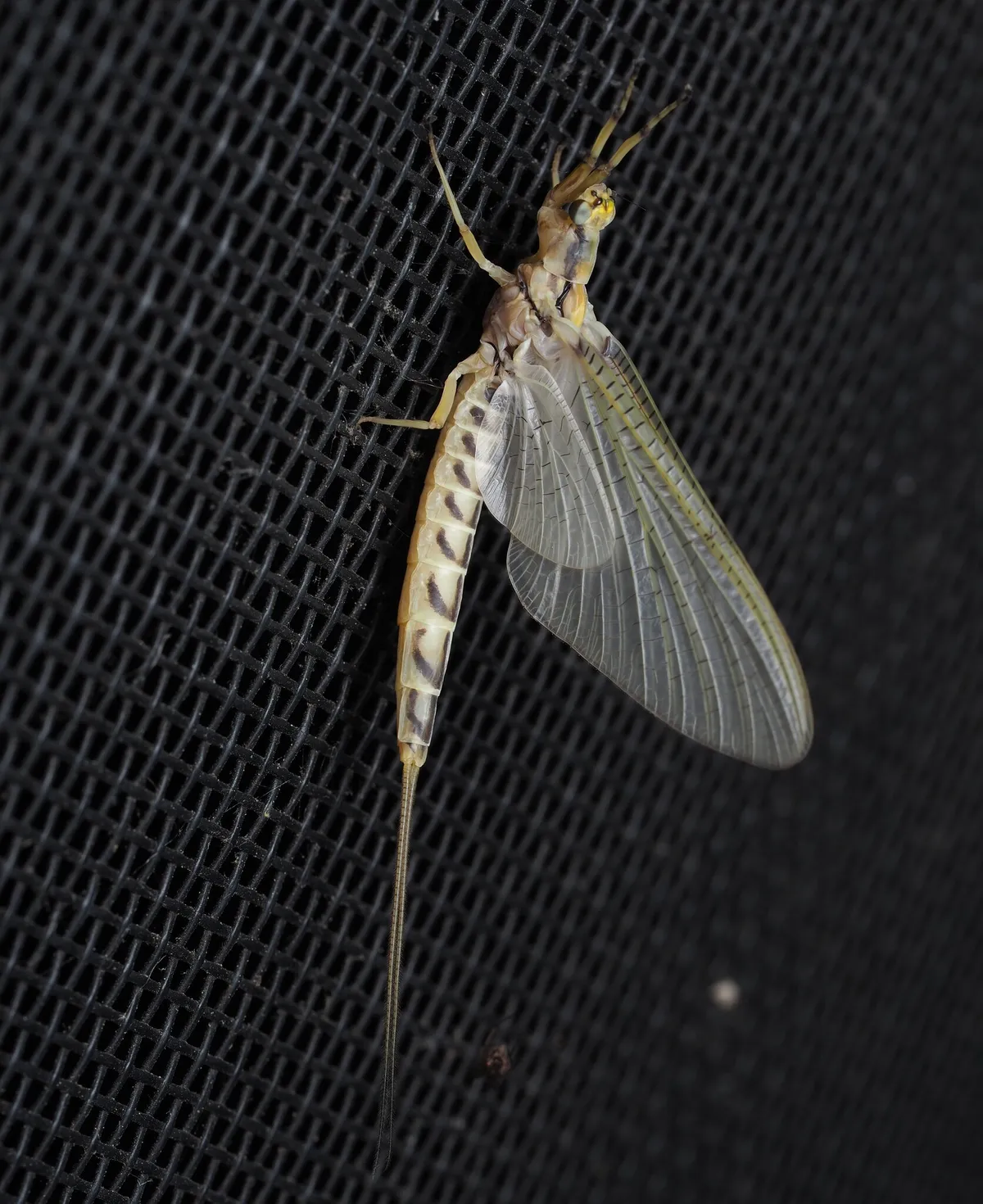
Near big lakes the numbers can be startling: the AMCA describes swarms that became a nuisance along the western basin of Lake Erie in the mid-1990s, mostly in late June and early July, and says mayflies do not bite or sting. Santa Barbara County notes that adult mayflies molt once, leaving the cast skin on the wall where they shed it. More on mayflies and their mass emergences.
Big real mosquitoes
If the big insect has scaled wings and a long beak, it is a real mosquito. The gallinipper looks like a super-sized Asian tiger mosquito, has a painful bite and turns up in large numbers after floods, according to UF/IFAS, and the guide to the types of mosquitoes has photos. The New Mexico guide also describes Toxorhynchites, very large mosquitoes found mainly in the tropics, whose curved beak is adapted to nectar rather than blood.
What are the small mosquito-like flies in the house?
A small, dark fly at a window or around a houseplant is most likely a fungus gnat. UC IPM's fungus gnat guide describes dark, delicate-looking flies, commonly 1/16 to 1/8 inch long and similar in appearance to mosquitoes, that are drawn to light and so are often first noticed at windows. They are weak fliers that stay near potted plants and run across the potting mix, and they do not bite people. The step-by-step fungus gnat plan starts with the soil.
A fuzzy little fly on a bathroom wall is a drain fly, also called a moth fly. Ventura County describes small, fuzzy flies with speckled wings held like a tent over the body that emerge indoors from sink traps and bathtub drains; how to get rid of drain flies shows how to find the drain they come from.
Midges and crane flies gather at porch lights, and both turn up indoors: San Mateo County says midges may come inside, and Lake County says crane flies are common in and around homes and advises keeping doors and windows closed or tightly screened against midges. A real mosquito indoors is no surprise either: CDC says adult mosquitoes live indoors and outdoors. Whether lights draw mosquitoes the way they draw midges is covered in are mosquitoes attracted to light?.
What looks like a mosquito in winter?
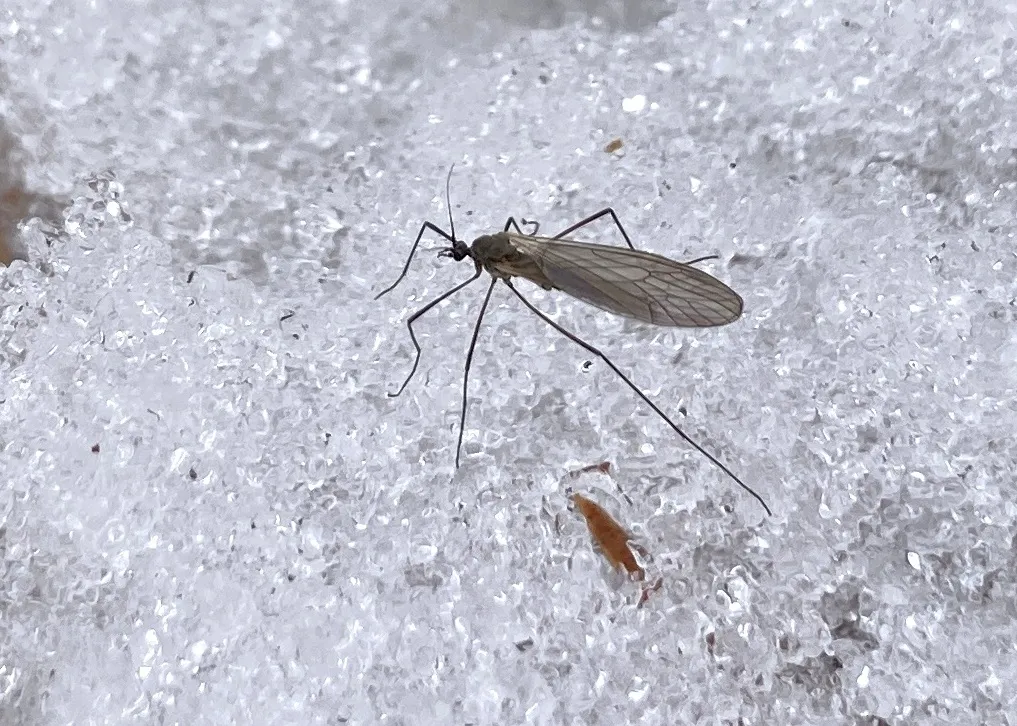
A cloud of delicate, mosquito-like flies on a mild winter day is most likely winter crane flies. The University of Wisconsin's Insect Diagnostic Lab says it occasionally gets reports of swarming mosquitoes on winter days, and that what people have likely seen are winter crane flies: relatives of mosquitoes with no interest in blood, seen flying on mild fall, winter and early spring days. The UW-Milwaukee Field Station puts them at about half again as large as mosquitoes, says the males form mating swarms that bob up and down a few feet off the ground, and notes they may be seen walking on snow.
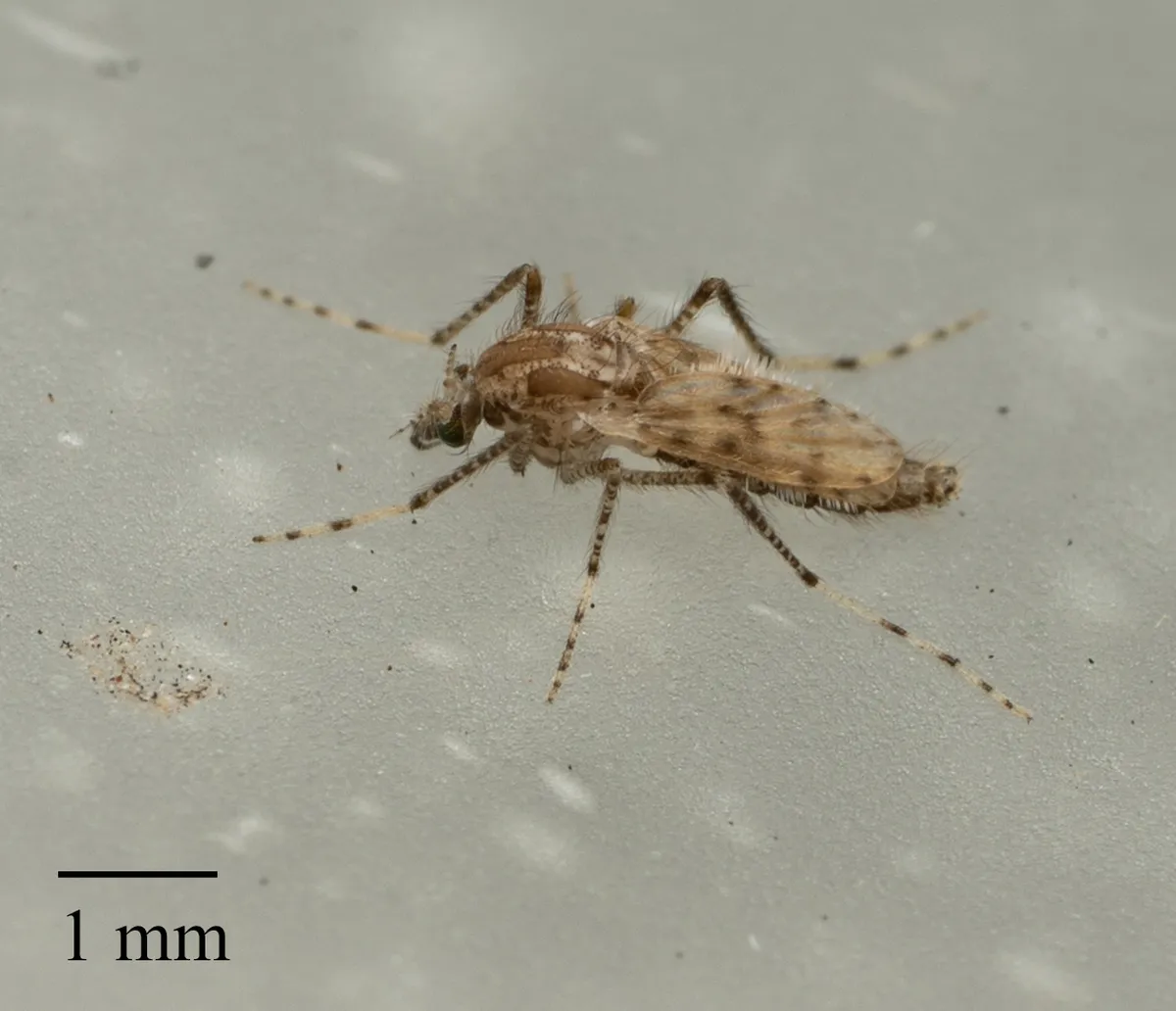
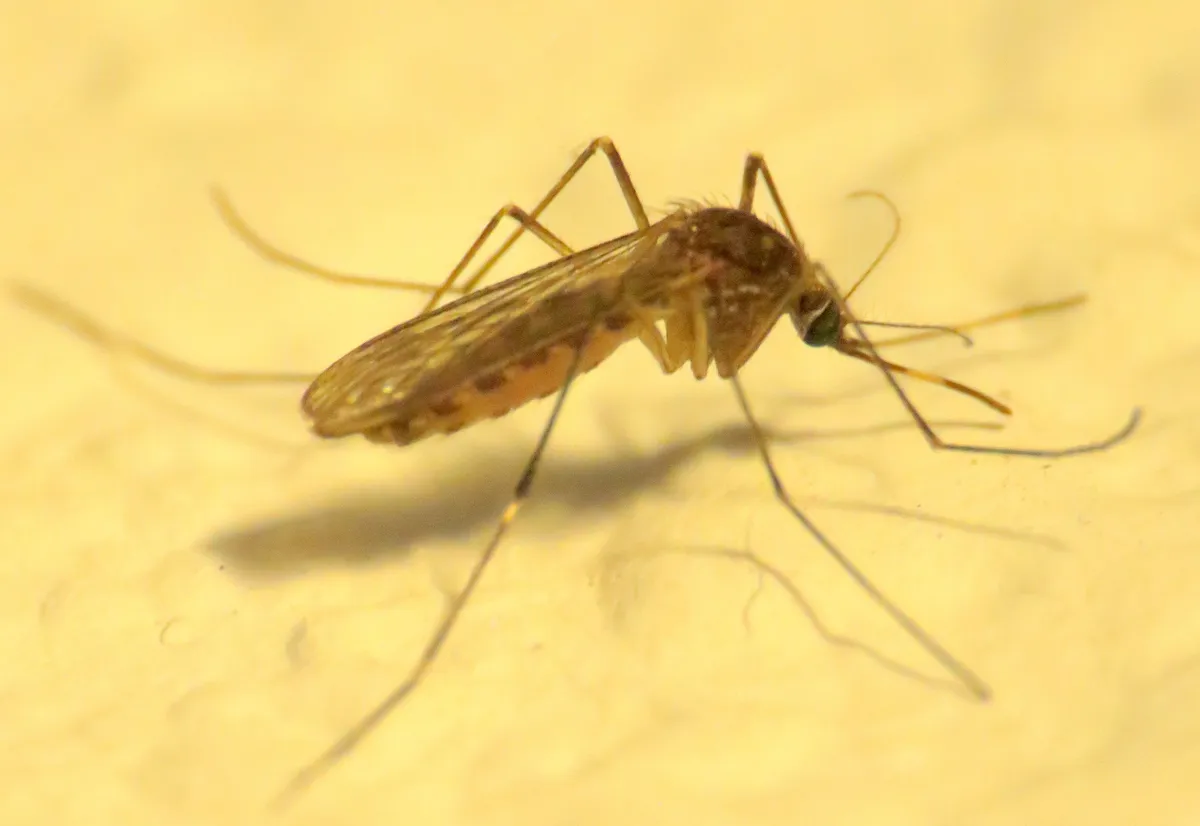
A mosquito indoors in winter can be the real thing. UF/IFAS's profile of the northern house mosquito says it may spend the winter as a fertilized adult female in sheltered places such as caves and basements, then seek a blood meal in spring. The one below, a different species found on a kitchen wall in December, shows the long beak to look for. Where mosquitoes spend the winter covers how the other species get through it.
Which mosquito look-alikes bite?
Among the look-alikes, only two bite people: no-see-ums, the biting midges, and black flies. UF/IFAS's profile of biting midges describes adults usually 0.04 to 0.08 inch (1 to 2 mm) long, whose females have mouthparts made for piercing skin and feed on blood, with wings patterned in dark and pale spots; it calls them abundant and persistent pests of campers and beachgoers, especially in coastal areas. What no-see-ums are and how to keep them away covers them in full.
Black flies, which the Ventura and Santa Barbara County sheets also list among insects resembling mosquitoes, bite during daylight hours, Ventura County says. They are small, humpbacked, grayish-black flies whose larvae live in flowing streams, and Santa Barbara County likens them to a flea with wings. Black flies has its own guide, and gnat bites compares the bites of both.
Everything else on this page leaves people alone: the sources here describe the non-biting, phantom and dixid midges, crane flies, winter crane flies, mayflies, fungus gnats and drain flies as unable or not inclined to bite, and dance flies use their beaks only on insects. A mosquito that bites is always a female, as CDC notes, and what mosquito bites look like shows the welts.
Are the wigglers in the water mosquito larvae or midge larvae?
Check where they hang. Most mosquito larvae take air at the surface: the New Mexico guide shows culicine larvae hanging from it by a breathing tube and Anopheles larvae lying flat just under it. Many midge larvae are red bloodworms that live at the bottom of lakes and ponds, the Missouri midge guide says; phantom midge larvae are almost completely transparent, Lake County says; and dixid larvae swim at the surface in a U shape, the AMCA says, and Ventura County notes they are often confused with Anopheles larvae. The mosquito larvae identification guide has photos.
Commonly confused with
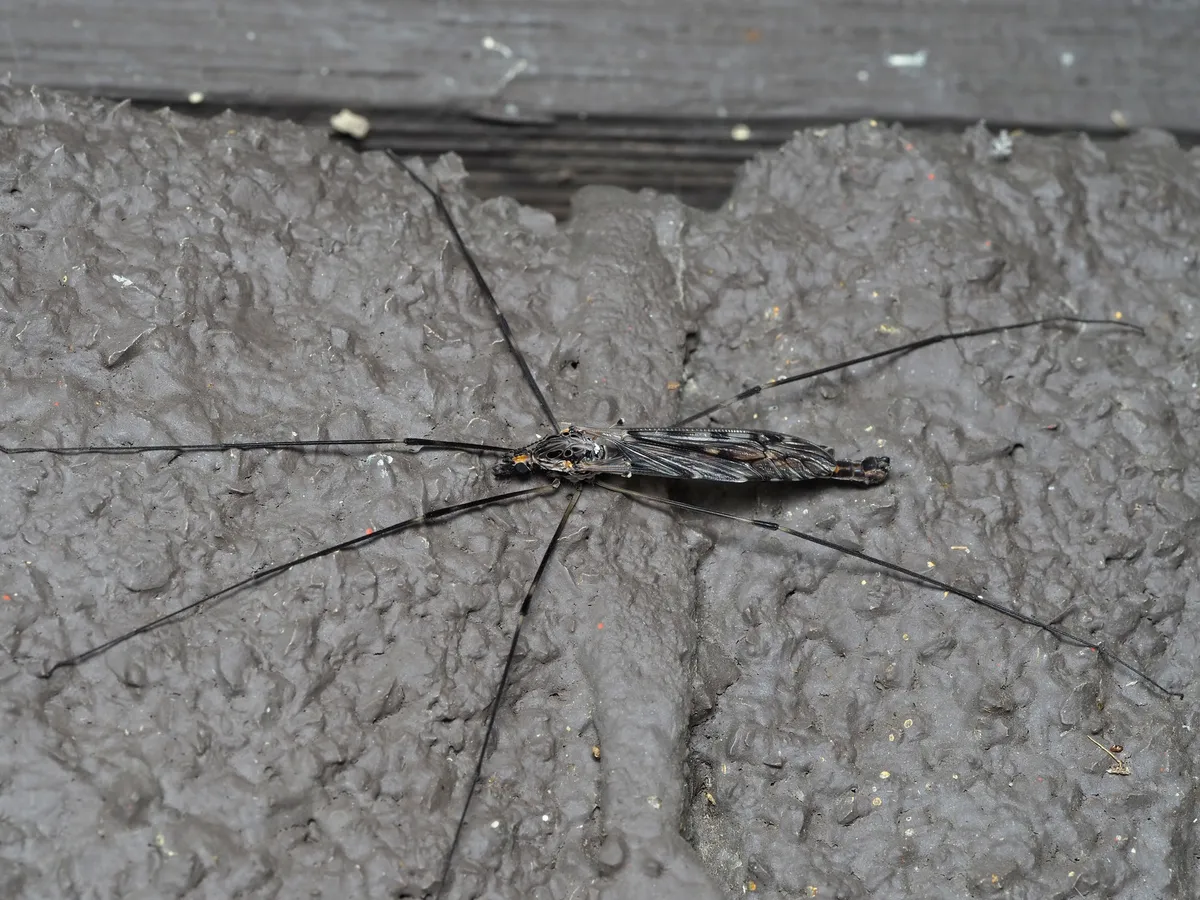 Crane flyFrom 1/4 inch to 1 1/2 inches, with stilt-like legs; it does not bite people or eat mosquitoes
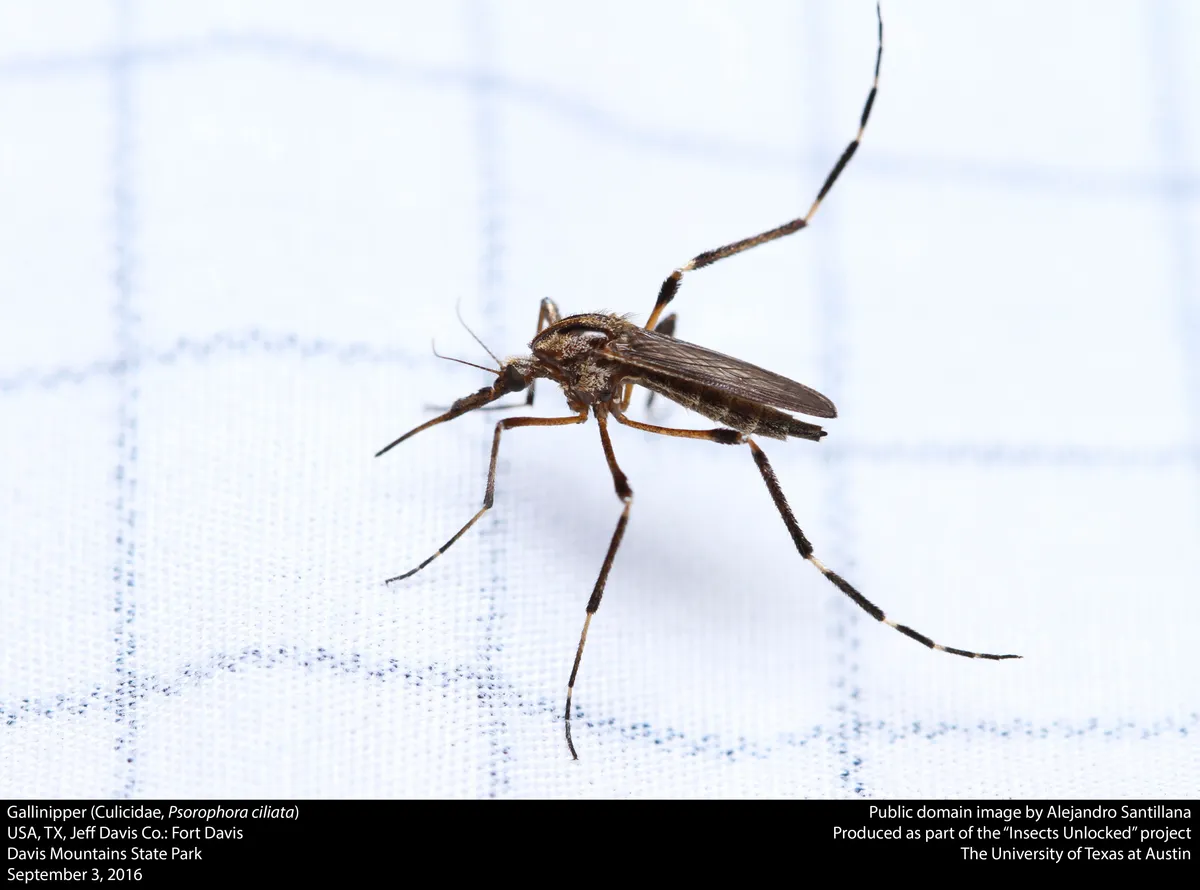 GallinipperA real mosquito, scaled wings and biting beak included, that UF/IFAS likens to a super-sized tiger mosquito
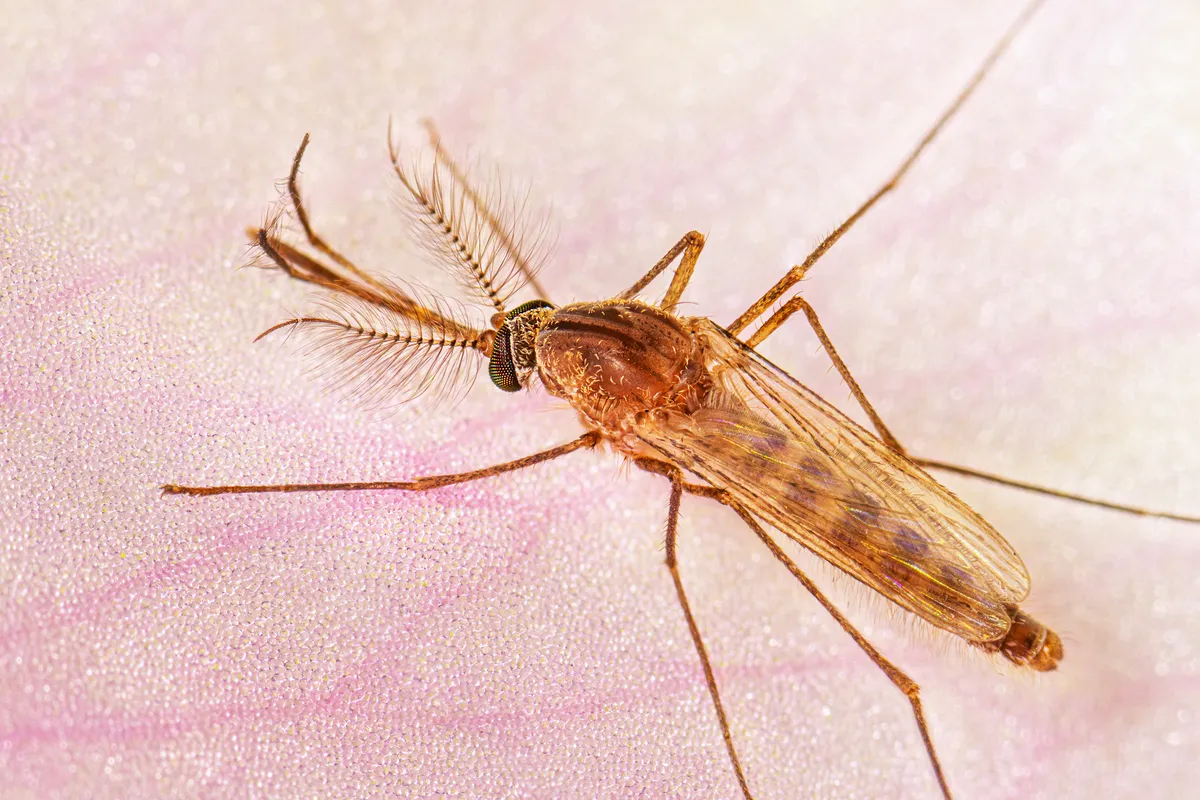 Male mosquitoBushy antennae and a beak too weak to pierce skin, so it feeds on nectar and never bites
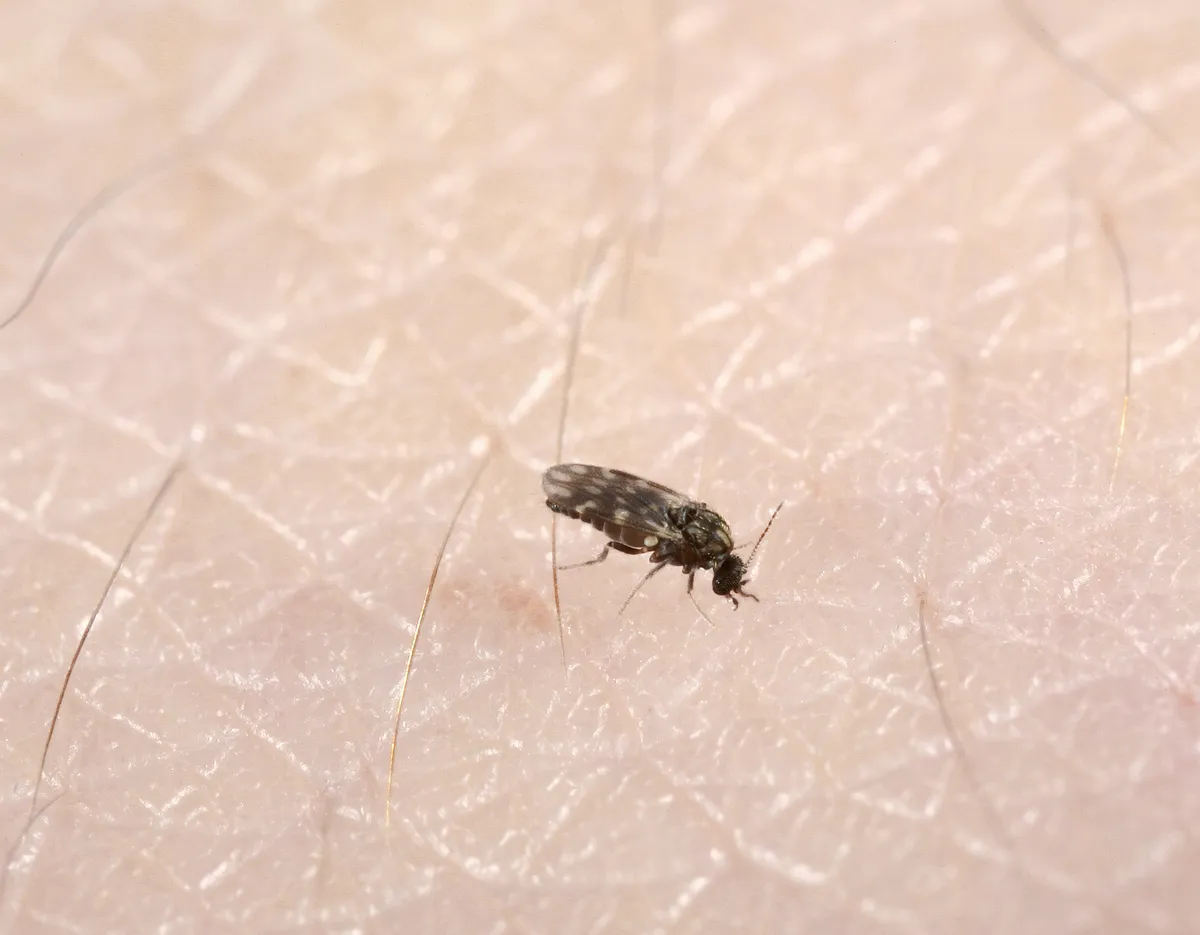 No-see-umUsually 0.04 to 0.08 inch long, and one of just two look-alikes here that bite people
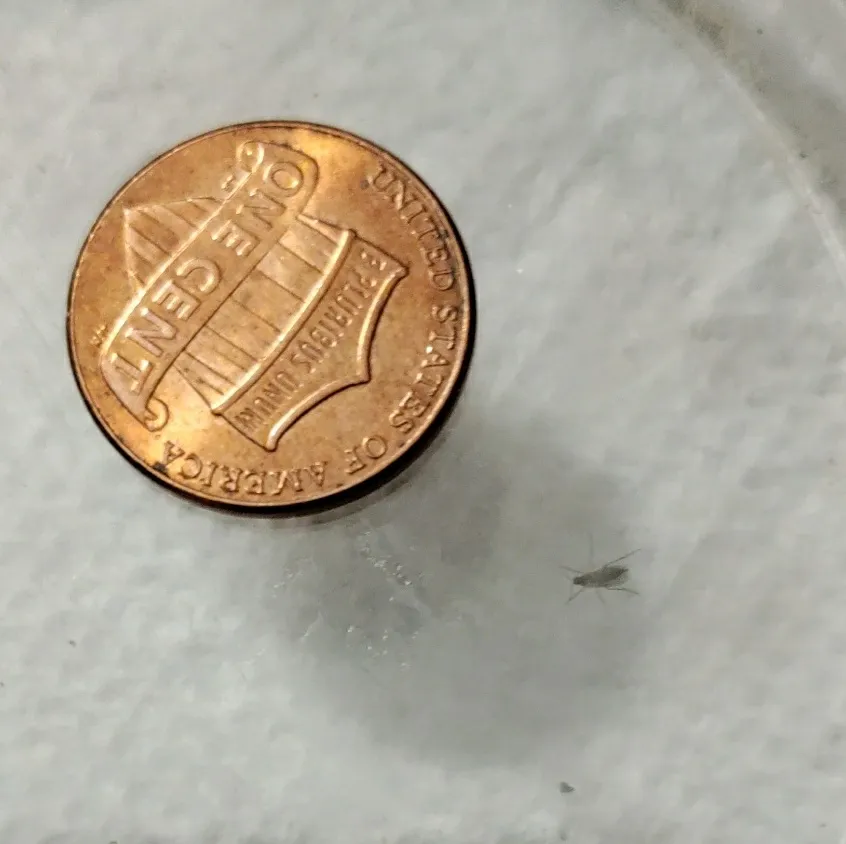 Fungus gnatDark and commonly 1/16 to 1/8 inch long; stays near houseplants and windows and does not bite
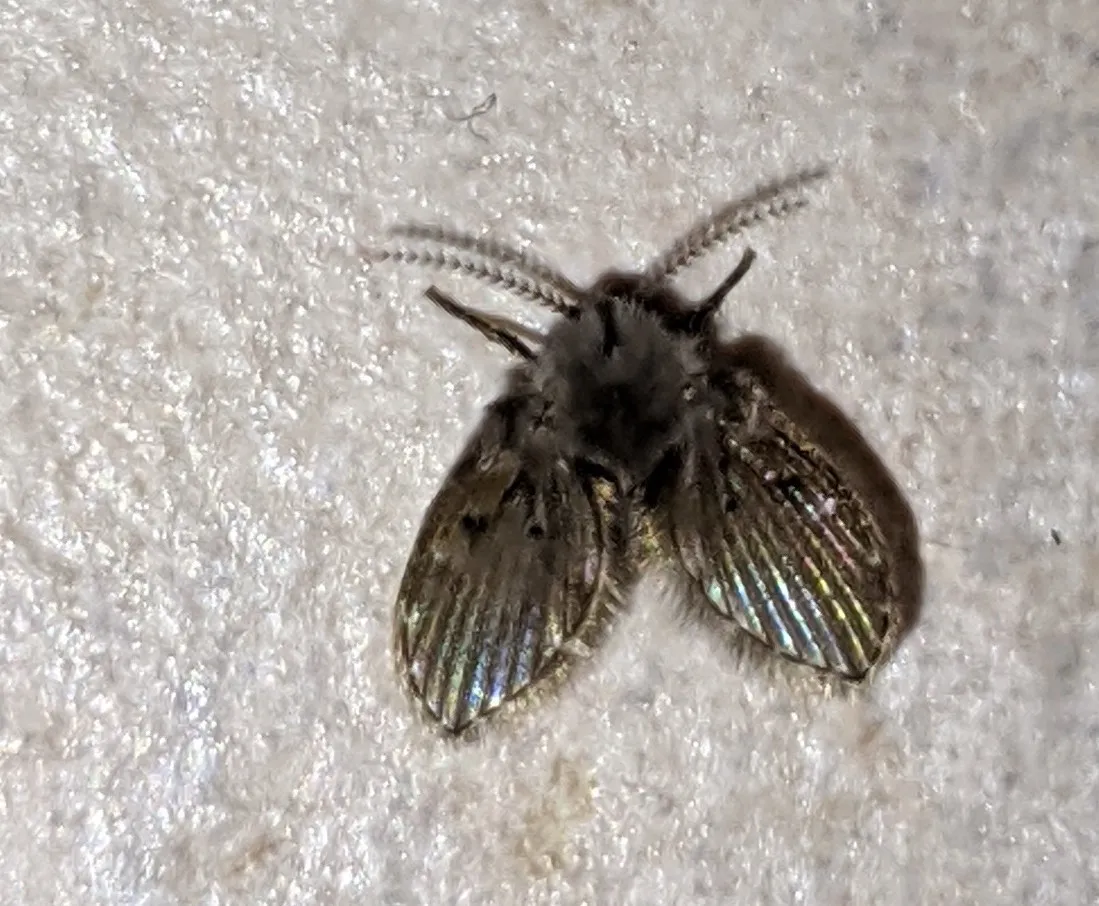 Drain flySmall and fuzzy, with speckled wings held like a tent; rests on walls near drains
Photos: Crane fly: Kaldari, CC0, via Wikimedia Commons, CC0 1.0. Gallinipper: Insects Unlocked, CC0, via Wikimedia Commons, CC0 1.0. Male mosquito: CDC/ Amy E. Lockwood, MS (CDC Public Health Image Library, phil.cdc.gov), public domain. No-see-um: division, CSIRO, CC BY 3.0, via Wikimedia Commons, CC BY 3.0. Fungus gnat: no rights reserved, via iNaturalist, CC0 1.0. Drain fly: no rights reserved, via iNaturalist, CC0 1.0.
What should you do once you know which one it is?
Usually nothing more than dimming the lights. Lake County says insecticides are not recommended for midges, since they are harmless and live so briefly that any nuisance is temporary, and Kentucky says sprays aimed at adult midges may give only temporary relief.
- Midges and other look-alikes at the porch light. Use less outdoor light. Kentucky's advice for midges and gnats is motion-activated lights that switch off after a set time, sodium-vapor or halogen bulbs with a yellow, pink or orange tint, and decoy lights that draw insects away from the house; Lake County says to keep any bug zapper as far from the house as possible.
- Look-alikes indoors. Keep doors and windows closed or tightly screened, as Lake County advises for midges.
- Fungus gnats. Start with the potting mix the larvae live in; the fungus gnat steps cover drying it out.
- Drain flies. Clean out the drain they breed in: the San Mateo district says they lay their eggs in the organic residue inside drainpipes.
- Crane flies, winter crane flies, mayflies, phantom and dixid midges, and dance flies. Leave them be; none of them bites people.
- No-see-ums. Keeping no-see-ums off covers screens, timing and repellents.
- Real mosquitoes. Start with the standing water their larvae need: the mosquito life cycle shows the stages, and getting mosquitoes out of the house covers the ones indoors.
Frequently Asked Questions
What bug is commonly mistaken for a mosquito?+
Non-biting midges, by most accounts. The American Mosquito Control Association calls them the most widespread and numerous insects resembling mosquitoes, and they often swarm near water at dusk or rest in crowds on walls and porches. Crane flies, fungus gnats and phantom midges appear on the same agency lists. None of them bites people. A real mosquito has scales along its wing veins and wing edge and a long, piercing beak, which the look-alike flies lack.
What is a small bug that looks like a mosquito?+
Indoors, usually a fungus gnat: UC IPM describes dark, delicate flies commonly 1/16 to 1/8 inch long, similar in appearance to mosquitoes, that turn up at windows and around potted plants and do not bite people. Outdoors over a lake, it may be a phantom midge; the Clear Lake gnat, one kind, is under 1/4 inch long and cannot bite. A tiny fly that does bite, near a marsh or the coast, is probably a no-see-um, which UF/IFAS puts at 0.04 to 0.08 inch.
Is there a type of mosquito that doesn't bite?+
Yes. Male mosquitoes never bite: CDC says a male's proboscis is not strong enough to pierce skin and that males do not feed on blood, while both sexes feed on flower nectar and fruit juices. There is also a whole group that skips blood entirely. The New Mexico Department of Health describes Toxorhynchites as very large mosquitoes, found mainly in the tropics, with a curved beak adapted to feeding on nectar, and says their larvae eat other mosquito larvae.
Why am I getting crane flies in my house?+
Lights are the likely draw. The American Mosquito Control Association says adult crane flies are strongly attracted to porch lights, and the Lake County Vector Control District in California says they are commonly seen in and around homes. Ventura County says large swarms of adults can follow a spring when conditions favored their soil-dwelling larvae. Crane flies do not bite people or eat mosquitoes, so the ones that get inside are harmless, however large they look next to a real mosquito.
Are midges as bad as mosquitoes?+
Non-biting midges are not. They do not bite, so the University of Kentucky says they cannot spread disease, and the Lake County Vector Control District in California says the adults live less than 48 hours. They are a nuisance in numbers, covering homes and cars near the water they came from, and UF/IFAS Extension in Polk County, Florida, says they can stain paint and stucco. Biting midges, the no-see-ums, are a different family whose females do bite.
What are midges called in the US?+
It depends on the region and the midge. The Lake County Vector Control District in California says midges are also called gnats, and rice flies is its local name for the large midge that emerges from Clear Lake. UF/IFAS Extension in Polk County, Florida, calls aquatic midges blind mosquitoes. The biting kind goes by no-see-ums, sand flies or sand gnats, says UF/IFAS, and the University of Kentucky adds punkies to the list.
Are winter crane flies harmful?+
No. The University of Wisconsin's Insect Diagnostic Lab says winter crane flies are relatives of mosquitoes with no interest in blood: the adults are simply trying to mate, and the larvae are scavengers. They fly on mild days in fall, winter and early spring, and the UW-Milwaukee Field Station says the males form swarms that bob up and down a few feet off the ground. People who report swarming mosquitoes on winter days have most likely seen these flies.
Do gnats look like mosquitoes?+
Fungus gnats do, at a glance: UC IPM calls them dark, delicate-looking flies similar in appearance to mosquitoes. They are much smaller, commonly 1/16 to 1/8 inch long against about 1/4 to 1/2 inch for a mosquito, they have no long beak, and they are weak fliers that stay near potted plants and windows. Fungus gnats do not bite people. A gnat that bites outdoors is more likely a no-see-um, or a black fly near flowing water.
Can mosquitoes live in your house in winter?+
Some can. UF/IFAS says the northern house mosquito may spend the winter as a fertilized adult female in sheltered places such as caves and basements, then come out in spring to look for a blood meal, and CDC says adult mosquitoes live indoors as well as outdoors. A mosquito-like fly swarming outside on a mild winter day, though, is more likely a winter crane fly, which the University of Wisconsin's Insect Diagnostic Lab says has no interest in blood.
Why are there so many mosquito-like bugs near the lake?+
Most are midges that grew up in the lake as larvae and come out as adults in swarms. The University of Kentucky says midge swarms near their breeding water can cover homes, vehicles and plants, mostly in spring and summer, and the San Mateo County district says phantom midges swarm over lakes in summer. University of Minnesota Extension says mayflies gather on buildings near water from May into September. Midges and mayflies are both drawn to lights at night, and neither bites.
Sources
- Classification and Identification of Mosquitoes of New Mexico — New Mexico Department of Health
- About Mosquitoes (May 14, 2024) — Centers for Disease Control and Prevention
- Northern House Mosquito, Culex pipiens (EENY-765/IN1324; Alomar, Burkett-Cadena and Mathias) — University of Florida IFAS Extension (Featured Creatures)
- Mosquitoes (Field Guide) — Missouri Department of Conservation
- Midges (Field Guide) — Missouri Department of Conservation
- Mayflies (Field Guide) — Missouri Department of Conservation
- Mistaken IDs: Insects Commonly Mistaken for Mosquitoes — American Mosquito Control Association
- Is that a Midge or a Mosquito? — Lake County Vector Control District (California)
- Insects Resembling Mosquitoes (information sheet) — County of Ventura Environmental Health Division, Vector Control Program (California)
- Pest Control Bulletin No. 9: Mosquito-Like Flies and Relatives (revised November 2001) — Mosquito and Vector Management District of Santa Barbara County (California)
- Other Mosquito-Like Insects (page last reviewed April 30, 2026) — San Mateo County Mosquito and Vector Control District (California)
- Non-Biting Midges and Gnats (ENTFACT-632; Lopina, DeVries and Larson, revised May 2026) — University of Kentucky Entomology
- Aquatic Midges, Also Known as Blind Mosquitoes (Shannon Carnevale, October 11, 2017) — UF/IFAS Extension Polk County
- Phantom Midge (Family Chaoboridae), Bug of the Week (February 14, 2012) — University of Wisconsin-Milwaukee Field Station
- Insects on the Snow (PJ Liesch, January 31, 2022) — University of Wisconsin-Madison Insect Diagnostic Lab
- Winter Crane Fly (Family Trichoceridae), Bug of the Week (December 1, 2015) — University of Wisconsin-Milwaukee Field Station
- Mayflies (What insect is this?) — University of Minnesota Extension
- Pest Notes: Fungus Gnats (UC ANR Publication 7448) — University of California Statewide IPM Program
- Biting Midges, No-See-Ums, Culicoides spp. (EENY-349/IN626) — University of Florida IFAS Extension (Featured Creatures)
- Huge, aggressive mosquito may be abundant in Florida this summer, UF/IFAS expert warns (March 4, 2013) — University of Florida News (UF/IFAS)
Read and approved by Alex Francisco. Found an error? Email support@buzzskito.ca.