
Reviewed by Alex Francisco
Published November 6, 2026 · Fact-checked against the sources listed below
How many types of mosquitoes are there?
More than 200 types live in the continental US and US territories, CDC says, and about 12 of them spread germs that can make people sick; most are nuisance mosquitoes that bite but do not spread disease. Worldwide, CDC's Yellow Book counts more than 3,700 species. This guide sorts the ones North Americans are likely to meet into six groups: Aedes, Culex, Anopheles, Psorophora, Coquillettidia and Culiseta.
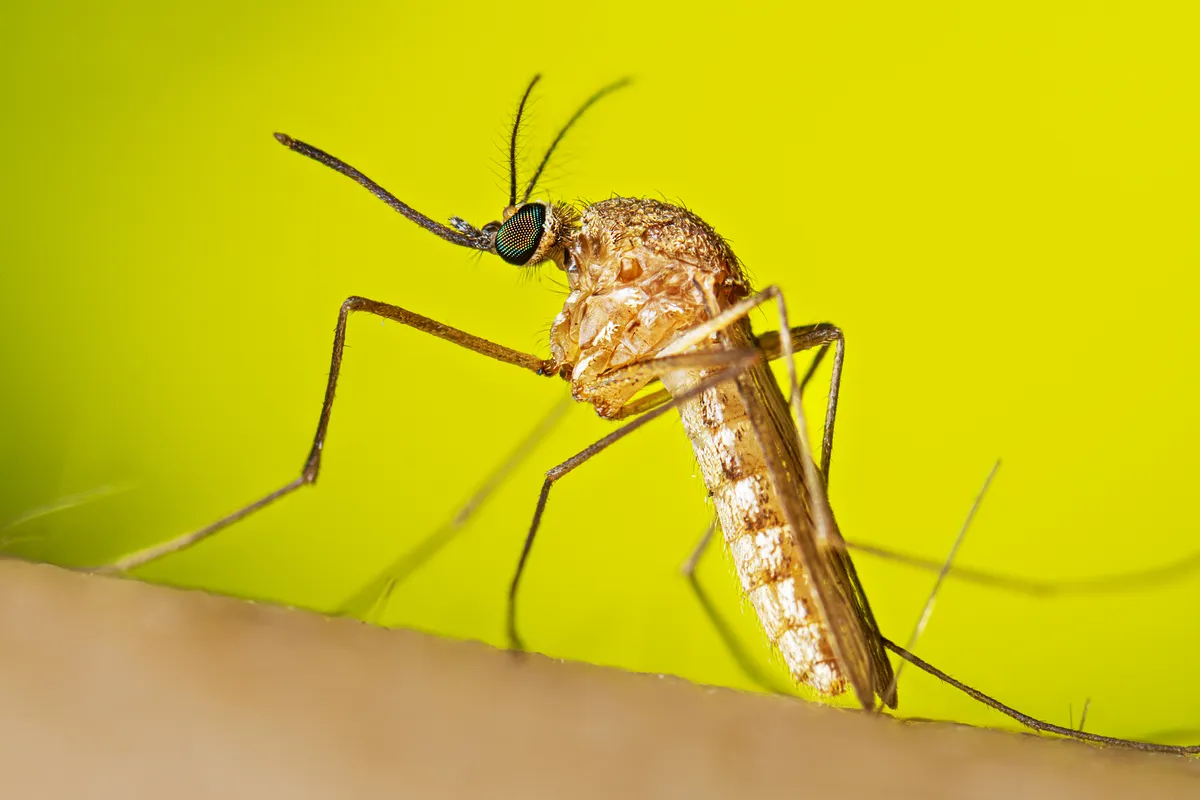
Telling them apart takes a close look at a few things: the markings on the back and legs, the palps beside the proboscis, how the mosquito sits, when it bites and where its young grow. The table compares the main groups, and each one has its own section below.
| Group | How to recognize it | Where the young grow | When it bites | US examples |
|---|---|---|---|---|
| Aedes | Abdomen narrows to a point; container species are black with white bands | Eggs stuck to damp container walls or flood-prone ground hatch when water covers them | Container species mostly by day; floodwater species worst at dusk | Asian tiger, yellow fever, inland floodwater and eastern treehole mosquitoes |
| Culex | Medium-sized and brown | Rafts of 100 to 300 eggs float on ponds, storm drains and ditches | Dusk to dawn | Northern house, southern house and western encephalitis mosquitoes |
| Anopheles | Palps as long as the proboscis; rests with the abdomen tipped up | Marshes, swamps and rice fields, mostly in clean water | Mostly night, dusk or dawn | Anopheles quadrimaculatus and Anopheles freeborni |
| Psorophora | Includes the gallinipper, with a body about 1/2 inch long | Eggs in soil at the edges of water that floods; they can wait years | In large numbers after floods | Gallinipper |
| Coquillettidia | Speckled salt-and-pepper body; pale bands on the beak and legs | Larvae cling to cattail roots underwater to breathe | Early evening; by day in shade | Cattail mosquito, the only species in the US and Canada |
From CDC, UF/IFAS, Texas A&M AgriLife, Brunswick County Mosquito Control and the University of Florida, each linked on this page.
How do you tell mosquito types apart?
Start with the back and legs, then check the beak, the palps and the posture. Bold black-and-white markings usually point to an Aedes, a brown mosquito biting after dark fits a Culex, and a mosquito resting with its tail in the air is likely an Anopheles. These checks work on a mosquito trapped under a glass:
Five checks for a mosquito in a jar
- Back. One white stripe down the middle means an Asian tiger mosquito; a white lyre or violin shape means a yellow fever mosquito, UF/IFAS says.
- Legs. White bands on the legs are typical of the striped Aedes; a speckled body with pale leg bands suggests the cattail mosquito.
- Beak. A pale band around the middle of the proboscis points to the western encephalitis mosquito or the cattail mosquito.
- Palps and posture. Palps as long as the proboscis, and a resting pose with the abdomen sticking up rather than parallel to the surface, mean Anopheles, CDC says.
- Antennae. Bushy, feathery antennae belong to males, which feed on nectar and do not bite; how to tell a male mosquito from a female shows both.
Time of day is a clue too. CDC's Culex page says adult Culex are most active from dusk to dawn, CDC's malaria page says most Anopheles are active at dusk, dawn or night, and the container Aedes bite by day. For the hour-by-hour pattern, see when mosquitoes are most active.
Aedes mosquitoes: the striped daytime biters
The container-breeding Aedes are black with white bands, bite by day and lay eggs that can wait out dry spells until water covers them. Their abdomen narrows to a point, a trait of the genus, UF/IFAS Extension's tiger mosquito profile notes.
Asian tiger mosquito (Aedes albopictus)
The striped backyard mosquito of the eastern US: black, with a single white stripe from the head down the back and white bands on the legs, UF/IFAS says. It bites by day, most in the early morning and late afternoon, rests in shady shrubs near the ground and breeds in tires, flowerpots, birdbaths and other containers. CDC's range page says it can live at cooler temperatures than the yellow fever mosquito, and that because it feeds on animals as well as people it is less likely to spread dengue, chikungunya and Zika.
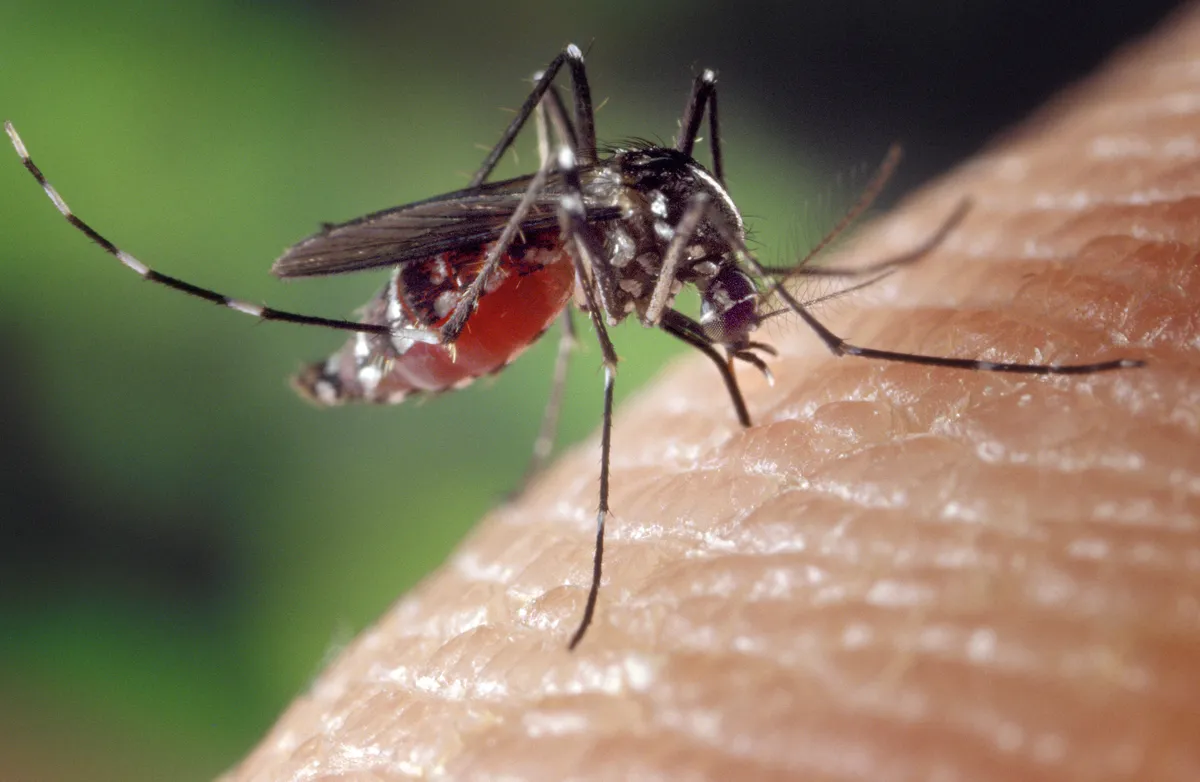
Yellow fever mosquito (Aedes aegypti)
The tiger mosquito's look-alike carries a white lyre or violin shape on its back instead of one stripe and is about 1/4 inch (4 to 7 mm) long, UF/IFAS says. It bites readily by day, indoors as well as outdoors, and CDC says it lives near and prefers to feed on people, which makes it the main mosquito that spreads Zika, dengue and chikungunya. UF/IFAS says it remains common in urban south Florida and in cities along the Gulf Coast of Texas and Louisiana.
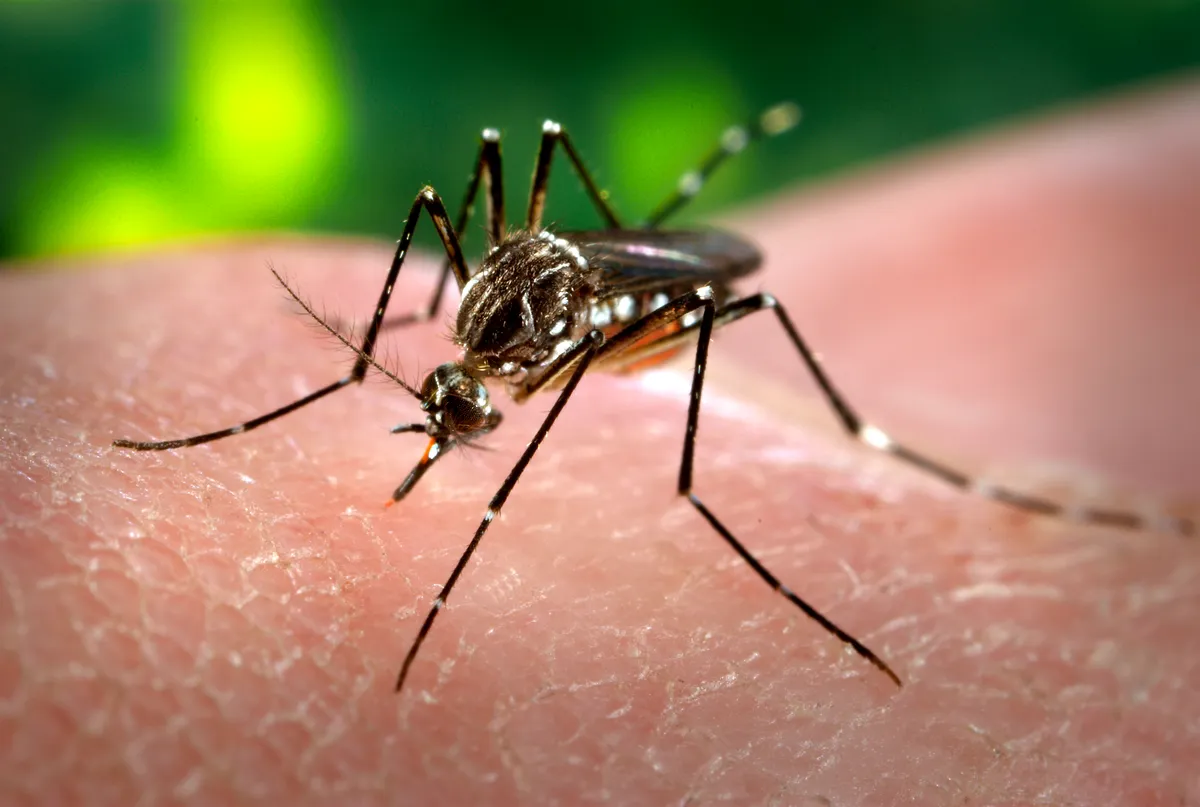
Inland floodwater mosquito (Aedes vexans)
Texas A&M AgriLife calls it the number one pest mosquito in many parts of the US: a brown mosquito with narrow pale bands on its legs and notched pale bands on its abdomen that breeds in temporary rain-filled pools and roadside and irrigation ditches. Females lay their eggs at the receding waterline of rain pools and floodplains, and the eggs hatch when a later rain floods them, says Brunswick County Mosquito Control in North Carolina; the larvae need 7 to 10 days.
Females feed in shady places by day and are particularly annoying at dusk and after dark, and they can fly 5 to 8 miles from where they bred, Brunswick County says. Texas A&M says the species may transmit dog heartworm but is otherwise not considered a serious disease threat to people.
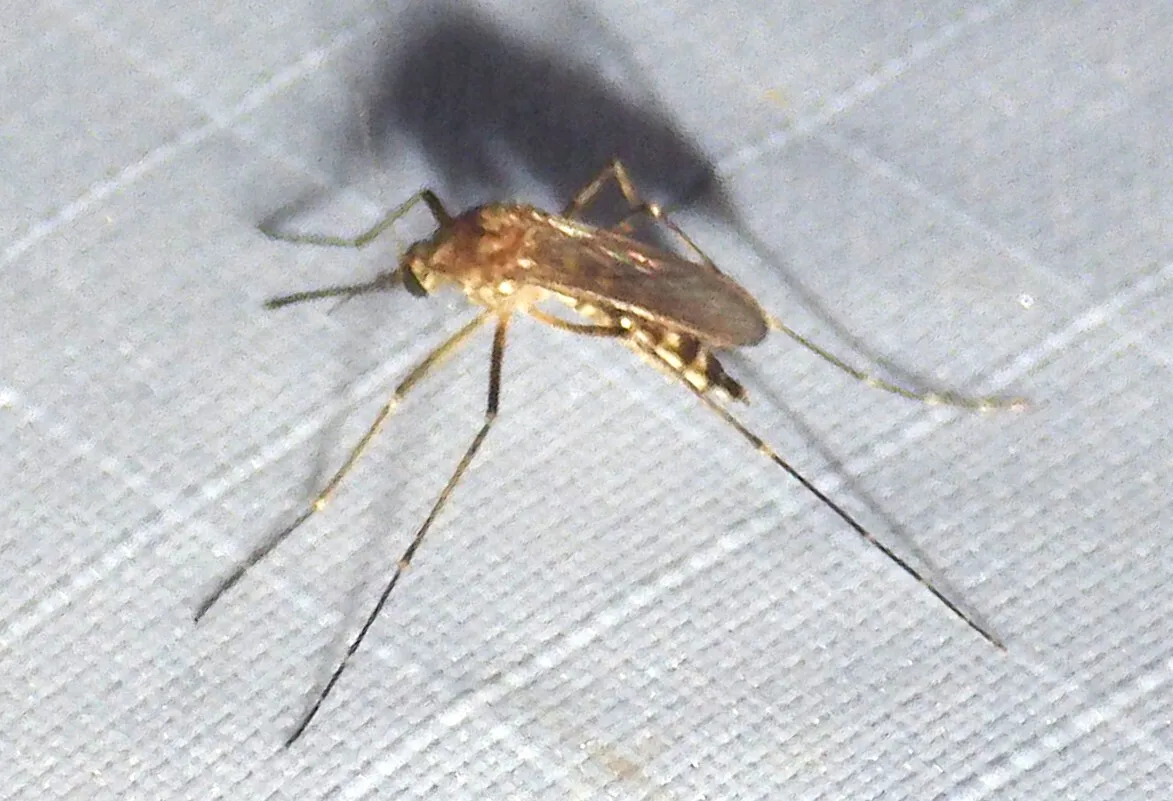
Eastern treehole mosquito (Aedes triseriatus)
A woodland Aedes that bites aggressively by day, especially in or near the forests where it lives, and lays its eggs in rainwater caught in tree holes and in discarded tires, CDC's La Crosse page says. It is the main carrier of La Crosse virus. Alaska's mosquitoes are a different crowd again; mosquitoes in Alaska covers them.
Culex mosquitoes: the brown house mosquitoes that bite at night
Culex mosquitoes are brown, bite from dusk to dawn and can spread West Nile virus. CDC's Culex page names three US species, Culex pipiens, Cx. quinquefasciatus and Cx. tarsalis. It says the adults rest in grass, shrubs and other thick plants when they are not active, and that females lay rafts of 100 to 300 eggs on permanent standing water such as ponds, or on floodwater in storm drains, ditches, low pastures and farm fields. In US states, Culex can spread West Nile, St. Louis encephalitis and eastern equine encephalitis viruses.
Northern and southern house mosquitoes
The two house mosquitoes are close relatives that split the country. The southern house mosquito, Culex quinquefasciatus, is a medium-sized brown mosquito about 0.16 inch (4 mm) long that bites at night, and it ranges from Virginia across the southern plains to southern California, says UF/IFAS's southern house mosquito profile. Between about 36° and 39° N it interbreeds with the northern house mosquito, Culex pipiens, which is usually not found south of 39° N. UF/IFAS calls the southern species the main carrier of St. Louis encephalitis virus in the southern US. West Nile, which both house mosquitoes can spread, is one of the most common mosquito-borne diseases in the continental US, CDC says; see the symptoms of West Nile virus.
Western encephalitis mosquito (Culex tarsalis)
Texas A&M AgriLife calls Culex tarsalis the most important carrier of mosquito-borne viruses in the western US, including West Nile virus and western equine and St. Louis encephalitis. It is a small brown mosquito with a pale band around the middle of its proboscis and pale bands over the leg joints. It breeds in almost any standing water, especially farm ditches and poorly drained pastures, and can fly 2 to 10 miles from where it bred.
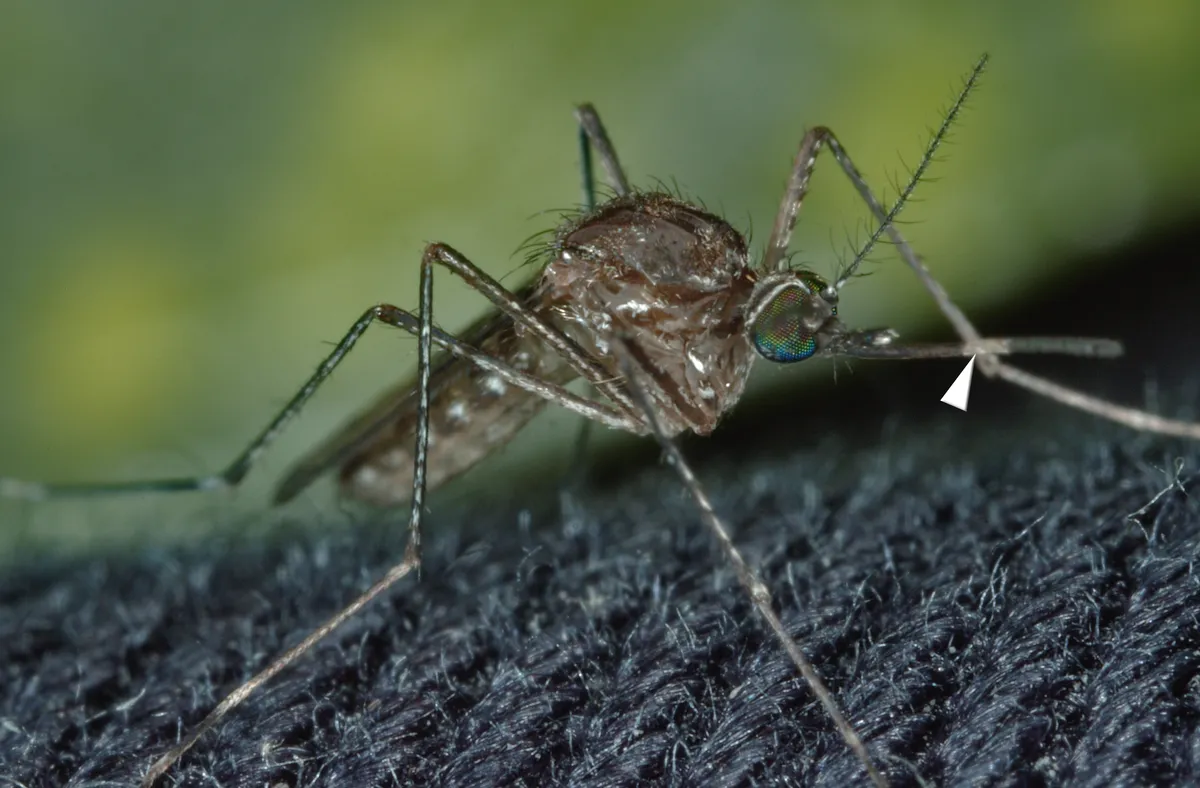
Anopheles mosquitoes: the malaria mosquitoes
Anopheles are the mosquitoes that can spread malaria, and their posture gives them away. CDC's malaria page says their palps are as long as the proboscis and that they rest with the abdomen sticking up in the air rather than parallel to the surface. Most species are active at dusk, dawn or night, and the larvae live in marshes, swamps and rice fields, mostly in clean water. CDC's list of US mosquitoes that can spread germs names Anopheles freeborni and An. quadrimaculatus.
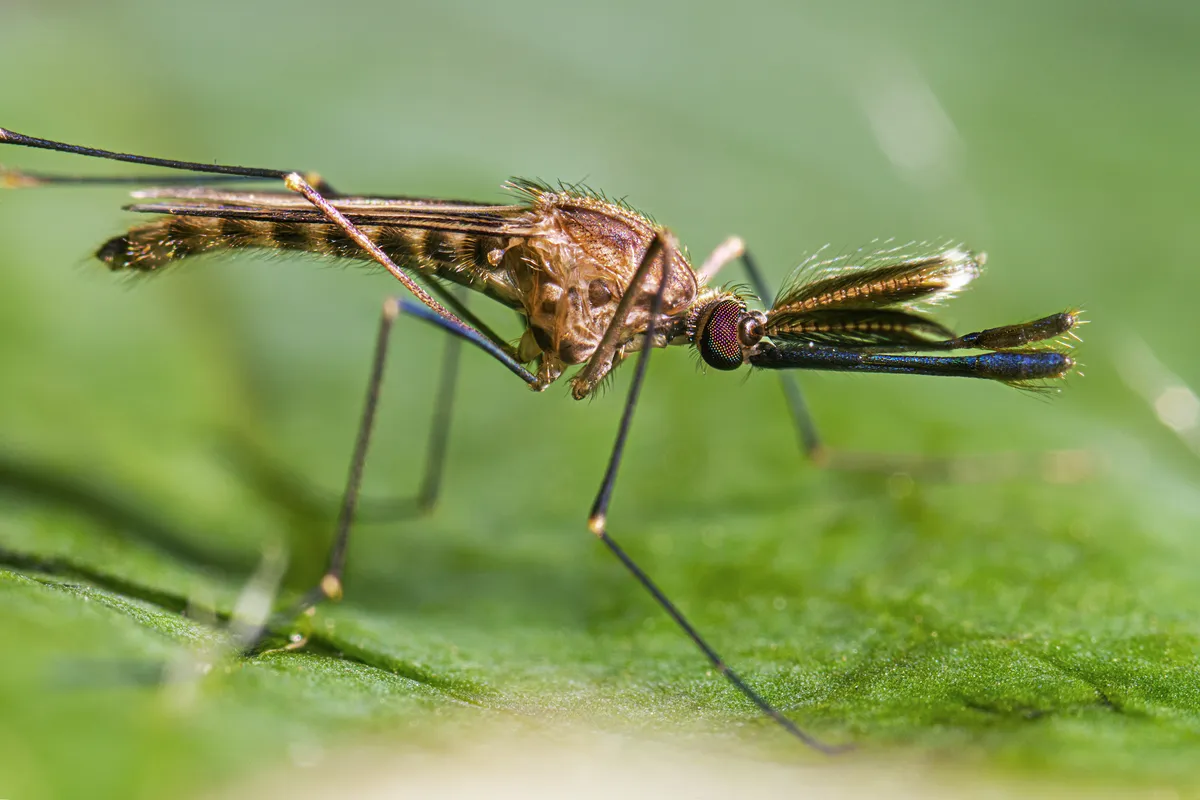
Malaria was common in the US into the 20th century, CDC says, and Anopheles still live across most of the continental US. Local spread is rare: CDC's 2026 malaria guidance reports 10 locally acquired, mosquito-transmitted cases from Arkansas, Florida, Maryland and Texas in 2023. For the young stages, how to identify mosquito larvae covers Anopheles as well as the other groups.
What are the big mosquitoes?
The giant that bites is the gallinipper, Psorophora ciliata. A University of Florida news release describes a body about half an inch long, a black-and-white pattern like a super-sized Asian tiger mosquito and a notoriously aggressive biter with a painful bite. Its eggs lie in soil at the edges of ponds, streams and other water that overflows in heavy rain, can stay dry and dormant for years, and hatch when floodwater covers them, which is why a tropical storm brought large numbers to Florida in 2012. The larvae eat other mosquito larvae and even tadpoles. The species is native to the eastern half of North America and is not considered a significant carrier of disease.
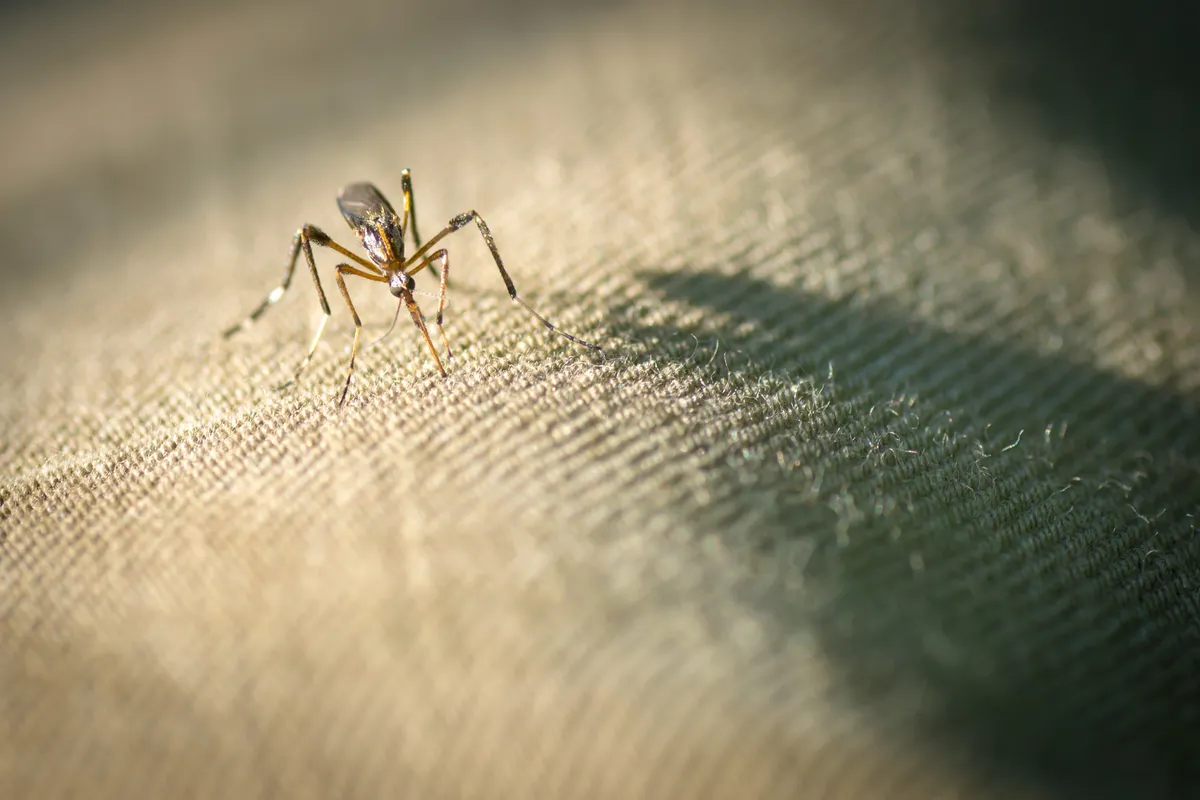
Anything bigger and leggier that never bites is probably not a mosquito. The Missouri Department of Conservation says crane flies reach about 1 1/2 inches and nearly all look like giant mosquitoes, but they lack a piercing, tubelike mouth and the scales on the wing veins, and they do not bite; it also notes that gallynipper was once an Ozark name for a crane fly. What people call a mosquito hawk covers crane flies in full.
Coquillettidia and Culiseta: the cattail and swamp mosquitoes
The cattail mosquito, Coquillettidia perturbans, is the only member of its genus in the US and Canada, says UF/IFAS's cattail mosquito profile. Its larvae do not need to come up for air: they pierce the roots of cattails and other water plants with a thorn-like siphon and take oxygen from the plant, which makes them hard to reach with ordinary larvicides. Adults are medium-sized and speckled salt-and-pepper, with a broad pale band around the middle of the proboscis and pale bands on the legs.
They bite mostly in the early evening but also by day in shady places, can bite through clothing and can fly up to five miles, UF/IFAS says, and they can transmit West Nile and eastern equine encephalitis viruses. In the northern part of its range it spends the winter as larvae, and the adults emerge together the following spring or early summer.
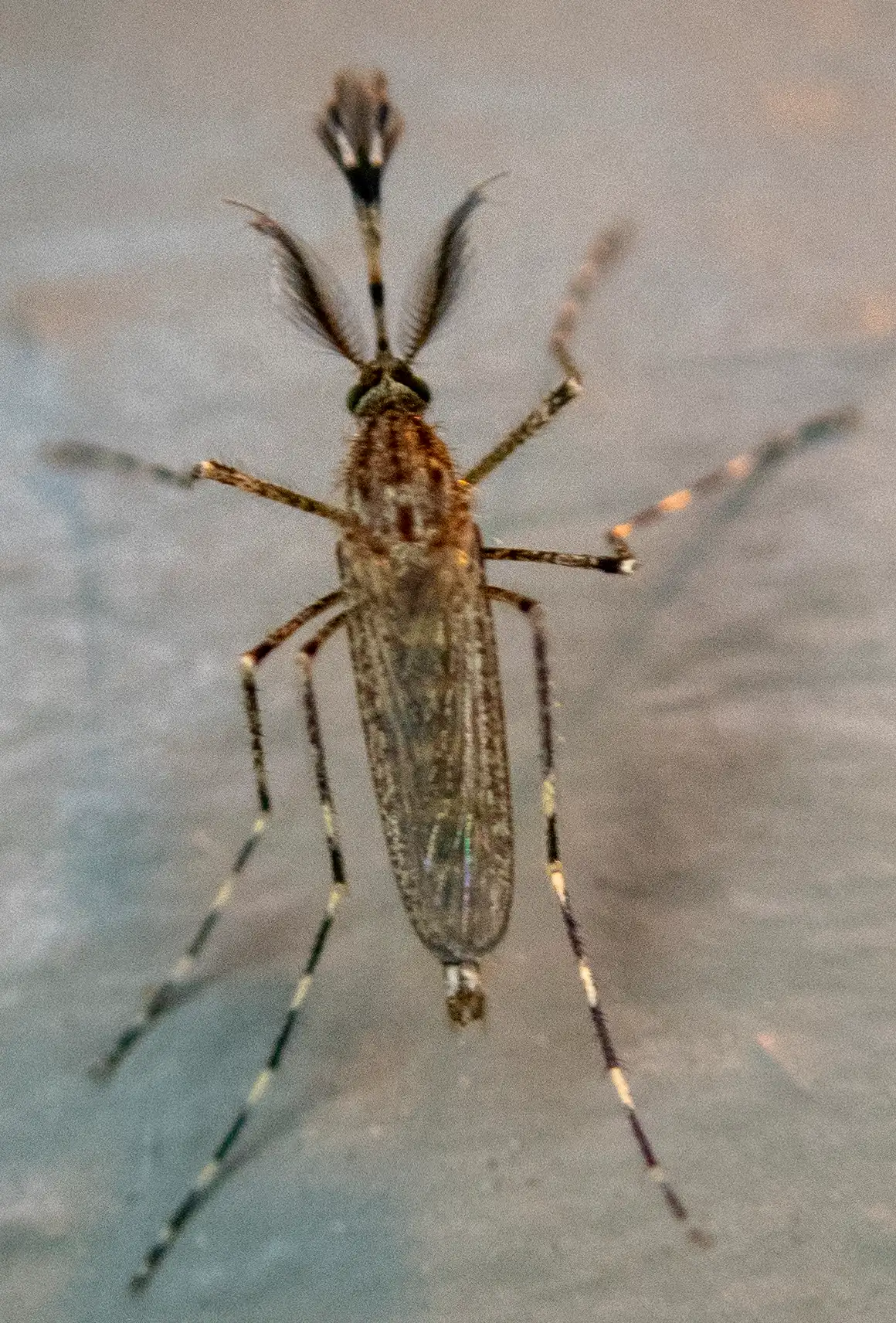
Culiseta melanura matters for a different reason. CDC's eastern equine encephalitis page says the virus cycles between this mosquito and birds in freshwater hardwood swamps. Because it feeds mostly on birds, it is not an important carrier to people; the virus reaches people and horses through bridge species, mostly Aedes, Coquillettidia and Culex.
Which mosquitoes have white stripes or black-and-white legs?
Several do, and the pattern tells you which:
- One white stripe down the back, banded legs: the Asian tiger mosquito.
- A white lyre or violin shape on the back, banded legs: the yellow fever mosquito, common in urban south Florida and Gulf Coast cities.
- Very large and black and white: a gallinipper, especially after floods.
- A pale band around the middle of the beak: the western encephalitis mosquito, which also has pale bands at the leg joints, or the cattail mosquito, which has a speckled body.
- Brown with narrow pale leg bands: the inland floodwater mosquito.
A brown mosquito with no bold white marks that bites after dark fits a Culex house mosquito instead.
Which types of mosquitoes spread disease in the US?
Only a minority: about 12 of the more than 200 US types, CDC says. West Nile is one of the most common mosquito-borne diseases in the continental US, and CDC also lists Cache Valley, eastern equine encephalitis, Jamestown Canyon, La Crosse and St. Louis encephalitis viruses, as well as outbreaks of dengue, chikungunya and Zika in US states and territories.
| Disease | Mosquitoes that spread it | Good to know |
|---|---|---|
| West Nile, St. Louis encephalitis | Culex house mosquitoes and the western encephalitis mosquito; the cattail mosquito can carry West Nile | Culex are most active from dusk to dawn |
| Eastern equine encephalitis | Kept going in birds by Culiseta melanura; reaches people through Aedes, Coquillettidia and Culex | Rare, and tied to freshwater hardwood swamps |
| La Crosse encephalitis | Eastern treehole mosquito | A daytime biter in and near woods |
| Dengue, chikungunya, Zika | Yellow fever mosquito, and less readily the Asian tiger mosquito | Outbreaks have occurred in US states and territories |
| Malaria | Anopheles | 10 locally acquired US cases in 2023 |
From CDC's pages on US mosquitoes, Culex, eastern equine encephalitis, La Crosse virus and malaria, plus UF/IFAS and Texas A&M AgriLife, each linked on this page. Not a diagnosis.
What looks like a mosquito but is not one?
Crane flies, non-biting midges, no-see-ums and fungus gnats all get mistaken for mosquitoes. The quickest check is the mouth: a biting mosquito has a long, piercing proboscis, and the Missouri Department of Conservation's midge guide adds that mosquito wings carry scales, while midge wings do not. Bugs that look like mosquitoes goes through each one with photos, plus phantom midges, mayflies and winter crane flies.
- Non-biting midges are mostly under 3/8 inch long, hold their front legs forward and up at rest, have a short proboscis and do not bite people; the males gather in big swarms that seem to dance in the air, the Missouri Department of Conservation says.
- No-see-ums, the biting midges, are usually only 0.04 to 0.08 inch (1 to 2 mm) long, bite with a stinging or burning feeling and get through ordinary window screens, UF/IFAS Extension says.
- Fungus gnats are dark, delicate flies 1/16 to 1/8 inch long that look like mosquitoes but often stay near potted plants and do not bite people, according to UC IPM.
- Crane flies reach about 1 1/2 inches, with very long legs and a V-shaped groove on the thorax, and do not bite.
Commonly confused with
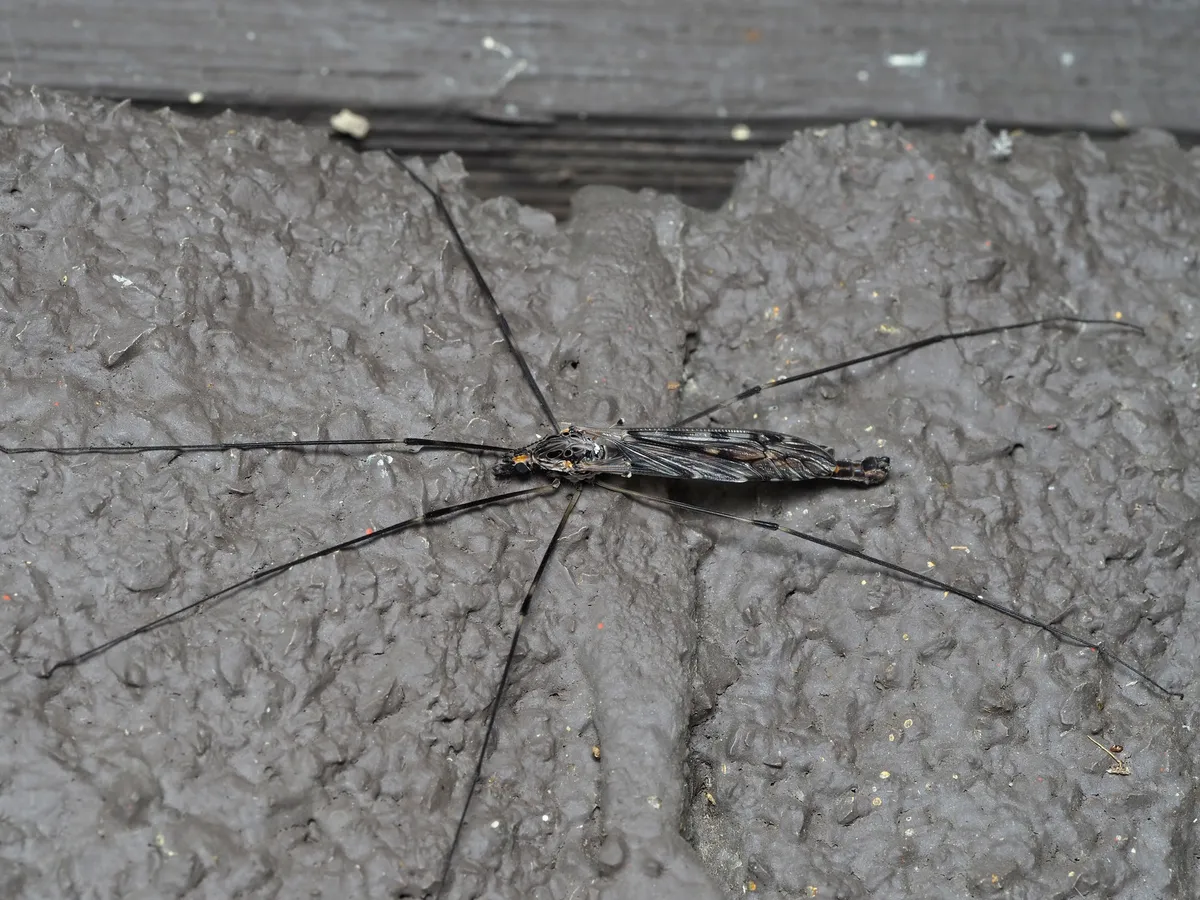 Crane fly (mosquito hawk)Up to about 1 1/2 inches with very long legs; no piercing mouth, and it does not bite
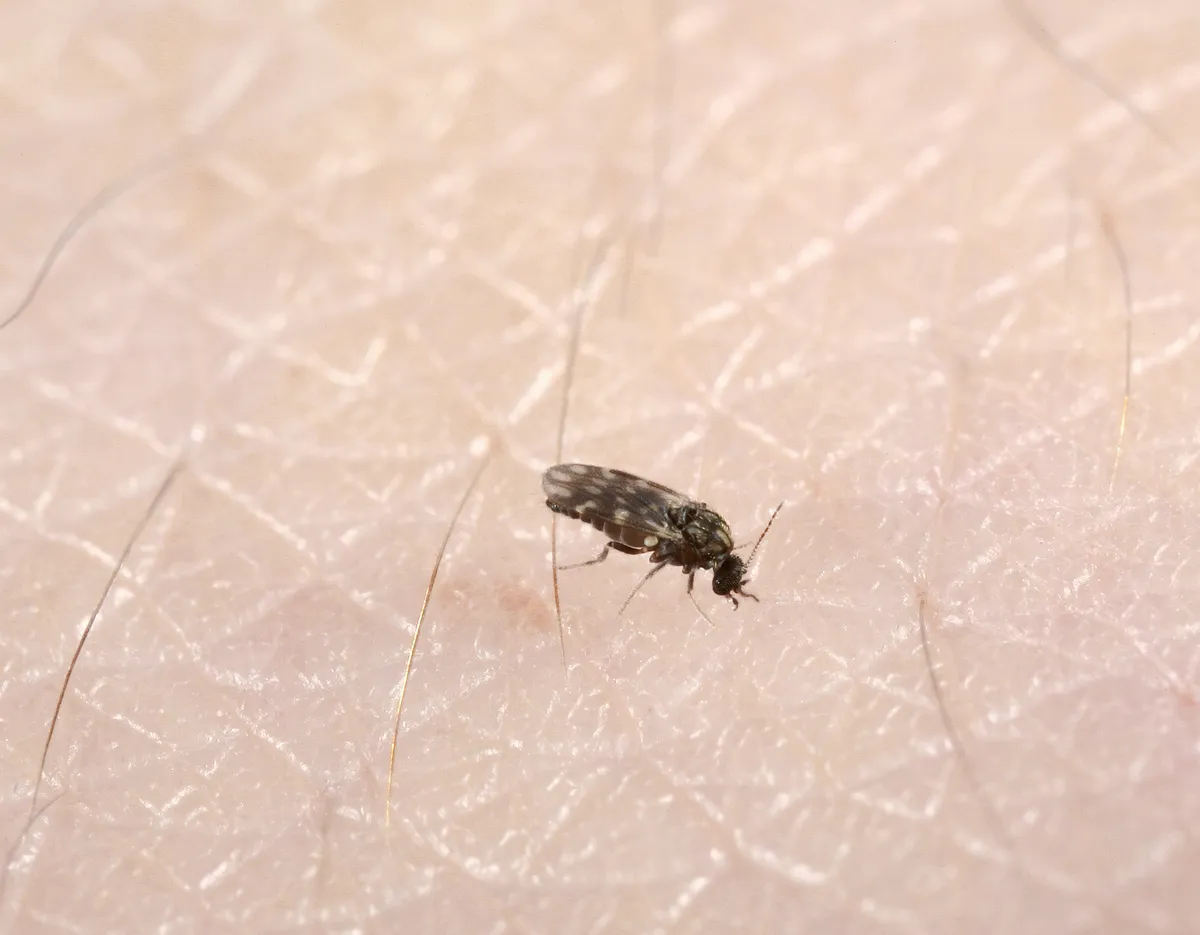 No-see-umA biting midge only 0.04 to 0.08 inch long that gets through window screens
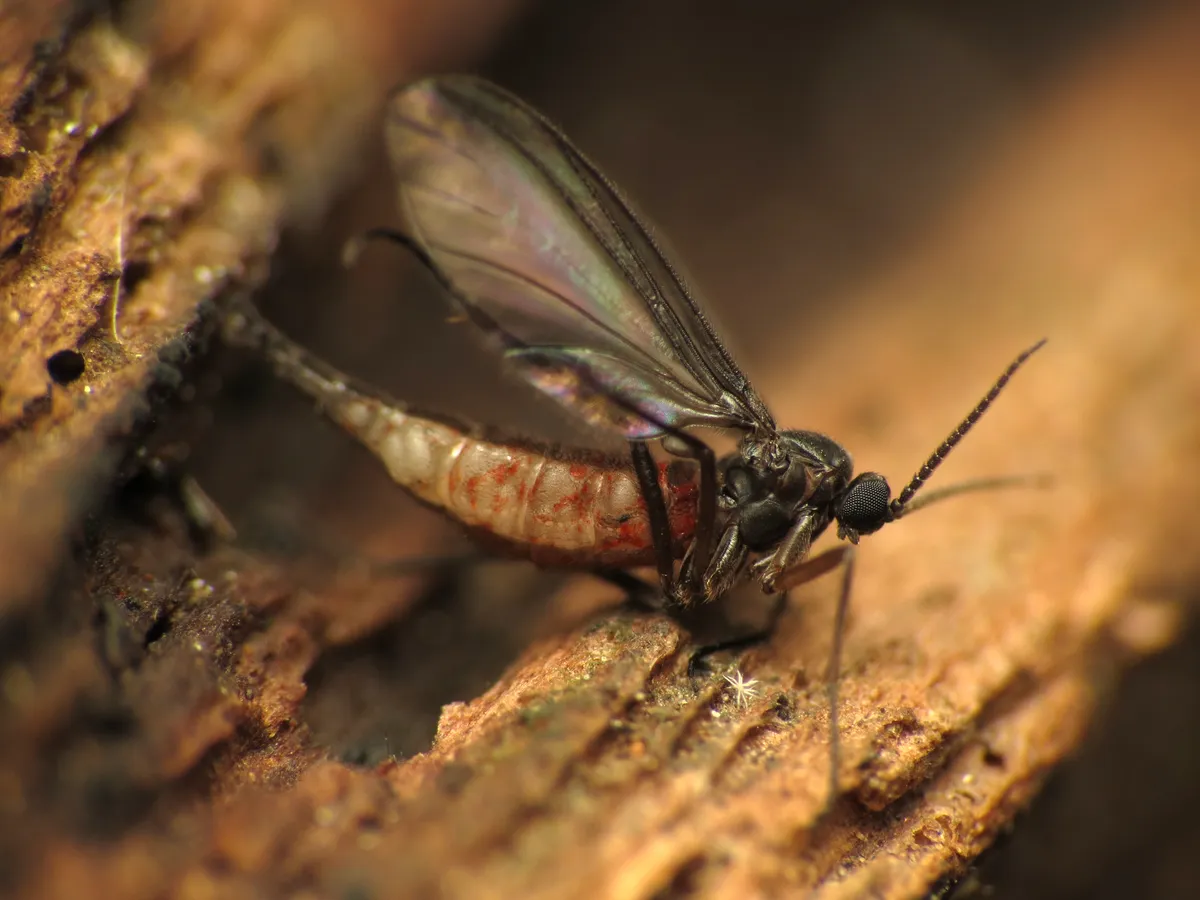 Fungus gnatA dark fly 1/16 to 1/8 inch long that often stays near houseplants and does not bite people
Photos: Crane fly (mosquito hawk): Kaldari, CC0, via Wikimedia Commons, CC0 1.0. No-see-um: division, CSIRO, CC BY 3.0, via Wikimedia Commons, CC BY 3.0. Fungus gnat: Katja Schulz from Washington, D. C., USA, CC BY 2.0, via Wikimedia Commons, CC BY 2.0.
How do you identify a mosquito you caught?
Photograph it well, then work through the marks above. A sharp photo from above and one from the side, next to a ruler, show the stripe or lyre on the back, the leg and beak bands, the palps and the antennae, which is everything the checks on this page rely on.
What to record before you let it go
- A photo from above and one from the side, beside a ruler marked in inches.
- The top of the thorax: one white stripe, a white lyre, or plain brown.
- Pale bands on the legs or around the middle of the proboscis.
- Palps as long as the proboscis, or a resting pose with the tail up.
- When and where it bit: in daytime shade, after dark, or after a flood.
The mosquito life cycle explains the stages you may find in standing water, and the bug identifier quiz helps when you are not sure the insect is a mosquito at all.
This guide is general educational information, not medical advice. If you have symptoms or concerns after a bite or exposure, contact a healthcare provider.
Frequently Asked Questions
What are the 3 main types of mosquitoes?+
For health, the three groups that matter most in the US are Aedes, Culex and Anopheles, the genera CDC names among the mosquitoes that spread germs. Aedes include the striped daytime biters such as the Asian tiger and yellow fever mosquitoes. Culex are brown house mosquitoes that bite from dusk to dawn and can spread West Nile virus. Anopheles rest with the abdomen tipped up and can spread malaria. Psorophora, Coquillettidia and Culiseta are other common groups.
How many types of mosquitoes are there in the US?+
More than 200 types live in the continental United States and US territories, CDC says, and about 12 of them spread germs that can make people sick. Most are nuisance mosquitoes that bite without spreading disease. Worldwide, CDC's Yellow Book counts more than 3,700 species. The common types differ by region, from the Asian tiger mosquito in eastern backyards to the western encephalitis mosquito on western farmland.
What kind of mosquito has white stripes?+
Usually an Aedes. A single white stripe down the middle of the back marks the Asian tiger mosquito, and a white lyre or violin shape marks the yellow fever mosquito, UF/IFAS says; both have white-banded legs. A very large black-and-white mosquito is likely a gallinipper. A pale band around the middle of the beak points to the western encephalitis mosquito or the speckled cattail mosquito, and narrow pale leg bands on a brown body fit the inland floodwater mosquito.
What is the biggest mosquito in the US?+
Among biting mosquitoes, the gallinipper, Psorophora ciliata, stands out: a University of Florida news release describes a body about half an inch long and a black-and-white pattern like a super-sized Asian tiger mosquito, with a painful bite. Larger insects that look like mosquitoes are usually crane flies, which the Missouri Department of Conservation says reach about 1 1/2 inches but lack a piercing mouth and do not bite.
Which mosquitoes bite during the day?+
Mainly Aedes. The Asian tiger and yellow fever mosquitoes bite by day, the tiger most in the early morning and late afternoon, and CDC calls the eastern treehole mosquito an aggressive daytime biter near woods. The cattail mosquito bites mostly in the early evening but also by day in shade. Culex house mosquitoes are most active from dusk to dawn, and most Anopheles are active at dusk, dawn or night, CDC says.
Which mosquito carries West Nile virus?+
Mainly Culex. CDC says Culex mosquitoes can spread West Nile, St. Louis encephalitis and eastern equine encephalitis viruses in US states, and names Culex pipiens, Culex quinquefasciatus and Culex tarsalis among the US species that can spread germs. Texas A&M AgriLife calls Culex tarsalis the most important carrier of mosquito-borne viruses in the western US. UF/IFAS adds that the cattail mosquito can transmit West Nile virus too.
Which mosquitoes carry malaria in the US?+
Only Anopheles mosquitoes spread malaria, and CDC names Anopheles freeborni and Anopheles quadrimaculatus among the US mosquitoes that can spread germs. Malaria was common in the United States into the 20th century, and Anopheles still live across most of the continental US. Local spread is now rare: CDC reports 10 locally acquired, mosquito-transmitted cases in Arkansas, Florida, Maryland and Texas in 2023. Most Anopheles bite at dusk, dawn or night, CDC says.
Do all mosquitoes bite humans?+
No. Only females take blood; males feed on plant nectar and sugar, as UF/IFAS describes for the cattail and southern house mosquitoes. Some species rarely bite people at all: CDC says Culiseta melanura feeds mostly on birds, which is why it is not an important carrier of eastern equine encephalitis to people. And most of the more than 200 US types are nuisance mosquitoes that bite without spreading disease, CDC says.
How can you tell a mosquito from a crane fly or a midge?+
Look at the mouth and the wings. A mosquito has a long, piercing proboscis and scales on its wings. The Missouri Department of Conservation says crane flies lack a piercing mouth and wing-vein scales and have a V-shaped groove on the thorax, and that non-biting midges have a short proboscis, no wing scales and hold their front legs forward and up at rest. Neither crane flies nor non-biting midges bite people.
Where do different mosquitoes lay their eggs?+
It depends on the group. Container Aedes such as the tiger and yellow fever mosquitoes glue eggs to damp container walls, and floodwater Aedes lay them on ground that will flood. Culex float rafts of 100 to 300 eggs on ponds, storm drains and ditches, CDC says. The gallinipper lays eggs in soil at the edges of water that overflows in heavy rain, and cattail mosquito larvae attach to cattail roots.
Sources
- About Mosquitoes in the United States (June 4, 2024) — Centers for Disease Control and Prevention
- Mosquitoes, Ticks, and Other Arthropods (CDC Yellow Book 2026; updated April 23, 2025) — Centers for Disease Control and Prevention
- About Culex Mosquitoes (updated September 3, 2025) — Centers for Disease Control and Prevention
- Potential Range of Aedes Mosquitoes (updated July 1, 2024) — Centers for Disease Control and Prevention
- DPDx: Malaria (last reviewed December 13, 2024) — Centers for Disease Control and Prevention
- CDC Operational Guidance for Investigating Locally Acquired Mosquito-Transmitted Malaria, United States, 2026 (MMWR Recommendations and Reports, May 21, 2026) — Centers for Disease Control and Prevention
- Eastern Equine Encephalitis: Causes and How It Spreads (July 15, 2026) — Centers for Disease Control and Prevention
- La Crosse: Causes and How It Spreads (July 15, 2026) — Centers for Disease Control and Prevention
- Asian Tiger Mosquito, Aedes albopictus (Skuse) (EENY-319; L. Rios and J. E. Maruniak) — University of Florida IFAS Extension, Featured Creatures
- Yellow Fever Mosquito, Aedes aegypti (Linnaeus) (EENY-434; C. Zettel Nalen and P. Kaufman) — University of Florida IFAS Extension, Featured Creatures
- Southern House Mosquito, Culex quinquefasciatus Say (EENY-457; S. Hill and C. R. Connelly) — University of Florida IFAS Extension, Featured Creatures
- Cattail Mosquito, Coquillettidia perturbans (Walker) (EENY-694; L. R. Johnson, J. P. Cuda and N. Burkett-Cadena) — University of Florida IFAS Extension, Featured Creatures
- Types of Mosquitoes: Aedes vexans (Mosquito Safari) — Texas A&M AgriLife Extension Service
- Types of Mosquitoes: Culex tarsalis (Mosquito Safari) — Texas A&M AgriLife Extension Service
- Aedes vexans Biology (R. Hickman and J. Brown) — Brunswick County Mosquito Control, North Carolina
- Huge, aggressive mosquito may be abundant in Florida this summer, UF/IFAS expert warns (March 4, 2013) — University of Florida News
- Midges (Field Guide) — Missouri Department of Conservation
- Large Crane Flies (Field Guide) — Missouri Department of Conservation
- Biting Midges, No-See-Ums, Culicoides spp. (EENY-349; N. Burkett-Cadena and others) — University of Florida IFAS Extension, Featured Creatures
- Pest Notes: Fungus Gnats (UC ANR Publication 7448, updated August 2013) — University of California Statewide IPM Program
Read and approved by Alex Francisco. Found an error? Email support@buzzskito.ca.