
Published by BuzzSkito Mosquito & Tick Control
Published October 29, 2026 · Fact-checked against the sources listed below
Do gnats bite?
Some do: gnat is a loose name for several small flies, and only some bite people. Clemson University's Home & Garden Information Center says two different small flies are called gnats: biting midges, which bite, and eye gnats, which do not. University of Minnesota Extension adds black flies, also called gnats or buffalo gnats, which bite people and many animals.
In both biters, only the females take blood: the University of Florida's guide to biting flies (UF/IFAS) says female no-see-ums need blood to develop their eggs and males do not bite, and Iowa State University Extension says only female black flies are bloodsuckers.
The gnats people usually find indoors do not bite: Texas A&M AgriLife Extension says so of fungus gnats and fruit flies, and the guide to getting rid of gnats sorts out those indoor gnats.
What do gnat bites look like?
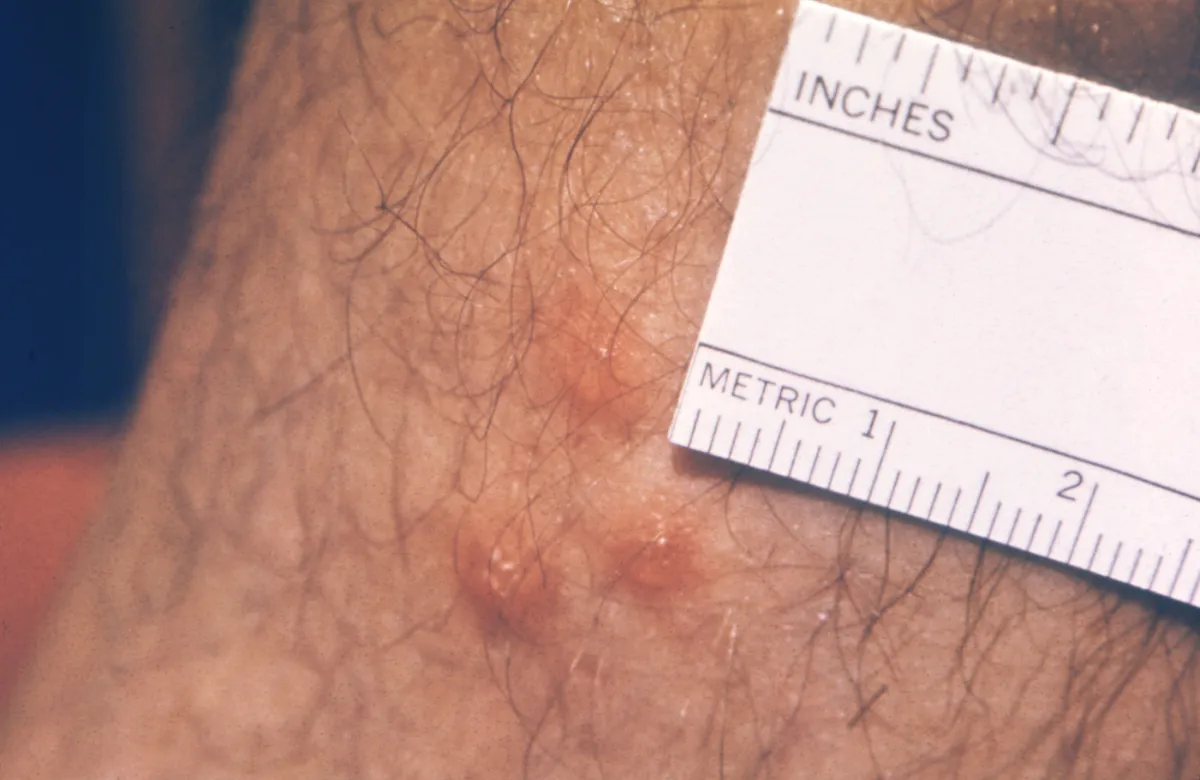
Usually small, itchy red bumps or welts, much like mosquito bites. Clemson says a biting midge leaves an itchy, raised spot very similar in appearance to a mosquito bite. The University of Arizona Cooperative Extension says no-see-um bites usually appear as small red welts about 1/8 inch across, or as water-filled blisters, that itch intensely.
Black fly bites vary more. Minnesota Extension says they range from small red spots to a lot of irritation and swelling, and Purdue University's black fly guide says reactions run from a small puncture wound to a swelling the size of a golf ball. Iowa State calls the bite extremely painful, with intense itching, local swelling and soreness.
Both biters cut the skin to feed. Montana State University Extension says a female midge lacerates the skin and siphons up the blood as it pools, and Minnesota Extension says black flies slash it with blade-like mouthparts. A feeding black fly also injects saliva that keeps the blood from clotting, and that saliva can make the skin swell, an Iowa State article from 1994 explains.
Which gnat bit you?
Where and when it happened is the best clue: the two biters keep different hours near different kinds of water, and midges often go unnoticed. Treat this as a starting point, not a diagnosis; the bug bite identification chart covers the biters that are not gnats.
| Where and when | Likely biter | Why |
|---|---|---|
| Outdoors at dawn or dusk near a marsh, beach, pond or other wet ground | Biting midges | Most active around sunrise and sunset; they breed in wet mud and sand |
| Outdoors by day near a river or fast stream, in spring or early summer | Black flies | They feed mainly in daylight and breed in fast-moving water |
| A gnat biting indoors, even with window screens | Biting midges | They pass through ordinary window screen |
| Gnats at your eyes, nose or mouth, but no bites | Eye gnats, or black flies swarming | Eye gnats cannot break the skin; black flies sometimes swarm without biting |
| Tiny flies over houseplants, fruit or drains | Fungus gnats, fruit flies or drain flies | None of them bite people |
From UF/IFAS, Iowa State, Minnesota Extension, UC IPM, Texas A&M and the University of Arizona.
Biting midges (no-see-ums)
Biting midges, also known as no-see-ums, sand flies or sand gnats, are tiny bloodsucking flies, usually 0.04 to 0.08 inch (1 to 2 mm) long, according to the University of Florida's profile of biting midges. It says they are often abundant, persistent pests in US coastal areas, and Montana State says their bites are often mistaken for mosquito bites because the midges are so hard to see.
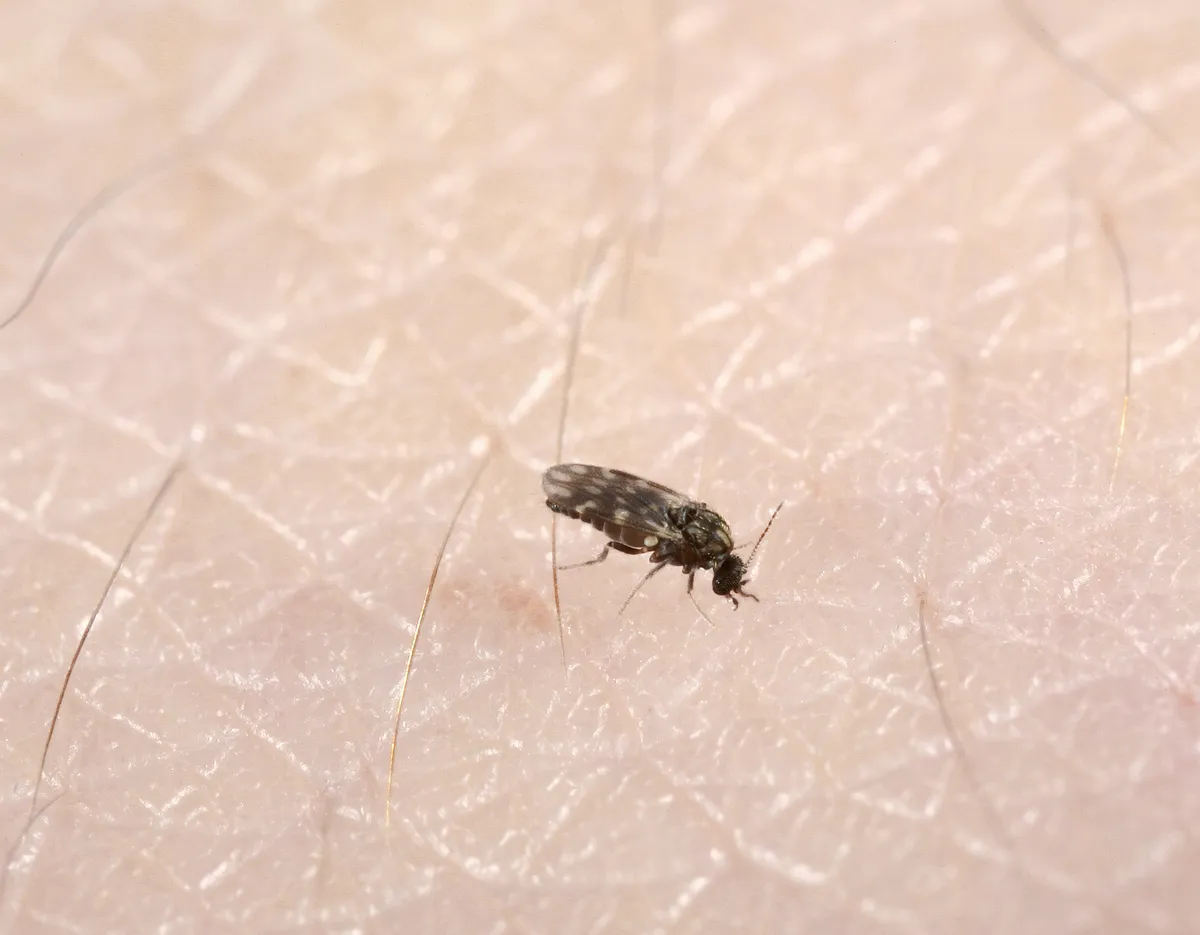
UF/IFAS says no-see-ums are usually most active around sunrise and sunset and most abundant in summer, though they may bite at any time of year; they breed in salt marshes and in wet mud, sand and debris around ponds, springs, lakes and creeks, and feed little in even a slight breeze. Most species bite at dusk, at night or in the morning, though many bite in broad daylight in cold weather and on the coast.
The no-see-um guide covers the midges in depth, from where they breed to the screen mesh that stops them. At the beach, the guide to sand fleas sorts out which beach bugs bite.
Black flies (buffalo gnats)
Black flies are small, stout, humpbacked flies, also called buffalo gnats or turkey gnats; Iowa State puts them just under 1/4 inch long and Minnesota Extension at about 1/16 inch. They breed in clear, fast-moving rivers and streams, and Iowa State says they are most common there in late spring and early summer, the adults living about three weeks.
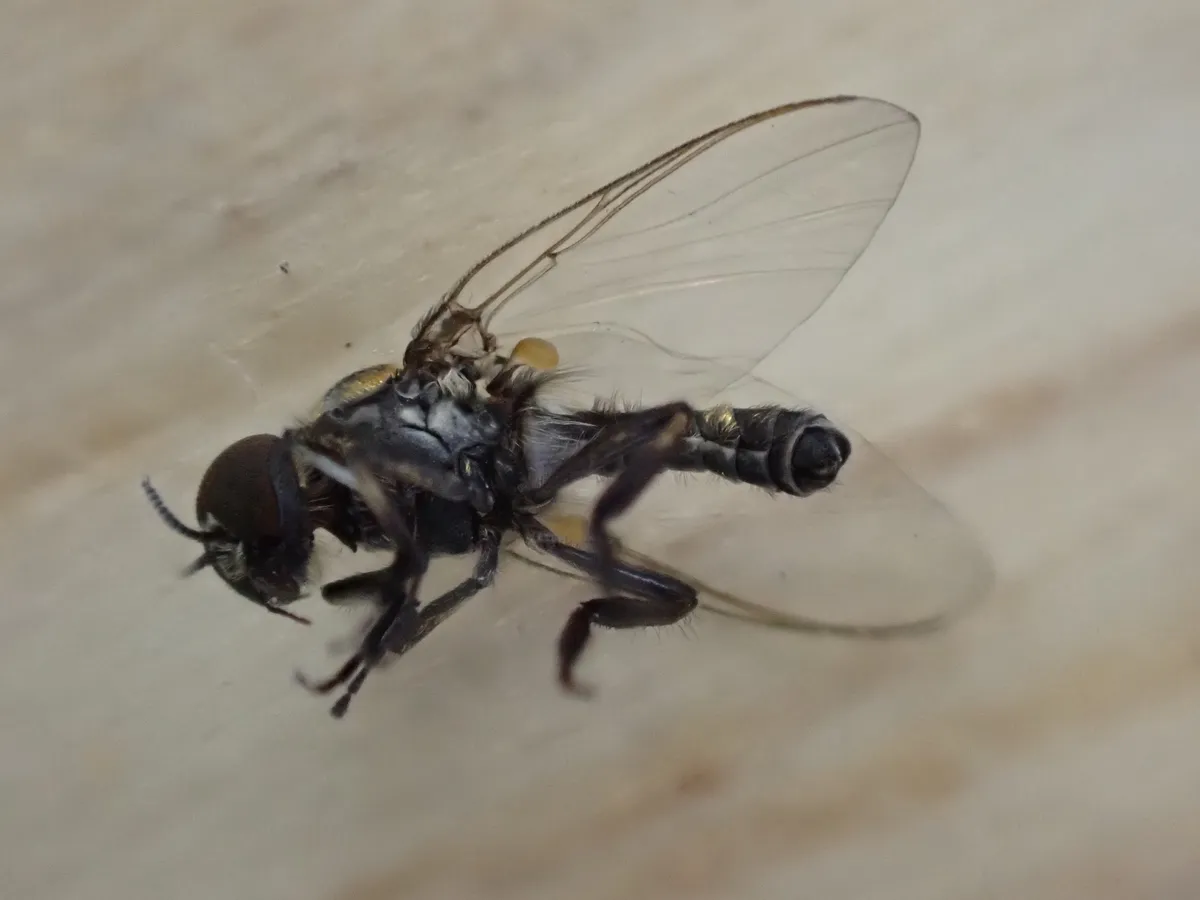
They bite by day. UF/IFAS says the females feed mainly in daylight and hover about the eyes, ears and nostrils, and Minnesota Extension says they are most active a few hours after sunrise and before sunset, on calm days in sheltered, wooded spots. Purdue says the adults of most species are active from mid-May to July.
Eye gnats
Eye gnats pester but do not bite. UC IPM's Pest Note on eye gnats describes shiny black or gray flies 1/16 to 1/8 inch long that cannot break intact skin: the females crawl over it and soak up secretions at the eyes, nose, mouth and open wounds with sponge-like mouthparts, so persistently that brushing them away does not work. UC IPM says they may be present year-round in warm, dry regions and can potentially transmit disease.
Which gnats do not bite?
The ones people find indoors, all about 1/8 inch long or smaller:
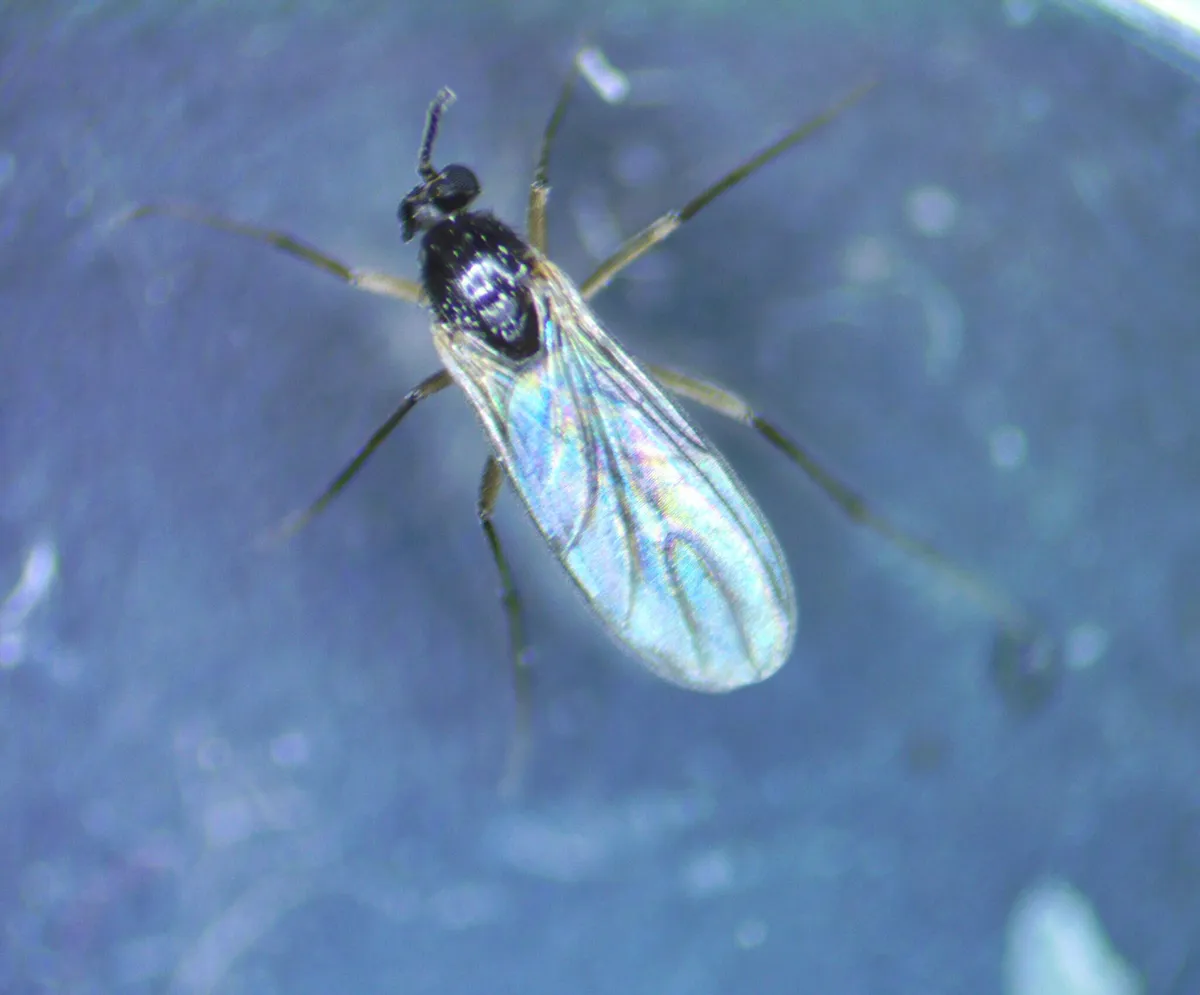
- Fungus gnats, slender flies 1/16 to 1/8 inch long with clear or dark wings, breed in moist potting soil; Texas A&M says that, unlike mosquitoes, they do not bite. The fungus gnat plan clears them from houseplants.
- Fruit flies, about 1/8 inch long and usually with reddish eyes, breed in fermenting fruit and vegetables; Texas A&M says they do not bite. The fruit fly guide covers them.
- Drain flies, or moth flies, are fuzzy, about 1/8 inch long and breed in the gelatinous film inside drains; Minnesota Extension's guide to household flies says they do not bite people. The drain fly guide covers them.
Where on the body do gnats bite?
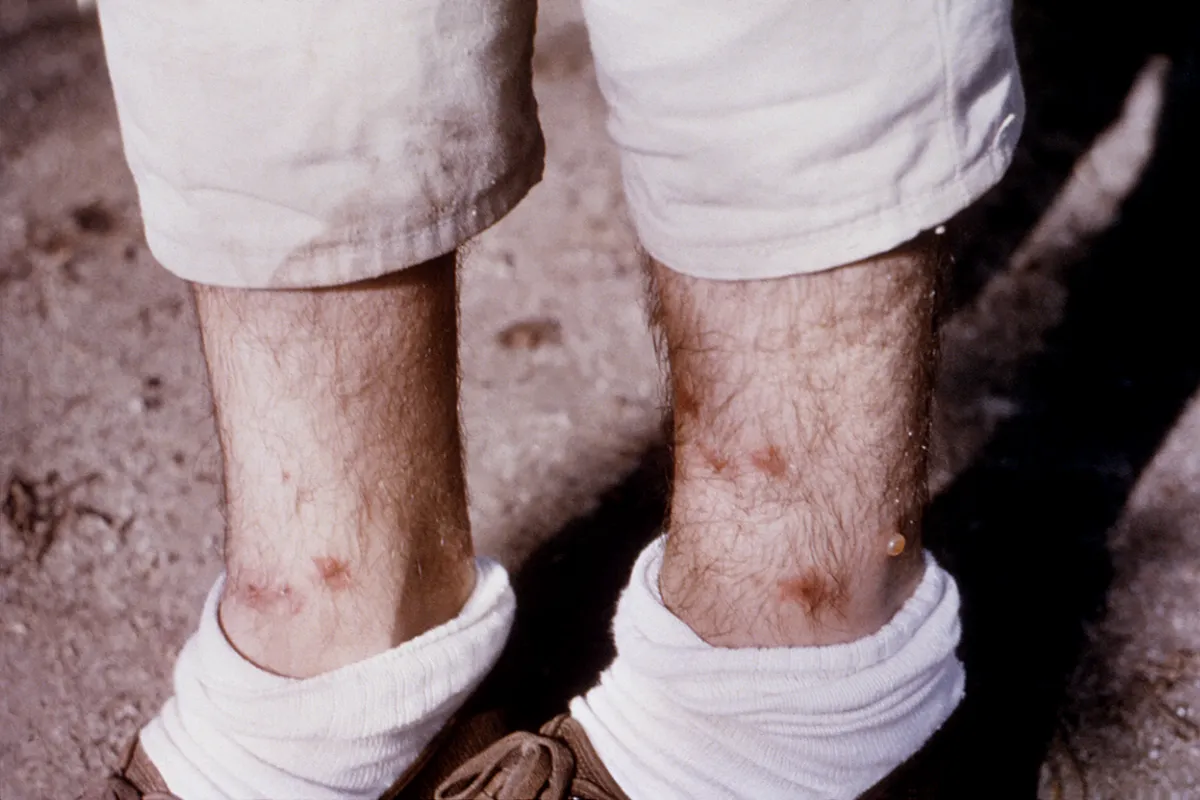
On skin they can reach. Iowa State says black flies favor the head, just beneath the hat rim; Minnesota Extension lists the hairline, feet, ankles and arms, and Purdue the upper body and head. Iowa State's 1994 article adds the wrists and ankles, and says swelling can be worse when a bite is around the eyes, lips or ears.
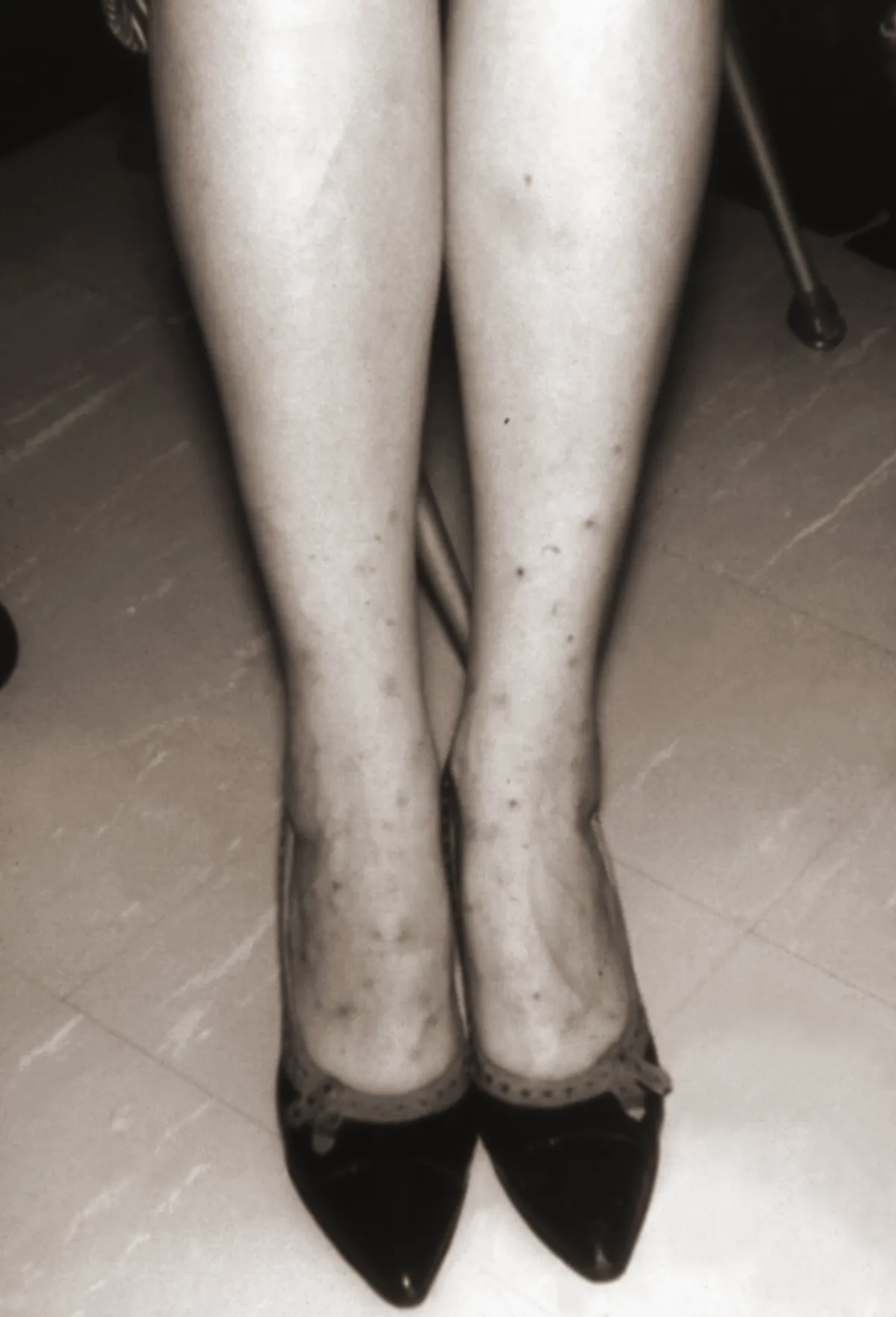
Biting midges bite bare skin, which is why the University of Arizona advises long sleeves, pants, shoes, socks and a hat with fine mesh netting; the CDC photo at the top shows bites around the ankles.
How long do gnat bites last?
From minutes to about two weeks, depending on the gnat and the person. UF/IFAS says midge bites usually sting or burn for minutes to hours, though people who are hypersensitive to them may itch for two to three days, and the University of Arizona says some sensitive people develop long-lasting painful, itchy lesions.
Black fly bites can last longer: Iowa State's 1994 article says the local swelling may last 1 to 2 weeks, with intense itching. Scratching can make bites worse. The University of Arizona says scratched no-see-um bites can break open and bleed, and CDC warns, about mosquito bites, that scratched bites can become infected.
How do gnat bites compare with mosquito, flea and bed bug bites?
They can look alike, so where and when you were bitten tells you more. Montana State says midge bites are often mistaken for mosquito bites, and CDC says bed bug bites look similar to mosquito or flea bites; how bed bug and mosquito bites differ compares those two. These are typical descriptions, not a diagnosis:
| Bite | What it can look like | The clue |
|---|---|---|
| Biting midge | Small red welts about 1/8 inch across, or water-filled blisters; stings or burns at first | Bare skin at dawn or dusk near wet ground; the biter is barely visible |
| Black fly | From small red spots to painful, itchy swelling | Head, hairline, arms or ankles; by day near running water in spring and early summer |
| Mosquito bite | A puffy, reddish bump, then a hard, itchy, reddish-brown bump; sometimes small blisters | The puffy bump appears within minutes, the hard one a day or so later |
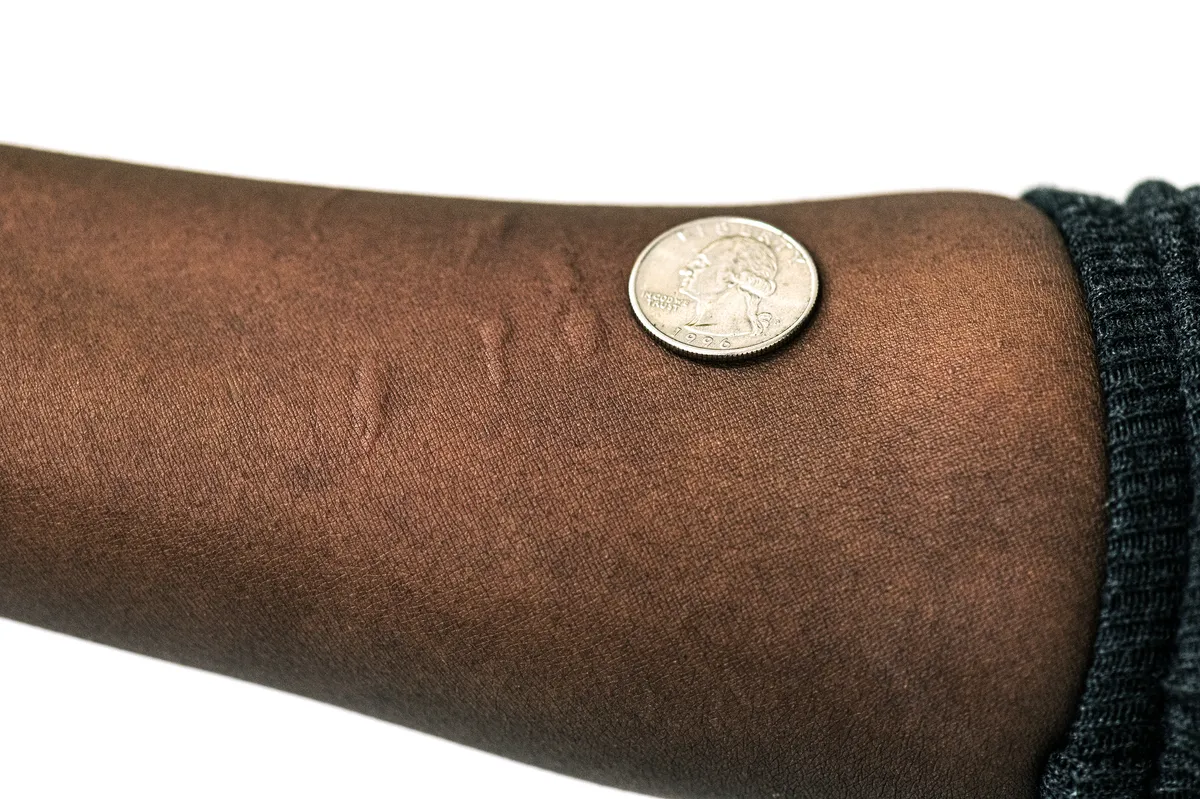
| Flea bite | Small, discolored bumps in a line or cluster | Mostly the feet, calves and ankles; rarely above the knee |
| Bed bug bite | Slightly swollen red areas that may itch, random or in a line | Face, neck, arms or hands after sleeping; marks can take days to show |
| Chigger bite | A speckled line of red spots or pimples that itch severely | Ankles, lower legs, behind the knees and where clothing fits close, after grass or woods |
Gnats: the University of Arizona, UF/IFAS, Minnesota Extension and Iowa State. Mosquito and bed bug: CDC. Flea and chigger: Cleveland Clinic's pages on flea bites and chigger bites. Reactions vary from person to person.
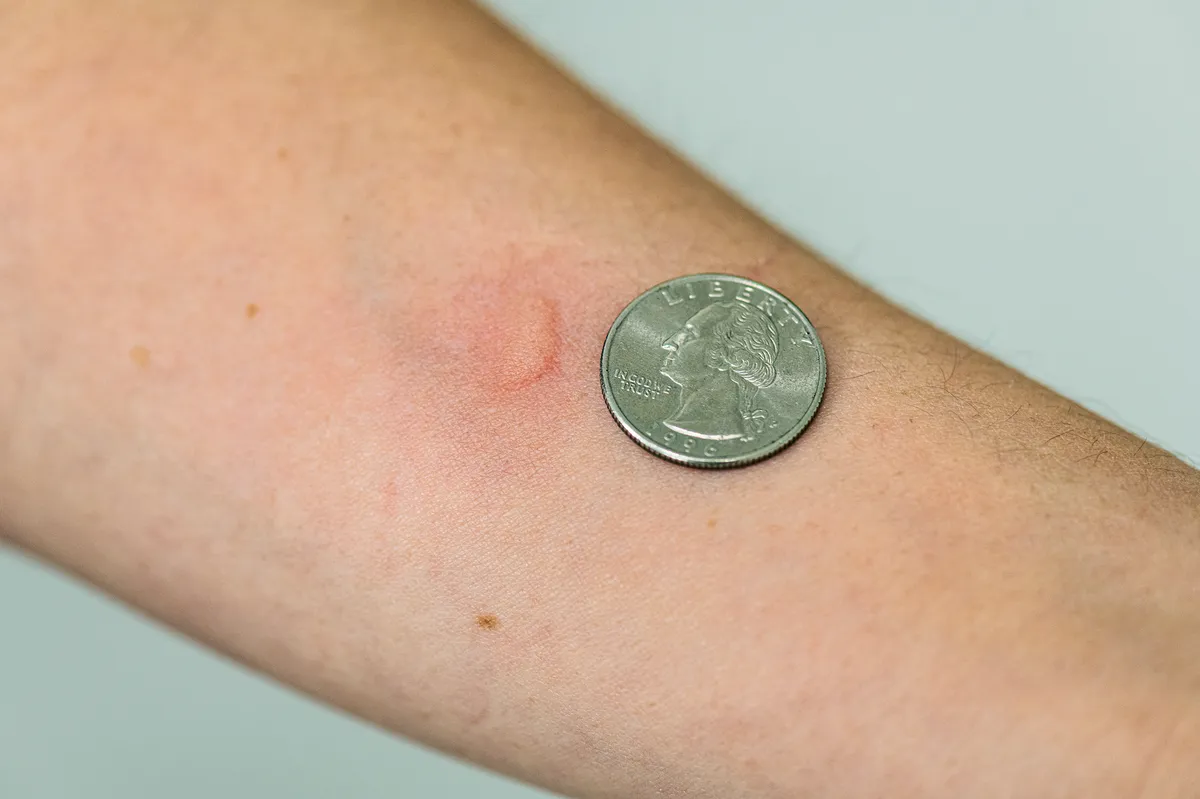
Bites that look like gnat bites
 Mosquito bitesA puffy bump within minutes, then a hard, itchy bump a day or so later
 Flea bitesSmall bumps in a line or cluster, mostly on the feet, calves and ankles
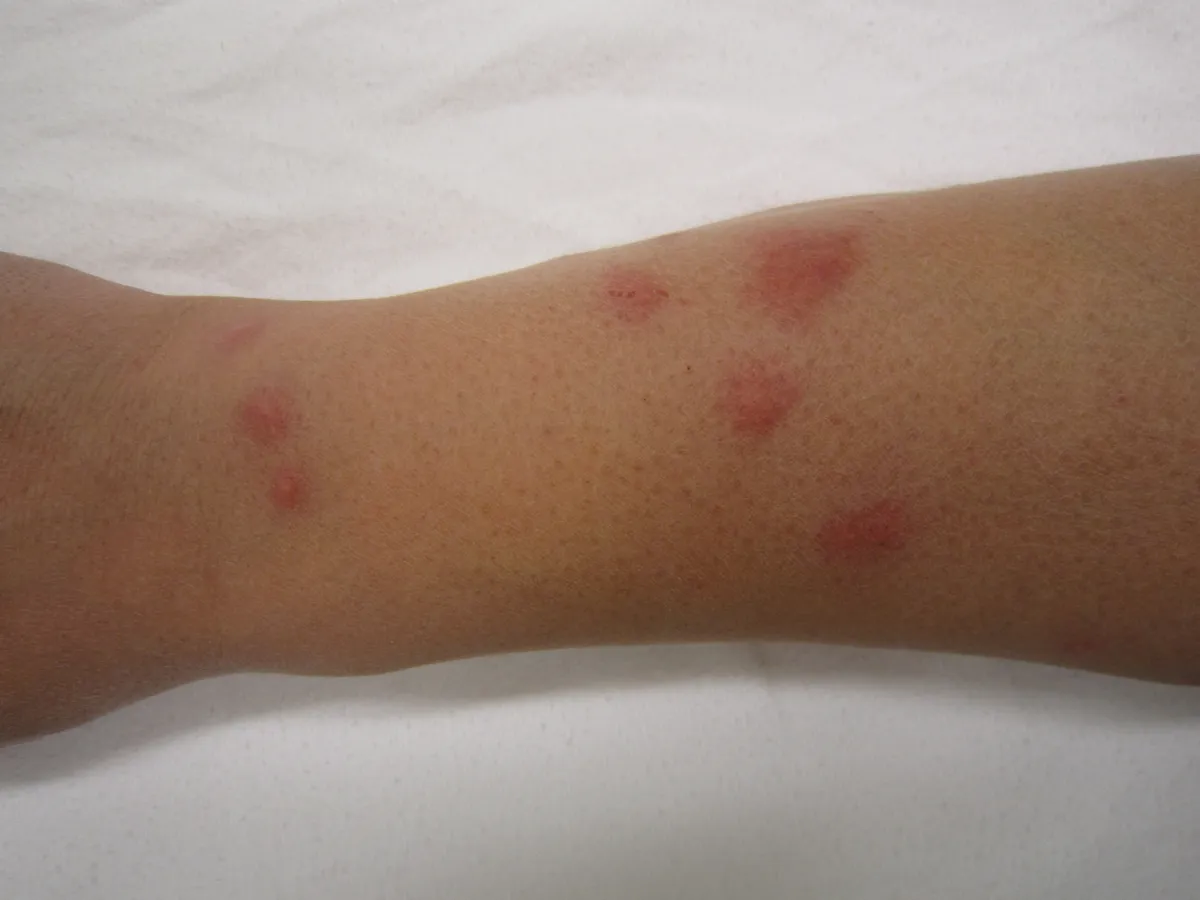 Bed bug bitesRed marks that may itch, random or in a line, that show up after sleeping
 Chigger bitesA speckled line of red spots where clothing fits close, after grass or woods
Photos: Mosquito bites: CDC/ Division of Vector-Borne Diseases Rickettsial Zoonoses Branch; photo: Lauren Bishop (CDC Public Health Image Library, phil.cdc.gov), public domain. Flea bites: CDC/ Dr. H.G. Scott (CDC Public Health Image Library, phil.cdc.gov), public domain. Bed bug bites: James Heilman, MD, CC BY-SA 3.0, via Wikimedia Commons, CC BY-SA 3.0. Chigger bites: CDC/ M.A. Parsons (CDC Public Health Image Library, phil.cdc.gov), public domain.
Are gnat bites dangerous?
In the United States, neither biter is known to spread disease to people: Iowa State says so of black flies, and Montana State says the same of biting midges. Elsewhere, UF/IFAS says midges transmit dangerous pathogens, including Oropouche virus, in parts of Sub-Saharan Africa and the American tropics, and Purdue says black flies spread the worm behind river blindness in equatorial Africa and parts of Central and South America.
At home, the risks are reactions and infection. Purdue says the reactions known as black fly fever include headache, nausea, fever and swollen lymph nodes in the neck, and Iowa State says allergic people can swell severely and that rare deaths from toxemia or anaphylactic shock have been reported.
How do you treat gnat bites?
Like other itchy insect bites; most can be cared for at home. MedlinePlus gives these first aid steps for insect bites and stings:
- Wash the area well with soap and water.
- Hold ice wrapped in a washcloth on it for 10 minutes, then take it off for 10 minutes.
- If needed, take an antihistamine or apply a cream that reduces itching.
- Over the next several days, watch for signs of infection, such as increasing redness, swelling or pain.
The American Academy of Dermatology (AAD) says most bug bites and stings can be safely treated at home with a hydrocortisone cream or ointment, or an oral antihistamine for the itch. Try not to scratch; CDC says an infected bite may look red, feel warm or have a red streak spreading from it.
How do you keep gnats from biting?
Combine a labeled repellent, covering up, moving air and fine screens; each works better on some gnats than others:
- Pick a repellent labeled for them. CDC's advice on preventing Oropouche is to choose EPA-registered repellents labeled for flies, biting flies or Culicoides, the most widespread genus of biting midges. UF/IFAS says DEET-based repellents are the main ones used against midges, but most repellents work less well on biting flies than on mosquitoes and need reapplying more often.
- Check the active ingredient. CDC's page on preventing mosquito bites lists the EPA-registered ones (DEET, picaridin, IR3535, oil of lemon eucalyptus, para-menthane-diol and 2-undecanone), says EPA's search tool can find products by ingredient and protection time, and warns against using oil of lemon eucalyptus or para-menthane-diol on children under 3; how to keep mosquitoes away compares them.
- Expect less against black flies. Purdue advises a repellent containing DEET, but Minnesota Extension says repellents are not always effective against them, though they may help some. For eye gnats, UC IPM says DEET or picaridin repellents can give temporary relief.
- Cover up. UF/IFAS advises long sleeves and long pants. Against black flies, Minnesota Extension suggests white or brightly colored clothing, since they are drawn to dark colors, and a head net like a beekeeper's veil; Purdue says heavily infested areas may call for fine-mesh head nets.
- Keep the air moving. Midges feed little in even a slight breeze, UF/IFAS says; CDC and Clemson suggest fans, and Iowa State says black flies do not like wind.
- Use finer screens. The University of Arizona says no-see-ums can pass through standard 16 x 16 and 18 x 16 window screen; CDC suggests 20 x 20 mesh, Clemson 20 x 20 or finer for porches, and Arizona 30 x 30 where possible.
- Avoid their haunts: wet ground at dawn and dusk for midges; for black flies, Minnesota Extension says to avoid lowlands, dense vegetation and sheltered, shady spots.
Yard treatments have limits. Iowa State says eliminating adult black flies is impractical and fogging has had limited success, and UF/IFAS, noting that biting flies breed in water and muck, suggests asking your local mosquito control district about programs in your area.
What should you do once you know which gnat it is?
Go to the guide for that gnat:
- Biting midges: the no-see-um guide covers where they breed and the screens that keep them out.
- Black flies: the black fly guide covers their season.
- Gnats in the house: how to get rid of gnats identifies each indoor gnat and fixes the source it breeds in.
- A bigger fly that bit hard: female horse flies and deer flies cut the skin by day, UF/IFAS says; horse fly and deer fly bite care covers those bites.
- Not sure it was a gnat: the bug bite chart compares bites by pattern, place and timing, and the bug bite identifier asks six questions about yours.
This guide is general educational information, not medical advice. If you have symptoms or concerns after a bite or exposure, contact a healthcare provider.
Frequently Asked Questions
Do gnats bite humans?+
Some do. The gnats that bite people are biting midges, also called no-see-ums, and black flies, also called buffalo gnats, and in both only the females bite, because they need blood to develop their eggs. Texas A&M AgriLife Extension says fungus gnats and fruit flies do not bite, and the University of Minnesota says drain flies do not bite people either. Eye gnats feed at the eyes and on wounds but cannot break the skin, according to UC IPM.
What does a gnat bite look like?+
Usually a small, itchy red bump or welt, much like a mosquito bite. The University of Arizona says no-see-um bites usually appear as small red welts about 1/8 inch across, or as water-filled blisters, that itch intensely, and Clemson says a midge bite looks very similar to a mosquito bite. Black fly bites range from small red spots to a lot of irritation and swelling, Minnesota Extension says, and Purdue says the swelling can reach the size of a golf ball.
How long do gnat bites last?+
Biting midge bites usually bother people for minutes to hours, the University of Florida says, though people who are hypersensitive to them may itch for two to three days, and the University of Arizona says some sensitive people develop long-lasting painful, itchy lesions. Black fly bites can last longer: a 1994 Iowa State article says the local swelling may last 1 to 2 weeks with intense itching. Scratching can make it worse: the University of Arizona says scratched no-see-um bites can break open and bleed, and CDC warns that scratched bites can become infected.
Why do gnat bites itch and swell?+
Both biters cut into the skin to feed. Montana State says biting midges cut the skin and siphon up the blood as it pools, and the University of Florida says the bites generally cause a stinging or burning feeling with red areas around each one. Female black flies slash the skin, Minnesota Extension says, and inject saliva that keeps the blood from clotting, a 1994 Iowa State article explains, and Iowa State says the bite causes intense itching, local swelling and soreness.
Do black flies bite?+
Yes, the females do. Iowa State says only female black flies are bloodsuckers, and Purdue says the males' mouthparts are not capable of biting. They bite in daylight near the rivers and fast streams where they breed, often around the head and hairline, and are most common in spring and early summer. Iowa State calls the bite extremely painful, with intense itching, swelling and soreness, and Minnesota Extension says black flies sometimes swarm around people without biting at all.
What are the tiny flying bugs that bite and itch?+
If you could barely see them, think biting midges, also called no-see-ums, sand flies or sand gnats. The University of Florida gives most adults as 0.04 to 0.08 inch long, and the University of Arizona says they are barely visible and often go unnoticed. They bite mostly around dawn and dusk near marshes, beaches and other wet ground, and they pass through ordinary window screens. Black flies, stout and humpbacked, bite by day near running water.
How can you tell gnat bites from mosquito bites?+
Often you cannot from the bite alone. Clemson says a biting midge bite looks very similar to a mosquito bite, and Montana State says midge bites are often mistaken for mosquito bites because the midges are so hard to see. CDC describes a mosquito bite as a puffy, reddish bump a few minutes after the bite, then a hard, itchy, reddish-brown bump a day or so later. The setting helps more: midges bite mostly around dawn and dusk near wet ground, black flies by day near running water.
Where do gnats bite you?+
On skin they can reach. Iowa State says black flies favor the head, just beneath the hat rim, and Minnesota Extension lists the hairline, feet, ankles and arms; a 1994 Iowa State article adds the wrists and ankles and says swelling can be worse around the eyes, lips or ears. Biting midges bite bare skin, so the University of Arizona advises long sleeves, pants, socks and a hat with fine netting. Eye gnats crowd the eyes, nose, mouth and wounds without biting.
How do you treat gnat bites?+
Treat them like other itchy insect bites. MedlinePlus advises washing the area with soap and water, holding ice wrapped in a washcloth on it for 10 minutes on and 10 minutes off, and taking an antihistamine or using an anti-itch cream if needed. The American Academy of Dermatology says most bites can be treated at home with hydrocortisone cream or an oral antihistamine. Avoid scratching, and go to the emergency room immediately for trouble breathing or swollen lips, tongue or face.
Are gnat bites dangerous?+
In the United States, neither biter is known to spread disease to people: Iowa State says so of black flies, and Montana State says the same of biting midges. The risks are allergic reactions, infection from scratching and black fly fever, which Purdue says can bring headache, nausea, fever and swollen lymph nodes in the neck. Iowa State says rare deaths from toxemia or anaphylactic shock after black fly bites have been reported.
Sources
- Biting Midges, No-See-Ums, Culicoides spp. (EENY-349/IN626; N. Burkett-Cadena, V. Cooper, C. Addae, C. R. Connelly and E. Buckner) — University of Florida IFAS Extension
- Biting Flies (ENY-220/IG081; J. B. Pitzer, P. G. Koehler and J. W. Diclaro II) — University of Florida IFAS Extension
- Something's Biting Me, but I Can't See It — University of Arizona Cooperative Extension
- Biology and Impact of Biting Midges in Montana (MontGuide MT201205AG; M. Rolston and G. Johnson; reviewed March 2017) — Montana State University Extension
- Gnats (HGIC 2489; J. Ballew, October 2018) — Clemson Cooperative Extension, Home & Garden Information Center
- Black Fly (reviewed December 2021) — Iowa State University Extension and Outreach
- Black Flies (K. Holscher, Horticulture and Home Pest News, July 1, 1994) — Iowa State University Extension and Outreach
- Black flies and gnats (J. Hahn; reviewed 2024) — University of Minnesota Extension
- Black Flies: Biology and Public Health Risk (E-251; C. Hill and J. MacDonald) — Purdue University Extension Entomology
- Pest Notes: Eye Gnats (UC ANR Publication 74164; J. A. Bethke, L. M. Bates and B. Vander Mey, updated August 2013) — University of California Statewide IPM Program
- Indoor Flies and Their Control (ENTO-050; M. Merchant) — Texas A&M AgriLife Extension Service
- Flies (J. Hahn and V. Cervenka; reviewed 2024) — University of Minnesota Extension
- Bug Bites and Stings: When to See a Dermatologist — American Academy of Dermatology
- Insect bites and stings (Medical Encyclopedia, reviewed October 14, 2025) — MedlinePlus, U.S. National Library of Medicine
- About Mosquito Bites (June 21, 2024) — Centers for Disease Control and Prevention
- Preventing Oropouche (September 18, 2025) — Centers for Disease Control and Prevention
- Preventing Mosquito Bites (August 28, 2024) — Centers for Disease Control and Prevention
- About Bed Bugs (April 26, 2024) — Centers for Disease Control and Prevention
- Flea Bites (last updated August 31, 2021) — Cleveland Clinic
- Chigger Bites (last updated June 7, 2022) — Cleveland Clinic
How this guide was made: it was researched and drafted with AI assistance from the sources listed above. A second, independent AI pass then checked each factual claim against those sources. Found an error? Email support@buzzskito.ca.