
Published by BuzzSkito Mosquito & Tick Control
Published October 31, 2026 · Fact-checked against the sources listed below
What do drain flies look like?
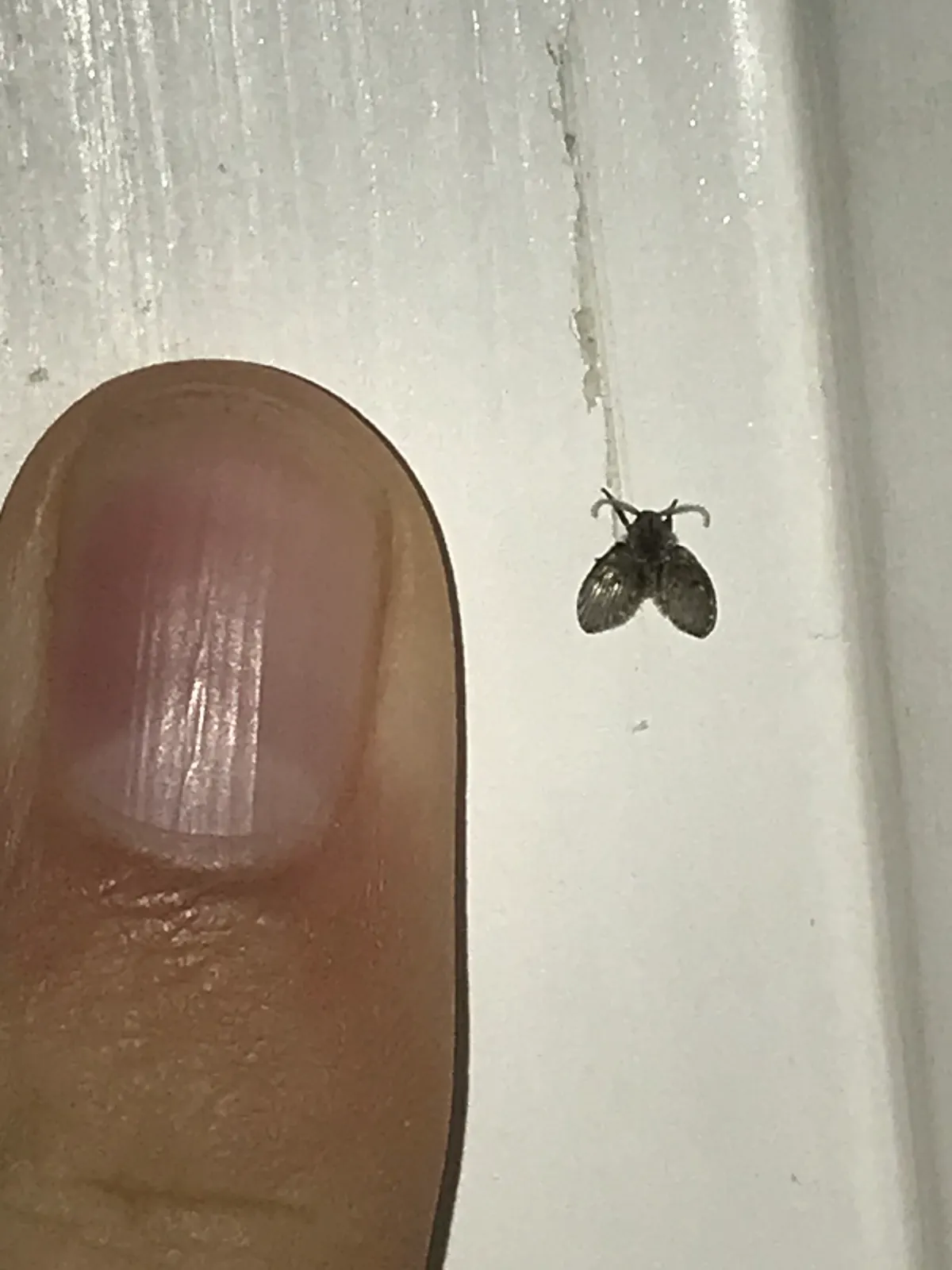
Drain flies are small, fuzzy, moth-like flies, about 1/8 inch long and often dark, with hairy wings they hold over the back like a roof when they rest. That is how UC IPM's Pest Note on moth or drain flies describes them. It adds that the wing veins run in parallel from base to tip, a pattern unique to their family, Psychodidae, and that they are weak flyers with short, hopping flights.
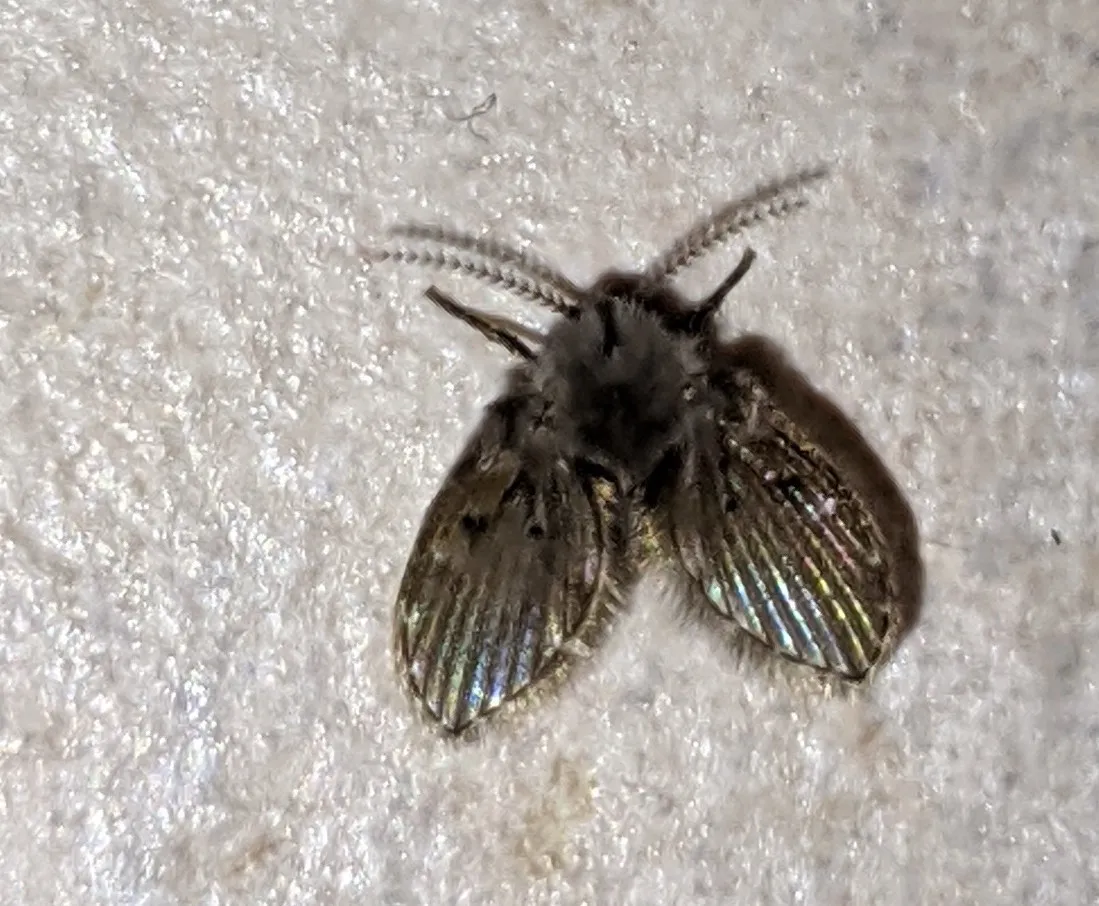
Other extension sources describe the same flies at slightly different sizes. Texas A&M AgriLife Extension's guide to indoor flies gives 1/16 to 1/5 inch, grayish and densely covered with hairs, with broad wings held either flat or like a roof, and says they usually fly only a few feet at a time. Penn State Extension puts the adult at about one-tenth of an inch, a third the size of a house fly, with a dark gray body and lighter wings.
The names vary more than the fly. The University of Arkansas lists drain flies, sewer flies, filter flies and bathroom flies, and says the hairy look also earns them the name moth flies. Whatever you call them, they are true flies, with two wings, not moths.
What do drain fly larvae look like?
Small, legless and wormlike, living in the slime itself. Texas A&M describes the larvae as up to 3/8 inch long and brown, sometimes pale in the middle and darker on the ends, so they can look banded. UC IPM says a full-grown larva is about 1/4 inch long, with a distinct head and a siphon on one end that lets it breathe in the wet film. The University of Kentucky says the gray, wriggling larvae can sometimes be seen swimming in the water, though they are small and easy to overlook.
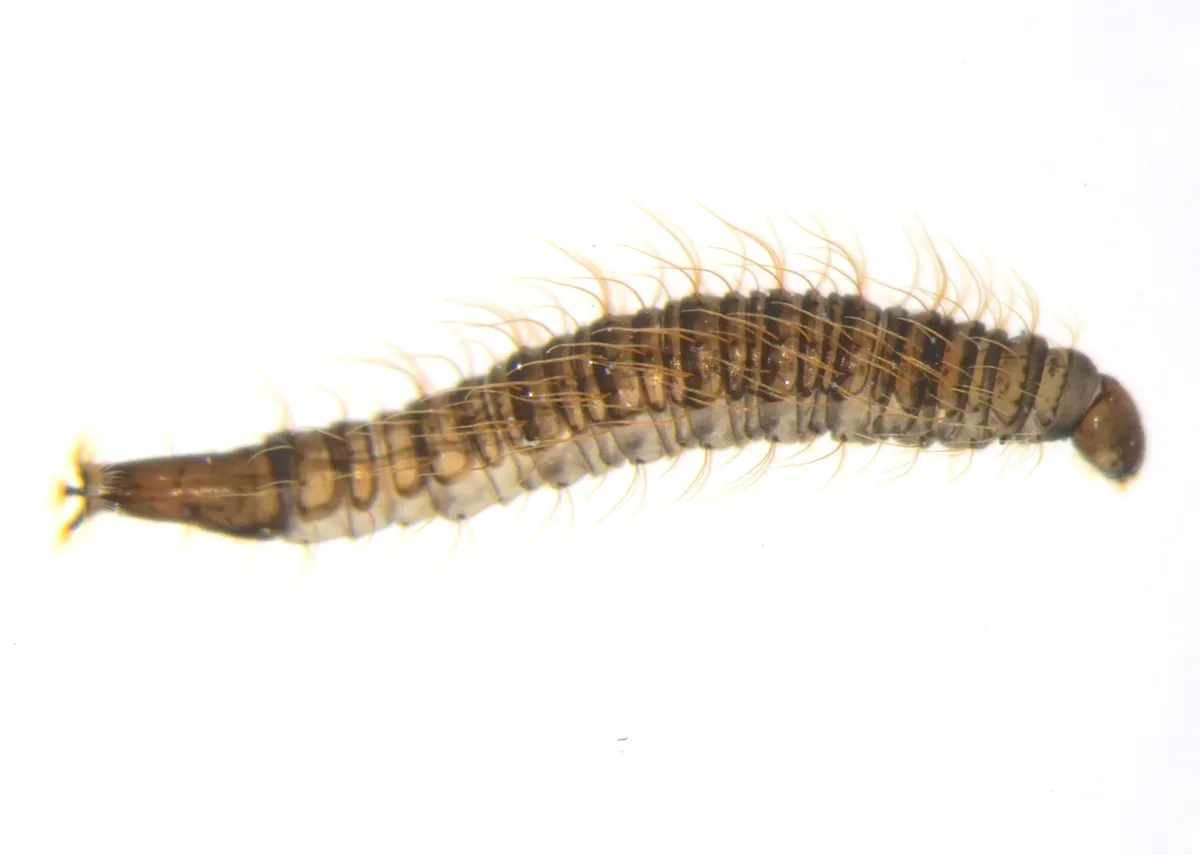
If you found small dark worms in a sink, tub, shower or toilet, compare them with these larvae: short, banded and legless, in or near the slime, fits a drain fly. UC IPM says the eggs hatch in about 48 hours and the whole life cycle takes as little as 8 days or as long as 24, depending on temperature, so a breeding drain keeps producing adults week after week.
Where do drain flies come from?
From the slimy film inside drains and from anywhere else wet organic matter collects. UC IPM says females lay their eggs in moist to nearly saturated organic matter and that in homes the most common breeding sites are bathroom drains. University of Minnesota Extension's guide to flies says moth flies are commonly found in the gelatinous film in sink, shower and bathtub drains. The sources list these other spots:
- Drains and toilets that sit unused. The University of Arkansas says drain flies mostly live in drains used infrequently, such as a guest bathroom shower, and Kentucky lists the slime layer in rarely used toilet bowls and tanks and in sink or floor drains in basements or garages.
- Drip and condensate pans. Kentucky names drain pans under refrigerators, and Texas A&M adds air conditioner and refrigerator condensate pans.
- Overflows and shower pans. Penn State checks the overflow outlet as well as the drain, and Arkansas lists leaky shower pans among the breeding sites.
- Cracks and corners. Texas A&M lists wet cracks in the floor, broken or cracked tile, the tracks of sliding glass doors, the bottoms of garbage cans and dirty floor drains.
- Below the floor. UC IPM says drain flies have been found developing in elevator pits, around sump pumps and in material beneath leaking drain and sewage pipes, and Arkansas says larvae can come in from sewer pipes that burp or back up into a home.
- Outdoors. Kentucky says they also breed outdoors in summer, in low, wet areas where air conditioners drain and in clogged gutters, and come in through open doors and windows.
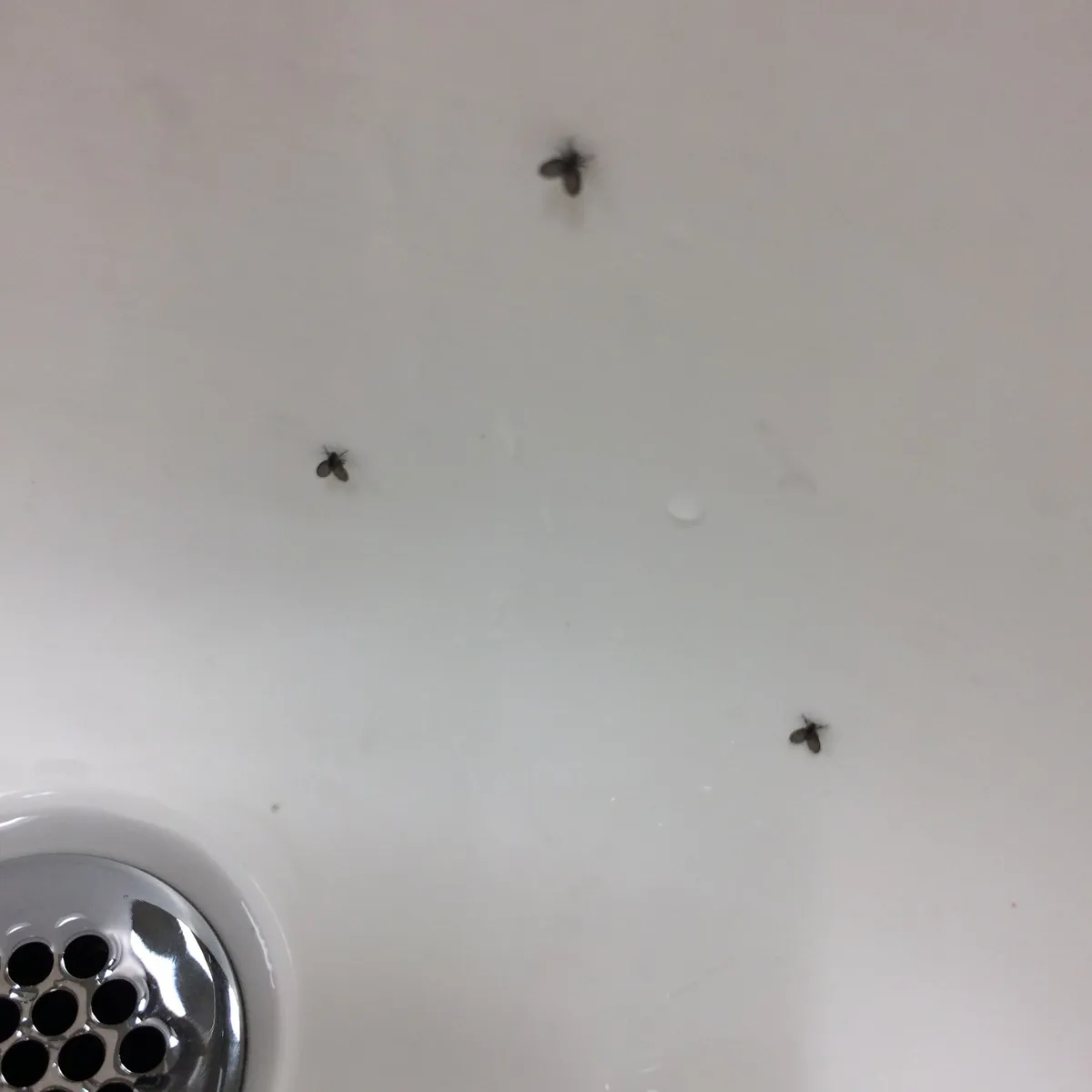
Why now? Kentucky says drain flies are often a temporary problem, seen most commonly after returning home from a vacation, because they develop in standing water, and that they usually disappear soon after normal household activity resumes and water moves through toilets and drain traps again. Finding many flies over several weeks, it says, usually means a more permanent breeding site that has to be found and eliminated.
How do you find which drain the flies are coming from?
Test each drain. UC IPM says adults resting in a drain or on the walls near it are a clear sign that the drain is a breeding site, because these weak flyers often stay close to where they developed, and that flies may be coming from more than one drain, so check every drain in the room.
Four ways to find the breeding drain
- Cup test. Coat the inside of a clear cup or jar with petroleum jelly or vegetable oil and turn it upside down over the drain opening. UC IPM leaves it 24 hours on every drain in the room; Kentucky leaves it several days. Flies stuck inside mean that drain is breeding them.
- Tape test. Texas A&M lays a strip of clear packing tape across the drain without covering the opening completely, so air still moves; flies stuck to the tape mark the source. UMN tapes over the openings sticky side down.
- Overflows. Penn State tapes a plastic bag over the overflow outlet, the small opening near the top of a sink or tub, and checks it at intervals for adult flies.
- Look in the slime. UC IPM suggests lifting the drain plate and scraping slime from the sides of the drain with a dull knife or a similar tool that reaches several inches in, then looking for larvae in what comes out.
If no drain is breeding them, widen the search. UC IPM says to look at other wet organic material in the house, then at pipes in crawlspaces, wall voids and under concrete slabs for breaks or leaks. It also notes that flies can blow in from an outside source such as a sewage treatment plant, in which case more of them are usually found outdoors than indoors.
How do you get rid of drain flies?
Clean out the film they breed in. UMN says the best control is to remove the source, UC IPM calls eliminating breeding sites the key, and Kentucky says the most effective method is to clean pipes and traps thoroughly to remove the accumulated slime. Work through each breeding drain you found:
- Scrub the drain. UMN says to remove the gelatinous gunk with a brush with stiff bristles. UC IPM uses a hard bristle brush with an industrial drain cleaner and says a slow drain may need snaking first; Penn State cleans sinks, drain pipes and traps with a stiff wire brush or by steam.
- Clear the trap. For a sink with a J-shaped trap underneath, UC IPM says to remove the trap, clear out the debris, then run water through the drain to make sure it flows freely.
- Rinse it. After scrubbing, Texas A&M flushes the lines with hot to boiling water to carry out what is left. That rinse follows the scrubbing; it does not replace it.
- Or use a product that breaks the film down. UMN suggests a biological drain cleaner that breaks down and removes the organic material, and Penn State products containing bacteria or enzymes, poured around the drain lip or injected as foam. Texas A&M says such drain treatments usually need repeat applications over several weeks and should be compatible with a septic system if you have one.
- Keep at it. The University of Arkansas says an infested drain needs thorough cleaning and maintenance for at least 3 weeks or longer to break the life cycle, and that flies can come from more than one drain at once, so clean every drain nearby.
- Clean the other wet spots the search turned up, such as air conditioner and refrigerator condensate pans and cracked tile, which Texas A&M lists among the places drain flies breed.
Does boiling water or bleach get rid of drain flies?
Not for long. UC IPM calls it a common misconception that pouring boiling water or bleach down a drain will control drain flies: neither removes the organic film inside, and at best they give short-term control. UMN says hot or boiling water, bleach and chemical drain cleaners are not effective, and Texas A&M says chlorine bleach or drain cleaner is largely ineffective at removing the film.
The flies are built to survive a flood. Kentucky says hot water may give short-term control, but the larvae are difficult to drown because they trap air bubbles and can stay submerged for a day or more. Arkansas says the adults are covered with fine, water-repelling hairs that make them hard to drown as well.
Should you use insecticide for drain flies?
Usually not in a home. UC IPM says chemical control is generally unnecessary for drain flies, because it only works for a while unless the breeding sites are removed, and that insecticides for these flies in homes are particularly discouraged, since usually only one or a few drains are involved and cleaning them can give an effective long-term solution.
- Insecticides in drains. Kentucky says not to pour insecticides down drains to kill drain flies. The University of Arkansas says no insecticide products are registered for use in drains or sewer systems and that they can damage a sewer or septic system. Texas A&M says most insecticides are not labeled for drains and names one exception, the insect growth regulator S-hydroprene, used in drains as a spray or foam; it does not kill adult flies but keeps larvae from completing their development.
- Sprays for the adults you see. Kentucky says the few adults from a small, short-lived infestation can be killed with a swatter or a flying insect spray. Arkansas says killing adult flies is not effective control and that flying insect aerosols are not very effective and must be labeled for indoor use.
- Traps. Sticky fly paper and UV light traps catch some adults but will not eliminate an infestation, Arkansas says.
- The label is the law. EPA's introduction to pesticide labels says using a product in a manner inconsistent with its labeling is a violation of federal law, and UMN reminds readers that the area you treat must be listed on the label.
Are drain flies harmful?
They are mainly a nuisance. UC IPM says drain flies do not bite people or animals and cause no damage to structures or plants, but that because they develop in decaying matter in drains and sewage, they could carry germs to places where sterility matters, such as health care facilities and food preparation areas, and that in high numbers dead flies may break down into potential allergens. The University of Arkansas says they are not attracted to human foods and are not themselves necessarily unsanitary, though their presence points to a rich source of moist organic matter nearby.
Is it a drain fly or another small fly?
Drain flies are the fuzzy ones resting on walls near a drain. Texas A&M describes fruit flies as about 1/8 inch and stout, usually with reddish eyes, breeding in overripe produce, trash cans, recycling bins, mops and floor drains, and says fruit flies with black eyes, called dark-eyed fruit flies, breed more often in drains. It describes fungus gnats as slender, mosquito-like flies whose larvae mostly live in potting soil, though some kinds feed on films in drains, and phorid flies as humpbacked flies that often run and stop before taking wing and breed in decaying matter, including drain pipes, broken garbage disposals and soil around leaking sewer lines.
How to get rid of fruit flies covers the produce, trash and drain sources of fruit flies, how to get rid of gnats sorts all the small flies people call gnats, and the fungus gnat plan deals with the ones in houseplant soil. Despite the name, moth flies are not moths: small moths in a kitchen are more likely Indian meal moths, which UC IPM's Pest Note on pantry pests describes as 1/3 to 2/5 inch long with reddish-brown forewings that have a coppery luster on the outer two-thirds. Moths in the house sorts them.
Commonly confused with
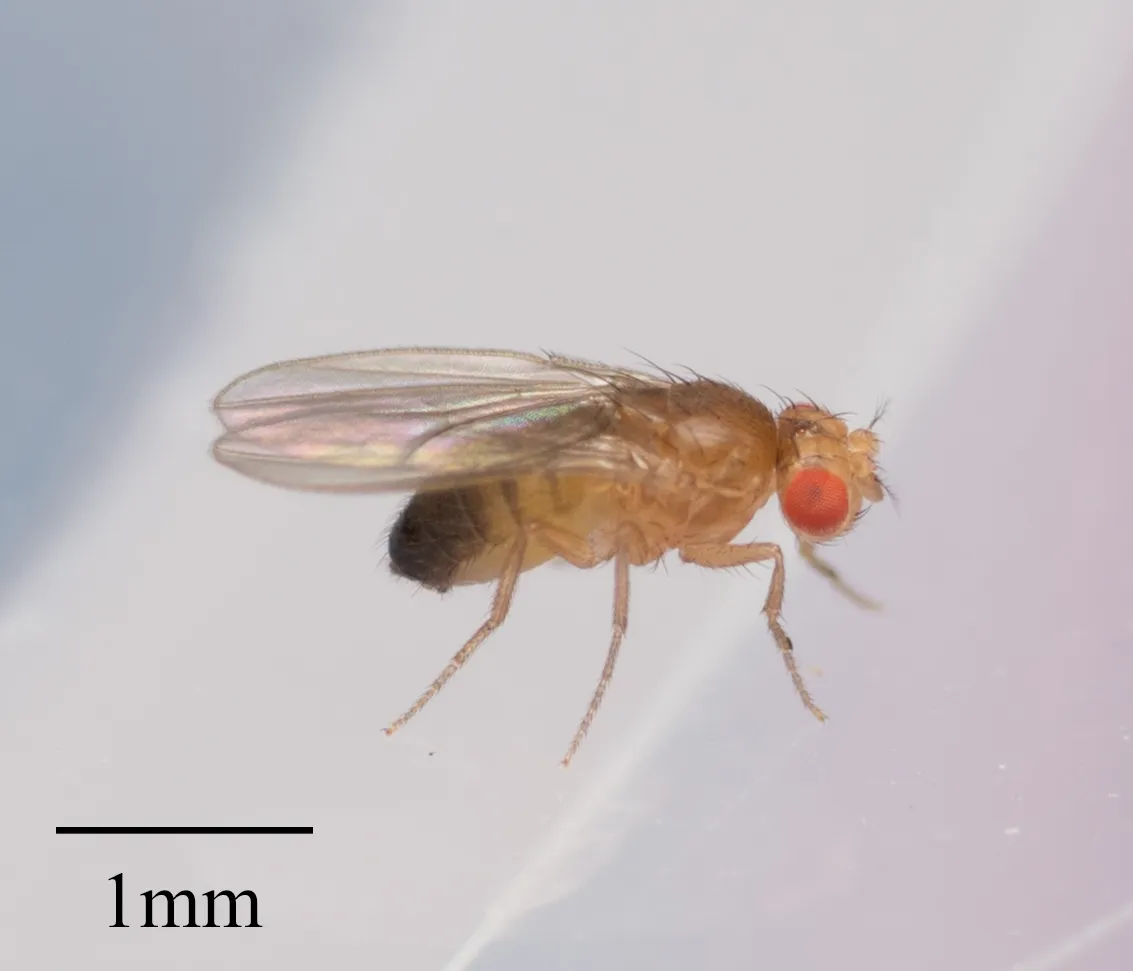 Fruit flyStout, about 1/8 inch, usually with reddish eyes; breeds in overripe produce and trash
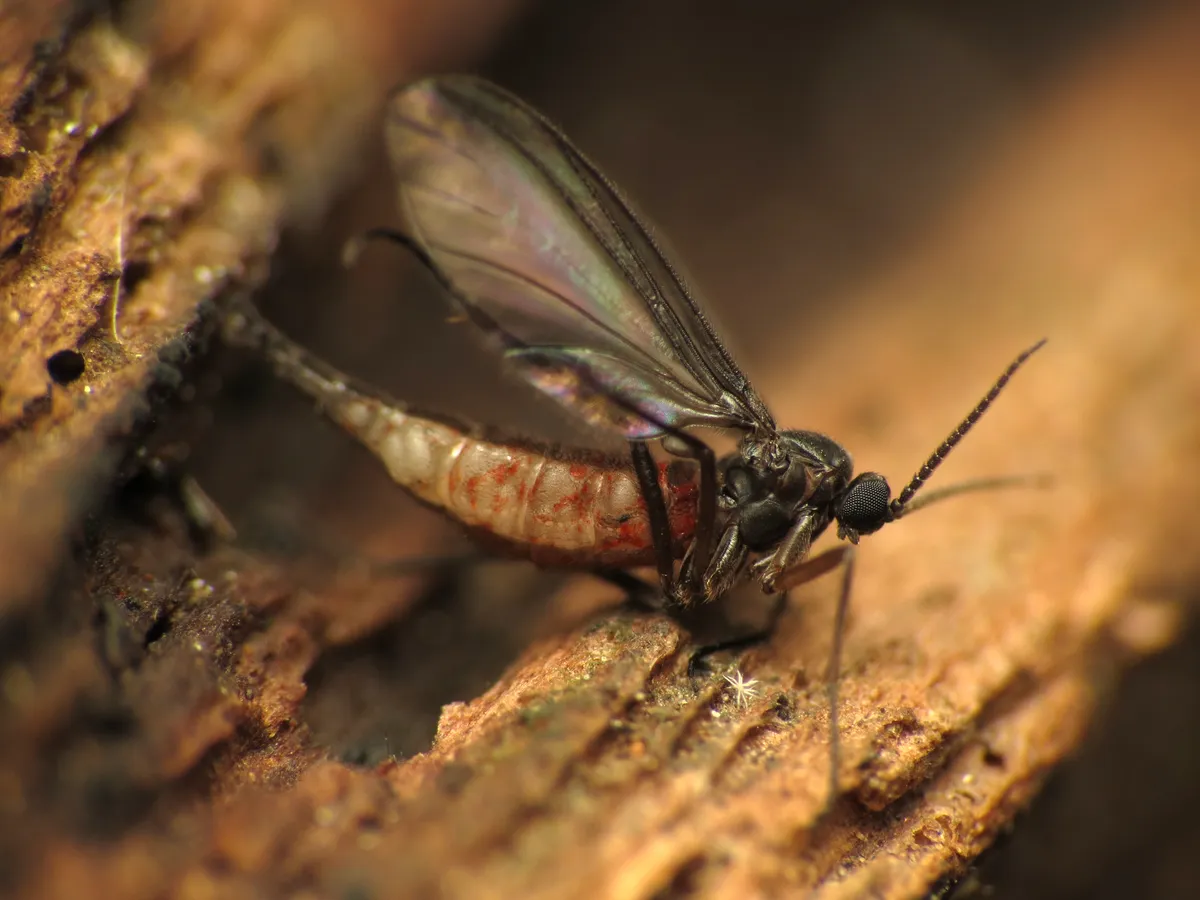 Fungus gnatSlender and mosquito-like, 1/16 to 1/8 inch; breeds mostly in moist potting soil
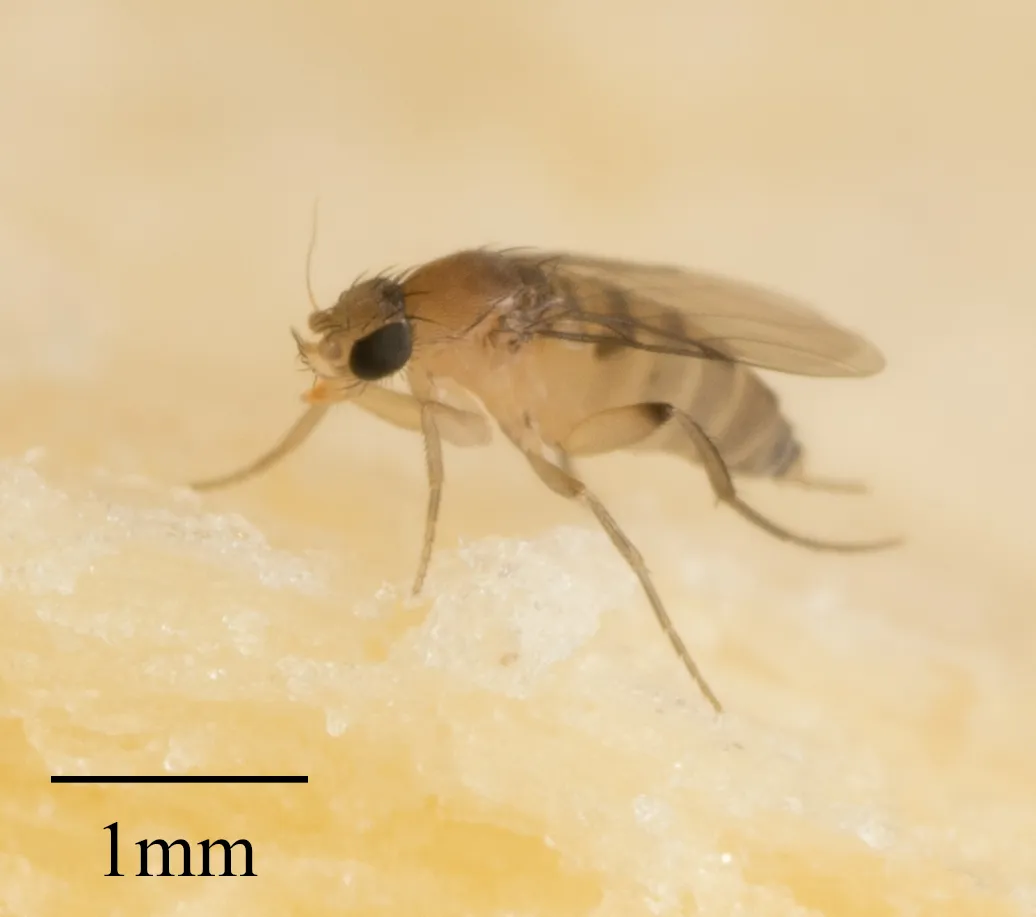 Phorid flyHumpbacked, about 1/8 inch; a good runner that breeds in decaying matter
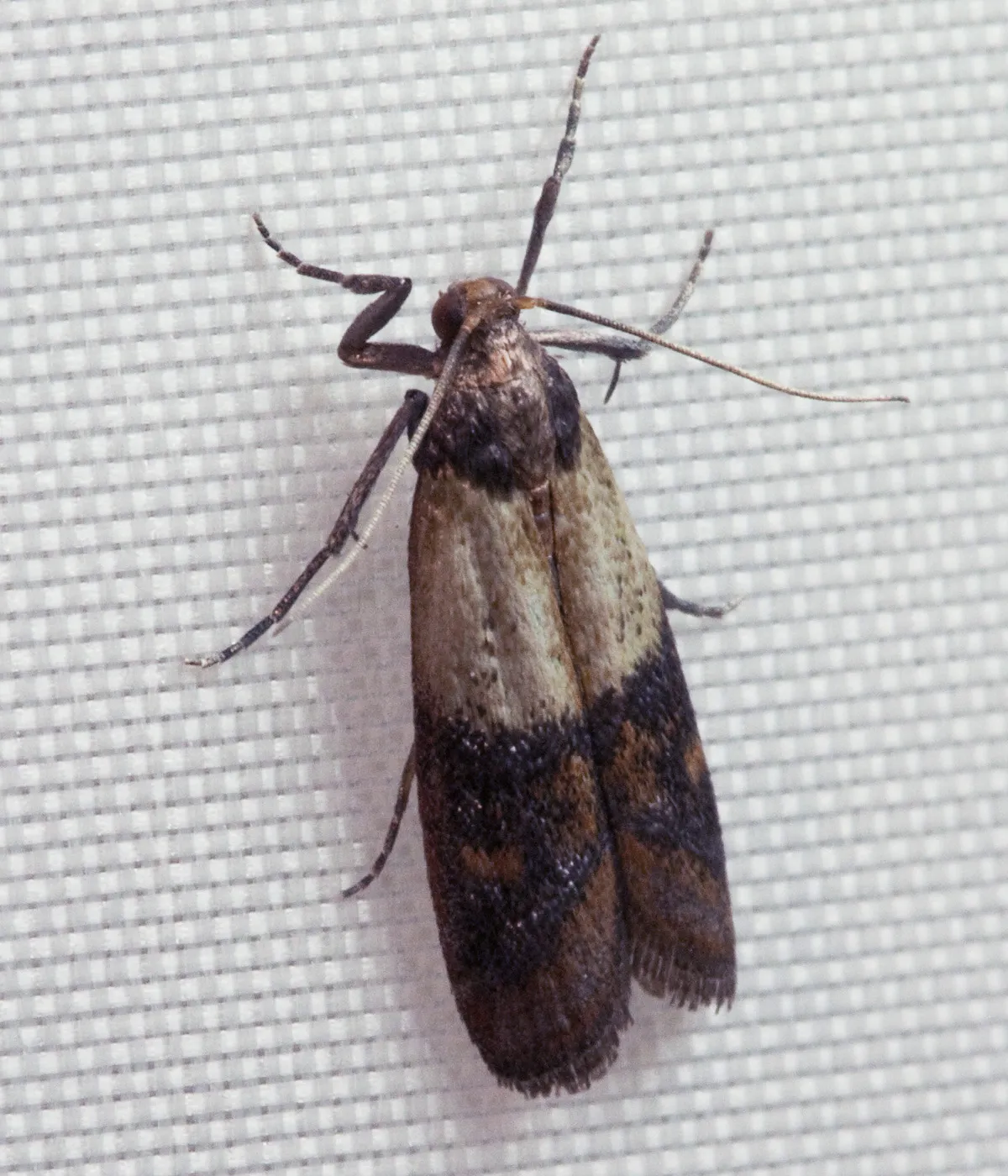 Indian meal mothA true moth, 1/3 to 2/5 inch, with coppery outer wings; found with stored food
Photos: Fruit fly: no rights reserved, via iNaturalist, CC0 1.0. Fungus gnat: Katja Schulz from Washington, D. C., USA, CC BY 2.0, via Wikimedia Commons, CC BY 2.0. Phorid fly: no rights reserved, via iNaturalist, CC0 1.0. Indian meal moth: Kaldari, CC0, via Wikimedia Commons, CC0 1.0.
How do you keep drain flies from coming back?
- Clean drains regularly, including the ones you rarely use. UC IPM says regular use of an enzymatic drain cleaner may help prevent the organic buildup drain flies breed in.
- Use the quiet drains and toilets. Kentucky says drain flies usually disappear once normal household activity resumes and water moves through toilets and drain traps again.
- Fix leaks and wet spots, such as leaky shower pans, which Arkansas lists, and dripping condensate pans and cracked tile, which Texas A&M lists.
- Screen windows and watch the lights. Arkansas says adults may come in through unscreened windows and can be attracted to lights at night, and UC IPM suggests placing outdoor lights away from doors.
- Call in help for hidden sources. If the flies keep coming after every drain is clean, Arkansas says a broken pipe or a leak under a slab or in a crawlspace may be the cause, and UC IPM says a professional pest control service should be contacted when the breeding site is inside a wall void or beneath the foundation.
For other small bugs in bathrooms and kitchens, browse the full library of pest guides. Readers in Canada can use the Canadian edition of this guide.
Use any pesticide exactly as its label directs. The label is the law, and what is registered and sold varies by state.
Frequently Asked Questions
Why do I suddenly have drain flies?+
Usually because water sat still somewhere. The University of Kentucky says drain flies develop in standing water, are most commonly seen after people return from a vacation, and usually disappear once water moves through toilets and drain traps again. The University of Arkansas says they mostly live in drains used infrequently, such as a guest bathroom shower. If you keep finding many flies over several weeks, Kentucky says there is probably a more permanent breeding site to find and clean.
Do drain flies bite?+
No. UC IPM says drain flies do not bite people or animals and cause no damage to structures or plants, and University of Minnesota Extension and the University of Arkansas also say they do not bite people. They are mainly a nuisance. UC IPM adds that because they develop in decaying matter in drains and sewage, they could carry germs to places where sterility matters, such as food preparation areas, and that in high numbers dead flies may break down into potential allergens.
How long do drain flies live?+
The adults live about two weeks: the University of Arkansas says around 12 days, and Texas A&M AgriLife Extension says as long as 2 weeks. The whole life cycle, from egg to adult, takes as little as 8 days or as long as 24 days depending on temperature, UC IPM says, and the University of Kentucky gives about 10 to 15 days at about 70°F. That is why a drain keeps producing new adults until the slime they breed in is cleaned out.
Can drain flies come from the toilet?+
Yes, especially one that is rarely used. The University of Kentucky lists the slime layer that forms along the water surface in infrequently used toilet bowls and tanks as a common indoor breeding site, and the University of Arkansas includes toilets among the places organic matter builds up in dark, wet conditions. Kentucky says drain flies often show up after a vacation and usually disappear once water moves through toilets and drain traps again.
What kills drain flies instantly?+
A swatter or a flying insect spray will kill the adults you can see, the University of Kentucky says, but that does not end an infestation. The University of Arkansas says killing adult flies is not effective control, because new adults keep emerging from the drain. UC IPM says control is only temporary unless the breeding sites are removed. Scrub the slime out of the breeding drain with a stiff brush, or use a biological or enzyme drain product, as extension sources advise.
Will vinegar and baking soda get rid of drain flies?+
None of the extension sources cited here recommends it. What they recommend is removing the slimy film the larvae live in: scrubbing the drain with a stiff brush, as University of Minnesota Extension and UC IPM advise, or a drain product containing bacteria or enzymes that breaks the film down, as Penn State describes. UC IPM says pouring boiling water or bleach down a drain gives at best short-term control because neither removes the film.
How long does it take to get rid of drain flies?+
Plan on several weeks. The University of Arkansas says an infested drain needs thorough cleaning and maintenance for at least 3 weeks or longer to break the life cycle, and Texas A&M AgriLife Extension says drain products that break down the film usually need repeat applications over several weeks. UC IPM says the life cycle can take as long as 24 days, so flies already developing may keep appearing for a while after the drain is clean.
Why do I still have drain flies after cleaning the drain?+
Something else may still be breeding them. UC IPM and the University of Arkansas say flies may be coming from more than one drain, so test and clean every drain in the room. Texas A&M lists other spots, such as condensate pans, cracked tile and the bottoms of garbage cans. If every drain is clean, Arkansas says the cause can be a broken pipe or a leak under a slab or in a crawlspace, and UC IPM suggests calling a professional when the source is inside a wall or under the foundation.
Do drain flies mean my house is dirty?+
Not necessarily. The University of Arkansas says drain flies are not themselves necessarily unsanitary and are not attracted to human foods, but that their presence points to a rich source of moist organic material in stagnant water nearby. The University of Kentucky says they are often a temporary problem after a vacation, when water has stood in toilets and drain traps. A clean-looking bathroom can still have slime inside a drain pipe, where the larvae live.
What is the difference between drain flies and fruit flies?+
Drain flies are fuzzy and moth-like, while fruit flies are stout and usually red-eyed. Texas A&M AgriLife Extension describes drain flies as grayish and densely hairy, with broad wings held flat or like a roof, breeding in the film inside drains, and fruit flies as about 1/8 inch and stout, breeding in overripe produce, trash and recycling. It notes that dark-eyed fruit flies breed more often in drains, so a fly from a drain is not always a drain fly.
Sources
- Pest Notes: Moth or Drain Flies (UC ANR Publication 74167; D. Theuret and A. C. Gerry, updated March 2014) — University of California Statewide IPM Program
- ENTFACT-615: Drain Flies or Moth Flies (Lee Townsend, revised March 2026) — University of Kentucky Department of Entomology
- Flies (Jeffrey Hahn and Valerie Cervenka, reviewed 2024) — University of Minnesota Extension
- Indoor Flies and Their Control (ENTO-050; Michael Merchant) — Texas A&M AgriLife Extension Service
- Moth Flies in the Home (Steve Jacobs, updated June 24, 2026) — Penn State Extension
- Drain Flies: What are they? How do I get rid of them? — University of Arkansas System Division of Agriculture, Cooperative Extension Service
- Pest Notes: Pantry Pests (UC ANR Publication 7452; D. H. Choe, updated March 2013) — University of California Statewide IPM Program
- Introduction to Pesticide Labels (updated June 2, 2026) — U.S. Environmental Protection Agency
How this guide was made: it was researched and drafted with AI assistance from the sources listed above. A second, independent AI pass then checked each factual claim against those sources. Found an error? Email support@buzzskito.ca.