
Reviewed by Alex Francisco
Published November 6, 2026 · Fact-checked against the sources listed below
What does a mosquito bite look like?
Most mosquito bites are round, raised, itchy bumps on skin the mosquito could reach. Mayo Clinic's mosquito bite page describes an itchy, inflamed bump that forms a few minutes after the bite, often on parts of the body that clothing does not cover, and says the bumps usually go away without treatment in a few days. Cleveland Clinic describes a small, raised bump that may change color.
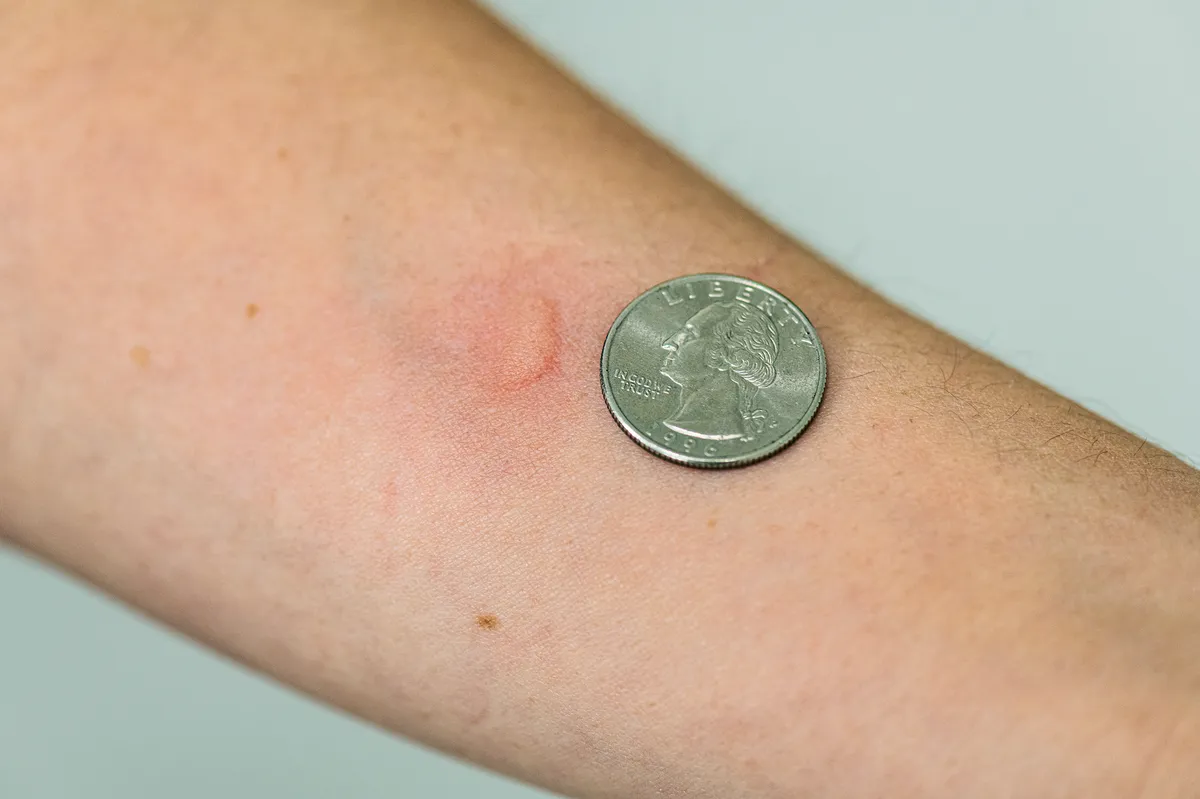
Look for more than one. The American Academy of Pediatrics' KidsDoc symptom checker (AAP) says to suspect mosquito bites if there are bites on other parts of the body, and that most bites land on exposed skin such as the face and arms. Bites lined up in a neat row or zigzag can point to other suspects, covered further down.
A photo can point to mosquitoes but cannot prove them. UC Statewide IPM's guide to unexplained itching says bed bugs, fleas, mites and mosquitoes can all cause bite marks, swelling and itching, and that confirming the cause takes a specimen identified by a trained entomologist. The bug bite identification chart compares the common bites side by side.
What does a mosquito bite look like in the first minutes, hours and days?
It changes over the first day, which is why one bite can look like two different things. These stages come from CDC, Mayo Clinic and two allergy reviews. How long the itch lasts, day by day, is covered in why mosquito bites itch and how long they last.
In the first minutes: a puffy wheal
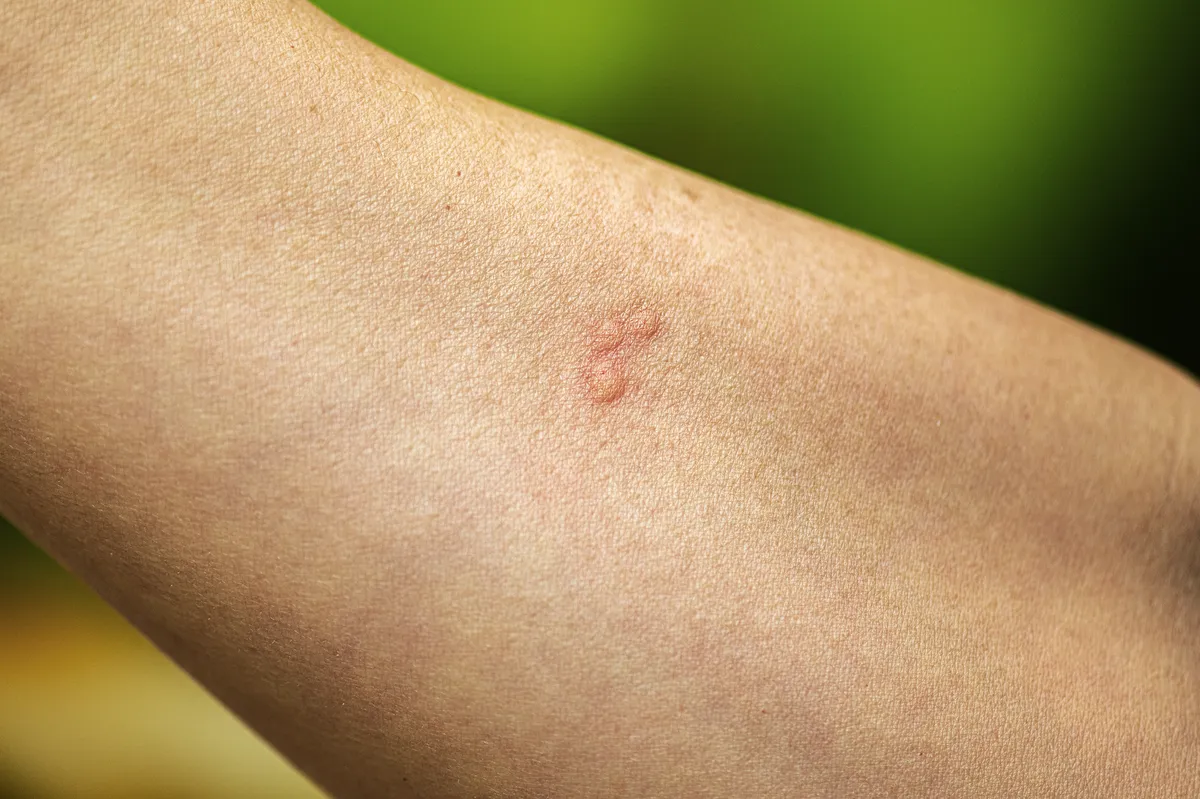
CDC's page on mosquito bites describes a puffy, reddish bump a few minutes after the bite. A 2022 review in Frontiers in Immunology puts that first bump, a round wheal ringed by redness, at about 1/16 to 3/8 inch (2 to 10 mm) across, peaking 20 to 30 minutes after the bite. A 2020 review in Allergologie Select says this quick reaction of wheals, redness and itching appears within a few minutes.
Within a day: a harder, darker bump
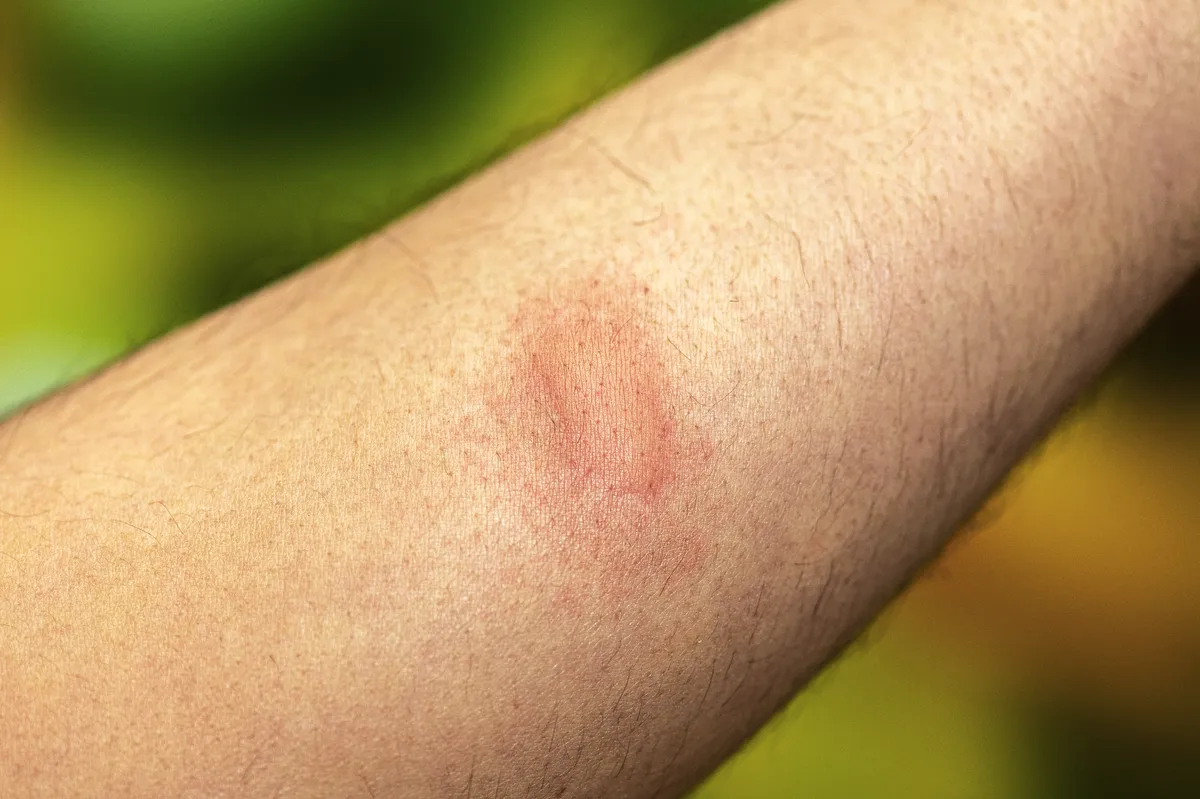
CDC says a hard, itchy, reddish-brown bump, or several, appears a day or so after the bites, and Mayo Clinic describes a painful spot that looks like a hive forming within 24 hours. The Frontiers review says these delayed bumps are about the same size as the first ones and peak 24 to 36 hours after the bite; the Allergologie Select review describes a firm bump that develops after 12 to 24 hours and lasts several days.
Over the next few days: fading
The bump then flattens and fades. The Frontiers review says the delayed bumps gradually disappear over several days. A bite that keeps spreading or gets more painful instead is not following the usual course; the section on when a bite needs a doctor, below, lists what to watch for.
Why do mosquito bites look different on different people?
Because the reaction is the body's, not the mosquito's. Cleveland Clinic's mosquito bite page explains that the body treats mosquito saliva as an allergen and releases histamine, which makes the bite itch and swell. How strongly you react depends partly on how many bites you have had, in a sequence first described in 1946 and summarized in the Frontiers review:
- Stage 1: the first bites leave a small red spot, and AAAAI says people who have never been bitten, mainly young children, may not react at all.
- Stage 2: later bites cause only the delayed bump.
- Stage 3: both the quick wheal and the delayed bump.
- Stage 4: only the quick wheal.
- Stage 5: no reaction to either.
Few people reach the end of that sequence. The Allergologie Select review says that, with average exposure, 80 to 90 percent of children and adults stay in stages 2 to 4 for decades and only about 5 percent become tolerant. CDC adds that reactions can be stronger in children, in adults bitten by a kind of mosquito they have not been exposed to before, and in people with immune system disorders. Why some people get more bites in the first place is a separate question, covered in why mosquitoes bite some people more.
Does a mosquito bite have a dot in the middle?
Sometimes. Cleveland Clinic says you can sometimes see a small, dark spot in the center of the raised bump, and that the dark spot is where the bite occurred. AAP's checker adds that some bites have small water blisters in the center.
The bump itself can look paler than the redness around it. The Frontiers review describes the first reaction as a wheal surrounded by redness, and the American Academy of Dermatology's page on hives (AAD), which mosquito bites often resemble, says a hive with a lot of swelling can look white.
What do mosquito bites look like on darker skin?
They can show more as raised bumps than as red ones. Most descriptions of bites, CDC's included, use words like reddish, but on brown and black skin the color can be subtle: in the CDC photo below, the welts on dark brown skin stand out as raised bumps with little visible redness. AAP says mosquito bites often look like hives, and the AAD says hives on darker skin are often the same color as the skin or slightly darker or lighter, while people with light or medium skin usually see red or pink.
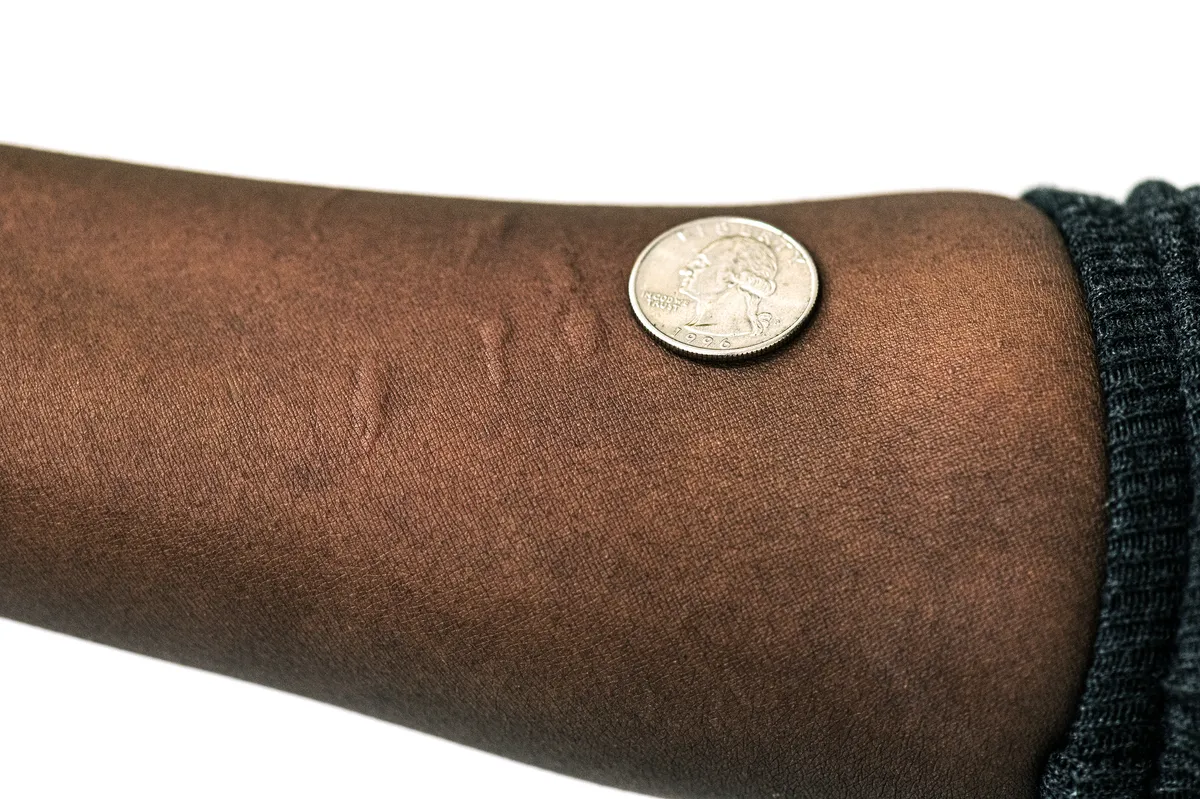
Bites can also leave marks. CDC lists dark spots that look like bruises among the possible reactions, and the AAD's guide to dark spots in darker skin tones names a healed insect bite wound among the causes. It says a spot a few shades darker than your natural skin color usually fades within 6 to 12 months, that color lying deep in the skin can take years, and that treatment begins with sunscreen.
The clues that do not depend on color still apply on any skin tone: a raised, itchy bump and, AAP notes, more bites on other uncovered skin.
What do mosquito bites look like on the face, eyelids, lips and feet?
The bite is the same anywhere; how much the skin around it swells is not.
Face and eyelids
A bite near the eye can swell a lot. AAP's checker says bites of the upper face can cause severe swelling around the eye that lasts several days and can be pink as well as large, especially at ages 1 to 5. It says this swelling does not hurt the vision and is harmless, and that it is often worse in the morning after a night lying down and improves after a few hours upright. Mayo Clinic lists swelling around the eyes among the signs of a severe reaction.
AAP's eyelid swelling checker says swelling of one eyelid is often due to an insect bite. It says to call the doctor or seek care now if both eyes are swollen shut or nearly shut, one eye is swollen shut or nearly shut with a fever, the outer eyelid is very red and swollen with a fever, or vision is lost or doubled. When to worry about a mosquito bite covers the other warning signs.
Lips
The AAD says deep swelling, called angioedema, commonly develops on the face, especially the eyelids or lips, and that it rarely itches but can feel painful, unlike an itchy bite. It lists swollen lips, tongue or face after a bite among the reasons to go to the emergency room immediately, along with trouble breathing or a throat that feels like it is closing.
Ankles and feet
Ankles and feet collect bites, and why mosquitoes go for the ankles explains why. Keep broken skin there clean: CDC's page on cellulitis, a bacterial skin infection, says it is most common on the feet and legs and that bites are among the breaks in the skin that let it start.
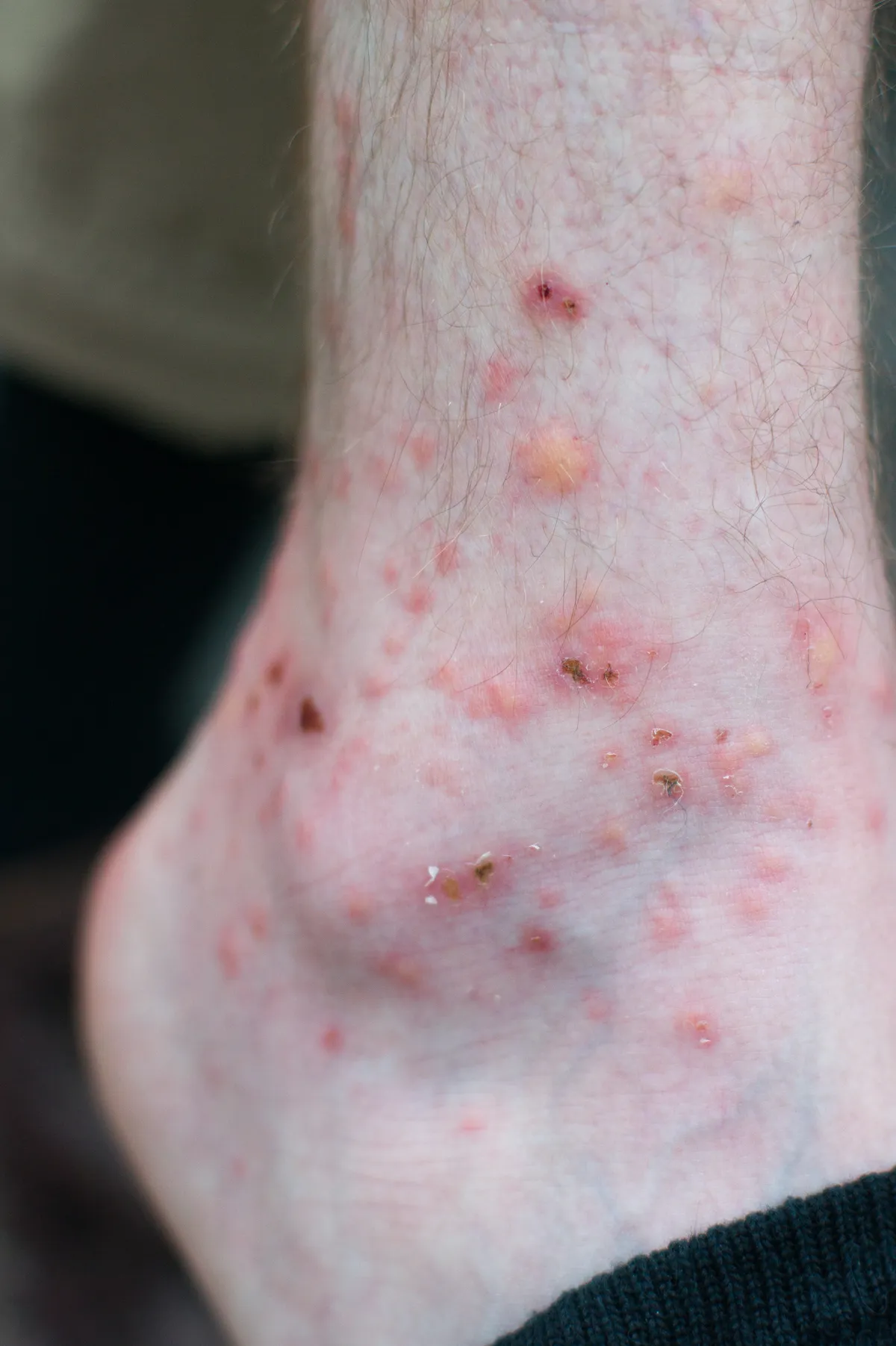
Bites can also turn up under clothing: Cleveland Clinic says mosquitoes can bite through thin clothes, and which fabrics they can bite through has its own guide.
What do mosquito bites look like on babies and toddlers?
Often bigger than on adults, and that is usually normal. AAP's checker says mosquito bites cause itchy red bumps that often look like hives, either one large one or several small ones. The bumps are usually smaller than 1/2 inch (12 mm) but can be larger in young children, and some have small water blisters in the center. A large hive at the bite does not mean the child has an allergy, it says.
Large reactions are very common in young children, according to the same checker: redness 2 to 4 inches (5 to 10 cm) across that starts right after the bite and can keep growing for 2 to 3 days. AAP calls this a harmless, local allergic reaction to mosquito saliva, not a severe allergic reaction (anaphylaxis) and not a sign of infection, and Mayo Clinic says children are more likely than adults to have a severe reaction. AAP says the itch and pinkness usually last 3 or 4 days and the swelling may last 7 days.
Infection looks different. AAP says infected bites are painful to touch, are not common and usually start in a bite the child has scratched or picked at, as an infected sore or scab. Babies who have never been bitten may not react at all, AAAAI says.
To keep bites off babies, CDC's advice on preventing mosquito bites is to dress children in clothing that covers their arms and legs and to cover strollers and baby carriers with mosquito netting. It says not to use products containing oil of lemon eucalyptus or para-menthane-diol on children under 3, and not to put repellent on a child's hands, eyes, mouth, cuts or irritated skin. How to keep mosquitoes away compares the repellents.
Can a mosquito bite blister?
Yes. CDC lists small blisters instead of hard bumps among the reactions to mosquito bites, Mayo Clinic lists small blisters among the usual symptoms, and AAP's checker says some bites have small water blisters in the center. Stronger reactions can blister too: AAAAI mentions blistering lesions, or larger hives with fever and joint swelling, in some people.
Leave blisters intact: AAAAI advises cleaning them with soap and water without breaking them. Cleveland Clinic's page on papular urticaria, an itchy reaction to bug bites, lists crust forming around blisters, yellow or green discharge, pain, fever and a wound that smells bad or feels warm as signs of infection to see a provider about right away.
What does a big, swollen mosquito bite look like?
A whole area swells instead of one bump. CDC says some people react more strongly, with a large area of swelling, soreness and redness, and lists low-grade fever, hives and swollen lymph nodes among the more severe reactions. Mayo Clinic says a bite that gets very swollen, sore and inflamed is sometimes called skeeter syndrome and is most common in children, and the Allergologie Select review describes delayed swellings more than 4 inches (10 cm) across. AAP's checker says any redness that starts in the first 24 hours is a reaction to the bite, not an infection; the page on telling a strong reaction from an infected bite goes through both.
Is it a mosquito bite or something else?
Look at the pattern, the place and the timing. These are the usual mix-ups, each with its own page:
- Bed bug bites. Cleveland Clinic says they look similar but often form a distinct line or zigzag on skin left bare while you sleep. Check the bed with the signs-of-bed-bugs checklist.
- Flea bites. Cleveland Clinic says they look similar too, appear more random because fleas jump, and are more likely if a pet spends time outside; flea bites has photos.
- Chigger bites. Cleveland Clinic's chigger page describes a speckled line of red spots or pimples where clothing fits tightly, such as waistbands and sock lines, itching most in the first 24 to 48 hours. See chigger bites.
- No-see-um bites. Clemson Extension says a biting midge leaves an itchy, raised spot very similar to a mosquito bite; the midges are about 1/16 inch long, rarely seen and feed mainly early and late in the day near swamps, marshes and ponds. See gnat and no-see-um bites.
- A tick bite. CDC's Lyme disease page says a small bump or redness that appears right away at a tick bite and resembles a mosquito bite is common, goes away in 1 to 2 days and is not a sign of Lyme disease; the rash to watch for starts 3 to 30 days later and slowly expands. See what a tick bite looks like.
- A spider bite. UC IPM's guide to spiders says people and their physicians often blame spiders for skin lesions without proof, and names mosquitoes among the biters mistaken for them. See mosquito bite vs spider bite.
- Hives. The AAD says an individual hive usually disappears within 24 hours while new ones can appear in other places, and that pressing on a hive turns it pale. A mosquito bite stays where it is and lasts days.
- Papular urticaria. Cleveland Clinic describes clusters of itchy bumps or hives near bug bites, mosquito bites included, or elsewhere on the body, more common in children; they can keep returning for months or years, and kids can grow out of it.
Itching with no bite at all has other causes too: UC IPM says itching and crawling sensations may come from many unrelated medical conditions, and carpet beetle rash covers one non-bite cause. The bug bite identifier asks six questions about your bites and names the likely biters.
Commonly confused with
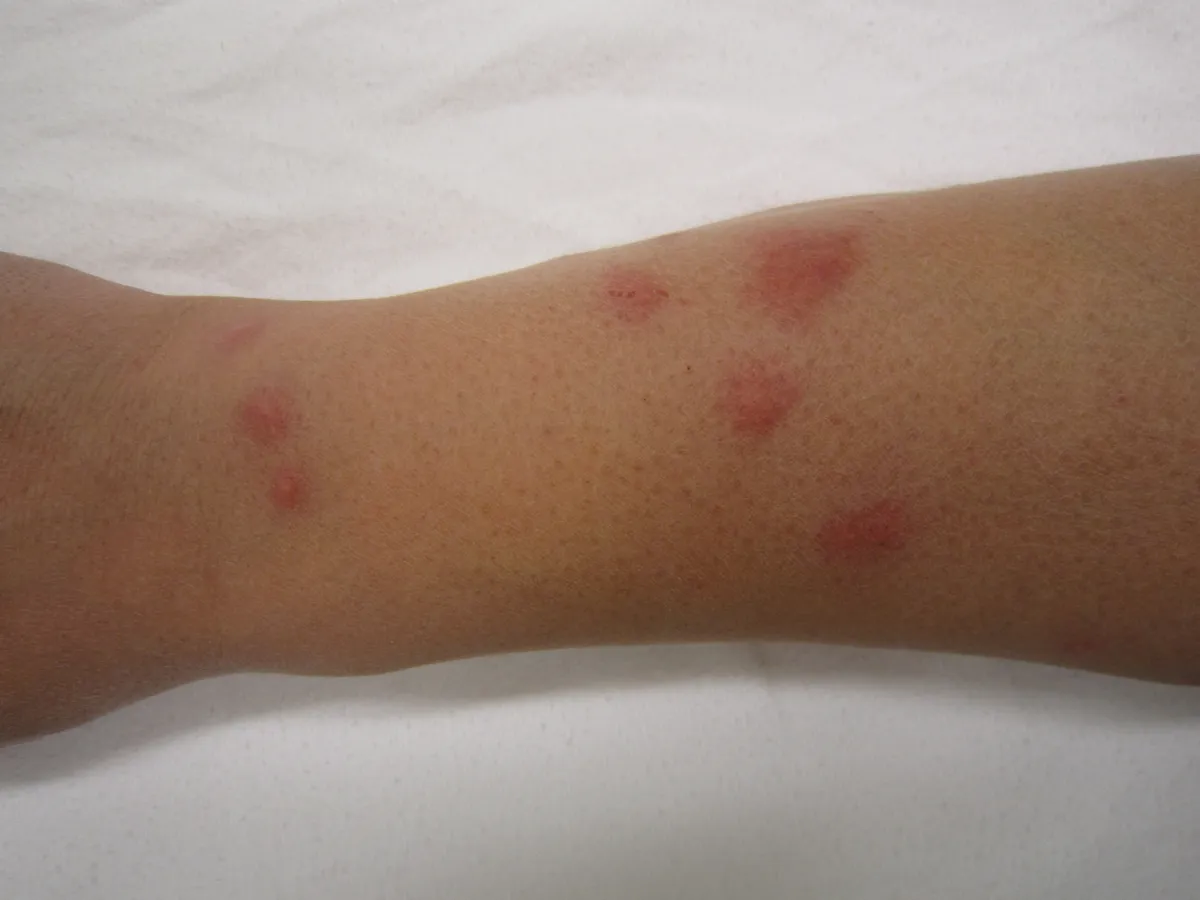 Bed bug bitesOften a line or zigzag on skin left bare in bed; look for the bugs' signs on the mattress
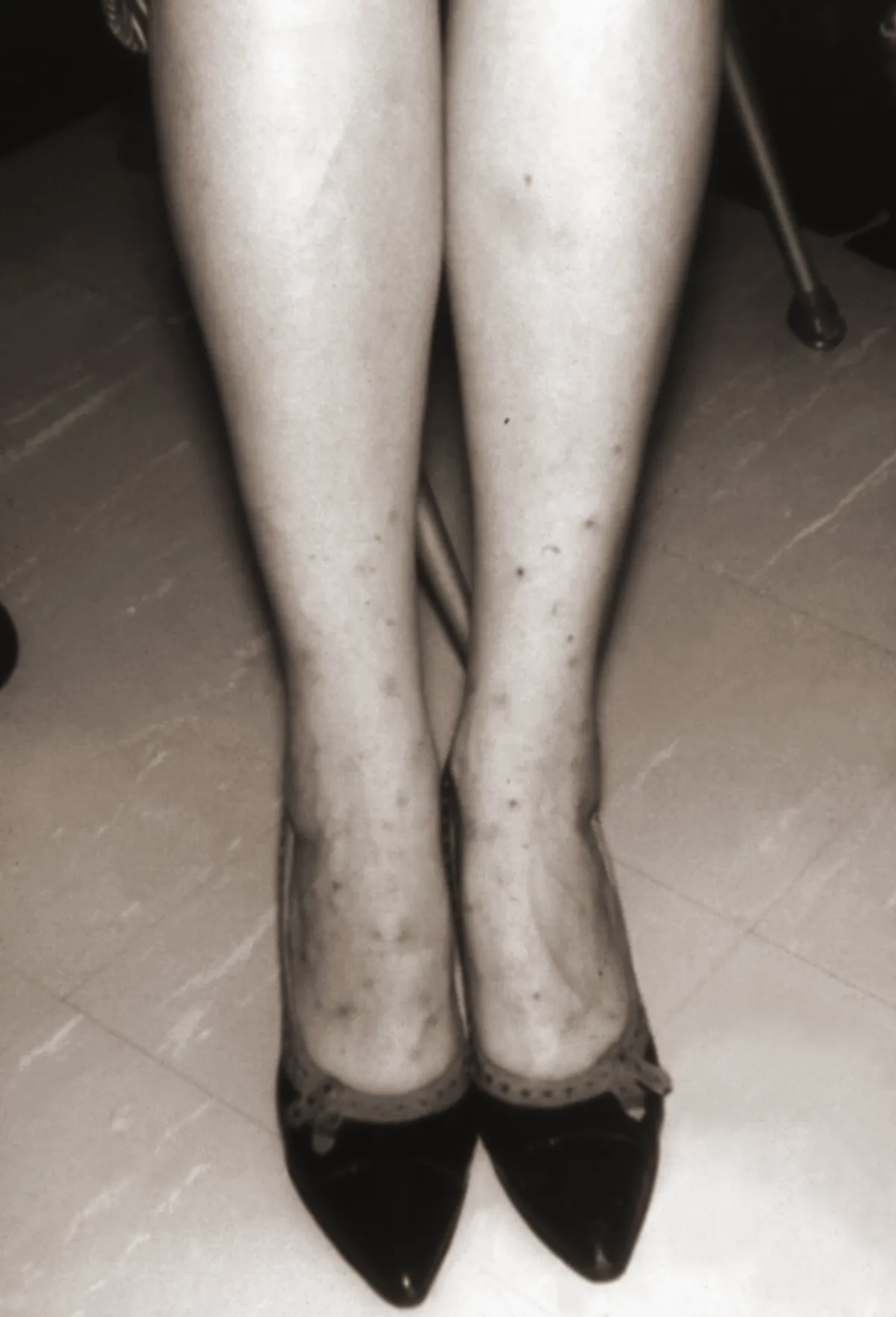 Flea bitesSmall bumps in a random scatter; more likely when pets spend time outside
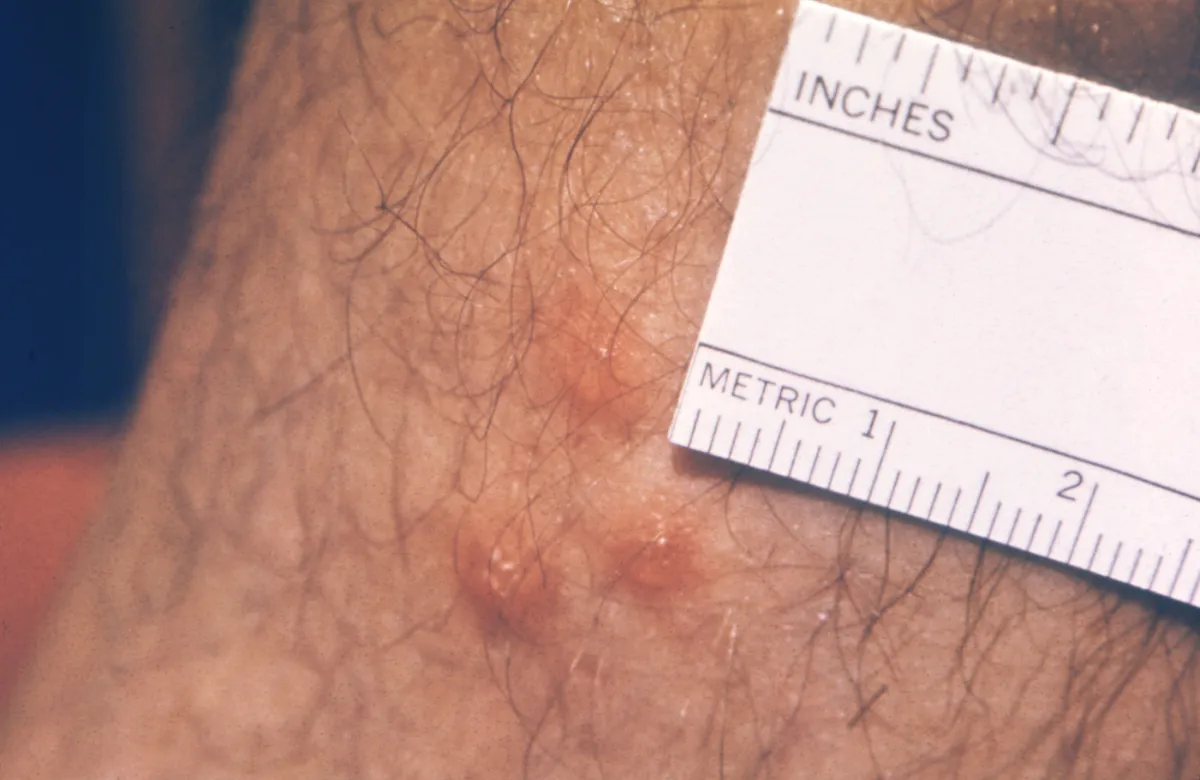 Chigger bitesA speckled line of red spots where clothing fits tightly, such as waistbands and sock lines
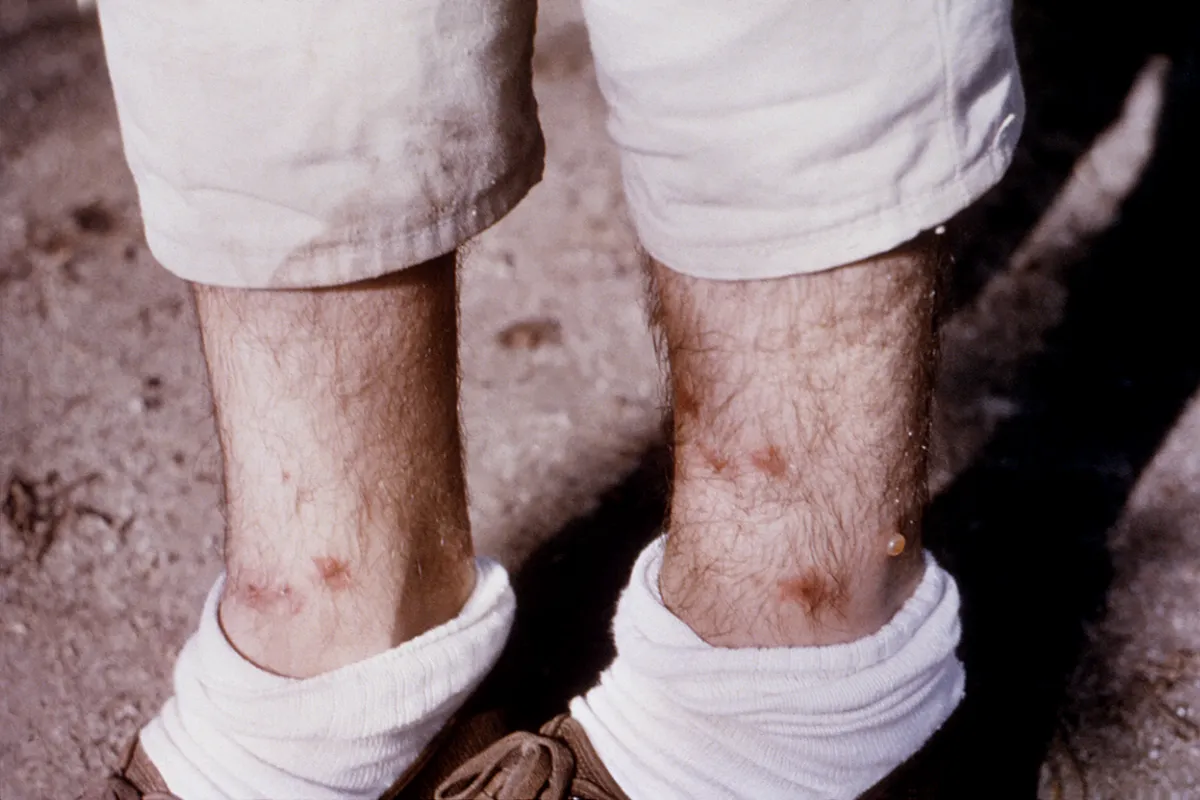 No-see-um bitesRaised, itchy spots much like mosquito bites, from midges about 1/16 inch long
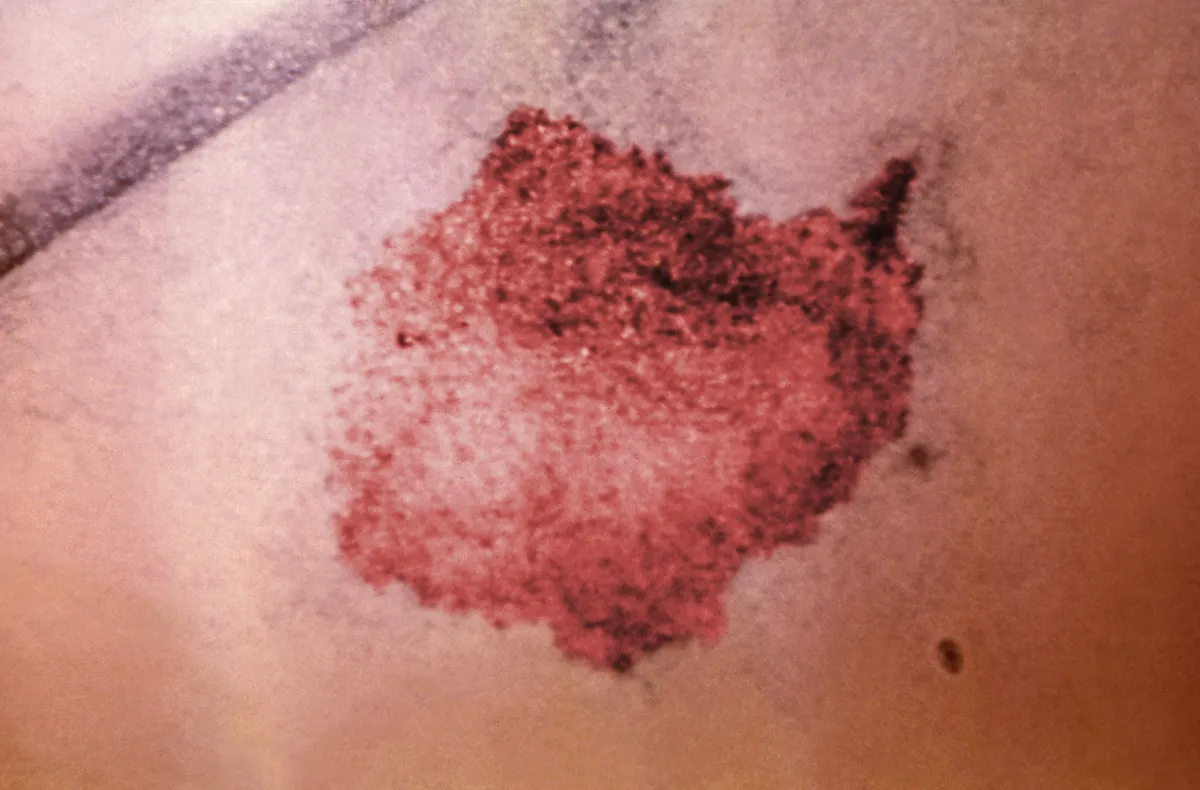 Spider biteOften blamed without proof; spiders rarely bite unless squeezed, lain on or provoked
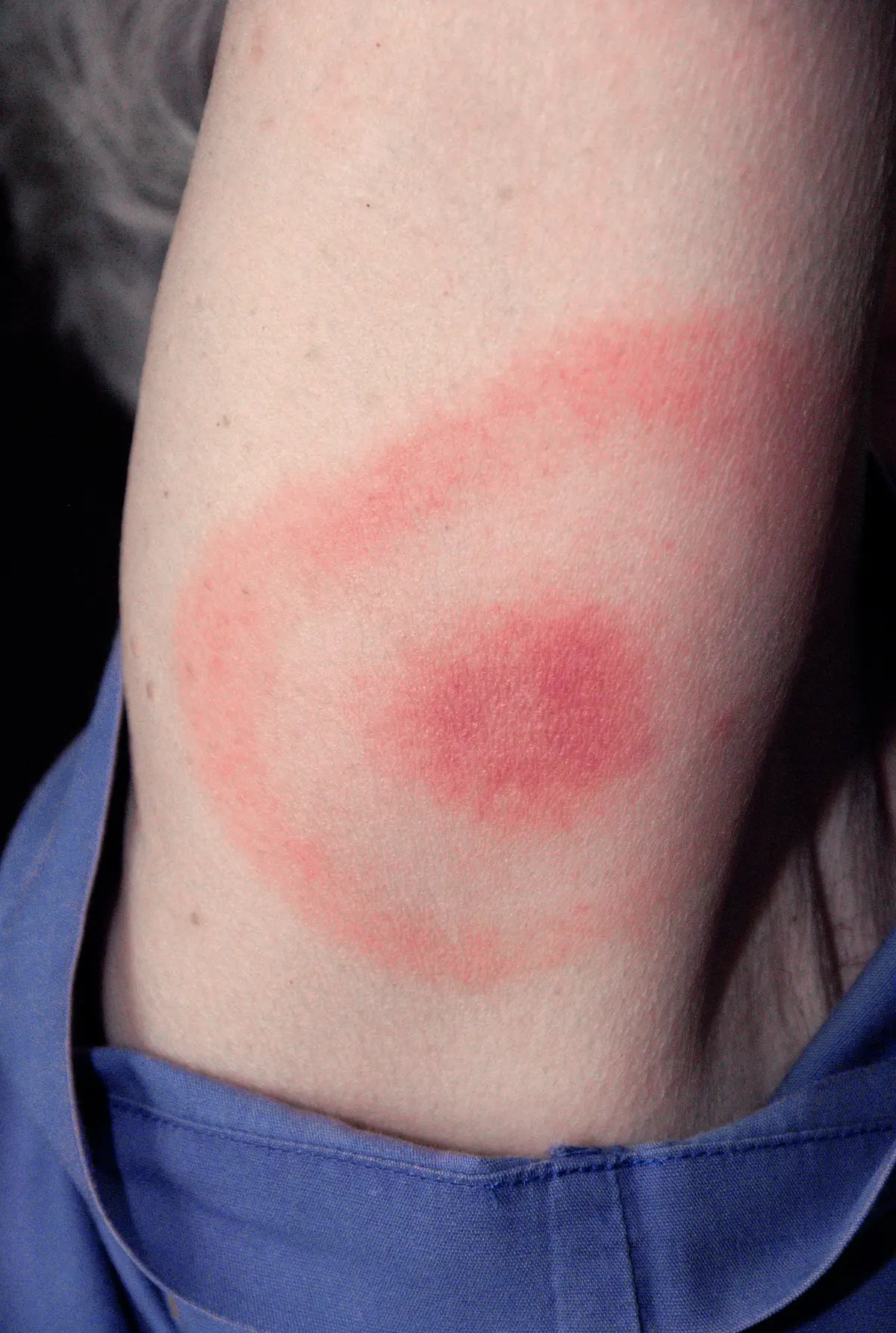 Tick bite rashA rash that starts 3 to 30 days after a tick bite and slowly expands
Photos: Bed bug bites: James Heilman, MD, CC BY-SA 3.0, via Wikimedia Commons, CC BY-SA 3.0. Flea bites: CDC/ Dr. H.G. Scott (CDC Public Health Image Library, phil.cdc.gov), public domain. Chigger bites: CDC/ M.A. Parsons (CDC Public Health Image Library, phil.cdc.gov), public domain. No-see-um bites: CDC/ Margaret Parsons; photo: C. L. Hogue (CDC Public Health Image Library, phil.cdc.gov), public domain. Spider bite: CDC/ Margaret A. Parsons (CDC Public Health Image Library, phil.cdc.gov), public domain. Tick bite rash: CDC/ James Gathany; photo: James Gathany (CDC Public Health Image Library, phil.cdc.gov), public domain.
When does a mosquito bite need a doctor?
Most do not, but a few need care. CDC says an infected bite may look red, feel warm or have a red streak spreading from it, and to see a healthcare provider if symptoms worsen. AAP's checker, written for children, says to contact a doctor within 24 hours for painful, spreading redness that starts more than 48 hours after the bite or redness still growing after 72 hours, and to seek care right away for a spreading red area or streak with fever.
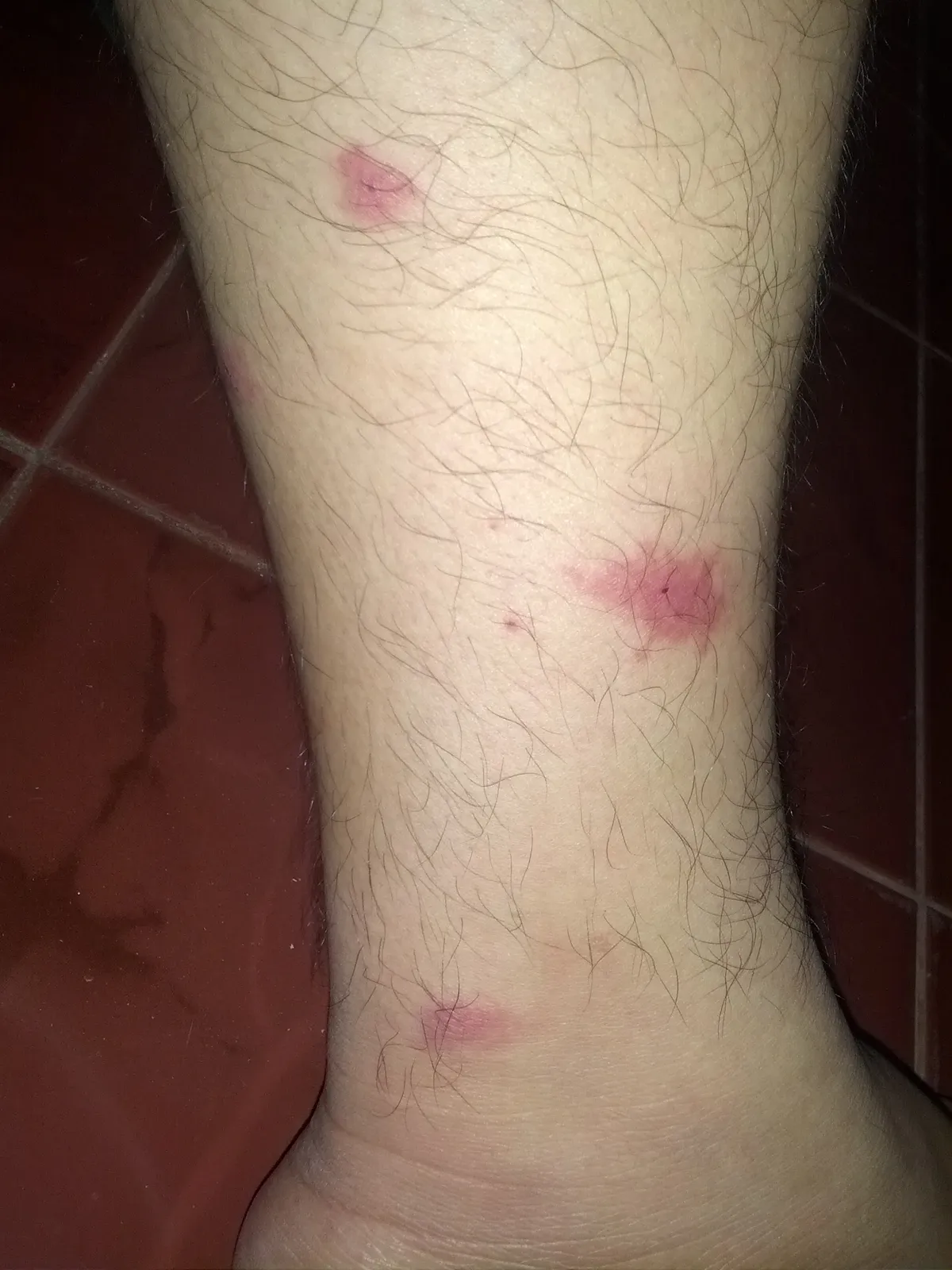
Mayo Clinic says to contact a health care provider if bites come with warning signs of a serious condition, such as a high fever, severe headache, body aches or signs of infection; West Nile virus symptoms explains one illness mosquitoes can spread.
How do you care for a mosquito bite while it heals?
Wash it, cool it and leave it alone. CDC's steps:
- Wash the bite and the skin around it with soap and water.
- Hold an ice pack on it for 10 minutes to reduce swelling and itching, and repeat as needed.
- Use an over-the-counter anti-itch or antihistamine cream, following the label directions.
- Don't scratch: scratched bites can become infected.
The American Academy of Dermatology says most bug bites can be treated at home with a hydrocortisone cream or ointment, or an oral antihistamine to reduce the itch. Use either as the package directs.
What should you do once you know it was a mosquito?
Stop the next bites. CDC lists the EPA-registered repellent ingredients (DEET, picaridin, IR3535, oil of lemon eucalyptus, para-menthane-diol and 2-undecanone) and suggests long sleeves and pants, clothing and gear treated with permethrin, and window screens without holes. The best mosquito repellents compares products by ingredient, what attracts mosquitoes to you explains why some people get more bites, and how to get rid of mosquitoes deals with the ones breeding around your home.
This guide is general educational information, not medical advice. If you have symptoms or concerns after a bite or exposure, contact a healthcare provider.
Frequently Asked Questions
Why are mosquito bites hard?+
Because the second, delayed reaction is firmer than the first. CDC describes a hard, itchy, reddish-brown bump that appears a day or so after the bite, and a 2020 allergy review in Allergologie Select describes a firm bump that develops 12 to 24 hours after the bite and lasts several days. The first bump, minutes after the bite, is a softer, puffy wheal. A bite that turns painful and warm after the second day and keeps spreading is different: CDC says an infected bite can look red, feel warm or show a red streak.
Can a mosquito bite you without leaving a bump?+
Yes. The American Academy of Allergy, Asthma and Immunology says people who have never been bitten before, mainly young children, may not react at all, and CDC says some people have only a mild reaction. Reactions also change with repeated bites: a 2022 review describes a final stage with no reaction, but a 2020 review says only about 5 percent of people reach that kind of tolerance, while 80 to 90 percent keep reacting for decades.
Why do I wake up with mosquito bites?+
Mosquitoes can bite at night and indoors. Mayo Clinic says they bite during both day and night and can live indoors, so bites that appear by morning can be mosquito bites. A pattern helps: Cleveland Clinic says bed bug bites often form a distinct line or zigzag on skin left bare while you sleep. CDC suggests window and door screens without holes, and air conditioning if available, to keep mosquitoes out of the house.
Do mosquito bites come in a line?+
A neat line can point to other biters. Cleveland Clinic says bed bug bites often form a distinct line or zigzag, and its chigger page describes a speckled line of red spots where clothing fits tightly, such as waistbands and sock lines. Mosquito bites, the American Academy of Pediatrics notes, tend to turn up on several parts of the body, mostly uncovered skin such as the face and arms. Several mosquito bites can still sit close together, as in CDC's photo of three bites on one forearm.
What does a scratched mosquito bite look like?+
It can look redder or broken open. CDC warns that scratched bites can become infected, and the American Academy of Pediatrics says scratching or picking at bites can cause impetigo, a local bacterial infection that gives sores, soft scabs and pus. It says infected bites are painful to touch. CDC says an infected bite may look red, feel warm or have a red streak spreading from it, and to see a healthcare provider if symptoms worsen.
Can mosquito bites turn into hives all over the body?+
Rarely. The American Academy of Pediatrics says a single bite often looks like hives, either one large one or several small ones, and CDC lists hives among more severe reactions. Hives spreading over the body with throat swelling, faintness or wheezing can signal anaphylaxis, which the American Academy of Allergy, Asthma and Immunology says is rarely caused by mosquitoes but needs emergency medical treatment. Itchy bumps that keep returning near bites in a child may be papular urticaria, which Cleveland Clinic says children can outgrow.
Why did my mosquito bites look worse on vacation?+
New mosquitoes can mean bigger reactions. CDC says severe reactions can occur in adults bitten by mosquito species they have not been exposed to before, and a 2022 review in Frontiers in Immunology says people with no previous exposure to the local mosquitoes react more. Travel matters for health too: Cleveland Clinic says to see a healthcare provider if you develop symptoms after visiting a place where mosquito-spread infections are common, and Mayo Clinic lists a high fever, severe headache and body aches as warning signs.
How big is a normal mosquito bite?+
Usually under 1/2 inch across. A 2022 review puts the first bump at about 1/16 to 3/8 inch (2 to 10 mm), and the American Academy of Pediatrics says most bumps are smaller than 1/2 inch, though they can be larger in young children. In young children, redness 2 to 4 inches across that starts right after the bite is very common and still normal, AAP says. A 2020 allergy review describes delayed swellings more than 4 inches across in strong reactions.
Is a mosquito bite raised or flat?+
Raised, at first. CDC describes a puffy bump a few minutes after the bite and a hard bump a day or so later, and Cleveland Clinic calls mosquito bites small, raised bumps. As the bite heals the bump flattens; a 2022 review says the delayed bumps gradually disappear over several days. A flat dark spot can remain on darker skin, which the American Academy of Dermatology says usually fades within 6 to 12 months.
Sources
- About Mosquito Bites (June 21, 2024) — Centers for Disease Control and Prevention
- Preventing Mosquito Bites (August 28, 2024) — Centers for Disease Control and Prevention
- Mosquito bites: Symptoms and causes (November 15, 2024) — Mayo Clinic
- Mosquito Bites (last updated October 15, 2021) — Cleveland Clinic
- Mosquito Bite (KidsDoc symptom checker; Barton Schmitt MD, FAAP) — HealthyChildren.org, American Academy of Pediatrics
- Eyelid Swelling (KidsDoc symptom checker; Barton Schmitt MD, FAAP) — HealthyChildren.org, American Academy of Pediatrics
- Take a Bite Out of Mosquito Stings (July 29, 2026) — American Academy of Allergy, Asthma & Immunology
- Update on mosquito bite reaction: Itch and hypersensitivity, pathophysiology, prevention, and treatment (A. Vander Does, A. Labib and G. Yosipovitch; Front. Immunol. 13:1024559, 2022) — Frontiers in Immunology
- Insect hypersensitivity beyond bee and wasp venom allergy (W. Hemmer and F. Wantke; Allergol Select 4:97-104, 2020) — Allergologie Select, via PubMed Central (U.S. National Library of Medicine)
- Hives: Signs and symptoms — American Academy of Dermatology
- How to fade dark spots in darker skin tones — American Academy of Dermatology
- Bug bites and stings: When to see a dermatologist — American Academy of Dermatology
- Papular Urticaria (last updated August 25, 2026) — Cleveland Clinic
- Chigger Bites (last updated June 7, 2022) — Cleveland Clinic
- Gnats (HGIC 2489; J. Ballew, October 12, 2018) — Clemson Cooperative Extension, Home & Garden Information Center
- Signs and Symptoms of Untreated Lyme Disease (May 15, 2024) — Centers for Disease Control and Prevention
- About Cellulitis (August 5, 2025) — Centers for Disease Control and Prevention
- Pest Notes: Spiders (UC ANR Publication 7442; R. S. Vetter, updated October 2020) — University of California Statewide IPM Program
- Pest Notes: Itching and Infestation: What's Attacking Me? (UC ANR Publication 7443, updated September 2020) — University of California Statewide IPM Program
Read and approved by Alex Francisco. Found an error? Email support@buzzskito.ca.