Published by BuzzSkito Mosquito & Tick Control
Published October 23, 2026 · Drafted with AI assistance and fact-checked against the sources listed below
What do bed bugs in a hotel room look like?
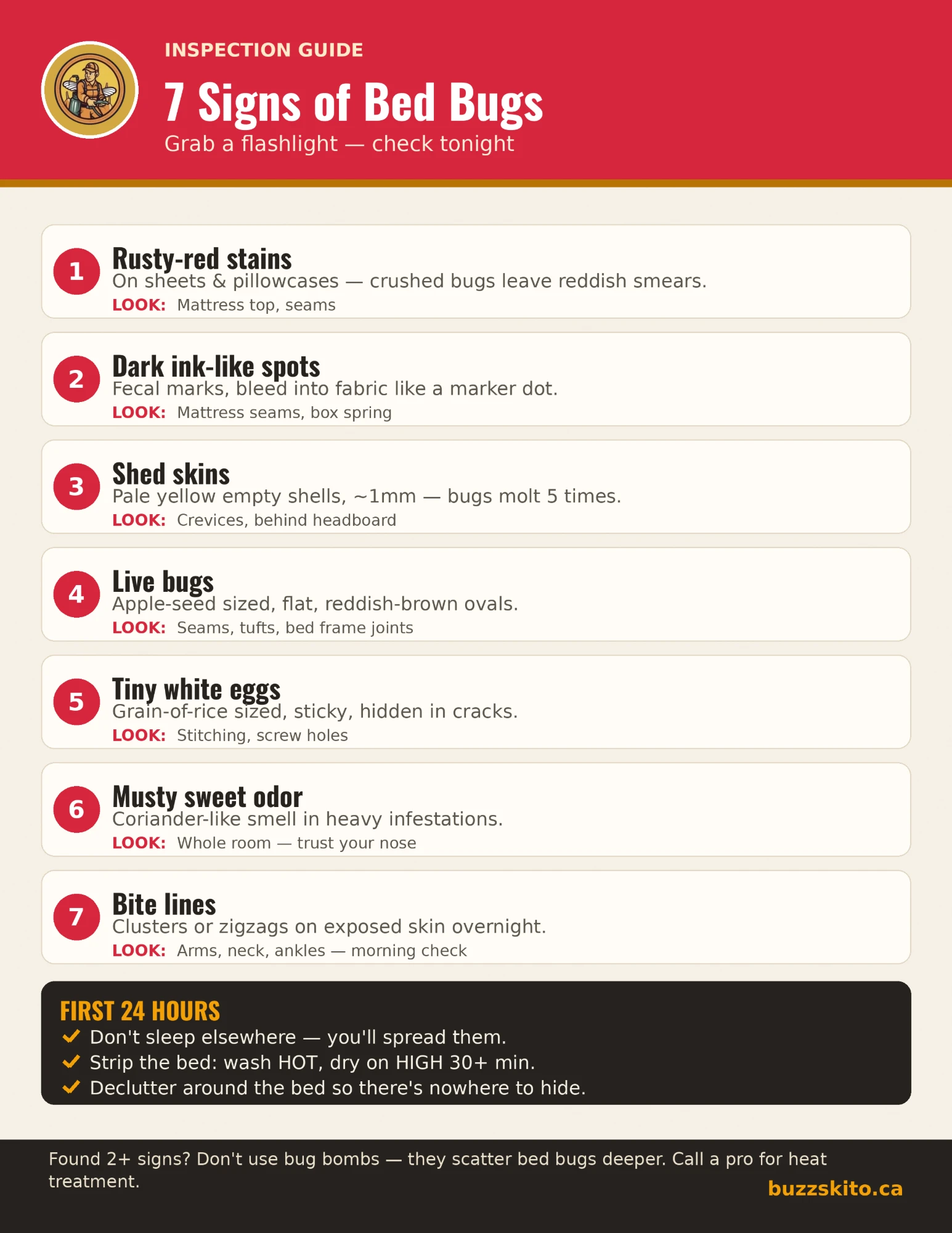
Adult bed bugs are flat, oval, reddish-brown insects about 3/16 inch long, the color of an apple seed and closer in size to a lentil, says the University of Kentucky's bed bug fact sheet. CDC's overview adds that they are wingless, range from about 1/25 inch to just over 1/4 inch (1 to 7 mm), and turn up even in five-star hotels and resorts; how clean a place is does not determine whether they are present.
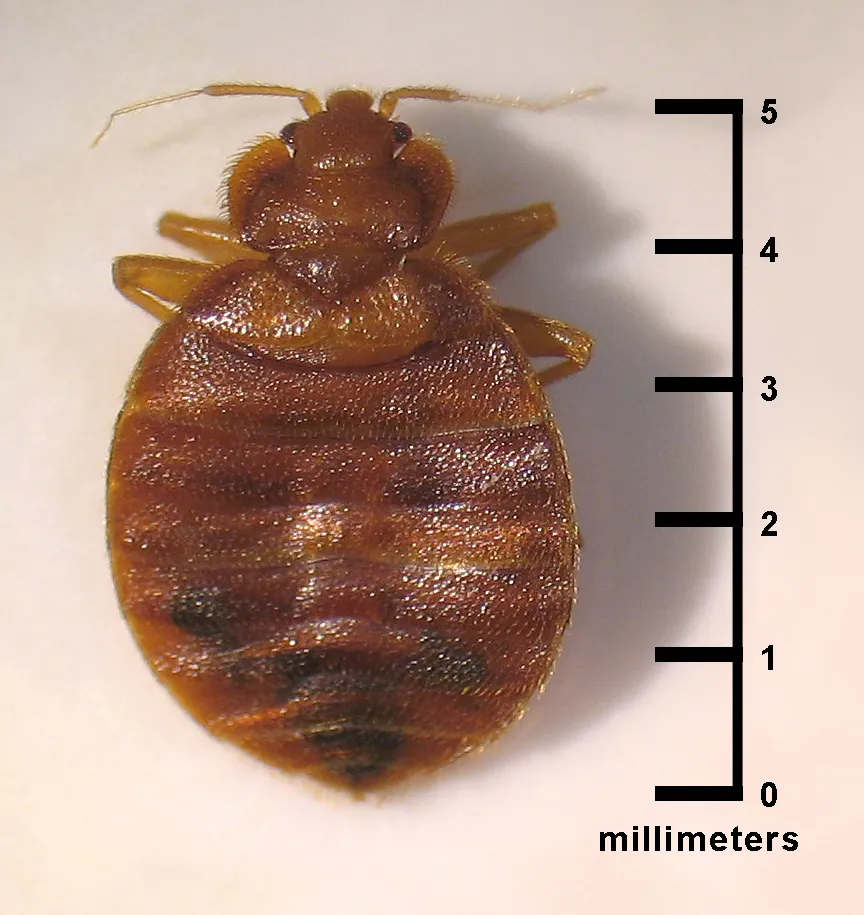
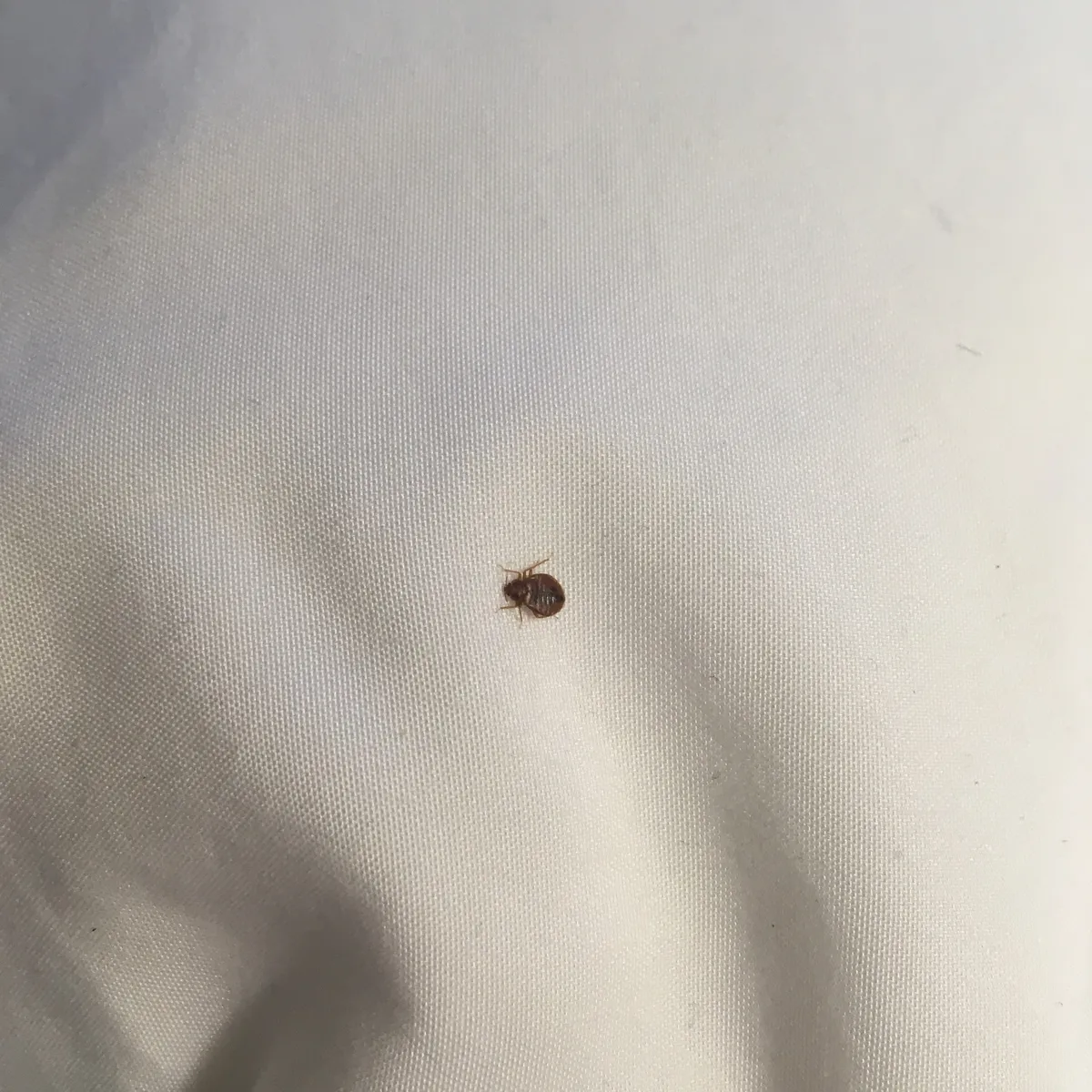
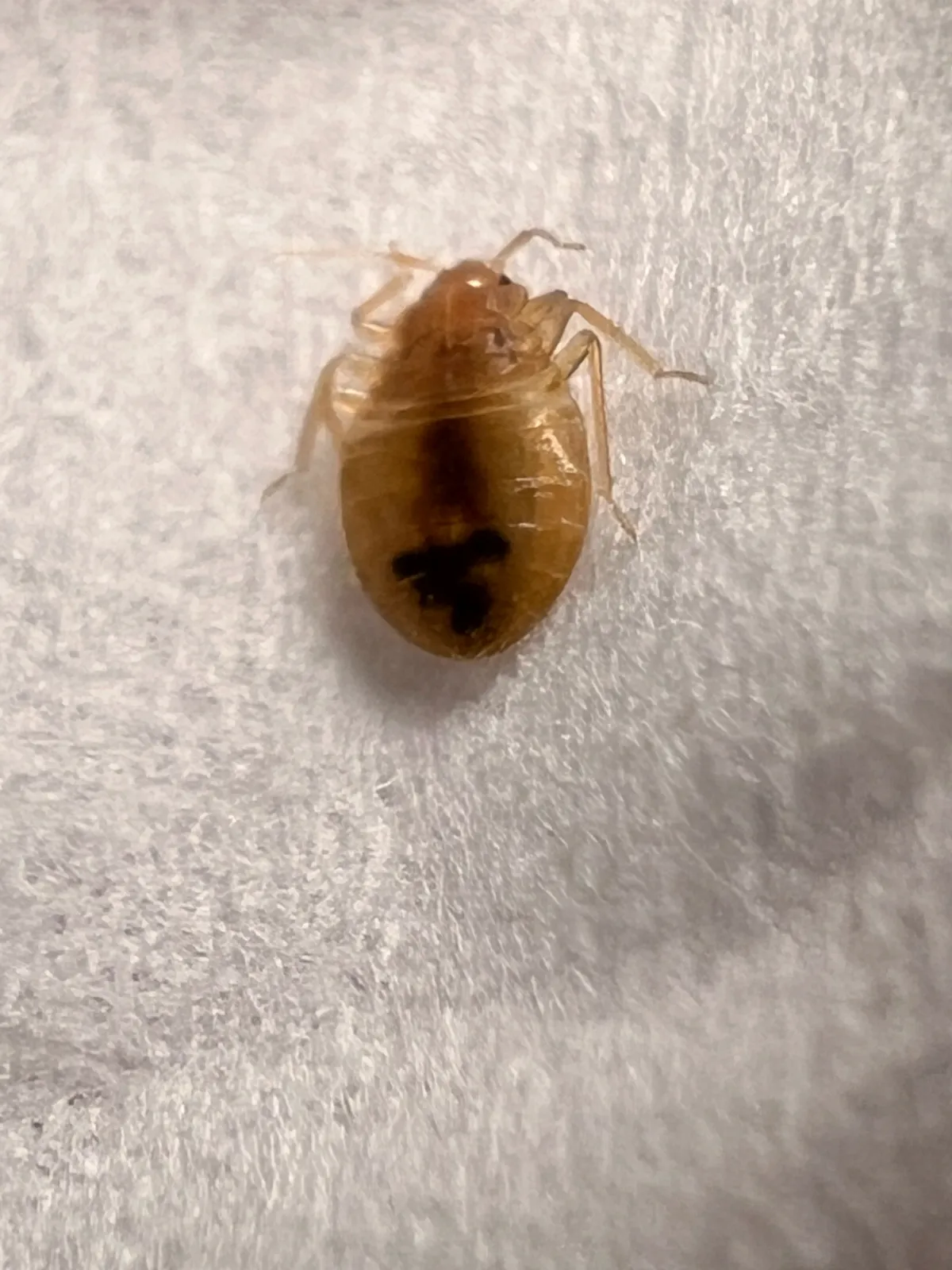
Young bed bugs are harder to see. Virginia Tech's guide to identifying an infestation, by entomologist Dini Miller, describes nymphs as smaller than adults and translucent whitish-yellow, says the youngest are hard to spot unless moving or freshly fed and bright red, and compares an egg to the head of a pin: pearl-white, with eyespots once it is over 5 days old. What bed bugs look like at every stage and the guide to baby bed bugs show each one.
How do you check a hotel room for bed bugs?
Check before you unpack, starting with the bed. Kentucky's advice for travelers is to examine the sheets and the mattress seams, and perhaps the box spring, especially at the pillow end, with a flashlight for dim corners; EPA's tips for travel add the headboard and the luggage rack. You can also ask at the desk: North Carolina's Department of Agriculture suggests asking whether any rooms have a current or recent bed bug infestation.
The hotel room check, in order
- Park your bags on a hard surface. Texas A&M AgriLife entomologist Wizzie Brown, in advice for holiday travelers, suggests checking the bed before you bring luggage into the room; Oklahoma State University Extension suggests the bathtub or a counter while you look, and Brown notes that a tub's smooth sides are hard for bed bugs to climb.
- Check the luggage rack, straps included. EPA says to inspect luggage racks and Oklahoma State to look under the straps; then use the rack, not the bed or the floor.
- Pull the bedding back at the pillow end. Oklahoma State says to fold back the pillows, blankets and linens at the top of the bed and look for eggs, bugs, blood spots and black fecal spots.
- Shine the light along the mattress seams, piping and tags. EPA lists these, with the box spring's, as where bed bugs hide around a bed; Brown adds the bottom of the box spring.
- Check the headboard without taking it down. Kentucky says the area behind it is often where bed bugs first settle in hotels, but that untrained people should not try to remove a heavy headboard, so light up the cracks and the gap behind it instead.
- Finish with the furniture by the bed. Brown suggests lamp bases and nightstands, Oklahoma State the dresser, and Texas A&M's Mike Merchant upholstered furniture, which he ranks with headboards as the most common hiding places in hotels.
Merchant explains why the headboard matters more than the sheets: linens are changed often, which disturbs bed bugs, but the headboard and frame never get moved. Other hiding places, from baseboards to curtain pleats, are in the guide to where bed bugs hide.
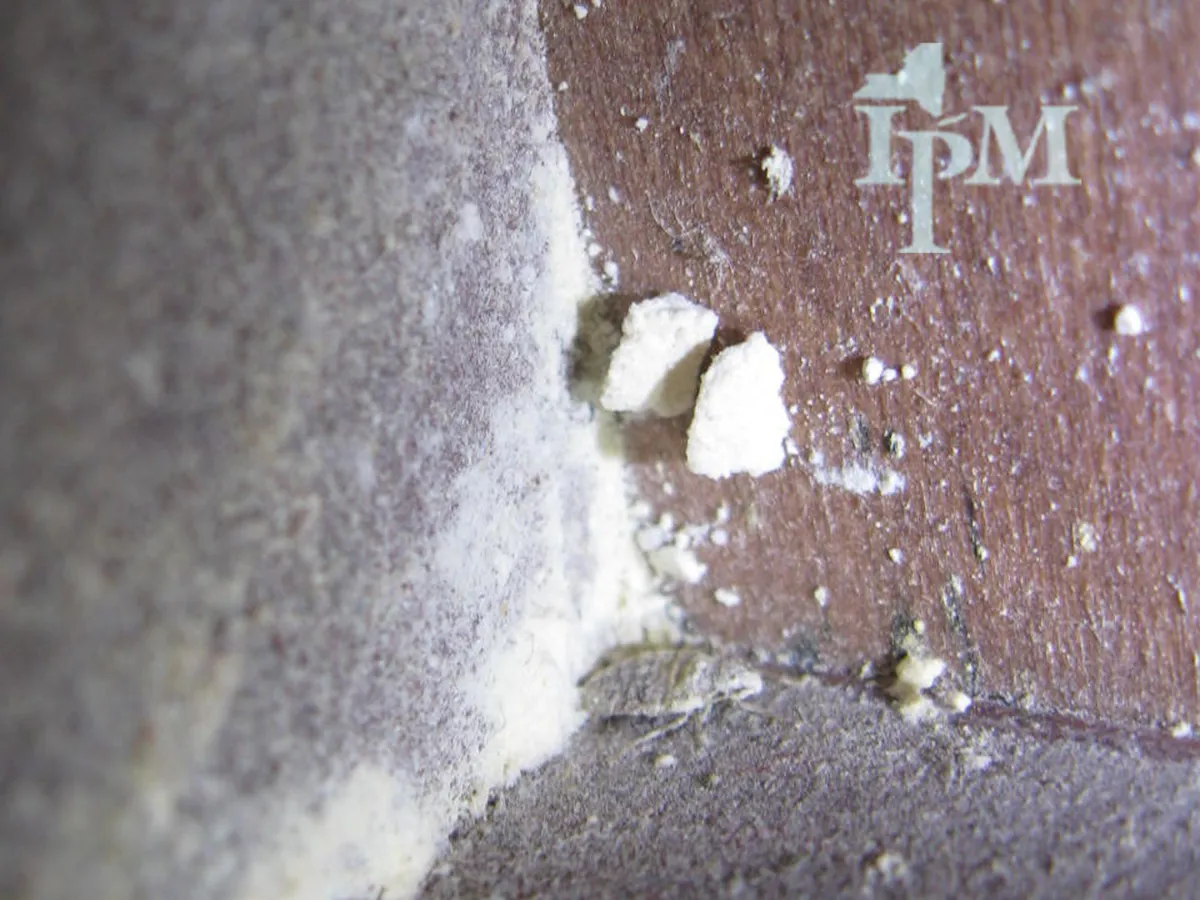
What signs of bed bugs should you look for in a hotel bed?
Look for live bugs, dark fecal spots, shed skins and eggs. EPA's guide to finding bed bugs lists what to watch for when changing bedding or staying away from home: rusty or reddish stains from crushed bugs, dark spots about the size of a printed dot that may bleed into fabric the way a marker does, eggs and eggshells about 1/25 inch (1 mm), pale yellow skins shed by growing nymphs, and the bugs themselves.
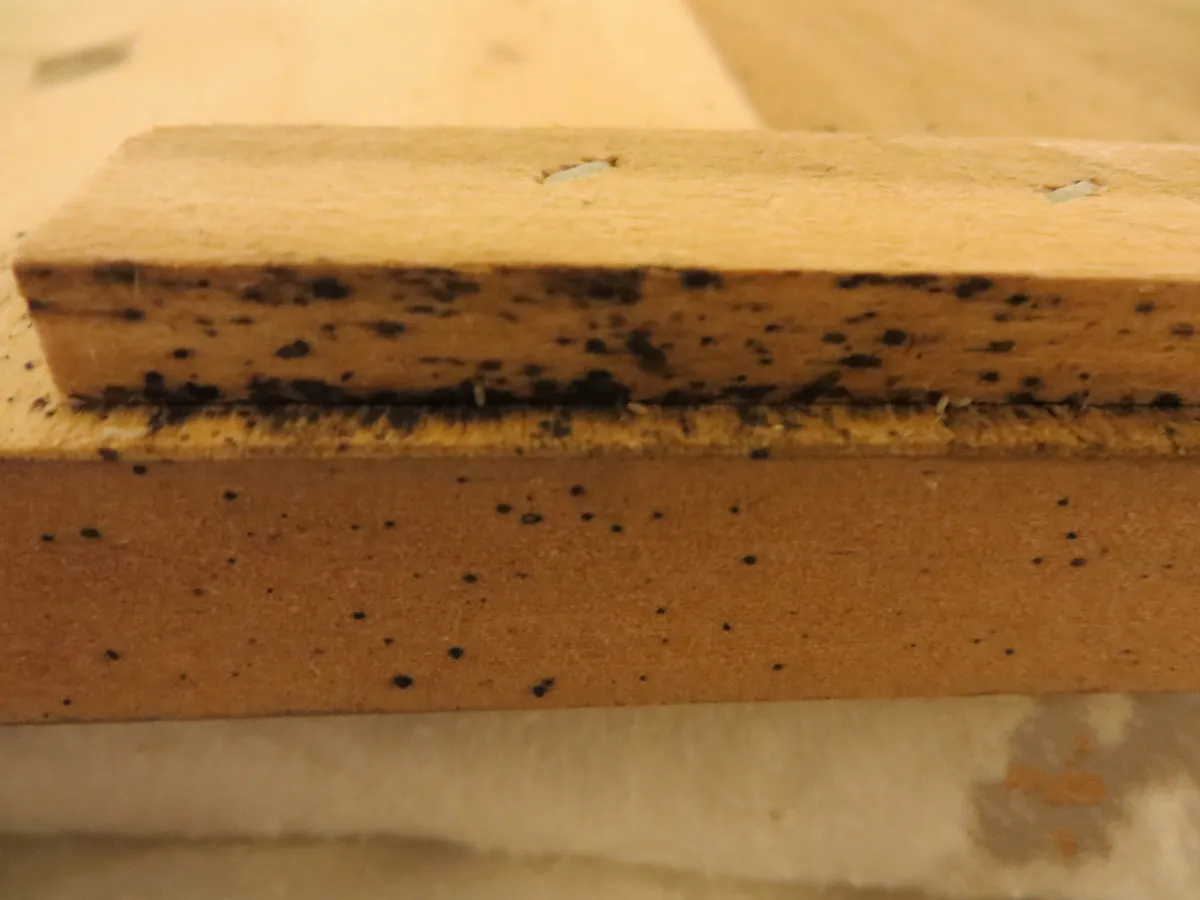
Signs may be more obvious than the bugs themselves, the Connecticut Agricultural Experiment Station's identification poster notes, pointing to clusters of dark spots along mattress seams. Virginia Tech says fecal spots are black because the blood is already digested, and often come in groups of 10 or more, though a lightly infested spot may show only one or two. They feel smooth, while German cockroach droppings feel gritty. What bed bug poop looks like has more photos.
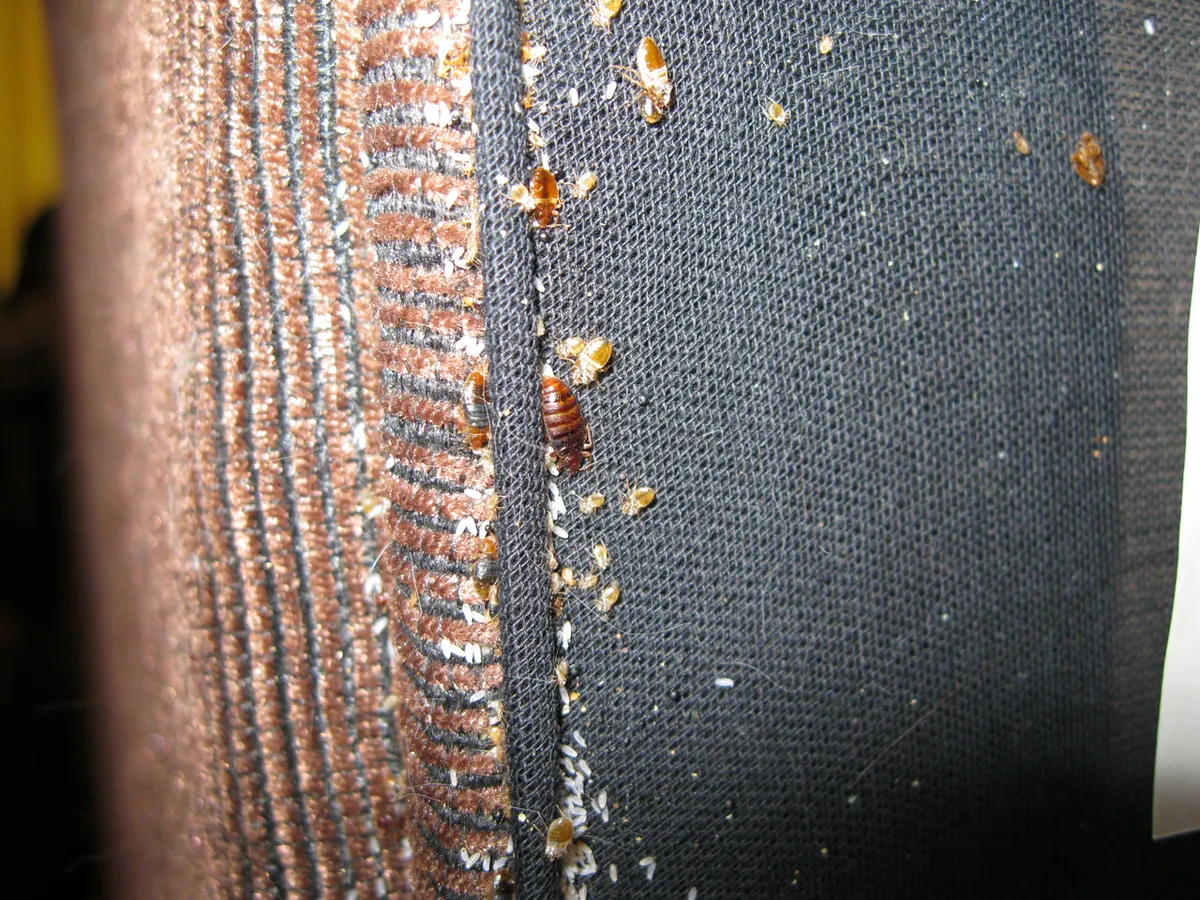
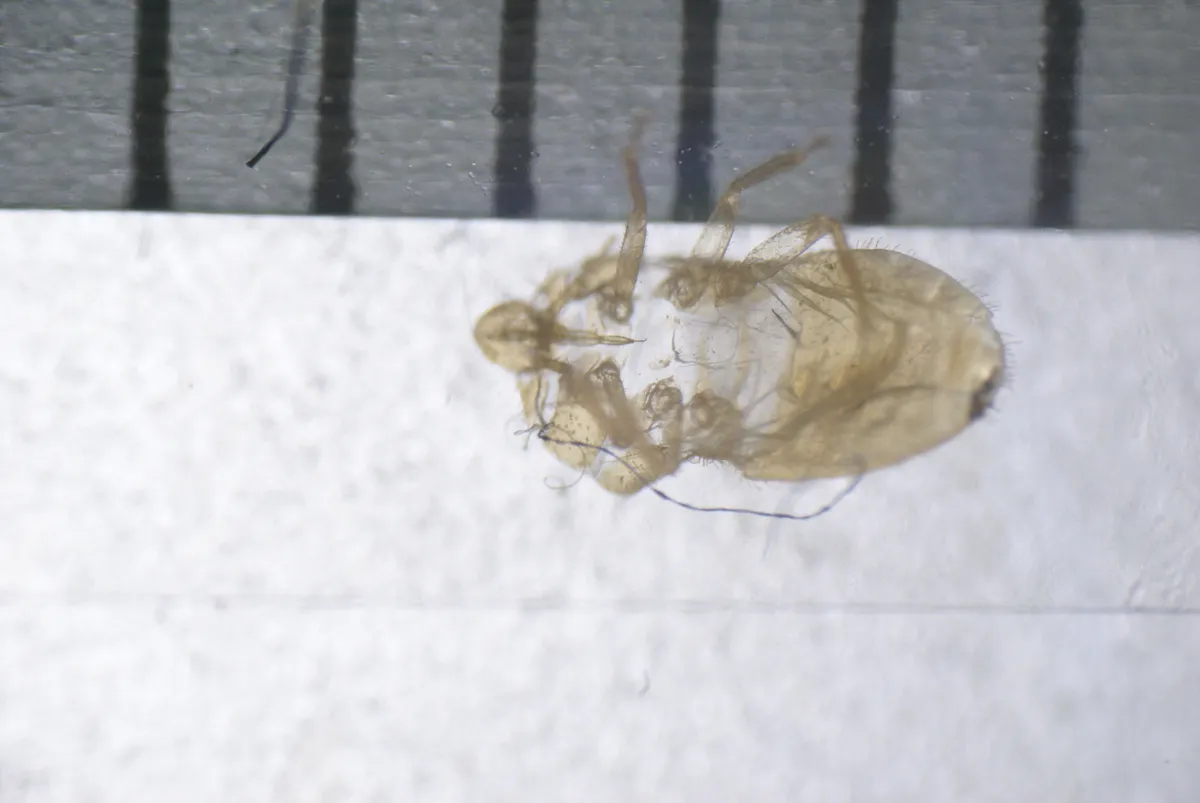
Shed skins can turn up even when the bugs stay out of sight. Virginia Tech describes them as translucent, empty shells in the bug's shape, in different sizes from each molt, and lists mattress seams, the space behind headboards, baseboards and personal belongings among the places they collect; Kentucky calls them tan-colored. What bed bug shells and shed skins mean covers whether a skin points to an active problem.
Do not count on your nose. Kentucky says the buggy odor often credited to bed bugs is seldom noticeable except in extreme infestations and should not be relied on to find them. The signs of bed bugs checklist ranks every sign from strongest to weakest.
Does a clean-looking room mean there are no bed bugs?
No. Virginia Tech says evidence of a new infestation, in a hotel room for example, may be very hard to find, though because most of any population is immature there is always a chance of finding cast skins. Kentucky adds that a visual inspection alone can miss bed bugs, which hide well and are active at night, and CDC says cleanliness does not determine whether they are present.
Keep it in proportion: Kentucky says most hotel infestations are limited, often to a few rooms, though Merchant warns that one traveler with bed bugs in their luggage can infest a hotel. So keep the luggage habits all stay: Oklahoma State says to keep bags on the checked rack or a hard surface such as a desk or dresser, and Kentucky suggests unpacking only what you need and keeping the rest zipped in the suitcase or sealed in plastic pouches or totes.
What bugs in a hotel room get mistaken for bed bugs?
Carpet beetles, cockroaches, ticks and bat bugs are the usual suspects. EPA notes that carpet beetles are easily mistaken for bed bugs, and Kentucky that bed bugs are sometimes mistaken for ticks, cockroaches and carpet beetles. Kentucky adds that bat bugs, bed bug relatives that may bite people once their bats are gone, look similar, and that entomologists and pest professionals can tell them apart.
Each has a tell. The Connecticut poster says carpet beetle larvae have hairy, segmented bodies with no distinct head. Kentucky's cockroach fact sheet describes German cockroach nymphs as darker than the adults, with a tan stripe down the back, and says cockroaches seldom gather on beds. Kentucky adds that bed bugs, unlike ticks or lice, normally do not live on or attach to people but crawl off to hide after a meal. Bugs that look like bed bugs compares them side by side.
Commonly confused with
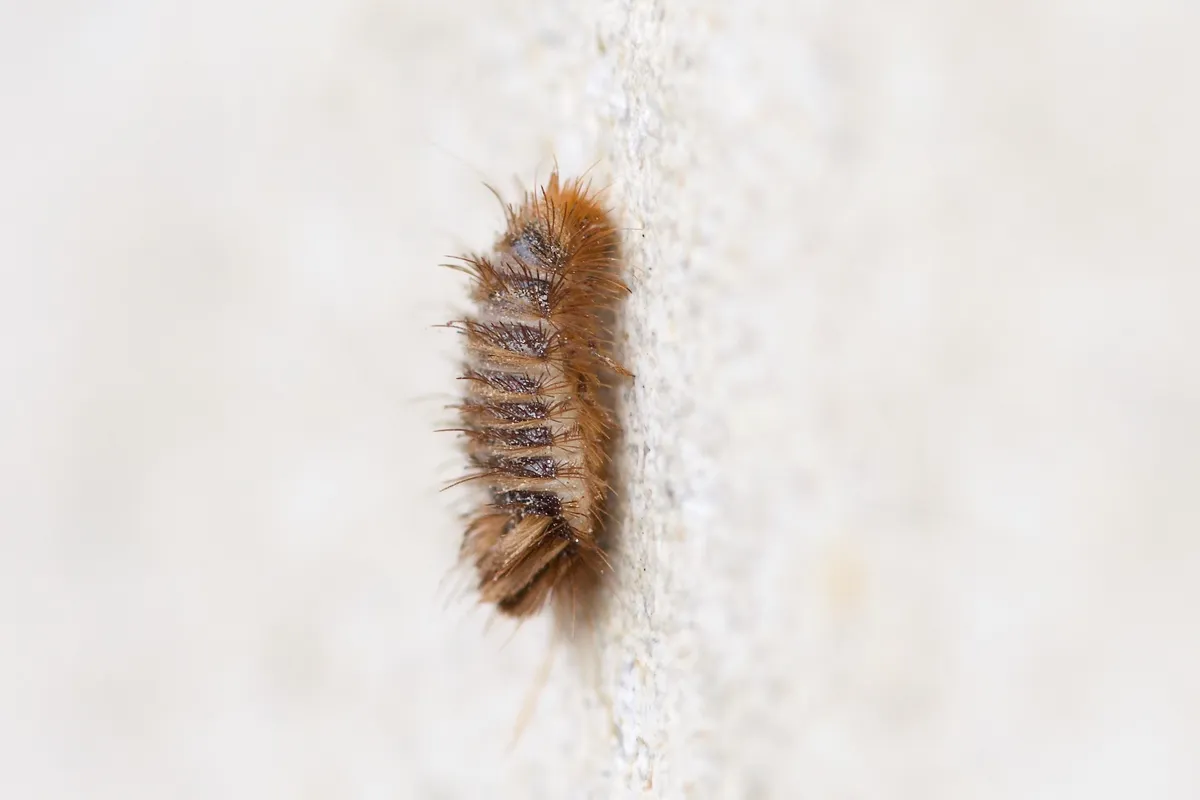 Carpet beetle larvaHairy and segmented with no distinct head; it grows into a winged beetle
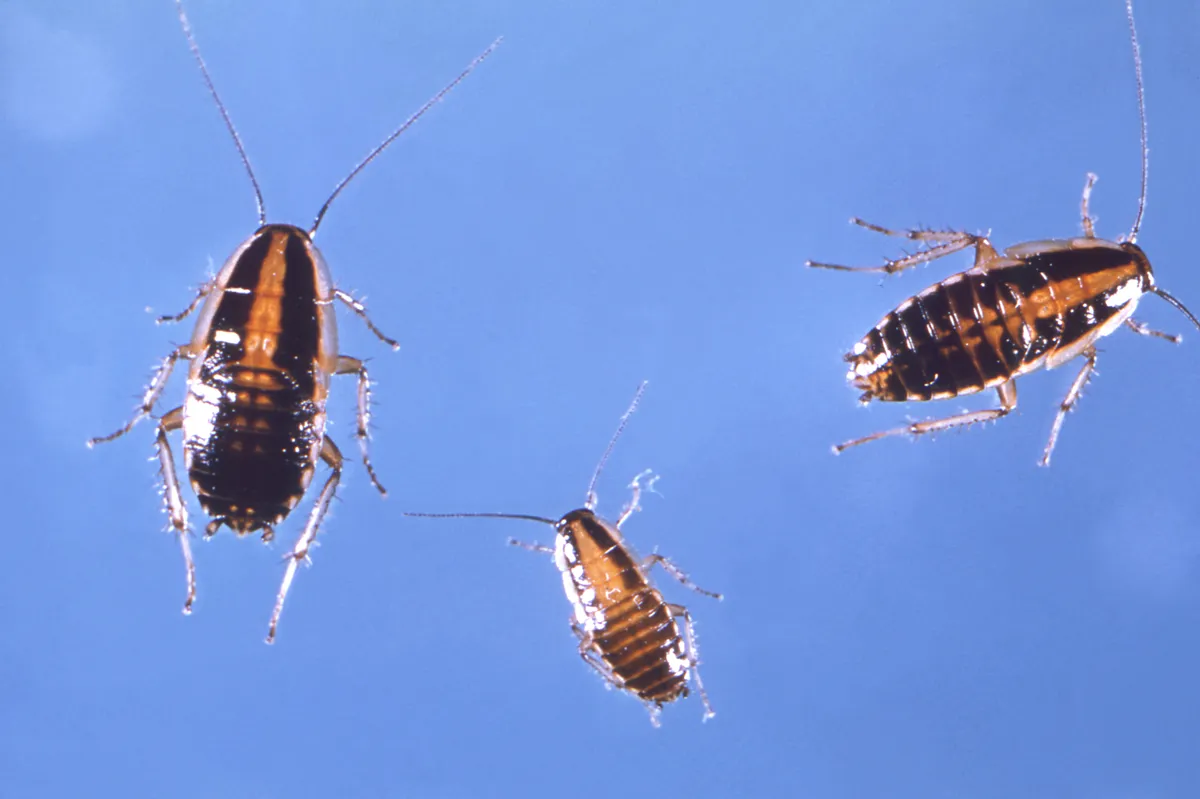 German cockroach nymphDarker than the adults, with a tan stripe down the back and long antennae; seldom gathers on beds
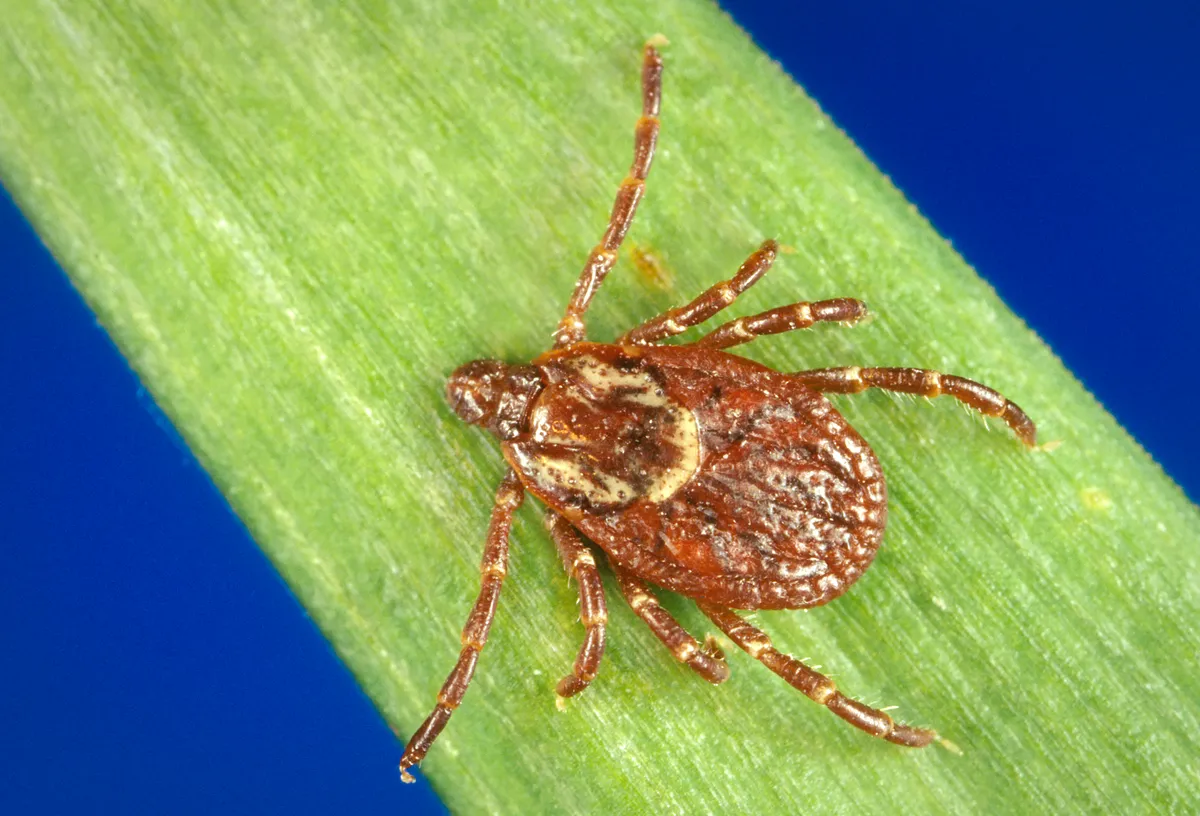 TickAttaches to people; a bed bug normally does not, and crawls off to hide right after feeding
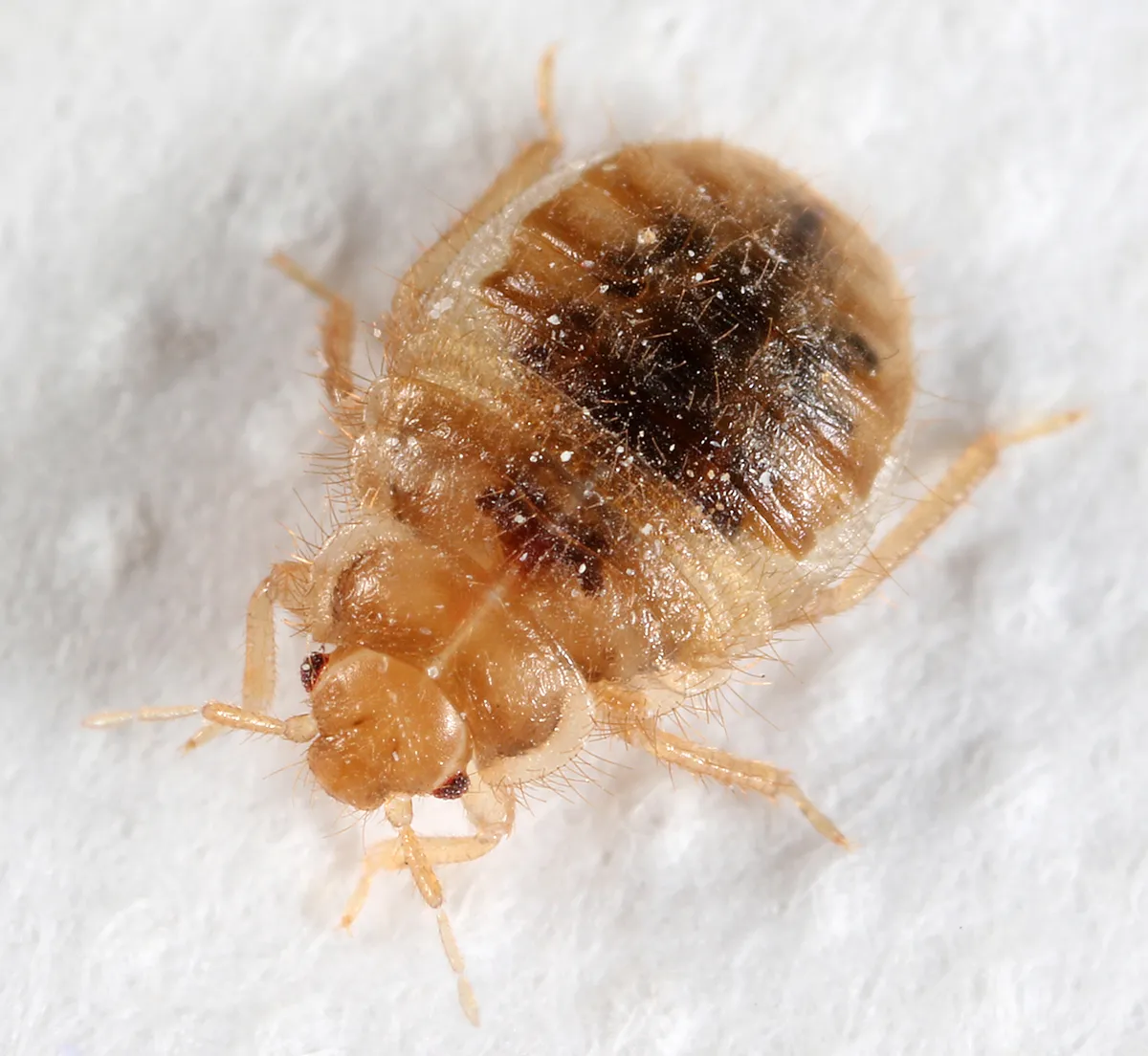 Bat bugSimilar in appearance; it lives with bats and may bite people once the bats are gone
Photos: Carpet beetle larva: (c) Owen Strickland, some rights reserved (CC BY), via iNaturalist, CC BY 4.0. German cockroach nymph: CDC (CDC Public Health Image Library, phil.cdc.gov), public domain. Tick: CDC/DVBID/ Gary O. Maupin; photo: James Gathany (CDC Public Health Image Library, phil.cdc.gov), public domain. Bat bug: CDC/ Gary D. Alpert, Ph.D., Northern Arizona University, Department of Biological Sciences; photo: Gary D. Alpert, Ph.D., Northern Arizona University, Department of Biological Sciences (CDC Public Health Image Library, phil.cdc.gov), public domain.
What should you do if you find bed bugs in your hotel room?
Tell the front desk right away, keep your luggage closed and off the bed, and ask for a room in a different part of the hotel. Merchant advises reporting suspected bed bugs to hotel management as soon as you find them, and Kentucky says guests can ask for another room, preferably in a different area of the hotel, because infestations sometimes extend to nearby units.
- Not next door. North Carolina's Department of Agriculture advises avoiding adjoining rooms and any room directly above or below the one you suspect.
- Keep a specimen. The same agency says the best way to confirm bed bug bites is to collect some of the bugs in a plastic bag for identification, and EPA's do-it-yourself guide says extension agents identify pests at no cost.
- If no other room is available. Brown says she would not want to stay in a room with known bed bugs, but if there is no choice, ask housekeeping to vacuum thoroughly, concentrating on the seams, tufts and edges of the mattress and box spring and where the baseboards meet the carpet.
What do hotels have to do about bed bugs?
It depends on the state and city. EPA's page on bed bug laws and regulations says the agency regulates the pesticides used against bed bugs, not the reporting and management rules that states set. It counts 21 states with some level of law or regulation that applies to bed bugs, says nine states have enacted laws or regulations since 2005, and describes the requirements as focused mostly on hotels and on landlords or other property managers.
The details vary. In the 2023 state-by-state summary EPA links, which covers 24 states, Kansas rules bar renting an infested guest room until the infestation is eliminated, count a live or dead bed bug, its shell, eggs or blood spotting on linens as an infestation, and require a report to the state's Secretary of Agriculture within one business day and treatment by a licensed pest control operator. Ohio bars infested bedding on any hotel bed, and Alabama makes an infested guest room subject to immediate closure until the problem is abated. EPA says to check with state and local authorities for current rules; this page is not legal advice.
Can bed bug bites show up after you get home?
Yes. CDC says most people do not notice bite marks until one to several days after the bite, and that in some people they can take as long as 14 days to develop. Virginia Tech says someone bitten while traveling may not react for several days and only notice the bites at home, and that those bites do not mean the home is infested; Kentucky notes that a delayed reaction can make it hard to tell where or when the bites happened.
Bites prove less than they seem. EPA calls them a poor indicator because they can look like other insect bites, rashes or hives; CDC says the marks look like mosquito or flea bites, random or in a straight line; and Kentucky says studies suggest about 30 percent of people do not react even when bitten repeatedly. What bed bug bites look like has photos, and bites with no bed bugs in sight covers what else bites at night.
How do you avoid bringing bed bugs home from a hotel?
Unpack away from the bedroom, run your clothes through a hot dryer, and heat-treat or set aside a suitcase you are worried about. EPA's tips for travel say to unpack directly into a washing machine, inspect your luggage carefully and store suitcases away from the bedroom, in a basement or garage, never under the bed.
- Keep bags off the bed until you leave. Texas A&M AgriLife Extension's advice on what to do after an infested stay says luggage most likely picks up bed bugs on or next to the bed, so bags kept on a luggage rack in the closet carry less risk.
- Unpack outside the bedroom. Oklahoma State suggests the bathroom or garage, the Texas A&M post the garage or a porch, and Merchant says to keep luggage out of the living and sleeping areas of your home.
- Carry clothes to the machine in a plastic bag. Kentucky says trash bags help keep bugs from falling off on the way to the washer or dryer; throw the empty bag out right away, the Texas A&M post adds.
- Let the dryer do the work. EPA says time in a dryer at high temperatures kills bed bugs, while washing alone generally will not. Kentucky says medium-to-high heat for 10 to 20 minutes kills every life stage and can replace washing, faster if the items go in dry; Merchant's routine is 30 minutes of hot washing, then at least 30 minutes of hot drying.
- Dry-clean-only clothes. Kentucky cites textile experts who say most dry-clean-only garments will not be harmed by a dryer at a moderate setting if they go in dry; dry cleaning also kills bed bugs, it says, though infested items can spread them at the shop.
- Heat the suitcase, or set it aside. Kentucky rates inspecting or vacuuming a suitcase as less useful, since bed bugs are hard to spot in luggage, and says one in question can be heat-treated (a hot car can often do it in summer) or discarded. EPA's page on protecting your home suggests a portable heating chamber, noting that such units are not regulated by EPA or other federal agencies, so follow the directions.
EPA's guide to finding bed bugs says they die when their body temperature reaches 113°F (45°C). Kentucky says items that cannot go in a dryer can sometimes be freed of bed bugs by wrapping them in plastic and leaving them at least a day in a hot, sunny spot, such as a closed car in the sun.
What should you watch for at home after the trip?
Watch your bed for the signs you checked for in the hotel, and do not judge by bites alone. Kentucky says interceptors, small plastic dishes under the legs of beds and seating that wandering bed bugs fall into and cannot climb out of, can reveal an infestation early. The Texas A&M post offers one reassurance: not everyone who stays in an infested room takes bed bugs home. Repeat the signs of bed bugs checklist on your own bed.
If bugs, skins or spots do turn up, have one identified and follow the step-by-step plan to get rid of bed bugs. The complete guide to bed bugs covers how they live, spread and are treated.
This guide is general educational information, not medical advice. If you have symptoms or concerns after a bite or exposure, contact a healthcare provider.
Frequently Asked Questions
Is it common to get bed bugs from hotels?+
It can happen even in expensive hotels, but most hotel infestations are small. CDC says bed bugs are found even in five-star hotels and resorts, that how clean a place is does not determine whether they are present, and that people who travel often and sleep where others have slept run a higher risk. The University of Kentucky says the majority of hotel infestations are limited, often to just a few rooms. None of the sources cited here gives a reliable share of infested hotel rooms.
What do I do if I slept in a hotel with bed bugs?+
Report it to the front desk, keep your luggage closed, and treat your belongings as if they might carry a bug or two. At home, unpack outside the bedroom, in a garage or bathroom, and put your clothing straight into the dryer: EPA says time in a dryer at high temperatures kills bed bugs, and the University of Kentucky gives 10 to 20 minutes at medium-to-high heat. Heat-treat or set aside the suitcase, then check your own bed for fecal spots, shed skins and live bugs.
Is it possible to get bit by bed bugs and not bring them home?+
Yes. A Texas A&M AgriLife Extension post on hotel stays says not everyone who stays in a bed bug infested room takes bed bugs home, and that bags kept away from the bed, on a luggage rack for example, carry lower risk. Virginia Tech adds that someone bitten while traveling may not react for several days and only notice the bites at home, and that those bites do not mean the home is infested. EPA says a hot dryer kills bed bugs, so drying your clothes is a simple precaution while you watch the bed for signs.
Can you find out if a hotel has bed bugs?+
Partly. North Carolina's Department of Agriculture suggests asking the staff at check-in whether any rooms have a current or recent bed bug infestation. Online registries, which a Texas A&M AgriLife Extension post describes as consumer hotel registries where travelers report infestations, are reports from guests rather than inspections. The check that counts is your own: EPA says to inspect any room you stay in, including the mattress, headboard and luggage rack, and the University of Kentucky suggests doing it before you unpack.
Are hotels responsible if you get bed bugs?+
It depends on where you stayed. EPA says bed bug reporting and management rules are set by states and local governments, not by EPA, and counts 21 states with some level of law or regulation, aimed mostly at hotels and landlords. In the 2023 state summary EPA links, for example, Kansas bars renting an infested guest room until the infestation is eliminated and requires treatment by a licensed pest control operator. EPA says to check with state and local authorities for current rules; this page is not legal advice.
What is the fastest way to check for bed bugs in a hotel room?+
Go straight to the bed with a flashlight before you unpack. Pull the bedding back at the pillow end and look along the mattress seams, piping and tags, then at the box spring where you can see it and at the cracks and gap of the headboard, which the University of Kentucky says is often where bed bugs first settle in hotels. EPA says most people need no special tools, though a flashlight can help. Check the luggage rack, under the straps too, before you set your bags on it.
What are the very first signs of bed bugs?+
Often small black fecal spots, which may be more obvious than the bugs themselves. Virginia Tech says the spots are black because the blood is already digested and often appear in groups of 10 or more, though a lightly infested spot may show only one or two; EPA describes them as dot-sized marks that may bleed into fabric like a marker. Shed skins, tiny eggs and rusty stains from crushed bugs are the other signs EPA lists. Bites are a poor sign on their own, EPA says, because they can look like other insect bites or rashes.
Do bed bugs stay on you after a shower?+
Bed bugs do not live on people, so the risk lies in your bags and clothes rather than on your skin. The University of Kentucky says bed bugs normally do not live on or attach to people the way lice or ticks do, and crawl away to hide right after feeding, and the Connecticut Agricultural Experiment Station says they travel to their host from a hiding place to feed. CDC says they spread in the seams and folds of luggage, overnight bags, folded clothes and bedding.
How do you know if you brought bed bugs home from a hotel?+
By finding the bugs or their signs at home, not by bites alone. Look for live bugs, black fecal spots, shed skins and eggs along mattress seams and bed frames, the signs EPA lists. The University of Kentucky says interceptors, small plastic dishes under the bed legs that wandering bed bugs fall into and cannot escape, can reveal an infestation early. Virginia Tech notes that bites noticed after a trip may have happened while traveling and do not mean the home is infested.
Does washing clothes kill bed bugs?+
Washing alone is not reliable; the dryer is the step that kills them. EPA says time in a dryer at high temperatures kills bed bugs, while just washing generally will not. The University of Kentucky says a dryer at medium-to-high heat for 10 to 20 minutes kills all life stages, works faster if the clothes go in dry, and can be used instead of washing. Texas A&M entomologist Mike Merchant suggests 30 minutes of hot washing followed by at least 30 minutes of hot drying.
Sources
- Tips for Travel — US Environmental Protection Agency
- How to Find Bed Bugs — US Environmental Protection Agency
- Protecting Your Home from Bed Bugs — US Environmental Protection Agency
- Do-it-yourself Bed Bug Control — US Environmental Protection Agency
- Bed Bug Laws and Regulations — US Environmental Protection Agency
- State Bed Bug Laws and Regulations (2023 table, bearing the National Pest Management Association's name) — US Environmental Protection Agency
- About Bed Bugs — Centers for Disease Control and Prevention
- ENTFACT-636: Bed Bugs (Michael F. Potter, revised March 2026) — University of Kentucky Department of Entomology
- ENTFACT-614: Cockroach Elimination in Homes and Apartments — University of Kentucky Department of Entomology
- How to Identify a Bed Bug Infestation (Dini M. Miller) — Virginia Tech Department of Entomology (hosted by the Virginia Department of Agriculture and Consumer Services)
- Entomologists to holiday travelers: Don't let the bedbugs bite (December 21, 2017) — Texas A&M AgriLife Today, Texas A&M AgriLife
- Bed bugs in your hotel... what to do after? (April 12, 2011) — Insects in the City, Texas A&M AgriLife Extension Service
- Avoiding bothersome bed bugs while traveling (March 28, 2018) — Oklahoma State University Cooperative Extension
- Bed Bugs While Travelling (Sleep Products Section) — North Carolina Department of Agriculture and Consumer Services, Structural Pest Control and Pesticides Division
- Bed Bugs and Lookalikes: Bed bug identification for the recycling and refurbishing industries (2011) — Connecticut Agricultural Experiment Station and Connecticut Coalition Against Bed Bugs
How this guide was made: it was researched and drafted with AI assistance from the sources listed above. A second, independent AI pass then checked each factual claim against those sources. Found an error? Email support@buzzskito.ca.