
Published by BuzzSkito Mosquito & Tick Control
Published October 28, 2026 · Fact-checked against the sources listed below
Can fleas live on humans?
Not the flea most people meet. The cat flea is the most common flea in homes, and the University of Florida's cat flea profile says it is commonly found on both cats and dogs in North America. Texas A&M AgriLife Extension's flea guide says cat fleas do not normally live on humans, although they can bite people who handle or sleep with infested animals.
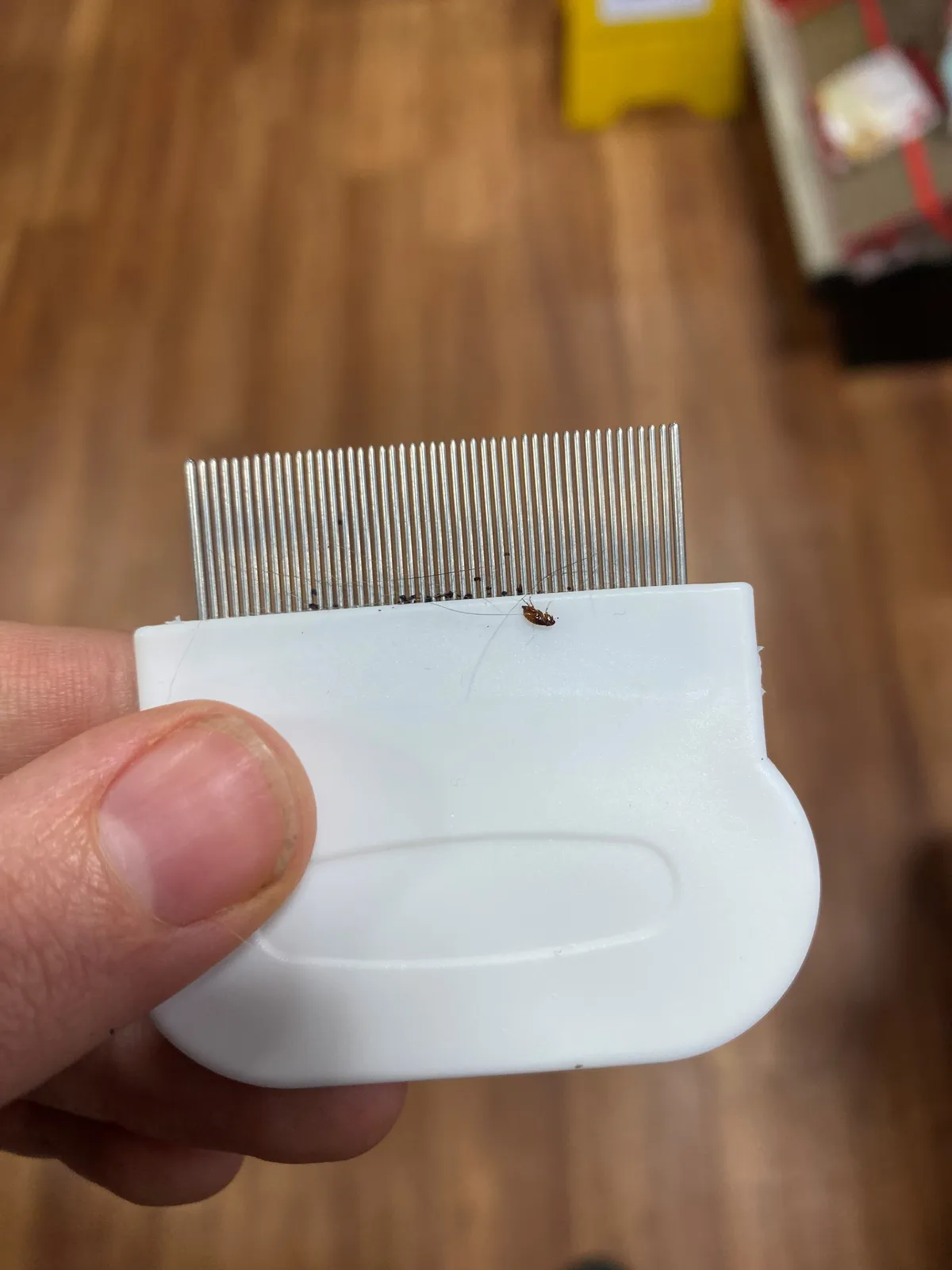
The reason is where the cat flea spends its adult life. UC IPM's Pest Notes on fleas say that, unlike most fleas, adult cat fleas remain on the host, where they feed, mate and lay eggs, and the University of Florida adds that adults need a fresh blood meal to reproduce. The CDC's overview of fleas says fleas prefer animal hosts but will resort to biting people when animals are unavailable.
The medical references agree. The MedlinePlus encyclopedia entry on fleas says fleas prefer to live on dogs and cats, though they may also be found on humans and other warm-blooded animals.
What is the human flea, and does it live on people?
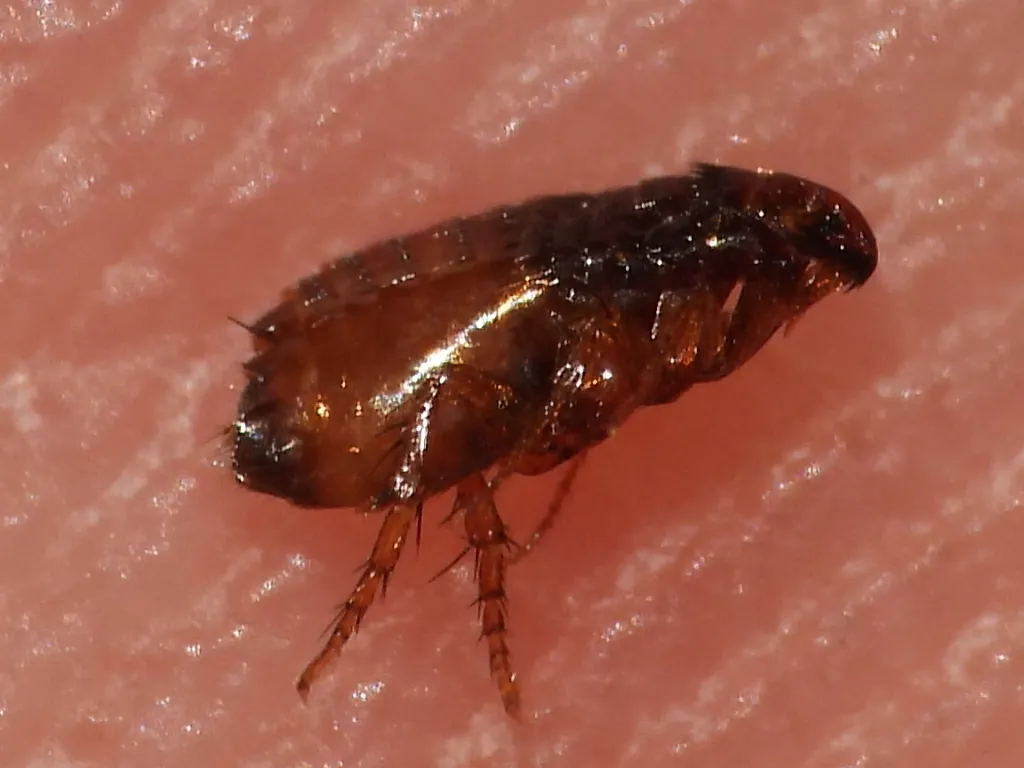
The human flea, Pulex irritans, is the flea that takes people as its main host: CDC's DPDx parasite reference says humans are its primary host. It is not the flea most American households meet: DPDx says it is less commonly seen in industrialized areas, and Texas A&M lists it among the fleas less common on pets and in homes than the cat flea.
Even this flea lives mostly off the body. The University of Florida's human flea profile says it is found more often in the nests and burrows of its hosts than on them, except while feeding, and shelters in homes and outbuildings where people and animals live close together; its eggs are laid off the host. Besides people, its hosts include dogs, cats, rodents and pigs, and most recent North American records come from west of the Mississippi River.
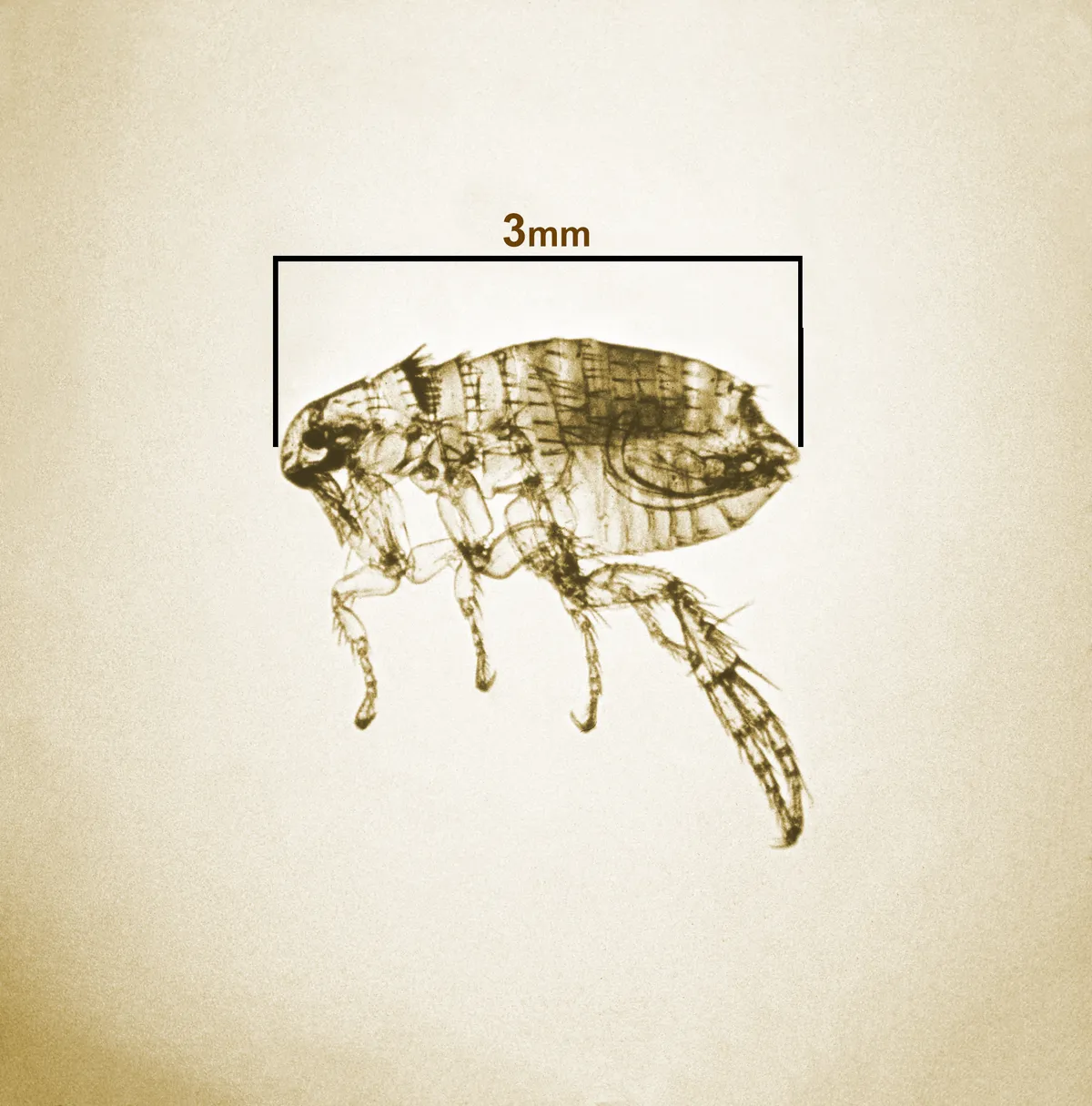
Telling the two apart takes magnification. UF gives human flea adults an average length of 2 to 3 mm (about 1/12 to 1/8 inch), within the cat flea's range, and says the human flea has a rounded head and lacks the two combs of thick spines, one below the eye and one behind the head, that UC IPM says the cat flea carries. DPDx says the human flea is not an effective vector of disease.
Can fleas live in human hair?
Not normally. Cat fleas live on cats and dogs, and the bites they leave on people are usually low on the body: the CDC says flea bites often occur on the lower legs and feet, and the University of Kentucky's bed bug fact sheet says flea bites occur mainly around the ankles.
Small insects living in the hair, with eggs stuck to it near the scalp, fit the CDC's description of head lice instead. CDC's head lice overview says head lice usually live on the scalp, crawl but cannot hop or fly, and die within two days if they fall off a person. Their eggs, called nits, are attached firmly within 1/4 inch of the base of the hair shaft, often behind the ears. CDC adds that animals do not get or spread head lice. Lice eggs and nits have a guide of their own.
How do fleas get on you?
From animals, or from places where animals have been. CDC says people are sometimes bitten when they share space or have contact with a flea-infested animal, and that wild and stray animals commonly carry fleas. The University of Kentucky's flea control guide says pets pick up fleas at kennels and groomers, or from stray dogs, cats and wildlife, especially opossums and raccoons, passing through the yard.
The last step is a jump. Kentucky says adult fleas can jump up to about 6 inches high, enough to hitch a ride onto a passing dog or cat, or onto a person's shoes and pant legs. CDC says adult fleas find hosts by sensing body heat, movement, the vibrations movement causes, and breathing.
Why fleas start biting when the pet is gone
A home can keep its fleas after its animals leave. UC IPM says cat flea eggs fall from the pet onto bedding and carpet, that fully formed fleas can wait in their cocoons for up to 12 months at cool temperatures, and that warmth and the pressure of footsteps or vacuuming make them emerge. MedlinePlus notes that pet owners may not be affected by fleas until a pet has been gone for a while, when the fleas look for other food and begin to bite people.
Wildlife can bring fleas into a home with no pets at all: Kentucky says a family of raccoons or opossums in the attic or chimney, or a skunk or feral cat under the house, can be a hidden source, and Texas A&M adds bats, rats and squirrels. Why there are fleas in a house with no pets covers what to do.
What are the signs of fleas on humans?
On people, the main sign is the bites. Texas A&M describes flea bites as small, red, itchy bumps and says people allergic to them can get hives, rashes or generalized itching, usually 12 to 24 hours after a bite. Reactions vary with each person's sensitivity, the University of Florida notes, so a bite is a clue, not proof. What flea bites look like on people covers the bites, the bug bite identification chart compares them with others, and the bug bite identifier helps sort them.

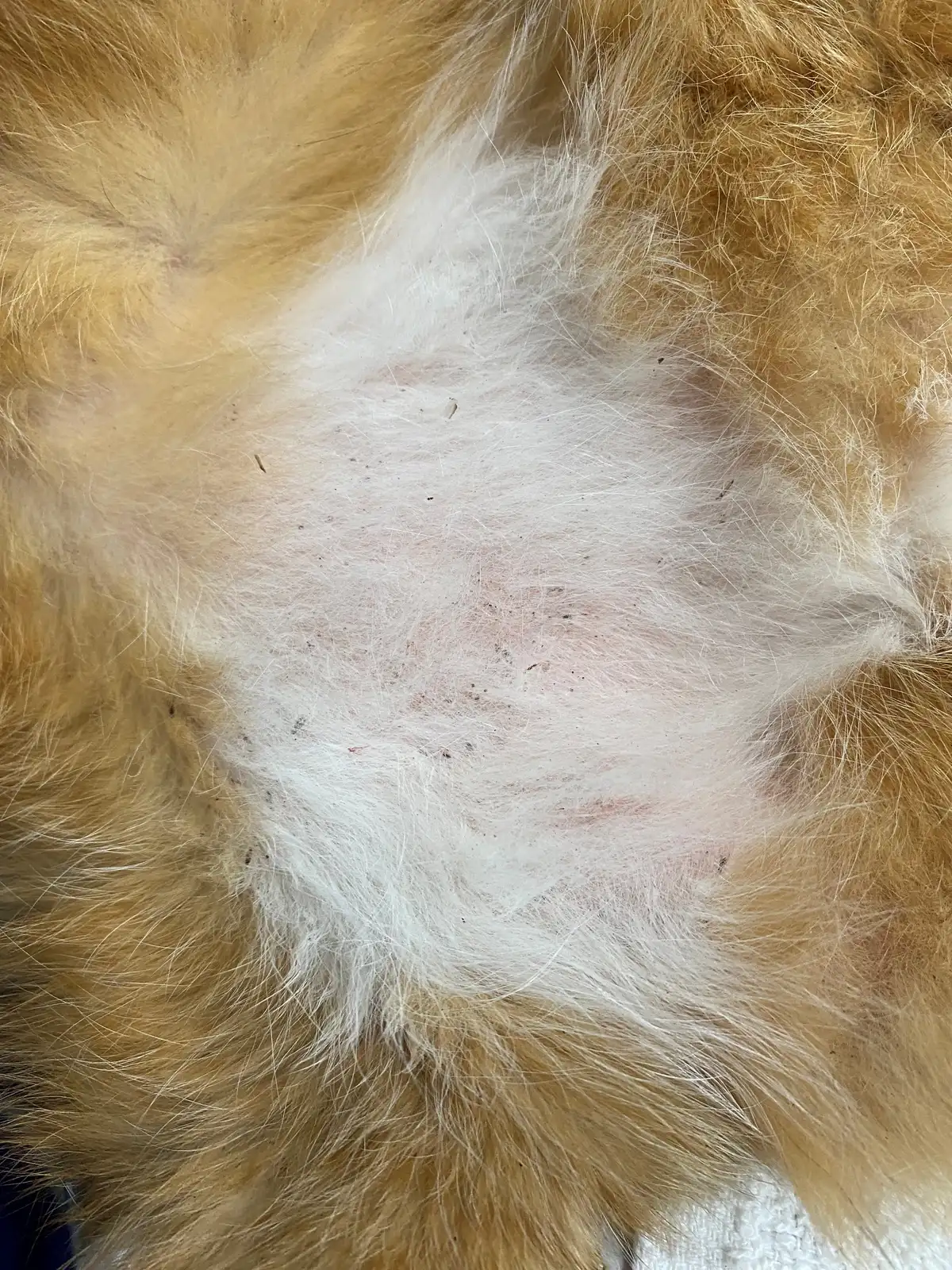
Two checks point to fleas rather than another biter. Walk through the areas where your pets rest in white socks pulled up to the knee: UC IPM says any fleas present will jump onto the socks and be easy to see. Then check the pets. Texas A&M describes flea dirt, the flea's feces, as a fine reddish-black dust in pet fur and bedding, says dogs and cats scratch constantly when heavily infested, and recommends a flea comb, whose fine teeth remove adult fleas from fur. How to test specks for flea dirt and what a flea looks like up close help confirm what you find.
Can fleas live in your bed?
Their eggs and larvae can, if a pet with fleas sleeps there. CDC says fleas can live in carpets, bedding and other surfaces in the home that pets frequent, and Texas A&M says flea eggs fall off the animal as it moves around and that the most likely place to find larvae is infested pet bedding. CDC advises vacuuming often and cleaning bedding, especially pet bedding, frequently with soap and water. What flea eggs and larvae look like helps you check.
Bites on the face, neck, arms or back after a night in bed fit bed bugs better. Kentucky says that, unlike flea bites, which occur mainly around the ankles, bed bugs feed on any skin exposed during sleep, and that they normally do not live on or attach to people: right after feeding they crawl off to hide, often in the seams and crevices of the mattress, box spring, bed frame and headboard. What bed bugs look like and young bed bugs, stage by stage help tell the two apart.
What else could be living on your skin or biting you?
Head lice are not the only pests that live on people: two more live in human skin, and mites from bird and rodent nests can bite as fleas do. If the bug you found jumps but you are not sure it is a flea, the bugs most often mistaken for fleas sorts the look-alikes.
Scabies mites
CDC's scabies overview says the microscopic human itch mite burrows into the upper layer of the skin, where it lives and lays its eggs, and spreads mostly through direct, prolonged skin-to-skin contact. Its most common symptoms are intense itching, especially at night, and a pimple-like rash, often between the fingers and in skin folds of the wrist, elbow, knee or armpit. CDC says to seek medical attention if you suspect scabies; scabies compared with bed bugs sets the two side by side.
Chigoe fleas
One flea does live in people's skin. CDC's DPDx page on tungiasis says mated females of the chigoe flea, Tunga penetrans, burrow into the skin and cause a swelling, with only the rear tip of the flea exposed. It occurs in sandy places such as beaches, stables and farms in tropical and subtropical regions, from Mexico to South America, the West Indies and Africa. The guide to sand fleas covers it.
Bird mites and rat mites
The University of Kentucky's guide to parasitic mites says mites of birds and rodents usually stay on their host or its nest, can enter homes when the host has left the nest, and can bite people but cannot reproduce on human hosts. The tropical rat mite's main host is the Norway rat. Bird mites and rat mites have guides of their own.
Commonly confused with
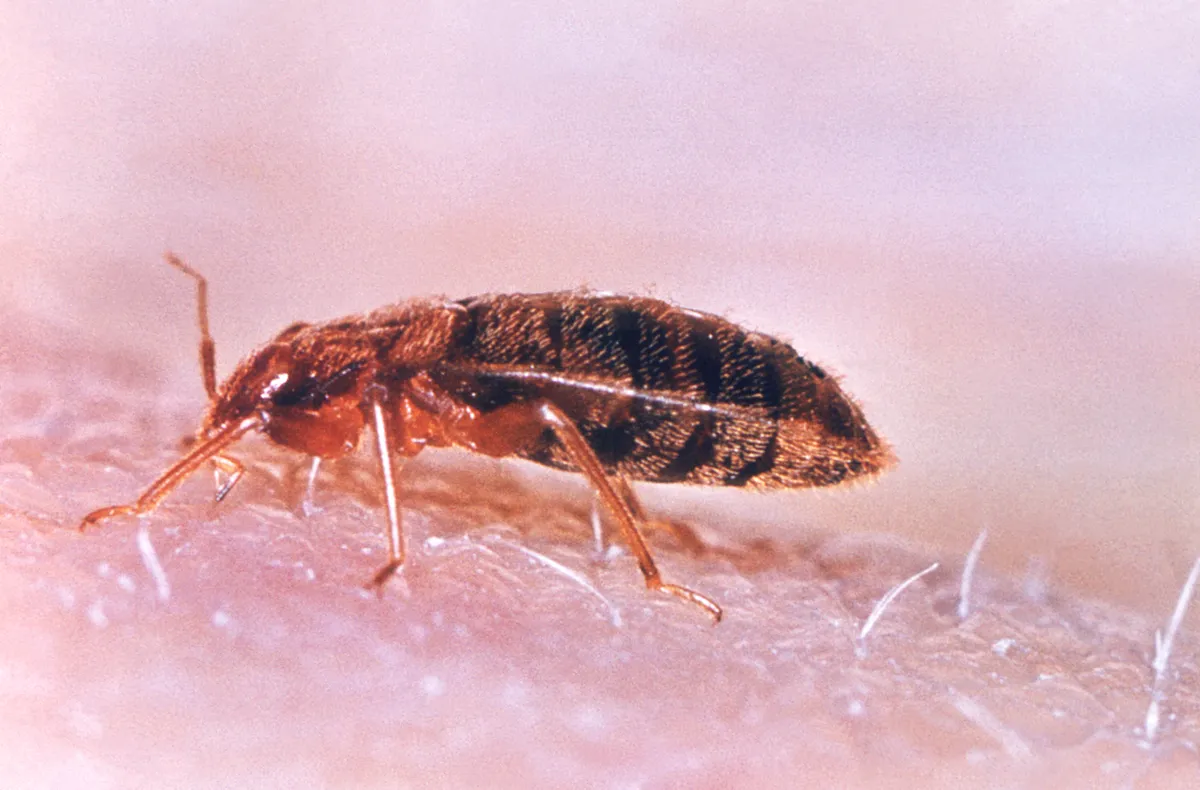 Bed bugOval, flat, about 3/16 inch; crawls off to hide after feeding and never jumps
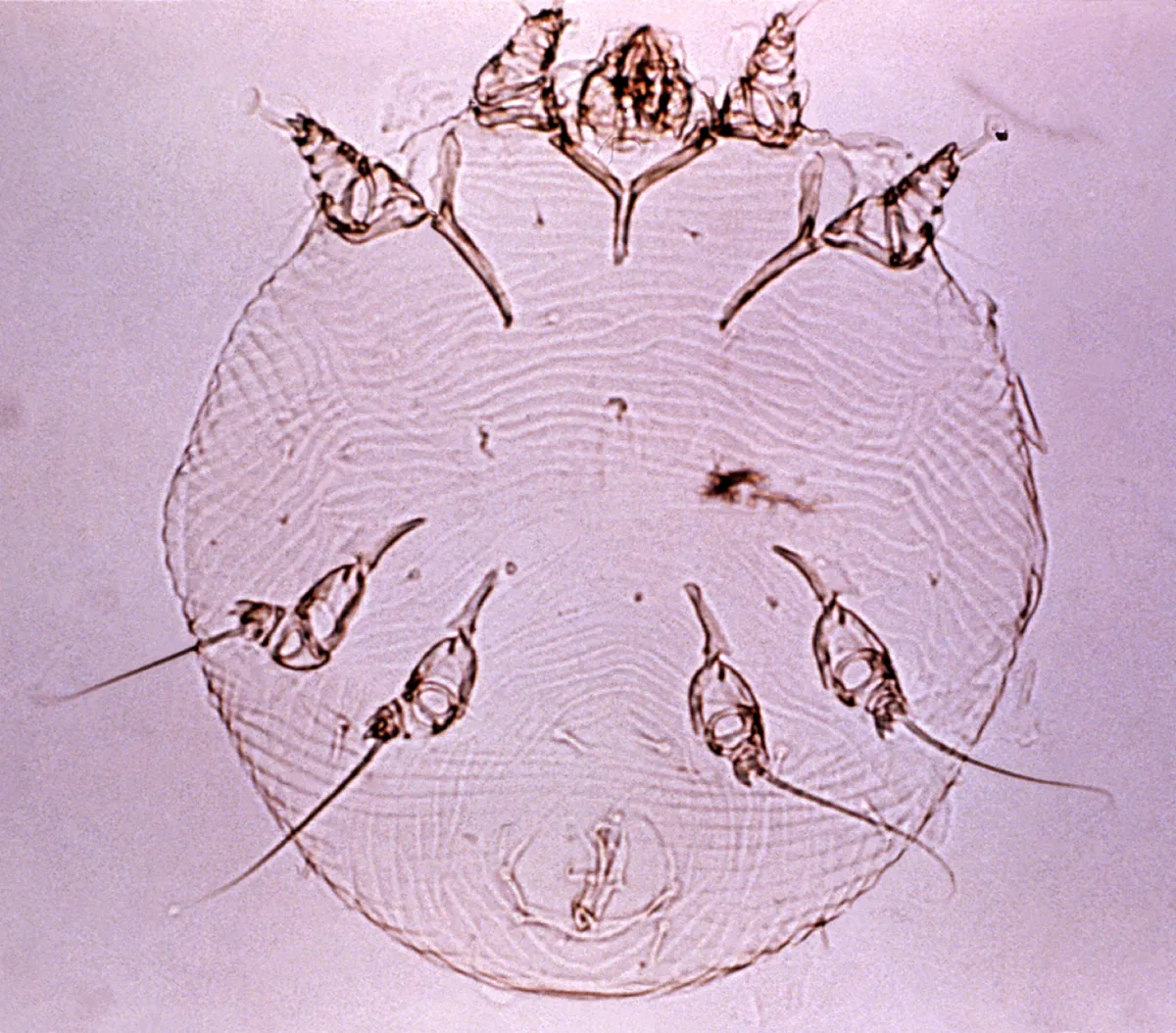 Scabies miteMicroscopic; burrows into the skin and causes intense itching, especially at night
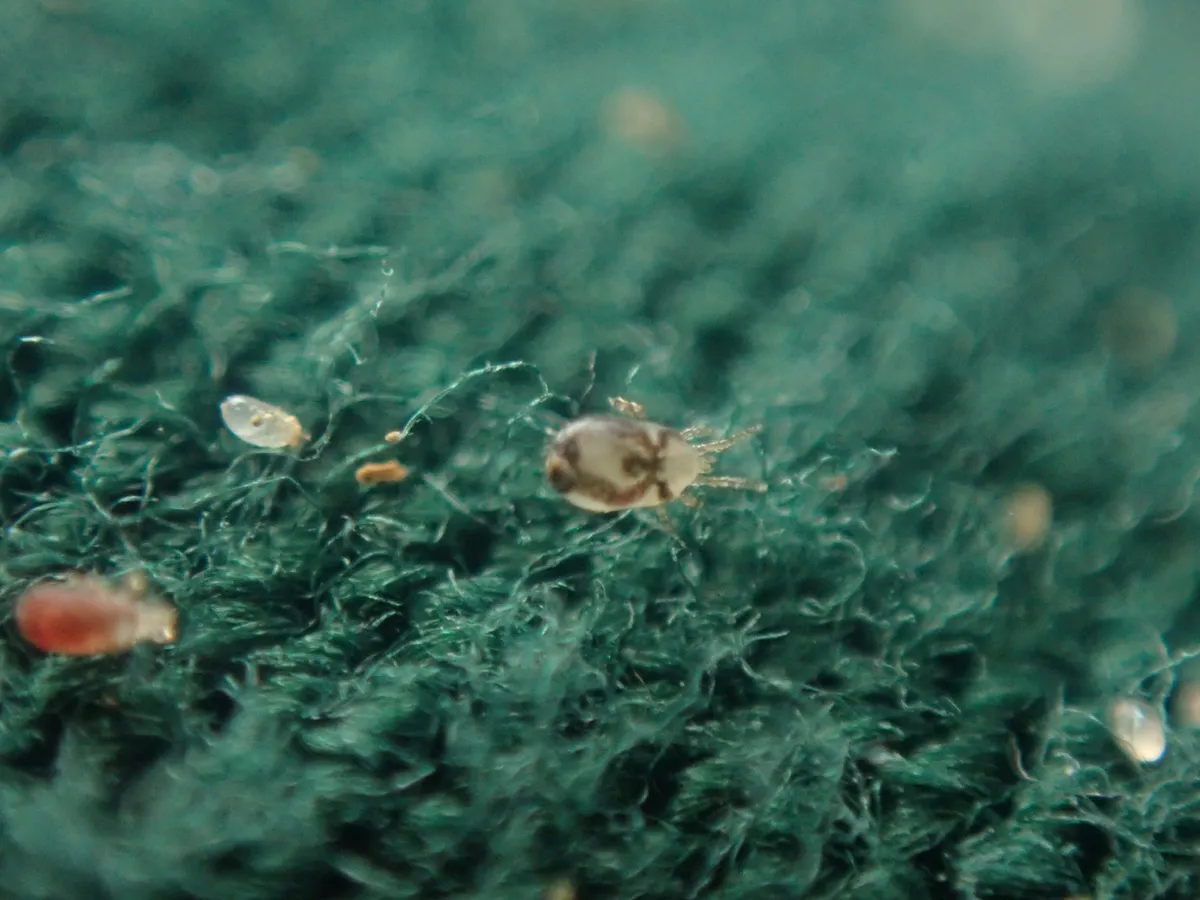 Bird miteCan bite people after its birds leave the nest but cannot reproduce on humans
Photos: Bed bug: CDC/ Donated by the World Health Organization, Geneva, Switzerland. (CDC Public Health Image Library, phil.cdc.gov), public domain. Scabies mite: CDC/ Donated by the World Health Organization, Geneva, Switzerland (CDC Public Health Image Library, phil.cdc.gov), public domain. Bird mite: no rights reserved, via iNaturalist, CC0 1.0.
Can fleas on people spread disease?
Sometimes. CDC says flea bites can cause discomfort, itchiness and irritation, and that fleas can sometimes infect people or pets with the germs that cause flea-borne typhus, plague or cat scratch disease. The US risks it names:
- Flea-borne (murine) typhus. Spread mostly by the Oriental rat flea and the cat flea, says CDC's flea-borne typhus page, when infected flea dirt is rubbed into the bite or another wound. Southern California, Hawaii and southern Texas report most US cases, and fewer than 5% of patients recall a flea bite or flea exposure in the one to two weeks before illness. Murine typhus has its own guide.
- Plague. Most often spread in the United States by infected ground squirrel fleas, mostly in rural areas of the western states, CDC says.
- Cat scratch disease. Most often spread by the scratch of a cat that has cat fleas, CDC says: the germ is shed in flea feces and gets in through the scratch.
- Tapeworms. People can get one by accidentally swallowing an infected flea; CDC says small children are at higher risk and most infected people have no symptoms.
CDC's advice for avoiding flea-borne typhus starts with keeping fleas off pets and keeping rodents and wild animals such as opossums away from the home, including sealing holes where rodents can get in. Keeping mice out of the house covers the sealing.
What should you do if fleas are biting you?
Treat the pets and the house. CDC calls keeping pets free of fleas the best way to prevent fleas on people: talk to a veterinarian about flea control products and treat pets year-round. In the house, it advises vacuuming carpets, rugs and cushions often, emptying the vacuum bag outside, and cleaning bedding, especially pet bedding, with soap and water. The step-by-step flea plan covers the pet, the house and the yard in order.
Cut down the bites while that works. CDC suggests long socks and pants, since flea bites often land on the lower legs and feet, and an EPA-registered insect repellent, such as one with DEET or picaridin, used as the label directs; whether DEET is safe has its own guide. For itchy bites, MedlinePlus says an over-the-counter 1% hydrocortisone cream can relieve itching.
This guide is general educational information, not medical advice. If you have symptoms or concerns after a bite or exposure, contact a healthcare provider.
Frequently Asked Questions
Can humans get fleas?+
People get flea bites, but the cat flea, the common flea on US dogs and cats, does not normally live on humans. Texas A&M AgriLife Extension says it can bite people who handle or sleep with infested animals, and UC IPM says adult cat fleas remain on their animal host, where they feed, mate and lay eggs. CDC says people are sometimes bitten when they share space or have contact with a flea-infested animal, which is why it calls keeping pets free of fleas the best way to prevent fleas on people.
How do you know if a human has fleas?+
Look at the bites, then at the house and the pets, since fleas do not normally live on people. Texas A&M describes flea bites as small, red, itchy bumps, and CDC says they often occur on the lower legs and feet. UC IPM suggests walking through pet resting areas in white socks pulled up to the knee, because fleas jump onto them and are easy to see. Dark specks of flea dirt in a pet's fur or bedding, and a pet that scratches constantly, point to fleas too.
Can a human have fleas in their hair?+
Fleas do not normally live in human hair. Cat fleas live on cats and dogs, and CDC says flea bites on people often occur on the lower legs and feet. Insects living in the hair, with eggs attached to the hairs close to the scalp, fit CDC's description of head lice, which live on the scalp, crawl rather than hop or fly, and die within two days if they fall off a person. CDC adds that animals do not get or spread head lice, so a pet is not the source.
How long will fleas last on a human?+
The sources here give no figure for fleas on a person, because the cat flea does not normally live on people. Texas A&M says fleas wait to jump onto a passing animal and remain on it until dislodged or groomed off, and that adult fleas without a host live only a few days to a few weeks. Repeated bites suggest fleas are still in the home or on an animal there, and CDC calls keeping pets free of fleas the best way to prevent fleas on people.
Can fleas live in your bed?+
Flea eggs and larvae can, if a pet with fleas sleeps on it. CDC says fleas can live in carpets, bedding and other surfaces in the home that pets frequent, and Texas A&M says flea eggs fall off the animal as it moves around, with larvae usually found where pets spend time. CDC advises cleaning bedding, especially pet bedding, frequently with soap and water. Bites on the face, neck or arms after sleeping fit bed bugs better, which the University of Kentucky says bite any skin exposed during sleep.
Can fleas live on clothes?+
Fleas can ride on clothing, but the CDC and extension sources cited here do not describe them living in it. The University of Kentucky says adult fleas can jump up to about 6 inches high, enough to land on a person's shoes and pant legs, and CDC says flea bites often occur on the lower legs and feet. Flea eggs and larvae develop in carpets, bedding and furniture where pets rest. To cut down bites, CDC suggests long socks and pants and clothing treated with permethrin.
Is there a flea that lives on humans?+
The human flea, Pulex irritans, is the flea for which CDC's parasite reference names humans as the primary host, but even it lives mostly off the body. The University of Florida says it is found more often in the nests and burrows of its hosts than on them, except while feeding, and that it shelters in homes and outbuildings where people and animals live close together. CDC says it is less commonly seen in industrialized areas, and UF calls the cat flea the most common domestic flea.
Can you get fleas without having pets?+
Yes. Texas A&M says buildings can become infested with no pets present, either from a previous tenant's or owner's pets or from wildlife, such as bats, rats, squirrels, raccoons and feral cats living under or around the building. Fleas can also wait: UC IPM says fully formed fleas can stay in their cocoons for up to 12 months at cool temperatures, and Texas A&M says long-vacant homes can come alive with fleas when new tenants move in. CDC adds that wild and stray animals commonly carry fleas.
Can fleas on humans make you sick?+
They can. CDC says flea bites can cause discomfort, itching and irritation, and that fleas can sometimes infect people with the germs that cause flea-borne typhus, plague or cat scratch disease, and a person who accidentally swallows an infected flea can get a tapeworm. Flea-borne typhus symptoms, such as fever, chills, headache and body aches, begin 3 to 14 days after contact with infected fleas or flea dirt, and CDC says fewer than 5% of patients recall a flea bite. See a healthcare provider and mention any flea or animal contact.
Sources
- Managing Fleas (ENTO-PU-046, January 2025) — Texas A&M AgriLife Extension Service (W. Brown and M. Keck)
- Pest Notes: Fleas (UC ANR Publication 7419) — University of California Statewide IPM Program
- Cat Flea, Ctenocephalides felis (Bouché) (EENY-011) — University of Florida IFAS Extension (D. C. Zentko and D. L. Richman)
- Human Flea, Pulex irritans Linnaeus, 1758 (EENY-798) — University of Florida IFAS Extension (C. L. Cross, E. Martin and L. Brendel)
- DPDx: Fleas — Centers for Disease Control and Prevention
- About Fleas — Centers for Disease Control and Prevention
- Preventing Fleas — Centers for Disease Control and Prevention
- About Flea-borne Typhus — Centers for Disease Control and Prevention
- DPDx: Tungiasis — Centers for Disease Control and Prevention
- About Head Lice — Centers for Disease Control and Prevention
- About Scabies — Centers for Disease Control and Prevention
- Flea Control and Prevention (ENTFACT-602) — University of Kentucky Department of Entomology (M. F. Potter)
- Bed Bugs (ENTFACT-636) — University of Kentucky Department of Entomology (M. F. Potter)
- Parasitic Mites of Humans (ENTFACT-637) — University of Kentucky Department of Entomology (A. Lopina, Z. DeVries and H. Tiffin)
- Fleas (MedlinePlus Medical Encyclopedia) — MedlinePlus, US National Library of Medicine
- Cellulitis (MedlinePlus Medical Encyclopedia) — MedlinePlus, US National Library of Medicine
- Bug bites and stings: When to see a dermatologist — American Academy of Dermatology
How this guide was made: it was researched and drafted with AI assistance from the sources listed above. A second, independent AI pass then checked each factual claim against those sources. Found an error? Email support@buzzskito.ca.