
Reviewed by Alex Francisco
Published November 19, 2026 · Fact-checked against the sources listed below
What are the signs of silverfish?
The signs of silverfish are feeding damage on paper and other starchy things, small dark droppings, scales, shed skins, small yellow stains and the insects themselves, usually seen at night or trapped in a tub. The National Park Service's silverfish module says they are seldom seen, so damage is the best way to find them, and the Park Service's guide to identifying museum insect pest damage notes that insect damage, cast skins or fecal spots are often found before the pest.

They eat starch, glue and sizing, so the signs gather on books, papers, wallpaper and plant-fiber fabric. UC IPM's silverfish and firebrat guide lists cereals, flour, pasta and pet food; paper with glue or paste; sizing in paper, including wallpaper; book bindings; and starch in clothing. Firebrats eat the same foods, and silverfish hatch white and about 1/16 inch long, UC IPM says; baby silverfish has photos of the young.
What does silverfish damage look like?
Silverfish damage looks scraped rather than chewed: roughened patches, notched edges and, where many feed, ragged holes. UC IPM says their weak jaws scrape the surface of paper instead of biting it, and that feeding usually starts in one area and spreads as unconnected, irregular holes. The NPS module lists what to look for: minute scrapings on book bindings, sizing removed unevenly, notched paper edges and, where populations are high, irregular holes eaten right through the paper.

Books and coated paper are especially at risk. The NPS module says they feed on bound volumes for the paper, the starch and sizing in bindings and the linen in some covers. UF/IFAS Extension's silverfish profile reports their strongest recorded preference is for glazed paper with a starch-rich coating, and Ohio State University Extension lists photographs among their foods. In UC IPM's photo of firebrat damage, grazing shows as gray areas and missing letters.
Newsprint, brown wrapping paper and most cardboard are seldom eaten, the NPS module and UMD Extension say, though Virginia Tech says silverfish readily feed on cardboard and paper products. Either way, the NPS module lists empty cardboard boxes and waste paper among the food and harborage to clear out.
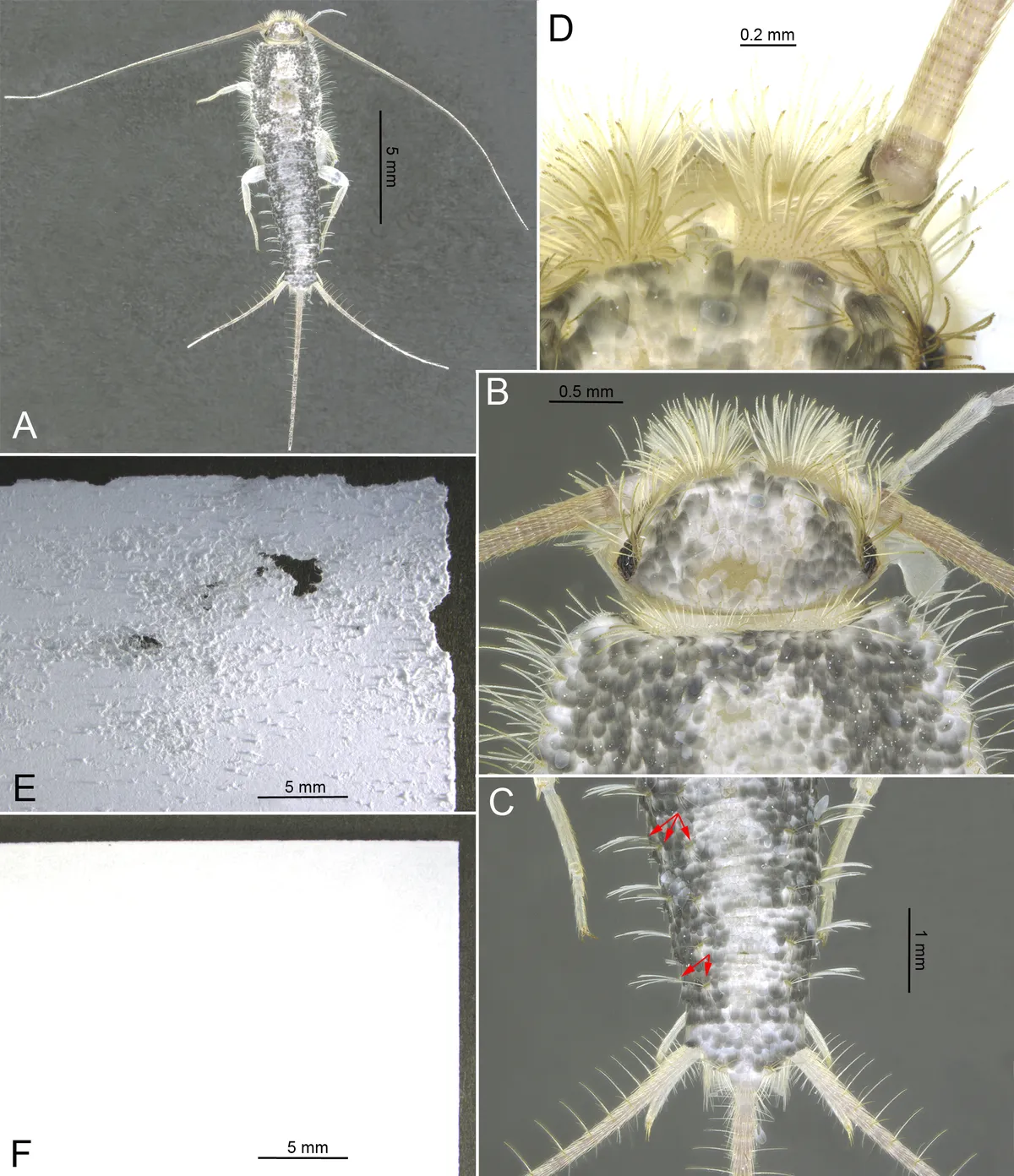
A 2021 study of gray silverfish in Estonia calls it a substantial pest, especially of paper, with a much lower moisture demand than other indoor silverfish and firebrats, so it has a good chance of surviving in archives, libraries and museums, which the authors say need to monitor for it. University of Missouri Extension finds it from basement to attic.
Damage to wallpaper
Silverfish eat the paste as well as the paper. The NPS module says feeding on wallpaper or the paste behind it can make the paper come loose from the wall, and University of Maryland Extension says silverfish may eat holes in wallpaper or the paste from under it.
Damage to clothes, linens and other fabric
Silverfish go mostly for plant fibers and starch, seldom wool. UMD Extension says they occasionally attack fabrics: linen is their preferred fabric, though they may also feed on silks, rayon and cotton, and damaged fabric shows droppings, scales, irregular feeding marks on single fibers and, on linens, yellowish stains. The NPS module says they seldom feed on wool and other animal-based textiles, so holes in wool, fur or feathers point to carpet beetles or clothes moths.
What do silverfish droppings look like?
Silverfish droppings are small, dark specks you can see without a magnifier, lying on and around what the insects have eaten. The NPS module lists droppings, scales and small yellow stains as feeding signs, and says those small, dark droppings, with scales seen through a hand lens, reveal an active infestation. Firebrat droppings can look paler: in UC IPM's photo of firebrat damage to paper, the scales and fecal debris show as lighter brown spots.
Small dark specks alone do not settle it, because cockroaches leave them too. The University of Kentucky's cockroach fact sheet describes roach droppings as pepper-like specks, and UC IPM's cockroach guide adds dark spots and smears under kitchen counters, behind drawers and in cabinets. Specks with smears or egg cases in a kitchen point to cockroaches; specks on a book or stored linen, with scales and grazing, point to silverfish. Compare photos of cockroach droppings and mouse droppings.
Do silverfish leave yellow stains?
Yes, sometimes, on fabric and paper. The NPS module lists small yellow stains among the signs of feeding, UMD Extension says linens they feed on can show yellowish stains, and Iowa State University's Yard and Garden says silverfish and firebrats may consume or stain food, fabric, paper, books or wallpaper. University of Maine Cooperative Extension says firebrats can stain clothing with their feces.
A stain alone proves little: UC IPM says fungi linked to their feeding often discolor pages, so count a stain only when grazing, scales or droppings sit beside it.
What do silverfish scales and shed skins look like?
Silverfish scales look like fine, silvery dust that catches the light and clings to surfaces. UC IPM describes them as delicate, dustlike and slightly shiny, says they stick to most surfaces, and calls scales around or beneath damaged items a good indication that silverfish or firebrats did the damage. They show best under a hand lens (NPS), and young silverfish under 1/8 inch have none yet (UC IPM).
Shed skins are another sign, because silverfish keep molting all their lives: UC IPM counts 45 to 60 stages, and Missouri Extension says they have been seen to shed their skins more than 30 times a year. The Park Service's damage guide counts cast skins among the evidence of insects that is often found before the pest itself.
Where should you look for silverfish signs?
Look where it is damp, dark and stocked with paper or starch, and look again at night. Iowa State says silverfish turn up almost anywhere in a house but most often in moist, warm spots such as around sinks and plumbing fixtures, and UMD Extension says people often find them when opening a cupboard or moving an object. Guides to bathroom bugs and basement bugs sort the other insects there.
Where to check for silverfish signs
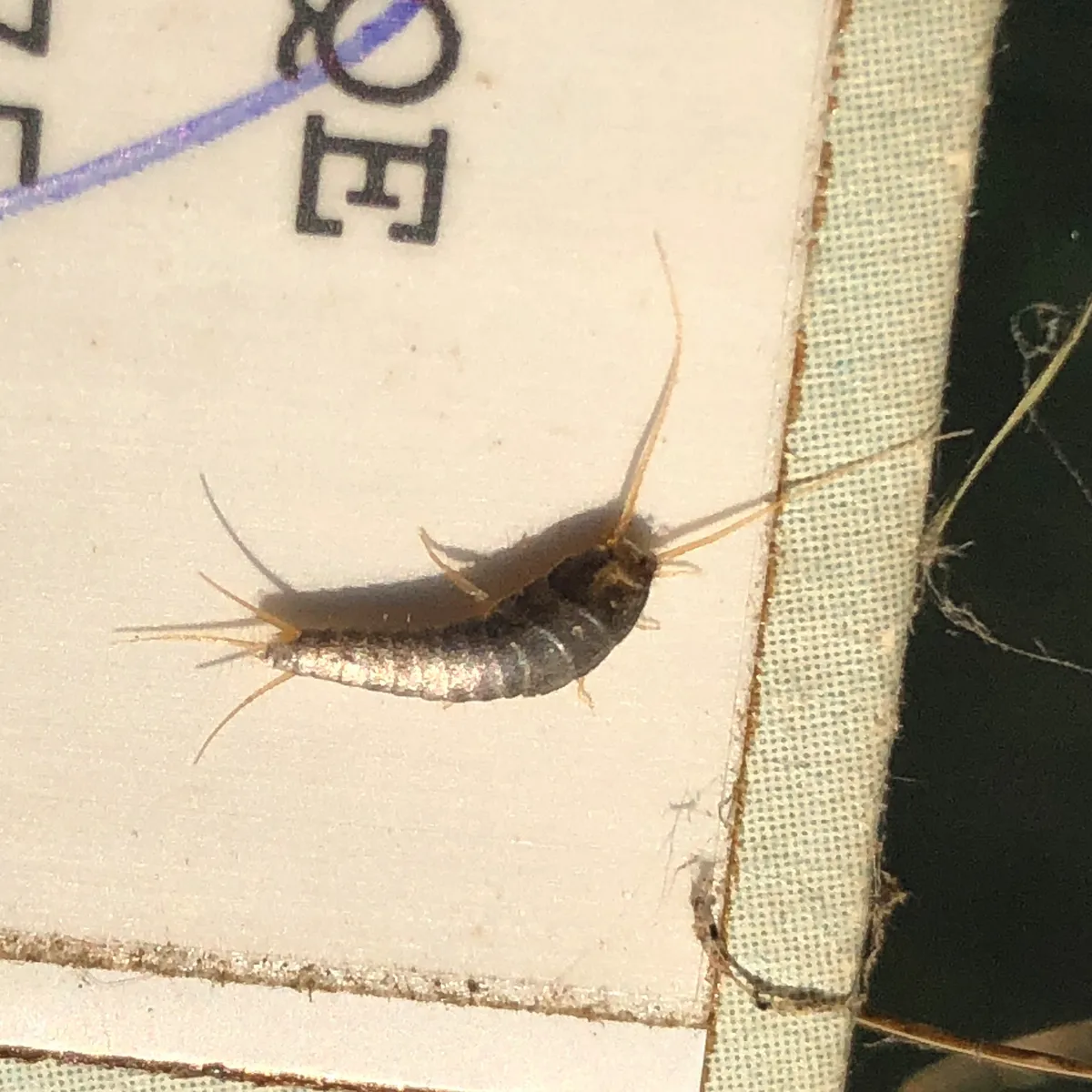
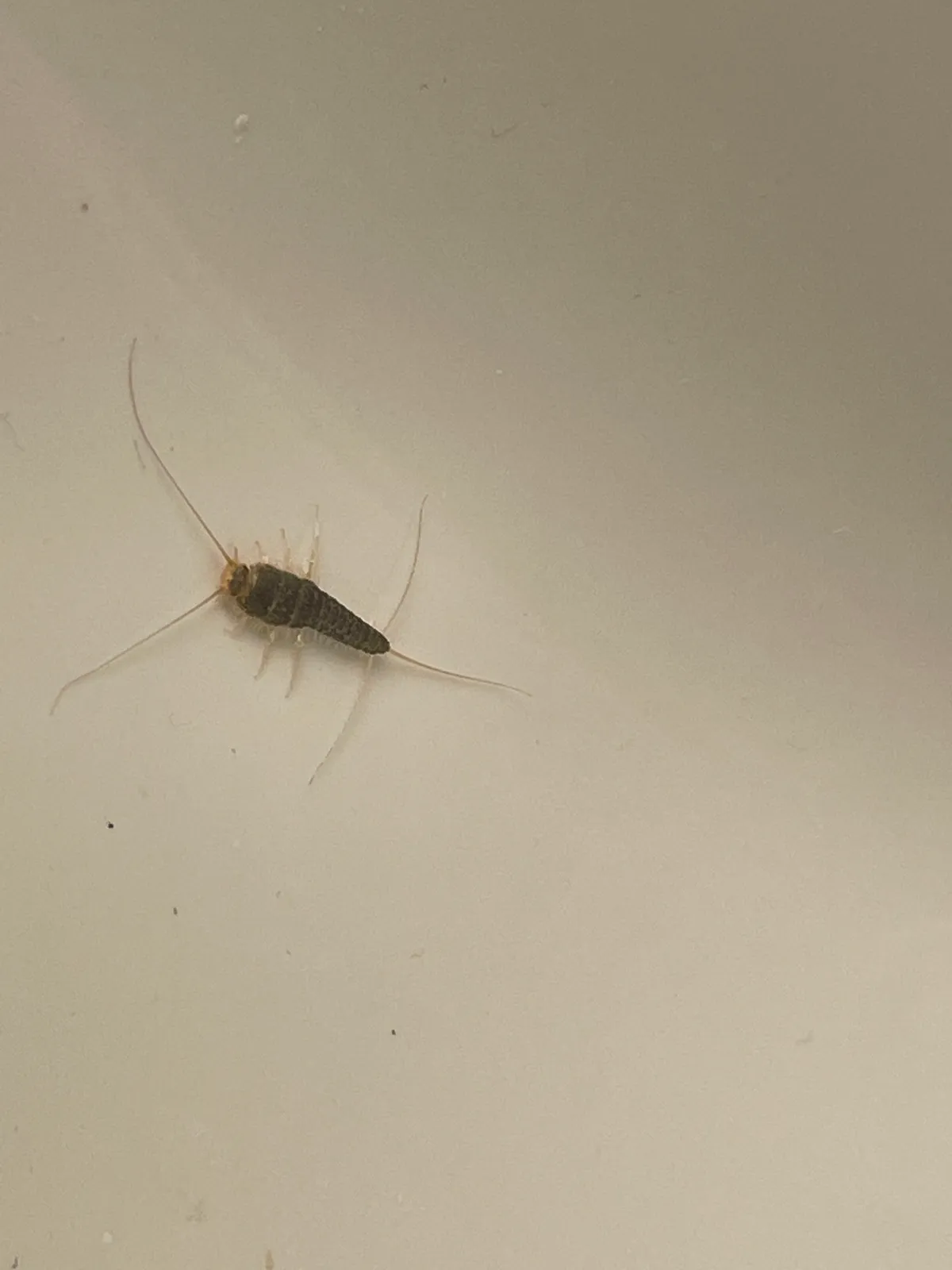
- Tubs, sinks and basins. Missouri Extension says silverfish fall in while seeking moisture and get trapped, and Virginia Tech says homeowners may not know they have silverfish until one turns up there.
- Basements, laundry rooms and under sinks. UMD Extension names these damp, cool spots; UC IPM puts the silverfish's preferred range at 71 to 90°F.
- Bookshelves and stored papers. The NPS module says stored books and papers are especially at risk, and silverfish stay near food once they find it.
- Boxes and furniture from storage. Missouri says eggs, young or adults can arrive on cardboard boxes, cartons or furniture.
- Closets and pantry shelves. Check seldom-used linens and starched clothes, and cereal, flour, pasta and pet food.
- Bathroom carpet. Ohio State says infestations occasionally build up where cornstarch-based cosmetics fall into it.
- Attics and crawl spaces. The NPS module says gray silverfish prefer these drier spots, and four-lined silverfish often infest attics, particularly under wooden-shingle roofs; Missouri Extension says houses with wooden shingles seem particularly attractive to silverfish and firebrats.
- Furnaces and water heaters. Firebrats favor hot spots like these (Penn State Extension, Missouri).
How can you confirm silverfish are there?
Catch one. Silverfish come out at night for food and water (UC IPM), so traps and an after-dark check show what a daytime search misses.
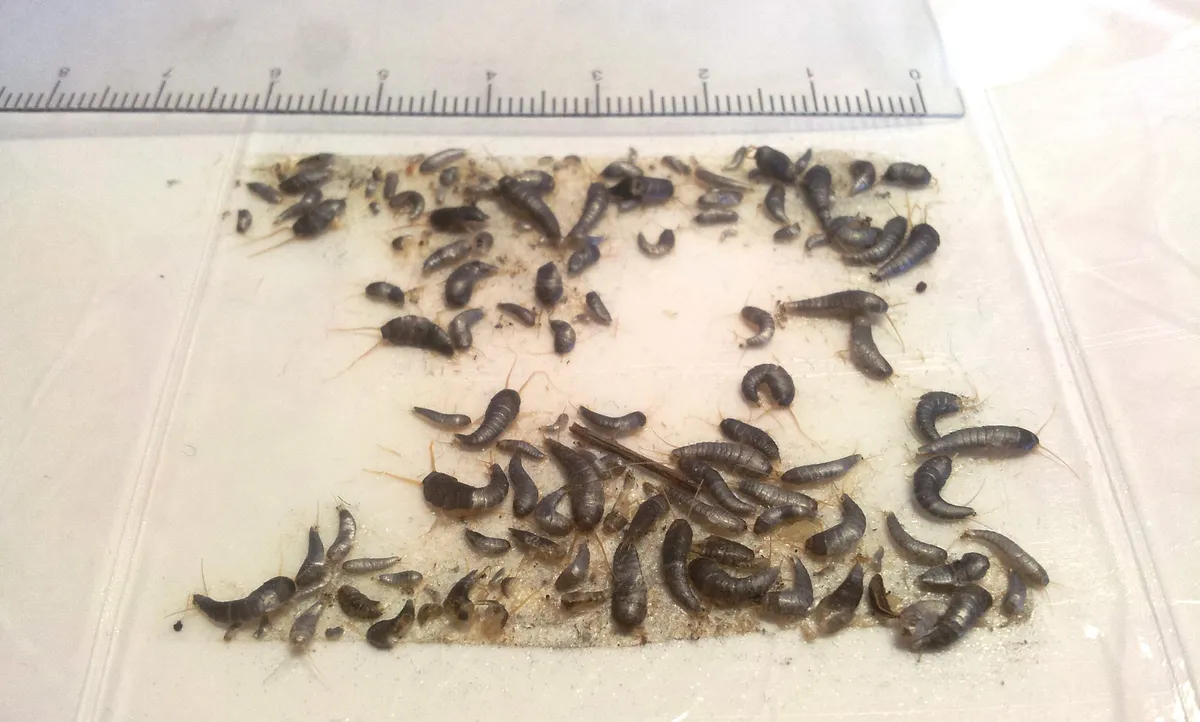
- Set cockroach sticky traps, or small glass jars wrapped outside with masking tape, in corners and along edges near the damage, as UC IPM suggests; the insects climb into the jars and cannot get out.
- Lay out a flour-paste card: paper coated thinly with flour paste shows small feeding marks if silverfish are present, the NPS module says.
- Check the traps and the card regularly, and note where catches and new marks turn up.
- Look with a flashlight after dark; Ohio State describes silverfish as nocturnal and fast-moving.
The busiest trap may point toward the hiding place: UC IPM says silverfish crowd into a central hiding place by day, drawn together by pheromones, and females often lay eggs there, though it warns that they travel long distances for food, so the source can be hard to pinpoint. A guide to silverfish trap types, written for Canadian readers, shows where each goes.
Is it a silverfish or a firebrat?
Check the color and the spot. UC IPM describes the common silverfish as silver or pearl gray and the firebrat as mottled gray or brown, both about 1/2 inch long; silverfish prefer damp places at 71 to 90°F, while firebrats thrive in hot, dry spots above 90°F. UMD Extension finds firebrats around ovens, heating units, fireplaces and hot water pipes, in attics in summer and near the furnace in winter.
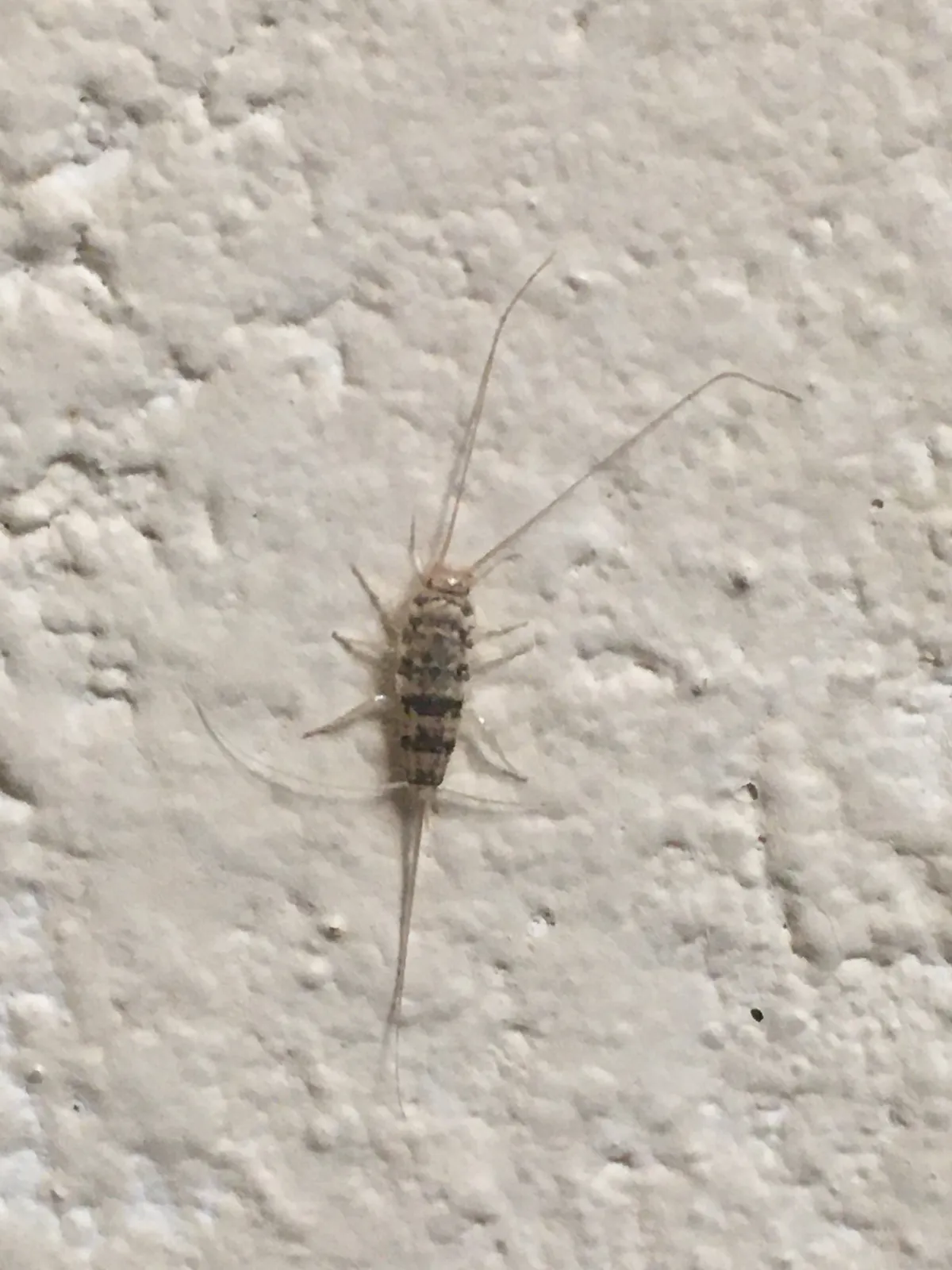
Both leave the same kinds of signs, so the difference mostly changes where you search. Bugs that look like silverfish compares the silverfish species, the firebrat and other look-alikes side by side.
What else damages books, paper and fabric like silverfish?
Cockroaches, carpet beetles, clothes moths, booklice, book-boring beetles and mice can all leave damage that passes for silverfish work; what lies beside the damage tells them apart. Cockroaches are a close match on a bookshelf: they graze book covers too, as the CDC photo below shows, but leave pepper-like specks, smears and egg cases.
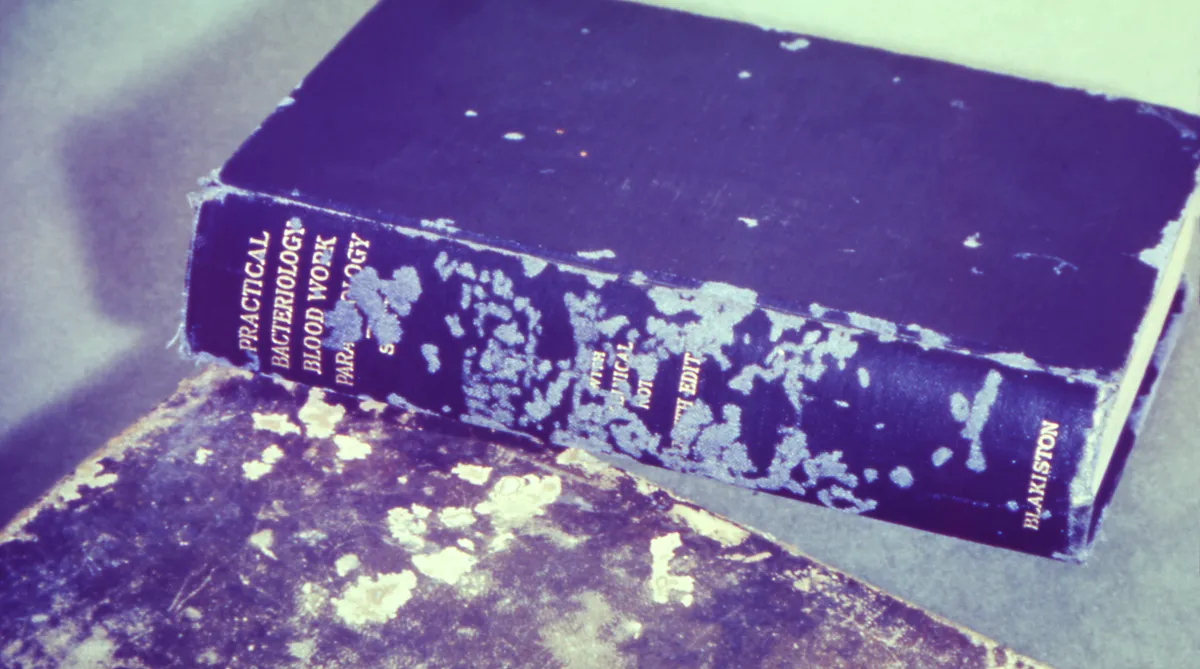
Booklice are usually under 1/16 inch long, says UF/IFAS Extension's booklice guide, and the Park Service's damage guide says they signal a moisture problem. The same guide ties round holes with fine dust to cigarette and drugstore beetles, and to powderpost beetles, whose larvae tunnel unseen, even in books. Mice leave gnawed, irregular edges, shredded paper and dark droppings 1/8 to 1/4 inch long, like small grains of rice, per the Park Service's guide to mouse and rat damage.
Holes in wool point away from silverfish: UC IPM's carpet beetle guide describes bristly cast skins and salt-grain pellets, and UC IPM's clothes moth guide silken tubes, mats or cases. The signs of carpet beetles, small moths in the house and booklice each have photo guides.
Commonly confused with
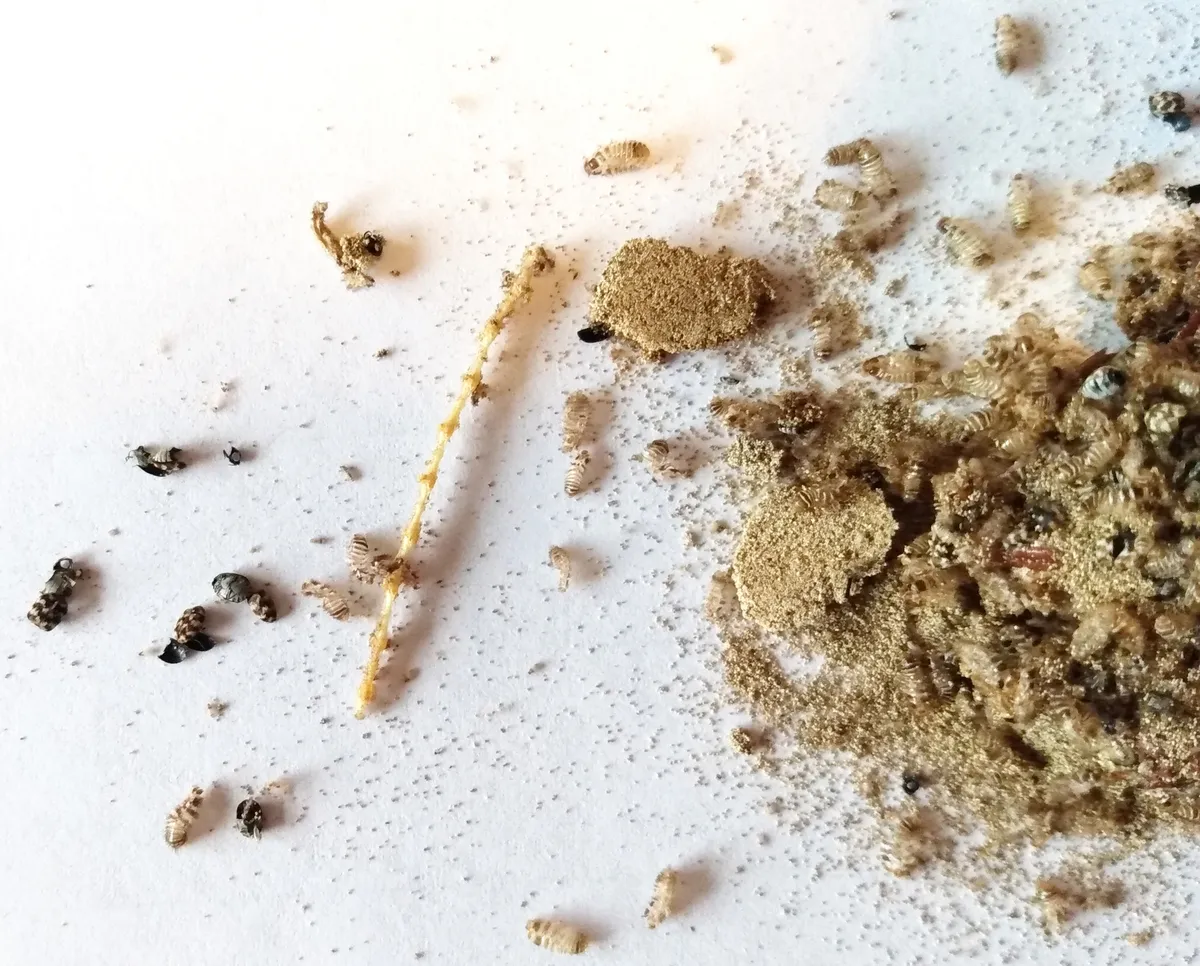 Carpet beetle signsBristly shed skins and salt-grain droppings beside holes in wool, fur or feathers
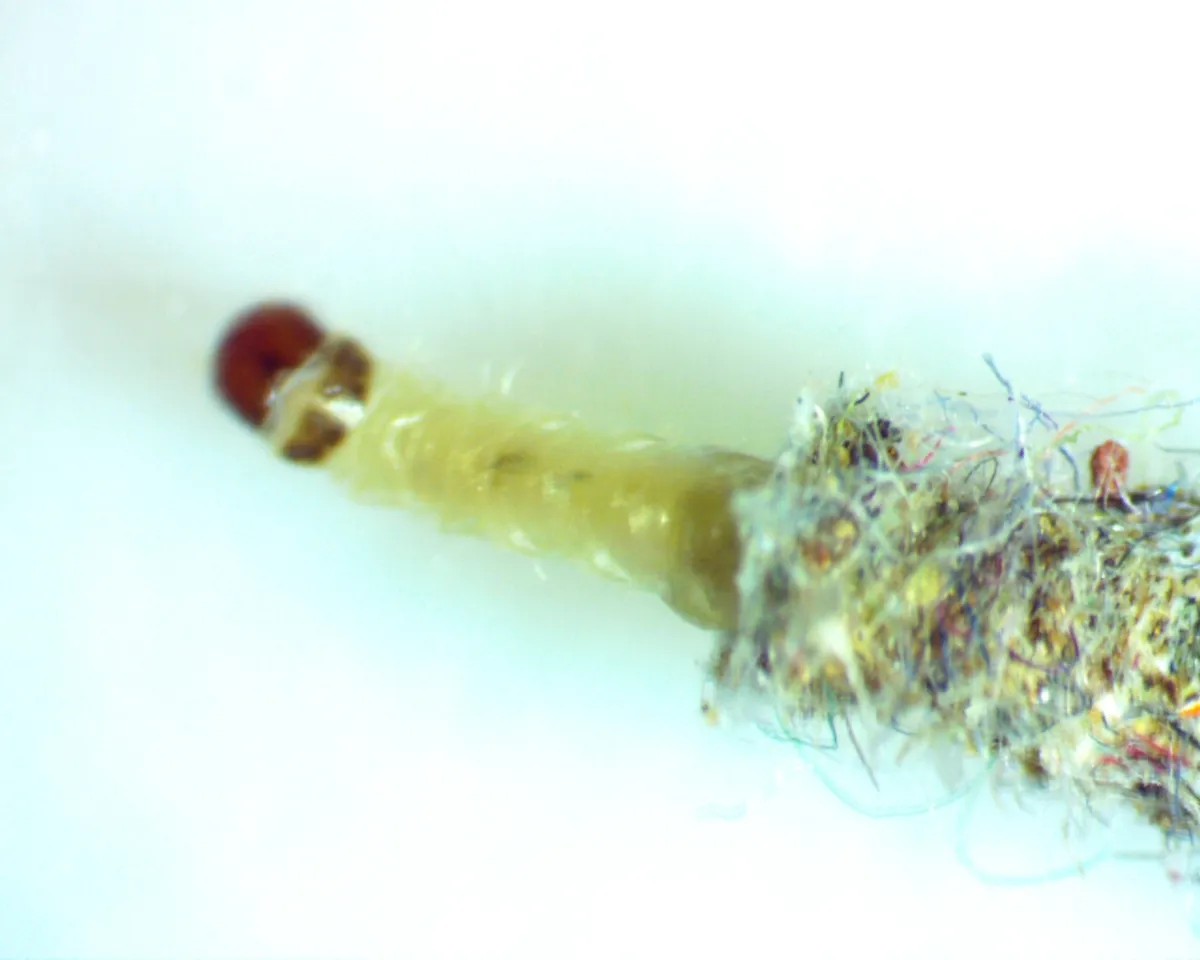 Clothes moth larvaLeaves silk webbing or carries a silk case; feeds on wool, often under collars and cuffs
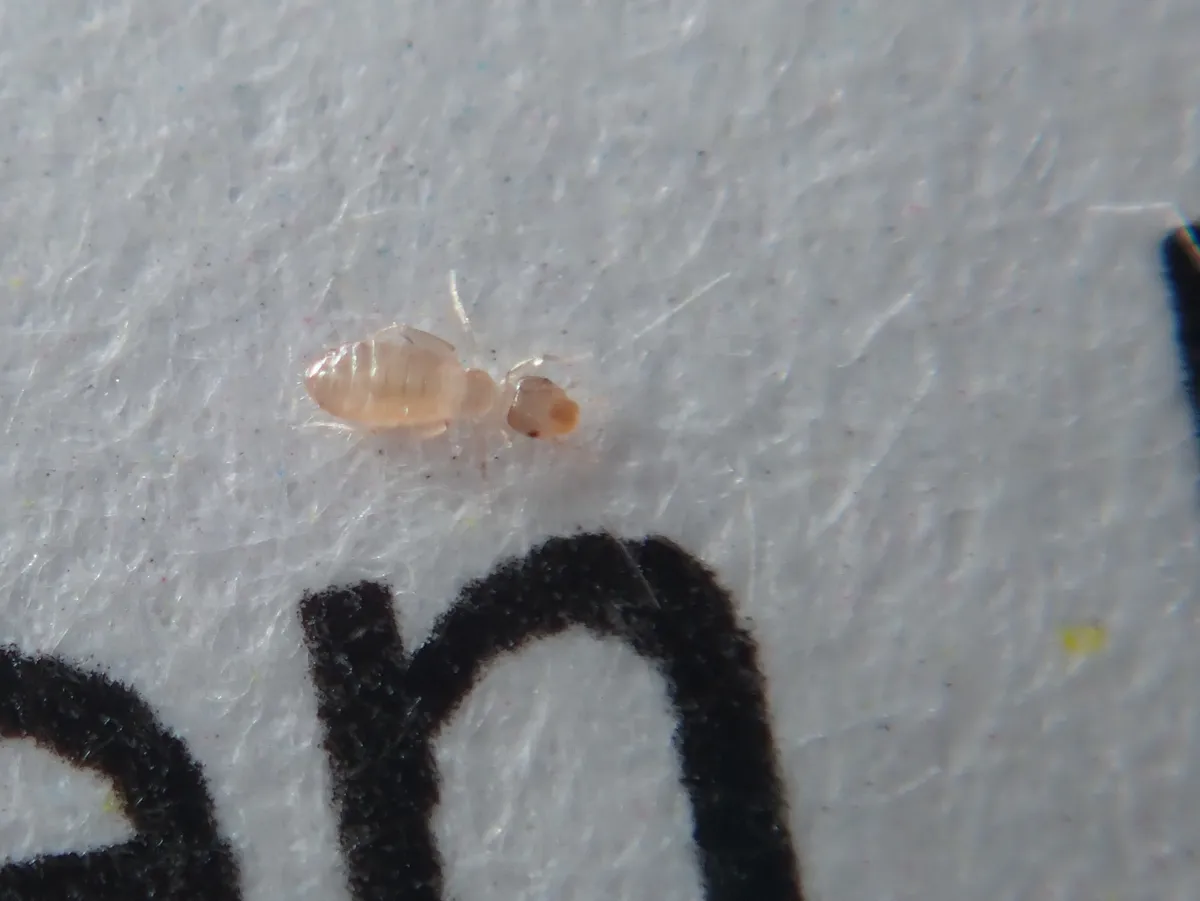 BooklouseUsually under 1/16 inch, soft and pale; found among books and papers in humid rooms
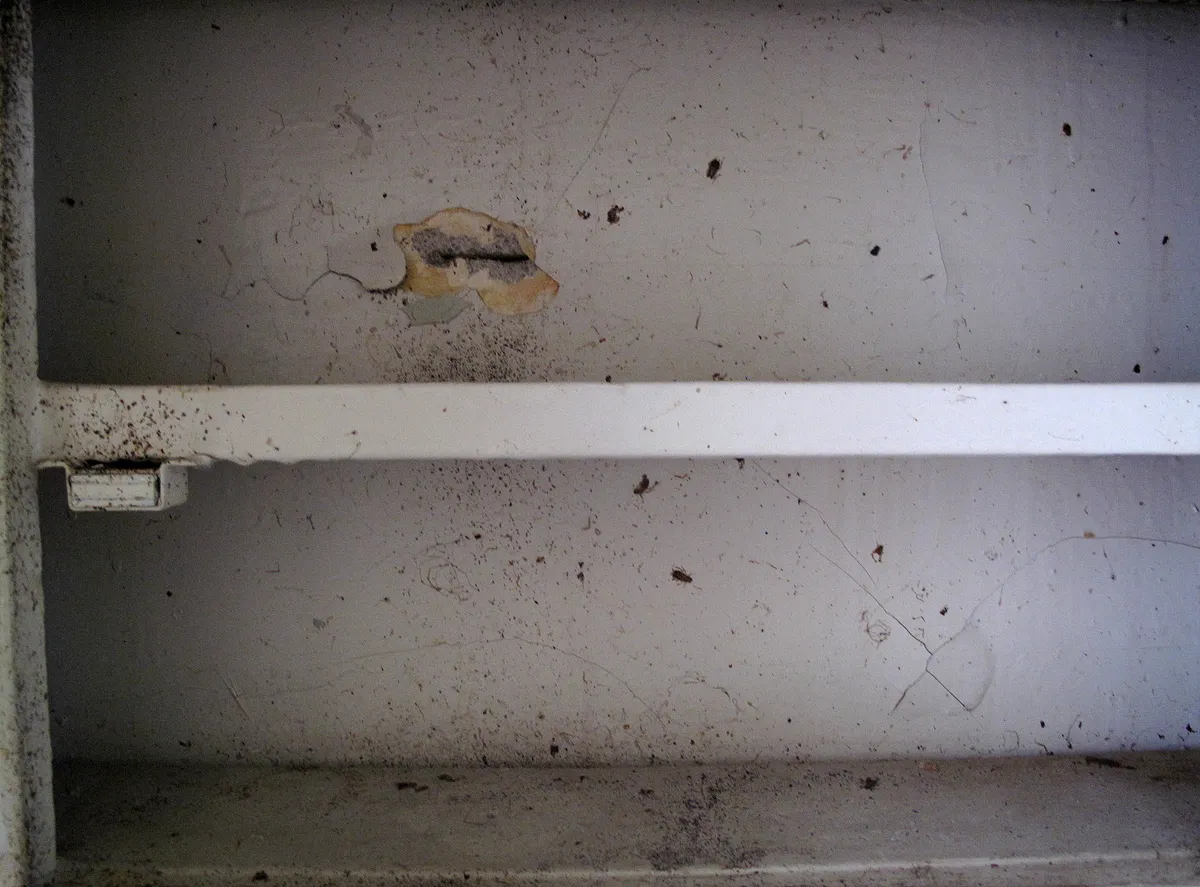 Cockroach droppingsPepper-like specks and dark smears, with egg cases, around kitchen cabinets and drawers
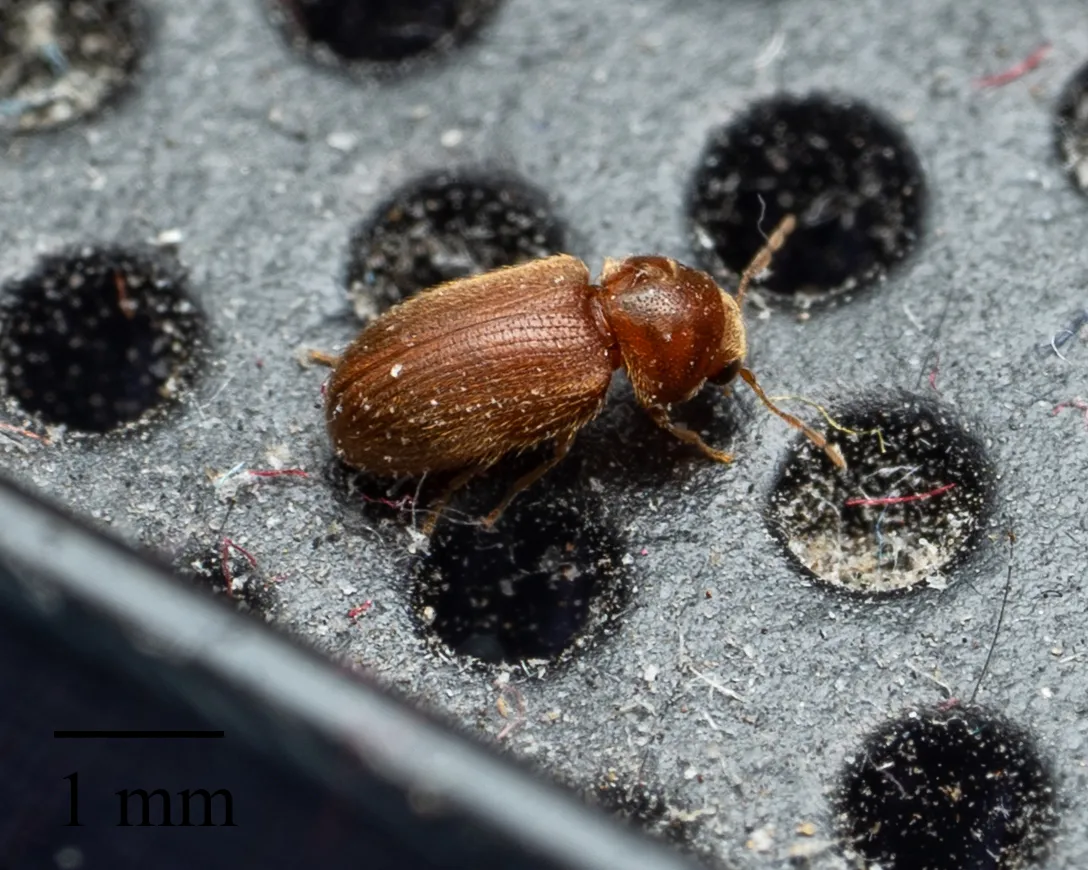 Drugstore beetleRound exit holes with fine dust in books and dry goods, not surface grazing
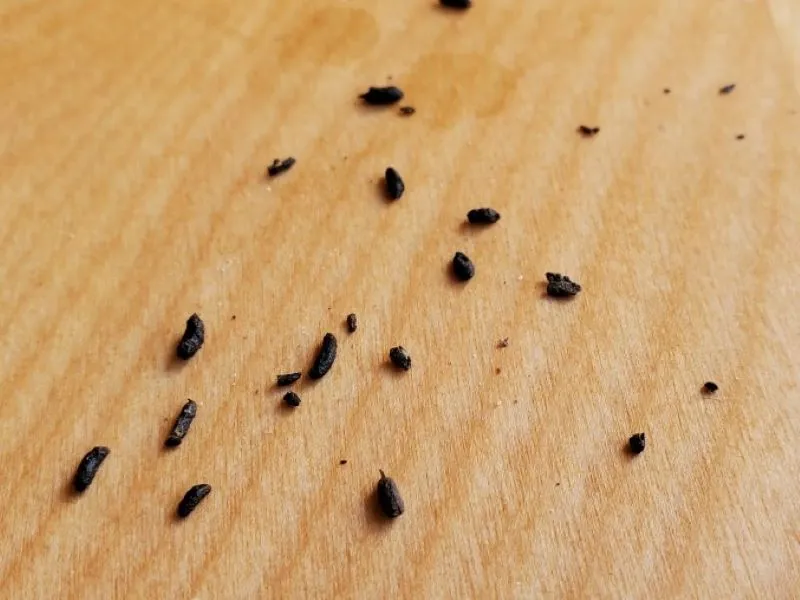 Mouse droppingsDark pellets 1/8 to 1/4 inch, like rice grains, with gnawed, irregular paper edges
Photos: Carpet beetle signs: (c) John Powers, some rights reserved (CC BY), via iNaturalist, CC BY 4.0. Clothes moth larva: no rights reserved, via iNaturalist, CC0 1.0. Booklouse: (c) Alexis Tinker-Tsavalas, some rights reserved (CC BY), via iNaturalist, CC BY 4.0. Cockroach droppings: Downtowngal, CC BY-SA 4.0, via Wikimedia Commons, CC BY-SA 4.0. Drugstore beetle: no rights reserved, via iNaturalist, CC0 1.0. Mouse droppings: NPS Photo (U.S. National Park Service, nps.gov), public domain.
What do the signs mean: a few silverfish or an infestation?
A few silverfish and no damage may need no action; fresh damage with droppings and scales, plus steady trap catches, means a settled population. Iowa State says control may not be needed when only a few are present and no damage is noticed, and that damage becomes significant only in very large infestations over long periods.
| What you found | What it suggests |
|---|---|
| One silverfish in a tub or sink | Silverfish nearby; set traps to see how many (Virginia Tech, UC IPM) |
| Several caught in one area | Their shared daytime hiding place may be close, though they travel far for food (UC IPM) |
| Fresh scrapings, droppings and scales | An active infestation (NPS) |
| Holes eaten through paper | A high population (NPS) |
| Young, pale silverfish | Eggs laid nearby, often in the shared hiding place (UC IPM) |
| Damage but no insects | Old damage, or silverfish hiding by day; traps or a flour-paste card show whether they are active (NPS) |
From Virginia Tech, UC IPM and the National Park Service's silverfish module, each linked on this page.
Big numbers take time. The NPS module says silverfish are long-lived with a moderate reproduction rate, so populations grow slowly, and Virginia Tech and Ohio State say a large infestation usually means a building has been infested for a while. The Park Service's damage guide adds that silverfish favor moist spots at 70 to 80°F and can be an indicator of moisture problems.
What should you do once you find silverfish signs?
Protect what they eat, dry the air and confirm where they live before treating anything; the NPS module bases the decision to act on the amount of damage and proof of an active infestation. How to get rid of silverfish covers the full plan, and readers in Canada can use the Canadian silverfish control guide.
- Seal up valuables. The NPS module advises tightly sealed containers and cabinets for valuable papers and books, and clearing out empty boxes and waste paper.
- Dry the air. The EPA's guide to mold and moisture recommends indoor humidity below 60 percent, ideally 30 to 50 percent, and the NPS module suggests dehumidifiers or air conditioners where books are stored; this dehumidifier guide compares sizes.
- Seal or vacuum cracks. The NPS module says sealing the cracks where silverfish hide reduces their habitat, and vacuuming cracks around bookcases removes them where sealing is not possible.
- Check what comes in. Missouri Extension suggests inspecting boxes, furniture and cartons from infested areas.
- Keep checking. The NPS module recommends regular checks for damage, droppings, scales or insects, using flour-paste cards or trap jars.
Frequently Asked Questions
How do I know if I have a silverfish infestation?+
Look for their feeding signs, then catch some. The National Park Service's silverfish module lists minute scrapings on book bindings, unevenly stripped sizing, notched paper edges, small dark droppings, scales and small yellow stains, and says an active infestation can be confirmed by the droppings and scales. UC IPM suggests cockroach sticky traps or small jars wrapped in masking tape, set in corners and along edges. Many catches in one area, together with fresh damage, point to an established population rather than a stray.
Can you see silverfish droppings with the naked eye?+
Yes. The National Park Service's silverfish module describes silverfish droppings as small and dark and says they are visible to the eye, while their scales usually need a hand lens. Firebrat droppings can look paler: in a UC IPM photo of firebrat damage to paper, the scales and fecal debris show as lighter brown spots. Pepper-like specks with smears and egg cases in a kitchen are more typical of cockroaches, which is how the University of Kentucky describes their droppings.
Can silverfish damage clothes?+
Yes, occasionally, mainly linen, cotton, rayon and silk, and starched fabric. University of Maryland Extension says linen is their preferred fabric and that damaged fabric shows droppings, scales, irregular feeding marks on individual fibers and, on linens, yellowish stains. UC IPM lists starch in clothing among their foods. The National Park Service says they seldom feed on wool and other animal-based textiles, so holes in a wool sweater point to carpet beetles or clothes moths instead.
Do silverfish eat photographs?+
They can. Ohio State University Extension lists photographs among the things silverfish and firebrats have been observed eating, along with glue, wallpaper paste, book bindings and paper, and UF/IFAS reports that their strongest recorded preference is for glazed paper with a starch-rich coating. The National Park Service recommends keeping valuable papers, books and documents in tightly sealed containers or cabinets, and lowering humidity in rooms where they are stored.
Are silverfish a sign of moisture problems or mold?+
Often of moisture. The National Park Service's guide to museum pest damage says silverfish prefer moist spots at 70 to 80°F and can be an indicator of moisture problems, and UC IPM says that at higher temperatures they need relative humidity above 75 percent. Virginia Tech lists molds in a damp bathroom among the things they eat, and UC IPM names certain fungi as food. Gray silverfish and firebrats tolerate drier air, so a silverfish does not always mean a damp house.
Are silverfish a sign of a dirty house?+
Not necessarily. Silverfish often arrive in things people carry in: Missouri Extension says infestations can start with eggs, young or adults on cardboard boxes, cartons or furniture, and UC IPM says large numbers can move into new homes from surrounding wild areas as those dry out in summer. Dust does feed them, though: UC IPM counts household dust and debris among their important foods and says routine cleaning helps control them, along with keeping basements, laundry rooms and bathrooms dry.
How much damage can silverfish do?+
Usually little, unless there are many for a long time. Iowa State University says damage becomes significant only in very large infestations present over long periods, and Virginia Tech calls silverfish and firebrats nuisance pests that can contaminate food and damage paper items and textiles. The National Park Service's silverfish module warns that large populations can cause severe damage to paper and paper products, and the Park Service treats silverfish mainly as archival pests.
When are silverfish most active?+
At night. UC IPM says silverfish and firebrats are nocturnal, hiding during the day and coming out at night to look for food and water, and Ohio State describes them as nocturnal and fast-moving. That is why their damage, droppings and scales are often found before the insects, and why a flashlight check after dark, sticky traps or a jar trap left overnight show more than a daytime search.
Where do silverfish hide during the day?+
In cracks and crevices close to their food. UC IPM says silverfish and firebrats crowd into a central hiding place during the day, drawn together by pheromones, and that females often lay their eggs there. Penn State Extension says they reach hiding places through cracks under and behind baseboards, around windows and door trim, and holes where pipes pass through walls and floors. University of Maryland Extension adds that people often find them when opening a cupboard or moving an object.
Is silverfish damage the same as bookworm damage?+
No. Round holes and tunnels through a book, the damage often blamed on bookworms, usually point to boring beetles: the National Park Service names drugstore beetles, which can leave shot holes, and powderpost beetles, whose larvae tunnel unseen and leave exit holes with powdery frass. Silverfish scrape the surface instead, leaving roughened patches, notched edges and irregular holes, with small dark droppings and scales nearby, as the Park Service's silverfish module describes.
Sources
- Integrated Pest Management Manual: Silverfish (updated 2003; archived copy, 2009) — National Park Service, via the End of Term Web Archive (University of North Texas Libraries)
- Pest Notes: Silverfish and Firebrats (UC ANR Publication 7475) — University of California Statewide IPM Program
- Identifying Museum Insect Pest Damage (Conserve O Gram 3/11, 2008) — National Park Service
- Silverfish and Firebrats — University of Maryland Extension
- Bristletails (Silverfish and Firebrats) — Penn State Extension
- Silverfish and Firebrats (G7376) — University of Missouri Extension
- Silverfish and Firebrats (ENTO-24NP) — Virginia Cooperative Extension, Virginia Tech
- Silverfish and Firebrats (ENT-64) — Ohio State University Extension
- Silverfish and Firebrats — Iowa State University Extension and Outreach, Yard and Garden
- Silverfish and Firebrats — University of Maine Cooperative Extension
- Silverfish, Lepisma saccharina (EENY-705) — UF/IFAS Extension
- An update to the distribution of invasive Ctenolepisma longicaudatum Escherich in northern Europe (Sammet et al., 2021) — Biodiversity Data Journal, via PubMed Central
- Cockroach Elimination in Homes and Apartments (ENTFACT-614) — University of Kentucky Department of Entomology
- Pest Notes: Cockroaches (UC ANR Publication 7467) — University of California Statewide IPM Program
- Booklice and Silverfish (ENY-225/IG094) — UF/IFAS Extension
- Identifying Mouse and Rat Damage in Museum Collections (Conserve O Gram 3/12) — National Park Service
- Pest Notes: Carpet Beetles (UC ANR Publication 7436) — University of California Statewide IPM Program
- Pest Notes: Clothes Moths (UC ANR Publication 7435) — University of California Statewide IPM Program
- A Brief Guide to Mold, Moisture and Your Home — US Environmental Protection Agency
Read and approved by Alex Francisco. Found an error? Email support@buzzskito.ca.