
Published by BuzzSkito Mosquito & Tick Control
Published October 25, 2026 · Fact-checked against the sources listed below
What is the difference between a possum and an opossum?
In North America there is no difference: possum is the short, everyday name for the Virginia opossum, Didelphis virginiana, and UF/IFAS Extension's Virginia opossum fact sheet lists possum among its common names. The difference shows up in Australia and New Guinea, where possum is the name of a separate group of marsupials.
The word is North American in origin. The Pennsylvania Game Commission traces opossum to an Algonquin word, apasum, meaning white animal. Tasmania's Parks and Wildlife Service says Australia's possums got the name later, from a supposed similarity to the opossums of South America, and that the two groups are not closely related beyond both being tree-dwelling marsupials. Some older people in Tasmania still call their possums opossums, it adds.
National Geographic's possum page puts it plainly: possums and opossums are different creatures. Possums form a suborder of about 70 tree-living marsupial species native to Australia, New Guinea and the Indonesian island of Sulawesi, while opossum typically means the Virginia opossum and its relatives in the genus Didelphis, all of which live in North and South America.
So the answer depends on where you stand. In the US and Canada the two words are interchangeable, and because the Smithsonian's National Zoo calls the Virginia opossum the only marsupial found north of Mexico, any wild pouched mammal you see there is this one. The zoo puts its native range from Costa Rica north through the US east of the Rocky Mountains into southern Canada, with populations introduced on the West Coast.
What does an opossum look like?
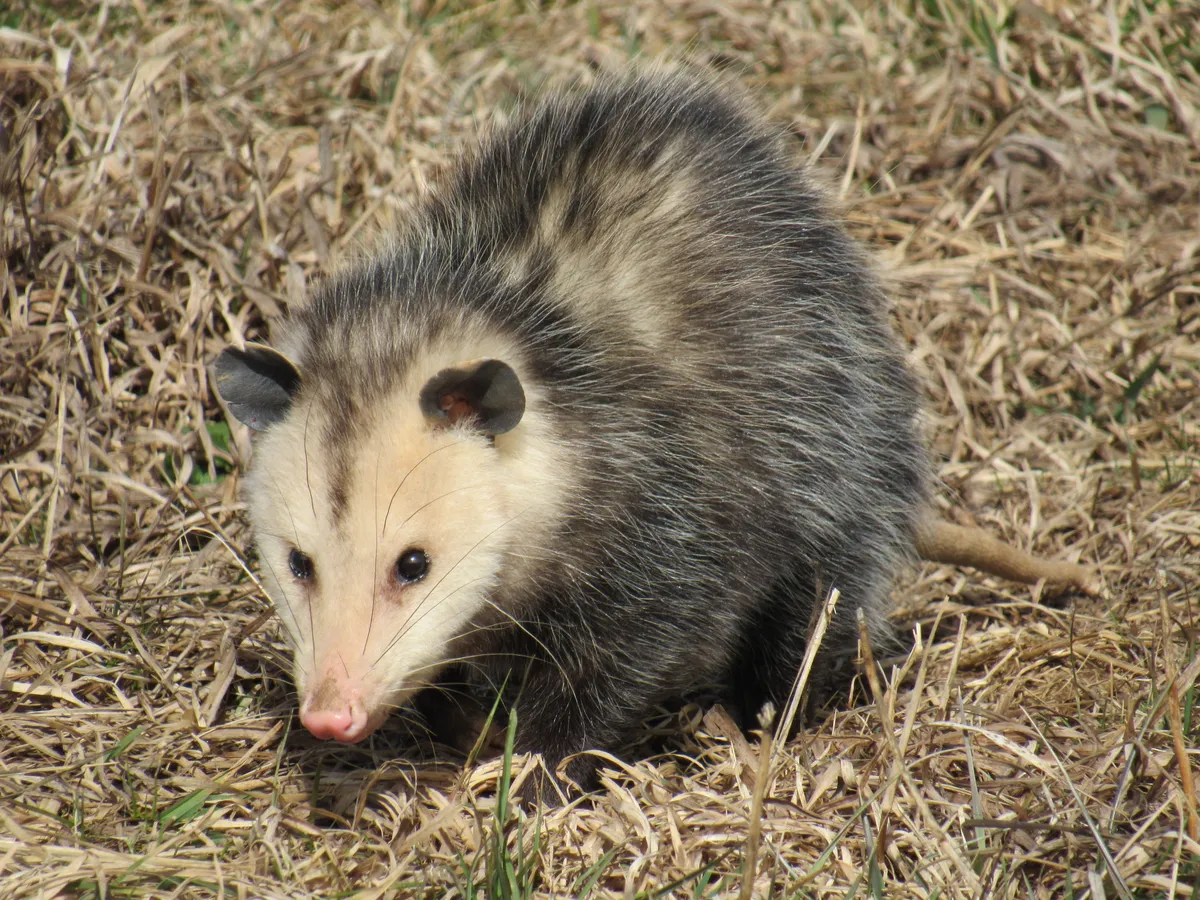
An opossum is a cat-sized gray animal with a white, pointed face, a pink nose, thin bare ears and a long, scaly tail. The Missouri Department of Conservation's field guide gives a total length of 24 to 34 inches, 9 to 15 inches of it tail, and a weight of 4 to 15 pounds, with long, coarse, grayish-white fur that is sometimes darker.
- The face. White or yellowish-white, with a sharp, slender muzzle and a pink nose, MDC says; the Pennsylvania Game Commission adds small, dark eyes and rounded, bare ears.
- The tail. Scaly and nearly hairless. Connecticut's Department of Energy and Environmental Protection says it is prehensile and helps with climbing and grasping but cannot hold the animal up for long; MDC says an opossum can hang by it briefly when at least half the tail grips a thick branch.
- The hind feet. The first toe of each hind foot is a clawless thumb that grips branches. MDC says it sticks out at a right angle and leaves no claw mark in a track.
- The teeth. PGC counts 50, more than any other North American mammal, and Connecticut says a frightened opossum shows them and hisses or growls.
- Ragged ears and tail tips. MDC says adult males often have ears and tail tips damaged by freezing, and PGC says many opossums in Pennsylvania lose parts of their ears and tails to frostbite.
How is an Australian possum different?
The possum Australians meet most is the common brushtail possum, Trichosurus vulpecula, and its tail is the quickest tell. National Geographic describes brushtails as having long, thick tails with a gripping tip and a furless patch on the underside, where a Virginia opossum's tail is scaly and nearly hairless.
NSW Environment and Heritage says brushtails are about as big as domestic cats, with a pointed snout, a pink nose, long whiskers and large ears, and calls them the most widely distributed possum in Australia. Their color varies: Tasmanian brushtails tend to be black or gray, larger and furrier, and Queensland ones more copper-colored and smaller.
Family life differs too. NSW says a brushtail usually has one young at a time, which spends about 5 months in the pouch and then about 2 more months riding on its mother's back. A Virginia opossum has litters of 5 to 13 young, averaging 8, according to the Pennsylvania Game Commission.
The two do share habits. Both are active at night, and both move in with people: NSW says brushtails take up residence in house roofs, and National Geographic says they are highly adapted to living near humans, even in a city such as Sydney.
Opossum, raccoon or big rat: which animal did you see?
At night, the gray animal at the trash can could be an opossum or a raccoon, and the face settles it: a white face means opossum, a black mask means raccoon. UNL Extension's guide to raccoon and opossum damage describes the raccoon's black bandit mask and black-and-brown banded tail, against the opossum's white to gray fur, pointed face and rat-like tail.
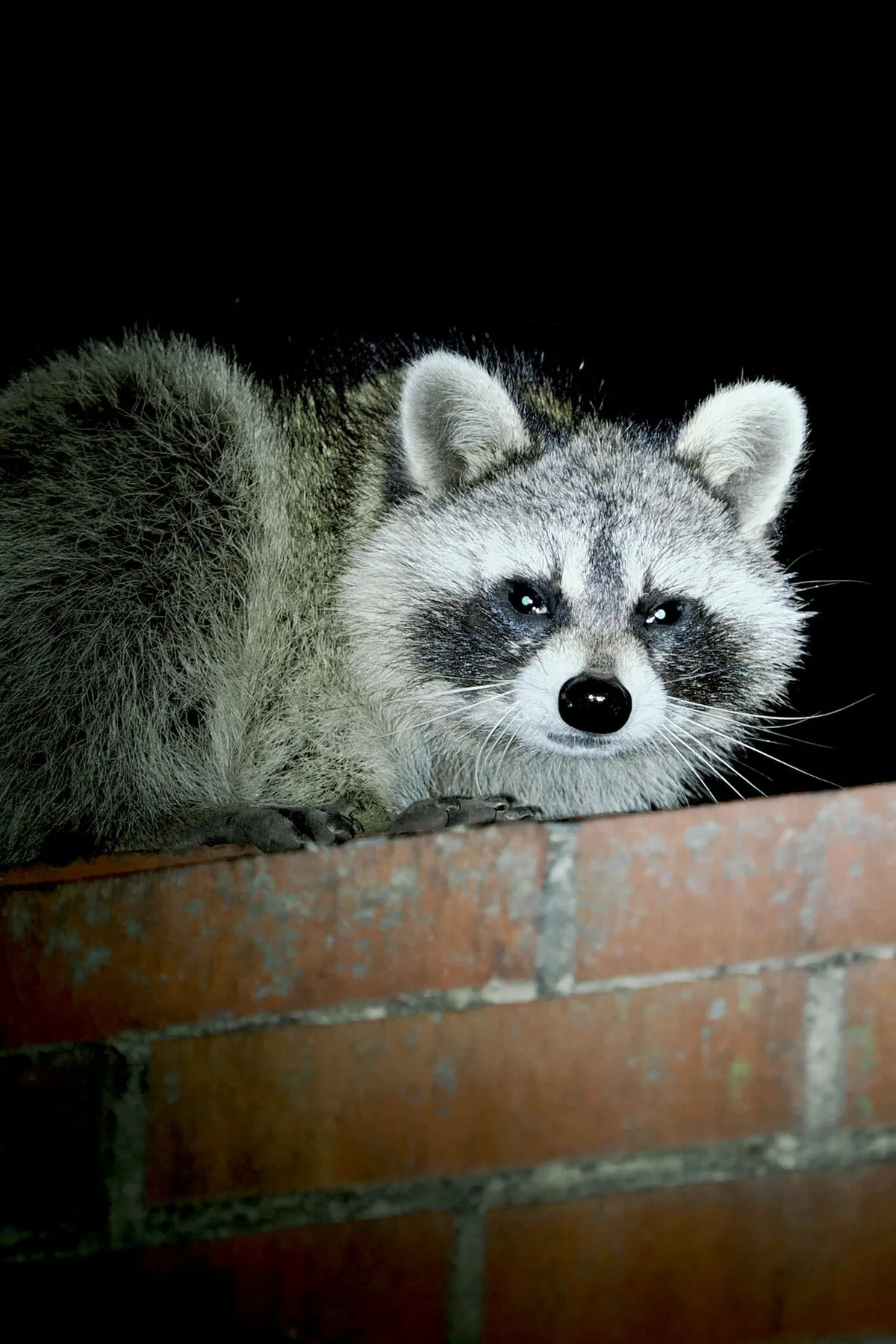
Size helps less than you might think. UNL puts adult raccoons at 26 to 40 inches from nose to tail and usually 7 to 35 pounds, which overlaps a big opossum. Animal Diversity Web's raccoon account places raccoons in the order Carnivora, not among the marsupials, and says their young are born in a tree den. Tracks help in snow or mud: MDC says the two are often confused, but an opossum's hind track shows a thumb pointing out at a right angle.
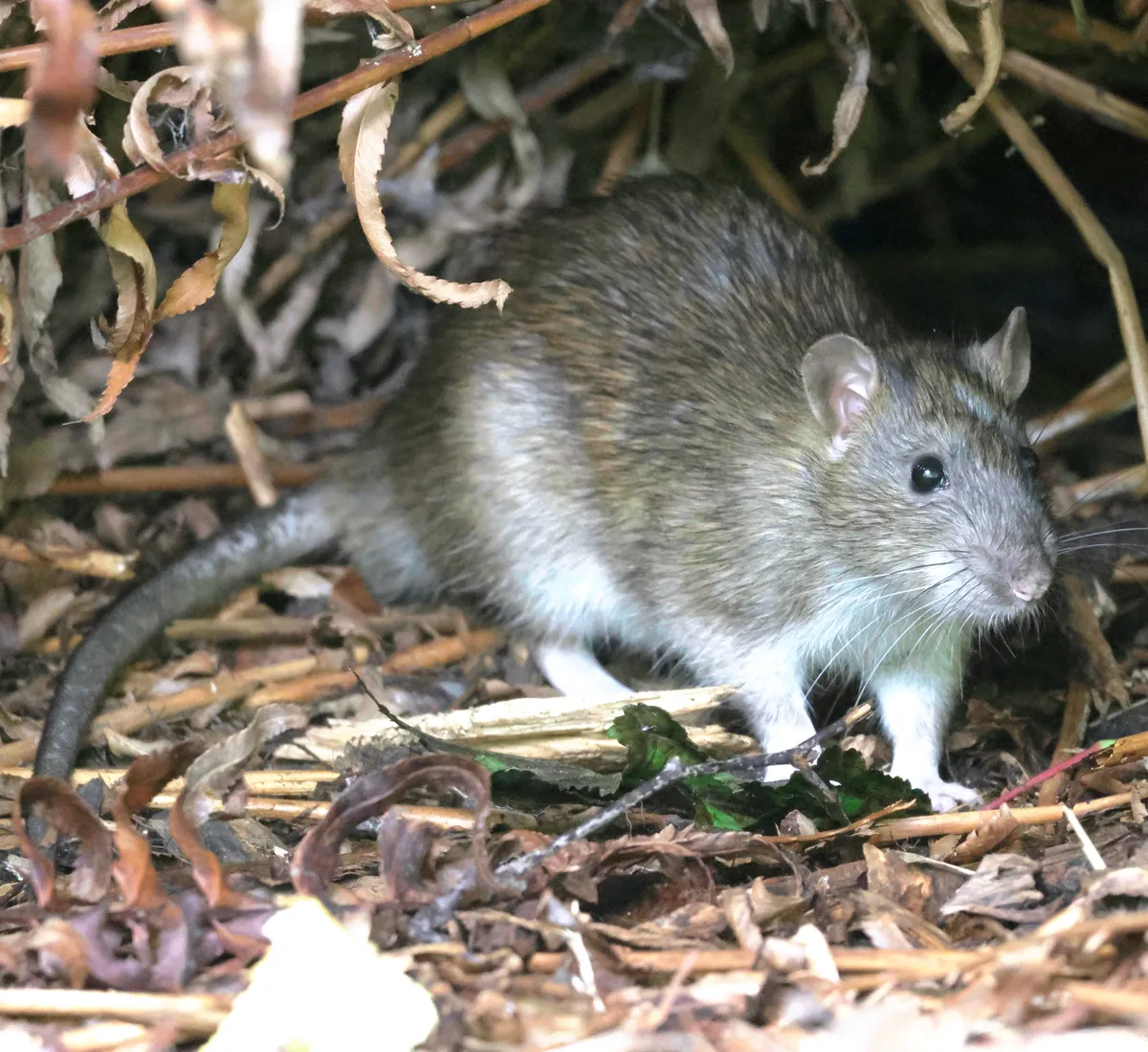
The rat comparison comes from the tail. MDC describes the opossum as resembling a large rat, and its bare, scaly tail does look like one. Weight separates them: UC IPM's Pest Notes on rats give 7 to 18 ounces for an adult Norway rat, against 4 to 15 pounds for an adult opossum in MDC's field guide. An opossum is not a rodent at all; UNL makes the point that it is a marsupial.
Commonly confused with
- RaccoonA black mask across the eyes and a banded tail; usually 7 to 35 pounds
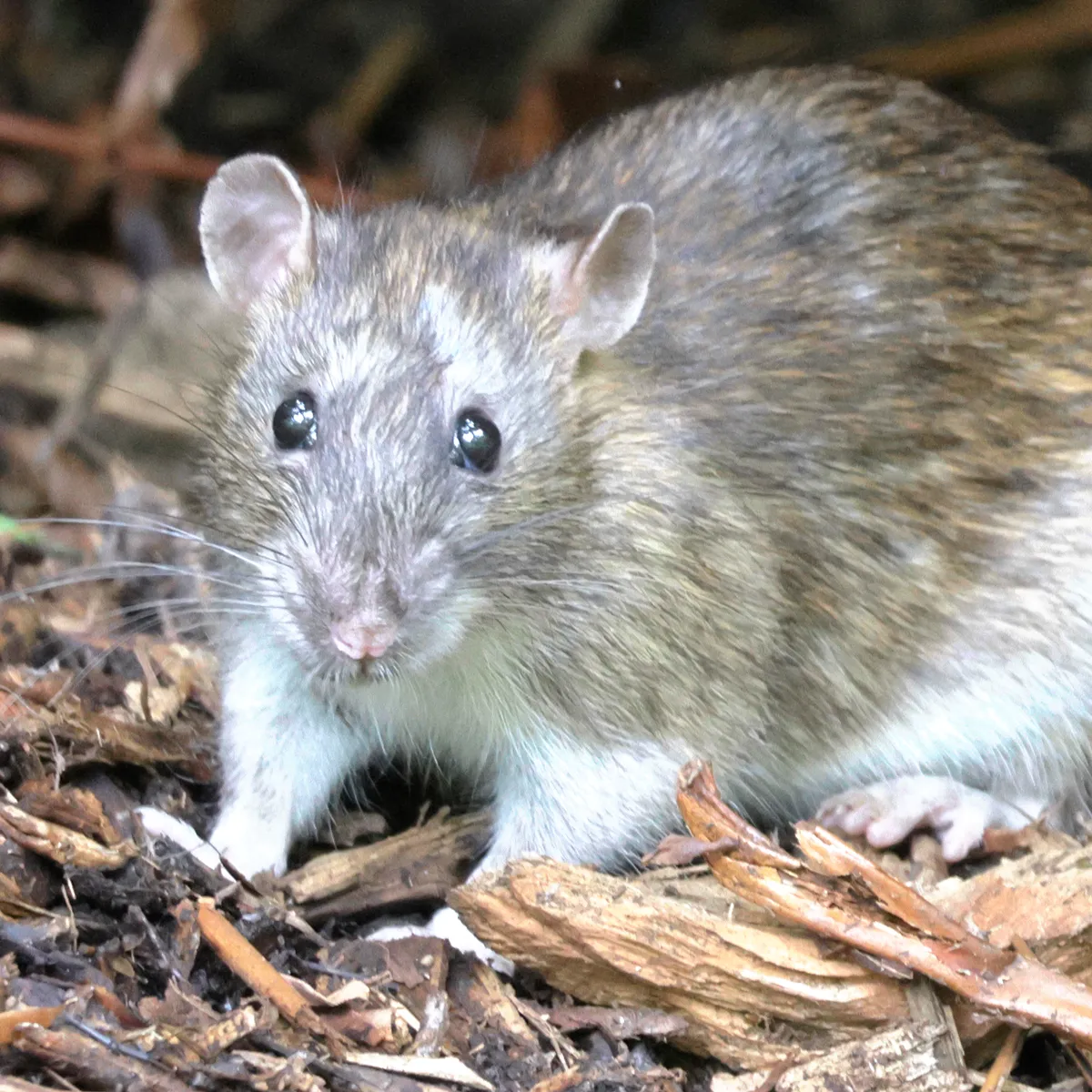 Norway ratA rodent of 7 to 18 ounces with a blunt muzzle; an adult opossum weighs 4 to 15 pounds
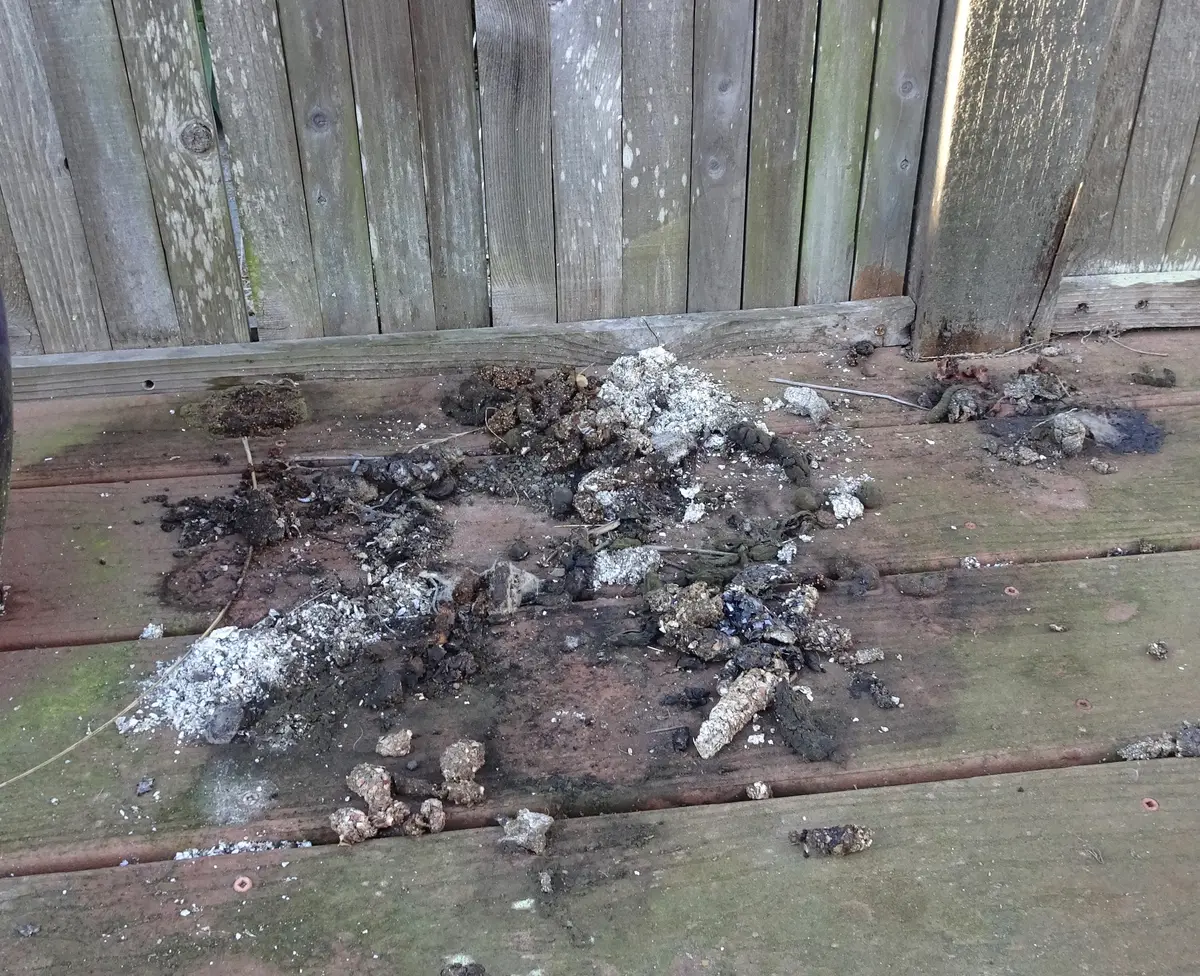 Raccoon droppingsAbout the size of an opossum's, but raccoons keep going in the same spot
Photos: Raccoon: no rights reserved, via iNaturalist, CC0 1.0. Norway rat: no rights reserved, via iNaturalist, CC0 1.0. Raccoon droppings: (c) Barbara Banfield, some rights reserved (CC BY), via iNaturalist, CC BY 4.0.
Do opossums really play dead?
Yes, though usually as a last resort. The Pennsylvania Game Commission says a threatened opossum that cannot climb or hide may crouch and defend itself, or feign death if struck: it lies limp, usually on its side, with its eyes and mouth open, tongue out, forefeet clenched and breathing shallow, and it gives off a musky odor that may deter some predators.
How long it lasts varies. PGC gives a few minutes to several hours, and UF/IFAS says an opossum may play dead for up to four hours. Washington's Department of Fish and Wildlife says it checks for danger by wiggling its ears and lifting its head, then goes limp again if the threat is still there.
Whether it is a choice is not settled: PGC says biologists have not determined whether the behavior is deliberate or involuntary. The Smithsonian's National Zoo says it is mostly young opossums that feign death, and that adults bare their teeth, hiss, screech or flee when threatened.
Why do baby opossums ride on their mother's back?
Because they outgrow the pouch. MDC says newborn opossums are blind and less than half an inch long and crawl into the mother's pouch, where Connecticut says each attaches to a teat for about 60 days. PGC says the mother usually has 13 mammary glands, so young beyond that number die, and that at 8 to 9 weeks the young let go and begin riding on her back, gripping her fur with their claws.
MDC adds that the older young cannot all fit in the pouch, which is why some ride outside it. Connecticut says they are weaned at about 80 days and usually independent by about 100 days, and that a female can breed in her first year and raise one or two litters a year.
Opossums do not live long. The Smithsonian's National Zoo gives a life span of 1 1/2 to 2 years in the wild and typically 3 or 4 years in human care, and PGC says a few wild opossums reach 5.
Are opossums dangerous to people and pets?
Rarely, if they are left alone. Connecticut's wildlife division calls opossums non-aggressive and non-destructive: a frightened one shows its 50 sharp teeth and hisses or growls but prefers to avoid confrontation, and it does not dig up lawns or threaten pets. Washington's wildlife department adds a caution: a cornered opossum may attack, so keep pets indoors at night.
Rabies is possible but uncommon. CDC's rabies overview says more than 90% of reported rabies cases in US animals occur in wildlife and names bats, skunks, raccoons and foxes as the animals most often found with rabies; opossums are not among them. Iowa's health department counts the opossum among low-risk animals that almost never carry rabies, while the Minnesota Department of Health still lists it among the wild animals of concern for rabies, so states handle an opossum bite differently.
Seeing one in daylight is not a sign of rabies on its own, says Virginia's Department of Wildlife Resources; it tells people to contact the local health department about an animal that stumbles, foams at the mouth or acts aggressive. After a bite or scratch from an animal that could have rabies, CDC advises washing it right away with soap and water and seeking medical attention urgently.
Horses face a separate risk. Connecticut and Washington both link opossums to equine protozoal myeloencephalitis (EPM), a nervous-system disease of horses caused by a parasite shed in opossum feces and picked up from contaminated feed or water. Connecticut says most opossums probably do not shed the parasite and few exposed horses develop the disease.
Opossums eat a wide variety of foods, from insects and carrion to fruit, garbage and pet food, MDC says; the guide to what eats ticks and mosquitoes covers their diet. The popular claim that they eat thousands of ticks did not hold up in the field: a 2021 study by Hennessy and Hild found no ticks in the stomachs of 32 wild opossums from central Illinois, and the article on chickens, opossums and ticks walks through the evidence, while a yard tick plan that does not rely on wildlife covers what to do instead. Their droppings are about the size of a cat's, like a raccoon's, UNL says, and the animal droppings chart compares the two.
What should you do about an opossum under the deck or in the garage?
Take away what drew it, let it leave, then close the opening. Virginia's Department of Wildlife Resources says opossums often den under porches and decks, in crawl spaces and in outbuildings, and that in towns and suburbs it is usually a food source or an easy den site that draws them.
- Remove the food. Bring pet food in at night, keep garbage covered in a secure spot such as a garage or shed, and pick up fallen fruit, Connecticut advises; Virginia adds taking down bird feeders where problem animals have been seen.
- Lock down the trash. Washington suggests holding lids down with bungee cords, rope or weights, or using clamp-lid cans, and setting cans out in the morning rather than the night before.
- Make sure it has gone before you seal anything. UNL warns never to seal an opening that may still hold young, because that separates the mother from them, and Washington says to check that no animal is inside first.
- Close the gap for good. Washington recommends 1/4-inch mesh hardware cloth, boards or metal flashing, and Connecticut suggests fencing off the space under a deck with the bottom of the fence bent outward about 2 feet and buried a few inches deep. UNL notes that an opossum needs an opening of only 3 inches.
- If one gets into the house, Washington says to close interior doors, leave the room and let it find its own way out through an open door, without cornering it.
Trapping and moving an opossum is a legal question, and the answer depends on the state. Virginia says it is illegal to trap an animal and relocate it to another area; Washington allows live traps without a permit but, unless you hold a permit, makes release illegal anywhere except the property where the animal was caught; Connecticut lets a licensed trapper take problem opossums during the regulated trapping season. Check with your state wildlife agency before setting a trap. For an opossum in the attic, the guide to animals in the attic sorts it from raccoons, squirrels and rats by sound and sign.
This guide is general educational information, not medical advice. If you have symptoms or concerns after a bite or exposure, contact a healthcare provider.
Frequently Asked Questions
Is a possum a rodent?+
No. The Virginia opossum is a marsupial, not a rodent, as UNL Extension points out, and the Smithsonian's National Zoo calls it the only marsupial north of Mexico: its young are born tiny and finish growing in the mother's pouch. The Missouri Department of Conservation says it might look something like a large rat, but an adult weighs 4 to 15 pounds, far more than a Norway rat's 7 to 18 ounces. Australia's possums are marsupials too, though a different group.
Do opossums carry rabies?+
They can get it, but it is uncommon. CDC's rabies overview names bats, skunks, raccoons and foxes as the animals most often found with rabies in the US; opossums are not among them. Iowa's health department counts the opossum among low-risk animals that almost never carry rabies, while Minnesota's still lists it among the wild animals of concern. After any bite or scratch, wash it right away with soap and water and seek medical attention, as CDC advises, and ask your local health department how your state handles it.
Why is an opossum out during the day?+
Usually food. Virginia's Department of Wildlife Resources says opossums are mostly active at night, that daytime sightings are common in cities and suburbs where food or an easy den draws them, and that just seeing one by day is not a sign of rabies. Washington's wildlife department says they can turn up at any hour, especially in winter when food is scarce. An opossum that stumbles, foams at the mouth or acts aggressive is different: call the local health department.
Are opossums good to have around?+
Some state wildlife agencies think so, within limits. Connecticut's wildlife division calls opossums more beneficial than harmful because they eat insects such as crickets and beetles, as well as mice and voles, and Washington's says they can help a yard by eating rodents, carrion and uneaten food. The trouble starts when one dens under a deck or raids garbage and pet food, so remove those attractions rather than feeding it.
Do opossums bite?+
They can, but they would rather bluff. Connecticut says a frightened opossum shows its 50 sharp teeth and hisses or growls but prefers to avoid confrontation, and the Pennsylvania Game Commission says one that cannot climb or hide may crouch and defend itself. Washington warns that a cornered opossum may attack and advises keeping pets indoors at night. If one bites or scratches you, wash the wound with soap and water right away and seek medical attention, as CDC advises.
How long do opossums live?+
Not long. The Smithsonian's National Zoo gives a life span of 1 1/2 to 2 years in the wild and typically 3 or 4 years in human care. The Pennsylvania Game Commission puts life expectancy in the wild at about 1 1/2 years, with a few reaching 5, and the Missouri Department of Conservation says about 2 years in the wild. Connecticut names people and cars as the biggest threats to opossums.
Do opossums hibernate?+
No. The Smithsonian's National Zoo says opossums do not hibernate but reduce their activity in the coldest seasons, and the Pennsylvania Game Commission says they may stay in their dens during cold or snowy spells. They grow no winter coat, PGC adds, so their fur insulates poorly and many in the North lose parts of their ears and tails to frostbite. Connecticut says they hole up in dens such as tree cavities, brush piles and buildings.
Are opossums blind?+
No, though eyesight is not their strong sense. The Pennsylvania Game Commission says an opossum's eyesight is weak while its senses of smell and touch are well developed, and Connecticut says it relies on a strong sense of smell to find food. The young are another matter: the Missouri Department of Conservation says newborns are blind and less than half an inch long, and PGC says their eyes open at around 8 to 9 weeks.
What attracts opossums to a yard?+
Food and a dry place to sleep. Connecticut's wildlife division lists pet food left out at night, uncovered garbage, fallen fruit, poultry yards and gardens, and Virginia's Department of Wildlife Resources adds bird feeders. For shelter, Virginia says they den under porches and decks, in crawl spaces and in outbuildings. Remove the food first, and once the animal has left, close the opening with hardware cloth, boards or metal flashing, as Washington's wildlife department advises.
Are there opossums in Australia?+
No. National Geographic says opossum typically means the Virginia opossum and its relatives in the genus Didelphis, all of which live in North and South America, while Australia's possums are a separate suborder of about 70 marsupial species found in Australia, New Guinea and Sulawesi. Tasmania's parks agency says the Australian animals were named for a supposed resemblance to South American opossums, and that some older people there still call them opossums.
Sources
- Virginia opossum — Smithsonian's National Zoo and Conservation Biology Institute
- Virginia Opossum (field guide) — Missouri Department of Conservation
- Opossum (Discover PA Wildlife) — Pennsylvania Game Commission
- Virginia Opossum (Wildlife in Connecticut fact sheet) — Connecticut Department of Energy and Environmental Protection, Wildlife Division
- Wildlife of Florida Factsheet: Virginia Opossum (WEC426/UW471; R. K. Boughton and S. Fitzwilliam) — University of Florida, UF/IFAS Extension
- Opossums (Didelphis virginianus) — Washington Department of Fish and Wildlife
- Problems with Skunks and Opossums — Virginia Department of Wildlife Resources
- Controlling Raccoon and Opossum Damage (NebGuide G1688; S. Vantassel, S. Hygnstrom, D. Ferraro and S. Wilson) — University of Nebraska-Lincoln Extension
- Possums — National Geographic
- Possums — Tasmania Parks and Wildlife Service
- Brush-tailed possum (updated August 27, 2023) — NSW Department of Climate Change, Energy, the Environment and Water, Environment and Heritage
- Procyon lotor (raccoon; T. Dewey and R. Fox) — Animal Diversity Web, University of Michigan Museum of Zoology
- About Rabies (updated January 27, 2026) — Centers for Disease Control and Prevention
- Controlling Spread of Rabies (Epi Manual, revised July 2015) — Iowa Health and Human Services
- Animals of Concern for Rabies (updated October 20, 2022) — Minnesota Department of Health
- Are Virginia opossums really ecological traps for ticks? Groundtruthing laboratory observations (C. Hennessy and K. Hild, Ticks and Tick-borne Diseases, 2021) — PubMed, US National Library of Medicine
- Pest Notes: Rats (UC ANR Publication 74106; N. M. Quinn, updated June 2025) — University of California Statewide IPM Program
How this guide was made: it was researched and drafted with AI assistance from the sources listed above. A second, independent AI pass then checked each factual claim against those sources. Found an error? Email support@buzzskito.ca.