
Reviewed by Alex Francisco
Published November 10, 2026 · Fact-checked against the sources listed below
What does a squirrel nest look like?
A squirrel nest in a tree, called a drey, looks like a rough ball of leaves on a frame of twigs, usually high in a large tree. The Missouri Department of Conservation describes a twig framework 12 to 20 inches across, topped with a bulky pile of leaves, with a hollow about 6 to 8 inches wide in the middle that the squirrel reaches through a hole in the side. Leaf nests average about 40 feet up, MDC says, but can be as low as 10 feet, and some sit in a grapevine tangle rather than a treetop.
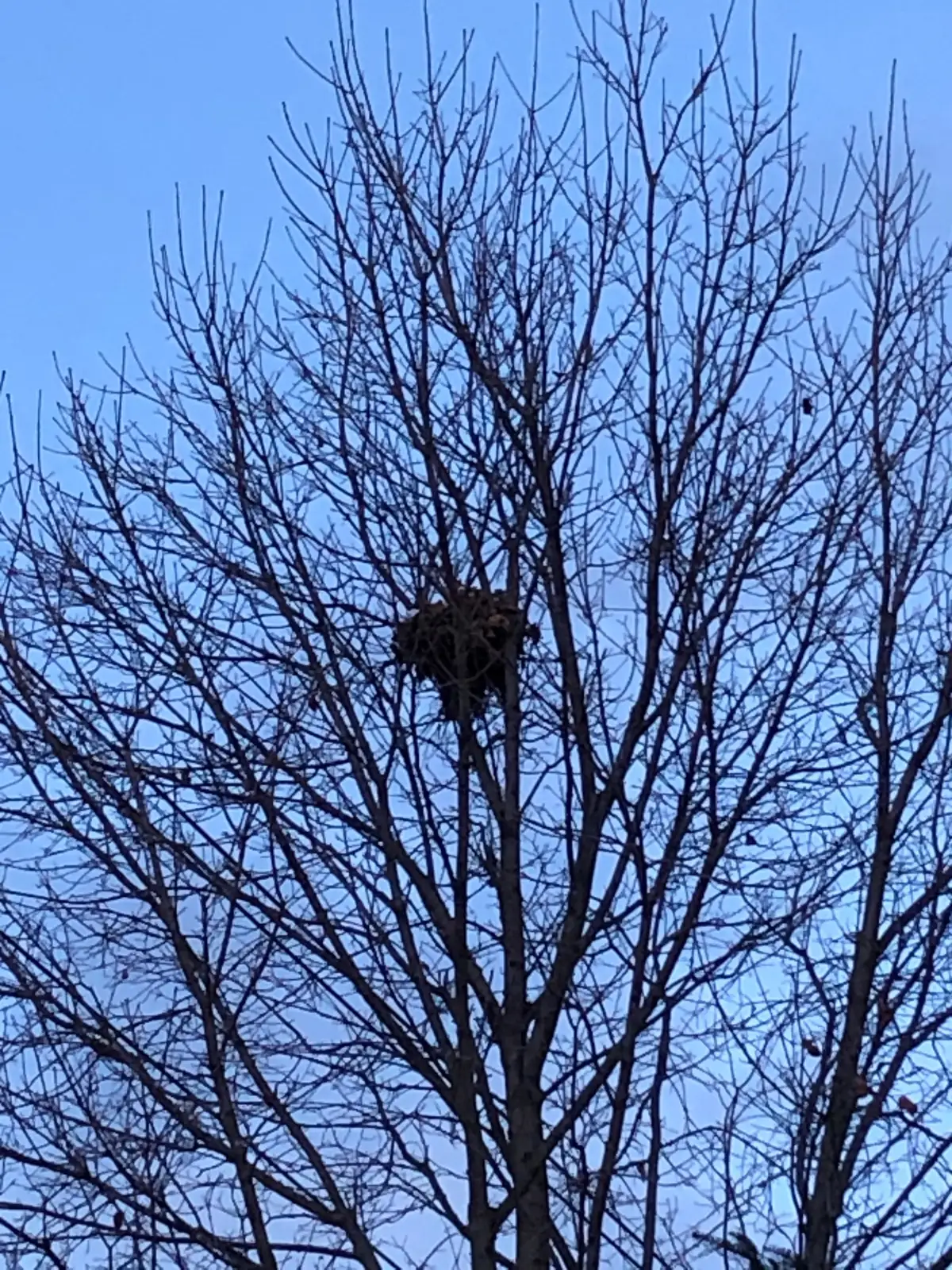
Other agencies give similar sizes. The Pennsylvania Game Commission puts a gray squirrel's leaf nest at about 12 by 16 inches, built of twigs, leaves, grass, bark and other plant material, and Maryland's Department of Natural Resources gives 12 to 16 inches across. Inside, MDC says, the lining is mostly frayed leaves; the nest is usually built from the tree it sits in, sometimes with grass, moss, roots or corn husks added. UC IPM's tree squirrel guide calls it a spherical nest of twigs, leaves and shredded bark.
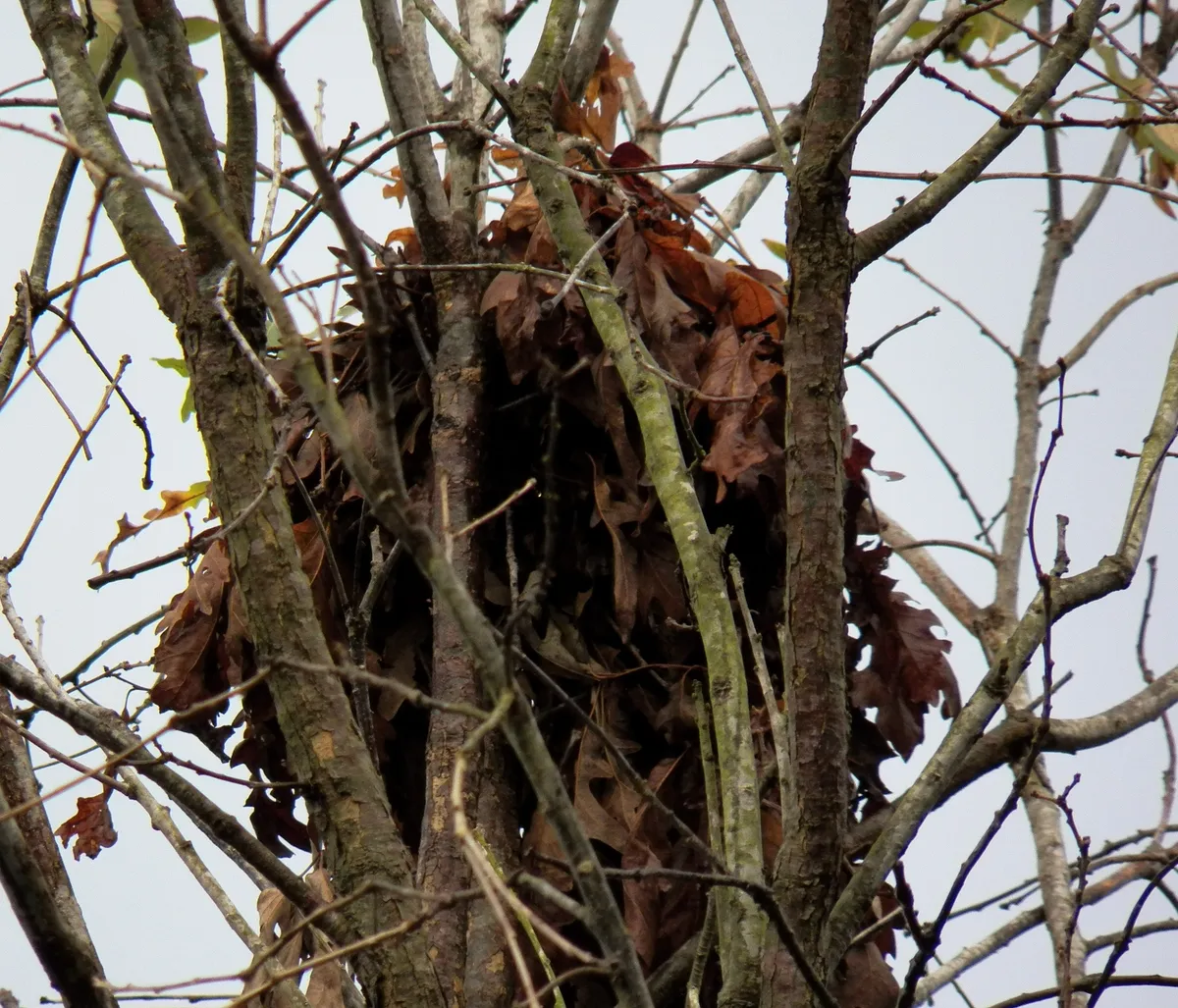
A summer nest and a winter nest look different. MDC says summer nests are often flimsy, made of green twigs cut with their leaves still attached, while winter nests use bare twigs with separate leaves woven in and are usually very sturdy. A squirrel can build one in less than 12 hours. A well-made nest that is kept repaired typically lasts 6 to 10 months, and a big one added to over time may last 2 to 3 years; fragile or unused nests are easily torn apart by wind.
Is it a squirrel nest, a bird nest or a hornet nest?
Look at what the ball is made of and whether it is open: a closed ball of leaves on twigs is a squirrel's drey, an open bowl of sticks and twigs is a bird's nest, such as a crow's, and a ball of gray paper rather than twigs or leaves is a hornet nest. All three can sit high in a tree, so binoculars help, and size will not settle it, because a crow's nest can rest on a foundation about 2 feet wide.
| Clue | Squirrel drey | Crow nest | Bald-faced hornet nest |
|---|---|---|---|
| Made of | A twig frame under a bulky pile of leaves | Sticks, with a bowl of smaller twigs and bark strips | Paper the wasps make from chewed wood |
| Shape | A closed ball with a side entrance | An open bowl on a crude foundation | A rounded ball with one opening at the bottom |
| Where | Tops of large trees, about 40 feet up on average | A tree fork on 2 or 3 horizontal branches, 6 to 60 feet up | Usually high in trees, sometimes on buildings |
| When it is used | All year where tree holes are scarce; winter versions are sturdier | Eggs in early April; chicks tended about five weeks | One season only; empty by winter and not reused |
Drey from MDC; crow nest from Connecticut DEEP; hornet nest from MDC and Virginia Tech.
Checks to run from the ground
- Leaves or sticks? Leaves packed over the twigs point to a squirrel; a nest of bare sticks and twigs points to a bird.
- Closed or open? A drey is a closed ball entered from the side; a crow's nest is an open bowl.
- Paper? Layered gray paper instead of twigs and leaves is a hornet nest, and it is empty by winter.
- Who comes and goes? A squirrel slipping in or out settles it. Hornets will not be flying in winter, since only the young queens survive it, sheltering elsewhere.
- A hole instead of a ball? A round hole in the trunk with leaves inside can be a squirrel's den; see the section on tree holes below.
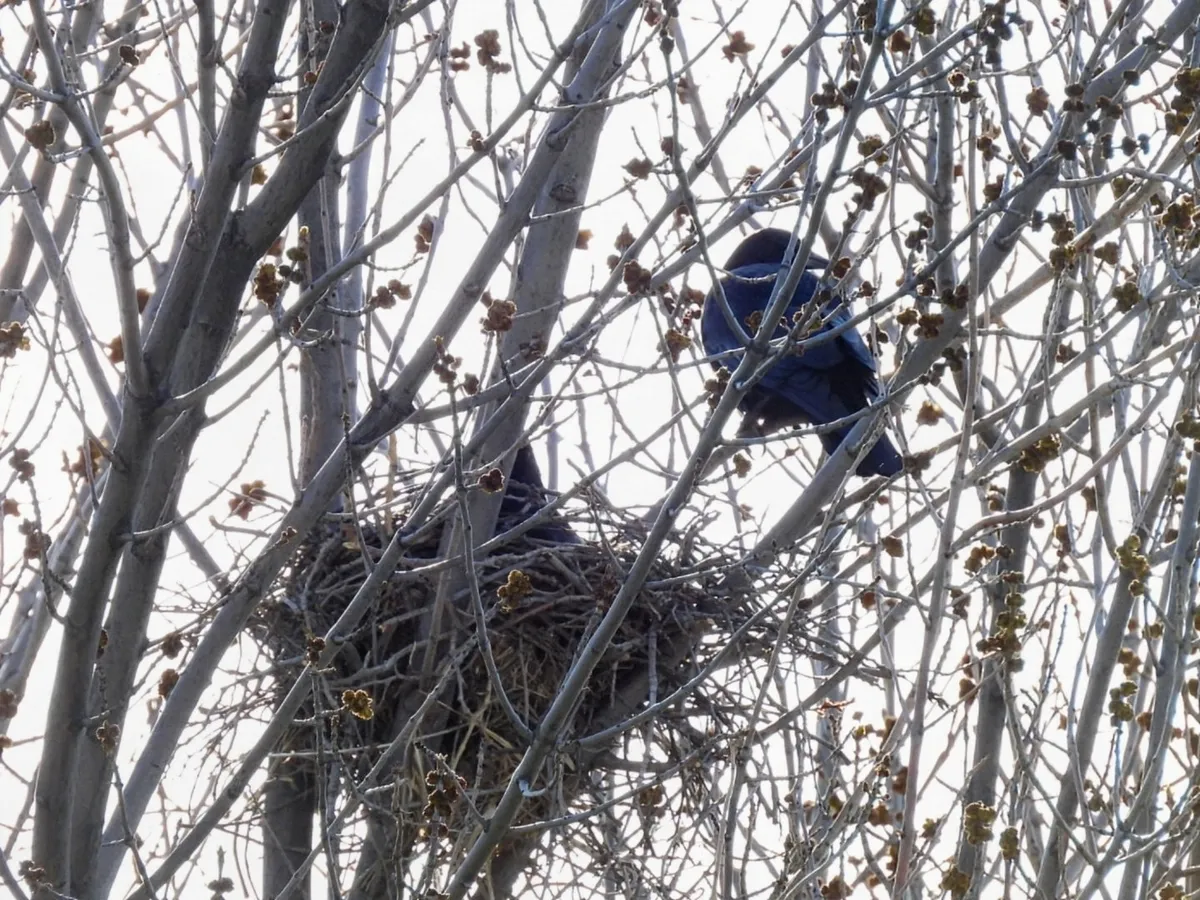
A crow's nest can be bigger than a drey, and it is built differently. The Connecticut Department of Energy and Environmental Protection's crow fact sheet describes a crude foundation of large sticks and twigs about 2 feet wide and nearly a foot thick in the fork of a tree, 6 to 60 feet up, holding a bowl of smaller twigs and bark strips lined with soft material such as shredded bark, moss, grass, feathers, fur or leaves. Eggs are laid in early April, and the chicks are tended at the nest for about five weeks.
Check before you pull a stick nest down. The U.S. Fish and Wildlife Service says most bird nests are protected under the Migratory Bird Treaty Act, that destroying a nest with eggs or chicks in it is illegal, and that collecting or keeping a migratory bird's nest is illegal too.
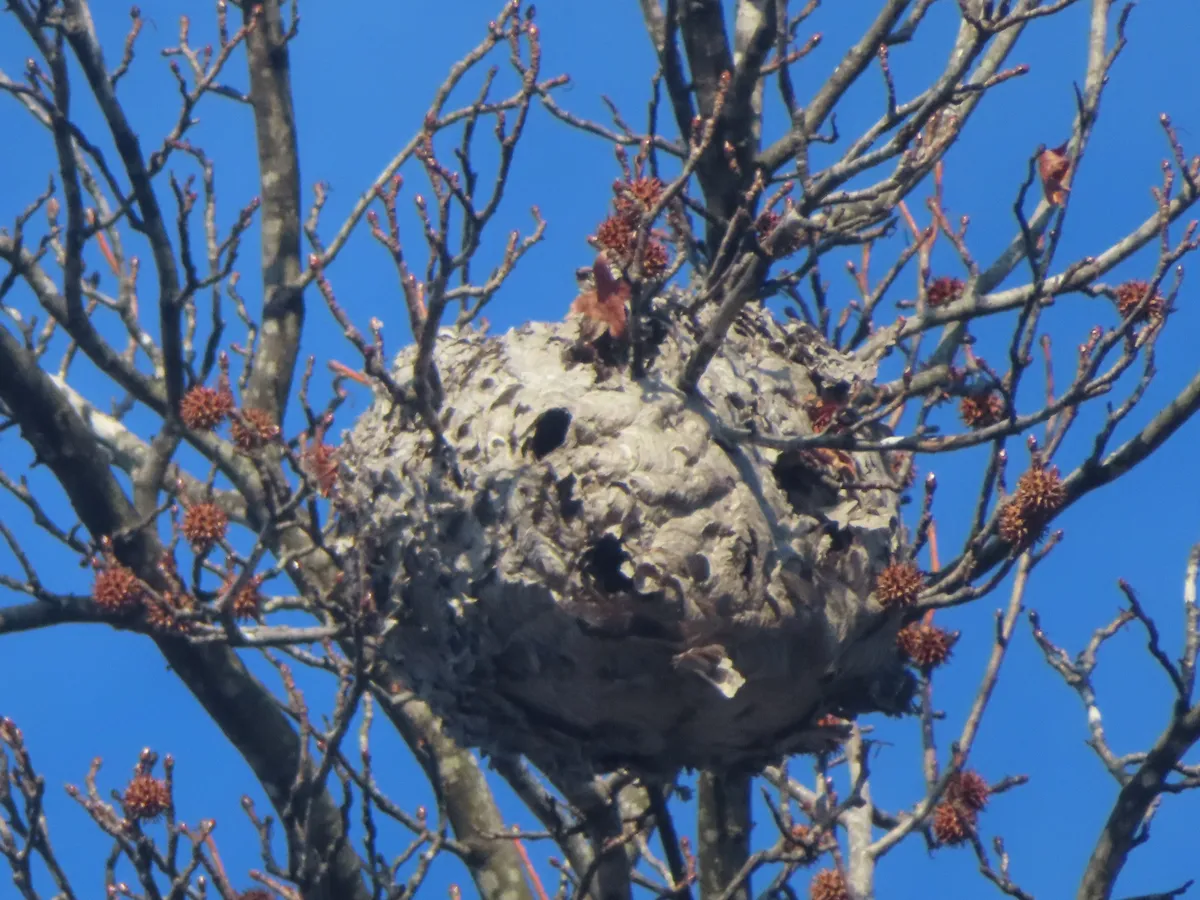
A gray paper ball is an old hornet nest. MDC's bald-faced hornet page describes old winter nests as large, rounded, papery and gray, usually high in trees and now and then on buildings, and says only the young, fertilized queens survive the winter. Virginia Tech's extension fact sheet adds that the nest has a single opening at the bottom, is always abandoned at the end of the season and is not reused the following year. The wasp nest identification guide shows the other paper and mud nests, and the bald-faced hornet guide covers the insect.
Do squirrels also nest in tree holes?
Yes, and they prefer them. Penn State Extension says squirrels prefer tree cavities but often build leaf nests, and ICWDM's tree squirrel biology page says young survive better in cavities than in leaf nests. MDC says cavities form in older trees, especially white oaks, sycamores and soft maples, where a lost limb rots instead of healing. Squirrels gnaw the opening to about 3 inches across, an occupied cavity is about 6 inches wide and 14 to 16 inches deep, and large cavities are commonly filled with leaves in fall and again in spring.
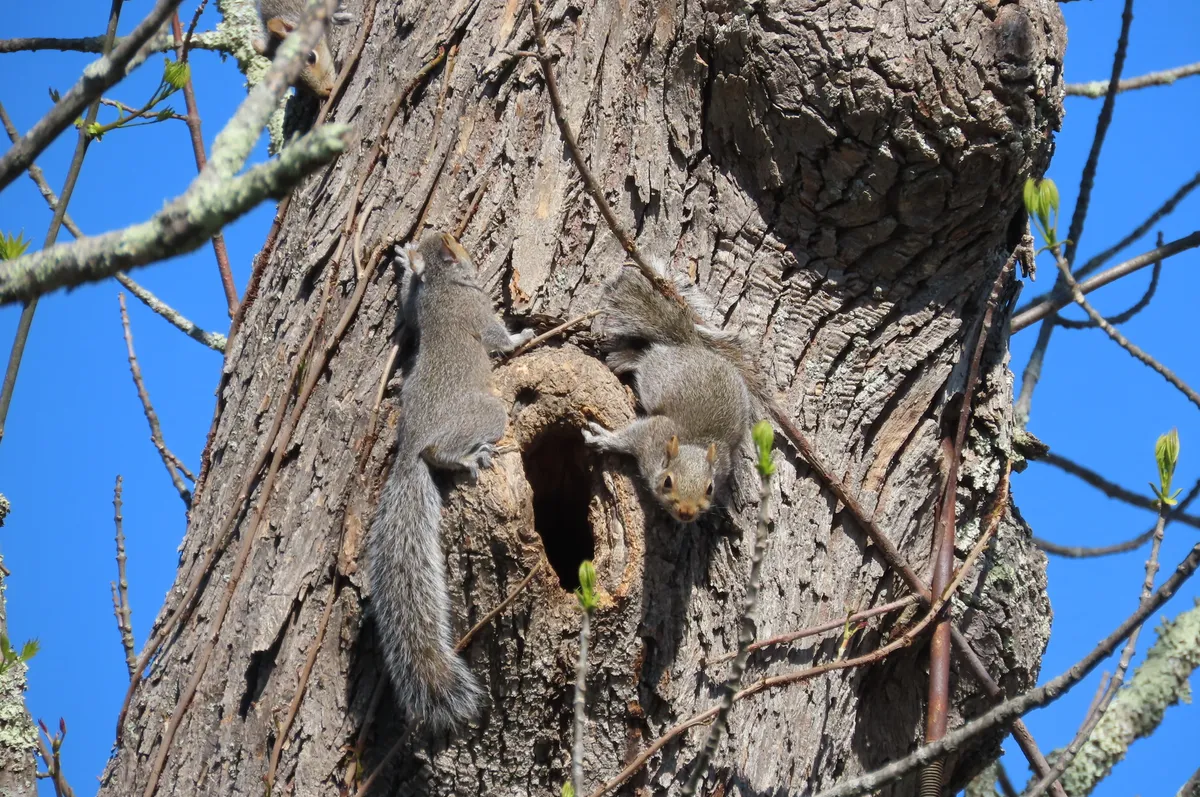
The Pennsylvania Game Commission says gray squirrel dens are usually 40 to 60 feet off the ground, often in old woodpecker holes, and that den entrances are round and seldom over 3 inches across. Leaf nests fill the gaps: MDC says squirrels use them near food where hollow limbs are scarce, as a spare when the main nest is soiled or full of parasites, and all year where cavities are scarce, and that one squirrel may use a cavity and a leaf nest at the same time. Maryland DNR says gray squirrels prefer cavities for winter dens and for raising young, and use treetop leaf nests in spring and summer.
Other squirrels nest a little differently. The Pennsylvania Game Commission says red squirrels prefer to nest in conifers and sometimes use holes at the base of trees, and that flying squirrels nest in hollow limbs, woodpecker cavities and stick nests. Penn State says flying squirrels are small enough to be prone to nesting in attics, and that they commonly group together in winter.
When do squirrels build nests and have babies?
Gray squirrels build leaf nests in summer and fall, the Pennsylvania Game Commission says, and have young in two seasons a year: MDC says most litters are born in February or March and in July or August, after a gestation of about 45 days. ICWDM adds that large leafy nests are built particularly in summer, as they are cooler.
| Squirrel | Young are born | Young per litter | Where the young are raised |
|---|---|---|---|
| Eastern gray squirrel | February or March, and July or August | 1 to 8, most often 2 or 3 | Tree dens preferred; leaf nests too |
| Eastern fox squirrel | Late February or early March | 2 to 4 on average | Much like gray squirrels |
| Red squirrel | April, May or June | 3 to 6 | Often conifers; sometimes holes at the base of trees |
| Flying squirrel | April or May, possibly again in July or August | 1 to 3 | Hollow limbs, woodpecker holes, stick nests, attics |
Gray squirrel from MDC, Maryland DNR and ICWDM (young survive better in tree dens than in leaf nests); fox, red and flying squirrels from the Pennsylvania Game Commission, with attics from Penn State.
The young are born hairless, with their eyes and ears closed, MDC says, and first leave the nest at 6 to 7 weeks, about a week before they are weaned. Wisconsin DNR says their eyes open at about 4 weeks, they begin exploring outside the nest at about 7 weeks, and they cannot survive on their own until they are at least 12 weeks old. Humane World for Animals says babies are likely in an attic nest from February through May and from August through October.
Is the squirrel nest being used?
A drey that stays round and tight through the winter is probably being kept up, while one that is thinning or falling apart has likely been left: MDC says well-made nests are repaired, and fragile or unused ones are easily destroyed by wind. Green leaves still on the twigs suggest a recently built nest, since MDC says summer nests are made of green twigs with their leaves attached. The surest sign is a squirrel going in or out, or one looking out.
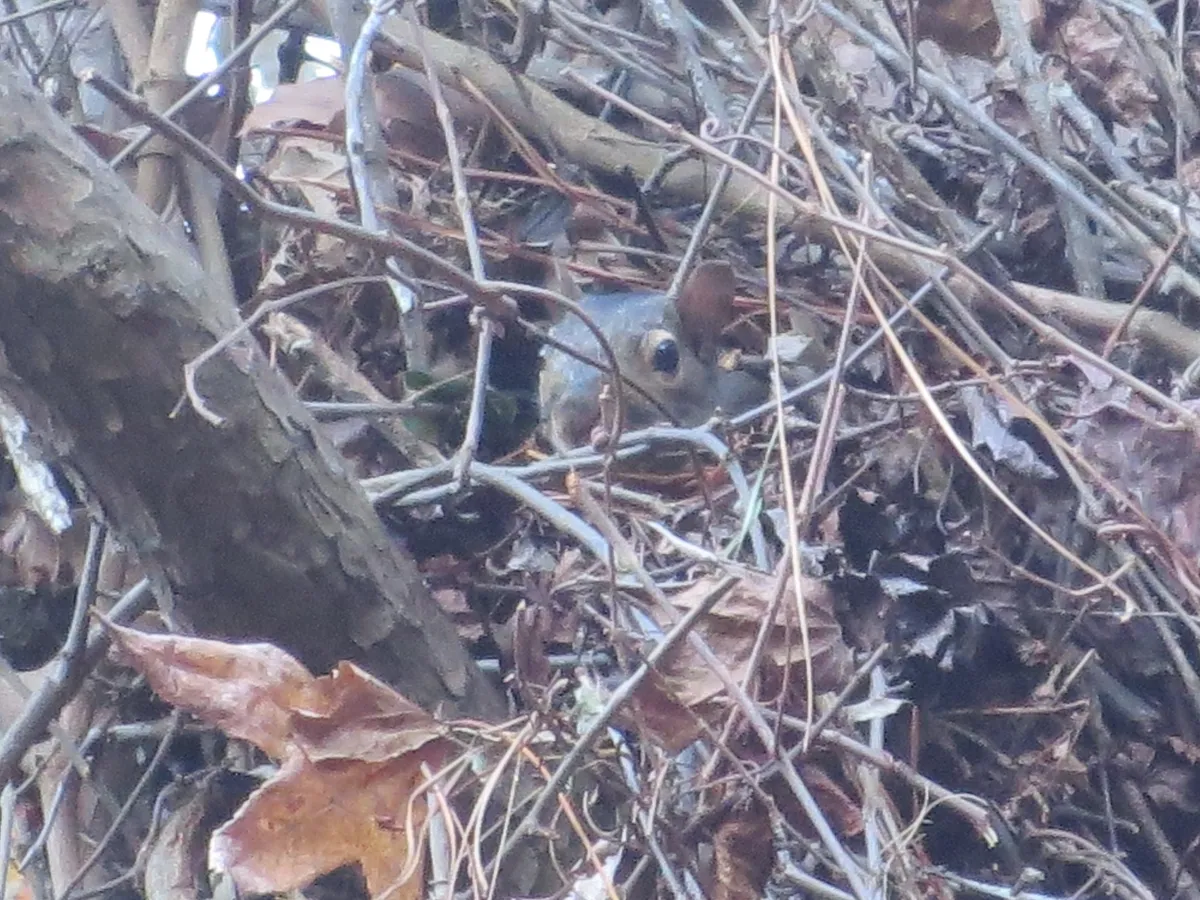
A nest with young holds a mother and her litter, sized as in the table above. Flying squirrels share: Penn State says young may stay with their mother through the winter, when flying squirrels commonly group together, and UNL Extension says they live in colonies of as many as 40.
Is a squirrel nesting in my attic?
Probably, if you hear scratching and running overhead early in the day and find a chewed gap near the roofline. Connecticut's wildlife division says gnawing, scratching and pattering in early morning or daylight hours usually signal squirrels, and Pests in the Home, a national Cooperative Extension site, says early morning is when you are most likely to hear them. UNL Extension says owners often hear scurrying in the ceiling shortly after dark and before dawn. Look for these signs:
- A way in. UNL says tree squirrels most often get into attics along the gutter line or through vents, and can squeeze through a hole 1.5 inches across. ICWDM's damage guide says fox and gray squirrels use holes about the size of a baseball, red squirrels a golf ball and flying squirrels a quarter.
- Nesting material. Connecticut says balls of torn insulation, cardboard, dried leaves and twigs may pinpoint a nest, though nests and young may be hidden inside eaves or wall spaces. ICWDM's biology page shows a pile of leafy debris serving as a gray squirrel nest in a building soffit.
- Droppings and food scraps. UNL lists droppings, shells, hulls and pits among the signs. Pests in the Home describes squirrel droppings as dark brown when fresh, about 3/8 inch long and 1/8 inch thick, rounded at the ends; what squirrel poop looks like sets them beside rat and mouse droppings.
- Chewed wires. Penn State says squirrels chew insulation and the coating on wires, a dangerous habit because bare wires may cause a fire.
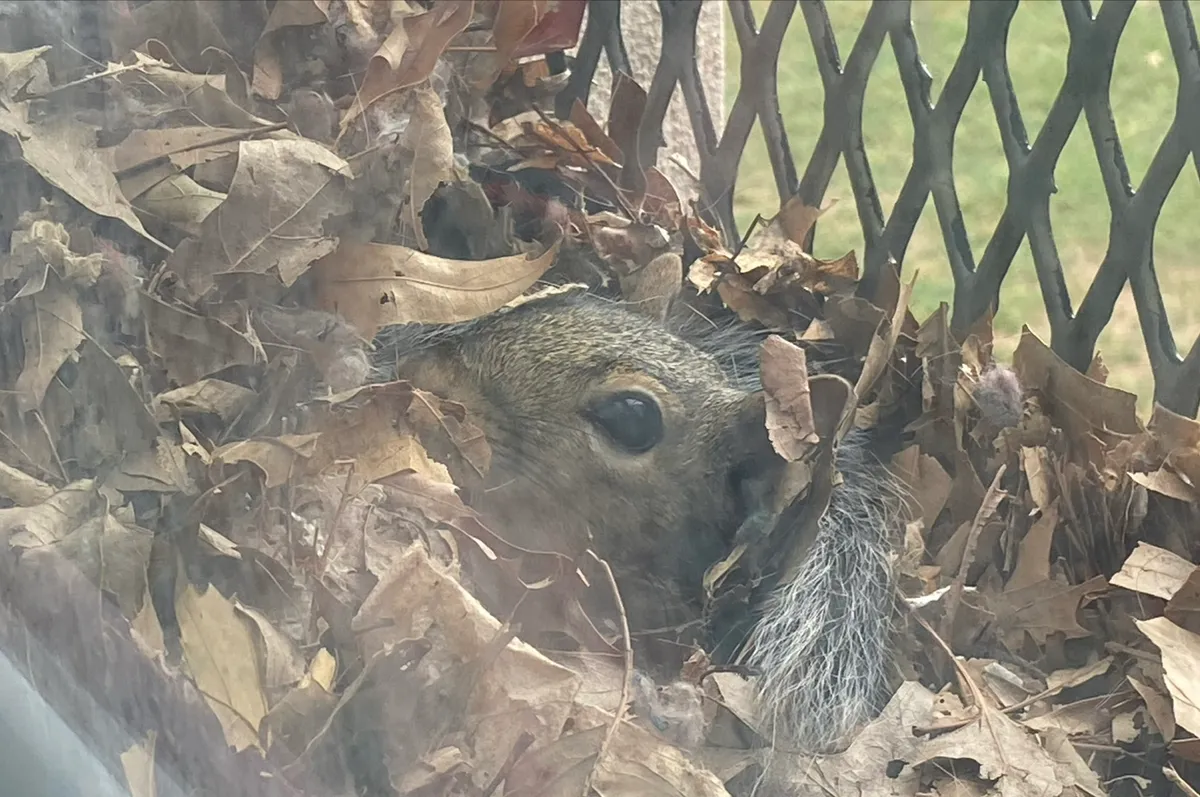
Noise that goes on through the night points to flying squirrels or other animals. ICWDM says flying squirrels are active at night while other squirrels are active mainly by day, and UC IPM's rat guide says roof rats nest in attics, wall voids and ceiling voids and are mostly active at night. The guide to noises in the attic at night sorts those suspects, and what a rat nest looks like shows what rats leave.
Other nests and signs to check
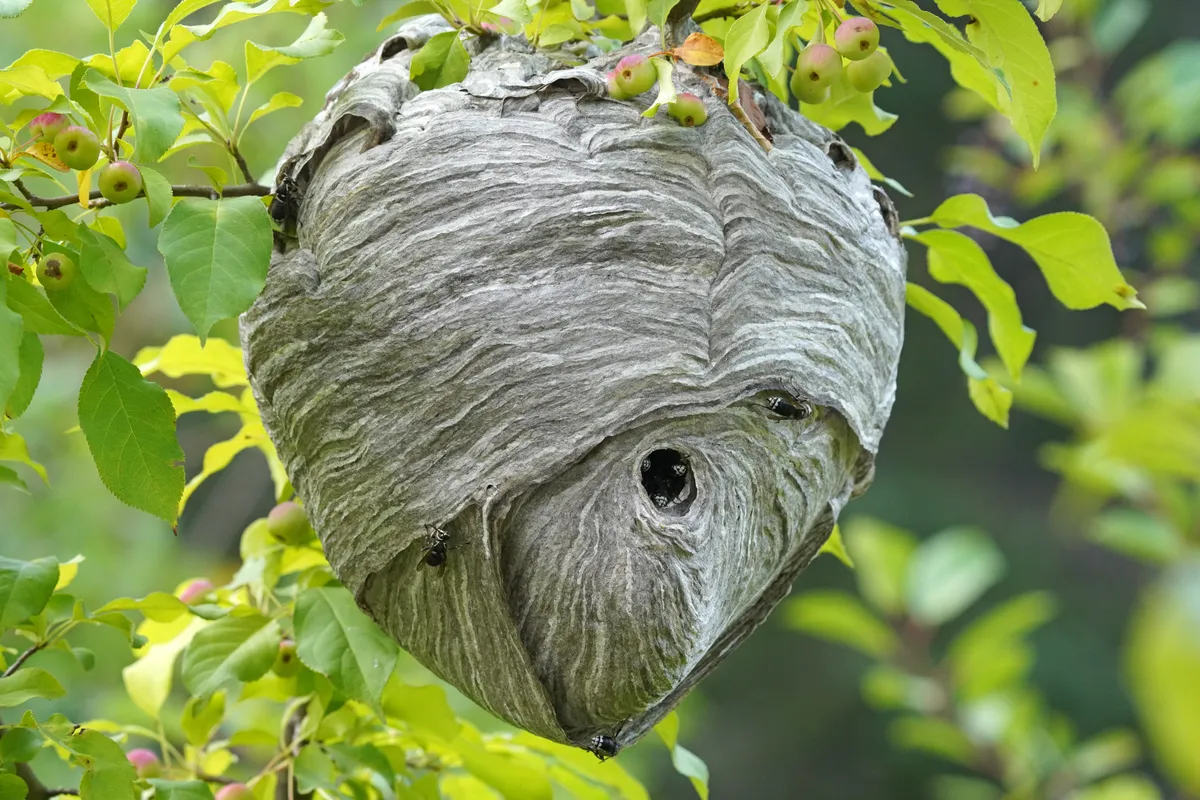 Bald-faced hornet nestGray paper with one opening at the bottom; empty by winter and not reused
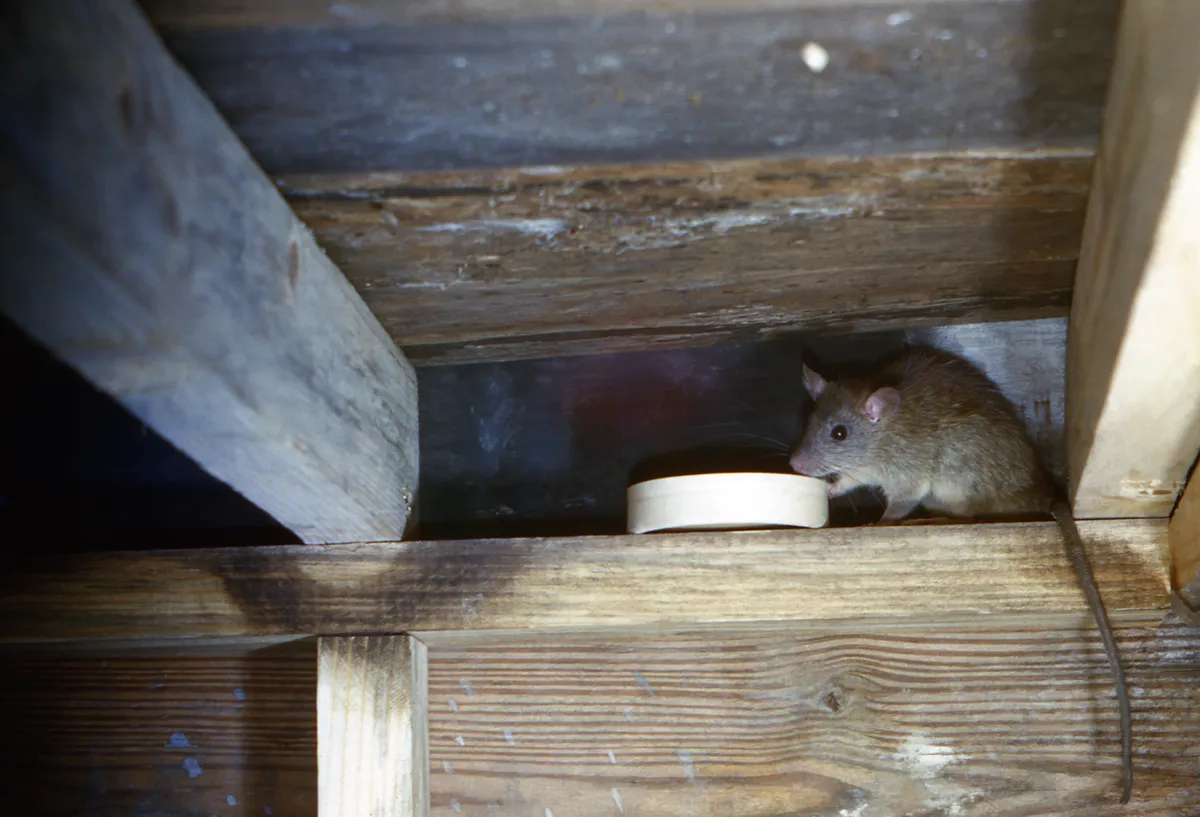 Roof ratAlso nests in attics and wall voids, but is mostly active at night
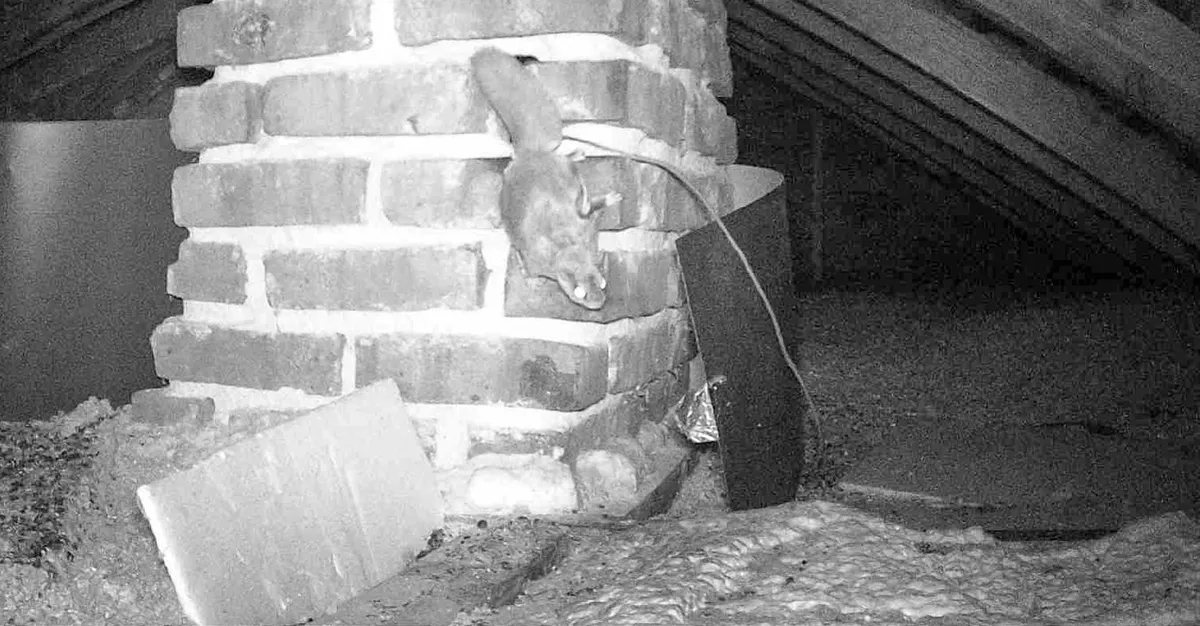 Flying squirrelThe squirrel that is active at night; gets in through holes the size of a quarter
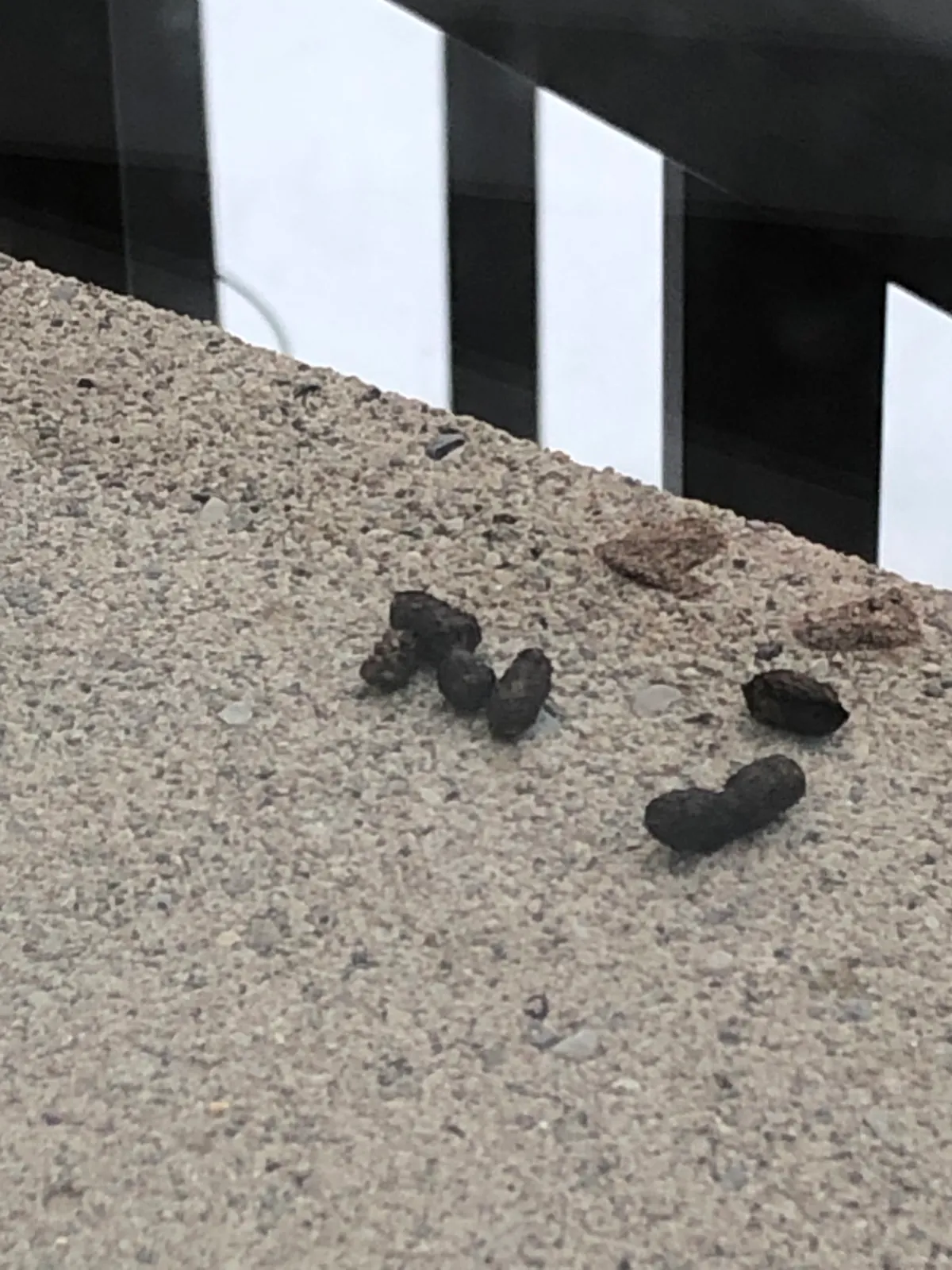 Squirrel droppingsDark brown when fresh, about 3/8 inch long, rounded at the ends
Photos: Bald-faced hornet nest: U.S. Fish and Wildlife Service - Midwest Region, Public domain, via Wikimedia Commons, public domain. Roof rat: CDC (CDC Public Health Image Library, phil.cdc.gov), public domain. Flying squirrel: no rights reserved, via iNaturalist, CC0 1.0. Squirrel droppings: (c) Andrew Sebastian, some rights reserved (CC BY), via iNaturalist, CC BY 4.0.
What if there are baby squirrels in the nest?
Leave them with their mother until they can move. Pests in the Home warns that if you trap the mother and seal the hole, the babies will die, and Connecticut says adults can do severe damage chewing back in to reach their young. ICWDM's control guide says young may be present from February through August, and UNL advises avoiding trapping in April and May whenever possible, to reduce the risk of orphaning young.
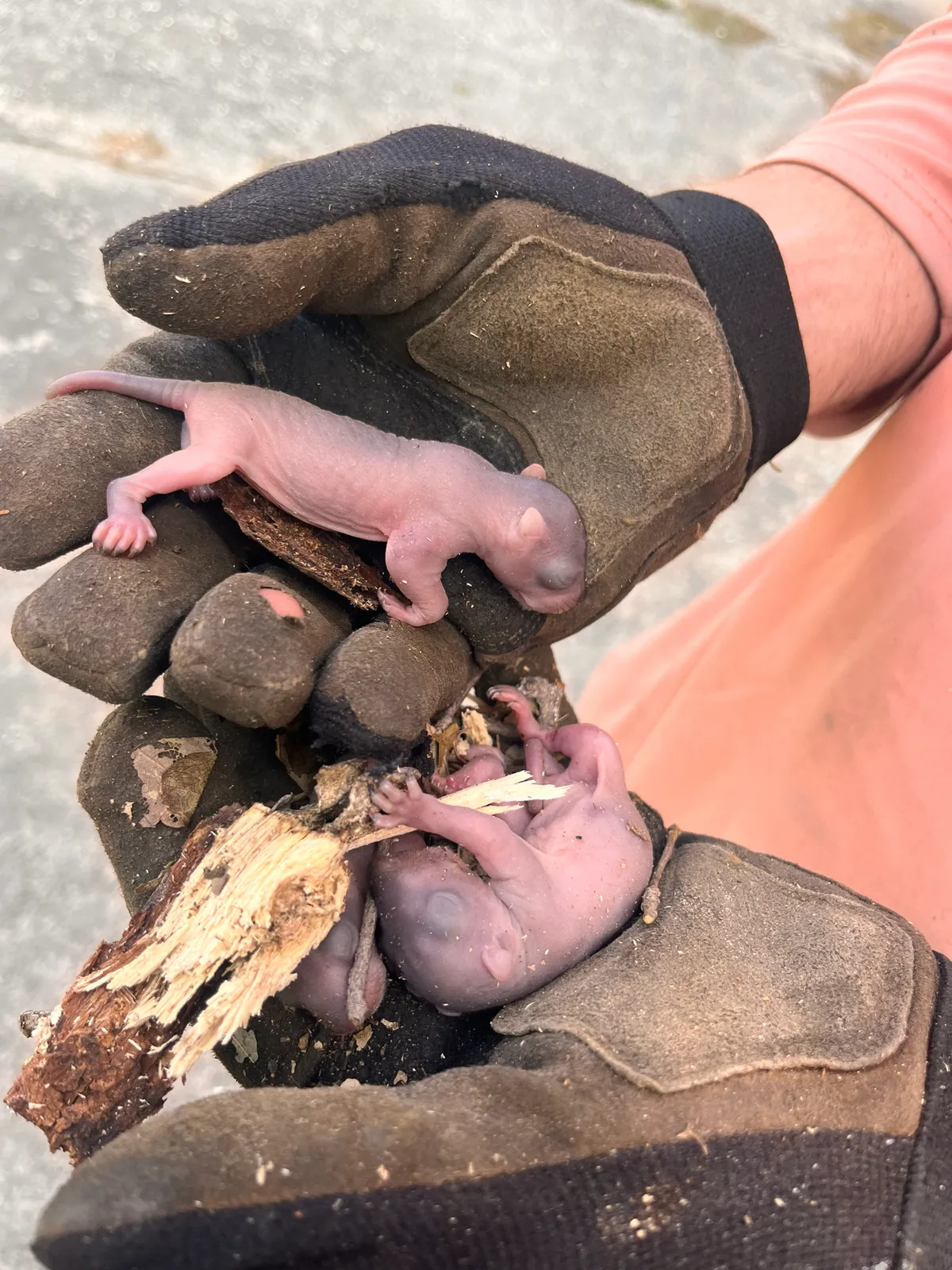
In an attic or wall
Wait a few weeks until the young can leave with their mother, Humane World advises, or hire a professional who knows how to reunite mothers and young. It says frantic attempts to get back in after you seal a hole usually mean young are still inside, and that the patch should then come off so the mother can move them. Maryland DNR says that if you find a nest with young, you can put the whole nest in a box outside near the entrance, in a safe place, and the mother will move them.
In a tree that fell or was cut down
Give the mother a chance to collect them. The Tufts Wildlife Clinic says that when a nest falls, or a felled tree holds an intact nest, the mother should get the chance to move the young to a new nest: if they are uninjured, leave them where they are, keep people and pets away, watch from a distance, and call a licensed wildlife rehabilitator if they have not been retrieved by dusk. If it is chilly or the young are not fully furred, Tufts says to put them in a small box with something warm underneath, with a soft cloth between so they do not overheat, and not to cover them, or the mother may not find them.
Wisconsin DNR says there is a good chance the mother will find a fallen young squirrel and return it to the nest herself. Tufts notes that raising a wild animal is illegal without a state or federal permit.
Before tree work in late winter, spring or summer, when the litter months above fall, look for dreys and for squirrels using holes in the tree.
How do you get squirrels out of an attic nest, and is it legal?
Let the squirrels leave on their own, make sure no young are left behind, then close the hole with metal; trapping and moving squirrels is regulated by each state. The steps the extension and agency sources give:
- Check the calendar. ICWDM says young may be present from February through August, and if they are, Humane World advises waiting a few weeks until they are old enough to leave with their mother.
- Make the attic unwelcoming once there are no helpless young. Humane World suggests leaving a bright light on, playing a radio around the clock and banging on the rafters, and says adults usually leave during the day.
- Test the hole. Plug it loosely with newspaper: UNL says that if the paper stays put for five days in a row of good weather, it is reasonably safe to close the opening.
- Use a one-way door only if no young are inside: ICWDM says one can be effective when young are not a concern, and to secure vents and chimneys before installing it. Pests in the Home adds that a one-way door works only if there is a single way in.
- Close the opening with metal. UC IPM names sheet metal or 1/4-inch hardware cloth as suitable materials, and Pests in the Home says squirrels can chew through most other building materials. Cap the chimney and screen the vents; a guide to chimney caps that keep animals out and one on steel guards for roof vents cover the hardware.
- Cut off the way back. Penn State says to trim trees and limbs 6 to 8 feet away from buildings so squirrels cannot jump onto the roof.
- Clean up last. Remove the nest material and droppings once the squirrels are gone; the squirrel droppings guide gives CDC's cleanup steps, and Humane World advises having an electrician check any wiring the squirrels may have chewed.
The rules on trapping and moving squirrels differ by state. ICWDM says fox and gray squirrels are game species in most states, so trapping may need a permit from your state wildlife agency. Four examples:
| State | What the agency or extension service says |
|---|---|
| New York | New York's DEC says it is illegal to move or relocate an animal off your property, and that taking a gray, black or fox squirrel that is only a nuisance needs a DEC permit. |
| Nebraska | UNL Extension says moving squirrels elsewhere is illegal: a problem squirrel must be released within 100 yards of where it was caught or euthanized, and southern flying squirrels are protected as a threatened species. |
| California | UC IPM says tree squirrels are game mammals, controlled only as the hunting regulations allow, with two exceptions: an owner whose property gray squirrels damage may apply to the state for a permit, and an owner or tenant may control eastern fox squirrels injuring crops or property without one. Releasing any tree squirrel elsewhere is illegal without a state permit. |
| Pennsylvania | Penn State says fox and gray squirrels are game animals whose hunting the Game Commission regulates, but a property owner does not need a hunting license to control squirrels that are causing damage to property. |
Rules change: check with your state or provincial wildlife agency before you trap or move a squirrel.
What should you do once you know it is a squirrel nest?
Match the step to where the nest is:
- A drey in a yard tree. Leave it unless the tree must come down. MDC says a squirrel can build a leaf nest in less than 12 hours and may use more than one nest at a time.
- Tree work. Check the tree for dreys and occupied holes first, and if a nest with young comes down, follow the Tufts steps above.
- An attic or wall. Confirm it is squirrels, wait out the young, let the squirrels leave, then seal the opening with metal and trim branches back.
- Baby squirrels on the ground. If they are uninjured, give the mother until dusk to collect them, then call a licensed wildlife rehabilitator. For an injured baby, Tufts says to contact a rehabilitator and not to give it food or water.
- Sticks or paper, not leaves. A stick nest may be a protected bird's nest, and a gray paper ball is an old hornet nest.
Frequently Asked Questions
How long do baby squirrels stay in the nest?+
Most of their first two months, and they depend on their mother for longer. The Missouri Department of Conservation says young gray squirrels first leave the nest at 6 to 7 weeks old and are weaned about a week later. Wisconsin DNR says their eyes open at about 4 weeks, they begin exploring outside the nest at about 7 weeks, and they cannot survive on their own until they are at least 12 weeks old. ICWDM says young start to explore outside the nest around weaning, at 10 to 12 weeks.
When do squirrels have babies?+
Gray squirrels have two birth seasons a year. The Missouri Department of Conservation says most litters are born in February or March and in July or August, after a gestation of about 45 days, with 2 or 3 young the most common litter size, and the Pennsylvania Game Commission says some gray squirrels bear a second litter in July or August. The Game Commission says fox squirrels give birth in late February or early March, red squirrels in April, May or June, and flying squirrels in April or May, with a possible second litter in July or August.
Do squirrels hibernate in their nests?+
No. The Pennsylvania Game Commission says the state's tree squirrels never actually hibernate, and UC IPM says tree squirrels do not hibernate and are active all year. They do shelter through bad weather: the Game Commission says fox squirrels can sleep through several days of snowstorms or extreme cold, and UNL Extension says fox squirrels spend more time in the nest in winter. The Missouri Department of Conservation says winter leaf nests are built sturdier than summer ones, with leaves woven into bare twigs.
How many squirrels live in one nest?+
A nest with young holds a mother and her litter. The Missouri Department of Conservation says gray squirrel litters run from 1 to 8 young, with 2 or 3 the most common, and that a squirrel may use a tree cavity and a leaf nest at the same time. Flying squirrels are the sociable ones: Penn State says they commonly group together in winter, and UNL Extension says they live in colonies of as many as 40.
Do squirrels use the same nest every year?+
Leaf nests do not last long. The Missouri Department of Conservation says a well-made nest that is kept repaired typically lasts 6 to 10 months, a large nest added to over time may last 2 to 3 years, and fragile or unused nests are easily destroyed by wind. Tree-cavity dens are the preferred homes, especially for winter and for raising young, and a squirrel may use a cavity and a leaf nest at the same time.
If you remove a squirrel nest, will the squirrel come back?+
It may simply use or build another. The Missouri Department of Conservation says a squirrel can build a leaf nest in less than 12 hours and may use a tree cavity and a leaf nest at the same time. In an attic, the lasting fix is to let the squirrels leave, close the opening with sheet metal or 1/4-inch hardware cloth, materials UC IPM lists as suitable, and trim limbs 6 to 8 feet back from the house, as Penn State Extension advises.
Is it illegal to remove a squirrel nest?+
It depends on your state and on whose nest it is. ICWDM says fox and gray squirrels are game species in most states, so trapping may need a permit. New York's DEC says it is illegal to move an animal off your property, UNL Extension says moving squirrels elsewhere is illegal in Nebraska, and UC IPM says releasing a tree squirrel elsewhere in California needs a permit. Check that it is not a bird's nest: the U.S. Fish and Wildlife Service says destroying a nest with eggs or chicks in it is illegal.
What does a squirrel nest look like in an attic?+
Often a rough pile or ball of nesting material. Connecticut's wildlife division says balls of torn insulation, cardboard, dried leaves and twigs may pinpoint a squirrel nest, though nests and young may be hidden inside eaves or wall spaces, and ICWDM shows a pile of leafy debris used as a gray squirrel nest in a soffit. Pests in the Home says squirrels may tear up insulation or bring material in from outside. Look for a chewed gap at the gutter line or a vent nearby.
How do you tell a squirrel nest from a rat nest?+
Timing and droppings help most. ICWDM says gray, fox and red squirrels are active mainly by day, and Connecticut's wildlife division says squirrel gnawing and scratching is usually heard in early morning or daylight, while UC IPM says rats are mostly active at night and that roof rats nest in attics, wall voids and ceiling voids. Pests in the Home describes squirrel droppings as dark brown when fresh, about 3/8 inch long with rounded ends, and ICWDM says gray and fox squirrels use holes about the size of a baseball.
What should you do if you find baby squirrels on the ground?+
Give the mother a chance first. The Tufts Wildlife Clinic says to leave an uninjured baby where it is, keep people and pets away and watch from a distance, and to call a licensed wildlife rehabilitator if it has not been retrieved by dusk. Wisconsin DNR says a young squirrel with its eyes closed has probably fallen from its nest, and that there is a good chance the mother will find it and return it herself. Tufts adds that raising a wild animal is illegal without a state or federal permit.
Sources
- Eastern Gray Squirrel and Eastern Fox Squirrel — Missouri Department of Conservation
- Squirrels — Pennsylvania Game Commission
- Living With Squirrels — Maryland Department of Natural Resources, Wildlife and Heritage Service
- Pest Notes: Tree Squirrels (UC ANR Publication 74122) — University of California Statewide IPM Program
- Tree Squirrels — Penn State Extension
- Tree Squirrel Biology — Internet Center for Wildlife Damage Management
- Tree Squirrel Damage Identification — Internet Center for Wildlife Damage Management
- Tree Squirrel Damage Prevention and Control Methods — Internet Center for Wildlife Damage Management
- Control of Tree Squirrel Damage (NebGuide G1924) — University of Nebraska-Lincoln Extension
- Squirrel Nuisance Problems — Connecticut Department of Energy and Environmental Protection, Wildlife Division
- American Crow (Wildlife Fact Sheet) — Connecticut Department of Energy and Environmental Protection, Wildlife Division
- Bald-faced Hornet (Field Guide) — Missouri Department of Conservation
- Baldfaced Aerial Yellowjacket (Publication 3006-1449, ENTO-620NP) — Virginia Cooperative Extension, Virginia Tech
- Bird nests — U.S. Fish and Wildlife Service
- How To Get Rid of Squirrels in the Attic — Pests in the Home, a national Cooperative Extension resource (Extension Foundation, funded by USDA NIFA)
- Rats (Pest Notes, Publication 74106) — University of California Statewide IPM Program
- What to do about squirrels — Humane World for Animals
- What To Do If You Found a Healthy Baby Mammal — Tufts Wildlife Clinic, Cummings School of Veterinary Medicine at Tufts University
- Squirrels (orphaned and injured wildlife) — Wisconsin Department of Natural Resources
- Remove or Take Nuisance Animals Legally — New York State Department of Environmental Conservation
Read and approved by Alex Francisco. Found an error? Email support@buzzskito.ca.