Published by BuzzSkito Mosquito & Tick Control
Published October 16, 2026 · Drafted with AI assistance and fact-checked against the sources listed below
Which ticks live in Virginia?
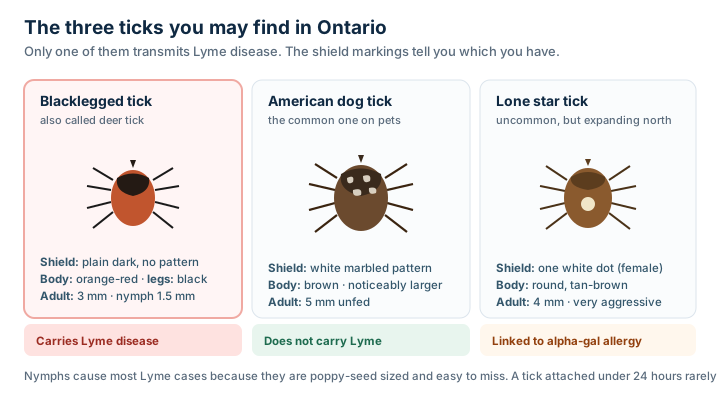
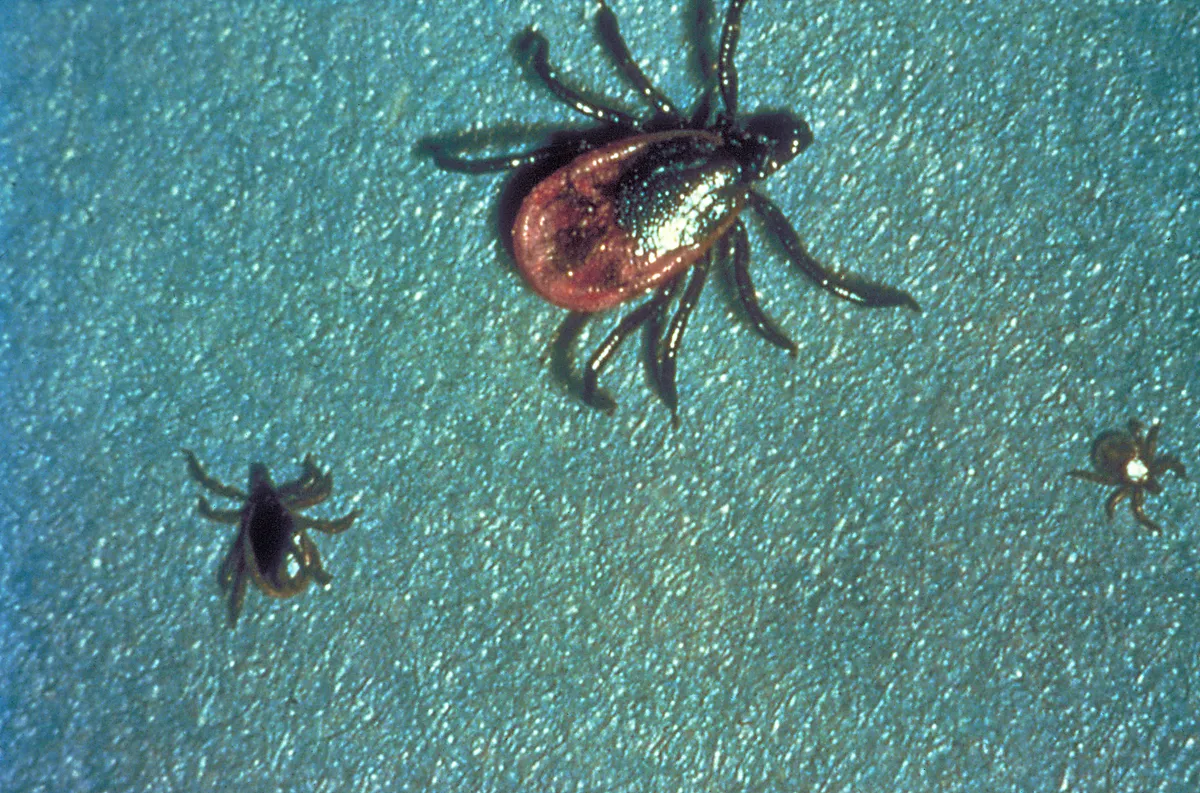
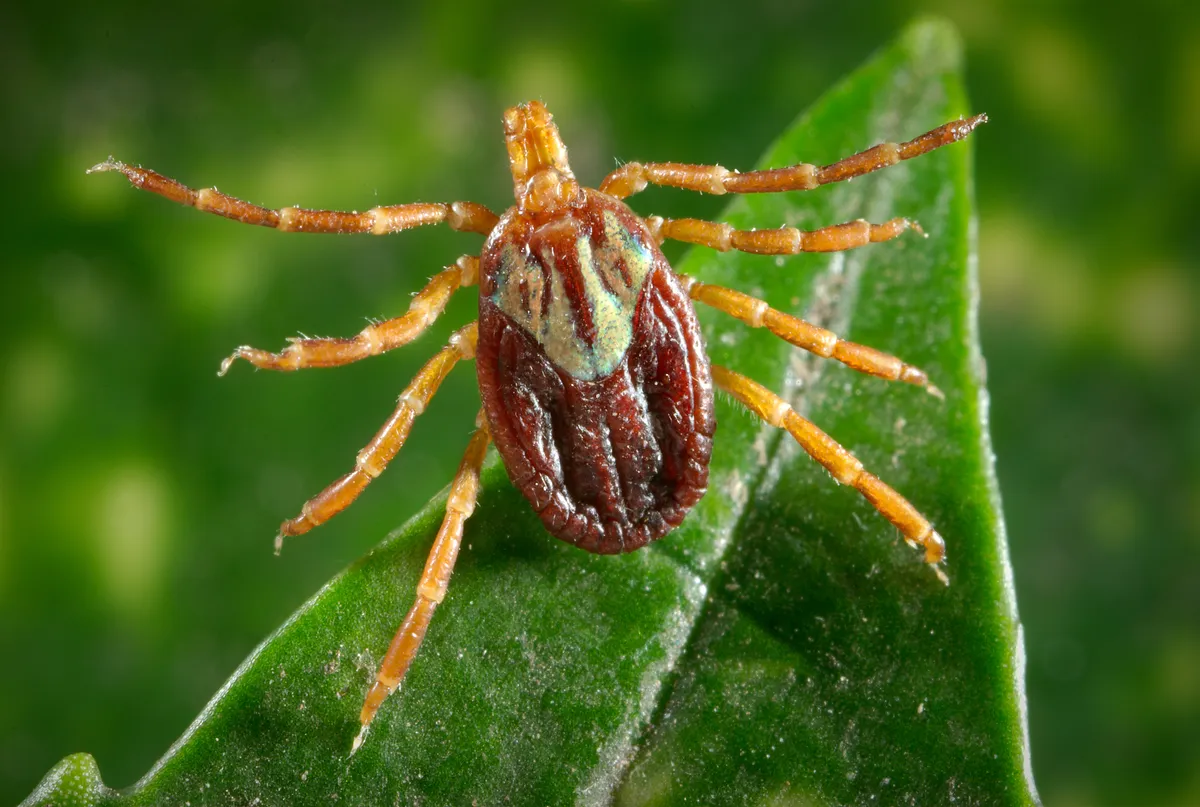
Virginia has 16 tick species, but only a few commonly bite people, according to the Virginia Department of Health's tick identification guide. The guide describes four: the lone star tick, the blacklegged (deer) tick, the American dog tick and the Gulf Coast tick. Of those, the lone star tick is the species that most often bites people in Virginia, the department's alpha-gal syndrome fact sheet says. The invasive Asian longhorned tick, mainly a livestock pest, is a fifth.
Field sampling points the same way. Over a year of monthly collections at 30 sites in southwestern and southeastern Virginia, researchers gathered 35,438 ticks, including 33,106 lone star ticks (about 93%), 2,052 blacklegged ticks, 84 American dog ticks and a single Asian longhorned tick, according to a 2022 study in the Journal of Medical Entomology. Those are field collections, not bites.
| Tick | Where in Virginia | When it is most active | What it can spread |
|---|---|---|---|
| Lone star tick, Amblyomma americanum | Throughout the state, usually below 1,600 feet; common in the coastal and Piedmont regions | Adults from late winter to early summer; nymphs from late spring to midsummer | Ehrlichiosis, tularemia, Heartland virus disease, Rocky Mountain spotted fever, Rickettsia parkeri and STARI; linked to alpha-gal syndrome |
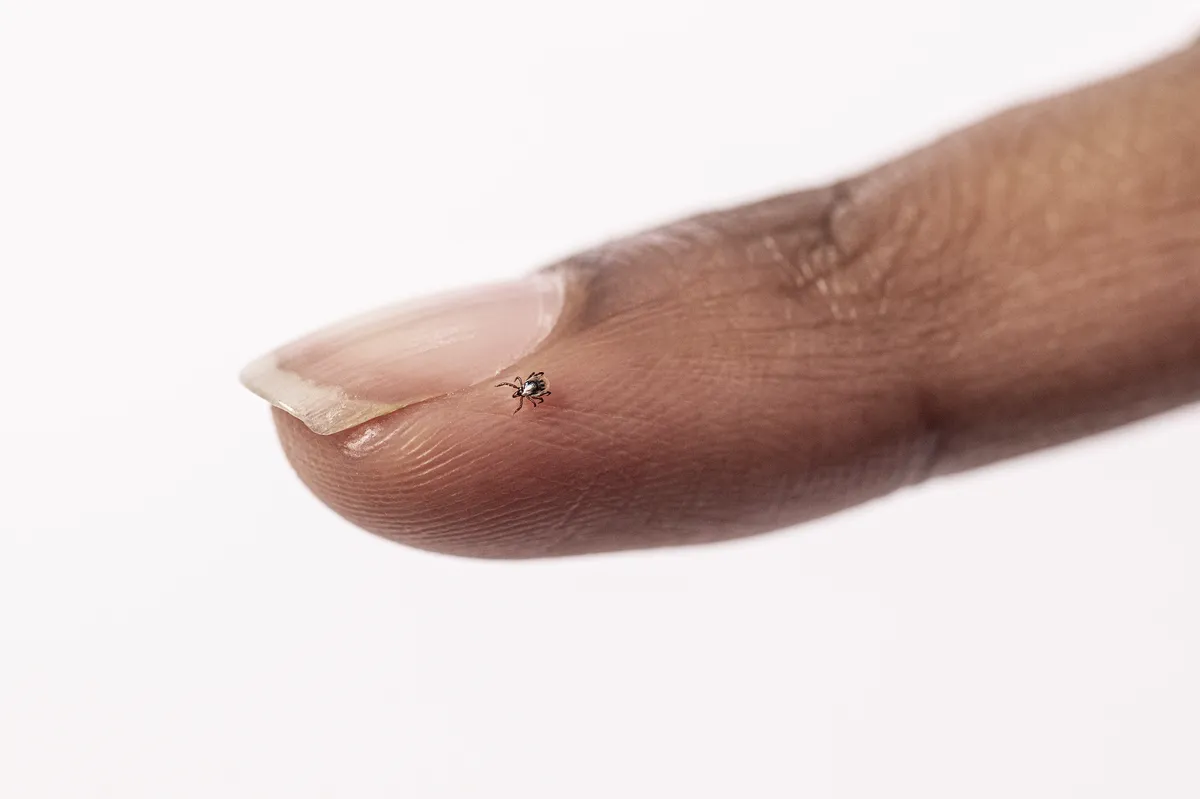
| Blacklegged (deer) tick, Ixodes scapularis | Shady forests, most common where deer are plentiful and at higher elevations; scarce in hot lowlands | Nymphs in late spring and early summer; adults in fall, on warmer winter days and in early spring | Lyme disease, anaplasmosis, babesiosis, Powassan virus and Borrelia miyamotoi infection |
| American dog tick, Dermacentor variabilis | Throughout the state, in sunny, open places such as trail edges and grassy fields | Adults from early spring to midsummer | Rocky Mountain spotted fever, tularemia, Rickettsia parkeri and tick paralysis |
| Gulf Coast tick, Amblyomma maculatum | Mostly along the coast | Not described in the state guide | Rickettsia parkeri, a spotted fever |
| Asian longhorned tick, Haemaphysalis longicornis | Invasive; established in 38 counties by May 2023 | Nymphs and adults from early spring; adults later in summer | Theileriosis in cattle; no natural spread of disease to people documented in the US as of 2023 |
STARI is southern tick-associated rash illness. Sources: the VDH tick identification guide, updated May 2026; for the Asian longhorned tick, Virginia Cooperative Extension's fact sheet, revised May 2023.
VDH says the American dog tick and the Gulf Coast tick look alike but differ in their mouthparts: short and rounded on the dog tick, long and rectangular on the Gulf Coast tick. For sizes and markings of every common US species side by side, see how to tell the common US ticks apart.

Where are blacklegged ticks found in Virginia?
Across much of the state, but not evenly. CDC's county surveillance tables, which run through December 31, 2025, list blacklegged ticks as established in 70 of the 133 counties and independent cities on the map below and as reported in 23 more. Established means six or more ticks of one life stage, or more than one life stage, were collected in a county within 12 months. To compare Virginia with other states, see tick maps and Lyme data for every state.
Elevation and summer heat shape where they live. VDH says blacklegged ticks are most common in suburban forests where deer are common, particularly at higher elevations, and do not tolerate the hot summers of the lowlands; only a few turn up on the Eastern Shore and in coastal areas cooled by ocean breezes.
The southwest's ticks may also behave differently. In the 2022 study, young blacklegged ticks (larvae and nymphs) were commonly collected while questing on or above the leaf litter at the southwestern sites but not at the southeastern ones. That habit is typical of northern blacklegged tick populations, and the authors suggest ticks from the Northeast may be moving into western Virginia and contributing to its higher Lyme rates.
Blacklegged (deer) tick status by county and city, Virginia, through 2025
- Established
- Reported
- No record
Show the list
Established (70): Accomack, Albemarle, Alleghany, Amherst, Appomattox, Augusta, Bath, Bedford, Bland, Bristol, Buckingham, Caroline, Carroll, Chesapeake, Chesterfield, Clarke, Covington, Craig, Danville, Fairfax, Fauquier, Floyd, Fluvanna, Franklin, Frederick, Galax, Giles, Goochland, Grayson, Greene, Hampton, Henry, Highland, Isle of Wight, James City, King George, Lee, Loudoun, Lynchburg, Martinsville, Middlesex, Montgomery, Nelson, Newport News, Northampton, Orange, Patrick, Pittsylvania, Portsmouth, Powhatan, Prince Edward, Prince William, Pulaski, Roanoke, Rockbridge, Rockingham, Russell, Scott, Smyth, Southampton, Stafford, Suffolk, Tazewell, Virginia Beach, Warren, Washington, Westmoreland, Wise, Wythe, York
Reported (23): Arlington, Brunswick, Charles City, Culpeper, Cumberland, Dinwiddie, Essex, Gloucester, Greensville, Hanover, Henrico, King and Queen, Lancaster, Mecklenburg, New Kent, Norfolk, Northumberland, Prince George, Rappahannock, Richmond, Shenandoah, Spotsylvania, Sussex
No record (40): Alexandria, Amelia, Botetourt, Buchanan, Buena Vista, Campbell, Charlotte, Charlottesville, Colonial Heights, Dickenson, Emporia, Fairfax, Falls Church, Franklin, Fredericksburg, Halifax, Harrisonburg, Hopewell, King William, Lexington, Louisa, Lunenburg, Madison, Manassas, Manassas Park, Mathews, Norton, Nottoway, Page, Petersburg, Poquoson, Radford, Richmond, Roanoke, Salem, Staunton, Surry, Waynesboro, Williamsburg, Winchester
Which germs have been found in Virginia's blacklegged ticks?
CDC's companion table records where each germ has been found in host-seeking blacklegged ticks, meaning ticks looking for a host rather than feeding on one. Only blacklegged ticks spread Lyme disease in Virginia, VDH says.
| Germ | Illness | Virginia counties and cities with a record |
|---|---|---|
| Borrelia burgdorferi | Lyme disease | 47 |
| Borrelia miyamotoi | Hard tick relapsing fever | 22 |
| Anaplasma phagocytophilum (the variant that infects people) | Anaplasmosis | 9: Carroll, Floyd, Franklin, Grayson, Greene, Montgomery, Pulaski, Warren and Wythe counties |
| Babesia microti | Babesiosis | 2: Carroll County and Northampton County, on the Eastern Shore |
| Powassan virus | Powassan virus disease | None |
| Borrelia mayonii | A rarer cause of Lyme disease | None |
Source: CDC ArboNET Tick Module, pathogen table through December 31, 2025. A place with no record may not have been tested.
Is the lone star tick in Virginia?
Yes, and it is the tick most likely to bite you. CDC's lone star tick surveillance lists it as established in 70 Virginia counties and independent cities and reported in 30 more, through 2025; by BuzzSkito's count of CDC's table, only Texas, Kentucky and Arkansas have more counties with established populations. VDH says it lives throughout Virginia, usually below 1,600 feet.
The map shows that limit. CDC has no lone star record for most of the far southwest, including Wise, Washington, Grayson and Carroll counties, for Highland and Bath counties, or for parts of the Shenandoah Valley such as Rockingham and Page counties. The 2022 study found the same on the ground: in southwestern Virginia, lone star ticks were collected more often at lower elevations, such as below about 1,640 feet (500 meters).
Lone star tick status by county and city, Virginia, through 2025
- Established
- Reported
- No record
Show the list
Established (70): Accomack, Albemarle, Alleghany, Amelia, Amherst, Appomattox, Arlington, Bedford, Brunswick, Buckingham, Caroline, Chesapeake, Chesterfield, Clarke, Craig, Danville, Essex, Fairfax, Fairfax, Falls Church, Fauquier, Fredericksburg, Gloucester, Goochland, Greensville, Halifax, Hampton, Hanover, Henrico, Isle of Wight, James City, King and Queen, King George, Lancaster, Lee, Loudoun, Louisa, Lynchburg, Manassas, Martinsville, Mecklenburg, Middlesex, Montgomery, New Kent, Newport News, Norfolk, Northampton, Northumberland, Nottoway, Orange, Patrick, Pittsylvania, Poquoson, Portsmouth, Powhatan, Prince Edward, Prince George, Prince William, Richmond, Richmond, Roanoke, Spotsylvania, Stafford, Suffolk, Surry, Sussex, Virginia Beach, Warren, Westmoreland, York
Reported (30): Alexandria, Augusta, Botetourt, Buena Vista, Campbell, Charles City, Charlottesville, Colonial Heights, Culpeper, Cumberland, Dinwiddie, Floyd, Fluvanna, Franklin, Frederick, Henry, Hopewell, King William, Lexington, Lunenburg, Mathews, Nelson, Petersburg, Pulaski, Rappahannock, Roanoke, Rockbridge, Salem, Southampton, Winchester
No record (33): Bath, Bland, Bristol, Buchanan, Carroll, Charlotte, Covington, Dickenson, Emporia, Franklin, Galax, Giles, Grayson, Greene, Harrisonburg, Highland, Madison, Manassas Park, Norton, Page, Radford, Rockingham, Russell, Scott, Shenandoah, Smyth, Staunton, Tazewell, Washington, Waynesboro, Williamsburg, Wise, Wythe

Lone star ticks do not spread Lyme disease, but STARI, an illness tied to them, causes a circular rash like the early rash of Lyme disease; VDH says its cause is still unknown.
Is alpha-gal syndrome common in Virginia?
Virginia is one of the states where it is suspected most often. A July 2026 CDC report notes that Arkansas, Kentucky, Missouri, Tennessee and Virginia had the highest numbers of suspected alpha-gal syndrome cases per population during 2017 to 2022. The syndrome is an allergy to meat and other products from mammals. VDH's alpha-gal fact sheet ties it primarily to lone star tick bites and says symptoms such as hives or swelling usually start two to six hours after exposure, so a reaction to an evening meal can wake people at night.
Antibodies are far more common than the illness. From 300 Virginia blood donor samples collected in late 2024 and early 2025, the same CDC study estimated that 22.8% of Virginians 16 and older carried alpha-gal antibodies. But CDC says only a small minority of people with the antibodies have the syndrome, and VDH calls a positive test without symptoms after eating red meat sensitization, not a diagnosis.
As of October 2026, VDH's guidance for clinicians lists alpha-gal syndrome as a reportable disease in Virginia, but the state's published case data, which run through 2024, do not include it yet. Virginia's agriculture commissioner, Charles Green, said in an April 2026 state news release that he developed the syndrome after a tick bite in 2022. For symptoms, testing and food triggers, see our guide to alpha-gal syndrome and the tick bites linked to it.
How much Lyme disease does Virginia have?
Virginia reported 1,747 Lyme disease cases in 2023, a rate of 20.2 per 100,000 residents, according to CDC's Lyme disease surveillance data. By BuzzSkito's ranking, that was the 12th-highest count among states and the 15th-highest rate. The state health department's 2023 surveillance report gives the same 1,747 cases and puts the previous five-year average at 1,000. VDH's Lyme fact sheet calls it the most common tick-borne illness in Virginia.
Reported Lyme disease cases in Virginia, 2008 to 2023
Cases per year, by state of residence
Show the numbers
| Confirmed and probable cases | |
|---|---|
| 2008 | 933 |
| 2009 | 908 |
| 2010 | 1,245 |
| 2011 | 1,023 |
| 2012 | 1,110 |
| 2013 | 1,307 |
| 2014 | 1,346 |
| 2015 | 1,539 |
| 2016 | 1,350 |
| 2017 | 1,657 |
| 2018 | 1,139 |
| 2019 | 1,199 |
| 2020 | 555 |
| 2021 | 705 |
| 2022 | 1,403 |
| 2023 | 1,747 |
The newest state count is lower. VDH counted 1,406 Lyme cases in 2024, a rate of 16.1 per 100,000, in its reportable disease data. VDH dates cases by year of report, and CDC's national data ran only through 2023 as of October 2026. VDH's 2023 report found children aged 1 to 9 and adults 60 and older carry the highest burden.
How does Virginia compare with its neighbors?
Virginia sits between neighbors with high and low Lyme rates. West Virginia's 2023 rate was about nine times Virginia's and Maryland's about twice, while North Carolina, Kentucky and Tennessee each reported fewer than 3 cases per 100,000.
| State | Lyme cases, 2023 | Cases per 100,000, 2023 |
|---|---|---|
| West Virginia | 3,242 | 181.6 |
| Maryland | 2,470 | 40.0 |
| Virginia | 1,747 | 20.2 |
| District of Columbia | 108 | 16.1 |
| Kentucky | 120 | 2.7 |
| North Carolina | 228 | 2.2 |
| Tennessee | 50 | 0.7 |
Confirmed and probable cases by state of residence, ordered by rate, from CDC Lyme disease surveillance data. Data through 2023, the latest year CDC had published as of October 2026.
Which Virginia counties have the most Lyme disease?
Relative to population, rural mountain counties. In 2023, 12 counties and cities recorded 100 or more cases per 100,000 residents, roughly five times the state rate or higher, led by Highland, Floyd, Bath, Grayson and Rappahannock counties. The map shows every county's and city's 2023 rate, calculated by BuzzSkito from CDC's county-level Lyme data and Census Bureau population estimates.
Lyme disease cases per 100,000 residents by county and city, Virginia, 2023
- 100 or more
- 50 to under 100
- 20 to under 50
- Under 20
Show the list
100 or more (12): Bath, Carroll, Covington, Floyd, Galax, Giles, Grayson, Highland, Patrick, Pulaski, Rappahannock, Wythe
50 to under 100 (13): Bland, Charlotte, Clarke, Craig, Fauquier, Frederick, Montgomery, Nelson, Radford, Shenandoah, Tazewell, Warren, Winchester
20 to under 50 (25): Accomack, Albemarle, Amelia, Augusta, Botetourt, Charles City, Charlottesville, Culpeper, Falls Church, Franklin, Harrisonburg, Loudoun, Madison, Manassas Park, Martinsville, Nottoway, Orange, Page, Roanoke, Rockbridge, Rockingham, Russell, Salem, Smyth, Waynesboro
Under 20 (83): Alexandria, Alleghany, Amherst, Appomattox, Arlington, Bedford, Bristol, Brunswick, Buchanan, Buckingham, Buena Vista, Campbell, Caroline, Chesapeake, Chesterfield, Colonial Heights, Cumberland, Danville, Dickenson, Dinwiddie, Emporia, Essex, Fairfax, Fairfax, Fluvanna, Franklin, Fredericksburg, Gloucester, Goochland, Greene, Greensville, Halifax, Hampton, Hanover, Henrico, Henry, Hopewell, Isle of Wight, James City, King and Queen, King George, King William, Lancaster, Lee, Lexington, Louisa, Lunenburg, Lynchburg, Manassas, Mathews, Mecklenburg, Middlesex, New Kent, Newport News, Norfolk, Northampton, Northumberland, Norton, Petersburg, Pittsylvania, Poquoson, Portsmouth, Powhatan, Prince Edward, Prince George, Prince William, Richmond, Richmond, Roanoke, Scott, Southampton, Spotsylvania, Stafford, Staunton, Suffolk, Surry, Sussex, Virginia Beach, Washington, Westmoreland, Williamsburg, Wise, York
| County or city | Lyme cases, 2023 | Cases per 100,000 |
|---|---|---|
| Highland County | 12 | 511.9 |
| Floyd County | 60 | 381.8 |
| Bath County | 14 | 344.7 |
| Grayson County | 43 | 281.8 |
| Rappahannock County | 20 | 268.5 |
| Carroll County | 69 | 236.3 |
| Galax (city) | 12 | 177.1 |
| Pulaski County | 49 | 145.8 |
| Wythe County | 39 | 138.5 |
| Covington (city) | 7 | 125.0 |
| Giles County | 20 | 121.0 |
| Patrick County | 18 | 103.0 |
The 12 counties and cities at 100 or more cases per 100,000 residents in 2023. Sources as for the map.
Eight of those 12 have no lone star tick record in CDC's table, which fits VDH's description of blacklegged ticks favoring higher elevations while lone star ticks stay mostly below 1,600 feet. The tick maps show where ticks have been collected, not risk, though: Rappahannock County, fifth by Lyme rate, has only a "reported" blacklegged tick record.
Raw counts follow population instead. Fairfax County had the most cases in 2023 (134), followed by Loudoun (98), Montgomery (71) and Carroll (69), yet Fairfax's rate of 11.7 per 100,000 was below the state's. Rates were low across Hampton Roads and the Richmond area: 5.1 in Virginia Beach, 2.1 in Norfolk and 1.3 in the city of Richmond. CDC's county file shows no cases for 21 counties and cities, most of them in the east.
VDH's 2024 data show a similar pattern: Highland, Carroll, Floyd, Clarke and Wythe had the highest rates, and Fairfax (165 cases) and Loudoun (156) the most cases. Two cautions apply to any local figure. Cases are counted where the patient lives, not necessarily where the bite happened, as CDC's Lyme case map page notes. And in its own data, VDH says, a case whose home address is unknown is assigned to the location of the doctor, hospital or laboratory that reported it.
Which other tick-borne diseases occur in Virginia?
Ehrlichiosis and spotted fever rickettsiosis come next, according to the state's 2023 surveillance report. VDH counts ehrlichiosis, which lone star ticks spread, together with anaplasmosis, spread by blacklegged ticks: the 132 combined cases of 2023 were above the previous five-year average of 121, and one Ehrlichia chaffeensis case was fatal. CDC's 2023 state incidence data match VDH's counts; by BuzzSkito's ranking, Virginia was ninth among reporting states for E. chaffeensis ehrlichiosis (11.2 cases per million residents) and seventh for spotted fever rickettsiosis (10.6).
| Disease | Tick that spreads it in Virginia | Cases, 2023 | Cases, 2024 |
|---|---|---|---|
| Ehrlichiosis and anaplasmosis (reported together) | Lone star tick (ehrlichiosis); blacklegged tick (anaplasmosis) | 132 (98 E. chaffeensis ehrlichiosis, 31 anaplasmosis, 3 undetermined) | 133 |
| Spotted fever rickettsiosis, including Rocky Mountain spotted fever | American dog and brown dog ticks; Gulf Coast tick for Rickettsia parkeri | 92 | 63 |
| Babesiosis | Blacklegged tick | 11 | 17 |
| Tularemia | Several ticks, plus deer flies and infected animals | 4 | 10 |
| Alpha-gal syndrome | Lone star tick | Not in published data | Not in published data |
Sources: VDH's 2023 surveillance report for 2023, VDH's reportable disease data for 2024, and VDH's clinician guidance and 2023 report for the ticks. Counts are by year of report and patient residence.
Spotted fever rickettsiosis cases rose to 92 in 2023 from 69 in 2022, with one death, and 45% of the 2023 patients were 60 or older, the 2023 report says. The group includes Rocky Mountain spotted fever, the most serious, and Rickettsia parkeri infection, which the report calls Tidewater spotted fever and describes as less severe. Counts need care: VDH's clinician guidance notes that Rickettsia amblyommatis, a harmless species common in Virginia's lone star ticks, can produce antibodies that cross-react on tests for Rocky Mountain spotted fever.
Babesiosis is rarer: 11 cases in 2023, seven of them acquired in Virginia, including three on the Eastern Shore, and 17 in 2024. Tularemia usually runs under five cases a year, VDH says; there were four in 2023, three apparently from tick bites, but 10 in 2024. Heartland virus (lone star tick) and Powassan virus (blacklegged tick) are also reportable, though CDC's table has no record of Powassan virus in Virginia ticks.
Is the Asian longhorned tick in Virginia?
Yes. Virginia Cooperative Extension's Asian longhorned tick fact sheet, revised in May 2023, says established populations had been found in 38 Virginia counties. Native to East Asia, it was first identified in the United States in 2017, though older specimens show it was here by 2010, and US populations are concentrated in the Mid-Atlantic, particularly along the Great Appalachian Valley.

It is mainly a livestock problem. US populations are all female and lay eggs without mating, so heavy infestations build up, and infested animals may lose weight, become anemic and sometimes die. In the US it spreads Theileria orientalis Ikeda, a parasite that causes theileriosis in cattle. Human germs have been found in US specimens and lab studies show it can transmit some, but the fact sheet says no natural transmission to people had been documented in the US, and it does not appear to spread Lyme disease.
To report or identify one, the fact sheet directs questions about unusual ticks on people, livestock or pets to your local Cooperative Extension office. VDH's Virginia Tick Survey also identifies ticks found on people and, since 2026, on pets, though not on commercial livestock.
When is tick season in Virginia?
All year on warm days, with the heaviest risk from spring into midsummer. VDH's Lyme disease fact sheet puts peak Lyme transmission in May and June, when tiny blacklegged nymphs are active, and a joint VDH and agriculture department release from April 2026 warns that some ticks seek hosts as soon as it is above freezing.
| Time of year | Blacklegged (deer) tick | Lone star tick | Other ticks and illnesses |
|---|---|---|---|
| Winter (December to February) | Adults, on warmer days | Adults most active from late winter | Some ticks seek hosts whenever it is above freezing |
| Spring (March to May) | Adults in early spring; nymphs from late spring, as Lyme transmission peaks in May and June | Adults; nymphs from late spring | American dog tick adults from early spring; Asian longhorned nymphs and adults found in early spring |
| Early summer (June and July) | Nymphs, the stage behind most Lyme cases | Nymphs through midsummer; adults until early summer | American dog tick adults until midsummer |
| Late summer and fall (August to November) | Adults return in fall | No peak named by VDH | Asian longhorned adults later in summer; babesiosis illnesses continue into early fall |
Life stages: the VDH tick identification guide and, for the Asian longhorned tick, Virginia Cooperative Extension. Babesiosis timing: VDH's 2023 report. Lyme peak and freezing point: the sources linked above the table. Month ranges are BuzzSkito's approximation.
Habitat matters as well: blacklegged ticks keep to leaf litter and low plants on the forest floor, lone star ticks to leaf litter and partly shaded grass, and American dog ticks to sunny trail edges and grassy fields.
Where can you get a tick identified in Virginia?
From the state, at no cost, as of October 2026: VDH's April 2026 release says it identifies ticks free through its Virginia Tick Survey. You answer a short online survey about where you found the tick and send clear photos or the tick itself. VDH's vectorborne team reviews submissions on weekdays and replies with the species within 2 to 14 days, sometimes longer for mailed ticks. The survey runs year-round and accepts ticks found on a person whether or not they bit.
Read the rules before mailing. Send one tick per survey, sealed in a zipper bag or leak-proof container inside an envelope; no alcohol is needed, VDH does not pay postage, and ticks are not returned. The address is ATTN: Vectorborne Team, VDH Office of Epidemiology, 109 Governor St, 2nd Floor, Richmond, VA 23219. VDH does not identify ticks from outside Virginia.
VDH does not test ticks for germs; the survey gives the species only, which its identification guide says may still help you and your health care team discuss testing and treatment if you get sick. If you feel ill after a bite, see a provider rather than waiting for a result.
What should you do after a tick bite in Virginia?
Remove the tick promptly, keep it, and watch for symptoms over the next few weeks. VDH's April 2026 release gives four steps:
- Grasp the tick with tweezers as close to the skin as possible.
- Pull upward with steady, even pressure until it lets go, trying not to break off the mouthparts or burst the body.
- Clean the bite with soap and warm water, rubbing alcohol or hand sanitizer.
- Save the tick in a bag or sealed container with rubbing alcohol in case you get sick, and mark the date of the bite on your calendar.
Speed matters: VDH's Lyme fact sheet says the chance of passing on Lyme bacteria rises the longer a tick stays attached, and warns against jerking, twisting or squeezing it. Ask a provider promptly about a bite from what may be a deer tick; VDH's clinician guidance points doctors to CDC advice on when a preventive antibiotic makes sense.

Watch for that rash. VDH says more than 75% of Lyme patients develop it, 3 to 30 days after the bite and usually within about 7 days, and that fatigue, fever, headache, muscle and joint pain or swollen lymph nodes can come with it. Because Lyme disease is common in Virginia, VDH's clinician guidance says a patient with the rash should be diagnosed clinically, without waiting for lab tests, which can be negative in the first weeks. The stages of Lyme disease symptoms covers what can follow if it goes untreated.
Other illnesses keep different clocks: VDH's clinician guidance puts the usual onset of ehrlichiosis and anaplasmosis at 5 to 14 days after the bite and Rocky Mountain spotted fever at 3 to 12 days. It also notes that up to half of people bitten by a tick do not remember the bite.
How do you prevent tick bites in Virginia?
Use repellent, treat your clothes and check for ticks every time you come in. The April 2026 state release recommends:
- An EPA-registered repellent on skin, with DEET, picaridin, IR3535, 2-undecanone or oil of lemon eucalyptus, used as the label directs and with extra care on children.
- Permethrin on clothing and gear, never on skin. Spray it several days ahead so it can dry; treated clothing keeps protecting through several washes.
- Pant legs tucked into socks, so ticks climbing up from your shoes have a harder time reaching skin, and light-colored clothing so they are easier to spot.
- A full-body check with a mirror or a partner: armpits, groin, in and around the ears, hairline, navel and the backs of the knees, then children, pets and gear.
- Ten minutes in the dryer on high heat for clothes worn outdoors, to kill ticks left on them.
VDH's Lyme fact sheet adds a shower with soap and hot water after time in tick habitat, and repellent on the legs at and below the knees if you wear shorts. Farmers, foresters and others who spend long hours outside should be especially careful, the release says, and farmers should check their animals as well. For the routine step by step, see how to do a full-body tick check on yourself, your kids and your pets.
This guide is general educational information, not medical advice. If you have symptoms or concerns after a bite or exposure, contact a healthcare provider.
Use any pesticide exactly as its label directs. The label is the law, and what is registered and sold varies by state.
Frequently Asked Questions
What is the most common tick in Virginia?+
The lone star tick. The Virginia Department of Health says it is the tick species that most often bites people in the state, and in a year of field sampling at 30 Virginia sites published in 2022, lone star ticks made up 33,106 of the 35,438 ticks collected. The blacklegged (deer) tick is far less common in those collections but matters more for Lyme disease, which only it spreads. Lone star ticks are linked to ehrlichiosis and alpha-gal syndrome.
Are ticks active in Virginia in the winter?+
Some are. The Virginia Department of Health says adult blacklegged ticks still pose a risk on warmer winter days, in the fall and in early spring, and that lone star adults are most active from late winter to early summer. An April 2026 state release adds that some ticks start seeking hosts as soon as the temperature rises above freezing. The riskiest stretch is still late spring and early summer, when tiny nymphs are active and Lyme transmission peaks in May and June.
Which part of Virginia has the most Lyme disease?+
Relative to population, rural mountain counties. In 2023, Highland, Floyd, Bath, Grayson, Rappahannock and Carroll counties each recorded more than 230 cases per 100,000 residents, based on CDC county counts and Census estimates, against 20.2 statewide. Fairfax County had the most cases, 134, because so many people live there. Rates were low in Hampton Roads and the Richmond area. Cases are counted where patients live, not where they were bitten, and small counties swing sharply from year to year.
Can I get a tick tested for Lyme disease in Virginia?+
Not through the state. The Virginia Department of Health identifies ticks free through its Virginia Tick Survey, from photos or a mailed specimen, but it says it does not test submitted ticks for germs. Knowing the species can still help you and your health care team. If you develop a rash, fever, headache or body aches after a tick bite, see a provider promptly rather than waiting for any tick result.
Is alpha-gal syndrome common in Virginia?+
It is suspected more often in Virginia than in most states. A July 2026 CDC report notes that Arkansas, Kentucky, Missouri, Tennessee and Virginia had the highest numbers of suspected cases per population during 2017 to 2022. In that study of blood donors, an estimated 22.8% of Virginians 16 and older carried alpha-gal antibodies, but CDC says only a small minority of people with the antibodies have the allergy. As of October 2026, the condition is reportable in Virginia.
What should I do if I find an Asian longhorned tick in Virginia?+
Virginia Cooperative Extension asks that questions about unusual ticks on people, livestock or pets go to your local Extension office. Ticks found on people, and since 2026 on pets, can also be sent to the Virginia Department of Health's free tick survey for identification. The tick is mainly a livestock pest that spreads theileriosis in cattle; as of 2023, no natural transmission of disease to people had been documented in the United States.
Sources
- Lyme Disease Surveillance Data — Centers for Disease Control and Prevention
- Signs and Symptoms of Untreated Lyme Disease — Centers for Disease Control and Prevention
- Lyme Disease Case Maps (county-level data, 2023) — Centers for Disease Control and Prevention
- Tick Surveillance Data Sets — Centers for Disease Control and Prevention (ArboNET Tick Module)
- Lone Star Tick Surveillance — Centers for Disease Control and Prevention (ArboNET Tick Module)
- Tick Identification — Virginia Department of Health
- Virginia Tick Survey — Virginia Department of Health
- Lyme Disease (epidemiology fact sheet) — Virginia Department of Health
- Alpha-gal Syndrome (epidemiology fact sheet) — Virginia Department of Health
- Clinician Resources for Tick-borne Diseases — Virginia Department of Health
- Reportable Disease Surveillance in Virginia, 2023 — Virginia Department of Health
- Annual Report: reportable disease surveillance dashboard and downloadable data (2024) — Virginia Department of Health
- Virginia Department of Health and the Virginia Department of Agriculture and Consumer Services Offer Tips on Tick Bite Prevention (news release, April 20, 2026) — Virginia Department of Health
- Asian Longhorned Tick (ENTO-282NP, revised May 2023) — Virginia Cooperative Extension, Virginia Tech
- Tick Species Composition, Collection Rates, and Phenology Provide Insights into Tick-Borne Disease Ecology in Virginia (2022) — Journal of Medical Entomology (Oxford University Press), via PubMed Central
- Alpha-gal Immunoglobulin E Seroprevalence Among Blood Donors, 10 States, 2024-2025 (July 2, 2026) — CDC Morbidity and Mortality Weekly Report
How this guide was made: it was researched and drafted with AI assistance from the sources listed above. A second, independent AI pass then checked each factual claim against those sources. Found an error? Email support@buzzskito.ca.