Reviewed by Alex Francisco
Published November 23, 2026 · Fact-checked against the sources listed below
What does rat urine look like?
Fresh rat urine looks like wet, glossy or sticky spots; dried, it is a stain. CDC's manual for urban rodent surveys describes urine that way and lists a black light among an inspector's tools for showing urine stains. Other signs turn up in the same places: California's Norway rat handbook says urine stains may occur along travelways or in feeding areas, the same places rats leave droppings and rub marks.
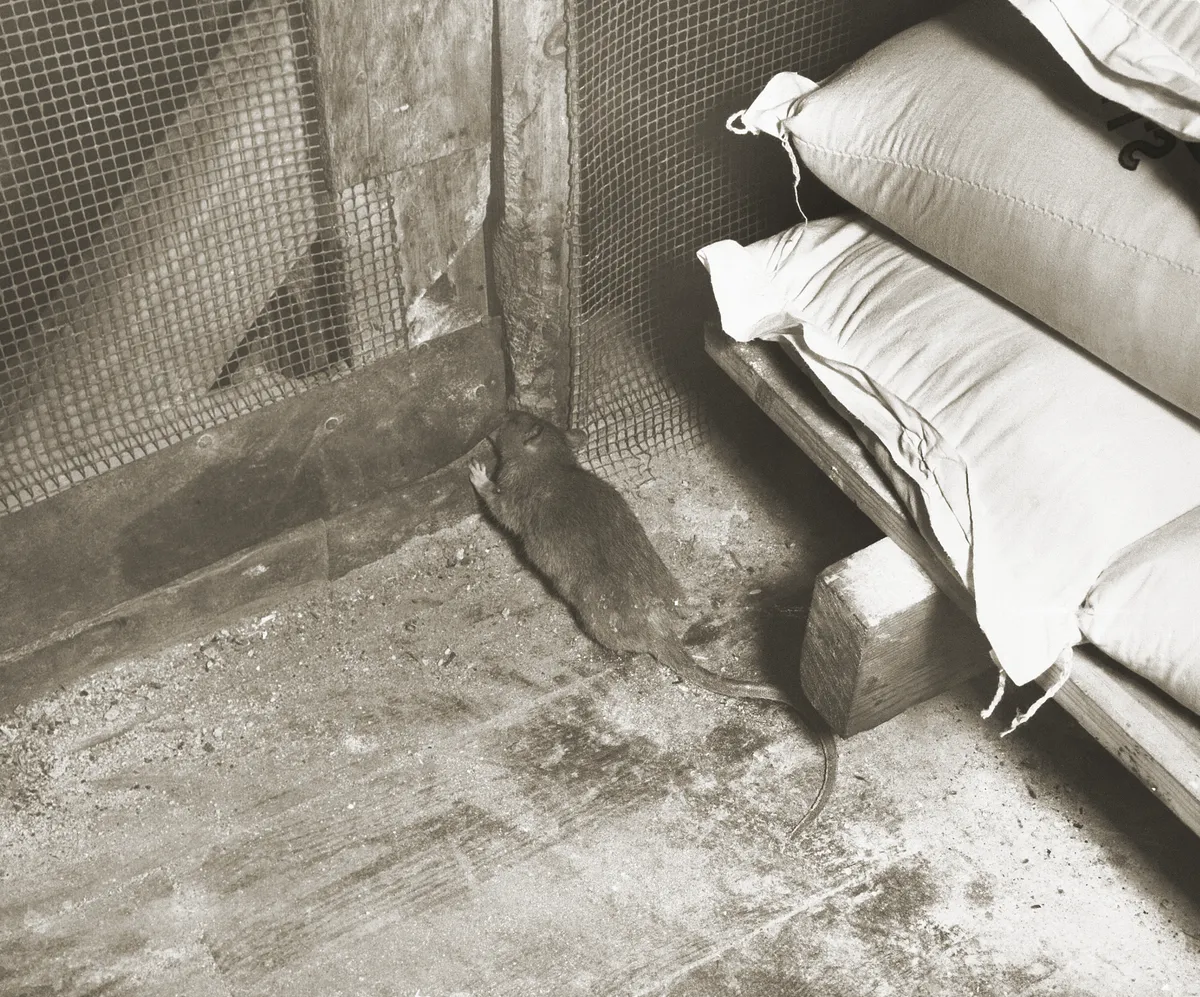
Rats leave trails, not single puddles. The National Park Service's guide to mouse and rat damage says rodents urinate while walking or perched on an edge, so urine trails build up across a room; urine stains soft materials such as fabric and mineral-fiber ceiling tiles, and splatters darken surfaces. An allergy practice parameter on rodents lists urine staining of floors, carpets and ceilings among the visual signs of rodents.
Rat urine is easier to find than a mouse's. Illinois's public health department notes in its sample pest management procedures that mouse urine spots are not as easy to detect as those made by rats.
Is rat pee sticky?
Fresh rat pee can be. CDC's survey manual says urine may be wet, glossy or sticky before it dries to a stain. Do not confuse it with a rub mark: the same manual says fresh rub marks are black, soft and greasy, and the North Carolina State Extension guide to structure-invading rats explains that they come from the oily sebum on a rat's fur, which smears when fresh and dries out as it ages. Touch neither with bare hands.
What does rat urine smell like?
Rat urine smells musty and pungent, and the smell builds where many rats live. Minneapolis's health department lists a musty, pungent odor among the signs of rats, and North Carolina State Extension says a heavy infestation can produce a musty smell from the urine.
The reason a whole room can smell is the habit behind the trails. The allergy practice parameter says rodents urinate constantly as they travel, so an infestation is often associated with a strong urine odor, and that some people trained in rodent work can smell the difference between mouse and rat urine. NPS adds that rodent travel routes can smell musky, and that nests can be noticed by smell because urine and droppings collect there.
When the smell means a dead rat instead
A smell of rot is not urine. University of Arizona Extension's guide to roof rat control warns that rats poisoned indoors may retreat to places you cannot reach to die, leaving an odor that is hard to remove and that attracts insects, and the University of Arkansas guide to controlling mice and rats describes the foul odor of an animal dying inside a wall. North Carolina State adds that rats left in unchecked traps can cause unpleasant odors. A musty smell that comes back after cleaning may point the other way, to rats still active.
Does rat urine glow under a black light?
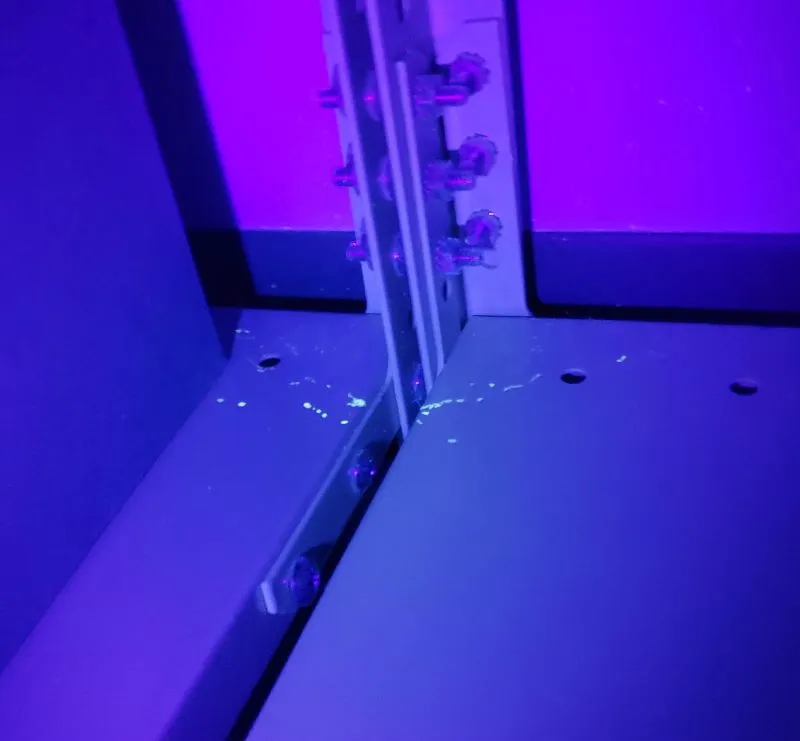
Yes, wet or dry, but a glow is a clue, not proof. California's Norway rat handbook says rat urine fluoresces under ultraviolet light whether wet or dry, and Minneapolis suggests a black light for better visibility of urine staining. The allergy practice parameter adds that other biological materials fluoresce as well, and NPS says many substances do, so a UV flashlight helps confirm rodents where other signs are present.
Checking a stain for rat urine
- Darken the room and sweep a UV flashlight low along walls, baseboards and the edges of stored goods, where rats travel.
- Follow a glow: a trail along a wall or toward food fits a rat route better than one isolated spot.
- In daylight, look beside each spot for droppings 1/2 to 3/4 inch long with blunt ends; a roof rat's can be smaller and pointed.
- Look for dark, greasy rub marks on the wall, pipe or beam above the trail, and for light-colored, fresh gnawing.
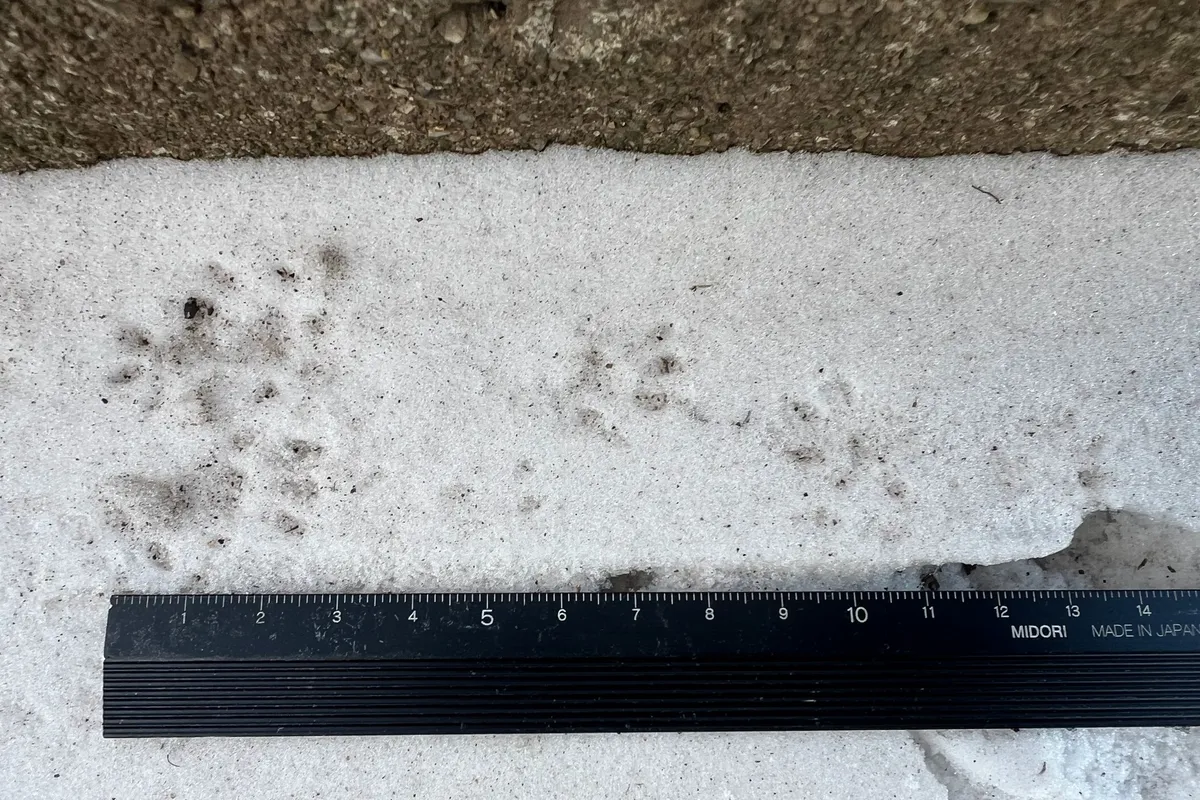
- Check for footprints and tail marks in dust, or holes 2 to 3 inches wide outdoors along the foundation.
- Touch nothing and photograph it all before cleaning, as described at the end of this page.
Where do rats leave urine in and around a house?
Along the walls and runways they use every night, and where they eat. The Internet Center for Wildlife Damage Management's Norway rat page says rats habitually use the same routes, leave droppings along runways, in feeding areas and near shelter, and keep runs and burrows next to walls and buildings, along fences and under bushes and debris. California's handbook says rats run close beside a wall, where their whiskers touch it, and memorize their pathways.
- Kitchens, pantries and storage. California's handbook names feeding areas for urine stains, and UC IPM's Pest Notes on rats list droppings near food preparation and storage areas and around pet food containers.
- Basements and ground floors. UC IPM says Norway rats indoors mostly stay in basements and ground floors, and burrow along foundations, under rubbish or woodpiles and around gardens.
- Attics, ceilings and walls. UC IPM says roof rats favor attics, wall and ceiling voids and cabinets; NPS says stained ceiling tiles away from any water source are likely evidence of mouse or rat activity, not a leak.
- Outdoors. Minneapolis lists burrows in earth banks, along walls and under rubbish and outbuildings; the Norway rat page says droppings turn up along runways and near shelter, and California's handbook puts urine stains along the same travel routes.
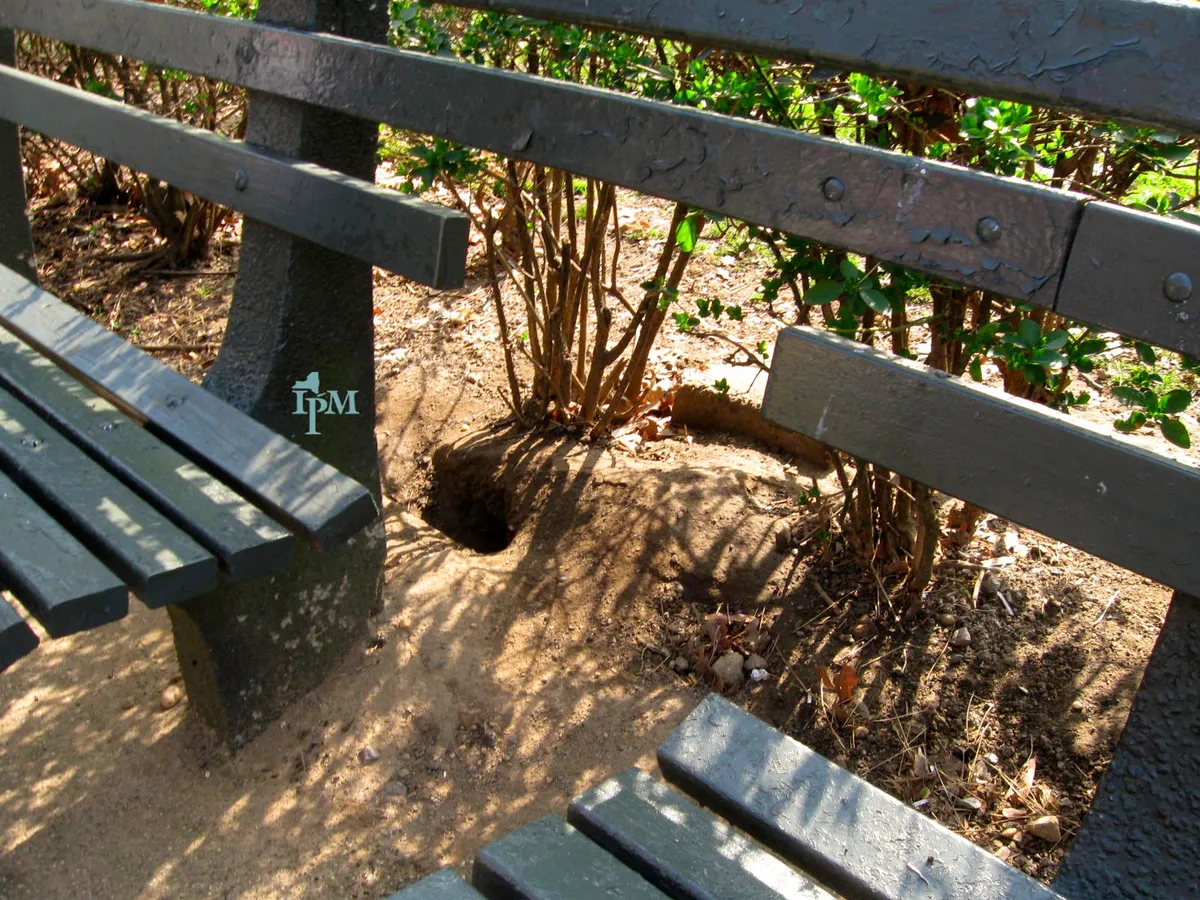
Norway rats and roof rats leave urine in different places
Look low for Norway rats and high for roof rats. University of Arizona Extension says roof rats often live overhead, between floors or above false ceilings, so their tracks, urine and droppings are less often seen, and their smudge marks show up high, between rafters, instead of along walls at floor level. North Carolina State says roof rats travel along elevated routes while Norway rats spend much of their time underground. How to tell a roof rat from a Norway rat compares the two animals.
What signs sit beside rat urine?
Droppings, rub marks, tracks, gnawing and burrows, and together they help confirm a stain. NPS gives rat droppings as about 1/2 to 3/4 inch long, wider than a mouse's and blunt at both ends; the guide to rat droppings shows them beside their look-alikes. Roof rat droppings run smaller and more pointed: University of Arizona Extension gives about 1/4 to 1/2 inch, North Carolina State says their ends are pointier than a Norway rat's, and Arizona cautions that telling rat species apart by droppings alone is difficult. CDC's survey manual says fresh droppings are dark and soft, while old ones are hard or gray and brittle, and that a freshly gnawed surface is usually light in color.
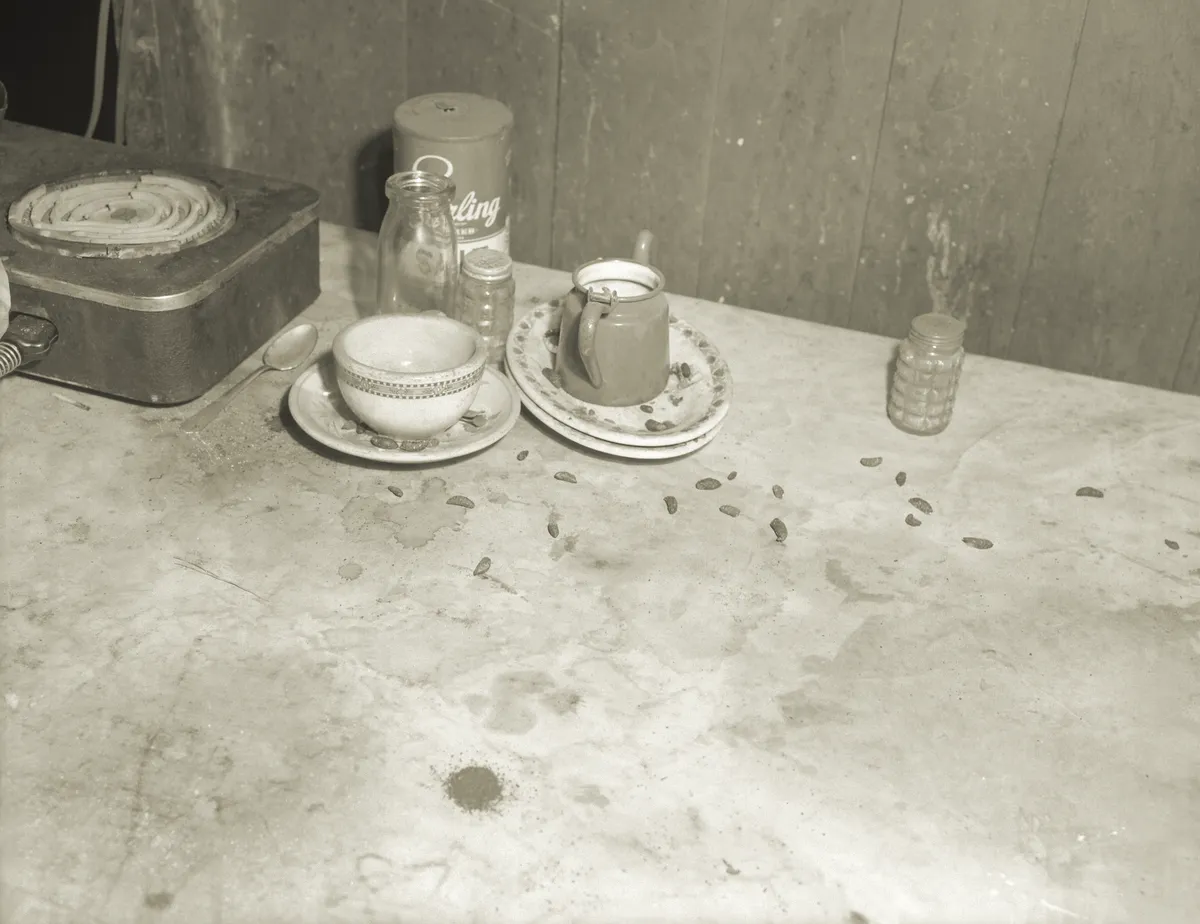
Rub marks show the route the urine follows. The Norway rat page says smudge marks form on beams, rafters, pipes and walls where oil and dirt rub off the fur along well-used routes, and footprints and tail marks show on dusty surfaces or mud; a patch of flour across a suspected runway overnight will show tracks if rats are using it. UC IPM adds gnawed wires, doors, ledges and wall trim, and noises from the attic or drop ceilings.
How do you tell rat urine from mouse urine, pet urine or a water stain?
By what sits beside it and where it is. No agency source cited here describes a difference in color between rat urine and a mouse's, cat's or dog's; the tells are the droppings, rub marks and routes around the stain. A mouse leaves smaller signs, droppings 1/8 to 1/4 inch long by NPS's measure, and the guide to mouse urine covers its tiny drops and urine pillars. How to tell a rat from a mouse compares the animals themselves.
| Stain | Signs beside it | Where it turns up |
|---|---|---|
| Rat urine | Droppings 1/2 to 3/4 inch, greasy rub marks, tracks, gnawing | Along walls and runways, feeding areas; low for Norway rats, high for roof rats |
| Mouse urine | Droppings 1/8 to 1/4 inch; spots harder to see than a rat's | Along walls, in cabinets and drawers, and near food |
| Pet urine | No rodent droppings, rub marks or gnawing, unless rodents are there too | Where the pet has access |
| Water stain | No droppings or rub marks | Below a pipe, roof leak or condensation source |
| Rub mark | Dark, greasy smear, not a spot | Beams, pipes, walls and the edges of holes, at the height the rat travels |
Rodent signs from NPS, CDC's survey manual, Illinois's procedures, University of Arizona Extension and the Norway rat page of the Internet Center for Wildlife Damage Management. The water row follows NPS's point that stained ceiling tiles away from water sources are likely rodent evidence; the pet row is plain reasoning, not a sourced test.
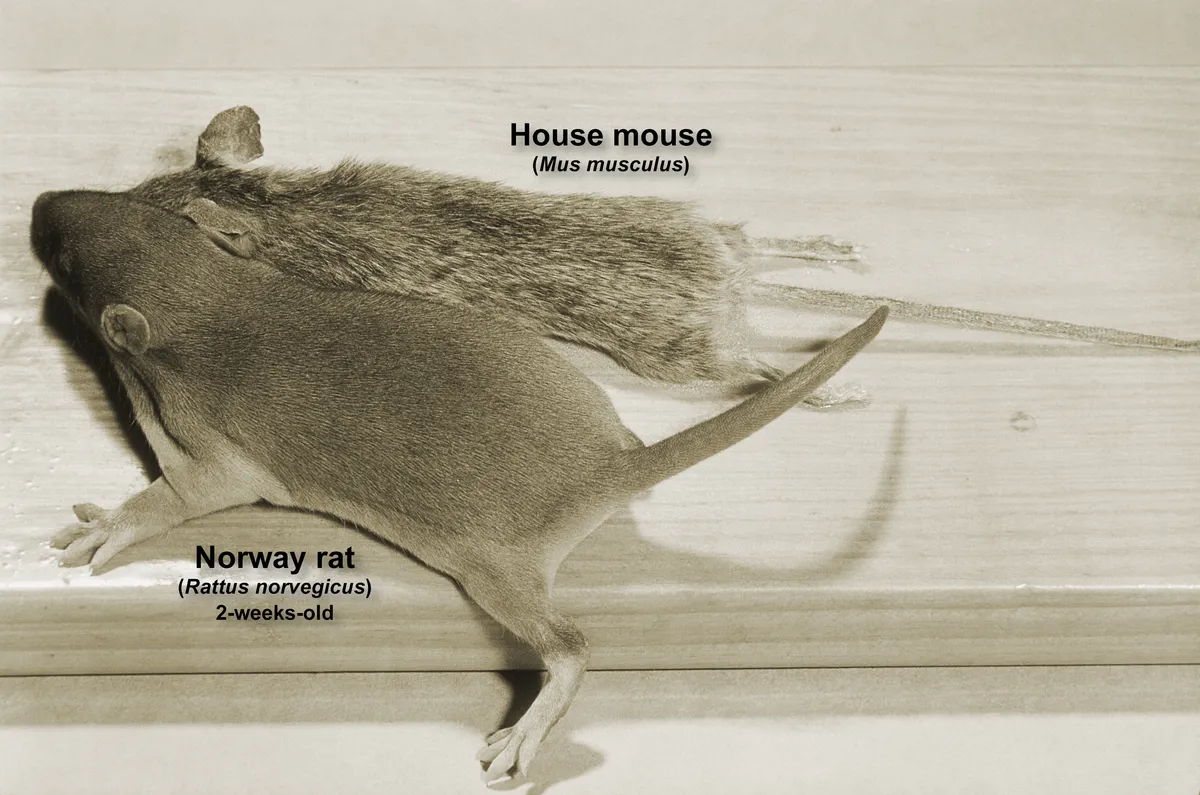
Other signs to compare
 House mouse signsUrine spots harder to see than a rat's; droppings only 1/8 to 1/4 inch long
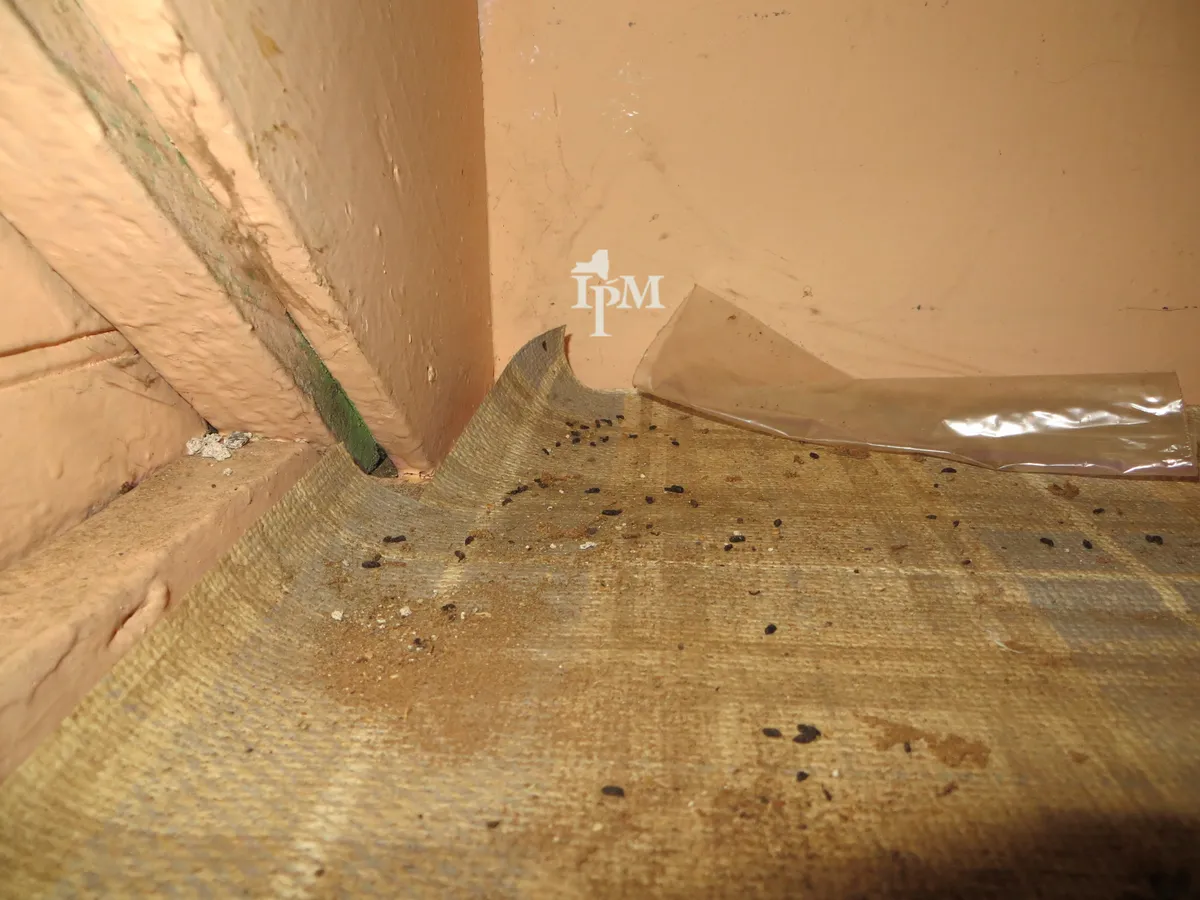
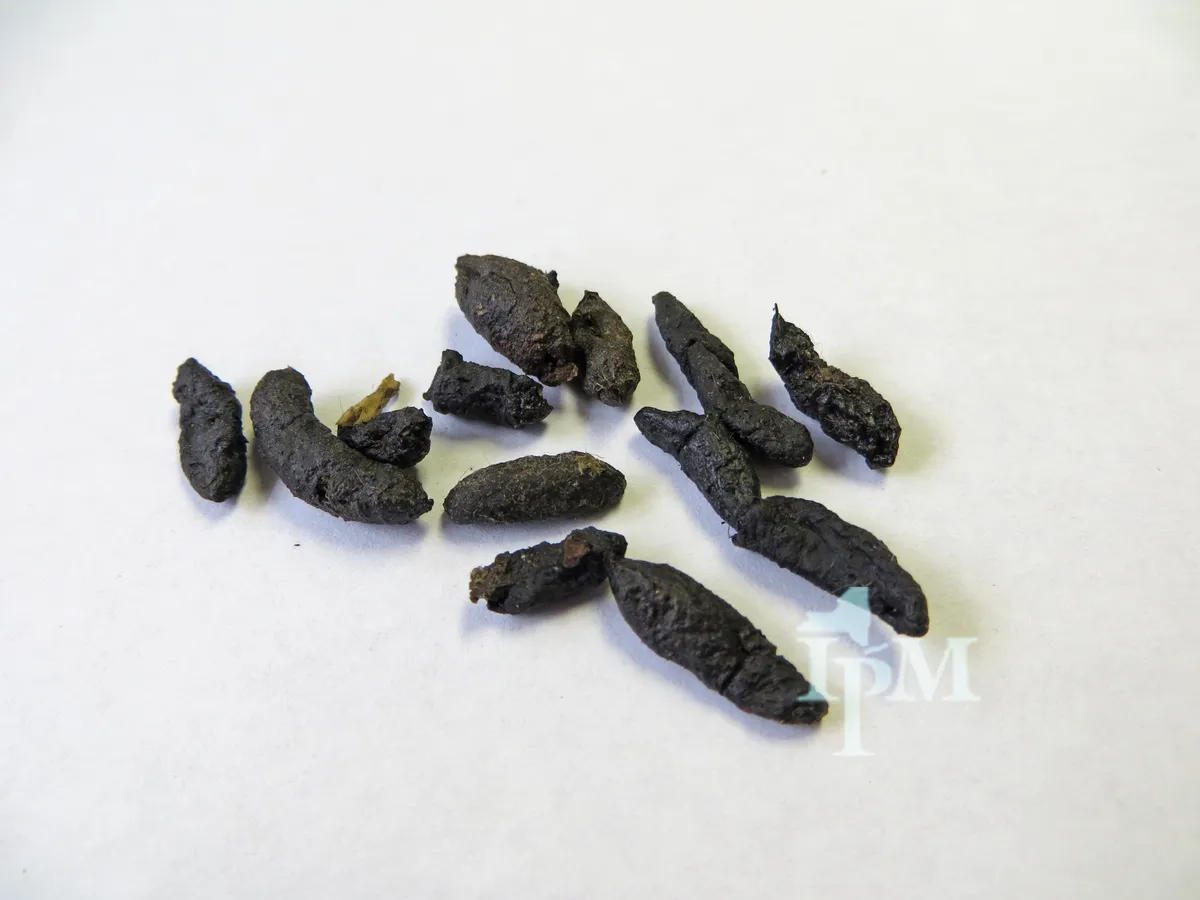 Rat droppings1/2 to 3/4 inch, blunt-ended; found along the same runways as the urine
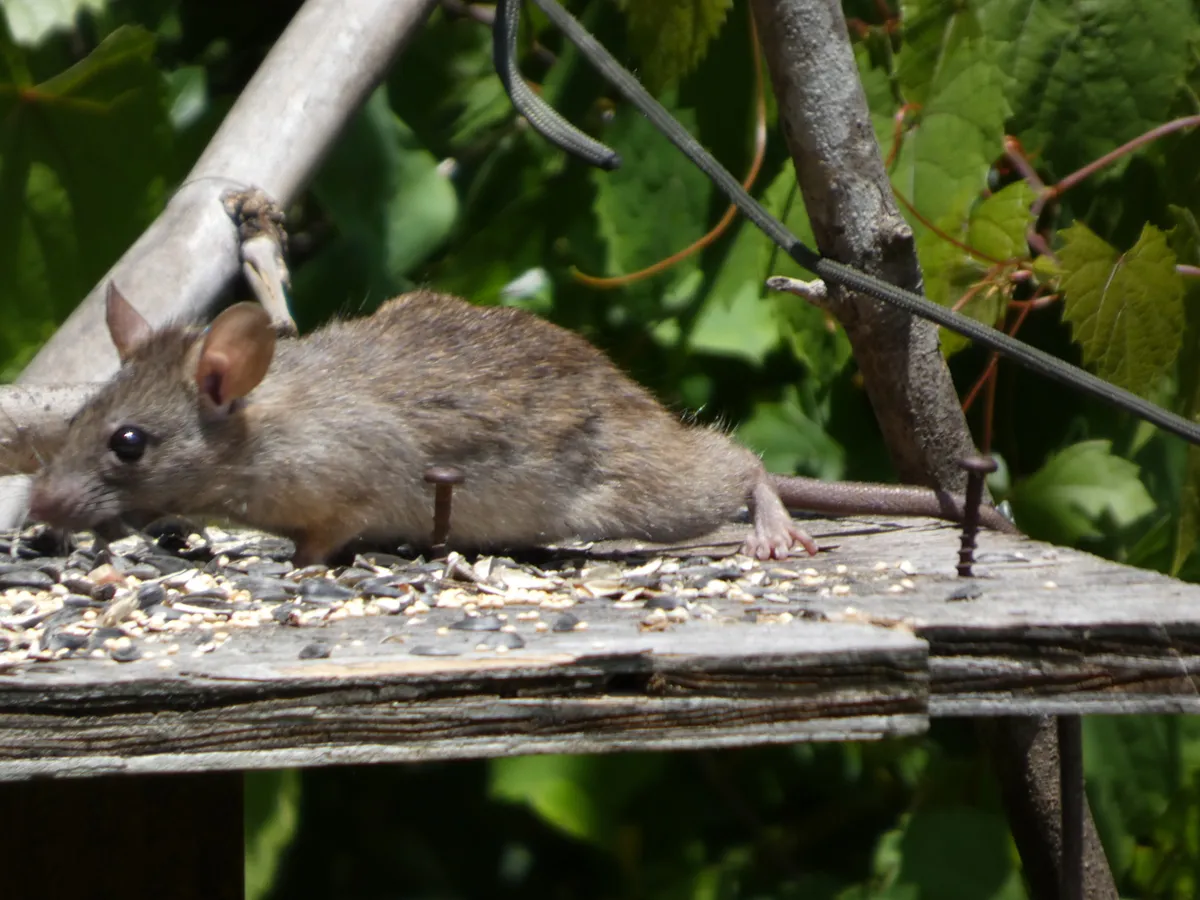 Roof ratOften lives overhead; smudges show up high, and its urine and droppings are seen less often
Photos: House mouse signs: NY State IPM Program at Cornell University from New York, USA, CC BY 2.0, via Wikimedia Commons, CC BY 2.0. Rat droppings: NY State IPM Program at Cornell University from New York, USA, CC BY 2.0, via Wikimedia Commons, CC BY 2.0. Roof rat: no rights reserved, via iNaturalist, CC0 1.0.
Is rat urine dangerous?
It can be: rat urine can carry bacteria and viruses that make people sick. California's Norway rat handbook says rat urine may transmit leptospirosis, and UC IPM names leptospirosis and rat-bite fever among the most common diseases rats spread.
- Leptospirosis. CDC's leptospirosis overview says the bacteria spread through the urine of infected animals, rodents among them, and can survive in contaminated water or soil for weeks to months. People become infected through contact with water or soil containing an infected animal's urine or body fluids, especially after hurricanes, flooding or heavy rain, by directly touching those fluids, or by eating food or drinking water contaminated by the urine, and it generally takes 2 to 30 days to get sick. Dogs are at risk too: CDC's page on leptospirosis in animals says to contact a veterinarian immediately if you think an animal may have it.
- Seoul virus. CDC's veterinary guidance on Seoul virus says this hantavirus is carried mainly by Norway rats, has been found in pet and wild rats in the United States, and is shed in urine, feces and saliva by rats that show no signs of illness. CDC's report on the 2017 outbreak says people become infected through contact with virus shed in rat urine or droppings, or by breathing virus particles in dust from contaminated bedding; it found 17 recent infections in US residents. CDC's hantavirus overview adds that a rodent bite or scratch can also spread hantaviruses, but that this is rare.
- The hantavirus pulmonary syndrome viruses. CDC's 2002 hantavirus recommendations say all hantaviruses known to cause HPS are carried by New World rats and mice, and name the deer mouse, white-footed mouse, cotton rat and rice rat as hosts in the United States: wild rodents not generally tied to cities the way house mice and Norway and roof rats are. Of those hosts, CDC says only the deer mouse and white-footed mouse are commonly found around homes, and it recommends treating any wild mouse or rat met in a rural area as though it were infected.
- Rat-bite fever. CDC's rat-bite fever page says it spreads through rodent bites and scratches, contact with a rodent's saliva or urine, and contaminated food or drink; symptoms usually start 3 to 10 days after exposure.
- Allergy. The allergy practice parameter says the major rat allergen, Rat n 1, is found at higher levels in male rat urine than in female rat urine, and that rodent allergens settle into house dust, where they can stay allergenic for a long time.
How do you clean up rat urine?
Soak it, then wipe it; never sweep or vacuum it. CDC's steps for cleaning up after rodents say rodent diseases spread mainly through breathing contaminated air, and sweeping or vacuuming can put droplets containing viruses into the air. CDC makes no exception for old, dried urine: its steps cover all urine and droppings.
- Open all doors and windows for 30 minutes and leave the area while it airs.
- Put on rubber or plastic gloves.
- Spray the urine and any droppings until very wet with an EPA-registered disinfectant, or a fresh mix of 1.5 cups of household bleach per gallon of water (1 part bleach to 9 parts water), and let it soak for 5 minutes or as the label directs.
- Wipe it up with paper towels and put them in a covered garbage can that is emptied regularly.
- Mop or wipe floors, countertops, cabinets and drawers with disinfectant.
- Wash the gloves with soap and water or disinfectant before taking them off, then wash your hands with soap and warm water.
For soft things, CDC says to wash clothing and bedding in hot water with detergent and dry them on high heat or in the sun, and to shampoo carpets and upholstery with a commercial disinfectant or use a commercial-grade steam cleaner or shampoo. It says to bag contaminated insulation for removal, throw out contaminated cardboard, and, for heavy infestations, add disposable coveralls, rubber boots or shoe covers, goggles and a respirator with HEPA filters. Dead rats and nests get the same soak, then go into a knotted bag inside a second knotted bag; the guide to rat nests covers nests.
What should you do once you know it is rats?
Trap, seal and keep watching for new urine spots. CDC's trapping guide recommends snap traps placed where you have seen urine, droppings or gnaw marks, not glue or live traps, which can scare rodents into urinating and raise your chance of getting sick; rats are wary and may take several days to approach a trap, so set traps out baited but unset first. If nothing is caught for a week and no new signs appear, CDC says the rats are gone; new droppings, urine spots or gnawing that persist after a week may mean a rat infestation.
The complete guide to mice covers CDC's seal up, trap up, clean up sequence, the comparison of rat traps sets snap, electric and live traps side by side, and the step-by-step plan for getting rid of rats and notes on choosing a rat trap cover the rest. For rats in a ceiling or walls, a pest professional can find the entry points.
This guide is general educational information, not medical advice. If you have symptoms or concerns after a bite or exposure, contact a healthcare provider.
Frequently Asked Questions
What does dried rat urine look like?+
Dried rat urine is a stain rather than a wet spot. CDC's rodent survey manual says urine may be wet, glossy or sticky, or a dried stain. The National Park Service says urine stains fabric and ceiling tiles and its splatters darken surfaces, and that stained ceiling tiles away from any water source are likely evidence of rats or mice. Dried urine still glows under ultraviolet light, according to California's Norway rat handbook, so a UV flashlight helps find it.
What does rat pee smell like?+
Rat pee smells musty and pungent. Minneapolis's health department lists a musty, pungent odor among the signs of rats, and North Carolina State Extension says heavy infestations can produce a musty smell from urine. Because rodents urinate constantly as they travel, an infestation often comes with a strong urine smell along their routes and around nests. A foul smell of decay is different: extension guides tie it to a rat that has died in a wall or another place out of reach.
Is rat pee sticky?+
Fresh rat pee can be sticky. CDC's manual for urban rodent surveys says rodent urine may be wet, glossy or sticky before it dries to a stain. A dark, greasy smear on a wall or pipe is more likely a rub mark, which CDC describes as black, soft and greasy when fresh. Either way, wear gloves and soak the area with disinfectant before wiping it up.
Does rat urine glow under a black light?+
Yes. California's Norway rat handbook says rat urine fluoresces under ultraviolet light whether it is wet or dry. Other biological materials and many other substances glow too, according to an allergy practice parameter and the National Park Service, so a glow is only a clue. Count it as rat urine when droppings about 1/2 to 3/4 inch long, rub marks or gnawing turn up in the same place.
Is dried rat urine still dangerous?+
CDC's cleanup steps make no exception for dried urine: they cover all rodent urine and droppings, and they say not to sweep or vacuum, which can put droplets containing viruses into the air. CDC says leptospirosis bacteria can survive in water and soil for weeks to months, and rodent allergens settle into house dust, where they can stay allergenic for a long time. Soak dried stains with disinfectant before wiping them up.
Can you get sick from smelling rat urine?+
CDC does not describe the odor itself as the way these diseases spread; the risk it describes is the air and dust around urine and droppings. CDC says rodent diseases spread mainly through breathing contaminated air, and that people can catch Seoul virus by breathing dust from bedding contaminated by infected rats. Air the room for 30 minutes before cleaning, wear gloves, and never sweep or vacuum urine. If you become ill after rodent contact, see a healthcare provider and mention the exposure.
How can you tell rat urine from mouse urine?+
Look at what is next to it. Rat droppings are about 1/2 to 3/4 inch long and blunt, while mouse droppings are 1/8 to 1/4 inch, according to the National Park Service. Illinois's public health department says mouse urine spots are harder to find than a rat's. An allergy practice parameter notes that some people trained in rodent work can tell the two urines apart by smell, but most homeowners need the droppings.
Does rat urine carry hantavirus?+
Norway rats can carry Seoul virus, a hantavirus that CDC says infected rats shed in urine, droppings and saliva, and that has been found in wild and pet rats in the United States. The hantaviruses behind hantavirus pulmonary syndrome are carried by New World rats and mice, according to CDC, which names the deer mouse, white-footed mouse, cotton rat and rice rat as hosts in the United States, not Norway or roof rats. Clean any rodent urine the way CDC describes.
Can rat urine make a dog sick?+
It can carry leptospirosis, which affects animals as well as people. CDC says rodents can carry and spread the bacteria, that animals can catch them through direct contact with infected urine or contaminated water, and that almost every dog is at risk; a vaccine for dogs is available in the United States. If you think your dog may have leptospirosis, CDC says to contact a veterinarian immediately.
Does the rat urine smell go away?+
The agency sources here deal with the smell by removing its source; none of them names a deodorizer. CDC's cleanup removes urine by soaking it with disinfectant and wiping it up, washing fabrics in hot water, shampooing or steam cleaning carpets and throwing out contaminated insulation and cardboard. If the musty smell comes back, look for fresh signs: CDC's trapping guide says new droppings, urine spots or gnawing that persist after a week may mean a rat infestation.
Sources
- Integrated Pest Management: Conducting Urban Rodent Surveys (2006) — Centers for Disease Control and Prevention
- Norway Rat (Vertebrate Pest Control Handbook) — California Department of Food and Agriculture
- Conserve O Gram 3/12: Identifying Mouse and Rat Damage in Museum Collections — National Park Service
- Sample Pest Management Procedures for Specific Pests (Appendix D, IPM in Schools and Day Care Centers) — Illinois Department of Public Health
- Environmental Assessment and Exposure Reduction of Rodents: A Practice Parameter (Annals of Allergy, Asthma and Immunology, 2012) — Joint Task Force on Practice Parameters
- Surveillance and Management of Common Structure-Invading Rats — North Carolina State Extension
- Rats — City of Minneapolis Health Department
- Norway Rats — Internet Center for Wildlife Damage Management
- Pest Notes: Rats (UC ANR Publication 74106) — University of California Statewide IPM Program
- Roof Rat Control around Homes and Other Structures (AZ1280) — University of Arizona Cooperative Extension
- Controlling Mice and Rats (MP546) — University of Arkansas Cooperative Extension Service
- About Leptospirosis — Centers for Disease Control and Prevention
- Leptospirosis in Animals — Centers for Disease Control and Prevention
- Veterinary Guidance for Testing for Seoul Virus in Pet Rats — Centers for Disease Control and Prevention
- Outbreak of Seoul Virus Among Rats and Rat Owners — United States and Canada, 2017 (MMWR 67(4)) — Centers for Disease Control and Prevention
- Hantavirus Pulmonary Syndrome — United States: Updated Recommendations for Risk Reduction (MMWR, 2002) — Centers for Disease Control and Prevention
- About Rat Bite Fever (RBF) — Centers for Disease Control and Prevention
- How to Clean Up After Rodents — Centers for Disease Control and Prevention
- How to Trap Up to Remove Rodents — Centers for Disease Control and Prevention
- About Hantavirus — Centers for Disease Control and Prevention
Read and approved by Alex Francisco. Found an error? Email support@buzzskito.ca.