
Reviewed by Alex Francisco
Published November 6, 2026 · Fact-checked against the sources listed below
Reading from Canada? Product rules and what is sold there differ. See the Canadian edition.
Our picks at a glance
BuzzSkito did not test these products. Both larvicides here are EPA-registered Bti products made by Summit Chemical, and every pick follows its label or the CDC, EPA and university guidance cited below: Dunks for water you check monthly, Bits for a fast kill and for fungus gnats, sticky cards for the adult gnats Bti cannot reach, and a screen that keeps mosquitoes out of a rain barrel in the first place.
Bti and standing-water picks by job
As an Amazon Associate I earn from qualifying purchases.
- Check price on Amazon →
For rain barrels and ponds
Bti mosquito dunks (slow-release rings)
The current Dunks label says each dunk releases Bti for 30 days under typical conditions and doses by water surface: a quarter dunk for up to 25 square feet, a whole dunk for up to 100. Break it to fit, and anchor it where it could wash away.
- Check price on Amazon →
For larvae you found today
The Bits label says they kill larvae within 24 hours and control them for up to 14 days in water of low to moderate organic content, at 1 teaspoon per 25 square feet of water surface. Reapply every 7 or 14 days while larvae keep turning up.
- Check price on Amazon →
For fungus gnats in potting soil
Bti granules labeled for fungus gnats
Only a Bti product whose label lists fungus gnats belongs on houseplant soil. The Bits label's drench is 4 tablespoons per gallon of water, soaked 30 minutes, then poured on the soil weekly for three weeks.
- Check price on Amazon →
To catch adult gnats
Bti reaches only the larvae in the soil. Colorado State University Extension suggests yellow sticky cards under the plant canopy or on the edge of the pot for the adults, along with letting the top 1 to 2 inches of soil dry between waterings.
- Check price on Amazon →
To keep mosquitoes out of a barrel
CDC's first advice for rain barrels is a tight cover so mosquitoes cannot get in to lay eggs, and wire mesh with holes smaller than an adult mosquito for containers without lids. A barrel they cannot reach needs no larvicide.
What is the difference between Mosquito Bits and Mosquito Dunks?
Both deliver the same bacterium, and the current labels name the same Bti strain, SUM-6218; the difference is how fast it comes out. Bits are granules you sprinkle on the water, and Summit's Bits page says they were designed to release all of their Bti at the time of application. Dunks are floating rings, which UC IPM calls time-release rings and the most common form homeowners use; the current Dunks label says they release Bti for 30 days under typical conditions, at the surface and then gradually settling to the bottom.
They are registered separately with EPA. The Bits label lists EPA Reg. No. 6218-86 and 2.86% Bti; the current Dunks label lists 6218-87 and 10.31%, and an older Dunks label lists 6218-47. Each label says the percent active ingredient does not indicate product performance, so neither number is a strength score. EPA's label database lists Dunk Chunks and Summit B.t.i. Mosquito Briquets among the alternate brand names registered under the Dunks number.
How does Bti kill mosquito larvae?
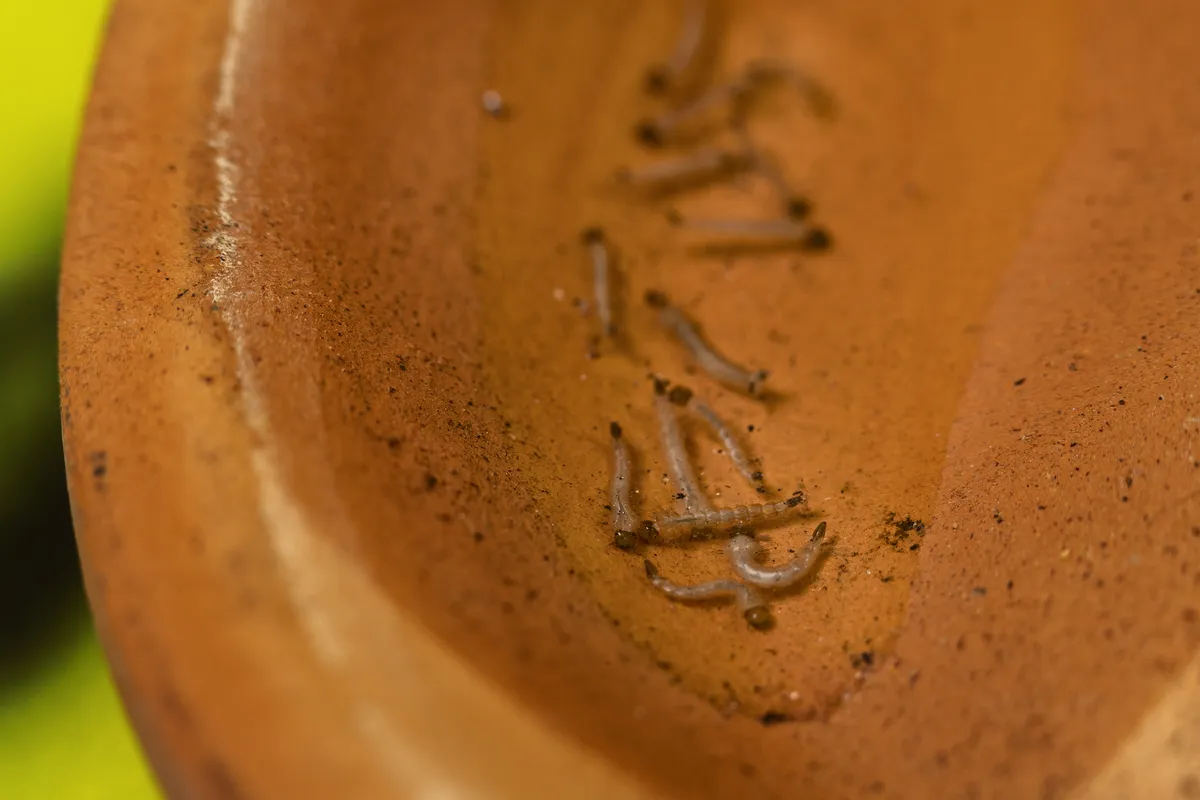
Larvae have to eat it. NPIC's Bt fact sheet says Bt spores carry proteins that damage the gut of insect larvae after the larvae eat them, and that the toxin needs a highly alkaline gut, with a pH of 9.0 to 10.5, to activate; when people eat the spores, the toxins are not activated. EPA says Bti's toxins target only the larvae of mosquitoes, black flies and fungus gnats, and that Bti has been shown to reduce mosquito larval populations.
That mechanism sets the limits. UC IPM says Bti does not work on pupae because they do not feed, and CDC says it does not control biting female mosquitoes. The current Dunks label adds that larvae hatching after a dunk goes in may partially develop before dying, and says to allow at least 48 hours for control; the Bits label says Bits give a quick kill within 24 hours. Resistance has not been a problem so far: EPA says there is no documented resistance to Bti as a larvicide, citing a 2013 study of mosquito populations treated with it for decades.
Which should you use, and where?
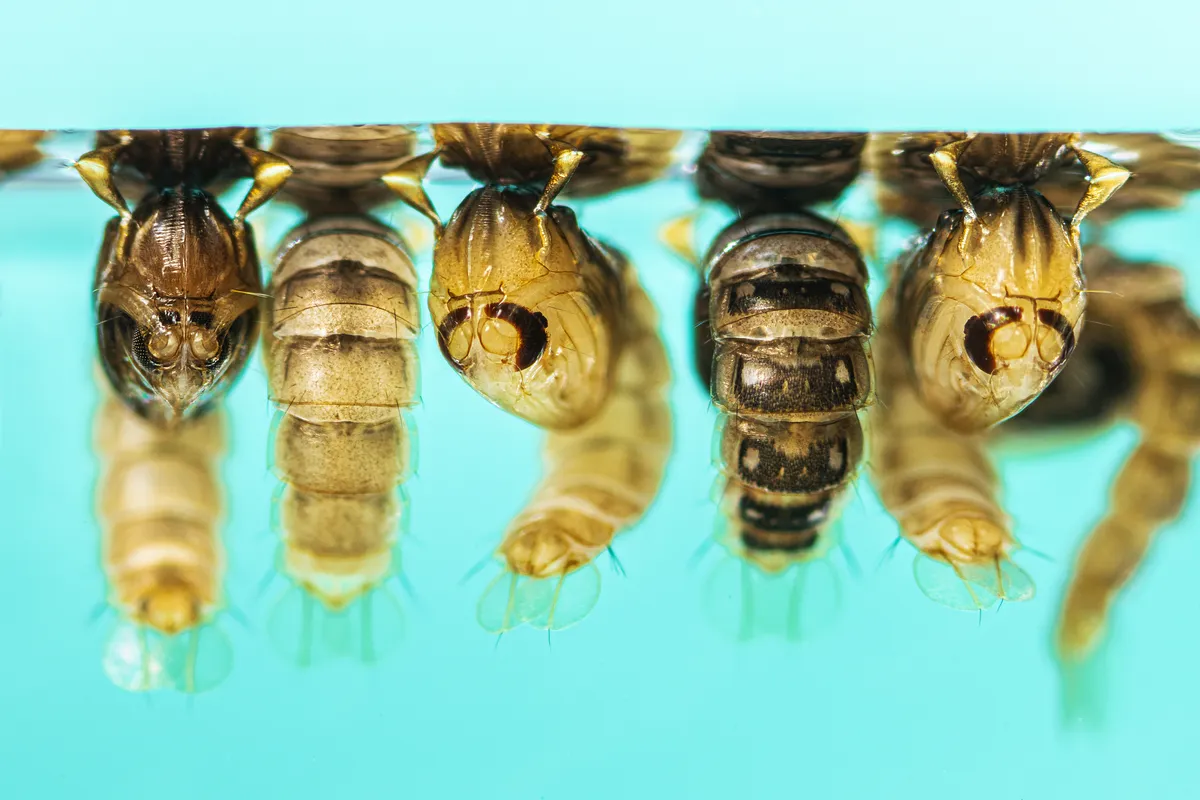
Pick by how often you can check the water: Dunks for spots you visit about once a month, Bits for larvae you have just found, for water too large or weedy for a dunk alone, and for fungus gnats. The labels list these sites:
| Water | Better choice | What the labels and agencies say |
|---|---|---|
| Rain barrel or cistern | A quarter dunk, after a screen or tight lid | CDC: cover water storage tightly; both labels list rain barrels, and the Bits label lists unused cisterns |
| Ornamental pond or water garden | Dunks by surface area; Bits first if larvae are thick or plants are dense | The Bits label and the older Dunks label list water gardens; the current Dunks label says it can be used in fish habitats and suggests Bits as a pre-treatment in heavy infestations |
| Birdbath | Fresh water every week; Bti only if you cannot change it | EPA: empty and change birdbath water at least once a week; the Bits label lists birdbaths |
| Flower pot saucer, bucket or old tire | Dump it; Bits or a dunk piece if it must stay | CDC: empty, turn over or cover water-holding items weekly; both labels list flower pots and old tires |
| Roof gutter | Clean it; treat only water that still stands | EPA lists rain gutters among standing water to remove; both labels list roof gutters |
| Tree hole | A dunk piece | Both labels list tree holes |
| Animal watering trough | Bits or a dunk, by the label | Both labels list animal watering troughs |
| Unused swimming pool | Dunks by surface area | Both labels list unused pools; CDC lists non-chlorinated pools among egg-laying sites |
| Aquaponics or hydroponics | Bits at the high rate | The Bits label sets its high rate and frequency for these systems |
From Summit's U.S. labels for Mosquito Bits (EPA Reg. No. 6218-86) and Dunks (6218-87 and the older 6218-47), CDC and EPA. Use a product only on sites its label lists.
For a rain barrel, screen first. CDC's home guidance says to cover water storage containers tightly and to put wire mesh with holes smaller than an adult mosquito over containers without lids. If larvae still turn up, a barrel about 2 feet across has roughly 3 square feet of water surface, which is a quarter dunk on both the current and the older Dunks label. For birdbaths, EPA says to empty and change the water at least once a week, and it calls control aimed at eggs and larvae generally the most effective, least costly way to control mosquitoes.
For a pond, UC ANR's guide to ponds and water gardens says larvae prefer water less than 24 inches deep, that a fountain or waterfall reduces the stagnation they need, and that removing excess plants and debris helps. It names Bti products, Dunks and Bits among them, as larvicides that kill larvae within a few days of being eaten.
How much Mosquito Bits or Dunks should you use?
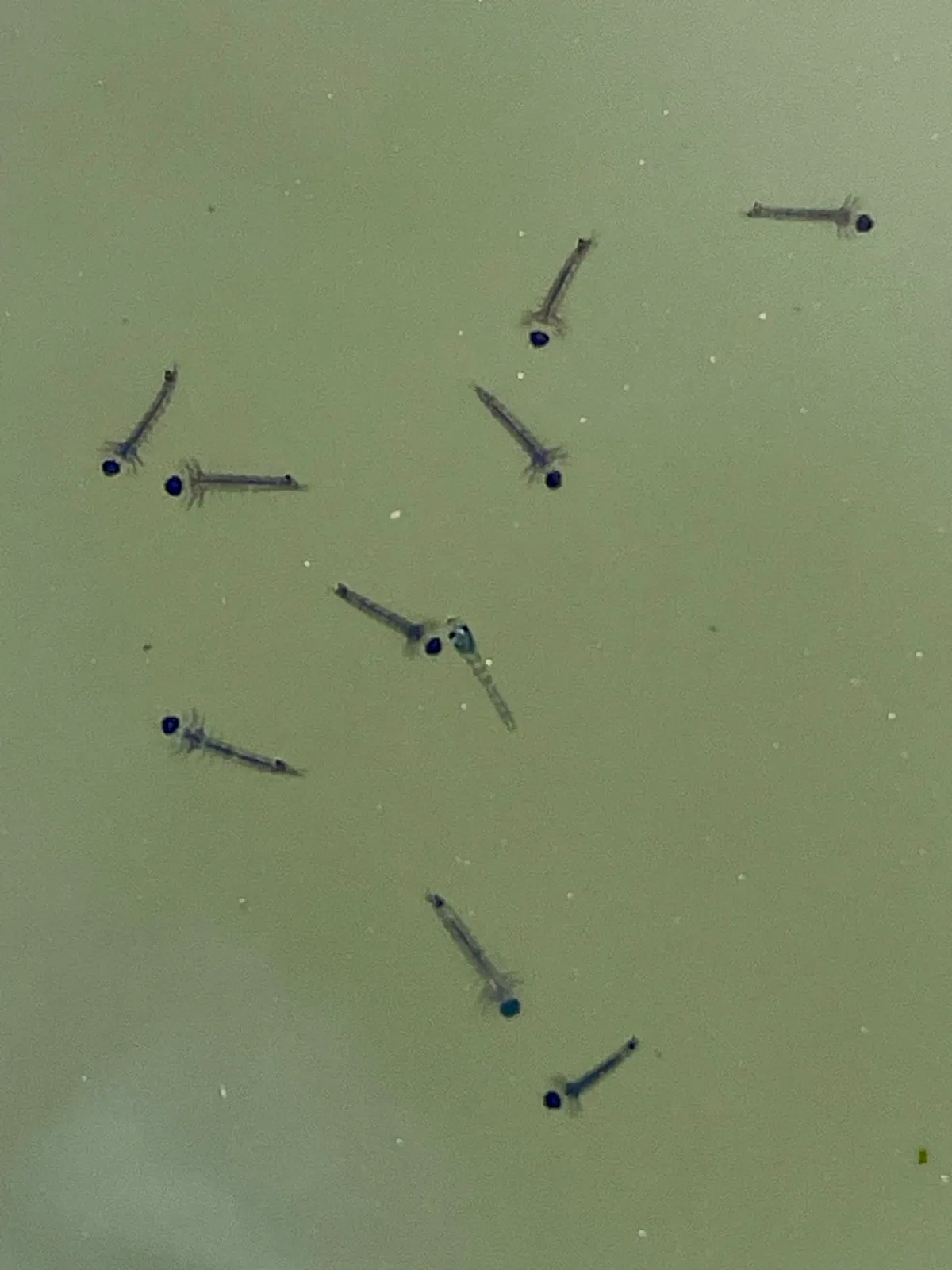
Dose both by the surface area of the water, not its depth, and follow the label on your package, because Summit's Dunks table changed with the newer registration.
Mosquito Dunks
| Water surface | Current label (6218-87) | Older label (6218-47) |
|---|---|---|
| Up to 5 square feet | 1/4 dunk | 1/4 dunk |
| 5 to 25 square feet | 1/4 dunk | 1/2 dunk |
| 25 to 50 square feet | 1/2 dunk | 1 dunk |
| 50 to 75 square feet | 3/4 dunk | 1 dunk |
| 75 to 100 square feet | 1 dunk | 1 dunk |
| Over 100 square feet | 1 dunk per 100 square feet (Summit) | 1 dunk per 100 square feet |
Current table: 0 to 25, over 25 to 50, over 50 to 75 and over 75 to 100 square feet. Older table: 1 to 5, 5 to 25, 25 to 100 and above 100 square feet. In highly polluted water, the current label allows up to four times the normal dose.
The older label says to dose regardless of depth and that dunks can be used whole or broken into portions, and Summit's Dunks page says each dunk covers up to 100 square feet and may be broken into smaller pieces for small areas. Both labels say a dunk can be anchored with a string through the center hole or staked in place so it does not wash away. When larvae are abundant, plants are dense or the water is badly polluted, the current label suggests treating with Bits or Bti granules first and then letting the dunk hold the water for up to 30 days.
Mosquito Bits
- Small spots: 1 teaspoon per 25 square feet of water surface, or 1 tablespoon per 75 square feet.
- Larger water that is relatively clean: 4 ounces per 1,000 square feet.
- Water with more organic matter, deep or polluted water, or larger larvae: 8 ounces per 1,000 square feet.
- How often: every 7 days at the high rate when larvae are abundant and the water carries organic matter; every 14 days at the lower rate when larvae are few and the water is clean.
Use the label rate and no more: CDC says not to apply more than directed or to reapply more often than instructed.
How long do Mosquito Dunks and Bits last?
A dunk lasts about a month in the water and a dose of Bits up to two weeks. The current Dunks label says 30 days under typical conditions and the older label 30 days or longer; NC State Extension's New Hanover County office says dunks last around 3 to 4 weeks before they need replacing, and UC IPM puts it at about 30 days. The Bits label says Bits control larvae for up to 14 days in water of low to moderate organic content.
Two practical points. The older Dunks label says alternate wetting and drying does not reduce their effectiveness, so a dunk in a container that dries out between rains keeps working when the water returns. Summit's Dunks page says to replace a dunk once it has completely disappeared and that unused, dry dunks keep their potency indefinitely; store the box closed, in a cool, dry, well-ventilated place out of reach of children and pets, as the current label directs.
Can you use Mosquito Bits or Dunks for fungus gnats?
Use Bits, as the label directs; the Dunks labels give no fungus gnat directions. EPA lists fungus gnats among the three insects whose larvae Bti affects, and the Bits label covers fungus gnat larvae in the growing medium or soil of house, garden and landscape plants and in home mushroom beds. Its soak method:
- Mix 4 tablespoons of Mosquito Bits into 1 gallon of water; the label says the granules can go into a nylon stocking first.
- Soak for 30 minutes, then skim off the floating granules.
- Stir or shake the water and pour it directly onto the surface of the soil or growing medium.
- Compost or throw away the used granules.
- Repeat weekly for three weeks, and again if fungus gnats come back.
The Bits label EPA accepted in December 2021 adds a dry method: sprinkle 1 tablespoon of granules per square foot of soil, 1 to 2 teaspoons in a pot 6 inches across or smaller or 1 tablespoon in a larger pot, water them in, and repeat if fungus gnats come back within 3 weeks.
Either method works on larvae, not the adults flying around the room. Colorado State University Extension says Bti applied as a drench can kill the larvae, and pairs it with letting the top 1 to 2 inches of the growing medium dry between waterings and setting yellow sticky cards under the plant canopy or on the edge of the container. The full fungus gnat plan lays out a four-week schedule, and this guide to telling gnats apart helps if the flies are not coming from potting soil.
Are mosquito dunks and bits safe for pets, fish and birds?
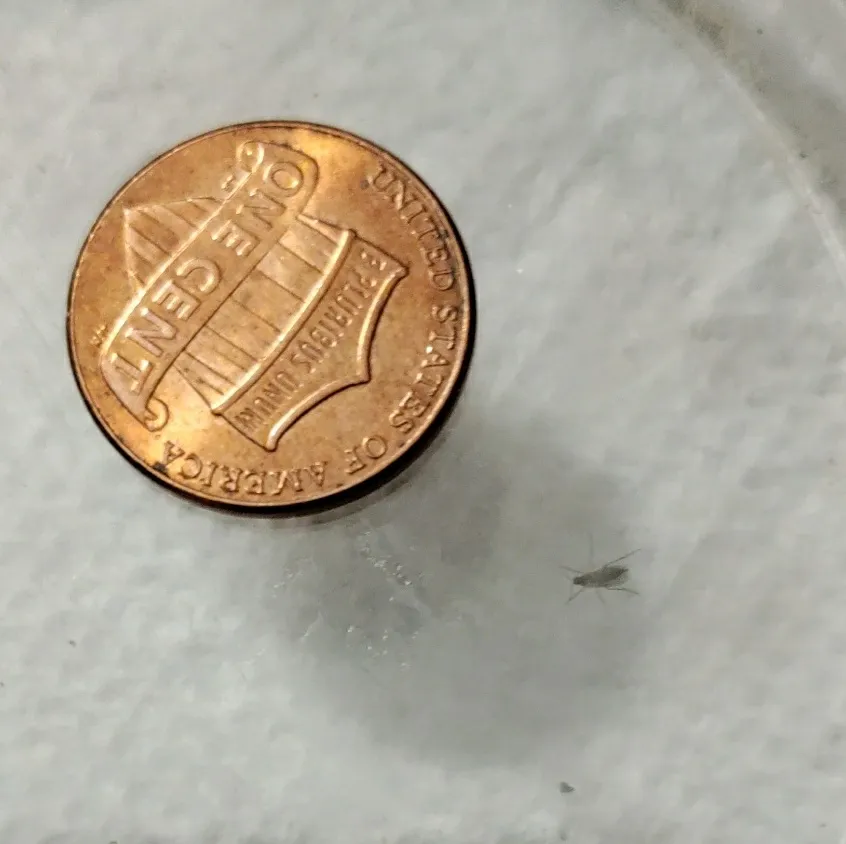
The agencies rate Bti as low risk to them when it is used as the label directs, and the labels allow it where animals drink: both list animal watering troughs, and the Bits label allows use in water with fish, plants and other aquatic life and in areas used by people, pets, livestock, birds and wildlife. EPA says Bti has no toxicity to people and minimal toxicity to honey bees, and CDC says that when used according to the label, larvicides do not harm people, pets or the environment.
- Dogs and cats. Both labels carry the signal word CAUTION for moderate eye irritation and harm if inhaled, and the Bits label adds harm if absorbed through the skin. Store the package where pets cannot reach it, as the current Dunks label directs, and call your veterinarian if a pet eats some. For heartworm and other mosquito risks to dogs, see whether mosquitoes bite dogs.
- Fish. NPIC reports very low toxicity of Bt, the israelensis strain included, to trout, bluegill sunfish and sheepshead minnows, though zebrafish embryos and larvae exposed in the lab to toxins of another strain, Bt kurstaki, showed developmental delays; the current Dunks label says it can be used in fish habitats.
- Birds. NPIC says Bt does not cause disease in birds and is very low in toxicity to them, and EPA lists birdbaths among the containers where Bti can be used around homes.
- Bees and pond insects. EPA says studies indicate minimal toxicity to honey bees, and UC ANR says Bti affects only fly larvae, so it will not harm the predatory insects living in a pond.
- People. Both labels say to avoid breathing the dust, to keep it out of your eyes and to wash with soap and water after handling. Connecticut's mosquito management program says biological larvicides such as Bti are very specific to mosquito, black fly and midge larvae and are not known to affect human health.
Specific does not mean zero effect. Summit's Dunks page says Bti has no effect on anything but mosquito larvae, but a 2020 review of Bti use in Europe found documented direct effects on non-target chironomid midges and other invertebrates, with field studies of midge numbers giving contrasting results, and called for long-term studies of food-web effects in treated wetlands. NPIC likewise reports moderate toxicity to water fleas (Daphnia). Those findings come from large wetland programs; at home, they are a reason to treat the containers that actually breed mosquitoes rather than every pond by default.
Can you put Bits or Dunks in drinking water?
Not in water you will drink. Both labels say not to apply the product directly to treated, finished drinking water reservoirs, and the Bits specimen label on Summit's site and the older Dunks label add drinking water receptacles when the water is meant for people. EPA says some Bti products may be used on certain drinking water, such as cisterns, while others are not intended for it, so the package decides; CDC's guidance is to use larvicides on water that will not be used for drinking. In New York State, both labels limit use to containerized water with no outflow to the natural environment.
Should you use a dunk in a mosquito bucket trap?
Yes, if you keep it dosed. A larval trap bucket lures egg-laying females to fermenting water treated with Bti. NC State's New Hanover office describes filling a bucket about halfway with hay or leaves and water, letting it ferment, adding a dunk after about 3 days, and setting the bucket away from where people sit. A 5-gallon bucket has less than 1 square foot of water surface, so a quarter dunk is the current label's dose. Replace it on the 30-day cycle: CDC lists buckets among the places mosquitoes lay eggs, so an untreated trap is just more breeding water.
What won't Bits or Dunks do?
- Kill adult mosquitoes. CDC says Bti does not control biting females. For the adults, start with how to get rid of mosquitoes, and protect your skin with the best mosquito repellents.
- Kill pupae. UC IPM says pupae do not feed, so dump water that is full of them.
- Replace dumping. CDC's first step is still to empty and scrub, turn over, cover or throw out water-holding items once a week; hidden breeding spots in the backyard are the ones people miss.
- Stop mosquitoes from next door. UC IPM says some adult mosquitoes can fly several miles from where they develop, so controlling larvae on your own property might not end the biting.
- Tell you what is in the water. Check first with mosquito larvae identification, and see how fast standing water breeds mosquitoes for why a week matters.
Use any pesticide exactly as its label directs. The label is the law, and what is registered and sold varies by state.
Frequently Asked Questions
Are mosquito dunks the same as mosquito bits?+
Both contain Bti from the same maker, Summit Chemical, and the current labels list the same strain, SUM-6218, but they release it differently. Bits are granules designed to release all of their Bti when applied; the label says they kill larvae within 24 hours and control them for up to 14 days. Dunks are floating rings that release Bti for about 30 days. Use Dunks for water you check monthly and Bits for a quick kill, large or weedy water, and fungus gnats.
How do you use mosquito dunks?+
Float a dunk, or a piece of one, on standing water you cannot dump or cover. The current label doses by surface area: a quarter dunk for up to 25 square feet, a half for up to 50, three quarters for up to 75 and a whole dunk for up to 100. Break dunks to fit, anchor them with a string through the center hole or a small stick where they could wash away, and replace them about every 30 days.
How long do mosquito dunks last?+
About a month. Summit's current label says a dunk releases Bti for 30 days under typical conditions, and UC IPM also puts it at about 30 days. NC State Extension's New Hanover County office says dunks last around 3 to 4 weeks before they need replacing, so check the water at three weeks. Summit says to replace a dunk once it has completely disappeared, and that unused dunks kept dry retain their potency indefinitely.
How fast do mosquito bits work?+
The Mosquito Bits label says the granules give a quick kill within 24 hours and can control larvae for up to 14 days in water of low to moderate organic content. Dunks are slower: the current Dunks label says to allow at least 48 hours for control. Neither works on pupae, which UC IPM says do not feed, so a container full of pupae should be dumped rather than treated.
Can you use mosquito dunks for fungus gnats?+
Not under the Dunks labels reviewed for this guide, which give directions only for mosquito larvae in standing water. Use a Bti product whose label lists fungus gnats. The Mosquito Bits label does: mix 4 tablespoons in a gallon of water, soak 30 minutes, skim off the granules and pour the water on the soil, weekly for three weeks; the current label also allows dry granules watered into the soil. Both labels say it is a violation of federal law to use the product in a way inconsistent with its labeling.
Are mosquito dunks safe for dogs and cats?+
CDC says larvicides used according to the label do not harm people, pets or the environment, and EPA says Bti has no toxicity to people. Both Summit labels list animal watering troughs among their sites. The packages still carry the signal word CAUTION for eye irritation and inhalation, and the current Dunks label says to store them where children and pets cannot reach. If a pet eats a dunk or granules, call your veterinarian with the label in hand.
Are mosquito dunks safe for fish and birds?+
The current Dunks label says it can be used in fish habitats, and the Bits label allows use in water containing fish and plants. NPIC reports very low toxicity of Bt to trout, bluegill sunfish and sheepshead minnows and says it does not cause disease in birds, while noting moderate toxicity to water fleas and, from toxins of another strain (Bt kurstaki), developmental delays in zebrafish embryos. EPA lists birdbaths among the containers where Bti can be used around homes.
How much of a mosquito dunk goes in a rain barrel?+
Usually a quarter. A barrel about 2 feet across has roughly 3 square feet of water surface, and both the current Dunks label and the older one call for a quarter dunk at that size. Cover or screen the barrel first: CDC advises tightly covering rain barrels, or wire mesh with holes smaller than an adult mosquito over containers without lids. Replace the dunk about every 30 days for as long as mosquitoes can still reach the water.
Do mosquito dunks expire?+
Summit's Dunks page says unused dunks kept dry retain their potency indefinitely, and the current label says to store them in a closed container with the label, in a cool, dry, well-ventilated place out of reach of children and pets. Once a dunk is in water, Summit says it works for 30 days or more and should be replaced when it has completely disappeared. The older label adds that alternate wetting and drying does not reduce a dunk's effectiveness.
Do mosquito bits kill adult mosquitoes?+
No. Bti works only after larvae eat it, and CDC says it does not control biting female mosquitoes. EPA says Bti's toxins affect only the larvae of mosquitoes, black flies and fungus gnats, and UC IPM says it does not kill pupae either. Bits and Dunks lower the number of new mosquitoes coming from the water you treat; for adults already flying, rely on repellent, window screens and, where needed, an adult spray applied as its label directs.
Sources
- Bti for Mosquito Control (updated June 2, 2026) — U.S. Environmental Protection Agency
- Larvicides (May 14, 2024) — Centers for Disease Control and Prevention
- Mosquito Control at Home (April 16, 2024) — Centers for Disease Control and Prevention
- Success in Mosquito Control: An Integrated Approach (updated October 8, 2026) — U.S. Environmental Protection Agency
- Bacillus thuringiensis (Bt) Fact Sheet (reviewed May 2022) — National Pesticide Information Center (Oregon State University and EPA)
- Pest Notes: Mosquitoes (UC ANR Publication 7451; W. E. Walton and B. F. Eldridge, updated April 2020) — University of California Statewide IPM Program
- Mosquito Management for Ponds, Fountains, and Water Gardens (A. M. Sutherland, July 1, 2024) — University of California Agriculture and Natural Resources, Pests in the Urban Landscape
- Managing Mosquitos Using Larval Dunks (A. Mead, updated June 10, 2026) — NC State Extension, New Hanover County Center
- Fungus Gnats as Houseplant and Indoor Pests (W. Cranshaw and R. A. Cloyd; reviewed August 2025) — Colorado State University Extension
- Mosquito Control Using Larvicides (content last updated March 14, 2019) — State of Connecticut Mosquito Management Program
- Environmental and socioeconomic effects of mosquito control in Europe using the biocide Bacillus thuringiensis subsp. israelensis (Bti) (C. A. Brühl and others, Science of the Total Environment 724:137800, 2020) — PubMed, U.S. National Library of Medicine
- Dunks specimen label, EPA Reg. No. 6218-87 (October 2026) — Summit Chemical Company
- Mosquito Dunks specimen label, EPA Reg. No. 6218-47 (earlier label) — Summit Chemical Company
- Mosquito Bits specimen label (8 oz), EPA Reg. No. 6218-86 — Summit Chemical Company
- Mosquito Bits label, EPA Reg. No. 6218-86 (accepted December 13, 2021) — U.S. Environmental Protection Agency, Pesticide Product and Label System
- Mosquito Dunks (product page) — Summit Chemical Company
- Mosquito Bits (product page) — Summit Chemical Company
- Labels for Dunks, EPA Reg. No. 6218-87, with alternate brand names — U.S. Environmental Protection Agency, Pesticide Product and Label System
Read and approved by Alex Francisco. Found an error? Email support@buzzskito.ca.