Quick Answer
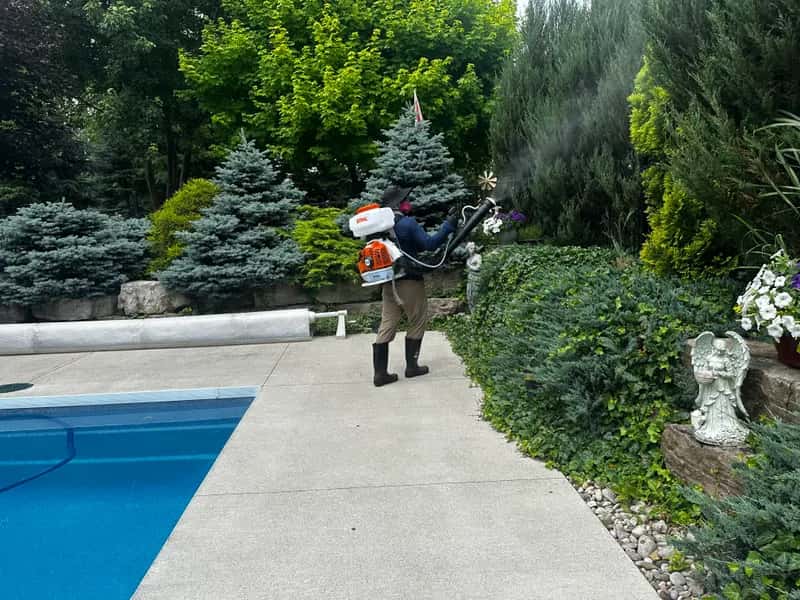
In Mississauga, put the first mosquito barrier spray down between May 20 and June 4 — a week earlier for waterfront and Credit River properties — then repeat every 14 days, finishing with a mid-to-late-September spray; biweekly cadence is the standard because rain, irrigation, and UV break down each treatment’s residual.
- The first barrier spray should land between May 20 and June 4; waterfront and Credit River lots start in the second or third week of May.
- Rain, irrigation, and UV break down each spray’s residual, so biweekly (every 14 days) is the standard season cadence.
- Mississauga biting pressure peaks twice: mid-June to mid-July, then late July through late August.
- The final spray of the season should go down in mid-to-late September, before the first hard frost (typically mid-to-late October).
- Standard Season is 10 biweekly sprays ($994); Basic Season is 5 monthly sprays ($549) for lower-pressure inland lots.
- Culex pipiens has a short flight range, so timing and local coverage matter more than treating a wide area.
— BuzzSkito, GTA mosquito & tick control · 150+ five-star Google reviews
TL;DR: The first mosquito barrier spray in Mississauga should land between May 20 and June 4 — earlier for waterfront and Credit River properties, later for inland subdivisions. Biweekly cadence (every 14 days) is the standard. The last spray of the season should go down in mid-to-late September. Skip either bookend and you\'re leaving four to six weeks of biting season uncovered.
The 2026 Mississauga mosquito spray calendar
Timing matters more in mosquito control than most homeowners realize. A barrier spray applied two weeks too early wastes most of its residual on a population that hasn\'t emerged yet. Applied two weeks too late, you\'ve already absorbed several hundred bites that you didn\'t need to. Here\'s the calendar that works for Mississauga in 2026.
Early-to-mid May: prep, not spray
Use the first three weeks of May for the work that makes spraying effective: clean gutters, drain any standing water, drill drainage holes in tire swings, fix yard low spots that pool after rain, screen rain barrels with fine mesh, trim back overgrown shrub interiors to expose resting habitat. Spraying this early generally isn\'t worth the residual — adult populations are still building. The exception is properties hosting Mother\'s Day or Victoria Day weekend events; in that case a one-time pre-event treatment 5-7 days ahead works well.
May 20 – June 4: the first treatment window
This is when most Mississauga properties should get the first barrier spray down. Within this window, location matters:
- May 20-25 (earlier in the window): Port Credit, Lorne Park, Lakeview, Clarkson waterfront, Mineola, Erindale, Streetsville, Credit Valley properties adjacent to the river — the microclimate favours earlier mosquito emergence.
- May 25-June 4 (later in the window): Erin Mills (treed sections), Churchill Meadows, north Meadowvale near Lake Aquitaine Park, Sherwood Forrest, Applewood ravine-adjacent streets.
- Late May to first week of June: central Mississauga inland subdivisions, Square One area, Malton, fully mown subdivision lots with no adjacent green space.
Mid-June through mid-July: peak coverage
This is when biweekly cadence matters most. The first major Culex pipiens generation is emerging, floodwater Aedes species are hatching after spring rains, and biting pressure ramps fast. A spray on June 5-10 followed by another on June 19-24 followed by another on July 3-8 keeps your residual active continuously through the highest-pressure month of the summer.
Late July through August: the second peak
Many homeowners think they can ease off in late July because daytime heat suppresses adult activity. That\'s a mistake. Adult populations have compounded across multiple generations by late July, and the West Nile virus surveillance season is approaching its peak. Continuing biweekly through July and August is what separates Standard Season subscribers from one-and-done homeowners who give up after two sprays.
September: the underrated finish
September pressure declines from August levels but remains genuinely meaningful, especially along the lakeshore and in Credit River neighbourhoods where microclimate humidity stays high. Mid-September biweekly treatment carries protection through what is still patio season for most households. A final treatment in the third week of September is the standard recommendation for waterfront and Credit corridor properties. Inland subdivisions can often finish with the first-week-of-September treatment.
October: only for unusual seasons
Spraying in October is generally not necessary in Mississauga. The exception is years where the first hard frost is unusually late, which has become more common. If mid-October temperatures are still hitting 18°C+ during the day, a final shoulder-season spray on properties hosting late events is reasonable.
Microclimate adjustments by neighbourhood
Waterfront properties: Port Credit, Lakeview, Lorne Park, Clarkson
Lake Ontario moderates temperatures — keeping spring cooler longer and fall warmer longer. The net effect for mosquito spray timing: the first spray runs about a week earlier than inland sites because mosquitoes establish faster in the higher humidity environment, and the final spray runs about a week later because Culex pipiens activity persists longer. Waterfront properties often justify the Standard Season at minimum, and frequently benefit from Exclusive Season pacing if they entertain outdoors regularly.
Credit Valley corridor: Erindale, Streetsville, Mississauga Road
Properties along the Credit River are among the highest-pressure mosquito (and tick) zones in the city because riparian habitat supports both Culex breeding sites and the resting habitat that adult mosquitoes need. Standard Season biweekly cadence is the floor for these properties. First spray in the third week of May; final spray in the third week of September. If your property is directly fence-to-river or fence-to-ravine, consider Exclusive Season — weekly cadence keeps the residual at full strength continuously, which matters when pressure compounds from an adjacent untreated wildlife corridor.
Mid-density and inland subdivisions: Erin Mills, Churchill Meadows, central Cooksville, Applewood
These neighbourhoods cover a wide range from extreme pressure (ravine-adjacent lots) to relatively low pressure (fully mown midblock lots with no green space adjacency). The Standard Season biweekly cadence works for most properties here. Lower-pressure lots can often run on Basic Season (monthly, 5 treatments) and stay comfortable, especially if the homeowner is also doing weekly standing water elimination. The free Yard Risk Report distinguishes within-neighbourhood variation that broad recommendations miss.
Lower-pressure zones: Malton, central apartment corridors, Square One
Single-property mosquito pressure here is lower than the rest of the city, mostly because Culex pipiens flight range is short and these zones lack adjacent breeding habitat. Basic Season monthly treatment is often sufficient. Single-treatment spraying before specific outdoor events can also be a reasonable strategy here, where it generally isn\'t in higher-pressure zones.
Which package fits which property profile
Basic Season — $549 — 5 monthly sprays
Best for: Inland Mississauga properties with no direct ravine or waterfront adjacency, smaller lots, homeowners who do their own weekly standing water elimination diligently, and households that use the yard moderately rather than for daily evening entertaining. Typical fit: Applewood midblock, central Erin Mills, central Cooksville off-ravine streets, Malton, Square One area homes.
Standard Season — $994 — 10 biweekly sprays (most popular)
Best for: The majority of Mississauga properties. Anyone with mature landscaping, adjacent green space, regular outdoor entertaining, kids/pets in the yard, or who has previously had a mosquito problem and wants tighter coverage than monthly visits give. Typical fit: Erindale, Streetsville, Credit Valley, Lorne Park, Mineola, Port Credit, Lakeview, Clarkson, Churchill Meadows west edge, north Meadowvale near Aquitaine, ravine-adjacent properties in any neighbourhood.
Exclusive Season — $2,049 — 20+ weekly sprays
Best for: Extreme-pressure properties (direct ravine adjacency, waterfront lots, large heavily landscaped properties), households entertaining outdoors multiple times per week, properties hosting summer weddings or recurring events, owners who simply want the most frequent treatment schedule available. Typical fit: Mississauga Road estates, large Lorne Park ravine lots, waterfront properties in Port Credit and Clarkson, properties on the Sawmill Valley Trail edge in Streetsville.
Same-week service across Mississauga
BuzzSkito services every Mississauga neighbourhood on this calendar with same-week availability. Whether you need a one-time pre-event spray, a Basic Season program, the Standard Season biweekly cadence that most Mississauga homeowners choose, or the Exclusive Season weekly treatment for extreme-pressure properties, the booking process is the same: send your address and lot size and we send back a written quote. Most requests get a price the same day. Then we book your visit window, inside 7 days. Combined Mississauga mosquito control + Mississauga tick spray bundles save $100 versus standalone tick service.
Related guides
- Mosquito Season GTA: When Does It Start?
- West Nile Virus Mississauga 2026
- Tick Season in Mississauga 2026
- GTA Mosquito Pressure Map
Take care out there.
— Alex & The BuzzSkito Team
Frequently Asked Questions
When should I start mosquito spraying in Mississauga?+
For most Mississauga properties, the first mosquito barrier spray should go down between the third week of May and the first week of June. Earlier than that and the mosquito population isn't large enough to make the residual worth it; later, and you've missed the early-season ambush window when Culex pipiens populations are establishing for the year. Waterfront and ravine-adjacent properties — Port Credit, Lorne Park, Lakeview, Erindale, Streetsville — should book a week earlier, often in the second or third week of May, because microclimate conditions favour earlier mosquito emergence. Inland subdivisions can usually wait until the very end of May.
How often should I spray my Mississauga yard?+
A single barrier spray leaves a temporary residual that wears down over the following weeks. For a meaningful season-long impact in Mississauga, biweekly (every 14 days) treatment is the standard cadence — that's the BuzzSkito Standard Season at 10 sprays for $994. The biweekly cadence keeps active product on the resting vegetation continuously and accounts for the fact that rain, irrigation, and UV gradually break down the residual. Monthly spraying (5 treatments, BuzzSkito Basic Season at $549) works for lower-pressure inland lots. Weekly (20+ treatments, Exclusive Season at $2,049) is reserved for properties with extreme pressure or homeowners who entertain outdoors frequently.
Is May too early for mosquito spraying in Mississauga?+
Early May (first or second week) is generally too early — adult mosquito populations aren't established yet and the residual will mostly be gone before pressure builds. Mid-to-late May is when timing tips in your favour. Specifically, waterfront and Credit River corridor properties usually justify a third-week-of-May start; central and inland Mississauga subdivisions typically benefit from a last-week-of-May start. If you're in Lorne Park, Mineola, Port Credit, Erindale, or Streetsville and you're hosting an outdoor event in early June, a May 20-25 first treatment is the right call. If you're in central Erin Mills with no adjacent green space, May 28-June 4 is closer to the sweet spot.
When do mosquitoes peak in Mississauga?+
Mosquito biting pressure in Mississauga peaks in two waves. The first peak runs from roughly mid-June through mid-July, driven by the first major Culex pipiens generation plus floodwater Aedes species that hatch after spring rains. The second peak runs from late July through late August, when populations have compounded across multiple generations and the West Nile virus surveillance program typically logs its highest positive-pool counts. September pressure declines steadily but remains real, especially in waterfront neighbourhoods, until the first hard frost — typically mid-to-late October. A biweekly spray program covers all of this.
When should I do the last spray of the season?+
The final spray of the season for most Mississauga properties should go down in mid-to-late September. The exact date depends on the weather pattern — if the forecast shows a hard frost coming within a week, the last spray can be skipped. If September is running warm (which has been the pattern for the last several seasons), running one final treatment in the third week of September catches the late-season Culex pipiens activity and reduces the breeding population that overwinters as adults. Skipping the September spray means cutting protection two weeks early, right when many homeowners are still entertaining outdoors before the patio furniture comes in.