Reviewed by Alex Francisco
Published November 6, 2026 · Fact-checked against the sources listed below
Reading from Canada? Product rules and what is sold there differ. See the Canadian edition.
Our picks at a glance
BuzzSkito did not test these products. A pitfall-style interceptor cup under every leg of each bed and couch is this page's main recommendation, explained in the next section; the picks below cover what the research and extension guides pair with it: a larger cup for wide legs, the encasements that seal the bed itself, and a lens for reading what the cups catch.
Bed bug interceptor picks
As an Amazon Associate I earn from qualifying purchases.
- Check price on Amazon →
For wide or square legs
Extra-large bed bug interceptors
J.T. Eaton says the standard ClimbUp cup fits legs up to 3.5 inches across, and Rutgers notes that an extra-large ClimbUp is sold. The 2011 Rutgers study notes that cups cannot be used where legs are too large, so measure your widest leg before you order.
- Check price on Amazon →
To seal the mattress
EPA says covers that seal the mattress and box spring trap bed bugs inside, where they die. The University of Kentucky adds that an encasement will not stop bugs from crawling onto the bed, which is the route the cups watch, so the two work together.
- Check price on Amazon →
For the box spring
The University of Kentucky suggests encasing both the mattress and the box spring, and EPA's do-it-yourself plan calls for covers that seal both. Kentucky points to encasements made specifically to protect against bed bugs.
- Check price on Amazon →
To identify tiny nymphs
Rutgers says a magnifier helps you identify what you trap because the young stages are very small. EPA puts a first-stage nymph at about 1/16 inch (1.5 mm) and says unfed nymphs can be nearly invisible to the naked eye.
What is the best bed bug interceptor?
A pitfall cup with a rough, climbable outside wall, a slick inside wall and room for a bed or couch leg is the best interceptor for most homes. Texas A&M AgriLife Extension explains the principle: bed bugs are poor at climbing slippery, vertical surfaces, so a bug that climbs over the textured rim drops into a moat designed to catch and hold it. Rutgers Cooperative Extension calls pitfall-style traps the most cost-effective bed bug monitors and singles out the ClimbUp Insect Interceptor, whose outside is covered with fabric tape, as particularly effective.
Brands differ in how they make the outside easy to climb and the inside hard. Texas A&M describes ClimbUp cups, with fabric tape outside and a light dusting of talc inside, and Blackout cups, with roughened plastic outside and no need for talc. J.T. Eaton's page for the ClimbUp Original says the cup fits furniture legs up to 3.5 inches across and needs no pesticide. Whatever cup you buy, check that the outside is textured and the inside smooth. The complete guide to bed bugs shows where the cups fit among the other tools.
Do bed bug interceptors work?
Yes, as detectors: in field studies they found bed bugs that visual inspections missed. In work that Rutgers entomologist Changlu Wang and Purdue's Timothy Gibb and Gary Bennett reported in Pest Control Technology in 2009, interceptors under the beds and sofas of eight treated apartments caught an average of 219 bed bugs per apartment over 10 weeks, against 39 found by visual inspection, nearly six times as many. In a second trial in 13 high-rise apartments, ClimbUp cups caught an average of 8.8 bed bugs per apartment in seven days after inspectors had already searched the rooms and removed the bugs they found.
A 2011 Rutgers study made the comparison with other monitors. Wang and colleagues set ClimbUp cups for 7 days in lightly infested apartments in Bayonne, New Jersey: the cups trapped about as many bed bugs as a homemade dry ice trap run for one night, more than two commercial monitors baited with carbon dioxide, heat and a lure, each run for one night, and they detected small numbers of bed bugs better than a visual inspection did. The authors add that bridges between the beds and the walls or floors, such as bed linens touching the floor, compromised the cups in most of those apartments, so the cups did this despite an imperfect setup.
Penn State Extension gives interceptor cups a detection rate of 89 percent, against 72 percent for visual inspection and 99 percent when the two are used together. Bites are a poor substitute: Penn State says bites should never be used for diagnosis because several household pests bite and reactions vary, and in the 13-apartment trial only 4 of 10 residents interviewed had noticed bites even though every apartment was infested. What bed bug bites look like, and why they mislead goes further.
How do interceptor cups catch bed bugs?
They turn a bed bug's search for a meal into a fall. Rutgers explains that the cups exploit two habits: bed bugs actively search for a human host, and they tend to climb rough vertical surfaces. A bug walking toward the bed climbs the textured outside of the cup and drops into the slick well. The cup holds no attractant, which is why Rutgers calls it a passive monitor.
A sleeping person is the bait. Texas A&M says the cups are most effective on a bed where someone is sleeping, and the 2011 Rutgers paper says a person in the bed turns the passive cup into an active monitor. That is why the step-by-step guide to getting rid of bed bugs keeps you in your own bed with the cups under it, instead of moving to the couch.
Single well or double well?
A double-well cup tells you which way a bug was going. The device behind the original research, described by Wang, Gibb and Bennett, nested a small bowl inside a large one: bugs trying to reach the furniture fell into the space between the bowls, and bugs coming down from the furniture landed in the small inner bowl where the leg stood. They report that ClimbUp works on the same principles, with talc inside to stop escapes. A cup with only one moat still detects bed bugs; it simply cannot sort them by direction.
How the main bed bug monitors compare
| Type | How it catches | Best for | Limits |
|---|---|---|---|
| Double-well pitfall cup (ClimbUp style) | Fabric-taped outside and a light talc film inside (Texas A&M); a slippery inner surface (Kentucky) | Every bed and couch leg; shows direction of travel (Wang, Gibb and Bennett) | The Original fits legs up to 3.5 inches across (J.T. Eaton); talc must be replenished after each cleaning (Texas A&M) |
| Roughened-plastic cup (Blackout) | Textured plastic outside; no talc needed (Texas A&M) | Bed and furniture legs | Protects the bed only if nothing else touches it (Texas A&M) |
| Homemade two-container trap | Small container inside a larger one, rough tape outside, talc in both (EPA) | Any leg that fits inside the small container (EPA) | Check, clean and re-dust every week (EPA) |
| Lure monitor (Volcano) | Small cup designed to hold a lure (Texas A&M) | Discreet spots around the home; a monitor only (Texas A&M) | Too small to protect a bed (Texas A&M) |
| Carbon dioxide trap (dry ice or sugar and yeast) | Gas draws bed bugs into a pitfall (Rutgers) | Answers in one night; empty rooms (Rutgers, Penn State) | Dry ice can freeze skin, and its carbon dioxide could lower oxygen in the body; keep it from children (Rutgers) |
| Sticky monitor card | Glue surface (Penn State) | Behind headboards, picture frames and mirrors (Penn State) | A passive monitor (Penn State) |
From Texas A&M, Rutgers, Penn State, EPA, the University of Kentucky, J.T. Eaton and the Purdue-hosted study, all linked on this page.
How do you choose bed bug interceptors?
Start with your furniture legs, then count them. Five checks cover it:
- Measure the widest leg. The standard ClimbUp cup fits legs up to 3.5 inches across, J.T. Eaton says, and Rutgers notes an extra-large version; the 2011 Rutgers study says cups cannot be used under legs that are too large or missing.
- Count legs, not beds. Texas A&M recommends four cups per bed and two per sofa and per recliner, a minimum of 12 for a typical two-bedroom apartment, and says two per bed is acceptable if early detection matters more than protecting the bed.
- Feel the walls. The outside should be rough enough to climb and the inside smooth and slick, because the whole trap depends on bed bugs being poor climbers of slippery, vertical surfaces (Texas A&M, Penn State).
- Decide on talc. ClimbUp-style cups use a light film of talc that you replenish after each cleaning, while Blackout cups need none (Texas A&M).
- Choose two wells if you want direction. A double-well cup separates bugs heading up from bugs coming down, as the original research device was built to do.
Homemade cups work on the same principle. EPA's do-it-yourself bed bug guide describes setting a small, clean plastic container inside a larger one, such as reused deli containers, wrapping rough masking or painter's tape around the outside of the larger one, and sprinkling a little talcum powder into both. The small container has to be large enough to hold a bed or couch leg, and you need one for each leg.
Where should bed bug interceptors go?
Under every leg of each bed and upholstered piece where people sleep or sit, with nothing else connecting that furniture to the floor or the walls. Rutgers says the furniture must be pulled away from walls and any other bridge to the floor removed, and EPA says to move furniture a few inches from the walls if needed and make sure no linens touch the floor, only the legs. In order:
- Pull the bed off the wall. The University of Kentucky's bed bug fact sheet suggests a few inches of space between the bed and the walls, and Texas A&M adds that the bed should not touch nearby furniture either.
- Remove the bridges. Kentucky says not to let dust ruffles or blankets form a bridge to the floor, and Texas A&M says bedding that touches the floor keeps the cups from protecting the bed.
- Put one cup under each leg. EPA's homemade design sets the leg inside the smaller container, so a bug has to cross the trap to reach it.
- Add the couch and chairs. Rutgers lists the legs of upholstered furniture, and Texas A&M adds sofas and wicker furniture where bed bugs may hide; Penn State says cups can also go in bathrooms, kitchens and hallways because bed bugs move through a home.
- Keep sleeping in the bed. Texas A&M says the cups work best on a bed where someone is sleeping.
How often should you check interceptors, and for how long?
Check and clean them at least weekly, and keep them out longer than seems necessary. EPA says to check and clean interceptors every week, reapply the talc, put captured bugs in a sealable plastic bag, and keep inspecting, interceptors included, at least every 7 days in case eggs remain. Texas A&M notes that dust and debris build up in the cups and should usually be cleaned out at least once a month, and suggests emptying each cup into a smooth-sided plastic tub so live bugs are less likely to escape before you deal with them.
Give a new set at least a week. Rutgers says interceptors need to stay in place for a week or longer to detect bed bugs at very low numbers, and the 2011 Rutgers paper gives the reason: bed bugs take a blood meal every week or more often, so the authors assume that only a small share of the bugs in an occupied room search for a host on any one night. After treatment, EPA says to keep checking for at least a year to make sure all the bed bugs are gone, and the University of Kentucky says the cups help show whether an infestation has been eliminated.
A year is not an exaggeration. Kentucky says nymphs and adults can survive without feeding potentially up to a year or longer at 55°F or below, although about 1 to 4 months is more typical in temperature-controlled buildings.
How do you read what the cups catch?
Look at three things: which well a bug is in, which life stage it is, and whether the count rises or falls from week to week.
Which well?
A bug in the outer ring climbed the cup from the floor on its way up to the furniture; a bug in the inner well, around the leg, most likely came down from the furniture. In the treated apartments Wang, Gibb and Bennett studied, the outer bowls caught an average of 207 bed bugs per apartment and the inner bowls 13, which they took as a sign that careful treatment and inspection still miss many bugs, especially those not on the furniture. Bugs climbing up may be living in another bed, a couch or, in an apartment building, a neighboring unit: Penn State says bed bugs can move between apartments vertically and horizontally.
Which life stage?
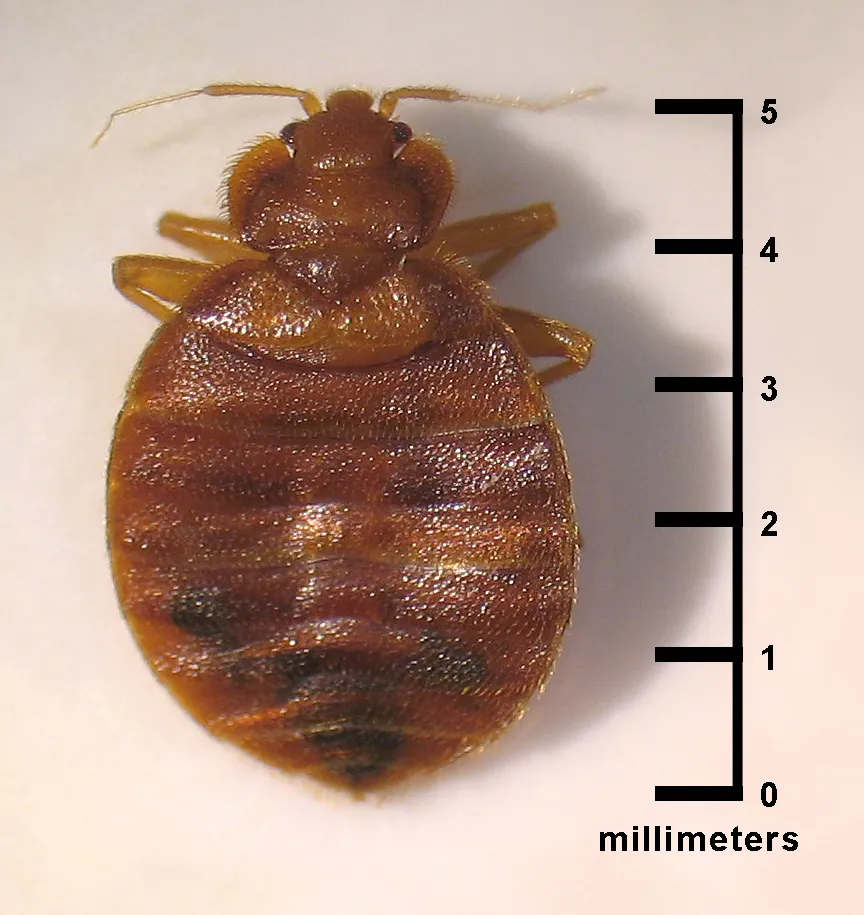
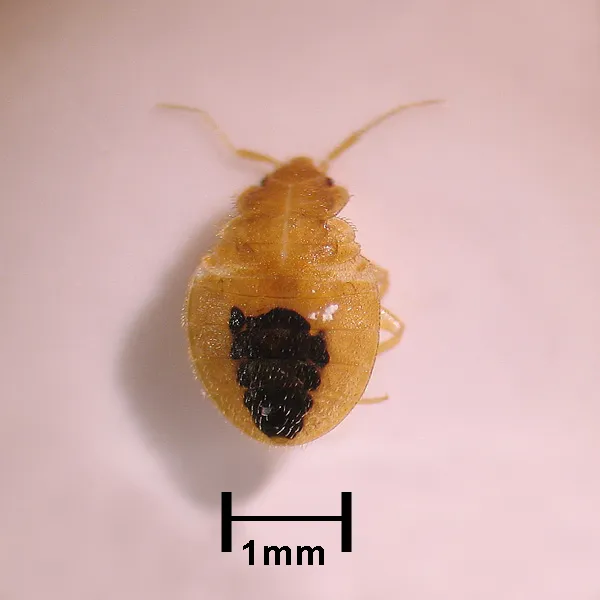
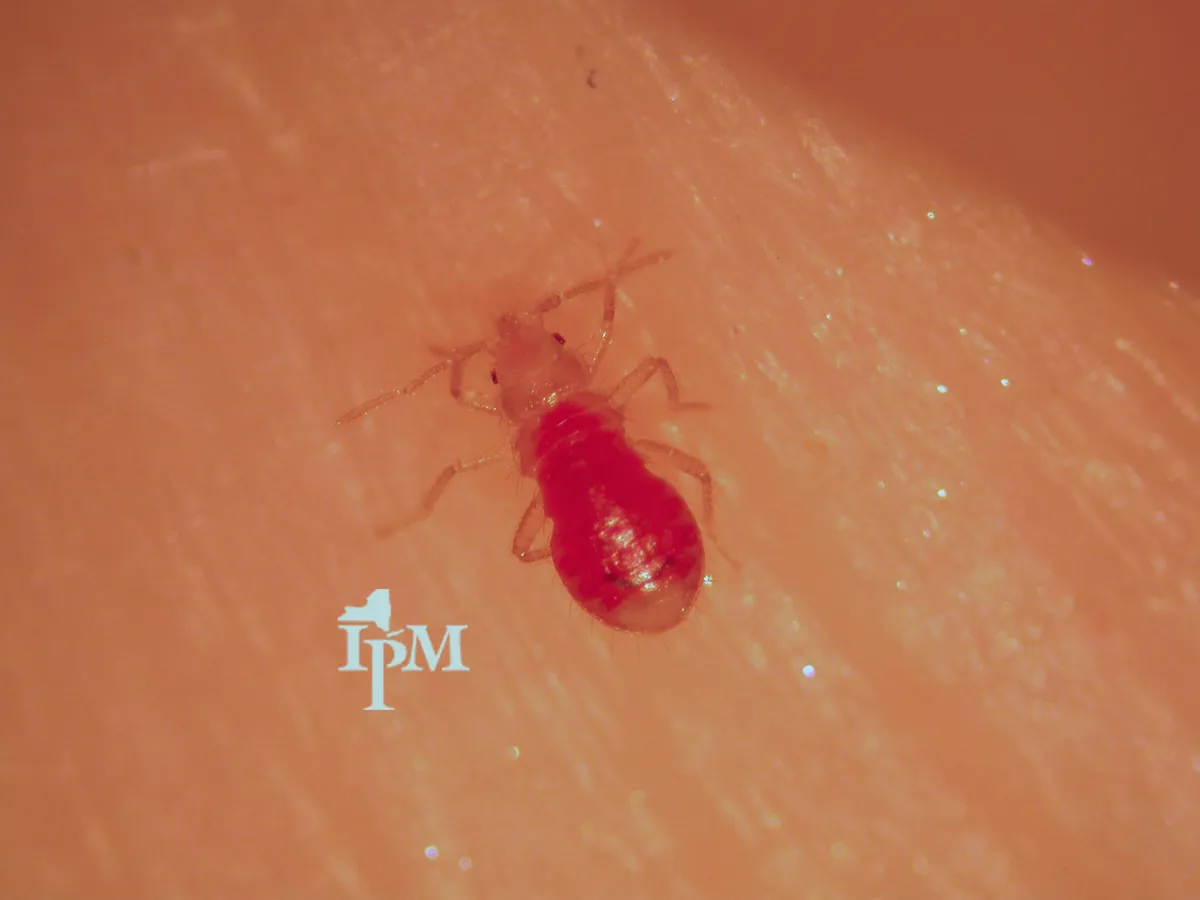
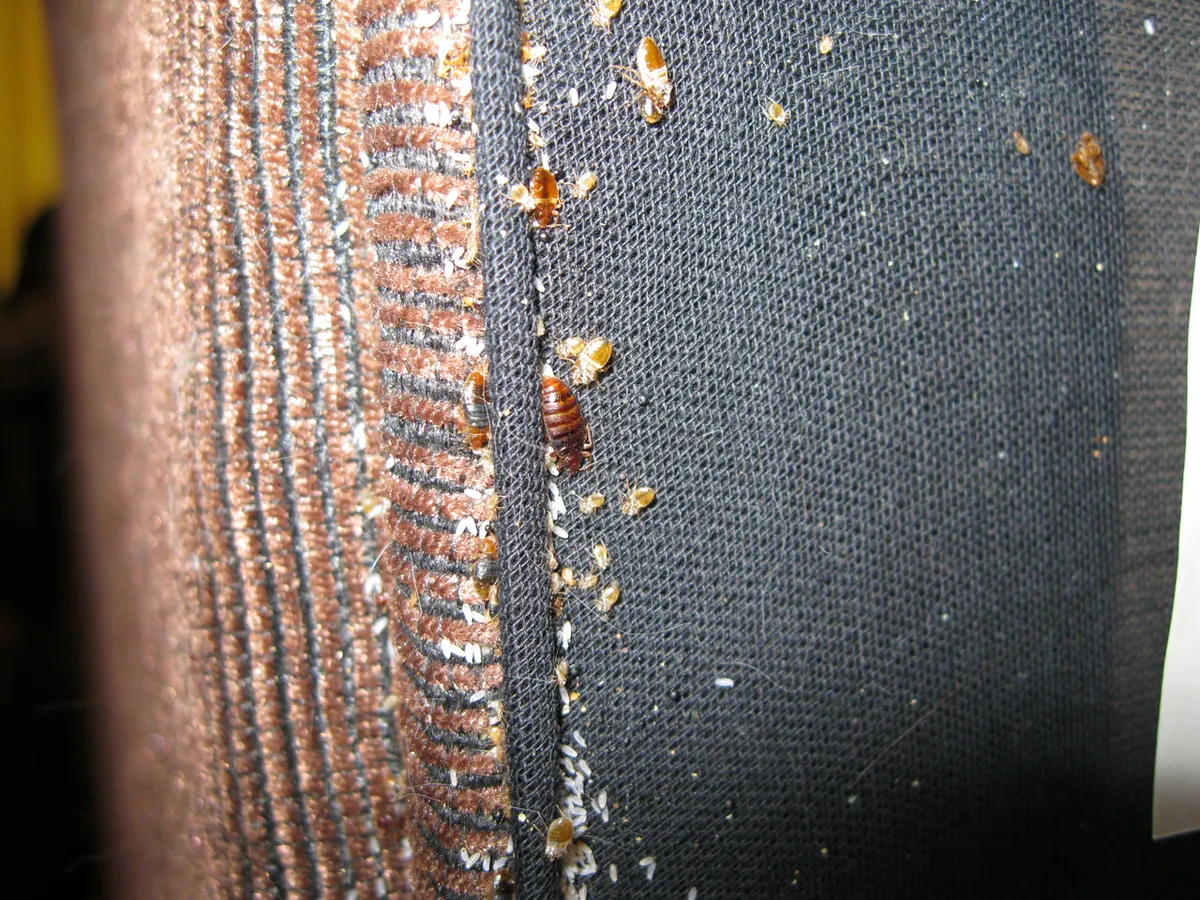
Learn both sizes, because the young ones are easy to miss. EPA's page on bed bug appearance puts adults at about 3/16 to 1/4 inch (5 to 7 mm) long and describes nymphs, the stages that hatch from eggs, as smaller and translucent or whitish-yellow, from about 1/16 inch (1.5 mm) at the first stage to about 3/16 inch (4.5 mm) at the fifth. What baby bed bugs look like at each stage and what bed bug eggs look like show both up close.
More or fewer each week?
The trend matters more than any single night. Wang, Gibb and Bennett found the cups better than visual inspection for estimating how many bed bugs were present, and Wang's 2011 team calls monitors effective tools for evaluating bed bug control programs, adding that they may reduce the need for pesticide by removing the few bugs that survive a treatment. Catches that fall to zero and stay there are what you want to see; bugs that keep turning up after treatment show that bed bugs are still present.
An empty cup proves little on its own. The 2011 Rutgers paper warns never to assume a zero catch means the room is free of bed bugs, because only some bugs search for a host each night and eggs may still be present. If you catch nothing but are still being bitten, Rutgers advises hiring a skilled professional to inspect, and adding more cups under and around furniture and along walls to improve the odds of finding very low numbers. Bites but no bed bugs covers the other causes worth ruling out.
Is it really a bed bug?
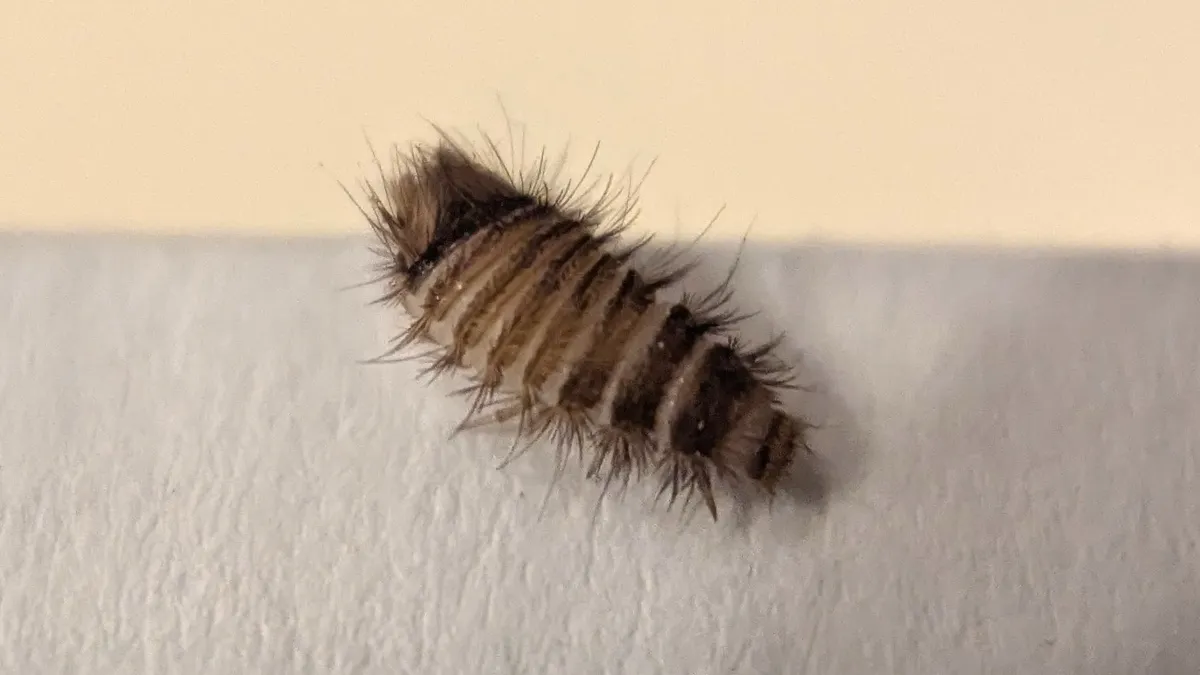
Confirm what you caught before you treat. Penn State says identifications made by residents are often unreliable and that bed bugs are sometimes mistaken for ticks, fleas, cockroaches and carpet beetles. Compare each catch with photos of every bed bug stage and the insects most often mistaken for bed bugs.
Should you put talc in bed bug interceptors?
Only a very fine film, and only if the cup's design calls for it. Texas A&M says a light coating of talcum powder is sometimes added inside the cup, notes that talc does not kill bed bugs, and warns that too much makes trapped bugs hard to see. Rutgers applies a very thin layer with a cotton ball inside its homemade pitfall trap, and the homemade version in EPA's guide uses a little talcum powder in both containers, reapplied each time the cups are cleaned.
Some cups need none. Texas A&M says ClimbUp cups come with a light dusting of talc that has to be replenished every time the trap is cleaned, while Blackout cups do not require talc, and Wang, Gibb and Bennett report that ClimbUp relies on talc inside to prevent escape. Their experimental device also held killing agents, while J.T. Eaton says the ClimbUp Original monitors bed bugs without pesticides. If you want to treat, use a bed bug spray whose label covers the job on the surfaces that label allows, rather than adding a pesticide to the cups.
What will bed bug interceptors not do?
- End an infestation. Rutgers says monitors are only intended to detect bed bugs and monitor control efforts, and that proper treatment should follow promptly once bed bugs are found.
- Catch the bugs already living in the bed. Texas A&M says the cups protect sleepers from bed bugs not already on the bed; a bug in the mattress seams or the frame can bite without crossing a cup. Encasements handle that part: Kentucky says bugs zipped inside eventually die, and choosing a bed bug mattress cover that really seals covers the zipper and the box spring.
- Work on a bridged bed. The 2011 Rutgers study found that bridges between the beds and the walls or floors, such as bed linens touching the floor, compromised the cups in most apartments.
- Watch an empty room. The same study says interceptors are not designed for vacant rooms; Penn State says active carbon dioxide monitors have the potential to find bed bugs that would otherwise stay hidden in empty apartments or classrooms.
- Replace looking. Penn State's 99 percent detection rate comes from visual inspection and interceptors used together; where bed bugs hide shows where to look.
They do help with bites. The University of Kentucky says a trap under each bed leg creates a barrier between bed and floor that can help reduce bites, and Rutgers says passive monitors under the legs of beds and upholstered furniture are more likely to reduce bites by stopping bed bugs before they reach the person.
How do interceptors fit into getting rid of bed bugs?
They are the monitoring half of the plan: encasements seal the bed, treatment kills the bugs elsewhere, and the cups tell you whether it is working. EPA's do-it-yourself guide pairs covers that seal mattresses and box springs, where trapped bugs die, with interceptors under the furniture legs and an inspection at least every 7 days. Penn State says interceptor cups are used both to evaluate treatment and to protect beds.
Set the cups before you treat and leave them through the whole job, so you have a before-and-after count. If the cups show bugs coming down from the bed, the mattress, box spring and frame need attention first; if they show bugs climbing up, look at the couch, the baseboards and, in an apartment, the units next door. A checklist of bed bug signs helps you look in the right places.
When should you call a professional?
Call one when the cups keep catching bed bugs after your own treatment, when you are being bitten but catch nothing, or when bugs seem to be coming from another unit. Rutgers advises hiring a skilled professional to inspect if you suspect bed bugs but catch none, and the University of Kentucky says it is prudent to hire a professional when resources allow, notes that experienced pest controllers know where to look, and says confirming bed bugs often requires one. EPA says professionals have access to more intensive methods, including heat treatments for whole houses.
Keep the cups in place when a company starts work. Penn State says interceptor cups are used to evaluate treatment, and Kentucky calls them useful for showing whether an infestation has been eliminated, so your own weekly counts give you and the company the same yardstick. In an apartment building, tell the manager about any catch, since bed bugs can move between units.
Frequently Asked Questions
Do bed bug interceptors really work?+
Yes, as a way to detect and monitor bed bugs. In a 2009 study by Rutgers and Purdue entomologists, interceptors caught nearly six times as many bed bugs as visual inspections over 10 weeks, and a 2011 Rutgers study found ClimbUp cups left for 7 days caught about as many as a dry ice trap in one night. Penn State gives interceptor cups an 89 percent detection rate. They do not end an infestation on their own.
How many bed bug interceptors do I need?+
One for every leg of every bed and couch that people use. Texas A&M recommends four cups per bed and two per sofa and per recliner, which works out to at least 12 for a typical two-bedroom apartment. If you only want early detection and do not need to protect the bed, Texas A&M says two cups per bed is acceptable. Rutgers suggests adding more cups around furniture and along walls if you catch nothing but are still being bitten.
How long should I leave bed bug interceptors out?+
At least a week before you read anything into the results, and much longer after a treatment. Rutgers says interceptors need a week or more to detect very low numbers of bed bugs, and the 2011 Rutgers study warns that a zero catch does not prove a room is clear. EPA says to check and clean interceptors every week and to keep checking for at least a year after treatment.
What does it mean if a bed bug is in the inner well?+
It most likely came down from the furniture the cup is under. In the research device whose principles ClimbUp shares, bugs trying to reach the furniture fell into the outer space and bugs coming down from it landed in the inner bowl where the leg stood. A bug in the outer ring was climbing up from the floor, so it may be living off that furniture: in another bed, a couch or a neighboring apartment.
Do I need to put talc in bed bug interceptors?+
Only if the cup's design calls for it, and then only a very fine film. Texas A&M says ClimbUp cups come with a light dusting of talc that must be replenished whenever the trap is cleaned, while Blackout cups do not need talc. Texas A&M also notes that talc does not kill bed bugs and that too much makes trapped bugs hard to see. EPA's homemade version uses a little talcum powder, reapplied after each weekly cleaning.
Can I make my own bed bug interceptors?+
Yes. EPA describes a homemade interceptor made from two clean plastic containers, such as reused deli containers, with the smaller one set inside the larger. Wrap rough masking or painter's tape around the outside of the larger one so bed bugs can climb in, sprinkle a little talcum powder into both, and make sure the small container can hold the furniture leg. Make one for each leg and check and clean them every week.
What if my bed has no legs?+
Interceptors need legs to sit under, so a platform bed or a mattress on the floor is a known gap. Rutgers suggests placing the cups against the walls and against the legs of beds and furniture instead, which slightly reduces how often they detect bed bugs. The 2011 Rutgers study notes that cups cannot be used where legs are missing or too large, and that they are not designed for rooms nobody is using.
Will interceptors get rid of bed bugs?+
No. Rutgers says monitors are only intended to detect bed bugs and to monitor control efforts, and that treatment should follow promptly once bed bugs are found. Interceptors do remove the bugs they catch, and the University of Kentucky says a trap under each bed leg can help reduce bites, but they cannot reach bugs living in the mattress, frame or furniture. Pair them with encasements and a treatment plan.
Should I sleep somewhere else while the interceptors are out?+
No, keep sleeping in your bed. Texas A&M says interceptor cups are most effective on a bed where someone is sleeping, because the person draws the bugs, and the 2011 Rutgers study says a person in the bed turns the passive cup into an active monitor. A bed nobody uses gives the cups little to intercept, and the same study notes that interceptors are not designed for rooms nobody is using.
Are bed bug interceptors safe to use around children and pets?+
No source on this page looks at the cups around children or pets specifically. Interceptors catch bed bugs with slick walls and, in some designs, a film of talc; J.T. Eaton says the ClimbUp Original works without pesticides, and the 2011 Rutgers study calls interceptors a safe and cost-effective way to detect low numbers of bed bugs. Keep any talc to a very fine film, as Texas A&M advises. Carbon dioxide traps are a different matter: Rutgers warns that dry ice can freeze skin on contact and releases carbon dioxide that could lower the oxygen in your body, and says to keep it out of reach of children.
Sources
- Detecting Bed Bugs Using Bed Bug Monitors (FS1117; C. Wang, June 2019) — Rutgers Cooperative Extension
- Effectiveness of Bed Bug Monitors for Detecting and Trapping Bed Bugs in Apartments (C. Wang, W.-T. Tsai, R. Cooper and J. White, Journal of Economic Entomology 104(1): 274-278, 2011) — Entomological Society of America, hosted by Rutgers University
- Interceptors Assist in Bed Bug Monitoring (C. Wang, T. J. Gibb and G. W. Bennett, Pest Control Technology, April 2009) — Purdue University Department of Entomology
- What Is a Bed Bug Interceptor? (Insects in the City) — Texas A&M AgriLife Extension
- ENTFACT-636: Bed Bugs (M. F. Potter, revised March 2026) — University of Kentucky Department of Entomology
- Do-it-yourself Bed Bug Control — US Environmental Protection Agency
- Bed Bugs Appearance and Life Cycle — US Environmental Protection Agency
- Biology, Habitat, and Management of Bed Bugs (C. Quesada and S. Gripp, updated June 26, 2025) — Penn State Extension
- ClimbUp Original Bed Bug Interceptor Trap (product page) — J.T. Eaton & Co.
Read and approved by Alex Francisco. Found an error? Email support@buzzskito.ca.