Reviewed by Alex Francisco
Published November 5, 2026 · Fact-checked against the sources listed below
Reading from Canada? Product rules and what is sold there differ. See the Canadian edition.
Our picks at a glance
BuzzSkito did not test these products. We chose EPA-registered bed bug products whose labels allow the uses described on this page, plus the nonchemical tools EPA and university entomologists pair with them, because no spray works alone.
Bed bug spray picks
As an Amazon Associate I earn from qualifying purchases.
- Check price on Amazon →
Best spray for resistant bed bugs
Phenothrin plus imidacloprid, with the synergist MGK 264 (EPA Reg. No. 1021-2569): the kind of combination EPA says can help against resistant bed bugs. Its label allows spraying mattress tufts, folds, edges, sides and seams until damp.
- Check price on Amazon →
Best liquid spray
Harris Egg Kill and Resistant Bed Bug Killer
The same three ingredients as a liquid spray (EPA Reg. No. 1021-2597-3). Its label limits mattress treatment to seams, folds and edges and rules out pillows, bedding and clothing. Check the bottle for that number, since Harris sells other bed bug sprays.
- Check price on Amazon →
Best dust for cracks and voids
Amorphous silica (EPA Reg. No. 73079-12), a drying dust; EPA says bed bugs cannot become resistant to desiccants. Kentucky's entomologist says silica gel such as CimeXa can be very effective if applied correctly, in barely visible amounts.
- Check price on Amazon →
To seal the mattress
EPA says covers that seal the mattress and box spring trap bed bugs inside to die; the University of Kentucky adds that they will not stop bugs outside from biting, so pair them with the other steps.
- Check price on Amazon →
To check whether it worked
Set under bed and sofa legs, interceptors catch wandering bed bugs; UC IPM cites research in which they trapped six times more bed bugs than visual searches alone.
- Check price on Amazon →
To kill eggs without spray
EPA says steam must reach at least 130°F without a forceful airflow; Kentucky says it kills bugs and eggs on contact but penetrates fabric poorly, so work slowly along seams.
Do bed bug sprays work?
Only on the bugs they reach, and rarely on their own. UC IPM says insecticide applications alone won't control bed bug infestations, and that effective control combines insecticides with removing or cleaning infested items, nonchemical methods and ongoing monitoring. The University of Kentucky's bed bug fact sheet explains the catch: most bed bug sprays intended for householders have limited effect after they dry, so the spray itself has to contact as many bugs as possible, and some products should not be used on beds and seating.
What a bed bug spray won't do
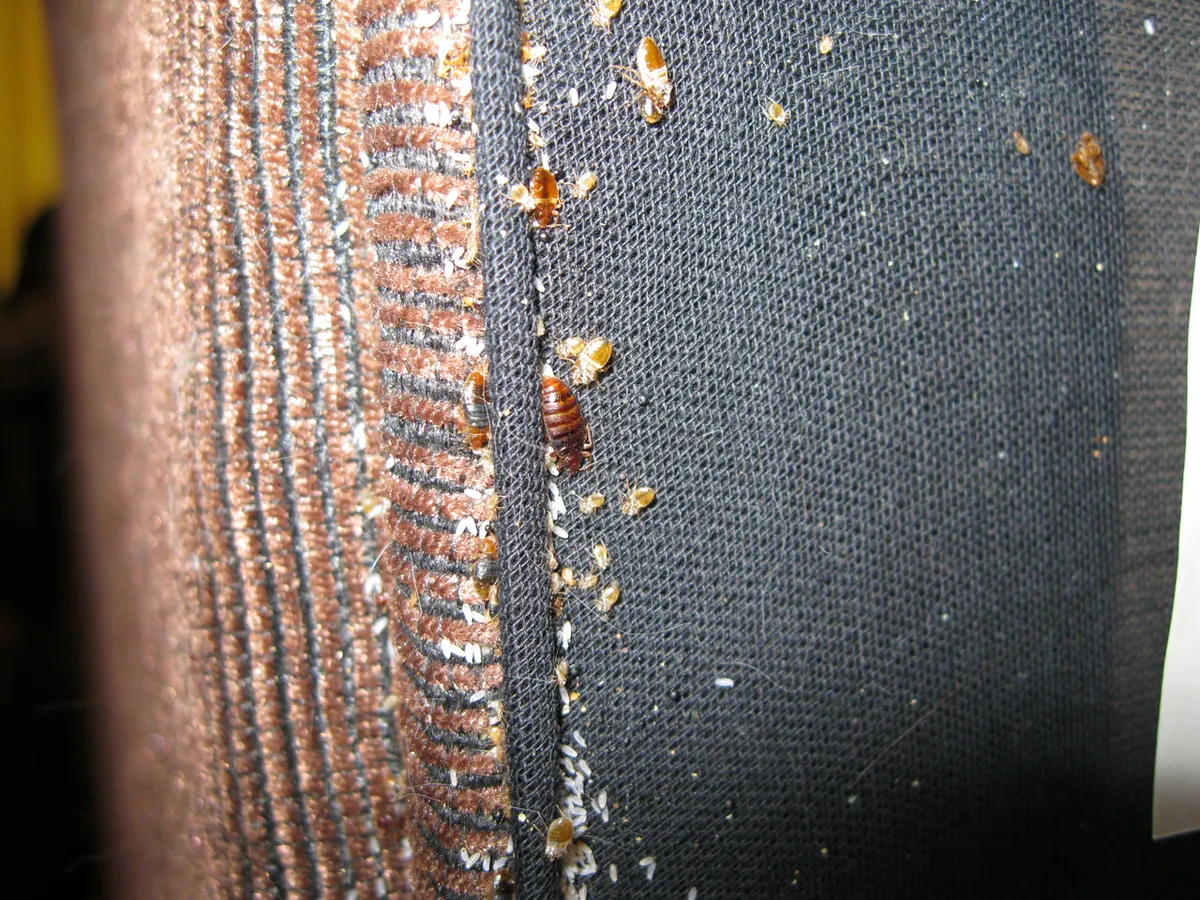
It usually won't finish off the eggs. EPA's page on why bed bug treatments fail says many pesticides don't kill eggs, so treatment has to be repeated after they hatch, and that slow products such as drying dusts and growth regulators need time. NPIC's bed bug page warns against daily spot treatments and against using more pesticide than the label allows. UC IPM goes further, saying over-the-counter products with bed bug claims aren't generally recommended because their performance in the field isn't known.
That is why this page treats a spray as one tool in a plan. The complete guide to bed bugs covers identification and the signs, and the EPA's six-step method for getting rid of bed bugs puts every step in order.
Why are bed bugs resistant to so many sprays?
Because many populations now survive pyrethroids, the ingredients in many consumer bed bug sprays. Rutgers entomologists wrote in 2014 that common consumer sprays using pyrethroids are not very effective at eradicating bed bugs because of insecticide resistance. EPA's bed bug pesticide page says that where resistant strains exist, pyrethrins and pyrethroids may simply move bed bugs to a new hiding place, and that a combination product or a switch to a different chemical class can help. The problem is widespread: a 2010 survey led by University of Kentucky entomologists reported knockdown-resistance mutations in 88 percent of the bed bug populations it collected across the US.
A neonicotinoid combination is not a guaranteed fix either. EPA says neonicotinoids cause nerves to fire continually until they fail and that bed bugs resistant to other pesticides will remain susceptible to them, but a 2016 study in the Journal of Medical Entomology found high levels of resistance to four neonicotinoids, including imidacloprid, in bed bugs collected from homes in Cincinnati and Michigan. UC IPM adds that some studies suggest pyrethroid-containing mixtures may keep driving resistance.
When a treatment seems to fail, EPA's advice is to check everything else first, because resistance can be confirmed only in laboratory tests. Using a pesticide below the label rate may speed up resistance, so never dilute beyond the label. For the next round, choose a product from a different class, and consider adding diatomaceous earth, for which EPA says no resistance has been reported, or another registered desiccant such as silica gel.
Which kinds of bed bug spray and dust are there?
Bed bug products fall into a handful of chemical classes, and the class decides what a product can and cannot do. EPA sorts registered bed bug pesticides into pyrethrins and pyrethroids, desiccants, a biochemical (cold pressed neem oil), a pyrrole (chlorfenapyr), neonicotinoids and insect growth regulators, plus dichlorvos strips for small enclosures. Phenothrin, the pyrethroid in the combination sprays on this page, is one NPIC places in the pyrethroid family. Here is how the main options compare:
| Type | Examples of active ingredients | What it does | Limits |
|---|---|---|---|
| Pyrethrin or pyrethroid spray | Pyrethrins, phenothrin | Kills bugs it hits and can flush them out | Many populations resist pyrethroids; resistant bugs may just move (EPA) |
| Combination spray | Phenothrin plus imidacloprid (Bedlam Plus, Harris Egg Kill & Resistant) | Two active ingredients; labels claim weeks of residual kill on hard surfaces | Neonicotinoid resistance has been found in some populations |
| Pyrrole spray | Chlorfenapyr | Turned into its active form inside the bug, where it disrupts cells (EPA) | The only pyrrole registered for bed bugs |
| Desiccant dust | Amorphous silica gel (CimeXa), diatomaceous earth | Damages the waxy coat so bugs dry out; EPA says bugs cannot become resistant | Slow, possibly months; cracks and crevices; registered products only |
| Minimum-risk (25(b)) spray | Plant oils such as geraniol, cedar, clove or peppermint | Killed bugs on direct contact in some lab tests | Generally not reviewed by EPA; little to no residual action in some studies (UC IPM) |
| Total release fogger | Pyrethrins or pyrethroids | Fills the room with a mist | Doesn't reach hiding places; fire and illness risks |
Classes and limits from EPA, UC IPM and the product labels; plant-oil lab results from the 2014 Rutgers study cited below; resistance findings from the 2010 and 2016 studies cited above.
Contact sprays and residual sprays
A contact spray kills the bugs it wets; a residual spray is meant to keep killing bugs that walk over the dried film. On fabric the second promise is weaker than it sounds. Kentucky says most householder bed bug sprays have limited effect after drying, and the Bedlam Plus label grades its own residual claims by surface: up to 16 weeks on ceramic (nonporous) surfaces, 8 weeks on laminated wood and 3 weeks on carpet. On a mattress or couch, count on what you hit directly.
Desiccant dusts
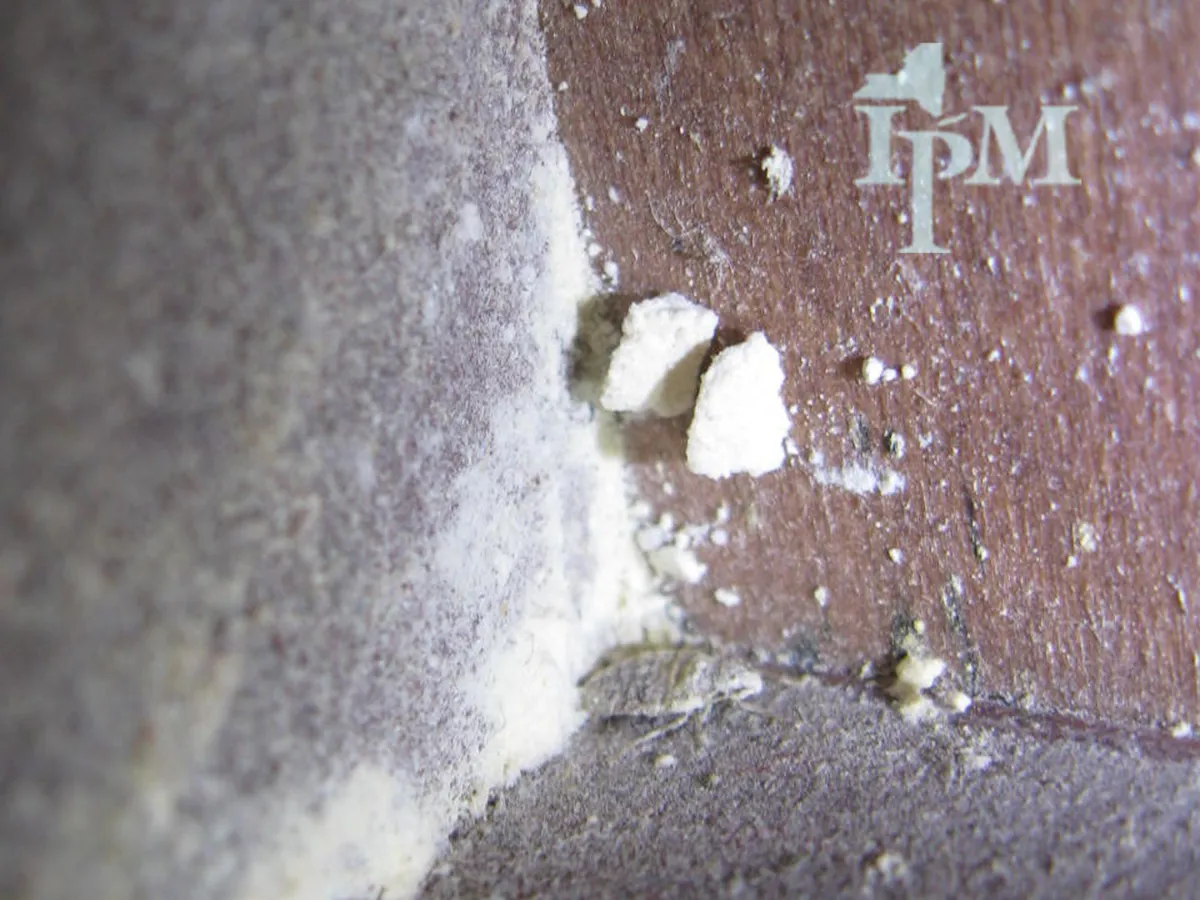
Dusts keep working as long as they stay dry and in place. EPA says desiccants destroy the bug's waxy outer coat so it dries out, that because they work physically bed bugs cannot become resistant to them as they can to other pesticides, that only EPA-registered products labeled for bed bugs should be used, and that pool-grade or food-grade diatomaceous earth adds an inhalation risk. Results take time: EPA's do-it-yourself guide says desiccants may take several months to work, and UC IPM says dusts placed where they stay dry, such as under baseboards or in wall voids, can give long-term control.
Not all dusts are equal. Kentucky's entomologist says silica gel, such as CimeXa, can be very effective if applied correctly, in tiny amounts barely visible to the naked eye, while diatomaceous earth will seldom help much to eliminate an infestation. CimeXa's EPA label sets 2 ounces per 100 square feet as a light, visible film applied with a bulb, bellows or puffer duster, suggests a brush for pushing dust into the tufts and folds of mattresses, and lists the bed frame, the mattress and box spring, headboards, baseboards and wall voids among the places to treat.
How do you choose a bed bug spray?
- An EPA Reg. No. and bed bugs on the label. EPA's do-it-yourself guide says to look for EPA-registered pesticides with bed bugs listed on the label, and NPIC says to read the label before you buy.
- The places you need to treat. A mattress, a bed frame, a baseboard and a wall void each need a label that names them, and neither spray on this page may be used on sheets or pillows.
- A second mode of action. For resistant populations EPA suggests a combination product or a different class, such as the phenothrin and imidacloprid combinations picked above, or chlorfenapyr.
- Indoor use. Check that the label allows indoor use; both spray labels on this page say they are for indoor use only.
- A registered dust, not a bag of pool or food-grade powder. EPA says only registered desiccants labeled for bed bugs should be used.
To build a shortlist, EPA's Bed Bug Product Search Tool lists registered products that any consumer can buy, though EPA says the database was last updated on December 18, 2019, and that a listing is not an endorsement.
For the Harris spray picked above, PF Harris's product page gives the registration as EPA Reg. No. 1021-2597-3; the first two parts of that number are MGK's registration 1021-2597, whose EPA label lists phenothrin, imidacloprid and the synergist MGK 264. Harris sells other bed bug sprays too, so check the bottle for that number.
Can you use bed bug spray on a mattress?
Only if the label names mattresses, and only on the parts it names. UC IPM says pesticides aren't generally applied to mattresses or bedding because of the potential risk to people, and Kentucky notes that companies often treat seams and crevices but usually not the sleep surface. Labels differ even for the same ingredients. The Bedlam Plus label says to strip and wash the linens, apply to the mattress's tufts, folds, edges, sides and seams until damp, and let it dry before use, and it bars use on bed linens or anything else that touches the people in the bed. The MGK label behind Harris Egg Kill & Resistant is stricter: no surface applications to mattresses or bedding, treatment limited to seams, folds and edges, and no pillows, bedding or clothing.
Once the treated mattress is dry, zip it and the box spring into encasements. EPA says covers that seal mattresses and box springs trap the bed bugs inside, where they die, and NPIC says encasements can salvage an infested bed or protect a replacement. If you are still deciding what to do with the mattress itself, the guide to bed bugs on a mattress walks through the signs and the options. To choose the covers, what makes a mattress cover bed bug proof explains the zipper, testing and box spring checks.
How do you use a bed bug spray correctly?
Confirm what you have, read the whole label, then treat the hiding places in order. EPA's first do-it-yourself step is identifying the bug, and its guide notes that extension agents can identify pests at no cost.
- Check the label first. It must list bed bugs and every place you plan to treat.
- Strip and heat the bedding. Bag linens before you carry them through the house, then dry them on high heat; NPIC says 30 minutes on high kills all stages.
- Vacuum seams and cracks. Kentucky says routine vacuuming seldom reaches bed bug hiding places but targeted vacuuming removes some bugs; they can survive the vacuum, so seal the bag and put it in an outdoor trash container, as EPA directs.
- Spot-test, then spray from 8 to 10 inches. The Bedlam Plus label says to test an inconspicuous area for staining first, spray each square foot until damp, and use the straw for cracks and crevices.
- Clear the room until it dries. The same label says to remove pets and birds, cover fish tanks, and keep children and pets off treated areas until surfaces are dry.
- Dust the voids. Apply desiccant dust lightly to cracks, the bed frame, the inside of the box spring and wall voids, following the dust's label.
- Encase and set interceptors. Zip the mattress and box spring into encasements, put an interceptor under each bed leg, and check the cups weekly, as EPA's guide suggests for its homemade version.
- Repeat on the label's schedule, not daily. NPIC warns against daily spot treatments, and EPA says treatment usually has to be repeated after eggs hatch.
Do natural bed bug sprays work?
Some kill the bed bugs they hit in lab tests, but the minimum-risk kind has generally not been through EPA's review for effectiveness. Many plant-oil sprays are sold as minimum-risk pesticides, often called 25(b) products after the section of the federal pesticide law behind the exemption; Rutgers entomologists describe them as exempt from the normal registration requirements under FIFRA Section 25b. EPA's minimum-risk page says EPA generally does not review these products or their labels, leaving it to the producer to judge whether a product qualifies.
EPA's conditions for minimum-risk pesticides require every ingredient on the label, bar claims about controlling disease-carrying pests, and treat an EPA registration number on such a product as misleading, because buyers may assume EPA reviewed it; states may still require registration. So a missing EPA Reg. No. is normal on a genuine minimum-risk spray, and it also means no one at EPA checked whether it works.
A 2014 Rutgers University lab study compared 11 essential oil and detergent products. Only two, EcoRaider (1% geraniol, 1% cedar extract and 2% sodium lauryl sulfate) and Bed Bug Patrol (clove oil, peppermint oil and sodium lauryl sulfate), killed more than 90 percent of nymphs as direct sprays and in a forced-exposure residue test, and only EcoRaider had a strong effect on eggs, killing 87 percent when sprayed directly. Both did significantly worse than two conventional insecticides when the bugs could choose where to rest, and the authors called for testing in real infestations.
If you want a plant-based product that EPA did review, look for a registered neem oil product labeled for bed bugs: EPA says cold pressed neem oil is the only biochemical pesticide registered against them. Either way, UC IPM notes that some studies suggest oils have little to no residual action, so expect them to work only on contact.
Why don't bug bombs work on bed bugs?
Because the mist does not reach where bed bugs hide, and many bed bugs resist the pyrethroids foggers contain. In a 2012 Ohio State University study, field-collected bed bugs exposed for two hours to three over-the-counter foggers showed little, if any, adverse effect, and even a pyrethroid-susceptible lab strain was unaffected when a thin layer of cloth gave it cover. The authors concluded that foggers should not be recommended for bed bug control. NPIC says bug bombs don't work for bed bugs because the droplets typically do not penetrate their hiding places, and Kentucky lists foggers among the things that should not be used.
They also carry real risks. EPA's fogger page says foggers should not be the sole source of bed bug control, that not all are labeled for bed bugs, and that more is not better: too many can cause an explosion. CDC identified 3,222 illnesses and injuries linked to total release foggers in 10 states from 2007 to 2015, most often because people did not leave during the release or went back in too soon.
What works better than spray alone?
Heat, encasements, interceptors and a vacuum, combined with targeted spray and dust. These are the tools EPA and the extension services pair with pesticides, and the heat-based ones kill eggs, which many sprays do not.
- Dryer heat. NPIC says 30 minutes on high heat kills all bed bugs, including eggs, and Kentucky adds that bedding and clothes often need washing at 120°F or more.
- Steam. EPA says the steam must be at least 130°F without a forceful airflow, using a diffuser so bugs are not scattered, and Kentucky says steam kills bugs and eggs on contact but has a limited ability to penetrate fabric. What kills bed bugs on contact compares steam, heat and spray.
- Whole-room heat. Professionals heat rooms to about 120 to 130°F, often in a single day, Kentucky says; UC IPM gives at least 140°F for two hours or 130°F for three hours, and puts the minimum lethal temperature at 113°F. Raising the thermostat does not work, and EPA warns that space heaters and fireplaces are dangerous for this.
- Cold. EPA says items must stay in a sealed bag in a freezer at 0°F for three days; check the temperature with a thermometer.
- Encasements. Sealed covers trap bed bugs inside to die, EPA says, but Kentucky notes they will not keep bugs outside from crawling onto the bed and biting.
- Interceptors. These small dishes under bed and furniture legs trap wandering bugs; UC IPM cites research in which they caught six times more bed bugs than visual searches, and Kentucky says they can show whether an infestation is gone. How interceptor cups catch bed bugs explains the setup.
- Targeted vacuuming. Kentucky says it can remove some bugs, though not every one, so combine it with the steps above.
When should you call a professional for bed bugs?
When the infestation is confirmed and you can afford it, or when your own treatment has not worked. UC IPM says confirmed bed bug infestations should be managed by trained professionals, and Kentucky says that when resources allow, it is prudent to hire one, noting that a thorough inspection and treatment can take several hours. Professionals also have tools you don't: whole-room heat, which Kentucky says requires special expertise and equipment, and the few registered bed bug products EPA limits to specially trained applicators.
Call sooner in an apartment. EPA tells renters to notify their landlord and says the units near yours should be inspected, Kentucky notes that bed bugs often wander between apartments, and EPA's guidance on failed treatments recommends reputable, experienced pest management professionals. A professional's work still depends on your preparation, EPA says, so the decluttering, laundering and encasing above are worth doing either way.
Use any pesticide exactly as its label directs. The label is the law, and what is registered and sold varies by state.
Frequently Asked Questions
What is the best bed bug spray?+
There is no single best spray, because bed bug populations differ in what they resist and sprays work only where they land. Choose an EPA-registered product labeled for bed bugs; for pyrethroid-resistant populations, EPA suggests a combination product or a different chemical class, such as the phenothrin and imidacloprid combinations in Bedlam Plus and Harris Egg Kill and Resistant. Pair it with silica gel dust, encasements, interceptors and heat, since UC IPM says insecticide applications alone won't control an infestation.
Does bed bug spray kill eggs?+
Often not. EPA says many pesticides don't kill bed bug eggs, which is why treatment has to be repeated after the eggs hatch, and NPIC says many insecticides are not effective at killing them. Some labels make egg claims, including the Bedlam Plus label, and in a Rutgers lab study the plant-oil spray EcoRaider killed 87 percent of eggs it hit directly. Heat is more dependable: NPIC says 30 minutes in a dryer on high heat kills all bed bugs, including eggs.
Can I sleep in my bed after spraying for bed bugs?+
Yes, once the label's conditions are met. The Bedlam Plus label says to let a treated mattress dry before reuse, and the MGK label used for Harris Egg Kill and Resistant says to let it dry thoroughly before remaking the bed. Neither label allows spraying sheets, pillows or anything else that touches the sleeper. Interceptors under the bed legs, a bed pulled a few inches from the wall and linens kept off the floor, as EPA suggests, make it harder for bed bugs to climb back up.
How long does bed bug spray last?+
It depends on the product and the surface. The Bedlam Plus label claims residual kill of up to 16 weeks on ceramic (nonporous) surfaces, 8 weeks on laminated wood and 3 weeks on carpet. The University of Kentucky says most bed bug sprays for householders have limited effect after they dry, so the spray works best on the bugs it contacts. Dusts last longer if they stay dry: UC IPM says dusts placed under baseboards or in wall voids can give long-term control.
Should you throw out a mattress with bed bugs?+
Usually not. NPIC says mattress and box spring encasements can be used to salvage an infested bed, and EPA says covers that seal the mattress and box spring trap bed bugs inside, where they die. Treat the seams and tufts only with a product whose label allows it, or with steam, then encase the mattress and keep it encased. EPA also notes that bed bugs may hide in hampers, bed frames and even furniture, so a new mattress alone will not end an infestation.
Does rubbing alcohol kill bed bugs?+
It is a fire hazard, not a treatment. EPA lists rubbing alcohol with kerosene and gasoline as unsafe and flammable choices for bed bug control, and the University of Kentucky says alcohol should not be used against bed bugs because methods like it are ineffective and can lead to fires. Use an EPA-registered product labeled for bed bugs, or heat from a dryer or steamer, instead.
What do exterminators use for bed bugs?+
Professionals combine products and methods. The University of Kentucky says companies often treat the seams, folds and crevices of beds, chairs and sofas but usually will not spray the sleep surface, and that some heat whole rooms to about 120 to 130 degrees Fahrenheit, often in one day. EPA notes that a few registered bed bug products are limited to specially trained professionals, and UC IPM says fumigation with sulfuryl fluoride is available in California, though it leaves no residual protection.
How long does it take to get rid of bed bugs with spray?+
Expect weeks to months, not days. EPA says many pesticides don't kill eggs, so treatments have to be repeated after hatching, and drying dusts may take several months to work. EPA's do-it-yourself guide says you may need to repeat its steps more than once and should keep checking for at least a year after you finish. Interceptor cups under the bed legs are the simplest way to see whether bed bugs are still there.
Can bed bugs become immune to spray?+
They become resistant, which means a product kills fewer of them, not none. EPA says that over time the most susceptible bed bugs die first and the less susceptible ones survive to breed, and a 2010 survey reported knockdown-resistance mutations in 88 percent of the bed bug populations it collected across the US. A 2016 study also found high resistance to four neonicotinoids in bed bugs from Cincinnati and Michigan. EPA advises rotating to products from different chemical classes and adding a desiccant dust.
Does diatomaceous earth kill bed bugs?+
Registered diatomaceous earth can help, but slowly and less well than silica gel. EPA lists it among the desiccants, which it says bed bugs cannot become resistant to, says to use only EPA-registered products labeled for bed bugs, and warns that pool-grade or food-grade diatomaceous earth increases the inhalation risk. The University of Kentucky says diatomaceous earth will seldom help much to eliminate an infestation, while silica gel can be very effective if applied correctly. EPA adds that desiccants may take several months to work.
Sources
- Pesticides to Control Bed Bugs — US Environmental Protection Agency
- Do-it-yourself Bed Bug Control — US Environmental Protection Agency
- Find a Bed Bug Pesticide Product (Bed Bug Product Search Tool) — US Environmental Protection Agency
- Should I Use a Fogger? — US Environmental Protection Agency
- When Treatments Don't Work — US Environmental Protection Agency
- Minimum Risk Pesticide: Definition and Product Confirmation — US Environmental Protection Agency
- Conditions for Minimum Risk Pesticides — US Environmental Protection Agency
- Pest Notes: Bed Bugs (UC ANR Publication 7454, updated May 2013) — University of California Statewide IPM Program (A. M. Sutherland, D. H. Choe and V. R. Lewis)
- ENTFACT-636: Bed Bugs — University of Kentucky Department of Entomology (M. F. Potter)
- Bed Bugs — National Pesticide Information Center
- Ineffectiveness of over-the-counter total-release foggers against the bed bug (Journal of Economic Entomology, 2012) — The Ohio State University (S. C. Jones and J. L. Bryant), via PubMed
- Potential of Essential Oil-Based Pesticides and Detergents for Bed Bug Control (Journal of Economic Entomology, 2014) — Rutgers University (N. Singh, C. Wang and R. Cooper)
- Widespread distribution of knockdown resistance mutations in the bed bug, Cimex lectularius, populations in the United States (Archives of Insect Biochemistry and Physiology, 2010) — University of Kentucky (F. Zhu and others), via PubMed
- High Levels of Resistance in the Common Bed Bug, Cimex lectularius, to Neonicotinoid Insecticides (Journal of Medical Entomology, 2016) — A. Romero and T. D. Anderson, via PubMed
- Acute Illnesses and Injuries Related to Total Release Foggers, 10 States, 2007-2015 (MMWR, February 2018) — Centers for Disease Control and Prevention
- Multicide Spray 29511 label (alternate brand name Bedlam Plus), EPA Reg. No. 1021-2569 (February 19, 2026) — US Environmental Protection Agency, Pesticide Product and Label System
- MGK 29515 label, EPA Reg. No. 1021-2597 (September 30, 2026) — US Environmental Protection Agency, Pesticide Product and Label System
- Harris Egg Kill & Resistant Bed Bug Killer, 32 oz (product page, EPA Reg. No. 1021-2597-3) — PF Harris
- SiliCide label (alternate brand name CimeXa Insecticide Dust), EPA Reg. No. 73079-12 (June 1, 2016) — US Environmental Protection Agency, Pesticide Product and Label System
- d-Phenothrin Fact Sheet — National Pesticide Information Center
Read and approved by Alex Francisco on November 5, 2026. Found an error? Email support@buzzskito.ca.