Quick Answer
A fresh tick bite usually looks like a small, firm red bump — much like a mosquito bite — sometimes with the tick still attached. Remove it promptly with fine-tipped tweezers, then watch the site for 3–30 days: an expanding red or bull's-eye rash (erythema migrans), fever, or aches signals possible Lyme disease and needs a doctor.
- In Ontario a blacklegged tick generally needs 24–36 hours attached to transmit Lyme disease.
- The bull's-eye rash (erythema migrans) typically appears 3–30 days after a bite.
- About 20–30% of confirmed Ontario Lyme cases never show the bull's-eye rash.
- Public Health Ontario notes preventive antibiotics are most effective within 72 hours of removing a high-risk tick.
- Pull straight up with fine-tipped tweezers — do not twist, burn, or squeeze the tick.
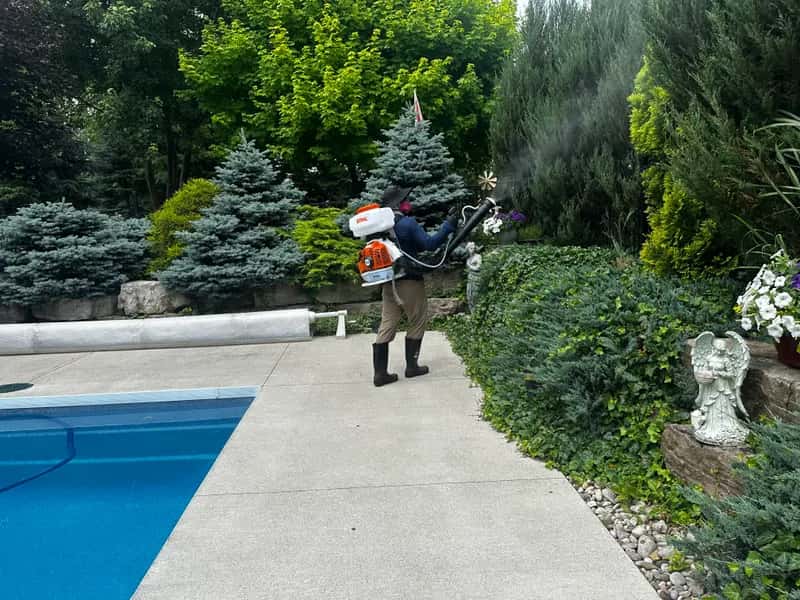
- Professional tick barrier spray targets the lawn edges where ticks wait and is renewed roughly monthly, 5 treatments a season.
— BuzzSkito, GTA mosquito & tick control · 150+ five-star Google reviews
⚠️ Medical Disclaimer
This guide is for informational purposes only. If you have been bitten by a tick or are experiencing symptoms, consult a licensed medical professional. In emergencies, call 911 or go to the nearest emergency room.
Finding a tick on yourself, your child, or your pet is alarming — but knowing exactly what to do makes all the difference. This step-by-step guide covers everything Ontario homeowners need to know from the moment of discovery to medical follow-up. Part of our Ultimate Tick Control Guide for Ontario.
BuzzSkito Mosquito & Tick Control Specialists · Published May 1, 2026
As an Amazon Associate I earn from qualifying purchases. BuzzSkito only points to products we would genuinely use or recommend, at no extra cost to you.
Tick Bite vs. Mosquito Bite vs. Spider Bite: How to Tell the Difference
The first thing most people want to know is what the mark actually is. Use this comparison table to tell a tick bite apart from the two things it's most often confused with. When in doubt, treat an expanding rash after outdoor exposure as a tick bite until a doctor says otherwise.
| Tick bite | Mosquito bite | Spider bite | |
|---|---|---|---|
| Appearance | Small firm red bump; tick may still be attached; sometimes a later expanding bull's-eye ring | Puffy raised welt with a small central dot; no attached insect | Often two close puncture marks; may swell, redden or blister |
| Timing | Bump right away; bull's-eye rash appears 3–30 days later | Reaction within minutes to hours; fades in a few days | Pain or swelling within minutes to hours |
| Itch / pain | Usually painless and not very itchy — easy to miss | Intensely itchy | Often painful or stinging |
| When to worry | Expanding rash, fever or flu-like symptoms within 30 days — see a doctor | Rarely serious; watch for signs of infection from scratching | Spreading redness, ulcer or severe pain — seek care |
Source: Public Health Ontario and the Government of Canada Lyme disease resources.
Step 1: Don't Panic — Act Quickly and Carefully
The single most important factor in reducing Lyme disease transmission risk is how quickly you remove the tick. The blacklegged tick (deer tick) that transmits Lyme disease in Ontario generally needs to be attached for 24–36 hours to transmit the bacteria. Immediate, proper removal dramatically reduces your risk.
Step 2: Remove the Tick Correctly
What you need: Fine-tipped tweezers (not the wide, blunt kind). A dedicated tick removal tool also works well and makes it easier to grip close to the skin — see our tick removal tool guide for the options we recommend. Check tick-removal tools on Amazon.ca →
- Grasp the tick as close to the skin surface as possible with the tweezers.
- Pull upward with steady, even pressure — do not twist or jerk. Twisting can cause the mouthparts to break off and remain in the skin.
- Do not squeeze the tick's body — this can force bacteria into the bite wound.
- After removal, thoroughly clean the bite area with rubbing alcohol or soap and water.
- Dispose of the tick by placing it in a sealed bag, submerging it in alcohol, or flushing it down the toilet.
Mouthparts do sometimes snap off despite good technique, and the leftover black dot worries people far more than it should. Our guide to a tick head stuck in the skin explains why digging at it is the bigger risk and what a normal few days of healing looks like.
As an Amazon Associate I earn from qualifying purchases. Price shown on Amazon.ca, at no extra cost to you.
🏆 Best Tool for the Job
8.6/10· BuzzSkito ratingA dedicated tick remover grips right at the skin and lifts the tick straight out — steadier and more precise than fingernails or wide household tweezers, so the mouthparts are far less likely to snap off. Cheap, reusable, and worth keeping in every first-aid kit and hiking pack.
Pros
- Grips close to the skin
- Lowers risk of breaking mouthparts
- Reusable and pocket-sized
Cons
- Still needs steady, even pressure
- Keep one on hand before you need it
Step 3: What NOT to Do
Several commonly shared methods are dangerous and can increase infection risk:
- Do not use petroleum jelly, nail polish, or heat to make the tick back out — these methods can cause the tick to release more bacteria into the wound.
- Do not squeeze or crush the tick's body with your fingers.
- Do not use a lit match or cigarette near the bite.
Step 4: Record Key Information
Note the following for your medical records:
- The date and time you found the tick
- Where on your body it was attached
- How long you estimate it may have been attached (use the last time you checked as a reference)
- Whether the tick was engorged (swollen with blood) — indicating it had been feeding for some time
Save the tick in a sealed bag if possible — your doctor may recommend identification or testing.
Step 5: Monitor for Symptoms
Over the 30 days following a tick bite, monitor yourself and any affected family members for the following:
Early Lyme Disease Symptoms (Days 3–30)
- Expanding red rash (erythema migrans) — often bull's-eye shaped, appearing at or near the bite site
- Flu-like symptoms: fatigue, fever, chills, headache, muscle aches, joint pain
- Swollen lymph nodes near the bite area
Important: not everyone with Lyme disease develops a rash. Approximately 20–30% of confirmed Ontario Lyme cases show no bull's-eye pattern. If you develop any flu-like symptoms following a tick bite, contact your doctor even without a rash.
The bite site itself is the other thing to keep watching. A normal reaction fades within a week or two; if yours is still open, crusting, or spreading, our guide to tick bites that won't heal and when to worry lays out which healing patterns are ordinary and which ones warrant a doctor's visit.
Symptoms Requiring Emergency Care
Go to the emergency room immediately if you develop any of the following:
- High fever above 39°C / 102°F
- Severe headache or stiff neck
- Facial drooping or paralysis (Bell's palsy)
- Confusion or disorientation
- Heart palpitations or chest pain
- Difficulty walking or extreme weakness
These can indicate serious conditions including Powassan virus (rare, but present in Ontario) and neurological Lyme disease, both of which progress rapidly.
If that list is the reason you are reading this at 2 a.m., our guide to whether Lyme disease can kill you sets out the actual prognosis, how curable early Lyme is, and which complications warrant same-day medical care.
Step 6: When to See a Doctor
Contact your family doctor or a walk-in clinic if:
- You found an engorged tick (suggesting attachment of more than 24 hours)
- You cannot completely remove the tick
- You develop any rash at or near the bite site within 30 days
- You develop flu-like symptoms within 30 days of a tick bite
- You are immunocompromised or pregnant
Your doctor may prescribe a single preventive dose of doxycycline antibiotic if the bite meets certain criteria — this has been shown to reduce Lyme disease risk when given within 72 hours of tick removal.
Ontario Tick Risk by Region
Blacklegged tick populations are established across much of Southern Ontario, with the highest confirmed activity in:
- The Oak Ridges Moraine (Richmond Hill, King City, Caledon, Aurora)
- Long Point and Point Pelee
- Rouge National Urban Park (Scarborough, Markham)
- Rattray Marsh, Credit River valley (Mississauga, Georgetown)
- Halton Hills and the Niagara Escarpment corridor
Tick activity and human illness do not map onto each other perfectly, so it is worth seeing the reported case counts alongside the habitat. Lyme disease cases in Mississauga and Oakville goes through the published numbers for Peel and Halton and what they mean for families living beside those corridors.
Timing shifted across all of those regions this year: activity ran ahead of a normal season province-wide, which is the subject of our 2026 Ontario tick surge report and 5-step safety plan.
Prevention: The Best Strategy
Daily tick checks and prompt removal come first. At home, cutting down the ticks in your own yard helps as well: professional tick barrier spray from BuzzSkito targets the lawn edges, garden borders, and wooded property lines where ticks concentrate, applied according to label directions and renewed roughly monthly — 5 treatments a season, $597 on its own or $497 added to a mosquito plan.
Frequently Asked Questions
How long does a tick need to be attached to transmit Lyme disease?
In Ontario, the blacklegged tick (Ixodes scapularis) typically needs to be attached for at least 24–36 hours to transmit the Lyme disease bacterium (Borrelia burgdorferi). This is why daily tick checks are so important — finding and removing a tick early dramatically reduces transmission risk.
What does a Lyme disease rash look like?
The classic Lyme rash (erythema migrans) is a circular or oval expanding red rash that often (but not always) has a clear center — resembling a bull's-eye. It typically appears 3–30 days after a bite and can be warm to the touch but is usually not painful or itchy. Not everyone develops this rash.
Should I save the tick after removing it?
Yes, if possible. Place it in a sealed plastic bag or container with a small piece of damp paper towel. Your doctor may recommend sending it to a lab for testing. Some Ontario public health units offer tick identification and testing services.
What if I cannot remove the tick completely?
If the mouthparts break off during removal, try to remove them with tweezers if possible. If you cannot get them out, leave them — your body will eventually expel them. Clean the area thoroughly. Do not try to burn or squeeze them out.
When should I go to the emergency room after a tick bite?
Go to the ER immediately if you develop a high fever (above 39°C), severe headache, difficulty breathing, face drooping, or confusion after a tick bite. These can indicate rare but serious conditions like Rocky Mountain spotted fever or Powassan virus, which progress rapidly.
How long should you take doxycycline for a tick bite?
That depends entirely on your healthcare provider's assessment, so do not self-prescribe. For a high-risk blacklegged tick bite in Ontario, doctors may offer a single preventive dose within 72 hours of removal as post-exposure prophylaxis, per Public Health Ontario. A confirmed Lyme disease infection is treated with a longer antibiotic course. The exact drug, dose, and duration are medical decisions — consult a healthcare provider.
How soon do you need antibiotics after a tick bite?
If preventive antibiotics are warranted, Public Health Ontario notes they are generally most effective when started within 72 hours of removing a high-risk blacklegged tick. Not every bite needs antibiotics, though — the decision depends on the tick species, how long it was attached, and local Lyme disease risk. See a healthcare provider promptly after a bite so they can assess whether treatment is appropriate for you.
What do you do if a tick head is stuck in you?
If the tick's head or mouthparts stay behind after removal, try to lift them out with clean fine-tipped tweezers. If they will not come out easily, leave them alone — your skin will usually push them out over time, much like a splinter. Clean the area with rubbing alcohol or soap and water. Do not dig, burn, or squeeze. If redness, swelling, or a rash develops, see a healthcare provider.
How long does a tick stay attached?
Left undisturbed, a blacklegged tick can stay attached and feeding for three to seven days before dropping off on its own once fully engorged. That is why prompt removal matters — in Ontario the risk of Lyme disease transmission rises significantly after a tick has been attached 24–36 hours, per Public Health Ontario. Check your body, your children, and your pets daily after time outdoors so a tick never stays on that long.
How can you tell how long a tick has been attached?
There is no exact way to know, but engorgement is the best clue: a flat, thin tick likely attached recently, while a swollen, balloon-like body suggests it has been feeding for a day or more. Use the last time you did a body check as your reference point. When in doubt, assume longer attachment and consult a healthcare provider, since Ontario Lyme disease risk climbs after 24–36 hours of attachment.