Published by BuzzSkito Mosquito & Tick Control
Published October 28, 2026 · Fact-checked against the sources listed below
What does a fire ant bite look like?
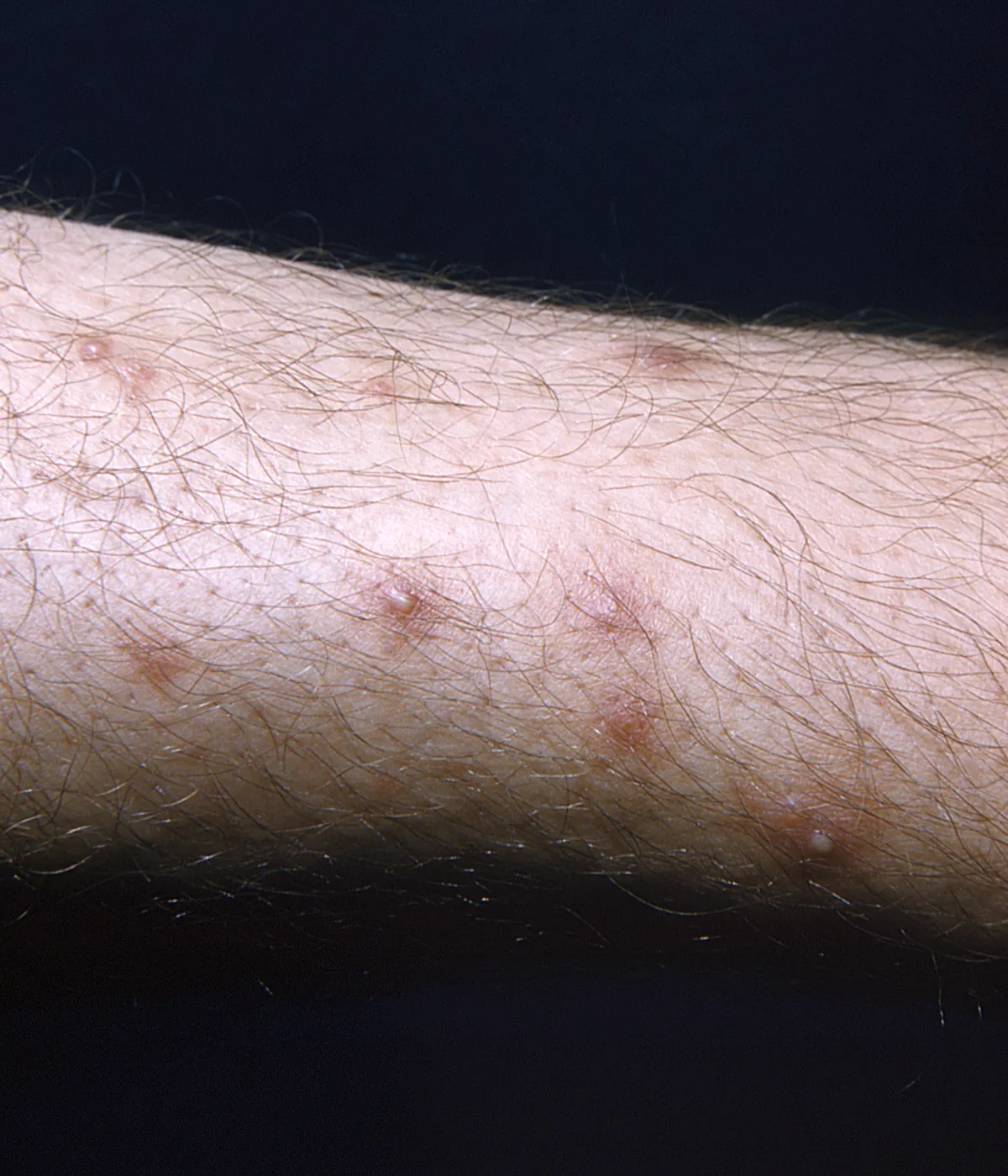
Red bumps that burn, often several at a time, which can turn into small white pustules within a day or two. CDC's National Institute for Occupational Safety and Health (NIOSH) says the venom can cause a burning sensation, and describes what follows: “Red bumps may form at the sting site and develop into white, fluid-filled pustules within a day or two.”
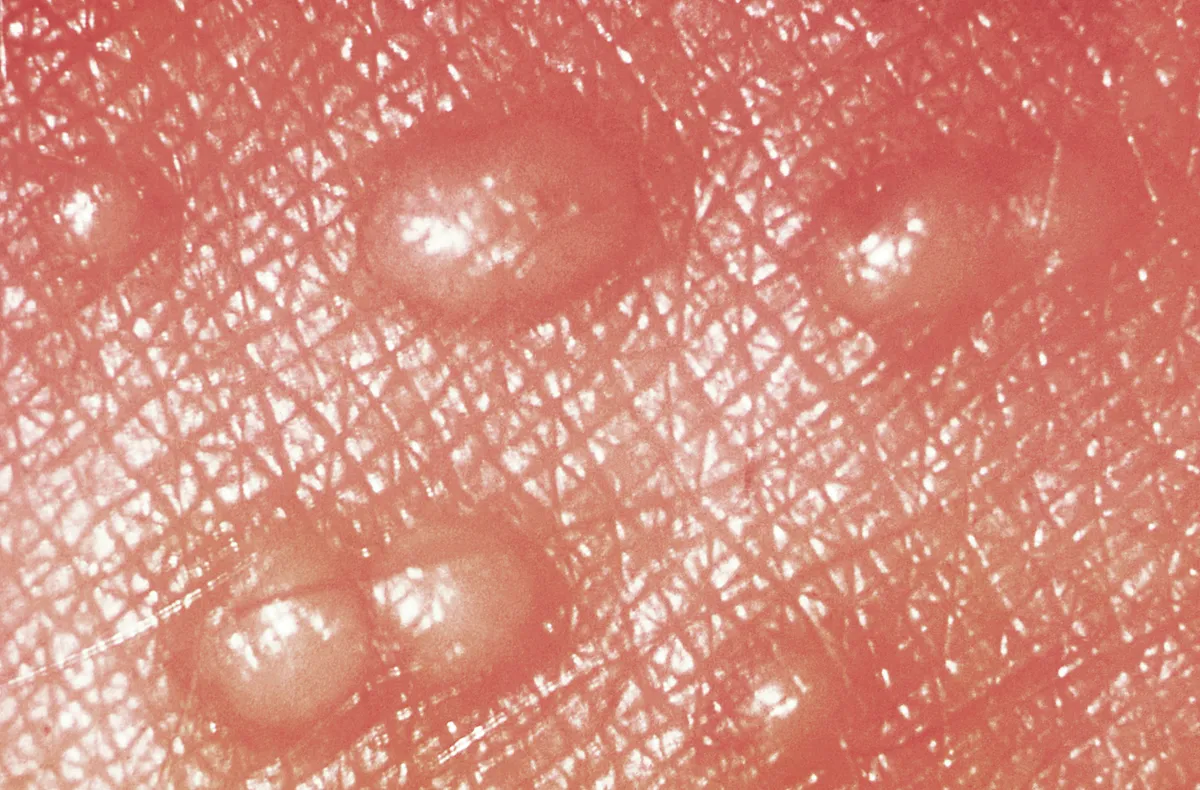
The pustule comes next. The American Academy of Allergy, Asthma & Immunology (AAAAI) says the sting forms a blister that fills with a cloudy white material in about 24 hours, and Cleveland Clinic describes the fluid as yellow or white. A sting that burned at once and turned into white-topped bumps a day later can look like a fire ant sting; other bites can blister too, as the comparison below shows.
Do fire ants bite or sting?
Both, and the sting does the harm. CDC says fire ants bite and sting, holding on to the skin with their jaws, and that their stings inject venom that can cause a burning sensation. AAAAI explains how the two work together: the ant bites with its jaws while it stings, which lets it pull the stinger out, turn and sting again, so a single ant can sting several times within moments. This page uses the searchers' word, bite, but the burning and the pustule come from the venom.
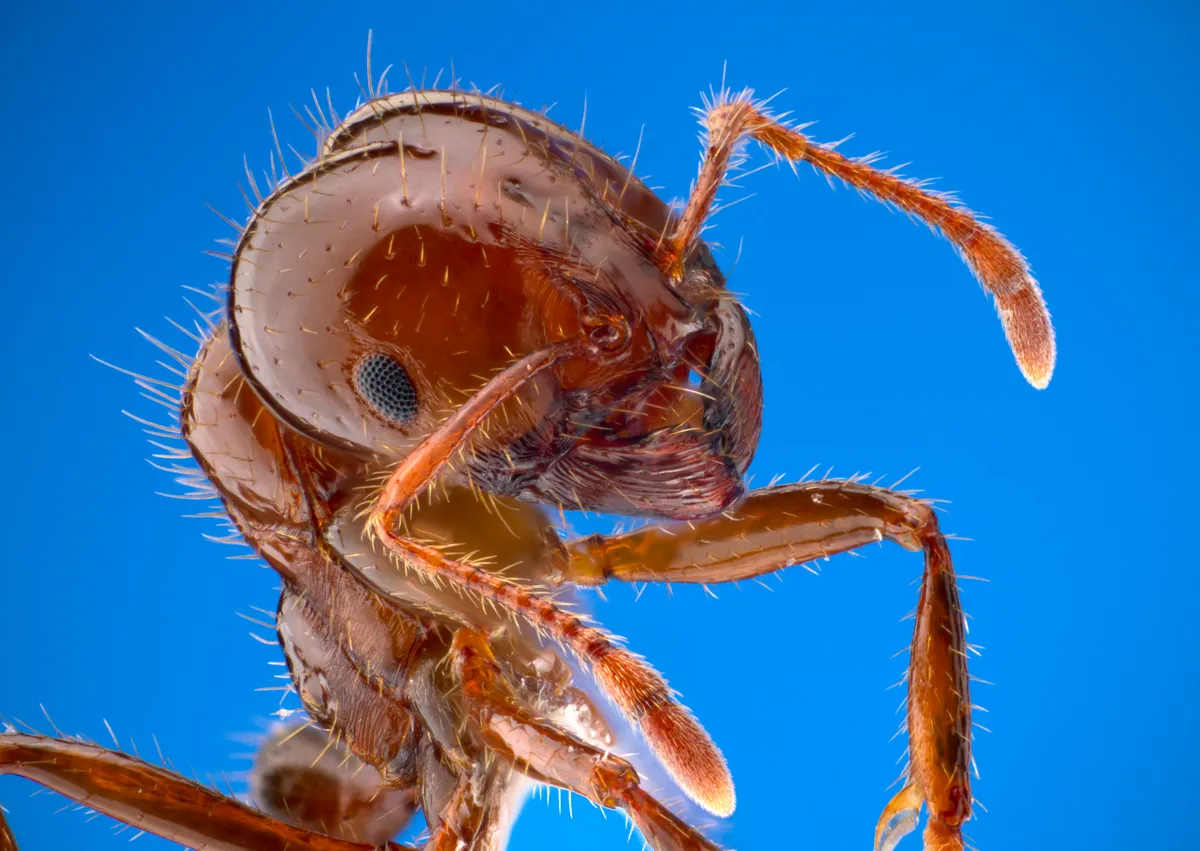
To check whether the ants were fire ants, the guide to red ants compares them with native fire ants, harvester ants and other reddish ants, and describes their mounds. Other ant bites look different: Cleveland Clinic's ant bite page describes a sharp pinch that leaves a raised, red to purple, pimple-like mark that usually goes away in a few days. It describes carpenter ants as larger ants, about 1/2 to 5/8 inch long (the carpenter ant guide covers them), and which ants bite and which sting sorts out the rest.
What are the stages of a fire ant bite?
Burning first, then itchy bumps, then blisters that fill with white or yellow fluid, then about a week of healing. The table sets out each source's timing.
| Time after the sting | What you may see or feel | Source |
|---|---|---|
| At once | A burning or stinging feeling | CDC; Cleveland Clinic |
| Within about an hour | Itchy bumps or welts, which last several hours | Cleveland Clinic |
| After several hours | Blisters where the bumps were | Cleveland Clinic |
| About 24 hours, or a day or two | The blisters fill with cloudy white or yellow fluid and become white pustules | AAAAI; Cleveland Clinic; CDC |
| 7 to 10 days | The blisters go away; most reactions last about a week | Cleveland Clinic |
Sources: CDC NIOSH, AAAAI and Cleveland Clinic, each linked on this page.
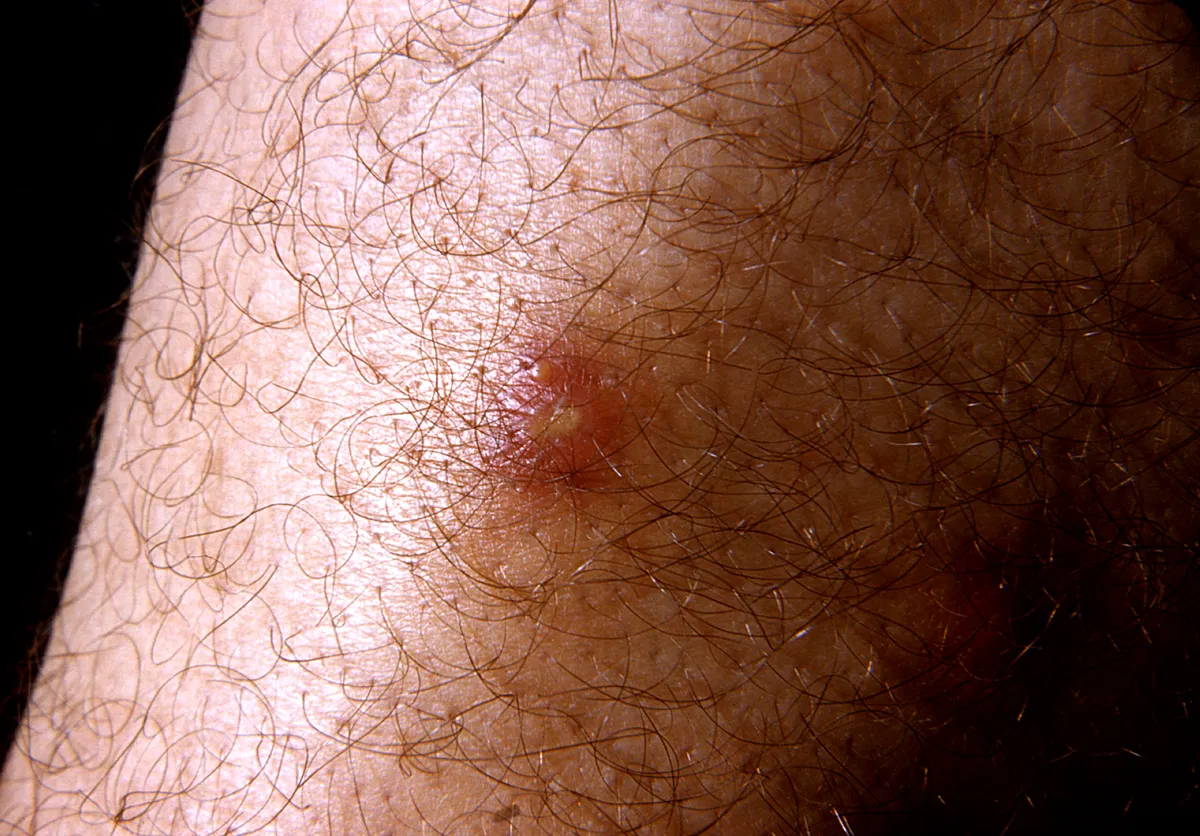
Why a pustule at all? AAAAI says fire ant venom kills bacteria and some of the skin's own cells, and that this produces the blister; why to leave it alone is covered below.
Why do fire ants bite so many times at once?
Because a colony defends its mound together, and each ant can sting more than once. The University of California's Pest Notes on the red imported fire ant (UC IPM) say the ants quickly climb onto and sting anything that touches their mound or food source, that one ant can bite and sting repeatedly, and that fire ants can sting en masse. AAAAI says stepping on a flat nest by accident can bring hundreds of ants out to defend it.
Getting away fast limits the damage. AAAAI says to move away quickly if you find or disturb a mound, since the longer you stay near it, the more stings you may get. Getting the ants off your skin is the first step of the home care below.
What else looks like a fire ant bite?
Several other bites itch, blister or come in groups, so look at how the bite felt, where it is and how it changed over a day or two:
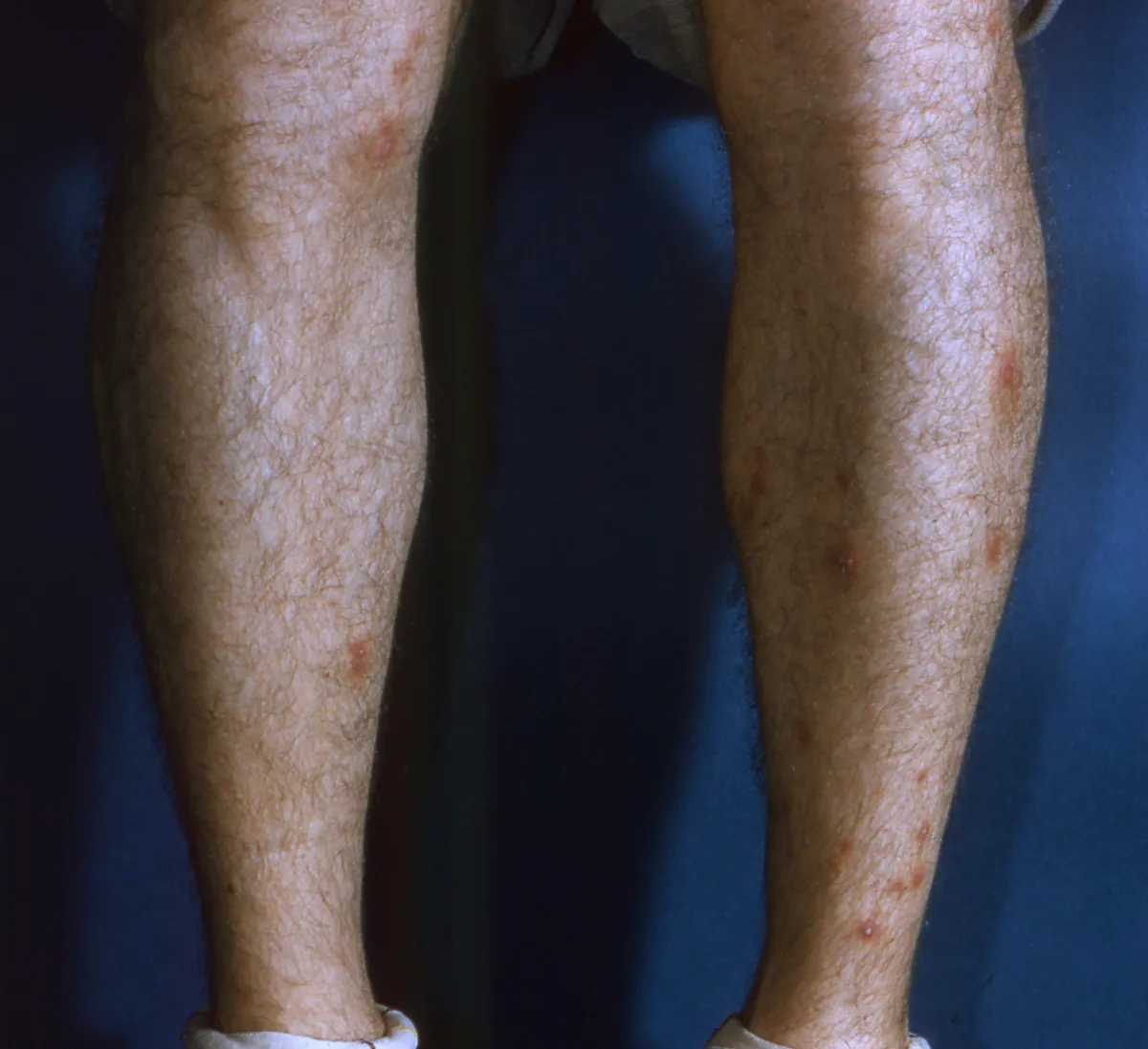
- Mosquito bites. A puffy, reddish bump within minutes, then a harder, itchy one; CDC says some bites form small blisters or bruise-like spots instead.
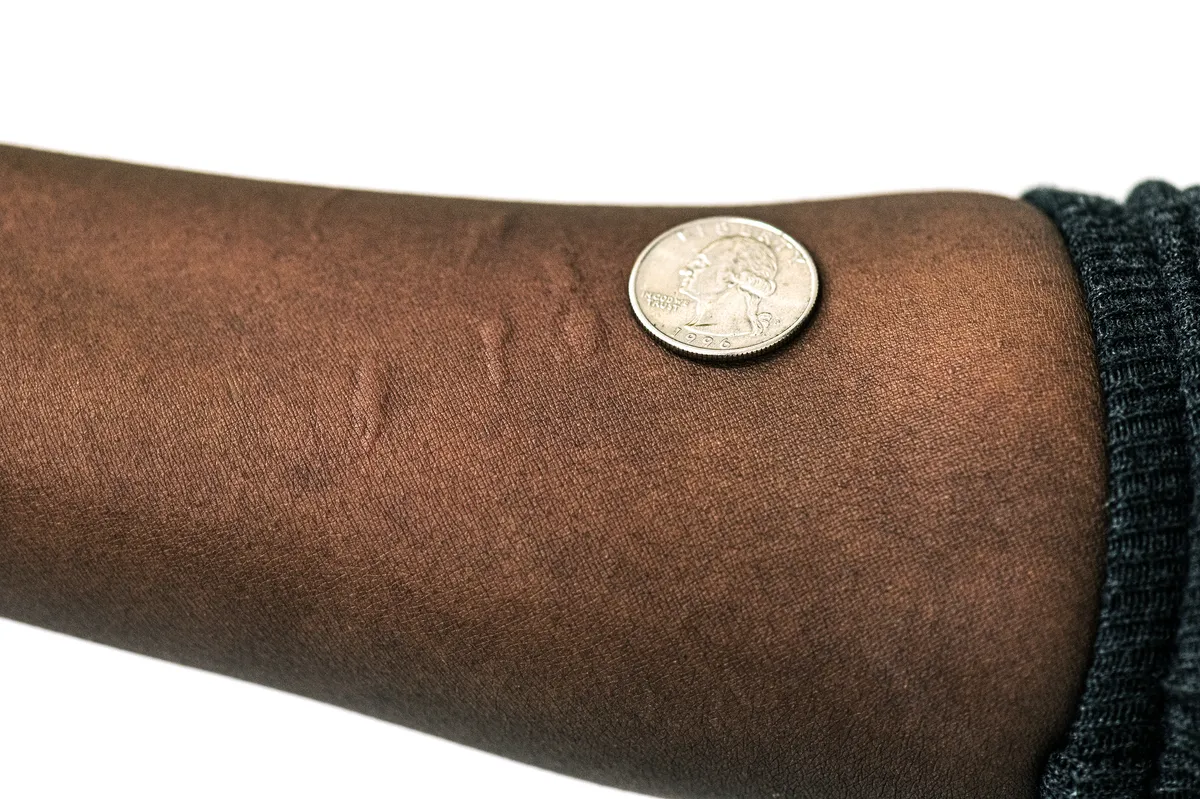
- Flea bites. Small itchy bumps, sometimes ringed, often in a line or cluster on the feet, calves and ankles, says Cleveland Clinic's flea bite page.
- Chigger bites. A speckled line of red spots or pimples where clothing fits tightly, according to Cleveland Clinic's chigger page.
- Bed bug bites. Intensely itchy welts, often in a zigzag line; the American Academy of Dermatology says first bites can take up to 14 days to itch.
- Spider bites. A brown recluse bite may sting and usually raises a small white blister, and its venom can destroy skin tissue; a black widow bite has two puncture marks, CDC says. Both call for medical attention.
If you never saw the ants, the bug bite identification chart compares bites by pattern, place and timing, and the bug bite identifier asks six questions about yours. Bee and wasp stings are compared in bee sting vs wasp sting.
Often mistaken for a fire ant bite
 Mosquito bitesA puffy bump within minutes, later hard and itchy; sometimes small blisters instead
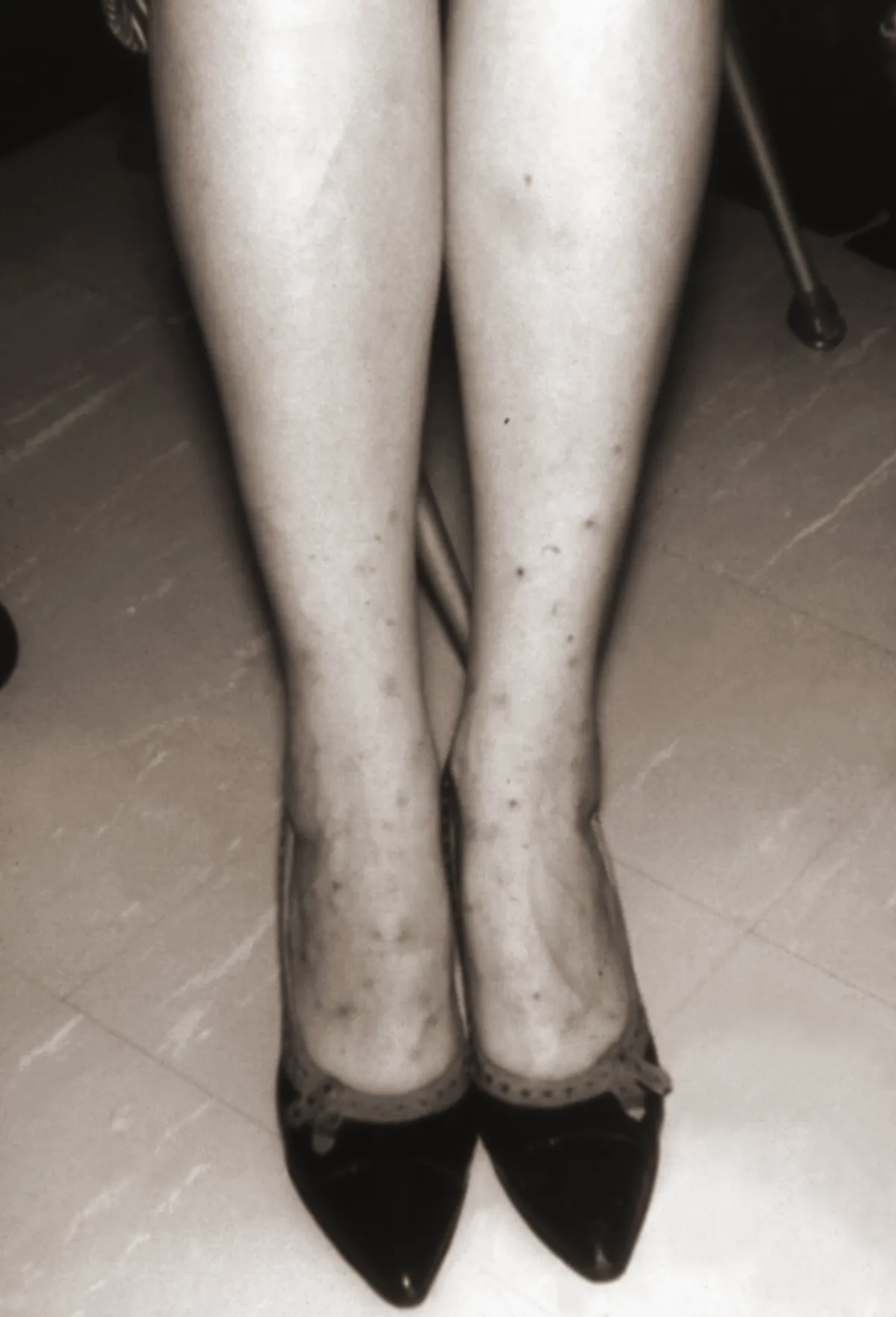 Flea bitesSmall itchy bumps in a line or cluster, mostly on the feet, calves and ankles
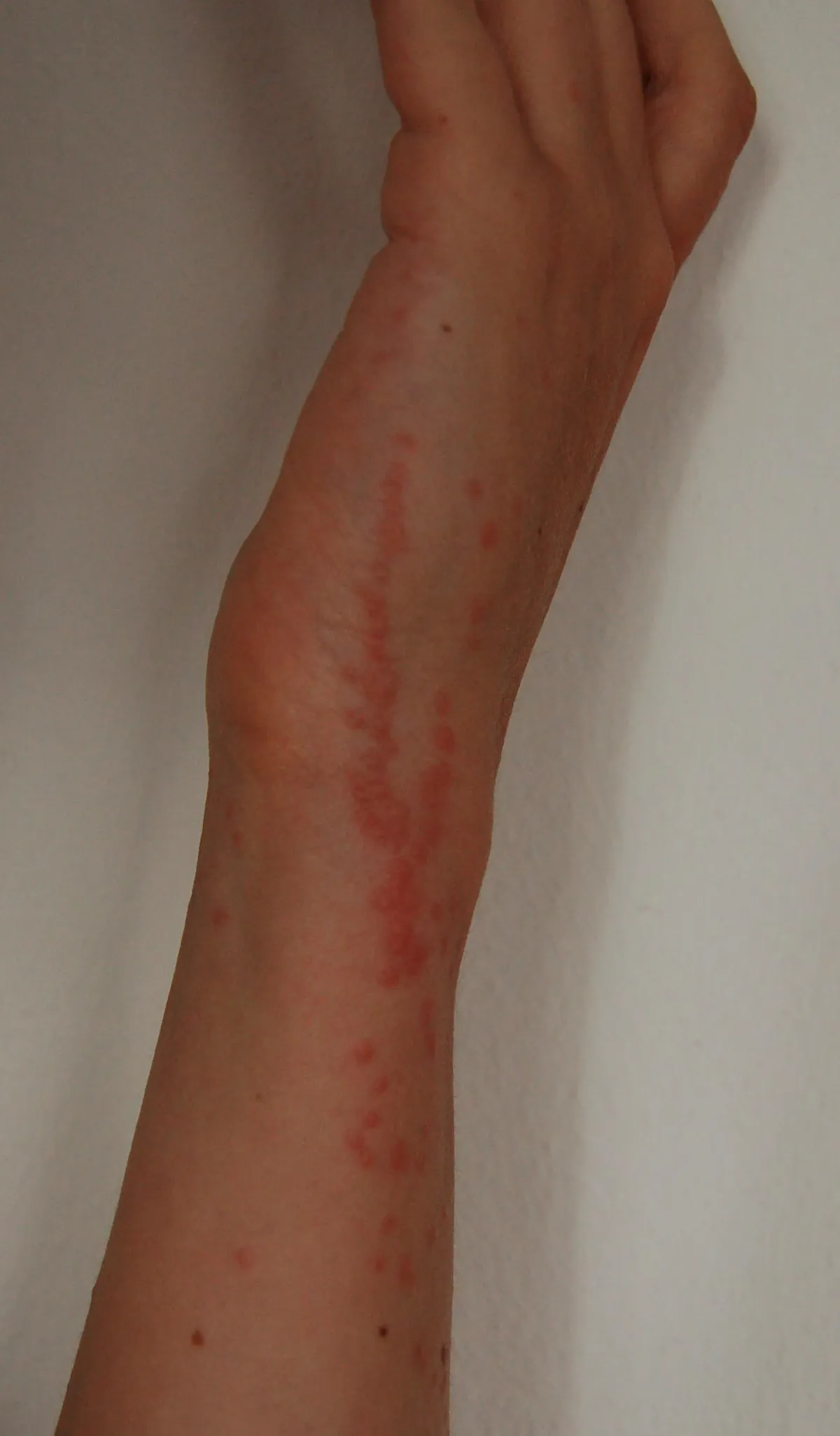 Bed bug bitesIntensely itchy welts, often in a zigzag line; most people are bitten while asleep
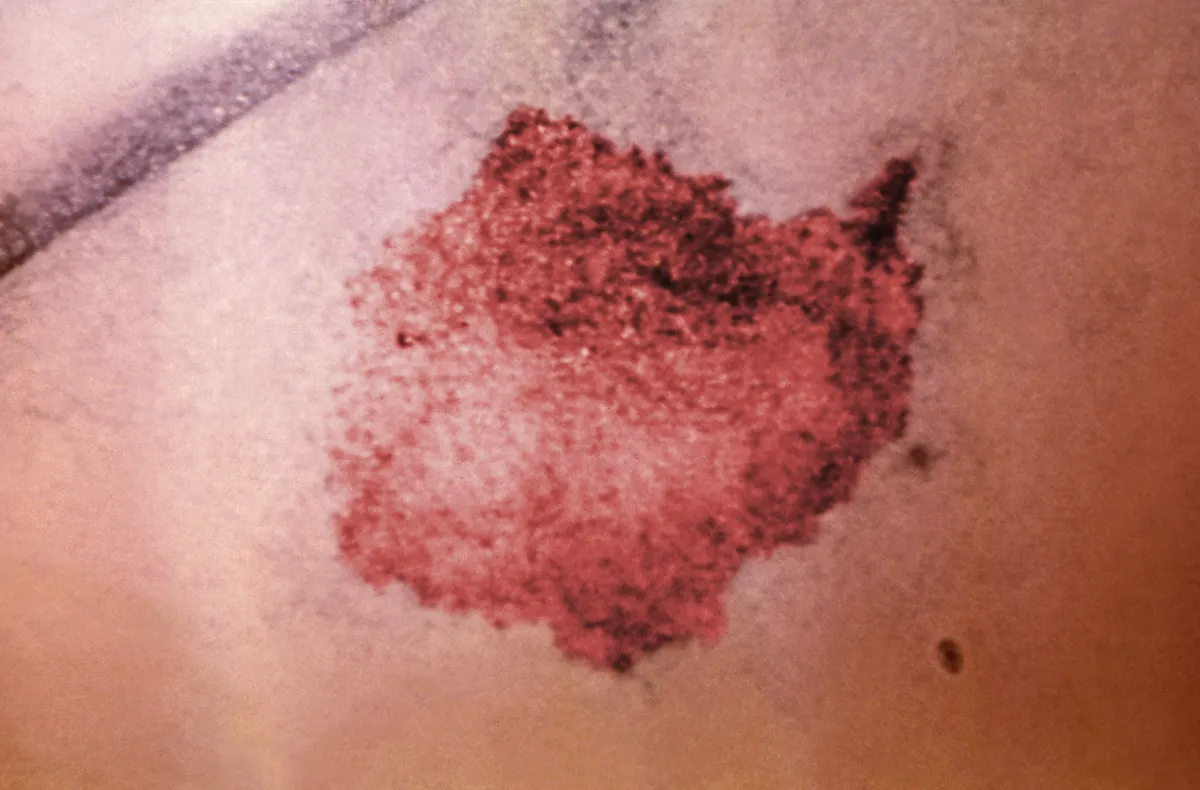 Brown recluse biteMay sting, then usually a small white blister; the venom can destroy skin tissue
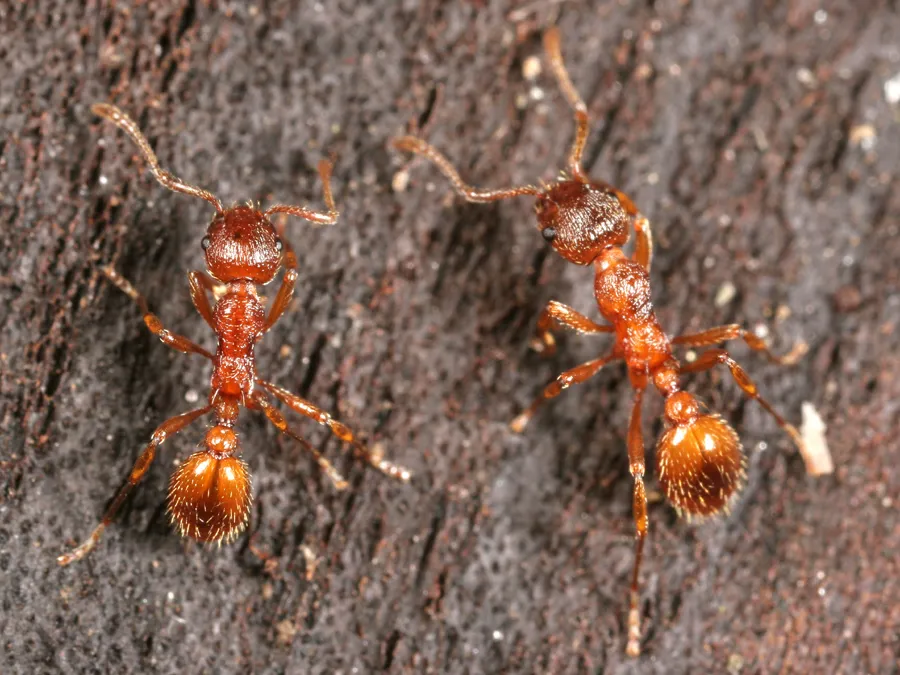 European fire antReddish-brown, about 1/5 inch, in the Northeast and Washington State; its sting is painful too
Photos: Mosquito bites: CDC/ Division of Vector-Borne Diseases Rickettsial Zoonoses Branch; photo: Lauren Bishop (CDC Public Health Image Library, phil.cdc.gov), public domain. Flea bites: CDC/ Dr. H.G. Scott (CDC Public Health Image Library, phil.cdc.gov), public domain. Bed bug bites: Oliver Arend, CC BY-SA 3.0, via Wikimedia Commons, CC BY-SA 3.0. Brown recluse bite: CDC/ Margaret A. Parsons (CDC Public Health Image Library, phil.cdc.gov), public domain. European fire ant: Gary Alpert at English Wikipedia, CC BY 2.5, via Wikimedia Commons, CC BY 2.5.
How long do fire ant bites last?
About a week for most people. Cleveland Clinic says the blisters go away within 7 to 10 days, and that most reactions last about a week and need little treatment beyond the home care below; the stages table above gives the timing of each step.
Some stings swell well past the spot. Cleveland Clinic calls this a localized reaction: one sting on the calf, for example, can swell the whole lower leg, and these reactions usually last a couple of days. Swelling of the face or mouth is different; MedlinePlus says to call 911 for it, as the emergency section below explains.
Should you pop a fire ant blister?
No. AAAAI says the blister looks like a pus-filled spot that should be drained but is really sterile and heals quickest if left alone, and Cleveland Clinic warns that squeezing or popping the blisters can lead to infections and scars. A blister that breaks and becomes infected may need antibiotics, Cleveland Clinic adds.
Keep an eye on the bites while they heal. Cleveland Clinic says to contact a healthcare provider or a dermatologist about any blister you think may be infected, and lists these warning signs:
- Increasing redness, or red streaks on the skin.
- Pain or itching that gets worse or does not improve over a few days.
- Flu-like symptoms, such as fever, chills or body aches.
MedlinePlus, the National Library of Medicine's health site, says the same for most bites and stings, adding swelling: watch for increasing redness, swelling or pain over the next several days.
How do you treat a fire ant bite at home?
Start by getting the ants off. CDC's first-aid advice for fire ant stings: “Rub off ants briskly, as they will attach to the skin with their jaws.” After that, the home care from Cleveland Clinic and AAAAI is short:
- Wash the stung skin with soap and cold water (Cleveland Clinic).
- Hold a cold compress or ice pack on the stings as needed for pain and swelling (Cleveland Clinic), and raise a stung arm or leg (AAAAI).
- For itching, Cleveland Clinic says hydrocortisone cream on the stung skin should help, and AAAAI names topical steroid ointments or oral antihistamines.
- If you take an antihistamine, CDC says it may help: “Follow directions on the package.” CDC adds that drowsiness may occur.
- Leave the pustules unbroken, and see a doctor if the swelling keeps spreading or the site seems infected, as AAAAI advises.
For a pet, ask a veterinarian before giving any medicine: Texas A&M's College of Veterinary Medicine, in an article on bee, wasp and yellow jacket stings, says most topical medications and home remedies are not a good idea for pets. Bites and stings on dogs are covered in bug bites on dogs.
No home step replaces emergency care when the signs in the next section appear.
When is a fire ant bite an emergency?
When signs of a severe reaction appear, such as trouble breathing or swelling of the face or throat. CDC says people who are allergic to venom can have anaphylaxis, a severe allergic reaction that can be life-threatening and needs emergency care at once. Severe reactions are uncommon: Cleveland Clinic says only about 2 percent of stings lead to them, and that anaphylaxis from fire ant stings is rare.
AAAAI says anaphylaxis usually involves more than one part of the body and may include itching and hives, swelling in the throat or tongue, difficulty breathing, dizziness, stomach cramps, nausea or diarrhea; in extreme cases, a rapid fall in blood pressure can lead to shock and loss of consciousness. Cleveland Clinic's page on bug bites and stings says allergic reactions typically start within 15 minutes of a sting but may begin up to six hours later, and rarely even after that.
Epinephrine is the rescue medicine, not the whole treatment. AAAAI says people with a severe allergy should carry epinephrine and learn how to use it, but that it is a rescue medication only: after a sting, they must still go to an emergency room immediately. Its stinging insect allergy page advises carrying two devices, because a second dose is needed about a third of the time. MedlinePlus's first aid for a severe reaction includes using the person's emergency kit and staying with them until help arrives, and CDC advises workers with a history of severe reactions to stings to carry an epinephrine auto-injector and wear a medical ID bracelet or necklace.
Who should see an allergist after a fire ant sting?
Anyone who has had a serious reaction. AAAAI says that person should be evaluated by an allergist/immunologist, a specialist trained to test for stinging insect allergy and to plan how to manage it. Cleveland Clinic suggests seeing an allergist after you recover, and says the allergist may recommend allergy testing or prescribe an epinephrine injector.
Allergy shots may be a long-term option. AAAAI says immunotherapy may be an effective long-term treatment for stinging insect allergy: the allergist gives shots containing small doses of the allergen so the body can build up immunity to it. With proper testing, AAAAI says, the allergist can work out the best form of treatment, and its stinging insect page says those treatments can reduce the risk of a life-threatening reaction.
Where are you most likely to get fire ant bites?
In the southern United States, outdoors, close to a mound. CDC says “Fire ants are mostly found in the Southeastern United States, with limited geographic distribution in New Mexico, Arizona, and California.” The USDA's Animal and Plant Health Inspection Service (APHIS), which sets the federal imported fire ant quarantine areas, says on its page updated in September 2026 that imported fire ants infest more than 367 million acres in Alabama, Arkansas, California, Florida, Georgia, Louisiana, Mississippi, North Carolina, Oklahoma, South Carolina, Tennessee, Texas, Virginia and Puerto Rico.
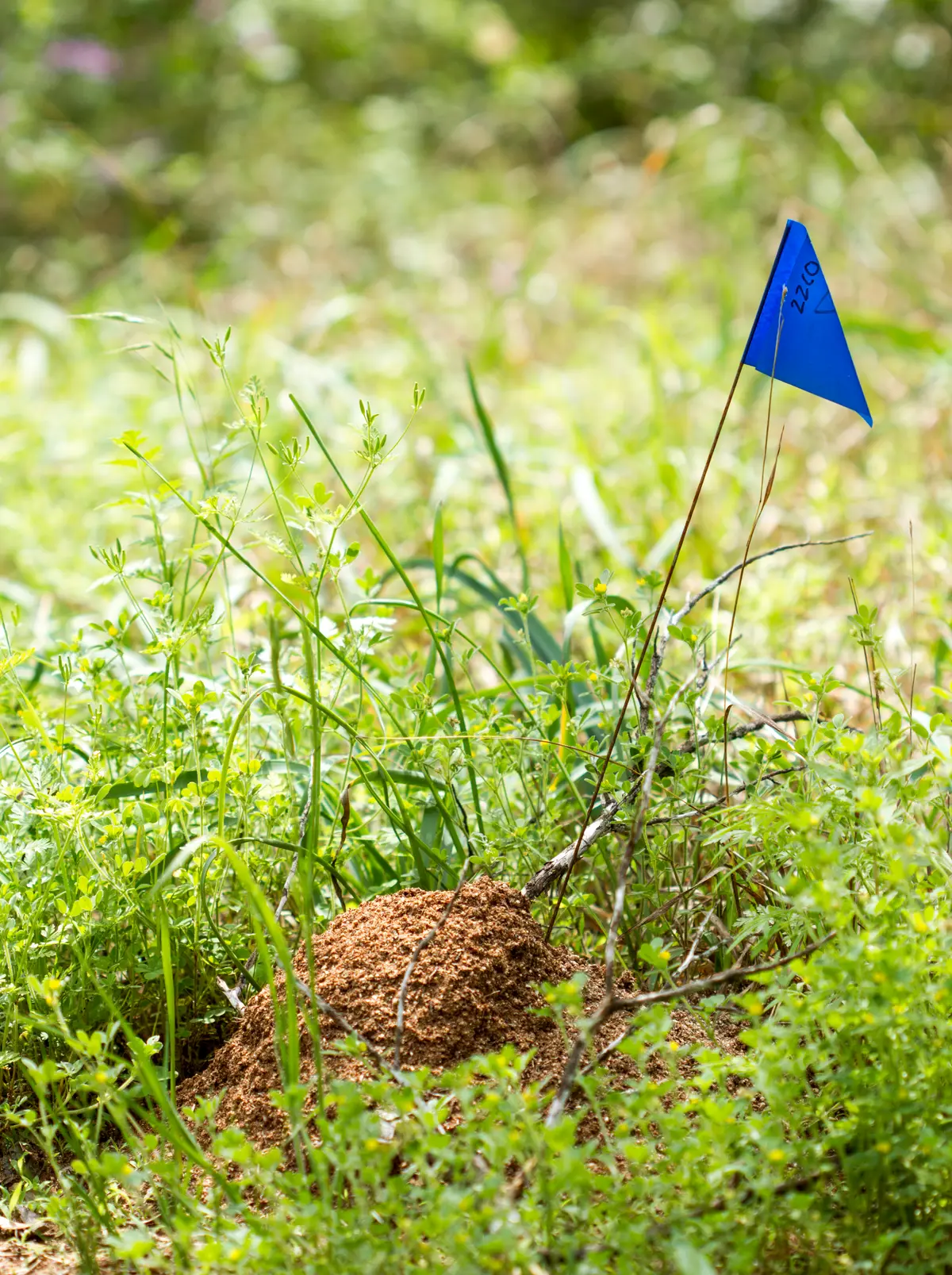
AAAAI says the nests are built of dirt in the ground, often along the edges of sidewalks or roads. In moist, clay soil a mound can stand up to 18 inches tall, while in dry, sandy soil it may be entirely flat. Mounds are not the only risk: CDC warns that fire ants may be found on trees or in water, and that items lifted off the ground may be covered in ants.
Farther north, a stinging red ant is more likely a different species. Washington State University's fact sheet on the European fire ant describes reddish-brown workers about 1/5 inch long that can deliver a painful sting, long present in the northeastern United States and found recently in Washington State; the European fire ant guide covers it.
How do you avoid fire ant bites?
Watch where you stand, cover your feet and leave a disturbed mound at once. The advice from CDC, AAAAI and Cleveland Clinic comes down to a few habits:
- Stay off mounds. CDC says not to disturb, stand on or stand near ant mounds, and AAAAI says fire ants are most likely to sting when their homes are disturbed.
- Cover your feet and legs. AAAAI advises closed-toe shoes and socks outdoors and avoiding going barefoot; Cleveland Clinic adds long sleeves and pants, and insect repellent on exposed skin and clothes.
- Look before you lift or work. Look over an area before starting work, and take care lifting logs off the ground (CDC, Cleveland Clinic).
- Wear work gloves in the garden or yard, as AAAAI suggests; it says shoes and gloves let you pull them off, ants and all, before the ants reach your skin.
- Teach children and visitors about fire ants, which UC IPM recommends as a way to avoid medical emergencies.
For the ants themselves, AAAAI says removing a mound means killing the queen, and that commercial products take several weeks to make mounds disappear. The red ant guide covers fire ant control in the yard, and a general guide to ant control covers ants around the house.
This guide is general educational information, not medical advice. If you have symptoms or concerns after a bite or exposure, contact a healthcare provider.
Frequently Asked Questions
How long do fire ant bites last?+
Usually about a week. Cleveland Clinic says the itchy bumps that follow the first burning last several hours, blisters form after several hours and fill with yellow or white fluid a day or so later, and the blisters go away within 7 to 10 days. A large local reaction, such as one sting swelling a whole lower leg, usually lasts a couple of days. Contact a healthcare provider if pain or itching gets worse or does not improve over a few days.
Should you pop a fire ant blister?+
No. The American Academy of Allergy, Asthma & Immunology (AAAAI) says the cloudy white blister looks like pus that should be drained but is sterile and heals quickest if left alone. Cleveland Clinic warns that squeezing or popping fire ant blisters can lead to infections and scars, and that a blister that breaks and becomes infected may need antibiotics. Wash the area with soap and cold water and leave the blister intact.
Why do fire ant bites turn into white pustules?+
Because of the venom. The American Academy of Allergy, Asthma & Immunology says fire ant venom kills bacteria and some skin cells, which produces a blister that fills with a cloudy white material in about 24 hours. CDC says red bumps at the sting site may develop into white, fluid-filled pustules within a day or two. The white material is sterile, so the pustule itself is not a sign of infection; increasing redness, red streaks or pain that gets worse can be, Cleveland Clinic says.
What is the best treatment for fire ant bites?+
Simple home care, by the medical sources' account. CDC says to rub the ants off briskly because they hold on with their jaws, and that antihistamines may help if you follow the package directions, though they can cause drowsiness. Cleveland Clinic adds washing with soap and cold water, cold compresses for pain and swelling, and hydrocortisone cream for itching. Leave the pustules unbroken. Get emergency care at once for severe chest pain, nausea, severe sweating, loss of breath, serious swelling or slurred speech.
How do I know if a fire ant bite is infected?+
Watch it over the next several days. Cleveland Clinic lists increasing redness or red streaks on the skin, pain or itchiness that gets worse or does not improve over a few days, and flu-like symptoms such as fever, chills or body aches, and says to contact a healthcare provider or a dermatologist about a blister you think is infected. MedlinePlus gives increasing redness, swelling or pain as signs of infection after a sting. An infected blister may need antibiotics.
What does an allergic reaction to a fire ant bite look like?+
It reaches beyond the stung skin. The American Academy of Allergy, Asthma & Immunology says anaphylaxis usually involves more than one part of the body and may include itching and hives, swelling in the throat or tongue, difficulty breathing, dizziness, stomach cramps, nausea or diarrhea, and in extreme cases shock. Cleveland Clinic says allergic reactions typically start within 15 minutes of a sting but can begin up to six hours later. Anaphylaxis needs emergency treatment, and MedlinePlus says to call 911 for trouble breathing or swelling of the face or mouth.
Why is my fire ant bite so swollen?+
Most people get some redness, swelling and itching where they are stung, the American Academy of Allergy, Asthma & Immunology says, and some get a larger reaction. Cleveland Clinic describes a localized reaction that spreads past the sting, for example one sting on the calf swelling the whole lower leg, and says these reactions usually last a couple of days. AAAAI advises raising the limb, applying a cold compress and seeing a physician if the swelling keeps progressing. Swelling of the face or mouth is an emergency: MedlinePlus says to call 911.
Do fire ants bite or sting?+
Both. CDC says fire ants bite and sting: they hold on to the skin with their jaws, and the sting injects venom that can cause a burning sensation. The American Academy of Allergy, Asthma & Immunology says the grip lets an ant pull out its stinger, turn and sting again, so one ant can sting several times in moments. People search for fire ant bites, but the burning, the welts and the white pustules come from the venom in the sting.
Do fire ant bites leave scars?+
They can. Cleveland Clinic says fire ant blisters can leave scars, especially if you pick or pop them, and that popping can also lead to infection. The American Academy of Allergy, Asthma & Immunology says the blister is sterile and heals quickest if left alone. So the step the sources point to is to keep the blisters intact, wash the area gently with soap and cold water and watch for signs of infection while it heals.
Are fire ant bites dangerous?+
Usually not, but they can be. Cleveland Clinic says most reactions last about a week and need little treatment beyond home care, that only about 2 percent of stings lead to severe reactions, and that fire ant stings rarely cause anaphylaxis, a life-threatening allergic reaction. CDC says to get emergency care immediately for severe chest pain, nausea, severe sweating, loss of breath, serious swelling or slurred speech after fire ant stings. Anyone who has reacted badly before should see an allergist.
Sources
- Insects and Scorpions at Work (reviewed September 28, 2026) — CDC, National Institute for Occupational Safety and Health
- Fire Ant Allergy — American Academy of Allergy, Asthma & Immunology
- Stinging Insect Allergy — American Academy of Allergy, Asthma & Immunology
- Fire Ant Bites: What They Look Like, Treatment & Home Remedies (updated June 28, 2022) — Cleveland Clinic
- Insect bites and stings (Medical Encyclopedia, reviewed October 14, 2025) — MedlinePlus, U.S. National Library of Medicine
- Bug Bites and Stings (reviewed February 13, 2025) — Cleveland Clinic
- Ant Bites: Symptoms, Treatment, Prevention & Pictures (updated May 6, 2022) — Cleveland Clinic
- Pest Notes: Red Imported Fire Ant (UC ANR Publication 7487; L. Greenberg and J. N. Kabashima, updated December 2013) — University of California Statewide IPM Program
- About Mosquito Bites — Centers for Disease Control and Prevention
- Flea Bites: What They Look Like, Symptoms & Treatment (reviewed August 31, 2021) — Cleveland Clinic
- Chigger Bites: What They Look Like, Treatment & Prevention (updated June 7, 2022) — Cleveland Clinic
- Bedbugs: Signs and Symptoms — American Academy of Dermatology
- Venomous Spiders at Work (reviewed September 28, 2026) — CDC, National Institute for Occupational Safety and Health
- "Bee" Aware Of Insect Stings This Summer (Pet Talk, July 31, 2020) — Texas A&M College of Veterinary Medicine & Biomedical Sciences
- Imported Fire Ants (last modified September 17, 2026) — USDA Animal and Plant Health Inspection Service
- European fire ant (Pestsense fact sheet, reviewed December 15, 2025) — Washington State University
How this guide was made: it was researched and drafted with AI assistance from the sources listed above. A second, independent AI pass then checked each factual claim against those sources. Found an error? Email support@buzzskito.ca.