Reviewed by Alex Francisco
Published November 5, 2026 · Fact-checked against the sources listed below
Reading from Canada? Product rules and what is sold there differ. See the Canadian edition.
Our picks at a glance
BuzzSkito did not test these products. A sweet liquid bait station is this page's main recommendation for most trails, explained in the next section; each pick below covers another job the EPA-accepted labels and university extension guides describe, and every brand-name pesticide is named with its EPA registration number.
Ant killer picks
As an Amazon Associate I earn from qualifying purchases.
- Check price on Amazon →
For ants coming in from outside
TERRO Outdoor Liquid Ant Bait Stakes
Borax 5.4 percent, sold under EPA Reg. No. 149-8. The label says to push the stakes in by hand close to where ants enter, nest or trail, and to replace them every three months. UC IPM prefers baiting outdoors, where bait draws ants out of the house.
- Check price on Amazon →
For cracks, gaps and many species
Indoxacarb 0.05 percent (EPA Reg. No. 100-1498), a non-repellent gel whose label lists carpenter, pharaoh, odorous house and pavement ants among others. Apply spots about 1/4 inch across in cracks along trails, never on surfaces food touches or where children and pets can easily reach.
- Check price on Amazon →
When ants ignore sweet bait
UC IPM says pharaoh and thief ants prefer protein or greasy baits year-round and that Argentine ants take protein baits mainly in spring. Set a little beside the sweet bait, watch which one the ants carry off, and choose a product whose label names your ant.
- Check price on Amazon →
For fire ant mounds
Hydramethylnon 0.73 percent (EPA Reg. No. 73342-1), for outdoor sites such as lawns and landscaped areas. The label says to sprinkle 2 to 5 level tablespoons around a mound without disturbing it, or to broadcast it; Texas A&M says to bait while ants are foraging and the ground is dry.
- Check price on Amazon →
For weaker liquid borate bait
UC IPM calls refillable stations more useful than prepackaged baits for difficult ant problems, and says a 0.5 to 1 percent borate sugar-water bait in larger refillable stations is best for severe Argentine ant infestations. Keep them out of reach of children and pets.
- Check price on Amazon →
To seal the gap they use
UC IPM says to caulk cracks and crevices around foundations and other places ants enter from outside, and Texas A&M adds replacing worn weatherstripping. Bait works on the colony you have; sealing helps keep the next trail out.
What is the best ant killer?
A slow-acting bait that the ants carry home is the best ant killer for most trails in a house, and for the common sweet-feeding ants that usually means a sweet liquid bait in an enclosed station. UC IPM calls baits the only type of insecticide recommended in most situations and says that, used properly, they are more effective than sprays. The reason is the colony: workers carry small portions of bait back to the nest, where it is passed mouth to mouth to other workers, larvae and queens, so a bait has to act slowly enough for foragers to make the trip home.
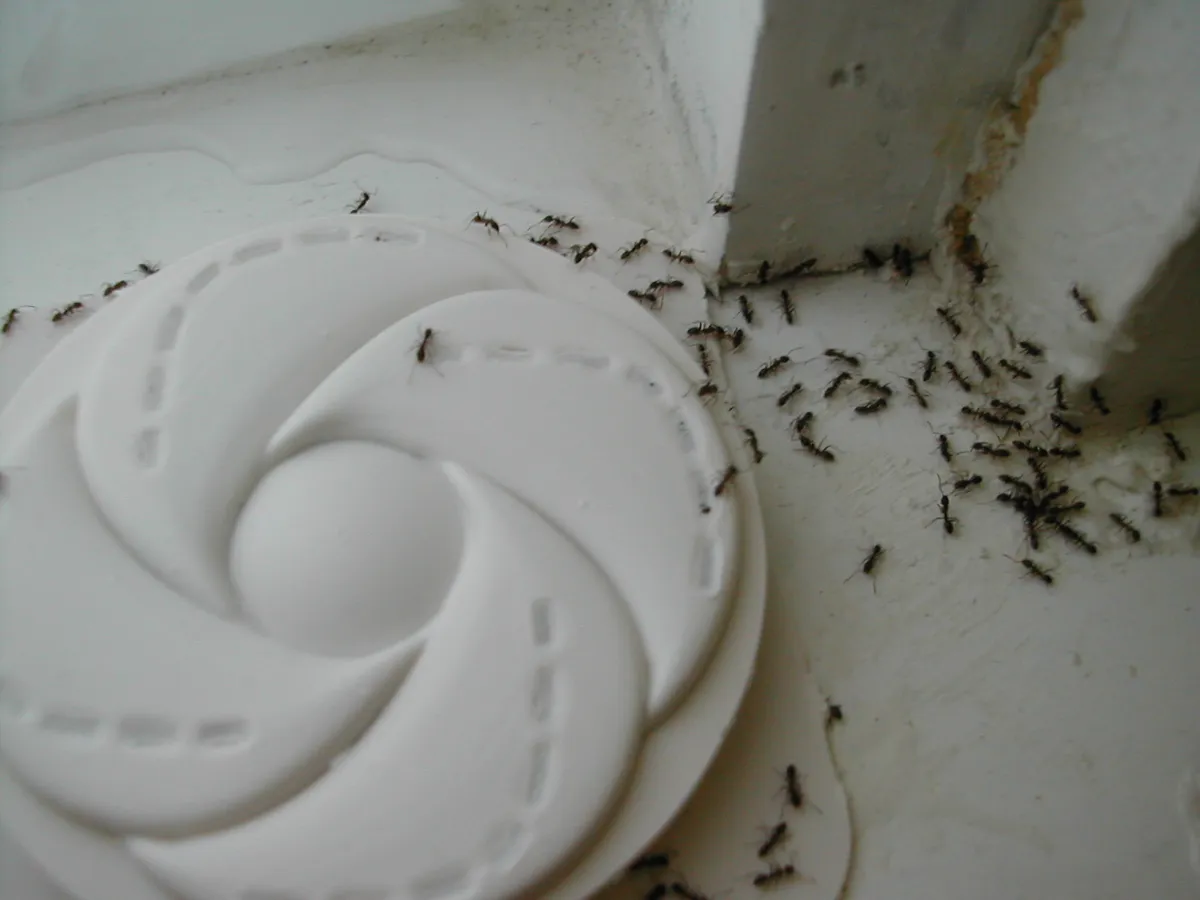
The most familiar version is a prefilled borax station. The EPA-accepted label for TERRO Ant Killer II (EPA Reg. No. 149-8), whose brand names include the TERRO liquid ant baits and outdoor stakes, lists 5.40 percent sodium tetraborate decahydrate (borax) as the active ingredient. It names Argentine, ghost, pavement, odorous house, little black and crazy ants among the sweet-eating ants it controls, and excludes fire, pharaoh, carpenter and harvester ants. TERRO's page for its T300 liquid ant baits gives the same active ingredient and the same four exclusions, so check your ant against that list first.
A borax station is not the answer to every trail. UC IPM notes that prepackaged stations usually contain 5.4 percent borate and can be effective at killing foragers in the home but are less effective against major infestations, because foragers die before they bring the bait back; for severe Argentine ant infestations it recommends a weaker 0.5 to 1 percent borate in sugar water, in larger refillable stations. The University of Kentucky's guide to ant control names syrupy, sweet baits such as Terro Ant Killer II for odorous house ants, and the complete guide to ants explains the colony biology that makes baiting work.
Bait or spray: which kills more ants?
Bait, because a spray kills only the ants it touches. Texas A&M AgriLife Extension's guide to household ants says insecticides sprayed on ant trails kill only a few foraging workers and do not eliminate colonies, and that such treatments can sometimes make the problem worse by causing a colony to split into two or more colonies. The University of Missouri's guide to ants gives the clearest case: spraying pharaoh ant trails causes a single colony to split into several that move to new void spaces, and it calls baiting the only effective way to manage them.
Sprays also spoil the bait you put out. NC State Extension says spraying the ants or the baited area contaminates the bait so other ants avoid it, UC IPM says not to use any insecticide sprays while baits are out, and Iowa State's guide to ant baits adds not to place bait on surfaces previously treated with insecticide. The gel label agrees: the Advion Ant Gel label says to avoid applying the gel to surfaces recently treated with residual sprays.
When does a spray make sense?
After baiting, or as a barrier at the edges of the house. Texas A&M says repellent contact insecticides such as permethrin and bifenthrin should not be used while baits are out, but can be used after a baiting program to remove the remaining ants, or applied around cracks and plumbing openings as an indoor barrier; outdoors it describes a band 1 to 4 feet wide around the foundation, as the product label directs. UC IPM also warns against granules that contain cyfluthrin or permethrin: they look like bait but are contact insecticides that kill foragers without controlling the colony.
For ants on the counter right now, soap and water can do the same short-term job as a can of spray. UC IPM says vacuuming a trail or sponging or mopping it with soapy water may be as effective as an insecticide spray, that sprays give only temporary control, and that spraying ants indoors will not prevent more from entering. Clean trails away from your bait stations, then let the bait do the slow work.
Do ant traps work?
The kind that feeds the ants does; the kind that only catches them does not reach the colony. Many products sold as ant traps are bait stations, and the TERRO label describes exactly that: ants enter, feed and return to the nest, where they pass the bait to the rest of the colony. Texas A&M draws the line clearly, saying baits should not be confused with bait traps, which kill only foraging workers and not the ants in the nest. A sticky board, or a device that kills every ant that walks in, removes the foragers you can already see.
Expect a working station to look busier before it looks better. Kentucky says you should initially see an increase in the number of ants around the bait, stresses in capital letters that you should not spray them, and says activity usually subsides in a few days. The TERRO label says the same thing in its own words: first the ants come in large numbers, then they soon disappear.
How the main kinds of ant killer compare
| Type | Example and active ingredient | Best for | What to watch |
|---|---|---|---|
| Liquid bait station | TERRO Ant Killer II liquid ant baits: borax 5.40% (EPA Reg. No. 149-8) | Sweet-eating household ants, such as odorous house, Argentine and pavement ants (label) | Not for fire, pharaoh, carpenter or harvester ants (label); less effective on major Argentine ant infestations (UC IPM) |
| Refillable liquid borate station | 0.5 to 1% borate in sugar water (UC IPM) | Severe Argentine ant infestations (UC IPM) | Needs larger, refillable stations; several days to a week for results (UC IPM) |
| Gel bait | Advion Ant Gel: indoxacarb 0.05% (EPA Reg. No. 100-1498) | Cracks, crevices and spots on active trails (label) | Not on surfaces food contacts, or in areas easily accessible to children and pets (label) |
| Outdoor bait stake | TERRO Outdoor Liquid Ant Bait Stakes: borax 5.40% (EPA Reg. No. 149-8) | Trails and nests outdoors, near entry points (label) | Same four excluded ants as the indoor stations; replace every three months (label) |
| Granular fire ant bait | Amdro Fire Ant Bait: hydramethylnon 0.73% (EPA Reg. No. 73342-1) | Fire ant mounds and lawns (label; Texas A&M) | Outdoors only; apply when ants are active, not on soaking wet ground or with rain likely within 24 hours (label) |
| Contact spray | Pyrethroids such as permethrin or bifenthrin (Texas A&M) | Ants left after baiting, or a barrier at cracks (Texas A&M) | Kills only foragers, repels ants from bait and can split colonies (Texas A&M) |
| Plant-oil spray | Minimum-risk oils such as peppermint or clove (EPA list) | The ants it reaches | Exempt from EPA registration; EPA does not review the label (EPA) |
From the EPA-accepted labels for TERRO Ant Killer II, Advion Ant Gel and Amdro Fire Ant Bait, UC IPM, Texas A&M and EPA's minimum-risk pages, all linked on this page.
How do you choose an ant bait for the ants you have?
Match the bait to what the ants are eating. UC IPM explains that baits contain carbohydrates such as sugars, proteins, oils or a combination, and that offering a small quantity of each kind and watching which one the ants prefer is a good way to choose. NC State suggests watching for a few minutes and trying a different bait if the ants ignore the first, and Missouri says sometimes sweet bait is best and sometimes protein bait, so offering both and letting the ants choose works well.
| Ant | Foods it prefers (UC IPM) | Bait to start with | On the TERRO borax label? |
|---|---|---|---|
| Odorous house ant | Sweets, sometimes proteins | A sweet liquid or gel bait; Kentucky names syrupy, sweet baits | Yes |
| Argentine ant | Sweets, sometimes proteins | Sweet liquid bait; add protein bait in spring (UC IPM) | Yes |
| Pavement ant | Sweets, proteins, grease | A sweet and a protein bait side by side | Yes |
| Pharaoh ant | Fats, proteins, sweets | A protein or grease bait labeled for pharaoh ants; never spray the trail (Missouri) | No, excluded |
| Thief ant | Greasy and fatty, sometimes sweets | A protein or grease bait (UC IPM) | Not listed |
| Carpenter ant | Sweets | Find the nest first; a bait labeled for carpenter ants (Penn State) | No, excluded |
| Red imported fire ant | Sweets, proteins | A fire ant bait, outdoors; UC IPM says fire ants prefer baits containing oils | No, excluded |
Foods from Table 1 of UC IPM's pest note on ants; label column from the EPA-accepted TERRO Ant Killer II label; other notes from the sources named in each cell.
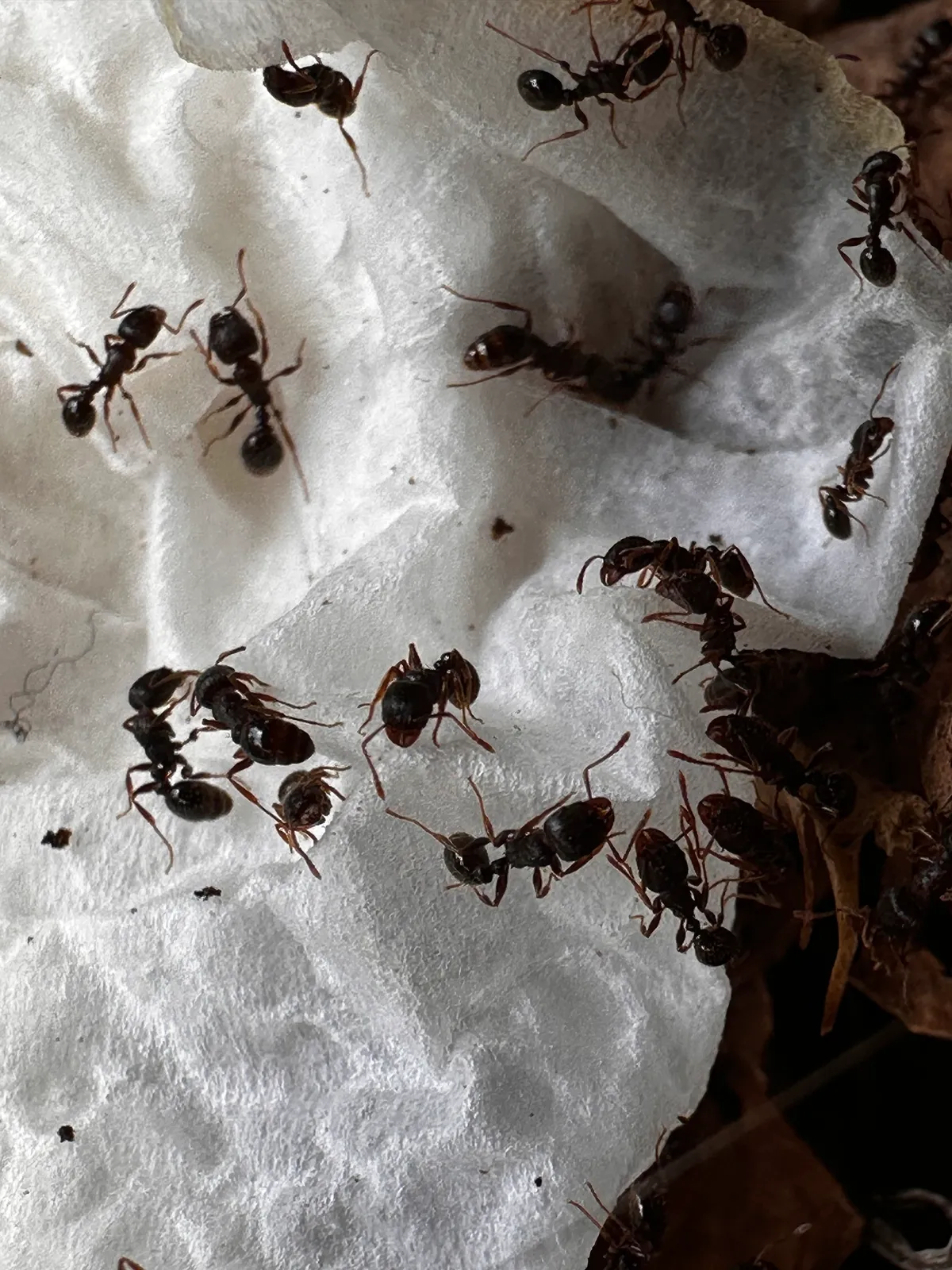
Two of those ants deserve extra care before you buy. Pharaoh ants are tiny, nest in wall and cabinet voids and prefer protein or greasy baits year-round, according to UC IPM, and the borax label excludes them; the Advion Ant Gel label lists them. Thief ants, about 1/32 inch long by UC IPM's measure, also lean toward grease. An identification key for tiny ants helps tell these apart, which ants people mean by sugar ants covers the usual kitchen suspects, and what ants eat through the year explains why a colony's appetite shifts.
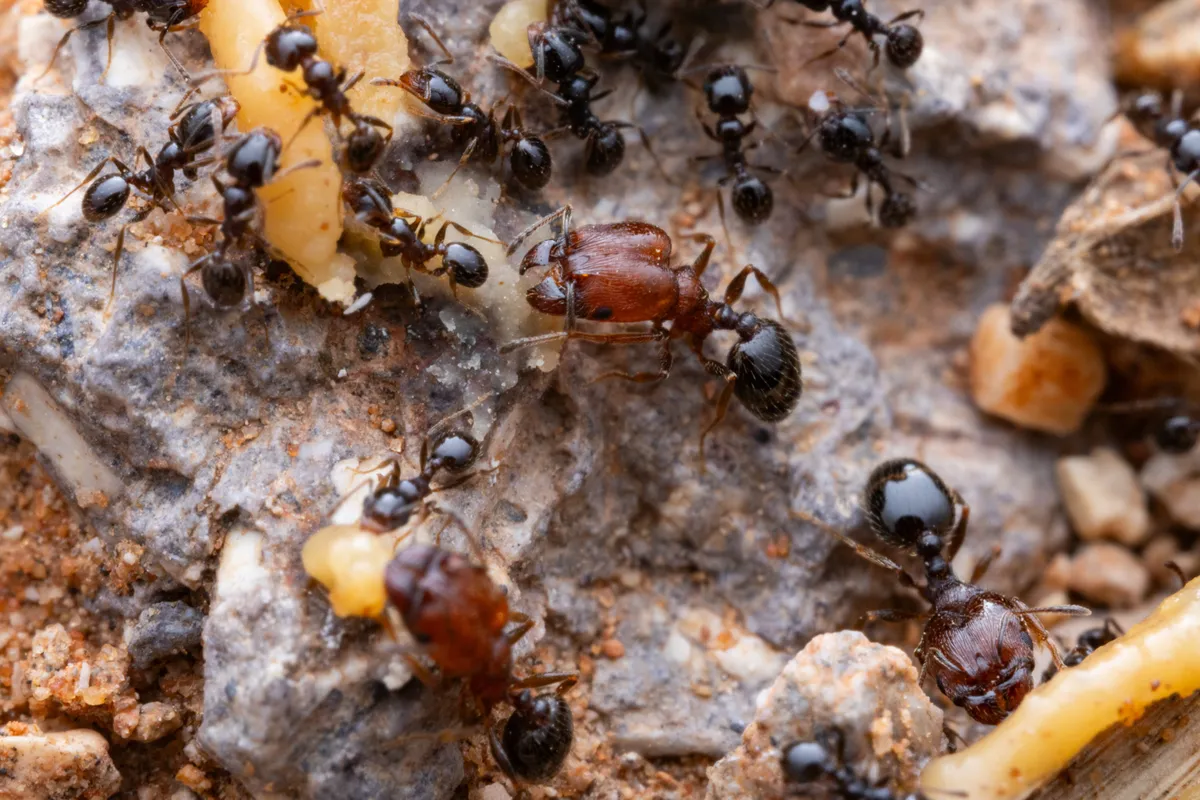
How do you use ant bait so it works?
Find where the ants come in, bait outside first where you can, keep indoor bait beside the trail and away from food, then leave the ants alone while they feed. In order:
- Follow the trail to where it starts. The TERRO label notes that ants follow defined trails from the nest to food or water and that, because invading ants usually nest outdoors, putting bait outside close to where they enter often helps.
- Bait outdoors first. UC IPM, writing for California, where Argentine ants are the most common house ant, says to use baits primarily outdoors, near nests, on trails and along edges where ants travel, spaced every 10 to 20 feet around the foundation and at nest openings, and to bait indoors only when the infestation is serious and you cannot find where the ants come in.
- Indoors, set stations beside the trail, not on food surfaces. Kentucky says to place baits next to wherever ants are seen, preferably beside their trails. NC State says never to put bait on countertops where food is prepared and suggests spots under or behind appliances and sinks.
- Use plenty of placements. The TERRO label says not to skimp: the more bait placements, the better.
- Leave the ants and the stations alone. Iowa State says not to use cleaning agents or insecticides around the baits. Clean trails elsewhere in the house with a sponge and soapy water, as UC IPM suggests.
- Keep the bait fresh. The TERRO label says the key to control is making sure every placement always has a fresh supply, and NC State says to replace baits the ants no longer accept, since heat, rain and sunlight wear them down.
- Keep a few out after the trail stops. Once ants are controlled, the TERRO label says to replace the baits every three months to keep ants from returning.
How long does ant bait take to work?
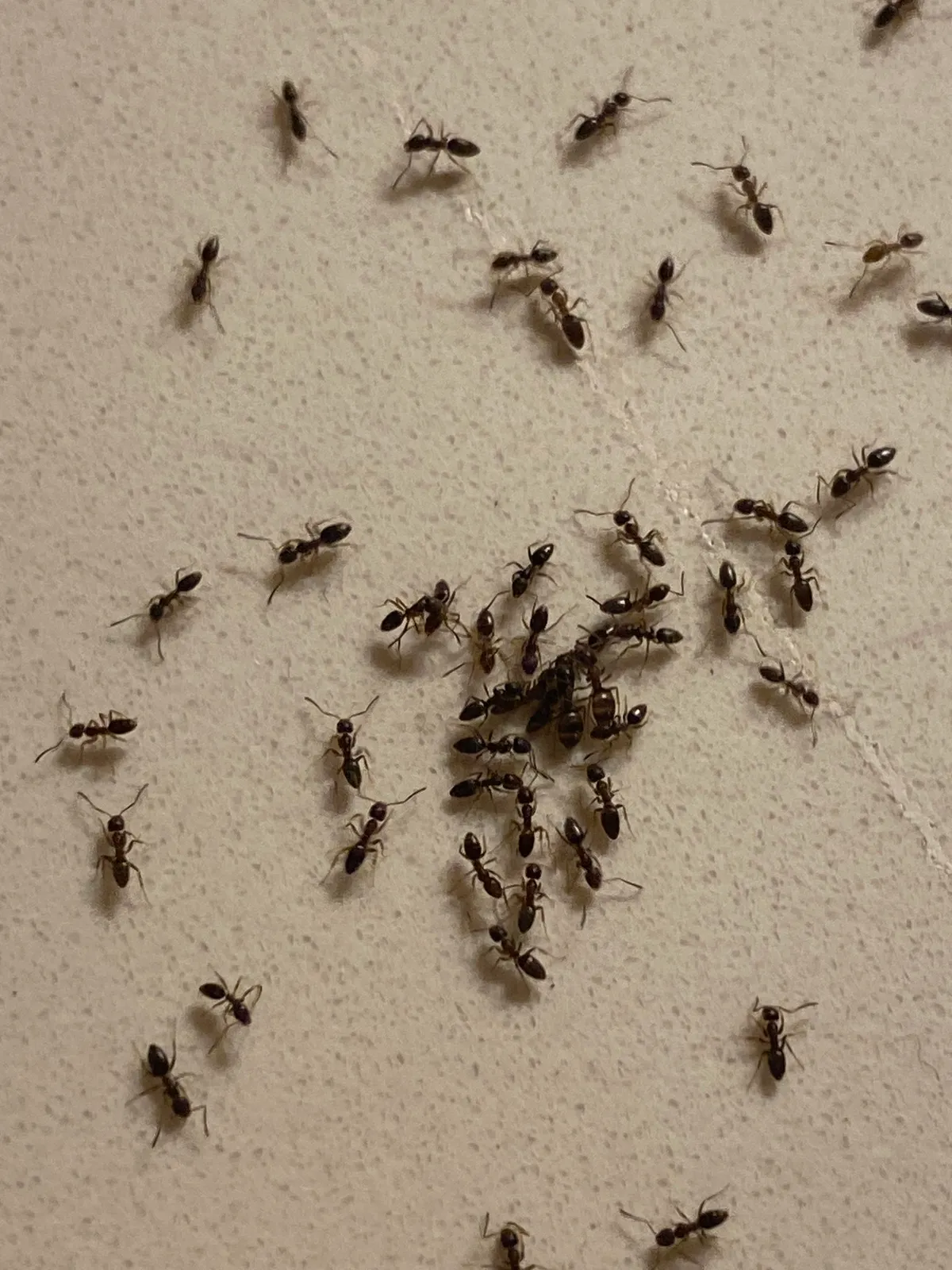
Days to see fewer ants and weeks to finish the colony. UC IPM says it can take 5 to 10 days to see fewer ants and that control with baits may take several weeks or more to be complete. The TERRO label says complete control may take up to two weeks, and Texas A&M says some colonies take 3 to 4 weeks or more, because baits usually kill many, but not all, of the ants in a large colony. NC State notes that you may keep seeing ants for a week or more after baiting and that large colonies may need more than one application.
If nothing changes after a week or two, check the basics before you change products: whether the bait matches the ant's food, whether it ran dry, whether a spray or cleaner was used nearby, and whether other food is competing with it. Texas A&M says removing other food sources, such as spilled food and grease, makes bait more effective, and Iowa State suggests trying several brands to find one the ants will accept.
Can you use ant bait around pets and children?
Yes, if you follow the label and put the bait where they cannot get to it. NPIC's guidance on pesticides and children is to place ant baits in locked bait stations or out of children's reach, and its fact sheet on pets warns that baits are made with ingredients many pets find appetizing, so keep them in secure stations or places pets cannot reach.
Each label sets its own limits. The TERRO label says to place bait in areas inaccessible to children and pets. The Advion label says not to treat areas that are easily accessible to children and pets and not to apply the gel to surfaces food contacts. The Amdro Fire Ant Bait label says to keep people and pets out of the area during application. On borax-type baits, NPIC's boric acid fact sheet rates boric acid as low in toxicity if eaten or on skin, notes that borax can be corrosive to the eye, and says signs of poisoning in animals that eat boric acid can start within 2 hours. Iowa State points out that borax and boric acid are not the same thing.
Do natural ant killers work?
They work only on the ants they reach, like any spray, and many have not been reviewed by EPA. Many plant-oil ant sprays are sold as minimum-risk pesticides. EPA's minimum-risk page says it has exempted such products from registration, does not provide a label review of them, and leaves it to the producer to judge whether a product qualifies. Peppermint, cornmint, clove and cinnamon oils all appear on EPA's list of active ingredients eligible for minimum-risk products, so a peppermint ant spray without an EPA registration number is normal; it also means EPA did not review the product or its label.
Kitchen remedies follow the same pattern. Soapy water clears a trail, as UC IPM describes, and what vinegar does and does not do to ants is covered separately. Borax is a real insecticide, which is why the guide to borax for ants and the homemade ant killer recipes give it the same care as a store-bought bait. If you are weighing an insect dust instead, what diatomaceous earth can and cannot do is reviewed on its own page.
What about carpenter ants and fire ants?
Carpenter ants
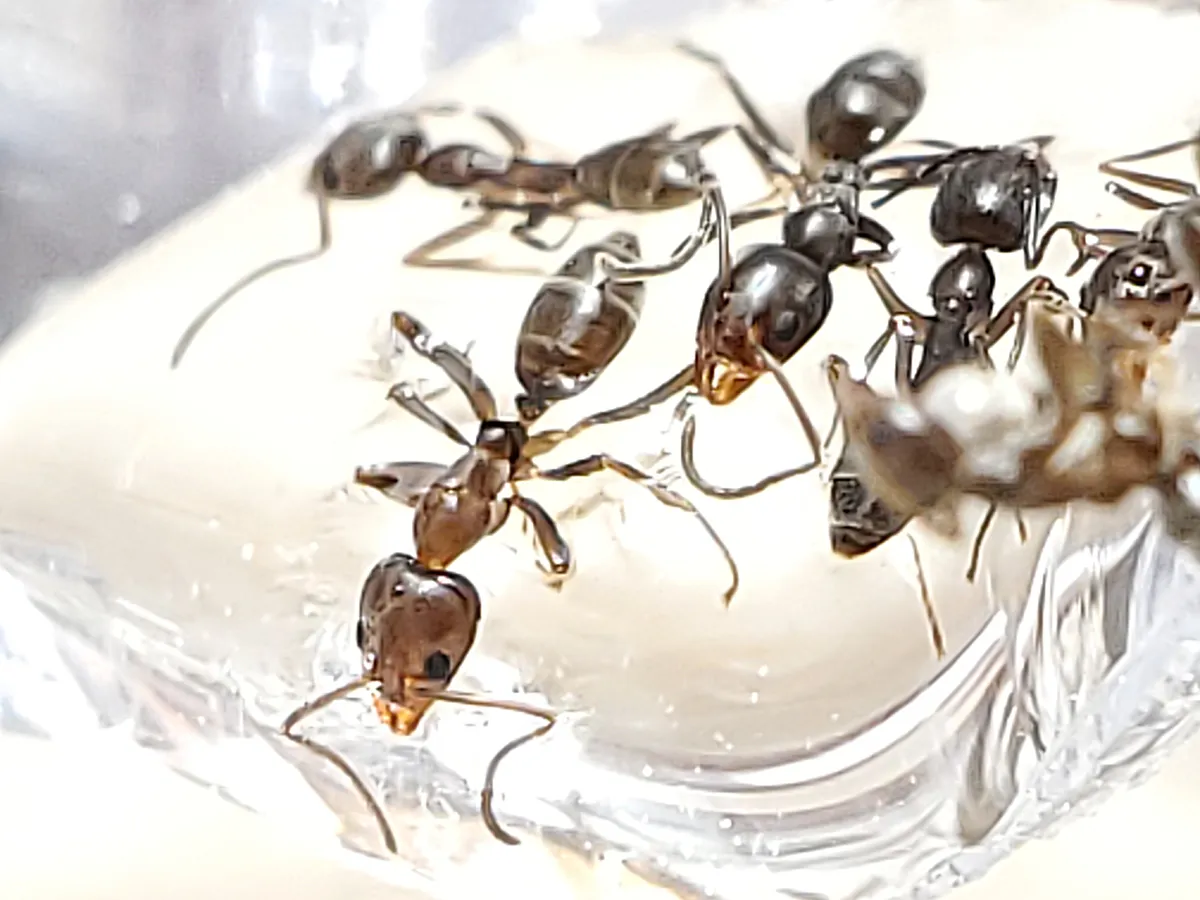
Carpenter ants are a nest problem before they are a bait problem. The TERRO label excludes them, and Penn State Extension's carpenter ant guide says carpenter ant baits may be effective if a professional locates the trails and reapplies bait as needed, but that the ants often ignore baits and that a satellite colony inside a building is unlikely to be eliminated without materials a professional applies. Penn State describes workers 1/4 to 1/2 inch long and piles of coarse, stringy wood particles near their nests, and says they usually will not infest sound, dry wood. Among the products on this page, the Advion Ant Gel label lists carpenter ants. How to find a carpenter ant nest is the first job, and whether carpenter ants bite is answered separately.
Fire ants
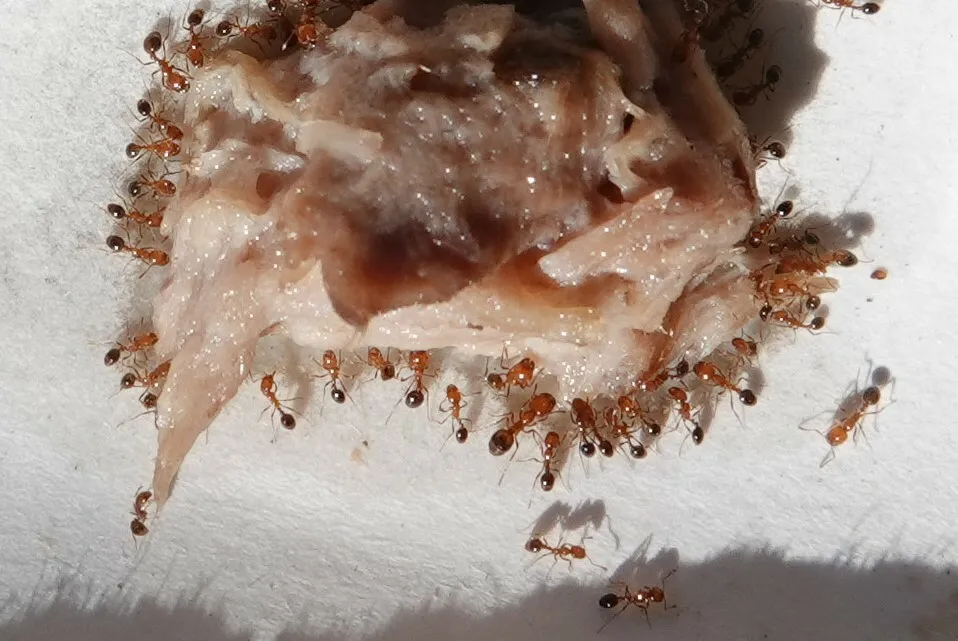
Fire ants need a bait labeled for fire ants, used outdoors. The TERRO label excludes them, and UC IPM says fire ants prefer baits containing oils. The Amdro Fire Ant Bait label (hydramethylnon 0.73 percent, EPA Reg. No. 73342-1) allows it only on outdoor sites such as lawns and landscaped areas: 2 to 5 level tablespoons sprinkled around an undisturbed mound, or 2 to 4 ounces broadcast per 5,000 square feet, with no rain expected within 24 hours. Texas A&M's Two-Step Method is to broadcast bait first and then treat problem mounds, applying bait when workers are actively foraging and the ground and grass are dry; it says baits take weeks to months to reach 80 to 90 percent control.
Use bait from a fresh container, which the Two-Step page recommends, and test it first: if the ants find a small pile of bait within 30 minutes, they are foraging. Texas A&M's household ant guide adds that baits containing vegetable oil lose their appeal over time or if stored improperly. How to identify red ants and fire ants covers telling them apart, and what to do about fire ant stings covers the stings.
What will ant bait not do?
- Keep the next colony out. UC IPM says to caulk cracks and crevices around foundations and other entry points and to keep plants, grass and mulch several inches away from the foundation; Texas A&M adds replacing worn weatherstripping around doors and windows.
- Outcompete open food. UC IPM says to store attractive foods such as sugar, syrup, honey and pet food in closed containers, and Texas A&M says to clean up spilled food and drinks.
- Kill every ant at once. Texas A&M says baits usually kill many, but not all, of the ants in a colony, particularly a large one.
- Work on every species. Texas A&M describes one crazy ant, Paratrechina longicornis, as difficult to attract to ant baits, so crazy ants need their own plan.
- Replace finding the nest. Texas A&M says treating the nest is the most effective way to eliminate ants when you can find it, and that drilling into walls to reach a colony is a job for a professional.
The whole-house plan for getting rid of ants puts these steps in order, and the kitchen version covers bait placement near food and dishes.
When should you call a professional?
Call one when several weeks of correct baiting have not ended the trail, when the nest is inside a wall or structural wood, or when carpenter ants or fire ants are more than you want to take on. UC IPM says that if a problem persists, the best option is a pest management professional trained in integrated pest management, and notes that professionals have access to more effective materials such as fipronil. Kentucky suggests a professional when odorous house or other ants are a persistent problem, and lists professional bait ingredients such as fipronil, imidacloprid, indoxacarb, thiamethoxam and dinotefuran.
Ask how the company will find the nest. Texas A&M notes that colonies move quickly when disturbed and that some species, carpenter ants among them, keep satellite colonies away from the main nest, which is where a professional's inspection earns its fee. For typical costs, see what professional pest control costs.
Use any pesticide exactly as its label directs. The label is the law, and what is registered and sold varies by state.
Frequently Asked Questions
What kills ants instantly?+
A contact spray kills the ants it touches, but only those foragers. UC IPM says vacuuming a trail or sponging it with soapy water may be as effective as an insecticide spray, and that sprays give only temporary control. Texas A&M warns that spraying trails kills a few foraging workers, does not eliminate the colony and can split it into more colonies, so follow a quick cleanup with a slow-acting bait set beside the trail.
What is the most effective ant killer?+
A slow-acting bait that your ants will eat. UC IPM calls baits the only type of insecticide recommended in most situations, because workers carry them home and share them with larvae and queens. Effectiveness depends on the match: odorous house and Argentine ants take sweet baits, while pharaoh and thief ants prefer protein or greasy baits year-round, so set out a little of each kind and use the one the ants carry off.
Why are there more ants after I put out bait?+
Because the bait is working. The University of Kentucky says you should initially see more ants around the bait, that you should not spray them, and that activity usually subsides within a few days. The TERRO Ant Killer II label says the same: ants first come in large numbers, then soon disappear. Keep the bait topped up and leave the trail alone, since spraying or wiping at the bait cuts off the delivery.
How long does ant bait take to work?+
Usually days to see a change and weeks to finish. UC IPM says it can take 5 to 10 days to see fewer ants and several weeks or more for complete control. The TERRO Ant Killer II label says complete control may take up to two weeks, and Texas A&M says some colonies take 3 to 4 weeks or more, because baits usually kill many but not all of the ants in a large colony.
Do ant traps work?+
Ant traps that are really bait stations can work, because ants carry the bait back to the colony. Texas A&M says baits should not be confused with bait traps, which kill only foraging workers and not the ants in the nest, so a sticky trap or a device that kills every ant that enters only removes the ants you already see. A bait station names its active ingredient and EPA registration number on the label, as the TERRO and Advion labels do.
Is ant bait safe for dogs and cats?+
It can be used in a home with pets only if the bait is kept where they cannot reach it, which is what the labels require. NPIC warns that baits are made with ingredients many pets find appetizing and advises secure bait stations or places pets cannot reach, and its boric acid fact sheet says signs of poisoning in animals that eat boric acid can start within 2 hours. If a pet gets into bait, call your veterinarian or the ASPCA Animal Poison Control Center at 888-426-4435, which may charge a fee.
Should I put ant bait inside or outside?+
Outside first, where you can. UC IPM says to use baits primarily outdoors, near nests and along edges where ants travel, spaced every 10 to 20 feet around the foundation, and to bait indoors only when the infestation is serious and you cannot find where the ants come in. Indoors, the University of Kentucky says to place baits beside the trails, and NC State says never on countertops where food is prepared.
What do exterminators use for ants?+
Mostly baits and targeted treatments, with some products homeowners rarely buy. The University of Kentucky lists professional bait ingredients such as fipronil, imidacloprid, indoxacarb, thiamethoxam and dinotefuran, and UC IPM notes that professionals have access to more effective materials such as fipronil. Texas A&M says some colonies can only be reached by drilling into wood or wall voids, a job for a professional with the right equipment.
Does borax kill ants?+
Yes, as a slow-acting bait. Borax (sodium tetraborate decahydrate) is the active ingredient in TERRO Ant Killer II at 5.40 percent, and UC IPM says prepackaged borate stations usually contain 5.4 percent, while weaker liquid borate baits of 0.5 to 1 percent in larger refillable stations have more impact on the colony and are best for severe Argentine ant infestations. Iowa State notes that borax is not the same as boric acid, and NPIC says boric acid can poison animals that eat it.
Why are the ants ignoring my bait?+
Usually because it is the wrong food for them right now. UC IPM's food table lists sweets first for odorous house and Argentine ants but fats or grease first for pharaoh and thief ants, and it says Argentine ants take protein baits mainly in spring. Set out a little sweet and a little protein bait and watch, as UC IPM and NC State suggest, remove competing food, which Texas A&M says makes bait more effective, and keep sprays and cleaners away from the stations.
Sources
- Pest Notes: Ants (UC ANR Publication 7411; M. K. Rust and D.-H. Choe, updated October 2012) — University of California Statewide IPM Program
- ENTFACT-619: Ant Control for Householders (M. F. Potter, revised March 2026) — University of Kentucky Department of Entomology
- Ant Baits for Small Household Ants (last reviewed February 2025) — Iowa State University Extension and Outreach
- Baiting for Ants (T. Billeisen, updated April 25, 2024) — NC State Extension
- Managing Household Ant Pests (B-6183; B. M. Drees, December 2005) — Texas A&M AgriLife Extension
- Ants (G7392; R. M. Houseman, revised September 2017) — University of Missouri Extension
- Carpenter Ants (S. Jacobs; updated June 24, 2026) — Penn State Extension
- Two-Step Method — Texas A&M AgriLife Extension, Texas Imported Fire Ant Research and Management Project
- Pesticides and Children — National Pesticide Information Center
- Pets and Pesticide Use Fact Sheet — National Pesticide Information Center
- Boric Acid Fact Sheet (reviewed December 2013) — National Pesticide Information Center
- Minimum Risk Pesticide: Definition and Product Confirmation — US Environmental Protection Agency
- Active Ingredients Eligible for Minimum Risk Pesticide Products (updated December 2015) — US Environmental Protection Agency
- TERRO Ant Killer II label, EPA Reg. No. 149-8 (labeling notification, January 20, 2026) — US Environmental Protection Agency, Pesticide Product and Label System
- Advion Ant Gel label, EPA Reg. No. 100-1498 (April 17, 2020) — US Environmental Protection Agency, Pesticide Product and Label System
- Amdro Fire Ant Bait label, EPA Reg. No. 73342-1 (notification, April 8, 2024) — US Environmental Protection Agency, Pesticide Product and Label System
- TERRO Liquid Ant Baits, model T300 (product page) — TERRO (Senoret Chemical Company)
Read and approved by Alex Francisco on November 5, 2026. Found an error? Email support@buzzskito.ca.