BuzzSkito Mosquito & Tick Control Specialists · Published April 29, 2026
As an Amazon Associate, BuzzSkito earns from qualifying purchases. BuzzSkito only points to products we would genuinely use or recommend, at no extra cost to you.
1. Create a 3-Foot Wood-Chip or Gravel Barrier Between Lawn and Woods
The single most effective tick-prevention measure is a physical barrier between maintained lawn and natural vegetation. Wood chips or gravel at least 3 feet wide breaks the humidity gradient ticks need to survive — they dry out crossing the barrier. This is the CDC-recommended "tick zone" defense.
2. Keep Grass Cut Short (2 inches or less)
Ticks need humidity to survive. Tall grass holds humidity at the soil level where ticks live. Mowing to 2 inches or less significantly reduces tick survival on the lawn surface. Combine with edge-zone barrier spray for maximum effect.
3. Remove Leaf Litter Weekly During Active Season
Leaf litter is prime tick habitat — it holds humidity, hides ticks from sun, and accumulates in garden bed edges where they thrive. Rake or vacuum leaf litter weekly through spring and fall. Composting leaves on-property is fine — just keep the compost pile away from play areas.
4. Move Woodpiles, Bird Feeders, and Compost Away from Play Areas
Mice are the primary reservoir of Lyme disease bacteria — and they nest in woodpiles, under bird feeders, and in compost. Locate these features at least 30 feet from where children play. If you must keep them close, treat the surrounding area with barrier spray.
5. Seal Mouse-Entry Points to Your House
Tick prevention starts with mouse prevention. Seal foundation cracks, garage gaps, basement window wells, and dryer vents. The fewer mice on your property, the fewer ticks. This is a long-term play but highly effective.
6. Plant Deer-Resistant Landscaping if You're Near Conservation Land
White-tailed deer are the primary host for adult blacklegged ticks. Properties bordering conservation areas, ravines, or rural land that attract deer accumulate more ticks. Replace deer-favorite plants (hostas, daylilies, tulips) with deer-resistant alternatives (lavender, salvia, marigolds, Russian sage).
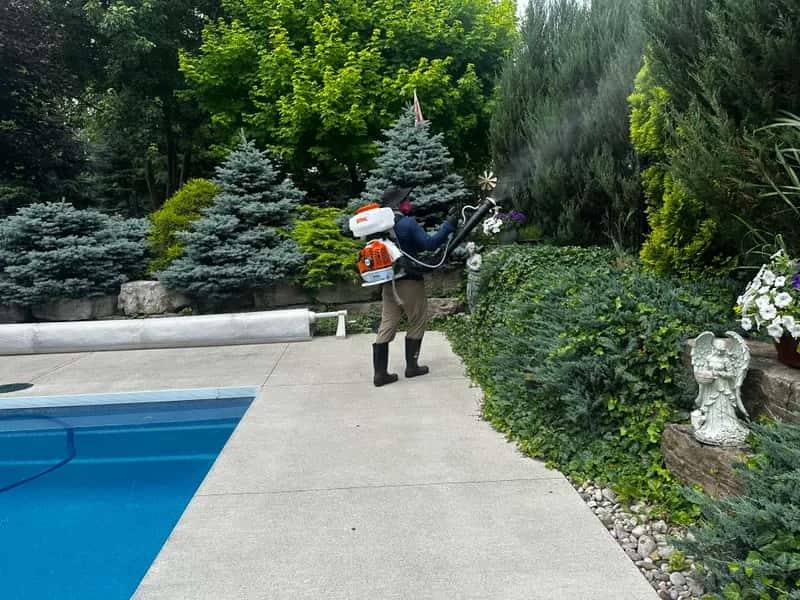
7. Apply Professional Tick Barrier Spray Five Times Per Season
Five applications spread roughly monthly from May through September is what actually holds a barrier. Blacklegged tick nymphs peak from May into July, and nymphs are the stage that drives most Lyme transmission because they are poppy-seed sized and easily missed. Adults then re-emerge and stay active through the autumn, into November in mild years. The acaricide residual is temporary, and deer, mice, and birds continuously reintroduce ticks from adjacent woodland — so a one-off visit, or a spring-and-fall pair, leaves a multi-month hole straight through peak nymph season. Spray must be applied to the specific 1–3 metre transition zones, not broadcast across the lawn. Single treatments start at $99; a full five-treatment tick season is $597, or $497 added to any mosquito plan.
8. Inspect Yourself and Pets After Outdoor Activity
Lyme disease bacteria typically require 24–36 hours of tick attachment to transmit. Daily tick checks dramatically reduce infection risk. Focus checks on warm, hidden areas: behind ears, scalp, armpits, groin, behind knees. For dogs: between toes, under collars, around ears.
Pair the body check with the laundry step most people skip: put the clothes you wore straight into a hot dryer before washing them. Ten minutes on high heat kills ticks on dry fabric, while a normal wash on its own often does not — the post-hike laundry sequence lays out the temperatures behind it.
9. Wear Factory Permethrin-Treated Clothing for High-Risk Outdoor Activity
Permethrin kills blacklegged ticks on contact through treated fabric, and it never goes on skin. In Canada the route to that protection is a garment, not a bottle: Health Canada states that permethrin liquids and sprays sold for consumers to treat their own clothing are not approved for use here. So buy the pants, socks, and shirts already treated at the factory rather than spraying gear yourself — Insect Shield factory-treated clothing holds its protection for up to 70 wash cycles, where a home treatment would need redoing every few washes. Especially valuable for hiking the Bruce Trail, working in conservation-area-adjacent yards, or outdoor events in tick zones.
As an Amazon Associate, BuzzSkito earns from qualifying purchases. Price shown on Amazon.ca, at no extra cost to you.
🏆 Our Top Pick for Tick-Zone Clothing
9.0/10· BuzzSkito ratingInsect Shield Permethrin-Treated Clothing
For anyone working, hiking, or gardening in the lawn-to-woods transition zone, permethrin-treated clothing is the highest-impact personal defence: it kills blacklegged ticks on contact before they ever reach skin. Buy it factory-treated rather than treating your own gear — Health Canada has not approved consumer permethrin sprays for treating your own clothing, and the factory-bonded permethrin lasts far longer anyway.
Pros
- Kills ticks on contact, not just repels
- Factory-bonded permethrin lasts up to 70 wash cycles
- Nothing to mix, spray, or re-apply yourself
Cons
- Protects only the garments you buy — boots and packs are not covered
- Costs more upfront than the same garment untreated
Shop permethrin-treated clothing on Amazon.ca →
For which permethrin formats Health Canada approves and which it does not, see our permethrin for yard & clothing guide (Canada), and compare skin-safe options in our best tick repellents for the yard in Canada roundup.
10. Know the GTA's High-Risk Zones
Public Health Ontario confirms blacklegged tick populations across the GTA. Highest-risk areas: Oak Ridges Moraine (King City, Caledon, Richmond Hill), Rouge National Urban Park (Scarborough, Markham), Niagara Escarpment (Hamilton, Burlington north end), Don Valley and ravine system (Toronto), Bronte Creek Provincial Park (Oakville/Burlington edge), and Boyd Conservation Area (Vaughan/Woodbridge). Properties within 1 km of these areas should run the full five-treatment season on their barrier zones — monthly May through September — rather than a single spring visit.
Bottom Line
Tick prevention in Ontario is now a year-round consideration — not just a cottage-country issue. Blacklegged tick populations have established across virtually all of Southern Ontario and continue expanding northward. The combination of physical yard modifications + professional barrier spray + personal vigilance protects against Lyme disease, Anaplasmosis, Babesiosis, and other tick-borne illnesses that are increasing in Ontario every year.
Related Guides
- The Ultimate Backyard Mosquito Control Guide (GTA Edition)
- The Ultimate Tick Control Guide for Ontario Homeowners
- Hidden Mosquito Breeding Spots in Your GTA Backyard
- Lyme Disease Prevention in Ontario
- View Our Mosquito Control Services
- View Our Tick Control Services
Frequently Asked Questions
Create a 3-Foot Wood-Chip or Gravel Barrier Between Lawn and Woods+
The single most effective tick-prevention measure is a physical barrier between maintained lawn and natural vegetation. Wood chips or gravel at least 3 feet wide breaks the humidity gradient ticks need to survive — they dry out crossing the barrier. This is the CDC-recommended "tick zone" defense.
Keep Grass Cut Short (2 inches or less)+
Ticks need humidity to survive. Tall grass holds humidity at the soil level where ticks live. Mowing to 2 inches or less significantly reduces tick survival on the lawn surface. Combine with edge-zone barrier spray for maximum effect.
Remove Leaf Litter Weekly During Active Season+
Leaf litter is prime tick habitat — it holds humidity, hides ticks from sun, and accumulates in garden bed edges where they thrive. Rake or vacuum leaf litter weekly through spring and fall. Composting leaves on-property is fine — just keep the compost pile away from play areas.
Move Woodpiles, Bird Feeders, and Compost Away from Play Areas+
Mice are the primary reservoir of Lyme disease bacteria — and they nest in woodpiles, under bird feeders, and in compost. Locate these features at least 30 feet from where children play. If you must keep them close, treat the surrounding area with barrier spray.
Seal Mouse-Entry Points to Your House+
Tick prevention starts with mouse prevention. Seal foundation cracks, garage gaps, basement window wells, and dryer vents. The fewer mice on your property, the fewer ticks. This is a long-term play but highly effective.
Plant Deer-Resistant Landscaping if You're Near Conservation Land+
White-tailed deer are the primary host for adult blacklegged ticks. Properties bordering conservation areas, ravines, or rural land that attract deer accumulate more ticks. Replace deer-favorite plants (hostas, daylilies, tulips) with deer-resistant alternatives (lavender, salvia, marigolds, Russian sage).