
Reviewed by Alex Francisco
Published November 5, 2026 · Fact-checked against the sources listed below
Reading from Canada? Product rules and what is sold there differ. See the Canadian edition.
Our picks at a glance
These picks follow wildlife agency and extension advice, not testing, and they are the lasting fixes: each one locks up food, closes a den or fences off a garden. A motion-activated sprinkler, covered below, only scares raccoons for a few days, and no spray or granule made the list, because UC IPM says no repellent has been effective for raccoons.
Raccoon deterrent picks
As an Amazon Associate I earn from qualifying purchases.
- Check price on Amazon →
For trash cans
North Carolina's wildlife commission says garbage cans can be secured with a bungee strap, ratchet strap or latch, and ICWDM says loose lids can be held down with bungee cords. Put the can out the morning of pickup, not the night before.
- Check price on Amazon →
For chimneys
Chimney cap with spark arrester
ICWDM says a commercial chimney cap fastened tightly over the top keeps raccoons out, and UC IPM says to use a spark arrester that meets your local fire code. Fit it only after any raccoons, young included, have left.
- Check price on Amazon →
For decks, sheds and crawl spaces
Heavy galvanized hardware cloth
UC IPM says to screen open spaces under structures with heavy galvanized hardware mesh with 1/4- or 1/3-inch openings, the bottom edge buried at least 6 inches deep and bent outward 12 inches. Wildlife Illinois also lists 1/2-inch hardware cloth for decks.
- Check price on Amazon →
For sweet corn and melons
UC IPM describes a low fence with one electrified wire 6 inches and another 12 inches above the ground, switched on from dusk to dawn. ICWDM says hot wires can stop raccoon damage to sweet corn and watermelons, and to post caution signs.
- Check price on Amazon →
For sandboxes
CDC says raccoons sometimes use sandboxes as latrines, and their droppings can carry roundworm eggs, so keep a sandbox covered whenever children are not playing in it.
Do raccoon repellents work?
Not for long, according to the extension and wildlife sources. The University of California's IPM program (UC IPM) says no repellent has been effective for raccoons, and that mothballs, blood meal and a wide variety of other home remedies have been tried to no avail. Humane World for Animals calls repellents a temporary solution at best.
Research is still early. In a 2022 study by USDA scientists on captive raccoons, corn treated with anthraquinone, a bird repellent, showed 71% feeding repellency at a 2% concentration and 26 to 37% at lower ones, and the authors said the results warrant further research and field evaluation of it as a raccoon deterrent.
What does a registered raccoon repellent look like?
A spray or granule sold to repel raccoons is a pesticide. EPA's definition covers any substance or mixture meant to prevent, destroy, repel or mitigate a pest, and EPA says pesticides must be evaluated and registered before they are sold. The exception is minimum risk pesticides, which need no EPA registration and which EPA does not review, though states may still require them to be registered.
Registered raccoon repellents do exist. The label EPA accepted in 2018 for Havahart Critter Ridder granules (EPA Reg. No. 50932-10) lists raccoons among the animals it repels by odor and taste, names oil of black pepper, piperine and capsaicin as its active ingredients, and claims up to 30 days per application. The same label limits indoor use to nonliving areas such as attics and garages, rules out food and feed crops, warns of moderate eye irritation and says to keep it out of reach of children. That is the maker's claim; UC IPM's verdict on raccoon repellents is the one above.
Which raccoon deterrents work, and for how long?
Physical fixes outlast everything else. This table sums up what UC IPM, the Internet Center for Wildlife Damage Management (ICWDM) and the state agencies linked on this page say about each option.
| Option | What the sources say | How long it helps | Cautions |
|---|---|---|---|
| Strapped or latched trash cans | Recommended by North Carolina, Virginia and ICWDM | As long as the lid stays secured | Put cans out the morning of pickup |
| Chimney cap or spark arrester | Recommended by ICWDM, UC IPM and Wildlife Illinois | Lasting, once fastened | Fit it only after any young have left |
| Galvanized hardware cloth under decks and sheds | Recommended by UC IPM and Wildlife Illinois | Lasting, if buried | Make sure no animal is inside first |
| Electric fence around sweet corn or melons | Recommended by UC IPM and ICWDM | While it is switched on, dusk to dawn | Use with care and post caution signs (ICWDM) |
| Motion-activated sprinkler, lights or sound devices | Can scare wildlife away (Florida FWC) | A few days (UC IPM) | Raccoons learn there is no threat |
| Registered repellent granules or sprays | None effective for raccoons (UC IPM) | Label claim of up to 30 days (EPA Reg. No. 50932-10) | Eye irritant; keep out of reach of children |
| Ultrasonic devices | UC IPM says sound devices can work for a few days; it does not single out ultrasonic ones | Days | Not registered by EPA; an EPA establishment number does not mean EPA reviewed it |
| Ammonia or vinegar rags | No good evidence they keep raccoons away; Humane World uses cider vinegar rags only to make a den uninviting | Not established | High levels in air can irritate the eyes, throat and lungs (ATSDR) |
| Mothballs | Illegal off-label use (Oregon State) | Little or no effect as repellents (NPIC) | Vapors reach the air people breathe (NPIC) |
UC IPM, ICWDM, Wildlife Illinois, the North Carolina and Virginia wildlife agencies, Florida FWC, EPA, NPIC, Oregon State Extension, ATSDR and Humane World for Animals, each linked on this page.
How do you keep raccoons out of trash cans?
Lock the lid and shorten the time the can sits outside. North Carolina's wildlife commission says to keep garbage in containers with tight-fitting lids, take it out the morning of pickup rather than the night before, and secure cans with a bungee strap, ratchet strap or latch. Virginia's wildlife agency suggests an animal-proof container, such as a metal trash can with latches on the lid, and keeping trash inside until pickup morning. ICWDM adds tying cans to a rack or support so raccoons cannot tip them over.
- Pet food. UC IPM says to bring in pet food before nightfall, and North Carolina says to feed pets indoors or take the bowl away when the pet has finished.
- Bird feeders. North Carolina says to keep feeder areas clean, use feeders that keep seed off the ground, and remove feeders if you often see raccoons.
- Never feed raccoons. North Carolina warns that a raccoon fed by people loses its fear of them and may become bold and aggressive. Florida's wildlife commission says wildlife returns to unsecured food after even one visit, and lists raccoons among the species with feeding rules in that state.
- Neighbors. North Carolina notes that your efforts work less well if neighbors keep leaving food out.
How do you keep raccoons out of a chimney, attic or deck?
Close the openings, once you are sure nothing is living inside. ICWDM says to keep raccoons out of a chimney by fastening a commercial chimney cap over the top, tightly enough that a raccoon cannot pull or tear it off, and notes that raccoons often use uncapped chimneys as dens for their young. UC IPM says to use a spark arrester that meets the fire code where you live.
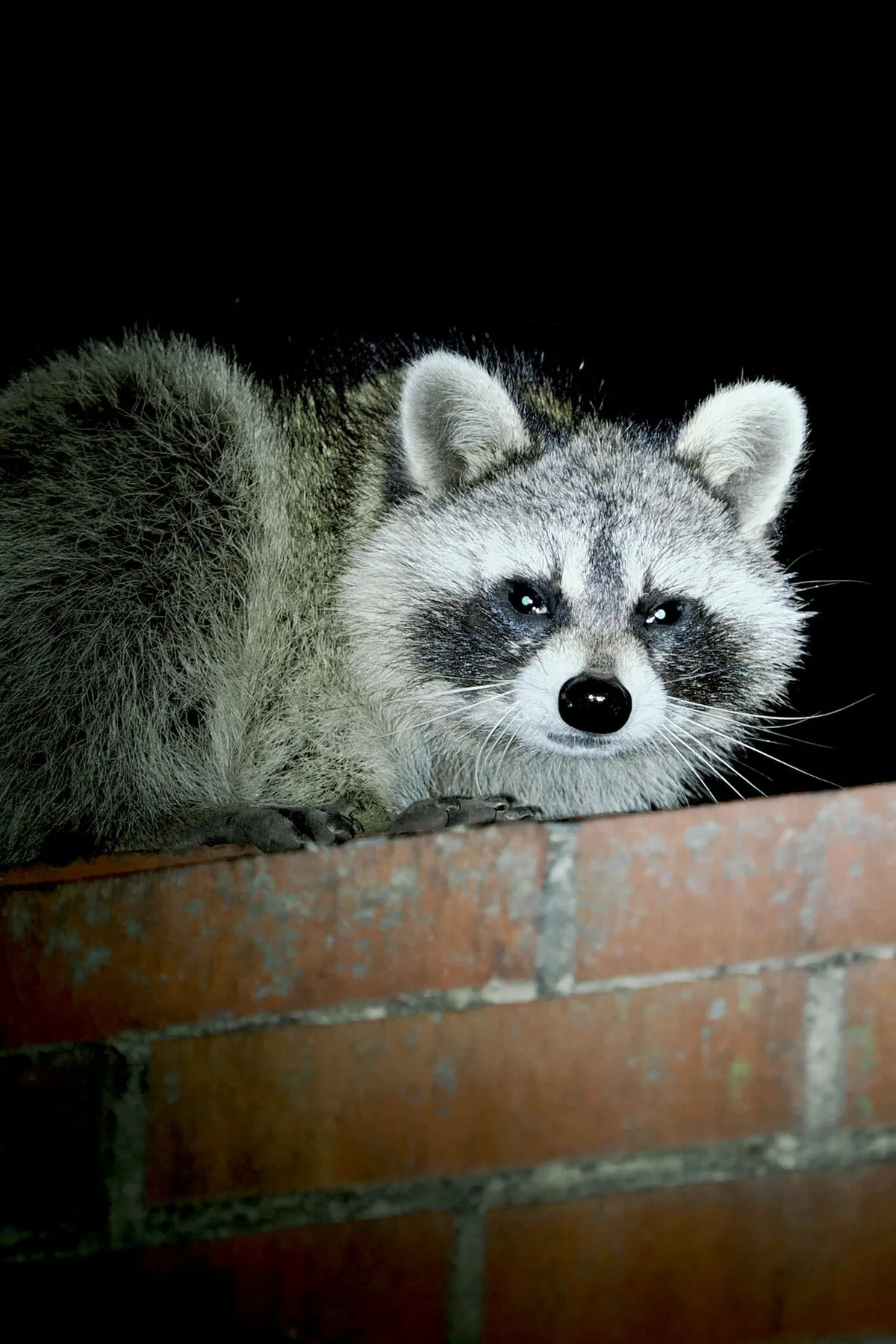
Wildlife Illinois, a site authorized by the Illinois Department of Natural Resources, says chimney caps are secured with bolts or screws, that 1/2-inch hardware cloth is a less expensive alternative, and never to use window screening, which clogs with soot and becomes a fire hazard. A closer look at raccoon-proof chimney caps covers fitting one.
Under decks, porches and sheds
Screen the gap to the ground and bury the bottom edge. UC IPM says to use 10-gauge galvanized hardware mesh with 1/4- or 1/3-inch openings, its bottom edge buried at least 6 inches deep and extended outward 12 inches. For decks within 2 feet of the ground, Wildlife Illinois describes a trench at least 10 inches deep, 1/2-inch hardware cloth or 1-inch welded wire, and 6 to 8 inches of wire bent outward at a right angle at the bottom. Raccoon and skunk proofing under a deck shows the job step by step.
Attics
CDC's raccoon roundworm advice includes closing off access to attics and basements, and North Carolina says to secure the attic from entry. If something is already living up there, what is making noise in the attic helps you identify it before any repair, and the section on young raccoons below explains the timing.
Do motion-activated sprinklers work on raccoons?
They can chase raccoons off a garden, pond or path, for a while. Florida's wildlife commission says motion-activated sprinklers can scare wildlife away from a property and shows a video of one deterring a raccoon. UC IPM groups water-squirting units with flashing lights and sound devices, all of which motion detectors can set off, and says they can be effective for a few days before raccoons learn there is no threat.
Treat a sprinkler as the short-term part of the plan, to buy time while you secure the trash, the chimney and the deck. ICWDM says frightening devices may help for a while but that none has been proven effective over a long period. Ultrasonic boxes are sound devices too: EPA's guide to pest control devices says devices need no registration and that an EPA establishment number on the package does not mean EPA reviewed the product, and the evidence on ultrasonic pest repellers is reviewed separately.
Does ammonia or any other smell keep raccoons away?
There is no good evidence that any smell does. UC IPM lists mothballs and blood meal among the home remedies tried without success, and none of the wildlife agencies cited here recommends ammonia. When Humane World for Animals wants an animal to leave a den, it suggests rags soaked in cider vinegar, not ammonia, along with lights and a blaring radio at night. Ammonia is hazardous in its own right: ATSDR says high levels in air can irritate the skin, eyes, throat and lungs, and that a splash in the eyes can cause burns.
Mothballs are a home remedy that is also illegal to use against raccoons. Oregon State University Extension lists raccoons among the animals people try to repel with mothballs and says any such use is illegal, because mothballs are registered pesticides that may be used only where the label allows. The National Pesticide Information Center adds that mothballs have little or no effect as repellents and that, used in the open, they release vapors into the air people breathe.
Can you trap and relocate a raccoon?
Usually not, and your state sets the rules. North Carolina's wildlife commission says that because raccoons are a rabies vector, they cannot be trapped and relocated under any circumstances there, and trapped raccoons must be euthanized or released on the property where they were caught. Virginia's wildlife agency says it is illegal in the state to trap and relocate an animal to another area, and California's wildlife department says wildlife cannot be trapped and released elsewhere.
Trapping also has a timing problem: UC IPM says a professional can tell whether a trapped female is nursing, which matters so young are not left behind to starve. EPA's device guide lists raccoon cages among the exceptions to its device rules, and the trapping and release rules above are state rules, so call your state wildlife agency before you buy a trap.
When do raccoons have young in dens?
Spring into summer. The Missouri Department of Conservation says most raccoon litters are born in April or early May, some as late as August, and that young are usually weaned by August but stay with their mothers until the next spring. UC IPM says young are generally born in April or May and that earlier and later litters are not uncommon.
That makes spring and summer the worst time to seal an opening. Humane World says that between March and August, raccoons and other animals may shelter in, around and under a home to raise their young, recommends waiting a few weeks for the family to move out, and says to make sure all animals are out before sealing any space.
Are raccoons dangerous to people and pets?
Mostly through disease, so keep your distance. CDC lists raccoons among the common rabid animals in the United States, and its rabies prevention advice is to keep your distance from wildlife, never approach animals that seem injured, sick or dead, and keep pets' rabies vaccines up to date. Virginia's wildlife agency says seeing a raccoon in the daytime is not a sign of rabies by itself, and to contact your local health department if one is stumbling, foaming at the mouth or aggressive.
After a bite or scratch, CDC says to wash the wound right away with soap and water for 15 minutes and talk with a healthcare or public health professional about your risk. North Carolina's commission says about half of all rabies exposures come through pets, so have cats and dogs vaccinated. UC IPM adds that raccoons also carry distemper.
Raccoon roundworm in latrines
Raccoon droppings pile up in latrines, and they can carry roundworm eggs. CDC's raccoon roundworm advice says raccoon feces turn up on woodpiles, decks and rooftops and in attics, garages and haylofts, and that raccoons sometimes use sandboxes as latrines, so keep sandboxes covered when not in use. UC IPM says young children are thought to be most susceptible to the infection.
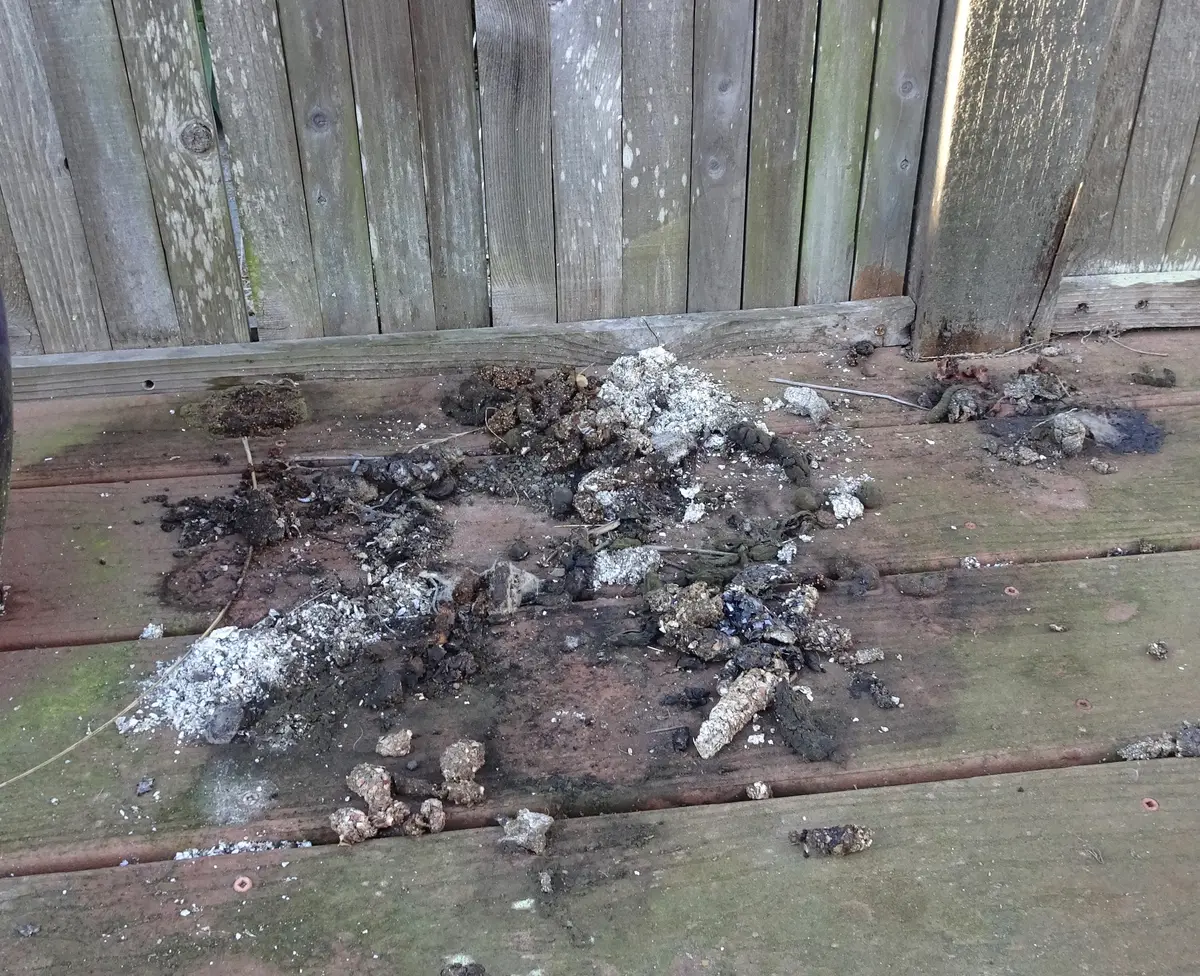
To clean a latrine, CDC says to wear disposable gloves, rubber boots that can be scrubbed or disposable booties, and an N95 respirator in a confined space such as an attic. Remove the droppings and burn, bury or send them to a landfill, then treat the surface with boiling water or a propane torch, checking with your local fire department about torch rules and safety first. Most chemicals do not kill roundworm eggs, CDC says, but heat kills them instantly. What raccoon poop looks like shows latrines and how to tell them from other animals' droppings.
How do you protect a garden or lawn from raccoons?
For sweet corn and melons, electric wire is the tool the sources name. UC IPM describes a low two-wire fence, with one wire 6 inches and the other 12 inches above the ground, or a single electrified strand 8 inches above the ground and about 8 inches out from an existing fence, with the charger on only from dusk to dawn. ICWDM says a single or double hot wire can stop raccoon damage to sweet corn and watermelons, and to use electric fences with care and post caution signs.
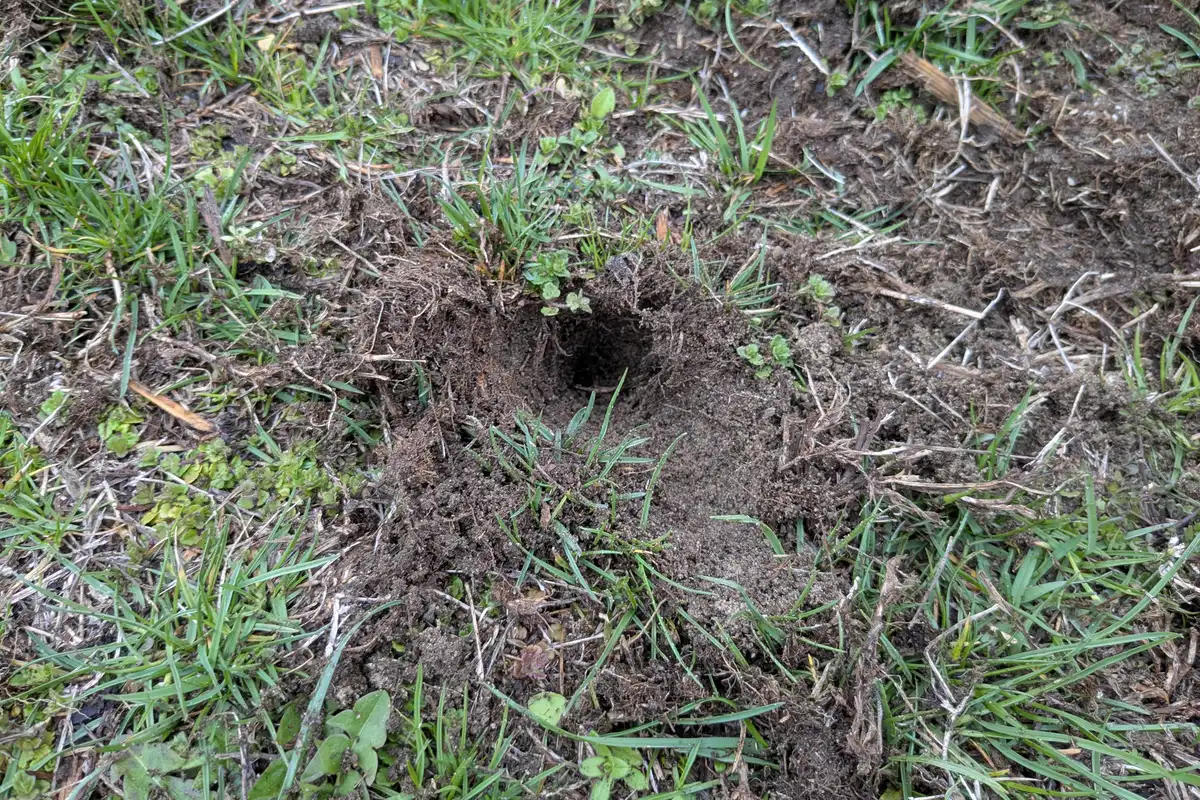
Torn-up turf has a different cause. UC IPM says raccoons often roll up newly laid turf looking for worms and grubs but do not typically dig holes in lawns, and it links cone-shaped holes to skunks. ICWDM says sod turning is most common from mid to late summer, when raccoon families are learning to forage. The guide to holes in the yard sorts lawn diggers by the holes they leave.
What precautions do deterrents need around children and pets?
Follow every label, mark any electric wire, and leave household chemicals out of it.
- Repellents. Read the whole label before you buy and again before you use it. The Critter Ridder label says using the product in a way inconsistent with its labeling violates federal law, to keep it out of reach of children, to store it where children and pets cannot get to it, and to rinse eyes for 15 to 20 minutes if it gets in them.
- Electric fences. ICWDM says to use them with care and install caution signs, and UC IPM says the charger needs to be on only from dusk to dawn.
- Mothballs and ammonia. Skip both: NPIC says mothballs used in the open release vapors people breathe, and ATSDR says high levels of ammonia in the air can irritate the eyes, throat and lungs.
- Sandboxes and play areas. CDC says to keep sandboxes covered when not in use and to wash your hands after working or playing outdoors.
- Pets. Keep rabies vaccines current, as CDC advises, and feed pets indoors, as North Carolina suggests.
When should you call wildlife control?
Call for help when a raccoon is inside the house, has young in a den, seems sick, or keeps coming back after the fixes above.
- A raccoon in the attic or chimney, especially in spring and summer. Sealing too early can trap a mother or her young inside. North Carolina's commission keeps lists of licensed trappers and wildlife damage control agents, and Virginia's agency suggests a licensed trapper or a wildlife removal service.
- A raccoon that seems sick, stumbling, foaming at the mouth or unusually aggressive. Stay away and call your local health department, as Virginia advises.
- Any bite or scratch. Wash it for 15 minutes and talk with a healthcare or public health professional, as CDC advises.
- Prevention that has not worked. Virginia's agency says to contact a licensed trapper or removal service if its prevention steps do not solve the problem.
For other animals around the house, from droppings on the deck to noises in the attic, browse the full library of pest and wildlife guides.
This guide is general educational information, not medical advice. If you have symptoms or concerns after a bite or exposure, contact a healthcare provider.
Use any pesticide exactly as its label directs. The label is the law, and what is registered and sold varies by state.
Frequently Asked Questions
What is the best raccoon repellent?+
No spray or granule has a good record against raccoons: UC IPM's pest note says none has been effective. The fixes that hold up are physical. Keep trash in cans with tight lids held by a strap or latch, bring pet food in at night, cap the chimney, and screen under decks and sheds with galvanized hardware mesh buried at least 6 inches deep. A motion-activated sprinkler can chase raccoons off one spot for a few days.
What smell do raccoons hate the most?+
No smell has been shown to keep raccoons away for long. UC IPM says mothballs, blood meal and many other home remedies have been tried to no avail, and Humane World for Animals calls repellents a temporary solution at best. When Humane World wants an animal to leave a den, it pairs rags soaked in cider vinegar with lights and a radio at night, then checks that the den is empty before sealing it.
Does ammonia keep raccoons away?+
There is no good evidence that it does, and none of the wildlife agencies cited on this page recommends it. Humane World for Animals specifically suggests cider vinegar rather than ammonia when it wants to make a den uninviting. Ammonia carries its own risk: ATSDR says high levels in the air can irritate the skin, eyes, throat and lungs, and a splash in the eyes can cause burns. Keep it away from children and pets.
Do motion-activated sprinklers keep raccoons away?+
For a short time. Florida's wildlife commission says motion-activated sprinklers can scare wildlife away and shows one deterring a raccoon. UC IPM says water-squirting units, lights and sound devices triggered by motion detectors can be effective for a few days, after which raccoons often learn there is no threat. Use a sprinkler while you remove food and close dens, not as the whole plan.
Will lights keep raccoons away?+
Not for long. UC IPM includes flashing lights among the frightening devices that can work for a few days, and ICWDM says lights, radios and other frightening techniques may help for a while but have not been proven effective over a long period. Lights do have one use: Humane World for Animals pairs them with a radio at night to make a den uncomfortable, so a raccoon family moves out on its own.
Are there EPA-registered raccoon repellents?+
Yes. A spray or granule sold to repel animals is a pesticide, and registered ones carry an EPA registration number on the label. For example, the label EPA accepted in 2018 for Havahart Critter Ridder granules, EPA Reg. No. 50932-10, lists raccoons and names black pepper oil, piperine and capsaicin as its active ingredients. Even so, UC IPM's pest note says no repellent has been effective for raccoons, so treat any repellent as a short-term extra.
How do I keep raccoons out of my garbage?+
Lock the lid and cut the hours the can sits outside. North Carolina's wildlife commission says to use cans with tight-fitting lids, secure them with a bungee strap, ratchet strap or latch, and put them out the morning of pickup. Virginia's wildlife agency suggests a metal can with latching lids, and ICWDM says to tie cans to a rack or support so raccoons cannot tip them. Bring pet food in at night too.
Is it legal to trap and relocate a raccoon?+
Often not, and it depends on your state. North Carolina says raccoons, as a rabies vector, cannot be trapped and relocated under any circumstances; trapped ones must be euthanized or released where they were caught. Virginia says it is illegal to trap and relocate an animal to another area, and California's wildlife department says wildlife cannot be trapped and released elsewhere. Ask your state wildlife agency before setting any trap.
Is it bad to see a raccoon during the day?+
Not by itself. Virginia's wildlife agency says just seeing a raccoon in daytime is not a sign of rabies, and North Carolina's commission says it is increasingly common to see raccoons out during the day. Keep your distance anyway, as CDC advises for all wildlife. If a raccoon is stumbling, foaming at the mouth or acting aggressive, stay away and contact your local health department.
How do I get a raccoon out from under my deck?+
Make the space uninviting, wait for it to leave, then seal it. Humane World for Animals suggests lights, a radio at night and rags soaked in cider vinegar, and between March and August it advises waiting a few weeks because young may be inside. Loosely plug the opening with newspaper; if it stays undisturbed for three to four days, close the gap with galvanized hardware mesh buried at least 6 inches deep, as UC IPM describes.
Sources
- Pest Notes: Raccoons (UC ANR Publication 74116; R. A. Baldwin, updated July 2014) — University of California Statewide IPM Program
- Raccoon Damage Prevention and Control Methods — Internet Center for Wildlife Damage Management
- Coexist with Raccoons — North Carolina Wildlife Resources Commission
- Problems with Raccoons — Virginia Department of Wildlife Resources
- Raccoon (Field Guide) — Missouri Department of Conservation
- Living with Wildlife — California Department of Fish and Wildlife
- Tips for Securing Attractants — Florida Fish and Wildlife Conservation Commission
- Home Care (Prevent Problems) — Wildlife Illinois (authorized by the Illinois Department of Natural Resources)
- What to Do Instead of Trapping and Relocating Animals — Humane World for Animals
- Preventing Raccoon Roundworm (November 5, 2024) — Centers for Disease Control and Prevention
- Rabies Prevention and Control (July 1, 2025) — Centers for Disease Control and Prevention
- Animal Repellent Granular (Havahart Critter Ridder), EPA Reg. No. 50932-10, label accepted November 9, 2018 — US Environmental Protection Agency, Pesticide Product Label System (registrant: Woodstream Corporation)
- Basic Information about Pesticide Ingredients — US Environmental Protection Agency
- Conditions for Minimum Risk Pesticides — US Environmental Protection Agency
- Pesticide Devices: A Guide for Consumers — US Environmental Protection Agency
- Can I use mothballs to repel insects or animals? — National Pesticide Information Center (Oregon State University)
- Mothballs: Proper Use and Alternative Controls for Clothes Moths (PNW 606; D. Stone and T. Stock) — Oregon State University Extension Service
- ToxFAQs for Ammonia — Agency for Toxic Substances and Disease Registry (CDC)
- Concentration-response of an anthraquinone-based repellent for raccoons (Procyon lotor) (S. Johnson and others, Applied Animal Behaviour Science 251, 2022) — USDA APHIS National Wildlife Research Center, via University of Nebraska-Lincoln DigitalCommons
Read and approved by Alex Francisco on November 5, 2026. Found an error? Email support@buzzskito.ca.