BuzzSkito Mosquito & Tick Control Specialists · Published June 4, 2026
Quick Answer
Burlington’s tick season runs mid-March through November, with a nymph peak from late May to July and an adult peak from mid-September to October; the city sits between two tick reservoirs — the Niagara Escarpment and Royal Botanical Gardens.
- Public Health Ontario classifies all of Halton Region, including Burlington, as an established Lyme disease risk area.
- Royal Botanical Gardens spans nearly 2,400 acres of forest, ravine, and wetland — textbook blacklegged tick habitat on the Burlington–Hamilton line.
- Halton surveillance has recorded active adult ticks on Mt. Nemo and Mountainside trails by the second week of March.
- The late-May-to-July nymph peak is the highest human-risk window; poppy-seed-sized nymphs carry Borrelia burgdorferi at the same rate as adults.
- Aldershot, Mountainside, Tyandaga, Millcroft, and any escarpment-edge property are Burlington’s highest-pressure zones in 2026.
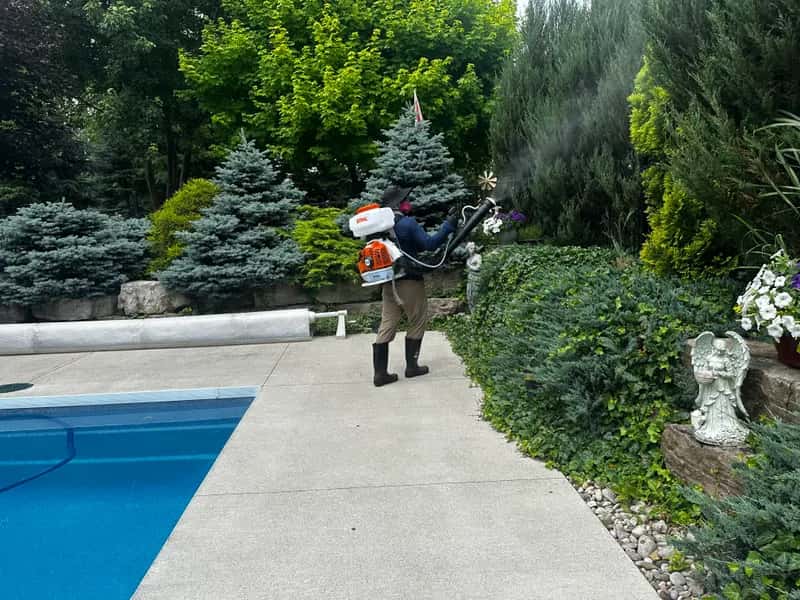
- A barrier spray’s residual wears down within weeks, so BuzzSkito’s tick season is five treatments spaced roughly monthly from May through September — monthly renewal is what removes the gap.
— BuzzSkito, GTA mosquito & tick control · 150+ five-star Google reviews
As an Amazon Associate I earn from qualifying purchases. BuzzSkito only points to products we would genuinely use or recommend, at no extra cost to you.
Halton Public Health’s advice is to remove an attached tick promptly with fine-tipped tweezers — and with RBG and the escarpment trails on the doorstep, the one item worth having by the door before the nymph peak is a fine-tipped remover that grips at the skin line: Check price on Amazon.ca →
TL;DR: Burlington is wedged between the Niagara Escarpment and Lake Ontario, sitting next to one of the most confirmed tick zones in Halton — Royal Botanical Gardens. Public Health Ontario classifies Halton as an established Lyme risk area. Blacklegged ticks are active mid-March through November with peaks in late May-July and mid-September-October. Aldershot, Mountainside, Tyandaga, Millcroft, and any escarpment-edge property are the highest-pressure zones in 2026.
The headline: Burlington sits on two tick reservoirs
Most GTA cities have one tick driver — usually a ravine network or a single conservation area. Burlington has two, and they meet inside the city. To the north and west, the Niagara Escarpment runs through Mt. Nemo, Rattlesnake Point, Kilbride, and the upper escarpment slope. To the south, Royal Botanical Gardens covers nearly 2,400 acres of forest, ravine, and wetland straddling the Burlington-Hamilton boundary. Sheldon Creek, Indian Creek, Tuck Creek, and Hager Creek all run between these two systems, threading tick habitat through neighbourhoods that look entirely suburban from the street.
That is why Halton Region Public Health treats all of Burlington as part of the established Lyme disease risk area. The geography simply does not allow for a low-risk band — even properties south of the QEW inherit pressure from RBG and the lakefront ravines, while properties north of Dundas inherit pressure from the escarpment.
When are ticks active in Burlington? The 2026 calendar
Mid-March through April: the wake-up window
Burlington wakes up earlier than most of the GTA. The combination of Lake Ontario’s heat-buffering effect and the south-facing escarpment slope produces some of the earliest tick activity in southern Ontario. Halton Region surveillance has documented active adult blacklegged ticks on Mt. Nemo and Mountainside trails by the second week of March in recent years. By early April, the RBG Hendrie Valley trail produces regular positive samples. Anyone walking trails in March or April should be in long pants, treated socks, and doing thorough tick checks.
Late May through July: the nymph peak
The nymph peak is the public health priority — nymphs are the size of a poppy seed, easy to miss, and they carry Borrelia burgdorferi at the same rates as adults. Halton’s nymph window runs late May through mid-July, overlapping perfectly with kids’ summer break, peak gardening, and the busy season for Burlington Beach, Spencer Smith Park, and every conservation area in the region. This is the window where yard treatment, permethrin-treated clothing for trail use, and daily tick checks matter most.
August: a quieter mid-summer
Mid-summer heat suppresses tick activity slightly. Ticks shelter in leaf litter and shaded ravine bottoms during the hottest weeks. But Burlington’s lakeside humidity and the escarpment’s shaded forest floor keep populations active. Wooded edges along Sheldon Creek, Indian Creek, and the RBG boundary still produce attachments through August, especially after rain breaks the heat.
September-October: the adult fall peak
The second activity peak is adult blacklegged ticks looking for one last blood meal before winter. Adults are larger and easier to spot than nymphs, which is why most of the “tick on my dog” reports from Burlington veterinarians come from October. Adult pressure in 2026 will be heaviest through RBG, Mt. Nemo Conservation Area, the wooded edges of Tyandaga, Millcroft, and Headon Forest, and the Aldershot ravine fingers running toward the lake.
November onward
Activity does not end with the first frost. Adults remain active any day temperatures climb above 4°C, which in Burlington is now common into mid-December. The genuinely tick-quiet months in Burlington are late December through early March, and even then a January thaw on a south-facing escarpment slope can produce activity.
Why Burlington specifically — three geographic drivers
1. The Niagara Escarpment edge is elevated tick habitat
The escarpment defines Burlington’s northern and western edge. Mt. Nemo Conservation Area, Mountainside, the upper Mountain Brow area, and the wooded ravines feeding the escarpment are all confirmed tick-pressure zones. The combination of mature hardwood forest, leaf litter depth, and resident deer and white-footed mouse populations creates ideal Ixodes scapularis habitat. Properties along the escarpment edge in Mountainside, Tyandaga, and the north end of Tansley Woods inherit this pressure directly. Conservation Halton posts active tick warnings at every trailhead.
2. Royal Botanical Gardens is the southern tick reservoir
RBG covers nearly 2,400 acres of protected forest, ravine, and wetland. The Arboretum, Hendrie Valley sanctuary, Cootes Paradise, and the trail network through the Burlington half of the property have all produced positive surveillance samples. Aldershot — the Burlington neighbourhood west of Brant Street and bordering RBG — sits inside that elevated-risk zone. See our Aldershot service page. The pressure does not respect property lines.
3. The creek ravine network threads tick habitat through the suburbs
Sheldon Creek, Indian Creek, Tuck Creek, and Hager Creek all run through Burlington, connecting the escarpment to the lake. These ravines function as travel corridors for the deer and white-footed mice that host ticks. Subdivisions like Millcroft, Roseland, Headon Forest, and Tansley Woods sit alongside these creek systems. A property in Millcroft can look entirely suburban from the front but back directly onto Sheldon Creek tick habitat from the rear fence.
Highest-risk Burlington neighbourhoods in 2026
- Aldershot: direct RBG boundary, Hendrie Valley sanctuary adjacency, and ravine systems feeding the lake. Highest baseline pressure in Burlington.
- Mountainside: escarpment-edge subdivision with direct woodlot and conservation-area adjacency.
- Tyandaga: mature treed lots, ravine fingers, and proximity to the Tyandaga Golf Course edges and Tyandaga Park forest. See Tyandaga service.
- Millcroft: Sheldon Creek runs through the community; golf-course edges and creek-adjacent properties carry elevated risk. See Millcroft service.
- Headon Forest + Tansley Woods: mature canopy, treed lots, hedgerow connectivity to escarpment habitat.
- Roseland: mature trees, ravine pockets near Indian Creek, moderate-to-high pressure on properties backing onto wooded areas. See Roseland service.
- Alton Village: newer subdivision but adjacent to escarpment habitat north of Dundas. See Alton Village service.
Lower-pressure pockets exist — the central downtown strip near the pier, the lakefront condo blocks south of Lakeshore, and the older central residential blocks between Brant and Guelph Line without ravine adjacency. But again, lower pressure is not no pressure. Halton Region surveillance has produced positive samples from areas that no one would have flagged five years ago.
What Halton Region Public Health recommends
Halton Region Public Health publishes a standard prevention checklist: wear long sleeves and tucked-in pants when hiking, use repellents containing DEET or icaridin (look for the PCP registration number on the label), check yourself, your kids, and your pets after every outdoor exposure, and remove attached ticks promptly with fine-tipped tweezers. They emphasize the 24-36 hour rule — Lyme transmission typically requires sustained tick attachment, which is why daily checks matter.
As an Amazon Associate I earn from qualifying purchases. BuzzSkito only points to products we would genuinely use or recommend, at no extra cost to you.
For yards specifically, Public Health Ontario’s habitat-modification guidance is consistent: maintain a 3-foot wood-chip or gravel buffer between lawn and any wooded edge, clear leaf litter weekly from May through July, keep grass short, and treat the perimeter professionally during the nymph window. See our full tick control guide for the complete protocol.
The 2026 Burlington protection plan
- Five professional barrier sprays, roughly monthly from May through September. The first goes down in early-to-mid May to catch the leading edge of the nymph peak, and the last carries into the September-October adult peak. Applied along the back fence line, garden bed edges, leaf-litter zones, woodpiles, and any lawn-to-forest transition. Products applied according to label directions, with a temporary residual — which is precisely why the visits land about a month apart. See Burlington tick spray pricing.
- Why five and not one or two. A spring-plus-fall pair leaves a multi-month hole straight across the late-May-to-July nymph peak — the exact window when poppy-seed-sized nymphs drive most Lyme transmission. Burlington’s deer, mice, and birds also keep reintroducing ticks from the escarpment, RBG, and the creek ravines all season, so the barrier has to be renewed rather than applied once and forgotten.
- Habitat modification along forest, escarpment, and ravine edges. 3-foot wood-chip or gravel buffer, weekly leaf-litter clearing through May-July, mow tight.
- Daily tick checks for the household and pets. Especially after RBG, Mt. Nemo, Mountainside trails, conservation area hikes, and off-leash dog parks.
- Permethrin-treated clothing for escarpment hikers. Buy garments that come factory-treated, such as gaiters, socks, and hiking pants — in Canada, consumer permethrin sprays for treating your own clothing are not registered.
- Year-round veterinary tick prevention for dogs. Burlington vets are reporting climbing canine Lyme cases. Talk to your vet.
As an Amazon Associate I earn from qualifying purchases. Price shown on Amazon.ca, at no extra cost to you.
🏆 Best for Burlington trail users
8.7/10· BuzzSkito ratingInsectGuard Permethrin-Treated Gaiters
If you hike the escarpment, Mt. Nemo, RBG, or any wooded ravine edge, permethrin-treated clothing is the single most effective personal defence — it kills ticks on contact before they reach skin. One treatment on gaiters, socks, and pant cuffs lasts about six weeks or six washes and covers the exact nymph window when Burlington risk peaks.
Pros
- Kills ticks on contact, not just repels
- One application lasts ~6 weeks / 6 washes
- Covers the ankle-to-knee zone where ticks climb
Cons
- Protects only treated garments, not exposed skin
- Not a substitute for yard treatment
Same-week Burlington service
BuzzSkito treats every Burlington neighbourhood with same-week service availability through the May–September season. Pricing scales by lot size. Most requests get a price the same day. See dedicated pages for Burlington mosquito spray, Aldershot, Millcroft, Tyandaga, and Alton Village.
Related guides
- Lyme Disease Risk Areas Ontario 2026
- Tick Season Ontario — Province-Wide Activity Calendar
- Are Ticks Dangerous in Ontario?
- Free Yard Risk Report — Burlington address-specific score
Frequently Asked Questions
Are there ticks in Burlington?+
Yes — Burlington has one of the highest established tick populations in Halton Region. Public Health Ontario classifies all of Halton as a Lyme disease risk area, and Halton Region Public Health surveillance has produced consistent positive blacklegged tick samples across the Niagara Escarpment edge, Royal Botanical Gardens, the Sheldon Creek and Indian Creek ravines, and the Mt. Nemo Conservation Area trail network. Burlington families should treat May through October as a high-risk window, particularly for properties anywhere within 1 km of the escarpment or any wooded ravine, conservation area, or RBG property.
When does tick season start in Burlington?+
Tick season in Burlington now starts in mid-to-late March and runs through November. Blacklegged ticks reactivate any day temperatures hold above 4°C, and Burlington's position at the western tip of Lake Ontario combined with the south-facing escarpment slope produces some of the earliest tick activity in the GTA. Halton Region surveillance has documented active adult ticks on Mountainside trails by the second week of March in recent years. The dangerous nymph peak runs late May through mid-July, and a second adult peak runs mid-September through October. Because a professional barrier application leaves a temporary residual that wears down within weeks, covering that full span takes five treatments spaced roughly monthly from May through September rather than a spring-and-fall pair — that is how BuzzSkito builds a Burlington tick season.
Is Royal Botanical Gardens a tick risk area?+
Royal Botanical Gardens is one of the most confirmed tick-presence zones in Halton Region. RBG covers nearly 2,400 acres across Burlington and Hamilton, including hardwood forest, ravine, and wetland habitat that is textbook Ixodes scapularis territory. The Arboretum, Hendrie Valley sanctuary, and Cootes Paradise trails have all produced positive surveillance samples. RBG posts active tick warnings at trailheads. Aldershot residents living between Plains Road and the RBG boundary inherit that pressure directly — those properties sit inside what Halton Region surveillance treats as the elevated-risk zone. Check yourself, your kids, and your dog after every RBG visit, and treat your yard if you are within 1.5 km of any RBG property.
Are ticks worse in Aldershot or central Burlington?+
Aldershot has higher baseline tick pressure than central Burlington because of its direct boundary with Royal Botanical Gardens, the Hendrie Valley sanctuary, and the wooded ravines feeding into Burlington Bay. Central Burlington — the downtown strip near the pier, the lakefront condos south of Lakeshore Road, and the older residential blocks between Brant and Walkers Line — has lower pressure but is not tick-free, particularly where properties back onto Sheldon Park, Spencer Smith Park edges, or any treed ravine. The general rule for Burlington: the closer you are to the escarpment, RBG, or any wooded ravine, the higher the pressure. Lakefront-only properties without ravine adjacency are the lowest-risk pockets in the city.
When should I treat my Burlington yard for ticks?+
The most effective single-treatment timing for a Burlington yard is the second or third week of May, which targets the leading edge of the nymph peak before transmission risk climbs. Full-season coverage is a different job: BuzzSkito's tick season plan is five treatments, spread roughly monthly from May through September. A barrier spray's residual is temporary and wears down within weeks, which is exactly why the visits are monthly — a spring-plus-fall pair would leave a multi-month hole straight through the late-May-to-July nymph peak, and nymphs drive most Lyme transmission because they are the size of a poppy seed and easily missed. Deer, mice, and birds also keep walking fresh ticks in from the escarpment, RBG, and every wooded ravine, so the barrier has to be renewed through the season rather than applied once or twice. That renewal matters most on high-risk properties — anything backing onto the escarpment, RBG, a conservation area, or a wooded ravine. Single treatments are still valuable if you have an event coming up, but one application in June does not cover August or September pressure.