BuzzSkito Mosquito & Tick Control Specialists · Published July 12, 2026
Compare current Canadian prices on the dog-labelled options mentioned below:
This guide is general information, not veterinary advice. Every dog is different — talk to your veterinarian before starting any new repellent or preventive, especially for puppies, seniors, pregnant or nursing dogs, or dogs with health conditions.
What You Should NEVER Use on a Dog
The single most common mistake dog owners make is reaching for their own bug spray. Human insect repellents are formulated for human skin, not for an animal that licks its own coat.
- DEET — never. DEET (the active ingredient in OFF! Deep Woods, Ben’s, Watkins, and most human sprays) is not approved for dogs and is toxic to them. Because dogs groom themselves, they ingest whatever is on their fur. Symptoms of DEET poisoning include drooling, vomiting, tremors, wobbliness, and — at higher doses — seizures. No amount of human DEET spray is labelled for use on a dog.
- Human picaridin sprays — no. Like DEET, these are skin products for people, not dosed or tested for dogs.
- Tea tree (melaleuca), pennyroyal, and concentrated essential oils — no. Several “natural” oils are actually toxic to pets. Only use plant-based products specifically diluted and labelled for dogs.
- Any permethrin product if you own a cat — no (see below).
The Permethrin Rule: Great on Dogs, Deadly to Cats
Permethrin is one of the most effective mosquito and tick repellents available for dogs — it is the active ingredient in popular spot-ons like K9 Advantix II and Vectra 3D, and used at the correct dog dose it both repels and kills mosquitoes. On dogs, used as the label directs, it is widely recommended by veterinarians.
The life-or-death caveat is cats. Cats cannot metabolize permethrin the way dogs can, and exposure is frequently fatal — causing tremors, seizures, and death. Cats are poisoned not just by direct application but by contact: grooming a recently treated dog, sleeping against one, or brushing past a treated coat. If there is a cat anywhere in your household:
- The cautious choice is to skip permethrin dog products entirely and use a cedar/lemongrass spray plus your vet’s heartworm preventive.
- If your vet still recommends a permethrin spot-on, keep the treated dog fully separated from all cats until the product is completely dry (per the label), and never let cats groom the dog.
And never — for any pet — apply concentrated agricultural or clothing-treatment permethrin directly to skin. Those are not dosed for animals. Only use products formulated and labelled for dogs at the weight band that matches your dog.
The bite that matters most: heartworm
Mosquitoes are the only way dogs get heartworm. A single infected bite deposits larvae that mature into worms in the heart and lungs — a serious, expensive-to-treat, potentially fatal disease. Because even the best repellent can’t block every bite, repellents are never a substitute for a year-round or seasonal vet-prescribed heartworm preventive. Think of it as two jobs: the preventive protects the dog from the inside; the repellent and yard control reduce how often mosquitoes reach the dog at all.
How Mosquitoes Give Dogs Heartworm
When a mosquito bites an animal already carrying heartworm, it draws up microscopic immature worms (microfilariae). Those develop inside the mosquito for a couple of weeks, and the next time it bites — your dog — it injects infective larvae through the bite wound. Over several months those larvae travel to the heart and pulmonary arteries and grow into worms up to 30 cm long.
This is why mosquito season matters so much for dog owners in the GTA. More mosquitoes around your yard means more bites, and every bite carries heartworm risk. The two-part answer is simple:
- Prevent from the inside: keep your dog on a vet-prescribed heartworm preventive (Heartgard, NexGard, Interceptor, Advantage Multi, etc.) for the whole mosquito season, as your vet directs.
- Reduce bites from the outside: a dog-labelled repellent for outings, plus fewer mosquitoes in the yard to begin with.
Dog-Labelled Repellent Options, Ranked by Situation
| Option | Best for | Watch-outs | Price check |
|---|---|---|---|
| K9 Advantix II / Vectra 3D | Strong, long-lasting mosquito + tick repellency | Dogs only · never around cats | Check price on Amazon.ca → |
| Wondercide (cedar/lemongrass) | Cat-home households · sensitive dogs | Reapply ~every 2 hours | Check price on Amazon.ca → |
| Vet’s Best / Cedarcide | Budget natural top-up before walks | Shorter-lived · avoid eyes | Check price on Amazon.ca → |
| Heartgard / NexGard (Rx) | Heartworm prevention — every dog, all season | Not a repellent · vet prescription | Veterinarian only |
Whichever spray you pick, apply to the coat (avoiding eyes, nose, and mouth), reapply before dawn/dusk outings, and store out of a curious dog’s reach. Compare natural spray prices →
When to Use Which
- You have dogs only (no cats): a permethrin spot-on gives the strongest, longest mosquito and tick repellency. Pair it with your vet’s heartworm preventive.
- You have cats in the home: avoid permethrin entirely. Use a cedar/lemongrass spray on the dog before outings, plus the heartworm preventive, plus yard-level control.
- Sensitive, senior, or puppy dogs: ask your vet first, and lean toward milder plant-based sprays used at label strength.
- Heavy mosquito pressure around the yard: repellents help, but the biggest win is reducing the mosquito population itself — see below.
The Complete Dog + Mosquito Protection Stack
For GTA dog owners, the most reliable protection isn’t one product — it’s layers that each do a different job:
- Heartworm preventive (non-negotiable): a vet-prescribed monthly or seasonal preventive protects against the one thing repellents can’t guarantee.
- Dog-labelled repellent for outings: a permethrin spot-on (dogs-only homes) or a cedar/lemongrass spray (cat homes) before dawn/dusk walks and yard time.
- Kill the breeding sites: mosquitoes breed in standing water. Empty water dishes, toys, plant saucers, tarps, and clogged gutters every few days.
- Reduce the yard population: a professional barrier treatment lowers how many mosquitoes are ever near your dog, applied to plants (not the pet); keep pets off treated areas until the spray has dried.
Do all four and you’ve protected your dog from the inside, on the skin, at the water source, and across the whole yard — which is a far stronger position than any single spray on its own.
Related Reading
- Tick Repellent for Dogs: What Actually Works (Ontario 2026)
- BuzzSkito Professional Mosquito Control Service
- Get a Free Yard Assessment
Frequently Asked Questions
What is the safest mosquito repellent for dogs in Canada?+
For most dogs, a vet-recommended spot-on that also repels mosquitoes — such as K9 Advantix II or Vectra 3D — is the most reliable option, because it is dosed by weight and labelled for use on dogs. For a gentler topical, cedarwood-and-lemongrass sprays like Wondercide or Vet's Best are labelled for use on dogs and can be reapplied before walks. Whatever you choose, NEVER put human DEET or human-strength picaridin on a dog, and never put any permethrin product on a home with cats. Repellents reduce bites but do NOT prevent heartworm — that still requires a year-round vet-prescribed heartworm preventive like Heartgard or NexGard.
Can I use DEET bug spray on my dog?+
No. DEET is not labelled for use on dogs and can be toxic to them. Dogs lick their coats, and ingested DEET can cause vomiting, drooling, tremors, difficulty walking, and in larger doses seizures. No human DEET spray is labelled for dogs at any dose — products like OFF! Deep Woods, Watkins, and Ben's are formulated for human skin only. If your dog needs mosquito protection, use a product specifically labelled for dogs, or ask your veterinarian for a spot-on that lists mosquito repellency on the label.
Is permethrin safe for dogs?+
Permethrin is widely used ON DOGS at the dose printed on a dog-labelled product — it is the active ingredient in several dog spot-ons (like K9 Advantix II) and repels and kills mosquitoes, fleas, and ticks. The critical warning is CATS: permethrin is highly toxic and frequently FATAL to cats, even from grooming a treated dog or brushing against them. If you have any cats in the household, do not use a permethrin dog product, or keep the treated dog fully separated until dry and follow your vet's guidance. Also never apply concentrated agricultural or clothing permethrin directly to a dog's skin — only use products dosed and labelled for dogs.
Can mosquitoes give my dog heartworm?+
Yes — mosquitoes are the only way dogs get heartworm. When a mosquito bites an infected animal it picks up microscopic larvae, and when it later bites your dog it deposits those larvae, which mature into worms that live in the heart and lungs. Heartworm disease is serious, expensive to treat, and can be fatal. This is why repellents alone are not enough: they reduce bites but a single bite can transmit heartworm. Every dog in Canada should be on a year-round or seasonal vet-prescribed heartworm preventive (Heartgard, NexGard, Interceptor, Advantage Multi, or similar). Reducing the mosquitoes around your yard is a helpful second layer, not a substitute.
Do natural mosquito repellents actually work on dogs?+
Plant-based repellents built on cedarwood oil, lemongrass, geraniol, and similar essential oils (Wondercide, Vet's Best, Cedarcide) do provide real but shorter-lived protection — typically a couple of hours before you need to reapply. They are a reasonable choice for a dog that reacts to stronger products, or as a top-up before a walk. Avoid undiluted essential oils and never use tea tree (melaleuca), pennyroyal, or concentrated oils on pets, as several are toxic. Read the label: a product should specifically say it is formulated for dogs, and ideally list the concentration.
Where can I buy dog-safe mosquito repellent in Canada?+
Dog spot-ons that repel mosquitoes (K9 Advantix II, Vectra 3D) are sold at Canadian vet clinics, Ren's Pets, Pet Valu, PetSmart Canada, and Amazon.ca; the prescription heartworm preventives (Heartgard, NexGard, Interceptor) come from your veterinarian. Natural topical sprays (Wondercide, Vet's Best, Cedarcide) are stocked at Pet Valu, Global Pet Foods, Canadian Tire's pet aisle, and Amazon.ca. Always confirm a product is labelled for dogs and, if you own cats, that it is permethrin-free. Prices below are 2026 Canadian ranges.
How else can I protect my dog from mosquitoes at home?+
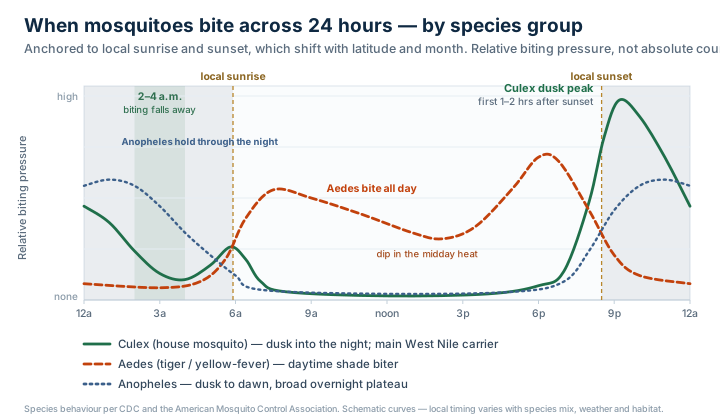
Layer your defences. Keep your dog on a vet-prescribed heartworm preventive (non-negotiable), apply a dog-labelled repellent before dawn/dusk outdoor time when mosquitoes are most active, dump standing water in the yard (dishes, toys, saucers, gutters) weekly since that is where mosquitoes breed, and reduce the mosquito population in the yard itself with a professional barrier treatment. BuzzSkito's licensed barrier spray targets the shaded resting spots where mosquitoes hide during the day, lowering how many ever reach your dog. It is applied to vegetation, not your pet, according to label directions — keep pets off treated areas until the spray has dried.