
As an Amazon Associate I earn from qualifying purchases. BuzzSkito only points to products we would genuinely use or recommend, at no extra cost to you.
BuzzSkito Mosquito & Tick Control Specialists · Published July 16, 2026
Check current Canadian availability of the registered dust and a proper applicator:
As an Amazon Associate I earn from qualifying purchases. Price shown on Amazon.ca, at no extra cost to you.
🏆 Our Top Pick — the DE to actually buy
8.2/10· BuzzSkito ratingSafer’s Diatomaceous Earth (PMRA-registered insecticide)
The one grade that’s legal to use on bed bugs in Canada — it carries a Pest Control Products (PCP) registration number, so its label directions are the rules you follow. Amorphous, low-crystalline-silica dust: resistance-proof, and safe to apply into cracks and voids when used as a barely-visible film with a bulb duster. Pair it with a proper puffer applicator for the light, even haze that actually kills.
Pros
- The only PMRA-registered DE grade for pest use
- Resistance-proof — bed bugs can’t adapt to a desiccant
- Low crystalline silica, safe applied to label into cracks and voids
Cons
- Slow — works over days, not on contact
- Only works dry, undisturbed, and thinly applied
- Not a standalone cure — one layer of a full plan
Does Diatomaceous Earth Actually Kill Bed Bugs?
Yes — mechanically, and on a timescale of days rather than seconds. Diatomaceous earth is a powder milled from fossilized diatom shells; under magnification each particle is a jagged, porous fragment. When a bed bug crawls through a thin film of it, those particles scratch and absorb the waxy layer that seals moisture inside the insect’s exoskeleton. Stripped of that waterproofing, the bug dehydrates and dies — no poison involved, just death by drying out. The waxy cuticle that DE abrades is the same layer left behind at every moult, so a dusted room often turns up empty casings before it turns up bodies — what a bed bug shell actually tells you explains how to read them.
That mechanism is the source of both DE’s biggest strength and its biggest weakness. The strength: because the kill is physical, a bed bug cannot develop biochemical resistance to it the way it has to pyrethroids. The weakness: desiccation is slow, and only happens to bugs that pick up enough dust and stay alive long enough to dry out.
The lab-versus-field gap is the whole story. In controlled tests, DE applied as a clean, dry, thin layer kills a high proportion of bed bugs forced to walk across it. In real bedrooms — where dust gets disturbed, humidity varies, and bugs hide in places you never treated — the same product performs far more modestly. Both facts are true at once: genuinely effective in the exact conditions of a lab, genuinely insufficient as a lone treatment in the messy conditions of a home.
How Long Does Diatomaceous Earth Take to Kill Bed Bugs?
Roughly 4 to 10 days of exposure in lab conditions, and frequently longer in practice. This is the number that trips people up: they expect a bug to hit the powder and drop, then conclude it doesn’t work when bugs are still around the next morning. A bed bug has to accumulate dust on its body and then lose enough water over subsequent days to die.
Because of that lag, DE functions as constant background pressure rather than a quick knockdown, grinding a population down as bugs repeatedly cross treated runways over weeks. That only helps if the infestation isn’t breeding faster than the dust is killing — which is exactly why DE needs faster-acting partners like steam and a registered spray doing the heavy lifting up front.
Where Do You Apply Diatomaceous Earth for Bed Bugs?
DE only works where bed bugs are forced to walk through it and where it can sit dry and undisturbed — cracks, crevices, voids, and runways, not open surfaces. Use a bulb or puffer duster to lay down a light haze in these zones:
- Bed frame and headboard joints. Puff into every screw hole, joint, and hollow tube — classic daytime harbourage right next to the host.
- Box spring interior and underside. Dust the internal frame, joints, and stapled-fabric perimeter, not the fabric you press against.
- Baseboard cracks and the floor-wall gap. A thin line into the crack where baseboard meets floor, especially behind and beside the bed.
- Electrical outlet and switch plates. With the power off, puff a small amount into the gap behind cover plates — a common in-wall travel route. Do not overload the box.
- Under and behind furniture. Nightstand joints, dresser undersides, and the backs of built-ins near the bed.
- Around bed legs and under interceptor cups. A light film beneath each leg backs up your interceptor traps.
The rule that matters more than location: a thin, barely-visible film only. A white line or a pile of powder is too much — bed bugs sense heavy dust and detour around it, so over-application lowers your kill rate. Tap any visible mound down into a haze.
Where Should You Never Put Diatomaceous Earth?
The guardrails here are just as important as the application map, because misusing DE is either useless or unsafe:
- Never on open mattress surfaces or bedding you sleep against. Loose powder there does nothing useful and becomes an inhalation nuisance all night. The mattress and box spring belong in a certified bed-bug-proof encasement, which traps bugs inside and removes the mattress as harbourage entirely.
- Never in thick, visible layers across the floor. It repels bugs and puts dust where pets and kids travel.
- Never pool- or filter-grade DE indoors. Calcined pool DE is high in crystalline silica — a real respiratory hazard — and kills insects poorly.
- Never where it will get damp. DE stops working the moment it clumps or gets wet.
Which Diatomaceous Earth Is Legal — and Which US Products We Won’t Recommend
This is where Canadian buyers get steered wrong by American content. In Canada, a product is only legal to use as a pesticide if it is registered with Health Canada’s PMRA and carries a Pest Control Products (PCP) registration number on the label. A registered DE insecticide such as Safer’s Diatomaceous Earth meets that bar, and its label directions are, legally, the rules you follow.
Food-grade DE sold as a supplement, anti-caking agent, or garden amendment is a different regulatory animal: it is not registered as an insecticide, so applying it to bed bugs is an off-label, unregistered pesticide use. Same broad material, but the pest-registration framework is what makes the registered version the one to buy for this job.
We also flag the grey-market desiccants US bed bug forums push hardest, because none are PMRA-registered domestic products for Canadian consumers:
- CimeXa — a synthetic amorphous silica gel dust that dominates US advice. It is not diatomaceous earth and not a PMRA-registered domestic-class product here; we won’t recommend importing it.
- MotherEarth D and similar US “pro” dusts — marketed to American applicators, not registered for Canadian consumer use.
- Any bag lacking a food-grade statement or a PCP number — if you can’t confirm the grade, treat it as pool-grade and keep it out of the house.
The honest Canadian recommendation is the registered dust, used to the label — not the strongest thing a cross-border seller will ship you.
How Does DE Fit Into a Real Bed Bug Plan?
As one durable, resistance-proof layer — not the plan itself. Bed bug control succeeds when several methods overlap, each covering a gap the others leave, and DE’s role is the slow desiccant barrier in cracks and voids that faster tools can’t durably coat. Here is where it sits in the full stack:
- Steam for instant, all-life-stage kills on the bed and furniture — see the best bed bug steamer in Canada.
- Encasements to seal the mattress and box spring so they never need dusting again — the mattress encasement guide covers certified options.
- Interceptor traps under every bed leg to isolate the bed and measure whether you’re still catching bugs — the interceptor trap guide.
- Registered spray for quick knockdown, with honest limits in do bed bug sprays actually work? and legal options in the bed bug spray guide.
- DE as the long-lasting desiccant in frame joints, baseboards, and outlet gaps — the resistance-proof backstop.
DE is not the only dust in the category, and the differences between desiccants are bigger than the packaging suggests — speed of kill, how heavy a film you need to lay down, and how long the deposit keeps working all vary. We put the options side by side in a straight comparison of the bed-bug dusts sold here, and there is a dedicated profile of the silica-gel dust American advice keeps pointing Canadians toward if you want to understand what the US recommendations are actually built on.
On the spray side of that stack, the one product worth singling out is the botanical exception: a geraniol-based spray with independent university testing behind it, which kills eggs on direct contact rather than only the bugs it wets. What is not worth your money in any version is the bug bomb — the fogger verdict, in full explains why a settling mist never reaches the cracks a dust can sit in for months.
Before any of it, confirm you’re actually dealing with bed bugs and map where they’re hiding — our walkthrough on how to check for bed bugs in Canada shows the evidence to look for. And if you’re weighing a full DIY stack against hiring a pro, the Canadian pest control cost guide breaks down what professional bed bug work actually runs.
For the wider picture on diatomaceous earth beyond bed bugs — grades, garden and crawling-insect uses, and how to buy it — see our diatomaceous earth Canada buyer’s guide.
Dusting is one step of seven, and it only pays off if the other six happen around it. The full Canadian eradication sequence, in order puts confirmation, isolation, encasement, heat and dusting in the sequence that works, and the five-tool basket for doing it without hiring anyone is the version for readers who intend to run the whole thing themselves.
Frequently Asked Questions
Does diatomaceous earth actually kill bed bugs?+
Yes, but slowly and mechanically rather than instantly. The microscopic edges of the fossil-diatom powder abrade and absorb the waxy outer layer of a bed bug's exoskeleton, so the insect dies of dehydration over several days. Lab studies show it kills a high proportion of bugs that walk through a treated band — but only when the dust is dry, undisturbed, and applied as a barely-visible film. It is a slow desiccant, not a knockdown killer, which is why it works as one layer of a plan and almost never as a standalone cure.
How long does diatomaceous earth take to kill bed bugs?+
Typically 4 to 10 days of exposure in controlled lab conditions, and often longer in a real home. Because DE dries the insect out rather than poisoning it, a bed bug has to pick up enough dust and then lose water over time; a bug that only skirts the edge of a patch may barely be dusted at all. Treat it as constant background pressure that grinds a population down over weeks, and keep the dust in place and dry the entire time.
Which diatomaceous earth is legal to use for bed bugs in Canada?+
Only DE registered as a pesticide with Health Canada's Pest Management Regulatory Agency (PMRA) is legal to apply for insect control. A registered product like Safer's Diatomaceous Earth carries a Pest Control Products (PCP) registration number and label directions on the package. Food-grade DE sold as a supplement, anti-caking agent, or garden amendment is not registered as an insecticide, so using it on bed bugs is an off-label, unregistered pesticide use. The rule: buy the version with a PCP number and use it exactly as the label says.
What is the difference between food-grade and pool-grade diatomaceous earth?+
Crystalline silica content. Food-grade and pesticide-registered DE is amorphous silica with a very low percentage of crystalline silica, which is why it can be labelled for use around homes. Pool-grade (filter-grade) DE has been calcined — heat-treated — which converts much of it to crystalline silica, a known respiratory hazard. Pool-grade is made for swimming-pool filters, kills insects poorly, and must never be used indoors. If a bag does not clearly say food-grade or PMRA-registered insecticide, do not use it against bed bugs.
Can you put diatomaceous earth on your mattress?+
Not on the open sleeping surface. The right move for the mattress and box spring is a certified bed-bug-proof encasement, which traps bugs inside and removes the mattress as a hiding place. If you treat the bed area with DE, keep it to the frame joints, the underside of the box spring, and the floor around the bed legs — never a dusting across the top where you sleep, which is both ineffective and an inhalation nuisance.
How much diatomaceous earth should you apply?+
Far less than most people think — a thin, barely-visible film you can just see when you tilt the surface to the light. A visible pile or white line of powder is too much: bed bugs detect thick dust and walk around it rather than through it, so heavy application actually lowers the kill rate. Use a bulb or puffer duster to lay a light haze inside cracks and crevices, then tap away any obvious mounds.
Do bed bugs become resistant to diatomaceous earth?+
No, and this is DE's single biggest advantage. Because it kills physically — scratching and absorbing the waxy cuticle so the insect desiccates — there is no metabolic pathway for a bed bug to evolve around it. That matters in Canada, where resistance surveys have found pyrethroid knockdown-resistance genes in the majority of North American bed bug populations tested, often above 80 percent. A bug that shrugs off a spray still dries out and dies in DE. The trade-off is speed: resistance-proof but slow.
Is diatomaceous earth safe around pets and children?+
Food-grade and PMRA-registered DE is low-toxicity, but it is still a fine dust you should not breathe in quantity. Apply it into cracks, crevices, voids, and under furniture rather than in exposed layers where kids and pets travel. Wear a dust mask when puffing it, keep people and animals out until the airborne dust settles, and follow the registered product's label. Never substitute pool-grade DE, which is a genuine respiratory hazard.
Is diatomaceous earth better than bed bug spray?+
They solve different problems, so use both rather than picking one. Registered sprays act faster and treat surfaces directly, but modern bed bugs are widely resistant to the pyrethroids most domestic-class Canadian sprays rely on. DE is slower and only works in dry, undisturbed cracks, but it is completely resistance-proof. A strong plan uses spray for quick knockdown on visible bugs and DE as a long-lasting desiccant barrier in voids and runways the spray cannot durably coat.
How long do you leave diatomaceous earth down?+
As long as it stays dry and undisturbed — check and re-dust every couple of weeks through a cycle of at least six to eight weeks. DE loses effect the moment it gets wet, clumped, or vacuumed up, so any cleaning near a treated crack means re-applying. Use interceptor traps under the bed legs to track catches; once they stay empty and no new signs appear for several weeks, clean up and shift to monitoring.
Related Bed Bug Guides
Keep reading
 Signs of Bed Bugs: A 7-Point Checklist to Run TonightThe seven signs of bed bugs, from live bugs and ink-like spots to bites, with where to look tonight, what each is…
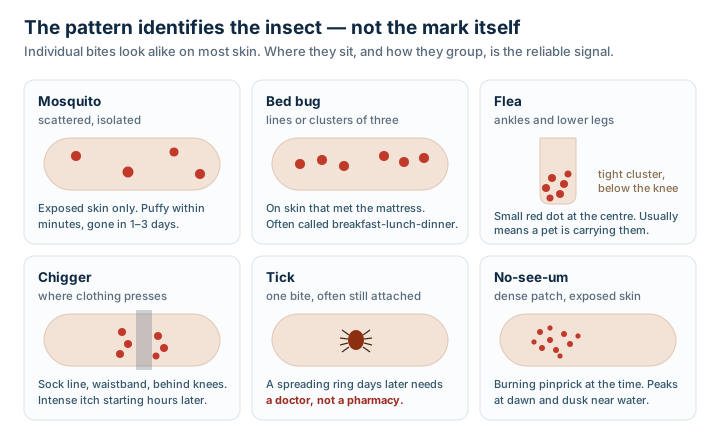 Bed Bug Bites: What They Look Like, How Long They Last & How to Tell for Sure (2026)The breakfast-lunch-dinner line pattern, bed bug vs mosquito vs flea bite comparison tables, the up-to-14-day delay,…
- Best Bed Bug Steamer Canada 2026 — Vapamore MR-100 vs McCulloch MC1275 vs PurSteamVapamore MR-100 vs McCulloch MC1275 vs PurSteam: the 100°C kill science, the 2-3 cm/s slow-pass technique, and what…