BuzzSkito Mosquito & Tick Control Specialists · Published July 9, 2026
Why August, Not July
Most people assume West Nile risk tracks with how many mosquitoes are biting them. It does not. The virus cycles between Culex mosquitoes and birds, and it takes weeks of warm weather for enough infected birds and mosquitoes to accumulate before human infections appear. That amplification is why the mosquitoes are worst in June but the virus is worst in August.
Counter-intuitively, a hot, dry August raises risk. Drought concentrates stagnant, nutrient-rich water in catch basins and containers — exactly what Culex prefers — while flushing rains would otherwise wash larvae out. Heat also speeds virus replication inside the mosquito.
The Mosquito That Matters Is Not the One Biting You at the Barbecue
The aggressive daytime mosquito chasing you around the yard is usually an Aedes species, and it is a poor West Nile vector. The mosquito that matters, Culex pipiens, behaves differently:
- It bites mainly at dusk, through the night, and at dawn.
- It prefers birds and bites humans opportunistically — which is exactly how the virus jumps species.
- It breeds in stagnant, organically rich water: catch basins, clogged gutters full of leaf sludge, old tires, unused birdbaths, and forgotten buckets. It does not favour clean fresh rainwater.
This changes your priorities. Dumping the clean puddle on the patio does little. Scrubbing out the gutter and the old bucket behind the shed does a lot.
Symptoms: What to Watch For
Symptoms, when they appear at all, begin 2 to 14 days after an infected bite.
- No symptoms (~80%). Most infections pass entirely unnoticed.
- West Nile fever (~20%). Headache, fever, body aches, fatigue, sometimes a rash on the chest or back, swollen lymph nodes. Fatigue can linger for weeks.
- Neuroinvasive disease (<1%). Encephalitis or meningitis: high fever, severe headache, neck stiffness, confusion, tremors, muscle weakness, vision loss, or seizures. This is a medical emergency. Adults over 50 and immunocompromised people carry the highest risk.
There is no human vaccine and no specific antiviral treatment for West Nile virus. Care is supportive. That makes bite prevention the entire strategy.
What Actually Lowers Your Risk
As an Amazon Associate I earn from qualifying purchases. BuzzSkito only points to products we would genuinely use or recommend, at no extra cost to you.
- Kill the stagnant water weekly. Scrub gutters clear of leaf sludge, tip and scrub birdbaths and buckets, and remove old tires. Scrubbing matters — mosquito eggs stick to container walls and survive drying.
- Larvicide what you cannot drain. A BTI dunk in a rain barrel or ornamental pond kills larvae within 24–48 hours; follow the label directions for rain barrels and ponds. See our Mosquito Dunks guide. Check Mosquito Dunks on Amazon.ca → Granular Mosquito Bits give a faster knockdown using the same Bti active. Check Mosquito Bits on Amazon.ca →
- Cover up at dusk and dawn, when Culex feeds. Long sleeves, and a repellent with DEET or icaridin (look for the PCP registration number on the label). See our icaridin vs DEET comparison.
- Fix screens on windows and doors.
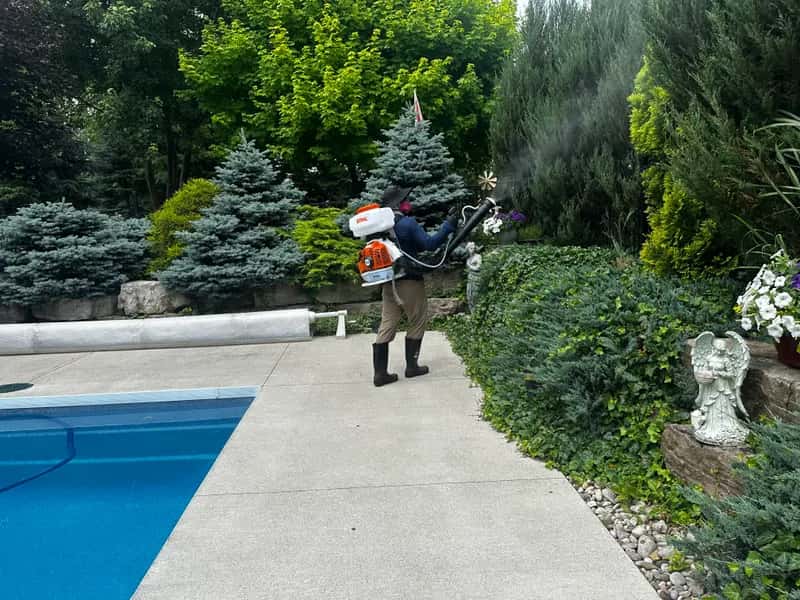
- Treat where adults rest. A professional barrier spray treats the shaded vegetation, hedge interiors, and fence lines where adult mosquitoes spend the day, repeated through the August peak as the residual wears down. It adds to the steps above; it does not replace them.
As an Amazon Associate I earn from qualifying purchases. Price shown on Amazon.ca, at no extra cost to you.
🏆 Best for the Culex breeding sites you can't drain
8.7/10· BuzzSkito ratingSummit Mosquito Dunks (BTI Larvicide)
The single most West Nile–specific product a homeowner can use: a floating Bti dunk that kills Culex larvae in the stagnant, organically rich water they breed in — rain barrels, ornamental ponds, clogged low spots. One dunk keeps working for about 30 days.
Pros
- Targets the exact stagnant water Culex prefer
- Floats and releases Bti slowly
- One dunk lasts ~30 days
Cons
- Larvicide only — no effect on adult biters
- Needs replacing monthly through the season
Where to Get Live Case Numbers
Case counts change weekly and any static article — this one included — goes stale fast. For current confirmed cases and positive mosquito-pool results, go to the primary sources:
- Toronto Public Health — West Nile Virus
- Public Health Ontario — West Nile Virus surveillance
- BuzzSkito Ontario West Nile Virus Tracker — our seasonal summary of the provincial picture
Related Reading
- West Nile Virus in Ontario 2026
- West Nile Virus Mosquito Risk in Ontario
- Mosquito Larvae: Identification and Removal
- Hidden Mosquito Breeding Spots
- Toronto Mosquito Control Service
This article is general health information, not medical advice. If you have symptoms of neuroinvasive illness — high fever with neck stiffness, confusion, or seizures — seek emergency care immediately.
Frequently Asked Questions
Is West Nile virus in Toronto?+
Yes. West Nile virus has been established in Toronto since 2001 and circulates every summer between mosquitoes and birds. Toronto Public Health traps and tests mosquitoes across the city each season and publishes positive-pool results weekly. Human cases in Ontario typically begin appearing in late July and August, peaking through early September, because that is when infected Culex mosquito populations reach their highest levels.
When is West Nile virus season in Toronto?+
Risk runs from roughly mid-July through late September, peaking in August and early September. This lags the general mosquito season because the Culex mosquitoes that spread West Nile need weeks of warm weather to build up virus levels in the local bird population first. Cool, wet Augusts reduce risk; hot, dry Augusts increase it, because Culex mosquitoes breed in stagnant, nutrient-rich water such as catch basins and neglected containers rather than in fresh rainwater pools.
What are the symptoms of West Nile virus?+
About 80% of people infected with West Nile virus have no symptoms at all. Roughly 20% develop West Nile fever: headache, fever, body aches, fatigue, sometimes a rash on the chest or back, and swollen lymph nodes, usually appearing 2 to 14 days after the bite. Fewer than 1% develop neuroinvasive disease — encephalitis or meningitis — with high fever, neck stiffness, confusion, tremors, muscle weakness, or seizures. Neuroinvasive disease is a medical emergency; seek immediate care. Adults over 50 and people who are immunocompromised are at highest risk.
Which mosquitoes carry West Nile virus in Ontario?+
Culex pipiens and Culex restuans are the primary West Nile vectors in southern Ontario. They differ from the aggressive daytime biters most people notice: Culex mosquitoes bite mainly at dusk, night, and dawn, they prefer birds but will bite humans, and they breed in stagnant, organically rich water — storm catch basins, clogged gutters, old tires, unused birdbaths, and neglected containers — not in clean fresh rainwater. This is why targeting stagnant standing water matters more than eliminating every puddle.
How do you prevent West Nile virus?+
There is no human vaccine for West Nile virus, so prevention means avoiding mosquito bites. Empty and scrub any container holding stagnant water at least weekly, clean clogged gutters, and treat water you cannot drain with a BTI larvicide. Wear long sleeves and use a repellent containing DEET or icaridin (look for the PCP registration number on the label), especially at dusk and dawn when Culex mosquitoes feed. Repair window and door screens. A professional barrier spray can add a layer by treating the vegetation where adult mosquitoes rest on your property, but it does not replace these steps.
How many West Nile cases are there in Toronto this year?+
Case counts change weekly through the season. Toronto Public Health publishes confirmed human cases and positive mosquito-pool results during the surveillance period, and Public Health Ontario publishes province-wide figures. For current numbers, check those official sources directly rather than relying on any static page — including this one. We track the provincial picture on our Ontario West Nile virus tracker, updated through the season.
Can you get West Nile virus from another person or a pet?+
No. West Nile virus does not spread through casual contact with an infected person or animal. It is transmitted by the bite of an infected mosquito. Rare exceptions exist through blood transfusion, organ transplant, and from mother to baby during pregnancy or breastfeeding. Horses can develop severe West Nile disease and there is an equine vaccine; dogs and cats are very rarely affected and do not pass the virus to people.
Does mosquito spraying help with West Nile virus?+
Spraying is a mosquito control tool, not a West Nile prevention measure on its own. Municipal programs larvicide storm catch basins, which is where Culex mosquitoes breed heavily in urban Toronto. On a residential property, a barrier spray applied to shrubs, hedges, fence lines, and shaded vegetation acts on adult mosquitoes resting there during the day and leaves a temporary residual that wears down over the following weeks. It belongs alongside eliminating stagnant water and using repellent at dusk, not in place of them. BuzzSkito treats yards across Toronto and the GTA from $99.