Quick Answer
West Nile Virus has circulated in Ontario since 2001 and is detected in GTA mosquito surveillance every year, but about 80% of infected people have no symptoms and severe illness is rare (under 1%); the main vector is the evening-active Culex pipiens mosquito, so reducing standing water plus yard mosquito control lowers exposure.
- West Nile Virus has been present in Ontario since 2001 and is confirmed in GTA mosquito pools every surveillance season.
- About 80% of infected people have no symptoms; roughly 20% develop West Nile Fever, and under 1% develop severe neurological illness.
- Adults over 60 and people with weakened immune systems face the highest risk of severe illness.
- The primary vector, Culex pipiens, breeds in stagnant water and is most active in evening and night hours.
- WNV risk peaks in July and August, with positive mosquito pools usually first detected in late June.
- Professional barrier spray reduces yard mosquito density, and eliminating standing water plus DEET or picaridin further lowers exposure.
— BuzzSkito, GTA mosquito & tick control · 150+ five-star Google reviews
Health information for general education, not medical advice. Consult Public Health Ontario or a healthcare provider about West Nile symptoms.
Note: This article provides public health information about West Nile Virus risk. Always consult official Ontario public health sources and your healthcare provider for medical advice. Part of our Ultimate Mosquito Control Guide.
West Nile Virus in Ontario: The Facts
West Nile Virus (WNV) is a mosquito-borne illness that has been present in Ontario since 2001. The virus circulates between birds (the primary reservoir host) and mosquitoes, with humans infected incidentally when bitten by an infected mosquito. Culex mosquito species — particularly Culex pipiens — are the primary WNV vectors in the GTA.
Ontario public health agencies, including Toronto Public Health and the Peel Region Health Department, conduct annual mosquito surveillance programs, trapping and testing pools of mosquitoes for WNV. Positive pools are confirmed in the GTA every year, with the highest activity typically in July and August.
Toronto is the clearest illustration of that pattern, since its storm catch basins give Culex the stagnant, organically rich water they prefer right through the dry weeks of summer. Our Toronto West Nile risk guide for 2026 maps how the risk builds and falls across the season.
West Nile is not the province’s largest vector-borne illness, though. Ontario’s reportable-disease figures are dominated by the tick side of the ledger — Lyme disease cases in Ontario sets out the most recent published counts, which is useful context when you are deciding how much of the yard budget belongs to mosquitoes and how much to ticks.
Who Is at Risk?
Most people (approximately 80%) infected with West Nile Virus experience no symptoms. About 20% develop West Nile Fever — a flu-like illness with fever, headache, body aches, and sometimes rash. Less than 1% of infected people develop severe neurological illness (encephalitis or meningitis).
However, those at higher risk for severe illness include:
- Adults over 60 years old
- People with compromised immune systems
- People with certain chronic conditions
GTA WNV Risk by City
WNV-positive mosquito pools are detected across the GTA each season. Risk is generally higher in areas with:
- Dense populations of Culex mosquitoes (standing water areas)
- Active bird populations in urban green spaces
- Warm summer temperatures that accelerate mosquito breeding
How Professional Mosquito Control Reduces WNV Risk
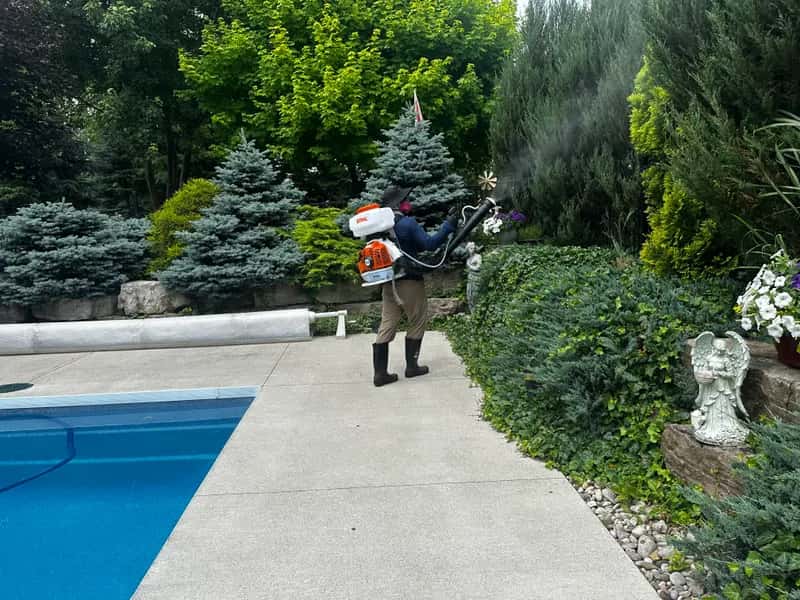
Reducing the population of mosquitoes in and around your property directly reduces your exposure risk. Professional barrier spray targets the adult mosquitoes resting in your yard's vegetation — including Culex species that carry WNV — creating a significant reduction in the mosquito density your family is exposed to during outdoor activities.
No mosquito control method eliminates 100% of mosquitoes, but substantially reducing the number of biting mosquitoes in your immediate environment meaningfully reduces the probability of encountering an infected mosquito.