Compare current Canadian prices across the main trap types:
Top Pick: Propane CO₂ Traps (Mosquito Magnet)
If you want a trap that measurably reduces the mosquitoes in your yard, buy a propane CO₂ trap. These are the only consumer traps that generate real carbon dioxide — by catalytically burning propane — alongside heat and moisture. That combination is exactly what a female mosquito hunts for when she is looking for a blood meal, so the trap intercepts and kills the egg-laying females that seed the next generation.
The market leader is the Mosquito Magnet line (Patriot Plus, Independence, Executive). Independent and CDC-referenced testing supports 70–90% population reduction within roughly a 1-acre radius after 6–8 weeks of continuous running. The catch: the device is $399–$1,299, and you will spend another $400–$600 per season on propane tanks and Octenol or Lurex attractant cartridges. It is a genuine investment that pays off on large, chronic-problem properties. Read our full breakdown in the Mosquito Magnet Canada guide, including model comparison and where to buy.
Best for: cottages, rural acreage, and lots bordering wetlands or standing water, where you are committed to running the trap 24/7 all season.
Runner-Up: CO₂ / Octenol Lure Traps
A step down in price from a full Mosquito Magnet, CO₂/octenol lure traps like the Biogents BG-Mosquitaire and the Flowtron series use a CO₂ source (a small cylinder or a sugar-yeast bottle) plus an octenol lure to mimic a human host, then vacuum the incoming mosquitoes into a catch bag. They target host-seeking females far better than UV light does, at $200–$500 up front. Performance reviews are more consistent than for UV traps but still below a propane Mosquito Magnet. This is the sensible mid-tier if you want mosquito-specific catch without the top-end price and propane logistics.
Budget Tier: UV + Fan Traps and Bug Zappers
This is the category most people picture when they hear “mosquito trap,” and it is the one to be most skeptical about. UV + fan traps (the DynaTrap family) and classic electric bug zappers attract insects with ultraviolet light, then either vacuum or electrocute them. They absolutely catch insects — but University of Florida and Notre Dame research found 80–95% of the catch is non-biting moths, beetles, and midges, with mosquitoes typically under 5%. Female mosquitoes hunt by CO₂ and scent, not light, which is the whole problem.
Adding an octenol cartridge (DynaTrap’s Atrakta) nudges the mosquito catch up a little, but never closes the gap with a CO₂ trap. At $30–$329 these are cheap and satisfying to empty, and fine as a supplemental flying-insect catcher on a cottage deck — just do not expect them to solve a mosquito problem. Our honest DynaTrap Canada review and our bug zapper breakdown go deeper, with model-by-model pricing.
The newest gadget in this tier is not a trap at all: the Photon Matrix laser detects individual mosquitoes and shoots them down instead of luring them in. It is genuinely clever, but it guards one small zone in front of the unit rather than a yard, so judge it against a Thermacell zone, not against a propane trap.
Indoor Mosquito Traps
For inside the house, look at small UV-plus-fan-plus-glue traps such as the Katchy Indoor Insect Trap or DynaTrap’s indoor units ($40–$70). They sit quietly by a lamp or window and stick flying insects to a replaceable glue card. Be realistic: they shine against fungus gnats and fruit flies and will grab the occasional stray mosquito, but they will not clear a bedroom full of mosquitoes. The bigger indoor win is prevention — repair window screens, empty water from houseplant saucers, and reduce the outdoor population so fewer mosquitoes reach your door.
Traps vs Professional Barrier Spray for GTA Yards
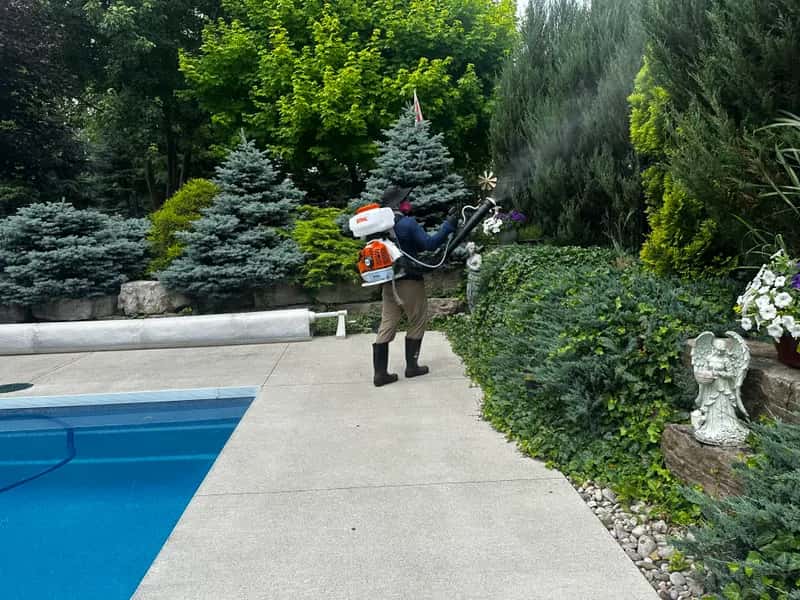
Traps and barrier spray are not really competitors — they solve different problems. A trap slowly thins the mosquito population over weeks and is ideal for large, chronic-problem properties. Barrier spray coats vegetation with a residual that kills mosquitoes on contact for 21–30 days, works the same day, covers the entire yard, and controls ticks. Here is how the options stack up for a typical GTA property:
| Solution | First-year cost | Mosquito reduction | Tick coverage |
|---|---|---|---|
| Propane CO₂ (Mosquito Magnet) | $850–$1,100 | 70–90% over 6–8 weeks | None |
| CO₂ / octenol lure trap | $250–$550 | Good (over weeks) | None |
| UV + fan (DynaTrap) | $290–$380 | Modest (~5% of catch) | None |
| Thermacell zone | $80–$150 | 70–95% in 4.5m zone | None |
| Professional barrier spray | $549–$994 | Whole yard 21–30 days | Yes — full coverage |
The Smart Stack for a GTA Backyard
For a typical Mississauga, Brampton, or Oakville backyard (5,000–15,000 sq ft), the most effective and honest strategy is not a single trap:
- Treat standing water with BTI dunks or bits — kills larvae before they hatch (see our mosquito dunks guide)
- Professional barrier spray — BuzzSkito’s seasonal program for whole-yard, 21–30-day coverage that also handles ticks
- A Thermacell on the deck for an instant personal repellent zone while you sit outside
Add a propane CO₂ trap on top only if you have rural acreage or a cottage where the multi-week investment genuinely pays off. On a standard suburban lot, your neighbours’ yards keep re-seeding the mosquito population faster than any trap can thin it — which is exactly why whole-yard barrier spray outperforms trapping for most GTA homeowners.
And if what you actually need is a knock-down before one specific evening rather than a slow population drop, that is a job for a handheld fogger and mosquito fogger liquid, not a trap — it clears the adults flying right now, but leaves almost no residual, so they are back by the next night.