Quick Answer
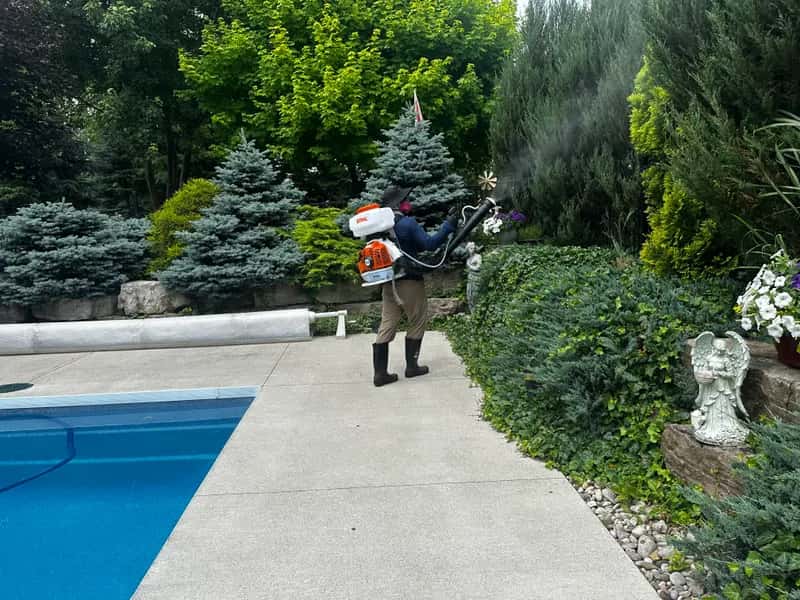
Hamilton and Burlington face some of the GTA region's heaviest mosquito and tick pressure because the Niagara Escarpment, Cootes Paradise marsh, Bronte Creek, and the Royal Botanical Gardens all border residential neighbourhoods. Properties near these features should start seasonal barrier spray in early May, with tick applications repeating roughly monthly through September so treatments stay on schedule across peak nymph season.
- Properties within 500 m of Niagara Escarpment trails consistently experience elevated mosquito pressure.
- Cootes Paradise — one of the largest wetlands in the western Lake Ontario basin — drives overspill mosquito pressure into Westdale, Ainslie Wood, and the McMaster area.
- The Royal Botanical Gardens' 1,100 hectares of naturalized land supports established populations of both mosquitoes and blacklegged ticks.
- Blacklegged ticks are documented at Dundas Valley Conservation Area, Fifty Point Conservation Area, and along the Escarpment trail network.
- Bronte Creek Provincial Park is documented blacklegged tick habitat affecting Bronte, West Oak Trails, and River Oaks.
- Mosquito pressure builds quickly once temperatures consistently exceed 10°C, so the first treatment should land in early May.
— BuzzSkito, GTA mosquito & tick control · 150+ five-star Google reviews
Hamilton and Burlington homeowners deal with some of the most diverse mosquito and tick pressure in the GTA region — escarpment properties, waterfront neighbourhoods, and conservation land boundaries all create unique challenges. This guide explains why, and what to do about it.
As an Amazon Associate I earn from qualifying purchases. BuzzSkito only points to products we would genuinely use or recommend, at no extra cost to you.
As an Amazon Associate I earn from qualifying purchases. Price shown on Amazon.ca, at no extra cost to you.
🏆 Our Top Pick — Tick Removal
Escarpment trails, Dundas Valley, Bronte Creek and the RBG are all places you can pick up a tick on the walk, not just in the yard. A fine-tipped remover grips a poppy-seed-sized nymph right at the mouthparts and lifts it straight out — the steady-pressure method public-health agencies recommend — and it is small enough to live in the car or the hiking pack.
Pros
- Grips close to the skin at the mouthparts
- Handles even tiny nymphs
- Small enough for the glovebox or trail bag
Cons
- Still needs a slow, steady straight pull
- Only useful if it is where you are — keep one per bag
Hamilton: Why Mosquito and Tick Pressure Is High
Hamilton's geography creates multiple distinct mosquito pressure zones:
Niagara Escarpment and Trail Systems
The Escarpment face runs directly through Hamilton — from Dundas to Stoney Creek — and its wooded ravines, seasonal streams, and shaded vegetation are prime mosquito breeding and resting habitat. Properties in Ancaster, Dundas, Westdale, and the mountain brow consistently report high mosquito pressure from May through August.
Cootes Paradise and Hamilton Harbour
Cootes Paradise marsh — one of the largest remaining wetlands in the western Lake Ontario basin — produces massive mosquito populations each season. Neighbouring Westdale, Ainslie Wood, and McMaster University-area properties experience significant overspill pressure from the marsh throughout the season.
Red Hill Creek and Stoney Creek Ravines
The Red Hill Valley and Stoney Creek waterway create continuous mosquito corridors across the lower city. Properties along these ravine systems, including Rymal, Binbrook, and Heritage Green, experience elevated season-long pressure.
Stoney Creek has enough of its own geography — the Fifty Point shoreline, Winona, and the Escarpment shelf above Heritage Green — that we treat it separately in our Stoney Creek mosquito and tick guide.
Tick Risk in Hamilton
Blacklegged ticks are established along Hamilton's Escarpment trail network, Dundas Valley Conservation Area, and Fifty Point Conservation Area near Winona. The Hamilton Conservation Authority has documented tick populations across most of its managed lands. Properties backing onto any forested conservation area should prioritize professional tick treatment.
The west-end communities carry the heaviest share of that risk, since Dundas Valley is one of the most consistently tick-positive conservation blocks the HCA surveys. We go through the Escarpment-edge streets and the month-by-month treatment timing in the Ancaster and Dundas tick control guide.
If you walk those Escarpment and Dundas Valley trails, the low-cost defence is the same one public-health guidance gives for any wooded area in Ontario: tuck pant legs into socks, wear light colours so a crawling tick shows, and apply a DEET or icaridin (picaridin) repellent to the lower legs according to the label. Check price on Amazon.ca →
Burlington: Waterfront and Greenbelt Pressure
Lake Ontario Waterfront Neighbourhoods
Burlington's lakefront — from Aldershot to Burloak Drive — experiences mosquito pressure from both the lake shoreline wetland fringe and the mature tree canopy that characterizes older lakefront neighbourhoods. Roseland, Shoreacres, LaSalle Park, and Aldershot are consistently high-pressure zones.
Bronte Creek Provincial Park
Bronte Creek runs north-south through western Burlington, and the provincial park surrounding it is a documented blacklegged tick habitat. Properties in Bronte, West Oak Trails, and River Oaks that back onto the Bronte Creek corridor or adjacent conservation lands face real tick risk throughout the season.
Royal Botanical Gardens
The RBG's 1,100 hectares of naturalized land bordering western Burlington and Hamilton contains established populations of both mosquitoes and blacklegged ticks. North Burlington and Waterdown-area properties adjacent to RBG lands should treat both mosquitoes and ticks each season.
Bronte Creek and the RBG are the two anchors of a wider Halton tick belt that also reaches into Tyandaga, Headon Forest and the Oakville side of 16 Mile Creek. Our 2026 Oakville and Burlington tick hot spot ranking sets those neighbourhoods against each other.
For when that pressure actually arrives, tick season in Burlington walks the calendar from the first spring adults through the May-to-July nymph peak and into the autumn, with the lakefront and escarpment-edge neighbourhoods called out separately.
Alton Village and New-Build Neighbourhoods
Rapid development in north Burlington has created new mosquito pressure through construction drainage ponds, landscaped retention basins, and newly planted vegetation. New-build homeowners in Alton Village, Millcroft, and The Orchard often encounter unexpected mosquito pressure in their first seasons.
Recommended Treatment Schedule for Hamilton and Burlington
| Treatment | Timing | Target |
|---|---|---|
| Mosquito Treatment 1 | Early May | Establish barrier before peak season |
| Tick Treatment 1 | Mid May | Nymphs emerging along wooded edges |
| Mosquito Treatment 2 | Early June | Maintain season coverage |
| Tick Treatment 2 | Mid June | Peak nymph activity — renews residual before it lapses |
| Mosquito Treatment 3 | Early July | Peak mosquito season |
| Tick Treatment 3 | Mid July | Tail of nymph season; renews residual as wildlife carry ticks back in |
| Mosquito Treatment 4 | Early August | Late-season surge |
| Tick Treatment 4 | Mid August | Adults beginning to re-emerge |
| Mosquito Treatment 5 | Early September | Season close-out |
| Tick Treatment 5 | Mid September | Carries adult-tick cover into the autumn |
Neighbourhoods We Serve in Hamilton and Burlington
Hamilton
Ancaster, Dundas, Westdale, Ainslie Wood, Stoney Creek, Heritage Green, Binbrook, Waterdown, Rymal, Mount Hope, Winona, Rosedale, and Downtown Hamilton.
Burlington
Alton Village, Millcroft, The Orchard, Roseland, Shoreacres, LaSalle Park, Downtown Burlington, Headon Forest, North Burlington, Palmer, Tyandaga, Bronte, West Oak Trails, River Oaks, Aldershot, and Waterdown.
Frequently Asked Questions
Does BuzzSkito serve Hamilton and Burlington?
Yes. BuzzSkito provides professional mosquito and tick barrier spray services across Hamilton (including Stoney Creek, Dundas, Ancaster, and Waterdown) and Burlington (including Alton Village, Millcroft, Roseland, and Shoreacres). Call (289) 216-5030 for a free quote.
Why are mosquitoes so bad near the Niagara Escarpment?
The Escarpment's wooded slopes and ravine streams create ideal breeding habitat — shade, standing water in seasonal pools and stream eddies, and dense vegetation where adult mosquitoes rest during the day. Properties within 500m of Escarpment trails consistently experience elevated mosquito pressure.
Are ticks a problem in Burlington waterfront neighbourhoods?
Yes. Lakeshore neighbourhoods with mature tree cover, Bronte Creek Provincial Park, and the Royal Botanical Gardens all support established blacklegged tick populations. Shoreacres, Roseland, and North Burlington properties near conservation lands have documented tick activity.
What is the best time to schedule mosquito control in Hamilton?
The first treatment should be scheduled for early May, before peak mosquito activity begins. In Hamilton, the combination of Cootes Paradise marsh, Hamilton Harbour, and Red Hill Creek valley means mosquito pressure builds quickly once temperatures consistently exceed 10°C.
Related Guides
- Hamilton Mosquito Control Service
- Hamilton Tick Control Service
- Burlington Mosquito Control Service
- Burlington Tick Control Service
- The Ultimate Backyard Mosquito Control Guide (GTA Edition)
- The Ultimate Tick Control Guide for Ontario Homeowners
- Lyme Disease Prevention in Ontario
Until the yard is on a treatment schedule, the trail days are where most Hamilton and Burlington ticks are picked up. Factory-treated permethrin clothing (sold in Canada as pre-treated garments for ages 16 and over) covers the ankle-to-knee band where ticks board, and a tick check on the drive home catches the rest. Check price on Amazon.ca → See tick repellents on Amazon.ca →