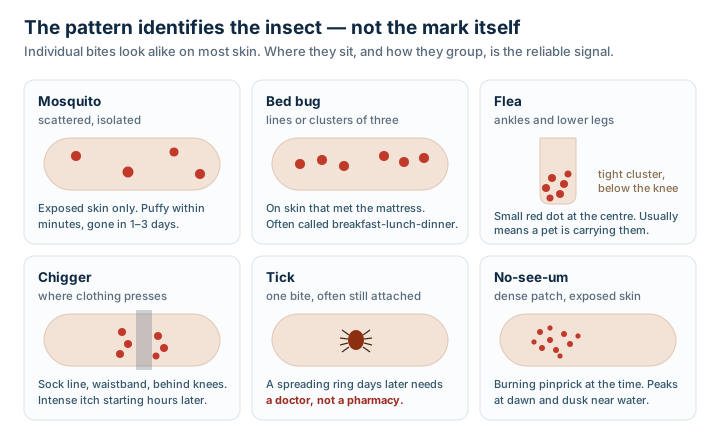
BuzzSkito Mosquito & Tick Control Specialists · Published April 26, 2026 · Updated October 23, 2026
If you have ever walked out to your patio in early June and been chased back inside by a swarm of tiny biting insects that draw blood when they bite, you are not alone — and you are not dealing with mosquitoes. You are dealing with black flies. This guide covers when they come out in Ontario, where they breed, and how professional treatment controls them as part of a mosquito barrier spray program.
Black fly or another biting fly? Ontario quick ID
| Fly | Size and look | When it bites | The bite |
|---|---|---|---|
| Black fly | 1–5 mm; dark and humpbacked, like a tiny housefly | Daytime, mid-May through June; peaks about 9–11 a.m. and 4–7 p.m. | Cuts the skin: a sharp nip and a small wound that bleeds, then swells and itches |
| Mosquito | 3–6 mm; slender, with long legs | Late spring into fall, worst in summer; most feed between dusk and dawn | Pierces with a needle-like mouthpart: little pain at first, then an itchy welt |
| No-see-um (biting midge) | 1–2 mm; small enough to get through regular window screens | Mostly dusk, night and morning | Stinging or burning with a defined red area; usually minutes to hours, up to 2–3 days of itch in sensitive people |
| Deer fly | 10–13 mm; wings tinted or with dark patterns | Late June through August; hot, still, sunny afternoons near woods and water | Cuts the skin; a painful bite |
| Horse fly | 14–19 mm; the largest of these flies | Late June through August, in the same places as deer flies | Cuts the skin; bleeds more and takes longer to settle than a black fly bite |
Sizes from Environment and Climate Change Canada (black flies), UF/IFAS Extension (no-see-ums, with their screens, biting hours and bite) and NC State Extension (deer and horse flies, with the deer fly’s wings); black fly months and biting peaks from Ontario Parks and Penn State Extension; mosquito feeding hours from the Ontario government. The mosquito size, the deer and horse fly season and the other bite descriptions restate this page’s own sections below.
What Are Black Flies?
Black flies (family Simuliidae) are small, dark, hump-backed biting flies that emerge in massive numbers each spring across Ontario. They are sometimes called "buffalo gnats" or "turkey gnats," though Ontarians almost universally call them black flies. There are more than 60 black fly species in Canada, with several common to the GTA — including Simulium venustum and Simulium decorum, two of the most aggressive human-biting species.
Adult black flies are 1 to 5 millimetres long — much smaller than mosquitoes — with a distinctive humped thorax that gives them the look of miniature houseflies. They are dark grey to black, with clear wings and short antennae. As with mosquitoes, only female black flies bite: Environment and Climate Change Canada says only female black flies bite, and Health Canada says only female mosquitoes feed on animal or human blood. Females need a blood meal to develop their eggs, while males feed on plant nectar.
When Do Black Flies Come Out in Ontario?
Black flies in Ontario follow a predictable seasonal pattern driven almost entirely by water temperature. Larvae develop in flowing streams over the winter, and adults emerge once the water and air reach the right temperature window.
The Black Fly Calendar in the GTA
- Late April – Early May: First emergence. Numbers are still light. Mostly a problem near major waterways.
- Mid-to-Late May: Population explosion. The first major waves emerge as streams reach 13°C–15°C.
- Early June – Late June: Peak black fly season across the GTA. The worst weeks of the year for outdoor activity near rivers, ravines, and forested properties.
- Early July: Populations begin to decline rapidly as flowing water warms past optimal larval temperature and host species shift their behaviour.
- Mid-July onward: Most black flies have completed their adult stage. Pressure drops to background levels for the rest of the summer.
This is very different from mosquito season in the GTA, which builds slowly through May and peaks in July and August. Black flies are an early-summer problem; mosquitoes are a mid-to-late-summer problem. Many homeowners who book their first professional mosquito treatment in mid-May get the dual benefit of cutting black fly pressure during the peak weeks.
The end of black fly season does not mean the end of biting flies. As black fly numbers collapse in early July, their much larger relatives in the same order take over — deer flies and horse flies peak from late June through August, on hot, still, sunny afternoons, in exactly the wooded and waterside spots black flies just vacated. So if something drew blood in your yard in late July, it was almost certainly not a black fly, and telling a deer fly from a horse fly comes down to two things you can see: the banding on the wings and the pattern in the eyes.
Black Flies vs Mosquitoes: How to Tell the Difference
Both are small biting insects, but the differences matter when deciding how to deal with them.
| Feature | Black Fly | Mosquito |
|---|---|---|
| Size | 1–5 mm, compact | 3–6 mm, slender |
| Shape | Humpbacked, like a tiny housefly | Long-legged, narrow body |
| Time of day | Daylight (morning + late afternoon) | Dawn, dusk, and night |
| Bite mechanism | Cuts the skin (bleeds) | Pierces with proboscis (welt) |
| Bite pain | Sharp / painful | Initially painless, itchy after |
| Peak season (GTA) | Late May – June | July – August |
| Breeding habitat | Flowing water | Standing water |
| Disease risk (Ontario) | Low for humans | West Nile Virus possible |
Other biting flies in Ontario
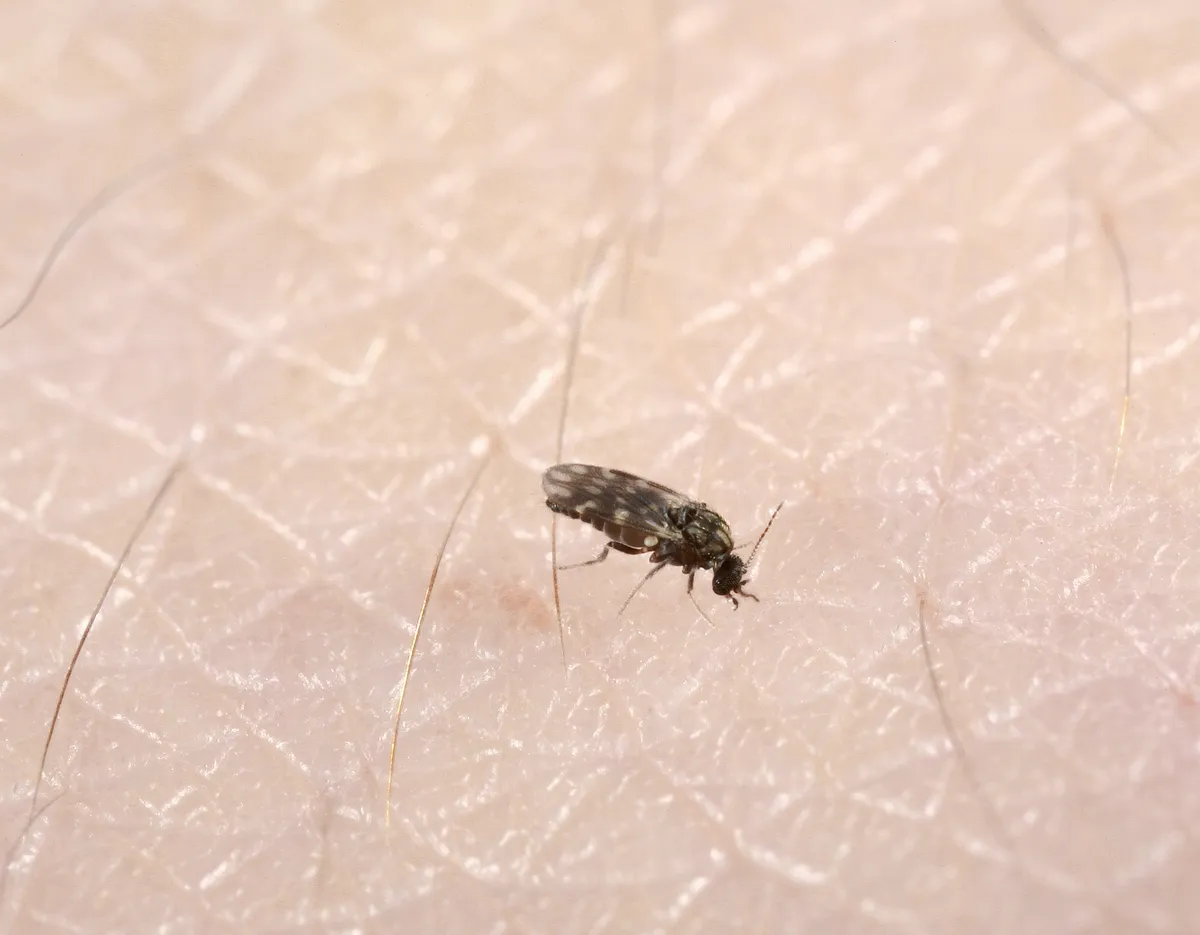 No-see-umsEven smaller (1–2 mm), slip through regular window screens and bite mostly at dusk, night and morning
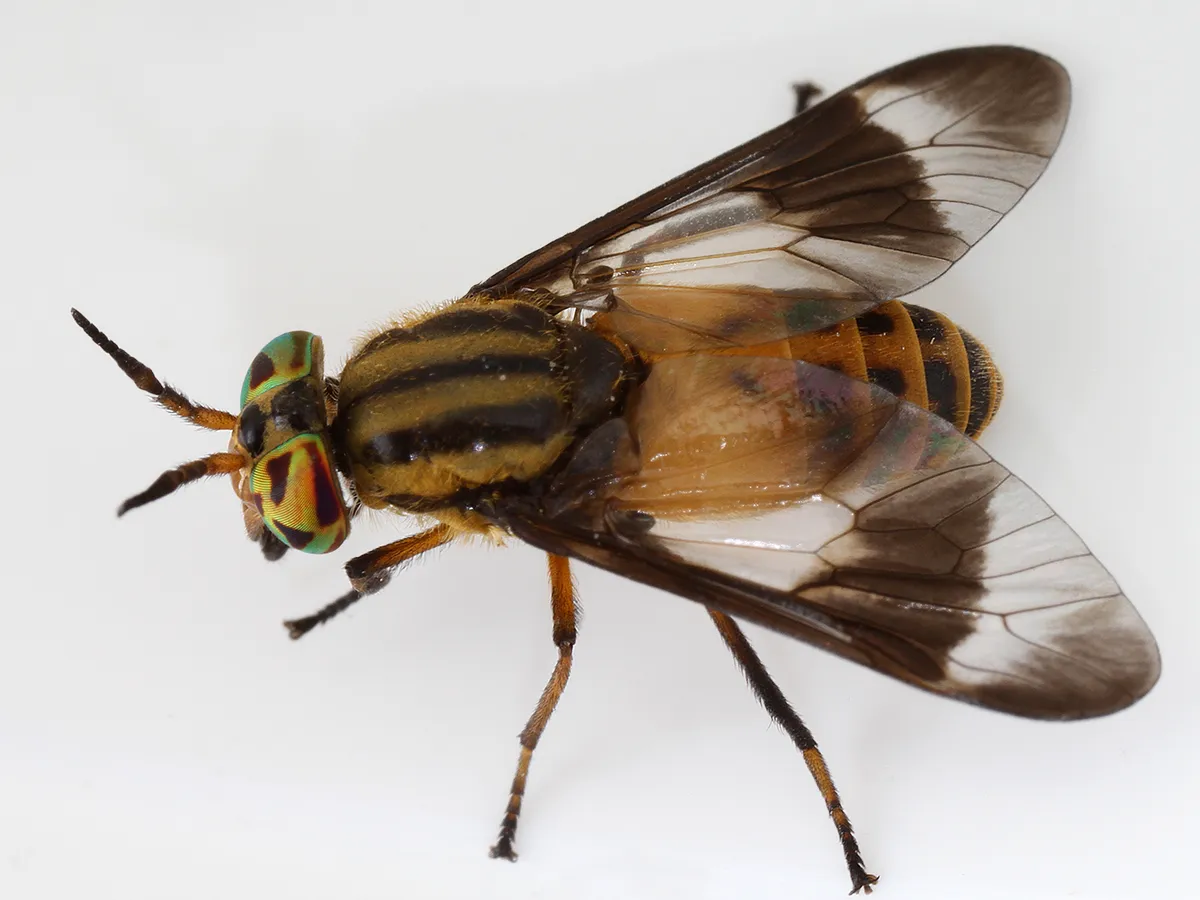 Deer fliesFar bigger (10–13 mm) with patterned wings; a painful bite on hot, sunny afternoons from late June to August
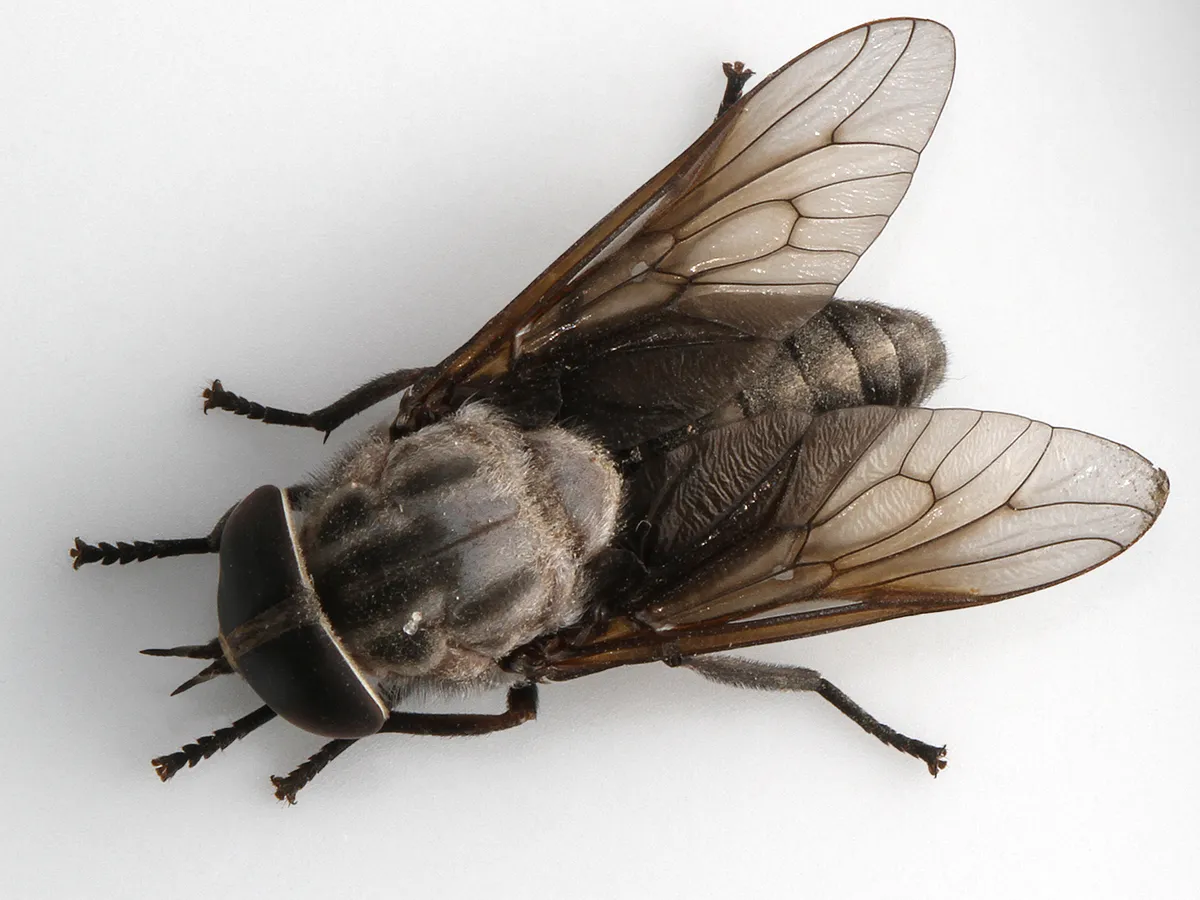 Horse fliesThe largest (14–19 mm); the bite bleeds more and takes longer to settle than a black fly bite
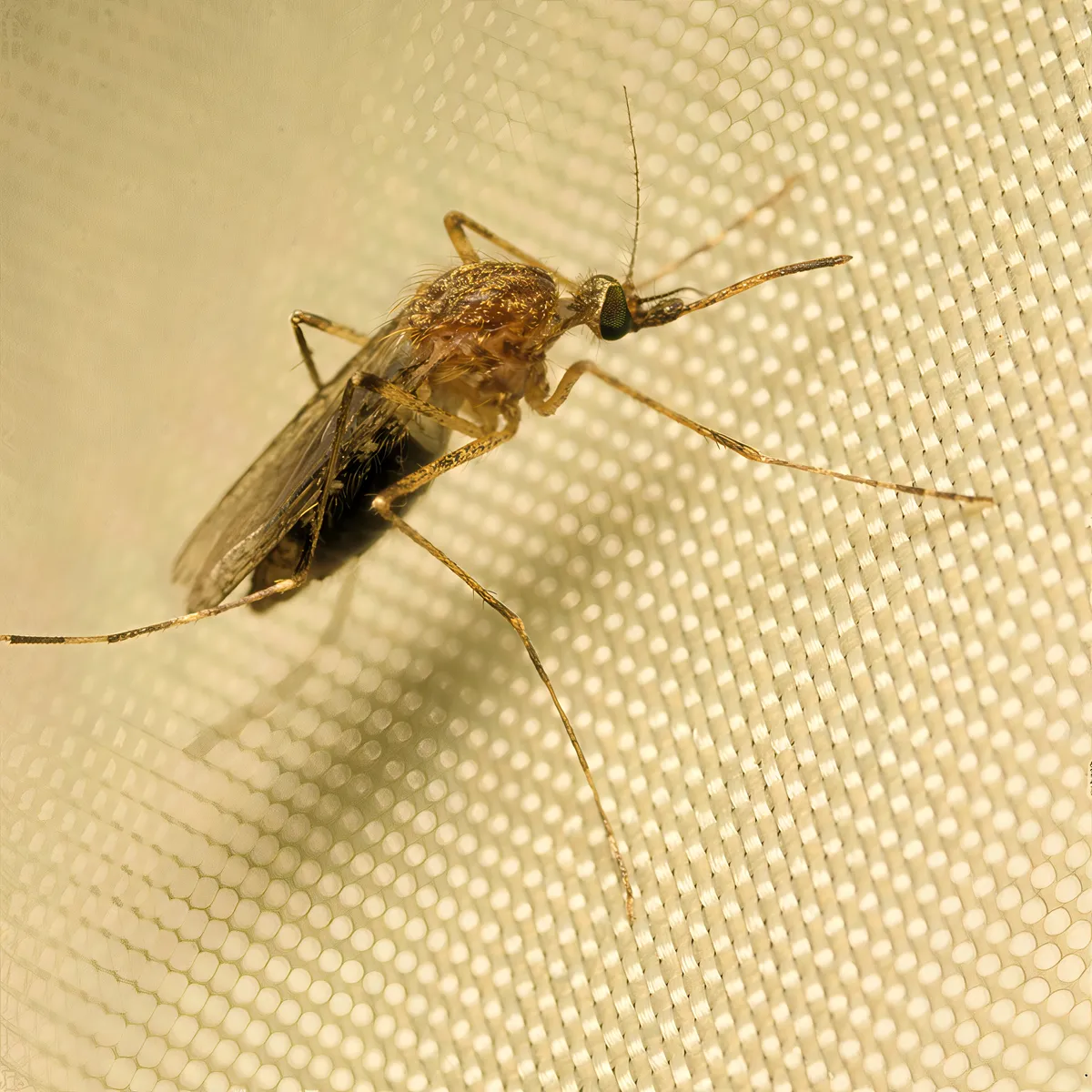 MosquitoesSlender and long-legged; most feed from dusk to dawn and leave an itchy welt, not a bleeding nick
Photos: No-see-ums: division, CSIRO, CC BY 3.0, via Wikimedia Commons, CC BY 3.0. Deer flies: CDC/ Dr. Gary Alpert - Urban Pests - Integrated Pest Management (IPM); photo: Dr. Gary Alpert (CDC Public Health Image Library, phil.cdc.gov), public domain. Horse flies: CDC/ Dr. Gary Alpert - Urban Pests - Integrated Pest Management (IPM) (CDC Public Health Image Library, phil.cdc.gov), public domain. Mosquitoes: ImagePerson, CC BY 4.0, via Wikimedia Commons, CC BY 4.0.
As an Amazon Associate I earn from qualifying purchases. BuzzSkito only points to products we would genuinely use or recommend, at no extra cost to you.
Where Do Black Flies Breed?
This is the single most important fact about black flies, because it determines who is at risk: black flies breed exclusively in clean, flowing water. Larvae attach themselves to submerged rocks, branches, and vegetation in streams and rivers, where they filter-feed on organic particles in the current. They cannot develop in standing water — which is the opposite of mosquitoes.
That means properties near the following waterways see the worst black fly pressure each spring:
- Credit River and tributaries — affecting much of Mississauga, Oakville, Brampton, Caledon, Halton Hills, and Georgetown
- Humber River system — affecting Etobicoke, Vaughan, Woodbridge, Kleinburg, and parts of Brampton
- Don River and ravine network — affecting much of central Toronto, North York, and Thornhill
- Rouge River — affecting Scarborough, Markham, and Pickering
- Sixteen Mile Creek — affecting Milton and Oakville
- Bronte Creek — affecting Oakville and Burlington
- Red Hill Creek and Stoney Creek — affecting Hamilton and Stoney Creek
- Niagara Escarpment streams — affecting Ancaster, Dundas, Burlington, and the Halton Hills corridor
Black flies are strong fliers and can travel several kilometres from their breeding sites in search of hosts. If your property is anywhere within a few kilometres of a clean, flowing waterway — and most of the GTA is — you will see black flies during the spring emergence. Toronto homeowners with properties backing onto Don Valley ravines, Humber River corridors, or High Park feel this acutely each year.
For a neighbourhood-level breakdown of which streets those watersheds actually hit hardest, our 2026 GTA black fly map walks the Credit River corridor, the Don Valley, 16 Mile Creek, and the escarpment foot city by city.
Why Black Fly Bites Are Different
Black flies do not pierce the skin like mosquitoes — they cut it. Their mouthparts are designed to slice a small wound and lap up the pooling blood, similar to a horsefly but on a much smaller scale. The bite is often felt sharply when it happens, unlike a mosquito bite which usually goes unnoticed until the welt forms.
The aftermath is also distinct:
- A small, bleeding puncture wound
- Localized swelling that can persist for days
- Intense itching that often peaks 24–48 hours after the bite
- Small bruise-like marks at the bite site for some individuals
- In cases of multiple bites, "black fly fever" — fever, headache, swollen lymph nodes, and nausea
Black flies in Ontario are not known to transmit human pathogens, so the medical risk is low. The quality-of-life impact, however, is severe. A single bad black fly week can drive families indoors for weeks, and the bites themselves can take longer to heal than mosquito bites. For pets — particularly dogs with thin ear leather and exposed bellies — black fly bites can cause hot, painful welts that linger.
Dogs take the worst of it on the ear flaps, where the skin is thin and the coat gives no cover. Repellents formulated for human skin are not labelled for use on animals, so the right move is to ask your vet what suits your dog and to check that anything you apply to an animal carries a Canadian PCP registration number on its label. Check dog fly repellents on Amazon.ca →
Black Fly Bite: Why They Hurt & How to Treat Them
A black fly bite hurts in a way a mosquito bite usually does not. Because the fly cuts the skin rather than piercing it, you often feel a sharp pinch the moment it bites — and the small wound tends to bleed for a moment afterward. The fly’s saliva contains anticoagulants and mild anaesthetic compounds that keep the blood flowing and mask the bite, which is exactly why the after-effects — swelling, redness, and itching — can be more intense and longer-lasting than a mosquito welt.
First Aid for a Black Fly Bite
Prompt care keeps a black fly bite from turning into a bigger problem. The basics:
- Wash it right away. Clean the bite with soap and cool water to remove residual saliva and lower the infection risk from the open wound.
- Cool the swelling. Apply a cold compress or ice wrapped in cloth for 10–15 minutes to bring down inflammation.
- Calm the itch. An after-bite itch relief product, hydrocortisone cream, or an oral antihistamine can take the edge off the itch and swelling. Check after-bite itch relief on Amazon.ca →
- Do not scratch. Scratching reopens the wound and is the main way black fly bites become infected. Keep it covered if you cannot leave it alone.
One thing worth checking before you treat: if the wound is much bigger than a pinprick and stung sharply the instant it landed, it may not be a black fly bite at all. Horse flies and deer flies cut the skin the same way, but at several times the size, so they bleed more, raise a wider welt, and take longer to settle — treating a horse fly or deer fly bite follows the same wash-cool-soothe order but with different healing timelines and infection signs to watch for.
Signs of Infection or Allergy — When to See a Doctor
Most black fly bites are harmless and heal on their own, but watch for these warning signs and seek medical care if they appear:
- Spreading redness, warmth, or pus around the bite — signs of a secondary bacterial infection.
- Black fly fever after multiple bites — fever, headache, swollen or tender lymph nodes, and nausea.
- A large, hot, hard swelling that keeps growing over 24–48 hours rather than settling.
- Any sign of a severe allergic reaction — hives spreading across the body, facial or throat swelling, or difficulty breathing. This is a medical emergency; call for help immediately.
How Long a Black Fly Bite Takes to Heal
A typical black fly bite is itchiest 24–48 hours after it happens and settles within a few days, but it can take a week or more to fully heal — longer than a mosquito bite, and often leaving a small bruise-like mark or scab. Keeping the wound clean, cool, and unscratched is the single biggest factor in how fast it clears and whether it scars.
Where Black Flies Hide on Your Property
Black flies do not breed in your yard, but they rest in your yard between feeding bouts. They prefer:
- The shaded undersides of shrubs and hedges
- Dense ornamental plantings
- Tree canopies, especially on the leeward (downwind) side
- Tall grass at property edges
- Cool, damp, sheltered corners of fences and structures
This resting behaviour is exactly what makes professional barrier spray effective against them. The treatment targets the same surfaces black flies use for cover.
Why Property-Edge Treatment Matters
Black flies arrive from outside your property and cannot be eliminated by source reduction the way mosquitoes can. You cannot drain a river. What you can do is treat the rest sites and feeding zones in your immediate yard environment so that the black flies that arrive do not stay long, do not feed in numbers, and do not establish a comfortable population during the peak weeks.
Professional barrier spray for mosquitoes — applied to vegetation along property edges, treelines, fences, ornamental beds, and the underside of shrubs — collaterally controls black flies during the same May–June window when both insects are pressuring your yard. A properly timed first treatment in mid-to-late May provides peak coverage right when black fly emergence is heaviest.
What Homeowners Can Do (Beyond Treatment)
Black fly control is mostly about reducing exposure during peak weeks. A few things help:
As an Amazon Associate I earn from qualifying purchases. BuzzSkito only points to products we would genuinely use or recommend, at no extra cost to you.
- Avoid scented products. Floral perfumes, scented sunscreens, and hair products attract black flies.
- Wear light colours. Black flies are strongly attracted to dark blue, brown, and black. Light grey, beige, and white are far less attractive.
- Cover up. Long sleeves, pants, and a hat block most bites — black flies are notorious for crawling into hairlines and behind ears. That last part is why a fine-mesh head net worn over a brimmed hat is worth keeping in the shed for the bad weeks: it puts physical mesh between the flies and your hairline, and it packs down to nothing. Check bug head nets on Amazon.ca →
- Use DEET or picaridin repellent on exposed skin. Picaridin (also sold as icaridin) is odourless, non-greasy, and does not damage plastics or gear the way DEET can, which makes it popular for all-day spring wear. Check picaridin repellents on Amazon.ca → See our full picaridin vs DEET comparison to pick the right active.
- Buy permethrin-treated clothing. Factory-treated shirts, pants, and socks are highly effective for outdoor workers, hikers, and anyone spending long hours near waterways during the May–June emergence — the permethrin is bonded into the fabric at the factory, kills black flies on contact, and lasts up to 70 wash cycles on Insect Shield garments. Health Canada does not approve permethrin liquids and sprays for consumers to treat their own clothing, so buy the garments already treated rather than treating your own. Check permethrin-treated clothing on Amazon.ca → Read our permethrin guide for Canada for what is and is not approved here.
- Stay away from waterways during peak emergence. The closer you are to a river or stream in late May and early June, the heavier the pressure.
- Eliminate yard rest sites. Trim back overgrown shrubs and dense vegetation along the property edge.
- Schedule a barrier spray. A professional treatment in mid-May provides the strongest coverage during the worst three weeks.
How to Get Rid of Black Flies
Getting rid of black flies works differently than getting rid of mosquitoes, and understanding why comes down to one thing: where they breed. Mosquitoes lay eggs in standing water, so you can knock their numbers down by dumping saucers, cleaning gutters, and draining anything that holds water. Black flies do the opposite — their larvae attach to rocks and vegetation in clean, fast-flowing rivers and streams, feeding on particles in the current. You cannot drain a river, and there is no yard chore that removes their breeding site. That means “getting rid of black flies” is really about protecting yourself and making your yard an unwelcome place for them to rest and feed.
1. Personal Protection First
- Cover up and go light. Long sleeves, pants, and a hat block most bites, and black flies are far less drawn to light grey, beige, and white than to dark blue, brown, and black.
- Use repellent. DEET or picaridin on exposed skin, and factory-treated permethrin clothing for long hours near waterways during the May–June emergence.
- Skip the scents. Floral perfumes, scented sunscreens, and hair products all attract black flies.
As an Amazon Associate I earn from qualifying purchases. Price shown on Amazon.ca, at no extra cost to you.
🏆 Best Repellent for Black Flies
8.7/10· BuzzSkito ratingPicaridin (Icaridin) Insect Repellent
For black flies, a 20% picaridin repellent is our go-to frontline defence — it is odourless, non-greasy, and won't melt plastics or gear the way DEET can, so it holds up through long spring days near waterways. Apply to every patch of exposed skin, since black flies crawl into hairlines and behind ears.
Pros
- Odourless and non-greasy
- Safe on plastics, sunglasses, and gear
- All-day protection against black flies and mosquitoes
Cons
- Needs reapplication after heavy sweating
- Does not cover clothing — pair with factory-treated permethrin clothing for that
2. Make Your Yard Less Hospitable
- Cut the rest sites. Trim overgrown shrubs, hedges, and dense vegetation along property edges where black flies shelter between feeding bouts.
- Open up shaded, damp corners. The cool, sheltered pockets near fences and structures are exactly where they linger.
- Time it to the season. The pressure is heaviest in late May and June, so your yard prep and any treatment matter most in that window.
There is also a purely physical answer for the three worst weeks, and it is the one people forget: mesh does not care how motivated a black fly is. A pop-up screen house over the patio table hands back the mid-morning and late-afternoon hours when black flies feed hardest — the exact hours families otherwise spend indoors in June. One thing to check on the listing before you buy: black flies are small enough at the 1–2 mm end that a coarse screen lets some through, so look for a fine or no-see-um-rated mesh rather than standard window screen. Check screen houses on Amazon.ca → Our screen tent guide for Canadian backyards covers how the mesh ratings compare.
3. Treat the Rest Zones with Barrier Spray
Because you cannot touch the breeding source, the most effective control is a professional barrier spray applied to the surfaces black flies use for cover — leaf undersides, treelines, fences, and ornamental beds. It will not stop every fly drifting in from a distant river, but it dramatically reduces the population that settles, feeds, and bites in your yard. A first treatment timed for mid-to-late May delivers peak coverage right as emergence spikes.
How BuzzSkito Helps With Black Flies
Our standard mosquito barrier spray service includes black fly control as part of the treatment. We focus the application on the resting habitats both insects share — under shrub canopies, along fence lines, in dense ornamental beds, on the underside of broad leaves, and across the lawn-bed transition zone. The residual product is applied according to label directions, and the first treatment is timed for the peak black fly window. Rain within 1 hour of your treatment? We come back and re-treat free, on every plan.
For properties near waterways we recommend booking the first spray of the season for mid-to-late May — the Credit River backyards covered by our Mississauga mosquito control service, the Don Valley ravine homes we treat under North York mosquito control, and the Humber-adjacent properties in Vaughan and on our Etobicoke mosquito control route. That single timing decision is the difference between a tolerable spring and a wash-out spring.
Get a Free Quote
If you are tired of dodging black flies in May and June, we can help. Book a free yard assessment and we will walk through your property, identify rest zones and likely pressure sources, and give you an honest quote for seasonal coverage. We service 19 cities across the GTA — same-week scheduling for new customers during the spring rush.
If you would rather gear up for the May–June wave yourself, the repellents, protective clothing, and screened shelters we recommend for Canadian conditions are organised by pest and category in our pest product guides.
Related Guides
- The Ultimate Backyard Mosquito Control Guide (GTA Edition)
- When Does Mosquito Season Start in the GTA?
- Mosquito Control Near Water: Ravines, Ponds & Waterfront Properties
- 12 Ways to Prevent Mosquitoes in Your Backyard
- Picaridin vs DEET: Which Repellent Works Best in Canada?
- Permethrin in Canada: Yard & Clothing Spray Guide
- Bug-Protective Clothing: Jackets, Head Nets & Suits for Canada
- Best Screen Tents & Gazebos for Canadian Backyards
- Toronto Mosquito Control
- BuzzSkito Mosquito Control Services