Quick Answer
Mosquito season in Toronto typically starts in mid-to-late May, once overnight lows stay above 10°C and daytime highs reach 15°C; ravine valleys wake up 1–2 weeks earlier than open suburbs, July is the worst month, and the season ends after the first hard frost in late September to October.
- Mosquitoes become active when overnight lows stay above 10°C and daytime highs reach 15°C — usually mid-to-late May in Toronto.
- Sheltered ravine corridors (Don Valley, Humber Valley) turn active 1–2 weeks before open suburban yards.
- Lake Ontario delays lakefront emergence by about a week in spring and extends the season by about a week into fall.
- July is Toronto’s worst mosquito month; peak season runs late June through late August.
- The season lasts roughly 18–22 weeks and ends after the first hard frost (below 0°C), typically late September to October.
- A professional barrier spray’s residual wears down within weeks; BuzzSkito season plans run from 5 monthly sprays (Basic) to 10 every two weeks (Standard) to 20+ weekly (Exclusive).
— BuzzSkito, GTA mosquito & tick control · 150+ five-star Google reviews
Toronto's mosquito season follows predictable patterns shaped by Lake Ontario, the city's extensive ravine system, and spring temperature thresholds. Understanding these patterns helps you time your first treatment for maximum season-long protection. Part of our Ultimate Backyard Mosquito Control Guide.
When Does Mosquito Season Start in Toronto?
Mosquito season in Toronto typically begins between mid and late May. The trigger is temperature: mosquitoes become active when overnight lows consistently stay above 10°C and daytime highs reach 15°C or higher. At these temperatures, overwintering adult mosquitoes emerge from dormancy, and the first eggs laid in standing water begin to hatch into larvae.
In 2026, based on historical patterns and recent spring trends, Toronto homeowners should expect:
- First mosquito activity: Mid to late May in sheltered areas (ravines, shaded backyards)
- Noticeable population buildup: Early to mid June
- Peak mosquito season: Late June through late August
- Worst single month: July
- Season decline: Late September to early October
The Lake Ontario Effect
Lake Ontario significantly influences mosquito season timing across Toronto, creating a noticeable difference between lakefront and inland neighbourhoods:
Spring Delay
The lake absorbs warmth slowly in spring, keeping waterfront neighbourhoods (The Beaches, Mimico, Port Credit) cooler than inland areas. This delays mosquito emergence by approximately one week compared to locations like North York, Scarborough inland, or Etobicoke's northern edge. Homeowners near the waterfront may notice that mosquitoes seem to "arrive later" — they do, because the local microclimate stays cooler longer.
Fall Extension
The reverse happens in autumn. Lake Ontario retains summer warmth well into October, keeping lakefront temperatures mild. This extends mosquito season at the waterfront by roughly a week compared to inland areas. Lakefront homeowners often deal with mosquitoes into late October in mild years, while inland neighbourhoods see activity drop after the first October frost.
Waterfront Breeding Habitat
Properties near the Lake Ontario shoreline also face additional mosquito pressure from coastal pools, wetland edges, and marshy areas that provide ideal Culex and Aedes mosquito breeding habitat. The Tommy Thompson Park / Leslie Street Spit area, Humber Bay, and Scarborough Bluffs shore are significant mosquito production zones that affect nearby residential areas.
Toronto's Ravine Effect
Toronto's ravine system — including the Don Valley, Humber Valley, Highland Creek, Etobicoke Creek, and dozens of smaller corridors — creates localized mosquito hotspots that warm earlier and sustain larger populations than open suburban areas:
- Sheltered warmth: Ravine corridors trap heat and are protected from wind, reaching mosquito-active temperatures 1-2 weeks earlier than exposed yards
- Persistent moisture: Valley bottoms retain moisture longer, maintaining standing water pools that serve as breeding sites well into the dry periods of summer
- Abundant vegetation: Dense canopy and understory vegetation provide ideal resting habitat for adult mosquitoes during the daytime
- Wildlife corridors: Ravines support the bird populations that maintain the West Nile Virus cycle, making ravine-adjacent properties higher-risk for WNV
If your Toronto property borders or backs onto a ravine, you will likely notice mosquitoes earlier in the season, experience higher population density, and see activity persist later into fall compared to a property in an open, well-drained subdivision.
See: Mosquito Control Near Water and Ravines in the GTA
Month-by-Month Mosquito Activity in Toronto (2026)
April
Minimal activity. Overwintering mosquitoes may emerge on unusually warm days (above 15°C) but cannot sustain populations. No treatment needed yet. This is the time to eliminate standing water and prepare your yard.
May
First sustained mosquito activity begins mid-month in ravine-adjacent properties and sheltered backyards. Lakefront areas remain quiet until late May. This is the optimal window to book your first professional treatment — treating before the first generation lays eggs provides maximum season-long benefit.
June
Populations ramp up rapidly as temperatures climb and spring rainfall fills breeding sites. All Toronto neighbourhoods see noticeable mosquito activity by mid-June. Evening outdoor activities start to be disrupted. Second treatment should be scheduled for mid to late June.
July
Peak mosquito month. Multiple generations are active simultaneously, population density is at its annual maximum, and the combination of heat and periodic summer rainfall creates optimal breeding conditions. This is also peak West Nile Virus risk. Keep treatments on schedule through the peak period.
August
Mosquito populations remain high but typically decline slightly from July peak levels, especially if August is dry. Evening biting intensity remains strong. Continue regular treatment through August.
September
Gradual decline begins as overnight temperatures drop below 10°C with increasing frequency. Mosquito activity becomes concentrated in the warmest hours (late afternoon to early evening) rather than persisting through the night. Final treatment of the season is typically scheduled for early September.
October
Light activity persists in sheltered areas and near the waterfront until the first hard frost (below 0°C). After the first sustained frost, mosquito season is effectively over until the following May.
When to Book Your First Treatment
The single most impactful decision Toronto homeowners can make for mosquito control is timing the first treatment correctly. Here is the optimal scheduling approach:
- Ravine-adjacent properties: Book your first barrier spray for the second or third week of May
- Inland properties (North York, Scarborough, Etobicoke): Third or fourth week of May
- Lakefront properties (The Beaches, Mimico): Last week of May or first week of June
Treating during this window targets the first generation of adult mosquitoes before they lay eggs, which helps keep population pressure from compounding through the rest of the season. Waiting until July to start treatment means you are fighting multiple established generations rather than preventing them.
See: When to Schedule Your First Mosquito Treatment
Toronto-Specific Mosquito Species
Several mosquito species are active in Toronto, each with different habits and risk profiles:
- Culex pipiens (northern house mosquito): The primary West Nile Virus vector. Breeds in stagnant water (catch basins, gutters, birdbaths). Most active at dusk and night
- Aedes vexans (inland floodwater mosquito): The most common nuisance species. Breeds in temporary pools after rain. Aggressive daytime and evening biter
- Aedes canadensis: Woodland pool breeder, common in ravine corridors. Emerges in spring and early summer
- Coquillettidia perturbans: Cattail marsh breeder found near Tommy Thompson Park and coastal wetlands. Aggressive biter with long flight range
How Professional Barrier Spray Works
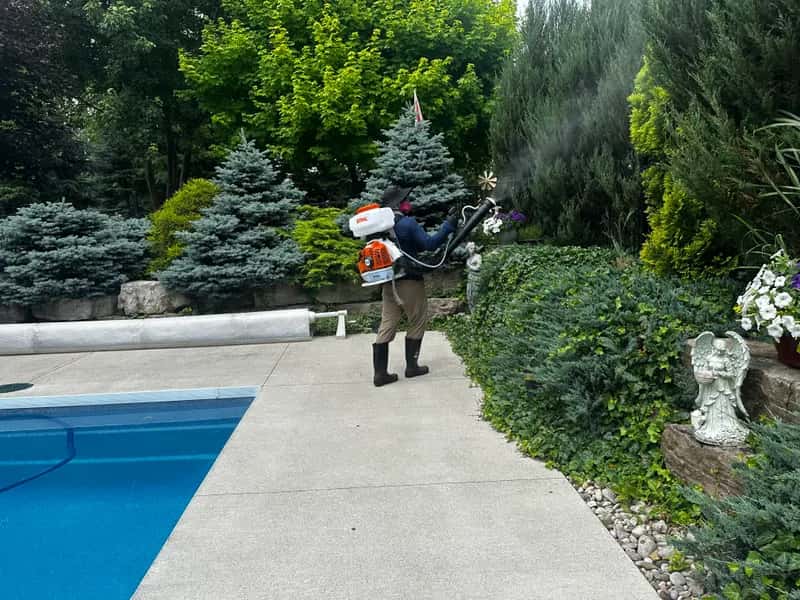
Professional mosquito barrier spray is applied to all vegetation, fence lines, shaded areas, and perimeter zones where mosquitoes rest during the day. Products are applied according to label directions, act on mosquitoes on contact, and leave a temporary residual that wears down over the following weeks. Season plans run from mid-May into September — Basic is 5 monthly sprays ($549), Standard is 10 sprays every two weeks ($994), and Exclusive is 20+ weekly sprays ($2,049), plus HST.
BuzzSkito provides mosquito control across all Toronto neighbourhoods. See: Toronto mosquito control services | Pricing | Get a free quote
Frequently Asked Questions
When does mosquito season start in Toronto?
Mosquito season in Toronto typically begins in mid to late May, when overnight temperatures consistently stay above 10°C and daytime highs reach 15°C or higher. The first noticeable mosquito activity usually appears in sheltered ravine valleys (Don Valley, Humber Valley) about 1-2 weeks before open suburban areas, because these corridors trap warmth and moisture. Lake Ontario has a moderating effect on lakefront neighbourhoods, delaying mosquito emergence by roughly a week compared to inland areas like North York or Scarborough.
When is the worst month for mosquitoes in Toronto?
July is consistently the worst month for mosquitoes in Toronto. By July, multiple generations of mosquitoes have hatched, population density is at its annual peak, and the combination of heat and summer rainfall creates abundant breeding habitat. August remains intense but typically shows a slight decline as drier conditions reduce breeding sites. The peak biting window is from dusk through the first two hours of darkness.
When should I book my first mosquito treatment in Toronto?
Book your first professional mosquito barrier spray for mid to late May — ideally the week that overnight lows first consistently exceed 10°C. This timing targets the first generation of adult mosquitoes before they lay eggs, getting ahead of the population build-up for the rest of the season. Waiting until mosquitoes are already bothering you (typically June or July) means you are playing catch-up against multiple established generations.
Does Lake Ontario affect mosquito season timing?
Yes. Lake Ontario acts as a thermal buffer that keeps lakefront neighbourhoods cooler in late spring, which delays mosquito emergence by approximately one week compared to inland Toronto areas. However, this effect reverses in late summer — the lake keeps lakefront areas warmer into September and October, extending mosquito season slightly longer than in inland neighbourhoods. Properties near the waterfront also face elevated mosquito pressure from shoreline pools and marshes.
When does mosquito season end in Toronto?
Mosquito season in Toronto generally winds down in late September to early October, after the first sustained overnight temperatures below 10°C. A hard frost (below 0°C) kills remaining adult mosquitoes. In mild autumn years, light mosquito activity can persist into mid-October. The season runs approximately 18-22 weeks in total.
Related Guides
- The Ultimate Backyard Mosquito Control Guide (GTA Edition)
- When Does Mosquito Season Start in the GTA?
- West Nile Virus Risk Ontario 2026
- Is Professional Mosquito Control Worth the Cost?
- Mosquito Control in Etobicoke & North York
- Mosquito Season in Scarborough & East Toronto
- BuzzSkito Mosquito Control Services