BuzzSkito Mosquito & Tick Control Specialists · Published July 12, 2026
Compare current Canadian prices on the best-rated DEET-free stickers and patches:
Best-Rated DEET-Free Stickers & Patches Compared
All of these work on the same idea — a slow-release dose of plant oil that scents the air right around the patch. None is a miracle, but they differ in stickiness, oil blend, kid-appeal, and cost per patch. Here is an honest side-by-side with a live Amazon.ca price check for each:
| Product | Active oils | Best for | Approx. price (CA) | Price check |
|---|---|---|---|---|
| BuzzPatch / NATPAT (kids) | Citronella + essential-oil blend | Kids · strollers · cartoon stickers they will wear | $18 – $28 / 60 | Check price on Amazon.ca → |
| Cliganic Patches | Citronella + lemongrass | Budget family packs | $12 – $20 / 60 | Check price on Amazon.ca → |
| Generic Citronella Patches | Citronella oil | Cheapest bulk / stock-up | $10 – $18 / 60–100 | Check price on Amazon.ca → |
| Para’Kito Refillable Clip (reusable) | Geraniol pellet refill | Older kids & adults · lasts longer per dollar | $18 – $30 + refills | Check price on Amazon.ca → |
Prefer a wearable that recharges with a swappable pellet instead of single-use stickers? A refillable clip is the lower-waste, cheaper-over-time option — the same technology behind reusable repellent bands. Check refillable band price →
How Repellent Stickers Actually Work
A repellent sticker is just a small adhesive pad soaked in volatile plant oils — most commonly citronella, but also lemongrass, geraniol, and oil of lemon eucalyptus. Once you peel and stick it, the oils slowly evaporate and form a faint scented halo in the air immediately around the patch. Female mosquitoes hunt by following a plume of carbon dioxide, body heat, and skin compounds; the oil scent partly masks and confuses those cues, so mosquitoes are less likely to zero in on the exact spot the patch is protecting.
The catch is right there in the physics. The protective zone is only as big as the scent cloud — a few centimetres — and any breeze blows it away. A patch on the front of a stroller does little for a foot dangling out the side, and a sticker on a shirt does nothing for bare arms and ankles. That is the honest ceiling on what stickers and patches can do.
Why Parents Love Them Anyway: The DEET-Free Angle
The reason patches sell so well has nothing to do with them out-performing bug spray — they don’t. It is that they solve a real problem for the youngest kids. Health Canada advises against DEET on infants under 6 months, and caps both the concentration and the number of daily applications for older children. That leaves parents of babies with very few on-skin options.
Because a sticker goes on the onesie, the sun hat, or the stroller canopy — never on skin — it neatly sidesteps those age restrictions. For a two-month-old, a citronella patch plus a mesh net over the bassinet is a genuinely reasonable approach, and far better than dabbing an off-label spray on delicate skin. Just keep the patch where tiny hands can’t peel it off and taste it, and don’t oversell what one sticker can do.
For the honest age-by-age breakdown of what the labels do allow on children’s skin once they’re older, see our guide to the best bug spray for kids in Canada and our plain-language answer to whether mosquito spray is safe for kids and pets.
Skip the vitamin B1 (thiamine) patches
Some patches claim that transdermal vitamin B1 makes your skin unappetizing to mosquitoes. It is a persistent myth — peer-reviewed testing has found no repellent effect from oral or patch-delivered thiamine. If a product leans on vitamin B1 rather than an aromatic oil like citronella or geraniol, it is selling a debunked mechanism. Choose an essential-oil patch instead, and keep expectations modest even then.
The Honest Limits (What Stickers Can’t Do)
- They don’t protect exposed skin far from the patch. Bare arms, ankles, and cheeks are still fair game.
- They fade fast. Real-world effect is 1–3 hours, not the 8–12 on the box; wind and heat shorten it further.
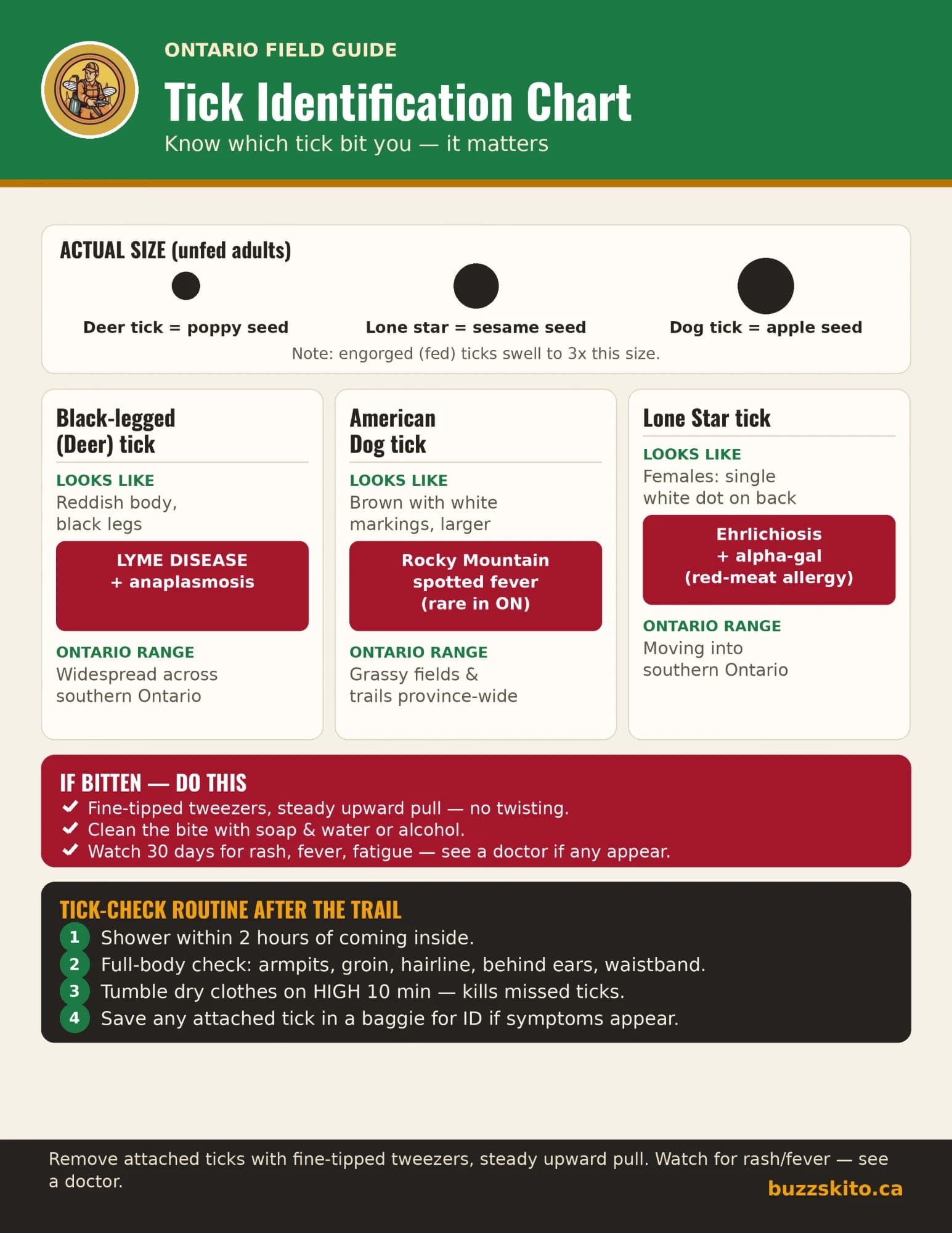
- They do nothing for ticks. Ticks crawl up from grass and leaf litter — a scent patch on a shirt won’t stop them. For ticks, use a treated yard and permethrin-treated clothing.
- They can’t rescue a bad yard. If your property is breeding mosquitoes, a sticker is a bandage on a flood.
- Coverage is personal, not area-wide. One patch protects one small spot on one person, briefly.
Stickers vs Other Options for Kids
Stickers are one tool in a bigger kit. Here is how they stack up against the other DEET-free approaches Canadian parents reach for:
| Option | Protection | Duration | Use with babies |
|---|---|---|---|
| Repellent stickers/patches | Small zone around patch | 1–3 hrs | On fabric only |
| Stroller / crib netting | Full physical barrier | All day | Yes — gold standard |
| Citronella candles | Small breeze-dependent zone | While lit | Keep flame away |
| Icaridin (picaridin) spray | Whole-limb skin coverage | 5–7 hrs | 6 months+ |
| Professional barrier spray | Whole yard (treated vegetation) | Re-applied on a schedule | Stay off treated areas until dry, per the label |
The Smart Stack for Families
Stickers work best as one honest layer, not the whole plan. For a household with young kids, the combination that actually keeps the backyard usable is:
- Treat the yard — BuzzSkito’s barrier spray targets the mosquito population across the whole property on a set schedule, so there are fewer mosquitoes in the play space to begin with.
- Netting for babies — a mesh cover on the stroller or playpen is the single most reliable protection for infants.
- Age-appropriate skin repellent — once kids are 6 months+, an icaridin or low-concentration DEET spray on exposed skin (see the kids’ bug spray guide).
- Stickers or a refillable clip — the convenient DEET-free top-up for outings, or the go-to for babies too young for spray.
That stack costs little, keeps skin products off the youngest kids, and — unlike a lone sticker — actually holds up on a July evening in the GTA.
The Honest Verdict
Mosquito repellent stickers and patches are a nice-to-have, not a solve. Buy the citronella and essential-oil versions (skip anything selling vitamin B1), lean on them mainly for babies and toddlers who can’t use skin repellents, and always pair them with netting or a treated yard. As a standalone defence for a bite-heavy backyard, they will disappoint — but as one thoughtful, DEET-free layer, they earn their spot in the diaper bag.
Related Reading
- Best Bug Spray for Kids in Canada — Age-by-Age Guide
- Is Mosquito Spray Safe for Kids & Pets?
- Citronella Candles Canada — Do They Actually Work?
- Best Mosquito Repellent Devices in Canada
- BuzzSkito Professional Mosquito Control Service
Frequently Asked Questions
Do mosquito repellent stickers and patches actually work?+
Partially. Citronella and essential-oil stickers release a small cloud of scent (citronella, lemongrass, geraniol, or lemon eucalyptus oil) that masks the CO₂ and skin cues mosquitoes home in on, creating a modest repellent zone within a few centimetres of the patch. That means they can reduce bites on the clothing or stroller they are stuck to, but they do NOT protect exposed skin farther away — an arm 30 cm from the sticker is essentially unprotected. Independent testing of spatial essential-oil products consistently shows shorter protection times and smaller coverage than DEET or icaridin (picaridin) applied to skin. Treat stickers as a mild, convenient supplement, not standalone protection.
Are mosquito repellent stickers safe for babies and toddlers?+
This is their main appeal. Health Canada advises against using DEET on infants under 6 months, and limits DEET concentration and application frequency for children under 12. Because stickers and patches go on clothing, hats, or the stroller — never on the skin — they sidestep those skin-application limits and are a DEET-free option parents turn to for very young babies (check the package for any age limits). The trade-off is honesty about coverage: a patch on a onesie protects a small area near the fabric, so pair it with the real workhorses for infants — mosquito netting over the stroller or carrier, lightweight long sleeves, and avoiding dawn and dusk outings. Keep the sticker out of reach so it can not be peeled off and put in the mouth.
Do vitamin B1 (thiamine) mosquito repellent patches work?+
No — this is the one type to skip. Some patches claim that transdermal vitamin B1 (thiamine) makes your skin or sweat unappealing to mosquitoes. Multiple peer-reviewed studies, including work summarized by the American Mosquito Control Association, have found no measurable repellent effect from oral or transdermal thiamine. If a sticker markets itself on vitamin B1 rather than an aromatic oil like citronella or geraniol, it is relying on a debunked mechanism. Choose an essential-oil patch instead, and keep your expectations modest even then.
What is the best DEET-free mosquito repellent sticker for kids in Canada?+
For kids specifically, the cartoon citronella-and-essential-oil stickers (the NATPAT / BuzzPatch style, widely sold on Amazon.ca and Well.ca) are the most popular pick because children actually want to wear them and they stick well to clothing and stroller fabric. Cliganic and generic bulk citronella patches cost less per patch and work on the same principle. There is no independent evidence that any single sticker brand dramatically outperforms another — they all rely on volatile plant oils — so choose on price, stickiness, and whether your child will keep it on. For older kids and adults who want something reusable, a refillable geraniol clip or band (Para'Kito style) lasts longer per dollar.
How long do mosquito repellent stickers and patches last?+
Less time than the packaging suggests. Manufacturers often claim 8–12 hours per patch, but that figure describes how long the sticker keeps emitting some scent — not how long it meaningfully repels mosquitoes. In real backyard conditions, the effective repellent window is usually 1–3 hours, and it drops fast in wind or heat as the oils evaporate. Plan to replace patches every couple of hours during peak mosquito time (dusk especially), and store unused stickers sealed so the oils do not dry out before you use them.
Where can I buy mosquito repellent stickers and patches in Canada?+
The widest selection is on Amazon.ca (BuzzPatch/NATPAT, Cliganic, and generic citronella patches, often with Prime shipping). Well.ca carries the natural and DEET-free brands and is a Canadian retailer. Walmart Canada and Canadian Tire stock citronella patches and clip-ons seasonally from roughly May through August, and Costco Canada occasionally runs bulk multipacks during its spring and summer outdoor-living sets. Buy early in the season — the DEET-free kids' options sell out fastest in June and July.
Are citronella stickers as effective as DEET or picaridin bug spray?+
No. A skin repellent with DEET or icaridin (picaridin) that carries a Canadian PCP registration number gives hours of reliable, whole-limb protection because it coats the skin the mosquito would land on. A citronella sticker only scents the air right around the patch and wears off within a few hours. For anyone old enough to use a registered skin repellent — generally age 6 months and up, at the concentration Health Canada allows for their age — a proper spray is far more protective. Stickers earn their place for babies too young for skin repellents, for parents who want a DEET-free layer that stays off the skin, and as a backup when you forgot the spray. See our kids' bug spray guide for age-by-age concentration limits.